







Abstract
China’s modern legal education system, characterized by its development over more than seven decades since the founding of New China, has undergone distinct stages including the initial period, stagnation and frustration, restoration and development, comprehensive development, and innovation and development. Based on both empirical and case studies, this article identifies issues in China’s modern legal education system such as the imbalanced distribution of educational resources, inadequacy in theoretical and practical teaching methods, as well as insufficient training for foreign-related legal talents. To address these challenges effectively, this article proposes innovative approaches, including deepening collaboration between academia and industry to narrow regional disparities in education provision; enhancing scenario-based applications of artificial intelligence (AI), the metaverse and other emergent technologies within the field of legal education; as well as aligning the goal of cultivating legal talents with global trends through comprehensive reform strategies. This article aims to offer a novel pathway for Chinese legal education to embrace globalization, while at the same time presenting a new paradigm for international scholars studying Chinese legal education.
Introduction
As is widely acknowledged, the objective of legal education is not only to foster legal professionals equipped with comprehensive knowledge and skills but also, more significantly, to provide robust support for the advancement of national and global societal development. Throughout history, legal education has been a crucial driving force behind the development and advancement of jurisprudence worldwide. In light of China’s unrivalled transformation from a vulnerable nation plagued by foreign aggression to the world’s second-largest economy, 5 its progress in legal education has played an instrumental role in propelling its rapid rise. Moreover, China has actively explored and made contributions to the advancement of legal education worldwide. ‘The Tang Law’, 6 a legal code established during the Tang Dynasty in China, exerted a profound influence on the entirety of Asia, particularly those nations in East Asia. Subsequently, Japan, Vietnam, Korea and other contemporary countries referred to the Tang Law as a basis for formulating their own legal codes. 7 With China’s reform and opening up, after over 70 years of cultivation and development in the country, and through the research and reform efforts of numerous legal education pioneers, a model of legal education that epitomizes Eastern civilization while exuding the essence of a great nation is being fostered.
In recent years, China’s economy has experienced rapid growth while social demands have undergone significant transformations. In response to these changes, the Chinese government has issued a series of documents aimed at optimizing the current education system and aligning it with contemporary needs. On 26 February 2023, the General Office of the Central Committee of the CPC (Communist Party of China) and the General Office of the State Council released the ‘Opinions on Strengthening Legal Education and Legal Theoretical Research in the New Era’ (referred to as ‘Opinions’ hereafter), accompanied by a notice urging all regions and departments to diligently implement them based on their specific circumstances. 8 The ‘Opinions’ represent a significant milestone in the history of legal education in China as it is the first central document to specifically focus on its development and study of legal theories. Its issuance marks the beginning of a new era for modern legal education in China, making it an important exploration within the context of globalization and informationization. This article is divided into three parts, excluding the introduction and conclusion. In its first part, it reviews over 70 years of China’s legal education development. In its second part, it identifies issues faced by Chinese legal education through empirical and case studies. In its third part, it proposes reform ideas for educational resource allocation, theoretical and practical teaching methods, as well as foreign-related legal talent cultivation based on comparisons between domestic and international teaching models combined with innovative global educational technologies under the guidance provided by the ‘Opinions’. This study not only offers a fresh perspective for China’s legal education to embrace globalization but also presents a novel framework that can contribute to international research on Chinese legal education.
Tracing the Historical Trajectory: The Evolution of Legal Education in China over the Past Seven Decades
Chinese legal education has a rich historical legacy, tracing back to the Spring and Autumn Period and the Warring States Period (770
1949–1957: The Initial Period
After the establishment of the People’s Republic of China in 1949, the pre-existing legal framework under the Kuomintang 13 regime was superseded by a Soviet-inspired system of legal theory and knowledge. China imported various legal textbooks from the Union of Soviet Socialist Republics to replace those of the Republic of China and permitted Soviet experts to teach key subjects. Subsequently, the establishment of China’s inaugural law school, namely, the Law School of Renmin University of China, not only encompassed undergraduate and postgraduate education but also encompassed training programmes for legal educators. Until 1963, the system of law schools in China had formed a pattern of ‘Five Schools and Four Departments’, that is, five colleges of political science and law, namely, Beijing College of Political Science and Law, Southwestern College of Political Science and Law, East China College of Political Science and Law, Northwestern College of Political Science and Law and Zhongnan College of Political Science and Law, and four departments of law of Peking University, Renmin University of China, Jilin University, and Wuhan University (hereinafter referred to as the ‘Five Schools and Four Departments’). 14
1958–1977: The Period of Stagnation and Frustration
The government’s ‘left-leaning’ errors in 1958 15 had a profound adverse impact on legal education in China, leading to a period of stagnation and decline. During this period, political movements had an impact on law education, severely restricting academic freedom and interfering with teaching content. The ‘Cultural Revolution’ 16 of 1966 had an even more serious impact on and destruction of legal education, resulting in the closure of most law schools and the displacement of numerous teachers and students. Most of the ‘Five Schools and Four Departments’ either ceased operations or were abolished, leaving only Peking University, Jilin University and Hubei College of Finance and Economics (formerly Zhongnan College of Politics Science and Law) as remaining law schools. During this period, China’s comprehension of the rule of law became distorted, causing varying degrees of damage to the established rule-of-law mechanism.
1978–1991: The Period of Restoration and Development
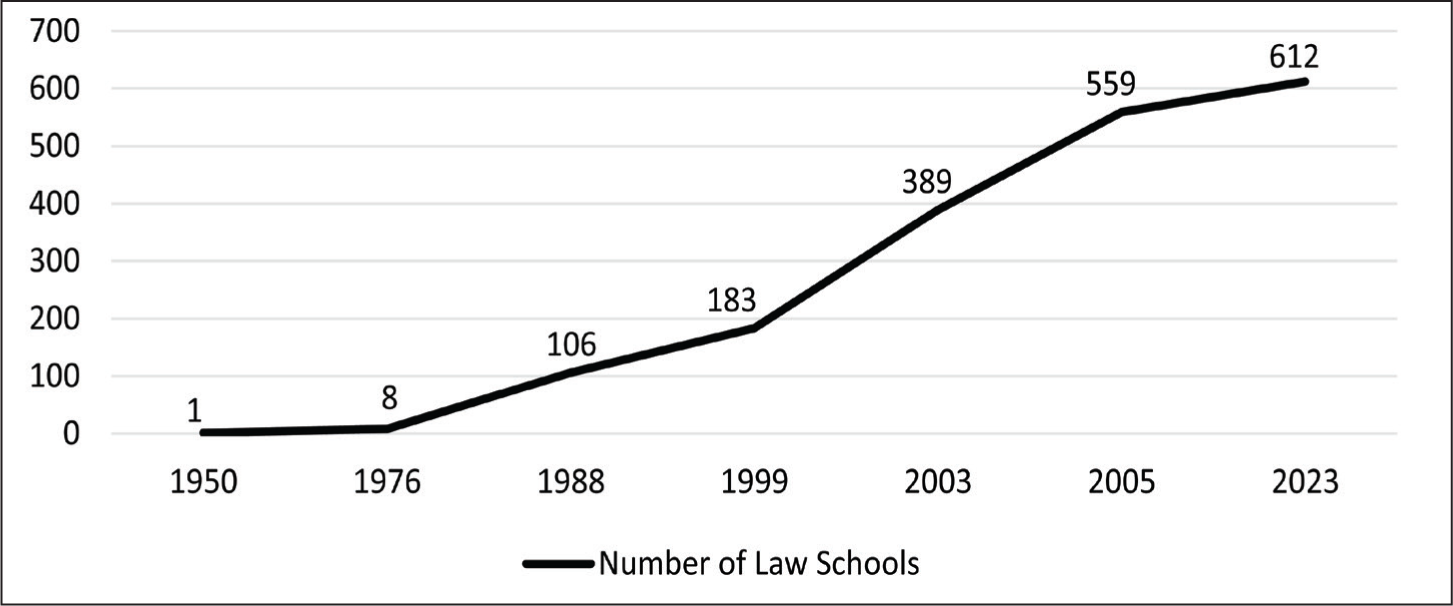
The convening of the Third Plenary Session of the 11th Central Committee of the CPC in December 1978 marked the official commencement of an unprecedented era characterized by self-liberation, self-improvement, self-revolutionary reform and opening up in socialist construction towards a New China. 17 This event also initiated a revolutionary transformation in contemporary China’s development of the rule of law. The major law schools gradually recovered, with the faculty becoming increasingly comprehensive, thus re-establishing the dominant pattern of ‘Five Schools and Four Departments’. Throughout this process, China’s legal education departed from the rigid educational model of the Soviet Union and instead embraced the models of Germany, Japan and other civil law countries to draw upon their experiences in legal education. In the early 1980s, postgraduate legal education emerged in China, significantly elevating the level of training. By 1988, there were 28,325 undergraduate students and 3,847 master’s students enrolled across 106 established law schools that formed the core foundation for subsequent developments in Chinese legal education. 18
1992–2011: The Period of Comprehensive Development
In response to evolving societal needs, the government has introduced a range of innovative adjustments to the national legal examination system, effectively advancing professionalization within legal education at an accelerated pace. Commencing in 1996, prominent law schools began admitting students for master’s degree programmes in law, thereby expanding choices and opportunities for cultivating highly skilled legal professionals. Furthermore, since 1999 when enrolment expansion policies were implemented across colleges and universities nationwide, there has been a rapid proliferation of law schools throughout China along with an emergence of numerous universities offering master’s and doctoral programmes in law. As a result, by 2010, the number of law schools had surged from only 106 to over 500, accommodating a staggering total enrolment figure in excess of 465,406 students. 19 The implementation of these initiatives has effectively facilitated the adaptation of legal education to China’s social and economic needs at that particular time, thereby establishing a distinctive pattern of legal education with Chinese characteristics.
2012 to Present: The Period of Innovation and Development
According to statistics, the number of law schools established in China has reached 612 (refer to Figure 1). Major law schools have started to define their objectives and criteria for cultivating legal talents and adjusting student enrolment numbers, with a primary focus on delivering high-quality legal education. In 2017, the Ministry of Education announced the results of its evaluation of master’s and doctoral degree programmes in law, revealing a total of 216 master’s degree programmes within first-level disciplines nationwide (including 19 second-level master’s degree programmes in law); along with 243 master’s degree programmes in law; and 52 doctoral degree programmes within first-level disciplines (including one special-purpose doctoral programme at Northwestern University of Political Science and Law approved by the Ministry of Education in 2012 to cater to specific national needs, as well as one second-level doctoral programme within a second-level discipline at Fuzhou University). 20 China’s legal education has achieved excellent results in improving its quality. In September and October 2013, Chinese President Jinping Xi proposed the cooperative initiatives of building the ‘New Silk Road Economic Belt’ and the ‘21st Century Maritime Silk Road’ (hereinafter referred to as the ‘the Belt and Road’). 21 With the advancement of ‘the Belt and Road’ Initiative, China has achieved remarkable results in international exchanges, not only by dispatching a large number of legal professionals to engage in foreign-related legal affairs but also by providing training for distinguished individuals such as the Under-Secretary-General of the United Nations, Secretary-General of the International Civil Aviation Organization, judges from both International Court of Justice and International Tribunal for the Law of Sea, members from Appellate Body of WTO dispute settlement system, members of UN’s International Law Commission, arbitrator from Permanent Court of Arbitration and members from Institute of International Law. 22
Facing the Challenge: Issues in Chinese Legal Education
Despite the development of China’s legal education over the past 70 years, remarkable achievements and progress have been made, establishing China as a globally recognized legal powerhouse. However, numerous challenges persist in China’s legal education system, stemming from historical shortcomings or emerging contradictions due to societal advancements, thereby necessitating reforms in Chinese legal education.
Disparities in the Allocation of Educational Resources
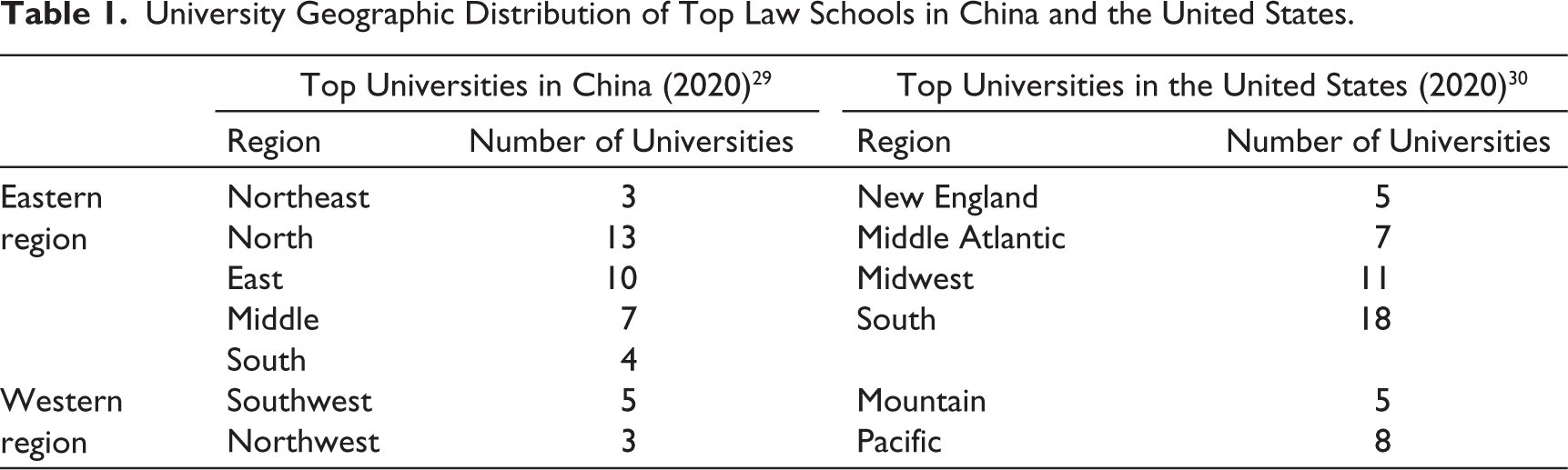
China’s limited and imbalanced distribution of high-quality educational resources poses challenges in meeting the nationwide demand for superior legal education resources. The disparity in legal education resources in China is primarily manifested in two dimensions: institutional resources and employment options. The foremost issue in China’s current legal education lies in the disparity of university resources. After statistics and analysis, it is found that there is an imbalance between the horizontal distribution and vertical development of legal education resources in China. From a geographical perspective, out of the 612 undergraduate law schools in China, 470 are situated in the eastern region while only 142 are located in the western region. 24 The population of the eastern region is about twice as large as that of the western region, but the number of law schools in the eastern region is about 3.3 times that of the western region, resulting in a significant disparity in law faculties and teaching resources between these two regions. In terms of university development, there are 37 first-class universities located in the east compared to only eight in the west (refer to Table 1). In the distribution of universities with law subjects selected as ‘Double First-Class’, 25 all six universities are situated in Beijing and Wuhan, which are highly developed areas within the eastern region. 26 Similar problems exist in the United States, where legal education is well developed (refer to Table 1). In general, the ‘Matthew effect’ 27 resulting from the inclination of China’s legal education resources towards larger and renowned universities has significantly impacted and influenced the advancement of legal education in non-elite institutions or those outside top-tier universities, thereby creating an unfavourable cycle. 28
University Geographic Distribution of Top Law Schools in China and the United States.
Second, the gradual elitism in legal education has resulted in an employment imbalance. In China’s legal profession, there is a widely held belief that only those who graduate from the esteemed ‘Five Schools and Four Departments’ can be considered true law students. Taking the ‘Five Schools and Four Departments’ as an example, it becomes apparent that there exists an uneven geographical distribution among these nine universities, with merely two located in western China, 31 while the remaining seven are situated in eastern China. 32 According to incomplete survey statistics on legal talent in law schools and judicial departments across the country, graduates from ‘Five Schools and Four Departments’ accounted for 83 per cent of the total academic talent sample of 367 individuals, 33 with other universities accounting for the remaining 17 per cent. Similarly, among a total of 61 practical talents surveyed, 34 graduates from ‘Five Schools and Four Departments’ made up 62 per cent of the sample while other universities contributed to the remaining 38 per cent. Overall, there is a significant over-representation of ‘Five Schools and Four Departments’ graduates in both national academic and practical legal talent pools. 35 The number of graduates from the ‘Five Schools and Four Departments’ significantly surpasses that of other universities. In the United States, similar challenges exist in the distribution of educational resources, particularly concerning the lack of diversity in legal education resulting from an emphasis on ‘elite education’. Among the top 10 law schools in the United States, nearly 95 per cent of American law professors have obtained their degrees from these prestigious schools. While a slightly lower percentage is observed among professors graduating from within the top 25 law schools, even among this group, over 80 per cent have attended a U.S. News top 10 law school. 36 This examination highlights the immense pressure faced by graduates from lower-tier law schools, which limits their options for further education and employment.
Relatively Outdated Curriculum System
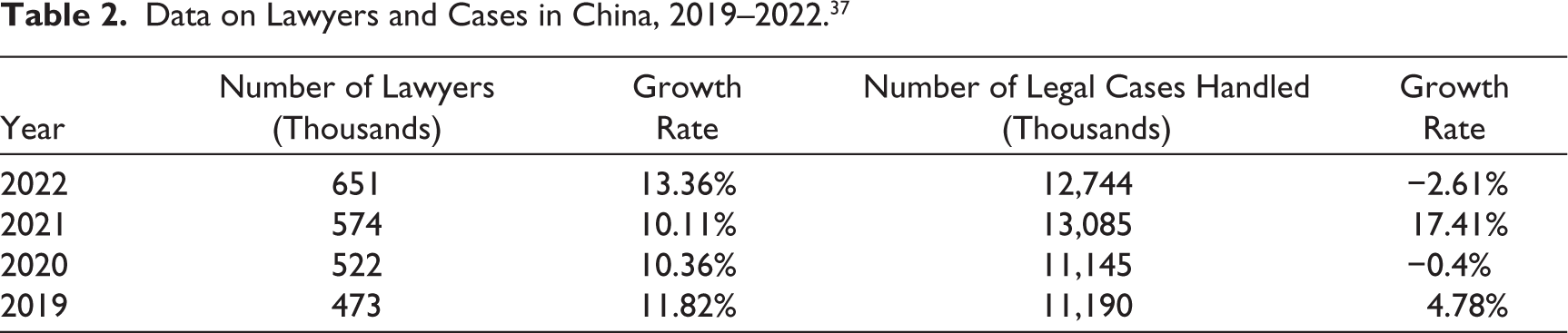
The quality of the legal education curriculum directly influences the level of development within the legal profession and even its overall landscape. In 2018, China implemented a reform in its Law Examination system, which resulted in renaming it as China’s Unified Qualification Exam for Legal Professionals (hereinafter referred to as ‘NBE’). To obtain a licence to practice law in China, individuals must successfully pass the NBE, a computerized test that assesses theoretical jurisprudence, applied jurisprudence, current legal regulations, legal practice and ethical considerations. Subsequently, they are required to complete a one-year internship at a law firm before being granted their licence to practice law. According to a statistical analysis conducted by relevant agencies on China’s law industry from 2019 to 2022 (refer to Table 2), there has been consistent growth in the number of lawyers over several years with figures reaching 651,600, but overall growth in cases has slowed down. Considering an examination of China’s present legal industry scenario alongside this data analysis leads us to conclude that due to intensified competition within the field itself, there will be an increasing demand for lawyers possessing extensive professional knowledge and practical skills. Experienced lawyers will be less inclined to delegate cases hastily to trainee lawyers who lack sufficient expansion of professional knowledge and experience in handling cases after joining firms. Consequently, trainee lawyers will have fewer opportunities for exposure to cases. As such circumstances arise upon graduation from law school in China where newly licensed lawyers typically require a substantial period practicing before facing significant case pressure and economic burdens, many law graduates opt instead for civil service positions rather than continuing their careers as practicing attorneys. It is evident that China’s previous model of legal education suffers from weaknesses.
Data on Lawyers and Cases in China, 2019–2022. 37
First, from the perspective of teaching theoretical knowledge, there are several factors that need improvement. First, in China, the evaluation system for college students is primarily based on scientific research outcomes. Consequently, students face immense pressure to engage in scientific research activities such as publishing papers and applying for research projects while simultaneously completing their coursework assignments. This level of pressure leaves them with limited time to focus on acquiring comprehensive theoretical knowledge. Second, legal education lags behind in terms of keeping up with the rapidly evolving teaching content required by practical demands. As a result, students receive insufficient exposure to a well-rounded theoretical foundation. Some disciplines suffer from a delay in theoretical development compared to real-world practice and fail to address and explain actual problems effectively. Third, certain teaching materials and approaches tend to favour Western legal theories without providing adequate critique or appreciation thereof; they lack thorough exploration of socialist rule-of-law theory with Chinese characteristics. 38 In conclusion, conventional legal education primarily emphasizes the instruction of theoretical knowledge and the development of professional skills, often overlooking the cultivation of students’ innovative consciousness and aptitude within course content, teaching methodologies and evaluation formats. 39
Second, in the realm of practical legal education, China initiated experimental endeavours and explored various models such as legal clinics, moot courts, case teaching methods and other instructional approaches during the 1990s. Although these courses have gained popularity among students due to their diversified and participatory nature compared to traditional textbook-based teaching methods, there still exist operational challenges that hinder their ability to effectively cultivate students’ practical skills, such as teaching mode, capital investment, student interest and so on.
Moot courts have become a prevalent pedagogical approach in Chinese law schools for both undergraduate and graduate students. Given the inherent nature of legal studies, which necessitates an immersive environment involving prosecutors, attorneys and judges, moot court instruction facilitates the integration of all parties involved in litigation and this enables students to actively engage with real cases by assuming diverse roles and contemplating various perspectives. 40 Although moot court appears to be the preferred choice for practical courses, there are still certain issues encountered during its actual implementation process. First, the status of moot court teaching lacks clarity. Currently, moot court is not integrated into the core curriculum for higher legal education in major universities, and there is a lack of standardized curriculum or guidelines established. 41 Consequently, the allocation of class hours, resource input and teaching programmes in the moot court course falls short of expectations. Second, there is a relative scarcity of teacher resources for moot courts. Moot courts demand high-quality requirements from teachers, who need to possess professional theoretical knowledge as well as practical work experience. However, some teachers have limited exposure to practical content, resulting in a lack of new or authentically representative cases in classroom teaching and ultimately leading to a superficial teaching approach. Third, the content covered in moot court teaching is insufficient. Due to time constraints imposed by the curriculum, schools often resort to expedited processes during classroom instruction in order to fulfil their teaching obligations. This frequently results in shortened student debates and limited opportunities for teacher reviews and analysis exchanges with students—all of which undermine the inherent value of moot court education. 42
The current law curriculum system in China fails to adequately address the demands of students for both theoretical knowledge and practical training, necessitating an urgent integration of new teaching techniques to facilitate innovative reform.
Lack of Foreign-related Legal Talent
Foreign-related legal talents are required to navigate intricate and dynamic international legal matters, which directly impact the nation’s reputation and strategic interests on the global stage. 43 Among the pool of domestic legal professionals, only approximately 1 per cent possess the requisite expertise to participate in international legal affairs. 44 Although China holds a permanent seat in the United Nations, the representation and involvement of foreign-related legal experts advocating for China’s position in international affairs remain limited. This hinders their ability to effectively assert China’s interests on the global stage, which is incongruent with its status as a major power. On 22 January 2013, the Department of Foreign Affairs of the Republic of the Philippines initiated arbitration proceedings concerning the disputes between China and the Philippines in the South China Sea, seeking affirmation of the Philippines’ entitlements within and beyond its exclusive economic zone and continental shelf in accordance with international law. 45 The arbitral tribunal was composed of five members, all hailing from non-Asian backgrounds (German, Polish, French, Dutch and Ghanaian, respectively 46 ). Therefore, the significance of ancient Chinese documents and historical context was not adequately conveyed in the proceedings. In the end, the award largely supported the majority of the Philippines’ claims. This incident serves as a stark reminder of the scarcity of Chinese foreign-related legal talents and calls for an urgent need to enhance China’s foreign-related legal education.
First, the status of foreign-related legal education is relatively subpar. In terms of training foreign-related legal talents, despite China having a substantial number of law students, the proportion of those specializing in foreign-related studies remains minimal. In 1997, professional adjustments were implemented in China, which resulted in the discontinuation of undergraduate programmes specifically dedicated to international law and the elimination of three secondary disciplines—international public law, international private law and international economic law—under the primary discipline of law. 47 In 2018, the Quality of Teaching in Law Specialties underwent national standard adjustments, which introduced the ‘10+X’ classification model for the core law curriculum and resulted in a diminished emphasis on private international law and international economic law as integral components of the law major. 48 The aforementioned adjustments may potentially restrict students’ options within the field of law or impede their enthusiasm, thereby hindering their ability to pursue in-depth studies in international law and related disciplines. Currently, the proportion of master’s and doctoral students specializing in international law is relatively small, accounting for only 8.7 and 11.4 percent, respectively, of the total number of graduate students studying law. Moreover, this percentage is predominantly concentrated in developed coastal cities such as Beijing, Shanghai, Guangzhou, Shenzhen, etc., indicating a limited presence of foreign-related legal education within the discipline. 49
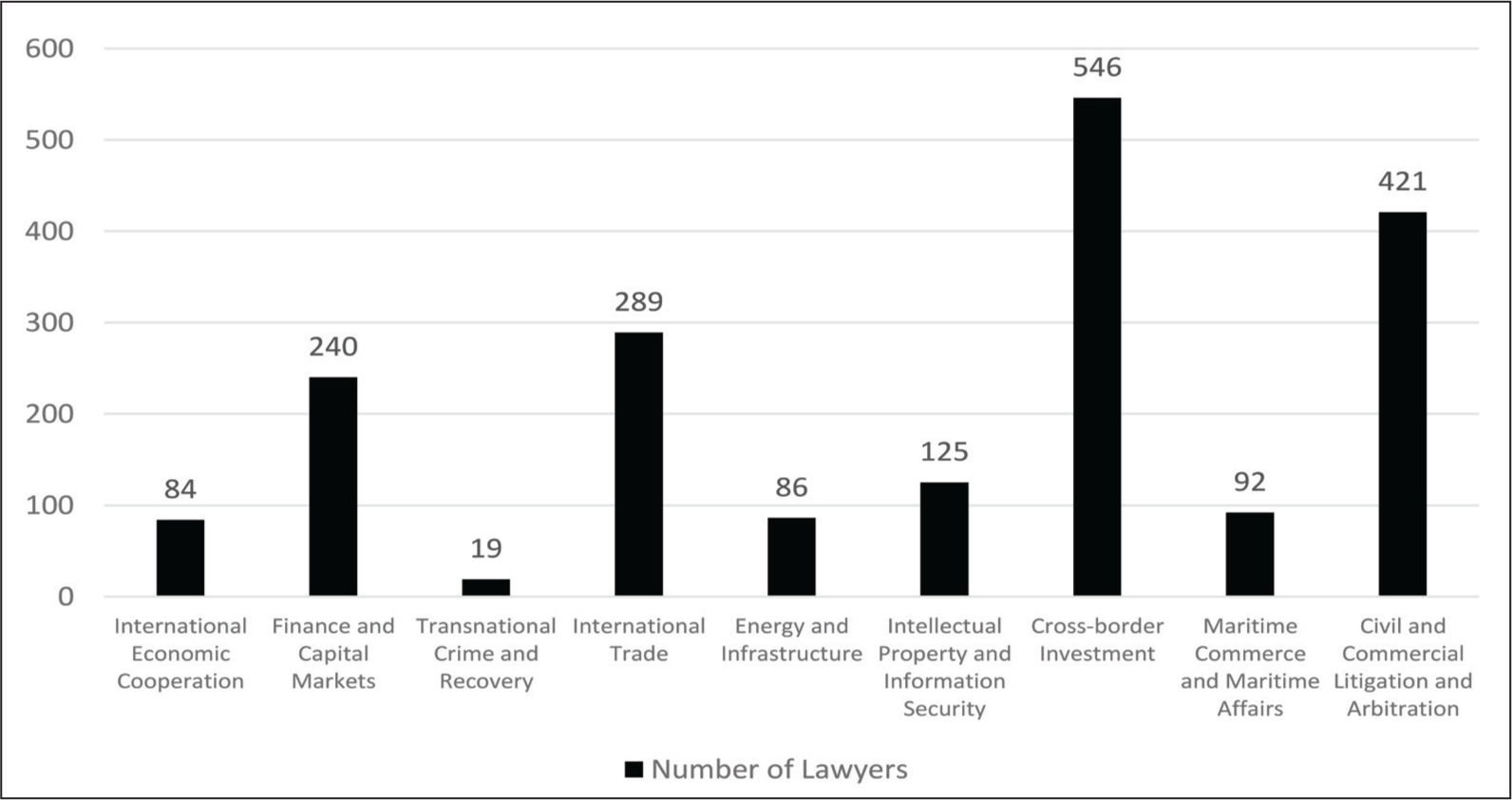
Second, the construction of disciplines is insufficiently comprehensive. Regarding legal foreign language, the English study undertaken by Chinese undergraduate students primarily focuses on preparing for the CET4 and CET6, 50 resulting in most students being able to handle these exams but unable to truly master English as a language. Furthermore, bilingual elective courses such as legal English at both undergraduate and graduate levels are hindered by stereotypical theoretical teaching methods due to a lack of well-developed system design, thereby impeding the achievement of satisfactory outcomes. In terms of professional domains, the Ministry of Justice established a national talent pool for foreign-related lawyers in 2018, wherein lawyers were mandated to select no more than two categories related to foreign affairs. A total of 985 lawyers were chosen and included in this talent pool (refer to Figure 2). It is evident that international economic cooperation, transnational crime and recovery, energy and infrastructure, as well as maritime commerce and maritime affairs exhibit relative weaknesses within the realm of foreign-related legal practice. Thus, the development trajectory of international legal business lacks equilibrium.
Distribution of Lawyers’ Practice in China’s Foreign-related Lawyers’ Talent Pool. 51
The current trend indicates a scarcity of highly qualified and diverse legal professionals in China’s foreign-related fields, necessitating urgent efforts to cultivate such talents to meet the country’s growing demand.
Courageous Innovation: Future Prospects for Chinese Legal Education
In the ‘Opinions’, it can be clearly seen that the key directions of China’s legal education are: ‘the regional layout of law schools and the layout of disciplines and specialties are more balanced’ and ‘the field of legal theory and research is constantly expanding, and the research capacity continues to improve’, ‘accelerating the repair of the shortage of talents in key areas’. 52 Currently, China faces challenges in the equitable distribution of legal education resources, theoretical and practical teaching methods, as well as the cultivation of foreign-related legal talents. It is imperative to enhance these solutions through institutional innovation, scientific and technological empowerment, and pilot reforms.
Improve the Balance of Educational Resources
China, as a vast nation, exhibits significant economic disparities between its eastern and western regions. The longstanding issue of unequal distribution of legal education resources has persisted throughout its history. According to the American Bar Association, the bar passage rate is the single best outcome measure for evaluating whether a law school adheres to a ‘rigorous program of legal education’. 53 It is evident that the primary characteristic of American legal education lies in its market-oriented operational mechanism, which actively responds to the high demand for lawyers in a capitalist society. The commodification of law schools in the United States is not only manifested in their training methods and qualifications but also in the monopolization of teaching resources. It is important to note that China follows a socialist system while the United States operates under a capitalist model. As a socialist country, China cannot simply adopt the American approach of marketization and capitalization in legal education; instead, it should develop policies with Chinese characteristics based on national conditions.
Implementation of Peer-to-peer Support for Teaching Resources
As the fundamental entities of national legal education, universities should prioritize enhancing the allocation of educational resources to them. The implementation of peer-to-peer support for teaching resources is of public benefit; therefore, it is imperative for government departments nationwide to actively respond to the call of Opinions. The government should proactively introduce reasonable policies that incentivize exceptional law educators to teach and provide support in the central and western regions while ensuring adequate material resources are allocated to enhance the competence of legal instructors in western areas and elevate the overall quality of legal education. Simultaneously, the establishment of collaborative mechanisms among institutions to assist law schools in the western region in establishing teaching bases and incorporating advanced legal education concepts and content is poised to facilitate the revitalization of the educational framework within these law schools. With policies’ support and active collaboration from colleges and universities, these aforementioned measures are expected to significantly enhance the overall quality of legal education in the western region.
Education Highlights Regional Characteristics
In May 2020, the CPC Central Committee and the State Council issued the ‘Guiding Opinions on Forming a New Pattern of Promoting Western Development in the New Era’, which proposed a development strategy aimed at enhancing the opening up of China’s western region through prioritizing the construction of ‘the Belt and Road’ initiative. It explicitly emphasized that promoting connectivity with regions such as Central Asia, West Asia, South Asia, Southeast Asia, and Central and Eastern Europe via ‘the Belt and Road’ would play a crucial role in fostering coordinated development between eastern and western regions of China. It also underscored that by facilitating greater access to these regions, it would reshape regional economic geography while encouraging resource concentration in western areas to drive rapid growth within their economies. 54 Among the 16 provinces situated within the core area of ‘the Belt and Road’ initiative, a total of 9 provinces are geographically located in the western region. 55 Therefore, the western region should align with national policies while leveraging its own regional characteristics and advantages to foster differentiated development in legal education, thus avoiding a monolithic approach. First, law schools in the western region should reform their teaching methods by integrating the curriculum with the intricacies of ‘the Belt and Road’ initiative, offering foreign-related legal training courses for countries along this route to attract exceptional students nationwide to pursue legal studies in the West. Simultaneously, favourable government policies should be formulated to incentivize foreign-related legal talents to settle down in the western region postgraduation through various means such as attractive remuneration packages and supportive systems. Second, it is imperative to establish a platform for sharing domestic and international educational resources by actively importing high-quality curriculum resources from abroad, particularly fostering collaborations with neighbouring countries along ‘the Belt and Road’ initiative. 56 Finally, upon graduation, law graduates can actively contribute to the development of ‘the Belt and Road’ initiative both domestically and internationally. This can be achieved by either joining the branches of law firms established in countries along ‘the Belt and Road’, or becoming part of the branches set up in China by these countries. In essence, regions with robust economic growth will have a greater capacity to attract and retain talented individuals who, in turn, will stimulate regional economies, thus fostering an educational virtuous cycle.
Novel Technologies for Facilitating Practical Pedagogy and Theoretical Inquiry
Currently, the education system of many law schools in China remains entrenched in traditional text-based teaching methods, failing to keep pace with the exploration and application of new technology in legal education as observed in some other more developed countries. Renmin University of China Law School of Law Virtual Teaching and Research Department of Law and South China Normal University Law School of Digital Government and Digital Economy Rule of Law Research Center jointly organized the ‘ChatGPT and legal education reform’ seminar, Zhejiang University Guanghua Law School, Shaoyu Liu said: ‘legal education must face up to and respond to the development of generative artificial intelligence’. 57 When confronted with emerging technologies, China’s legal education ought not only to perceive them as challenges but also embrace them as invaluable learning tools or even collaborative partners.
Introduction of Generative AI
Leveraging technological advancements in areas such as large-scale models, enhanced computational capabilities and refined training methodologies, generative AI has achieved remarkable strides in delivering content of superior quality, efficiency and diversity. Consequently, it has emerged as a pivotal catalyst for driving the digital productivity transformation. 58 In November 2022, OpenAi, a U.S. research and development company, introduced ChatGPT, a cutting-edge generative AI technology that has garnered significant interest among law educators and students alike. This innovation has presented both opportunities and challenges in the field of legal education. Professor Shaoming Chai, Associate Dean of the School of Data Science and Artificial Intelligence at South China Normal University Aberdeen, has conducted extensive research and surveys on the impact of generative AI, revealing that approximately 80 per cent of college and university students have made use of generative AI. 59 With continuous advancements and iterative technological developments, generative AI is poised to emerge as a pivotal tool in legal education, exhibiting substantial potential for transformative impact.
Taking ChatGPT as an example, it distinguishes itself from previous search engines by offering tailored answers to users’ specific queries instead of overwhelming them with billions of search results. 60 The provision of legal texts, cases, explanations and the opportunity for continuous updating of legal knowledge undoubtedly serve as an invaluable resource for students in their pursuit of academic excellence. Second, through its continuous collection of internet data and training in legal text writing, ChatGPT is capable of updating existing legal knowledge and producing manual-like legal teaching texts. This not only reduces the repetitive text work but also allows more time for academic pursuits by teachers and students. Lastly, ChatGPT expands the horizons of legal education by enabling students to compose concise, well-reasoned and accurate initial drafts on their own topics which can then be supplemented with additional legal analysis and problem identification. 61 The collaboration with ChatGPT is expected to yield superior outcomes compared to writing alone or solely relying on ChatGPT for writing purposes. ChatGPT can be utilized not only for learning but also for teaching purposes, such as enabling law faculty to optimize law school resources by integrating ChatGPT into their daily classroom teaching and post-school activities. This integration allows for the intelligent generation of discipline-specific assignments, efficient grading of tasks and more effective review of papers. However, it should be noted that while ChatGPT possesses significant capabilities, there is a potential issue of straying from the subject matter and providing insufficient detail when applying legal rules. 62 Therefore, to effectively integrate technology with the human mind, it is imperative to enhance students’ advanced critical analysis skills, encompassing the ability to construct and comprehend policy arguments proficiently, engage in intricate oral and written advocacy and grasp the interpretation of legal theories. 63
As is commonly stated, technology is a double-edged sword; while it offers convenience and efficiency, its usage should be exercised with caution. Italy has recently announced the prohibition of ChatGPT starting from 31 March 2023, concurrently initiating an investigation into its privacy and security concerns. Following Italy’s lead, Germany, France, Ireland and other nations have also intensified their regulatory measures concerning generative AI. 64 The Draft Law on Academic Degrees (hereinafter referred to as the ‘Draft Law’) was submitted for initial consideration to the Fifth Session of the Standing Committee of the 14th National People’s Congress on 28 August 2023. This law establishes legal responsibilities for degree holders engaging in activities such as utilizing AI to author dissertations on their behalf, including potential revocation of degree certificates by the respective degree-granting institution upon deliberation and decision by the Degree Evaluation Committee. 65 The development of generative AI such as ChatGPT will continue to introduce uncertainty into China’s legal education, necessitating the strengthening of laws and improvement of relevant regulations by the government to effectively align education with technology.
Introduction to the Metaverse
On 7 June 2023, Innovating Pedagogy 2023 was collaboratively produced and published by academics from The Open University’s Institute of Educational Technology and the University of Cape Town’s Centre for Innovation and Teaching and Learning. This comprehensive series of reports focuses on 10 globally recognized pedagogical approaches that have made a significant impact on education, showcasing their leadership in fostering pedagogical innovation, including the metaverse. 66
Among the various pedagogical approaches, role-playing is a highly efficacious method for fostering students’ practical skills and is frequently employed to investigate diverse subjects such as legislative conduct, international diplomacy, jurisprudence, electoral processes and numerous other domains. 67 However, traditional courtroom simulation training can be limited and often lacks structure, as it relies solely on students’ practical experience and imagination. This constraint makes it challenging for students to effectively simulate real-life courtroom scenarios due to the scarcity of classroom resources. Consequently, incorporating highly practical legal education into the metaverse emerges as a promising solution. For instance, within this virtual reality-based three-dimensional space accessible via the internet, multiple users can simultaneously engage by creating personalized avatars that reflect their identities. 68 By integrating the metaverse with role-playing, law students can utilize a virtual reality (VR) head-mounted display to access a 3D world connected to the internet and engage in diverse legal simulations by assuming different roles. On 23 September 2022, the Center for Research on Legal Cognition, Data, and Intelligence (Laboratory) at Xiamen University Law School collaborated with the Siming District People’s Court of Xiamen City to facilitate an unprecedented metaverse trial in China. Judge Lin Hong from the Siming Court’s financial trial team presided over and rendered judgments on two cases within this virtual realm. Students from multiple universities participated as avatars in a three-dimensional virtual courtroom space via the metaverse platform and ‘observed’ this distinctive trial (refer to Figure 3). 69 Taking inspiration from this virtual courtroom, the integration of the metaverse with case teaching, legal clinics and mock trials can facilitate the development of personalized and enriched practice courses, thereby fostering students’ interest in learning and their proficiency in legal practice.
China’s First Metaverse Virtual Courtroom.

In the foreseeable future, university developers can leverage the digital environment of VR to create a game or software program akin to Dungeons and Dragons, enabling realistic case simulations encompassing diverse scenarios. Initially, students have the freedom to select their profession and equipment, subsequently gathering evidence and valid information from various non-player characters. Ultimately, they engage in courtroom debates with opponents worldwide while being evaluated by a scoring system and ranked by users. This approach allows students to fully immerse themselves in roles such as ‘Judge’, ‘Lawyer’, ‘Prosecutor’ or even representing companies as a ‘Litigation Representative’. Moreover, it offers them the flexibility to choose from an array of criminal, civil and commercial cases, thereby facilitating personalized legal education. Such technology-enabled simulation training not only optimizes teaching resources and venues but also significantly enhances student engagement and learning interest—providing boundless opportunities for practical legal training.
Developing Foreign-related Legal Talent
In the current era of globalization, legal education is confronted with multifaceted challenges posed by economic, cultural and educational processes. The success achieved by leading nations like the United States and the United Kingdom in nurturing high-calibre foreign-related legal professionals exemplifies their prompt and apt response to these challenges. 70 As one of the world’s largest economies, China’s increasing influence on the global landscape necessitates the cultivation of high-quality foreign-related legal talents, which is an integral aspect of China’s international engagements.
Establishment of Comprehensive Training Mechanism for Foreign-related Education
William J. Nardini, in a lecture at Hofstra University’s Maurice A. Dean School of Law, said, ‘That process of learning how to analyze foreign law problems should begin early, in law school—as it does with our training on how to analyze issues of U.S. law—and it should continue throughout one’s legal career.’ 71 Cultivating foreign-related legal talent is a comprehensive and intricate endeavour, necessitating meticulous planning of cultivation programmes, curriculum systems, faculty composition and other supporting mechanisms. Primarily, China should prioritize the quality of instruction while embarking on an initiative to expand the enrolment of foreign-related legal talents. For instance, in 2022, the Ministry of Education and the Ministry of Justice collaborated with arbitration commissions, law firms and other international arbitration practice units to select certain colleges and universities for implementing a postgraduate cultivation programme leading to a legal master’s (International Arbitration) degree. 72 Twenty universities have been selected for the programme, with an expected enrolment of no less than 1,000 students between 2023 and 2025. Furthermore, law schools and foreign-related enterprises should collaborate with government departments to provide comprehensive training in foreign-related skills for practicing lawyers in China, aiming to enhance both the quality and quantity of foreign-related legal talents to meet the country’s rapidly growing demand. Currently, China’s training of foreign-related legal talent primarily focuses on elite education, necessitating a lengthy training period and a well-established teaching system. In a word, the education department should actively cooperate with universities and judicial authorities to establish a long-term project for cultivating foreign-related legal talents, encompassing a complete training system from academia all the way to professional practice.
Strengthening of Foreign-related Legal Disciplines
The United States holds a prominent position in international dominance, primarily due to two key factors in legal education. First, the utilization of English as the global lingua franca grants legal English a significant advantage in its dominant status worldwide. Second, being a nation of immigrants, the United States has established a multilingual, multiethnic, and multicultural teaching environment for legal education to cater to the diverse backgrounds of most immigrants from non-English speaking countries (particularly Mexico and other Latin American countries, as well as China and other Asian countries). 73
China must cultivate foreign-related legal talents in accordance with the strategic layout of the globalized economy and establish disciplines tailored to the diverse language and field requirements of these talents. The significance of English as one of the three official languages mandated by the WTO is indisputable. 74 Foreign-related law students must not only establish a strong foundation in English but also acquire proficiency in other languages and international legal knowledge relevant to their future careers. To achieve this goal, we propose building a ‘law + foreign language’ model within law schools that fosters a supportive language environment for learning about foreign laws and cultures and encourages students from diverse cultural, social and academic backgrounds to participate in this programme. Collaboration with foreign language colleges can help cultivate talented individuals who are well-versed in both law and foreign languages. A comprehensive training programme for undergraduate and graduate-level law students (with an emphasis on the study of foreign-related topics) should be developed by combining instruction from teachers at both law schools and foreign language colleges. Additionally, this paper advocates for increased cooperation with overseas institutions through initiatives such as the ‘Overseas Study Program’ and the ‘International Teachers and Students Coming to the University Program’. Finally, it is recommended to expand curricula offerings related to comparative law, international economic law, international human rights law, etc., which will broaden students’ horizons regarding global politics while enhancing their ability to think critically about complex legal issues.
Conclusion
In the course of 70 years of development, China’s legal education has undergone a remarkable transformation from its initial stage characterized by low quality and uncertainty during the founding of the People’s Republic of China to its current state marked by high-quality and innovative advancements. Consequently, it has established a comprehensive and extensive legal education system. However, certain deficiencies have become increasingly apparent in China’s legal education due to the uneven distribution of educational resources, inadequacies in theoretical and practical teaching methods, as well as limitations in cultivating international talents. Therefore, there is an urgent need for profound reforms in China’s legal education system. This thesis proposes innovative approaches including deepening collaboration between academia and industry through research initiatives, promoting resource sharing to bridge regional disparities in educational opportunities, harnessing emerging technologies such as artificial intelligence and big data within the field of legal education, as well as aligning the goals of legal education with global trends. By doing so, this study not only presents a novel pathway for globalization within China’s legal education but also offers a new model for international scholars interested in studying Chinese legal education while contributing valuable insights and experiences to global legal education.
Footnotes
Declaration of Conflicting Interests
The authors declared no potential conflicts of interest with respect to the research, authorship and/or publication of this article.
Funding
The authors received no financial support for the research, authorship and/or publication of this article.