







Abstract
Abstract
This study offers an “employability skill index” for entry-level job seekers and compares the skill requirements of local and multinational corporations (MNCs) in Bangladesh through a structural equation modelling approach. The primary data were collected from 1,285 managers in 24 local companies and 27 MNCs in Bangladesh. The results of the study revealed an eight-dimensional 33-item index with significant differences in skill requirements between local companies and MNCs. The study found that local companies put more emphasis on “Reliability Skills” and “Integrity Skills”. MNCs, on the other hand, highlighted “Interactive Skills” and “Academic Skills” substantially. Finally, the article suggests some directions for future research.
Introduction
Employment qualities are the “set of abilities and qualities that make a job seeker to gain employment and be efficient in their professions” (Yorke & Knight, 2003). These skills are not only necessary to get the desired job but also important to continue the job with better performance. According to the research of Institute of Directors Survey (2007), 64 per cent of employers suggested that employability skills are more important than technical and academic knowledge of the candidate. Job market is highly dynamic, and the skill requirements vary among industries, type of companies (local or multinationals) and the countries (Fry, Ketteridge, & Marshall, 2009; Lauder & Bliip Global Employability, 2013). Thus, it is necessary that every country has its employability skill list ready for the graduates and the job seekers. Institute for Future (2011), Lauder and Bliip Global Employability (2013), and AIMS Career Planning Guide (2014) offered global employability attribute list and argued that each country should have their own list to identify the requirements of local employers. This in turn will help all relevant stakeholders (such as government, employers and graduates) to make decisions regarding the required skills and associated programmes to be offered in the institutes (National Skill Development Council (NSDC) Bangladesh, 2011). Despite this understanding, NSDC, academia or employer’s association seemingly never offered a skill index for Bangladesh. This necessitates the identification of required employment attributes for Bangladesh, which will add value to the universities and the industry. The current study tries to address this significant issue.
The existing literature review considers a number of studies on developed countries that focus on the exploration of employability skills. Some significant studies include: the study on the USA by Carnevale, Gainer, and Meltzer (1990), SCANS (1991), and The National Association of Colleges and Employers (NACE) (2014); study on the UK by Association of Graduate Recruiters (AGR) (1995) and Institute of Directors Survey (2007); study on Australia by Department of Education, Employment and Workplace Relations (DEEWR) (2012) and Weligamage and University of Sydney (2009); and the study on Japan by Chino (2003) and Institute of Technologists (2011) (as mentioned in Chowdhury & Miah, 2016).
Surprisingly, indexing employability attributes in developing nations and South Asian countries is rare. Some significant studies include (refer to Literature Review section for details): Burnett and Jayaram’s (2012) study on few African countries; the World Bank (2010) study on Indonesia; study by Hettige, Mayer, and Salih (2004) on Sri Lanka; Srivastava and Khare (2012) and The Economist’s (2014) report on India, Pakistan and Bangladesh; and Chalamwong, Hongprayoon, and Suebnusorn (2012) work on Thailand. There are two major problems with the existing studies on developing countries. First, most of them are based on the qualitative interview with corporate managers (such as Srivastava & Khare, 2012 and The Economist’s, 2014) and thus those findings lack data triangulation. Second, other studies are mostly based on descriptive studies (mean and frequency), and their statistical significances have not been tested. Chisty, Uddin, and Ghosh (2007) identified that presentation and communication ability, critical thinking skill and dealing with problems are necessary in Bangladeshi job market. However, no argument was supporting the mentioned skills in the article was presented. To overcome the stated gaps, our study uses structural equation modelling (SEM) as a statistically valid and reliable method to explore required employability skill index for Bangladesh.
Another shortcoming of the existing literature is that most of the studies offered a generic list without clearly pointing out the differences in skill requirements of local and multinational companies. In this era of rapid global expansion, it is imperative that the graduates and job seekers from developing nations comprehend different skill sets required by both local and international organizations. According to The Economist (2014), graduate unemployment rate in Bangladesh is 47 per cent, which we believe is due to the lack of understanding the skill required by a particular employer. Raihan (2014) felt strong concern that this gap might widen in future due to the lack of collaborative research effort between industry and academia.
This study, in addition to developing a skill index, will report the differences in employability skill requirements by local and multinational corporation (MNCs) operating in Bangladesh. The findings of the study will help local universities to design or modify their course curriculum accordingly and can also assist potential job seekers in developing their CVs, preparing for job interviews and enhancing job performance.
Conceptualizing Employability Skills
Studies have offered numerous definitions of employability attributes (see, for instance, DEEWR, 2012; Institute of Directors Survey, 2007; NACE, 2014). For this study, employability skills are defined as a “set of abilities and qualities that make a job-seeker to gain employment and be efficient in their professions” (as proposed by Yorke & Knight, 2003).
List of Employability Skills Based on Cross-country Analysis
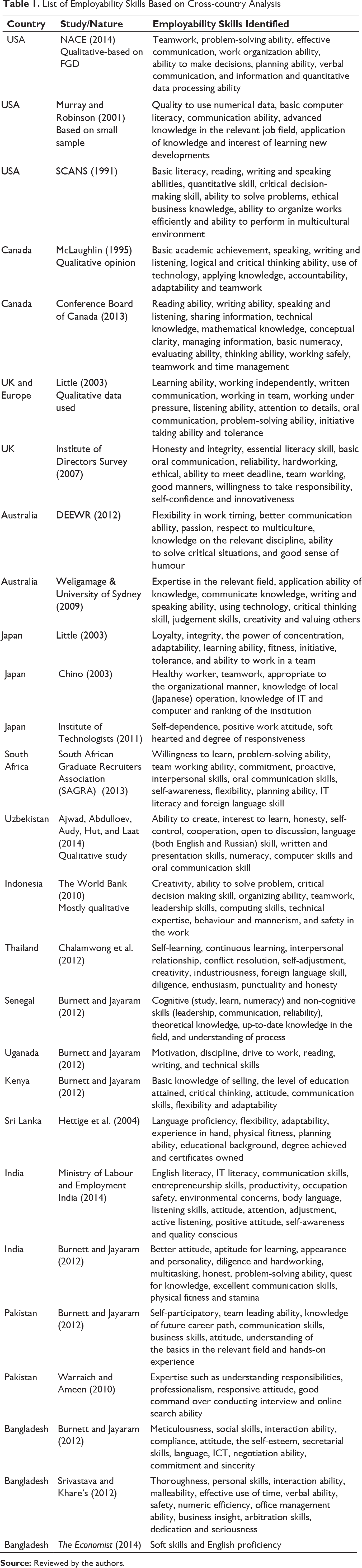
The stated studies on Bangladesh are mostly qualitative and based on interviews with the corporate managers, and thus the findings lack statistical significance. One of the common limitations of the stated studies is that none of them explored the differences in skill requirements as perceived by local and MNCs—a significant gap our study intends to minimize.
Nature of HR Practices in Multinational and Local Companies in Bangladesh
Existing studies suggest that even though MNCs blend global personnel policy with local priorities, there has always been a tendency to implement “host country” practices in the international subsidiaries (Pudelko & Harzing, 2008). A standardized practice is convenient for the headquarters of MNCs. However, MNCs usually try to strike a balance between global policies with local responsiveness for better outcomes. A significant number of MNCs operating in Bangladesh practise the same. For example, Miah and Hossain (2014) found that foreign garment companies prefer home country HRM policies especially in selection, recruitment, training and performance appraisal. However, those multinational companies follow local practices in compensation and benefits. The study also revealed that many local companies do not have formal HR policies and others follow typical HR practices. Considering the findings mentioned earlier, it can be argued that despite local and MNCs operating in the same industry, HR practices and skill requirements can vary significantly between them. This study will shed light on this important issue.
Research Methods
Measures
Authors sorted out 97 employability skills (criteria) at the initial stage by reviewing the available literature. A judging panel comprising five members with extensive teaching experience in HR management courses has been utilized to refine the initially sorted 97 items (the similar approach used by Chowdhury, 2016; Shimp & Sharma, 1987). Considering the objective of the study, the committee advised dropping of eight items, incorporate three attributes (namely information management skill, major courses taken and image of the educational institution) and rephrase 11 skills from the initial list. The panel argued that “operations and systems analysis” skills are mostly technical tasks, and entry-level business managers do not require those abilities. Again, panel members suggested spreading “team work” skill into team-position qualities such as encourager, front runner and assessor. Finally, experts recommended using a five-point scale on the refined items to get the perceptions of the target respondents. After the initial refinement, we had 93 skill attributes altogether.
In the next stage, we discussed the retained 93 attributes with a HR manager who has working experience in both local and MNCs. The manager suggested rephrasing of 10 attributes to make them more relevant to the objective of the study and reducing two more items from the refined list. The manager also agreed on using the proposed scale. After incorporating all the suggestions, 91 items were retained. We prepared a formal questionnaire by using the refined 91 items and with a cover page. The instrument was then sent to an English expert to check grammatical accuracy. Finally, to pretest the contents of the questionnaire, we conducted a pilot study with 15 HR and marketing managers of two private companies. Many of them suggested dropping two items namely “commercial awareness” and “investigation skills”.
Questionnaire
A mixed-mode, however, fixed-alternative questionnaire which contains dichotomous questions, multiple choice questions and scale-based questions was administered for the data collection (similar approach used by Chowdhury, 2016). First segment of the instrument contains demographic questions (gender, the type of company, the type of industry, the size of the company and length of experiences), and the second section asked about 89 skills attributes. Respondents put their opinion regarding the importance of the items on a five-point Likert scale, where 1 and 5 stand for “not at all important” and “most important”, respectively.
Respondents and Data Collection
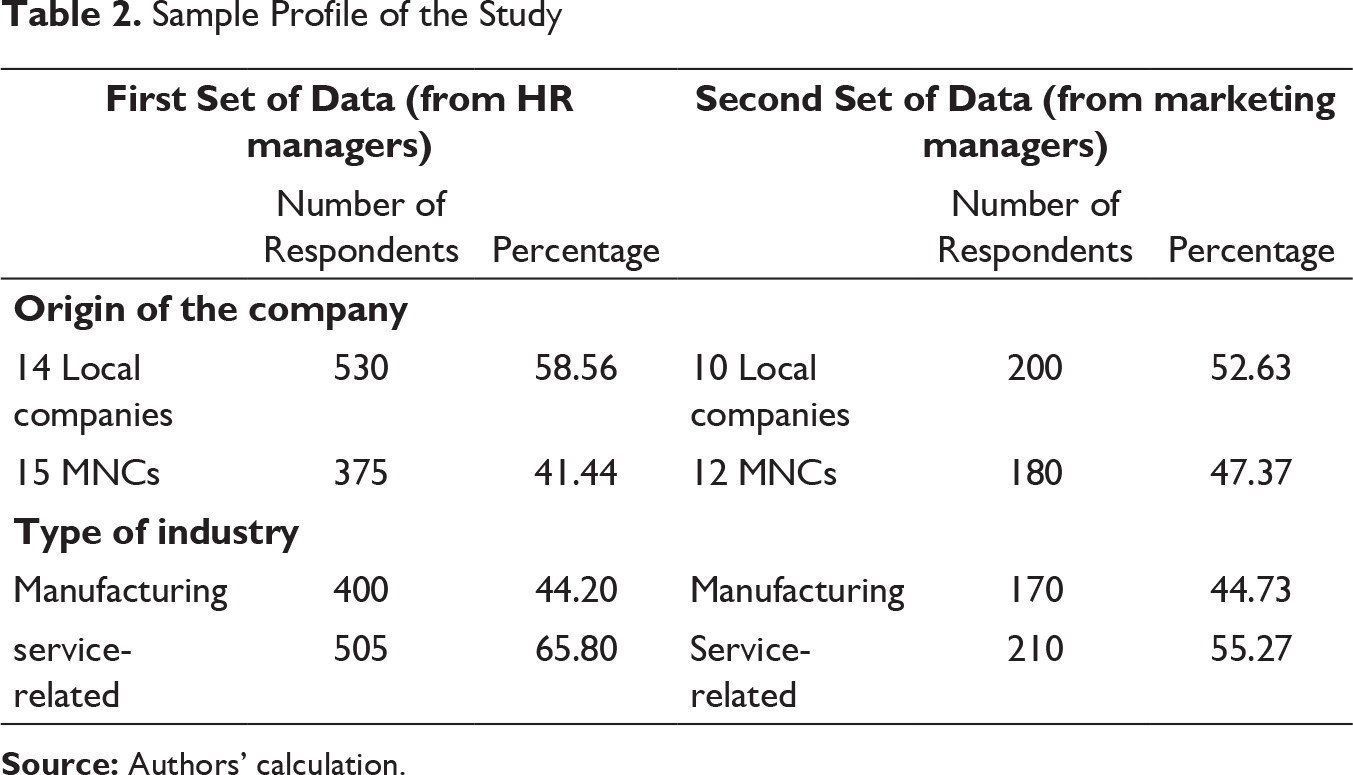
Authors collected two sets of data—one for exploratory analysis and another for confirmatory study—purposively from mid-level and strategic-level HR and marketing managers of local and MNCs. We controlled the sampling procedure to collect data from different industries (both manufacturing and service oriented, with technical and nontechnical operations). The data were collected through the snowball sampling approach. In addition, 1285 usable data have been collected from the managers of 24 local companies and 27 MNCs. Table 2 shows a sample profile of the study.
Data Analysis Plan
As our primary objective was to explore the critical employability skills along with their dimensions, structural equation modelling (SEM) was utilized. The SEM approach was chosen due to its theoretical similarity to the development of multidimensional index, and its greater statistical significance (as mentioned in Hair, Black, Babin, & Anderson, 2016) is compared to other multivariate methods such as regression.
Employability Skill Index Development Process
Step 1: Exploratory Factor Analysis
Sample Profile of the Study
Items Dropped in the First Stage EFA and the Possible Reasons
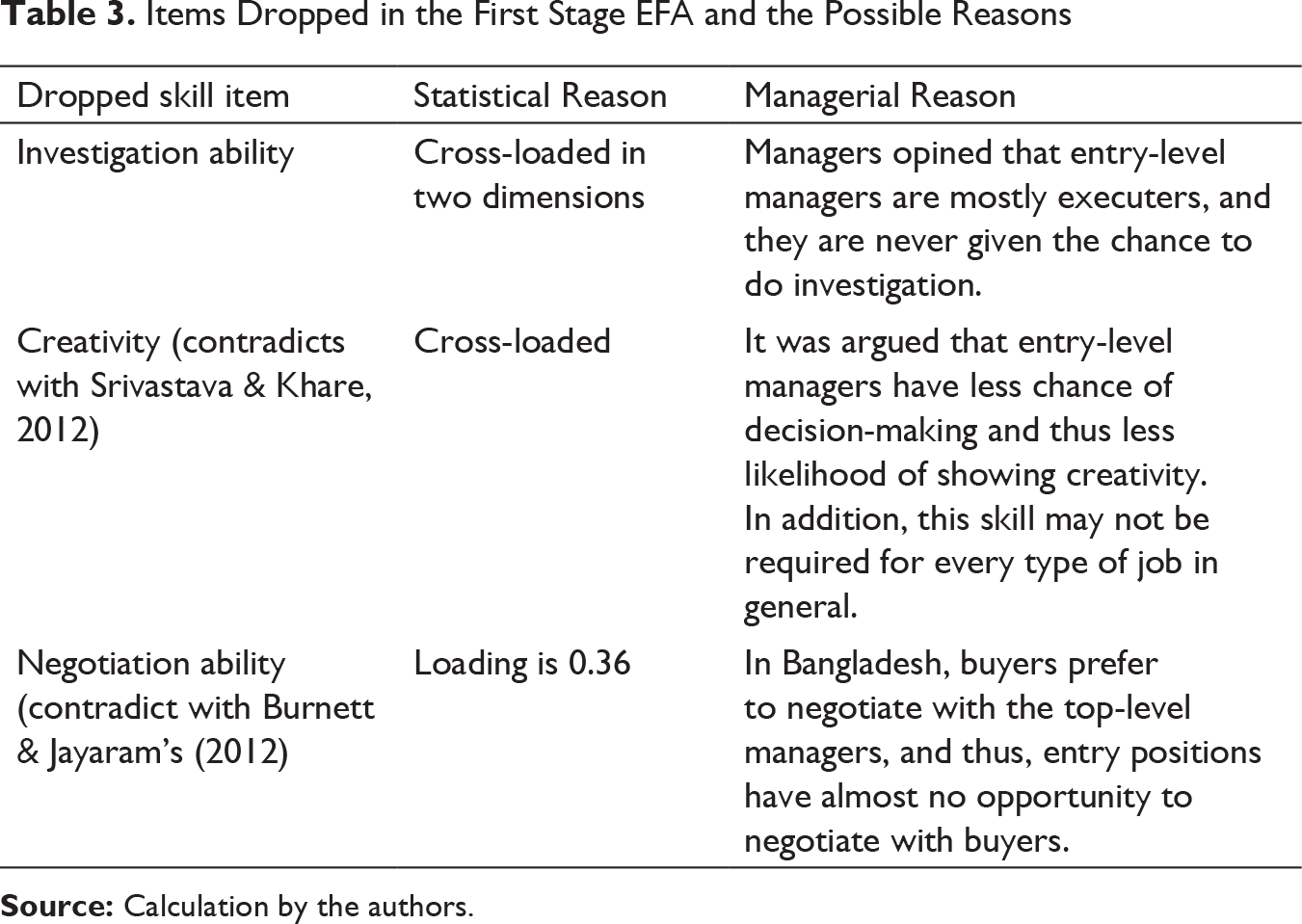
Surprisingly, we observed that the item called “brand image of the educational institution” has been dropped due to the low loading of 0.39. This finding can be demotivating to those students who went through tougher admission tests and got the chance to study in high ranking universities.
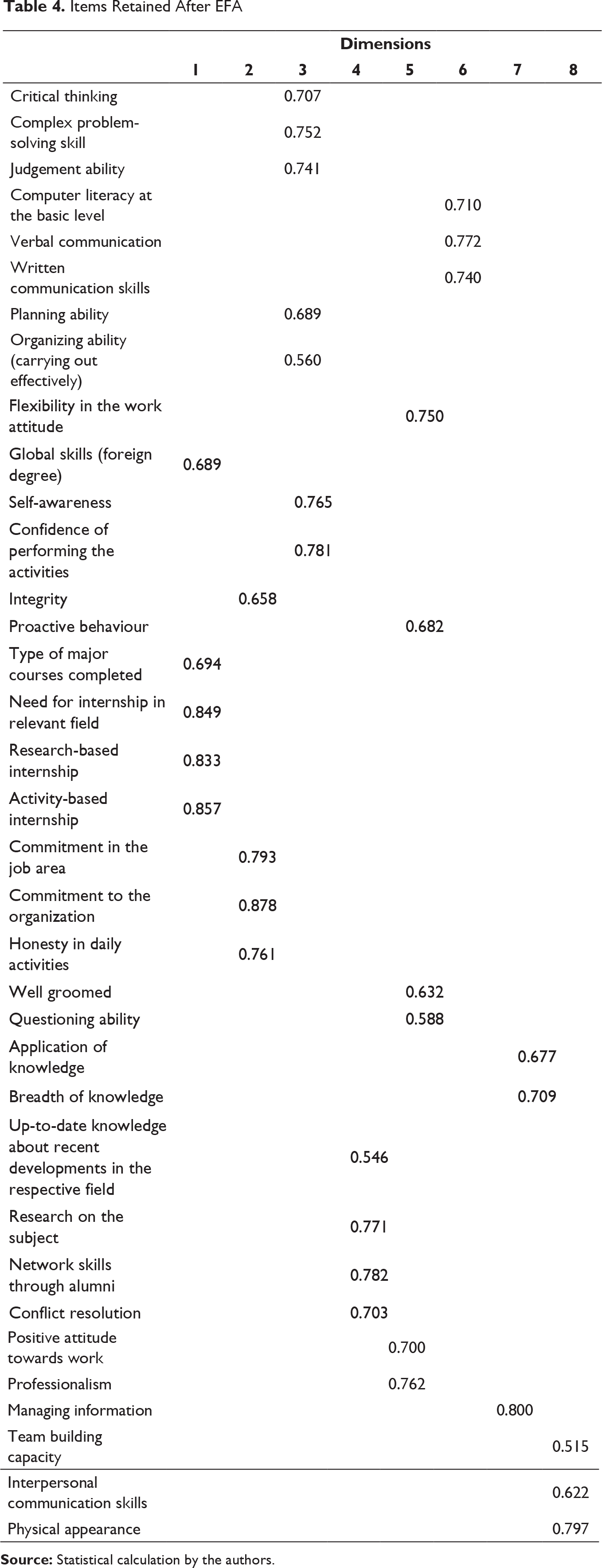
Items Retained After EFA
Stage-2: Confirmatory Factor Analysis
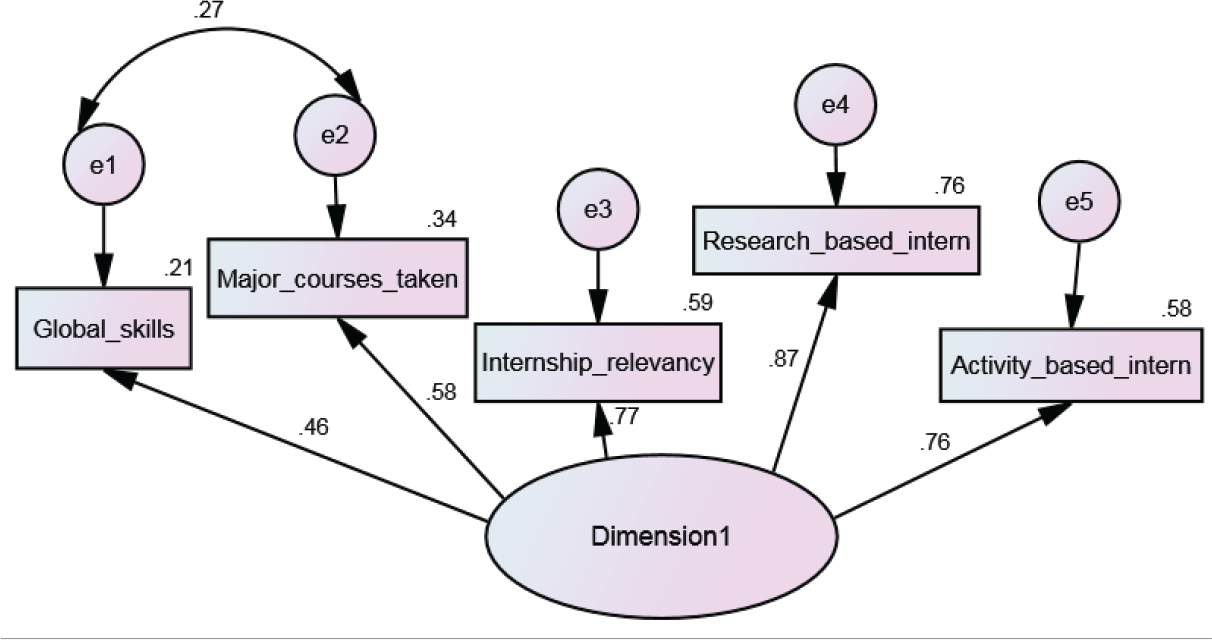
The authors have collected 380 new responses (refer to Table 2) from the marketing managers of 10 local companies and 12 MNCs to run confirmatory factor analysis (CFA) (1:10 responses per variable maintained). In CFA, we decided to retain those statistically significant (p < 0.05) skill attributes that had the loading greater than 0.40 (Chowdhury, 2016). In addition, the dimension and the index would be considered acceptable under satisfactory fit index (RMR < 0.040, GFI > 0.90, CFI > 0.90, NFI > 0.85, RMSEA < 0.05, Pclose > 0.05 and Hoelters > 200 and lower modification index [MI]) (as suggested by Chowdhury, 2016; Hair et al., 2016).
CFA of the first dimension and its corresponding five skill items (found from EFA, Table 4) revealed that all items were statistically significant with loading higher than 0.40. Two skill items namely “global skills” and type of major courses completed were found to be correlated. With the suggested adjustment, results for RMR, GFI, CFI, NFI, RMSEA, Pclose, and Hoelters were found to be 0.031, 0.975, 0.986, 0.967, 0.043, 0.252 and 148/206, respectively. These results signify exceptional fit of the dimension and its corresponding skill attributes (refer to Figure 1).
The authors followed the same CFA procedure for the remaining dimensions and their underlying items. In that process, all remaining attributes were found to be significant with loading higher than our cut-off value. Thus, we decided to keep all eight dimensions and their underlying 35 attributes. Our CFA results show that, when considered individually, eight dimensions and their corresponding 35 skill attributes had acceptable fit values. We then decided to check the extent to which these dimensions and their attributes are well-suited to each other as a single index.
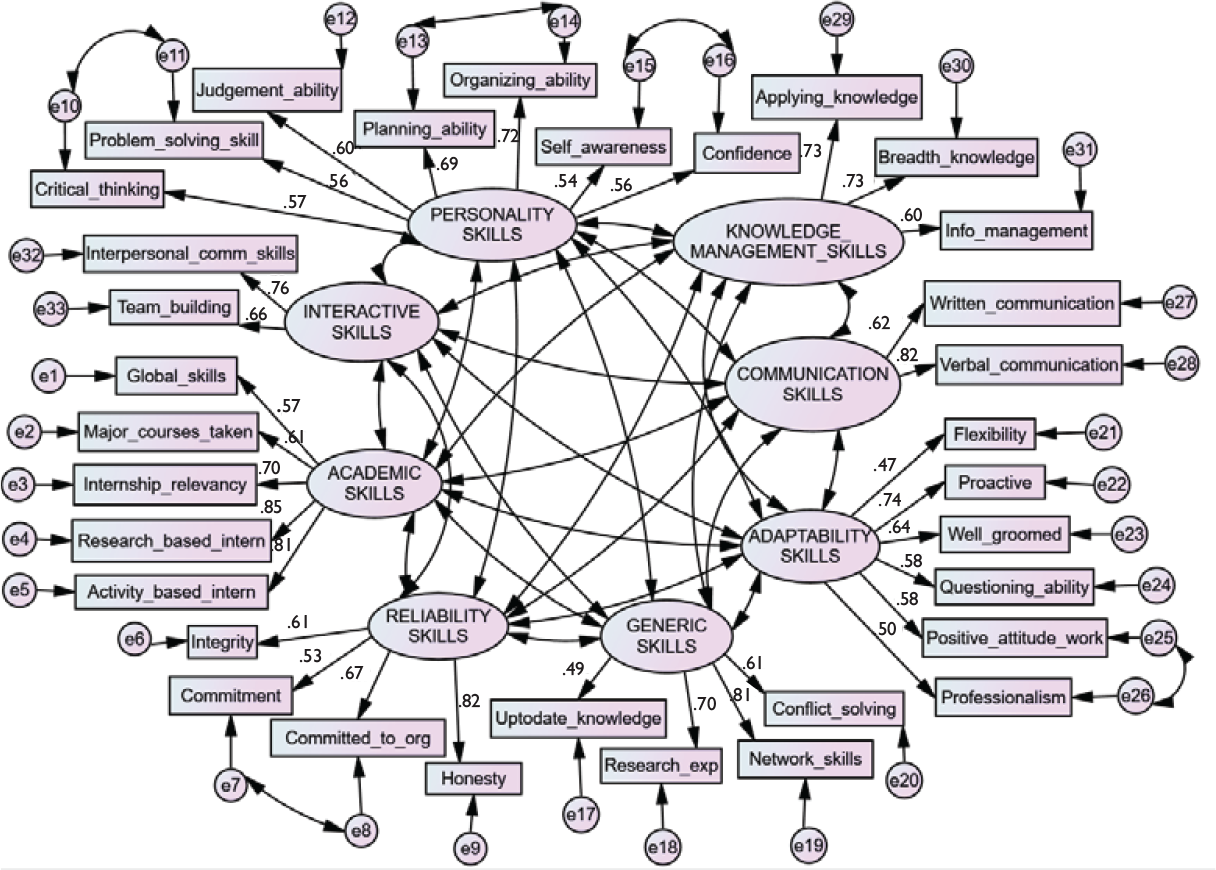
Final Stage: Constructing the Employability Skill Index for Bangladesh
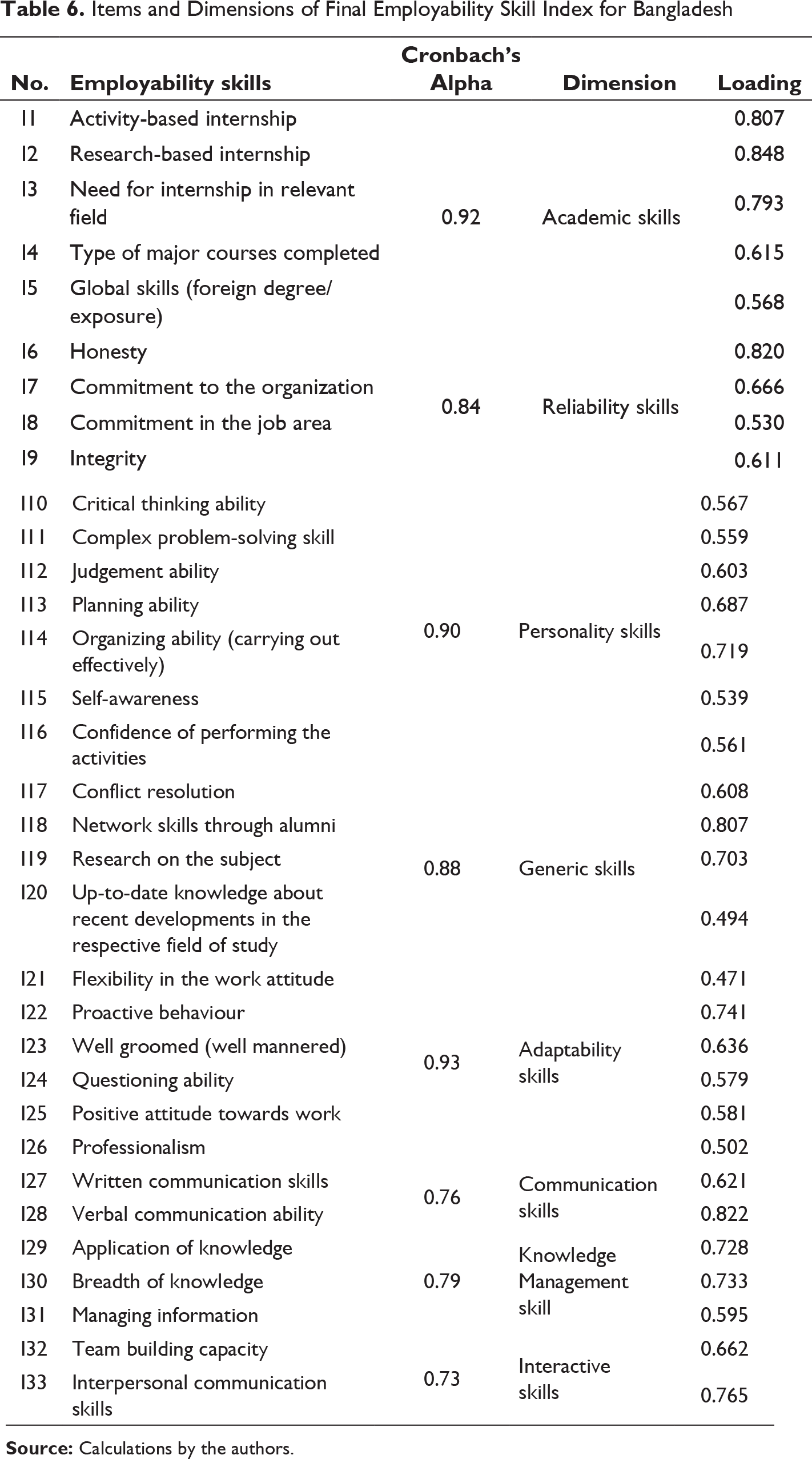
Retained 35 items and eight dimensions were tested in the structural model (as shown in Figure 2). By running the index twice, we found two skills, namely, “basic computer literacy” and “physical appearance” with loading 0.25 and 0.38, respectively, which are lower than our cut-off value (0.40). Also, the goodness-of-fit values resulted to be moderately satisfactory with several higher MI results. By dropping the stated two items and adjusting the MI items, we re-ran the index. With the suggested refinements, results show that all items have loading greater than our cut-off value with RMR, GFI, CFI, NFI, RMSEA, Pclose and Hoelters values of 0.048, 0.91, 0.93, 0.89, 0.046, 0.32, and 244/298, respectively. Final eight-dimensional 33-item “Employability Skill index” for Bangladesh is shown in Figure 2, and loading values of skill items are reported in Table 5. Cronbach’s alpha of the scale is found to be 0.92, which confirms high reliability and internal consistency of the index.
Convergent Validity Testing
Items and Dimensions of Final Employability Skill Index for Bangladesh
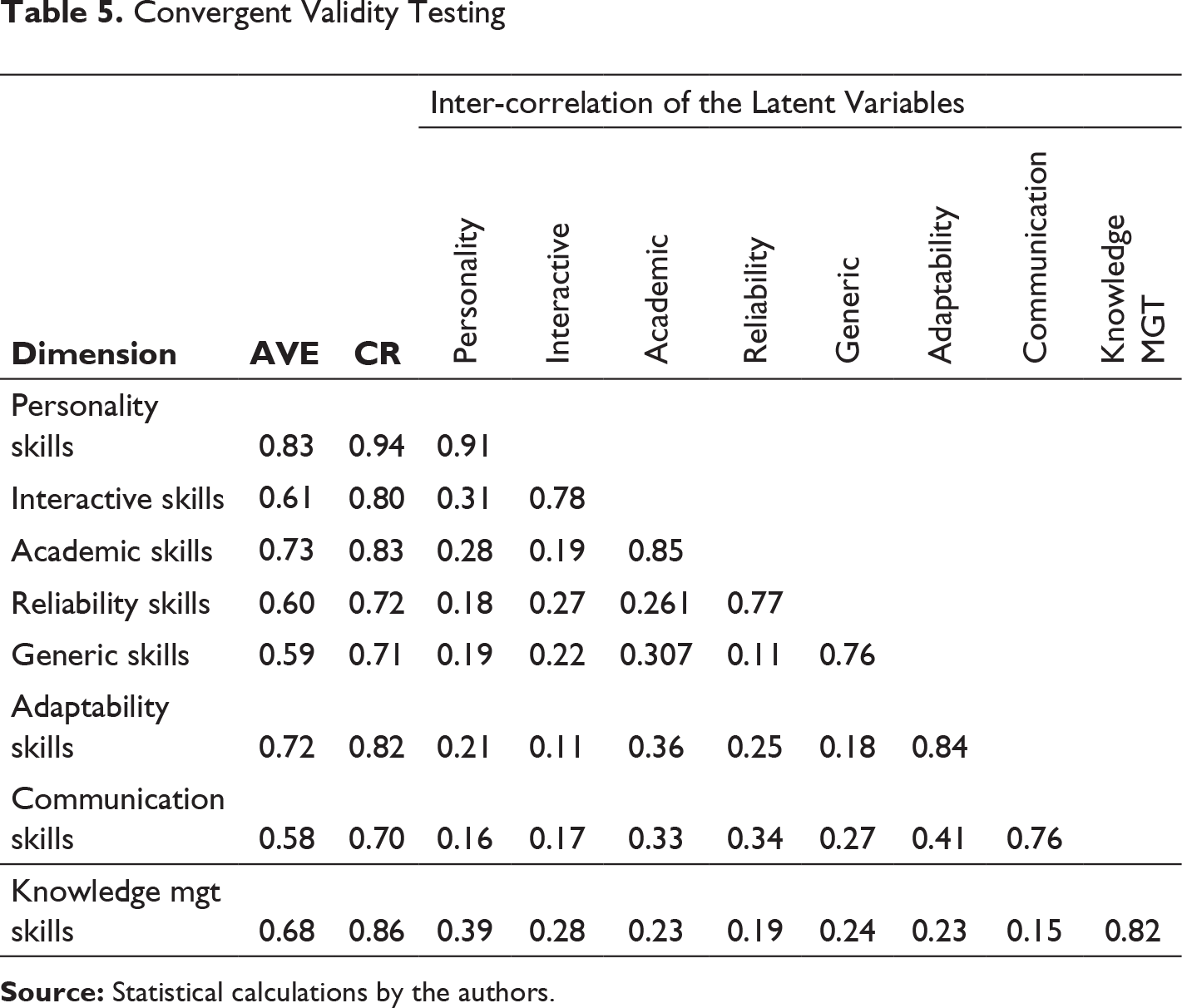
All AVE values that are greater than 0.50 approve convergent validity of the dimensions (Hair et al., 2016). Dimension correlation (the square root of AVE) as shown in Table 5 (refer to the right diagonal values) signifies that each dimension is highly correlated to the items of its own than to the items of other constructs. These findings signify both discriminant and convergent validity of the index. We then checked the cross-loading values, which confirmed that item loadings within the dimension are greater than loading of the items in another dimension—approval of discriminant validity. Finally, to check the multicollinearity of the index, we calculated variance inflation factor (VIF) values. All VIF values (ranging from 1.31 to 2.19) were lower than the threshold of 5.00, and therefore it can be concluded that our index is free from multicollinearity problem.
A quick look at the skill items (major courses were taken, global skills, internship in the relevant field, research-based internship and activity-based internship) under the first dimension can reveal that these are the qualities that reflect the academic skills acquired by an individual. By considering the type of competencies, we termed this dimension as “Academic Skills” dimension of the index (the similar name was suggested by Whetten & Cameron, 2007). Again, skill items (such as honesty, commitment towards the employer and the position, and integrity) under the second dimension show that these are the attributes every candidate should have to create a positive impression and trustworthiness in the workplace. Therefore, we named this dimension as “Reliability Skills” aspect of the index. By following the same pattern, we called other dimensions as “Personality Skills”, “Generic Skills”, “Communication Skills”, “Knowledge Management Skills”, “Interactive Skills” and “Adaptability Skills” dimension (many of them are supported by Whetten & Cameron, 2007).
Results and Discussion
Our results on total index (Table 6) suggest that “research-based internship” is the most important (loading is 0.84) employability skill (consistent to Bilsland, Nagy, & Smith, 2014) to Bangladeshi employers followed by “verbal communication skill” (0.82) (similar findings in Tharunya & Kottawatta, 2014) and “honesty” (0.82). Employers also suggested that the students should complete the internship in the relevant areas. These are important messages for the local universities that they should encourage more research-oriented and field-specific internships. Managers also suggested that presentation ability, mainly verbal communication, is another important skill they would like to see among the candidates. A quick look at the skills with higher priority (shaded ones in Table 6) shows that Bangladeshi companies put more emphasis on “Academic Skills” while recruiting entry-level executives (also reported in Chowdhury & Miah, 2016).
Ranking Employability Skills for Local and Multi-National Companies
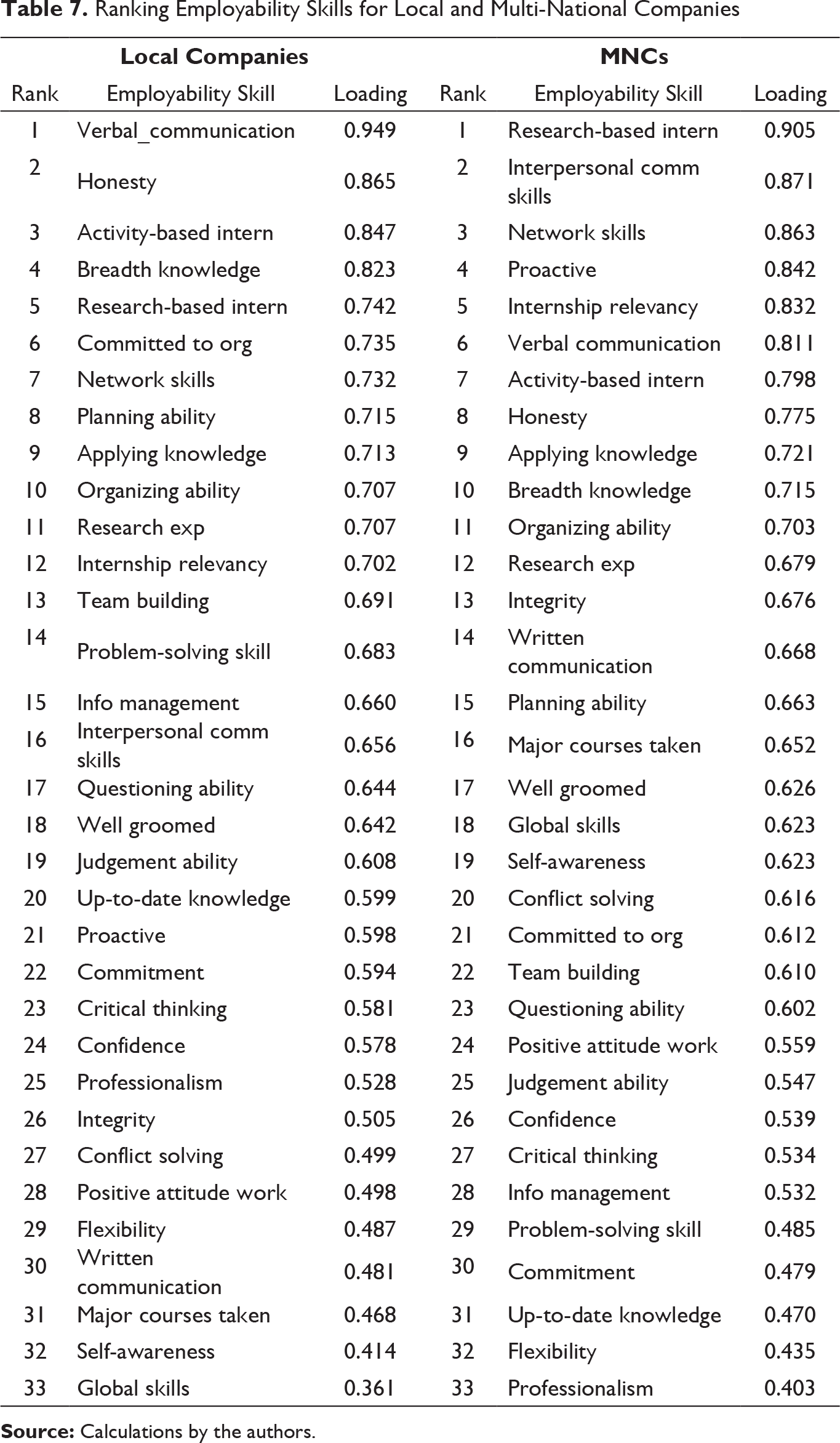
Local companies have more inclination towards items related to Reliability Skills dimension as honesty and commitment to the organization (loading is 0.73) are top priorities (similar finding in Pitan, 2017). Local employers prefer committed employees with less regular job switching history—another message for the candidates planning to build career with local employers. Managers of MNCs opined that network skill is crucial for target market expansion, and thus this item is of high value (0.86) to them. MNC managers also argued that honesty is an important attribute (0.77). MNC managers further claimed that commitment to the organization is preferred, but as an employer one should accept the fact that employees always respond to better offers of other companies.
MNC managers rated proactive skill (0.84) as one of the most important attributes (also found in Raihan, 2014). These managers mentioned that they preferred candidates who can take initiative and work with minimal supervision. It can also be seen that both local and MNCs have interest towards knowledge management skills such as applying knowledge and breadth of knowledge. For this reason, MNCs prefer research-based internship where candidates get opportunities to apply and utilize in-depth knowledge. Managers of MNCs said that, nowadays, they conduct case-based recruitment tests to check the problem-solving ability of the candidate. Communication skills, primarily verbal communication (0.81) and written communication skills (0.66), are also important among MNC managers (similar findings by Suneela, 2014). For local companies, verbal communication is more important. To develop communication skills among students, we firmly recommend assigning project report along with the verbal presentation.
It can be seen that personality skills such as problem-solving skill (0.48), critical thinking ability (0.53), confidence in the workplace (0.53) and judgement ability (0.54) are of less importance to MNC managers. However, local employers rated the stated skills highly (similar finding in Mwita, 2018). It is also evidenced that both local and MNC companies put more emphasis on organizing ability (0.70 and 0.70, respectively) and planning ability (0.71 for locals and 0.66 for MNCs). These are important findings for job seekers. Many respondents stated that they expected timely work completion with an immaculate finishing even under tremendous work pressure. Universities should design their courses with more exams and report so that students can enhance their ability to organize and work under pressure. To enhance the planning ability of the students, faculty members should assign more case studies and in-class assignments.
Local employers rated global skills as the least significant (loading is only 0.36) attribute. Managers of local companies argued that they like to see their future managers with local knowledge and expertise. As most Bangladeshi companies are still operating nationally, they have less interest towards foreign exposures. On the other hand, global skill is very imperative (0.62) in MNCs (consistent to the result of Pitan, 2017). MNC managers mentioned that they frequently send their executives overseas either for a short time or with permanent posting. Thus, overseas degree, and know-how about foreign culture and doing business are vital to MNCs.
MNCs have shown less weight (0.47) towards up-to-date knowledge about the work-field. Many managers of MNCs said that they provide regular training to their employees whenever any change takes place in the industry. Thus, they have shown less importance to this item. Local employers, on the other hand, rated this skill moderately highly (0.59). Reading relevant journals, magazines and online publications in addition to textbook can be useful for students to acquire knowledge about recent development in the respective job field.
Policy Implications and Limitations
The findings of this study can be helpful for students, universities and employers. Considering the results and objectives of the study, the following suggestions seem to be important:
As major courses taken by the applicant are found to be an important determinant of employability, forming and utilizing business advisory board comprising the top level managers can be helpful in designing (or updating) the academic curriculum at the university level. We also believe that universities may offer both research-based and activity-based internship to the students and internship must be on the relevant field. In such respect, universities must establish a career placement centre, which will be responsible for communicating with the companies for internship and job placement.
As critical thinking ability and problem-solving quality are two major employability skills required by both local and MNCs, we recommend incorporating case studies in syllabus so that students can enhance their ability to apply knowledge while solving real-life problems. Inviting industry experts as guest lecturer can be helpful for the students to learn about real-life operations.
To improve communication skills of the students, this study feels that the medium of instruction is vital. Faculty members should encourage students to communicate in English during lecture hours. Also, more group projects along with verbal presentation can add value. It is expected that faculty members assign more case studies and group reports in order to enhance planning skills and communicability of the candidate.
Contemporary knowledge of the relevant discipline is another crucial requirement for jobs in corporates. We recommend that universities organize frequent seminars and workshops with the corporate managers to inform students about the recent development in respective sectors. Students are strongly recommended to read recent business journals and periodicals to obtain contemporary knowledge in their field of study.
To enhance self-awareness, confidence and positive attitudes among the students, we recommend universities to organize soft skill development sessions through experts in the relevant fields. Employers can also organize similar sessions to improve the mentioned traits in their newly recruited people.
Organizing case competition and other brainstorming sessions (such as creative ad making, debate, business proposal making) at the university level can be effective to build personality skills of the students. We believe that employers and universities can jointly organize these sessions, which in turn will establish good relation between the two parties.
The study suffers from a number of limitations. First, being the use of snowball approach in data collection which sometimes may not allow the researchers to find sampling error. However, it is important to mention that snowball approach seemed to be the only option as it was difficult for the authors to get access to a large number of companies for data collection. Also, there are numerous studies that were conducted by using the snowball approach (see for instance, Berry, Carpenter, & Barratt, 2012; Connelly & Ones, 2010). Second, the results of our research are based on the data assembled from managers and executives of marketing and HR only. The authors could not collect opinion of accounting and finance managers due to time and financial constraints. Finally, it is important to note that employment is dictated by both demand and supply side forces. The results of this article are mostly employers’ demand driven and based on current labour market condition.
Conclusion
In summary, this study found that research-based internship, commendable verbal communication skill, honesty in the workplace and internship in relevant area are the most desired qualities in candidates seeking employment in Bangladesh. Category-wise results revealed that candidates interested to work in local companies should acquire better verbal communication skill, need to do activity-based internship, should be committed to the organization, and must have problem solving, critical thinking and judgement abilities. On the other hand, a candidate seeking career in MNCs should build better interpersonal communication skill, need to do internship in relevant fields, should carefully choose major courses, should build a worthy business network, should be able to do works with minimum supervision and must have organizing and planning skills.
The current study based on a large sample offers an employability skill listing technique and proposes an eight-dimensional 33-item “Employability Skill Index” for Bangladesh. The study then ranked and compared the differences in skill requirements by local and multinational companies. Results of the study found that local companies put more emphasis on reliability skills such as commitment to the organization and integrity. MNCs rated interactive attributes (for instance, team building and interpersonal communication ability) and academic skills (such as research-based internship, major courses were taken and global skills) highly. Our study also revealed that MNCs have less interest in personality traits such as judgement ability, confidence in performing works, critical thinking ability and problem-solving skills. However, local companies have shown more interest in these traits.
To make academic skills of the students more industry-oriented, this study recommends forming business advisory committee while updating the course curriculum at the universities. To build professionalism among the students, we recommend introducing soft skill training. To develop critical thinking, planning and organizing ability, this article suggests more case studies in the course syllabus. Universities are also suggested to focus more towards enhancing students’ verbal and written communication skills, which are highly demanded by both local and multinationals.
The present study is based on data collected from the managers only. Future study will collect data from the students regarding their perceptions of employability skills to develop another skill index. Afterward, the skill items of two different indexes can be examined to explore the variances in opinion between employers and students on employability competency requirements. Finally, to study the gap between employer’s demand and student’s achievements, a more efficient step would be to investigate the degree to which the students acquired the reported 33 skills of the existing study. All these investigations can enrich the knowledge of the job seekers and can help the universities to redesign their course curriculum in a more effective way to address the requirements of the employers.
Acknowledgement
This study was conducted by North South University Annual Research Grants-2016–2017. The authors would like to thank two anonymous reviewers and Associate Editor of the journal for their insightful comments which helped to improve the quality of the article. The authors also acknowledge the copy editing support provided by Mr Omar Nasif Abdullah, Lecturer-North South University, Bangladesh.
Declaration of Conflicting Interests
The authors declared no potential conflicts of interest with respect to the research, authorship and/or publication of this article.
Funding
This study was conducted by North South University Annual Research Grants-2016–2017.