







Abstract
Career guidance is a field that has evolved over a century. Career guidance instruments are used as tools in the process of providing career guidance. A key clientele of career guidance providers are young adults, and several career guidance instruments have been developed especially for them. Though extensive and rich, the knowledge in this area is scattered and has several complex issues that need investigation and could therefore benefit from a structured literature review. We reviewed 369 journal articles published between 1973 and 2023 from 5 electronic databases using the Preferred Reporting Items for Systematic Reviews and Meta-Analyses checklist (Moher et al., 2009). This 50-year review of articles on career guidance instruments for young adults includes (a) a profiling of papers, (b) details of career guidance and career guidance instruments used by researchers, (c) a comprehensive critique of the existing literature—identifying ‘what we do not know’, and (d) 17 actionable and specific research suggestions around methods, use of theory, the design and development, and the conceptualisation of career guidance instruments for young adults. In doing so, we specify the way forward, or ‘where we need to go’, in researching career guidance for young adults in general and, more specifically, the instruments used by identifying theoretical, conceptual and methodological gaps in the same. In our article, we also highlight ‘where we need to go’ from a more practical perspective, highlighting the shared responsibility of all stakeholders, including policymakers and career guidance practitioners.
Introduction
The young adult population is at an all-time high, with over 1.8 billion, out of which almost 90% live in developing countries (United Nations Population Fund [UNPFA], 2025). The challenges faced by them are diverse and vary by the economic, cultural, social and religious capital of each individual (Colombo et al., 2018; Stein et al., 2013). This has been further fuelled by the health and economic crisis created by the COVID-19 pandemic (Émon et al., 2021; Horigian et al., 2021; Weaver et al., 2021). Globally, unemployment among young adults stands at 13.5% (International Labour Organization [ILO], 2020), where young people under 25 were 2.5 times more likely to be unemployed than older people (OECD, 2025). They also experience a number of stressors as they enter young adulthood while balancing competing demands related to their academic, social and personal needs and relationships (Thompson et al., 2019). These turbulences reemphasise the need for professional intervention in terms of career guidance and counselling to assist young adults in facing these challenges.
Career counsellors have been recognised as experts who use test results from psychometric assessments to match persons with occupations (Emmett & Harkins, 1997). The most vulnerable and frequent seekers of assistance from career counsellors are young adults. Though there are no records available on the number of young adults who seek career counselling annually in the world, in the OECD countries, 58% of school students have spoken to a career counsellor during their schooling (Organisation for Economic Co-operation and Development [OECD], 2021). Young adults seek guidance on careers for multiple reasons, including, but not limited to, making sense of the world of work and identifying how they can fit in (Laher & Cockcroft, 2017). The main reason for this is the complex interaction of psychological dynamic processes that a young adult goes through in choosing a profession (Galustyan et al., 2019). The choice of profession requires young adults to form effective attitudes towards professionally important qualities and conditions, namely professional self-determination, personal development and inclusion in work, as well as building their own model of continuing education (Galustyan et al., 2019). Due to the unique psychological needs of young adults, career counsellors also tend to use multiple instruments based on multiple theories and empirical foundations in tackling their career-related needs (Whitmarsh & Mullette, 2009), such as the use of various career guidance scales, frameworks and models.
Even after more than a century since the career guidance movement, the terminology used in career development and its lack of clarity are long-standing issues in the field (McMahon, personal communication, May 23, 2021), and this is prominently observable regarding career guidance instruments, where terms such as scale, questionnaire, tool, model, intervention and inventory are being used. In this article, we use the term ‘career guidance instruments’ as an umbrella term covering any and all the instruments that seek to gather information on the career-related needs of individual/s and/or provide present- and/or future-oriented career guidance to such individuals.
The substantial literature on career guidance instruments shows us that the career theories have shifted along with the dramatic changes in the world of work during the last four decades, from reductionist, rational decision-making and matching models to more adaptive and integrative conceptualisations (Schlesinger & Daley, 2016). Similarly, career counselling, a discipline that traditionally favoured an objective (positivist) approach, where career counsellors traditionally depended on ‘proven’ assessment methods, is moving to a framework that combines essentials of quantitative approaches with narratives and qualitative assessments with a postmodern approach (Maree, 2010).
Over the past half-century, with the increasing popularity of career guidance as a professional field (Shah et al., 2021), researchers and practitioners have feared (a) the threat of introducing low-quality career guidance instruments (Hooley & Rice, 2019; Mackin & Hansen, 1984), (b) overuse of tests (Fouad, 1993; McMahon, personal communication, May 23, 2021), (c) introducing and using moderately effective career guidance instruments (Essig & Kelly, 2013; Whiston & Buck, 2008), (d) use of career guidance instruments with a lack of theoretical bases (Watson & McMahon, 2021) and (e) inability to respond to the current challenges of the labour market, all of which lead to aggravated inability of career guidance and career guidance instruments to meet the career development needs of young adults (Parola & Marcionetti, 2020).
Despite the profusion of research on career guidance and the development of various instruments for the use of guiding young adults in careers, we lack a comprehensive and critical understanding of the career guidance instruments that exist for guiding young adults to utilise them in more meaningful ways. It is against this backdrop that we conducted a structured literature review (SLR) being guided by Siddaway et al. (2019) and the structured steps specified in the Preferred Reporting Items for Systematic Reviews and Meta-Analyses (PRISMA) checklist (Moher et al., 2009). Thereby, we provide a comprehensive account of the literature to date on career guidance instruments available for young adults. We aimed to answer two research questions:
What are the methodological approaches and contexts used in the study of career guidance for young adults? What does this imply? What are the career guidance instruments that are used for guiding the careers of young adults? How can these instruments be categorised? What is the relevance and usefulness of these instruments in guiding young adults?
In answering these questions, we critically review the literature, analysing it based on theories and context specificities underpinning the development of career guidance instruments as mentioned in the career guidance-related literature. We also offer a research agenda based on the evidence of this comprehensive account of career guidance instruments. The findings of this research can be a potential resource for researchers, practitioners and policymakers, as we specify the way forward by providing detailed guidance on the way forward for all stakeholders in providing the best career guidance to young adults, specifically with the use of career guidance instruments.
The article is organised as follows. First, we provide a brief overview of the methodology that we adopted to conduct this SLR. This is followed by a description of the articles that are included in this review. We then discuss the main findings in the literature (data), presenting (a) the concept of career guidance, (b) the career guidance instruments for young adults and the role of those instruments, and (c) impact of context specific factors on career guidance instruments. Emanating from this discussion, we (a) identify the key career guidance instruments for young adults that have been tested in research, and (b) propose a research agenda for future work on career guidance instruments for young adults. We conclude the article by presenting the theoretical and practical implications of this research, as well as its limitations.
Methods of Data Collection and Analysis
We adopted Siddaway et al.’s (2019) SLR guidelines and the steps specified in the Preferred Reporting Items for Systematic Reviews and Meta-Analyses (PRISMA) checklist (Moher et al., 2009) for locating factual information in the literature and reporting the findings.
To search for career guidance instruments, 23 synonyms were identified, and 216 combinations were used as search strings. We searched for articles between January 1973 and December 2023 using the PROQUEST, SCOPUS, Emerald, Taylor and Francis Online Journals, Oxford Journals and JSTOR databases, as they are among the most widely used databases in management research (Gusenbauer & Haddaway, 2020) and were deemed useful for conducting a SLR on career guidance instruments. Google Scholar was used for backward and forward searches. A total of 369 articles were selected based on their relevance, as shown in Figure 1. These 369 articles were collaboratively reviewed by both the authors prior to inclusion to mitigate any biases or omissions when making decisions on the inclusion or exclusion of articles.
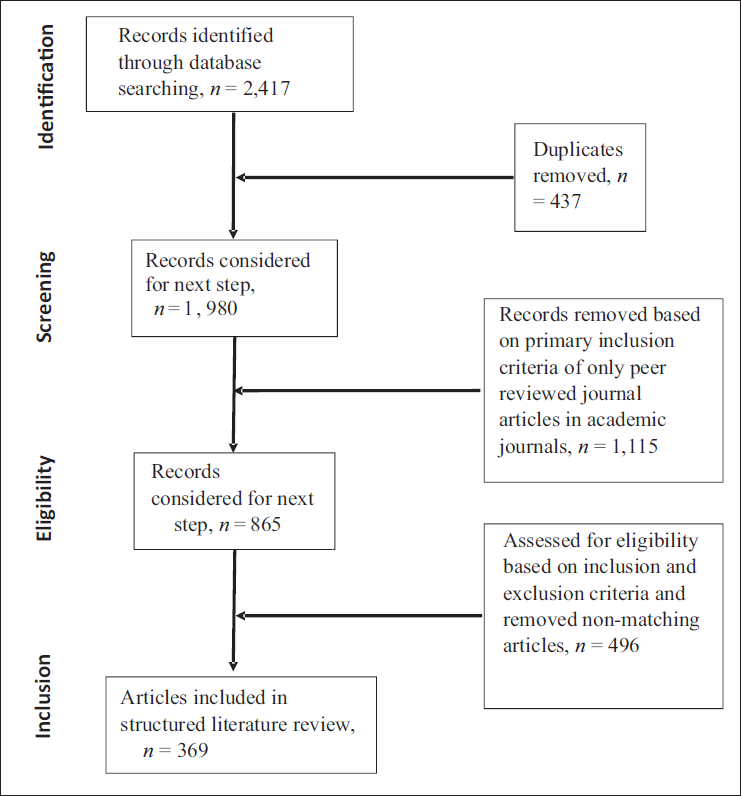
The data used for this article consist of only peer-reviewed articles published in academic journals, excluding conference papers, which are usually considered less mature than those in peer reviewed journals (Bandara et al., 2015). The inclusion criteria were (a) articles in English, (b) availability of full text, (c) research on young adults aged 18–29 (Konstam et al., 2015), and (d) the words ‘career guidance instrument’ and/or strings used anywhere in the body of the article. In addition to excluding those not matching these inclusion criteria, articles on young adults with any disabilities, such as students with special educational needs and disabilities (SEND), were excluded. Except for excluding young adults with SEND, including young adults of all the other populations was a systematic preventative step taken to minimise bias and errors in the study’s selection process. Content analysis was carried out to recognise and organise the constructs and variables related to career guidance instruments, with the use of MS Excel for data management purposes.
Key Findings
The key findings are presented according to the PRISMA checklist (Moher et al., 2009) and under a similar approach taken by Cooke et al. (2019) in their SLR on international HRM. We generated tables and charts from columns with key factors of the Excel workbook. Some of these charts and tables were further analysed to identify patterns among data. Similar to Cooke et al. (2019), we adopted inductive categorisation rather than an a priori coding system to enable us to uncover emergent thematic foci in the literature. The lack of prior SLRs on this theme was one of the key influences for us to adopt this approach. Codes were created and finalised by both authors by mutual agreement.
We present the key findings under two main categories: (a) a brief description of the reviewed articles (Section ‘Description of the Articles Reviewed’), and (b) key content captured on career guidance instruments (Section ‘What We Know of the Key Content on Career Guidance and Career Guidance Instruments’). We also draw from the SLR of Modem et al. (2022) on career growth in organising our findings, presenting what we know, what we do not know and where do we go.
Description of the Articles Reviewed
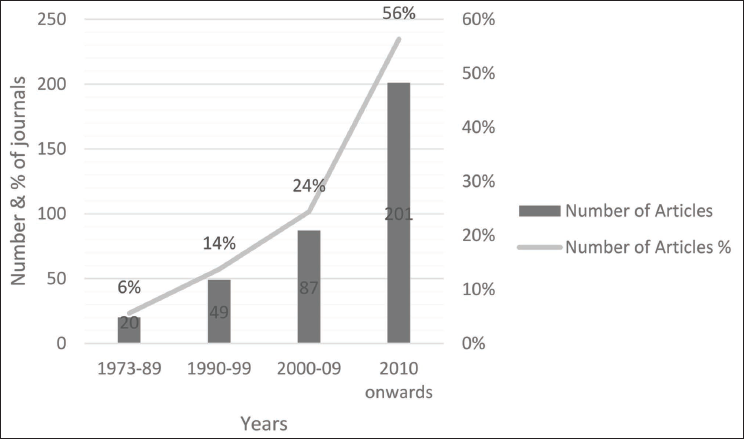
In this section we discuss the (a) published year of articles, (b) journals in which the selected articles were published, (c) type of articles and (d) methods used (research approach, research strategy, data collection instruments, research contexts and research respondents). Figure 2 captures the 369 articles and their year of publication (captured by period) from 1973 1 to 2023.
Number of Articles Published (Decade-wise).
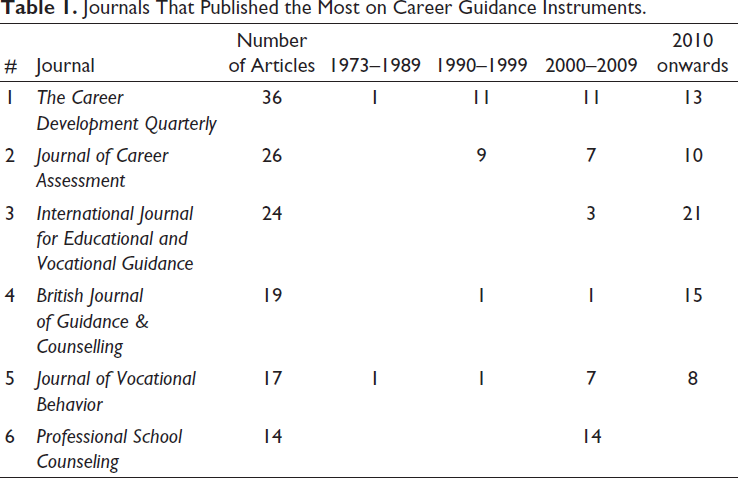
The 369 reviewed articles were published in 156 journals. Table 1 shows the journals in which more than 10 articles were published and the number of articles categorised by year. A total of 148 articles (40.1%) out of the total articles reviewed were published in these 7 journals.
Journals That Published the Most on Career Guidance Instruments.
Of the 369 reviewed articles, 262 (71%) were empirical articles, 104 (28%) were conceptual articles and 3 (1%) were review articles. Though the number of articles doubled between the first and second decades of the 21st century, the number of conceptual articles published in the same period have remained constant at 28% each, indicating that the contribution of empirical research is increasing.
Research choices in the empirical studies have changed over the periods. Regarding the research approaches used, quantitative research is higher, with 136 articles (52%), followed by qualitative at 92 articles (35%) and mixed at 34 articles (13%). However, there has been a dramatic shift in the research approaches used between the 1980s and the second decade of the 21st century, with quantitative research reducing from 82% to 43% and qualitative research increasing from 18% to 44%. Surveys are the most popular research strategy used for empirical research (147 articles—56%), followed by case studies (58 articles—22%), ethnographies (49 articles—19%) and experimental studies (8 articles—3%).
Researchers have used 24 different data collection instruments. On 77 occasions, they have used multiple data collection instruments. Out of these instruments, surveys done with online surveys and over the phone surveys are the most popular.
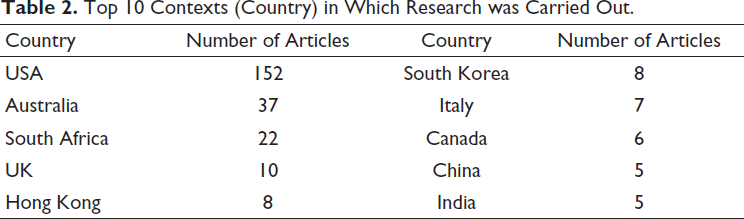
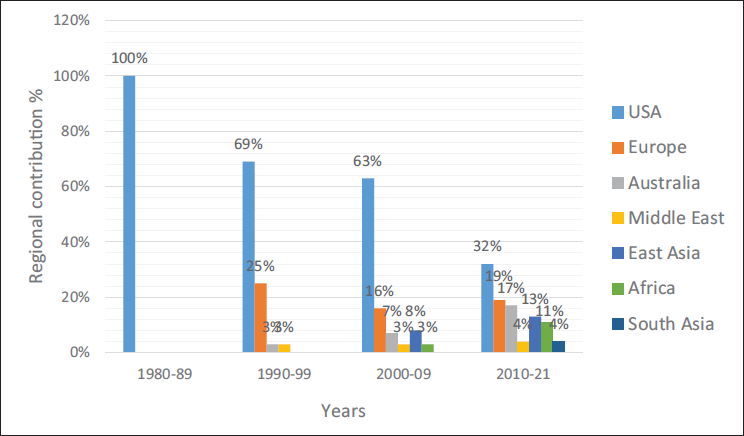
Forty countries (research contexts) have been studied in the 369 reviewed articles for this study. During the initial years, most research on career counselling has happened the USA. Over time, the research conducted in other countries and regions has increased (see Figure 3). Nevertheless, a staggering 49% of the 369 articles have come from and/or are based on North America. On the other hand, the South Asian region had a minimal research contribution, with just 2% of the 369 articles. Table 2 gives the top 10 country contexts that have been used in the studies.
Top 10 Contexts (Country) in Which Research was Carried Out.
Change of Regional Contribution of Research Over Time.
Regarding the sample and respondents used in the studies, the highest number of research articles (153 articles) have been conducted using students at higher education institutes (HEIs), followed by school students (102 articles) and young adults from a combination of sectors (97 articles).
What We Know of the Key Content on Career Guidance and Career Guidance Instruments
In this section, we discuss (a) definitions of career, career guidance/counselling and career guidance instruments, (b) key constructs and contextual factors considered in career guidance literature, (c) theories discussed and/or considered, and (d) career guidance instruments used and/or discussed based on the literature reviewed.
Definitions of Career, Career Guidance/Counselling and Career Guidance Instruments
Only seven articles have mentioned or cited a definition of the term career in the articles reviewed. Some authors have given their own definitions (e.g., Cochran, 1994), while some have cited the definitions given by others (e.g., Srour et al., 2013). Thirteen articles have either given their own definitions regarding career guidance and/or counselling (e.g., Yuen et al., 2019), while some have used the definitions provided by others (e.g., Dodd et al., 2022; Malchiodi, 2004).
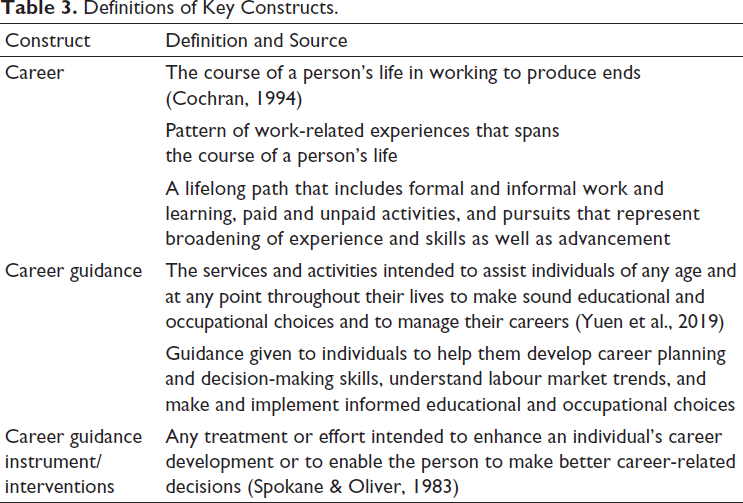
Except in one article (Whiston, 2002), which cites Spokane and Oliver (1983), other authors have not defined what career guidance instruments are in their articles. Some authors (e.g., Hackmann et al., 2019) have defined the instruments or the nature of the instrument that they have used but not the specific term ‘career guidance instruments’. Table 3 provides examples for definitions of key constructs.
Key Constructs and Contextual Factors Considered in Career Guidance Literature
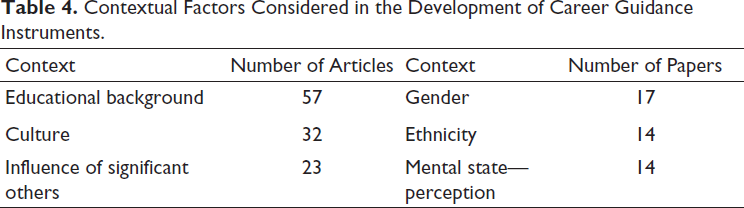
A total of 195 constructs related to career guidance have been discussed in the articles reviewed. Of these 195 constructs, career choice of individuals is the most discussed (in 132 articles), followed by specific factors such as culture, ethnicity, gender and educational background (in 101 articles).
Context specificity can be defined as a phenomenon that has occurred in a particular place, circumstance or state (e.g., while intoxicated) and is displayed only in that context and not when testing occurs in another context (American Psychological Association, 2021). There were 203 articles that considered at least one context-specific factor, and 73 others that considered 2 or more. Altogether, 104 context-specific factors were identified. Table 4 shows the context-specific factors that were considered in more than 10 of the reviewed articles.
Definitions of Key Constructs.
Contextual Factors Considered in the Development of Career Guidance Instruments.
Theories Discussed and/or Considered
A total of 208 articles have used and/or discussed 78 theories. Among these theories, John Holland’s Theory of Career Choice (1973) tops the list, closely followed by Savickas’ (2013) Theory of Career Construction Counselling for life designing introduced in 2009. Though most articles mentioned their theoretical contribution or the use of a theoretical lens, a considerable number failed to mention how the theory was used in the study or how the study’s findings contributed towards the theory.
Career Guidance Instruments Used and/or Discussed
A total of 129 career guidance instruments were used and/or discussed in the 369 articles reviewed. Out of the 129 instruments, 112 instruments were discussed only in a single article/research, but the rest of the instruments were considered in multiple articles. The most popular instruments are the Self-Directed Search (SDS; Holland, 1985) and other instruments developed based on Holland’s theories, such as Career Key (Jones, 1993). While 55 out of the 129 instruments can be categorised as quantitative or positivistic [e.g., SDS (Holland, 1985); Career Key by L. K. Jones in 1987 (Jones, 1993)], 50 instruments were qualitative in nature [e.g., Systems Theory Framework developed by McMahon and Patton in 1996 (McMahon et al., 2003)]. Nearly 20 instruments took a mix of quantitative and qualitative nature (e.g., Maree & Sommerville, 2008; Owen & Wilson, 1980), and there are a few instruments that remain vague in this demarcation [e.g., Situation-based Career Interest Assessment/SCIA (Sung et al., 2017)]. Though the use of post-positivistic narrative approaches became popular in the early parts of the 21st century, it was noted that even during the early 1980s, some researchers have experimented with narrative techniques [e.g., Fantasy as a career counselling tool (Owen & Wilson, 1980); Occupational Family Tree technique (Dickson & Parmerlee, 1980)]. Jepsen (1994) indicates that the Thematic Extrapolation Method/TEM of Super also has a narrative base, very much similar to post-positivistic approaches, and suggests that contemporary revisions will enhance the use of same.
Discussion on Key Findings
This discussion on key findings will be presented under the same thematic areas in the third section and its subsections and/or in combinations where discussing interrelationships is important. We critically evaluate the articles based on the profiling done in Section ‘What We Know of the Key Content on Career Guidance and Career Guidance Instruments’ and specifically critique the career guidance instruments that were identified, as it is a main objective of this SLR.
Critique of the Demographic Details (Publication Year, Journal, Type, Methods) of the Articles Reviewed
When considering the year of publication, the journal articles on career guidance instruments for young adults have doubled from one decade to the other (except between the last decade of the 20th century and the first decade of the 21st century). The factors impacting this increase can be seen as (a) increasing popularity of the subject of career guidance and especially that of young adults (Shah et al., 2021), (b) the increase in the number of journals covering research on career guidance, and (c) easier accessibility and retrievability due to the increase in digital platforms (Siddaway et al., 2019). Even though the number of articles published each year is on the rise, and journals are allowing more space for career guidance researchers, there is a need to improve the visibility and impact of such research. Regarding the type of articles published, the increase in empirical articles, along with the proportionate increase in articles on career guidance instruments for young adults, is a positive indicator for the field of study.
The change in research choices among researchers from a dominating quantitative approach in the 1980s to a mix of quantitative, qualitative and mixed methods in the 2000s is no surprise. Supported by the world trends in research and with activities such as those from the American Psychological Association (APA) conferring legitimacy upon the Society for Qualitative Inquiry in Psychology (SQIP) (Bailey, 2014) in related fields, this allowed and encouraged the increase in qualitative and mixed-method research. In addition, the impactful increase in using a post-positivistic philosophical stance in developing career guidance instruments could also be a factor encouraging this shift. These increases are linked to the significant contribution of case studies as a research strategy and the use of multiple data collection instruments, providing an indication of the growing number of mixed-method research. However, dominance in quantitative research can be seen in the popular usage of survey as a research strategy as well as a data collection instrument.
This information, in combination, shows us that the empirical research based on qualitative approaches and/or mixed methods will add more value to this field in the future. Yet, at the same time, it will be necessary to defend these qualitative research approaches in the face of criticism over validity and reliability by using frameworks for assessing quality in qualitative research (Spencer et al., 2003).
In terms of the research contexts, increased research from other developed countries other than from North America (e.g., McMahon et al., 2003—Australia; Seifert, 1994—Austria; Hirschi, 2009—England; Sampson et al., 2020—Finland) and developing countries (e.g., Arulmani, 2011—India; Hussain et al., 2014—Pakistan; Maree, 2019—South Africa) is seen as a favourable trend. This slow yet steady change in contribution composition from 1 country to 40 countries during a period of four decades gives hope towards a global development and a wider and diverse participation and understanding of career guidance. Out of the seven articles on/or from South Asia, all the articles have been published during the last decade. India has contributed to five (Arulmani, 2011; Jain & Jain, 2013; Kumar & Das, 2019; Mattoo, 2015; Thenmozhi, 2018), and Pakistan has contributed to two (Hussain et al., 2014; Zahid et al., 2020) of those seven articles. This provides a positive indication of emerging regional recognition of career guidance for research purposes. On the flip side, even after more than a century since the initiation of career guidance, these articles represent merely 20% of the total number of countries in the world. It is an irony to note this slow progress irrespective of (a) 1.8 billion of young adult population—the subjects of the discussed instruments, of whom nearly 90% reside in the developing countries (OECD, 2025), and (b) the wide global spread of standardised education systems and unanimous recognition of the importance of career guidance for young adults by the highest representative influential organisations, such as the United Nations (UNICEF, 2019). This highlights the importance of increasing the active participation of these institutes, policymakers, researchers, academics and practitioners in developing this field across the globe and setting quality assurance standards on services and service providers, leaving no table unturned.
Sixteen of the 156 journals where the 369 articles were published had country-specific names (e.g., Australian Journal of Career Development; Canadian Journal of Counselling). Out of these 16 journals, 13 journals have only published articles related to career guidance instruments based on their own countries. The three other journals have provided space and opportunity for research from other country contexts. Given this, it is important to encourage researchers from other countries to publish articles of international standards in top-ranking journals and to increase collaborative research among researchers from different countries for the overall development of this field.
Except in four articles, where samples and respondents were career guidance practitioners and parents of young adults, all the others have used samples from Higher Education Institutions (HEIs) and schools. With most of the researchers representing this sector, it is no surprise that the highest sample contributions were undergraduates or schoolchildren. Sung et al. (2017) provide a justification for these selections of samples, indicating that career assessment tools, in practice, assist teenagers with discovering their interests, skills and values, and that they are especially important for teenagers who are facing fierce examination stress because they do not have time to explore their options. Yet, even in the USA, only 40% of young adults get enrolled in colleges (National Center for Education Statistics, 2021). This indicates that, even though students from HEIs represent the majority of the samples used in the studies, the majority of young adults are not represented through these samples. With most researchers generalising their findings via quantitative studies and the use of samples that do not adequately represent the population of young adults, the generalisability and transferability of the findings of these studies will be limited.
What We Do Not Know: A Critique on the Career Guidance Instruments Available for Young Adults
Career guidance traditionally favoured a positivist approach and depended on ‘proven’ assessment methods (Maree, 2010). Therefore, we are unaware of the existence of and the outcomes of the usage of qualitative approaches and techniques as assessment methods or using them together with quantitative/positivist methods.
Further, the traditional career theories were typically normed on white middle-class American men and emphasise individualistic culture (Shea et al., 2007). We observe this in the literature reviewed, where a majority of articles focus on these groups, which could be attributed to the lack of presence of career guidance research across the globe. Therefore, we do not know the most appropriate theories to be used in researching young adults from other diverse backgrounds.
Furthermore, almost 90% of the career guidance instruments available for young adults are designed and tested in the developed world itself, posing questions about the relevance of these instruments for worldwide use. Therefore, we are still unaware of the best instruments to be used for guiding the careers of young adults in the developing world.
Even though researchers have emphasised the importance of the use of theoretical bases in the development of career guidance instruments, the inability of 150 reviewed articles to indicate the underpinning theories used in their discussion of career guidance instruments can have serious implications on the usage of such instruments in the long term by key stakeholders. This implies that our understanding of what theories would best assist us with the development of career guidance instruments for young adults is nuanced.
It is also noteworthy to mention the lack of definitions of the terms related to career guidance instruments in these reviewed articles. Among the 129 instruments mentioned in the 369 reviewed articles, different names such as scale (e.g., Career Decision Scale), model (e.g., Cultural Preparation Process Model), assessment (e.g., Assessment of Career Decision Making), intervention (e.g., Life Story Intervention), technique (e.g., Three Anecdotes Technique), survey (e.g., My Vocational Situation Survey), questionnaire (e.g., Career Decision-making Difficulties Questionnaire), inventory (e.g., Strong Interest Inventory), test (e.g., Career Exploration Test) and even a combination of two terms (e.g., Career-Development Assessment and Counselling model) have been used. Very few attempts at differentiating the terms were detected in the literature (e.g., citing Walsh and Betz (1990), Fouad (1993) defines assessment as a ‘process of understanding and helping people cope with problems’ and test as a ‘method of acquiring a sample of behaviour under controlled conditions’). In general, these terms have not been defined or differentiated by the various authors. Therefore, we do not possess a common understanding of what a career guidance instrument is. This clearly establishes the importance of clarifying/explaining the terms and being consistent in their use, where the terminology used in career development and its lack of clarity are long-standing issues in the field (McMahon, personal communication, May 23, 2021). This lack of clarity leaves the readers to get the literal meaning of the terms that are not defined. This reinforces the necessity of differentiating these terms and compiling a career guidance glossary at the international level, benefitting all stakeholders.
Out of the 129 career guidance instruments discussed in the reviewed articles, a whopping 112 instruments have been reported only once (i.e., in a single article)—indicating inadequate replication studies being conducted to enable the testing and retesting of these 112 career guidance instruments for their validity, reliability and applicability. Even among the 17 instruments that were used or tested more than once, some have been retested by the person who originally developed them and not by other independent researchers. Given this, we are unaware of how suitable the instruments that are being developed are for the use of providing guidance for young adults. Therefore, further research is needed to verify and test these instruments by a wider representation of researchers and in different contexts.
As observed in the literature, there could be differences in contexts created by external factors, such as PESTEL (Hu et al., 2022), and internal factors, such as psychological states, which could have an impact on the career choices (Abkhezr & Gaderer, 2023) of young adults. Many researchers have consciously tried to overcome these contextual barriers created by context specificity through different adaptations of the career guidance instruments used in guiding the careers of young adults. Some have used translated versions of Western models for non-English-speaking samples to overcome linguistic barriers [e.g., Chinese Form of the Career Adaptability Scale (Ocampo et al., 2020); Urdu version of the Career Key (Hussain et al., 2014)]. Some others have used country-specific instruments to overcome country-specific cultural, racial and ethnic differences [e.g., Cultural Preparation Process Model (Arulmani, 2011); Vocational Interest Survey for Australia (Simons et al., 2000)]. Luk-Fong (2005) has gone a step further by suggesting a framework for developing a hybrid guidance curriculum, drawing together Western traditions of developmental contextualism in guidance and Chinese traditions of Confucian humanism in moral education. However, concerns over using translated instruments have been raised: (a) conceptual definitions and the context of their operationalisation, (b) ecological relatedness, and (c) the assumption of the differential paradigm, centred around the rationale of individual differences to determine the experimental design and decisions about psychometric procedures (Duarte, 2005). Another criticism of contextual factors was raised by Hanson et al. (2000), who highlighted that career interest tests are gender-biased and colour-coded in pink and blue and that the results of these tests are interpreted based on the sex of the test taker. This argument was raised and supported by many other scholars, declaring that the traditional one-size-fits-all career theories and instruments emanating thereof lack comprehensiveness (Callanan & Greenhaus, 1999). Trying to overcome such concerns, Hwang et al. (2019) have used the gender and social class model (GSCM) of Heppner and Jung (2013), which suggests that gender and social class are key contributors to early socialisation and the ability to access required resources for career development. However, there is still a lack of understanding of how best to embed context specificity in developing and testing career guidance instruments for young adults. Therefore, we encourage researchers to explore ways and means of making allowances for embedding context specificity in developing and testing career guidance instruments for young adults.
Where Do We Go—Discussion on the Way Forward in Career Guidance Research and the Use of Career Guidance Instruments for Young Adults
Based on the critique on career guidance in general and on the career guidance instruments in particular, we provide the theoretical and practical recommendations below as the way forward.
The Use of Theory in the Development of Career Guidance Instruments
Mackin and Hansen (1984) predicted that the field of career guidance is getting covered by a spread of weeds and weak hybrids in the form of career guidance instruments that lack theoretical foundation, comprehensive implementation and evaluative data. As a step towards reversing this trend, it is important that researchers use theory in a robust manner and explicitly discuss the theory underpinning their research for readers to evaluate and understand their work better.
We recommend that researchers use new theories [e.g., Chaos Theory of Careers (Pryor & Bright, 2003); Sustainable Career Theory (De Vos et al., 2020; Van der Heijden & De Vos, 2015); Job Crafting Theory (Wrzesniewski & Dutton, 2001); Career Shock Theory (Akkermans et al., 2018); Paradox Theory (Smith & Lewis, 2011)] rather than solely relying on widely used and more older theories [e.g., Holland’s Theory of Vocational Personalities & Work Environments (Holland, 1997); Super’s Life-Span Theory (Super, 1990); Maslow’s Hierarchy of Needs (Maslow, 1943); Herzberg’s Two-Factor Theory (Herzberg et al., 1959); McClelland’s Theory of Needs (McClelland, 1961); Expectancy Theory (Vroom, 1964); Theory of Work Adjustment (Dawis & Lofquist, 1964); Social Learning Theory (Bandura, 1977); Locus of Control Theory (Rotter, 1954); Career Choice and Decision-Making Models (Tiedeman & O’Hara, 1963)]. This will enable to capture the new developments in careers (e.g., digital careers and protean careers), as well as attitudes and expectations of young adults, such as work–life balance, inclusion and belongingness, as well as their employability capital and job crafting.
Researchers can also use a combination of more than one theory (e.g., a combination of an older and newer theory/theories, a combination of older theories or a combination of newer theories to suit the context for which the career guidance instrument is being developed), as advocated by Keele et al. (2020) and McMahon and Tatham (2008), to improve adequacy and sufficiency. Such multiplicity of theories used in a correct combination (Salleh et al., 2013) would bring novel insights into the research on career guidance and career guidance instruments.
Researchers can refer to commendable instruments that have been developed [e.g., Career Adapt-Abilities Scale (Savickas & Porfeli, 2012) and Career Futures Inventory (Rottinghaus et al., 2005)] and the papers that discuss them for guidance on how best to incorporate theory into the development of career guidance instruments for young adults. Care needs to be given to how to robustly use these theories from a methodological standpoint, including (a) adequate association with the theory to identify construct definitions, dimensions, domain boundaries, conceptual overlaps, measurement gaps and operational definitions with the aid of thorough literature reviewing; (b) the generation of a large pool of items with the assistance of theory, experts and past scales; (c) evaluation of content validity across relevance, representativeness and essentiality; (d) scale testing through pilot testing; (e) validation and cross-validation; and (f) final scale refinement. A number of seminal papers on methods in developing instruments (e.g., Hinkin, 1995; Lambert & Newman, 2023; Schriesheim et al., 1993) can be used to guide the process for better instrument development.
The Mode/Approach of Career Guidance
As per our review, career guidance is skewed towards taking a more quantitative form. This is the case with research as well as the instruments used in career guidance. Maree (2010) asserts that career theory, practice and assessments have been accused worldwide of failing to meet the needs of non-White, non-Western, non-‘standard’ populations and that the introduction of a theoretical framework that combines facets of a quantitative approach with qualitative assessment is becoming essential. The need for these flexible approaches is repeatedly emphasised by increasing dynamics in the labour market conditions and requirements and career practices (Antipova, 2021). Furthermore, post-modern qualitative career guidance approaches for protean careers measure career success by subjective psychological achievements set freely by the individual, ceasing the expert nature/status held by career counsellors. Thereby, career counsellors can no longer simply rely on positivistic instruments (Mary & Costalat-Founeau, 2018). Hence, we recommend using qualitative assessment predominantly, while consciously and logically considering the impacts of context-specific factors and limiting the use of quantitative instruments that have funnel structures. Concurrently, practitioners should be aware of the great dangers associated with the myths of using qualitative assessments in psychologically related domains, such as (a) they are easier to use, (b) prior in-depth theoretical knowledge is not essential to operationalise the instrument and/or to interpret the outcomes and (c) effectiveness of the outcomes is not worth the time spent on the assessment (Harper & Kuh, 2007; Pratt & Bonaccio, 2016). Career counsellors and researchers could also benefit from the use of multiple instruments/approaches with a holistic view, to benefit from the advantages of each model and to avoid the limitations that could arise from the use of a single instrument/approach in career guidance.
Embedding Context Specificity in the Development of Career Guidance Instruments
As highlighted in this review, several context-specific factors have been taken into consideration in the study of career guidance. Many researchers have emphasised on important context-specific factors such as cultural differences (Osborn, 2012; Reilly, 2011), minority status of individuals/groups (Day & Nolde, 2009; Maree, 2010), familial and social–contextual factors (Hu et al., 2022; Lowe, 2005), and ethnicity (Harper & Stone, 1986; Sefotho, 2023). Several recommendations have been provided in the literature on how to embed these contextual factors into research on career guidance. Among them are the use of cross-cultural approaches, each counsellor becoming an expert in the cultural ways of counselling strategies for each ethnic group and sometimes its sub-ethnic groups (Harper & Stone, 1986), and ensuring that career guidance instruments are not administered as a global, uniform treatment (Reilly, 2011). Therefore, we stress the importance of contextual sensitivity in the use and development of career guidance instruments as a way forward.
Use of Multi-sampling in Career Guidance Research
Including non-college students and reaching out to the majority of young adults to enhance representativeness in samples in research on career guidance and in the development of career guidance instruments is recommended rather than overreliance on using samples from university undergraduates or students at HEIs. Further, there is criticism on the use of financial incentives, such as money and shopping vouchers, or non-financial incentives, such as course credits, for research participants (Erlen et al., 1999; Resnik, 2015; Seymour, 2012), which can lead to severe misconceptions and issues on credibility. This shows the need for more research on multi-sample norming for career guidance instruments similar to the work of Simons et al. (2000) on the Vocational Interest Survey for Australia (VISA) and also for adherence to strict research ethics in handling respondents used for the studies.
Enhancing Cross-country Research, Capturing Current Trends in Careers and Work in Relation to Career Guidance
Researchers should investigate avenues of conducting cross country research and beyond-border or borderless research in this field. This is of importance as the world is getting even closer due to the rapid developments in communication technologies, professional networking among researchers, developments in the gig economy and diminishing borders between countries, giving employees the opportunity to work for different countries from their homes (Malik et al., 2021). McMahon et al. (2003) note that research on career guidance has been unable to keep pace with changes in the workforce and society. Further, despite the recent trends and developments mentioned above, our literature review only captures an alarming 3% of articles among those reviewed using cross-country data. We therefore suggest collaboration between researchers in different parts of the world. This will benefit South Asian researchers, as they will have more opportunities to engage in research and development related to career guidance and, specifically, to the use of career guidance instruments on and for young adults.
Synthesising Existing Knowledge on Career Guidance
The literature on career guidance is wide and dispersed. This is clear from the lack of consensus on definitions around key terminology in the area. We recommend that researchers conduct scientific meta-analysis, meta-synthesis and systematic literature reviews on career guidance, which will help to collate the already existing knowledge in the area in assisting researchers as well as practitioners of career guidance.
Improving Practitioner Knowledge on Career Guidance in General and Available Career Guidance Instruments
One of the most important matters arising from the reviewed literature is the knowledge of the practitioners on the career guidance instruments and their context-specific appropriateness. With the increasing number of instruments based on and not based on theory, this becomes more challenging than ever. Practitioners need to be mindful of the contextual specificities of the instruments developed, tested and proven successful. Generally, once they get familiar with the guidelines, manuals and procedures of the career guidance instruments, practitioners consider that those instruments can be administered to their clients, considering only the administration part and thinking it is a matter of calculating numbers and categorising the individual according to the test score, rather than emphasising on the accurate interpretation of the data collected from the instrument. In most cases, practitioners overlook the contextual factors of where the instrument is developed and where it is used (contexts of their samples and/or clients). Major criticisms that exist on the use of positivistic quantitative career guidance instruments are that tests, label and predetermine, are imperfect, are biased, obscure talent, invade privacy, are not properly interpreted, measure irrelevant skills, foster mechanistic decision-making, encourage competition and that service providers can misuse tests and misinterpret results, causing serious discouragement and self-doubt in many individuals (Engen & Kapes, 1984). Practitioners should make themselves familiar with the newer forms of career counselling, such as narrative career counselling, which is considered a modern approach and as a way forward if the field is to remain responsive to the needs of increasingly diverse client groups (Akyol & Bacanlı, 2019; McMahon & Watson, 2012). Practitioners should also be aware of the limitations of each of these approaches [e.g., in narrative career counselling, the socially reproduced narratives may be outdated and misaligned with the employment landscape, which could contribute to misinformed individual decision-making (Minina et al., 2020)].
Interventions at Policy-setting Levels
Irrespective of the importance recognised by developed countries and international organisations regarding career guidance for young adults, research of high quality has reached only 22% of the countries in the world. Considering the fact that there can be articles that were not included in this review due to being non-English, the number of countries where research was based is less than 60% of the countries that use English as an official language (
Shared Responsibility in Uplifting the Field of Career Guidance
Responsibility of uplifting the field of career guidance for young adults lies in the work of researchers, practitioners, policymakers and several other stakeholders. Even though the field of career guidance is more than a century old, according to the number of articles reviewed decade-wise, the research on career guidance for young adults is still in its infancy. Therefore, there is a need to take on shared responsibility via active participation based on strengths to achieve progress in this area of study. Stakeholders also need to assess the positive and/or negative outcomes of the usage of career development instruments used on young adults by seeking constant feedback from the users of such instruments for continued improvement of the instruments.
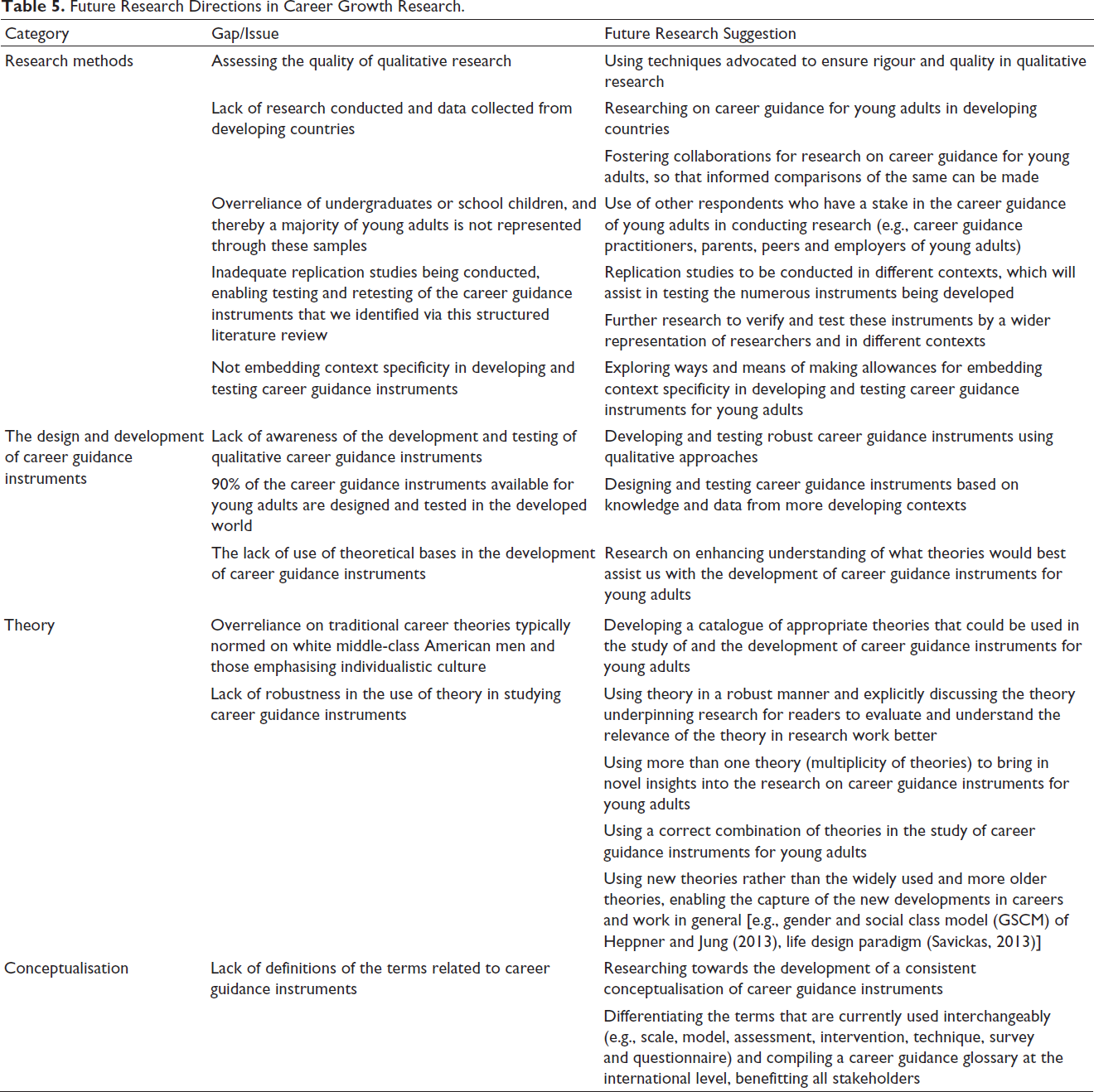
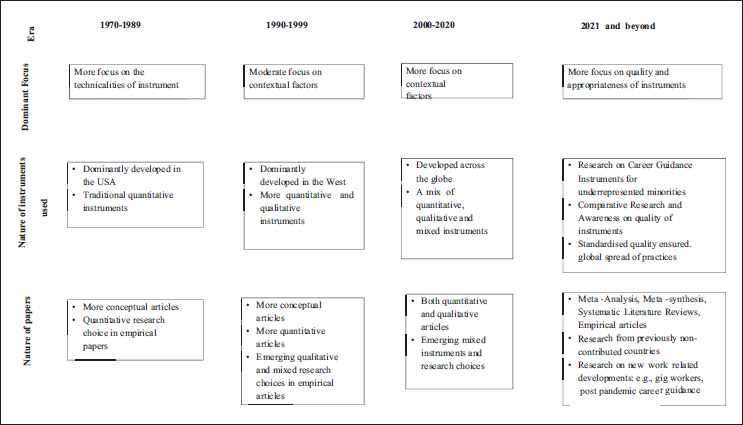
Figure 4 and Table 5 provide a pictorial summary of our systematic literature review on career guidance instruments for young adults.
Future Research Directions in Career Growth Research.
Summary of the Systematic Literature Review.
Conclusion
This SLR synthesises the extant knowledge, builds on existing knowledge and addresses relevant gaps in career guidance instruments focusing on young adults by collecting, comparing, analysing and presenting empirical, conceptual and literature review articles published over the last 50 years. Though we have done a thorough search on key electronic databases, there are many other databases that we did not consider. Hence, we might not have located all journal articles on career guidance instruments for young adults and similarly the ones not within our inclusion criteria, such as non-English articles. Nonetheless, we are confident that our search has captured the bulk of the studies on the topic to meet our objectives. Another limitation is limiting our research to published journal articles and not analysing all manuals, reports, procedures and guidelines pertaining to each career guidance instrument due to accessibility and time constraints. This may have limited our ability to provide comparative and conclusive in-depth analysis regarding the instruments.
Through our SLR, we collate the current understanding of career guidance in general and provide a detailed account of the career guidance instruments that have been developed and used. In the process, we critique the same and suggest how the field of career guidance should progress with multiple stakeholder involvement at research, user, practitioner and policy levels. While we believe that our research provides theoretical and actionable contributions in the form of a way forward for researchers and practitioners alike, we observe the need for rigorous and comprehensive research in the same to further develop and build on our nascent findings.
Footnotes
Declaration of Conflicting Interests
The authors declared no potential conflicts of interest with respect to the research, authorship and/or publication of this article.
Funding
The authors received no financial support for the research, authorship and/or publication of this article.
