






Abstract
Our research focuses on comparing the conflict resolution styles of the Indian and Colombian workforce across three generations: the Baby Boomer generation, Generation X and Generation Y. The study involved a sample of 715 Colombian and 657 Indian respondents. To assess the conflict resolution styles, we employed a questionnaire (Pareek & Purohit, 2018, Training Instruments in HRD and OD) that categorised the styles into five groups: confrontation, compromise, negotiation (approach-based styles), withdrawal and resignation (avoidance-based styles). The findings of our study indicate that both Colombian and Indian workers generally exhibit a preference for approach-based conflict resolution styles. In Colombia, confrontation emerges as the most favoured style, while negotiation is the preferred style in India, regardless of the respondents’ generation or gender. Notably, significant generational differences were observed in Colombia regarding the compromise, negotiation and withdrawal styles, and in India concerning the confrontation and withdrawal styles. Furthermore, our research demonstrates that the Baby Boomer generation displays a considerably higher inclination towards approach-based conflict resolution when compared to Generation Y in both countries.
Introduction
Globally, three generations coexist in the workforce, shaped by distinct political, economic, technological and social contexts. Organisations must recognise and leverage the unique strengths of each generation to achieve success. For instance, the development of a low-cost 3-D printer at Michigan Technological University highlights the value of intergenerational collaboration, where Generation X contributed technical expertise, Generation Y brought digital acumen, and Baby Boomers offered experiential wisdom (Gerhardt et al., 2022). Such synergy is essential in navigating generational dynamics, including conflicts arising from misunderstandings or differing perspectives.
Intergenerational conflicts, often exacerbated post-pandemic by the ‘great resignation’ and a widening digital divide, highlight the need for organisational sensitivity. Miscommunication can lead to strained relationships, as seen in the Fung Fellowship at the University of California, Berkeley. Younger members’ preference for text-based communication was misinterpreted as disinterest by older retirees, underscoring the necessity of addressing generational differences in conflict resolution. Psychographic profiling reveals that generational behaviours and attitudes are deeply influenced by the sociopolitical and economic environments of their upbringing, varying across nations. For example, an INSEAD Emerging Markets Institute study (Universum, 2017) notes that Generation Y in Latin America is ambitious about leadership, often seeing it as an opportunity for coaching and mentoring.
Colombia and India serve as case studies to explore these generational dynamics. The context of our study is the three generations of workforce residing in the nations of Colombia and India. These countries have distinct cultural, socio-economic and political histories. They have been of interest to researchers in conflict management due to their multicultural, multilingual and multiethnic backgrounds and a long history of colonisation. Colombia’s history of violence, as seen during the 2021 protests against tax reforms and inequality, has left deep scars on society. Civilians faced police brutality, gender-based violence and social unrest, with women playing a crucial role in peacebuilding efforts. Hierarchical structures, rooted in colonial influence, exacerbate inequalities in Colombia, where networking often trumps education for career advancement. The country’s short-term orientation, strong collectivist ties within racial communities, and violent conflict behaviours reflect deep-seated societal challenges. The cultural inclination to suppress emotions, observed in Asian societies, has parallels in Colombia’s handling of conflict. Jenny Wang, PhD, highlights the stoicism of Asian elders, which, when unaddressed, can lead to harmful consequences. Similarly, in Colombia, unresolved societal tensions manifest in generational divides and workplace conflicts.
In India, intergenerational conflict is evident in workplace incidents like the 2012 Maruti Suzuki strike in Manesar, Haryana. The clash arose from cultural misunderstandings, where Japanese management failed to recognise the grievances of Indian labourers, particularly caste-based derogatory remarks, and power imbalances. This incident underscores the importance of cross-cultural understanding and addressing employee dissatisfaction to prevent escalations.
Both nations share cultural traits of preference for power distance and masculinity, but differ in other dimensions. Colombia’s racial diversity includes Mestizo, Afro-Colombians and Amerindians, while India’s diversity spans socio-economic, religious and linguistic backgrounds. The Baby Boomer generation, shaped by economic hardship, tends to adopt a risk-averse and compromising approach. In Colombia, political repression during the National Front era fostered anti-authoritarian attitudes, while in India, limited educational opportunities for Baby Boomers created gender disparities and hesitancy among women to challenge injustices.
Generation X, experiencing adolescence during the 1990s, was marked by economic liberalisation in India, fostering a competitive spirit and leveraging opportunities in the IT sector. In Colombia, widespread emigration due to guerrilla unrest led to improved economic conditions for migrants, though discrimination persisted. Generation Y, shaped by digital transformation, exhibits fewer cross-national attitude differences and a strong focus on financial performance (Erickson, 2011). These generational dynamics, coupled with the distinct sociocultural contexts of Colombia and India, emphasise the importance of understanding and managing intergenerational conflicts in diverse work environments. In this research article, we are attempting to answer the following questions:
Is there a dominant conflict resolution style among the Colombian and Indian populations? Does nationality define conflict resolution style? What are generations’ roles in defining the preferred conflict resolution styles among the Indian and Colombian populations? What is the role of gender in defining the preferred conflict resolution among the Indian and Colombian populations?
Literature Review and Theoretical Framework
Conflict Resolution
March and Simon (1958) described conflict as a breakdown in traditional decision-making processes, while Thomas (1992) viewed it as arising when one party perceives negative impacts from another in an interdependent relationship. Such conflicts can span disciplines, nations or generations and often emerge when objectives clash or rights are denied (Dyer & Song, 1997). Inter-functional conflicts, as explained by Xie et al. (1998), result from disagreements among interactive functional groups. While conflicts can hinder team performance (Brown, 1983; Schwenk & Cosier, 1993), others argue they can enhance it by fostering information sharing and innovation (Baron, 1991; Bourgeois, 1985). Ross (1989) and Wall and Nolan (1986) highlighted that conflicts may be substantive or emotionally charged.
Conflict resolution techniques vary. Blake et al. (1964), Pareek (1982) and Thomas and Inkson (2009) advocated participative management styles, while Pareek (1982) proposed contingency approaches based on the criticality of the situation. Strategies include active resolution, where parties resolve issues directly, or passive avoidance driven by denial or fear (Blake et al., 1964). Managerial styles identified by Blake et al. (1964) include task-oriented and team-oriented approaches, with participatory methods being most effective (Likert & Likert, 1976).
Desivilya and Yagil (2005) associated cooperative strategies with positive emotions and dominating ones with mixed outcomes, while avoidance evokes negativity. Burke (1970) linked confrontation to improved superior–subordinate relationships. Pareek (1982) identified resignation, withdrawal, appeasement and diffusion as avoidance styles and outlined proactive methods such as confrontation, arbitration, compromise and negotiation to achieve resolution.
Conflict Resolution and Culture
Hofstede (1980) emphasised the significant role of nationality in shaping individuals’ personalities, values and behaviours. Eastern nations, such as India, typically adopt an inclusive, risk-averse and collaborative approach, placing less emphasis on time sensitivity. In contrast, Western nations often embrace competitive strategies, emphasising individual success and a structured sense of time. National culture thus plays a crucial role in conflict management styles. Morris et al. (1998) found that Chinese managers often avoid conflict, whereas US managers favour a competing approach. Friedman et al. (2000) observed that individuals with integrative personal styles experience less conflict and stress, while those with avoidance or dominance tendencies face greater challenges. Jordan and Troth (2002, 2004) further highlighted the link between integrative conflict resolution styles and emotional intelligence, with teamwork being a preferred method for dispute resolution.
Confucian philosophy significantly influences Chinese conflict management, promoting harmony, collectivism and adherence to social conventions (Hofstede, 1980; Westwood & Everett, 1987). While Chinese negotiators prioritise patience and cooperation, Americans and Britons view compromise as negotiation. Salacuse (1998) revealed varying negotiation styles across nations, with Spanish, French and Brazilian negotiators focusing on contracts, while Indians, Mexicans and Chinese emphasised relationships. Japanese negotiators favoured win–win strategies, whereas countries like Turkey exhibited preferences for both win–win and win–lose outcomes (Metcalf et al., 2006). Emotionalism and formality levels varied widely, with Spaniards and Brazilians being more expressive, while Germans and Japanese were less so. Negotiation styles also diverged, with some countries favouring inductive or deductive approaches, consensus-driven methods or risk-averse strategies, highlighting the nuanced impact of national culture on conflict and negotiation.
Conflict Resolution in India
Kumar (2004) examined Indian negotiation styles within the framework of Brahmanical culture, incorporating primary and secondary socialisation theories. Primary socialisation emphasises traditional values such as obedience, deference to authority, collectivism and reluctance to take initiative, deeply rooted in Indian society (Kakar, 1981). In contrast, secondary socialisation reflects Western cultural influences on affluent Indians, characterised by individuality and pragmatism. The Indian approach to conflict resolution often leans towards idealism, striving for perfection rather than practicality.
Kumar (2000) observed that Indian negotiators tend to set high goals and expectations, aiming for integrative solutions that avoid exploitation or compromise (Filley, 1975). However, this pursuit of high standards can create obstacles to reaching agreements (Bazerman et al., 1985; Pruitt & Lewis, 1975). Indian negotiators are known for their inflexible positions, emotionally driven decisions and elevated expectations (Kumar, 2005). Negotiation styles in India vary depending on organisational context, the opposing party’s status as in-group or out-group, task complexity and individual differences. The type of negotiation, such as transactional versus dispute resolution, and the negotiators’ level of responsibility also influence outcomes (Kumar, 2004).
Indian negotiators, like their Chinese counterparts, prefer a slower pace and prioritise flexibility over rigid adherence to contracts. Shaped by influences from Mughals, British rule and Hindu culture, Indian negotiation combines individualistic and collectivist tendencies (Kumar, 2005). Hindus exhibit a slight preference for avoiding and obliging strategies, while Muslims lean towards integrating and compromising approaches during negotiations (Croucher et al., 2011).
Hence, we hypothesise the following:
H1: The average preference for the negotiation approach is significantly higher than for other conflict resolution approaches in India across generational cohorts.
Conflict Resolution in Colombia
In Colombia, the discourse on conflict largely focuses on patterns of guerrilla warfare, persisting for five decades. The conflict involved government forces, paramilitaries and guerrillas, with civilians suffering casualties as collateral damage (Restrepo et al., 2004). Civilians faced murders, familial breakdowns, forced migration to urban areas and generational post-traumatic stress (Sanchez-Padilla et al., 2009). Youths experienced sleep disorders, interpersonal challenges and chronic fear (Gómez-Restrepo et al., 2016). Migration disproportionately affected low-skilled rural women, lowering their wages (Morales, 2018). Anti-establishment sentiment led to widespread protests against government reforms, such as linking faculty salaries to academic outcomes, resulting in minimal academic engagement even after sessions resumed (Fog, 2003).
The peace accord signed by the Revolutionary Armed Forces of Colombia (FARC) and the government in November 2016 marked the end of 50 years of unrest. However, political instability, unemployment and inequality have hindered reintegrating of youths into political and economic life. In 2017–2018, Global Partnership for Prevention of Armed Conflict (GPPAC) initiated intergenerational dialogue to build community trust and promote peaceful conflict resolution. The prolonged violence affected genders differently; men faced combat, kidnapping, torture and fatalities, while women experienced displacement and victimisation. Although progressive laws aim to address gender-based violence, women’s political and economic participation remains limited. The working population distribution in Colombia reveals that 16.38% are in early working age (15–24 years), 42.04% in prime working age (25–54 years) and 9.93% in mature working age (55–64 years), with gender parity varying across age groups. According to the World Bank’s 2020 report on Doing Business (2020), a commercial dispute in Colombia takes almost 1,288 days to be resolved in court, way more than the Organisation for Economic Cooperation and Development (OECD) average of 590 days. Colombia has a predominantly collectivist culture. Further, with a socio-historical dominance of confrontation over five decades, it is hypothesised.
H2: The average preference for the confrontation approach is significantly higher than for other conflict resolution approaches in Colombia across generational cohorts.
Generational Differences in Conflict Resolution
Mannheim (1952) emphasised the role of social elements in shaping knowledge, skills, attitudes and values. Management research has explored generational differences in work values, attitudes and preferences (O’Bannon, 2001; Westerman & Yamamura, 2007). Social interactions and experiences shape distinctive traits within generations (Scott, 2000). According to Purdue University’s infographic on generational workforce differences, Baby Boomers (1946–1964) prioritise achievement, loyalty and teamwork, preferring face-to-face communication. Generation X (1965–1980) values flexibility, autonomy and informal communication, with 55% of global start-up founders emerging from this group. They prioritise work–life balance, shifting from the Baby Boomers’ ‘live to work’ to ‘work to live’ philosophy (Chao, 2005).
Generation Y (1981–2000), shaped by technology and global events, balances competitiveness with open-mindedness, preferring digital communication (Lyons, 2004). They emphasise lifestyle, career growth and international exposure (Zemke et al., 2000). Unlike Generation X, they are less brand-loyal, quick to adopt new technologies and focused on mentoring (Loughlin & Barling, 2001; Reisenwitz & Iyer, 2009). However, generational differences in conflict management need further exploration. Role conflict theory (Greenhaus & Beutell, 1985) suggests that older generations may experience greater work–family synergy. Zhang et al. (2005) studied Chinese employees, revealing that younger workers varied in conflict resolution, while older employees favoured accommodating styles. Zhang and Hummert (2001) argued that criticism of youth violating social norms reinforces filial piety, highlighting generational dynamics in resolving workplace conflicts. Multiple studies in India indicate that Generation Y tends to position its conflict resolution preferences along a spectrum ranging from accommodating to avoidance styles (Mukundan et al., 2013; Rizvi & Ejaz, 2016).
H3: Younger generations have significantly higher preferences for avoidance-based conflict resolution, whereas older generations have significantly higher preferences for approach-based conflict resolution.
Gender Differences in Conflict Resolution Styles
Gender differences are evident in conflict resolution styles, with men often viewed as forceful, independent and rational, while women are seen as emotional and compliant (Deaux & Lewis, 1984; Spence et al., 1974; Williams & Best, 1982). These perceptions may disadvantage female negotiators in environments favouring traditionally masculine traits. Rubin and Brown (1975) found that men generally prefer competitive strategies, while women lean towards cooperation. However, research on negotiation styles has produced inconsistent findings (Babcock & Laschever, 2003; Kolb & Coolidge, 1991; Kolb & Williams, 2001; Miller & Miller, 2010). Bowles et al. (2005) and Wade (2001) observed that women exhibit greater assertiveness when negotiating on behalf of others than for themselves. Gneezy et al. (2003) found that men and women perform equally under piece-rate compensation but that men excel under higher stakes. Babcock and Laschever (2003) noted that women initiate discussions less frequently than men in workplace negotiations, though no differences were seen outside work contexts. Stereotypical assumptions about gender can sometimes lead to more favourable outcomes for women in negotiations (Kray et al., 2001, 2004; Kray & Haselhuhn, 2004). Holt and DeVore (2005) found that women in individualistic cultures are more likely than men to adopt a compromising strategy, while men favour a dominating style. Brewer et al. (2002) revealed that men generally prefer dominance, women gravitate towards avoidance and androgynous individuals favour integration as their conflict resolution approach. Dildar and Amjad (2017) have found through a systematic literature review in organisational context that both genders prefer comprising style as subordinates and dominating style as leaders. Both genders handle conflict more competitively at workplace and adapt an accommodating style at home (Chusmir & Mills, 1989).
Hence, we hypothesise.
H4: There is no significant gender difference in preferred conflict resolution styles across nations.
Research Design
We employed an updated version of the interpersonal conflict scale originally developed by Blake et al. (1964). The revised scale, provided by Pareek and Purohit (2018), consisted of 20 items. This enhanced scale was developed after 30 years of research and exhibited a split-half reliability coefficient of 0.516. It aimed to assess individuals’ preferred styles of conflict resolution based on two strategies: approach and avoidance. The approach strategy encompassed proactive and optimistic approaches, while the avoidance strategy was rooted in fear and passivity. Avoidance involved rejecting, justifying or evading the issue to redirect anger or aggression, or resorting to emotional appeals. Conversely, an approach orientation involved actively seeking a solution, either individually or with the assistance of others. The instrument utilised in the study identified five distinct styles of conflict resolution: resignation (avoidance method), withdrawal (avoidance mode), confrontation (approach mode), compromise (approach style) and negotiation (approach mode).
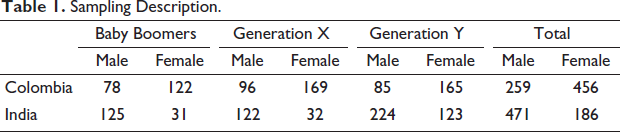
Participants completed a questionnaire consisting of 20 items, using a five-point Likert scale to rate their responses. Data were collected from white-collar employees in IT and manufacturing firms, medical professionals, independent consultants and entrepreneurs in India and Colombia. We contacted approximately 1,000 working individuals of various age groups through email and direct contact (Aboelmaged, 2011), employing convenience sampling. Data collection took place between November and December 2018 in India and January and February 2021 in Colombia. Data from Colombia were collected with the help of a Colombia-based postgraduate student (of one of the authors) who was learning from home (asynchronous mode) due to the COVID-19 pandemic lockdown during that time. Direct contact with all individuals ensured that the study was not influenced by nonresponse bias (Kortmann et al., 2014). The data were collected in the sociocultural context of the two countries, with the assumption that the preferred conflict resolution style is a learned behavioural tendency, which is expected not to have any temporal effect or impact due to any natural crisis, such as caused by the COVID pandemic. The sampling distribution represented the 657 Indians and 715 Colombians who completed the survey form (see Table 1).
Sampling Description.
Measurement Scale
We employed AMOS Version 23 to conduct structural equation modelling in order to examine the proposed correlations. This approach was chosen because it is particularly suitable for establishing a hierarchical structure of latent variables with minimal biases arising from measurement errors, especially when working with a sufficiently large sample size. In accordance with the guidance provided by Kaiser and Rice (1974), the threshold limit for the initial factorial analysis was set at 0.6. However, the Kaiser–Meyer–Olkin statistic yielded a substantially higher value of 0.926, indicating that our sample size was adequate for conducting factor analysis.
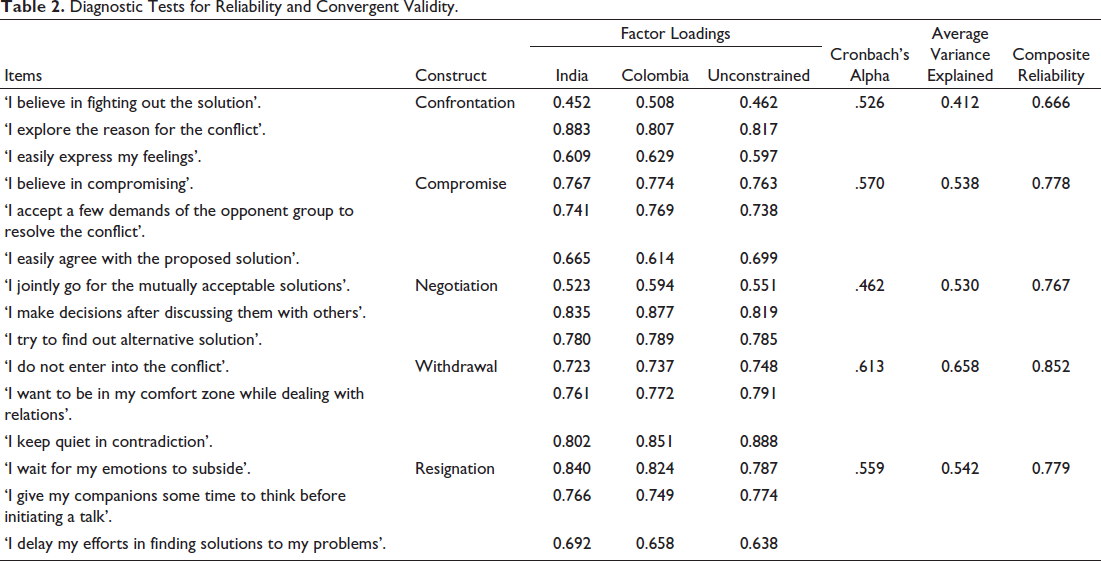
Confirmatory factor analysis was employed to assess the goodness of fit of the items within the subscale. The results revealed the following fit indices: normed fit index = 0.858, relative fit index (RFI) = 0.795, incremental fit index (IFI) = 0.874, Tucker–Lewis Fit Index (TFI) = 0.816, comparative fit index (CFI) = 0.874 and root mean square error approximation = 0.071. Based on these indices, we eliminated items with lower factor loadings from the analysis. Specifically, three items were removed from each of the five constructs. The factor loadings of the remaining items, along with the average variance explained, were all equal to or greater than 0.5, thereby confirming convergent validity.
Furthermore, the Cronbach’s alpha coefficients for the five subconstructs exceeded .5, and the structural composite reliability was greater than 0.7 (as shown in Table 2). These findings indicate that our assessment of reliability (internal consistency) met the required criteria. Table 2 further indicates that five latent constructs have same set of free and fixed loadings in both India and Colombia and hence satisfy configural invariance. Since each item of the five latent constructs contributes to almost a similar degree in both India and Colombia, hence metric invariance is also satisfied (Putnick & Bornstein, 2016).
Diagnostic Tests for Reliability and Convergent Validity.
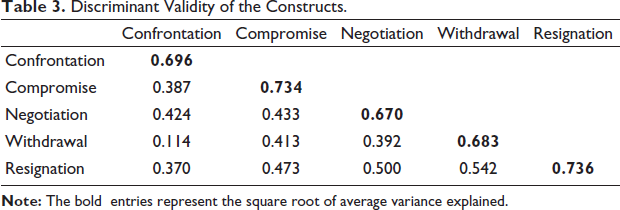
All five constructs successfully met the requirements for discriminant validity tests. This is evident from the square root of the average variance explained, as indicated in the diagonal entries of Table 3, which surpassed the correlations between the constructs (Fornell & Larcker, 1981). Additionally, according to Hair et al. (2010), the correlation between any pair of predictor variables should not exceed 0.9, as shown in Table 3. Therefore, based on the data presented in Table 3, it can be concluded that the conflict resolution constructs satisfy the discriminant validity criteria.
Discriminant Validity of the Constructs.
Results
Descriptive Statistics
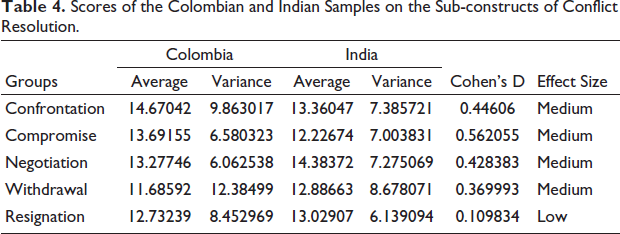
The average scores in the five conflict resolution styles (within the expected range of 0–20) were significantly different with a moderate effect size, except in case of the resignation style, wherein the effect size was low, indicating non-significant differences. Both nations showed a preference for approach-based styles. However, India also has a marginal preference for resignation (see Table 4).
Scores of the Colombian and Indian Samples on the Sub-constructs of Conflict Resolution.
Comparisons of Preferred Conflict Resolution Styles
We conducted a one-way analysis of variance (ANOVA) test to compare the average scores on the five conflict resolution styles between Colombia and India. In Colombia, the F-statistic with 4 and 3,545 degrees of freedom was 100.745, yielding a p value of less than .0001. Similarly, in India, the F-statistic with 4 and 1,715 degrees of freedom was 29.4552, also resulting in a p value of less than .0001. These findings indicate significant differences in the average scores on the conflict resolution styles between the two countries (see, Table 6).
Additionally, we performed a paired t-test to examine the pairwise differences in average scores between the five conflict resolution styles. In Colombia, the preference for confrontation style was found to be significantly higher than the compromise, withdrawal, negotiation and resignation styles, in that order. The Cohen’s D (effect size) for the pair confrontation style-compromise style in Colombia is low, but Cohen’s D (effect size) of confrontation style when paired with the other three styles ranged between medium and high levels. On the other hand, in India, there was a significant preference for negotiation compared to confrontation, resignation, withdrawal and compromise, in that order (Table 5). The effect size of the negotiation style with other four styles was medium to high.
Paired t-test Between the Scores of Various Subconstructs of Conflict Resolution.
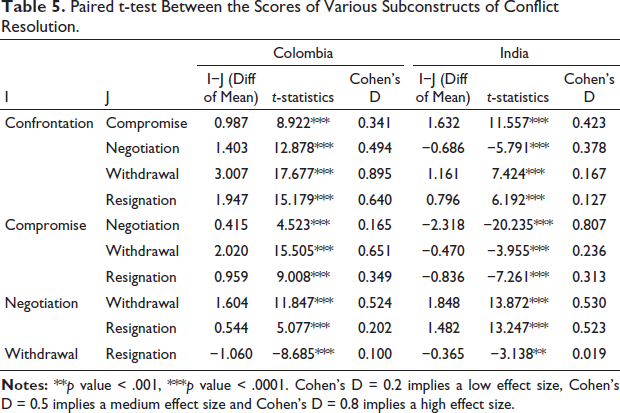
Additionally, a t-test was conducted to compare the average scores of the five conflict resolution styles between the two countries. The results showed significant variations in average scores between the countries for the confrontation, compromise, negotiation and withdrawal styles, with a p value of less than .001. However, no significant differences were observed in the average resignation scores between the two countries (p value = .546).
Impact of Gender and Generation Type on Conflict Resolution Style
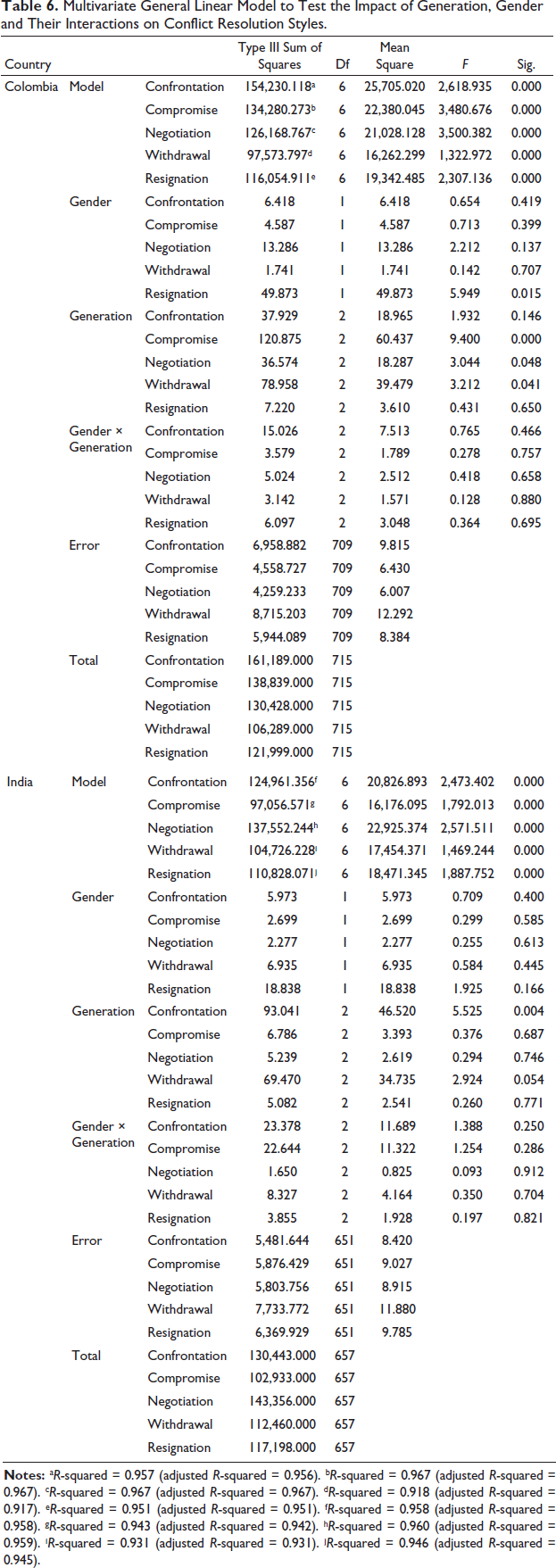
To examine the influence of the main factors, namely generations and gender, as well as their interactions, on the five conflict resolution styles, a multivariate general linear model was employed. The model yielded significant results, indicating a significant Wilk’s lambda. Interestingly, gender was not found to be a significant predictor for the different conflict resolution styles in either country, except for the resignation style in Colombia. In Colombia, significant differences were observed in the average scores of the compromise, negotiation and withdrawal styles across generations, while no significant differences were found in the average scores for the confrontation and resignation styles.
In contrast, in India, significant differences were identified only in the confrontation and withdrawal resolution styles. For the remaining three resolution styles, the average scores did not show any significant differences.
Multivariate General Linear Model to Test the Impact of Generation, Gender and Their Interactions on Conflict Resolution Styles.
Differences in Confrontation Style
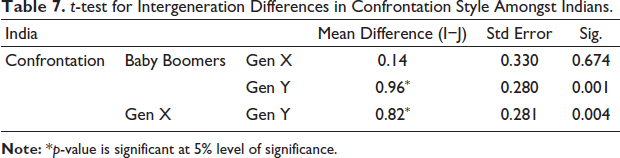
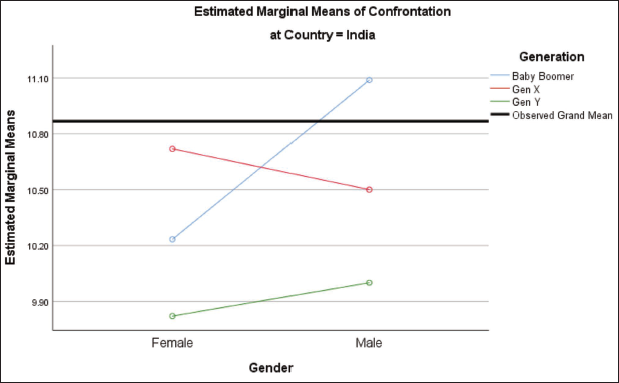
There were significant differences in confrontation styles that emerged as Colombia’s dominant conflict resolution style. Generation Y had a significantly lower preference for confrontation as compared to Baby Boomers and Generation X in India (Table 7 and Figure 1).
t-test for Intergeneration Differences in Confrontation Style Amongst Indians.
Generational Differences in Confrontation Scores in India.
Differences in Compromise Style
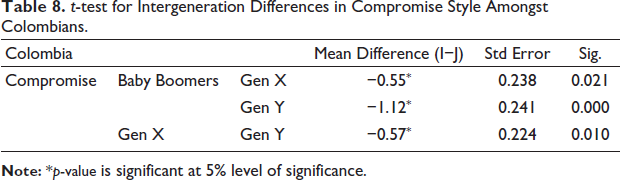
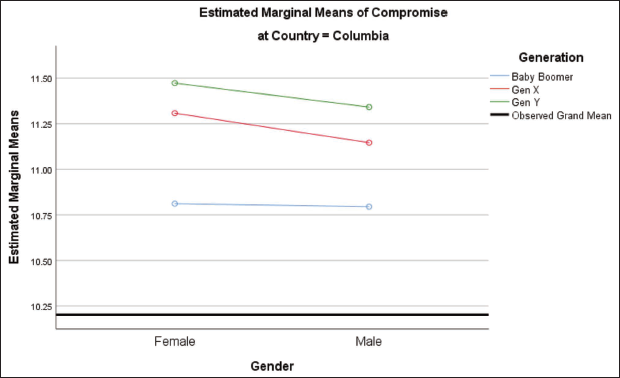
For the compromise style, there were no significant differences between the three generations in India. However, there were significant variations in preference for the compromise style among the three generations in Colombia. Generation Y displayed a significantly greater inclination towards the compromise style compared to Generation X. Conversely, Generation X showed a significantly higher preference for the compromise style in comparison to the Baby Boomer generation (Table 8, Figure 2).
t-test for Intergeneration Differences in Compromise Style Amongst Colombians.
Generational Differences in Compromise Scores in Colombia.
Differences in Negotiation Style
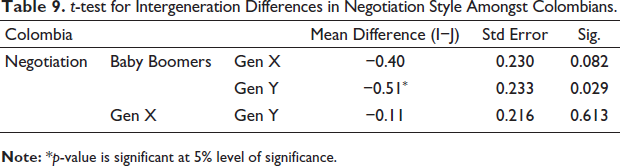
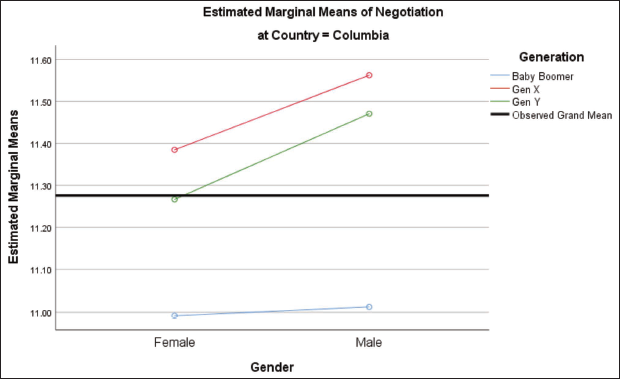
The negotiation style is of the strongest preference for Indians, and there are no significant differences among the three generations in their preference. In Colombia, there are significant differences in preferences towards negotiation style, with both X and Y generations having significantly higher preferences towards negotiation style as compared to Baby Boomers (Table 9, Figure 3).
t-test for Intergeneration Differences in Negotiation Style Amongst Colombians.
Generational Differences in Negotiation Scores in Colombia.
Differences in Withdrawal Style
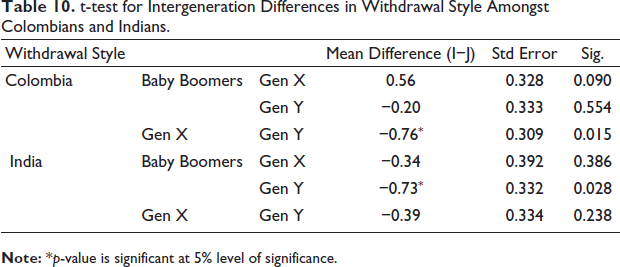
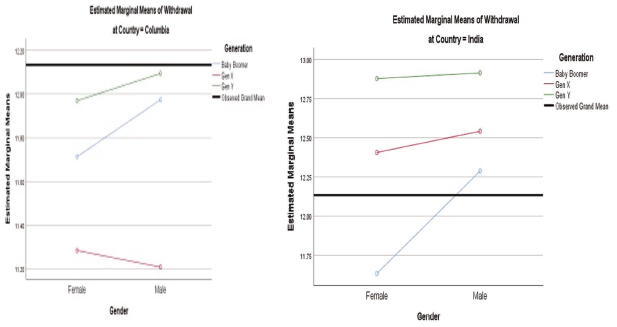
The withdrawal style is the least favoured by Colombians, with Generation X showing the highest preference for withdrawal, followed by Baby Boomers and Generation Y, in that sequence. The disparity in preference between Generations X and Y is notable. In India, the younger generations tend to prefer the withdrawal style more, with significant variations in preferences for withdrawal style among Baby Boomers and Generation Y (Table 10, Figure 4).
t-test for Intergeneration Differences in Withdrawal Style Amongst Colombians and Indians.
Generational Differences in Withdrawal Scores in Colombia and India.
Differences in Resignation Style
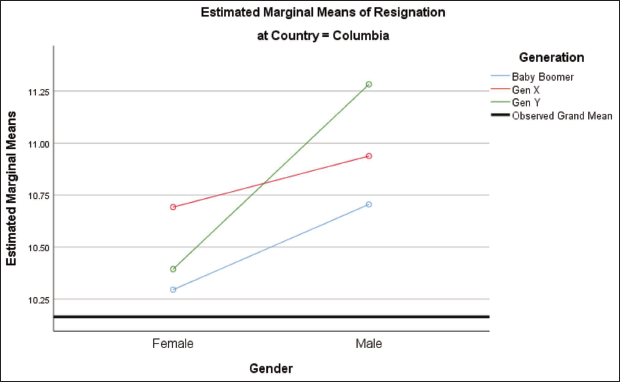
Resignation style is lower in preference order among Indians and Colombians and does not differ in preference strength between the generations. However, in Colombia, males of all generations have significantly higher preferences for resignation style than females (Figure 5).
Gender Differences in Resignation Scores in Colombia.
Discussion
We have found that Indians across generations and genders predominantly prefer negotiation style. The strong preference for negotiation style is due to the collectivist culture of India, wherein people prefer to value group solidarity. Further, according to the World Value Survey, India ranks moderately on the continuum between the two extremes of self-expression and survival, which suggests a preference for democracy and autonomy, albeit in a strained way. India is also located centrally in the continuum of traditional and secular/rational values. This implies they respect authority, but their allegiance to authority is not absolute. Leaders take the initiatives to arrive at a collaborative, consensual decision by taking members into confidence. Conflicts are preferably resolved through mediation or arbitration to reach a win–win situation. A classic example, in recent times, is the infighting between the Ambani brothers, Mukesh and Anil, over the inheritance of properties after the sudden demise of their father, Dhirubhai Ambani. The mother, Kokilaben, rose above the situation and mediated to distribute the properties equally among the brothers. Family friend and then chairman of ICICI Bank, KV Kamath, played the arbitrator role in the valuation of every mobile and immobile property and distributed them among the brothers.
The second most preferred conflict resolution style amongst Indians is the confrontation style. However, Generation Y has a significantly lower preference towards confrontation as conflict resolution (Zemke et al., 2000). They value inclusivity or an integrated approach to leadership. They would not prefer to fight to impose their personal views over others, expecting others to follow the norms they set. Instead, preference towards withdrawal is significantly higher among the Indian Y generation than other generations, which means they will be willing to retreat from a conflict situation, allowing others with better potential to resolve them. This youngest generation looks forward to continuous reassurance and feedback, though they prefer autonomy at workplace as indicated by Jennings (2016). They differ from the other two generations, who are more comfortable with hierarchical organisational structure and power distance. The best way to deal with Generation Y Indians will be to give them a patient hearing. In the Maruti Massacre at Manesar discussed earlier, the Indian and Japanese management belonging to the Baby Boomer generation were not able to understand simmering displeasure among the young labourers due to the working conditions and expected them to comply with the organisational norms without giving them a patient hearing. The older generations’ preference to confrontation is also an indicator of slightly higher preference towards win-loss situations, preference towards parent–child ties, deference to authority and traditional family values, as indicated by Inglehart-Welzel Cultural Map 2023 (World Value Survey, 2023). Another example of a family feud in Indian business, which shows these differences between Gen Y and the other two generations, is the infighting in the British-based Indian Hinduja Group, a 107-year-old company, a $18 billion company operating in 38 countries with businesses in truck-making, banking, chemicals, power, media and healthcare. The third-generation entrepreneur, 33-year-old Karam Hinduja, grandson of S. P. Hinduja, along with his sister, mother, aunt and grandmother, is fighting to reinstate the sole ownership of Hinduja Bank to his mother, the daughter of S. P. Hinduja, and distribution of asset ownership among S. P. Hinduja and his three brothers’ families. S. P. Hinduja’s brothers do not want the breakup of group assets and want to live up to the age-old group motto of ‘everything belongs to everyone and nothing belongs to anyone’. The fight can be attributed to the growing preference for autonomy among the younger generations. Another reason cited was the misogynistic views of the older Hindujas (OnManorama, 2021). Ironically, our study revealed that in India, there were no significant differences among genders for preference towards any specific conflict resolution style across generations. Most conflicts, as is evident, are due to power imbalances (Assael, 1969; Peterson, 1983). Hence, to deal with the older workforce, it will not be to dictate authority on them, but give them the leadership role to play as the arbitrator or mediator to bring in peace between the warring parties.
In Colombia, the highest preference is given to confrontation-based problem-solving across generations and genders. Colombia is one of the countries with the highest score in collectivism across nations, and according to the Welzel-Inglehart Chart (2023) (
Resignation style scores, least preferred in both India and Colombia, with no generational difference, however, have significant gender differences in case of Colombia, with men having significantly higher scores. Women do not tend to avoid conflict in Colombia but would prefer to participate in conflict resolution proactively. During the civil war, between 2012 and 2016, FARC had almost 40% women participants, none of whom were given leadership positions. Colombian women, for decades, have faced domestic violence and have also been victims of gender-based war crimes. Only in the last decade have they been participating in political decision-making and asserting their rights. Hence, women prefer to assert themselves in a conflict situation. Hence, research question 3 is also answered, that gender differences do not exist in preferred conflict resolution styles, in both these nations, except the resignation style in Colombia.
India and Colombia have cultivated a strong bilateral relationship for over six decades, characterised by robust cooperation and mutual benefit. In Colombia, Indian companies have made significant contributions in various sectors, including oil, IT, pharmaceuticals, agrochemicals, infrastructure and two-wheelers. Renowned Indian IT giants like Infosys, TCS, Wipro and KPIT Cummins have established software development units, knowledge process outsourcing (KPO) centres, business process outsourcing (BPO) centres and call centres not only in Colombia but also in other Latin American countries (source:
Conclusion
India and Colombia have been of interest to researchers in conflict management due to their multicultural, multilingual and multiethnic backgrounds and a long history of colonisation. Both these nations, which are similar in Hofstede’s cultural framework, differ in their approach to dealing with conflict. India would prefer a top-down win–win approach of negotiation and mediation. Due to its long history of civil war, Colombia still lacks intercommunity trust, and there is a need for continuous dialogue between the various groups to create an environment of harmony. Conflict resolution styles can be better understood on a contextual basis. In-group conflict resolution styles may differ from conflicts with out-group entities. A consensual, collaborative and participative approach to problem-solving may be more prevalent within the in-group. In contrast, a more competitive ‘I shall win’ approach may be used while dealing with out-group members. Competitive and collaborative approaches have their merits and demerits. Two nations like India and Colombia can learn from each other’s experiences. Other elements, such as organisational commitment and trust, may also influence conflict resolution strategies (Ndubisi, 2011), temperament (Bell & Blakeney, 1977; Jones & White, 1985; Wood & Bell, 2008), EQ (Jordan & Troth, 2002) and management style (Bose & Pareek, 1986). The impact of these factors can be controlled while researching how generational differences affect conflict resolution techniques. India and Colombia have several scopes for developing a synergic relationship. Value can be created on those issues if the nations are negotiating over some future disputes. The same approach can be used while dealing with intergenerational conflict by any nation.
Footnotes
Declaration of Conflict of Interests
The authors declared no potential conflicts of interest with respect to the research, authorship and/or publication of this article.
Funding
The authors received no financial support for the research, authorship and/or publication of this article.
