






Abstract
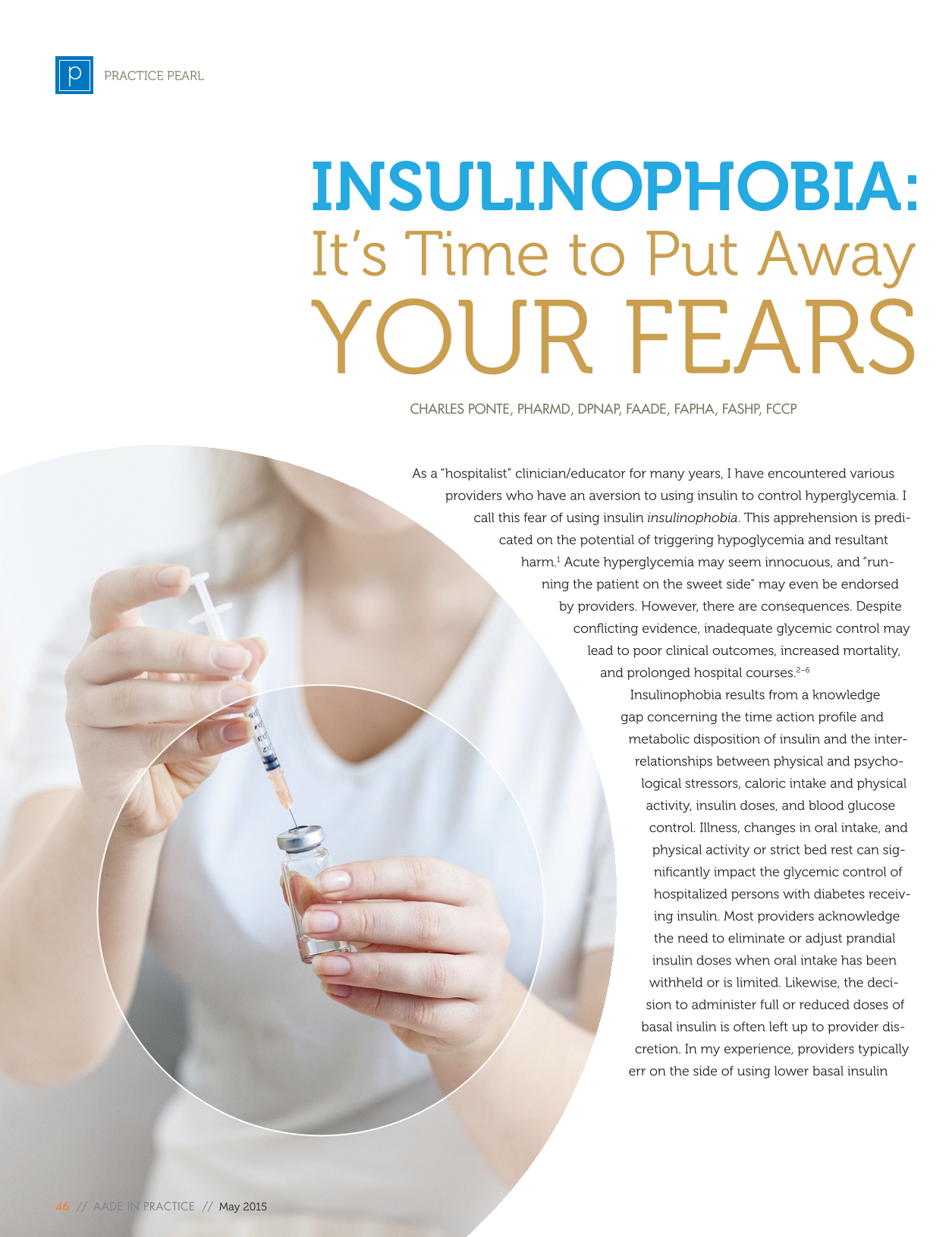

As a “hospitalist” clinician/educator for many years, I have encountered various providers who have an aversion to using insulin to control hyperglycemia. I call this fear of using insulin insulinophobia. This apprehension is predicated on the potential of triggering hypoglycemia and resultant harm. 1 Acute hyperglycemia may seem innocuous, and “running the patient on the sweet side” may even be endorsed by providers. However, there are consequences. Despite conflicting evidence, inadequate glycemic control may lead to poor clinical outcomes, increased mortality, and prolonged hospital courses.2–6
Insulinophobia results from a knowledge gap concerning the time action profile and metabolic disposition of insulin and the interrelationships between physical and psychological stressors, caloric intake and physical activity, insulin doses, and blood glucose control. Illness, changes in oral intake, and physical activity or strict bed rest can significantly impact the glycemic control of hospitalized persons with diabetes receiving insulin. Most providers acknowledge the need to eliminate or adjust prandial insulin doses when oral intake has been withheld or is limited. Likewise, the decision to administer full or reduced doses of basal insulin is often left up to provider discretion. In my experience, providers typically err on the side of using lower basal insulin doses versus the regular scheduled dose—again because of insulinophobia.

Education is the answer to overcoming the fear of using insulin in the acutely ill hospitalized patient.
Education is the answer to overcoming the fear of using insulin in the acutely ill hospitalized patient. Providers must acknowledge and appreciate the circumstances (eg, stress of acute illness, changes in dietary intake and physical activity, etc) that negatively impact glycemic control in this patient population and the resultant consequences. Likewise, providers must possess a good grasp of the pharmacokinetics/pharmacodynamics of insulin and its therapeutic usage. Procedures and guidelines can also be created to assist the provider with insulin administration decisions in high-risk patient groups including those slated for surgery/procedures, receiving enteral/parenteral nutrition, and taking no or limited oral intake.7–9 Importantly, it’s incumbent upon diabetes educators to support, design, and deliver instructional initiatives/curricula to providers (at all levels of training) in the acute care setting. These strategies will equip providers with the tools to make the necessary therapeutic changes to insulin regimens resulting in better glycemic control and clinical outcomes in hospitalized persons with diabetes. ■
Footnotes
Charles Ponte, PharmD, DPNAP, FAADE, FAPHA, FASHP, FCCP, is professor of Clinical Pharmacy and Family Medicine at West Virginia University, in Morgantown, WV.