






Abstract


Since the last update to the National Standards for Diabetes Self-Management Education and Support (Standards) in 2012, the diabetes management landscape has changed dramatically: Technology has changed the way diabetes is managed and support is often provided, insurers are covering a wider array of management tools and educational venues, and diabetes educators’ roles are ever-expanding. And so, the Task Force updating the 2017 Standards went about the work of reflecting current best practices and science in the document, which was presented at the 2017 annual conferences of both the American Association of Diabetes Educators and American Diabetes Association.
The changes made to the Standards expound on the continuing body of evidence for what best helps people with diabetes manage their condition. Task Force leaders said that major updates to the Standards include changes in language, an increased focus on quality, and recognition of new models of care, in particular incorporation of technology-enabled self-management.
Language to Reflect Reality
Astute readers will notice that the Standards no longer refer to diabetes self-management education and diabetes self-management support as 2 different ideas. Instead, the 2017 Standards have combined the 2 into a single concept: diabetes self-management education and support (DSMES). The combined terminology reflects the need for lifelong, ongoing support, said Joni Beck, PharmD, BC-ADM, CDE, co-chair of the 2017 Task Force.
Task Force leaders said that major updates to the Standards include changes in language, an increased focus on quality, and recognition of new models of care, in particular incorporation of technology-enabled self-management.
“The Task Force really wanted to stress that diabetes education should not be ‘one and done,’” Beck said. “The support is really a critical component to lifelong success.”
Another major change in terminology in the Standards aims to better reflect the diversity of diabetes interventions. Here they are called services rather than programs. Services are all-encompassing and can be participant-driven and individualized in ways that programs often cannot, Beck said.
Diabetes education should not be ‘one and done.’
“The word ‘program’ was changed to ‘service’ to delineate the need to individualize and really identify the elements of DSMES that are appropriate for the individual,” she said. “DSMES should not be a scripted program that every person must complete in the exact same format.”
Readers of the Standards will also note that those receiving DSMES services are now referred to as participants and not patients. This update more accurately reflects those receiving services: Having diabetes doesn’t mean a person is sick. DSMES is useful no matter where someone is in their diabetes management.
A final major language change was the pivot to the use of quality coordinator instead of program coordinator, a move that emphasizes the importance of the coordinator role to ensure the effectiveness of DSMES services. Once program was changed to service, it made sense to update programmatic references to reflect current values. But the coordinator role is more than overseeing services, Beck said. It is ensuring that diabetes self-management education and support services help participants achieve better outcomes.
The change is “really reflecting the importance of the role and aligning with new models of care and payment,” Beck said. “This does not mean that DSMES services across the country have to create new titles or positions . . . [but the] duties and responsibilities for that position have to align.”
The Standards aren’t a list of boxes for providers of education and support to check — they are a guide for monitoring and using outcomes to improve and sustain DSMES services.
A Focus on Quality
Reiterating the focus on quality and strengthening its presence in the Standards with research were important to the Task Force as it drafted the 2017 Standards. As the quality coordinator role has been updated to reflect best practices, the Standards, particularly Standard 4 and Standard 10, reflect the current health care reimbursement shift from fee-for-service to pay-for-performance, which requires monitoring for service quality and outcomes. The Standards aren’t a list of boxes for providers of education and support to check—they are a guide for monitoring and using outcomes to improve and sustain DSMES services, evolving along with the science defining quality care for participants. Standard 10 lists tools and methods that providers of DSMES can use to ensure quality. To assist in quality improvement, the Standards also include a glossary of terms for simple referencing throughout the document.
But even with stronger language around quality, Beck said she did not see the updates as changing what practitioners are doing in the field. Rather, the updates reflect what is already being done in the field—and reinforcing diabetes educators’ efforts in providing DSMES that works for each participant. Beck also noted that providers are not the only ones who should seek quality models. Participants in DSMES might also seek out quality services, such as those accredited by AADE or recognized by ADA.
“It’s important to obtain ADA Education Recognition Program recognition or AADE Diabetes Education Accreditation Program accreditation because that assures a level of quality to the consumer . . . that these services meet the National Standards,” Beck said.
New Models of Care
As research continues to evolve, so too does the range of DSMES services available. As these new models of care emerge, the Standards Task Force wanted to ensure that providers and participants can incorporate those that are most useful for each individual into his or her arsenal of management tools.
Trends in DSMES are moving away from the PowerPoint presentations and lectures of old and moving more toward interactive, personalized modes. Discussion, engagement, and telehealth and telemedicine have made strides in retaining participants and showing better outcomes, the Task Force noted, and what works in one location may not work in another.
“I think recognizing the new models of care in the Standards . . . broadens the ideas and the scope to those who are providing DSMES to say, ‘How do participants want to engage in education?’” Beck said.
The Standards call out the burden of treatment placed on those affected by diabetes. They show how individualization is crucial for enrolling more participants in education and support services, the Task Force noted. As of 2012, less than 7% of people with diabetes were enrolled in services within the first year of diagnosis, 1 and just less than 5% of those covered by Medicare were enrolled in the same timeframe 2 despite research showing continuing education and support are critical for improved outcomes, particularly at times of transition in diabetes care. 3
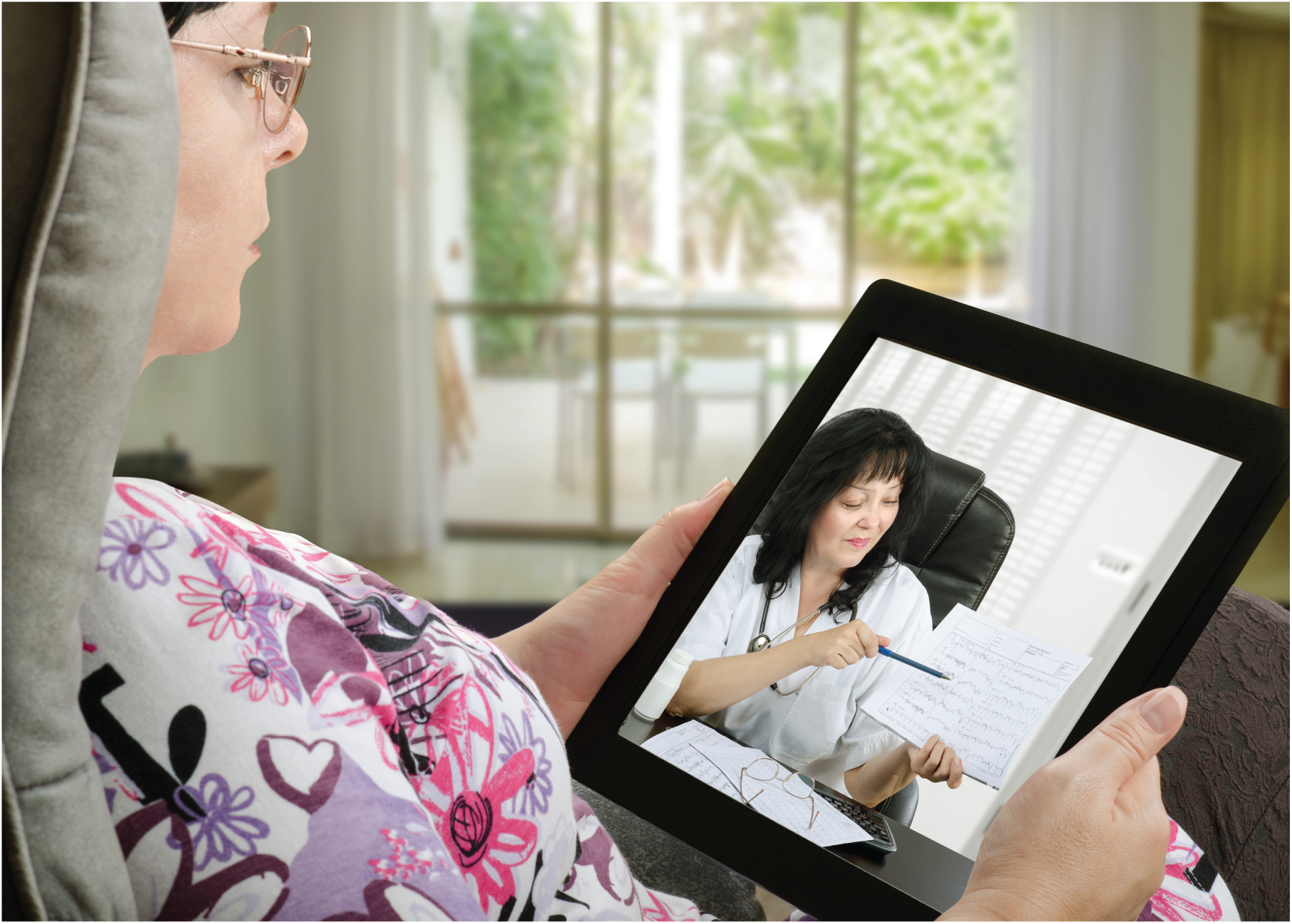
Technology could break down some of the barriers keeping people from participating in education and support services, said Deborah Greenwood, PhD, RN, BC-ADM, CDE, co-chair of the 2017 Task Force. Technology enables individualization of care and education—the bulk of the goals discussed in Standard 7.
And technology-enabled self-management models do more than just lift burdens of location, travel, family obligations, and so on. They are effective. 4 Greenwood, lead author on a systematic review evaluating many solutions’ effectiveness, said the research shows 4 critical elements needed for a tech tool to help participants achieve better hemoglobin A1C:
2-way communication
use of participant-generated health care data
tailored education
incorporation of individualized feedback to modify the plan of care.
All 4 elements must be present in what’s called a technology-enabled self-management, or TES, feedback loop for a technology-enabled self-management solution to prove successful, Greenwood said. Models such as one-way text messaging were not shown to be effective. However, tools in which participants could text back and receive personalized information were found to be some of the strongest available.
Technology-enabled self-management models do more than just lift burdens of location, travel, family obligations, etc. They are effective.
Greenwood added, “You really need to have all these features in a feedback loop. That’s the key to improving A1C and improving outcomes. There’s no set program that people need to engage in. They can identify their needs with support from their educator, they can engage in the content and experiences that they think are important, and technology really enables that individualized approach. Technology can help individualize care and education, which is a huge part of the Standards. It’s not a one-size-fits-all service.”
A Note on Reimbursement
The 2017 National Standards for Diabetes Self-Management Education and Support drive ADA recognition and AADE accreditation and reflect movement in the field. But there are many tools, solutions, and services that are resulting in increased DSMES utilization and quality outcomes that are not reimbursed by all payers at press time. For this reason, the Standards aim to highlight the strongest science showing the best outcomes for participants and urge payers to reimburse for the services that will work best for the widest variety of participants.

Many of the technology-enabled diabetes self-management education and support services available today are not part of accredited services, nor are they currently reimbursable. But that could be improved, said Greenwood, as the science shows that participants do not have to meet with a provider in person to have successful outcomes and delay or prevent complications. 3
At present, there is a single technology-enabled DSMES service accredited by AADE, Livongo, and another recognized by ADA, One Drop, indicating that these services meet the Standards, even though they are not reimbursed by the Centers for Medicare & Medicaid Services. These models are supplying DSMES services via employers and other payers.
“Our hope is that building this evidence will change the way programs or services are reimbursed,” Greenwood said. “What we hope to see is a change in CMS telehealth rules, so that a person can receive services at home. That’s the more realistic approach to what true self-management is—at home, 24/7, when they need it, not necessarily on somebody else’s schedule.”
But even if reimbursement is not on the table, providers of DSMES might consider incorporating new models of care, particularly those using technology, to enhance their services and even make their own jobs easier. Some of the tools available can increase access to participant data that they might be generating anyway. And using electronic health records or patient-generated health data can help providers identify those who have been lost to follow-up or those at a critical juncture—at diagnosis, annually, when complicating factors occur, and during transitions in care—which could improve health outcomes for individuals and whole populations, Greenwood said.
The Standards set the bar for what technology solutions need to incorporate if there is truly to be an opportunity to provide technology-enabled education and support in the future. ■
Footnotes
Lindsey K. Wahowiak is senior editor with the American Public Health Association in Washington, D.C.