






Abstract

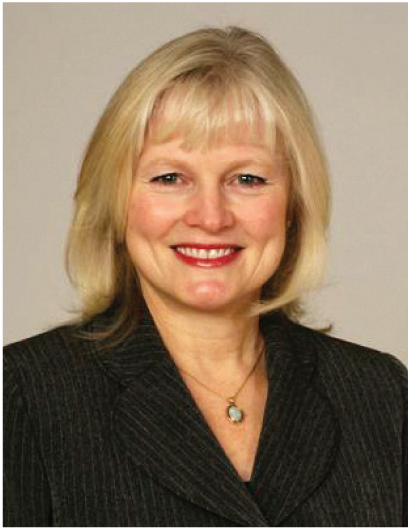
Teresa Pearson, MS, RN, CDE, FAADE
... Have you heard about the Patient Trifecta? The National Health Council coined this phrase to promote an approach that ensures clinical goals are balanced with personal circumstances of the individual along with their life goals. In other words, the individual gets to decide, and through a collaborative discussion, we can help them set a goal that will maximize their quality of life as they see it.
I recently returned from a 3-day family reunion. We do this every 5 years, and this one was a small crowd, with just half of the approximately 400 direct descendants of my grandparents in attendance. Our family tree is drawn on a king size bedsheet that is hung on the wall at every reunion. Each child of my grandparents has a branch, and their children are stems off each branch and so on. Now with the fifth generation, we have added apples. It is a sight to behold for sure, and I hope this tradition continues for generations.
Among us there are business owners, military, musicians, farmers, dentists, lawyers, and nurses, among other professions. The ages range from a few weeks old to 91 years of age. Some have moved to the big city, some have lived all over, and some have lived in the same small town their entire life. Yet when we are together, all our differences disappear.
People ask me how we make this happen. How do we stay connected and get everyone to show up every 5 years? Technology has increased our ability to stay connected more than ever. This time, we had a private family Facebook page that allowed us to communicate about the reunion, share stories, and share old photos, such as one of my grandmother at 16 with a handwritten note to my grandfather on the back. What a treasure!
Not everyone is comfortable with the technology. My 85-year-old mother is an example. She’s ok with Facebook, but if you really want to hear a story, she is much more likely to tell it to you than write about it. I often use the voice memo app on my smartphone to capture them. Between her and my 91-year-old aunt, the only 2 remaining from their generation, there are plenty more to be told.
This all made me think about how we use technology to connect with the people we serve. You have likely heard of the Triple Aim of the Affordable Care Act, but have you heard about the Patient Trifecta? The National Health Council coined this phrase to promote an approach ensuring clinical goals are balanced with the individual’s personal circumstances along with their life goals. In other words, the individual gets to decide, and through a collaborative discussion, we can help them set a goal that will maximize their quality of life as they see it. Everyone has their own personal life goals and aspirations. My 91-year-old aunt told us all her goal is to make it to the next reunion. That’s 5 years from now, and she will be 96. I know I am not alone when I say I am rooting for her to be there.
So how do we stay connected with individuals to support their goals? We need to find a way that works for them. If texting is the way, then text. If email is the way, then email. If they need it in writing, then give them a piece of paper. In spite of all the technology, sometimes paper works best. It should not be about what makes it most convenient for us but what makes it convenient and helpful for the individual. This means that we need to adjust—for example, while most EMRs have a patient portal, and the number of people enrolled is increasing, not everyone uses them. Surveys tell us one reason is many are still clumsy and difficult to navigate. Some organizations are using smartphone apps to make access easier.
With technology making staying connected easier, people can choose to connect with us on some or all of the apps they are using. Not everyone wants us to have access to everything, and we need to respect that. Yet at the same time, we should offer and reassess on a regular basis. When I was helping my mom with her EMR patient portal, I suggested she might want to name me or one of my siblings as someone who can have access to it, and she said, “No, I can manage on my own, thank you.” Fortunately, she is still in excellent health and capable of managing things on her own. For now. We agreed we would reassess it in the future.
The 3 things my reunion reminded me of were to connect when it is meaningful to the individual, respect individual choice and meet them where they are, and capture the stories—that is where the heart of what we do lies and the connections strengthen.
My reunion experience also reminded me of the importance of those periodic “between reunion” touch points. In health care, technology provides the opportunity to stay connected between visits, tven if it is only for a limited time and for a defined purpose, such as while we are adjusting therapies. To be honest, most of us don’t have the capacity to be reviewing all the potential data that could come our way if we connected with all the people we see all the time. So we need to manage how we receive those notifications. Push or pull. We can decide along with the individual how it will be handled during periods of adjustment. But then maybe we turn the notifications off for a while until we agree it is time to reconnect again.
You can imagine that our private Facebook page had more and more activity as time drew near for the big event. It also remained busy with people posting photos taken throughout the weekend. Some people were looking, posting, liking, and commenting. Others were less active but enjoyed looking, while still others did not participate at all. It is a personal choice.
The 3 things my reunion reminded me of were to connect when it is meaningful to the individual, respect individual choice and meet them where they are, and capture the stories—that is where the heart of what we do lies and the connections strengthen. ■