Abstract
Background:
Anterior cruciate ligament reconstruction (ACLR) using quadriceps tendon (QT) autograft is associated with lower rates of graft rupture among adolescents, with favorable functional outcomes compared to hamstring (HS) autograft. While prior studies have explored the difference in graft rupture rates between adolescent ACLR with HS and QT, many are limited in follow-up. Additionally, these studies have not generally reported subsequent meniscus tears –another sign of functional ACL insufficiency – between HS and QT groups.
Hypothesis:
The goal of this study was to compare rates of graft rupture and subsequent meniscus tear after adolescent ACLR using HS or QT autograft. It was hypothesized that QT would be associated with a lower incidence of both graft rupture and subsequent meniscus tear.
Methods:
This was a retrospective review of adolescent patients (age 10-19 years) who underwent ACLR with either HS or QT autograft between 2009-2023 at an urban tertiary care pediatric hospital. Patients with at least 2 years of clinical follow-up were included. Patient characteristics, surgical details, and reinjury rates were calculated and compared between the two subgroups. Multivariable logistic regression was performed to evaluate the relationship between graft failure and relevant variables.
Results:
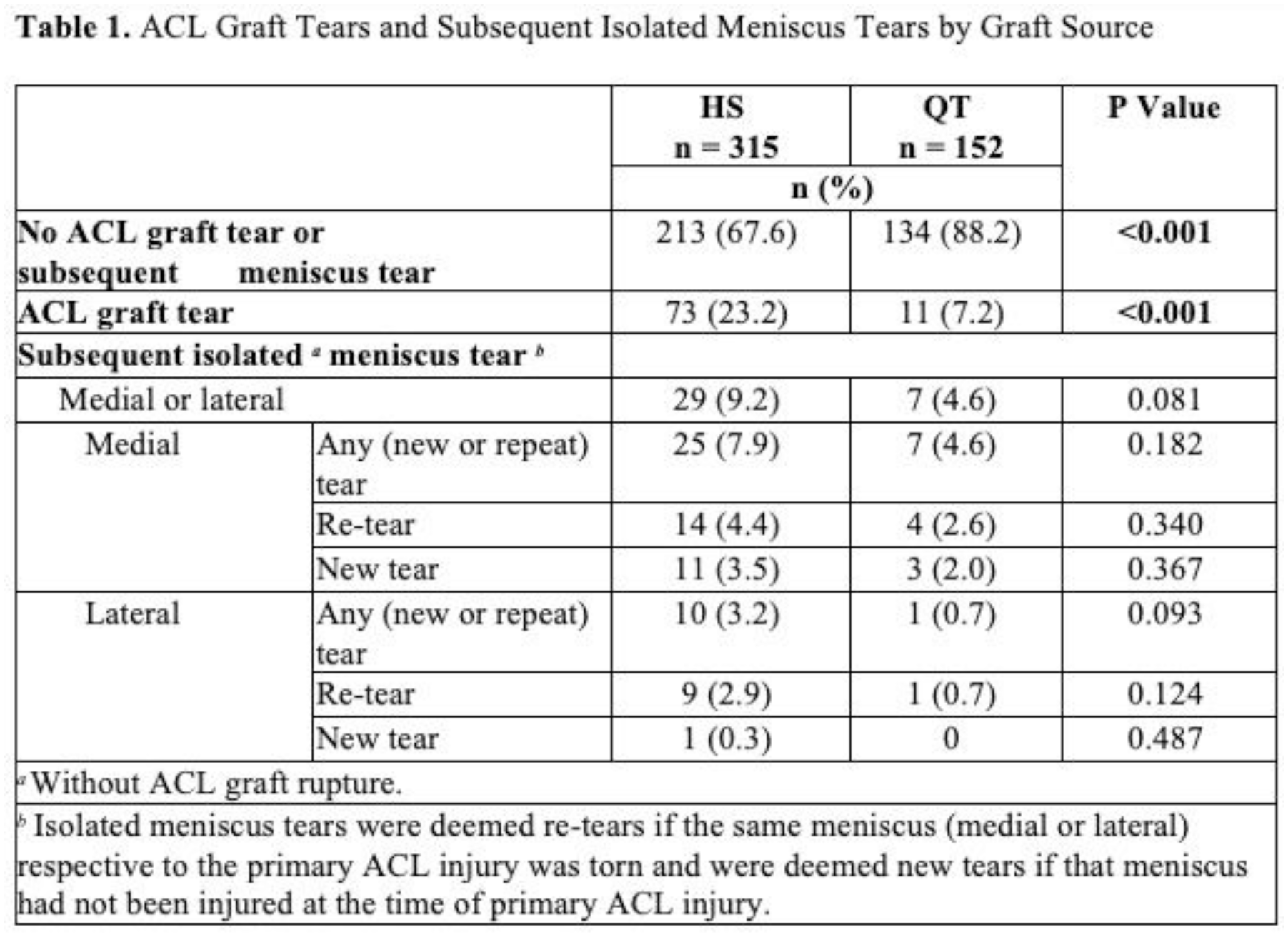
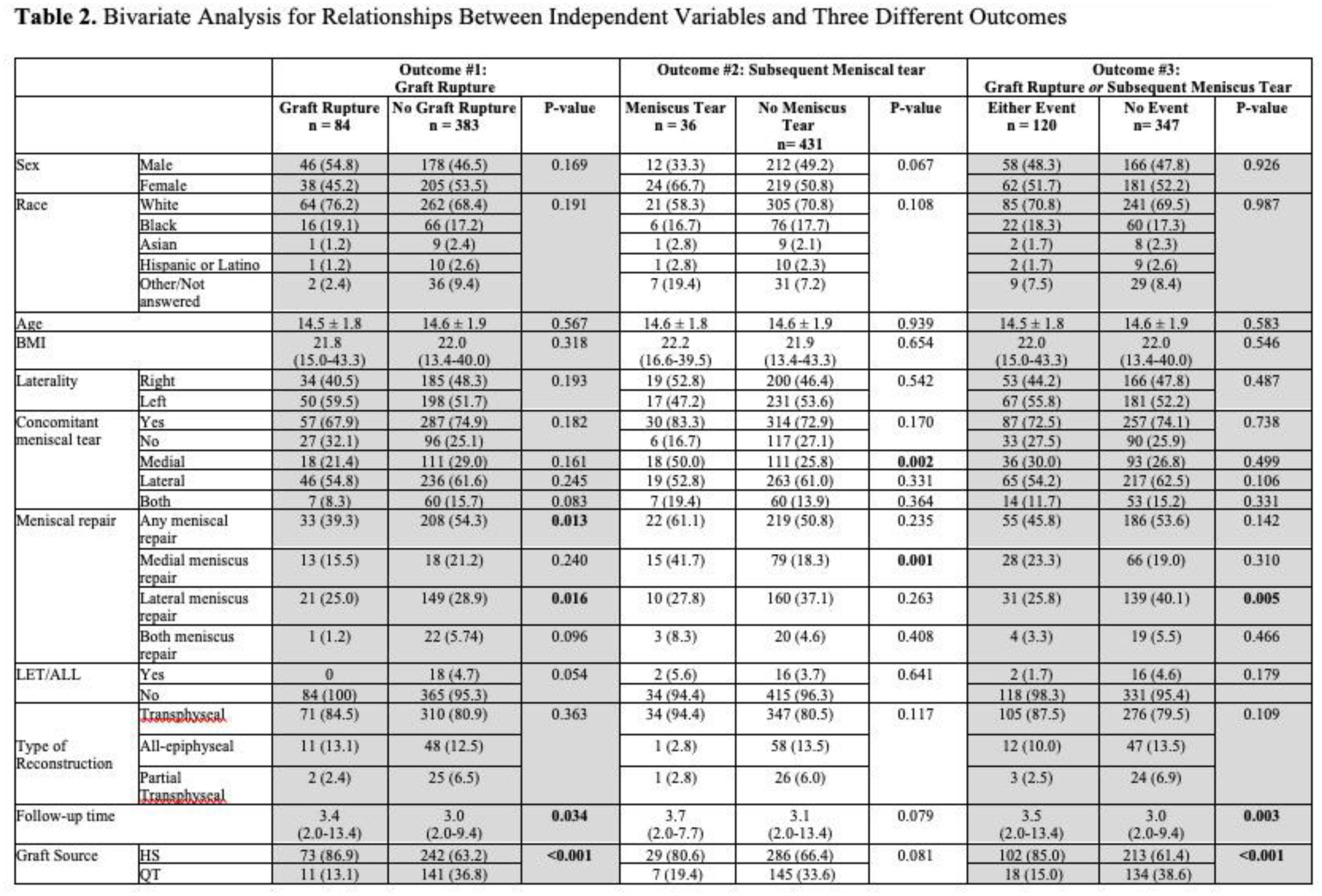
467 patients (52.0% female) with mean age 14.6 ± 1.9 years and median follow-up of 3.1 (range: 2.0-13.4) years were included. Graft rupture was lower among patients treated with QT versus HS (7.2% vs 23.2%, p<0.001). While the rate of subsequent meniscus tear (without frank graft rupture) was lower among patients treated with QT (4.6% vs 9.2%), this difference did not reach statistical significance (p=0.081). Considering the composite outcome of ACL graft rupture or subsequent meniscal tear, the QT subgroup again had a lower failure rate (11.8% vs 32.4%, p<0.001). Regression analysis showed that – when controlling for other variables – ACL graft rupture was associated with graft used (odds ratio 0.29 for QT vs HS, p<0.001).
Conclusion:
Adolescent patients undergoing ACLR with QT autograft have a significantly lower risk of graft rupture compared to those treated with HS autograft. While the current data suggests patients treated with QT also have lower risk of subsequent meniscus tear, this finding did not reach statistical significance.