Abstract
Background:
Softball is played by over 2 million people in the United States, including 340,000 high school athletes. Injury rates in fastpitch softball exceed those in baseball, but there is a dearth of research on biomechanics in softball, specifically in overhead throwing. To our knowledge, there are no studies in youth softball athletes investigating differences of overhead throwing biomechanics between youth players of varying ages. This study aims to determine differences in throwing biomechanics between younger players (<12 years) and older players (≥12 years).
Hypothesis:
Younger players will utilize poorer throwing strategies by demonstrating greater shoulder horizontal abduction and less lateral trunk flexion.
Methods:
Players from a local softball league completed sports participation and injury surveys, strength and range of motion assessments, and a throwing session captured by a 3D markerless motion capture system (Qualisys, Goteborg, Sweden and Theia3D, Theia Markerless Inc., Ontario, Canada). Players threw 5 times from the testing area to a target 60 feet away. The three fastest throws that hit the target were included in the final analysis. Kinematics were analyzed at foot strike, late cocking, and ball release. Wilcoxon Rank Sum tests were used to compare kinematic variables between younger (<12 years) and older (≥12 years) players.
Results:
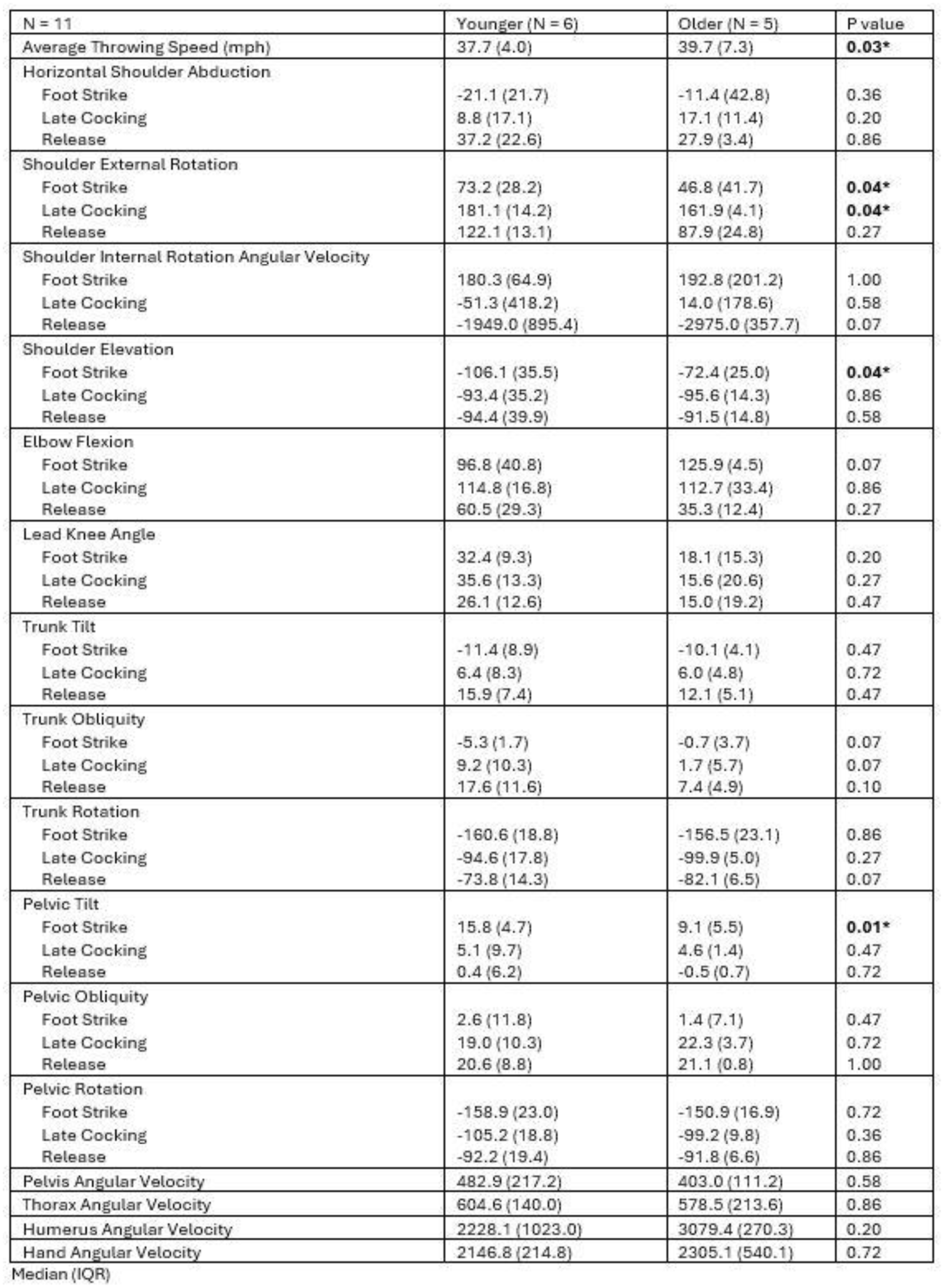
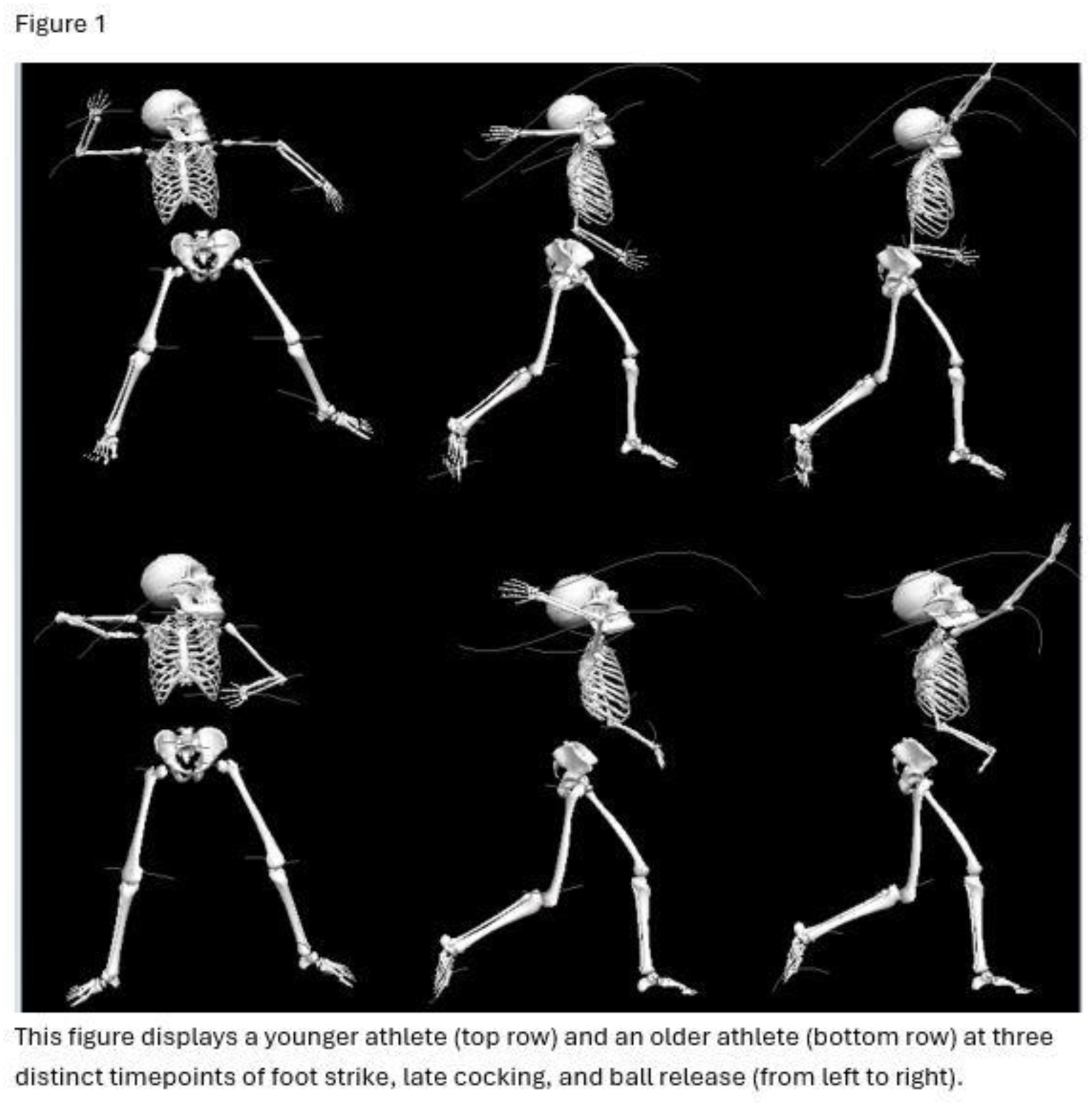
Eleven softball players with a median age of 11 years (IQR 6) completed the biomechanical assessment. The younger players demonstrated greater shoulder external rotation (p=0.04), shoulder elevation (p=0.04), and pelvic tilt (p=0.01) at the time of foot strike (Table 1, Figure 1). At late cocking, younger players demonstrated greater shoulder external rotation (p=0.04). The average velocity of the throws in the younger players was significantly lower than older players (p = 0.03).
Conclusion:
Younger softball players demonstrated distinct and potentially inefficient throwing mechanics compared to older players, including less pelvis-to-arm dissociation, which reduces energy transfer and decreases throwing velocity. To compensate, they appear to rely more on shoulder external rotation and elevation earlier in the throwing cycle, which may increase stress on the shoulder and elbow. The persistent external rotation at late cocking suggests the arm lags behind, forcing younger athletes to generate force through the arm alone. This contrasts with typical baseball findings and highlights a developmental difference that may elevate injury risk in youth softball. Recognizing these compensatory mechanics is important for developing age-appropriate training, injury prevention, and rehabilitation strategies.