Abstract
Background:
Mountain biking (MTB) is a high-risk sport regardless of age. Across all ages, upper extremity and shoulder-girdle injuries predominate,2,13 but various studies looking at competitive adolescent mountain bikers have found that “head/brain” were the most commonly injured body parts.3,15 Research has suggested that the pediatric population may be at increased risk for sport-related concussion due to weaker neck musculature, as well as brain immaturity, which makes the brain more vulnerable to axonal injury and metabolic disturbances.7.
Hypothesis:
This study sought to evaluate if pediatric mountain bikers, both competitive and recreational, sustain more head injuries, and more concussions in particular, than adults participating in the sport.
Methods:
Data were collected retrospectively from the NEISS Online Database. We included patient encounters related to “Mountain or All Terrain Bicycles (5033)” from the past 10 years (2015-2024), focusing on the pediatric population (0-18y). The data were further screened and analyzed by location and diagnosis of injury, with additional narrative review for injury event context and to capture presentations with multiple diagnoses. Statistical weights were applied to estimate the national injury burden.
Results:
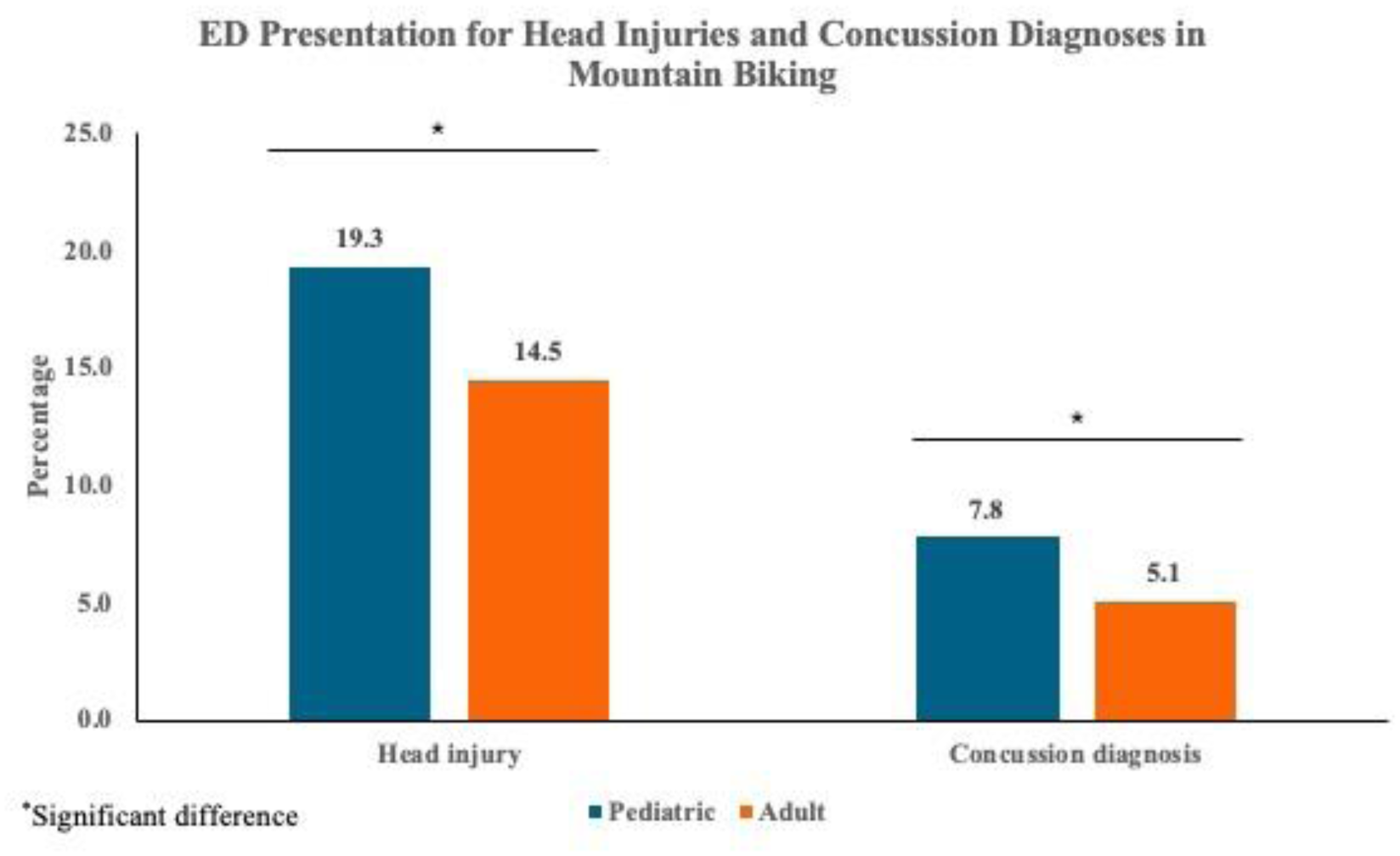
Data included a total of 2,223 cases of MTB-associated emergency department (ED) presentations, resulting in the national estimate of 101,476 cases over 10 years. Of those, pediatric patients comprised 19.6% of the case (mean age = 14.0; 89.5% males). Prevalence of head injuries and concussion diagnoses in the pediatric population were significantly higher than those in the adult population (19.3% vs 14.5% for head injuries, p = 0.016; 7.8% vs 5.1% for concussion diagnoses, p = 0.032). Among the pediatric population, age was not significantly associated with head injury or concussion (p > 0.05).
Conclusion:
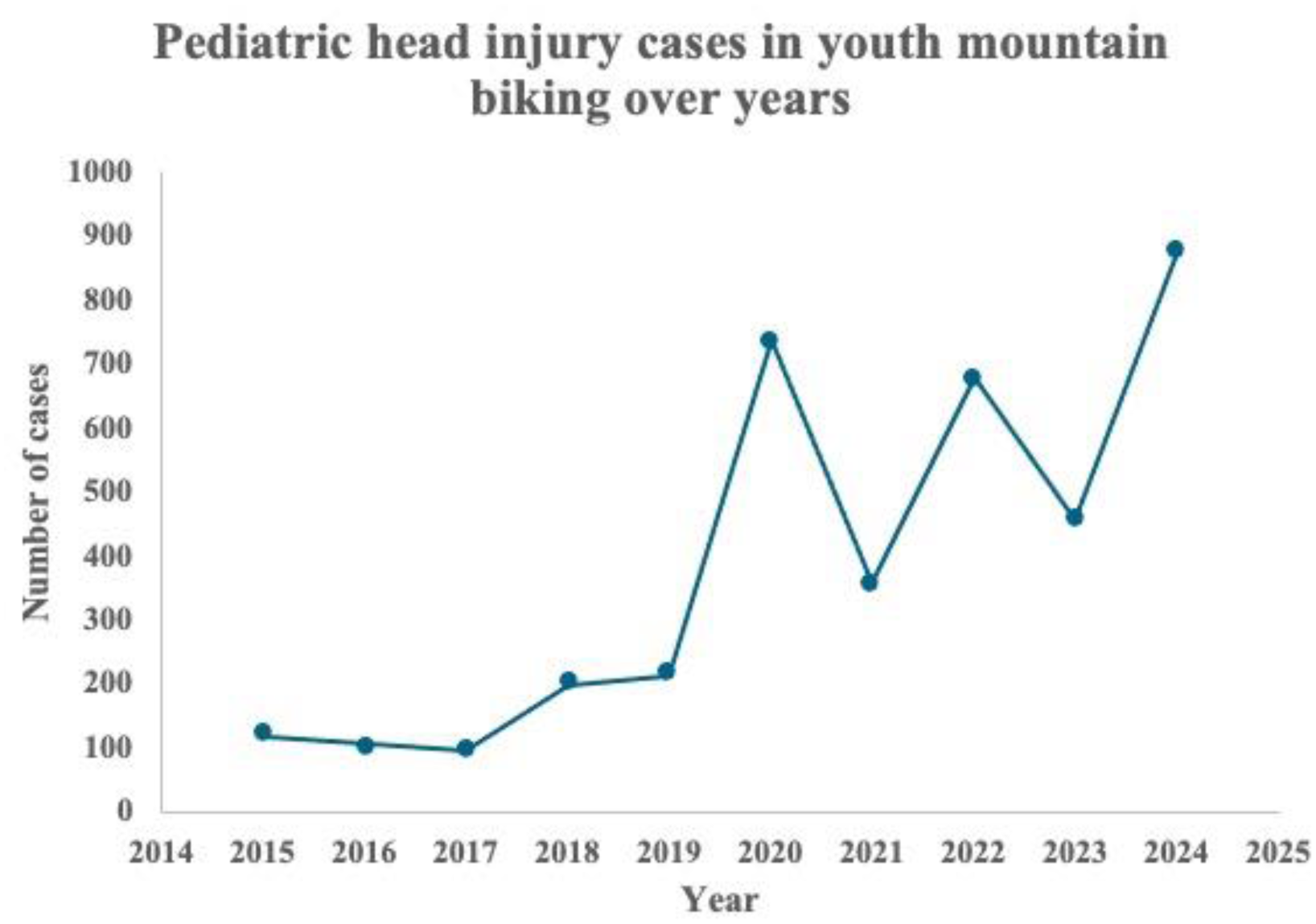
Review of ED presentations for mountain biking over the last 10 years shows that head injuries are significantly more common in the pediatric population. While the aforementioned data fails to capture presentations to pediatric EDs, Urgent Cares, and outpatient clinics, this only suggests that the burden of head injuries sustained while mountain biking is higher than reported. Youth mountain biking continues to be a rapidly growing sport, so not only is it crucial for clinicians in all settings to be familiar with concussion evaluation and management, but there is an opportunity for further investigation into and mitigation of pediatric-specific risk factors for head injury in an already high-risk sport.