Abstract
Background:
Physical therapy (PT) is a readily utilized treatment for individuals presenting with dysfunction after concussion. The American Physical Therapy Association (APTA) developed evidence-based clinical practice guidelines (CPG) for physical therapy management after concussion. While the CPG was published nearly five years ago, routine PT management for concussed youth has not subsequently been described. The purpose of this retrospective study was to characterize interventions performed by physical therapists trained in evaluating and treating children and adolescents after concussion.
Hypothesis:
Our hypothesis was that PT interventions would be similar across trained and competent clinicians.
Methods:
Retrospective data was pulled from medical records of individuals who sought PT services at outpatient, orthopedic clinics of a large metropolitan children’s hospital for concussion-related dysfunction between January 2023 and December 2023. Data was collected from discrete documentation fields, where therapists indicated minutes within each session spent on the following focus areas: pre-functional/preparatory, sitting, standing, transitions/transfers, wheelchair mobility, gait, fitness/health/recreational management, gross motor development, pain/effusion, formal assessment and other. Therapists further detailed these interventions into 13 intervention types: assessment, education/training, neuromuscular, musculoskeletal, modalities, adaptive equipment, cast/orthoses/prosthetics/supports, equipment, assistive technology, cardiopulmonary, and integumentary, visual and other. Descriptive statistics were reported.
Results:
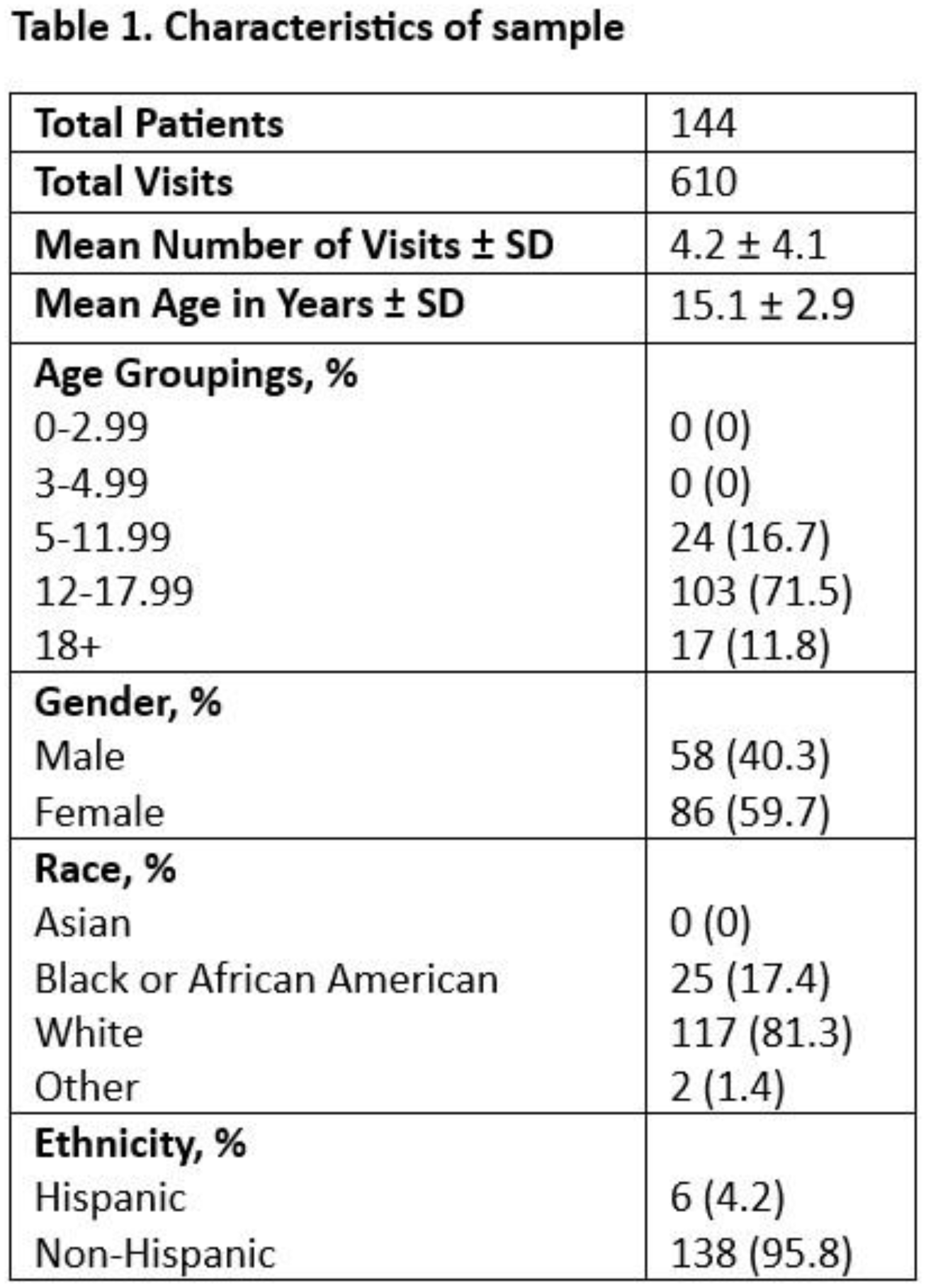
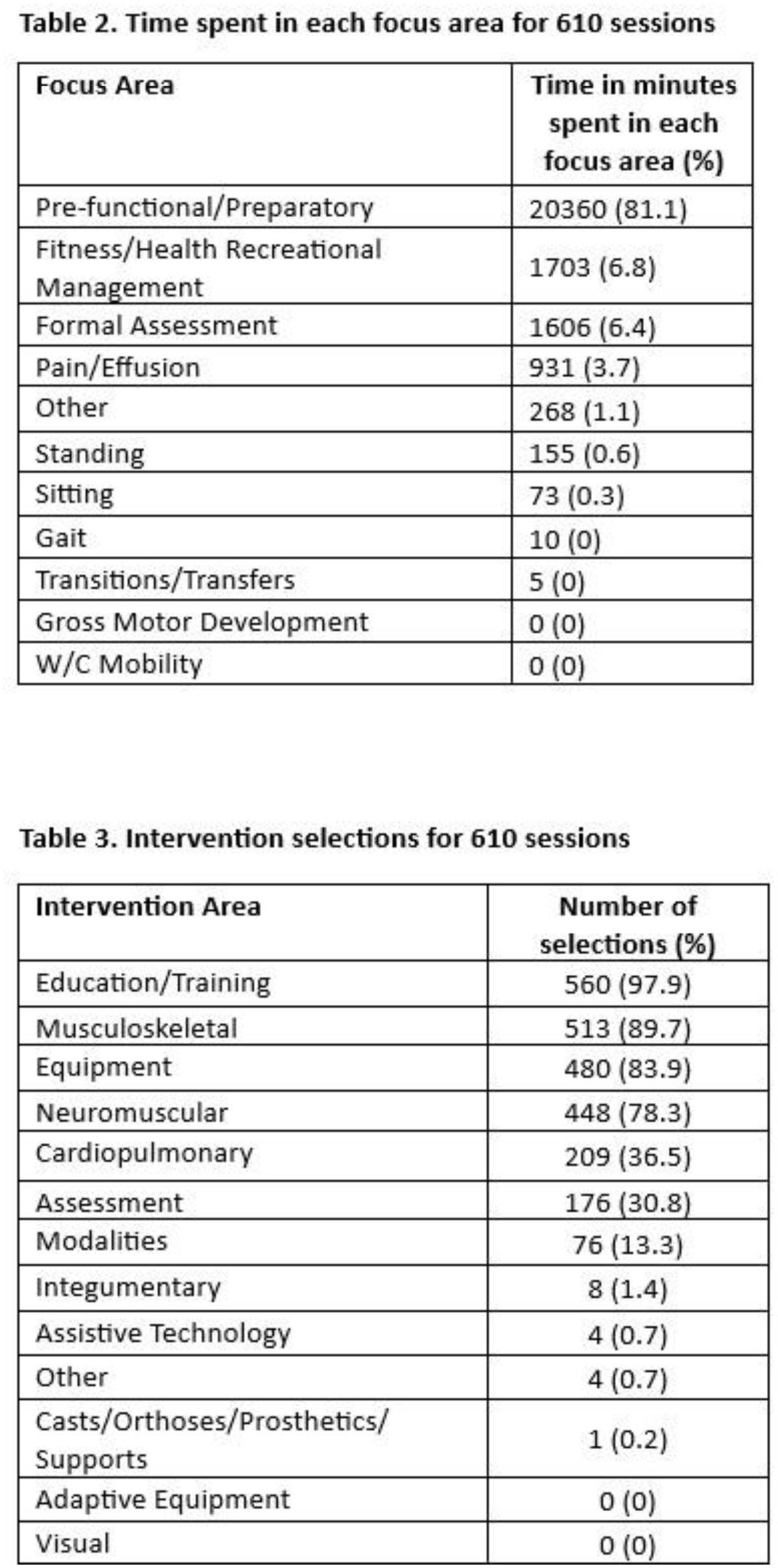
Table 1 outlines demographic data for 144 individuals receiving PT services for concussion in 2023. A total of 610 sessions were performed. The majority of treatment minutes (81.1%) was categorized within the pre-functional/preparatory focus area, followed by fitness/health/recreational management and formal assessment at 6.8% and 6.4%, respectively (Table 2). Education/training was the most frequent intervention type selected at 97.9%, followed by musculoskeletal and equipment at 89.7% and 83.9% respectively (Table 3).
Conclusion:
Demographics of our sample were similar to that represented in the literature. In accordance with our hypothesis, similarities in selected focus areas and intervention types were demonstrated. The intervention type Education/Training was addressed in nearly all treatment sessions, which aligns with a recommendation from the APTA CPG based on moderate to strong evidence supporting its efficacy. The focus area of fitness, health, and recreational management was rarely addressed, despite progressive aerobic training being supported by strong evidence and recommended within the CPG. Results should be interpreted cautiously; larger sample sizes are needed, and further research is indicated to explore utilization of progressive aerobic training and return-to-play protocols after concussion.