Abstract
Background:
Osteochondral defects (OCDe) of the knee in pediatric patients can significantly impact long-term joint function. This study aimed to evaluate the impact of lesion size on patient characteristics, treatment decisions, and outcomes.
Hypothesis:
We hypothesized that larger lesions would be associated with worse outcomes and delayed return-to-sport (RTS), and that surgical modalities would vary by lesion size.
Methods:
This IRB-approved retrospective study included 112 patients surgically treated for knee OCDe between January 2012 and December 2023 at an academic tertiary care center. Demographic and clinical data, including lesion location, graft and procedure type, and two-year patient-reported outcomes (Tegner-Lysholm, IKDC, KOOS), were collected via chart review. Patients were grouped by lesion size: large (≥2.0 cm²) and small (<2.0 cm²). Chi-square and Fisher’s exact tests were used to compare groups, while Mann-Whitney U tests were utilized to compare non-normally distributed patient-reported outcome (PRO) data. A linear regression model with an interaction term examined the relationship between lesion size, ligament injury, and RTS timing.
Results:
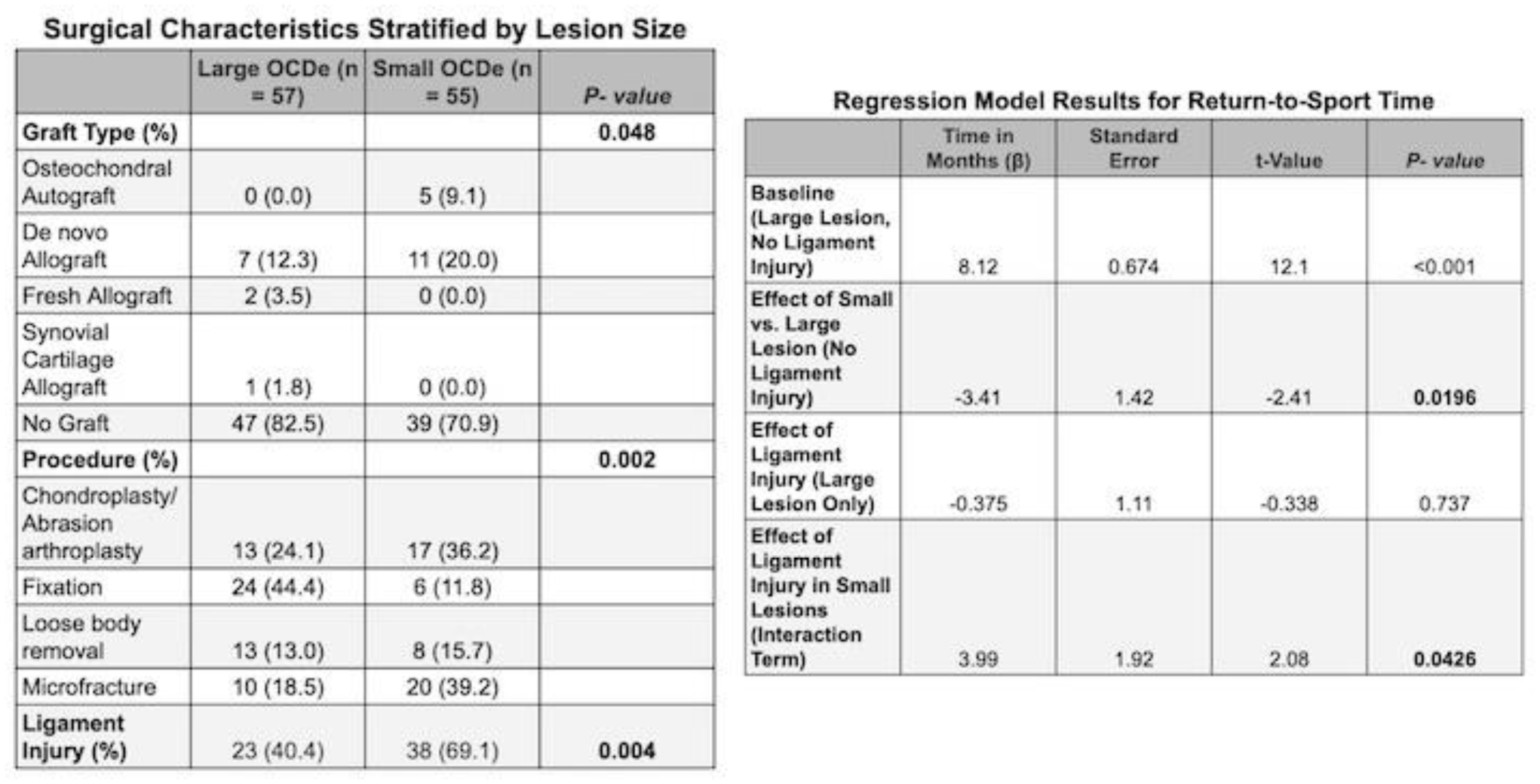
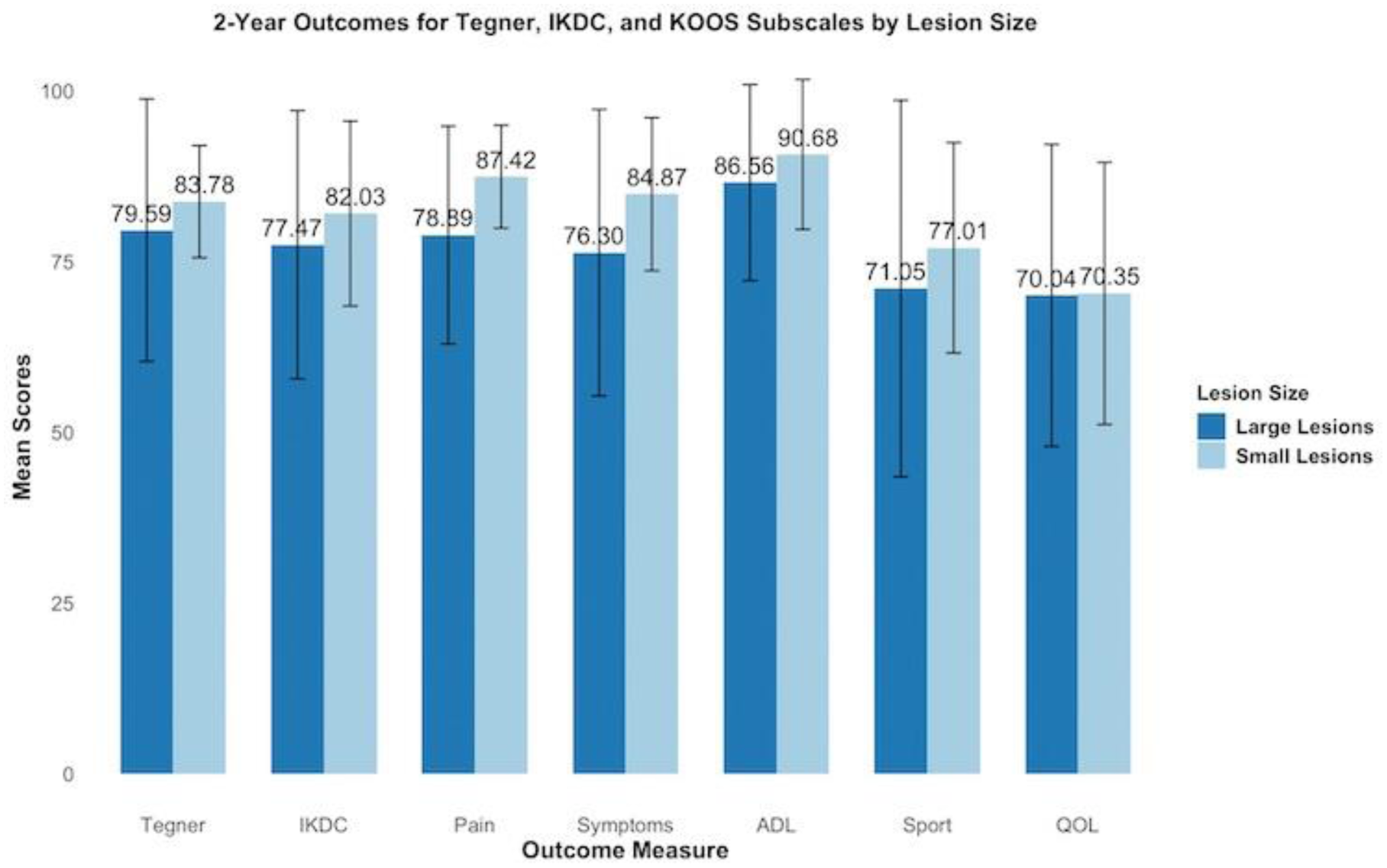
A total of 112 patients (mean age 16.28±2.72; 66.1% male; 50.6% Hispanic, 38.9% Black, 11.1% White; 56.3% public insurance) were included. Large lesions were more common in males (81.5% vs. 54.5%; p=0.005). Ligament injuries were more frequent in the small lesion group (69.1% vs. 40.4%, p=0.004). Large lesions were more often treated with fixation or loose body removal, while small lesions more commonly underwent chondroplasty or microfracture (p=0.002). No significant differences in two-year PROs were found between groups.
Among patients with small lesions, those with ligament injuries RTS 3.99 months later than those without (β=3.99, p=0.0426). In the large lesion group, ligament injury had no significant effect on RTS time (β = -0.375, p = 0.737). Among patients without ligament injuries, those with small lesions RTS 3.41 months sooner than those with large lesions (β = -3.41, p = 0.0196).
Conclusion:
Patients with large knee OCDe are often male and more frequently undergo fixation and loose body removal. While lesion size significantly affects surgical decisions, it may not be a significant driver of differences in mid-term PRO scores. RTS data suggests that small lesions are associated with faster recovery than large lesions in the absence of concomitant ligament injuries. These findings provide clinically relevant expectations for patients and families regarding postoperative recovery.