Abstract
Background:
The incidences of both anterior cruciate ligament reconstruction (ACLR) and meniscus surgery among the pediatric population have risen by several fold in the last few decades, warranting the identification of potential risk factors that may contribute to adverse postoperative outcomes Allergic diseases are common in children and have been demonstrated to be risk factors for infections following orthopaedic surgery. However, their association with infection risk following knee surgery in pediatric populations is unknown. This study therefore sought to compare the risks of postoperative infection in children with and without a history of atopic dermatitis, allergic rhinitis, or asthma who underwent common orthopaedic sports knee surgeries.
Hypothesis:
We hypothesized that pediatric patients with common allergic conditions who underwent ACLR or meniscus surgery would be at higher risk of developing superficial soft tissue infection (SSTI) and deep soft tissue infection (DSTI) postoperatively.
Methods:
A retrospective cohort study was conducted using the TriNetX database. Patients aged 10–18 years with and without a history of allergic diseases who underwent anterior cruciate ligament (ACL) reconstruction (ACLR) or meniscal surgery, including meniscectomy, meniscal repair, and meniscal transplant, were matched based on demographics and comorbidities. Primary outcomes were 90-day postoperative superficial soft tissue infection (SSTI), deep soft tissue infection (DSTI), sepsis, and wound complications; secondary outcomes were 90-day pneumonia, urinary tract infection (UTI), and emergency services usage. Tests of significance (alpha = 0.05) were performed and risk ratios (RRs) with 95% confidence intervals were calculated.
Results:
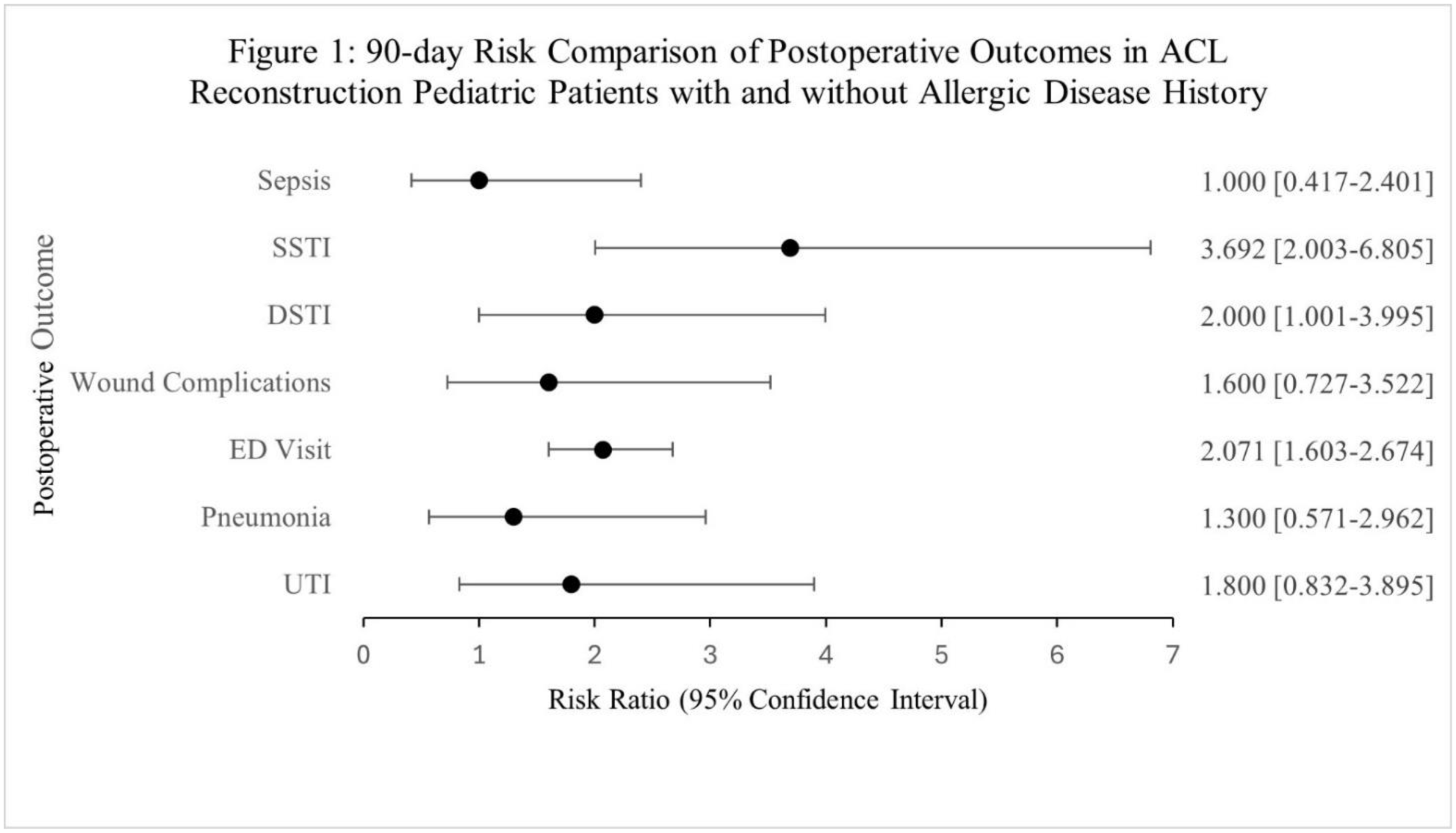
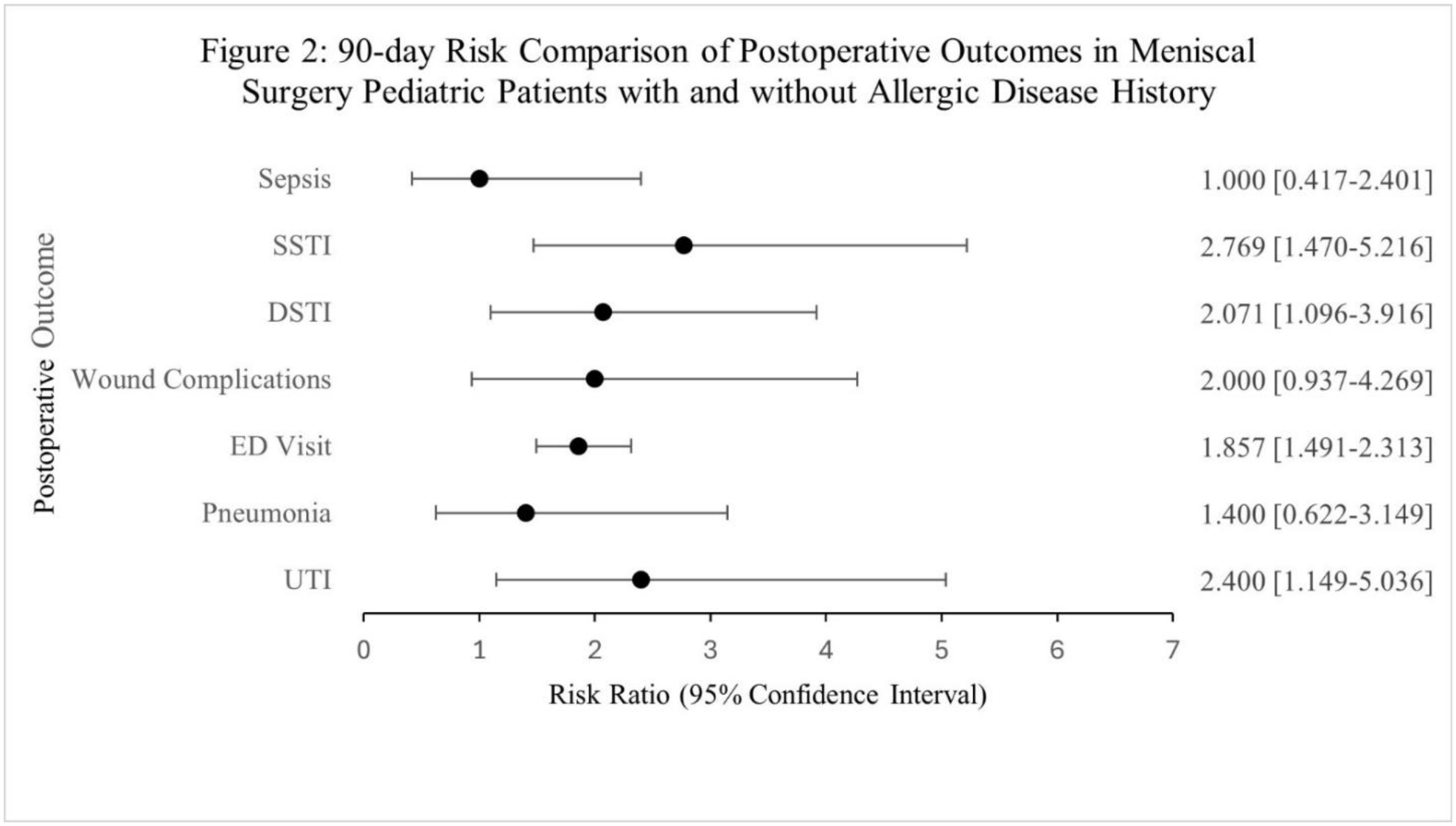
Upon matching, 4677 ACLR patients and 5493 meniscus surgery patients were identified in each cohort. ACLR patients with allergic diseases had significantly greater risks of SSTI (1.03% vs 0.28%; RR = 3.692; P < 0.0001) and DSTI (0.51% vs 0.26%; RR = 2.000; P = 0.045) than ACLR patients without allergic diseases. Similarly elevated risks of SSTI (0.66% vs 0.24%; RR = 2.769; P = 0.001) and DSTI (0.53% vs 0.26%; RR = 2.071; P = 0.02) were noted in meniscal surgery patients with allergic diseases versus those without. No significant differences in rates of other outcomes were noted between cohorts.
Conclusion:
Although the overall risks were low, there were significantly greater risks of infection, including both SSTI and DSTI, following common knee sports surgeries in pediatric patients with a history of allergic disease than in those without. Optimizing the care these patients receive peri-operatively may benefit their post-surgical outcomes.