Abstract
Background:
Psychological readiness after ACL reconstruction (ACLR) in young athletes has been shown to affect return to sports, knee function, and patient-reported outcomes, and has been associated with age and sex differences in young patients. Further study is needed to understand the Confidence in Performance, Emotions, and Risk Appraisal subscales of the ACL Return to Sport after Injury (ACL-RSI) score with regards to age and sex differences in young athletes.
Hypothesis:
We hypothesize that significant sex and age group differences would be observed among the three ACL-RSI subscales.
Methods:
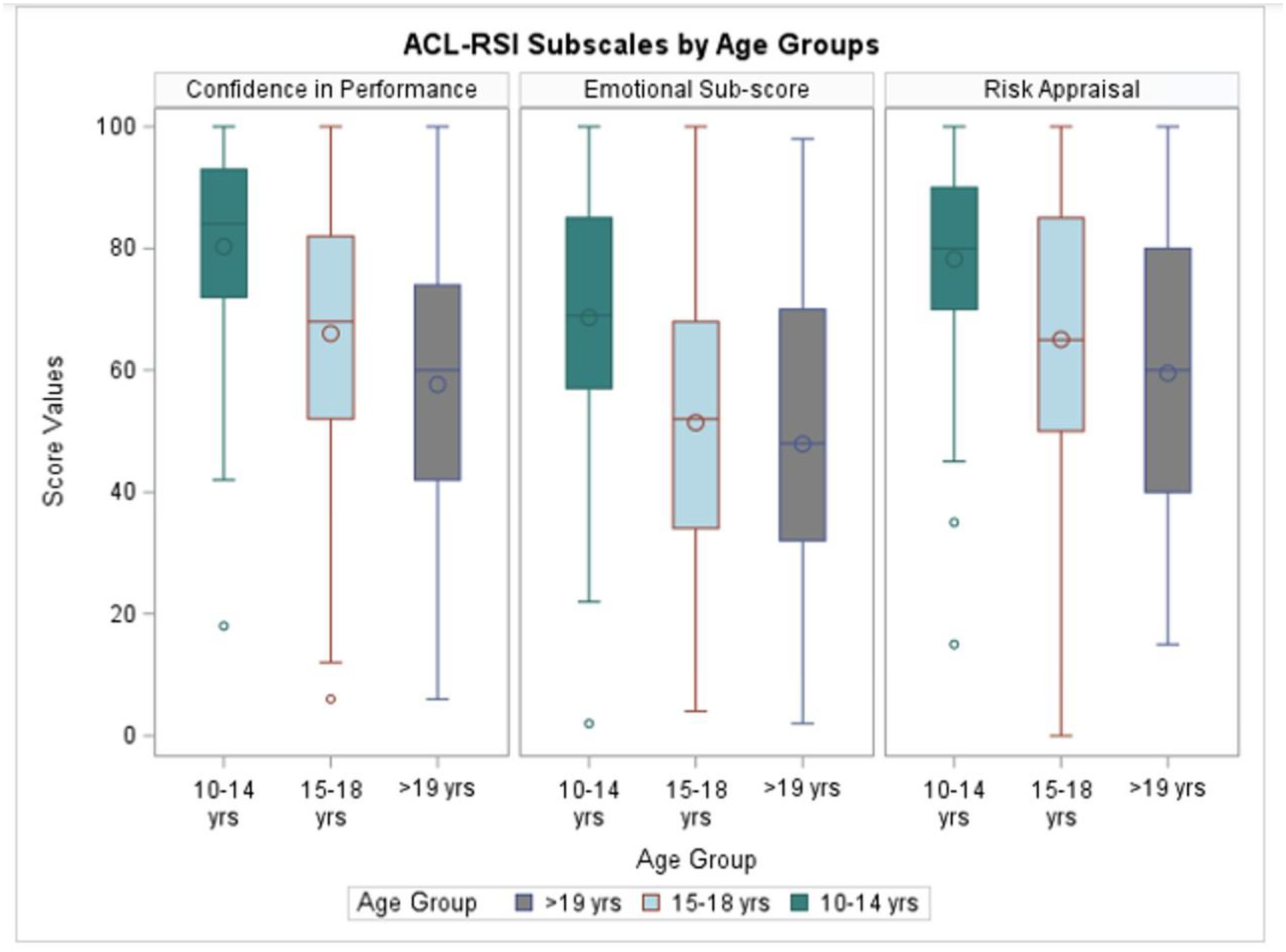
Prospective data from a single center was analyzed from young athletes (ages 10-30) after ACLR. ACL-RSI data was analyzed at 6-months post-operatively in relation to age cohorts (pediatric 10-14 years, adolescent 15-18 years, and adult 19+ years) and sex including analysis of the Emotion, Confidence in Performance, and Risk Appraisal subscales.
Descriptive statistics (mean, standard deviation, median and interquartile range (IQR)), were computed for each ACL-RSI subscale and stratified by age cohort and sex. The Kruskal-Wallis test was applied to assess differences across age groups for each subscale. When significant differences were found, post-hoc pairwise comparisons were performed using ANOVA with Tukey’s adjustment. Sex comparisons for each subscale were analyzed using the Wilcoxon Rank-Sum test.
Results:
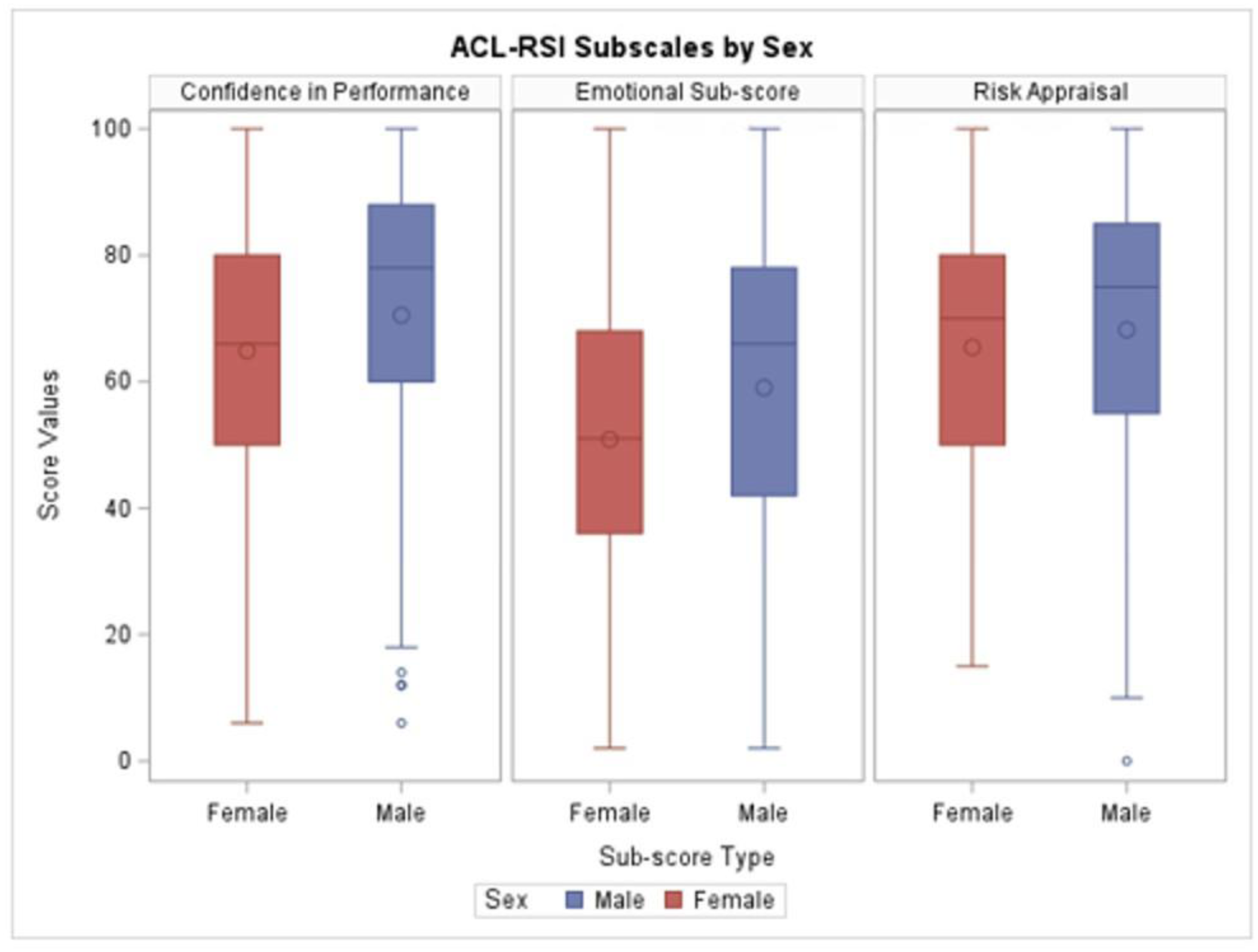
Complete data was available on 248/280 total patients. The median age was 16.9 (IQR 15.5-18.6), 59% female. Males reported significantly higher (better) Confidence in Performance (p=0.008) and Emotion scores than females (p=0.018). No significant sex difference was found in Risk Appraisal (p = 0.208). (Figure 1).
Conclusion:
Psychological readiness is a critical factor in young athletes returning to sports after ACLR. Significant sex and age-based differences were found in ACL-RSI subscales scores. Males reported better Confidence and Emotion subscale scores but no difference in Risk Appraisal compared to females. The youngest/pediatric age cohort exhibited better ACL-RSI subscale scores for all 3 domains. This data can potentially be used to help improve psychological readiness after ACL reconstruction in young athletes by targeting interventions to the most influential subscales for each age/sex cohort.