Abstract
Background:
While both socioeconomic status (SES) and psychological variables have been shown to influence outcomes following ACL injury and surgery, less is known about how SES and psychological variables interact to influence these outcomes. The purpose of this study was to assess the relationship between SES, psychological stress and readiness, and short-term patient reported outcomes (PROMs) following ACL reconstruction (ACLR).
Hypothesis:
SES is correlated with psychological stress and readiness at short-term follow up after ACLR.
Methods:
Patients undergoing ACLR were prospectively enrolled and evaluated with ACL Return to Sport after Injury (ACL-RSI), PROMIS-Psychological Stress Experience (PROMIS-PSE), International Knee Documentation Committee (IKDC) (Pedi-IKDC <17 years and IKDC >18 years), and the Pediatric Functional Activity Brief Scale (Pedi-FABS). SES factors analyzed included insurance, household income, social deprivation index (SDI), and area deprivation index (ADI). Regression modeling with age, sex, insurance, income, SDI, ADI, and time from injury to surgery was performed to examine associations between these characteristics and 6-month PROMs.
Results:
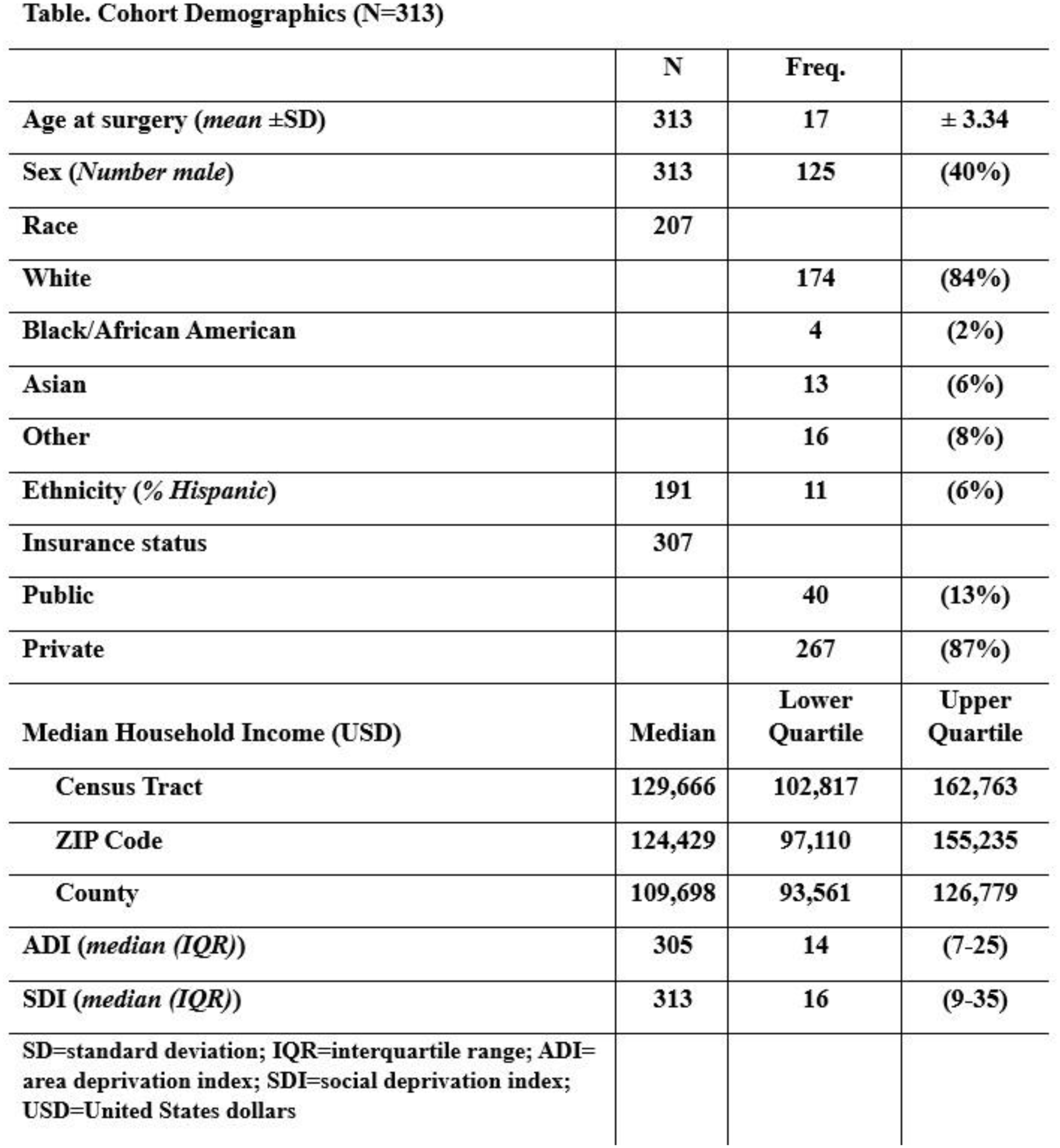
313 participants were analyzed (median age 17 years; IQR, 15.6-19.0). Forty percent of the cohort were male and 87% had private insurance. Median ADI and SDI were 14 (IQR, 7-25) and 16 (IQR, 9-36), respectively (higher scores indicate greater socioeconomic disadvantage). Median household income was $109,698 (IQR, $93,561-$126,779). Regression analysis found a 6% increase in time from injury to surgery for each 10 unit increase in ADI (p=0.03). Similarly, patients with public insurance had a 20% increase in time from injury to surgery (p=0.04). Females had a 4.8-point average increase in PROMIS-PSE scores (i.e. higher psychological stress) (β=4.8; SE=1.03; p<0.001) compared to males. PROMIS-PSE scores showed no significant difference among participants from below-median income counties (p=0.0565). ACL-RSI scores were significantly lower (i.e. less confidence) among participants from below-median income counties (p=0.0103). There were no associations found between other SES factors and other patient reported outcomes (IKDC, Pedi-FABS).
Conclusion:
Privately insured and female patients were more stressed at 6-months following ACL reconstruction while those from lower income households had lower confidence. ADI, SDI, and public insurance were associated with longer times until surgery but had no influence on psychological stress, readiness, or knee function. Those from higher income households had shorter times until surgery and also showed improved psychological readiness at 6-months. Longer term work is needed to elucidate the interaction between SES factors and psychological stress and readiness following ACLR.