Abstract
Background:
Patient expectations surrounding recovery may influence their recovery from a variety of medical conditions, but alignment of recovery expectations and subsequent recovery have not been thoroughly evaluated among adolescents with concussion. Given the variation in material available from scientific and non-scientific media sources, patients may have varying expectations regarding recovery after concussion.
Hypothesis:
We evaluated the association between patient expectations for symptom resolution after concussion (weeks post-injury) and the development of Persisting Symptoms after Concussion (PSaC). We hypothesized that a longer anticipated symptom resolution timeline would be associated with higher odds of PSaC.
Methods:
We conducted a longitudinal, multisite, prospective cohort study of adolescents diagnosed with concussion. Participants enrolled within 21 days of sustaining a concussion and completed questionnaires with questions including one related to anticipated recovery time (“How many weeks do you think it will take before your concussion symptoms are completely gone?”) and symptom severity (Post-Concussion Symptom Inventory). They were monitored over time until self-reported symptom resolution; PSaC was defined as symptoms >28 days post-injury. We then performed a multivariable analysis with logistic regression to examine the relationship between expected recovery and development of PSaC.
Results:
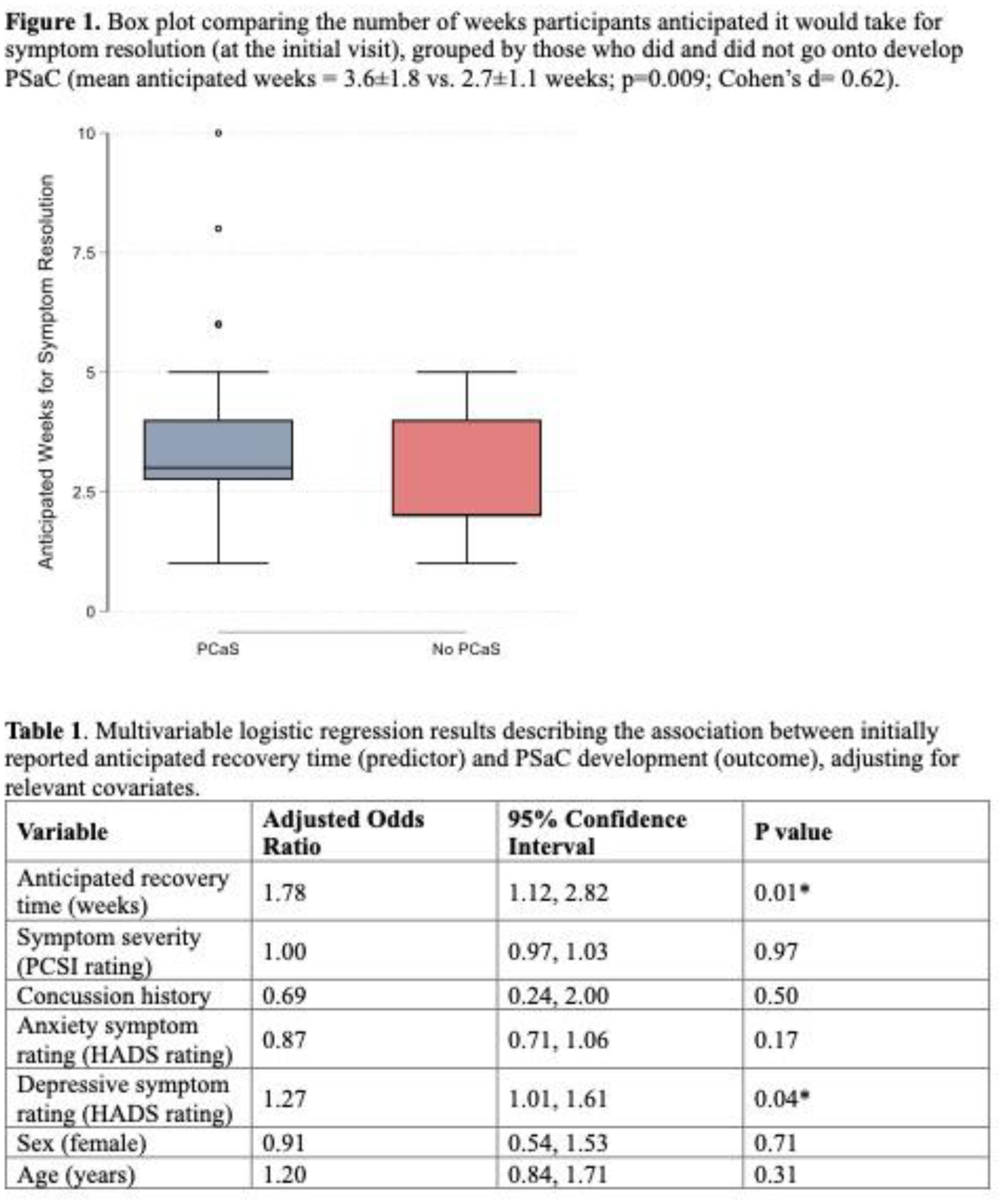
We enrolled 87 participants aged 13-18 years (average=15.8 years, 49% female) who sustained a concussion, underwent initial evaluation, and were followed until symptom resolution. N=39 (45%) developed PSaC. At initial evaluation participants anticipated time to concussion symptom resolution an average of 3.1 weeks from initial study visit (SD=1.5, range=1-10 weeks). The initial anticipated symptom resolution time was weakly, positively, and significantly associated with the ultimately observed symptom resolution time (Pearson r = 0.33; p= 0.003). Those who developed PSaC initially anticipated the length of recovery would be longer than those who did not develop PSaC (Figure 1; p=0.009). After adjusting for covariates (symptom rating, concussion history, anxiety and depression symptom severity, sex, and age), longer anticipated recovery time was significantly associated with higher odds of developing PSaC (Table 1; p=0.01).
Conclusion:
Participant expectations regarding concussion recovery duration were significantly associated with both duration of their post-concussive symptoms and development of PSaC, and participants who anticipated longer recovery times were more likely to develop PSaC. This suggests that initial recovery expectations may influence recovery time, although further research should investigate other factors which may influence patience expectations. This emphasizes the importance of counseling and patient education to promote realistic outlooks surrounding recovery.