Abstract
Background:
Increased posterior tibial slope (PTS) is associated with a higher risk of anterior cruciate ligament (ACL) injury, including re-rupture. ACL injury in the paediatric population is a common injury with an increasing incidence. A few studies in the skeletally immature have associated increased PTS with tibial spine fractures and ACL ruptures. However, normal ranges for PTS do not appear within the literature for the paediatric population. Is PTS the same in the skeletally immature population and can the PTS be reliably measured on radiographs in the skeletally immature?
Hypothesis:
1 - Tibial slope of the paediatric population is simile to that in adults
2 - Measuring slope in the skeletally immature is unreliable
Methods:
440 skeletally immature patients between the ages of 4-16 years old with knee radiographs were reviewed. Key demographic data including age, gender, laterality and reason for image were recorded. PTS angle was measured using the posterior cortex method by 3 investigators who were blinded to each other’s results. Those with underlying medical conditions that may affect development of the knee or lower limb were excluded. Mean PTS angles were calculated and inter-observer variability was assessed.
Results:
In patients aged 4-8 years old, poor inter-observer reliability (ICC 0.389504) occurred on PTS angle measurement.
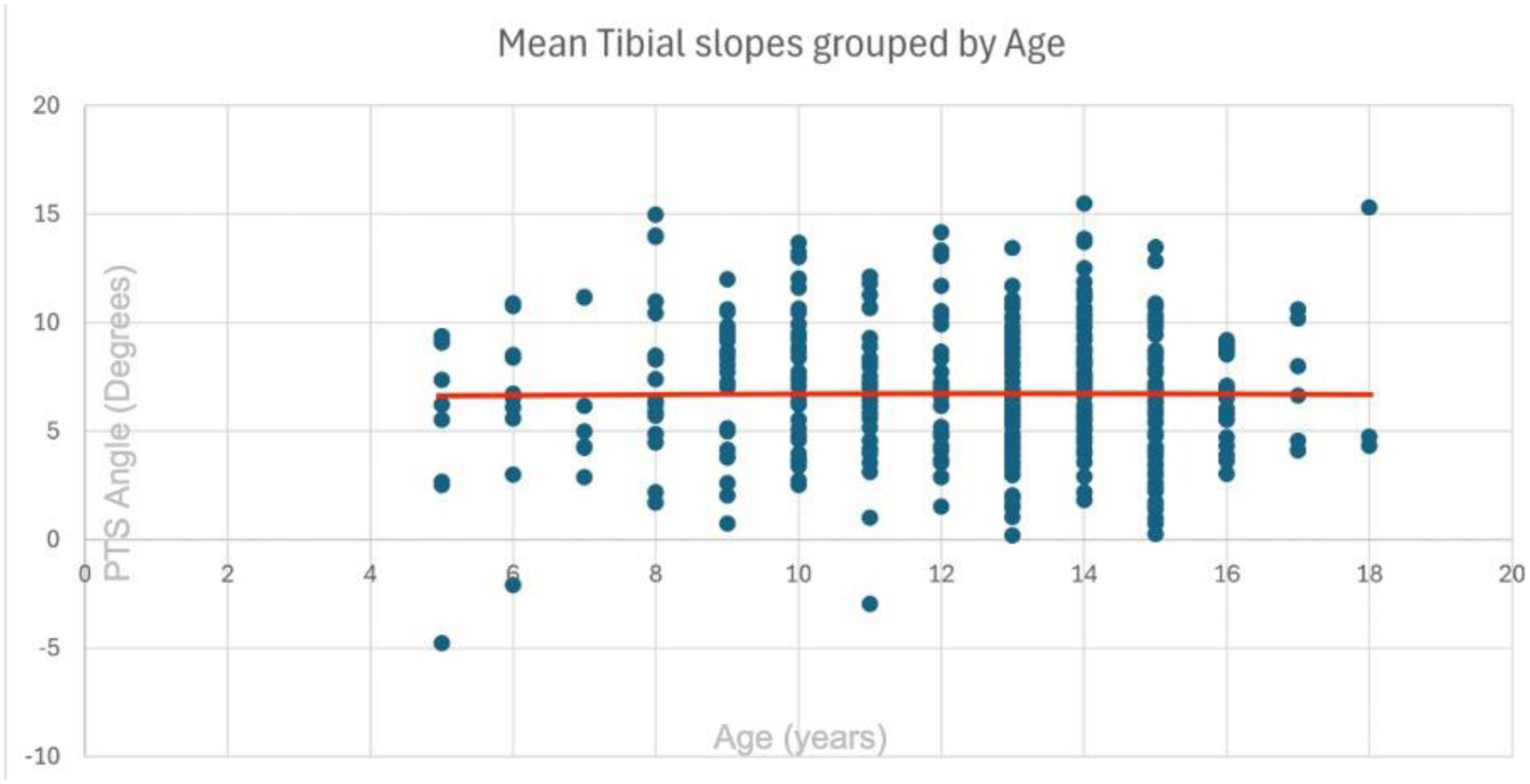
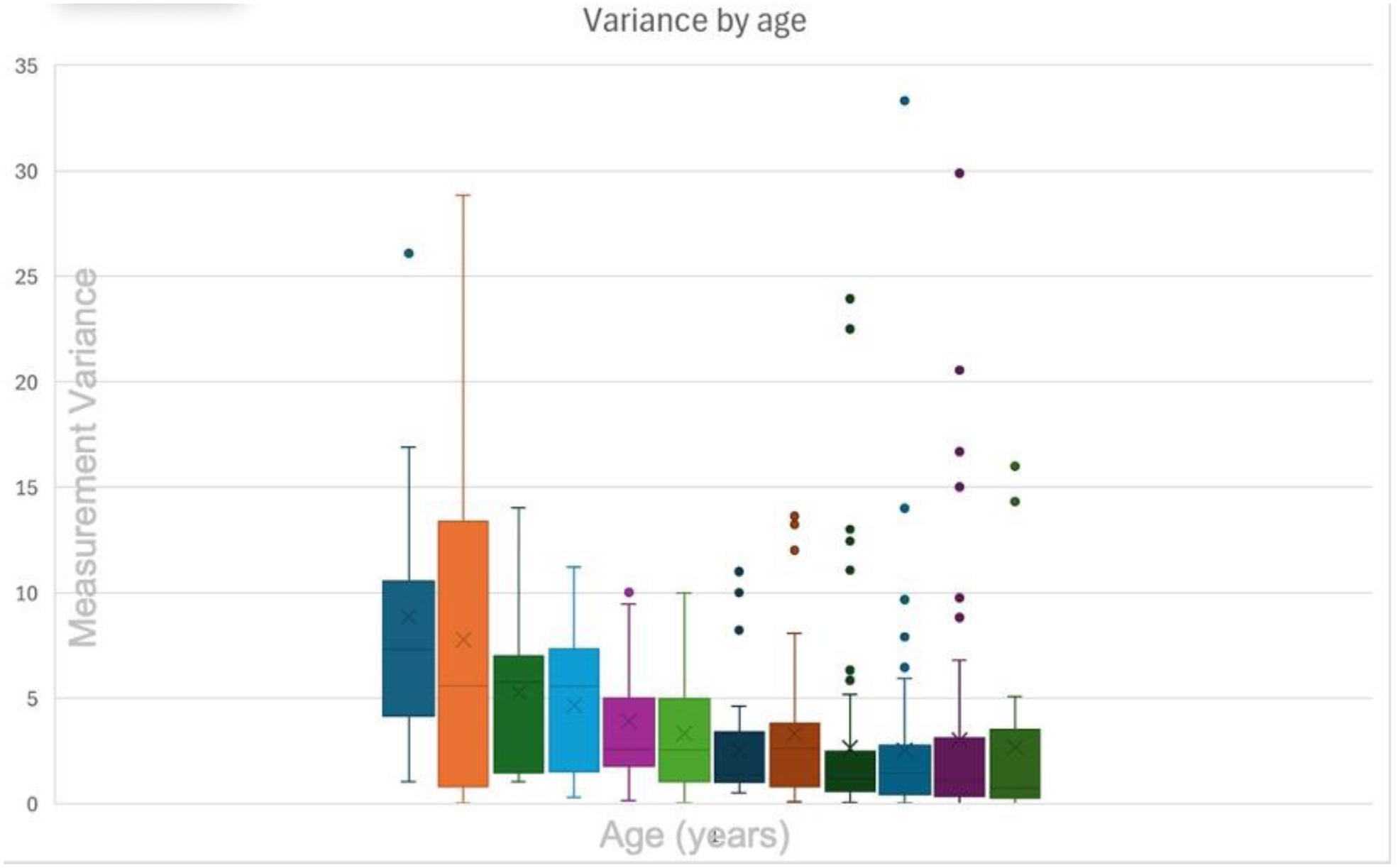
In patients aged 9-16 years old, good inter-observer reliability (ICC 0.809556) occurred on PTS angle measurement. The mean PTS angle across all ages was 6.77° (SD 3.46°, range -8.1° to 17.4°). Inter-observer measurement variance reduced with age from 7.5 at 5 years old to 2.1 at 16 years old.
Conclusion:
PTS angle in skeletally immature patients is similar to that reported in the literature for the adult population.
There is poor inter-observer reliability when measuring PTS angle on radiographs in patients aged 8 years old and younger. Inter-observer measurement variance is similar to that reported in the literature for the adult population from 9 years old. MRI may be a more reliable tool for measuring PTS angle in patients 8yrs old and younger where limited ossification has occurred.