Abstract
Background:
Sternoclavicular (SC) joint dislocations are rare and may occur anteriorly or posteriorly. Posterior dislocations, while less common, can be dangerous due to the proximity of vital structures such as the esophagus, trachea, and neurovascular bundle. Prompt and accurate diagnosis is critical. This study aimed to evaluate pediatric and adolescent patients with posterior SC joint dislocations to determine the prevalence of missed diagnoses at initial presentation and to analyze associated demographics, injury mechanisms, treatment, and outcomes.
Hypothesis:
There is inconsistency in timely and accurate diagnosis of posterior SC dislocations in pediatric and adolescent patients. A lateral blow mechanism and pain-limited forward shoulder flexion on physical exam may be useful indicators to pursue advanced imaging for diagnosis.
Methods:
A retrospective review was performed at a single institution from October 1, 2015, to November 1, 2024. Patients included had CT-confirmed posterior SC joint dislocations. Those with recurrent subluxation or without a CT-confirmed dislocation were excluded. Data collected included demographics, injury mechanisms, dislocation features, time to diagnosis, treatment modality, and clinical outcomes.
Results:
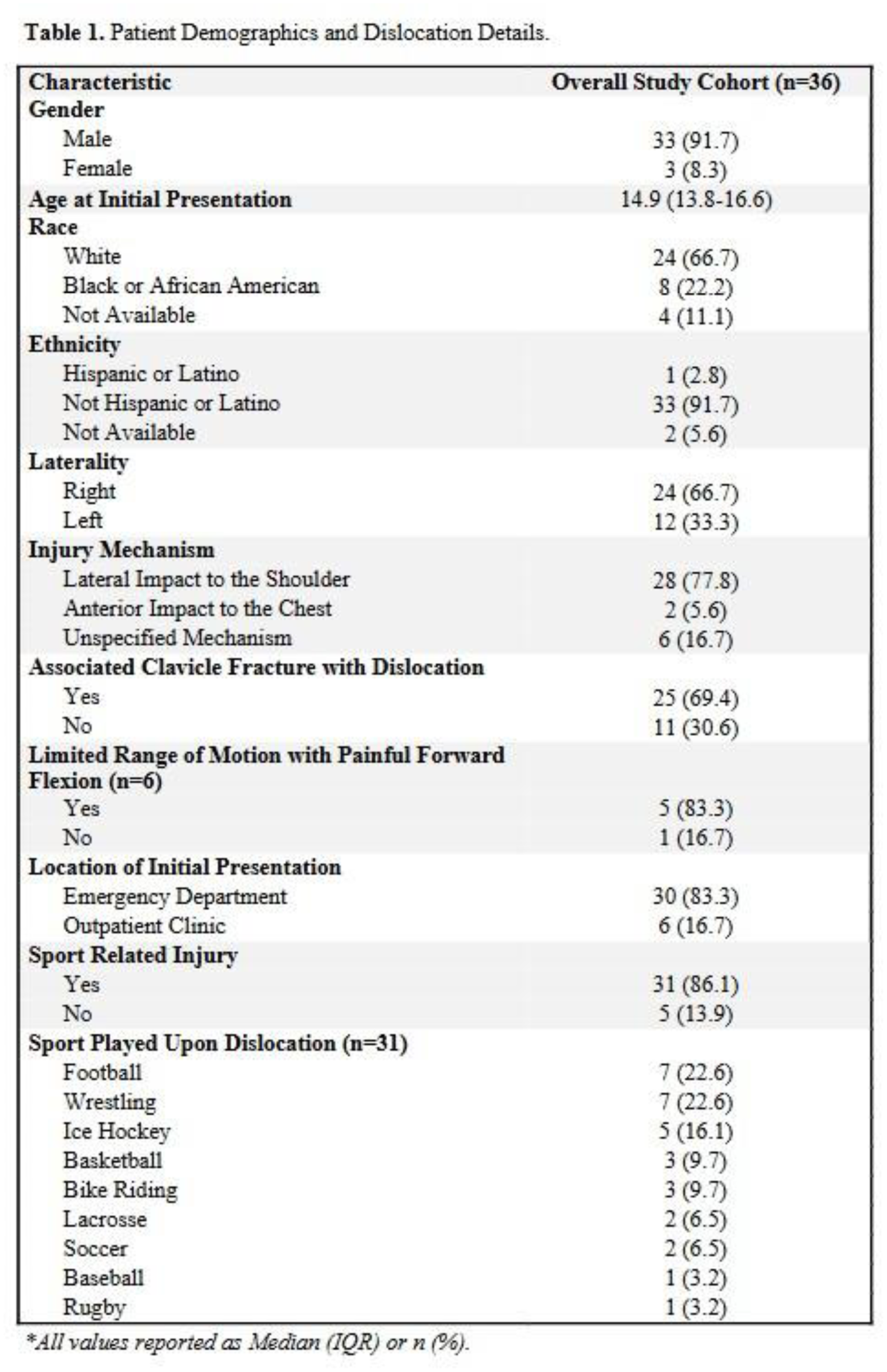
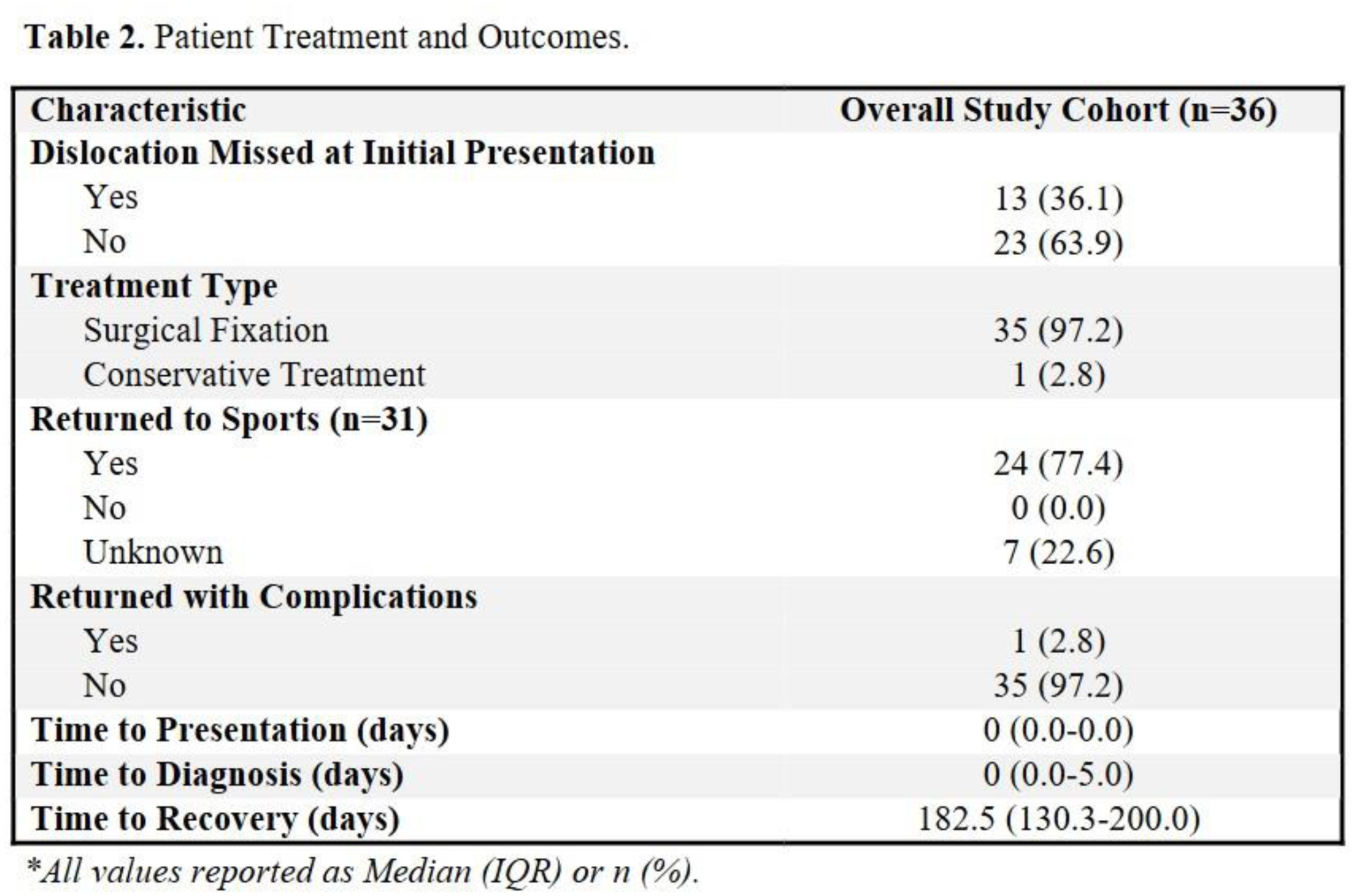
Thirty-six patients met inclusion criteria. Median age was 14.9 years; most were male (91.7%), white (66.7%), and not Hispanic or Latino (91.7%). Thirteen patients (36.1%) had missed posterior SC dislocations on initial presentation, later confirmed on follow-up CT scans. Most patients first presented to the Emergency Department (83.3%). The most common injury mechanism was sports-related trauma (86.1%), most frequently from football (n=7), wrestling (n=7), and ice hockey (n=5). A lateral shoulder impact was the primary mechanism (n=28, 77.8%), while only two patients sustained a fall or blow to the anterior chest. Of the patients tested for forward shoulder flexion (n=6), all demonstrated pain-limited motion. All but one patient underwent surgical management with open reduction and internal fixation. Median time from initial presentation to medical clearance was 182.5 days (IQR 130.0–200.0). One patient returned following their initial treatment course after experiencing a fall without repeat dislocation.
Conclusion:
Posterior SC joint dislocations are potentially dangerous and are susceptible to being missed on initial evaluation. A lateral shoulder impact and painful forward flexion should raise suspicion for posterior dislocation, even when initial imaging is inconclusive. Chest and clavicle X-rays are often insufficient; CT scans should be strongly considered to avoid delayed diagnosis and minimize risk to mediastinal structures.