Abstract
Background:
Obesity is a growing public health epidemic. As such, an increasing number of obese adolescents are presenting with patellar instability. Current standard of care treatment for first time dislocations, in the absence of a loose body or osteochondral fracture, has been and continues to be non-operative treatment modalities. However, growing evidence demonstrates high rates of recurrent instability and worsening concomitant intraarticular pathology in the high risk subset, thus suggesting a role for early surgical interventions, such as medial patellofemoral (MPFL) reconstruction. To date, very little is known about the impact of obesity on clinical outcomes following MPFL reconstruction.
Objectives:
This study sought (1) to determine if obesity is associated with higher complication rates following operative management of patellar instability and (2) to elucidate if obesity impacts patient outcomes following operative management of patellar instability.
Methods:
Patients in this study were prospectively enrolled in the Justifying Patellar Instability Treatment by Early Results (JUPITER) multicenter study. Patients were included if they underwent an MPFL reconstruction with or without lateral release/lateral lengthening or chondroplasty. Patients were excluded if they underwent a concomitant bone (e.g., tibial tubercle osteotomy, distal femur osteotomy, trochleoplasty) or articular cartilage repair procedure. Patients were stratified into cohorts on the basis of BMI less than 30. Patient demographics and complications (subluxation/dislocation or reoperation) were reviewed and included. Patient reported outcome measures including the KOOS Jr., Pedi-FABS, IKDC Pedi score, BPII 2.0, and Kujala score were included at baseline, 1 year, 2 years, and 5 years postoperatively when available. A P-value < 0.05 was deemed to be statistically significant in all analyses.
Results:
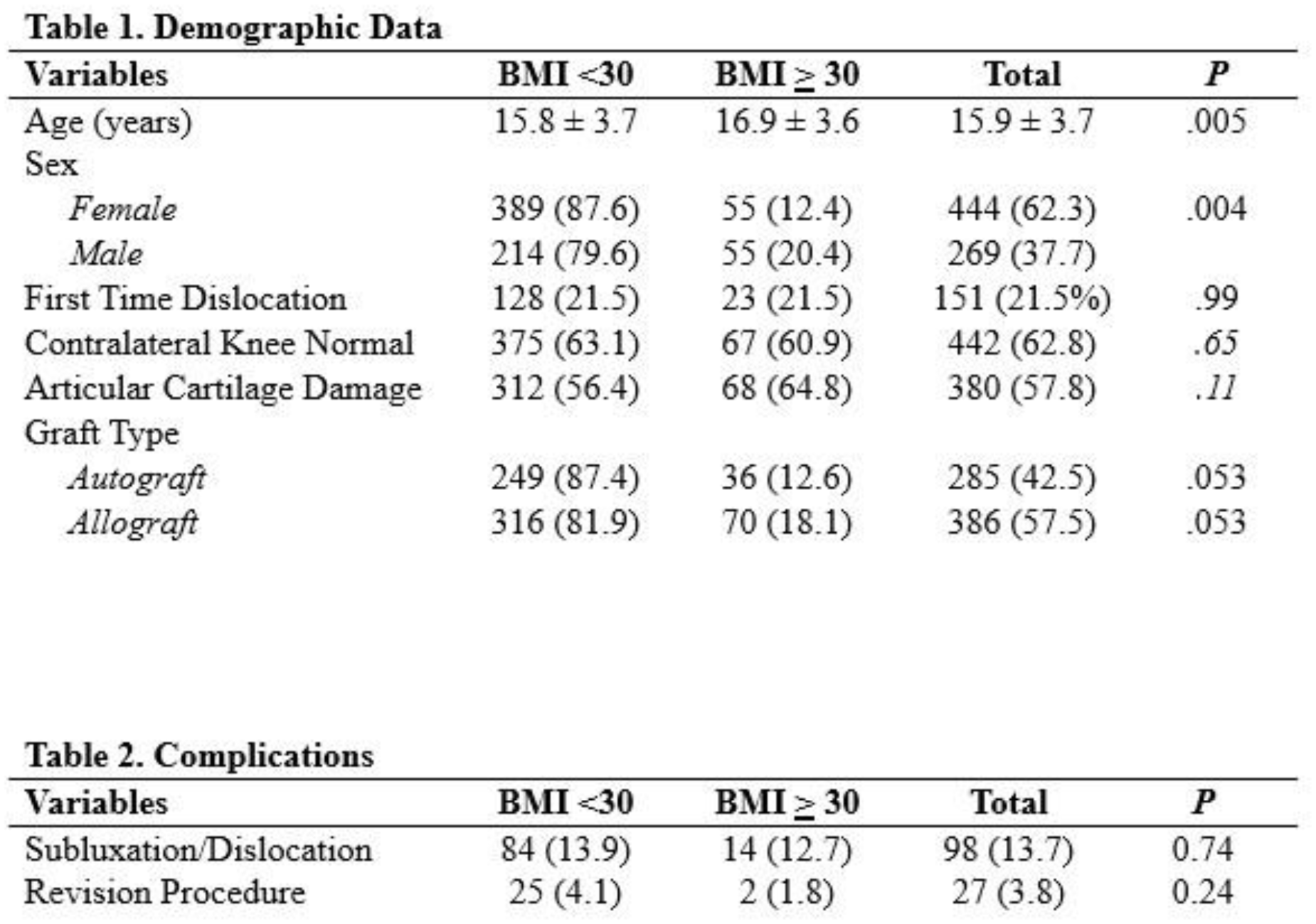
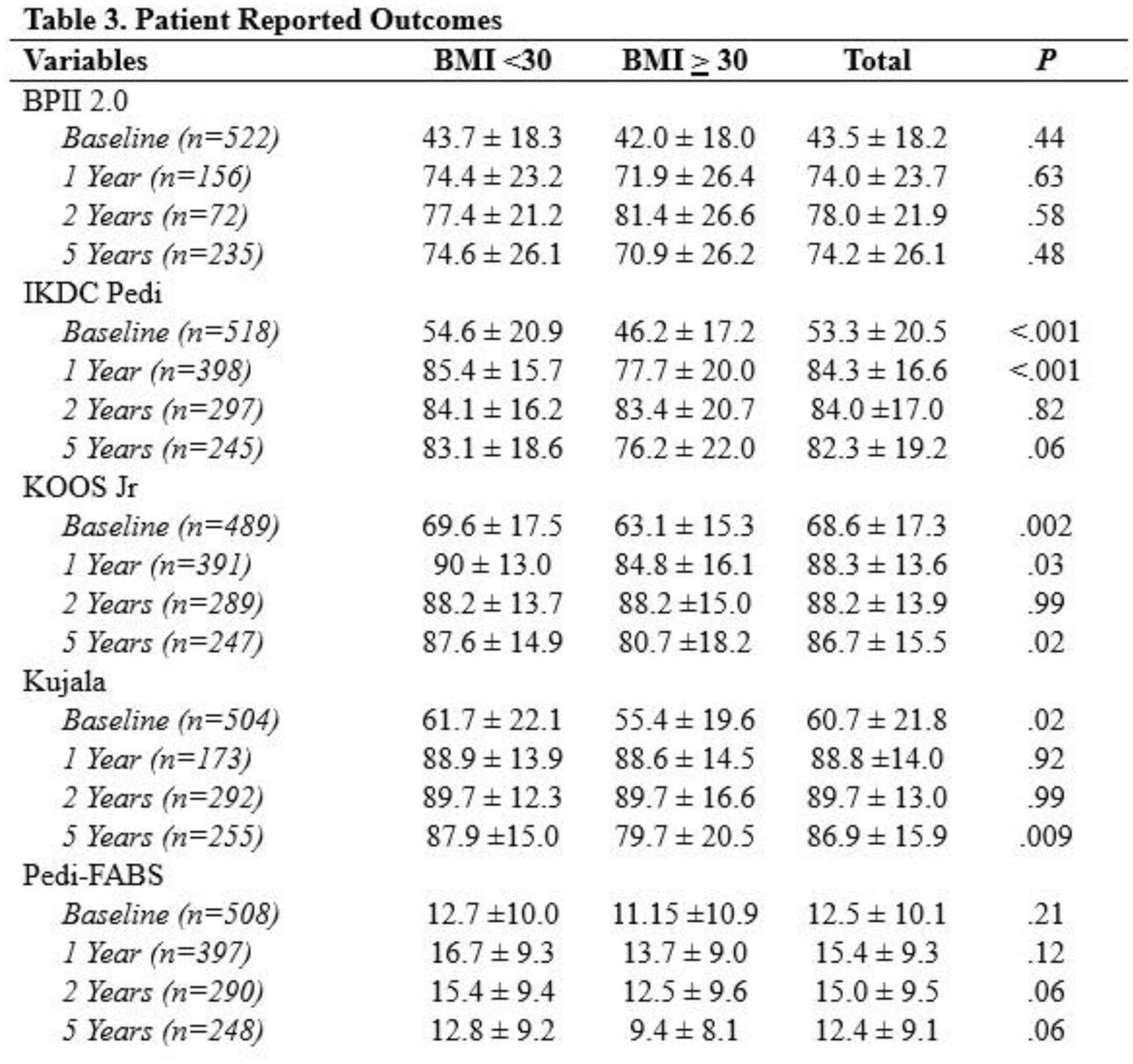
A total of 713 patients who underwent MPFL reconstruction were included in this study. There were 603 patients with a BMI <30 and 110 patients with a BMI > 30. Patients in the obese cohort were significantly older (16.9 ± 3.6 vs 15.8 ± 3.7, p=0.005) and more likely to be male (20.4% vs 12.4%, p=0.004). There was no difference in the subluxation/dislocation rate or reoperation rate between the two groups. Obese patients demonstrated significantly worse outcomes at multiple time points including baseline (Kujala, IKDC Pedi, and KOOS Jr), 1 year (IKDC Pedi and KOOS Jr), and 5 years (Kujala and KOOS Jr).
Conclusion:
Obese patients in this study treated with an MPFL reconstruction demonstrated similar rates of complications as their non-obese peers. However, obese patients were more likely to have lower patient reported outcomes scores.