







Abstract
Social media has become a part of everyday life. It has changed the way we obtain and distribute information, connect, and interact with others. As the number of platforms and users grow, medical professionals have learned the value social media can have in education, research, advocacy, and clinical care initiatives. Platforms provide opportunities to network, build collaborations, and develop a reputation. This is part one of a two-part series. This article provides an overview on how social media can benefit professional career development for clinicians and researchers, as well as for advocacy to raise awareness against biases, disparities, and for patient benefit. We review challenges, limitations, and best practices for social media use by medical professionals with neurology-specific examples.
Keywords
Introduction
Social Media (SoMe) is an umbrella term for interactive platforms and tools that facilitate creation and sharing of information (content) through virtual communities (networks). Over half of the world's population uses SoMe; which drastically increased during the COVID-19 pandemic. 1 On average, users spend 2.5 hours on SoMe per day across multiple platforms. 1 The most popular platforms used by the general public include Facebook (2.9 billion active users), YouTube (2.3 billion), WhatsApp (2 billion), Instagram (1.4 billion), TikTok (1 billion), and Twitter (436 million).1–4
The use of SoMe in healthcare has expanded over time. Hospital systems use SoMe to promote brand presence, patient education, and reputation scores. 5 An estimated 25–65% of medical professionals are using SoMe6–10 for clinical outreach,11–13 career development,8,14–21 research,15,22–33 education,34–44 and advocacy efforts.45–59 However, there are misconceptions, anecdotal stories, and fears surrounding a medical professional's use of SoMe use, which can foster inappropriate use, skepticism, and criticism.
The pandemic accelerated previous trends towards digital spaces as many real-world communities were shuttered in the face of social distancing. SoMe has become integral for many medical professionals and created an opportunity to shape the next generation of educators, researchers, and leaders. Developing fluency in various platforms, uses, and tools has become essential. We provide an introductory primer to the main SoMe platforms used by medical professionals. Additionally, we discuss the benefits and limitations of using SoMe for clinical outreach, advocacy, research, and continuing medical education and how each of these can foster career development.
The Terminology
Understanding terminology forms the building blocks for success. A tweet (Twitter) or post (Instagram) is the content you are creating and sharing. Handle refers to an individual's username typically symbolized by an @ sign followed by numbers and/or letters. This may be different from the display name, which is typically the full name of the individual, program, or organization. Hashtags are symbolized by a # sign followed by letters and/or numbers. Hashtags are clickable and searchable across multiple platforms. Hashtags can be registered through organizations such as Symplur© in order to track impact, activity, and top influencers. 60
On Twitter (
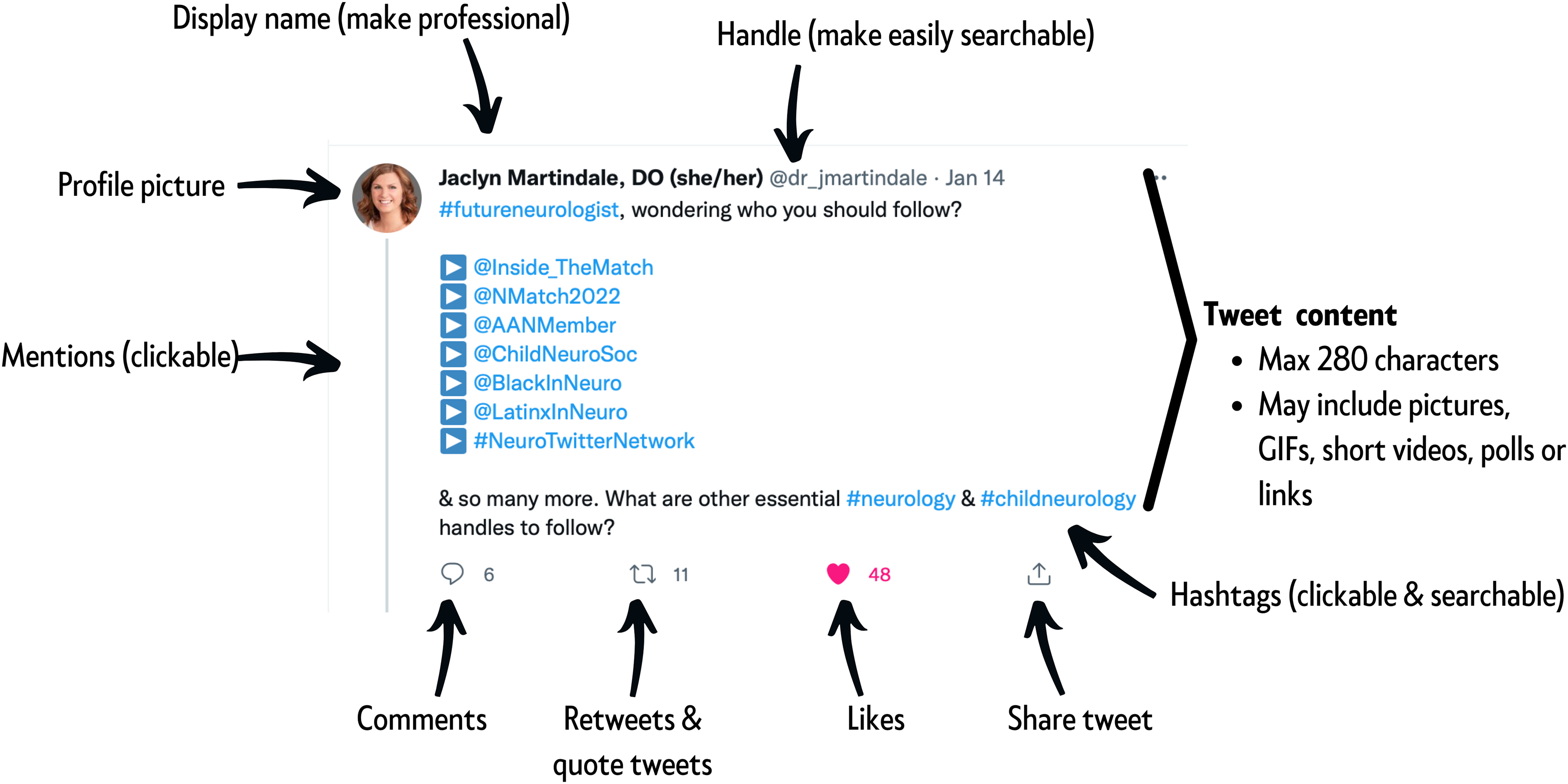
Anatomy of a Twitter post.
On Instagram (
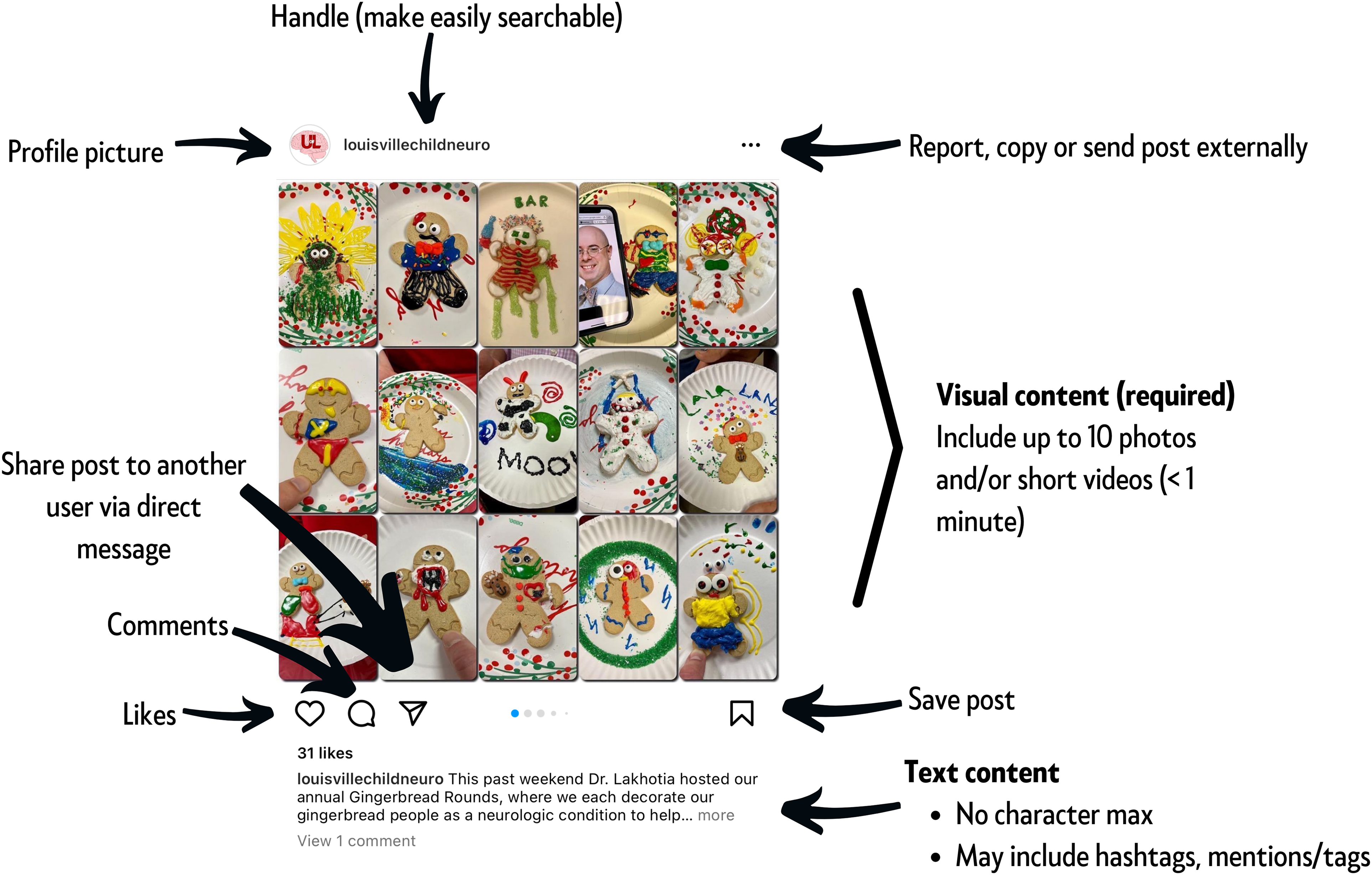
Anatomy of an Instagram post.
Career Development:
Medical professionals have learned the value SoMe can have in education, research, advocacy, and clinical care initiatives. Each of these provides opportunities to network, build collaborations, and develop a reputation (
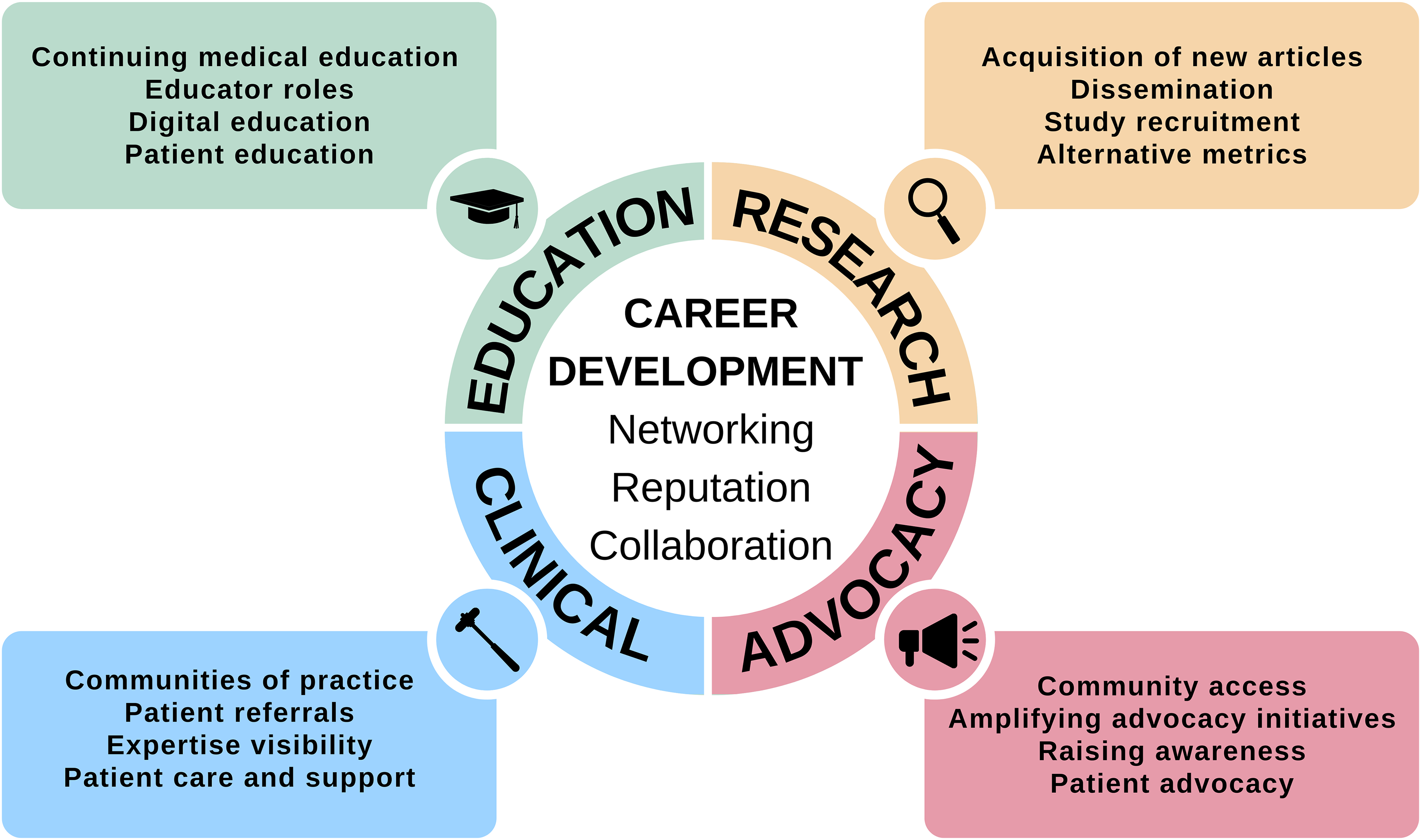
Facilitation of career development through social media.
SoMe can facilitate professional networking within a specific network that may not be readily accessible in your own institution or more broadly. Networking can occur on public or private platforms designed solely for medical professionals, such as Doximity©, Sermo©, and Medscape Physician ConnectSM. Traditionally mentors and sponsors can facilitate professional networking opportunities; however, this may be challenging for early career faculty who may lack access to strong mentorship or sponsorship. Leveraging SoMe for professional networking can help level the playing field against time, geography, and traditional hierarchical status of medicine.16–19 SoMe creates accessibility to bring your voice, name, or reputation to bigger circles.
Individuals can build their personal brand, reputation, and expertise visbility.14,15 This can result in speaking opportunities, educational engagements, research collaborations, mentor-mentee relationships, or media outreach.8,20,21 Faculty promotion and tenure committees evaluate clinicians based on educational portfolio, academic scholarship, and reputation. SoMe can facilitate professional growth through each of these avenues and support career advancement.
Research and Academic Scholarship:
Dissemination
SoMe aids in the promotion of research and academic scholarship. Through SoMe scientists gain accessibility to a larger research community. Through these networks, scientists can share ideas, enable rapid large-scale collaborations, and even facilitate new funding opportunities.15,22–28
SoMe can also play a pivotal role in the dissemination of publications. Journals actively broadcast new articles through SoMe platforms or integrate their own articles into Twitter-based journal clubs to facilitate visibility, downloads, views, metrics, and even journal impact factor.31–33 Visual abstracts distributed on SoMe lead to increased impressions for journal articles and have become standard in many fields of academic publishing.61,62 Inclusion of author handles enables more impressions and full-article downloads, leading many journals to request authors’ twitter handles with manuscript submission.
Acquisition of New Studies and Articles
As SoMe is utilized for dissemination and promotion of academic scholarship, it can be a great place to find the latest research and publications. Over 3 million articles are published per year.
63
The annual growth of articles published has been steadily rising at 4–5% per year with even higher rates in 2021 due to COVID-19 related papers.
64
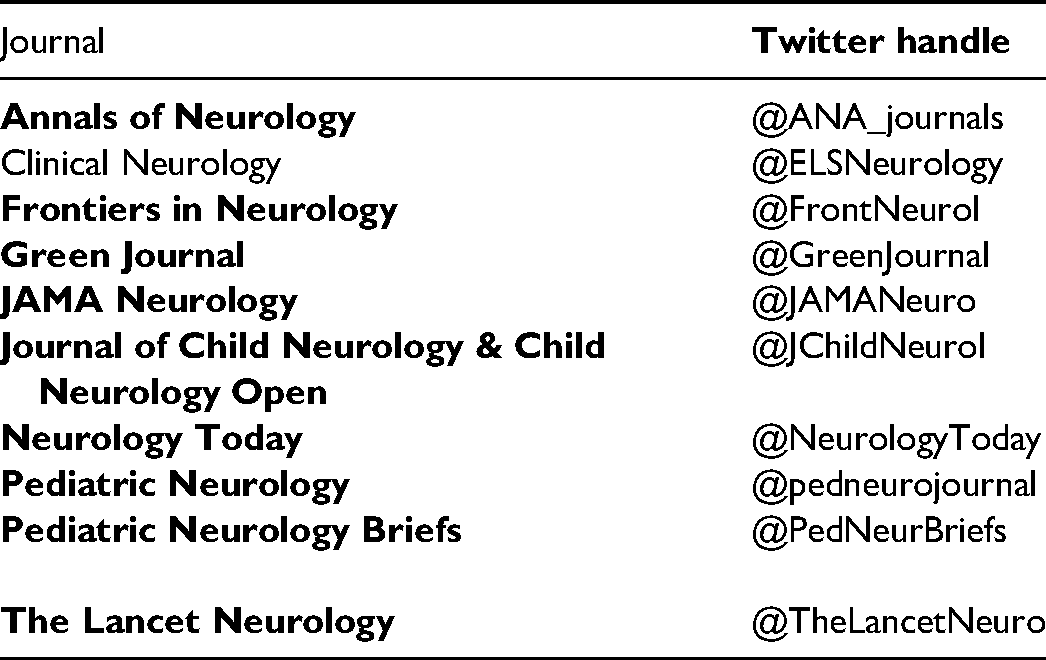
Publications in traditional paper journals can be both time-consuming and costly. Pre-prints, open access, and SoMe are being used to reduce the time to integrate new evidence into clinical practices although can be associated with costly publication fees.65,66 Many child neurology and neurology journals have SoMe accounts (
Selected Child Neurology and Neurology Journals.
Study Recruitment
Web-based recruitment is both cost-effective and more efficient than traditional recruitment methods.24,29,30 SoMe can facilitate study participant recruitment by reaching target populations. Although online support groups for rare diseases are discussed later in this article, their use in study recruitment is relevant to the current topic. The majority of members in online support groups for pediatric rare diseases supported being contacted through the group for study recruitment inquiries. 67 Use of these support groups for recruitment has been both successful and practical in rare diseases.
SoMe advertising can also accelerate clinical trial enrollment, which can be challenging in rare diseases. The ExTINGUISH Trial, a prospective randomized clinical trial for Anti-NMDA Receptor Encephalitis, is a prime example of SoMe-based recruitment to study a rare disease through a national cooperative group. 68 Investigators use SoMe to access patient advocacy and support groups, or to create targeted ads to reach a specific population. Investigators can also enlist involvement of patients or families through SoMe in decision making processes.
Although SoMe-based recruitment can facilitate both accessibility and geographic diversity, additional recruitment methods should be used to insure phenotypic, racial, and ethnic diversity in a study population.30,69,70 Investigators should also be mindful of the challenges SoMe may pose in protecting study participant's identities, maintaining blinding, and retention of participants. 71
Alternative Metrics
While SoMe article dissemination facilitates citation building, traditional citation-based metrics can take years to accumulate.72,73 In the age of electronic distribution, alternative metrics aim to capture the broader influence of publications across all scholarly outlets beyond citations alone. This type of data captures a quicker, more diverse assessment of impact and engagement across both traditional and non-traditional outlets (i.e. SoMe, blogs, news outlets, governments, or nonprofits).74–76 Sites such as PlumX or Altmetrics are ways to track these alternative metrics

Neurology® article demonstrating both PlumX and Altmetric analytics.
Altmetric Attention Scores are visualized through a multi-colored donut display, where each color represents a different source and changes depending on the volume of each source. Total scores are created from automatic algorithms based on a weighted combination of mention volume, author reach, and type of source. 78 The score considers the potential source value and bias. For example, sharing of an article by a news agency, patents, or blog are weighted more heavily than SoMe shares or mentions.76,79 Multiple shares by the same source or within a short time are weighted less in the total score. Scores are readily accessible through a bookmarklet, a free web browser plug-in, for any publication with a digital object identifier (DOI). Generally, there is no ‘good’ Altmetric score; scores can increase with both negative and positive attention. Traditional journal citations are excluded from the Altmetric Attention Score. With these limitations, Altmetrics should be used in conjunction with traditional citation-based metrics for the best assessment of total scholarly influence.
PlumX is an alternative metric through Plum Analytics© that measures impact through citations, usage, captures, and mentions on SoMe. The score is provided through a visual Plum Print, which features 5 “lobes” corresponding to each of the five main categories of impact. The size of the lobe will grow with volume in each category. Hovering over the widget will provide details of each category. Plum X is only available through request to non-commercial open access journals, data providers, and platforms. It is available on certain Elsevier products such as Mendeley, Science Direct, and Scopus. 80
Education
Continuing Medical Education
SoMe is a powerful tool to disseminate and translate knowledge in a way that users, educators, learners, and others can be of up-to-date educational content. The American Academy of Neurology publishes short, high-yield YouTube educational videos called NeuroBytes as part of their online learning catalog offering CME. These videos are advertised on a variety of platforms in addition to SoMe. Additionally, private SoMe groups such as the Women Neurology Group (WNG) and BlackInNeuro offer regular CME series exclusively through SoMe. These groups are discussed in more detail later.
Professional medical societies also use hashtags that are often conference, specialty, or disease-specific, to share educational content to and beyond their members.81–84 As hashtags are searchable, it also creates a living collection of curated content. Live posts of conference sessions can aid in metrics, impact, and engagement. This is especially relevant in today's era where conferences have adopted virtual or hybrid models of attendance due to the COVID-19 pandemic. Using meeting-specific hashtags provides a real-time opportunity for virtual-attendees and non-attendees to engage with each other, live attendees, and presenters. Linking supplemental educational material to the posts can drive scientific engagement.85,86
In addition, using specialty-related hashtags can influence health-related discussions beyond conferences. Hashtags are used in Twitter journal clubs (i.e. #NeuroJC) and medical education chats (#MedEdChat). These digital formats of traditional teaching activities can facilitate deeper critical appraisal, broader accessibility, diversity of participants, and engagement of key stakeholders. 31 Hashtags can also be used to curate best practices and pearls, for example in general medical education (#MedEd) and neurology medical education (#EndNeurophobia). This is discussed more in part two of this article series.
Advocacy
Community Access
SoMe can facilitate access to specific networks that may not be readily available within your institution such as women in medicine, sexual and gender minorities (SGM), or underrepresented minorities (URM). The complexity of disparities, stereotypes, and challenges faced by these groups is beyond the scope of this article; however, SoMe can be a helpful tool for advocacy by facilitating networking, amplifying voices, and propagating awareness efforts. Professional societies can be integral to magnify these efforts. 87
Women now represent 37.5% of practicing child neurologists compared to 30.4% in 2005;88,89 however, they occupy the minority of leadership and senior faculty positions.90–92 Although there has been change in gender and racial diversity in academic neurology, white males continue to hold the majority of leadership and higher academic positions. 93 Initiatives such as Women Neurologists Group (WNG), Physician Mom Group (PMG), or #EWIMS (Early Career Women in Medicine and Science) work to empower women in academic medicine. 90
The WNG is a closed Facebook group for women neurologists created in 2015. WNG aims to foster networking, support, and collaboration of women neurologists. Since its creation, WNG has grown to over 3500 members and expanded to other SoMe platforms such as Twitter, YouTube, and Instagram. The group holds regular networking dinners at national conferences, webinar series, and an annual CME-accredited conference.94,95 WNG also collaborated with the American Academy of Neurology (AAN) Women's Issues in Neurology section to develop WoMEN (Women Mentoring Excellence in Neurology), a women-specific mentorship program working towards gender equity in neurology. Recognizing the critical role mentorship plays in academic satisfaction and retention, over 127 mentor-mentee pairs were matched during its pilot year.91,96 Several neurological societies and communities have organized similar efforts.
Amplifying Advocacy Initiatives
SoMe not only creates accessibility to specific networks, but also can amplify advocacy efforts quickly and broadly. Leveraging SoMe for this purpose can strengthen the impact and reach of advocacy initiatives. A medical student-run organization, White Coats For Black Lives (WC4BL), originated through a SoMe organized national demonstration. Over 3000 medical students from 80 schools participated in a National White Coat Die-In to show solidarity against police brutality in support of Black Lives Matter. 97 The demonstration called for health professionals to address structural and institutional racism as a public health crisis. The hashtag #WhiteCoatsForBlackLives gained national media attention. In the subsequent years, WC4BL has 70 active medical school chapters working to promote racial justice.
Two trainee led hashtag turned movements amplified gender disparities, sexism, and unconscious bias in the operating room. The hashtag #ILookLikeASurgeon, created by a surgical resident, reinvigorated after the New Yorker's Health, Medicine & the Body Issue featured a cover illustration of an all-female surgical team gazing down in 2017. A global movement of female surgeons recreated their own version of the cover leading to over 1 billion impressions and more than 350,000 hashtag uses.98,99 Likewise, a publication on unprofessional SoMe usage of recent trainees in the Journal of Vascular Surgery led to a SoMe #medbikini backlash protesting sexism and unconscious bias.52–54 These hashtags created a network of mentorship and support for female surgeons globally. It also brought the unconscious bias against women in medicine to national and international media attention.47–51 Similar hashtags exist in neurology, such as #NotJustGuysInTies or #ILookLikeANeurologist.
Raising Awareness:
SoMe can raise awareness against bias and disparities. Anti-black movements, such as @BlackInTheIvory and @BlackInNeuro, drew attention across SoMe to anti-Black racism in academia.100,101 The first #BlackInNeuroWeek took place only 3 weeks after its creation and received over 3.4 million twitter engagements. 102 These communities gained sponsors and a growing network of scholars and allies.56–58 What started from a tweet in the midst of a global crisis of anti-Black racism, created two movements working to sustain significant and meaningful change to the centuries of suppression and systemic racism in the neuroscience community and beyond. 103 Only 1.6% of practicing child neurologists and 2.2% of child neurology trainees are black; 88 however, both @BlackInTheIvory and @BlackInNeuro created a growing network of black scholars to inspire, empower, celebrate, and address anti-Black discrimination. 55
Similar movements have risen in other SGM and URM communities, such as @LatinxInNeuro and @QueerInNeuro. SGM and URM face their own unique inequities and systemic injustices. Identification with multiple layers of minorities increases the complexity of disparities, from which neurology is not exempt. 104 According to a 2015 child neurology clinical workforce survey 79.9% of practicing child neurologists were White, 14.8% Asian, 1.6% Black, 0.7% American Indian or Alaska Native, and 4.7% reported other race. There was a mild increase in racial and ethnic diversity from the prior workforce survey in 2005. 88
While SoMe can facilitate these discussions, some argue it may amplify preexisting disparities. One study found that women physicians had less visibility, lecture invitations, and collaborative opportunities on SoMe compared to their male colleagues. 105 While outside of SoMe women have fewer publications and citations than men even with co-authorship or team collaborations, having women co-authors did not decrease Twitter dissemination of articles. 73 The role of SoMe in amplifying or mitigating these disparities needs to be further explored.
Patient Advocacy
Organizations are crucial influencers to patient advocacy and disease-specific discussions. This aspect of advocacy becomes even more important for child neurologists as many of the conditions encountered in child neurology frequently fall under the rare disease umbrella. Organizations such as Child Neurology Foundation (@Child_Neurology), International Alliance for Pediatric Stroke (@StrokePediatric), and Epilepsy Foundation (@EpilepsyFdn) are a few examples where SoMe has been successfully used to increase outreach, promote advocacy, and raise awareness, as well as to disseminate helpful information and tool-kits for professionals and the general public (
Selected Patient Advocacy Organizations.

AAN events such as Neurology on the Hill (#NoH, #AANAdvocacy) leverage the power of SoMe to bring issues pertaining to neurology into a larger conversation. Tagging state representatives by sharing content about these issues can engage them and the public in key topics, complementing discussions from advocacy days.
The role of SoMe in patient advocacy could not be discussed without mentioning the #icebucketchallenge. The Ice Bucket Challenge began as a challenge for nominees to videotape themselves dumping ice water over their head within 24 hours or donate to a charity of their choosing. In July 2014, Chris Kennedy whose relative has Amyotrophic Lateral Sclerosis (ALS), dedicated his challenge to ALS. The challenge reached a former baseball player Pete Frates causing it to spread rapidly on SoMe. 106 The campaign not only rapidly raised over $115 million for the ALS Association but also increased public interest, awareness, publications, funding, and advancement of research for the ALS community. The Ice Bucket Challenge had direct impact on the discovery of five new genes connected to ALS as well as acceleration of the largest ALS genomic study in the United States. 107 Similar campaigns have been created by a variety of patient organizations.
Clinical
Communities of Practice
At the beginning of the pandemic, healthcare providers turned to SoMe for crowdsourcing of advice, information, and best practices against the novel severe acute respiratory syndrome due to coronavirus-2 (SARS-CoV-2). Crowdsourcing generally refers to a large group of people collectively contributing knowledge, value, or problem solving usually via the internet. COVID-19 information was scarce and rapidly evolving. Within 3 weeks of the World Health Organization (WHO) declaring COVID-19 a global pandemic, there were over 26 Facebook groups for medical professionals with a mean number of 21,000 members. One of the largest US COVID-19 physician and advanced practice provider (APP) groups has 146.8K members. The majority of these groups were private with a variety of security measures before admittance. Facebook groups emerged to rapidly crowdsource collective knowledge on patient management, resources, and personal protective equipment.108,109
Information sharing also occurred across other platforms such as WhatsApp and Twitter.110,111 In neurology, early uncertainty regarding the risk of COVID-19 to patients with multiple sclerosis on disease modifying therapy raised the need for urgent clinical decisions. The hashtag #MSCOVID19 was created during the early phase of the pandemic as a way for the international medical community to rapidly share case information. 112 As information evolved, disease-specific journals and organizations readily shared protocols and guidelines to create communities of practice. 113
Patient Referrals and Expertise Visibility
We previously discussed the importance of SoMe in professional networking, reputation building, and expertise visibility. In clinical practice, this can translate to larger referral networks and lead to new patient referrals. Patients research their physicians online. Google rankings, word-of-mouth, and group recommendations influence a patient's decision-making when seeking specialty care. One study showed that a medical professional's SoMe visibility was more influential on front-page placement on Google Rankings than medical school ranking or years in practice. 114 This is an important consideration when trying to build a niché, brand, and reputation.
Patient Care and Support
In the era of genetic testing, rare and new diseases are increasingly encountered in child neurology. The European Union defines rare disease as one that affects fewer than 1 in 2000 people. 115 With over 7000 rare diseases in the US, there is a good chance families would never encounter another child with the same disorder without the help of the internet.
Online support groups, particularly on Facebook, allow families to locate, receive emotional support, exchange information and knowledge, and connect with others going through the same thing. These are widely used with over 6000 support groups for pediatric diseases on Facebook. In a survey of pediatric rare disease support groups, almost 80% reported they would like to have health professionals as members. 116
SoMe can also be used to quickly crowdsource resources for patient care. One author's general tweet for insurance denial of epilepsy medications led to multiple messages regarding patient support programs, resource contacts, societal committee assistance, and appeal templates within several hours (

Example of tweet crowdsourcing patient care resources.
Documentation of Social Media Scholarship
Faculty promotion and tenure committees evaluate clinicians based on educational portfolios, academic scholarship, and local, regional, or national reputations. Customary documentation of achievements fails to capture the broader impact and influence of non-traditional activities. A growing body of literature provides guidance on how to include these digital achievements and alternative metrics in the promotion and tenure process.14,23,75,119–124
SoMe portfolios, mission-based content, and scholarship are meaningful contributions to academic portfolios. 23 High-impact original content should be included in both the curriculum vitae as well as the appropriate portfolio. Contributions chosen should demonstrate both influence and quality while facilitating career development. Including detailed analytics of digital content such as impressions, downloads, subscribers, or more platform-specific metrics can demonstrate overall impact and reach. Although objective metrics can provide some insight, overall impact can be more subject to interpretation. Individuals should briefly highlight why these contributions were included and how it supports their academic mission.
Challenges
While SoMe is a powerful tool, it is not without pitfalls. One of the most common barriers to SoMe use by medical professionals is skepticism. This often arises from a misunderstanding of how using SoMe for professional purposes differs from personal or non-clinical use. As such, it is recommended to separate professional and personal content.
As a medical professional, activity on SoMe platforms should be treated as a digital extension of your professional identify and thus held to the same degree of accountability and professional standards. Users should consider how content reflects their professional goals, area of expertise, on themselves, and their employers. Content is public and viewable by patients, colleagues, employers, or media. Content can also invite users known as trolls. Trolls are usually anonymous users, who purposely try to instigate conflict or provoke anger. They can be persistent, intrusive, rude, or even offensive. As tone and context may be misinterpreted in SoMe exchanges, it is best to disengage, block, or report these users. It is also important to keep this in mind when sharing content and responding to others. Both the American Medical Association (AMA) and the AAN have developed codes of conduct for medical professionals using SoMe.125,126 Similar guidelines have been created by different specialties and organizations. It is best to review your institution's SoMe policy before engaging in professional or personal SoMe use.
Medical professionals should also be mindful of Health Insurance Portability and Accountability Act (HIPAA) compliance. Appropriate steps need to be taken to eliminate potential breach of patient confidentiality or identification. This is especially important in a specialty such as child neurology, where rare diseases are frequently encountered. As a result, it may be easy for patients or patient families to identify themselves in content shared on SoMe platforms. Written consent must be obtained prior to sharing of any personal health information. Most institutions have a standard consent form for pictures or other media that can be modified to share digitally. Altering details of the patient and clinical presentation can preserve privacy while sharing clinical cases for collective advice or educational purposes.
Although SoMe can facilitate knowledge translation, content shared on SoMe is often criticized for lack of a formal peer review process. Medical professionals should take extra steps to ensure accuracy of information and avoid plagiarism. Attaching references, original articles, or reputable resources can reduce the risk of misinformation. It is also important to read content and supporting references fully before sharing with others to diminish risk of misinformation propagation.
Some of the benefits of SoMe may also provide challenges. Character limits allow concise delivery of content but may hinder more complex views or discussions. You can circumvent character limits through threads, Tweetorials, including external website links, or transitioning to a different platform. Additionally, while SoMe can facilitate building a personal brand, too much self-promotion can disengage followers. A healthy mixture of sharing personal accomplishments with sponsoring others’ work is important.
Lastly, SoMe use has the potential to develop into a significant time commitment and distract from other professional duties. Scheduling small amounts of time in your workweek for SoMe can minimize distraction and fatigue. Consider keeping a list of content ideas to create during your dedicated SoMe time. Additionally, scheduling content and working in teams are effective strategies that facilitate SoMe presence without constantly being “plugged in”.
Conclusion and Future Directions
SoMe has grown over the last decade and is part of our daily routines. The use of SoMe has changed the way we obtain and disseminate information, educate, network and collaborate. Medical professionals have leveraged this to broaden the impact and reach of clinical, educational, research, and advocacy initiatives. Through understanding effective and appropriate uses of SoMe in each of these capacities, SoMe has become a powerful tool for career development strategy. Becoming familiar with benefits and challenges of SoMe use by medical professionals is important to navigate the evolving trends of academia. The next leaders of child neurology and neurology will be fluent in various platforms, tools, and SoMe uses to support their academic mission. Current practicing medical professionals should develop familiarity with these practices to engage with the next generation of learners. Part two of this article series will review the role of SoMe and digital tools in medical education. Future research exploring how medical professionals engage with SoMe will aid in ongoing work to incorporate these metrics in academic promotion processes. Additionally, exploration of the role of SoMe in mitigating and/or propagating existing disparities within healthcare is critical.
Footnotes
Acknowledgments
The authors would like to express gratitude to the University of Louisville Child Neurology Residency Program (@louisvillechildneuro on Instagram) for allowing the authors to use their post as an example.
All authors have read the final manuscript and approved it for submission.
The authors would like to thank the Neurology journal for permission to use an image of the article in Figure 4 as an example.
Declaration of Conflicting Interests
The author(s) declared no potential conflicts of interest with respect to the research, authorship, and/or publication of this article.
Funding
The author(s) received no financial support for the research, authorship, and/or publication of this article.
Ethical Approval
Not applicable, because this article does not contain any studies with human or animal subjects.
Informed Consent
Not applicable, because this article does not contain any studies with human or animal subjects.

Trial Registration
Not applicable, because this article does not contain any clinical trials.