






Abstract
Motivating language theory (Sullivan, 1988) is a leadership communication theory focused on the strategic use of leader oral language. Walk and talk alignment is a main pillar of motivating language theory. As such, within the field of educational leadership, we hypothesize that behavioral integrity and credibility are required in order for motivating language to occur. In this study, a survey was administered to teachers, from 2011 to 2014, at a Title I elementary school to gauge the motivating language use of the principal. We empirically tested the ability of behavioral integrity (Simons, 1999, 2008) and credibility (McCroskey & Teven, 1999) to predict the principal’s motivating language use. There were statistically significant correlations between behavioral integrity and motivating language, credibility and motivating language, and between behavioral integrity and credibility. In each year, behavioral integrity and credibility contributed significantly to the predication of the principal’s motivating language use. Behavioral integrity and credibility are integral to a leader’s use of motivating language. We discuss the results and implications for employees and organizations, along with ideas for future research.
Introduction
Love him or hate him, there is no doubt the leader speech communication of Donald Trump [his talk] has at times hurt his 2016 campaign for President. Words and language are powerful. As a leader you can never uncommunicate (Hackman & Johnson, 2013, p. 10). “Communication is important: Without communication there can be no motivation, no leadership, no productivity, and no organization” (Goldhaber, Dennis, Richetto, & Wiio, 1984, p. 335). Leader speech communication is vital to the work of leaders across all types of organizations (Chance, 2009; Gronn, 1983; Raiola, 1995; Scott, 2002). In a study of Swedish CEOs, Tengblad (2006) reported 62% to 80% of a CEO’s time was spent in verbal leadership work. Within the field of educational leadership, principals spend up to 84% of their time engaged in leading through leader speech communication (Kmetz & Willower, 1982; Martin & Willower, 1981). These are points often overlooked in scholarship and in practice as we assume leaders across all disciplines know how to speak, yet most leaders do not take a leadership communications course (Kowalski & Brunner, 2011) and often underestimate the need for communication (Kotter, 1995). Thus, it is clear that leader speech communication [leader talk] is an important factor in both employee and organizational success.
Motivating language theory (MLT; J. Mayfield, Mayfield, & Kopf, 1995; Sullivan, 1988) explains how the strategic and intentional use of leader speech communication within the context of leader-to-employee/follower communication can positively influence employee/follower performance, job satisfaction (J. Mayfield, 2009), and organizational outcomes (Holmes, 2012). In discussing the importance of MLT to leadership, employees, and organizations, Hindman, Seiders, and Grant (2013) stated, “So what is said and how it is delivered matters” (p. 87). Motivating language is a measure of leader speech communication composed of three diverse forms of leader talk: direction-giving language, empathetic language, and meaning-making language (Austin, 1975; Searle, 1969; Sullivan, 1988). MLT is grounded in the assumptions of leader-to-employee [follower] one-way communication; leader talk composed of all three types of ML; and a leader’s walk and talk being aligned (Gutierrez-Wirsching, Mayfield, Mayfield, & Wang, 2015; J. Mayfield, 2009; Sullivan, 1988). It is the strategic application of these forms of leader talk used with the intentional/deliberate tailoring of messages by leaders to the unique needs and personalities of their employees (Hindman et al., 2013) that positively and significantly improves follower/employee behaviors (M. Mayfield & Mayfield, 2016; Sullivan, 1988) as well as organizational outcomes (Holmes, 2012).
One vital and precursory element necessary for effective leader talk is the alignment between a leader’s talk and a leader’s walk (Crossland & Clarke, 2008; J. Mayfield, 2009; Simons, 2008) [between a leader’s speech communications and a leader’s behaviors and actions]. If this is not the case, employees [followers] will ignore leader talk and focus primarily on leader walk [actions] (J. Mayfield, 2009; J. Mayfield & Mayfield, 2007; M. Mayfield & Mayfield, 2009), derail organizational transformation (Poole, 1998), and [potentially] inflict negative actions (punishment) directed toward the leader and/or organization if the degree of misalignment between words and actions is high enough (Schons & Steinmeier, 2015). This is problematic given the amount time leaders spend talking and the impact of leader talk. Therefore, for leader speech communications to be effective and positively influence individual employee and organizational outcomes an alignment of leader walk and talk must precede strategic leader speech communications as more than an assumptive circumstance.
Literature Review
In discussing instructional leaders, Hindman et al. (2013) stated, “ . . . the long-term assessment by teachers that an instructional leader [who] walks the talk—to borrow an old phrase—is critical” (p. 87). Relatedly, Holmes (2016b) proposed walk and talk alignment was more than an assumption of MLT and, in reality, was a vital antecedent to the successful implementation of MLT. Additionally, he hypothesized the components of walk and talk alignment were behavioral integrity (Simons, 2008) and credibility [source] (McCroskey & Teven, 1999). Holmes (2016a) proposed a framework in which behavioral integrity (Dineen, Lewicki, & Tomlinson, 2006; Simons, 2008; Simons & Parks, 2000) and credibility (McCroskey & Teven, 1999) give rise to ML (see Figure 1).
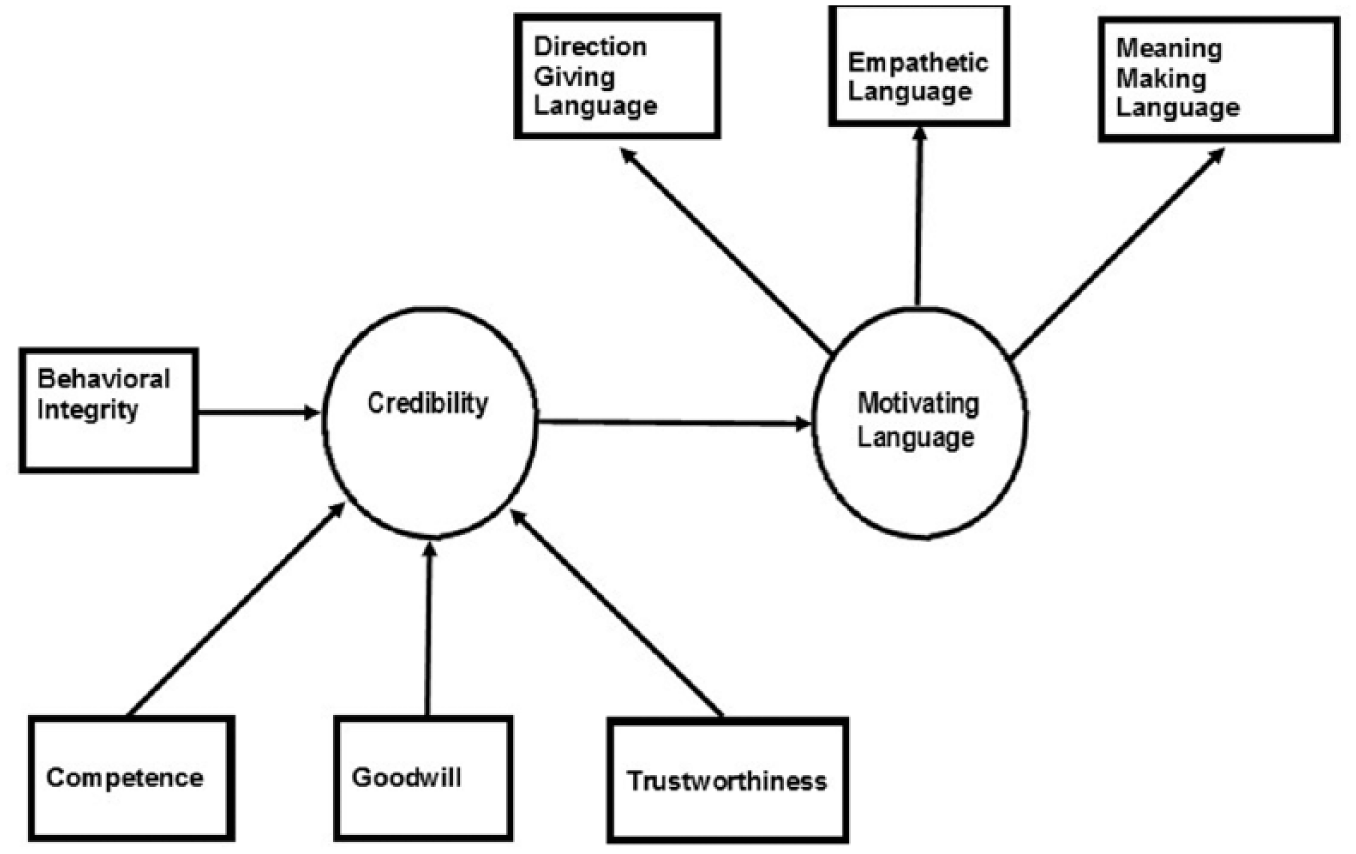
Proposed framework for the alignment of antecedent variables to motivating language theory (MLTAV).
In essence, before motivating language can be effective the conditions of behavioral integrity and credibility must be established by the leader as perceived by their employees/followers. As such, behavioral integrity and credibility are the focus of this review of literature.
Behavioral Integrity
Simons (2008) defined behavioral integrity as, “ . . . keeping your words lined up with your actions—keeping promises and living by the same values you talk about—seamlessly. It means being seen as living by your word” (p. 5). The behavioral integrity definition stems from the concept of integrity as walk and talk alignment (Audi & Murphy, 2006; Palanski & Yammarino, 2009). Bauman (2013) asserted that integrity was a nonmoral concept leading to an empirical measurement of behavioral integrity. A key to understanding behavioral integrity is the alignment between the content of the talk and the content of the walk and not a judgment or valuation of the content (Simons, 2008). Thus, behavioral integrity has two key elements: (a) word and action alignment and (b) keeping your promises and living by the values you articulate (Simons, 2008) even if those values and promises are not appropriate [moral] by societal, organizational, or personal standards (Simons, 1999).
Credibility
In discussing credibility, Hackman and Johnson (2013) as well as Richmond, McCroskey, and McCroskey (2005) asserted credibility is about the believability of leaders and foundational to leadership (Kouzes & Posner, 2011). Crossland and Clarke (2008) remarked, “Your voice [as a leader] and credibility are inseparably linked” (p. 133). In viewing leaders seen as less credible, Richmond et al. (2005) asserted they are consistently questioned, double-checked for accuracy, and confronted at every turn regarding their leader speech communications. Thus, the following assertion by McCroskey (1971) is key considering the amount of time leaders spend in leader speech communication.
Source credibility [is viewed] primarily as a tool for a communicator to use; saying if you have credibility with an audience, you will influence the audience; if you do not have credibility with them, you tend to have a relatively minimal impact. (p. 24)
Specifically, within the context of this study, credibility deals with source credibility (McCroskey & Teven, 1999) and focuses on a leader’s competence [expertness], their trustworthiness [character], and their goodwill [caring] as the dimensions of source credibility (McCroskey & Teven, 1999; Myers & Martin, 2015). Myers and Martin (2015) indicated in order for leaders as communicators to strategically utilize the dimensions of source credibility followers must accurately perceive and react to the dimensions [and the leader’s intent] for the leader to be identified as credible. McCroskey (1998) reported that leaders can rate higher in one of the dimensions than others but for source credibility to be [truly] effective [and to be seen as credible] leaders must rate high in all three dimensions. McCroskey and Teven (1999) found each of the source credibility dimensions (competence, goodwill, and trustworthiness) to be a part of an operational definition of credibility which has been utilized in a wide range of fields leading to the “versatility” of the source credibility construct (Graham, 2009).
Purpose of the Study
In this article, we seek to further understand the use of MLT within the field of educational leadership. We believe behavioral integrity (Simons, 2008) and credibility (McCroskey & Teven, 1999) are the main pillars of ML and key antecedents. In this longitudinal study, we empirically test the predictive ability of and credibility as antecedents of ML based on the leader speech communication use of a principal during 3 years of service at a Title I elementary school.
Methodology
An annual survey was administered to teachers, from 2011 to 2014, at one Title I elementary school. In this article, we test these hypotheses stated below.
This study only focuses on the variables behavioral integrity, credibility, and motivating language taken from Figure 1.
Setting
The school comprised 75 personnel, 950 students, and an operating budget of $4 million annually. The school was located in a large, southwestern, urban school district. Contextually, in Year 1 of the survey, 2011-2012, the principal was new to the school along with new district leadership resulting in massive change at the school. In Year 2 of the survey, 2012-2013, the principal and staff successful changed the school from a three-star rated school to a five-star rated school and enjoyed the relative stability of improvement. In Year 3 of the survey, 2013-2014, the Great Recession [this significantly affected the school and district during the previous 5 years limiting teacher transfer and school/district growth] eased allowing for tremendous growth and teacher transfer within the district thus affecting the school with 18 out of 53 teaching positions being new hires to the district and/or long-term substitute teachers resulting in huge amounts of induction and professional development efforts occurring schoolwide.
Procedure
The online survey was administered as part of school closing procedures. Teachers were informed the survey data collection would be anonymous. They were informed the data would be utilized to both guide the professional development and improvements in practice of the school principal as well as inform the scholarly and practitioner fields regarding leader speech communication.
Participants
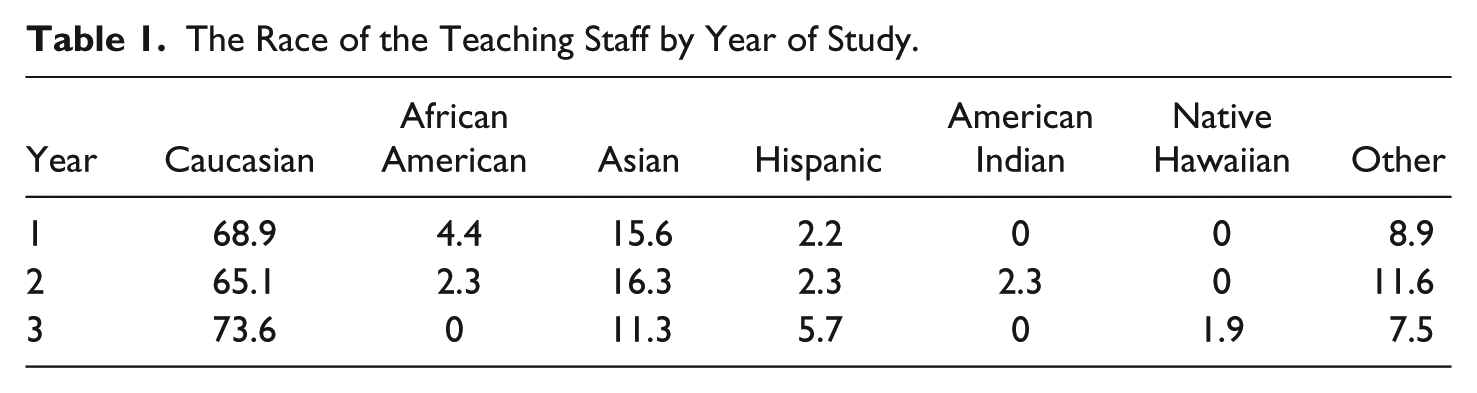
The entire population of teachers at the school were surveyed. For the first year (2011-2012), the response rate was 95.6% (n = 45) of the licensed teaching staff at the school. The second year (2012-2013) the survey response rate was 97% (n = 47). The third year (2013-2014) the response rate was 100% (n = 53). The demographics of the teaching staff are illustrated in Tables 1 and 2 and data are presented by year.
The Race of the Teaching Staff by Year of Study.
The Age of the Teaching Staff by Year of Study.
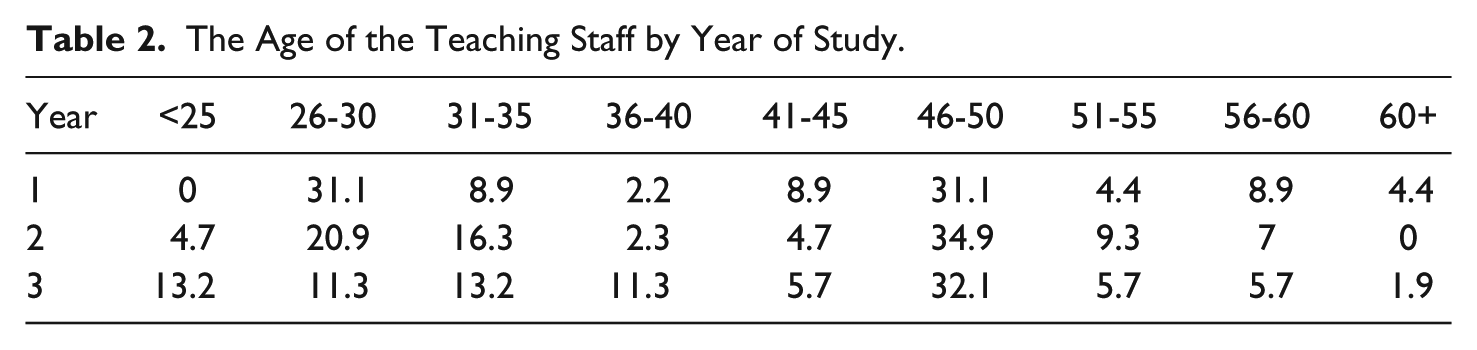
Each year the majority of teaching staff were female (Year 1 = 84.4%; Year 2 = 83.7%; and Year 3 = 86.8%) and Caucasian (see Table 2). In Years 1 and 2, a majority of the teachers was 26 to 30 years old or 46 to 50 years old. Whereas in Year 3, most of the teachers were 46 to 50 years old (Table 2).
Measures
The survey composed of three scales: (a) the Motivating Language Scale (MLS; J. Mayfield et al., 1995), (b) the Behavioral Integrity Scale (Dineen et al., 2006), and (c) the Source Credibility Scale (McCroskey & Teven, 1999). The MLS consists of 24 items (each ranging from 1 to 5), Behavioral Integrity Scale consist of 4 items (each ranging from 1 to 5), and the Credibility Scale has 18 items (each ranging from 1 to 7). Construct validity of the MLS within the field of K-12 educational leadership was previously determined using exploratory factor analyses (Holmes, 2012). This was the first study within the field of ML to utilize behavioral integrity and credibility as measures. The internal consistency reliability of each of the scales used in this study are illustrated by year in Table 3.
Cronbach’s Alpha for Each Scale by Year.
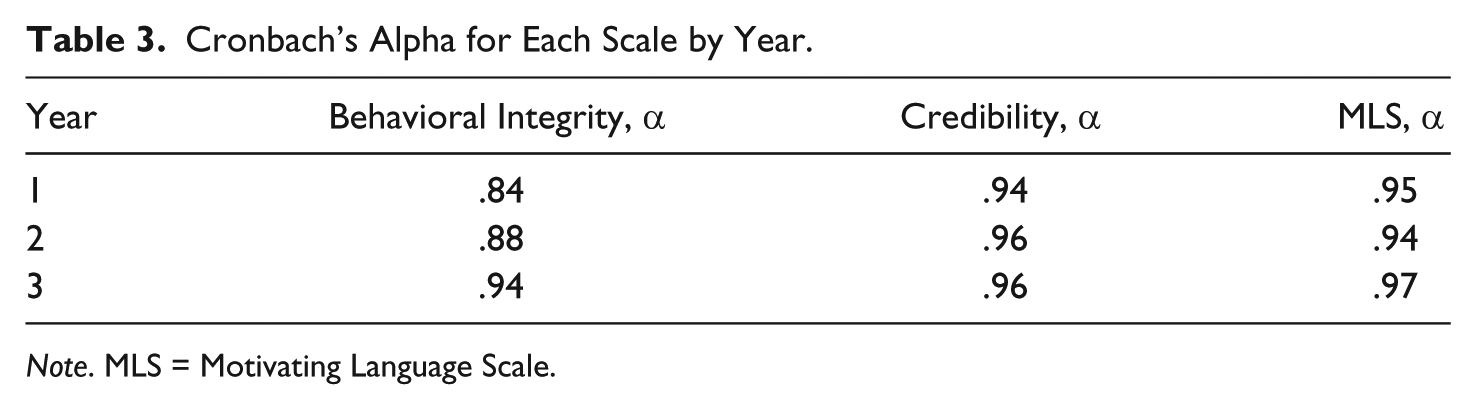
Note. MLS = Motivating Language Scale.
Analysis
SPSS 21 was used for the analyses. We determined the extent to which relationships existed between variables using Pearson correlation coefficients. We used standard multiple regression to determine whether both behavioral integrity and credibility predicted motivating language. For each analyses, missing cases were deleted listwise, the assumptions were met, and test statistics were obtained. Statistical significance was determined using an alpha of .05.
Results
The descriptive statistics, Pearson correlation coefficients, and the multiple regression results are presented.
Descriptive Statistics
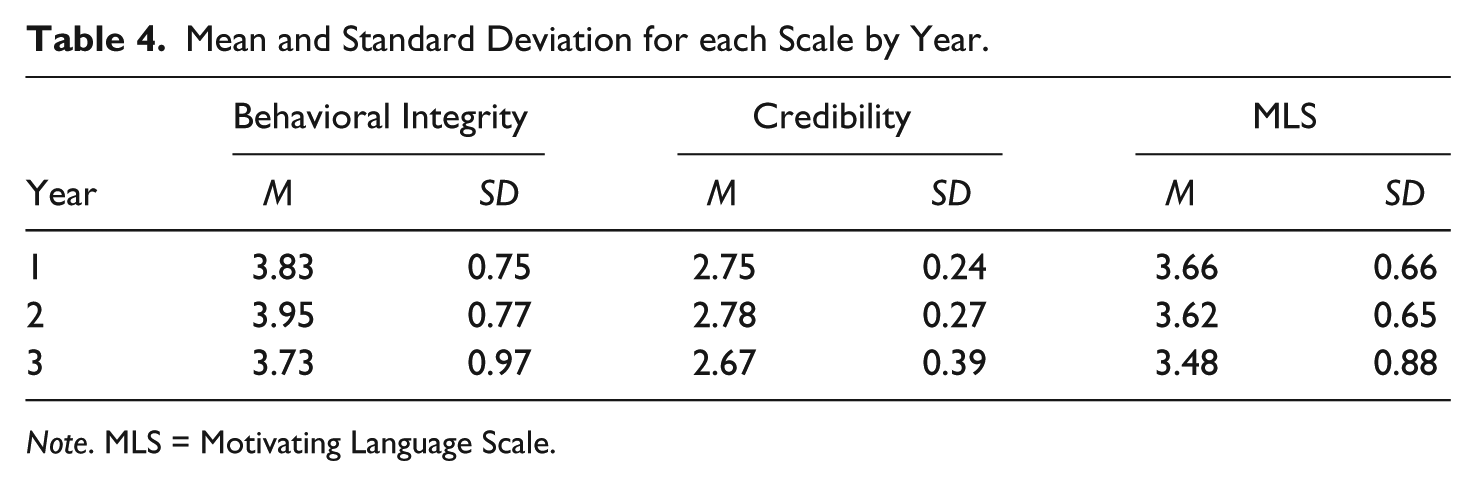
The mean and standard deviation of each of the scales are illustrated by year in Table 4. Across years the means for each scale were fairly similar. In each year, the mean for behavioral integrity was higher than the mean for credibility.
Mean and Standard Deviation for each Scale by Year.
Note. MLS = Motivating Language Scale.
Pearson Correlation Coefficients
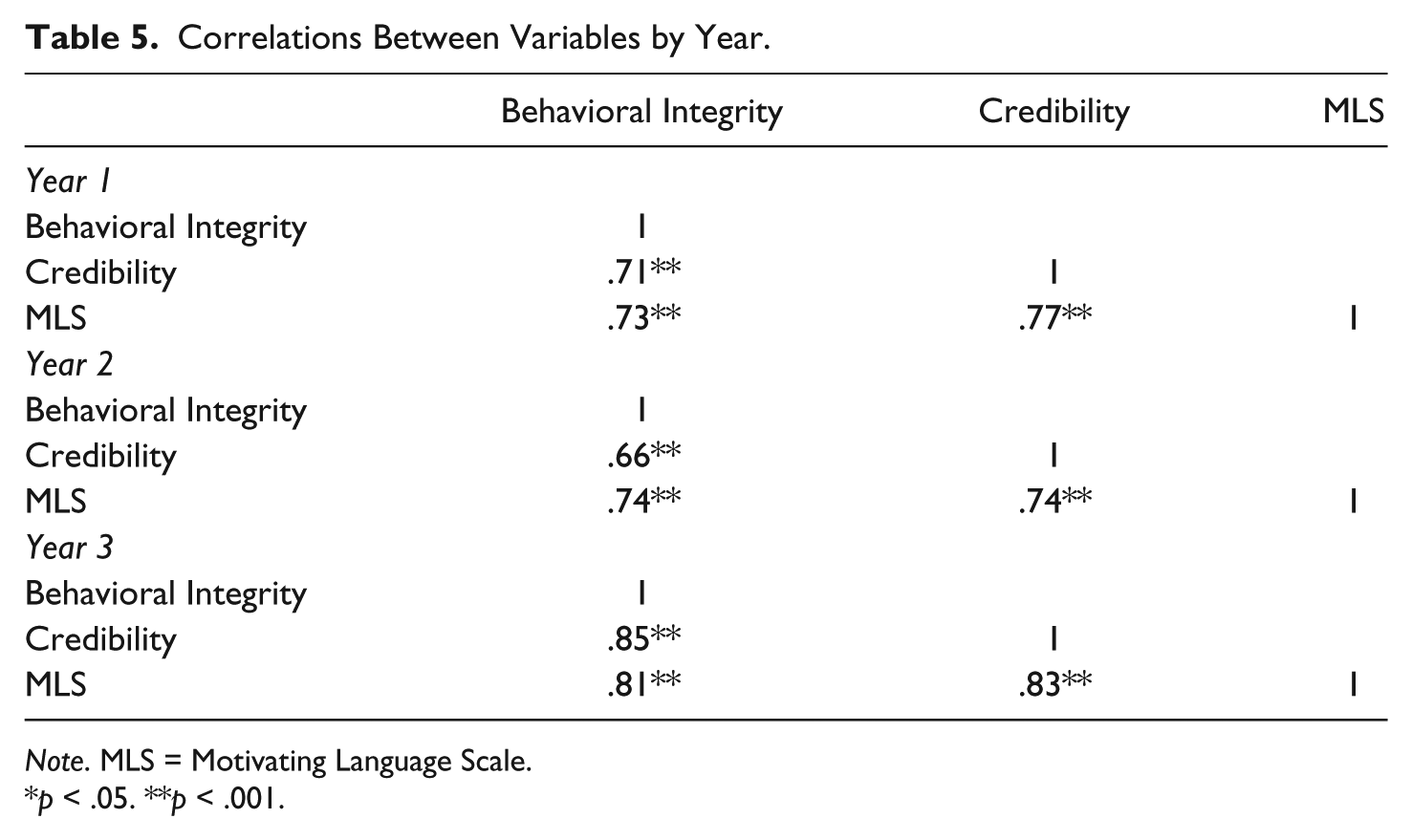
In Years 1, 2, and 3, there were statistically significant correlations between behavioral integrity and motivating language, credibility and motivating language, and between behavioral integrity and credibility (see Table 5).
Correlations Between Variables by Year.
Note. MLS = Motivating Language Scale.
p < .05. **p < .001.
Multiple Regression
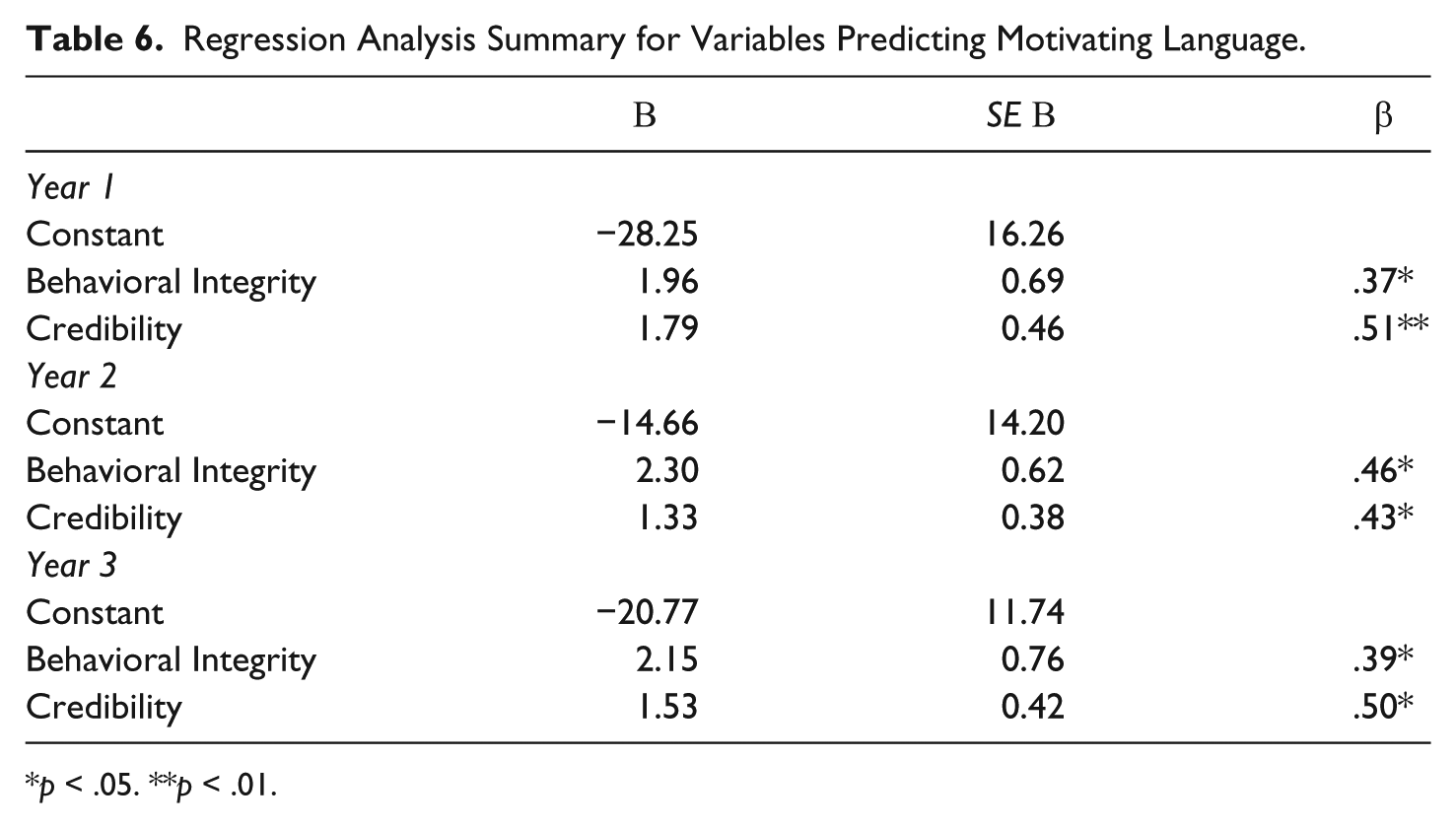
In each year, behavioral integrity and credibility contributed significantly to the prediction of MLS. For Year 1, the regression equation was statistically significant, F(2, 42) = 39.88, p < .001, and R2 was 65.5%. In Year 2, the regression equation was statistically significant, F(2, 40) = 38.47, p < .001, and R2 was 65.8%. In Year 3, the regression equation was statistically significant, F(2, 50) = 68.38, p < .00, and R2 was 73.2%. For each year, we rejected the null hypothesis that the slope of the regression line is not significantly different from zero in favor of the alternate hypothesis that the slope of the regression line is significantly different from zero (see Table 6).
Regression Analysis Summary for Variables Predicting Motivating Language.
p < .05. **p < .01.
Discussion
In this article, we increased our understanding of the relationship between the antecedent variables of behavioral integrity and credibility to motivating language. First, we demonstrated behavioral integrity and credibility are essential to a leader’s use of motivating language (Hackman & Johnson, 2013; McCroskey & Teven, 1999; Simons, 2008) and accepted our hypothesis. This is a major milestone in the field of MLT. Within the context of this study, we determined that walk and talk alignment is more than an assumption—it is a vital antecedent necessary for the implementation of ML. We believe that it is highly unlikely that a leader could be efficacious in the implementation of ML without successfully implementing behavioral integrity and credibility. For example, a middle school principal recently remarked, “When I want to correct a teacher, I correct them in front of their students. That really embarrasses them and it sticks” (T. Waddell, personal communication, August 15, 2016), we believe this is deficit in the dimension of goodwill within credibility and, as a result, would anticipate low ML.
Second, we determined behavioral integrity and credibility assume between 66% and 73% of the total variance leaving yet undiscovered antecedent factors that may affect the implementation of ML. These undiscovered antecedent factors could precede our current model as in the work of Leroy, Palanski, and Simons (2012) in their discussion of authentic leadership or downstream from our current model as manifestations of trust (or distrust). Examples of trust manifestations or degrees of trust include dispositions to trust, institution-based trust, knowledge-based trust, unconditional trust, and optimal trust (Tschannen-Moran & Hoy, 2000).
Implications
The implications from this study are applicable for both practitioners and scholars in the field. This study illustrated the need for walk and talk alignment (J. Mayfield, 2009; Simons, 2008), the importance of credibility (Crossland & Clarke, 2008; Hackman & Johnson, 2013; Kouzes & Posner, 2011) and the importance of leader speech communication (Hindman et al., 2013; Holmes, 2012; J. Mayfield, 2009). Leaders must be mindful and deliberate aligning their walk and their talk [their leader speech communication and their actions/behaviors]. It is a consciousness that must be ever present and in the forefront of the daily work of a leader for once lost it is almost impossible to regain. It is the alignment of walk and talk that enables the utilization of leader speech strategically, thoughtfully, and intentionally to support and enhance the lives of employees and to guide/lead organizations—it is the key that opens the door.
Kowalski (2000, 2013) and Kowalski and Brunner (2011) indicated the importance of teaching oral communication skills and providing professional development to existing leaders and giving explicit instruction to preservice leaders. This is an important and immediate calling for practitioner trainers and scholars alike. We can never assume that leaders and managers know how to communicate as once a leader has spoken they can never take it back and leaders spend so much of their day as leaders and managers verbally communicating that they must get it right—the first time, every time.
Limitations and Future Research
This study was conducted at one large, urban, southwestern [U.S.] elementary school over a period of 3 years and, as a result, further study is warranted across differing environments and with larger sample sizes. This may involve conducting a similar study at other elementary schools or across levels of education as well as in other areas such as business, nursing, and/or the military. Since data were collected within yearly increments, we suggest the use of randomly selected identifiers in order to track responses across time and not just within yearly increments. Additionally, we suggest conducting the study with the inclusion of the source credibility dimensions (competence, goodwill, and trustworthiness) and the motivating language constructs (direction-giving language, empathetic language, and meaning-making language) to further examine the nature of the behavioral integrity and credibility antecedent relationship to ML.
Furthermore, we recommend looking at the antecedent relationships to ML and previously established ML dependent variables such as communication satisfaction, communication competence, job satisfaction, leader effectiveness (Sharbrough, Simmons, & Cantrill, 2006); innovation (M. Mayfield & Mayfield, 2004); retention (J. Mayfield & Mayfield, 2007) as well as across organizational achievement environments (Holmes, 2012). Finally, we recommend a deeper examination of the framework proposed by Holmes (2016a) [illustrated in Figure 1] and the specific segment examined within this study (behavioral integrity, credibility, and ML) in order to determine the exact sequencing and structure of the antecedents.
Footnotes
Acknowledgements
The authors wish to thank the anonymous reviewers as well as the editors for the comments, suggestions, and feedback in the development of this article.
Declaration of Conflicting Interests
The author(s) declared no potential conflicts of interest with respect to the research, authorship, and/or publication of this article.
Funding
The author(s) received no financial support for the research, authorship, and/or publication of this article.