







Abstract
Recent research on media channel selection theories has called for studies exploring communication in interorganizational business relationships and for specific work functions. The present study addresses this need through an exploration of buyer-seller communication practices in business-to-business contexts. Based on a survey of buyers, it offers a comparison of e-mail and voice mail with an emphasis on preferences for initial or cold call sales messages. The study design compares the explanatory power of three prominent theories of media channel selection: media richness theory, channel expansion theory, and media synchronicity theory. Results indicate that e-mail and voice mail/phone are the most frequently used media channels for business-to-business sales communication. Buyers preferred to receive initial messages from new salespeople by e-mail. Voice mail and phone are preferred for specific processes in established relationships, including conflict resolution, negotiations, and relationship building. Of the three theoretical models, media synchronicity theory offered the most thorough and robust account of buyer media preferences and channel selection rationales. Congruent with the expectations of media synchronicity theory, buyers preferred e-mail for communication processes characterized by the conveyance of information due to its capabilities for information processing. In particular, buyers preferred the higher parallelism of e-mail—including its capabilities for engaging in multiple conversations simultaneously—as it supported multitasking working styles.
Though there is a strong tradition of research on communication preferences and media channel selection, recent studies have called for a shift in the focus and design of future work. The earliest studies of channel selection tended to explore patterns of adoption for individual media technologies within organizations and draw theoretical comparisons based on the standards of face-to-face communication (El-Shinnawy & Markus, 1997). More recently, researchers have argued that due to the proliferation of communication technologies, communication now takes place in ecologies of overlapping media channels (Jung & Lyytinen, 2014). Media selection has become a strategic choice that communicators make among multiple available channels to address the unique challenges of specific business situations and to support relationships with different types of internal and external partners (Dennis, Fuller, & Valacich, 2008; van den Hooff, Groot, & de Jonge, 2005; Watson-Manheim & Belanger, 2007). In addition, scholars have argued that established theories of media selection need to be reassessed in light of changing communication technologies and communication practices (D’Urso & Rains, 2008). The present study builds on previous media channel selection research by specifically addressing calls for comparative studies of multiple media channels and for research addressing situated, interorganizational relationships. Furthermore, this study offers a comparison of three prominent theories of media selection: media richness theory (MRT), channel expansion theory (CET), and media synchronicity theory (MST).
The specific interorganizational context for this study is communication in marketing and sales relationships. Though previous studies in the marketing and sales literature have recognized the importance of communication, there have been limited studies addressing the role of communication media and channel selection. In particular, researchers have called for a better understanding of how communication media impacts business-to-business (B2B) sales relationships at different stages in the sales cycle (Bean, Boles, & Cano, 2003; Cano, Boles, & Bean, 2005). To address this need, the present study explores a deceptively simple question often voiced by practitioners: “Do buyers prefer e-mail or voice mail for initial sales messages or cold calls from new contacts in business-to-business contexts?” In addition to engaging practitioner interests, this research question is especially worthwhile because it intersects with a series of crucial and challenging issues in the research literature.
The first significant issue is that media preferences change over time due to technological innovation and associated changes in business communication practices. Surveys of research on communication preferences have found that historically business professionals preferred verbal media, especially face-to-face and phone-based communication (George, Carlson, & Valacich, 2013). However, studies have also shown that over time e-mail has steadily increased in both usage and preference relative to traditional media (Jung & Lyytinen, 2014; Palvia, Pinjani, Cannoy, & Jacks, 2011). E-mail has been embraced as a general-purpose communication channel well suited to diverse communication situations (Kupritz & Cowell, 2010). E-mail also offers an asynchronous and textual mode of communication that supports both project management and multitasking (Bellotti, Ducheneaut, Howard, Smith, & Grinter, 2005). The shift to e-mail both responds to and is implicated in the overall growth of information and communication volume in the workplace.
In the information age, managing information and filtering communication are crucial and exigent factors for all communication and media preferences (Reinsch, Turner, & Tinsley 2008). This is especially true for interorganizational communication and sales prospecting. It has been estimated that in the average business 9 out of 10 calls from outsiders are sent to a voice messaging system (Davis, Tisdale, & Krapels, 2001). Similarly, even while e-mail has become a preferred medium in the past two decades, it has become a noisy one. In 2014, the average business person is estimated to receive 121 e-mail messages per day (Radicati & Levenstein, 2014). Furthermore, comparisons of media such as e-mail and voice mail take place against the backdrop of proliferating media and information communication technologies. Recent studies have suggested that e-mail usage will eventually be eclipsed by enterprise social media channels, including social networking, instant messaging, and team collaboration platforms (Anders, 2016; Cardon & Marshall, 2015; Darics, 2014). The number of total messages and media channels encountered by professionals daily is steadily growing.
Technological innovation and changing communication practices directly affect the strategic rationales for choosing media for sales prospecting. Cano et al. (2005) have argued that while e-mail has become an appropriate medium for “efficient and effective communication,” there is a danger of salespeople using e-mail as a way of “avoiding cold calls, confrontation, and the likelihood of personal rejection” (p. 283). Compared with textual media, the verbal cues of voice mail and phone messages may help cut through a noisy communication environment and offer a personal touch to help initiate relationship building. However, researchers have also argued that prospecting and relationship building may be uniquely facilitated by media that enable a responsive, audience-centric approach: “Social media allows a firm to build trust in a nonintrusive way, by meeting the little needs that a customer might express in a timely manner, without the perception of a hard sell” (Andzulis, Panagopoulos, & Rapp, 2012, p. 313). Given the challenges of managing time and information in contemporary professional environments, the efficient and effective style of communication supported by e-mail may help build prospect goodwill and support information-based interest in establishing new relationships. Regardless of the strategic approach, researchers agree that salespeople need a clear understanding of audience preferences to be effective communicators in B2B sales contexts (Bean, Boles, & Cano, 2003; Cano, Boles, & Bean, 2005).
The present study examines communication media preferences and choices in B2B sales exchanges with an emphasis on initial sales messages from sellers to buyers. The theoretical foundation of this study is based on a comparison of multiple influential media selection theories. The study uses these theories to frame an analysis of two primary questions about sales messages from sellers to buyers. First, what are the media preferences of buyers for sales messages initiated by the sales person? Second, how are these preferences influenced by perceptions of media richness, situational communication factors, and strategic uses of media capabilities in communication processes? In addition to addressing an under researched area in the sales and marketing literature, this study contributes to communication and media research by comparing the relative explanatory power of multiple theoretical frames and factors. The following section will introduce the primary theories supporting this study and review the findings of previous comparative studies.
Theoretical Frame
Theories of Media Channel Selection
Media Richness Theory
The earliest theories of media selection were grounded in comparisons to face-to-face communication. Social presence theory focuses on the degree to which media support or simulate the social cues of face-to-face communication, including verbal and nonverbal cues (Short, Williams, & Christie, 1976). Social presence was argued to be critical for supporting participant attention and engaged interaction. MRT further developed social presence theory by integrating insights from the information processing theory of organizations (El-Shinnawy & Markus, 1997). MRT posited four essential media richness capacities: instant feedback, social cues, natural language, and personal focus. It was argued that media with high levels of these capacities should be selected to communicate equivocal information—that is, information that may be misinterpreted due to ambiguity or complexity. In contrast, media with low richness were argued to be better suited for tasks requiring the efficient transmission of relatively unambiguous information. Across multiple studies (Daft & Lengel, 1986; Daft, Lengel, & Trevino, 1987), scholars of MRT explored correlations between media richness and media channel selection for rich and lean communication tasks. As an information-centric theory, MRT posits that the rational choice of a media channel should be based on the objective fit between the richness of the media and the equivocality or richness needs of the communication task.
Channel Expansion Theory
MRT has been supported in empirical studies of traditional media, including “face-to-face communication, telephone, letters, and memos,” however, results have been inconsistent and even contradictory in studies of “new media, such as electronic mail and voicemail” (Carlson & Zmud, 1999, p. 155). In particular, MRT has been challenged by studies that have demonstrated the capacity of e-mail—which MRT would categorize as a lean media—to convey rich information and by studies that have shown business professionals often prefer e-mail to other media across diverse contexts and tasks including those characterized by equivocality (Jung & Lyytinen, 2014; Otondo et al., 2008; Palvia et al., 2011).
Consequently, subsequent theories of media selection sought to identify additional subjective and situational factors that could affect richness perceptions and media preferences, especially for computer-mediated communication (CMC) media such as e-mail and voice mail. Most prominently, CET proposed that experience levels with the media channel, messaging topic, organizational context, and communication partners will affect the perceived richness of a media channel (Carlson & Zmud, 1999). The argument is that these types of experiences directly affect the ability of users to effectively encode and decode rich information using the channel. Hence, experience can expand the perceived and effective media richness of a communication channel over time. In addition, perceived richness is argued to also be moderated by social influence. Perceived social influence is defined by an individual’s perceptions of how useful colleagues and supervisors would describe a medium and how frequently he or she uses it.
The media selection model proposed by CET integrates perceptions of channel richness, experiences in using the channel, and perceived social influence of the channel as primary factors. Multiple empirical studies have supported the relationship of experience levels and perceived social influence on richness perceptions (Carlson & Zmud, 1999; van den Hooff et al., 2005). However, studies have also found that CET has yielded inconsistent results and/or limited explanatory power for media selections made between well-established CMC channels (D’Urso & Rains, 2008; van den Hooff et al., 2005).
Media Synchronicity Theory
A third and most recent theory of media selection is premised on the argument that MRT—and the incremental improvements offered by theories like CET—overly emphasize and privilege the native characteristics of face-to-face communication. MST is a process-centric theory that emphasizes a medium’s capacity to foster “a shared pattern of coordinated behavior among individuals as they work together” (Dennis et al., 2008, p. 575). Whereas MRT distinguishes between rich and lean tasks, MST frames a distinction between conveyance and convergence processes. Conveyance is characterized by the “transmission of large amounts of raw information” requiring “subsequent retrospective analysis,” while convergence describes processes dedicated to developing shared understanding and interpretations of established information (Dennis et al., 2008, p. 581). MST argues low-synchronicity communication is ideal for conveyance processes, and high levels of synchronicity best support convergence processes. Conveyance is characterized by the encoding and decoding of relatively large amounts of complex information and is best served by communication patterns that allow time for analysis and reflection. Convergence is characterized by the coordinated and shared engagement of communication partners including the use of relatively brief messages to arrive at a shared understanding of established information. Thus, MST deemphasizes social presence and richness factors related to traditional verbal communication. Instead, it foregrounds the importance of synchronicity and the demands of information processing in contemporary workflows and communication practices.
In support of this reconceptualization, MST defines an expanded set of media capabilities that focus on media synchronicity and account for the capacities of CMC channels. The five capabilities described by MST are transmission velocity, parallelism, symbol sets, rehearsability, and reprocessability. Transmission velocity is the speed at which messages can be delivered. Parallelism refers to capacity for multiple simultaneous transmissions. Symbol sets enable the encoding of information. Rehearsability is the degree to which thoughtful development and reflective revision of messages is possible in a medium. Reprocessability addresses capabilities for decoding, organizing, and referencing messages for use at a later time. Each of these media capabilities affects the fitness of media for more or less synchronous communication (Dennis et al., 2008). Research based on MST has enabled more nuanced understandings of the strategic choices made by communicators and confirmed that these choices reflect sophisticated understandings of the advantages and disadvantages of different media capabilities for different communication processes (Dennis & Valacich, 1999; Dennis, Valacich, Speier, & Morris, 1998; George et al., 2013; Orbach, Demko, Doyle, Waber, & Pentland, 2014).
Comparative Studies of E-Mail and Voice Mail
The literature review for this study found four previous comparative studies that focused on e-mail and voice mail/phone. All of these studies were based on MRT. Two studies addressed communication preferences in general organizational contexts (El-Shinnawy & Markus, 1997, 1998), while two additional studies specifically addressed buyer and seller preferences in B2B contexts (Bean et al., 2003; Cano et al., 2005). These studies yielded contradictory and inconsistent results with respect to both media preferences and theoretical hypotheses. Although MRT defines voice mail as the richer media—due to the fact the verbal communication better supports social cues, natural language, and a personal focus—El-Shinnawy and Markus (1997, 1998) found that e-mail was the preferred media for both nonequivocal and equivocal communication situations. This directly contradicts MRT. Voice mail was preferred solely for “short, spontaneous, one-way drops of information” (El-Shinnawy & Markus, 1997, p. 456). E-mail was preferred for all other situations due the advantages of text for efficient processing, filtering, and recording of information. Above all, these two studies found that “technological features other than those that restrict cues do provide good explanations of media choice” (El-Shinnawy & Markus, 1998, p. 251). Based on these findings, the authors of these studies argued that future studies needed to move beyond MRT and develop new theoretical accounts of media selection.
The two studies of buyer and seller preferences in B2B sales contexts did find moderate support for MRT and CET but also indicated the existence of important factors outside of these theories that contributed to media selection. Specifically, Bean et al. (2003) and Cano et al. (2005) found that e-mail was preferred based on its convenience, while voice mail and phone were preferred for building relationships and maintaining rapport. Contrary to the findings of El-Shinnawy and Markus (1997, 1998), Cano et al. (2005) found that “both buyers and sellers preferred relatively richer communication (face-to-face and telephone) to leaner media throughout the purchase process” (p. 292). However, these broad preferences were complicated by subjective and situational factors. Buyers and sellers were found to have contradictory preferences and distinct strategic rationales for choosing media at different stages of the sales process (Cano et al., 2005). Additionally, Bean et al. (2003) found that buyers used media channel selection to support filtering messages and to control the amount of time spent in communication with salespeople. In particular, buyers emphasized the benefits of e-mail for efficient communication including “rapid responses” and the “elimination of meetings and phone calls” (Bean et al., 2003, p. 432). Finally, Cano et al. (2005) noted the importance of continuing to study preferences as new generations of professionals may have stronger preferences for CMC media channels and e-mail.
Thus, previous comparative studies have yielded inconsistent and contradictory results based on MRT and CET. Furthermore, these studies have identified a significant number of selection factors that are not addressed by MRT or CET. The common themes of these untheorized factors are media capabilities that relate to synchronicity, information transmission, and information processing. These are precisely the emergent factors of CMC media channels that MST was developed to address. The present study extends the work of previous research in two important ways. First, it addresses the need for updated empirical results in an era of rapid technological change—the most recent comparative study is now over a decade old. Second, it addresses a need for more robust theoretical explanations of media channel selection though a research design that integrates the insights of MST.
Hypotheses
This study is based on a comparison of the explanatory power of three prominent theories of media channel selection. These frameworks are compared to discover which best fits and explains the buyer perceptions and preferences as reported in the data. First, it is important to consider how these theories would frame the communication situation at the center of the primary research question. From the perspective of MRT and CET theories, prospecting includes both lean and rich task elements. For example, the MRT-based study offered by Cano et al. (2005) noted that the early stages of the buying process could be characterized as a lean task based on the goal of “gathering wide information from various sources” but also as a rich task insofar as processing this information depends on “tacit knowledge” and “requires a high degree of interpretation” (p. 286). MST helps address this ambiguity by breaking down the task into a sequential iterative process that would include both conveyance and convergence stages and combinations of media. Following MST, this study argues that prospecting includes at least two stages, beginning with a conveyance process in which diverse information from multiple sellers should be collected using media with strong information-processing capabilities. Then, a second convergence process should be used to build shared understanding with selected salespeople through communication using media with greater levels of synchronicity.
From the perspective of the buyer, receiving an initial sales message or “cold call” from a new salesperson can be classified in a congruent way for all three theories. In terms of MRT and CET, initial sales messages can be characterized as providing information to diminish uncertainty about the services and products that the salesperson represents. In terms of MST, initial sales message can be characterized as a conveyance process in which information transmission and information processing are the primary factors. Hence, our study proposes that initial sales messages can be characterized as lean tasks in terms of MRT and as conveyance processes in terms of MST. This classification forms the basis for subsequent hypotheses.
Media Richness Theory
The most established theory of media selection, MRT compares e-mail to voice mail and phone with reference to levels of media richness factors: instant feedback, social cues, natural language, and personal focus. Previous studies have argued that “due to v[oice]mail’s ability to provide verbal cues and inflections and greater personal focus, in addition to its oral nature, it can be considered a richer medium than email” (El-Shinnawy & Markus, 1997, p. 450). Based on MRT, voice mail/phone is expected to be perceived as the richer media and as more appropriate for addressing rich (equivocal) communication tasks. Complementarily, e-mail will be preferred for lean (nonequivocal) tasks.
Following MRT, the fit between media richness and communication task type should prove to be the decisive factor for media preferences and selection.
Channel Expansion Theory
The second primary theory framing this study, CET, proposes that increased experience using a media channel and higher levels of perceived social influence can expand users’ perceptions of media richness. Multiple studies have indicated that e-mail has become a privileged media channel in total volume of use and perceived social influence in the contemporary workplace (Barley, Meyerson, & Grodal, 2011; Cardon & Marshall, 2015; van den Hooff et al., 2005). Thus, it can be expected that richness perceptions for e-mail will be positively affected by levels of experience using the medium and by perceived social influence. Consequently, richness perceptions of e-mail will be strengthened relative to voice mail/phone.
Based on CET, experience levels using the medium and perceived social influence should moderate richness perceptions and affect media preferences and media selection. Though voice mail/phone is expected to have higher richness perceptions, CET factors are expected to moderate this advantage. Taken together, MRT and CET form the basis for predicting that e-mail will be preferred for initial sales messages from new contacts on the basis of both its greater appropriateness for lean tasks and its appropriateness for all communication tasks due to relatively high perceptions of media richness as compared with voice mail/phone.
Media Synchronicity Theory
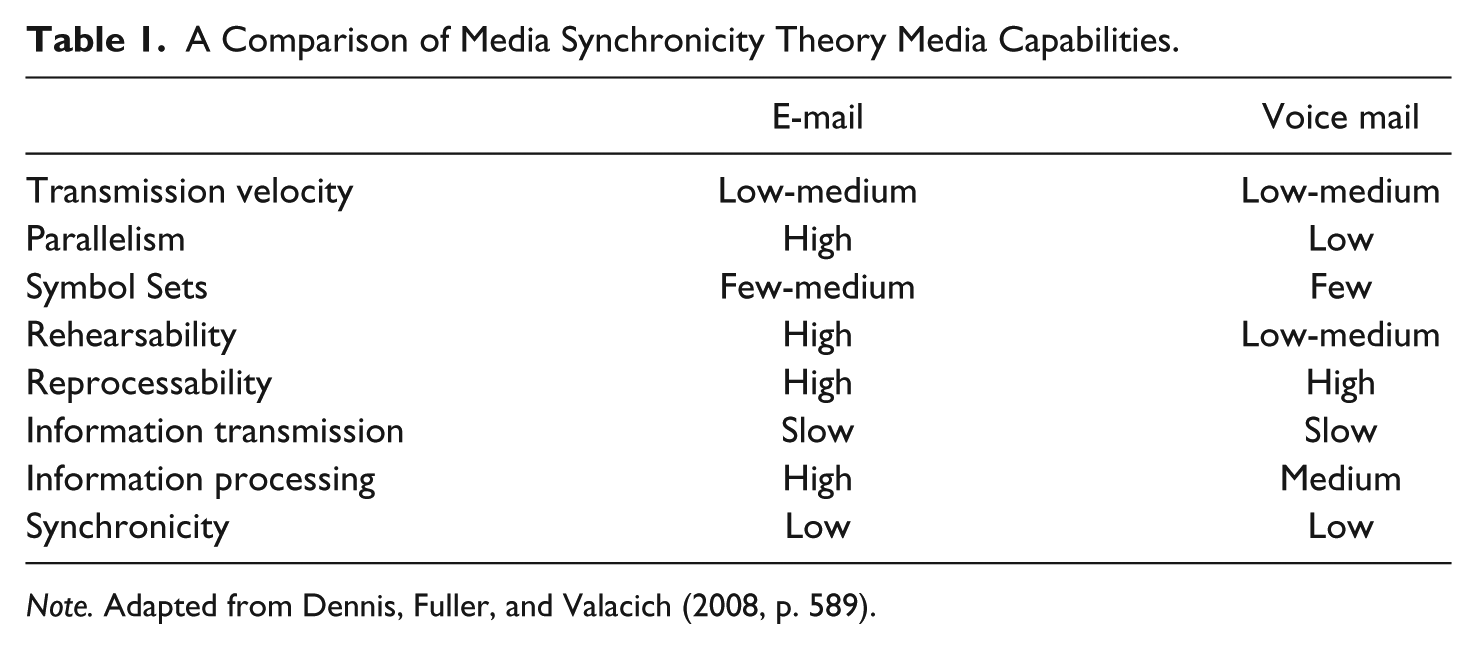
The third theory framing this study suggests that individuals make strategic decisions for media use based on a set of media capabilities that affect synchronicity. Though similar in many respects, e-mail and voice mail are distinguished by significant differences in two media capabilities: parallelism and rehearsability (see Table 1). Media with high levels of parallelism can be defined as “increasing the number of concurrent transmissions” to enable “multi-directional, multiparty transmissions” and “simultaneous conversation threads” (Dennis et al., 2008, p. 585). Though technically both e-mail and voice mail allow the transmission of multiple messages at the same time, e-mail messages may be received and processed concurrently rather than serially as in voicemail. E-mail is particularly conducive to the style of interwined, interleaved communication characteristic of media high in parallelism. In terms of rehearsability, the textual nature of e-mail allows thoughtful development and revision of messages. In comparison, voice mail/phone messages enable a more personal and spontaneous approach to composition and delivery. Though voice mail/phone messages can be prepared and rehearsed, they cannot be revised and edited with the same thoroughness, attention to detail, and fine-control allowed by e-mail.
A Comparison of Media Synchronicity Theory Media Capabilities.
Note. Adapted from Dennis, Fuller, and Valacich (2008, p. 589).
Taken together, the strengths of e-mail for parallelism and rehearsability led Dennis et al. (2008) to evaluate it as having higher overall information-processing capacities as compared to voice mail/phone. This means that e-mail is expected to be better suited for conveyance processes. Complementarily, voice mail/phone would be better suited to convergence processes. MST argues that lower levels of parallelism can promote shared focus by decreasing distractions, and lower levels of rehearsability can promote shared focus by decreasing delays in message transmission.
MST further argues that individuals will make strategic uses of media based on an understanding of capabilities that support differing levels of synchronicity for conveyance and convergence processes. Thus, we propose the following hypothesis:
Though we expect the hypotheses for all three theories will be upheld, the primary goal of the research design is to compare the explanatory value of these theories: Will MRT as moderated by CET or MST offer the most robust account of buyer media preferences and channel selection? Based on a synthesis of the theoretical literature and previous comparative studies, this study proposes that MST will provide the most comprehensive and accurate explanatory model. Specifically, we expect that media synchronicity factors—and, in particular, the media capabilities that support conveyance processes—will prove more significant than richness perceptions in explaining the study results.
Methodology
To obtain a representative sample of buyers from across the United States, a number of sources were used. The Institute for Supply Management provided a list of titles and postal addresses of their U.S. members. A group of buyers from this list (with titles such as purchasing agent, director of purchasing, purchasing supervisor, senior buyer, assistant buyer, buyer, purchasing manager) were sent postcards requesting their participation in the online survey. Another professional association of buyers, the American Purchasing Society, agreed to directly send e-mails to many of its members who were buyers. Also, using LinkedIn, a number of individuals who self-identified as buyers were contacted by that social media’s messaging system and asked to participate. Finally, a professional buyer, who is also an officer in a local buying association, sent e-mails to fellow buyers and to similar local buying association chapters asking them to participate and to forward the survey link to other buyers they might know.
As an incentive for participating, survey respondents were allowed, at the conclusion of the survey, to register for a drawing of one free iPad. The confidentiality of respondents’ identities with their survey responses was ensured by having the registration for the iPad drawing occur in a totally separate survey.
Many buyers interact with inside salespeople, defined for this study, as those salespeople who do not make in-person calls on buyers—all interactions are via non–in-person methods like phone calls, e-mails, and letters. For this study, we explicitly stated that we were only interested in buyers’ communication preferences as related to outside salespeople, also called field salespeople (Castleberry & Tanner, 2014). We explicitly defined “outside salespeople” for the purposes of this study as those salespeople who do make in-person calls on buyers and who may also use non–in-person methods like phone calls, e-mails, and so on.
Survey Instrument
Hypotheses related to MRT and CET were investigated using established and validated measures in the literature. The perceived appropriateness of e-mail and voice mail/phone for rich or lean communication tasks was measured using a range of tasks adapted by van den Hooff et al. (2005) based on Rice and Case (1983) and Short et al. (1976). The perceived richness of e-mail and voice mail/phone was measured using an inventory of items developed by Carlson and Zmud (1999) based on the richness criteria developed by Daft and Lengel (1984). Experience levels for e-mail and voice mail/phone were measured using an inventory created by Carlson and Zmud (1999). The perceived social influence of e-mail and voice mail/phone was measured using criteria adapted by Carlson and Zmud (1999) and Schmitz and Fulk (1991). These measures were all based on appropriate 7-point Likert-type scales.
To investigate hypotheses related to MST, buyers were asked two open-ended questions about their preferences for communicating with salespeople including factors that might contribute to preference of one media communication channel over another. These questions were written with care to avoid influencing buyer responses in favor of theory constructs. The use of open-ended questions and participant self-reflection is consistent with previous MST-based studies (Dennis et al., 2008; George et al., 2013; Jung & Lyytinen, 2014). Given that MST argues against objective approaches to defining media and task properties, it is necessary to engage the unique rationales individual communicators may have in weighing the relative value of different media traits and to interpret the unique communication processes employed by different individuals in similar situations.
Preferences, Behaviors, and Demographics
Buyers were asked their communication preferences for interactions with salespeople. These items were created based on input from professional buyers. Questions were also created to measure buyers’ behaviors with regard to salesperson communication. These were measured using 7-point Likert-type scales for likelihood.
Finally, a series of questions (van den Hooff et al., 2005) was included to measure various characteristics of the buyer: the primary NAICS code (if known) of the buyer’s organization, industry type (using industry categories found at naics.com), job title, number of years, experience as a buyer, age, and gender.
Pretests and Administration
A series of pretests was performed for the survey instrument. First, several buyers read each survey question and were asked if anything was unclear or if additional responses should be offered. No suggested changes were offered. Then, the survey was completed online by a group of five buyers to discover any survey administration issues. Since none were discovered, the survey was made available to the final sample via Qualtrics, using a URL-specific link. Subjects were able to complete the survey in one visit or over several sessions.
A total of 181 buyers participated in the study. Surveys that were less than 30% completed were deleted, thus excluding 20 partially completed surveys. Additionally, one survey where the buyer provided the same answer to every research question was deleted. Thus, the sample consists of 160 buyers. The response rate cannot be calculated due to the data collection methods used (e.g., snowball sampling). Demographics of the survey participants include the following: male (45.9%); age (M = 49.7, SD = 13.28); years as buyer (M = 13.3, SD = 10.22). Buyers were from a wide variety of industries, as shown in Table 2.
Demographics.

Coding Strategies
A total of 83 buyers completed responses to the open-ended survey questions. Data from these questions were coded by one of the study authors and a graduate research assistant who knew nothing about the research design. Following the gold standard methodology for coding narrative data, the study author acted as a master coder with the research assistant serving the role of the reliability coder (Syed & Nelson, 2015). A set of definitions for MST processes and capabilities was developed to guide the coding process. These definitions supported a process in which respondent statements discussing rationales for selecting a particular media were coded and classified based on the MST theoretical constructs. After familiarizing themselves with the definitions and working through several examples, both coders worked alone to independently code a subset of responses. The coders then met to review and reach a consensus for all codes. The complete sample was subsequently coded independently by both coders. At the end of the coding process, agreement levels between the two coders was 88%. Cohen’s kappa statistic for interrater reliability was .66, which is traditionally viewed as within the range of good agreement (Syed & Nelson, 2015). A final review was used to reach consensus and reconcile all codes in the sample.
To examine the relative importance and fit of the coding categories for the participant responses, a quantitative content analysis was used to provide results that addressed code frequency and correlations between codes in the sample. Coding also provided the basis for a qualitative analysis of buyer perceptions and rationales for media selection as contextualized by MST constructs and conceptual apparatus.
Results
Communication Behaviors and Preferences
Descriptive statistics for buyer media usage and preferences revealed that buyers were most likely to use e-mail (6.55), followed by voice mail/phone (5.74) and traditional face-to-face meetings (5.12), for communication with salespeople in general (see Table 3). These channels were highly preferred to all other media. For the specific situation of receiving initial sales messages from salespeople whom they had previously not met, buyers’ strong first preference was for e-mail (5.41), followed by voice mail/phone (4.50), face-to-face meetings (3.16), and then social media (3.21). Corroborating previous research, buyers reported a strong likelihood of letting an incoming phone call from an unknown contact be answered by voice mail (4.78). For initial sales messages, buyers reported that they were slightly more likely to listen to an entire voice mail (5.60) than read an entire e-mail message (5.22). However, buyers rated their likelihood of responding to voice mail (4.64) and e-mail messages (4.72) as essentially the same. For messages from salespeople with whom they have established relationships, buyers reported equally high likelihood of listening (6.02) and responding to voice mails (5.79), and reading (6.16) and responding to e-mails (6.10).
Buyer Media Usage and Communication Preferences.
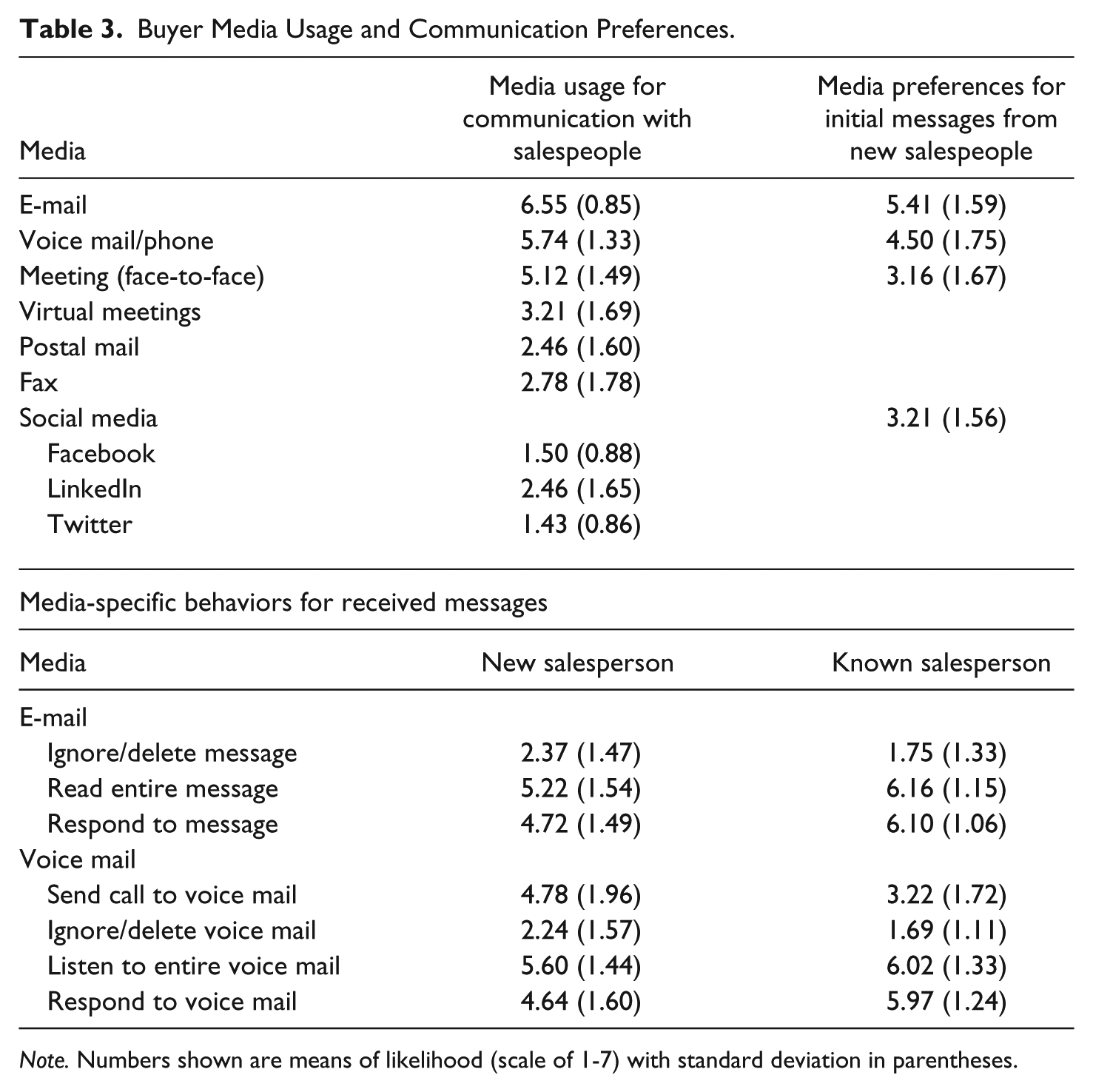
Note. Numbers shown are means of likelihood (scale of 1-7) with standard deviation in parentheses.
Media Richness Theory Results
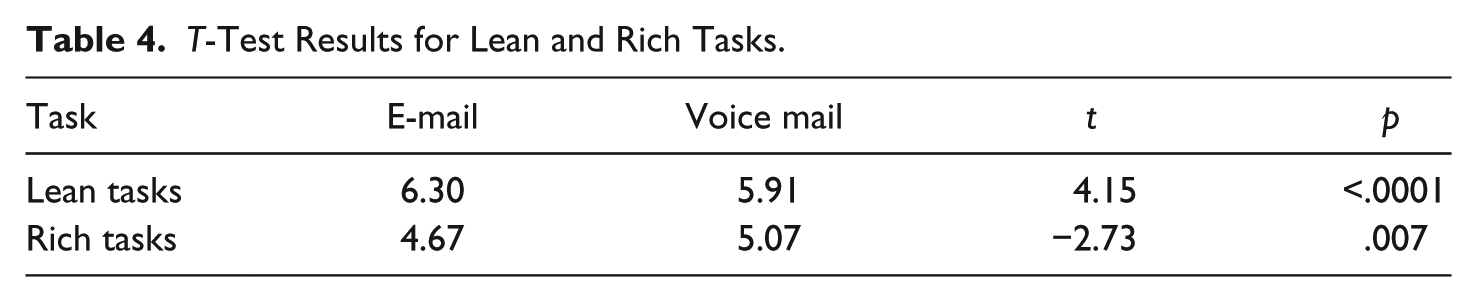
The results of paired samples t tests (Table 4) confirmed that for lean tasks, e-mail was the preferred method of communication (p < .0001), while for rich tasks, voice mail/phone was the preferred method of communication (p = .007). There were some inconsistencies in the subscores for rich and lean tasks, which will be discussed subsequently. However, the overall results support Hypothesis 1.
T-Test Results for Lean and Rich Tasks.
Channel Expansion Theory Results
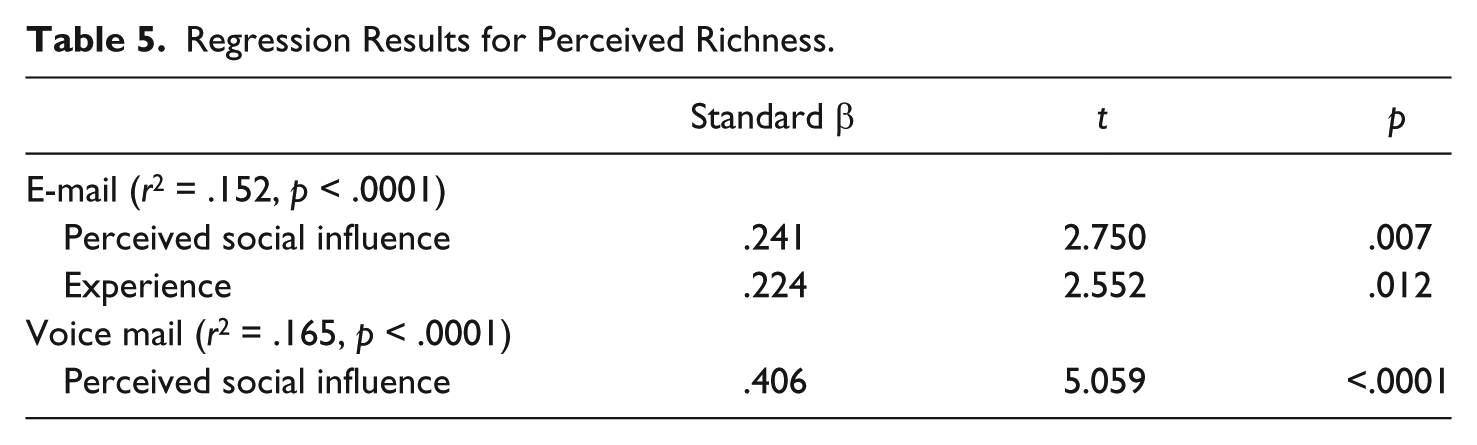
To explore the relationship between perceived richness and CET factors, Table 5 provides a regression analyses using stepwise deletion for both e-mail and voice mail/phone. For e-mail, both perceived social influence (β = .241, p = .007) and experience (β = .224, p = .012) were significantly and positively related to perceived richness. For voice mail/phone, only perceived social influence (β = .406, p < .0001) was significantly and positively related to perceived richness. Thus, Hypothesis 2 is partially supported.
Regression Results for Perceived Richness.
The results of paired samples t tests in Table 6 confirm that e-mail received higher scores for CET factors as compared voice mail/phone. The difference between the averages of experience (p < .0001) and perceived social influence (p < .0001) were significant and favored e-mail. In particular, e-mail (6.10) was perceived as having greater social influence as compared to voice mail (4.71). The results for perceived richness indicated a slight preference for e-mail over voice mail/phone, but the differences were not statistically significant (p = .704). It is important to note that based on MRT, voice mail/phone should have greater levels of perceived richness. However, even though voice mail/phone was preferred for rich tasks, it did not receive higher perceived richness ratings. These results support the hypothesis that e-mail would be perceived as a relatively rich media in comparison to voice mail/phone. Thus, Hypothesis 3 is supported
T-Test Results for Experience, Social Influence, and Perceived Richness.
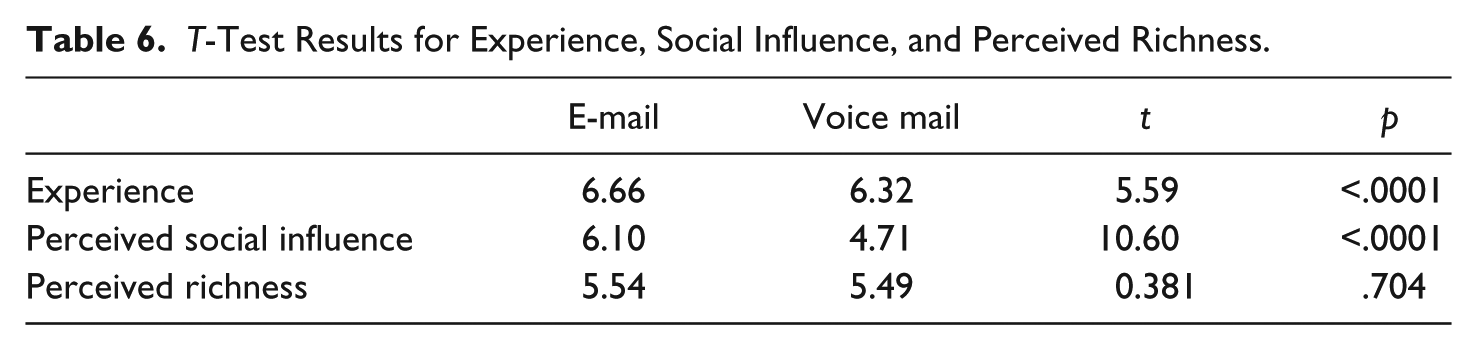
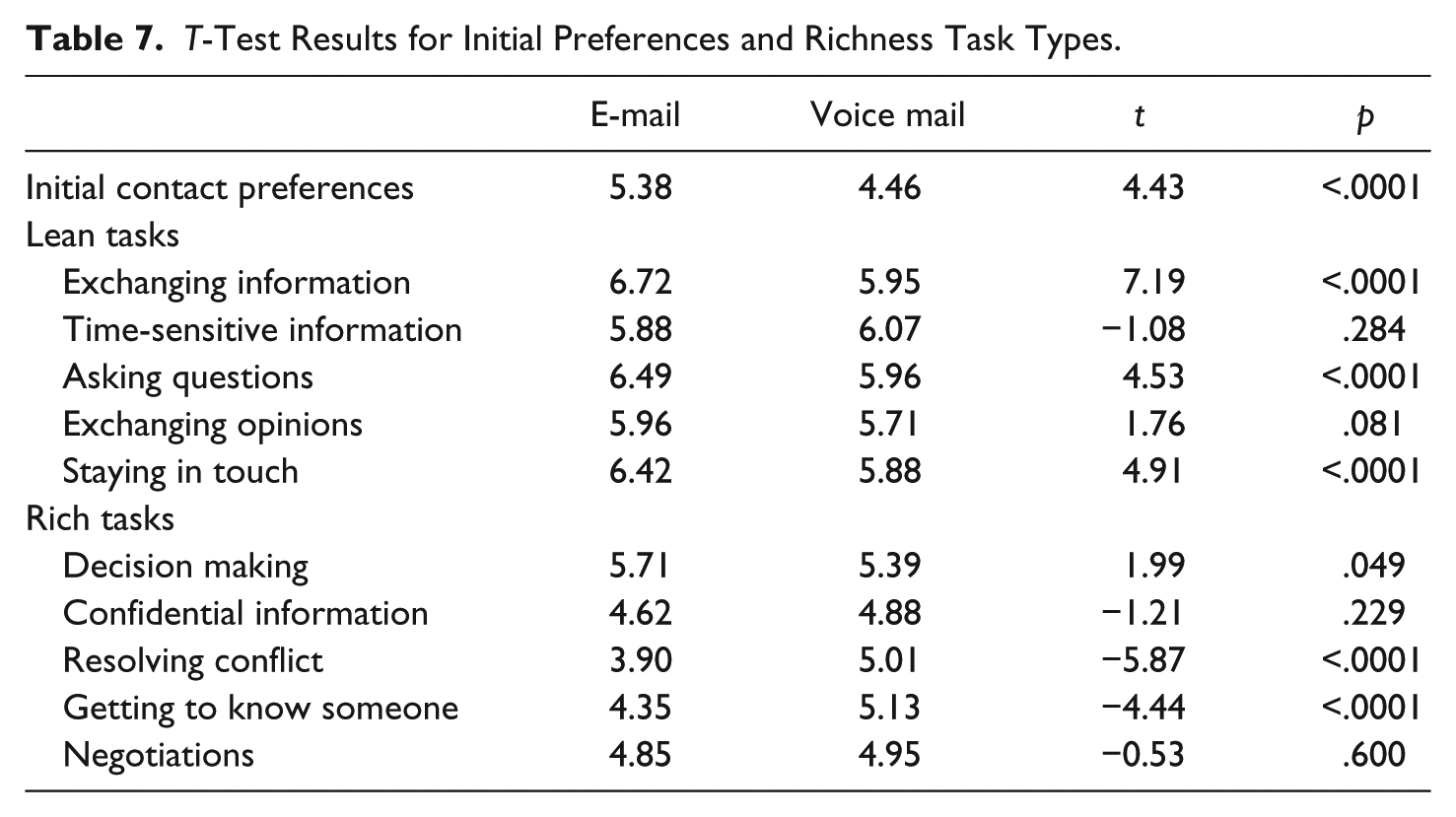
Table 7 displays the results for a paired samples t test concerning initial contact preferences and individual scale items for media richness task types. E-mail was strongly preferred at statistically significant levels (p < .0001) for lean task criteria describing communication for exchanging information, asking questions, and staying in touch. Voice mail/phone was strongly preferred at statistically significant levels (p < .0001) for rich task criteria for resolving conflict and getting to know someone. Differences between the media were less pronounced and not statistically significant for the remaining lean criteria (time-sensitive information, exchanging opinions) and rich criteria (decision making, confidential information, negotiations). The results of the t test confirm the first part of Hypothesis 4, specifically that e-mail is preferred on the basis of its appropriateness for lean tasks.
T-Test Results for Initial Preferences and Richness Task Types.
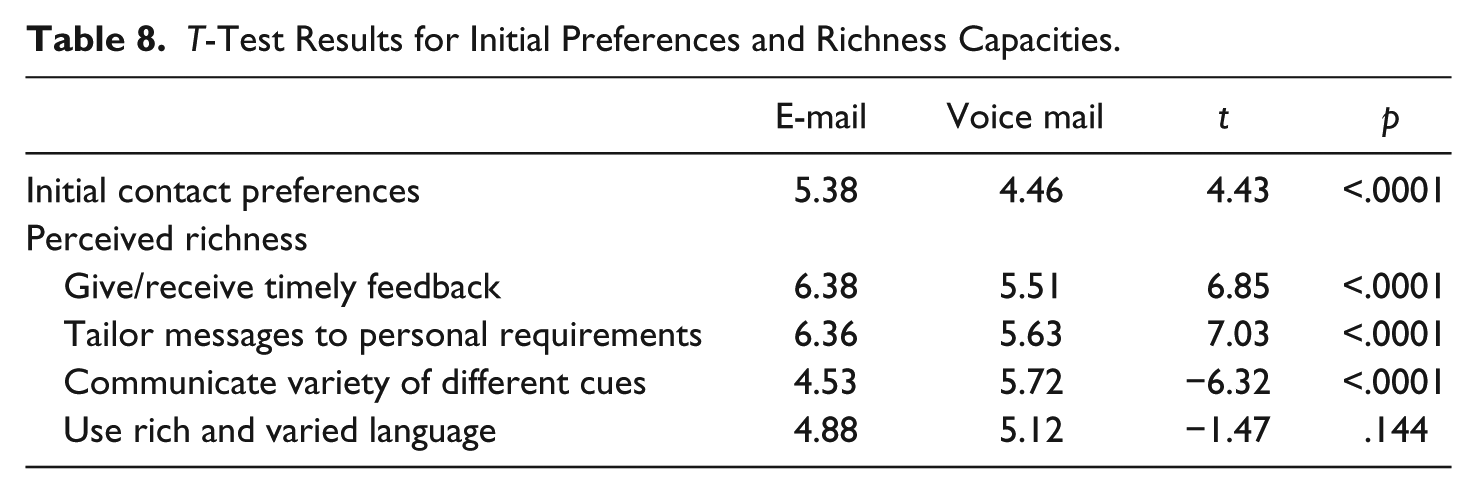
Hypothesis 4 also stated that e-mail would be preferred on the basis of richness perceptions. Building on Hypothesis 3, it was expected that e-mail would be perceived as a comparatively rich media channel. Though MRT predicts voice mail/phone to the richer media, an examination of perceived richness subscores (see Table 8) reveals that e-mail outperformed voice mail/phone for criteria related to instant feedback (“Give/receive timely feedback”) and personal focus (“Tailor messages to personal requirements”; p < .0001). Voice mail/phone is only perceived to have a significant advantage for social cues (“Communicate a variety of different cues”; p < .0001). Voice mail/phone was moderately preferred for the natural language criterion (“Use rich and varied language”). These results indicate that buyers perceive voice mail/phone to have a narrow richness advantage focused on the benefits that verbal communication offers for enabling the encoding and decoding of social cues. Thus, media richness perceptions indicate that e-mail is preferred not only on the basis of its appropriateness of lean tasks but also due to its capacities for relatively rich communication in comparison to voice mail/phone.
T-Test Results for Initial Preferences and Richness Capacities.
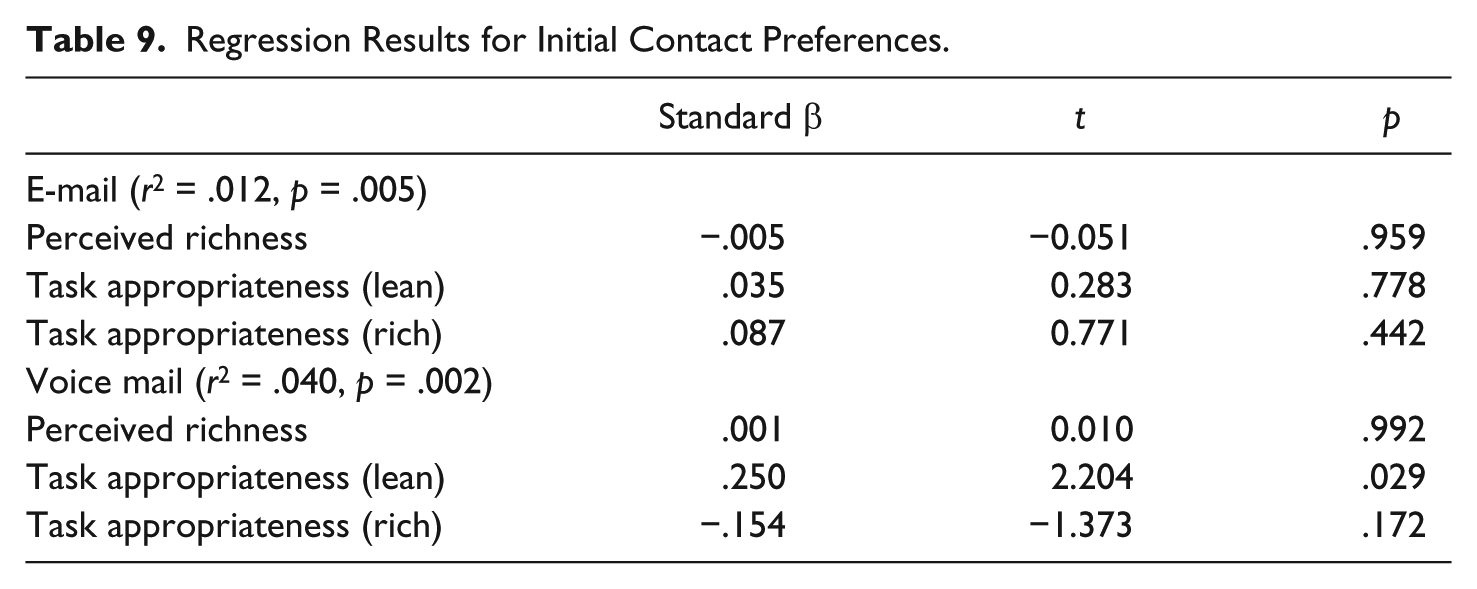
However, regression analysis for task appropriateness and richness perceptions does not support a statistically significant impact of either factor for the selection of e-mail for initial messages (see Table 9). Thus, although Hypothesis 4 is partially supported, there is not strong support for explanatory power of MRT and CET for the study results overall.
Regression Results for Initial Contact Preferences.
Media Synchronicity Theory Results
H5 predicted that the media preferences and selection rationales of buyers would be explained by MST constructs, specifically that e-mail would be preferred for conveyance tasks and voice mail/phone for convergence tasks. Quantitative content analysis of open-ended responses show that conveyance processes were the most frequently mentioned factor in the sample. Over half of all buyer responses (54%) described issues related to conveyance processes in explaining rationales for choosing particular media for communication with salespeople (see Table 10). The second most frequently applied code was reprocessability (42%). In MST, reprocessability is highly correlated with conveyance processes as it most strongly contributes to the medium’s capacity for supporting information processing. Taken together, the strength of these two factors indicates that buyers are most concerned with efficient and effective communication of information in working with salespeople. The third most frequently applied code was convergence (33%), which supports the relevance of conveyance and convergence processes as a meaningful distinction for the buyers in the sample. The remaining media capabilities all were found in at least 20% of buyer responses: symbol sets, transmission velocity, rehearsability, and parallelism. These results indicate that the MST constructs were relevant to buyers’ rationales for media preferences and channel selection.
Media Synchronicity Theory Code Frequency.
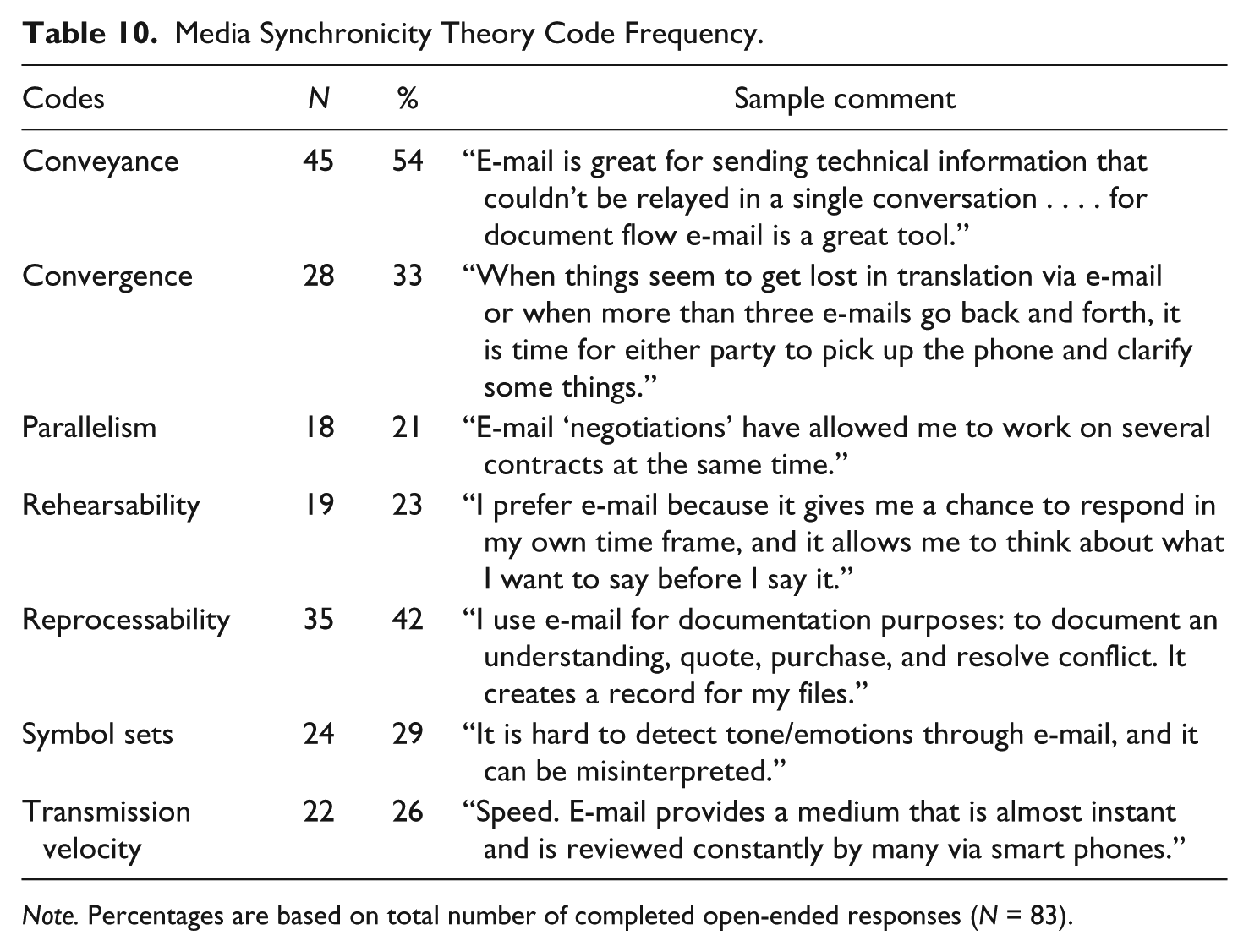
Note. Percentages are based on total number of completed open-ended responses (N = 83).
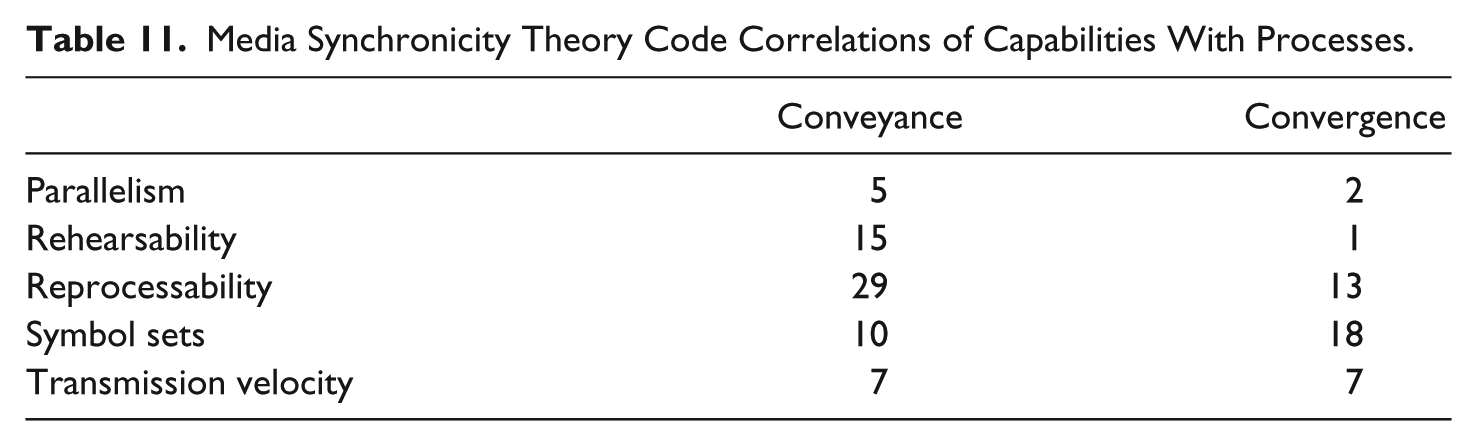
In addition to code frequency, results were developed to reveal correlations and relationships between MST communication processes and specific media capabilities in buyers’ rationales (see Table 11). Corroborating the MST model, the two media capabilities that are theorized to support information processing—reprocessability and rehearsability—were more frequently correlated with conveyance processes. Complementarily, symbol sets, which are theorized by MST to support information transmission, were as expected more frequently correlated with convergence processes. Parallelism was slightly more likely to be correlated with conveyance processes. Transmission velocity was correlated in equal frequency with both processes. These correlations between media capabilities and processes further support the relationships of MST constructs and overall fit with the data.
Media Synchronicity Theory Code Correlations of Capabilities With Processes.
The sample was also coded for specific mentions of media channels (see Table 12). These mentions were analyzed for correlations with MST codes (see Table 13). E-mail was by far the most mentioned media with phone, voice mail, and face-to-face meetings receiving the next highest numbers of mentions, respectively. Mentions of e-mail were most likely to be correlated with conveyance and reprocessability. Face-to-face meetings were most frequently correlated with symbol sets. These associations are congruent with the expectations of MST. However, contrary to expectations, voice mail was most likely to be correlated with conveyance. This raises an important issue about interpreting media mentions. Buyer responses typically included comparisons of multiple media. Thus, for any given mention, buyers may have expressed a positive or negative evaluation in relation to MST processes and capabilities. For example, qualitative analysis revealed that buyer responses coded for both voice mail and conveyance almost exclusively offered a negative comparison in which voice mail was described as less appropriate than e-mail for conveyance processes. Therefore, qualitative analysis was necessary to interpret and reach conclusions about the relationships of individual media and MST factors.
Media Channel Code Frequency.
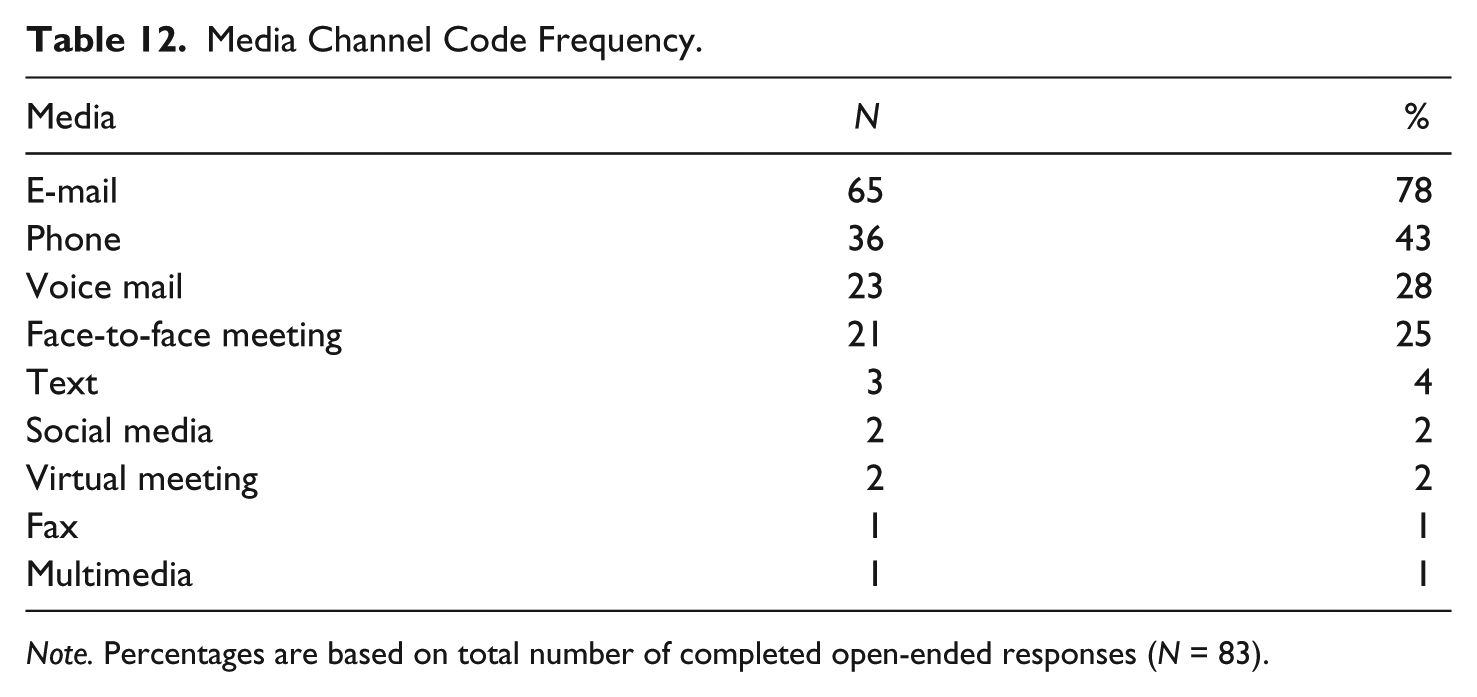
Note. Percentages are based on total number of completed open-ended responses (N = 83).
Media Synchronicity Theory Code Correlations With Mentions of Media Channels.
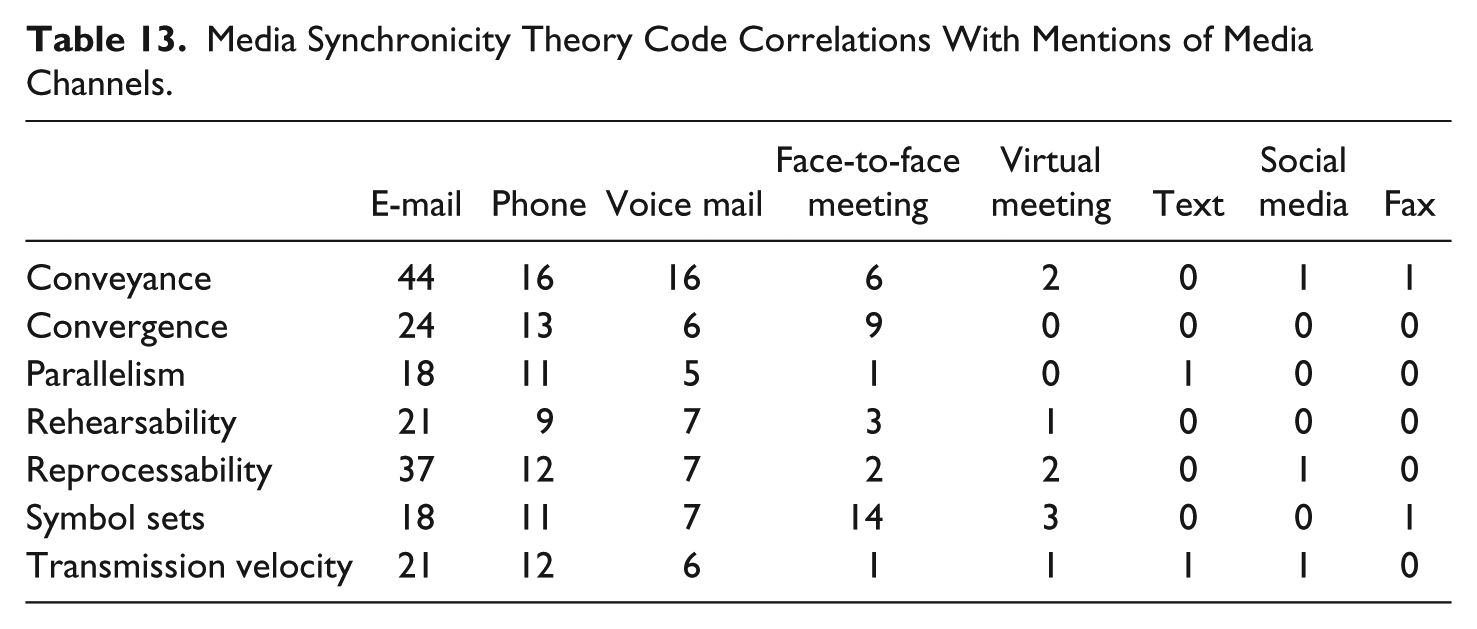
Qualitative analysis revealed that the most frequently applied and highly correlated codes of conveyance, reprocessability, and rehearsability were associated with rationales for choosing e-mail. In fact, analysis revealed that e-mail was universally perceived by buyers as the most appropriate media for conveyance processes based on its information-processing capabilities. The following quotes illustrate buyers’ perceptions of the benefits of e-mail in relation to each of the factors:
Conveyance: “I use e-mail mostly because it is efficient and effective.”
Reprocessability: “[It is e]asier to save information from an e-mail rather than a voice mail.” “There are times that it is nice to be able to go back to an e-mail, if the situation needs that type of detail (or CYA) when you need it.”
Rehearsability: “I strongly prefer e-mail . . . . It allows time to gather thoughts and any necessary facts required for the conversation as well as [time to] respond when it is most convenient to my schedule.”
Information processing was described as an important factor for all aspects of communication with salespeople. Buyers emphasized that the low synchronicity and textuality of e-mail made it easier to evaluate and cross-reference information for decision making, to document agreements, and to compose thoughtful and accurate messages. Overall, qualitative analysis corroborated quantitative results in finding that information processing for conveyance processes was the most significant factor in buyers’ rationales for media preferences.
Responses coded for convergence were associated with direct comparisons of e-mail with phone and voice mail. Specifically, buyers perceived phone and voice mail as more appropriate for convergence processes as compared to e-mail. Additionally, as predicted by MST, buyers reported using a combination of media for different stages of a sequence of conveyance and convergence processes:
The more complex the products or services involved the more I prefer using e-mail supplemented with verbal or face to face contact where warranted and appropriate. E-mail is my first choice for most of the communication, but [it] may need to be followed up with a phone call for clarification. If answers are needed immediately, then pick up the phone. And any negotiations should be done via phone.
While e-mail was perceived as most appropriate for conveyance processes characterized by the communication of routine and complex information, phone and voice mail were perceived as appropriate for subsequent convergence processes including communication to develop shared understandings of established information and to support negotiations.
Symbol sets were also strongly correlated with convergence processes and mentions of phone and voice mail. In MST, symbol sets encompass the encoding of information across many different types of media and symbols. However, in the sample, rationales coded for symbol sets were almost exclusively focused on the MRT factors of social cues and natural language as enabled by verbal communication:
E-mail is a very efficient way to manage multiple tasks, but we must be aware that in some cases, making a phone call goes a long way to managing relationships [and] avoiding conflict; e-mails sometimes do not come across correctly. Phone is preferred for getting to hear a person’s voice. I believe it helps build a better rapport between each other, and [you] can hear the tone, which in turn gives a better indication of how excited or “truthful” one is about their product/service.
Buyers’ perceptions perceived both the higher synchronicity and the verbal symbol sets of phone and voice mail as more appropriate for convergence processes. Multiple buyers claimed that these capabilities allowed them to better assess the truthfulness of the salesperson and to reach an advantageous outcome in negotiations. Overall, buyers perceived voice mail and phone as ideally suited for relationship building, conflict resolution, and negotiation processes.
Though parallelism and transmission velocity were not strongly correlated with a specific MST process or media channel, qualitative analysis revealed that these factors did affect media selection rationales. Most prominently, the greater parallelism of e-mail was described by buyers as particularly important for conveyance processes and to support multitasking.
The biggest factors for me are time and schedule. I am in meetings typically 6 hours out of the day. I have e-mail (phone / laptop) with me at all times, so it is very easy to respond. I don’t prefer voice mail because listening to the message takes time, and you typically have to call back. I can’t listen to voice mail in meetings, so it is typically the last thing I check. E-mail allows me to multitask easier. I feel rude if I’m on the phone with a prospective vendor and also completing a task. Unfortunately, in my position I need my communication to be brief and impactful.
The significant issue is that the textuality and low synchronicity of e-mail allows messages to be encoded and decoded in parallel with other communication or even during other face-to-face meetings. In contrast, buyers offered negative evaluations of phone and voice mail on the basis of low parallelism:
Salespeople are verbose (generally speaking). I’m too busy to chat, and e-mail lets me control how much time I spend on them.
Not only does the verbal nature of phone and voice mail prevent parallel message processing but it was also perceived as contributing to low communication efficiency. Phone and voice mail messages were perceived as less concise and as disruptive to workflow:
[“I d]on’t like to be interrupted, so I prefer to use e-mail. I always appreciate a quick e-mail asking when the best time would be to set up a meeting, even if it is informal to drop off additional information. When a salesperson just “stops by” and asks if I am available to meet, it interrupts my current workflow.
In fact, buyer responses indicated that communication in a higher synchronicity media—such as phone or face-to-face meetings—should be prearranged through communication in a low synchronicity media such as e-mail. Buyers’ rationales related to parallelism corroborate the importance and connection of conveyance processes and low synchronicity.
Though MST predicts that the transmission velocity of e-mail and voice mail are the same, the usage patterns described by buyers suggest a more complicated relationship. Buyers in the sample described voice mail as less accessible as compared to e-mail. In addition, the higher parallelism of e-mail was perceived as enhancing transmission velocity. For routine communication, this led buyers to perceive e-mail as having greater transmission velocity:
Speed. E-mail provides a medium that is almost instant and for many is reviewed constantly via smart phones. E-mail allows me to respond by priority and when I have time. When I am in meetings or away from my desk, I can respond quicker to the e-mail. Since I am in and out of my office, I don’t always notice a voice mail is waiting for me. Since I work on my computer all day, every day, I am more apt to notice a new e-mail. Voice mail is good when I’m on the phone or away from my desk - although I’d rather see it in e-mail. I have several additional steps I have to take to listen to voice mail.
Preferences for communicating in time-sensitive situations presented a quandary. Though a phone conversation could allow for the fastest resolution due to its higher synchronicity, the practical likelihood of needing to leave a voice mail message and request a return call presented a limitation:
When a decision is time-sensitive, a phone call would be appropriate, but due to many phone calls received during the day, I typically let them go to voice mail and answer at my convenience.
E-mail and voice mail were perceived as offering different types of transmission velocity as moderated by parallelism and by the need to use voice mail to request a phone conversation.
In summary, quantitative and qualitative content analysis of buyers’ responses supported correlations between e-mail and conveyance processes including preferences for low-synchronicity communication to provide time for reflective analysis of diverse information. Complementarily, phone and voice mail were correlated with convergence processes and rationales in which higher synchronicity communication was required to develop shared understandings of existing information and to build personal relationships. Thus, Hypothesis 5 is supported.
The final hypothesis in the study, Hypothesis 6, proposed that buyers would prefer e-mail for initial messages from salespeople based on a reported strategy of using its media capabilities to support conveyance processes. An examination of buyer responses that directly addressed the situation of an initial sales message from a new salesperson revealed support for the interpretation of the situation as a conveyance process. The following extended quote is representative of buyers’ rationales for preferring e-mail for initial messages from salespeople:
I prefer being contacted via e-mail if the communication is cold. The reason for this is that my schedule is constantly full, and I have little time for interacting even with my current vendors. With e-mails I’m able to log the vendor’s information for future reference even if I don’t have a current need that the vendor can assist with. E-mail allows me to respond when I have time or even by typing out an e-mail quick on my phone waiting for a meeting to start. Calling someone back can usually guarantee a couple of tries and take more time before reaching them, and time in this position is precious.
In this example, e-mail is preferred on the basis of its capabilities for reprocessability, rehearsability, parallelism, and transmission velocity. Additionally, these capabilities are articulated as beneficial for conveyance processes: low synchronicity communication supports efficient and effective information processing.
Buyers’ rationales also supported the prediction of using a combination of media to support a sequence of conveyance and convergence processes. Specifically, buyers perceived an initial e-mail communication as a preliminary step to future communication that might involve building shared understandings and personal relationships:
I would prefer printed literature or an e-mail, so I can take the time at my convenience to peruse the information and see if it is a good fit or not. If they are cold calls, I prefer not to have it done via voice mail initially. I would rather have an introductory e-mail, sales pitch, etc. at that time. Then I can decide if I believe it is a relationship worth pursuing at my convenience.
These preferences were linked with strategies for time management. Buyers preferred e-mail on the basis of its parallelism and rehearsability:
I prefer e-mails given my hectic schedule. I am always interested in meeting new vendors, but sometimes they call and spend a good 15 minutes introducing themselves. Typically, salespeople tend to be very pushy and spend a lot of my time both in person and over the phone. I’d rather review an e-mail with information about their product and respond at my leisure. I absolutely refuse to call back a sales rep if they call me multiple times a day or leave voice mails every day.
From the perspective of MST, cold calls through phone, voice mail, or face-to-face visits can be thematized as an attempt by salespeople to move past an initial conveyance process stage more quickly and to directly begin relationship building and convergence processes. Though several buyers in the sample described appreciation for this approach, most buyers in the sample offered negative perceptions of this strategy.
Almost uniformly, buyers’ rationales cited preferences for e-mail on the basis of its low synchronicity and capabilities for reprocessability, rehearsability, and parallelism. Additionally, buyers described a two-stage process in which diverse information would be processed, prior to a subsequent communication for convergence. Taken together, these themes strongly support the overall fit of the MST model with buyers’ perceptions and media preferences and, in particular, support the hypothesis that e-mail will be preferred for initial sales messages based on its perceived appropriateness for conveyance processes. Thus, Hypothesis 6 is supported.
Discussion
The purpose of this study was to explore the media preferences of buyers in B2B sales relationships and to compare theories of media channel selection. The communication behavior and preferences of B2B buyers in this study mirror broader workplace trends toward the greater use of CMC media in general and e-mail in particular. As predicted, buyers reported preferring e-mail for initial sales messages from new salespeople. The three primary theories in the research design each propose distinct possible explanations for this result: Are richness perceptions (MRT), experience levels and perceived social influence (CET), or media synchronicity factors (MST) most relevant to buyers’ preferences and rationales for channel selection?
The results of this study supported relationships between media preferences and a number of specific MRT and CET factors; however, quantitative analysis did not support a statistically significant relationship between these factors and channel selection for initial sales messages. This corroborates the findings of previous studies that MRT and CET offer limited explanatory power for channel selection between CMC media. Quantitative and qualitative content analysis of buyers’ rationales did support the fit of the MST model and the relevance of MST factors for media preferences and channel selection of e-mail for initial sales messages.
A Shift From Media Richness to Media Synchronicity
Though this study found that MST more thoroughly and accurately explained channel selection for CMC media, this is not to say that MRT factors are entirely irrelevant. In fact, one of the most interesting aspects of these results is the way that media richness factors are retained but reframed by findings related to media synchronicity. First, it is necessary to examine how MRT breaks down in the comparison of CMC media. In traditional face-to-face communication, each of the primary MRT richness criteria are highly correlated: instant feedback, personal focus, social cues, and natural language. The moderating factors of CET—levels of experience and perceived social influence—would be expected to affect media richness factors relatively equally. However, in the results for the present study of CMC media, these criteria become disassociated. Though MRT would classify voice mail/phone as a richer media than e-mail, buyers perceived its advantages to be narrowly circumscribed: Voice mail/phone was perceived as offering a clear advantage for communicating social cues and slight advantage for natural language expression. Contrary to theoretical expectations, e-mail was perceived to have the stronger capacities for instant feedback and personal focus. This breakdown and disconnection of MRT factor relationships can be explained by reference to MST results.
In buyers’ rationales, the capacities of voice mail/phone for social cues and natural language were positively associated with developing social rapport, trust, and shared understanding. These capacities are reframed by MST as symbol sets that allow the encoding and decoding of rich information. On this point, the empirical results support both MRT and MST postulates—these capacities support rich tasks and congruence processes, respectively. However, further investigation of buyers’ rationales revealed that the social cues and natural language capacities of voice mail/phone were also associated with negative evaluations of appropriateness for efficient and purposeful communication. Specifically, buyers reported that rich media such as voice mail, phone, and face-to-face meetings often allowed salespeople to use too much of the buyers’ time and/or to lose focus for sharing only necessary and helpful information.
Previous research has characterized this drawback as the paradox of richness. As Robert and Dennis (2005) argued, “The use of rich media high in social presence induces increased motivation but decreases the ability to process information, while the use of lean media low in social presence induces decreased motivation but increases the ability to process information” (p. 19). Echoing Robert and Dennis (2005), buyer perceptions challenge the central assumption of MRT that “as task complexity increases, so should the level of richness and social presence in the media used” (p. 19). The disconnect between media richness and task complexity also explains the discrepancies in the other richness factors.
In particular, an examination of the criterion for personal focus reveals that e-mail was preferred on the basis of low-synchronicity capabilities that serve the processing of complex information. In relation to personal focus (“Tailor messages to personal requirements”), the most relevant MST capabilities are rehearsability and reprocessability. Analysis revealed that buyers preferred e-mail on the basis of its support for rehearsing and reviewing prior communication in the course of creating new messages. The use of highly synchronous media was perceived as less appropriate for complex tasks precisely because it removes the possibility of taking time to process information. Thus, the correlation between media synchronicity and information processing is shown to offer a more accurate account of buyer perceptions and preferences. Media richness and social presence are reframed as subordinate factors that contribute to highly synchronous communication.
This theme of a circumscribed role for media richness and social presence is further reinforced by the final MRT factor of instant feedback. Once again, contrary to MRT expectations, e-mail was clearly preferred for instant feedback. This is a somewhat complicated issue because even from the perspective of MST, e-mail and voice mail/phone should be comparable. After all, both e-mail and voice mail have equal transmission velocity and comparable levels of synchronicity. If anything, the capability of phone to support highly synchronous communication should lead to an overall preference for voice mail/phone. However, analysis of buyers’ rationales revealed that e-mail was perceived as offering greater transmission velocity due to superior parallelism. Not only does e-mail support parallel message processing, but due to its textual nature, e-mail also supports receiving and responding to messages even while in face-to-face meetings. In comparison, buyers perceived voice mail messages as cumbersome to check or even as “tied to their desk phone.” The parallelism and convenient mobile accessibility of e-mail meant that buyers expected these messages would be more effective at eliciting instant feedback from a communication partner. Hence, e-mail is perceived as offering flexible levels of synchronicity insofar as high-priority messages are expected to be received and responded to relatively quickly as compared to the voice mail messages and/or requests for a phone call.
The analysis of these factors creates a portrait of a shifting landscape of communication practices, preferences, and media selection rationales. In the decade since the last comparative study of buyer-seller communication preferences, the balance of communication norms has shifted from a privileging of social presence to an emphasis on multitasking. In 2005, Cano et al. reported that “buyers and sellers preferred relatively richer communication (face-to-face and telephone) to leaner media throughout the purchase process,” arguing that these media “although costly, allow opportunities for business partners to augment their relationships” (p. 292). However, the results of the present study indicate that among buyers, preferences for multitasking working and communication styles have become the dominant factor in media channel selection. More significantly, it is clear that buyers’ rationales are based on the assumption that multitasking is the norm for both buyers and their communication partners. Though buyers preferred voice mail/phone for convergence processes, communication using highly synchronous media was perceived as relatively inconvenient to arrange and as costly from the perspective of time management. Furthermore, e-mail was preferred not only on the basis of its capabilities for information processing but also because it was perceived as a more reliable channel for requesting and receiving instant feedback. Communication partners were expected to more consistently monitor and respond to e-mail due to its parallelism and textual nature.
Previous studies of multitasking and communication practices have used the term polychronicity to describe a preference for multitasking working styles (Reinsch et al., 2008). Similarly, the term polysynchronicity has been suggested by Anders (2016) to describe a preference for dynamically scalable levels of media synchronicity. The results of this study indicate that e-mail is valued by buyers on the basis of both of these preferences. E-mail supports low-synchronicity communication that enables information processing; when necessary, it can support rapid responses for relatively high-synchronicity communication. This combination of media capabilities for information processing and flexible synchronicity offers the most parsimonious and robust account of buyer preferences for e-mail after consideration and analysis of all factors in the study.
Limitations
This study clearly supports the promise of MST as a theoretical frame for understanding buyer-seller communication media preferences. However, it is important to recognize that its results are limited to the situation of initial or cold call sales messages and to the perspective of buyers. Additional study will be necessary to confirm that validity and applicability of this study to the full range of communication throughout the sales cycle and across both buyers and sellers.
It is also important to recognize that practitioners should interpret the findings of these studies strategically. Though our results indicate the majority of buyers prefer e-mail for initial sales messages, specific individuals may have different preferences and communication needs. These preferences are also subject to change for different stages in the sales cycle and for established partners versus new contacts. As one buyer in the study noted, “It would be nice if more of them [salespeople] asked me what my communication preferences are. Some will ask how and when I would like to be contacted, and I really appreciate that.”
Future Research
There are a number of extremely promising avenues of research for further applying MST as a framework for better understanding communication in B2B sales relationships. In particular, a number of MRT-related studies could benefit from being reframed by MST and applied to understanding different aspects of B2B sales communication. For example, one study found that richer media enhanced the “perceived ability to identify others’ deception and perceived ability to identify others’ expertise” (Kahai & Cooper, 2003, p. 263). Similarly, communication using highly synchronous and rich media channels has been shown to strengthen the quality of outcomes of negotiations between participants with neutral orientations and to weaken outcomes for noncooperative orientations (Swaab, Galinsky, Medvec, & Diermeier, 2012). Related to this issue, another opportunity would be to explore the impact of MST factors on the issue of commitment in buyer-seller relationships. Along these lines, Jelinek (2014) has argued for the importance of managing “courting and commitment” stages of the sales relationship and proactively seeking to overcome “seller entrenchment” in established relationships. More broadly, it will become increasingly crucial to understand how to balance the tension between media capabilities that support multitasking versus media capabilities that support relationship building. Finally, as new technologies including social media slowly become more widely adopted, it will be important to replicate and extend findings into these new contexts.
Conclusion
MST was proposed as a theoretical frame that could explain the untheorized factors of comparative media studies based on MRT and CET and could offer a more robust account of channel selection for CMC media. Results supported the fundamental propositions of MST that communication tasks comprise a sequence of conveyance and convergence processes and that media with low synchronicity and strong information-processing capabilities are best suited for conveyance processes. Information processing and flexible synchronicity for time management were revealed as the most prominent situational factors driving media channel selection. The reprocessability and rehearsability capabilities of e-mail were reported as beneficial for information processing and documentation of agreements. The parallelism of e-mail was reported to support multitasking and effective time management. While phone and voice mail communication were valued for convergence processes including relationship building, these processes were perceived as more appropriate to later stages of the sales cycle. These results indicate a sea change in the theory and practice of media channel selection in which traditional concerns for social presence and media richness have been superseded by the contemporary realities of intensive information processing and multitasking working styles.
Footnotes
Acknowledgements
The authors would like to acknowledge the cooperation of the Institute for Supply Management, the American Purchasing Society, and professional buyer Paul Eck.
Declaration of Conflicting Interests
The author(s) declared no potential conflicts of interest with respect to the research, authorship, and/or publication of this article.
Funding
The author(s) disclosed receipt of the following financial support for the research, authorship, and/or publication of this article: This study was generously supported by the University of Minnesota Duluth Chancellor’s Small Grant fund.