







Abstract
Innovation Performance (IP) serves as a measure of a company’s effectiveness in translating innovative endeavors into tangible outcomes, encompassing new products, processes, services, and enhancements to existing offerings. This study investigates the relationship between IP, Innovation Knowledge Management (IKM), which includes Innovation Culture (IC) and Knowledge Management (KM), and Supervisory Communication Frequency (SCF). SCF refers to the frequency and quality of communication between supervisors and subordinates, influencing the impact of IKM on IP. Using a structured questionnaire, 320 valid responses were collected from companies listed on the Taiwan Stock Exchange (TWSE). Data analysis employed Structural Equation Modeling (SEM) and Process Macro Model 1, with reliability and validity assessed based on criteria from Hair et al. and Fornell and Larcker. Discriminant validity was confirmed with construct correlations lower than the square root of the average variance extracted (AVE). Path analysis revealed significant differences in IP scores across SCF frequency groups (F (4, 315) = 12.47, p < .001), with three monthly interactions showing the highest mean IP score (M = 3.6905, SD = 0.9375). These findings highlight the importance of regular supervisor-employee interactions alongside robust KM and IC practices for optimal innovation outcomes.
Keywords
Introduction
In today’s rapidly evolving business landscape, firms face a myriad of challenges, ranging from fierce competition to the relentless pace of technological change (Jordão & Novas, 2022). At the heart of this dynamic environment lies the imperative for firms to not only maintain operational efficiency but also to continuously innovate. While some scholars underscore the pivotal role of leadership and human resource management (HRM) in driving organizational innovation (Jaiswal & Dhar, 2015; Singh et al., 2021), others advocate for the distinct influence of innovation knowledge management (IKM), encompasses knowledge management (KM) and nurtures an innovation-driven culture (IC), on shaping innovation processes (Anderson et al., 2020).
However, despite the recognition of these factors, firms often encounter internal barriers that impede their innovation efforts. These barriers may include entrenched organizational structures that resist change, limited resources for innovation initiatives, and a lack of incentives to foster a culture of innovation (Kozioł-Nadolna & Beyer, 2021). Particularly, previous research has extensively explored the role of organizational communication in fostering innovation (Gutiérrez-García et al., 2021). Yet, the research gap lies in the limited exploration of how SCF influences the relationship between IKM, which encompasses both KM and IC, and IP. This gap highlights the need for empirical research to uncover the intricate dynamics at play, elucidating how varying levels of SCF may enhance or diminish the effects of IKM on IP. Such insights are crucial for advancing theoretical understanding and informing practical strategies aimed at fostering innovation within firms.
This study explores this gap by analyzing firms listed on the Taiwan Stock Exchange (TWSE), chosen for its representation of Taiwan’s dynamic business environment. Theoretical significance lies in enriching existing knowledge by uncovering insights into the interplay among SCF, IKM, and IP. By addressing this gap, this study can contribute to the advancement of theoretical frameworks, enhancing the understanding of the complex mechanisms driving innovation within firms. Practical significance holds implications for TWSE-listed companies, offering insights for management strategies. Especially, understanding SCF’s role in moderating IKM and IP can guide leaders’ decisions, fostering sustainable growth.
Theoretical Background and Hypotheses
The proposed research model, grounded in the Resource-Based View (RBV) of the firm by Barney (1991), identifies four core attributes—value, rarity, imperfect imitability, and lack of substitutability—as key drivers of a firm’s competitive advantage. In this context, IKM is considered valuable resources that can contribute to a firm’s IP. In examining IKM, the focus on IC and KM is grounded in their recognized importance within organizational processes. Crossan and Apaydin (2010) highlight IC’s pivotal role in fostering creativity and risk-taking, essential for innovation success. Similarly, KM practices that facilitate knowledge creation, sharing, and application are vital for driving innovation (Farnese et al., 2019). Organizational culture aligning with innovation values and norms will further enhance innovation outcomes (Hofstede, 2011; Schein, 2010). This dual focus provides tangible avenues for empirically assessing and analyzing IKM processes.
Additionally, the RBV emphasizes the importance of resource complementarity and synergy in driving competitive advantage. In this context, SCF can complement other organizational resources by facilitating the exchange of information, ideas, and feedback among employees, which can enhance collaboration, coordination, and decision-making processes within the organization. The focus on SCF as a novel variable reflects the evolving landscape of leadership and communication practices in modern workplaces. With the increasing prevalence of remote work and digital communication technologies, understanding the implications of SCF on innovation becomes crucial for organizations striving to adapt to evolving work environments and optimize their innovation potential.
Innovation Performance (IP)
IP serves as a crucial gauge of a firm’s competitiveness and growth, indicating its capacity to generate and execute innovative ideas (Vega-Jurado et al., 2008). This multifaceted process, involving idea generation, implementation, and diffusion, demands a focus on innovation knowledge management, culture, and effective communication (García-Piqueres et al., 2019). It is largely influenced by the firm’s innovation strategy and the degree of alignment between the strategy and the firm’s overall goals and objectives (Phung et al., 2021). For instance, open innovation and collaboration with external partners are key strategies that firms can adopt to enhance their IP. By partnering with external entities, firms can leverage their expertise, resources, and networks to generate and implement new ideas or technologies (Lassen & Laugen, 2017).
To effectively measure and monitor progress in IP, firms can use various metrics such as the number of patents, new products or services, revenue generated from new products, and market share gained from new products (Richtnér et al., 2017). These metrics can help firms to assess the effectiveness of their innovation strategies, identify areas for improvement, and ensure that their innovation efforts are aligned with their business objectives and thus contribute to sustainable growth and profitability.
Over the past few decades, IP measurement has been primarily based on patent data (Dziallas & Blind, 2019). However, some researchers have argued that this approach is limited to specific patent features, which reduces its usefulness as a timely, flexible, and measurable indicator for evaluating innovation and its impact on company productivity (Ponta et al., 2021). Instead, Ponta et al. (2021) proposed Innovation Patent Index (IPI) consisting of five indicators that represent the most relevant dimensions of innovation performance: efficiency, time, diversification, quality, and internationalization. These measurement systems serve as managerial tools that support R&D decisions, provide information about a company’s innovation strengths and weaknesses, monitor and evaluate firm behavior, and allow firms to compare their performance with other firms or contexts. As the practical application of the IPI provides a more comprehensive understanding of IP, this tool is adopted to design the measurement items in this study.
To effectively assess and monitor IP, firms utilize a range of metrics including patent counts, new product introductions, revenue from innovations, and market share growth. These metrics not only evaluate the effectiveness of innovation strategies but also help identify areas for improvement and ensure alignment with business goals for sustainable growth and profitability (Richtnér et al., 2017). While traditional IP measurement heavily relies on patent data, its limitations in capturing the broader impact of innovation have been noted (Dziallas & Blind, 2019). To address this, Ponta et al. (2021) proposed the Innovation Patent Index (IPI), incorporating dimensions such as efficiency, timeliness, diversification, quality, and international reach. The IPI provides a comprehensive view of innovation performance, aiding R&D decision-making, revealing strengths and weaknesses, facilitating monitoring, and enabling benchmarking. This study embraces the IPI framework, enhancing the understanding of IP measurement for informed decision-making and strategic planning.
Innovation Culture (IC) and Innovation Performance (IP)
IC refers to the values, norms, and behaviors that encourage and support innovation. It is a critical aspect of a firm’s ability to foster creativity, take risks, and implement new ideas (Castro et al., 2013). Scholars believe it fosters an environment that encourages creativity, risk-taking, and collaboration among employees, therefore facilitating the generation and implementation of novel ideas and solutions (Shehzad et al., 2021). IC promotes an organizational mindset that values experimentation and learning from failures, ultimately leading to the development of innovative products, processes, and services (Ahmed et al., 2020). Therefore, a strong IC can promote overall IP (Aboramadan et al., 2020).
The establishment of an IC is imperative for firms that aim to augment their innovative endeavors and ultimately attain superior IP. To form IC, firms need to invest in human capital through on-the-job personnel training in which it is crucial for creating a learning organization that is much more active in deploying innovation (Dobni, 2008). Researchers have also shown that both non-formal and informal job-related training significantly influence a firm’s innovation activities and productivity (Fialho et al., 2019). Based on the context, this study proposes:
Hypothesis 1. IC has a positive effect on IP.
Knowledge Management (KM) and Innovation Performance (IP)
KM encompasses both tacit and explicit knowledge, highlighting the significance of socialization, externalization, combination, and internalization processes (Nonaka & Takeuchi, 1995). It enables the efficient dissemination of information and expertise across departments and teams, fostering cross-functional collaboration and synergy in innovation efforts (Le & Phong, 2021). By leveraging existing insights, best practices, and intellectual resources, firms can enhance decision-making and propel innovation initiatives. Moreover, effective KM facilitates the acquisition, sharing, and utilization of knowledge and expertise within the organization (Yang et al., 2018).
Empirical studies found that KM directly enhances IP in high-tech industry (Alegre et al., 2013), in non-high-tech SMEs (Ferraris et al., 2021), in service industry (Ode & Ayavoo, 2020), and in tourism (Ochoa-Jiménez et al., 2021). Additionally, some researchers proposed that KM has a mediating positive relationship with innovation performance (Bazrkar & Hajimohammadi, 2021), while others indicated that KM may play a moderating role to amplify the effect on innovation due to a better integration of key internal and external knowledge (Ferraris et al., 2021). These impact studies show that the value of KM can be maximized to ensure a more efficient and effective innovation process along with innovation outcomes in general (Mardani et al., 2018). Based on the context, this study proposes:
Hypothesis 2. KM has a positive effect on IP.
Moderating Effect of Supervisory Communication Frequency (SCF)
One of the valuable communication channels is supervisory communication, which ensures efficient resource dissemination, promotes knowledge sharing, and aligns with innovation objectives. Supervisory communication involves exchanging information, ideas, and feedback between supervisors and employees, facilitating collaboration, and providing valuable support (Men et al., 2021). Effective communication fosters trust and enhances job performance (Asad et al., 2022). Researchers explore various communication forms like one-on-one meetings and feedback sessions to promote innovative behavior. Face-to-face communication is noted to impact job performance significantly (Battiston et al., 2021). However, while previous research focuses on communication content and quality, the importance of communication frequency in fostering innovation remains underexplored.
Effective supervisory communication fosters innovation through the optimization of SCF. SCF refers to the rate at which employees engage in communication with their supervisors or managers, and it includes the number of interactions, timing, and mode of communication utilized (Bhattacharya et al., 2020). Several recent studies suggested that SCF can have significant effects on various employee and organizational outcomes. For instance, Men et al. (2021) found that higher levels of SCF were associated with greater job satisfaction among employees. Specifically, they found that employees who had more frequent and effective communication with their supervisors reported higher levels of job satisfaction, which in turn may lead to lower turnover rates and higher productivity.
Additionally, SCF might positively be related to innovative behavior among employees. Gao and Liu (2021) found that employees who had more frequent communication with their supervisors were more likely to engage in innovative behavior, which may lead to new ideas and solutions that benefit the firm. Similarly, Cardon et al. (2019) found that SCF was positively related to overall organizational outcomes, indicating that firms with high levels of SCF had higher levels of employee engagement, better job performance, and higher levels of customer satisfaction. Overall, the extant literature suggests that SCF plays a significant role in influencing the frequency and quality of communication channels between supervisors and their subordinates within the organizational context. Moreover, SCF possesses the capacity to either enhance or diminish the impact of IKM on IP, contingent upon the effectiveness of these communication channels in aligning and facilitating innovation initiatives.
Firms prioritizing innovation culture tend to achieve higher innovation performance levels. Establishing such a culture involves various strategies like selective hiring, effective leadership, rewards, communication initiatives, and learning opportunities (Padilha & Gomes, 2016). Communication initiatives play a crucial role in fostering shared goals, feedback, and trust (Brown et al., 2019). However, scholarly inquiry into supervisory communication frequency’s impact on innovation culture is limited. Yet, evidence suggests that frequent communication fosters an environment where employees feel valued and comfortable sharing ideas (Newnam & Goode, 2019), thus enhancing innovation and creativity. Therefore, this study proposes:
Hypothesis 3. SCF has a moderating effect on the relationship between IC and IP.
The KM literature addresses the role of KM in innovation that is mainly to acquire knowledge and skills through collaboration (Cavusgil et al., 2003), to reduce complexity (Shani et al., 2003), and to integrate both internal and external knowledge (Adams & Lamont, 2003). Collaborations with external partners can bring diverse knowledge and resources that facilitate innovation, despite the potential conflicts and challenges in managing intellectual property and aligning goals (Inkpen & Tsang, 2005). The adoption of innovations can also be influenced by factors such as compatibility, complexity, trialability, and observability of the innovation (Peres et al., 2010). Given that the availability of knowledge is critical to the success of innovation, it is imperative to navigate and regulate the complexity stemming from the proliferation of information (Adams and Lamont, 2003).
Research in the field of KM has explored various topics, including knowledge creation, transfer, sharing, and utilization (Pham et al., 2021). Integrating internal and external knowledge through KM requires fostering reflection and dialogue, crucial for personal, organizational learning, and innovation. Incompetent KM may hinder leveraging knowledge as an innovation resource, necessitating effective collaboration strategies (Badii & Sharif, 2003). Despite previous research on contextual factors like environmental dynamism’s impact on IP (Anderson et al., 2014), little attention has been given to the role of SCF in enhancing knowledge creation and utilization in firms. Therefore, this study seeks to explore the effect of SCF on the relationship between KM and IP by proposing:
Hypothesis 4. SCF has a moderating effect on the relationship between KM and IP.
Given that effective supervisory communication contributes to better feedback reception, employee motivation, and innovation performance, the research inquiry pertains to the criterion of effective supervisory communication and the extent to which it meets that criterion. While the effectiveness of supervisory communication can be influenced by various factors such as the mode of delivery, language, tone, and clarity of the message, the frequency of supervisory communication emerges as a critical factor to consider as it can impact a firm’s culture and innovation in the context of promoting innovation performance. Therefore, this study aims to address this research gap by examining the moderating effect of SCF on the relationships between innovation knowledge management, consisting of KM and IC, and IP. The conceptual framework is shown in Figure 1.
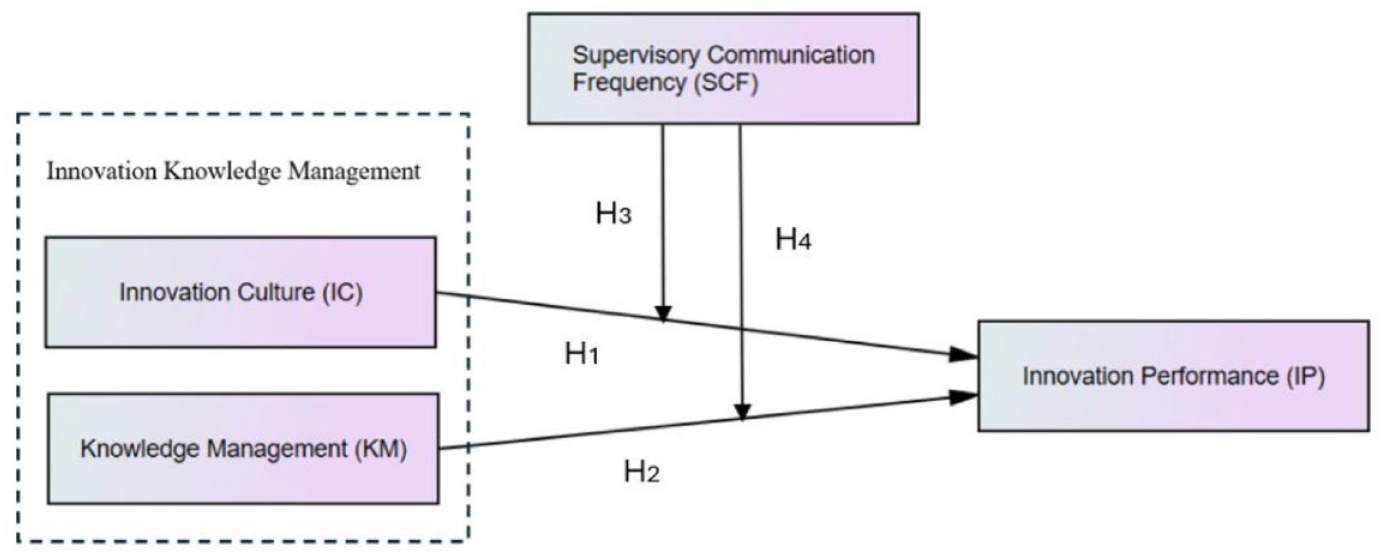
Conceptual framework of this study.
Research Methods
Sample and Data Collection
The study meticulously collected data from a sample comprising 320 respondents, primarily drawn from 979 companies (as of 2023) listed on the Taiwan Stock Exchange (TWSE). The rationale is rooted in statistical principles and practical considerations. First, according to Hair et al. (2020), a sample size of 100 to 200 is typically considered sufficient for providing reliable estimates of population parameters. However, considering the moderate effect size and standard statistical methods, a larger sample size can enhance the study’s reliability. Additionally, a holdout sample size of at least 30 is recommended to produce robust estimates in predictive modeling. Therefore, choosing a sample size of 320 firms strikes a balance between statistical robustness and practical considerations. This sample size allows for increased statistical power, improved representation of the population, and reliable estimates of predictive models.
Measures
The study operationalized key constructs using well-established indicators to ensure robust measurement and tailored to suit the context of firms listed on the TWSE. IP was assessed through indicators including corporate innovation, product/service innovation, process innovation, and innovation speed (Kurniawati et al., 2019). IC was represented by indicators such as research collaborations, independent investment in R&D, and personnel training (Dostie, 2018). Similarly, KM was measured using indicators related to knowledge acquisition, application, and sharing (Kurniawati et al., 2019). The moderating variable SCF was gauged by indicators including the frequency of supervisor-employee meetings/check-ins, email/phone communication, and perceived quality/effectiveness of communication (Imam et al., 2022). Additionally, demographic variables such as gender, age, education, and communication frequency with supervisors were included to provide context. This comprehensive approach to measurement ensures a nuanced understanding of the relationships between variables and enhances the validity and reliability of the study findings.
Demographic details encompassed gender distribution, age brackets, and educational qualifications, providing insights into the composition of the respondent pool. Notably, the frequency of communication with supervisors per month varied among respondents, showcasing the diverse supervisory dynamics prevalent within the sampled organizations. Data collection was facilitated through the distribution of structured questionnaires via email, ensuring broad coverage while adhering to practical constraints such as budget and time limitations. This systematic approach to sample selection and data collection enhances the study’s credibility and generalizability within the context of Taiwanese firms.
Method Bias and Quality Procedures
To ensure the integrity and rigor of the study, several methodological considerations and quality control procedures were implemented. First, rigorous survey design principles were employed to construct a structured questionnaire. This questionnaire consisted of two sections: one gathering individual details and the other containing a 14-item survey instrument based on a 5-point Likert scale. Additionally, a sample size of 320 respondents was selected, balancing practical constraints with statistical requirements. Rigorous data collection methods, including random sampling techniques, were employed to minimize bias and ensure representativeness.
The collected data underwent analysis using measurement and structural models within the framework of Structural Equation Modeling (SEM). For the measurement model, adequacy, reliability, and construct validity were assessed. Discriminant validity was ensured by examining item loadings and utilizing average variance extracted (AVE) shared between constructs (Hair et al., 2010), with adequacy attained when construct correlations are lower than the square root of the AVE. Meanwhile, reliability criteria, including adequacy and reliability, strengthened the measurement model’s robustness (Fornell & Larcker, 1981). In the structural model, Confirmatory Factor Analysis (CFA) was employed to ensure the reliability and validity of the measurement scales within the context of TWSE-listed firms, aligning with their specific characteristics. Path analysis using SPSS and PROCESS Template Model 1 evaluated the indirect effects on IP, thereby enhancing the study’s credibility.
This study further implemented several strategies to mitigate Common Method Variance (CMV). First, it diversified data sources by gathering information from employees across various TWSE-listed companies using a structured questionnaire. This minimized the influence of common method bias (Podsakoff et al., 2003). Second, respondent anonymity was ensured to reduce evaluation apprehension and social desirability biases (Spector & Brannick, 2010). Lastly, methodological rigor was upheld following guidelines outlined by Williams et al. (2010), including construct definition, questionnaire formulation, and marker variable identification. Data from 320 respondents were analyzed using SEM, with reliability and validity assessed according to Hair et al. (2020).
Results
Demographic analysis. Among the 320 valid respondents, 171 were female (53.4%) and 149 were male (46.6%). 225 respondents were aged 31–50 (144 or 45% for 31–40 + 81 or 25.3% for 41–50). A total of 311 (97.2%) had received a bachelor’s degree, while 9 (2.8%) were at or below high school. In terms of average communication frequency with supervisors per month, 46 respondents (14.4%) communicate less than once, 79 respondents (24.7%) once, 51 (15.9%) respondents two times, 84 (26.3%) respondents three times, and 60 respondents (18.8%) more than three times. These percentages highlighted the varied communication dynamics within the supervisory context.
Reliability and Validity
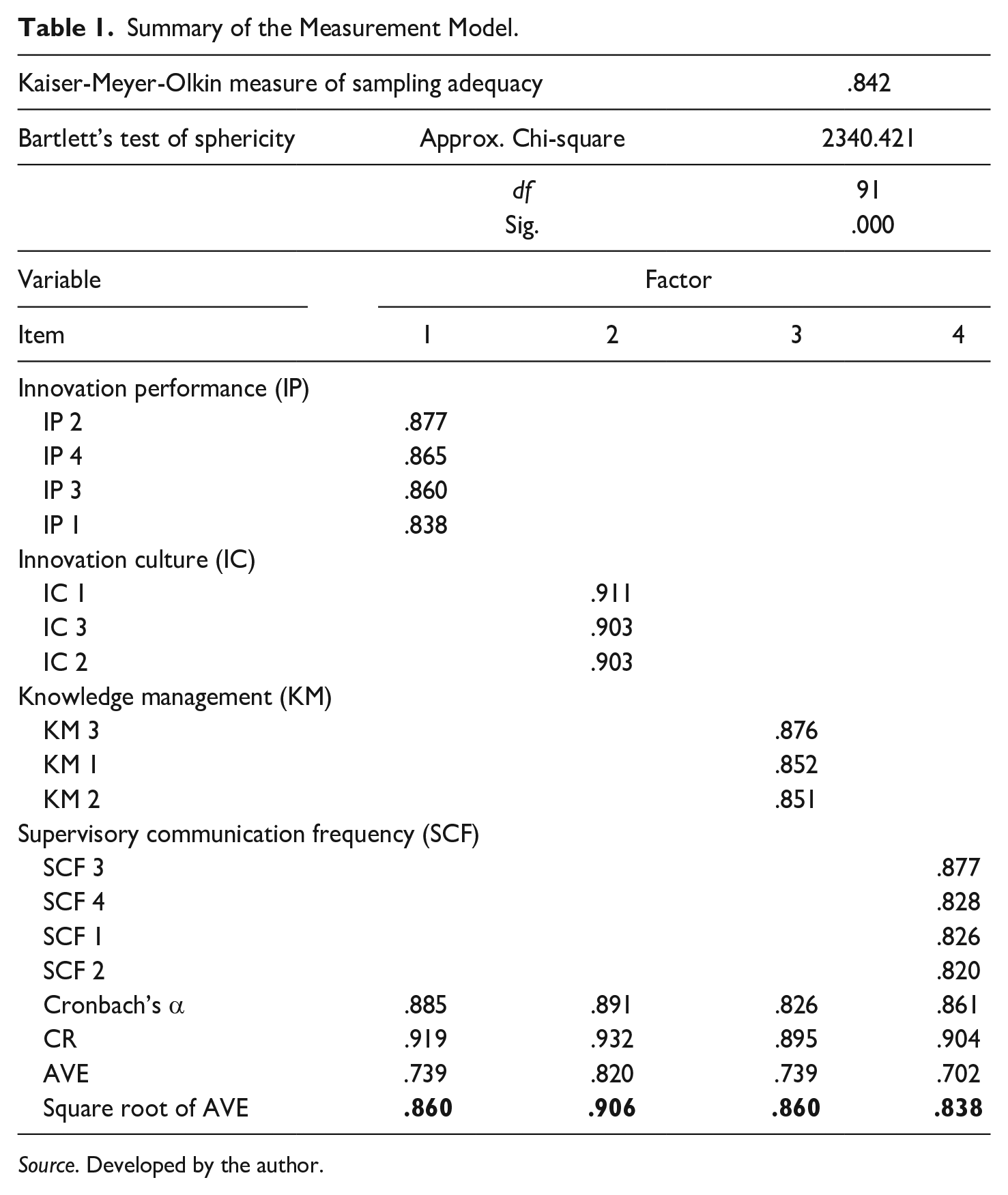
Table 1 shows that the value of KMO-MSA (0.842) and Bartlett’s Test (p < 0.001) indicate that the factor analysis is useful. Factor loading of all the questionnaire items by using principal component extraction are higher than 0.8 (0.820–0.911). Both CR and Cronbach’s alpha are higher than 0.7 (0.826–0.932), and AVEs are all over 0.5 (0.702–0.820).
Summary of the Measurement Model.
Source. Developed by the author.
Table 2 shows the correlations for each construct are less than the square root of the AVE (shown in Table 1) of the constructs, indicating adequate discriminant validity. This study fairly concludes that all items of the questionnaire show high degree of internal consistency and their factors are appropriate to be used for further analysis.
The Results of Discriminant Analysis.

Source. Developed by the author.
Note. Diagonals (in bold) represent the square root of average variance extracted while the other entries represent the correlations.
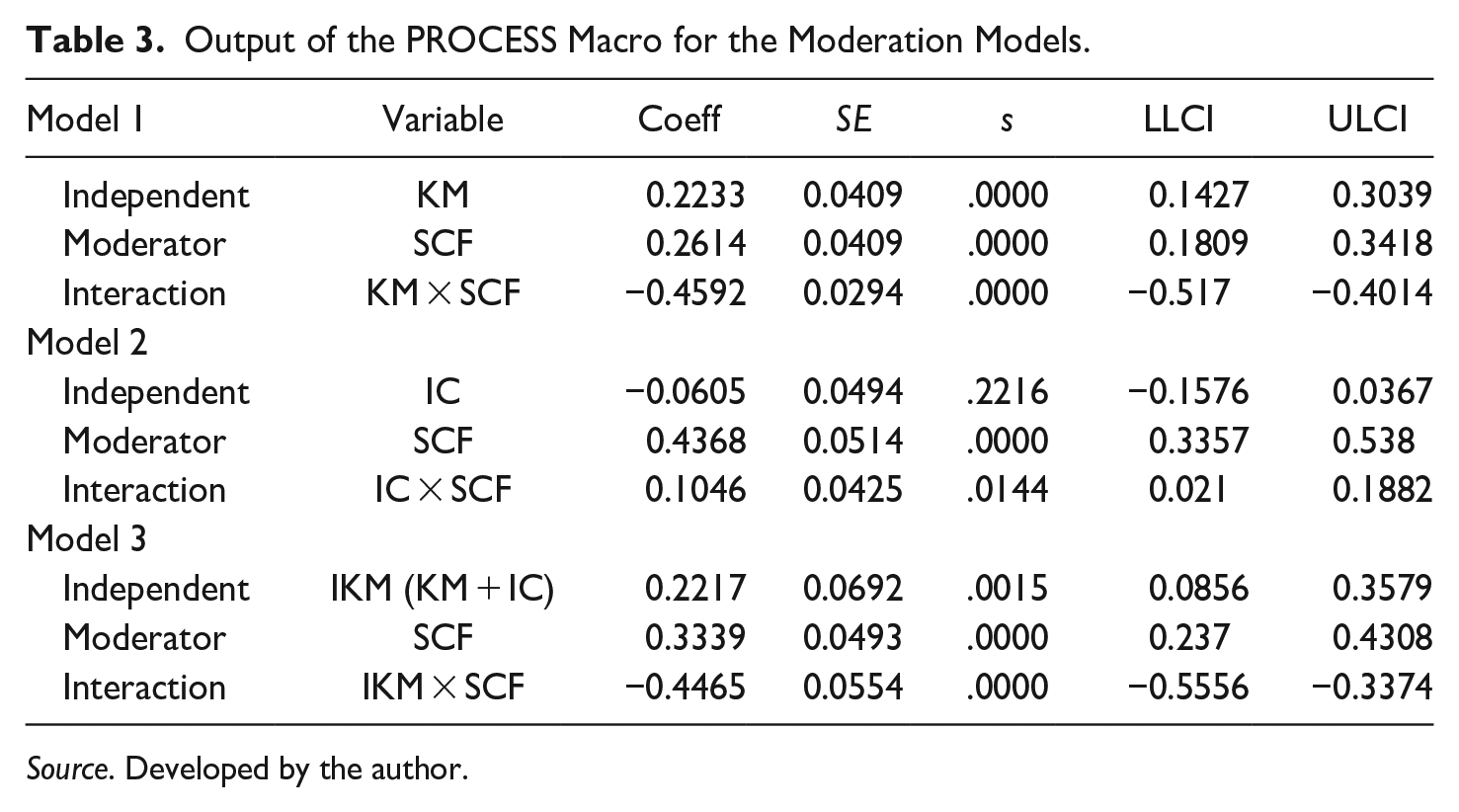
This study examined the influence of KM and IC, respectively, on IP. As shown in Table 3, Model 1 indicated that KM had a significantly direct effect on IP (β = 0.2233, se = 0.0409, 95% CI = [0.1427, 0.3039]) and indirect effect of SCF significantly moderated the relationship between KM and IP (β = −0.4592, se = 0.0294, 95% CI = [−0.517, −0.4014]) since the null of 0 did not fall between the lower and upper limit of the 95% confidence intervals, inferring their substantial influences. Therefore, hypotheses H2a and H2b are supported.
Output of the PROCESS Macro for the Moderation Models.
Source. Developed by the author.
In contrast, IC in Model 2 showed little direct effect on IP (β = −0.0605, se = 0.0494, 95% CI = [−0.1576, 0.0367]) as the null of 0 fell between the lower and upper limit of the 95% confidence intervals. Although the indirect effect of SCF significantly moderated the relationship between IC and IP (β = 0.1046, se = 0.0425, 95% CI = [0.021, 0.1882]) since the null of 0 did not fall between the lower and upper limit of the 95% confidence intervals, the outcome did not support H1a but H1b.
Given that the analysis did not support the hypothesis that IC in isolation has no effect on IP, combining IC and KM indicators becomes essential. This is because combining them recognizes their interconnectedness and the complex interplay between organizational culture and knowledge management practices, ultimately providing a more holistic perspective on their joint influence on IP. In real-world scenarios, IC and KM often influence each other and jointly impact IP. This approach acknowledges the complexity of innovation processes, enhances predictive power, and mirrors practical relevance, as companies address both IC and KM collectively in their strategies. It enables a more holistic understanding of the joint influence of these variables on IP, especially when individual analyses may not fully capture their intertwined dynamics. Indeed, combining independent variables from a statistical perspective can enhance the analysis’s ability to detect effects on dependent variable (Song et al., 2013), mitigate multicollinearity concerns (Frost, 2020), and capture the practical relevance of interrelated constructs (Cohen, 1988).
When both IC and KM indicators were combined into a unified variable IKM and analyzed alongside SCF in Model 3 of Table 3, this integrated IKM demonstrated a significant impact on IP (β = 0.2217, se = 0.0692, 95% CI = [0.0856, 0. 3579]) since the null of 0 did not fall between the lower and upper limit of the 95% confidence intervals. This finding explains the importance of combining effective knowledge management with a culture of innovation to foster innovation within a company. This holistic approach can lead to tangible outcomes and enhanced competitive advantage, particularly under the moderating influence of SCF. From the statistical perspective, it indicates that the regression slop from IKM to IP is being moderated by SCF. In other words, the slope for the relationship between IKM and IP changes across levels of SCF. Therefore, the combined construct of IKM, comprising IC and KM indicators, has significant influences on IP, demonstrating a synergistic effect that is greater than the sum of their individual contributions.
Discussion
Studies have been searching for a comprehensive set of key factors influencing IP. Over the years, researchers have identified KM and IC as the most important determinants to affect IP, respectively (Ahmed et al., 2020). Nevertheless, this study shows an attempt to examine a compound effect of both KM and IC on IP that extends the knowledge of previous studies. Additionally, while extant literature highlighted the significant role of supervisory communication toward organizational performance (Men et al., 2021), this study examines an in-depth impact of frequency of supervisory communication in moderating the relationship between this compound effect and IP by performing a one-way ANOVA to test for five conditions (groups) on IP and then use Tukey’s post hoc tests to explore for group differences with alpha = 0.05.
The independent variable, Frequency, categorizes participants into five groups: 1 = Less than once a month, 2 = Once a month, 3 = Twice a month, 4 = Three times a month, and 5 = More than three times a month. The dependent variable is measured ordinally. Results showed a significant difference in IP scores among the frequency groups, F (4, 315) = 12.47, p < .001. Tukey HSD pairwise comparisons indicated significant differences among groups. Notably, Group 1 had lower IP scores compared to Groups 3, 4, and 5 (p = .001, p = .000, p = .000 respectively). No significant differences were found for Group 2. Statistically significant pairwise comparisons include Group 1 versus Group 3, Group 1 versus Group 4, Group 1 versus Group 5, Group 2 versus Group 4, and Group 2 versus Group 5. Group 4 demonstrated the highest mean score (3.6905), suggesting engaging in communication three times a month enhances innovation performance. This study’s findings contribute to innovation literature and practical management.
Theoretical Implications
This study contributes to the expanding literature emphasizing the pivotal role of KM, IC, and SCF in driving IP. While echoing prior findings on the significance of these factors, this research unveils a compounded effect wherein the combined influence of KM and IC surpasses their individual impacts. The interdependent relationship between KM and IC is evident, wherein robust knowledge-sharing practices underpin IC, fostering an environment conducive to knowledge creation and utilization (Mura et al., 2013). This aligns with RBV principles, emphasizing the strategic value of internal resources in achieving competitive advantage.
Moreover, this study underscores the mediating role of SCF, revealing how frequent supervisor-employee communication amplifies the positive impact of KM and IC on IP. Effective KM mechanisms furnish employees with the tools and resources necessary for innovation, while a supportive IC enhances knowledge utilization. SCF acts as a catalyst, facilitating the translation of knowledge assets into tangible innovation outcomes. RBV underscores the significance of internal capabilities in driving sustained competitive advantage, emphasizing the strategic imperative of fostering a collaborative organizational culture (Barney, 1991).
Practical Implications
TWSE-listed companies serve as the focal point of this study due to their operation in competitive markets with rapid technological advancements, necessitating ongoing innovation. By concentrating on TWSE-listed firms, the findings yield actionable insights and recommendations through a comprehensive conceptual framework integrating various dimensions of innovation management, including IC, KM, and SCF. These insights aim to assist firms in navigating the complexities of the contemporary business landscape, providing practical guidance applicable across diverse organizational settings, and enhancing their innovation outcomes. Particularly, improved communication fosters collaboration and feedback exchange, positively impacting IP. Clear communication expectations facilitate effective employee-supervisor engagement, while unclear ones lead to breakdowns. To mitigate this, firms should foster open communication, aligning with the study’s recommendation of three times a month for supervisor communications. Regular check-ins, scheduled weekly, bi-weekly, or monthly, facilitate ongoing project discussions, and setting communication goals promotes skill enhancement.
Additionally, providing training in communication techniques, conflict resolution, and innovation practices enhance employees’ capabilities in idea generation and development. Incentive and reward programs further cultivate an innovative culture, motivating employees to contribute ideas and collaborate. Leveraging technology like video conferencing and instant messaging facilitates seamless communication, particularly in remote work environments. These strategies, aligned with RBV principles, emphasize leveraging internal resources to enhance organizational performance and competitive advantage (Amit & Schoemaker, 1993). Integrating these practices with empirical insights on KM, IC, and SCF offers a holistic approach for firms to strengthen their innovation capabilities and achieve sustainable success.
Conclusion, Limitations, and Future Research
This study emphasizes the critical role of effective SCF in fostering a culture of innovation and leveraging knowledge for better innovation outcomes. The findings suggest that frequent communication between supervisors and employees can enhance the positive effect of knowledge management and innovation culture on innovation performance. Effective knowledge management helps to provide employees with the necessary resources and tools to innovate, which, in turn, supports the development of an innovation culture. A robust innovation culture that encourages knowledge sharing and collaboration is essential for achieving better innovation performance. Effective SCF is crucial in ensuring that employees are adequately supported and motivated to share their knowledge and collaborate effectively.
Further research on the relationship between KM, IC, and supervisory communication frequency can be conducted to explore how different contextual factors, such as organizational size, industry, and culture, can influence the effectiveness of these practices. For example, a study can examine how the implementation of KM and IC practices differs between small and large organizations and how this affects innovation outcomes. Additionally, future research can explore the role of technology in facilitating KM, IC, and communication practices, as technological advancements have greatly influenced the way organizations manage knowledge and foster a culture of innovation.
Footnotes
Acknowledgements
This research was partially supported by International College of National Institute of Development Administration.
Declaration of Conflicting Interests
The author declared no potential conflicts of interest with respect to the research, authorship, and/or publication of this article.
Funding
The author(s) received no financial support for the research, authorship, and/or publication of this article.
Ethic Statement
This manuscript is original and has not been published elsewhere. There are no conflicts of interest to disclose, and there has been no significant financial support for this work that could have influenced its outcome.

Data Availability Statement
The data that support the findings of this study are available from the corresponding author, Chih-Hung Chen, upon reasonable request.