







Abstract
By adopting a glocal approach that integrates Islamic values with globally generalized leadership communication types, this study theoretically proposes and empirically develops a scale of multinationals’ leadership communication in the MENA region based on expectations of local Muslims. Through an online survey in this region, the study identified three essential dimensions of Muslim participants’ shared expectations of leadership communication: benevolent-paternalistic leadership communication, transformational leadership communication, and recognition of Islam. Specifically, Muslim participants in this study expected leaders to communicate as benevolent paternal figures who inspire and support employees through open, honest, and mutual consultation. They also expect leaders to demonstrate transformational communication, characterized by care, wisdom, and innovation, while showing recognition and respect for Islamic ethics and values. Furthermore, the findings reveal that Muslims prefer interpersonal communication channels over mediated ones.
Keywords
Introduction
The Middle East and North Africa (MENA) region has become a key destination for global investment, driven by its growing market potential and ambitious national development agendas (VOA News, 2024). Large-scale national transformation plans, such as Saudi Arabia’s Vision 2030, the UAE’s Centennial Plan 2071, and Egypt’s Vision 2030, aim to promote economic diversification, innovation, sustainability, and global competitiveness. These initiatives have made the MENA region increasingly attractive to multinational corporations (MNCs) seeking global expansion.
As MNCs enter the MENA region, their leaders face the communication challenge of navigating complex cultural landscapes (Francois, 2015; Patel et al., 2019). Effective leadership communication in this context requires integrating globally recognized principles with the cultural and religious values of the MENA region (Francois, 2015; Wang et al., 2014). However, many well-established leadership communication approaches, including transformational, charismatic, and servant leadership, were developed primarily in Western contexts and have since been generalized as globally applicable models (Campbell, 2005; House et al., 2013; Jokinen, 2005). Their underlying assumptions regarding individualism, low power distance, and egalitarian communication may contrast with cultural expectations prevalent in the MENA region (House et al., 2013; Kabasakal et al., 2012). Accordingly, communication scholars have increasingly called for theoretical perspectives that consider culturally grounded contexts in studying leadership communication (e.g., Alkathiri & Alharbi, 2024; Ruben & Gigliotti, 2017), particularly MNC leaders seeking to communicate with employees in the MENA region whose expectations are shaped by religious and cultural traditions outside the leaders’ own.
Religion and culture are central to leadership communication expectations in the MENA region. Islam is the dominant faith in the region, with more than 90% of its residents identifying as Muslim (Pew Research Center, 2015). Islamic ethics profoundly influence the daily life and organizational practice among local Muslims (Ali, 2009; Zaim et al., 2024). In Islamic culture, leadership communication is regarded as an important part of guiding organizations’ practice and achieving an ideal society (Ali, 2009; Faris & Parry, 2011). Islamic leadership principles, rooted in Qur’an (i.e., the holy book of Islam) and Sunnah (i.e., traditions and practices of the Islamic Prophet Muhammad), comprehensively define the traits, ethics, and communication behaviors that leaders should embody (Ali, 2009; Zaim et al., 2024). The MENA region is also characterized by high power distance and collectivism, which contribute to the tendency of Muslims to view leaders as paternal figures with authority (Kabasakal et al., 2012; Patel et al., 2019; Sidani & Thornberry, 2010). In such contexts, paternal leadership communication has been identified as an effective leadership communication type that aligns with local culture, emphasizing hierarchy and authority while fostering a workplace environment resembling an extended family (Kabasakal et al., 2012; Mansur et al., 2017).
Existing studies on leadership communication in the MENA region generally follow two approaches. One applies Western-developed leadership communication models, such as transformational, charismatic, and servant leadership communication, to the region (Bealer & Bhanugopan, 2014; Litz & Scott, 2017). The other develops Islamic leadership models grounded in Islamic teachings and cultural traditions that highlight adherence to Islam, kindness (ihsan), wisdom (hikmah), and justice (adl; e.g., Ali, 2009; Zaim et al., 2024). However, both approaches have limitations for understanding leadership communication in MNCs. Danielewicz-Betz (2013) warned that directly transferring Western leadership models to non-Western contexts risks creating “false universalism” because it often overlooks the region’s cultural and religious complexities. Meanwhile, Islamic leadership models may not fully address the realities of MNCs, where leaders come from diverse cultural and religious backgrounds and must operate within globally integrated organizational systems (Maynard & Tian, 2004; Tian, 2020). In response, business scholars have recognized the importance of taking a glocal lens (Patel et al., 2019; Ritzer, 2003; Tian, 2020). However, communication research has paid limited attention to glocal leadership communication in the MNCs. This oversight warrants attention, as leadership communication is particularly significant to exchanges of cross-cultural meaning, align diverse members, and negotiate global and local expectations in practice (Johnson & Hackman, 2018; Mayfield & Mayfield, 2017).
To address this gap, this study conceptualizes leadership communication through a glocal lens (Robertson, 1995; Tian, 2020), integrating two streams of scholarship that have largely developed in parallel: leadership communication developed in Western contexts and subsequently generalized globally, and Islamic-rooted leadership communication. This approach emphasizes that leadership communication entails constructing, conveying, and negotiating messages across cultural contexts, weaving globally consistent vision and values together with local expectations, practices, and norms. In doing so, this study contributes to leadership communication scholarship by introducing a glocal lens, integrating globally generalized leadership communication models with locally grounded Islamic values in the MENA region.
Literature Review
A Glocal Approach to Leadership Communication
Leadership communication is defined as “human (symbolic) communication that modifies the attitudes and behaviors of others to meet shared group goals and needs” (Johnson & Hackman, 2018, p. 12). Communication scholars widely recognize leadership communication as a key driver of organizational success, shaping culture, structure, and efficiency while influencing publics’ attitudes, trust, and engagement (Men, 2014; Men et al., 2020; Yukl, 2013). In contrast to leaders operating with single-culture organizations, leaders in MNCs face the complex challenge of balancing global generalized leadership communication conventions with local cultural expectations (Wang et al., 2014). To account for this dual challenge, leadership communication in MNCs ought to adopt a glocal lens.
Glocalization refers to “the interpenetration of the global and the local, resulting in unique outcomes in different geographic areas” (Ritzer, 2003, p. 193). Within MNCs, glocalization entails a balance between global conventions and local sensitivity across business and communication practices (Robertson, 1995; Svensson, 2001). Glocal leadership communication, therefore, seeks to integrate global principles with local values, expectations, and communication norms (Fairhurst & Connaughton, 2014; Francois, 2015; Tian, 2020).
A Global Perspective on Leadership Communication
Previous literature has identified some leadership communication models developed in Western contexts, particularly transformational, charismatic, and servant leadership communication, and tested them across diverse cultural settings, finding that they are widely valued and considered generally effective (Fay Chen et al., 2025; House et al., 2013; Kamaluddin & Citaningati, 2023; Litz & Scott, 2017; Men et al., 2025).
Transformational leadership communication is characterized by an inspiring and motivational approach to communication, in which leaders foster commitment and encourage employees to work toward shared visions (Bass, 1999; Yue et al., 2019). Johnson and Hackman (2018) describe transformational leadership communication as “creative, interactive, visionary, empowering and passionate” (p. 110). Transformational leaders are expected to model desired behaviors, express strategic goals that resonate with employees, and engage with followers individually to build emotional connection and inspire creativity (Men, 2014; Yue et al., 2019).
Charismatic leadership communication emphasizes a leader’s ability to inspire employees through emotional appeal and personal charisma. Men et al. (2020) highlight three communicative aspects: care, vision, and passion. Charismatic leaders motivate employees by articulating compelling goals, expressing enthusiasm, and showing empathy and concern. Charismatic leadership communication is often compared with transformational leadership communication (Conger, 1999; Johnson & Hackman, 2018). However, while charismatic leadership communication centers on followers’ recognition of and dependence on a leader’s exceptional personal qualities, transformational leadership communication focuses on guiding followers toward shared goals through collaborative effort (Yukl, 2013).
Servant leadership communication, adopting an altruistic orientation, centers on humility, empathy, and the prioritization of followers’ development and well-being (Eva et al., 2019; Mittal & Dorfman, 2012). Mittal and Dorfman (2012) identify six defining characteristics of servant leadership communication: egalitarianism (rejecting leader superiority), moral integrity, empowerment and development of followers (encouraging proactivity and self-confidence), empathy (attentive listening and empathetic understanding), humility (highlighting others’ contributions), and the creation of value for both internal and external communities.
A Local Perspective on Leadership Communication in the MENA Region
Leadership communication is particularly significant in the MENA region, where Islam regards leadership as an integral aspect of life, tied to the moral and religious obligations of Muslims (Ali, 2009; Fairhurst & Connaughton, 2014; Ruben & Gigliotti, 2017). While Western leadership theories primarily emphasize administrative efficiency and organizational outcomes, Islamic leadership communication is grounded in faith and divine guidance, viewing leadership communication as a trust (amanah) and a spiritual and moral duty to serve both Allah and the community (Ahmad, 2009; Egel & Fry, 2017). Rooted in the Qur’an and Sunnah, Islamic leadership communication involves a process in which leaders inspire and influence followers to work collaboratively toward a shared goal, while adhering to Islamic teachings and principles (Ahmad & Ogunsola, 2011).
Previous studies have examined how Islamic values shape leadership communication and propose several principles (Ali, 2009; Alqhaiwi et al., 2023). Zaim et al. (2024) identified and tested four dimensions of Islamic leadership principles: religiosity (taqwa), justice (adl), wisdom (hikmah), and kindness (ihsan). Religiosity signifies that leaders should remain loyal to Allah and communicate morally in accordance with His guidance. Justice requires leaders to act with fairness and impartiality, treating all Muslims equitably in both decision-making and daily communication. Kindness highlights compassion and excellence in leadership communication, reflecting a leader’s responsibility to care for followers’ well-being while also promoting high standards of performance (Ali, 2009; Zaim et al., 2024). Wisdom refers to a leader’s responsibility to continuously expand their knowledge and cultivate wisdom through lifelong learning. Though these principles were developed for leaders who personally adhere to Islam, understanding them can help MNC leaders communicate more effectively in Islamic cultural contexts. To translate these principles into action, leaders should embody them in their communication behaviors, reflected in how they listen, respond, and engage with followers (Jamil, 2015; Said et al., 2023). For example, kindness (ihsan) may be expressed through empathetic and supportive communication that acknowledges followers’ concerns and cares about their well-being. Meanwhile, wisdom (hikmah) can be enacted through openness to learning and careful consideration of different perspectives during conversations. Additionally, the Qur’an emphasizes shura (consultation) as a key principle of effective leadership communication, urging leaders to engage followers through open discussion, mutual respect, and participatory decision-making (Ahmad & Ogunsola, 2011; Ali, 2009; Almoharby & Neal, 2013; Egel & Fry, 2017). Through such communicative practices, leaders can signal alignment with Islamic leadership principles.
Beyond religion, the MENA region is also characterized by high power distance and collectivism, which further shape local perceptions of ideal leadership communication (Kabasakal et al., 2012; Sidani & Thornberry, 2010). In this region, power distance is deeply embedded in all aspects of Muslim life. Within family structures, the father holds the highest authority, and other family members are expected to follow his instructions, demonstrate obedience and loyalty, and support his decisions (Ali & Wahabi, 1995). Since the family serves as the primary site of socialization in the MENA region, this rigid hierarchical structure extends beyond the household into broader societal domains, including the business environment. Leaders in the MENA region are expected to exercise control while providing protection, support, and moral guidance to their subordinates (Kabasakal et al., 2012). In collectivistic cultures, loyalty, social harmony, and interdependence are valued, encouraging leaders to foster cohesive and family-like work environments (Kabasakal et al., 2012; Mansur et al., 2017).
These cultural charactersitics make paternalistic leadership communication particularly relevant for understanding leadership in the MENA context (Kabasakal et al., 2012). Paternalistic leadership communication highlights leaders’ roles as parental figures who exercise authority while demonstrating concern for followers’ professional and personal well-being (Aycan, 2006; Mansur et al., 2017). Within this hierarchical dynamic, leaders are expected to cultivate a familial work environment, uphold moral integrity, and build personal relationships with employees. In return, subordinates are expected to demonstrate loyalty, respect, and deference toward their leaders (Aycan, 2006; Cheng et al., 2014).
Glocal Leadership Communication in the MENA Region
Although most theories of leadership communication have developed in Western contexts, many of their core principles converge with Islamic values and MENA cultural traditions. For example, the Qur’an underscores that leaders should be visionary and forward-thinking, guiding their followers with hikmah (wisdom) and adl (justice), which is consistent with the principles of transformational communication (Ahmad & Ogunsola, 2011). Similarly, Mir (2010) argues that leadership communication in Islam most closely parallels transformational leadership, as it centers on inspiration, moral example, and shared vision.
Moreover, Islamic leadership upholds ihsan (kindness) and rahmah (altruistic love), which reflects the benevolent dimensions emphasized in servant leadership communication. Leaders are expected to attend to their followers’ needs and provide timely support and empathy, embodying both the nurturing and guiding roles highlighted in servant leadership communication (Aycan, 2006; Zaim et al., 2024). Additionally, the principle of shura (consultation) emphasizes open, attentive, and participatory communication, aligning with the ideals of fostering consensus and shared understanding through mutual consultation, which are core characteristics shared by both servant and paternalistic leadership communication (Hamlin et al., 2024; Kamaluddin & Citaningati, 2023; Mir, 2010; Zaim et al., 2024).
Through a glocal lens, this study argues that leadership communication in the MENA region should move beyond the direct application of globally generalized leadership communication models and the exclusive reliance on Islamic-rooted perspectives (Robertson, 1995; Tian, 2020). As an early attempt to investigate glocal leadership communication in this context, we define it as a communicative process that synthesizes globally generalized forms of leadership communication—that is, transformational, charismatic, servant, and paternalistic leadership communication—with Islamic leadership principles, that is, taqwa, adl, hikmah, and ihsan, to respond to the communicative expectations of Muslims in the MENA region. Rather than replacing globally generalized leadership communication with local norms, it draws on the convergence between global and Islamic perspectives to remain both globally coherent and culturally resonant for Muslims in the MENA region. In this sense, the following research question is posed:
Leadership Communication Channels
The increasing popularity of hybrid work models and evolving media technologies have diversified leadership communication channels across both digital and offline contexts (Men et al., 2022; Verčič et al., 2024). Digital methods include email, phone, voice mail, video conferencing, internal website, and internal social media (Men et al., 2022; Verčič et al., 2024). Traditional offline methods may encompass face-to-face interactions, employee meetings, print media like newsletters, manuals, etc. (Men et al., 2022). The variety of communication channels impacts the richness of information, which, in turn, influences the quality and quantity of message delivery, ultimately shaping employees’ attitudes, perceptions, and behaviors (Braun et al., 2019; Men, 2014). Despite the rapid advancement of new media, research indicates that employees still prefer traditional communication channels, such as face-to-face meetings, when communicating with leaders (Verčič et al., 2024). One possible explanation for this preference is that face-to-face communication can make employees perceive high-level communication quality and personal recognition from their leaders (Braun et al., 2019). While face-to-face communication offers numerous benefits, digital channels such as emails can reach a broader number of employees and enhance transparency (Men et al., 2022). As younger generations, particularly digital natives, enter the workplace, digital media such as internal social media is likely to play an increasingly crucial role in leadership communication (Verčič et al., 2024). Considering the above, the following research question is proposed:
Method
Data Collection and Samples
The data were collected from October 26 to 30, 2024, in the MENA region. The questionnaire was administered in English and took an average of 10 minutes to complete. Participants—identified as Muslim locals in the MENA region who were currently working for or had previously worked with an MNC—were recruited through a MENA-based consumer survey company, which charged US $4 per response. After signing the consent form, participants were asked about their expectations regarding leadership communication within the MNC where they worked or had previously worked, as well as their demographic information.
The final sample for data analysis consists of 416 participants. Among them, 46.15% (n = 192) were female while 53.85% (n = 224) were male. The average age of participants is 34.90 (SD = 8.69), ranging from 18 to 65, with most participants falling within the 25 to 34 age range. A majority of participants held a bachelor’s degree or higher (n = 378, 90.87%). The participants primarily resided in Egypt (45.43%), Saudi Arabia (26.92%), and United Arab Emirates (18.75%), with smaller proportions residing in Jordan (3.85%), Morocco (1.20%), Oman (0.96%), Tunisia (0.72%), Qatar (0.72%), Kuwait (0.48%), Algeria (0.48%), Syrian Arab Republic (0.24%), and Bahrain (0.24%).
Most participants hold a monthly income of under US$ 1500 (n = 180, 43.27%), while 22.60% earned US$1,500 to $5,000 (n = 94), 13.70% earned US$5,000 to $10,000 (n = 57), 15.63% earned US$10,000 to $15,000 (n = 65), and 4.81% earned over US$15,000 (n = 20). Since MNCs are multicultural environments, participants were also asked about their previous overseas experience in terms of working and studying. Results revealed 25.96% (n = 108) had never worked or studied abroad, 9.13% (n = 38) had less than 6 months of overseas experience, 16.59% (n = 69) had 6 months to 2 years of experience, 21.15% (n = 88) had 2 to 5 years of experience abroad, and 27.16% (n = 113) had more than 5 years of overseas experience.
Survey Instrument Development
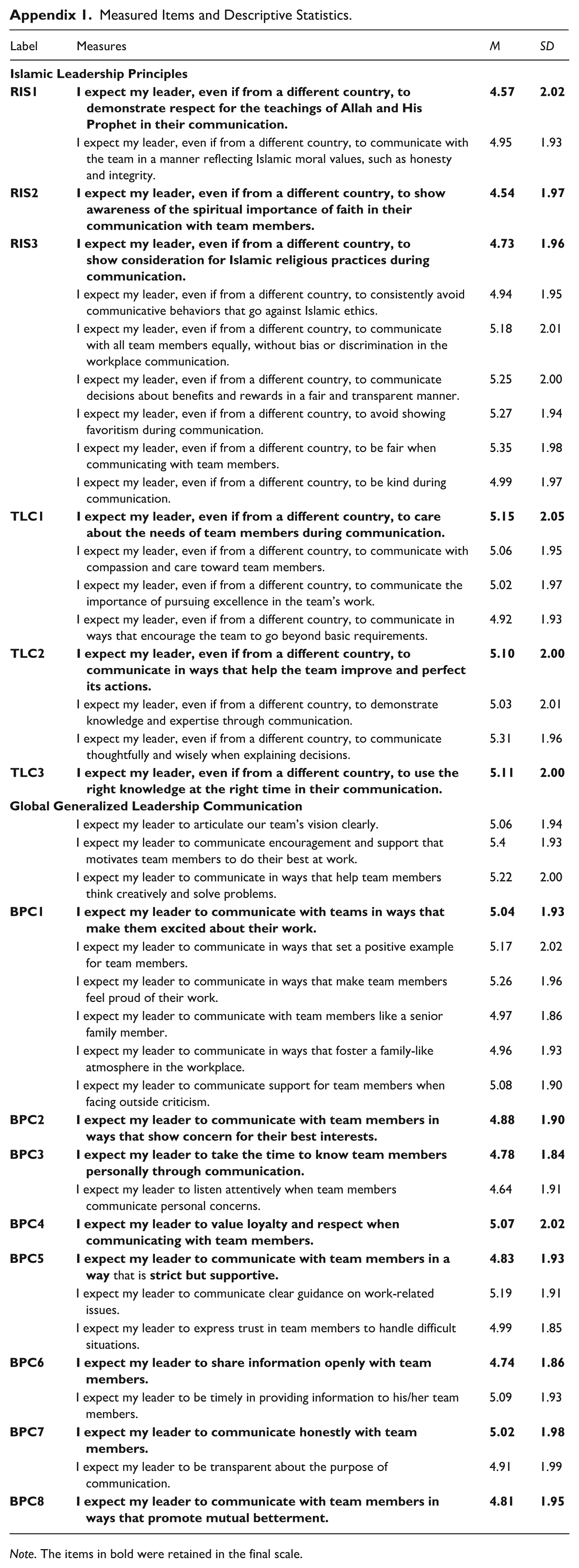
Employing the scale development methodology outlined by Netemeyer et al. (2003), we compiled an initial set of items drawn from previous research on the following topics: Islamic leadership principles, transformational, charismatic, servant, and paternalistic leadership communication. During the process of generating items for the final questionnaire, we conducted a focus group involving three communication scholars to refine the scales’ desired size and item wording (Netemeyer et al., 2003). We developed an initial 39-item scale that incorporated both Islamic leadership principles and globally generalized leadership communication types. Specifically, 18 items capturing Islamic leadership principles, including religiosity, wisdom, justice, and kindness, were adapted from Ahmad and Ogunsola (2011) and Zaim et al. (2024). The remaining 21 items, adapted from established scales, measured globally generalized leadership communication types: transformational leadership communication (Men, 2014), charismatic leadership communication (Men et al., 2020), servant leadership communication (Liden et al., 2015), and paternalistic leadership communication (Aycan, 2006; Cheng et al., 2014). See Appendix 1 for full items. Additionally, eight items adapted from Men (2014) were included to assess Muslims’ preferred leadership communication channels (digital channel including email, phone and voice mail, video conferencing, internal website, and internal social media; offline channel including face-to-face interactions, employee meetings, and print media). All items were measured on a seven-point Likert scale for agreement or frequency.
Results
Muslims’ Expectations of MNCs’ Leadership Communication
Both exploratory factor analysis (EFA) and confirmatory factor analysis (CFA) were conducted to address RQ1.
Exploratory Factor Analysis
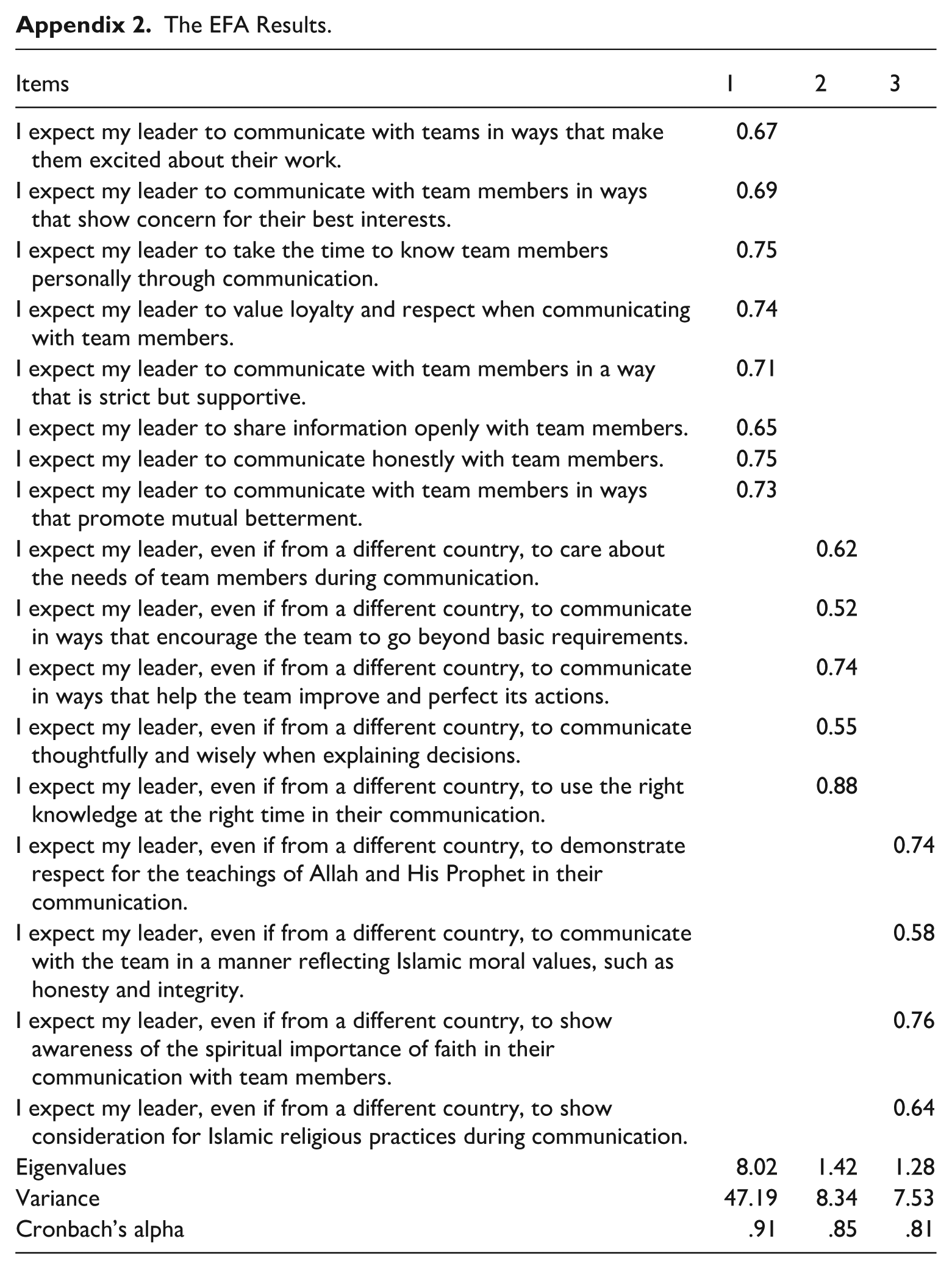
EFA was performed with all items to identify significant dimensions of leadership communication through employing principal axis factoring extraction and Promax rotation. During the analysis, items were excluded based on specific criteria: factor loadings below 0.05, cross-loadings onto two factors to an extent exceeding half of the primary loading, and loadings at 0.32 or higher on two or more factors (Costello & Osborne, 2005). After eliminating these unsuitable items, the Kaiser-Meyer-Olkin measures were calculated to assess the adequacy of the sample, resulting in a value of 0.94. Additionally, Bartlett’s tests of sphericity indicated significance (p < .001). The EFA unveiled three significant factors with Eigenvalues greater than 1. These factors were denoted as follows: benevolent-paternalist leadership communication (BPC), transformational leadership communication (TLC), and recognition of Islam (RIS). Among them, BPC accounted for the largest proportion of total variance. See Appendix 2 for the EFA results.
Confirmatory Factor Analysis and Construct Validity Test
The CFA was performed to examine the efficacy and construct validity of the three significant dimensions. Three items (two items from transformational leadership communication, and one item from recognition of Islam) were eliminated based on modification indices and low factor loadings (Figure 1). The refined CFA measurement model with the three factors showed a good measurement model fit: Chi-square (χ2) = 137.76 with 87 degree of freedom (df), χ2/df = 1.97, comparative fit index (CFI) = 0.98, incremental fit index (IFI) = 0.98, root mean square error of approximation (RMSEA) = 0.05 (Hu & Bentler, 1999). All three factors revealed satisfactory discriminant validity, convergent validity, and composite reliability (Table 1; Hair et al., 2019).
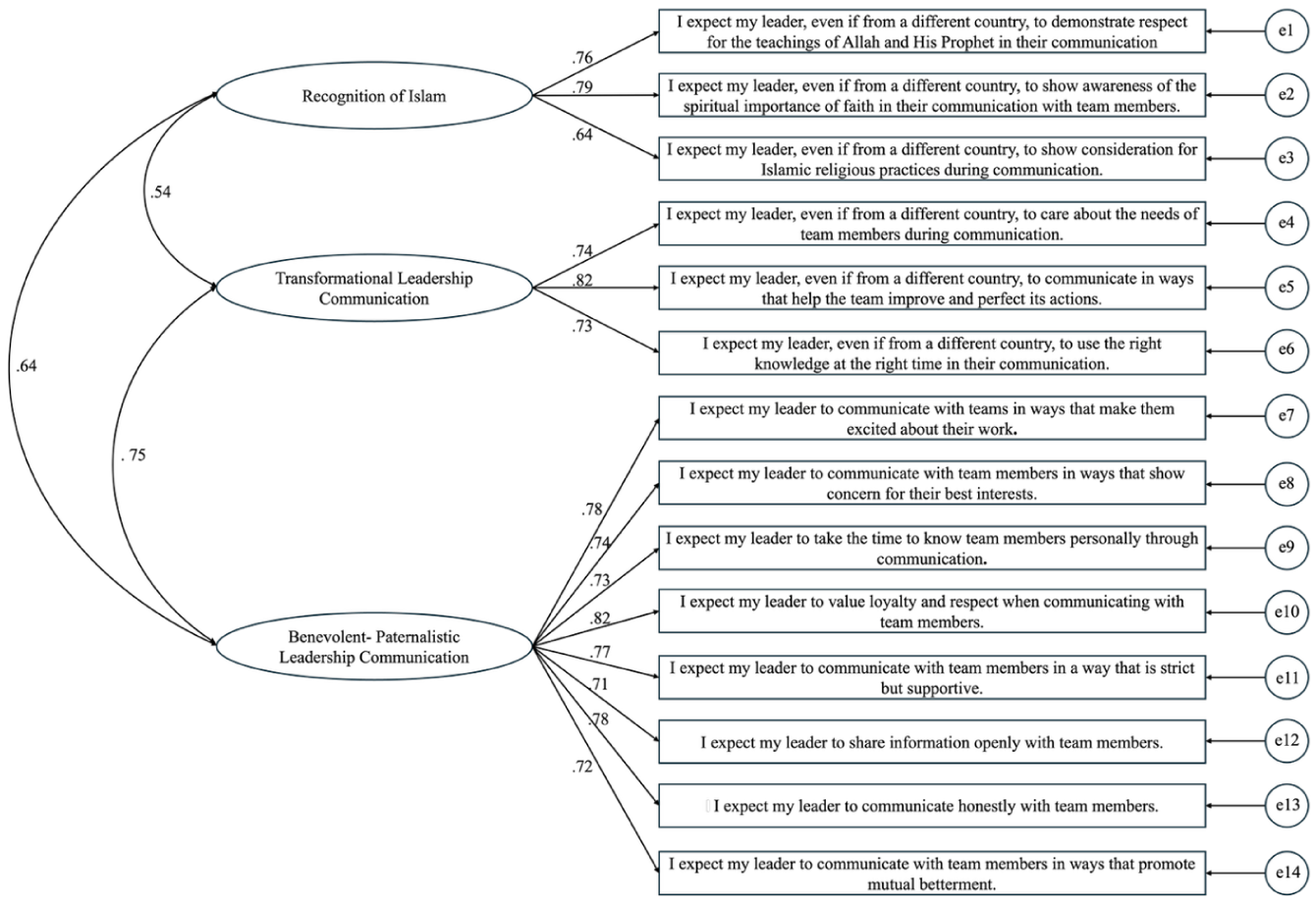
The results of CFA for the dimensions of Muslim expected leadership communication in the MENA region.
Composite Reliability, Construct Validity, and Correlations Matrix.
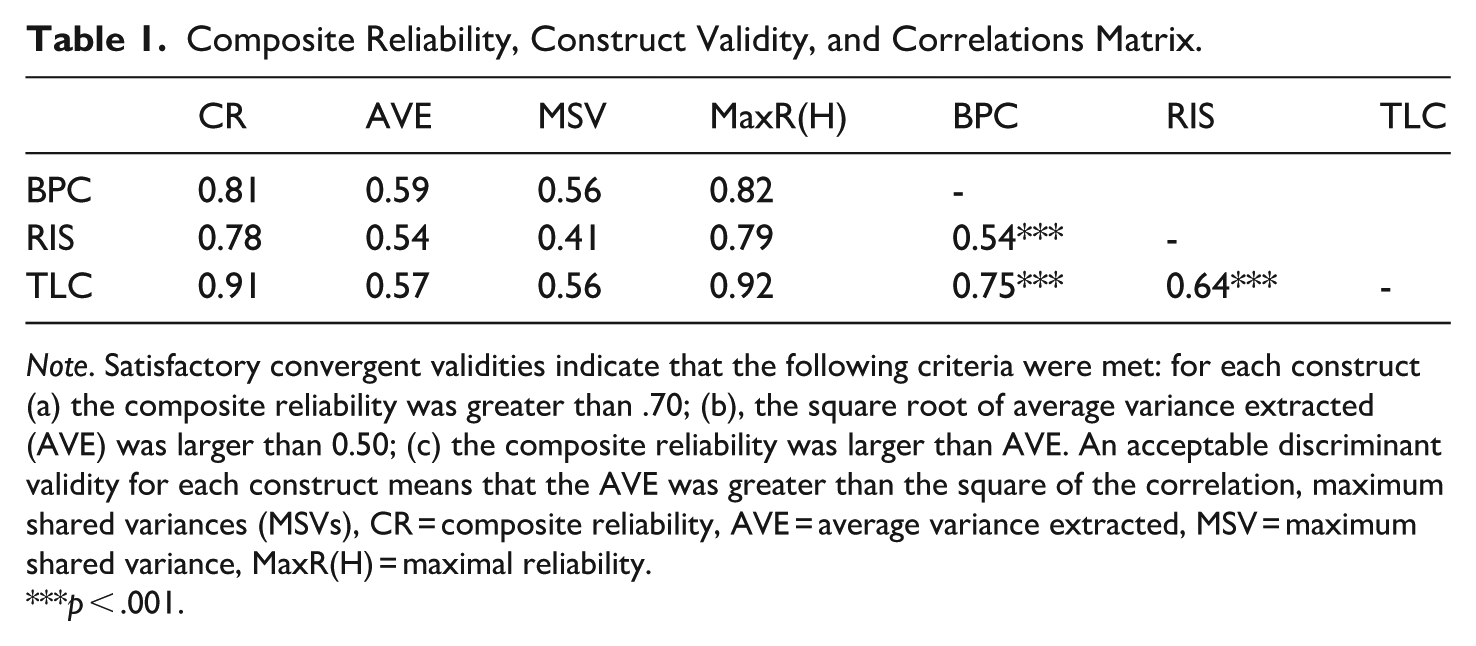
Note. Satisfactory convergent validities indicate that the following criteria were met: for each construct (a) the composite reliability was greater than .70; (b), the square root of average variance extracted (AVE) was larger than 0.50; (c) the composite reliability was larger than AVE. An acceptable discriminant validity for each construct means that the AVE was greater than the square of the correlation, maximum shared variances (MSVs), CR = composite reliability, AVE = average variance extracted, MSV = maximum shared variance, MaxR(H) = maximal reliability.
p < .001.
Muslim Participants Expected Leadership Communication
The results indicate that our Muslim participants expect leaders of MNCs to demonstrate benevolent-paternalistic leadership communication (M = 4.90, SD = 1.51, Cronbach’s α = .91), transformational leadership communication (M = 5.12, SD = 1.71, Cronbach’s α = .81), and recognition of Islam (M = 4.61, SD = 1.64, Cronbach’s α = .77).
Benevolent-Paternalistic Leadership Communication
This finalized dimension identified three items from globally generalized leadership communication types and five items from paternalistic leadership communication. The initial leadership communication includes servant leadership communication, transformational leadership communication, charismatic leadership communication, and paternalistic leadership communication. The finalized scale retained one item from charismatic leadership communication, two from servant leadership communication and five items from paternalistic leadership communication. Paternalist leadership communication stands out with the highest factor loadings and the greatest number of items included. Specifically, Muslims anticipated leaders to communicate in ways that demonstrate personal familiarity with team members (M = 4.78, SD = 1.84), express the value of loyalty (M = 5.07, SD = 2.02), balance strictness with supportive guidance (M = 4.83, SD = 1.93), show honesty (M = 5.02, SD = 1.98), and promote mutual betterment (M = 4.81, SD = 1.95). These five items together reflect that while Muslim participants in this study perceive the leader as a paternal role in communication, they place greater emphasis on the leader’s moral, caring, and supportive functions while downplaying authoritarian or dominant aspects. Moreover, leaders are expected to communicate with teams in ways that inspire excitement about work (M = 5.04, SD = 1.93), show concern for team members’ best interests (M = 4.88, SD = 1.90), and share information openly (M = 4.74, SD = 1.86). These expectations suggest that paternalistic leadership communication among Muslims requires passion, openness, and genuine care.
Transformational Leadership Communication
The items originally identified as Islamic leadership principles, including justice (adl), kindness (ihsan), and wisdom (hikmah), were integrated into the dimension of transformational leadership communication. Muslim participants in this study expressed high expectations for leaders to care about the needs of team members (M = 5.15, SD = 2.05), seek to improve and perfect the team’s action (M = 5.10, SD = 2.00), and use the right knowledge at the right time (M = 5.11, SD = 2.00) in their communication. These findings reveal a close alignment between transformational leadership communication and Islamic leadership principles, particularly kindness and wisdom. Although the items related to justice were removed due to low factor loadings and communalities, Muslims still showed a strong preference for justice when communicating with leaders. They emphasized the importance of communicating decisions about benefits and rewards in a fair and transparent manner (M = 5.25, SD = 2.00), to be fair (M = 5.35, SD = 1.98), and avoiding showing favoritism (M = 5.27, SD = 1.94) during communication.
Recognition of Islam
Notably, religiosity, one of the Islamic leadership principles, emerged as a distinctive and significant dimension as recognition of Islam. In the context of MNCs with leaders from different countries, religiosity is particularly important in such cross-cultural environments. Muslims participants in this study show that they expected their leaders—regardless of their own religious affiliation—to show consideration for Islamic religious practices during communication (M = 4.73, SD = 1.96), demonstrate respect for the teachings of Allah and His Prophet (M = 4.57, SD = 2.02) and show awareness of the spiritual importance of faith (M = 4.54, SD = 1.97).
To provide nuanced insights across demographics, we further examine whether expectations of leadership communication vary across demographic characteristics, including gender, age, education, and overseas experience, using a MANOVA test. The results revealed that demographic factors such as gender, age, residency, and education did not show significant differences in expectations regarding the three dimensions of Islamic leadership communication. However, significant differences were found based on overseas experience (See Table 2). Muslims with 6 months to 2 years of overseas experience (M = 4.75, SD = 1.84) and those with no overseas experience (M = 4.80, SD = 1.70) exhibit the lowest expectations toward leaders to demonstrate transformational traits during communication. Conversely, Muslims participants with less than 6 months of overseas experience had the highest expectations for transformational leadership communication (M = 5.54, SD = 1.63), followed by those with 2 to 5 years of overseas experience (M = 5.38, SD = 1.57) and those with more than 5 years of experience (M = 5.30, SD = 1.71). Regarding recognition of Islam, we surprisingly found that Muslims with no overseas experience had the lowest expectations for leaders to show recognition of Islam (M = 4.23, SD = 1.59), while those with less than 6 months of overseas experience had the highest expectations (M = 5.20, SD = 1.50). It might be that our Muslim participants who have never had overseas experience may not realize that leaders from other cultures may not share the same religious beliefs, whereas those with less than 6 months of overseas experience, experiencing cultural shock, may feel a greater need to emphasize religious beliefs as a way to cope with the cultural differences they encounter.
Demographic Variations in Muslims’ Expectations of Leadership Communication.
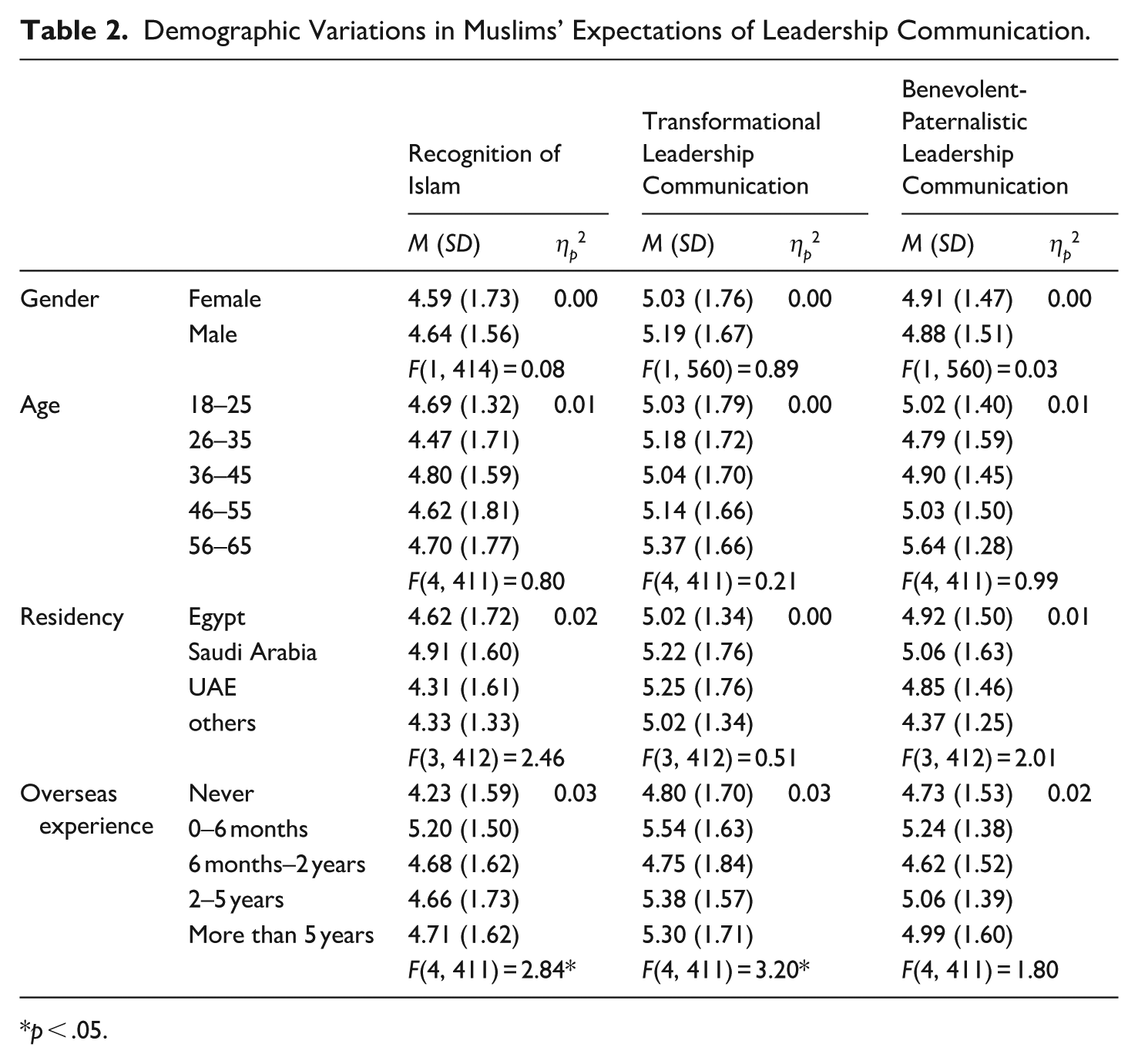
p < .05.
Muslims’ Preference for Leadership Communication Channels
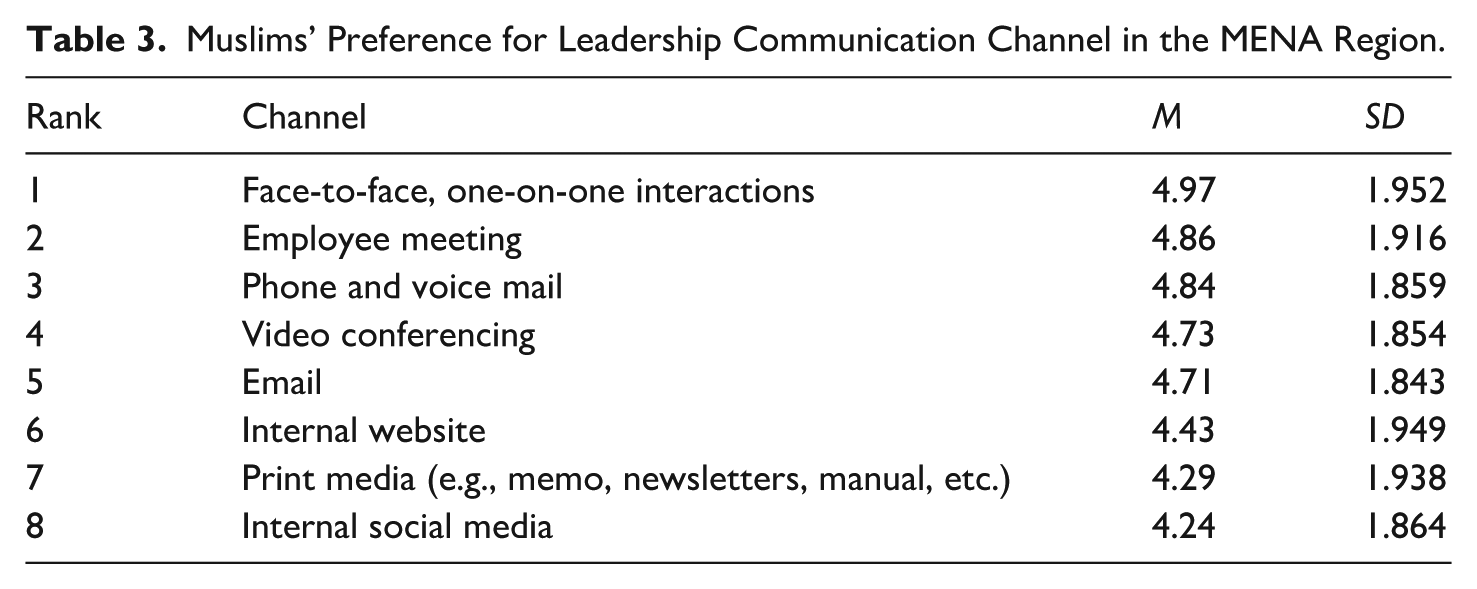
Our Muslim participants preferred face-to-face interactions for communication with their leaders (Table 3), followed by employee meetings, phone calls, and voicemails. The least favored channels were internal social media and print media. To illustrate the influence of demographics and overseas experience, MANOVAs were performed. Results indicated that participants in this study residing in Egypt showed the lowest expectations for internal social media use as leadership communication channels (M = 3.81, SD = 1.77). Regarding gender, females showed higher preferences for phone calls and voicemails compared to males (Mfemale[SD] = 5.07[1.85]; Mmale[SD] = 4.64[1.85]). Additionally, Muslim participants without overseas experience showed the least interest in employee meetings (M = 4.45, SD = 1.96).
Muslims’ Preference for Leadership Communication Channel in the MENA Region.
Discussion
Adopting a glocal approach, this study identifies three core dimensions of glocal leadership communication shared among highly educated Muslim participants across the MENA region: (1) benevolent-paternalistic leadership communication, (2) recognition of Islam, and (3) transformational leadership communication. Unlike existing literature, which primarily focuses either purely on Islamic leadership principles or on global leadership communication types generalized across countries, this study integrates both perspectives to investigate glocal leadership communication in the MENA region.
This study found that the Muslim participants placed the greatest importance on benevolent-paternalistic leadership communication in MNCs. Specifically, several key aspects of paternalistic leadership communication were included: building personal relationships with employees beyond the workplace through communication, balancing strict management with supportive guidance in communication, valuing loyalty and respect, communicating honestly and communicating for mutual betterment. Additionally, our findings indicate that charismatic and servant leadership communication did not emerge as independent dimensions; however, items from these two appear to be embedded within benevolent-paternalistic leadership communication. Muslim participants expect leaders in MNCs to communicate in ways that show concern for employees’ interests, inspire enthusiasm for their work, and share information openly during communication. This distinguishes the dimension from traditional paternalistic leadership communication, which typically emphasizes hierarchy and authority (Aycan, 2006). Rather than valuing dominance, Muslim participants in this study emphasize leaders’ caring and supportive roles in MNCs, understanding leadership communication not as authoritarian but as a morally guided process grounded in consultation, support, and encouragement (Ahmad & Ogunsola, 2011; Ali, 2009). As such, benevolent-paternalistic leadership communication represents a culturally attuned yet globally resonant dimension that integrates globally generalized leadership communication types with Islamic principles of care, consultation, and moral responsibility.
Findings indicate that in MNC contexts, where leaders and employees may not share the same cultural or religious background, Muslim participants in our study expect non-Muslim leaders’ visible, communicative recognition and respect for Islamic values and norms. Unlike Islamic leadership principles that assume leaders personally and spiritually adhere to Islamic teachings (Ali, 2009; Zaim et al., 2024), recognition of Islam captures employees’ modest and attainable expectations toward communication; that is, non-Muslim leaders in MNCs demonstrate sensitivity, awareness, and respect toward Islamic beliefs and practices. This dimension is enacted through active communication behaviors such as showing awareness of religious norms, acknowledging the significance of Islamic practices, and communicating in ways that respect guidance from the Qur’an and Sunnah in workplace interactions.
Another significant finding is that the Muslim participants expect leaders to communicate in a transformational manner, demonstrating excellence, continuous self-improvement, and care to inspire followers toward collective success in MNCs. This transformational leadership communication aligns with Islamic values of wisdom (hikmah) and kindness (ihsan), which emphasize doing good and striving for excellence (Zaim et al., 2024). While wisdom (hikmah) and kindness (ihsan) were reflected in transformational communication, justice (adl) was not incorporated in this dimension. Ali (2009) has argued that not all Islamic leadership principles must be equally emphasized, as contextual factors may highlight the importance of some principles while diminishing the relevance of others. Within MNC contexts, transformational leadership communication, characterized by creativity, vision, empowerment, and relational warmth, may prioritize wisdom and kindness over justice, as wisdom guides visionary insight and kindness fosters emotional connection. These two qualities are more directly embody the inspirational and relational nature of transformational communication than justice does.
Drawing on our findings, we further theorize glocal leadership communication in the MENA region as a communicative process through which leaders convey benevolent-paternalistic care and moral responsibility, demonstrate explicit recognition of Islamic beliefs, and articulate vision and inspiration in a transformational manner that embodies Islamic values such as wisdom (hikmah) and kindness (ihsan). Together, these dimensions enable leadership communication to remain both globally coherent and culturally resonant for Muslims in the MENA region.
In terms of preferred communication channels among Muslim participants in MNCs, face-to-face communication remains the most valued approach, which aligns with existing literature. Prior research has emphasized that direct interpersonal interactions form the foundation of Islamic culture, with face-to-face communication considered essential for fostering personal relationships and enhancing trust in leaders (Branine & Pollard, 2010). Additionally, interpersonal communication channels are generally favored over text-based mediums such as email, internal websites, print media, and internal social media. This preference reflects the emphasis on interpersonal relationships as the foundation of business and social interactions in Muslim societies (de Waal & Frijns, 2016). Another possible explanation for this preference is that, given the high expectations for openness in communication, interpersonal channels may enhance the perceived accessibility and transparency of leadership communication (Men et al., 2022).
Given that MNCs operate in cross-cultural contexts, we considered the potential influence of overseas experience on our Muslim participants’ expectations of leadership communication. Surprisingly, Muslims with no overseas experience exhibit notably different expectations compared to those with only a brief period of exposure (0–6 months). Specifically, Muslim participants without overseas experience show the least expectation for leaders to show recognition of religious beliefs. When immersed in environments with others who share similar religious backgrounds, they may view religious practices as an inherent part of daily life, requiring no explicit emphasis. In contrast, Muslim participants with relatively short overseas experience tend to have the strongest desire for leaders, regardless of their nationality, to demonstrate respect for Allah. This may be due to the culture shock they experience, where the loss of familiar cultural and religious symbols leads to feelings of anxiety when confronted with cultural differences (Oberg, 1960). For Muslim participants with over 2 years of overseas experience, expectations for leaders to show recognition of religious beliefs, as well as show transformational and benevolent-paternalistic leadership communication, are moderate. These individuals may have adapted to their new environments, overcoming the negative feelings brought by culture shock (Oberg, 1960).
Theoretical and Practical Implications
This study offers both theoretical and practical implications for leadership communication in the MENA region. First, this study contributes to the leadership communication literature by proposing and empirically examining key dimensions of Muslims’ shared expectations for leadership communication through a glocal lens, an area that remains underexplored in communication scholarship. Rather than treating globally generalized leadership communication types—such as transformational, charismatic, and servant leadership communication—as universally applicable, this study integrates them with locally embedded values such as wisdom (hikmah), kindness (ihsan), and consultation (shura), thereby enriching leadership communication literature with culturally and religiously grounded perspectives from the MENA region. It also extends Islamic leadership models, which are traditionally oriented toward Muslim leaders, by demonstrating how these principles can be enacted in ways that fit the cross-cultural and globally integrated nature of MNCs, such as through the recognition of and respect for Islamic values during communication.
Second, through the proposed measurements and constructs, this study offers a methodological foundation for future research examining leadership communication in the MENA region. As an exploratory scale development effort, the measures provide a framework for assessing leaders’ communication practices. As such, this also provides a foundation for addressing the call for more empirical research on leadership communication in the MENA region (Alkathiri & Alharbi, 2024; Dhanesh & Duthler, 2019).
Third, for leaders of MNCs who may come from different cultural backgrounds, understanding the expectations of Muslim employees regarding leadership communication can provide valuable insights into how to engage effectively with local employees. Our study emphasizes that MNC leaders, regardless of their country of origin and religious backgrounds, should show recognition of Islam in their communication. This approach is crucial for aligning with local expectations and fostering recognition from Muslims. Notably, MNC leaders should recognize that employees’ expectations of leadership communication vary based on their overseas experience and adapt their communication accordingly. In particular, employees with limited overseas exposure may require more explicit recognition of religious values to ease cultural shock and reduce uncertainty. Furthermore, this study identifies key characteristics of the leadership communication expected by Muslims, suggesting that leaders should adopt a transformational and benevolent-paternalistic approach when communicating with Muslims. It highlights the responsibility of leaders to show excellence, inspiration, and honesty during communication, while acting as benevolent paternal figures who demonstrate care in both professional and personal contexts. In terms of communication channels, MNC leaders should prioritize interpersonal communication, particularly face-to-face interactions.
Limitations and Future Research
Our study has several limitations. First, most of the participants were from Egypt, Saudi Arabia, and the UAE. Although these countries host a significant number of MNCs (EY, 2024; Investment Monitor, 2022), the sample may not be representative, and therefore, the results should be interpreted with caution. Second, while the measurement instrument was developed and tested within MNC contexts in the MENA region, future research could validate the scale across diverse cultural and linguistic settings to assess its generalizability. Third, although English serves as the primary language of professional communication in MNCs, subtle differences in interpretation cannot be entirely ruled out among participants whose first language is Arabic. While such differences are also an everyday feature of MNC workplace communication, they may nonetheless introduce some nuanced variation in survey responses. Future research is encouraged to examine scale validity in Arabic. Additionally, over 90% of participants held a bachelor’s degree or higher, which is consistent with the high levels of education and English proficiency typically required in MNC settings. However, this may also indicate self-selection bias, as more highly educated employees may be more inclined to participate in our survey. This potentially limits the generalizability of the findings. Given the limited research on leadership communication in this context, this study aims to offer a starting point by identifying leadership communication expectations among Muslim employees in MNCs across the MENA region. However, countries within the region differ in their political, economic, and cultural environments. Future research could build on this study by adopting country-level or comparative designs to examine how local contexts influence leadership communication expectations.
Footnotes
Appendix 1
Measured Items and Descriptive Statistics.
| Label | Measures | M | SD |
|---|---|---|---|
|
|
|||
|
|
|
|
|
| I expect my leader, even if from a different country, to communicate with the team in a manner reflecting Islamic moral values, such as honesty and integrity. | 4.95 | 1.93 | |
|
|
|
|
|
|
|
|
|
|
| I expect my leader, even if from a different country, to consistently avoid communicative behaviors that go against Islamic ethics. | 4.94 | 1.95 | |
| I expect my leader, even if from a different country, to communicate with all team members equally, without bias or discrimination in the workplace communication. | 5.18 | 2.01 | |
| I expect my leader, even if from a different country, to communicate decisions about benefits and rewards in a fair and transparent manner. | 5.25 | 2.00 | |
| I expect my leader, even if from a different country, to avoid showing favoritism during communication. | 5.27 | 1.94 | |
| I expect my leader, even if from a different country, to be fair when communicating with team members. | 5.35 | 1.98 | |
| I expect my leader, even if from a different country, to be kind during communication. | 4.99 | 1.97 | |
|
|
|
|
|
| I expect my leader, even if from a different country, to communicate with compassion and care toward team members. | 5.06 | 1.95 | |
| I expect my leader, even if from a different country, to communicate the importance of pursuing excellence in the team’s work. | 5.02 | 1.97 | |
| I expect my leader, even if from a different country, to communicate in ways that encourage the team to go beyond basic requirements. | 4.92 | 1.93 | |
|
|
|
|
|
| I expect my leader, even if from a different country, to demonstrate knowledge and expertise through communication. | 5.03 | 2.01 | |
| I expect my leader, even if from a different country, to communicate thoughtfully and wisely when explaining decisions. | 5.31 | 1.96 | |
|
|
|
|
|
|
|
|||
| I expect my leader to articulate our team’s vision clearly. | 5.06 | 1.94 | |
| I expect my leader to communicate encouragement and support that motivates team members to do their best at work. | 5.4 | 1.93 | |
| I expect my leader to communicate in ways that help team members think creatively and solve problems. | 5.22 | 2.00 | |
|
|
|
|
|
| I expect my leader to communicate in ways that set a positive example for team members. | 5.17 | 2.02 | |
| I expect my leader to communicate in ways that make team members feel proud of their work. | 5.26 | 1.96 | |
| I expect my leader to communicate with team members like a senior family member. | 4.97 | 1.86 | |
| I expect my leader to communicate in ways that foster a family-like atmosphere in the workplace. | 4.96 | 1.93 | |
| I expect my leader to communicate support for team members when facing outside criticism. | 5.08 | 1.90 | |
|
|
|
|
|
|
|
|
|
|
| I expect my leader to listen attentively when team members communicate personal concerns. | 4.64 | 1.91 | |
|
|
|
|
|
|
|
|
|
|
| I expect my leader to communicate clear guidance on work-related issues. | 5.19 | 1.91 | |
| I expect my leader to express trust in team members to handle difficult situations. | 4.99 | 1.85 | |
|
|
|
|
|
| I expect my leader to be timely in providing information to his/her team members. | 5.09 | 1.93 | |
|
|
|
|
|
| I expect my leader to be transparent about the purpose of communication. | 4.91 | 1.99 | |
|
|
|
|
|
Note. The items in bold were retained in the final scale.
Appendix 2
The EFA Results.
| Items | 1 | 2 | 3 |
|---|---|---|---|
| I expect my leader to communicate with teams in ways that make them excited about their work. | 0.67 | ||
| I expect my leader to communicate with team members in ways that show concern for their best interests. | 0.69 | ||
| I expect my leader to take the time to know team members personally through communication. | 0.75 | ||
| I expect my leader to value loyalty and respect when communicating with team members. | 0.74 | ||
| I expect my leader to communicate with team members in a way that is strict but supportive. | 0.71 | ||
| I expect my leader to share information openly with team members. | 0.65 | ||
| I expect my leader to communicate honestly with team members. | 0.75 | ||
| I expect my leader to communicate with team members in ways that promote mutual betterment. | 0.73 | ||
| I expect my leader, even if from a different country, to care about the needs of team members during communication. | 0.62 | ||
| I expect my leader, even if from a different country, to communicate in ways that encourage the team to go beyond basic requirements. | 0.52 | ||
| I expect my leader, even if from a different country, to communicate in ways that help the team improve and perfect its actions. | 0.74 | ||
| I expect my leader, even if from a different country, to communicate thoughtfully and wisely when explaining decisions. | 0.55 | ||
| I expect my leader, even if from a different country, to use the right knowledge at the right time in their communication. | 0.88 | ||
| I expect my leader, even if from a different country, to demonstrate respect for the teachings of Allah and His Prophet in their communication. | 0.74 | ||
| I expect my leader, even if from a different country, to communicate with the team in a manner reflecting Islamic moral values, such as honesty and integrity. | 0.58 | ||
| I expect my leader, even if from a different country, to show awareness of the spiritual importance of faith in their communication with team members. | 0.76 | ||
| I expect my leader, even if from a different country, to show consideration for Islamic religious practices during communication. | 0.64 | ||
| Eigenvalues | 8.02 | 1.42 | 1.28 |
| Variance | 47.19 | 8.34 | 7.53 |
| Cronbach’s alpha | .91 | .85 | .81 |

Consent to Participate
Participants were properly informed following the informed consent procedure. They were reassured that information collected from the surveys would only be used for research purposes and no personal identifying information would be revealed. Consent was required prior to the survey.
Consent for Publication
Not applicable.
Funding
The authors disclosed receipt of the following financial support for the research, authorship, and/or publication of this article: This work was supported by the Key Program of the National Social Science Foundation of China [Grant No. 24FXWA001].
Declaration of Conflicting Interests
The authors declared no potential conflicts of interest with respect to the research, authorship, and/or publication of this article.
Data Availability Statement
The datasets generated during and/or analyzed during the current study are available from the corresponding author on request.