







Abstract
Artificial intelligence is increasingly embedded in organizational communication processes, enabling new forms of interaction in which human communicators and intelligent systems collaboratively produce and interpret messages. Despite growing scholarly interest, research on artificial intelligence in business communication remains fragmented across disciplines and theoretical perspectives. This study maps and synthesizes the emerging research landscape of AI-mediated organizational communication using a bibliometric approach. Bibliographic data were collected from the Scopus database using a structured search of titles, abstracts, and keywords related to organizational communication, business communication, and artificial intelligence. After applying document-type, language, and manual relevance screening procedures, the final dataset comprised 47 peer-reviewed journal articles. The analysis was conducted using the Bibliometrix R package and VOSviewer to examine publication trends, intellectual structure, and thematic development. In addition to the field-level analysis, the study conducted a journal-focused bibliometric assessment of the International Journal of Business Communication to examine how a leading discipline-defining outlet develops AI-related communication scholarship. The findings identify four major thematic clusters: AI applications in organizational communication systems, generative AI–assisted communication practices, AI-mediated interaction dynamics, and human competencies and governance in AI-enabled communication environments. Based on these results, the study proposes a conceptual framework explaining how AI communication affordances are actualized through human–AI interaction practices in organizations. The findings provide an integrative overview of the field and highlight future research directions for advancing theory and practice in AI-mediated business communication.
Keywords
Introduction
Artificial intelligence is increasingly embedded within digital communication environments, where computational agents modify, augment, or generate messages on behalf of human communicators to achieve interpersonal goals (Hancock et al., 2020). As a result, communication processes are shifting from purely human interaction toward hybrid human–machine systems in which algorithms actively shape message production and interpretation. Recent work in human–machine communication further suggests that machines are no longer merely channels for information exchange but can function as communicative actors that influence how messages are produced and evaluated (Lee, 2024). Within organizations, AI technologies such as machine learning, natural language processing, and conversational agents increasingly support or automate communicative activities, reshaping both internal workflows and stakeholder interactions. Existing research alternately conceptualizes artificial intelligence as a tool that augments communication through technologies such as chatbots (Adam et al., 2021; Jiang et al., 2022; Phan & Bui, 2025), and automated writing assistants (Lookadoo et al., 2025), or as a communicative actor capable of generating news content (Hartmann et al., 2025), responding to users through conversational agents (Adam et al., 2021; Blümel et al., 2024), and producing algorithmically generated messages across digital platforms (Voorveld et al., 2024). These systems can mediate, facilitate, and even generate communication, thereby redefining the distribution of communicative roles between humans and machines. Importantly, AI in business communication is often framed as augmented intelligence, enhancing human capabilities while preserving the central role of human judgment, emotional interpretation, and relational decision making (Iaia et al., 2024).
However, the growing reliance on AI-mediated communication systems creates complex organizational challenges, as firms must simultaneously ensure transparency, fairness, and accountability in algorithmic decision making while mitigating risks associated with misinformation, biased outputs, and the evolving distribution of communicative authority between humans and intelligent systems (Alhusban et al., 2025; Maiti et al., 2025). The purpose of this study is to map and synthesize the evolving body of research on artificial intelligence in organizational and business communication. Specifically, this study aims to identify the intellectual structure of the field, examine the thematic evolution of research on AI-mediated communication, and explore how scholarship is shifting from traditional human-centered communication perspectives toward emerging human–AI communication frameworks.
Building on this objective, the present study contributes to the emerging literature on AI-mediated communication in several ways. First, by mapping the intellectual structure of the field, the study clarifies how existing research conceptualizes the role of artificial intelligence in organizational communication and identifies the dominant theoretical perspectives shaping this area of inquiry. Second, by examining the thematic evolution of the literature, the study highlights how scholarly attention is shifting from traditional human-centered communication frameworks toward hybrid human–AI communication systems in which algorithms increasingly participate in message production and interpretation. Finally, the findings provide a foundation for future research by identifying emerging research streams, theoretical gaps, and opportunities for advancing communication theory in the context of intelligent technologies. In doing so, the study offers insights that can guide scholars in developing more nuanced theoretical frameworks for understanding how artificial intelligence reshapes communication processes within organizations.
Specifically, the study argues that AI is shifting business communication from human-centered message exchange toward hybrid communicative systems in which human judgment, algorithmic agency, and organizational accountability become jointly configured. This argument organizes the manuscript’s theoretical contribution and connects the bibliometric evidence to its conceptual implications. The study also clarifies the terminological landscape that shapes this emerging field. The term AI-mediated communication refers broadly to exchanges in which AI systems modify, generate, or interpret messages on behalf of human communicators (Hancock et al., 2020). Human–AI communication emphasizes the relational and interactional dimensions of these exchanges, treating AI systems as communicative participants rather than passive tools (Lee, 2024). AI-assisted business communication focuses on practical applications within professional organizational contexts, such as writing assistance, automated reporting, and customer communication. AI-mediated organizational communication captures the structural and governance dimensions of AI integration within organizational communication systems. These distinctions are not mutually exclusive; they reflect different analytical emphases that scholars bring to the same technological phenomenon. This study employed AI-mediated organizational communication as its primary frame because it encompasses both the technological mediation process and the organizational context in which AI affordances are actualized in practice.
This study draws on the affordance–actualization perspective as the interpretive lens. An affordance refers to an action possibility offered by a technology in relation to a goal-oriented user, while actualization captures the situated practices through which users realize that possibility within a specific organizational context (Strong et al., 2014). Affordances are therefore neither properties of technology alone nor of users alone; they emerge relationally and require human judgment and communicative practice to be enacted (H. Zhao et al., 2025). This lens has been increasingly utilized in recent AI-communication research: ChatGPT-mediated service communication (Li & Lee, 2025), predictive analytics actualization in organizational settings (Godé & Brion, 2024), and creational and conversational affordances of generative AI in knowledge work (Ramaul et al., 2024). Adopting this lens from the outset allows the bibliometric clusters to be read as a structured account of how the field constructs AI’s action possibilities, how practitioners actualize them, and what governance tensions arise when human judgment and algorithmic agency become jointly configured.
Data Collection and Sample Selection
This study applied a bibliometric design to map the intellectual structure and thematic evolution of research on AI-mediated organizational and business communication. After finalizing the sample through the screening procedure described above, bibliographic records were exported from Scopus in formats compatible with bibliometric software. The analysis was conducted using the Bibliometrix R package and its Biblioshiny interface (Aria & Cuccurullo, 2017), which provides an established workflow for descriptive bibliometric analysis and science mapping, including annual production trends, influential sources and documents, collaboration patterns, and thematic development based on keyword and citation information. In addition, VOSviewer was used to generate network visualizations for key relational structures in the dataset.
Scopus was selected as the primary data source because of its extensive coverage of peer reviewed journals across business, management, and communication disciplines, as well as its compatibility with bibliometric analysis tools. Recent bibliometric investigations have similarly relied on Scopus to examine the intellectual evolution of specific journals and research domains, highlighting its reliability and comprehensive indexing for citation-based analyses (Phan, 2025; Shaheen, 2025; Singh et al., 2025). The search was conducted in the title, abstract, and keyword fields using the following query: (“organizational communication” OR “business communication” OR “management communication”) AND (“artificial intelligence” OR “generative AI” OR “human-machine communication” OR “algorithmic communication”). The initial search yielded 221 documents. To ensure the quality and conceptual relevance of the dataset, a multi stage screening procedure was applied. First, the results were limited to peer reviewed journal articles, excluding conference papers, book chapters, and other document types. This step reduced the dataset to 108 publications. Second, the sample was restricted to English language articles to maintain consistency in textual and keyword analysis, resulting in 103 publications.
The Scopus search was conducted on March 15, 2025, and covered publications from 2000 to March 2025. The search was verified before final submission to confirm that no major relevant articles published in the intervening period had been excluded. Restricting the search period to 2000 onward was appropriate because AI-mediated organizational communication research emerged primarily after 2010, and earlier records were unlikely to meet the substantive screening criteria.
Although alternative databases such as Web of Science, Communication and Mass Media Complete, and ABI/INFORM offer complementary coverage, studies comparing Scopus and Web of Science for communication and management disciplines report substantial overlap in indexed journals (Singh et al., 2025). The decision to rely on Scopus alone is acknowledged as a limitation of the study. A cross-database design would broaden coverage but would introduce duplicate records and inconsistencies in metadata formatting that complicate systematic bibliometric analysis.
The search string was designed to capture research that explicitly frames AI within business or organizational communication contexts. The authors acknowledge that terms such as corporate communication, professional communication, strategic communication, workplace communication, conversational agents, large language models, ChatGPT, automated writing, algorithmic management, and natural language processing were not included in the primary search string. This choice was deliberate: the study aimed to map research that engages communication constructs in organizational contexts rather than AI-adjacent technical work that uses communication-related vocabulary without substantive engagement with communication theory. The exclusion of these broader terms is acknowledged as a boundary condition of the study.
Intercoder agreement was assessed using percentage agreement across all 103 publications reviewed in the manual screening stage. The two independent researchers agreed on 94 of 103 articles (91.3%), which exceeded the conventional 80% threshold for acceptable agreement in systematic review procedures. The nine discrepant cases were resolved through structured discussion, with each reviewer providing a written rationale before consensus was reached.
The bibliometric network was generated using VOSviewer version 1.6.20. For the keyword co-occurrence analysis, a minimum of two occurrences per keyword was set as the threshold for inclusion. Association strength was used as the normalization method, and the modularity-based clustering algorithm embedded in VOSviewer was applied to identify thematic clusters. Prior to network construction, keyword variants were manually merged (e.g., artificial intelligence and AI; generative AI and generative artificial intelligence) to reduce redundancy and improve network coherence.
A final manual screening was conducted to ensure substantive alignment with the research objectives. Two independent researchers reviewed the titles, abstracts, and author provided keywords of all remaining articles. Studies were excluded if they addressed artificial intelligence primarily from a technical, engineering, or computational perspective without explicit engagement with communication constructs within organizational contexts. Particular attention was given to whether the articles examined issues such as trust, leadership communication, professional identity, internal communication, credibility, or related communicative processes in business settings. Discrepancies between the two reviewers were resolved through discussion until consensus was achieved. This procedure resulted in a final sample of 47 articles.
The co-occurrence network of authors’ keywords highlighted the main research themes and their interconnections within the emerging field of artificial intelligence in organizational and business communication. The network, created using VOSviewer, is presented in Figure 1. The analysis identified four thematic clusters, reflecting the primary research streams that currently shape scholarship on AI-mediated communication.
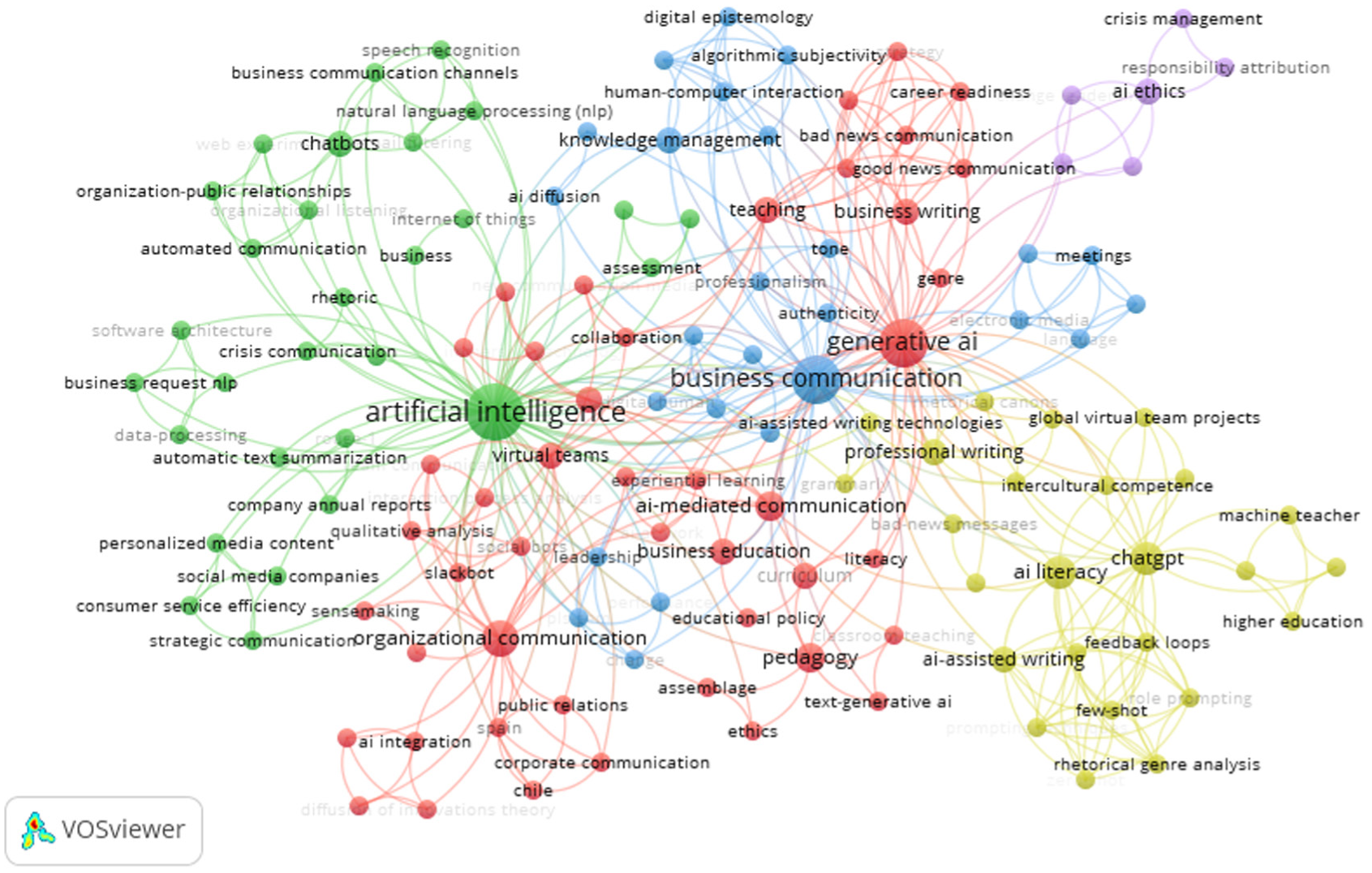
Thematic clusters in AI-mediated business communication research.
Cluster 1 (Green): AI Applications in Organizational Communication Systems
The first cluster captures research examining how artificial intelligence technologies support communication processes within organizations. This cluster includes keywords such as artificial intelligence, chatbots, natural language processing, and automated communication. Research in this stream generally conceptualizes AI as a technological infrastructure that enhances communication efficiency, information processing, and stakeholder interaction within organizational environments.
Several studies in the dataset investigate how AI technologies are integrated into organizational communication systems and digital communication workflows (Getchell et al., 2022; Naidoo & Dulek, 2022). In particular, conversational agents and chatbot systems have been widely examined as tools that enable organizations to automate routine communication tasks and provide real-time responses to stakeholders (Littell & Peterson, 2025). These technologies are increasingly used in customer communication, internal information management, and crisis communication contexts, where rapid and scalable communication is essential (Esch et al., 2021; Piller, 2025). Other research highlights the role of AI in supporting knowledge management and decision-making processes by analyzing large volumes of textual data and facilitating information exchange across organizational networks (H. Zhao et al., 2025).
Beyond efficiency gains, studies within this cluster emphasize the strategic implications of integrating AI into communication infrastructures. AI-enabled communication systems allow organizations to effectively manage complex communication environments characterized by high information volumes and multiple digital platforms (Florea & Croitoru, 2025). However, scholars also highlight potential challenges associated with AI systems adoption, including technological integration issues, organizational resistance, and concerns related to transparency and trust in automated communication processes (Kalogiannidis et al., 2024). Overall, this cluster reflects the dominant perspective of AI as a communication-support technology that augments human communication capabilities and enables new forms of automated organizational communication.
Cluster 2 (Red): Generative AI and AI-Assisted Business Communication Practices
The second cluster captures research examining how generative artificial intelligence (Gen AI) technologies are increasingly integrated into professional communication activities and organizational communication workflows. Keywords associated with this cluster include generative AI, business communication, AI-mediated communication, AI-assisted writing, and professional communication. Research within this stream focuses on how Gen AI systems support communication tasks such as drafting messages, summarizing information, generating reports, and assisting with content creation in organizational settings.
Several studies explore how generative AI tools function as writing assistants that augment human communicators by improving linguistic clarity, suggesting alternative expressions, and accelerating the writing process (Sharma & Pandey, 2024). Scholars have also examined how these technologies reshape communication workflows within organizations by redistributing communicative tasks between human professionals and algorithmic systems (Wilson et al., 2024). In such hybrid communication environments, generative AI systems increasingly operate as collaborative partners that assist in message formulation and information synthesis (Cruz, 2025).
At a broader level, this line of research reflects a shift in how scholars conceptualize the role of AI, especially Gen AI in business communication. While earlier studies often framed AI primarily as a supporting tool for communication tasks, recent work suggests that Gen AI systems are becoming active participants in communication practices. These technologies influence not only the speed and efficiency of message production but also the tone, structure, and framing of professional communication (Yi et al., 2025; Zufelt, 2025). Hence, scholars increasingly examine the implications of AI-assisted communication for issues such as AI literacy, message authenticity, communicative accountability, and professional identity in digital organizational environments (P. Cardon et al., 2023; Phan, 2024). This cluster, therefore, highlights how Gen AI technologies are reshaping business communication practices by enabling new forms of human–AI collaboration in organizational communication processes.
Cluster 3 (Blue): AI-Mediated Business Communication and Interaction Processes
The third cluster centers on business communication as the primary domain in which artificial intelligence is increasingly integrated into organizational interaction processes. The largest keyword in this cluster is business communication, accompanied by related concepts such as human–computer interaction, knowledge management, authenticity, and meetings. Research in this stream focuses on how AI technologies reshape the interaction dynamics and communicative practices that structure professional communication within organizations.
Several studies examine how AI technologies affect interaction patterns in business communication contexts, particularly when communication is mediated through AI-assisted systems or algorithmically generated messages (Newman & Gopalkrishnan, 2023). In organizational settings, AI-generated messages may influence perceptions of credibility, professionalism, and communicative authority. For example, research has explored how stakeholders respond to AI-assisted communication and how algorithmically generated messages affect perceptions of authenticity and trust (Coman & Cardon, 2026). Other work investigates how AI technologies influence knowledge-sharing processes and collaborative communication within organizations, highlighting the changing dynamics of human–machine interaction in professional environments (Iaia et al., 2024).
This stream of research also reflects broader theoretical developments in communication studies. Scholars increasingly draw on frameworks from human–machine communication and human–computer interaction to examine how communicative roles are redistributed between humans and intelligent systems (Xu et al., 2023). In this perspective, AI systems are not merely technological tools but communicative and relational agents that participate in interaction processes and shape how messages are produced, interpreted, and evaluated (Hohenstein et al., 2023; Zhou et al., 2026). Hence, this cluster contributes to the development of theoretical perspectives that explain how human communicators negotiate authority, authenticity, and responsibility in AI-mediated communication environments.
Cluster 4 (Yellow/Purple Merged): Human Competencies and Governance in AI-Mediated Communication
The fourth cluster captures research examining how individuals develop the skills, ethical awareness, and evaluative capabilities required to effectively manage communication processes involving AI. Keywords associated with this cluster include AI literacy, ChatGPT, AI-assisted writing, professional writing, AI ethics, responsibility attribution, and higher education. Research from this cluster highlights increasing attention to both the competencies required to collaborate with generative AI technologies and the governance challenges associated with AI-mediated communication in organizational contexts.
Several studies emphasize the importance of AI literacy and human oversight when generative AI tools are used in professional communication tasks. Scholars have examined how AI-assisted writing systems influence professional writing practices and how communicators must evaluate and refine AI-generated content to ensure clarity, credibility, and contextual appropriateness (P. Cardon et al., 2024). Research within this stream also highlights the importance of broader competencies, including intercultural competence, particularly in global communication contexts where AI-generated messages must remain culturally appropriate and aligned with organizational communication norms.
In addition, research within this cluster highlights growing concerns regarding the ethical governance of AI-generated communication, including issues related to transparency, accountability, and responsibility attribution when AI systems participate in message creation (Yi et al., 2025). Scholars also note the increasing role of education and professional training in developing the competencies required for effective human–AI collaboration in communication contexts (DeVasto & Palmer, 2024). Overall, this cluster highlights the importance of maintaining human judgment and ethical oversight in AI-mediated communication environments.
A note on the cluster structure is warranted. The fourth cluster appeared in the VOSviewer map as two closely proximate color groups (yellow and purple) that shared substantial keyword overlap and conceptual coherence. Both color groups centered on human agency, competency development, and governance concerns in AI-mediated communication contexts. The thematic similarity between the two color subsets justified their analytical consolidation into a single cluster for interpretive purposes. This decision reflects the study’s focus on substantive thematic meaning rather than visual color demarcation in the network map, and is consistent with common practice in bibliometric cluster interpretation (Aria & Cuccurullo, 2017).
Communication Discipline Core Sample
This study also constructed a journal focused subsample drawn exclusively from the International Journal of Business Communication (IJBC). The same Scopus search string and screening procedures described above were applied, with the additional restriction that records must be published in IJBC. After applying the article and English language filters and conducting the same two researcher manual screening of titles, abstracts, and author keywords, the final IJBC subsample comprised 26 articles. The 26 IJBC articles represented a subset of the 47 field-level articles; the IJBC-published articles within the final validated sample formed the basis for the journal-level analysis, allowing direct comparison between field-level trends and journal-specific patterns within the same screened dataset. Focusing on a single journal serves two purposes.
First, journal level analysis enables a more precise assessment of how a leading discipline defining outlet develops and positions an emerging research stream, in this case AI mediated organizational communication, relative to the broader field. Whereas cross journal datasets reveal the overall intellectual structure and thematic evolution of a topic, they can obscure how specific journals selectively curate constructs, theories, and methods. Second, because IJBC is a core journal for business communication scholarship, isolating IJBC allows the study to evaluate whether and how the journal reflects, amplifies, or diverges from field level shifts toward human AI communication and algorithm mediated interaction. This design therefore supports both external mapping of the research domain and an internally relevant account of how AI is being integrated within business communication scholarship as represented by IJBC.
Matsunaga (2025) defined “digital transformation” as leveraging digital technologies to enable business improvements. “Digital transformation” appears as a highly central, moderately developed theme, functioning as a bridge that links AI to broader organizational change and communication strategy conversations. Leadership appears comparatively less integrated in the AI-focused map, echoing IJBC evidence that digitally centered leader–employee communication raises “e-leadership” concerns and that employees evaluate face-to-face communication as higher quality than email or telephone channels (Braun et al., 2019).
A more evaluative reading of the IJBC subsample reveals both areas of disciplinary strength and relative underdevelopment. The journal made substantial contributions to understanding how AI tools affect professional writing practices, meeting communication, and chatbot-mediated customer interaction. These contributions reflect IJBC’s established focus on business communication genres. However, the subsample also indicated relative gaps in AI research related to leadership communication, crisis communication strategy, intercultural and global business communication, and the ethical governance of AI-generated organizational messages. These are areas where IJBC could extend its scholarly influence by bringing its disciplinary expertise in communication processes and organizational contexts to bear on questions that broader AI scholarship has not yet addressed with sufficient attention to communicative specificity. Examining what the journal emphasizes relative to the broader field provides a useful basis for identifying where IJBC can make the most distinctive future contributions to AI-mediated business communication scholarship.
Discussion
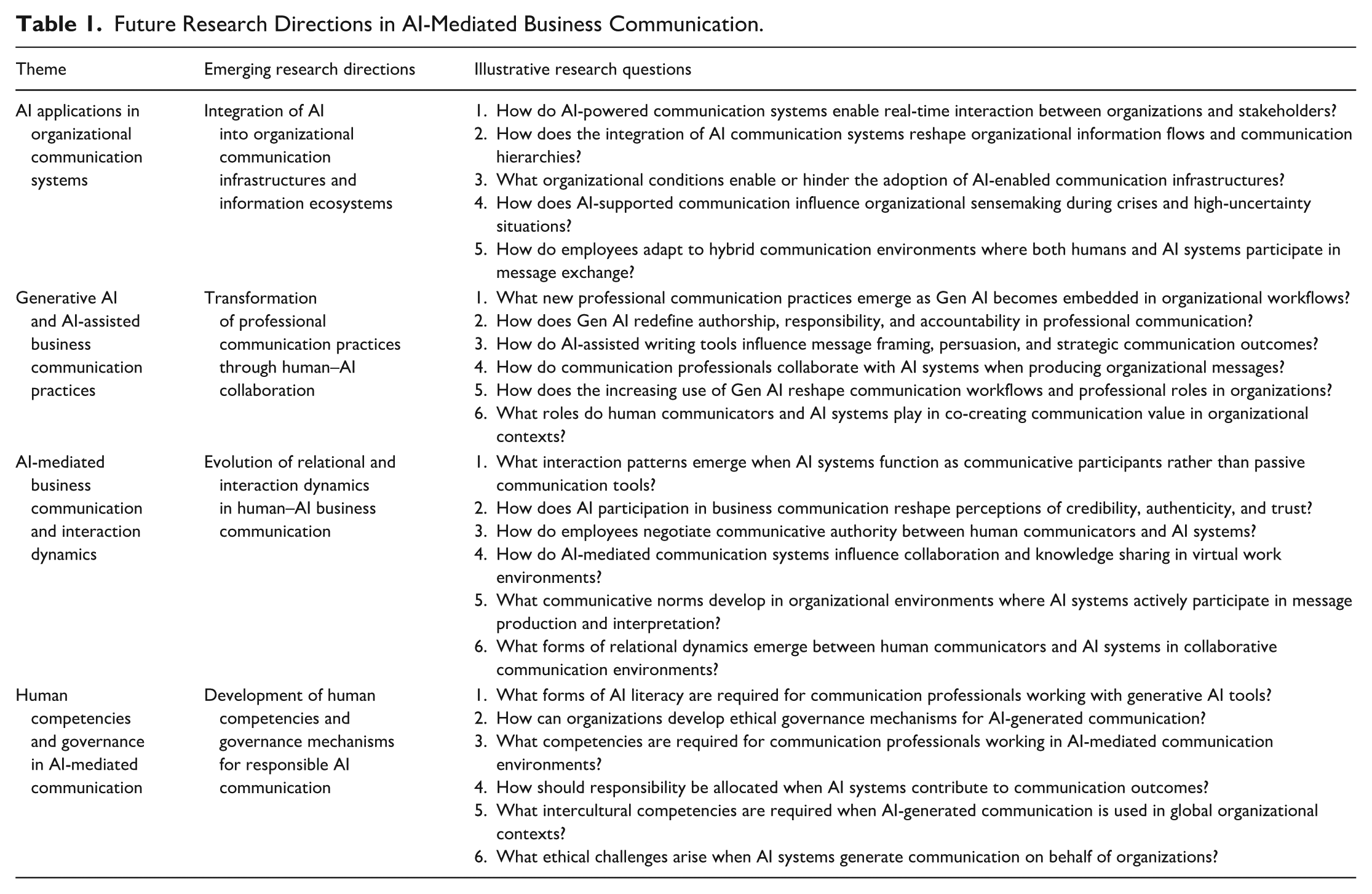
Table 1 outlines potential future research directions emerging from the thematic clusters identified in the bibliometric analysis. Building on the four major research streams identified in the literature, the table presents key themes alongside illustrative research questions that may guide future scholarship on AI-mediated business communication. These research directions highlight several emerging areas of inquiry, including the integration of AI into organizational communication infrastructures, the transformation of professional communication practices through generative AI, the evolving interaction dynamics between human communicators and AI systems, and the development of competencies and governance frameworks necessary for responsible AI-enabled communication. By outlining these directions, Table 1 provides a roadmap for advancing theoretical and empirical research on how artificial intelligence reshapes communication processes, organizational interaction patterns, and professional communication practices in increasingly hybrid human–AI environments.
Future Research Directions in AI-Mediated Business Communication.
Following the affordance–actualization perspective articulated by Strong et al. (2014), this study proposes a process-based conceptual framework that explains how AI reshapes business communication processes. Within this perspective, digital technologies provide specific AI communication affordances, which represent action possibilities enabled by AI capabilities such as conversational agents, natural language processing, and generative AI. These affordances are not realized automatically but become meaningful only when they are actualized through human behaviors and communication practices. In the context of organizational communication, this actualization occurs through AI-assisted communication practices and evolving human–AI interaction dynamics, where communicators collaborate with AI systems in producing, interpreting, and evaluating messages. The interaction between technological affordances and human practices subsequently generates higher-level outcomes in the form of human–AI collaborative communication systems that support more efficient, responsive, and knowledge-driven communication within organizations (see Figure 2).
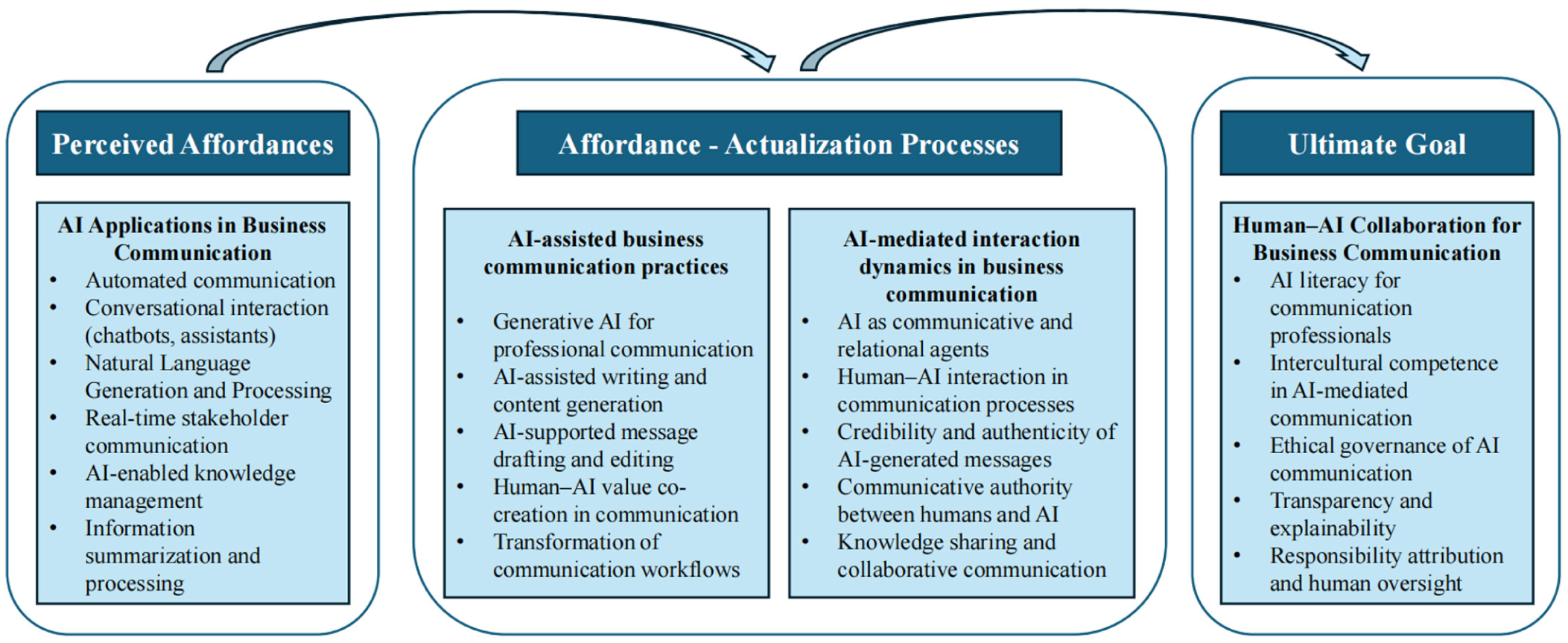
Conceptual framework of AI-mediated business communication research.
The framework does not present human–AI collaboration as a smooth or inevitable outcome. Actualization processes are shaped by organizational norms, professional judgment, governance arrangements, and power relations. Tensions arise at each stage of the process. At the affordance level, AI capabilities may enable efficiency while simultaneously enabling surveillance, reducing communicative privacy, or introducing bias in message generation. At the actualization level, communicators must navigate authorship ambiguity, questions of professional accountability, and misalignment between algorithmically generated messages and relational or cultural communication norms. At the outcomes level, human–AI collaborative communication systems may enhance organizational responsiveness while also creating accountability gaps, redistributing communicative authority away from human professionals, and generating credibility risks associated with AI-generated content. Incorporating these tensions into the framework produces a more realistic and theoretically grounded account of how AI reshapes business communication in organizations.
The two bibliometric analyses provide complementary insights into the development of research on artificial intelligence in business communication. The cross-journal analysis reveals the broader intellectual structure of the field, identifying four primary research streams that focus on AI applications in organizational communication systems, generative AI–assisted communication practices, AI-mediated interaction dynamics, and human competencies and governance in AI-enabled communication environments. In contrast, the journal-focused analysis of the IJBC highlights how a leading discipline-defining outlet selectively integrates and develops these themes within its own scholarly agenda. While the field-level analysis shows a rapidly diversifying research landscape, the IJBC subsample indicates that AI-related scholarship within the journal remains anchored in foundational concepts such as artificial intelligence, organizational communication, and AI-mediated communication, while gradually expanding into topics related to digital transformation, professional writing, and algorithmic communication practices.
These findings suggest that the field of AI-mediated business communication is simultaneously undergoing expansion and consolidation. At the broader disciplinary level, scholarship is increasingly exploring new theoretical and empirical directions related to human–AI communication systems. At the journal level, however, AI research continues to be embedded within established business communication domains such as workplace writing, meetings, crisis communication, and organizational interaction processes. This dual perspective provides a more nuanced understanding of how artificial intelligence is reshaping business communication research, highlighting both the emergence of new research frontiers and the continued relevance of traditional communication constructs in AI-mediated organizational environments.
Limitations
Several limitations of this study should be acknowledged. First, the analysis relied exclusively on Scopus as the bibliographic data source. While Scopus provides broad and reliable coverage of communication and management journals, it may exclude relevant publications indexed in Web of Science, Communication and Mass Media Complete, ABI/INFORM, or non-indexed specialty outlets. Second, the search was restricted to English-language publications, which limits the representativeness of the findings for AI-mediated communication scholarship published in other languages. Third, the study excluded conference papers, book chapters, and other non-journal document types, which may contain important early-stage or practitioner-oriented research in this rapidly developing field. Fourth, the final sample comprised 47 articles, which is relatively small for a field-level bibliometric analysis. This size reflects the targeted scope of the search and the strict screening criteria but may limit the generalizability of the network clusters and thematic findings. Fifth, bibliometric methods rely on author-assigned keywords and indexed metadata, which may not fully capture the conceptual content of each publication. Keyword cleaning and merging decisions involve analytical judgment that introduces some subjectivity into the network construction process. Sixth, AI-related communication research is developing rapidly. The findings represent the state of the field as indexed in Scopus at the time of the search and may not capture work published or indexed after that date.
Footnotes

Funding
The authors received no financial support for the research, authorship, and/or publication of this article.
Declaration of Conflicting Interests
The authors declared no potential conflicts of interest with respect to the research, authorship, and/or publication of this article.