






Abstract
Constructive voice is critical for organizational effectiveness, yet systematic research on whether and how leaders’ specific communication behaviors consistently motivate subordinates to provide constructive input remains scarce. Drawing on signaling theory, this study examines how leaders’ downward feedback-seeking influences subordinates’ constructive voice via perceived voice impact and investigates the moderating role of symmetrical internal communication. Using multi-wave, multi-source data from China, we find that downward feedback-seeking exhibits a curvilinear relationship with perceived voice impact, which subsequently enhances subordinates’ constructive voice, producing a curvilinear indirect effect. High levels of symmetrical internal communication dampen the adverse effects of excessive feedback-seeking and can even transform this nonlinear relationship into a positive linear one. These findings reveal a dynamic, nonlinear mechanism linking leader communication to subordinate constructive voice and underscore the pivotal role of organizational communication in shaping how subordinates interpret and respond to leadership signals.
Keywords
Introduction
Constructive voice refers to subordinates’ upward communication of ideas, suggestions, or concerns aimed at improving the work unit or organization (Morrison, 2011). As a proactive extra-role behavior, it enables organizations to identify latent problems, refine processes, and enhance overall effectiveness (Farh et al., 2020; Kim et al., 2023; Van Dyne & LePine, 1998). Despite these recognized benefits, subordinates often hesitate to speak up because they are concerned about interpersonal risks, negative evaluations, or contextual pressures (Kim et al., 2023; Morrison, 2014).
To alleviate such hesitation, leaders are often encouraged to actively invite subordinates to share their opinions, thereby encouraging constructive voice (Coutifaris & Grant, 2022; Ma et al., 2020). One common approach is downward feedback-seeking, whereby leaders proactively solicit subordinates’ views regarding their decisions, behaviors, or work practices (Qian et al., 2018; Sherf, Gajendran, et al., 2021). By directly requesting suggestions, leaders signal openness to input and demonstrate that they value subordinates’ perspectives (Coutifaris & Grant, 2022; Sherf, Gajendran, et al., 2021). Such actions can help reduce the psychological barriers to speaking up and make upward communication appear more legitimate.
However, the extent to which this strategy consistently and sustainably encourages constructive voice remains an open question, because subordinates may not always interpret leaders’ feedback-seeking as intended (Carvalho, et al., 2023). In practice, subordinates may question the authenticity of the request, wondering whether leaders are genuinely willing to accept dissenting views or whether their suggestions will meaningfully influence decisions (Ashford et al., 2016; Chun et al., 2018). When such uncertainty emerges, subordinates may choose silence or resort to upward ingratiation rather than offer candid opinions (Mertens et al., 2024). Consequently, understanding when and how leaders’ feedback-seeking effectively promotes constructive voice remains an important yet insufficiently understood issue.
To address this challenge, we draw on signaling theory, which explains how observable behaviors convey information about underlying intentions and shape receivers’ interpretations, thereby influencing their subsequent behavior (Connelly et al., 2011). According to signaling theory, leaders’ feedback-seeking can be viewed as a signal that leaders are open to subordinates’ perspectives and willing to engage with their input. Such signals can shape subordinates’ beliefs regarding whether their suggestions are likely to be valued and acted upon by leaders. One key cognitive mechanism linking such interpretations to voice is subordinates’ perceived voice impact, defined as the belief that expressing suggestions can lead to meaningful change (Morrison, 2014, 2023). When leaders actively seek feedback from subordinates, subordinates are more likely to infer that their opinions are welcomed and capable of influencing decisions. As a result, they develop stronger perceived voice impact, which, in turn, increases their willingness to engage in constructive voice (Detert & Burris, 2007; Hamstra et al., 2024).
Importantly, signaling theory suggests that the interpretation and effectiveness of a signal depend on its observability and perceived cost (Connelly et al., 2011). Generally, more salient and costly signals are perceived as more credible indicators of the sender’s underlying intentions, whereas routine or low-cost behaviors tend to lose informational value (Appels, 2023; Connelly et al., 2011, 2025). This logic is particularly relevant in the context of leaders seeking feedback from subordinates. In hierarchically structured organizations, feedback-seeking typically flows from the bottom up, making occasional or moderate instances of downward feedback-seeking by leaders especially noticeable (Ashford et al., 2003, 2018; Sherf, Gajendran, et al., 2021). Such behaviors are likely to be perceived by subordinates as costly efforts aimed at obtaining genuine opinions, thereby enhancing the credibility of the signal and reinforcing subordinates’ perception that their input can influence decision-making (Ashford et al., 2003; Ashford & Tsui, 1991). However, when feedback-seeking becomes too frequent, its scarcity diminishes, and the perceived cost is no longer salient, which may undermine the signal’s credibility and prompt subordinates to form more negative interpretations of the leader’s motives (Ashford, 1986; Blok et al., 2022; Chun et al., 2018; Pierce & Aguinis, 2013). Consequently, the positive signaling effect of feedback-seeking may weaken as its frequency increases, suggesting a potential non-linear relationship between leaders’ downward feedback-seeking and subordinates’ perceived voice impact.
Furthermore, signaling theory emphasizes that receivers rely on contextual cues to assess a signal’s credibility and meaning (Connelly et al., 2011). Subordinates’ interpretation of leaders’ downward feedback-seeking occurs within a broader communication context rather than in isolation (Men, 2014). In organizations, symmetrical internal communication, characterized by bidirectional, transparent, and responsive information flow, provides critical cues for subordinates to interpret and evaluate leaders’ behaviors (Grunig, 2001, 2013). In such environments, subordinates can observe through multiple channels how leaders solicit, process, and respond to feedback, allowing them to verify the authenticity of requests and recognize the time, effort, and psychological costs involved (Kang & Sung, 2017; Y. Lee, 2022; Y. Lee & Kim, 2021; Men et al., 2020). By maintaining the signal’s credibility, these cues allow leaders to seek feedback frequently without diminishing subordinates’ perceived impact, thereby buffering the potential curvilinear effects of excessive feedback-seeking.
Building on these arguments, this study draws on signaling theory to examine how leader feedback-seeking has a curvilinear effect on subordinates’ perceived voice impact, which in turn affects their constructive voice, with this relationship moderated by symmetrical internal communication (see Figure 1). Theoretically, it contributes in three ways. First, drawing on signaling theory, it demonstrates the curvilinear influence of leader downward feedback-seeking on subordinates’ constructive voice, challenging the conventional assumption that leader feedback-seeking always produces positive outcomes and extending our understanding of leader communication as a signal in hierarchical contexts. Second, by identifying perceived voice impact as a mediating mechanism, the study clarifies why leader signals succeed or fail in eliciting subordinate input, thereby illuminating the cognitive process through which leader communication translates into constructive voice. Third, it highlights symmetrical internal communication as an important boundary condition, showing that the effectiveness of feedback-seeking depends on the broader communication environment that shapes how leader signals are interpreted. Overall, the study offers a more dynamic and context-sensitive explanation of how leader communication fosters constructive voice.
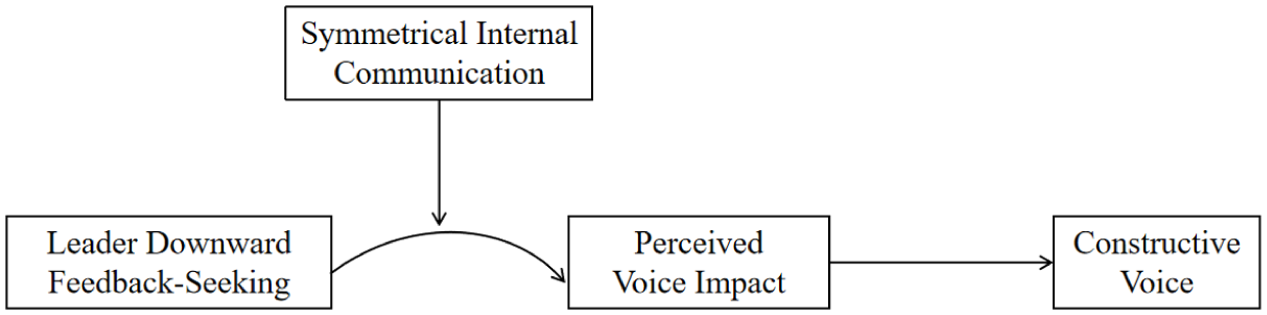
Research model.
Theoretical Framework and Hypothesis Development
Signaling Theory
Signaling theory explains how signals reduce information asymmetry between two parties by enabling one party to convey otherwise unobservable information to the other (Spence, 2002). In leadership contexts, signals often take the form of observable behaviors through which leaders communicate information, thereby reducing information asymmetry and influencing subordinates’ attitudes and behaviors (Spence, 2002; Stock et al., 2023). In this process, leaders act as signal senders whose behaviors provide cues about their intentions and priorities, while subordinates, as signal receivers, interpret these cues and form judgments about leaders’ intentions, which in turn shape the feedback they provide (Banks et al., 2023; Connelly et al., 2011).
Building on this framework, leaders’ downward feedback-seeking behavior can be understood as a highly salient signal directed at subordinates. During leader-subordinate interactions, intrinsic leader characteristics such as openness, humility, and the extent to which leaders value subordinates’ opinions are often not directly observable, resulting in substantial informational asymmetry (Epitropaki et al., 2013). As a highly visible behavior, downward feedback-seeking conveys implicit messages such as “I value your opinion,” “your voice matters,” and “this is an open and psychologically safe communication environment,” thereby reducing information asymmetry (Coutifaris & Grant, 2022; Detert & Burris, 2007; Mertens & Schollaert, 2024). By transmitting these cues, downward feedback-seeking directly shapes subordinates’ perceptions of the value and influence of their input, conceptualized as their sense of voice impact (Sherf, Parke, et al., 2021). Thus, framing leaders’ downward feedback-seeking as a signaling mechanism offers a coherent theoretical explanation of how this behavior enhances subordinates’ perceived voice impact and fosters constructive suggestion behaviors through information transmission.
Leader Downward Feedback-Seeking and Perceived Voice Impact
Signaling theory asserts that the effectiveness of a signal depends on two key characteristics: signal observability and signal cost (Connelly et al., 2011). Observability reflects how easily receivers can perceive the signal, while cost represents the effort and resources required to produce it (Connelly et al., 2011, 2025). Signals that are both highly observable and costly are more credible, as receivers can readily notice the behavior and interpret high cost as evidence of genuine commitment that is difficult to imitate (Connelly et al., 2011).
According to signaling theory, leaders’ downward feedback-seeking naturally functions as a potentially credible signal. It is highly observable because subordinates can readily discern how often leaders solicit input during routine interactions, and its rarity in hierarchical settings further enhances its distinctiveness (Ashford et al., 2016, 2018; Sherf, Gajendran, et al., 2021). Moreover, seeking feedback involves psychological and resource costs, as leaders must expose vulnerability and invest effort to process and respond to suggestions (Ashford et al., 2003; Ashford & Tsui, 1991; Carvalho, Kurian, et al., 2023). These features establish the conditions for downward feedback-seeking to serve as a signal that subordinates perceive as credible, allowing them to infer that their input is likely to be valued and acted upon.
Importantly, signaling theory emphasizes that signal effectiveness is not fixed but varies with transmission frequency (Connelly et al., 2011). We therefore propose that the observability and cost of leaders’ downward feedback-seeking, which determine signal effectiveness, also vary as frequency increases. At low to moderate frequencies, increasing feedback-seeking enhances observability as the behavior transitions from isolated incidents to a discernible pattern (Ashford et al., 2003). Subordinates are more likely to interpret it as reflecting a stable orientation toward their input rather than a one-off act (Coutifaris & Grant, 2022; Detert & Burris, 2007). Simultaneously, repeated feedback-seeking increases cumulative costs, including status threats, psychological strain, and cognitive effort (Ashford, 1986; Carvalho, Kurian, et al., 2023). These sustained costs reinforce credibility because only leaders genuinely committed to valuing subordinates’ input are likely to maintain such behavior. Within this frequency range, the combination of enhanced observability and sustained costs strengthens subordinates’ perception that their input can influence outcomes, thereby strengthening perceived voice impact.
However, when downward feedback-seeking occurs excessively, both signal observability and associated costs may undergo qualitative shifts that reduce its effectiveness. High frequency gradually reduces novelty and distinctiveness, leading subordinates to habituate and pay less attention (Blok et al., 2022; Pierce & Aguinis, 2013). Consequently, signal salience and perceptual distinctiveness decline, weakening observability. Prior research indicates that overly abundant signals lose salience, become redundant, and decrease in informational value (Gintis et al., 2001). Moreover, when frequent feedback-seeking is perceived as routine, subordinates’ sensitivity to the associated costs decreases, including both the status cost of deviating from hierarchical norms and the psychological cost of exposing vulnerability (Ashford, 1986). As these perceived costs wane, the credibility of the signal weakens, leading subordinates to question the leader’s motives and potentially interpret frequent feedback-seeking negatively, such as viewing it as a sign of indecisiveness, avoidance of decision responsibility, or impression management (Chun et al., 2018; Minnikin et al., 2022; Morrison & Bies, 1991). Taken together, the reduction in signal observability and the decline in perceived cost credibility jointly undermine the effectiveness of leaders’ downward feedback-seeking, thereby diminishing subordinates’ perceived voice impact. Accordingly, we propose the following hypothesis:
Leader Downward Feedback-Seeking, Perceived Voice Impact, and Constructive Voice
Signaling theory emphasizes that external signals influence receivers’ behavioral decisions indirectly through cognitive evaluation rather than having direct effects (Connelly et al., 2011, 2025). In line with this perspective, leaders’ downward feedback-seeking does not automatically translate into subordinates’ constructive voice. Instead, its effect operates through subordinates’ perception that speaking up will be noticed and have meaningful consequences, conceptualized as perceived voice impact.
Perceived voice impact reflects subordinates’ beliefs that their suggestions will be noticed by supervisors and that speaking up can lead to meaningful change, thereby shaping the expected utility of speaking up and influencing their willingness to voice concerns and ideas (Hamstra et al., 2024; Morrison, 2014; Sherf, Parke, et al., 2021). When subordinates perceive high voice impact, they are more likely to express constructive ideas and concerns because they believe their supervisors will value and act on their input (Hamstra et al., 2024; Morrison, 2014). Conversely, when perceived voice impact is low, subordinates tend to withhold constructive input because they view speaking up as ineffective (Hamstra et al., 2024; Morrison, 2023; Morrow et al., 2016).
Building on this reasoning, we propose that leaders’ downward feedback-seeking indirectly influences subordinates’ constructive voice through perceived voice impact in a curvilinear manner. Specifically, moderate levels of feedback-seeking enhance perceived voice impact and promote constructive voice, whereas excessive levels weaken such perceptions and discourage voice behavior. Based on this, we hypothesize:
The Moderating Role of Symmetrical Internal Communication
According to signaling theory, the effectiveness of a signal also depends on the broader organizational context that shapes its observation, verification, and interpretation (Connelly et al., 2011; Nair et al., 2022). Leaders’ downward feedback-seeking constitutes a contextual signal influenced by prevailing communication patterns and interaction norms. Symmetrical internal communication reflects the organization’s information exchange patterns and provides subordinates with a framework to interpret and evaluate leaders’ behaviors (Grunig, 2001, 2013; Men et al., 2020; Sun et al., 2023). This model emphasizes reciprocal and authentic interactions, where managers actively listen and respond to subordinates’ opinions, enabling bidirectional information flow and relatively balanced communication power (Grunig, 2001, 2013; E. Lee et al., 2022). The primary goal of such communication is to foster mutual understanding rather than one-sided persuasion or control (Men & Stacks, 2014). Consequently, this context provides a stable interpretive framework that shapes how subordinates perceive leaders’ feedback-seeking behaviors, affecting both their observability and the costs subordinates associate with responding to them (Y. Lee & Kim, 2021; Sun et al., 2023).
In such contexts, feedback-seeking is naturally integrated into broader interactions, so frequent requests are less likely to be perceived as intrusive or irrelevant. Multiple channels, such as surveys and open discussions, enable cross-validation of these behaviors, thereby reinforcing their visibility (Y. Lee, 2022). Symmetrical communication also affects perceived costs because frequent feedback-seeking is interpreted as reflecting an organizational culture that values participatory decision-making rather than as a sign of incompetence or impression management (Men & Stacks, 2014; Men & Sung, 2022). Furthermore, complementary feedback loops allow subordinates to observe the actual effort leaders invest in processing and integrating suggestions, which further enhances signal credibility (Y. Lee, 2022). As a result, even frequent feedback-seeking maintains high observability and perceived legitimacy, mitigating the curvilinear effect on perceived voice impact and potentially delaying or preventing its decline.
By contrast, low-symmetry internal communication environments are characterized by unidirectional, imbalanced information flows, where organizations primarily transmit information and provide few opportunities for feedback (Grunig, 2001; Men et al., 2020). The lack of verification mechanisms makes subordinates’ interpretations fragile and prone to negative perceptions. Without consistent signals across channels, even modest increases in feedback-seeking can reduce both signal distinctiveness and perceived costs associated with leaders’ feedback-seeking (Y. Lee, 2022). Moreover, the opacity of information and limited feedback mechanisms make it more likely that feedback-seeking is interpreted as performative or attributable to incompetence, organizational uncertainty, or unclear strategy (Chun et al., 2018; Morrison & Bies, 1991). As a result, subordinates’ confidence in the potential impact of their input is undermined, causing the curvilinear relationship to peak earlier and decline more sharply. Based on this reasoning, we propose the following hypothesis:
Building on Hypothesis 2, we propose that leader downward feedback-seeking affects subordinates’ constructive voice via perceived voice impact. Hypothesis 3 suggests further that symmetrical internal communication moderates the curvilinear relationship between leader downward feedback-seeking and perceived voice impact. Accordingly, we propose that this indirect effect is contingent on the level of symmetrical internal communication. Specifically, the indirect curvilinear relationship is expected to be weaker under high levels of symmetrical internal communication. Thus, we posit the following moderated mediation hypothesis:
Methods
Sample and Procedure
To improve external validity and the generalizability of the findings, participants were recruited from full-time subordinates across multiple industries in China, including state-owned organizations, private enterprises, and foreign-funded companies. This sampling strategy improved the sample’s diversity and representativeness. Data were collected through the Credamo platform, which has been widely used and validated as a reliable platform for collecting high-quality data in top-tier journals (e.g., Hu et al., 2025; Ren et al., 2023; Song et al., 2026). To mitigate potential common method bias, a multi-wave and multi-source research design was employed. Specifically, data were collected from both subordinates and their immediate supervisors across three time points. Following prior research, a two-week interval was maintained between each wave (e.g., Haynie et al., 2024; Mertens et al., 2024; Pfrombeck et al., 2024). This interval reduces the salience and short-term memory accessibility of prior responses while avoiding an excessively long gap that could introduce additional confounding factors (Fulmer & Ostroff, 2017; Xing et al., 2023).
Before launching the main survey at Time 0, we recruited subordinates who had firsthand experience with leaders’ downward solicitation of feedback, along with their immediate supervisors. To maintain confidentiality and ensure accurate matching, each participant received an anonymous identification code, while both parties reported the last four digits of their mobile phone numbers as an additional reference for matching. This procedure yielded 390 initially matched supervisor-subordinate dyads.
At Time 1, subordinates reported the extent to which their supervisors engaged in downward feedback-seeking, assessed symmetrical internal communication, and provided demographic details, resulting in 321 usable questionnaires. Two weeks later, at Time 2, subordinates evaluated their perceived voice impact, yielding 305 valid responses. After an additional two-week interval, at Time 3, supervisors rated subordinates’ constructive voice, resulting in 300 valid assessments. After excluding participants who failed the attention-check item (e.g., “This item is used to check attention. Please select ‘1’”) and unmatched supervisor-subordinate dyads, the final sample consisted of 288 supervisor-subordinate dyads, yielding an overall response rate of 73.85%. In addition, we conducted a series of t-tests to examine whether sample attrition occurred randomly. The results indicated no significant differences between the retained and excluded respondents in terms of gender (t = −0.77, p = 0.441), age (t = 1.08, p = 0.279), education level (t = −0.52, p = 0.604), and organizational tenure (t = 0.94, p = 0.351).
Among the 288 subordinates in the final sample, 55.6% were male, and the mean age was 31.83 years. Regarding educational attainment, 6.3% had completed high school or less, 11.8% held a junior college qualification, 72.9% possessed a bachelor’s degree, and 9.0% had obtained a master’s degree or higher. Participants reported an average organizational tenure of 6.4 years.
Measures
The measurement instruments employed in this study were adapted from well-established scales with demonstrated reliability and validity in prior research. To ensure conceptual equivalence and linguistic accuracy across linguistic and cultural contexts, all survey items were translated into Chinese using a rigorous translation and back-translation procedure following Brislin’s (1986) recommendations. Moreover, these scales have been previously applied and validated in Chinese samples, supporting their suitability for research in the Chinese cultural context (e.g., Li et al., 2012; Long et al., 2026; Wang & Huang, 2023; Wu et al., 2022; Zhang et al., 2023). Except for demographic variables, all constructs were assessed using a seven-point Likert scale.
Leader downward feedback-seeking. We measured leaders’ downward feedback-seeking behaviors using a three-item scale adapted from Ashford and Tsui (1991). This scale has been widely used and validated across diverse contexts, demonstrating satisfactory content validity and reliability (Sherf, Gajendran, et al., 2021; Sherf & Morrison, 2020). A sample item is “Directly ask me for informal appraisal or feedback on his/her performance.” Responses were rated on a seven-point Likert scale ranging from 1 (never) to 7 (always). Cronbach’s alpha was 0.86.
Symmetrical internal communication. Symmetrical internal communication was measured using six items adapted from Dozier et al. (2013), with reference to Men and Stacks (2014). A sample item is “Most communication between management and other employees in this organization can be said to be two-way communication.” Cronbach’s alpha was 0.83.
Perceived voice impact. Consistent with prior research on voice behavior (Hamstra et al., 2024; Sherf, Parke, et al., 2021), we measured perceived voice impact using a three-item scale originally developed by Spreitzer (1995), which has been widely used in prior research and has demonstrated strong content validity and reliability. A representative item is “My ideas, opinions and suggestions have significant influence on my supervisor and the organization.” Cronbach’s alpha was 0.80.
Constructive voice. Subordinates’ constructive voice was evaluated by their supervisors using a five-item scale developed by Maynes and Podsakoff (2014). A sample item is “This subordinate frequently makes suggestions about how to do things in new or more effective ways at work.” Cronbach’s alpha was 0.84.
Control variables. Consistent with prior research, we controlled for gender, age, education, and organizational tenure, as these demographic characteristics have been associated with voice behavior (Bajaba et al., 2023; Jada & Mukhopadhyay, 2018).
Analytical Strategy
We adopted a staged analytical strategy to systematically examine the proposed model. First, we conducted confirmatory factor analysis to assess the discriminant validity of the key constructs, ensuring that all variables were empirically distinct at the measurement level. Prior to hypothesis testing, we also assessed the potential influence of common method variance. In addition, we reported descriptive statistics, intercorrelations among variables, and multicollinearity diagnostics, providing a solid foundation for subsequent analyses.
We then tested our hypotheses using Mplus 8.3. To examine the curvilinear effect, leader downward feedback-seeking was mean-centered before analysis, and both its linear and quadratic terms were included in the regression model. The presence and shape of the curvilinear relationship were determined by the significance and sign of the quadratic term, supplemented by graphical inspection of the estimated curve and simple slope analyses at different levels of the independent variable.
To test the mediation effect, we employed a bootstrapping approach with 10,000 resamples to construct 95% confidence intervals for the indirect effect. Following Hayes and Preacher (2010), we estimated conditional indirect effects at different levels of leader downward feedback-seeking (−1 SD, mean, and +1 SD), thereby capturing the potential nonlinear pattern of the indirect effect at different levels of the independent variable.
Finally, to examine the moderating effect, we incorporated interaction terms between internal symmetrical communication and both the linear and quadratic terms of leader downward feedback-seeking into the model, thereby testing for a potential curvilinear moderation effect. Furthermore, we used bootstrapping with 10,000 resamples to generate 95% confidence intervals for the conditional direct and indirect effects at low (−1 SD), moderate (mean), and high (+1 SD) levels of internal symmetrical communication, to examine whether these effects varied across levels of the moderator.
Results
Confirmatory Factor Analysis
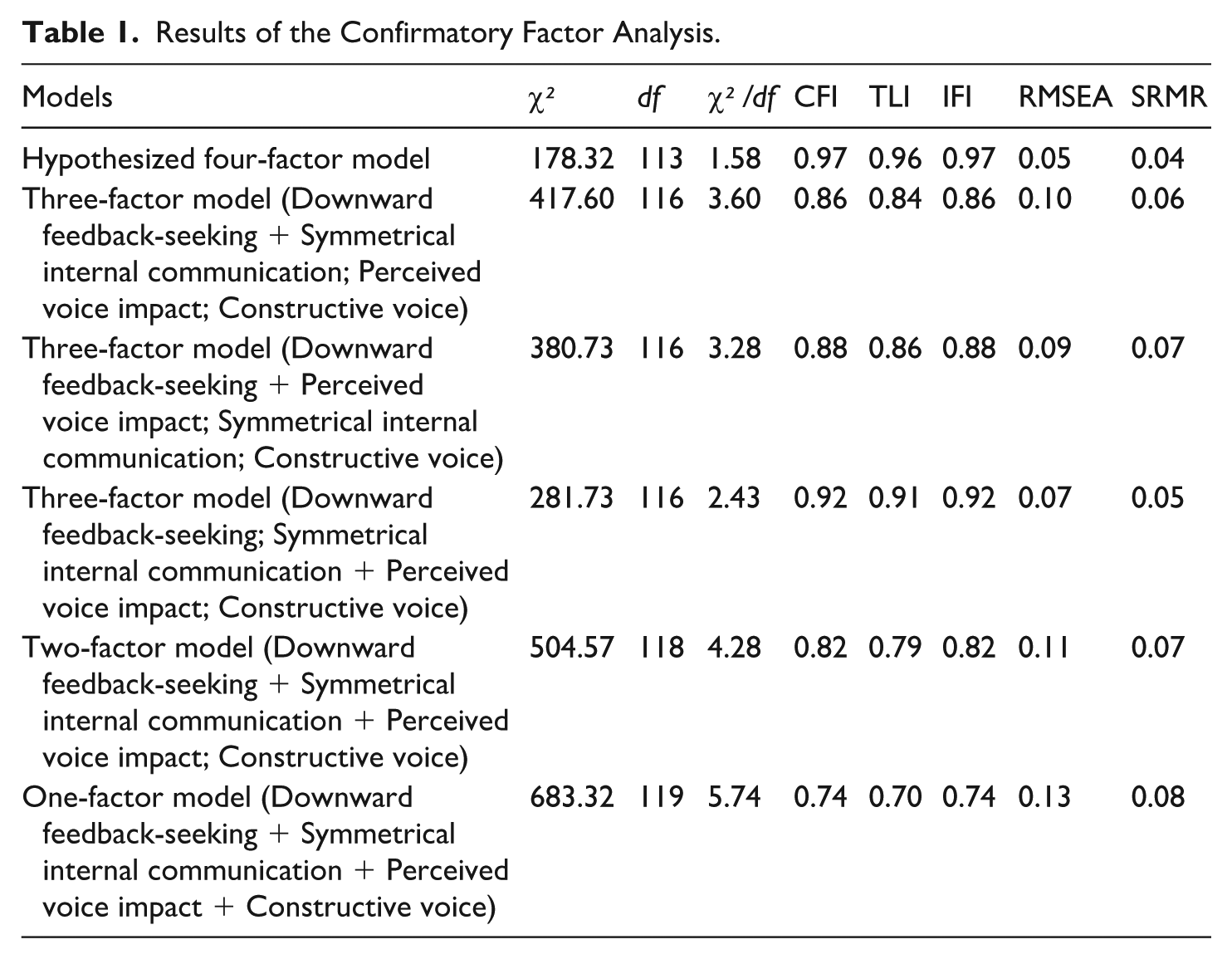
To evaluate the measurement models, we conducted a series of confirmatory factor analyses. The results indicated that the hypothesized four-factor model (χ²/df = 1.58, CFI = 0.97, TLI = 0.96, IFI = 0.97, RMSEA = 0.05, SRMR = 0.04) provided a better fit to the data than alternative competing models (see Table 1), thus supporting the discriminant validity of the measures.
Results of the Confirmatory Factor Analysis.
Common Method Variance
As the data in this study were primarily collected through questionnaire surveys, with multiple variables measured from the same respondents, the possibility of common method bias cannot be entirely ruled out. To minimize its potential impact, we adopted several procedural and statistical remedies. During data collection, we implemented a time-lagged research design combined with multi-source data, which helped reduce systematic bias associated with single-source, single-time-point measurement. Moreover, attention check items (e.g., “This item is used to check attention. Please select ‘1’”) were embedded in the questionnaire to identify and exclude respondents who failed to pay sufficient attention or who provided random responses, thereby enhancing data reliability and validity. During data analysis, Harman’s single-factor test was conducted as an initial diagnostic check. The results indicated that the first principal component accounted for 40.85% of the total variance, which is below the widely accepted threshold of 50% (Podsakoff et al., 2003), suggesting that common method bias was unlikely to be a serious concern in this study.
Descriptive Statistics
Table 2 presents the descriptive statistics and correlations among the study variables. Correlations among all focal variables were below 0.60, suggesting that multicollinearity was not a serious concern (Berry & Feldman, 1985). Furthermore, variance inflation factor (VIF) analyses revealed that all VIF values ranged from 1.39 to 1.65, well below the commonly used cutoff value of 10, further indicating that multicollinearity was not a concern in this study (Hair et al., 2006).
Descriptive Statistics and Correlations.
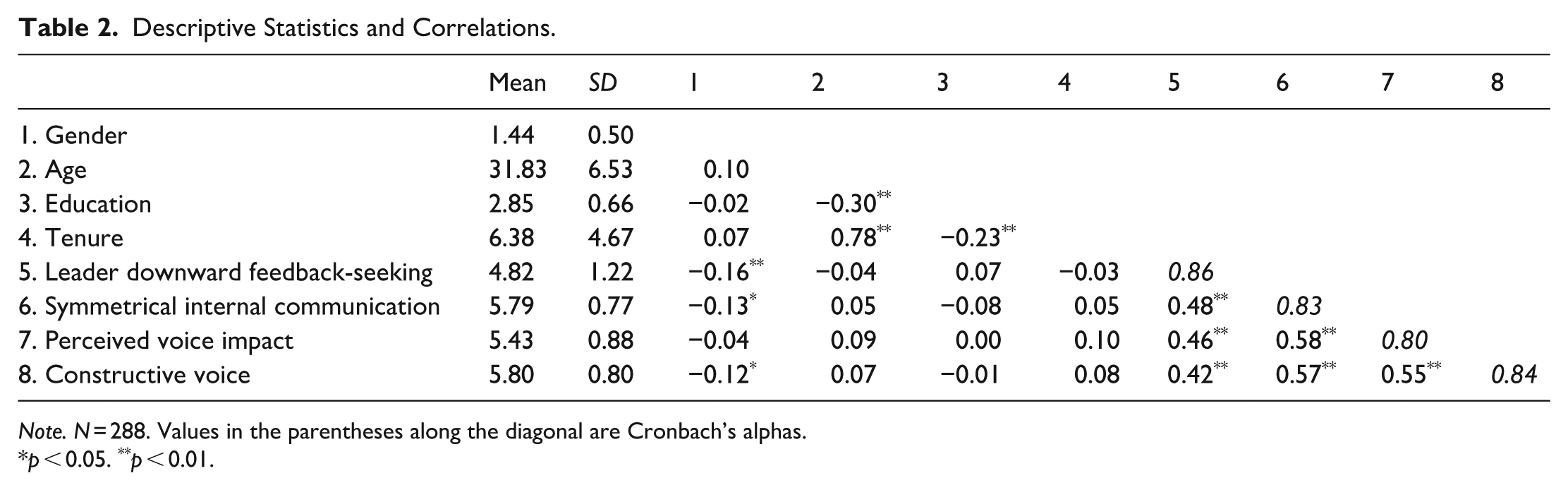
Note. N = 288. Values in the parentheses along the diagonal are Cronbach’s alphas.
p < 0.05. **p < 0.01.
Hypothesis Tests
Table 3 presents the results of the hypothesis testing analyses. To examine the effect of leader downward feedback-seeking on subordinates’ perceptions of voice impact, we included a squared term for leader downward feedback-seeking. As shown in Table 3, Model 1 incorporates the squared term to assess its effect on perceived voice impact and to test Hypothesis 1. The results indicated that the squared term of leader downward feedback-seeking was significantly and negatively related to perceived voice impact (b = −0.07, p < 0.05), suggesting an inverted U-shaped relationship. To further illustrate this curvilinear relationship, this association was plotted in Figure 2. In addition, we conducted simple slope analyses to facilitate interpretation of the curvilinear effect. The results showed that leader downward feedback-seeking was positively associated with perceived voice impact at low (b = 0.46, p < 0.001, −1 SD) and moderate levels (b = 0.28, p < 0.001), whereas the relationship became nonsignificant at high levels (b = 0.10, p = 0.324, +1 SD). Moreover, the difference between the low and high levels was significant (b = −0.36, p < 0.05, 95% CI [−0.697, −0.032]). Taken together, these results supported Hypothesis 1.
Unstandardized Regression Coefficients.
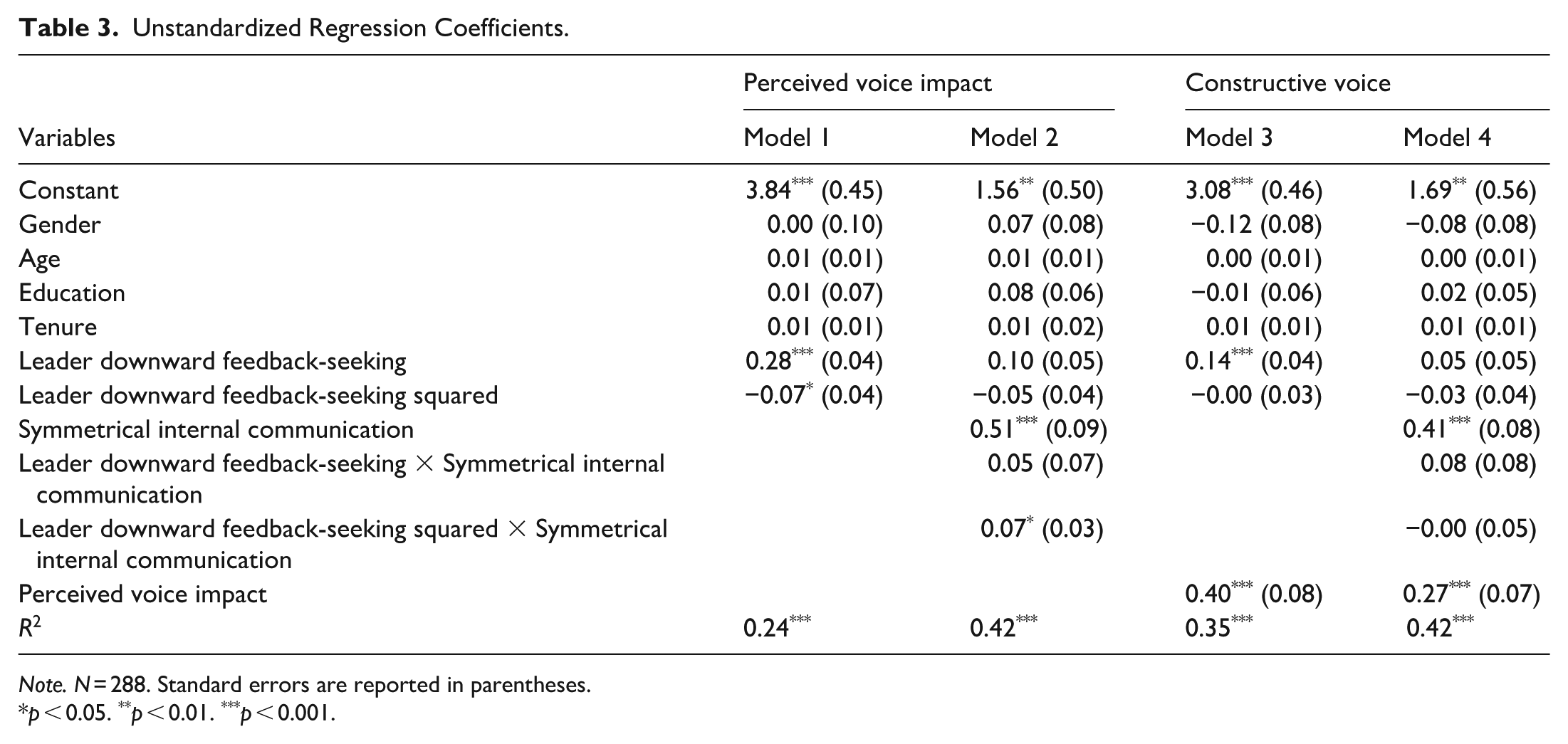
Note. N = 288. Standard errors are reported in parentheses.
p < 0.05. **p < 0.01. ***p < 0.001.
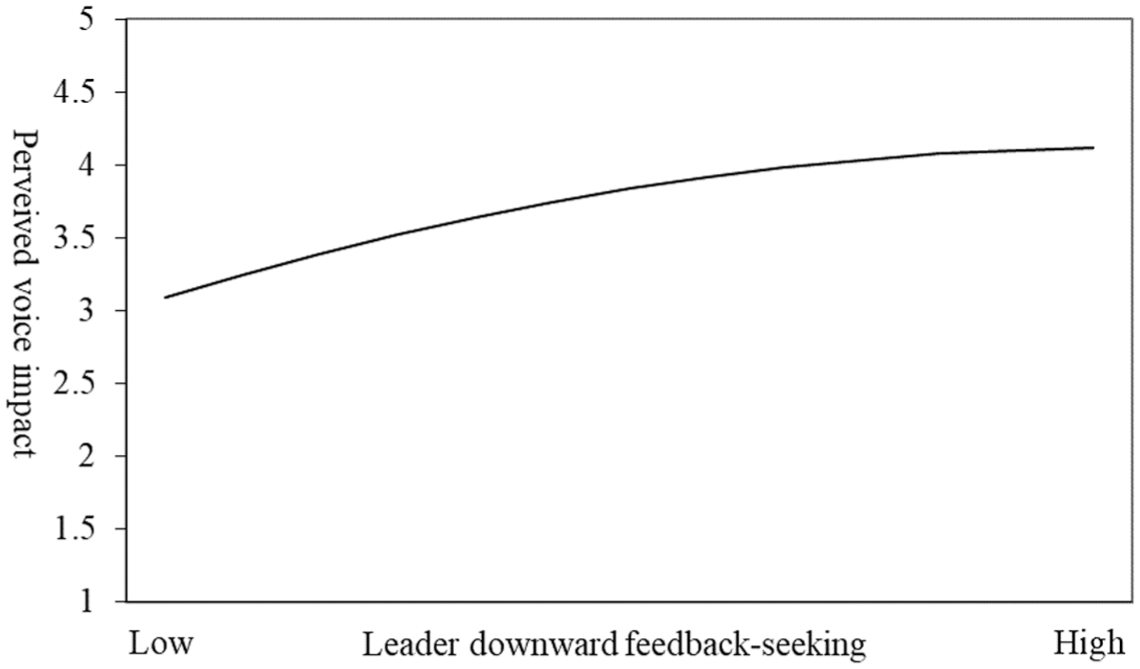
Curvilinear relationship between leader downward feedback-seeking and perceived voice impact.
Hypothesis 2 proposes that leader downward feedback-seeking affects constructive voice indirectly and curvilinearly through perceived voice impact. As shown in Model 3 of Table 3, perceived voice impact was positively associated with constructive voice (b = 0.40, p < 0.001). To test this hypothesis, we employed bootstrapping with 10,000 resamples. The results revealed a significant curvilinear indirect effect of leader downward feedback-seeking on constructive voice via perceived voice impact (b = −0.03, p < 0.05, 95% CI [−0.061, −0.004]). Following Hayes and Preacher (2010), we further estimated the indirect effects at three levels of leader downward feedback-seeking (−1 SD, mean, and +1 SD). The analysis indicated that the instantaneous indirect effect was significant at the low (b = 0.19, p < 0.001, 95% CI [0.108, 0.291]) and mean levels (b = 0.11, p < 0.001, 95% CI [0.065, 0.177]), whereas it was not significant at the high level (b = 0.04, p = 0.356, 95% CI [−0.036, 0.135]). Moreover, the difference between the low and high levels was significant (b = −0.15, p < 0.05, 95% CI [−0.298, −0.022]). Together, these findings supported Hypothesis 2.
Hypothesis 3 proposes that symmetrical internal communication moderates the curvilinear relationship between leader downward feedback-seeking and perceived voice impact. To test this hypothesis, Model 2 included symmetrical internal communication, the interaction between leader downward feedback-seeking and symmetrical internal communication, and the interaction between the squared term of leader downward feedback-seeking and symmetrical internal communication. As shown in Model 2 of Table 3, the interaction term between the squared term of leader downward feedback-seeking and symmetrical internal communication was statistically significant (b = 0.07, p < 0.05). To facilitate interpretation, we plotted the interaction in Figure 3 and computed conditional slopes and curvatures for predicting perceived voice impact at different levels of symmetrical internal communication, following Li et al. (2018). The results indicated that when symmetrical internal communication was low (−1 SD), the slope was not significant (slope = 0.06, p = 0.465), whereas the curvature was negative and significant (curvature = −0.11, p < 0.05), consistent with an inverted U-shaped pattern. In contrast, at a high level of symmetrical internal communication (+1 SD), the slope was positive and significant (slope = 0.13, p < 0.05), whereas the curvature was not significant (curvature = 0.00, p = 0.933). As illustrated in Figure 3, under low symmetrical internal communication, leader downward feedback-seeking exhibits an inverted U-shaped association with perceived voice impact; however, under high symmetrical internal communication, the relationship becomes positive and linear. Overall, these results provided support for Hypothesis 3.
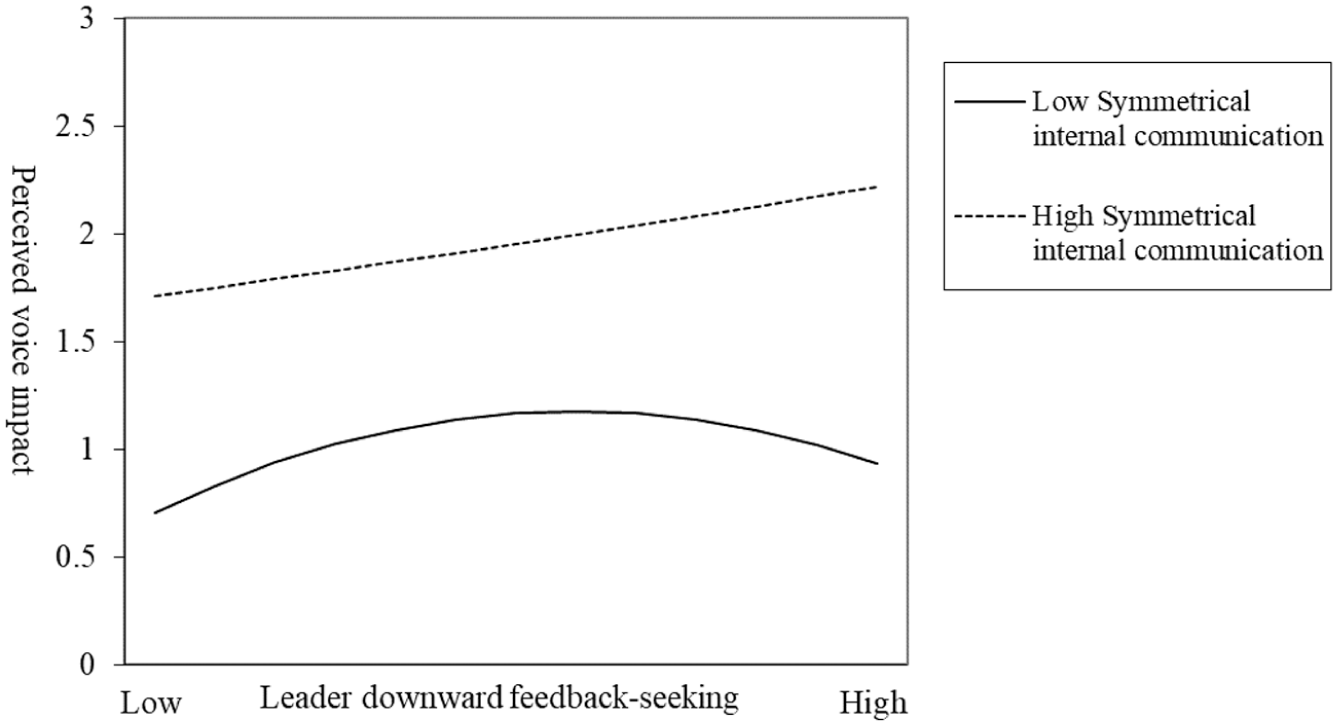
Curvilinear relationship between leader downward feedback-seeking and perceived voice impact, moderated by symmetrical internal communication.
Hypothesis 4 proposes that the indirect curvilinear effect of leader downward feedback-seeking on constructive voice via perceived voice impact varies as a function of symmetrical internal communication. To examine this moderated curvilinear mediation effect, we employed a bootstrapping procedure with 10,000 resamples. The results indicated that the indirect curvilinear effect was statistically significant only at a low level of symmetrical internal communication (b = −0.06, p < 0.05, 95% CI [−0.134, −0.015]) but nonsignificant at a high level (b = 0.00, p = 0.935, 95% CI [−0.053, 0.051]). Moreover, the difference between the indirect effects at low and high levels of symmetrical internal communication was statistically significant (b = 0.06, p < 0.05, 95% CI [0.013, 0.136]). Overall, these results provided empirical support for Hypothesis 4.
Discussion
This study examined how and when leader downward feedback-seeking influences subordinates’ constructive voice. Drawing on signaling theory, we hypothesized and found that leader downward feedback-seeking exhibits a curvilinear relationship with perceived voice impact, which in turn positively predicts constructive voice, thus transmitting this curvilinear effect. Furthermore, symmetrical internal communication moderates this relationship such that when symmetrical internal communication is low, the curve is more pronounced, peaking earlier and declining more sharply, whereas in high-symmetry environments, the relationship becomes more linear, mitigating potential negative effects.
Theoretical Implications
This study advances our understanding of how leaders’ communicative behaviors shape subordinates’ constructive voice in three key ways. First, drawing on signaling theory (Connelly et al., 2011), it demonstrates that leader downward feedback-seeking exerts a curvilinear influence on subordinates’ constructive voice, challenging the conventional assumption that such behaviors invariably produce positive outcomes (e.g., Coutifaris & Grant, 2022; Qian et al., 2018; Sherf, Gajendran, et al., 2021). By applying a signaling perspective, the study explains how the observability and perceived cost of leader behaviors shape their credibility and influence, offering a theoretically grounded explanation for why feedback-seeking may sometimes lose effectiveness or even backfire in hierarchical contexts.
Second, by identifying perceived voice impact as a mediating mechanism, this study clarifies why leader signals succeed or fail in eliciting subordinate input. Specifically, it highlights the cognitive process through which observable leader behaviors translate into constructive voice, demonstrating that the effectiveness of feedback-seeking depends not merely on the behavior itself but on subordinates’ perceptions of whether their input will be noticed and whether it will lead to meaningful change. In doing so, the study advances our understanding of how leader communication influences subordinate voice through subordinates’ interpretations of these signals’ consequences.
Third, this study introduces symmetrical internal communication as an important boundary condition, highlighting the context-dependent nature of constructive voice. The findings show that the effectiveness of leader feedback-seeking depends on the broader communication environment in which it occurs. In contexts characterized by high levels of bidirectional and responsive communication, the visibility and perceived cost of feedback-seeking are preserved, thereby sustaining its credibility even at higher frequencies. By integrating an internal communication perspective into the leadership-voice literature, this study underscores that understanding leader-subordinate interactions requires attention to the broader organizational communication framework.
Practical Implications
First, organizations should encourage leaders to actively seek feedback from subordinates to stimulate constructive voice. Directly inviting suggestions signals openness and legitimizes upward communication. However, leaders should avoid assuming that more feedback-seeking automatically produces better outcomes (Carvalho, et al., 2023; Mertens et al., 2024). When requests for input become overly frequent or routine, they may weaken the credibility of the signal and reduce subordinates’ motivation to share thoughtful suggestions. Leaders should therefore seek feedback in a balanced and intentional manner, maintaining sufficient frequency to demonstrate openness while avoiding excessive requests that may dilute the credibility of the behavior. To reinforce this credibility, leaders should ensure that each feedback-seeking episode is purposeful, clearly communicated, and followed by visible consideration of subordinates’ suggestions.
Second, the mediating role of perceived voice impact suggests that leaders should focus not only on whether they seek feedback but also on how subordinates interpret and make sense of such feedback-seeking behavior (Ashford et al., 2016; Chun et al., 2018). Even well-intentioned feedback-seeking may fail to elicit high-quality constructive voice when subordinates perceive a weak connection between their input and subsequent outcomes. Leaders should therefore clearly signal that suggestions are valued and demonstrate through follow-up actions how subordinates’ input informs decision-making. At the organizational level, embedding structured feedback loops in leadership development programs can help leaders consistently follow through and make subordinate contributions visible and meaningful.
Third, the moderating effect of symmetrical internal communication indicates that the influence of leader behaviors on subordinates’ voice is embedded in the broader organizational communication environment rather than occurring in isolation. Organizations should therefore develop communication infrastructures that support transparent, bidirectional, and responsive information exchange, such as anonymous feedback channels, visible records that show how suggestions inform decisions, and systematic follow-up processes clarifying whether and why suggestions are implemented. Such practices strengthen the effectiveness of leaders’ feedback-seeking and reduce the likelihood that it will be interpreted as merely symbolic when broader organizational support is limited.
Limitations and Future Research
Although this study makes several contributions, some limitations should be noted. First, regarding the research design and data collection, this study adopted a multi-source, multi-wave approach to reduce common method bias and partially mitigate concerns about reverse causality. However, because the interval between the two waves was limited to two weeks, the ability to draw causal inferences remains constrained. Specifically, reverse causality and potential endogeneity cannot be fully ruled out. Future research could strengthen causal inference and enhance the robustness of the findings by employing experimental designs, extending the time lag between measurements, or conducting longitudinal studies. In addition, the use of a platform-based sampling method (i.e., Credamo) may introduce self-selection bias, potentially limiting the representativeness of the sample. To address this limitation, future research could enhance external validity by incorporating random sampling techniques or collecting data within organizational settings. Moreover, although multi-source data were utilized, some key variables still relied on self-reports (e.g., leader downward feedback seeking and symmetrical internal communication), which may introduce perceptual biases and increase the risk of common method bias. To mitigate these concerns, future research could further improve measurement accuracy and reliability by integrating other-reported measures or objective indicators.
Second, regarding sample selection, this study focuses on the Chinese context, which may limit the external generalizability of its findings to other countries or cultural settings. China is characterized by relatively high power distance and collectivism, which shape organizational hierarchies and communication norms in distinctive ways and, in turn, may influence how subordinates interpret and respond to leaders’ feedback-seeking behavior (Mertens & Schollaert, 2024). Future research should extend this line of inquiry to more diverse cultural contexts and conduct cross-cultural comparisons to further assess the robustness of the findings and clarify their boundary conditions.
Third, during the analysis phase, this study did not account for potential industry effects. Although the sample spans multiple industries, which enhances the external validity and generalizability of the findings, industry differences may influence communication patterns and voice behaviors, potentially confounding the observed relationships. Moreover, this study includes only demographic variables as controls, which may not fully address omitted variable bias. Future research could incorporate industry-level variables as well as additional contextual factors, such as organizational size, leadership style, and team climate, to further test the robustness of the findings and reduce potential bias.
Finally, treating feedback-seeking as a single construct ignores the valence of feedback, which may convey different signals and elicit distinct responses. Future studies could therefore differentiate feedback by valence and examine other leader behaviors, such as information sharing or active listening, as antecedents of constructive voice. In addition, the mediators and moderators examined represent only a subset of possible mechanisms, suggesting the need for further exploration of additional factors to provide a more comprehensive theoretical account.
Conclusion
This study sheds light on how leaders’ downward feedback-seeking influences subordinates’ constructive voice. Drawing on signaling theory, we show that feedback-seeking does not uniformly encourage voice but follows a curvilinear pattern in which moderate levels strengthen subordinates’ perception that their input matters, while excessive requests weaken this signal and reduce voice. In addition, high-quality symmetrical internal communication helps preserve the credibility of feedback-seeking and mitigates its potential negative effects. Overall, these findings advance our understanding of the dynamic signaling processes underlying leader–subordinate interactions and clarify the conditions under which leader behaviors effectively translate into meaningful subordinate input, providing both theoretical insights and practical guidance for fostering constructive voice in organizations.
Footnotes

Ethical Considerations
This study was approved by the Research Ethics Committee of the School of Management at Shandong University. The approval documentation can be provided upon request.
Consent to Participate
Before data collection, participants were provided with detailed information about the study’s purpose, procedures, and their rights, including the right to refuse participation or withdraw at any time. Written informed consent was obtained from all participants, and confidentiality and anonymity were ensured.
Funding
The authors disclosed receipt of the following financial support for the research, authorship, and/or publication of this article: This work was supported by the National Natural Science Foundation of China (Grant numbers: 72372089, 72472086) and Shandong Postdoctoral Science Foundation (Grant number: SDZZ-SH-202501005).
Declaration of Conflicting Interests
The authors declared no potential conflicts of interest with respect to the research, authorship, and/or publication of this article.
Data Availability Statement
The data supporting the findings of this study can be obtained from the first author upon reasonable request.