







Abstract
Through the guidance of social presence theory, this study sought to understand how instructors’ affirming messages and social presence behaviors affect students’ writing apprehension in online business communication courses. The data were consistent with two models, both of which indicate that instructor affirming messages indirectly affect students’ writing apprehension in the business communication classroom. Both models also indicate that students’ burnout mediates that indirect effect. The results show how important it is for instructors to take the time to leave affirming message feedback when teaching business communication online.
Because public speaking apprehension is often listed among people’s greatest fears, researchers have given it significant attention (see e.g., Foutz et al., 2021; Ledford et al., 2023; Marcel, 2022). While public speaking and oral communication skills are both important in the world of work, written communication is equally important when we examine the top skills employers seek in their hiring decisions (National Association of Colleges and Employers, 2021); yet, written communication apprehension receives significantly less research attention than public speaking apprehension (see e.g., Gaffney & Kercsmar, 2016; Gaytan et al., 2022; Kelly et al., 2022). The National Association of Colleges and Employers (NACE) does not distinguish among modalities (written, spoken or oral, digital) in most of its career-ready skills related to communication. Regardless of modality, the key to being an effective communicator is the ability to adapt a message to a given audience and context (Moore & Morton, 2017; Stewart et al., 2019). In fact, most employees communicate in both writing (e.g., putting together reports, sending written or electronic memos, engaging in self or other evaluations as part of performance review, and/or responding to yearly climate surveys) and orally (e.g., talking to coworkers, meeting with teams or clients, pitching an idea to a Board of Directors).
With that in mind, this study set out to examine the ways in which instructors can help online business and professional communication students lessen their writing apprehension by using social presence theory (Short et al., 1976) and the instructional beliefs model (Weber et al., 2011) to assess the role of instructor affirming messages, perceived immediacy, and learner burnout. Specifically, we posit that learner burnout and perceived immediacy mediate the relationship between affirming messages and writing apprehension. Additionally, as we see more people working remotely, even as the global health pandemic subsides, we set out to examine the ways in which social presence (behaviors we use to communicate connection in an online environment) lessens students’ writing apprehension. Specifically, we posit that learners’ perceived immediacy and burnout mediate the relationship between social presence and writing apprehension. If these hypotheses are supported, managers and coworkers may help lessen employees’ writing apprehension by maximizing the affirming messages in an organization and increasing employees’ perceived closeness through social presence strategies.
Review of Related Literature
Social Presence Theory
Social presence theory (SPT), which began as presence theory in psychology, has become popular as people have moved into more technologically mediated communication environments, especially computers (Biocca et al., 2003). Over time, social presence has been conceptualized and measured in a myriad of ways (Christen et al., 2022; Mazid, 2022; Yang et al., 2022). Social presence has been defined as one’s impression of the other person’s salience, perceptions of realness, and, most recently, ability to project one’s personality in a technologically mediated interpersonal interaction (Mazid, 2022). With different definitions come different measurement techniques. When social presence highlights people’s behaviors, the self-report measures address the extent to which the subject or other interactant engages in specific behaviors. As the definitions move toward cognition, measurement involves scales assessing the subject’s perceptions of the other person. Most recently, measures have examined how people can improve the ways in which they project their own personalities to achieve presence (Christen et al., 2022).
For the purposes of this project, we were primarily interested in the interpersonal interactions between instructors and students. Dixson et al. (2017) found that nonverbal immediacy behaviors, based upon students’ perceptions of an instructor’s time, tone, and effort, promote engagement in the online classroom. Generally, there is an inverse relationship between student engagement and anxiety (Mazer, 2017; Rajan et al., 2021). Thus, reducing anxiety and apprehension increases engagement, which leads to positive student outcomes (Singh, 2020). To what extent could these online class interactions decrease writing apprehension?
Confirming Messages
Confirming messages are verbal utterances and nonverbal cues that affirm another person (Ellis, 2004; Goodboy & Myers, 2008). Teacher confirmation is divided into three areas: responding to student questions and comments, teaching style, and interest in student learning (Ellis, 2000). When responding to student questions and comments, effective instructors seek to affirm the student’s value even if the contribution is incorrect. They may do this by thanking the student for asking the question or responding to a posed question. Second, effective instructors utilize a conversational and interactive teaching style; they utilize a variety of teaching techniques and seek feedback from students about how well they understand the material. Finally, confirmation involves making students aware of an instructor’s genuine interest in whether they achieve their potential in the course. Messages such as “I knew you could do it” convey confirmation.
In the classroom, confirming messages can come from other students (LaBelle & Johnson, 2021) or instructors (Ellis, 2004). Confirming messages positively impact motivation (Shen & Croucher, 2018), emotional outcomes (Goldman & Goodboy, 2014) and learning outcomes (Ellis, 2004); a lack of confirming messages also negatively impacts learning outcomes (Armstrong et al., 2022). Additionally, confirming messages reduce receiver apprehension, the fear of processing a message incorrectly (Hsu, 2012). Just as students worry about misinterpreting an instructor’s message, they exhibit similar fears about an instructor misinterpreting their written communication on papers and exams (Schrodt & Finn, 2011). Finally, confirming messages increase students’ classroom involvement, as measured by willingness to talk (Sidelinger & Booth-Butterfield, 2010). While previous research has labeled these messages as confirming, this study labels them as affirming because they are designed to support and encourage students. Might affirming messages also increase willingness to write?
Perceived Immediacy
Perception is people’s impression of the world around them as they receive outside stimuli (Tacca, 2011). Concerning the classroom, an instructor and student both create their own perception of each other throughout their time together (Hamre & Pianta, 2006). A student creates a sense of perceived immediacy with an instructor through the communication messages presented by the teacher. Perceived immediacy is the student’s impression of a psychological sense of closeness based on the instructor’s verbal, nonverbal, and mediated cues (Kelly et al., 2015; Kelly & Westerman, 2016). “Perceived immediacy is established by evaluating all communicative behaviors simultaneously displayed by a communicator” (Kelly et al., 2020, p. 29). In the literature, perceived immediacy has also been referred to as generalized immediacy, mediated immediacy, and psychological response to immediacy (Kelly & Westerman, 2016).
Actions typically resulting in increased perceived immediacy are “immediate behaviors” (Kelly & Westerman, 2016). Nonverbal immediate behaviors include degree of physical distance, eye contact, positive facial expressions, head nods, vocal expressiveness, gesturing while speaking, moving around the classroom, and relaxed body position (Allen et al., 2006; Andersen, et al., 1979). Verbal immediate behaviors include using humor, addressing students by their names, allowing students to address them by their first name, referring to the class as “our class,” calling on students to answer questions, and initiating conversations before or after class (Gorham, 1988). Instructor computer-mediated immediate behaviors include text-based communication encouraging questions, being positive and/or friendly, prompt replies, and informal language use (Kelly & Fall, 2011). Importantly, “the display of such behaviors does not guarantee students will feel close or connected to the instructor and what the instructor is doing is less important than what the students think the instructor is doing” (Kelly & Westerman, 2016, p. 469). Students are likely to feel higher perceived immediacy in the presence of these behaviors but are not guaranteed to. For example, instructor eye contact does not increase perceived immediacy if a student perceives it to be an intimidating stare (Kelly et al., 2015).
Perceived immediacy serves as a mediator between immediate behaviors and student classroom outcomes (Kelly, et al., 2020). The significance of perceived immediacy as the mediator between an instructor’s behaviors and the message receiver’s response to those behaviors in the classroom suggests the variable that directly impacts student outcomes is not the instructors’ behaviors, but it is the student’s perceived immediacy (Kelly et al., 2020). Perceived immediacy has been shown to mediate the relationships between instructor behaviors and student learning outcomes such as math anxiety (Kelly et al. 2015), intrinsic motivation (Kelly et al., 2015), writing apprehension (Kelly & Gaytan, 2020), task value (Ojeda-Hecht et al., 2022), student dissent behaviors (Goke et al., 2021), cognitive learning (Violanti et al., 2018), and public speaking anxiety (Foutz et al., 2021).
Burnout
Burnout describes a psychological response to chronic stress factors characterized by emotional exhaustion, depersonalization, and decreased personal accomplishment (Maslach & Jackson, 1981; Maslach & Leiter, 2016). While initial research on burnout was restricted to human services professions (e.g., healthcare, social work, and education), early assumptions that burnout occurred exclusively within “people-oriented” occupations appear to be invalid.
University students have become a focus of burnout research, as they have been shown to display various physical and psychological symptoms linked to chronic stress, such as workload, exhaustion, and low self-efficacy (Maricuțoiu & Sulea, 2019; Shankland et al., 2019; Zhang et al., 2007). Previous studies have identified three components of academic burnout: exhaustion, cynicism, and inefficacy. Exhaustion refers to the experience of feeling overwhelmed or exhausted by one’s studies; cynicism is characterized by indifferent or apathetic attitudes toward one’s studies; and inefficacy describes feelings of dissatisfaction with one’s accomplishments or a sense of ineffectiveness within one’s academic field (Schaufeli et al., 2002). Burnout has been linked to discrepancies between effort expended and rewards obtained (Maslach & Leiter, 2016). For example, academic burnout can occur when the effort students put into their studies is not reflected in the reward outcome they receive (i.e., positive feedback or grades; Williams et al., 2018).
Several factors contribute to student burnout, such as increased workload (Cushman & West, 2006; Maslach & Leiter, 2016,), lack of institutional support (Kundu, 2019; Leupold et al., 2020), and low self-efficacy (Alene & Kassie, 2017; Rahmati, 2015). Other studies have explored how race, class, and gender impact experiences of academic burnout among college students (Chisholm et al., 2021; Li et al., 2014). For example, a “chilly” campus climate positively predicts burnout among undergraduate women in STEM fields (Jensen & Deemer, 2019). Kundu (2019) has found that low-income racial minority strivers—students who were once highly engaged but struggled to persist in college—report increased symptoms associated with academic burnout.
Instructor attitudes and behavior have also been linked to student burnout. Early research by Cushman and West (2006) identified instructor behavior, along with academic overload, as potential predictors of student burnout. They found students reported feeling heightened stress and increased anxiety when instructors engage in negative behaviors (e.g., unavailability, arrogance, lack of caring attitude, perceived egotism; Cushman & West, 2006). In sum, students who perceive their instructor as unapproachable, indifferent, or egotistical may be more inclined to view the course negatively, which can ultimately impact affective learning outcomes (Goodboy & Myers, 2015). Furthermore, instructor verbal aggression (e.g., inappropriate or offensive language, sarcasm, outbursts) has been shown to negatively influence student stress levels and overall class attendance and participation (Cushman & West, 2006; Duyan, 2020; Myers et al., 2014). If students do not feel the classroom is a safe space, they are more likely to feel disconnected from the academic experience. Prior research supports this study’s claim that negative environmental factors at the instructor behavior level can predict student burnout.
Writing Apprehension
Writing apprehension is a form of anxiety that is catalyzed by writing and often leads to attempting to avoid writing activities to avoid triggering anxiety symptoms (Ahrens et al., 2016; Daly & Miller, 1975). Students who have writing apprehension lack confidence in their ability to write and often struggle to find motivation to engage in writing (Fischer et al., 2017; Vanhille et al., 2017). Students who experience writing apprehension struggle to improve their writing skills, even in a college writing course, because their anxiety prompts them to skip assignments or rush through assignments with as little attention as possible to avoid triggering their anxiety symptoms (Ahrens et al., 2016; Daly & Miller, 1975; Kelly & Gaytan, 2020).
Writing apprehension may be a phenomenon that occurs only in classrooms and on the job for some students because their writing apprehension is triggered by knowing their writing will be assessed, whereas writing apprehension would not be triggered in a casual environment such as texting with a friend (Autman & Kelly, 2017). Faculty of writing-intensive courses can help students overcome their writing apprehension through skillful communication and careful curriculum design (Leggette & Jarvis, 2015). Yet, the current accumulation of writing apprehension research in the classroom has found interventions that make very small improvements in students’ writing apprehension, prompting the need for more research into how faculty can best help their students overcome writing apprehension (Gaytan et al., 2022).
Thus far, when faculty in face-to-face classrooms are very clear about assignment instructions and consistently use nonverbal immediate behaviors (e.g., smiling, eye contact), students have reduced writing apprehension (Kelly & Gaytan, 2020). Yet, clarity and computer-mediated immediate behaviors (e.g., responding to emails quickly, addressing students by name) from online instructors, do not appear to influence writing apprehension (Gaytan et al., 2022). However, Iksan and Abdul Halim (2018) have found that online students’ experience lower writing apprehension when they are allowed to write in groups. Teaching students mindful breathing exercises has also led to reduced writing apprehension (Britt et al., 2018).
Rationale
While writing apprehension has been studied extensively in face-to-face physical classrooms, online and hybrid learning environments have not received the same attention. Social presence theory, and its connection to teacher affirmation, provide the foundation for studying online (synchronous or asynchronous) and hybrid classrooms specifically. This study set out to replicate the Kelly et al. (2022) research by looking at student burnout and perceived immediacy as mediator variables in the social presence/affirmation to writing apprehension model. Kelly et al. (2022) based their research upon the instructional beliefs model (Weber et al., 2011), which examines student beliefs as a mediator in the behaviors to outcomes relationship. Kelly et al. (2022) examined how instructor misbehaviors that include lecturing and engaging in antagonism affect writing apprehension when mediated by perceived immediacy and burnout. Their findings indicated burnout served as a suppressor for perceived immediacy. Essentially, when the model was tested with perceived immediacy as the only mediator between teacher misbehaviors and writing apprehension, the model held. It also held with both perceived immediacy and burnout as mediators; however, the role of perceived immediacy was almost nonexistent. Thus, this study sought to extend their research by looking at two competing model possibilities for how to address the suppression effect of burnout. To accomplish the partial replication and extension goals, this study posed the following hypotheses:
H1: Perceived immediacy and burnout mediate the relationship between affirming messages/social presence and writing apprehension.
H2: Affirming messages and social presence directly predict perceived immediacy, which indirectly predicts burnout, which directly predicts writing apprehension.
Methods
Upon receiving Institutional Review Board approval, students enrolled in online versions of a business and professional communication course at a large southeastern university were recruited to participate in a larger study about business and professional communication; the data reported here are specific to writing apprehension. In exchange for taking the online survey, they were granted research participation credit in the general education course (it amounted to less than half of one percent of their overall grade). All data were analyzed using SPSS and the AMOS add-on.
Participants
In total, 274 students participated in the study. Approximately 60% (n = 163) identified as female, 37% identified as male (n = 101), two percent identified as non-binary (n = 4), and one percent preferred not to answer (n = 2). Of the participants, approximately 30% were first-year students (n = 81), 39% were second-year students (n = 107), 18% were third-year students (n = 50), and 12% were fourth-year students (n = 32). Given that the business and professional communication course meets a general education requirement on campus, it is not surprising the overwhelming majority of students were in their first two years of college. Participants ranged in age from 18 to 32 with a mean of 19.78 and standard deviation of 1.52. Just under 80% (n = 216) were enrolled in a fully online course and just over 20% (n = 58) were enrolled in a hybrid course where some of the work was completed online and some was completed in a physical, on-campus classroom.
Measures
All participants completed a total of five scales associated with the study’s variables of interest. Before testing the proposed models, confirmatory factor analysis (CFA) was conducted on each scale to determine validity. Scales that achieved acceptable fit loaded as follows: comparative fit index (CFI) ≥ .90, standard root mean residual (SRMR) ≤ .08, root mean square error of approximation (RMSEA) ≤ .06; Byrne, 2016). Because RMSEA is sensitive to minor misfit (Kline, 2016), the measure was considered acceptable unless another indicators also showed misfit. If misfit existed, the scale was examined for causes before considering re-specification and engaging in hypothesis testing. Reliability, validity, and descriptive statistics can be found in Table 1.
Descriptive Statistics for Measured Variables.
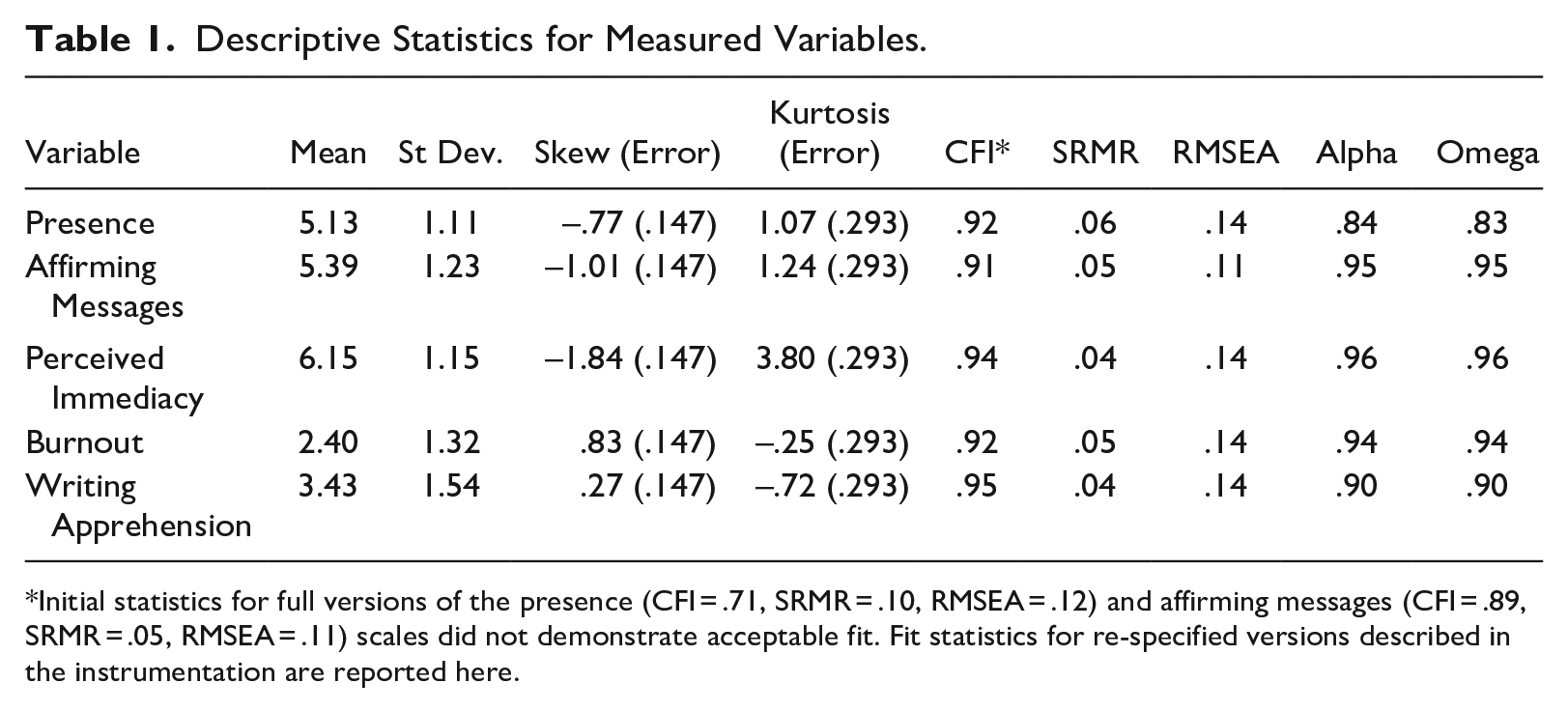
Initial statistics for full versions of the presence (CFI = .71, SRMR = .10, RMSEA = .12) and affirming messages (CFI = .89, SRMR = .05, RMSEA = .11) scales did not demonstrate acceptable fit. Fit statistics for re-specified versions described in the instrumentation are reported here.
Social Presence
The 17-item Projecting a Social Presence Scale (Christen et al., 2022) measures three components of instructor presence: affective (the instructor’s ability to express emotions and share information), cohesive (the instructor’s ability to create connections with students by using names and engaging in small talk), and interactive (the instructor’s ability to make oneself accessible by providing non-university contact information and encouraging students to initiate contact) using a seven-point Likert scale from strongly disagree to strongly agree. For these data, the cohesive and interactive items failed to load on their respective factors at .60 or above. Thus, only the affective subscale was utilized for this study. Deleting two items (shares personal information and overuses punctuation to convey emotion) that did not load at .60 or higher on the affective subscale produced acceptable fit.
Affirming Messages
The 18-item Faculty Verbal Messages Scale (Garland & Violanti, 2020) asks students about their instructor’s use of affirming messages. Sample messages include “I knew you could do it,” “Don’t compare your journey to anyone else’s,” and “Give it 100%. Even if you fail, you know you tried.” During initial validity testing, deleting three items (“You’ll be fine,” “You can do It,” and “If you need anything, you can come talk to me”) due to normality issues produced acceptable fit.
Perceived Immediacy
The 9-item Perceived Immediacy Scale (Kelly et al., 2015) asks students to rate indicators of closeness on a seven-point semantic differential scale between the two descriptive opposites (e.g., responsive-unresponsive and welcoming-unwelcoming). The scale achieved acceptable fit with the data during validity testing.
Burnout
The 10-item Kelly and Westerman (2014) burnout scale assesses student burnout specific to the business and professional communication course on which they were reporting. Items on the seven-point Likert scale from strongly disagree to strongly agree included “I’ve had it,” “Worthless/Like a failure,” and “Disappointed with people.” The CFA produced acceptable fit to indicate it is a valid measure of burnout.
Writing Apprehension
To measure writing apprehension, we used the six-item Autman and Kelly (2017) writing apprehension scale. Items are all negatively worded with higher scores indicating higher writing apprehension on a seven-point Likert scale (e.g., “Writing is not fun” and “I fear my writing being evaluated”). During validity testing, the scale fit the data at an acceptable level.
Results
The hypotheses were tested using structural equation modeling in AMOS with the maximum likelihood parameter estimation method. Bootstrapping with 5000 samples and maximum likelihood with a 95% confidence interval was used to assess total, direct, and indirect effects of each variable. Table 2 contains the correlations for all measured variables.
Correlation Table.
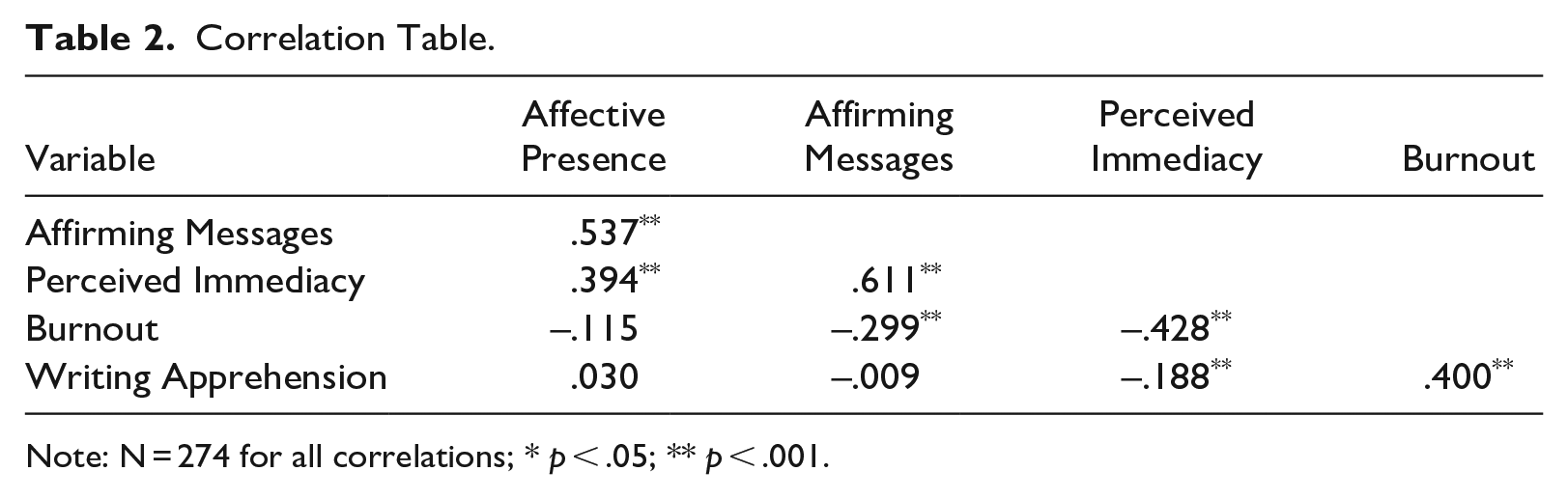
Note: N = 274 for all correlations; * p < .05; ** p < .001.
For H1, that perceived immediacy and burnout mediate the relationship between affirming messages along with affective presence and writing apprehension (see Figure 1), the fit statistics indicate mixed results regarding fit (GFI = .95, CFI = .89, RMSEA = .21, SRMR = .08). The direct effect of perceived immediacy on writing apprehension, the direct effects of affective presence on perceived immediacy and burnout, as well as the indirect effect of affective presence on writing apprehension were not statistically significant at p < .05. Thus, a respecified model was run with burnout mediating the relationship between affirming messages and writing apprehension. This model produced acceptable fit (GFI = .99, CFI = .96, RMSEA = .11, SRMR = .05) as well as significant direct and indirect paths among all of the variables (see Figure 2).
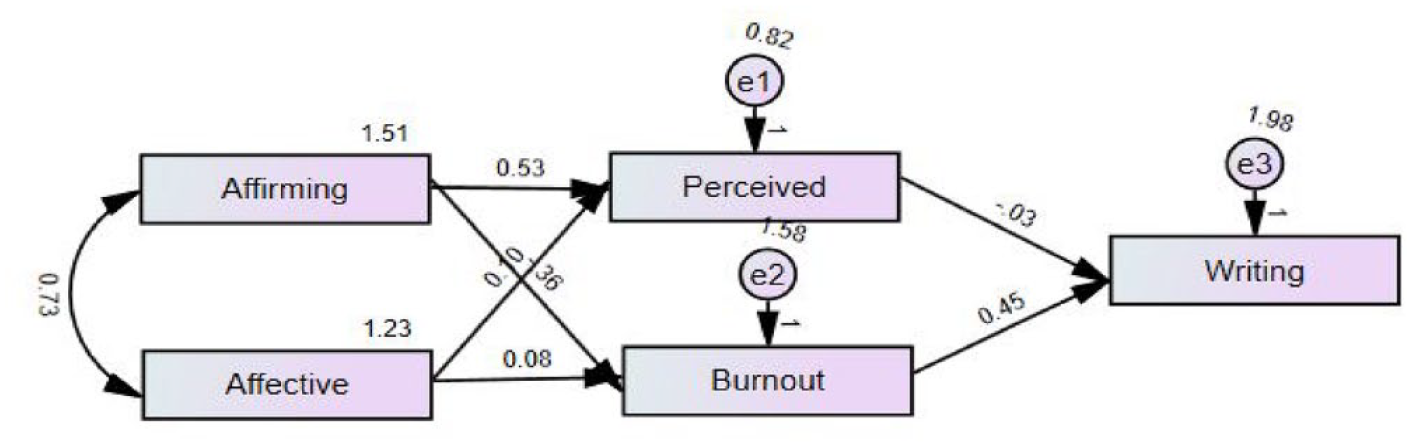
Hypothesized mediation model.
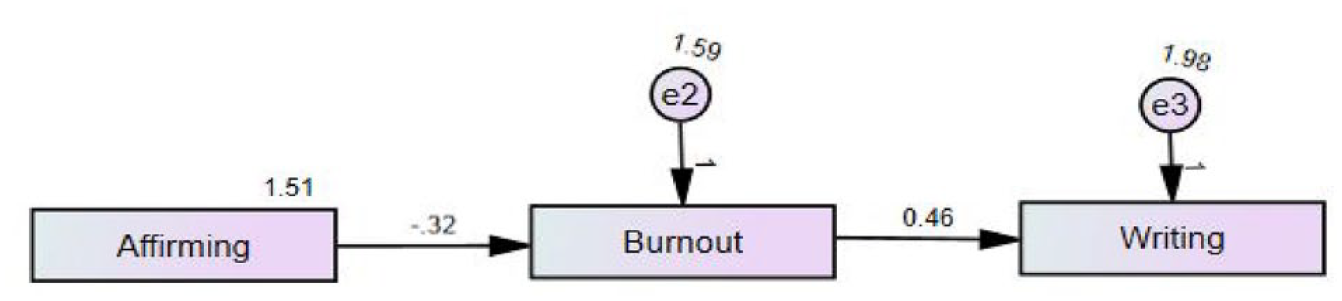
Observed mediation model.
H2 also looked at the relationship between affirming messages and affective presence on writing apprehension in a multiple mediation model using perceived immediacy and burnout as the mediators (see Figure 3). The overall model produced acceptable fit (GFI = .98, CFI = .98, RMSEA = .07, and SRMR = .04). In this model, affective presence did not have a significant direct effect on perceived immediacy; it also did not have a significant indirect effect on burnout or writing apprehension. Thus, the model was respecified without affective presence and produced acceptable fit with the data (GFI = .99, CFI = .98, RMSEA = .08, SRMR = .03) as well as significant direct and indirect effects for all paths (see Figure 4).
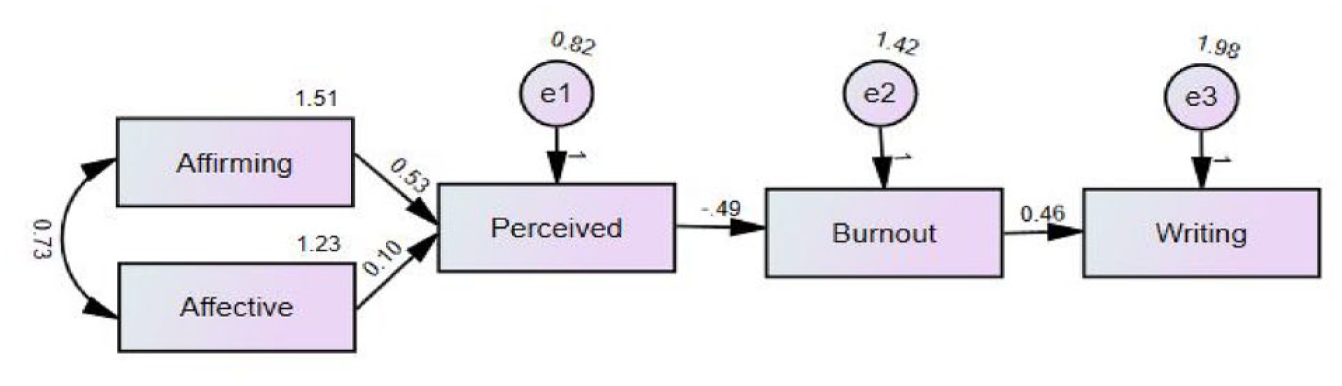
Hypothesized multiple mediation model.
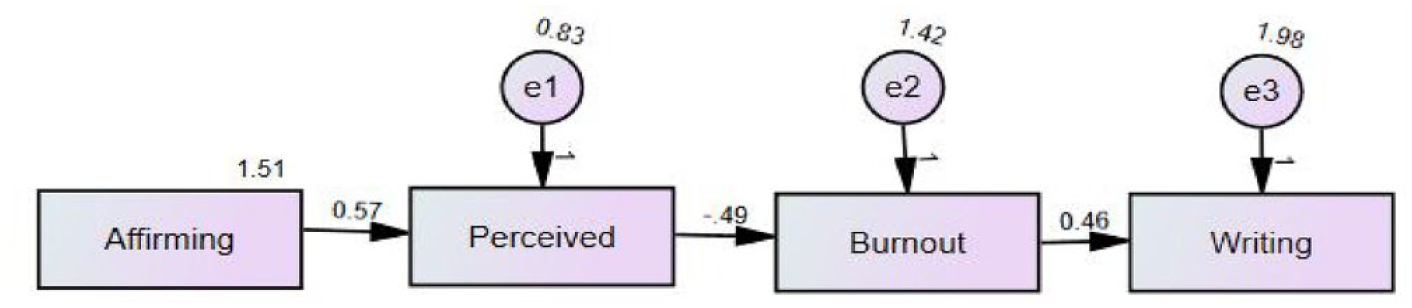
Observed multiple mediation model.
Discussion
This study set out to examine the role of social presence theory in the online and hybrid business and professional communication classroom. Specifically, we looked at how well social presence, affirming messages from an instructor, students’ perceptions of instructor immediacy, and student burnout predicted writing apprehension. This work partially replicated Kelly et al.’s (2022) examination of the relationship between teacher misbehaviors and writing apprehension. In H1, we predicted that (positive) instructor behaviors impact student perceptions of instructor immediacy and burnout related to the business and professional course, and that these perceptions would influence writing apprehension. To extend Kelly et al.’s work, H2 sought to explain the relationship between perceptions of instructor immediacy and burnout within the social presence framework. Before testing the models, we found that the items associated with cohesive and interactive presence (Christen et al., 2022) did not load sufficiently on their factors so we were only able to examine the role of affective, or emotional, presence.
Model 1
For H1, affective presence did not predict perceived instructor immediacy or students’ perceptions of burnout in the course. Interestingly, affective presence and perceived immediacy were moderately correlated. While they are related to each other, affective presence is not sufficient by itself to predict students’ feelings of closeness with an instructor. For example, an instructor can engage in self-disclosure or share personal experiences and not be perceived as creating a connection with students for reasons not associated with their affect. That is, they may engage in instructor misbehaviors, such as designing a course where too much information is presented too quickly. Similarly, instructors may ask for student opinions or perspectives to attempt to connect with students and those students may have expectations that they are there to be passive recipients of information rather than contributing members.
Another interesting finding related to this hypothesis was that perceived immediacy was negatively correlated with writing apprehension (i.e., students who perceived more closeness with their instructors had lower writing apprehension). Like affective presence, perceived immediacy was not related strongly enough to writing apprehension to produce a significant path. There are two possible reasons for this. First, this study suffered from the same suppression effect of burnout on perceived immediacy found in the Kelly et al. (2022) study—burnout is such a strong predictor of writing apprehension that it reduces perceived immediacy’s role to almost nothing. The second is that students think about written and oral communication differently, as apprehension about giving a presentation is greater than apprehension about completing a written assignment. For example, students asked to write a cover letter for a grade may be focused on the content necessary for them to obtain an interview with an organization; on the other end of the spectrum, students giving a presentation in class may feel more vulnerable as they are now the center of everyone’s attention. In this case, perceiving a closeness to the instructor may be more important, as previous research has shown (e.g., Foutz et al., 2021), than it would be for turning in a cover letter that will be graded with everyone else’s.
Model 2
In the second model, we pursued an explanation for the unique findings regarding perceived immediacy in the Kelly et al. (2022) study on writing apprehension in the in-person classroom environment. In their study, perceived immediacy did not exhibit the same robust prediction found in Kelly and colleagues’ previous research (see e.g., Kelly & Fall, 2011; Kelly & Gaytan, 2020; Kelly et al., 2020). We proposed that immediacy would better mediate the relationship between positive instructor behaviors and burnout, which is similar to the academic stress model (Moon et al., 2018). Similar to the first model, affective presence did not produce any significant direct or indirect paths. When it was removed from the model, all direct and indirect paths were significant. Affirming messages directly impacted perceived immediacy and had a significant indirect effect on perceptions of burnout as well as writing apprehension. This result reminds us to recognize the difference between engaging in a behavior and how others perceive that behavior. Instructors can engage in behaviors they believe promote clarity for students or verbally connect them to students; yet, if students do not perceive those behaviors as promoting clarity or closeness, using them can become wasted effort that does not achieve the desired outcome. Perceived immediacy, or closeness between the instructor and students, directly impacted burnout and had an indirect impact on writing apprehension through burnout. In this case, feelings of closeness with the instructor should lower apprehension, which it does as long as burnout does not overpower those perceptions of closeness. Finally, burnout directly impacts writing apprehension such that the more burnout students feel, the more apprehension they have about writing.
The final linear model (affirming messages to perceived immediacy to burnout to writing apprehension; see Figure 4) indicates that the instructional beliefs model (Weber et al., 2011) may benefit from further examination of what constitutes beliefs. That is, burnout is more of a belief than a student characteristic because people’s perceptions of burnout are more important than the actual characteristics and behaviors associated with burnout. For example, students may exhibit characteristics of burnout, such as being tired, having trouble sleeping, or being disappointed with people; however, if they are capable of coming up with other explanations for these behaviors, then they are less likely to perceive themselves as being burned out and allow that to negatively impact their educational outcomes.
Implications for Teaching Business and Professional Communication
While it seems obvious, faculty verbal messages make a difference in students’ lives. That is, when students are being affirmed by their instructors, they are more likely to build stronger relationships with those instructors. Those stronger relationships are built upon the closeness (immediacy) they perceive having with their instructor, which decreases writing apprehension. Even in the face of burnout, these affirming verbal messages help address writing apprehension. Thus, continuing to use affirming messages in a genuine way helps address writing apprehension.
Second, instructors need to be more aware of how their messages may be interpreted by students. The three affirming messages that were deleted from the scale could be interpreted as either encouraging or disaffirming. That is, “You’ll be fine” can be seen as encouraging students to stick with it and wait until the end of the semester to see that they passed the course or achieved the learning outcomes. The statement could also be seen as a sarcastic remark designed to ironically convey contempt for the student or the student’s concerns. The same could be true of “You can do it.” The last deleted item (“If you need anything, you can come talk to me”) places the responsibility on the student rather than creating a relationship in which both the instructor and student are responsible for reaching out. That is, an effective instructor in this situation would be monitoring the progress of students and reaching out to meet with them when needed. On the positive side, an additional sentence here about reaching out if they have questions not directly related to the class or their progress would show authentic interest in the student as a whole person and reveal openness to building a potential mentoring relationship that could continue beyond the course.
Even though instructors cannot control burnout, they can take the time to get to know their students well enough to anticipate the negative effects of burnout. In Madigan and Kim’s (2021) review of 14 articles on the topic, they found that instructor burnout was associated with poorer student performance and lower student motivation. As instructors, we need to make sure we are taking the steps necessary to reduce our own burnout so we can support our students. Simple steps might include making sure we have strong connections with people at and away from work, being clear about our sense of purpose as instructors, and making sure we take care of our physical health with proper sleep, diet, and exercise (Pope-Rurak, 2022).
Finally, while instructors cannot completely control burnout, they can help alleviate some of the writing apprehension students experience. For example, early in the term, they may create collaborative group writing opportunities (Challob et al., 2016). The key to this approach is to prepare assignments so that the students cannot engage in division of labor, where each is responsible for writing a certain number of sentences or paragraphs. Rather, the assignment needs to be designed to encourage collaboration that leads to a paragraph, blog post, or 30-second pitch in which it is impossible to determine who wrote any individual component that might be critiqued in the feedback.
An additional recommendation from students about ways to reduce their writing apprehension involves making what the instructors want clearer (Jani & Mellinger, 2015), which is a double-edged sword. Providing students with every detail about what an instructor is looking for can create additional stress and apprehension for student writers who may not have the skill set or competency to know how to do something the instructor assumes they learned in a basic English course (e.g., use a semicolon effectively or build a deductive argument). Additionally, using rubrics to provide this level of detail regarding requirements can lead to formulaic writing. Finding a balance between providing too much detail in terms of requirements and enough detail to reduce apprehension involves getting to know students and their individual capabilities. It is possible that different levels of detail will be required in different semesters or with different sections of the same course. Thus, adaptable rubrics in which instructors can vary the level of qualitative detail may prove most beneficial for achieving the instructor’s goals for the writing assignment and helping students manage their writing apprehension.
A final strategy for addressing students’ writing apprehension specifically involves understanding their self-efficacy levels regarding writing. Just as we saw that not every affirming message or social presence behavior leads to students’ perception of closeness with the instructor, not every strategy for reducing apprehension is going to work for every student. In this case, instructors may find a building block approach to writing assignments makes the most sense. For example, a larger writing assignment may be broken down into smaller parts with low-stakes initial drafts on which students receive extensive feedback so they can improve prior to turning in the completed assignment. If students are turning in a business plan worth 20% of their final grade, they might turn in a draft of each major heading, which combined total 5% of the assignment grade with the other 15% devoted to the final version. The benefit to the instructor is that grading the final version can be accomplished relatively quickly by making sure the students have addressed the issues identified in the feedback provided on the drafts. Another approach to the process is making early writing assignments low stakes to help build students’ confidence in their writing ability. On each assignment, they are given a specific writing goal or two for the next assignment. If they achieve this goal, their grade improves and they are given new goals for the following assignment. Commenting specifically on how well they achieved their goals helps build efficacy which, students have indicated, reduces writing apprehension (Jani & Mellinger, 2015).
Limitations and Future Research
As with any research, this study has limitations that temper the findings. First, these data are self-report measures about each variable of interest. Additional research needs to be conducted where behaviors, such as affirming messages and social presence, are being observed in the online classroom and then connected with students’ perceptions of instructor immediacy, burnout, and writing apprehension. As indicated in the discussion, these data appear to indicate there is a distinction between engaging in a behavior and how others perceive that behavior—only behavioral data will reveal the veracity of those claims.
Second, the students who participated in this study were enrolled primarily in online business and professional communication classes, with a minority enrolled in hybrid courses. While online and in-person classes have been compared in the past, the research literature lacks sustained examination of the hybrid format. Finally, the sample was predominantly second-year students. While this is typical for an introductory business and professional communication general education course, additional testing is needed with students as they progress through their academic careers, where they will have larger writing assignments targeted to their career path, such as business plans and reports.
Conclusions
This study set out to examine the positive impact of teacher behaviors on students’ perceptions of closeness with the instructor, burnout, and writing apprehension. Three conclusions emerged from the data. First, affirming messages have a positive direct impact on the level of immediacy students perceive with their instructor. The positive perceptions reduce their writing apprehension. Second, this study addressed the suppression issue found in the Kelly et al. (2022) study on writing apprehension by determining that burnout tempers the relationship between perceived immediacy and writing apprehension. Finally, students who are more burned out are more likely to experience writing apprehension in a course. As instructors, we have the opportunity to help students manage their writing apprehension by getting to know them as individuals, and providing appropriate levels of direction and support, as well as helping them increase their self-efficacy.
Footnotes
Declaration of Conflicting Interests
The author(s) declared no potential conflicts of interest with respect to the research, authorship, and/or publication of this article.
Funding
The author(s) received no financial support for the research, authorship, and/or publication of this article.
