







Abstract
When companies take a stance on sociopolitical issues, it is considered corporate social advocacy (CSA). This article examines to what extent perceived corporate motives of engaging in CSA affect consumer skepticism and brand equity. It is one of the few published studies of consumer attitudes toward companies’ CSA involvement. An online survey was conducted (N = 375). It provides evidence that consumer assessments of the motives that inspire CSA are similar to the better-researched motives that inspire CSR. The findings imply that companies need to develop a good understanding of the consumers’ attributions when engaging in CSA.
Introduction
The Black Lives Matter (BLM) movement started in 2013 as a hashtag on social media a year after the death of 17-year-old Trayvon Martin (Edrington & Lee, 2018). Since then, many have taken to social media using the BLM hashtag to “debate the role of policing and the state of race relations in the United States” (Carney, 2016, p. 2). The death of George Floyd on May 25, 2020, reignited the BLM protests across the United States and kickstarted the movement across the world (Bonaparte, 2020). During the summer of 2020, companies around the world were encouraged to show their support for the BLM movement and to prove their allyship in the fight for racial equality (Bonaparte, 2020). A notable case is that of Aunt Jemima.
At the height of the BLM movement, the Aunt Jemima company announced it would undergo a complete rebranding (Bonaparte, 2020). The popular American breakfast food brand announced that they would be dropping the Aunt Jemima name altogether and changing the logo entirely (Bonaparte, 2020). When a company changes their corporate image, whether it is the name, colors, logo, or slogan, it is considered rebranding (Zahid & Raja, 2014). The Aunt Jemima brand is no stranger to rebranding. The company, which is owned by Quaker Oats, was founded in 1889 (Behnken & Smithers, 2015), 24 years after the American Civil War and the abolishment of slavery in the entire country. Aunt Jemima got its name from a minstrel show character that depicted the archetypical southern Mammy and was played by a white man in blackface (Behnken & Smithers, 2015). A mammy (or mammie) is an American caricature based on stereotypes of black women (Behnken & Smithers, 2015). The mammy caricature portrayed a submissive, loyal, and devoted servant who was more than happy to serve the white family with a big smile (Griffin, 1998; Behnken & Smithers, 2015). This deceptive caricature was seen as proof that African Americans were happy to be enslaved, and was used to justify the humanity of institutionalizing slavery (Griffin, 1998). In February 2021, Aunt Jemima officially changed their name to The Pearl Milling Company and underwent a complete rebrand (Bonaparte, 2020). The new logo and packaging was displayed in store shelves starting June 2021 (Bonaparte, 2020).
Aunt Jemima’s rebrand is a typical example of corporate social advocacy (CSA). When companies take a stance on sociopolitical issues for which society has yet to reach consensus or are publicly presenting themselves in favor of or against government actions and policies, it is considered CSA (Austin et al., 2019; Bhagwat et al., 2020; Hydock et al., 2019, 2020). The controversial nature of CSA sets it apart from corporate social responsibility, which typically concerns nondivisive and pro-social issues and are usually part of a company’s strategic plan (Mukherjee & Althuizen, 2020). In comparison, CSA can be ad hoc or accidental, and has the risk of alienating certain stakeholder groups (Hydock et al., 2019, 2020; Klostermann et al., 2021).
In recent years, CSA has become a global trend, partially because of the influence and outreach of different social media platforms. Social media has made current events and issues more salient, for instance, George Floyd’s death that was captured on video with a smartphone and posted to social media, where it went viral (Bonaparte, 2020). Furthermore, social media has facilitated activists’ and corporations’ ability to publicly acknowledge and express views regarding such events and social issues (Edrington & Lee, 2018; Gaither et al., 2018). It has also allowed consumers to put more pressure on companies to contribute to a just society (Edrington & Lee, 2018; Gaither et al., 2018). A popular quote that circulated on social media around the time of the protests stated, “If you are neutral in situations of injustice, you have chosen the side of the oppressor. If an elephant has its foot on the tail of a mouse, and you say that you are neutral, the mouse will not appreciate your neutrality” (Desmond Tutu, as cited in Ratcliffe, 2017, p. 10). Tutu’s quote, and its popularity on social media, helps demonstrate the increasing demand for companies to implement CSA strategies (Austin et al., 2019).
Because of the fear of stakeholder alienation, businesses have traditionally been advised to remain neutral on controversial issues (Austin et al., 2019; Mukherjee & Althuizen, 2020). In contrast, recent research suggests that consumers respect and value companies that make their stance known by engaging in CSA (Briscoe & Gupta, 2016; Fernandes, 2020; Swaminathan et al., 2020). However, to what extent the consumers will support CSA is dependent on a variety of factors, argued by several recent studies (Fernandes, 2020; Hydock et al., 2020; Klostermann et al., 2021). As the CSA phenomenon becomes increasingly common and its impact on consumers remains inconclusive (Hydock et al., 2020), further research is needed in order to understand consumer perceptions of CSA and its effect on consumer attitudes toward a brand. Therefore, the current study aims to answer the research question: To what extent do perceived corporate motives of engaging in CSA affect consumer skepticism and brand equity? And whether a consumer’s social issue involvement moderates the proposed relationship?
More specifically, the current article aims to contribute to the literature by developing and testing a model that explains how consumer skepticism develops from the consumers’ perceived motives of CSA in the context of rebranding and the mechanisms by which it affects a company’s brand equity. The salience of sociopolitical issues on social media has led to increasing pressure on companies to engage in CSA (Austin et al., 2019; Edrington & Lee, 2018; Gaither et al., 2018). However, before companies hop on the CSA bandwagon, it is important for them to consider the implications of engaging in such a corporate action. Therefore, the current study will shed light on how CSA could potentially affect consumer attitudes and the underlying mechanism of this impact.
Theoretical Framework
Corporate Social Advocacy
The concept of CSR has been around for roughly 10 years and the implementation of such a strategy is becoming mainstream. In recent years, however, companies are taking their social engagement a step further by addressing more controversial issues with a CSA strategy. CSA refers to “the public stance corporations, including their leaders, take on controversial social and political issues” (Waymer & Logan, 2021, p. 3). CSA may include taking actions such as contributing to a certain cause financially, creating advertising campaigns related to the issue, lobbying local and state governments, making donations and engaging in philanthropic efforts known to the public, or using the company’s large platform to raise awareness, for instance, through social media (Waymer & Logan, 2021). The public support of LGBTQ+ rights from companies such as Starbucks and Ben & Jerry’s are good examples of CSA (Ciszek & Logan, 2018; Dodd & Supa, 2014). Likewise, the public opposition toward certain LGBTQ+ rights, by companies such as Chick-Fil-A and Barilla, are also good examples of CSA (Waymer & Logan, 2021). Other polarizing issues include abortion, gun control, and the BLM movement (Gaither et al., 2018). By publicly weighing in on these divisive sociopolitical topics, companies aim to present themselves in a favorable light with the hopes of attracting activist groups (Dodd & Supa, 2014). However, in doing so, companies simultaneously risk isolating or losing other stakeholder groups with conflicting views, for instance, if a company chooses to support the BLM movement it may deter consumers who support the Blue Lives Matter countermovement that opposes the BLM movement (Dodd & Supa, 2014). Furthermore, stakeholders may become skeptical and may question the company’s true motives.
Consumer Skepticism
What the company claims to be examples of CSA, could also be interpreted as woke-washing (Austin et al., 2019). Woke-washing is a term used when a company tries to appear socially conscious by appropriating progressive values for the sole purpose of making a profit, thereby taking advantage of social issues and consumers’ awareness thereof (Austin et al., 2019). Similar to how CSR campaigns can bring about skepticism within stakeholders, CSA may also lead stakeholders to question the company’s true intentions (Austin et al., 2019). Parguel et al. (2011) suggest how environmental CSR claims entering the mainstream have caused consumers to be more skeptical of companies and suspicious of greenwashing practices. The concept of greenwashing refers to when a company misleads its consumers by appearing more environmentally friendly than it actually is (Parguel et al., 2011). Based on Parguel’s et al. (2011) research on CSR skepticism and greenwashing, it could be assumed that as CSA becomes more common, skepticism and suspicions of woke-washing will increase as well.
Consumer skepticism refers to the distrust people have toward companies’ marketing strategies and actions. There are two types of skepticism distinguished in literature, dispositional and situational (de Vries et al., 2013). When skepticism is treated as an innate characteristic that a person has, it is termed dispositional skepticism (Forehand & Grier, 2003). Situational skepticism, as the name suggests, depends on the situation (Forehand & Grier, 2003). In other words, a person’s skepticism may change depending on external factors and the general context (Forehand & Grier, 2003). For instance, a consumer may become more or less skeptical based on the motives they perceive for Aunt Jemima’s engagement in CSA. Therefore, this study focuses on situational skepticism rather than dispositional skepticism, and will be referred to henceforth as consumer skepticism.
CSA Motives
Generally speaking, attribution theory explains how people “make causal inferences to explain their own or other’s behavior” (Parguel et al., 2011, p. 18). In the context of marketing, attribution theory describes how consumers make causal inferences to explain corporate actions (Parguel et al., 2011). These corporate actions may include product successes and failures, but also CSR and CSA engagement (Parguel et al., 2011). Attributions are classified as internal or external (Skarmeas & Leonidou, 2013). Attribution theory posits that making internal or external attributions is necessary for people to understand why something has happened (Skarmeas & Leonidou, 2013). As it relates to a company’s CSA engagement, internal attributions suggest that the company’s sociopolitical actions are the result of the altruistic disposition of said company (Parguel et al., 2011). Hence, when consumers believe that the company is genuinely concerned with the sociopolitical issue in question, the consumers are said to be perceiving intrinsic motives (Parguel et al., 2011). On the other hand, external attributions suggest that the company’s sociopolitical actions were caused by external factors, for example, pressure from stakeholders (Parguel et al., 2011). When consumers attribute the company’s actions to external factors in this way, the consumers are said to be perceiving extrinsic motives rather than intrinsic ones (Parguel et al., 2011). It is worth mentioning that consumers can perceive extrinsic motives even if the company’s true motivations for engaging in CSA are intrinsic, or vice versa (Parguel et al., 2011). Companies may also specify whether their motivations for engaging in CSA are intrinsic or extrinsic as part of their communication strategy, which in turn affects the consumers’ perceived motives (Forehand & Grier, 2003). Past research has focused primarily on internal and external attributions as well as intrinsic and extrinsic motivations in relation to companies’ engagement in CSR, but these types of attributions and motivations are also applicable to companies’ engagement in CSA (Austin et al., 2019; Choi et al., 2018; Waymer & Logan, 2021).
Internal attributions go hand in hand with perceived intrinsic motives (Parguel et al., 2011). Values-driven motives, more specifically, falls under the category of intrinsic motives (Parguel et al., 2011). In line with intrinsic motives, a consumer who perceives values-driven motives is making internal attributions to the company’s CSA engagement (Skarmeas & Leonidou, 2013). A values-driven motive would suggest that the company engages in CSR or CSA for purely moral, altruistic, and ethical reasons (Skarmeas & Leonidou, 2013). Research conducted by Skarmeas and Leonidou (2013) suggests that when consumers perceive values-driven motives for CSR engagement, it helps inhibit skepticism. Other research has also found that corporate brand evaluations are enhanced when people perceive intrinsic motives (Parguel et al., 2011). Based on the research findings of Skarmeas and Leonidou (2013) as well as Parguel et al. (2011), it can be hypothesized that values-driven CSA motives will affect consumer skepticism negatively. Furthermore, research conducted by Yim (2021) suggests that authentic stand-taking is the best way for companies to approach CSA. Yim (2021) explains that authentic CSA engagement will lead people to perceive the company’s motives for engaging in CSA more positively and to perceive the company itself as more transparent and reliable. Yim’s (2021) findings therefore also suggest that consumers who perceive authentic values-driven motives for engaging in CSA are likely to be more trusting and less skeptical of the company. Based on the literature review, the first hypothesis is as follows:
Hypothesis 1: Values-driven CSA motives will affect consumer skepticism negatively.
As mentioned prior, external attributions are made and extrinsic motives of the company are perceived when consumers believe the companies’ actions are motivated by external factors (Parguel et al., 2011). External factors often include benefiting from something or avoiding a punishment (Parguel et al., 2011). Therefore, extrinsic motives can be interpreted as opportunistic and self-interested (Skarmeas & Leonidou, 2013). In addition, Forehand and Grier (2003) suggest that these extrinsic motivations, which stray away from altruism, affect a company negatively. The extrinsic motives that will be considered in this study are egoistic-driven motives, strategic-driven motives, and stakeholder-driven motives. Egoistic-driven motives imply that a company exploits the cause and takes opportunistic advantage of the issue (Parguel et al., 2011). Forehand and Grier (2003) suggest that skepticism is driven by the belief that a company’s actions are motivated by self-interest. Furthermore, research conducted by Skarmeas and Leonidou (2013) found that egoistic-driven motives elicit CSR skepticism. Research conducted by Yim (2021) about fake stand-taking in CSA also supports the aforementioned findings related to CSR. Yim (2021) found that consumer skepticism is evoked when the consumers suspect a company to have self-interested motives for engaging in CSA. Together, the findings of the literature review support the idea that perceived egoistic-driven motives elicit skepticism in consumers for both CSR and CSA. The second hypothesis for this study is therefore as follows:
Hypothesis 2: Egoistic-driven CSA motives will affect consumer skepticism positively.
Strategic-driven motives are also extrinsic, as they focus on the economic standpoint. Skarmeas and Leonidou (2013) suggest that consumers are tolerant of these motives when it relates to CSR. The research conducted by Skarmeas and Leonidou (2013) found that strategic-driven attributions did not inhibit or elicit CSR skepticism. However, one key difference between CSA and CSR, is the controversial nature of the involvement. Taking a stance on a divisive social issue through CSA can attract certain stakeholder groups while alienating others (Austin et al., 2019). CSR strategies, on the other hand, are “designed to address social issues that are likely to generate uniformly positive responses from consumers, usually through supporting a cause or taking a non-confrontational stance on an issue that does not involve controversy” (Gaither et al., 2018, p. 179). Because of this key difference, consumers may not be as tolerant of strategic-driven motives when it relates to CSA. Therefore, it could be hypothesized that strategic-driven CSA motives elicit consumer skepticism. Furthermore, Yim (2021) suggests that consumers are less trusting and more suspicious of companies who seem to engage in CSA for reasons that are not fully altruistic, for instance engaging in CSA to increase profits or to enhance corporate performance. These motives for engaging in CSA proposed by Yim (2021) are extrinsic and relate to strategic driven-motives. Therefore, based on the literature review, it can be hypothesized that:
Hypothesis 3: Strategic-driven CSA motives will affect consumer skepticism positively.
The stakeholder-driven motive is also extrinsic, and suggests that the company engages in CSR or CSA simply to satisfy stakeholders’ expectations (Skarmeas & Leonidou, 2013). As mentioned above, research conducted by Yim (2021) found that consumers who do not perceive authentic corporate motives for engaging in CSA are also more likely to be distrustful of the company. Consumer perceptions of stakeholder-driven CSA motives can also be interpreted by consumers as performative activism, which would not be considered genuine or altruistic (Yim, 2021). For both companies and individuals, performative activism is a negative term used to describe activism or advocacy that is motivated by increasing social capital or enhancing legitimacy rather than sincere devotion to the issue or cause (Austin et al., 2019). Hence, by getting involved in CSR or CSA, a company may be trying to enhance their legitimacy. Legitimacy theory is described as “a generalized perception or assumption that the actions of an entity are desirable, proper, or appropriate within some socially constructed system of norms, values, beliefs, and definitions.” (Suchman, as cited in Stanaland et al., 2011, p. 48). Therefore, by appeasing stakeholders, companies are also receiving a reward or avoiding punishment from them (Skarmeas & Leonidou, 2013). Forehand and Grier (2003) agree with Yim (2021) and suggest that these ulterior motives may lead consumers to be distrustful of the company. In line with this reasoning, Skarmeas and Leonidou (2013) found that stakeholder-driven motives impacted CSR skepticism positively. Based on the literature review, one could suspect that a similar negative relationship will also exist in relation to consumer skepticism of CSA. Hence, the fourth hypothesis reads:
Hypothesis 4: Stakeholder-driven CSA motives will affect consumer skepticism positively.
Brand Equity
Brand equity is the perceived image people have about a brand, the importance they give to it, and the value the brand has for them (Zahid & Raja, 2014). This study will focus on brand equity at the individual consumer level. A positive brand equity is important because it can, for example, strengthen consumer loyalty, give the company a competitive advantage in the market, or enhance perceptions of product quality (Zahid & Raja, 2014). A company’s goal should be to maintain a positive brand equity in order to obtain these long-term benefits (Zahid & Raja, 2014). Brand equity can be impacted by a consumer’s comprehensive knowledge about the company (Zahid & Raja, 2014). Hence, brand equity is not focused on product quality; it relates more so to the overall evaluation of the company. According to Skarmeas and Leonidou (2013), consumers tend to develop more positive attitudes toward companies that, in the individual consumer’s eyes, are involved in doing good. In addition, if a company’s CSA matches the consumer’s stance on the social issue, they are more likely to develop a sense of attachment or connection with the firm (Stanaland et al., 2011). However, research has found that when skepticism is present among consumers, it undermines “the social embeddedness of the consumer-company relationship” and negatively impacts consumer-based brand equity (Skarmeas & Leonidou, 2013, p. 1833). Similarly, research conducted by Yim (2021) suggests that skeptical consumers who feel misled by the company will be more likely to scrutinize and evaluate the company poorly. Moreover, research conducted by Forehand and Grier (2003) found that “consumers respond negatively to strategies that seem deceptive” (p. 351). Based on the literature review, one could assume that a similar negative relationship will exist between consumer skepticism and brand equity when it relates to CSA. Hence, the literature review provides a solid basis for the fifth hypothesis, which states:
Hypothesis 5: In the context of CSA, consumer skepticism will affect brand equity negatively.
Social Issue Involvement
Social issue involvement refers to a person’s level of interest in a particular social issue and how important they perceive it to be (Nowak & Salmon, 1987). In this study, the social issue in question is the BLM movement. Prior research by Edinger-Schons et al. (2018) explored sustainable consumption involvement as a moderator variable. Edinger-Schons et al. (2018) suggest that highly involved individuals are more likely to doubt a company’s true intentions, because of their knowledge about sustainability and awareness of greenwashing (Edinger-Schons et al., 2018). Moreover, Lyon and Montgomery (2013) state that climate change activists tend to be more skeptical toward companies’ CSR claims. Consumers with a high social issue involvement related to the BLM movement, or consumers who consider themselves BLM activists, may therefore also be more aware of woke-washing practices. High social issue involvement may therefore elicit skepticism and in turn negatively impact brand equity. Formally, the final hypothesis is:
Hypothesis 6: Social issue involvement will strengthen the impact of perceived CSA motives on consumer skepticism. When social issue involvement is high, the negative impact of values-driven CSA motives on consumer skepticism will be stronger, compared to when social issue involvement is low. Similarly, when social issue involvement is high, the positive impact of egoistic-driven, strategic-driven, and stakeholder-driven CSA motives on consumer skepticism will be stronger, compared to when social issue involvement is low.
Based on the theoretical framework and proposed hypotheses above, a conceptual model was created to summarize the theoretical predications (see Figure 1).
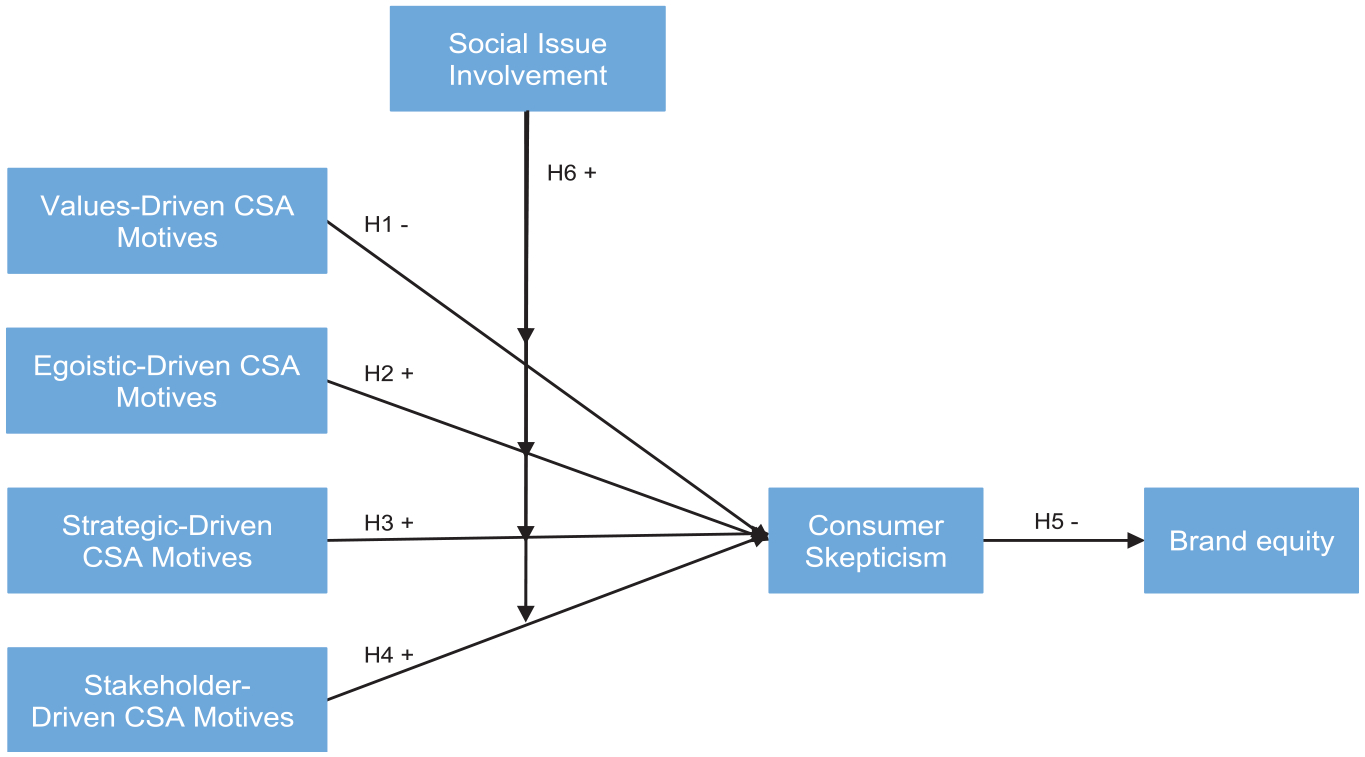
Conceptual model.
Method
Sample
To test the hypotheses, an online survey was employed. Participants were recruited using a convenience sampling method through Amazon Mechanical Turk. Each respondent who completed the survey was compensated with US$0.10 for their participation. In order to be included in the study, participants had to be American citizens or permanent residents (Green-Card Holders). Since the sample aims to represent American adults, participants also had to be at least 18 years of age. Before starting the survey, participants had to consent to participating in the research and had to confirm that they were at least 18 years of age. Furthermore, the participants of the survey had to be familiar with the Pearl Milling Company/Aunt Jemima brand.
The convenience sampling method led to a total of 420 respondents. Of these respondents, 1 respondent had to be deleted due to incomplete data, 9 respondents had to be eliminated because they claimed to be unfamiliar with the Pearl Milling Company/Aunt Jemima brand, and another 35 respondents were removed because they were not American citizens/permanent residents. Hence, after data cleaning, the final sample consisted of 375 respondents (N = 375).
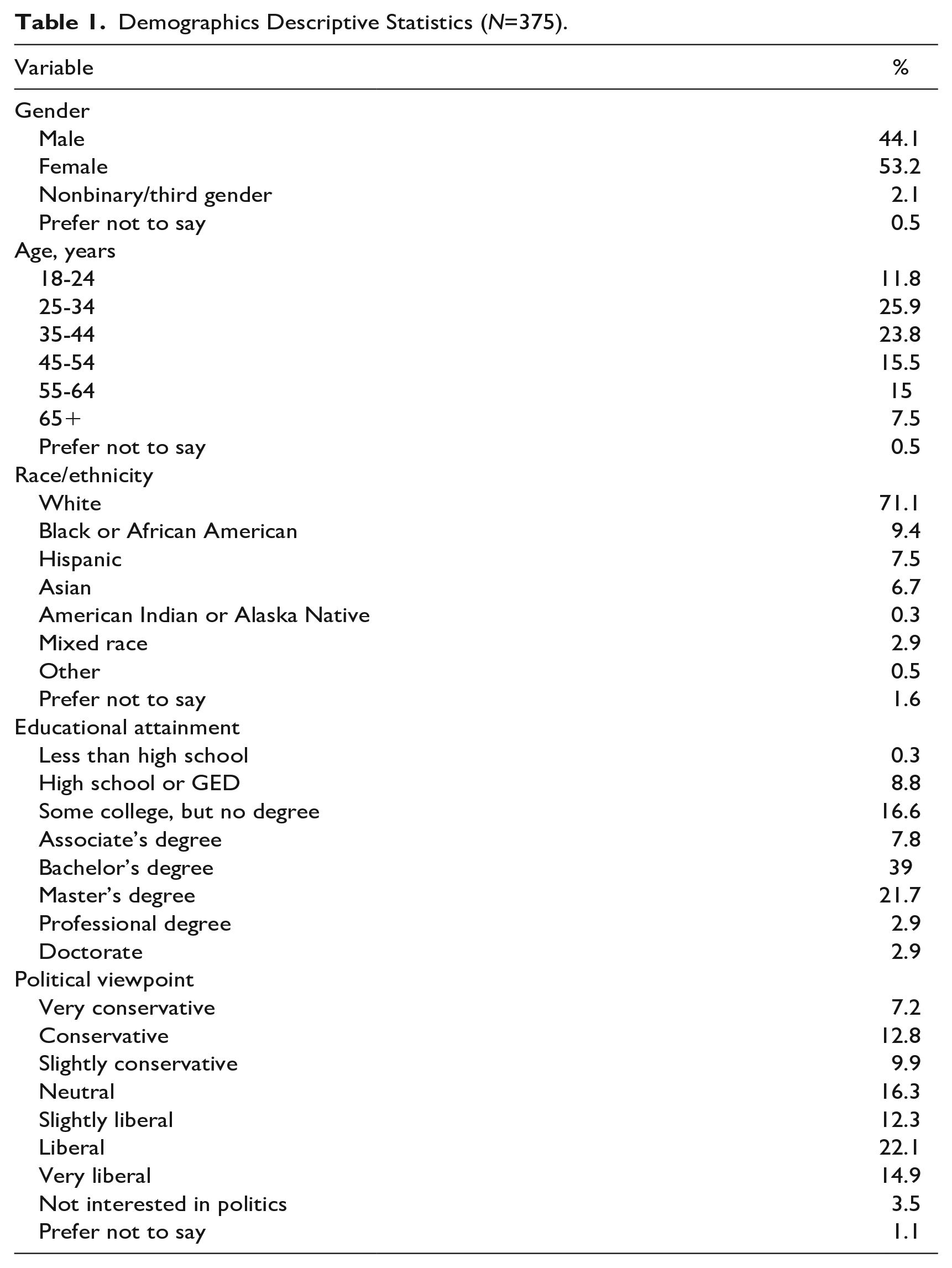
In terms of gender, the sample closely resembled the population, in which males and females each make up approximately 50% of the population (Statista, 2021d). The sample had a large percentage of participants ages 25-34 (25.9%) and 35-44 (23.8%), but in order to more accurately represent the population, each age group should have had approximately the same number of participants, around 16% (Statista, 2021b). Furthermore, the comparison revealed that White people were overrepresented in the sample (71.1%) compared to the population (61.2%), which in turn led other racial/ethnic groups to be underrepresented in the sample compared to the population (Statista, 2021c). The average educational attainment was much higher in the sample than in the population. In the U.S. population, the majority of people have completed no more than high school (30.2%) compared to the sample (8.8%) (Statista, 2021a). In the sample, 39.0% reported having a bachelor’s degree and 21.7% a master’s degree, which is significantly more compared to the population statistics, which indicate 24.0% and 10%, respectively (Statista, 2021a). Finally, according to Duffin (2021), 48% of the US population lean Democratic, which is considered liberal, and 43% lean Republican, which is considered conservative. According to the demographic results found in Table 1, nearly half of the respondents in the sample claimed to be liberal to some extent (49.3%); meanwhile, only 29.9% claimed to be conservative to some extent. Hence, respondents with conservative viewpoints were underrepresented in the sample and respondents who considered themselves politically neutral were overrepresented (16.3%). Table 1 below provides a full overview of the sample demographic results.
Demographics Descriptive Statistics (N=375).
Operationalization
To ensure that participants were familiar with the Pearl Milling Company/Aunt Jemima brand, an item about this was included at the beginning of the survey: “Are you familiar with the Aunt Jemima brand?” The answer options were yes and no. Participants who responded with a “no” were redirected to the end of the survey. Participants who responded with a “yes” were given some additional background information about Aunt Jemima’s recent rebranding announcements along with an image that shows the changes that were made (see Figure 2). The last part of the survey included questions about the participants’ demographic data, namely, questions about nationality, age, gender, ethnic background, and level of education.
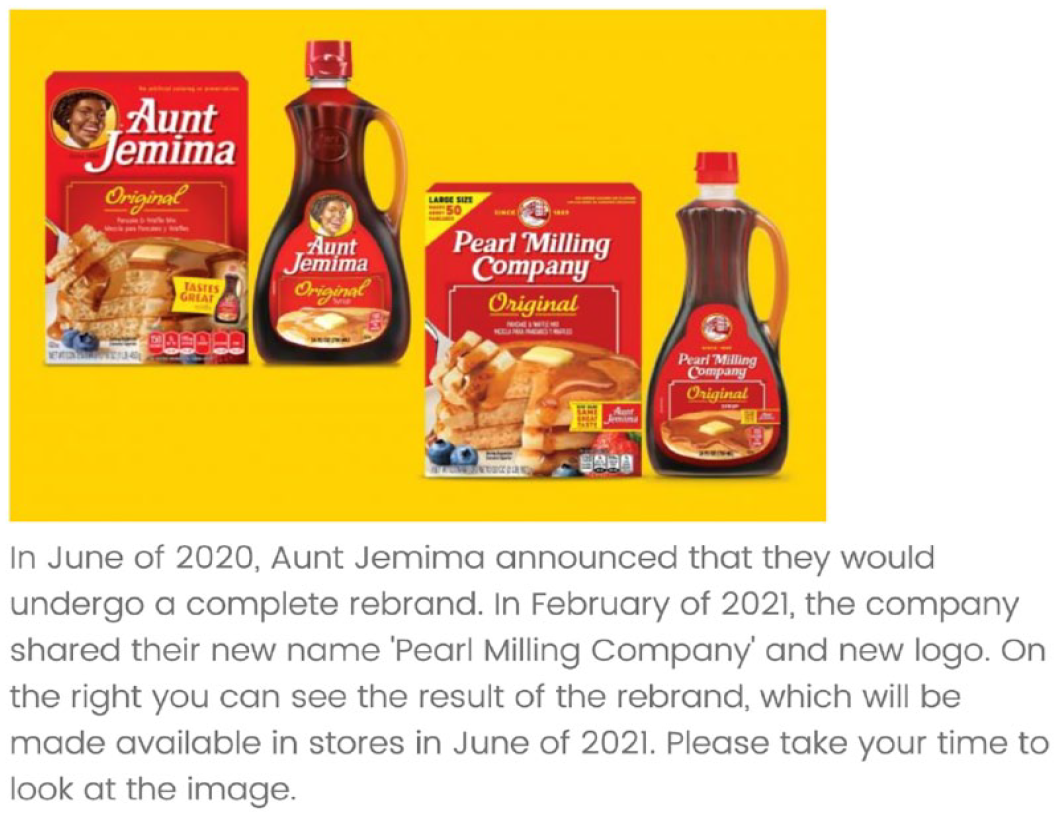
Aunt Jemima’s rebranding strategy.
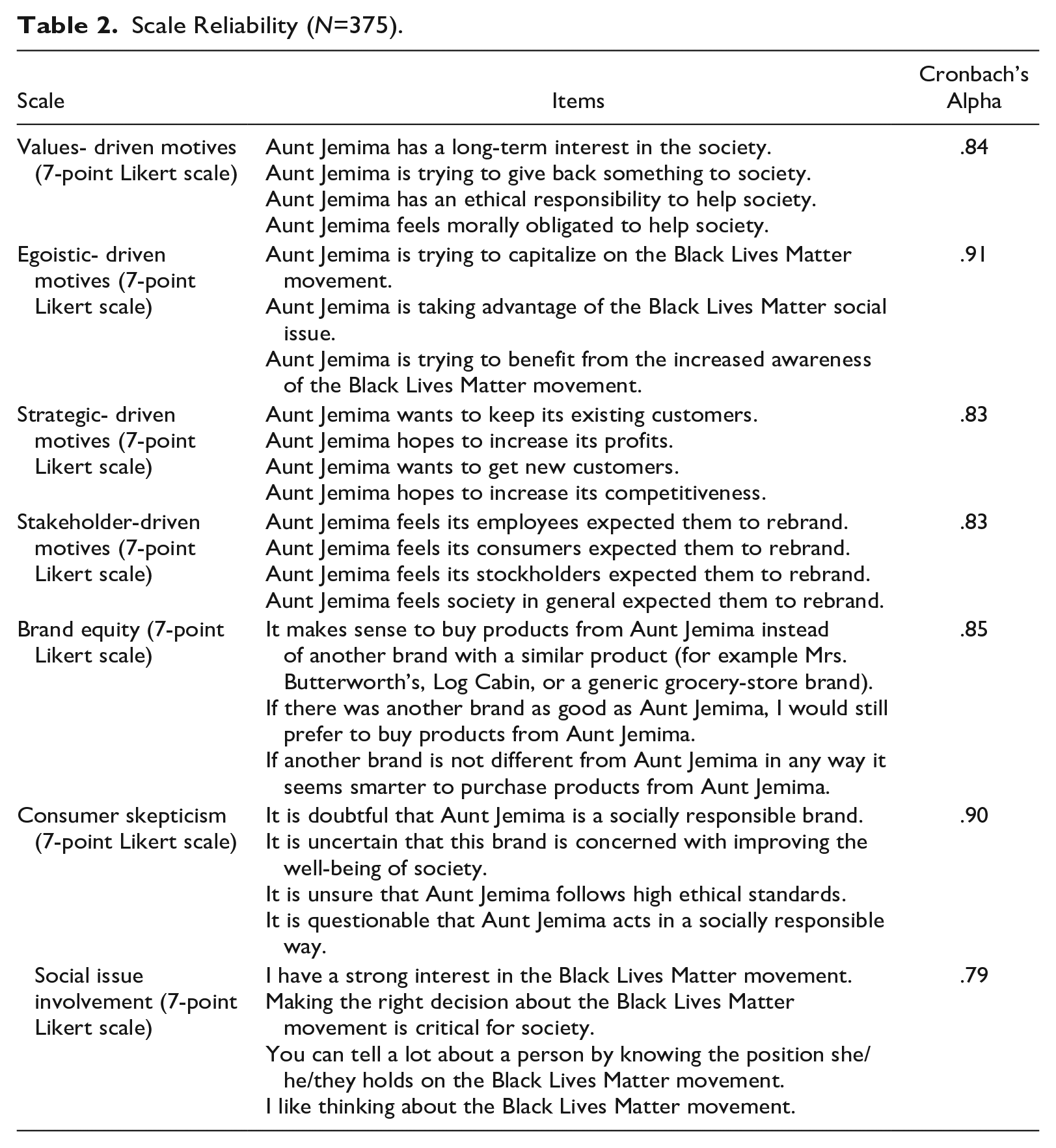
The four types of perceived corporate motives for engaging in CSA acted as the independent variables for this study. Namely, values-driven motives (intrinsic), egoistic-driven motives (extrinsic), strategic-driven motives (extrinsic), and stakeholder-driven motives (extrinsic). To measure these independent variables, validated 7-point Likert scales were taken from research conducted by Skarmeas and Leonidou (2013). They derived the items measuring values-, egoistic-, strategic-, and stakeholder-driven attributions from the work of Ellen et al. (2006) and Vlachos et al. (2009). Some of these scale items were reworded slightly in order to fit the context of the current research. In the 7-point scale, 1 indicated that respondents strongly disagreed with the item and 7 indicated that respondents strongly agreed. The first independent variable, egoistic-driven motives, was measured with three items. The remaining three of four independent variables (values-, strategic-, and stakeholder-driven motives) were measured with four items each. The variables and their respective scale items can be found in Table 2.
Scale Reliability (N=375).
The dependent variable of this study was the consumer-based brand equity. In this research, the Pearl Milling Company/Aunt Jemima brand will serve as a case study; hence the brand equity of this specific brand will be measured. The measurement included a 3-item, 7-point Likert scale. This Likert scale was adapted from Skarmeas and Leonidou’s (2013) Likert scale to measure retailer equity.
Consumer skepticism was considered as a mediating variable in this study. A 7-point Likert scale consisting of four items was used to measure consumer skepticism. Participants’ responses could range from strongly disagree (1) to strongly agree (7). Skarmeas and Leonidou’s (2013) scale about CSR skepticism toward retailers was adapted to better fit this research. The word retailer, for instance, was replaced with “Aunt Jemima” in each of the items. Furthermore, the research explored participants’ social issue involvement as a moderating variable. A 7-point Likert scale created by Nowak and Salmon (1987) was used to measure it. Although the scale was developed three decades ago, it was cited more recently by Grunig and Grunig (2014). Therefore, the items are still considered relevant for determining participants’ level of involvement in the BLM social issue. The items have been adapted in order to specify the social issue in question.
A Cronbach’s alpha (α) test was conducted to ensure the reliability of each scale (see Table 2). If Cronbach’s alpha is between .60 and .80, the scale is considered to be moderately reliable and is accepted (Pallant, 2010). On the other hand, if the scale’s Cronbach’s alpha is greater than .80, it is considered very reliable (Pallant, 2010). The analysis showed that values-driven motives (α = .84), egoistic-driven motives (α = .91), strategic-driven motives (α = .83), stakeholder-driven motives (α = .83), and brand equity (α = .85) all had an α above the .80 threshold. The scale for social issue involvement (α = .61) consisted of eight items. The test indicated that the reliability of the scale could be significantly improved by deleting four of the items. Hence, the final improved scale for social issue involvement (α = .79) consisted of four items.
All seven variables were constructed through an equal-weighted method. Table 3 presents the descriptive statistics of the variables.
Correlation Matrix (N=375).
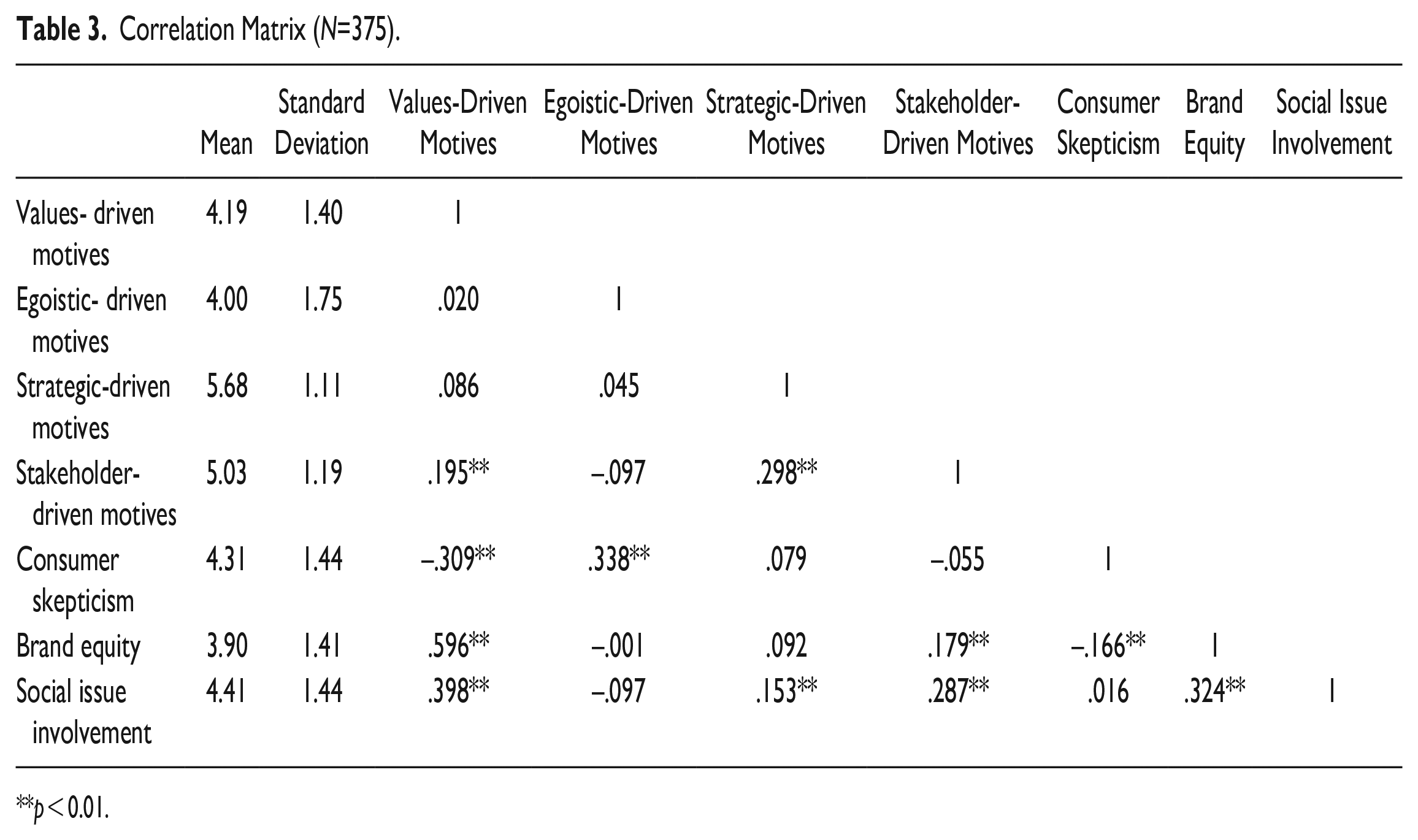
p < 0.01.
Results
In order to test the hypotheses, a series of linear regression analyses were conducted. To test Hypotheses 1 through 4, the linear regression analysis was conducted with consumer skepticism as the dependent variable. The predictors were egoistic-driven motives, values-driven motives, strategic-driven motives and stakeholder-driven motives. The variables gender, educational attainment, and political viewpoint were included as control variables. The model was found to be significant, F( 22, 344) = 6.318, p < .001. The R2 value of .29 revealed that the model explained 28.8% of the total variance. Firstly, the estimated coefficient of values-driven motives had a beta value of −.34 and a p value less than .001 (β = −.34, t = −6.74, p < .001, 95% CI [−0.44, −.24]). It revealed that the values-driven motives variable was found to be negatively correlated with consumer skepticism. Hence, Hypothesis 1 could be accepted.
The second independent variable, egoistic-driven motives, had an estimated coefficient of .26 and a p value less than .001 (β = .26, t = 6.65, p < .001, 95% CI [ 0.18, 0.34]). The results indicated that the egoistic-driven motives variable was a significant predictor of consumer skepticism. Hence, Hypothesis 2 can be accepted.
The third independent variable, strategic-driven motives, had a beta value equal to 0.05 and a p value of .426 (β = 0.05, t = .80, p = .426, 95% CI [−.08, 0.18]). It implies that the strategic-driven motives variable was not found to be a significant predictor of consumer skepticism. Because of the insignificance, we failed to reject the null hypothesis of Hypothesis 3.
Lastly, the stakeholder-driven motives variable had a beta value of .02 and a p value of .701, (β = .02, t = .39, p = .701, 95% CI [−.10, .14]). As the stakeholder-driven motives variable was not found to be a significant predictor of consumer skepticism, we failed to reject the null hypothesis of Hypothesis 4.
In addition, gender (β = −.23, t = −1.65, p = .100, 95% CI [−.52, .05]), educational attainment (β = −.08, t = −1.57, p = .118, 95% CI [−.18, .02]), and political viewpoint (β = −.01, t = −.22, p = .824, 95% CI [−.08, .07]) did not demonstrate a significant effect on consumer skepticism.
To test Hypothesis 5, a linear regression analysis was conducted with brand equity as the dependent variable and consumer skepticism as the predictor. The variables for gender (β = −.04, t = −.30, p = .761, 95% CI [−.31, .22]), educational attainment (β = .04, t = .68, p = .500, 95% CI [−.07, .14]), and political viewpoint (β = −.04, t = −1.06, p = .288, 95% CI [−.11, .03]) were included as control variables, but their effect was not significant. The regression model was found to be significant, F(19, 349) = 2.66, p < .001. The R2 value of .13 revealed that the predictor variable explained 12.7% of the total variance. The results of the regression analysis revealed that consumer skepticism had a weak negative effect on brand equity, which was found to be significant (β = −.16, t = −3.08, p = .002, 95% CI [−.26, −.06]), and therefore Hypothesis 5 was accepted.
Since Hypotheses 1, 2, and 5 were accepted, it implied a potential mediation of consumer skepticism on the relationship between the perceived CSA motives (most likely values-driven motives and egoistic-driven motives) and brand equity. Therefore, four additional analyses were conducted in order to test the mediation effect of consumer skepticism on the relationship between the perceived CSA motives and brand equity. The variables for gender, educational attainment, and political viewpoint were included as control variables. Each of the mediation analyses were conducted using Andrew Hayes’s PROCESS macro for SPSS.
The results only confirmed a mediation effect via consumer skepticism between egoistic-driven motives and brand equity. In the first step of the analysis, the regression of egoistic-driven motives on brand equity had a weak positive relationship that was found to be insignificant (β = .05, t = 1.01, p = .314, 95% CI [−.04, .13]). In Step 2 of the analysis, the regression of egoistic-driven motives on the mediator, consumer skepticism, had a weak positive relationship that was found to be significant (β = .27, t = 6.59, p < .001, 95% CI [.19, .35]). Step 3 of the mediation process revealed that the mediator (consumer skepticism), controlling for egoistic-driven motives, had a significant negative effect on brand equity (β = −.18, t = −3.36, p < .001, 95% CI [−.29, −.08]). Step 4 of the analysis revealed that egoistic-driven motives, controlling for consumer skepticism, had a weak positive effect on brand equity that was not found to be significant, β = .05, t = 1.01, p = .314, 95% CI [−.04, .13]. The indirect effect of egoistic-driven motives on brand equity via consumer skepticism (IE = −.05) is negative and significant (95% CI [−.09, −.01]).
To test the moderation effects predicted in Hypothesis 6, an analysis was conducted using Andrew Hayes’s PROCESS macro for SPSS. For each of the four moderation analyses, consumer skepticism acted as the dependent variable and social issue involvement acted as the moderating variable. The variables for gender, educational attainment, and political viewpoint were included as control variables. Surprisingly, we found that none of the interaction item (e.g., values-driven motives × social issue involvement, egoistic-driven motives × social issue involvement) had a significant impact on consumer skepticism (p value all above .05). Therefore, we failed to reject the null hypothesis of Hypothesis 6.
Discussion and Conclusion
Theoretical Implications
This study constitutes a valuable addition to existing CSA literature, which has been lacking in academic research. Since CSA has its origins in CSR, it has often been classified as a subset thereof (Austin et al., 2019). Researchers have typically focused on CSR and used the results to draw generalized conclusions about CSA. Instead, this study has focused on CSA as its own category of corporate action. More specifically, the results of the study provide empirical evidence about the impact of consumers’ causal inferences for CSA engagement on consumer skepticism and in turn consumer-based brand equity. Unlike CSR, CSA is inherently confrontational (Yim, 2021). By engaging in CSA, companies align themselves only with particular stakeholder groups, which share the same viewpoints on more controversial sociopolitical issues (Yim, 2021). Despite the differences between CSA and CSR, the results of this study led to four major findings that are in agreement with previous academic research and theory surrounding CSR and CSA.
Firstly, the findings reveal that consumer perceptions of values-driven motives for engaging in CSA inhibits the development of consumer skepticism. Skarmeas and Leonidou (2013) also found that consumer skepticism was inhibited when consumers’ perceived values-driven motives for engaging in CSR. Furthermore, the findings are in agreement with research conducted by Parguel et al. (2011), who found a positive relationship between perceived intrinsic motives and corporate brand evaluations. Therefore, Parguel et al. (2011) argue that a company’s consumers must perceive genuine altruistic motives for CSR in order to enhance corporate brand evaluations. In addition, this major finding supports Yim’s (2021) article, which suggests that the best approach to CSA is authenticity. Similar to the finding of this article, Yim (2021) suggests that people who perceive authentic values-driven motives for engaging in CSA will also trust the company more. It can therefore be deduced that consumers value companies that have genuine concern and altruistic motives for engaging with the issue, whether it is CSA or CSR.
A second major finding of this study was that consumer perceptions of egoistic-driven motives for engaging in CSA contribute to the formation of consumer skepticism. In other words, consumers become more skeptical when they believe the company has ulterior motives that are exploiting and taking advantage of an issue. In line with the findings of this study, research conducted by Forehand and Grier (2003) as well as Skarmeas and Leonidou (2013) found that consumer skepticism is driven by consumers’ belief that a company has self-interested and egoistic motives for taking action and engaging with social issues through CSR initiatives. However, Forehand and Grier (2003) suggest that all extrinsic motives (egoistic-driven motives, strategic-driven motives, and stakeholder-driven motives) negatively impact a company, but this study only found a significant negative impact when consumers attributed egoistic-driven motives. Moreover, this major finding supports Yim’s (2021) article, which argues that perceptions of fake stand-taking and self-interested motives for engaging in CSA evoke consumer skepticism. Companies should therefore be wary of the risks that accompany CSA involvement when their efforts are perceived by their consumers to be egotistically driven.
Another major finding of this study was that consumer skepticism contributes to lower levels of consumer-based brand equity. This finding is in line with research conducted by Yim (2021) about CSA, which suggests that consumer skepticism negatively impacts consumers evaluations of a company. This study used a case of CSA in order to come to this conclusion, but the same conclusion was also drawn from research conducted by Skarmeas and Leonidou (2013) as well as Stanaland et al. (2011) when the research revolved around a case of CSR. Hence, high levels of skepticism harms the image, value, and importance of a company in the eyes of the consumer, whether the company engages in CSA or CSR. This can have implications for a company’s competitive advantage, perceived product quality, consumer-company relationship, as well as the strength of its consumer loyalty (Zahid & Raja, 2014).
The fourth major finding of this study was that consumer skepticism was found to be a significant mediator of the relationship between perceived egoistic-driven CSA motives and consumer-based brand equity. In line with this finding, a study led by Skarmeas and Leonidou (2013) also posits a mediating role of CSR skepticism on the relationship between egoistic-driven motives and retailer equity. Hence, consumer skepticism plays a mediating role between egoistic-driven motives and brand/retailer equity when it relates to both CSR and CSA. The mediation effect explains the transmission of the effect of the independent variable (egoistic-driven motives), on a dependent variable (brand equity) through another variable/mediator (consumer skepticism). Companies should therefore be aware of the risks associated with the causal chain in which perceived egoistic-driven motives for engaging in CSA affects consumer skepticism and in turn affects brand equity.
Based on these findings, it can be concluded that a company benefits from CSA if its consumers perceive purely moral, altruistic, and ethical corporate motives. However, a CSA activity could also backfire if consumers perceive egoistic motives for engaging in CSA, in which case it would harm the company. Altogether, the four major findings of this study concur with CSR literature, which then supports the idea that CSA can be classified as a subset of CSR.
Pedagogical Implications
Past research has indicated that more and more consumers value companies that engage in CSA, and social media has given these people the power to put pressure on companies that do not (Austin et al., 2019; Edrington & Lee, 2018; Gaither et al., 2018). Our findings support companies to stay vocal about where they stand on sociopolitical issues, and it is crucial to carry out a clean-cut CSA communication strategy in this context. In practice, several matters should be considered when organizing corporate trainings. First, communication managers need to constantly update their knowledge on different types of CSA representing distinct public concerns, in order to identify relevant sociopolitical issues that best align with the company’s core value and may result in less stakeholder skepticism. Second, corporate trainings should equip communication managers with effective tools to convince stakeholders about corporate true motives for engaging in CSA. In other words, transparent, authentic, and credible messages need to be formulated around what sociopolitical issues the company has a genuine altruistic concern for and then disseminated through proper channels to reach out to different stakeholder groups. If the corporate motives are perceived extrinsic, more specifically egoistic, rather than intrinsic, then engaging in CSA would most likely not be beneficial to the company. Third, corporate trainings are advised to emphasize on the value of monitoring the levels of skepticism among important stakeholder groups. In addition to communicating values-driven motives that inhibit skepticism, companies should also avoid making reference to extrinsic motives, which could be misconstrued as self-interested or opportunistic and may elicit skepticism. Maintaining low levels of skepticism among stakeholders benefits the company in all ways related to brand equity. All in all, the goal of corporate trainings should be to develop a CSA communication strategy that builds trust and resilience to negative information rather than invoking skepticism among stakeholders.
The findings of the current study also provide implications for the teaching of CSA in higher education institutions. Essentially, businesses and communication students need to be educated to critically view CSA as a new corporate communication phenomenon that differs from CSR or traditional public relation activities that advise companies to stay neutral on sociopolitical issues because of the fear of alienating certain stakeholder groups. Recent examples involving Patagonia, Target, Nike, Starbucks, and Credit Suisse taking a public stand on divisive social or political issues could be used as case studies to allow the students to understand CSA as one of the critical issues emerging in the business context. Also, students can be invited for role-playing games to assess (1) whether courting controversy is likely to benefit or damage the brands, (2) what CSA strategies could be put forward to mitigate reputational risks, and (3) how corporate motives could be best expressed in communication practices. Through implementing these pedagogical approaches, students should be able to identify challenges and developments in corporate activism, and to analyze and critically reflect upon contemporary cases using newly developed theories in CSA literature.
Limitations of the Study
One limitation of this study is that the survey did not provide participants with an answer option that could indicate that they were uncertain about the question. Questions related to values-driven motives and egoistic-driven motives were extreme opposites, whereas questions about strategic-driven motives and stakeholder-driven motives could have been more difficult for participants to form an opinion about and answer. For example, the strategic-driven and stakeholder-driven motives may be interpreted as subsets of the larger “egotistic-driven motives,” because strategic-driven and stakeholder-driven motives—like egotistic motives—are focused primarily on seeking benefit for the company. This limitation could help explain why the null hypothesis of Hypotheses 3 and 4 were rejected.
Another limitation of this study was its external validity, because of the representativeness of the sample. This limitation was explained by the sampling method. The Amazon Mechanical Turk crowdsourcing site turned out not to be entirely generalizable to the U.S. population. The sample represented more millennials (ages 25–44), more well-educated people, a higher percentage of White people versus people of color, and fewer conservatives than what is true for the research population of American adults. The large percentage of White people in the sample leads to a second limitation related to the case of this study, that is, Aunt Jemima’s engagement with the BLM movement. The BLM movement focuses on the struggles of African Americans in the United States, who were underrepresented in the sample of the study. Hence, the external validity of the study together with the choice of using the Aunt Jemima case could help explain why the null hypothesis of Hypothesis 6, about the moderation effect of social-issue involvement, was rejected. Another potential explanation of the insignificant moderation effect is that consumers’ involvement with BLM is not equivalent to consumers’ valuation of social or racial justice. In other words, consumers may strongly agree with the rebranding effort of Aunt Jemima but remain neutral in regard to BLM.
Future Research
This study focused on the BLM movement. Since a company’s CSA strategy could cover any sociopolitical issue, replicating this study with another case surrounding a different sociopolitical issue, such as abortion, gun control, LGBTQ+ rights, etc. could therefore be interesting. Although the BLM movement became widespread in many parts of the world in the summer of 2020, the movement has its roots and is more salient in the United States. Researching other sociopolitical issues relevant to other countries and cultures could therefore be worthwhile.
In addition, the outcomes of this study indicate that companies benefit from CSA when their consumers perceive values-driven motives for their engagement. Hence, further research on how to get consumers to perceive values-driven motives is needed. A suggestion for further research would be to conduct an experiment that tests how different ways of communicating a CSA strategy affects consumers’ perceived corporate motives. Such an experiment could extend upon this research and provide new valuable insights for companies interested in building a CSA strategy.
Lastly, this study focused on consumer skepticism and consumer-based brand equity as consequences of CSA engagement. Further research is needed, however, in order to understand consumer skepticism as a consequence. For instance, does consumer skepticism endure or does it only impact the company short-term? As previously stated, future research could implement a longitudinal single-source design. Future research could also replace brand equity with other possible consequences, for instance, consumers’ intention to purchase or their likelihood of engaging in word-of-mouth. These directions for future research may build upon this study and contribute further to CSA literature.
Footnotes
Declaration of Conflicting Interests
The author(s) declared no potential conflicts of interest with respect to the research, authorship, and/or publication of this article.
Funding
The author(s) received no financial support for the research, authorship, and/or publication of this article.
