







Abstract
During the COVID-19 pandemic, several countries have eliminated face-to-face classes in all schools, requiring all teachers to deliver classes remotely. In this regard, the wide spread of information and communication technology (ICT) products and services in the educational sector became a burden for several teachers. This article aims to study the impact of online teaching, and how technological stress might vary between male and female teachers and to what extent it alters their family lives and their way of living. The case of Lebanon has been examined and analyzed using 379 participants in various schools randomly distributed throughout the country, who participated in a survey on how COVID-19 affected their technostress levels. The findings showed that married women were more prone to technological stress and that their family life and lifestyle were strongly affected. In particular, young women with few years of experience were more likely to experience technostress problems. We also found no differences related to educational levels. In addition, the inclusion of different degrees of computer self-efficacy has shown an impact on the development of technostress among individuals.
Introduction
The COVID-19 pandemic appeared in China in late 2019 and hit everyone universally (Ahn et al., 2020; Harapan et al., 2020). This infectious disease has had far-reaching consequences and is causing an overabundance of challenges beyond the outbreak of the disease worldwide. Early data show that the progressing spread of the new Corona infection has become the greatest threat to the worldwide economy and the general well-being, as many households limit their social interactions. COVID-19 brought the global economy to a sudden stop, causing shocks to supply and demand. It put millions of people in poverty by slowing down global economic growth, contracting services and manufacturing activity, selling off stock markets, and rising unemployment. As a result, policymakers, companies, and households have struggled to estimate growth expectations and evaluate the recovery.
Some expressions, such as “social distancing,” “lockdown,” and “mandatory wearing masks,” have taken place in our daily lives. Simply sitting at home due to the lockdown has some advantages, and staying at home includes spending more time with family and engaging in indoor hobbies. However, this pandemic poses serious disadvantages, such as the rise of unemployment, boredom, loneliness, fewer outdoor activities, less exercise time, and fewer social gatherings. This has caused many employees to leave their current jobs, and they are now forced to spend more time teaching their younger siblings from home. This enormous pressure causes further stress among family members.
The physical damage caused by these infectious diseases in patients may be recovered quickly, but the psychological damage may last much longer (Yue et al., 2021). However, this pandemic strikes various societies differently. It increases the existing inequalities between men and women, especially in underdeveloped countries; exposes the vulnerabilities of social, political, and economic systems; and deepens the effects of the COVID-19 pandemic on women in all areas, from the health of the economy and from security to social protection.
As a result, during this pandemic, the use of information and communication technologies (ICT) emerged as an essential economic phenomenon aimed at the longevity of businesses without regard to place or time (Piszczek, 2017). Several organizations decided to switch their normal activities onto technological platforms by using online applications and social media that allow companies to reach and serve their customers over the Internet. The introduction of ICTs can have advantages, such as flexibility of schedules and places, enhancing efficiency, improving performance and productivity, saving time (Thulin et al., 2020), and reducing costs and distance barriers (Agrawal & Mittal, 2018). However, it has some disadvantages, such as a lack of social interaction, and, particularly, it can be considered a source of stress and anxiety for many workers (Molino et al., 2020; Salanova et al., 2013). Derks and Bakker (2014) argued that the use of smartphones for work at home can cause a negative relationship with the work–family spillover and increase the stress levels within the family. Other studies have found that using ICT at home for work purposes reduces interactions with family members (Desrochers et al., 2005; McDaniel & Coyne, 2014), has a negative impact on the quality of family relationships (Lewis & Cooper, 1999; Nie, 2001), and may have a negative impact on job performance (Ashforth et al., 2000; Kossek et al., 2006; Penado Abilleira et al., 2021). The stress experienced by individuals through the use of ICT tools is called “technostress” (Berger et al., 2016). Technostress is characterized as a physical and/or mental illness that individuals may experience because of the appropriate use of ICT tools.
Schools that have decided to continue their regular classes on online platforms that allow teachers and students to attend and conduct sessions over the Internet are one of the institutions that have been affected by this pandemic. ICTs have remodeled the teaching profession’s process during the COVID-19 pandemic (Graham et al., 2009). With young children studying from home instead of school, parents’ regular agendas were disrupted, and new plans were needed to let their children attend classes. The use of ICT tools by teachers, students, and parents is increasing as a result of these plans. The propensity for digitalization practiced in the educational sector facilitates the work of some teachers and creates opportunities for others. On the other hand, teachers with full access to work facilitated by ICT tools are asked to complete their tasks simultaneously and to reply to students’ and their parents’ requests from multiple directions. Teachers may face additional stress as a result of this, such as time constraints and increased workload (Tarafdar et al., 2015). As a result, teachers with insufficient knowledge and skills to use technology appropriately may struggle to carry out their various roles when working from home, causing stress (Özgür, 2020). So, it is important to explore the impact of ICT tools used during off-job time on the family lives of teachers who work from anywhere at any time. As such, more research is required on how the use of ICT for work purposes interferes with personal and family life (Andrade & Matias, 2022; Barley et al., 2011) and can affect the work-family relations of workers, especially in the teaching sectors. The primary purpose of this research is to undertake an empirical investigation about the technostress associated with the use of ICT tools by the Lebanese teacher during the COVID-19 pandemic in Lebanon. Therefore, it improves the literature regarding the online learning system in Lebanese elementary and secondary schools. Lebanon, which has one of the best educational systems among the Arab countries (Ben Hassen, 2021), benefited from the findings of this study not only for the Lebanese but also for other Arab countries that implemented an online learning system during the pandemic and even beyond it. Studies on technostress in the educational sector are still limited (Upadhyaya, 2021). However, to our knowledge, this study is unique, and it contributes to our knowledge about the impact of COVID-19 on Lebanese workers, especially in the educational field.
This study will focus on teachers, mainly at school levels, where it will aim to depict how online teaching affected those teachers. Throughout the study, we will focus on how the level of technological stress varied among teachers through a series of hypotheses. First, compared to male teachers, women are more likely to be affected by technostress levels. Second, compared to younger teachers, older teachers are more likely to be affected by technostress levels. Third, several factors appear to have a direct impact on technostress levels among teachers, including their years of experience, marital status, and level of education. Lastly, computer self-efficacy influences teachers’ technostress levels.
Literature Review
Online Learning System
Worldwide, the COVID-19 pandemic has altered everything in our lives and forced organizations, especially schools, to close (Chaka, 2020; Masago et al., 2020). In this light, billions of students around the world experienced the closure of their educational entities (UNESCO, 2020). In this vein, distance learning programs have been implemented during school closures caused by COVID-19 (Watermeyer et al., 2021). In responding to this outbreak, the Lebanese government has temporarily closed all educational institutions across the country, but the learning process continues. Thus, most teachers and students moved from the conventional setting of face-to-face teaching to implement distance education or an online educational system by adopting modern technologies such as digital video conferencing platforms like Google Meet, Zoom, and Webex Blackboard (Maity et al., 2021). As a result, large-scale training programs to apply technology in education cannot be applied normally in these extraordinary circumstances, the pandemic (Amhag et al., 2019). During COVID-19, most educational institutes were forced to implement the online learning tools in a short time span (Van der Spoel et al., 2020), even though their support and their online learning settings were not fully ready (Korkmaz & Toraman, 2020). Studies confirm that students are appropriately skilled to participate in online learning lessons, whereas lesson preparation by teachers, who play a critical role in the effective delivery of lessons, becomes more difficult (Mohmmed et al., 2020). Nowadays, not all teachers are experiencing digital literacy in the same way (Aslan & Chang, 2015). Thus, the online learning system has raised numerous inquiries about the quality of education (Sahu, 2020).
Several difficulties have involved the provision of infrastructure (Cui et al., 2018), such as the weakness of Internet connectivity, especially in villages, the price of buying expensive data packages, and the inadequate understanding of ICT usage (Aung & Khaing, 2015). Teachers and staff started to acquire online training to use online platforms and to provide online instruction to their students (Amin & Sundari, 2020). However, this movement to online learning systems required infrastructures such as the Internet, modems, and modern devices (Alvino et al., 2020).
This shift to an online learning system makes the teaching and learning process more student-centered, innovative, and flexible. A teacher plays a major role in this process; he must solve all the problems during the online sessions to achieve the targets set. As a provider of education, a teacher should interact personally not only with his students but also with their parents or guardians. The psychological and social factors of the online learning process could affect teachers' motivation when teaching. Therefore, based on the above-said issues, this study tries to investigate how well teachers are prepared for the use of the online learning system.
Technostress Creators
It is becoming increasingly important for employees in different sectors to engage regularly with the expansion of ICTs in order to get work accomplished. The combination between personal and professional time has been identified clearly by the use of ICTs during off-job time (Kossek, 2016), which increased the conflicts between work time and personal life (Barley et al., 2011). Thus, the integration of ICT in the educational sector during the COVID-19 pandemic has become relevant, which has required teachers to develop skills in ICT usage, causing stress associated with the use of technologies, called “technostress” (Estrada-Muñoz et al., 2021). C. Brod (1984) defined technostress as the failure to handle or deal with ICT technologies in a healthy manner, while for Ragu-Nathan et al. (2008), “technostress” is the difficulty of adaptation caused by the employee’s inability to deal with ICT. Several studies have revealed the effect of the implementation and use of ICT on increasing stress among individuals, known as “technostress” (Ayyagari et al., 2011; Berger et al., 2016; Califf et al., 2020; Nelson, 1990; Tarafdar et al., 2007). This phenomenon of nervousness and tension among the users’ ICTs can influence individuals’ healthiness and productivity (Ayyagari et al., 2011; Reslan et al., 2021) and is modulated by technological experiences, workload and work climate, and age (R. Brod & Huber, 1992).
Prior research has generally focused on the “technostress creators” (TSC) that cause technostress within individuals and demonstrated how technostress can reduce confidence by taking control of their time and space, increase absenteeism, burnout, cynicism, and tiredness, and decrease confidence (Ayyagari et al., 2011; Kahn et al., 1992; Piszczek, 2017; Ragu-Nathan et al., 2008; Yener et al., 2021). Although there have been many previous studies in the literature that found TSC was negatively associated with job satisfaction (Maier et al., 2015; Suh & Lee, 2017), organizational commitment (Ahmad et al., 2014), performance, and productivity (Jena, 2015; Tarafdar et al., 2007, 2015), it can be linked to a massive amount of strain on the physical shape of the individual in terms of exhaustion, headache, restiveness, and irritability (Arnetz & Wiholm, 1997; Fuglseth & Sørebø, 2014; Salanova et al., 2013). TSC divides stress caused by the use of ICT in work activities into five categories: techno-complexity (makes employees feel incompetent), techno-invasion (invades an employee's personal life with privacy), techno-overload (drives employees to work quickly), techno-uncertainty (imposes stress on employees through continuous modifications and upgrades of software and hardware), and techno-insecurity (affects employees' safety) (Tarafdar et al., 2007). In comparison to other professions, technological advancement and reform had a significant impact on educational methods and, as a result, teachers. In this perspective, during the COVID-19 pandemic, the implementation of ICTs requires additional time for teacher preparation. Therefore, efforts to assimilate technology into education-training processes by teachers might be influenced by external circumstances such as educational policies, educational level, communication with parents, absence of infrastructure, school policy on technology, and insufficient collaboration with management and colleagues, which create some significant obstacles in the context of the integration of technology into education (Dysart & Weckerle, 2015; Hur et al., 2016). Thus, managers, coordinators, and parents feel free to communicate with teachers outside of regular working hours directly via instant messaging, smartphone, or email to address work-related issues, which was not expected of teachers before the pandemic, unless there was an emergency. Because of this issue, teachers can experience work–nonwork tensions (Andrade & Matias, 2022). On the other hand, teachers did not receive extra revenue for their work from home, and all these pressures affect themselves as technostress (Voet & De Wever, 2017). Previous research has noticed that teachers’ technostress while using technology is influenced by demographic variables such as gender (Marchiori et al., 2019; Tarafdar et al., 2011), age (Jena & Mahanti, 2014; Syvänen et al., 2016), and teaching experience (Hsu, 2016).
Gender Characteristics in the Use of ICT
Numerous studies have found that gender influences age, professional experience, and level of education (Jena & Mahanti, 2014; Şahin & Çoklar, 2009; Tarafdar et al., 2011; Venkatesh et al., 2003, 2012), as well as individuals’ feelings, motivation, and thoughts (Saleem et al., 2011; Soltani et al., 2013). In turn, some studies showed that there is no difference between men and women in terms of technostress levels (Hsiao et al., 2017; Huang et al., 2017; Krishnan, 2017; Maier et al., 2015; Wang et al., 2008). Venkatesh and Morris (2000) found that men tend to value more the perception of a technology’s utility and its impact on their professional performance, while women seem to be more oriented toward the simplicity of the technology’s use. Huffman et al. (2013) noted that men showed lower levels of anxiety and positive attitudes regarding the usage of computers. In contrast, women revealed a greater level of anxiety and lower confidence regarding the use of computers (Freeman & Davis, 2010; Huffman et al., 2013; Tekinarslan, 2008).
Gender characteristics can affect the way in which teachers observe and respond to the use of ICT (Teo, 2008), but there are requirements to understand how this occurs (Gil-Flores et al., 2017; Sang et al., 2010). A large body of literature in educational research has observed the teaching methods and techniques (Akdemir & Özçelik, 2019; Aynalem et al., 2015; Kharb et al., 2012; Malek et al., 2014; Mathew & Pillai, 2016); the examination of technostress in the context of the gender variable, and particularly in terms of the level of technostress in favor of women, is limited (A. N. Çoklar & Sahin, 2011; A. Çoklar et al., 2016; Marchiori et al., 2019). In turn, some studies have discovered that technostress is generally associated with technical issues, such as connection problems and the need for software and technical supports in the case of female teachers, whereas it is associated with individual issues, such as attitude toward the skills acquired in the use of technology, self-efficacy, and economic circumstances in the case of male teachers (A. Çoklar et al., 2016). Teaching students on campus compared to the virtual classroom revealed that male teachers connected more frequently face-to-face while female teachers posted more messages in the web-based classroom (Caspi et al., 2006).
Some researchers framed typical ICT activities as a male domain (Brosnan & Davidson, 1996; Panteli et al., 1999); others argued that ICT should no longer be limited to men (King et al., 2002; Markauskaite, 2006). This highlights the necessity of reconsidering the potential impact of gender with regard to ICT usage by teachers. In this context, the first hypothesis of the research was established as follows:
Hypothesis 1: The level of technostress varies by age.
Previous research has looked at technostress in general (Ayyagari et al., 2011; Nisafani et al., 2020; Sanderlin, 2004; Shepherd, 2004; Tarafdar et al., 2007), while others have looked at the relationship between technostress levels and age (Hauk et al., 2019; Schmidt et al., 2021). Some of these studies revealed that age group is not a significant variable in terms of technostress level and there is no difference between adolescents and adult individuals (Krishnan, 2017; Maier et al., 2015; Wang et al., 2008). On the other hand, some studies have found that older people have a higher tendency to experience technological stress than younger people (A. N. Çoklar & Sahin, 2011; Hauk et al., 2019; Tams et al., 2018; Venkatesh et al., 2012), owing to differences in cognitive and physical abilities (Reuter et al., 2012). Others, however, claim that younger people have significantly higher levels of technostress than older people (Hsiao, 2017; Ragu-Nathan et al., 2008; Tarafdar et al., 2011). In this context, we still need clearer results by excluding these divergent results from the literature studies and seeking to carry out general studies in this direction (Helsper & Eynon, 2010; Jones et al., 2010; Marchiori et al., 2019; Upadhyaya, 2021). In this context, the second hypothesis of the research is as follows:
Hypothesis 2: The level of technostress varies by teacher’s professional experience.
Teaching experience is commonly defined as the number of years spent as a teacher in a school (Bivona, 2002). Schools usually include teachers with varying ranges of experience. Teaching experience could impact a teacher’s working hours and classroom management as well as implementing different teaching skills to motivate and involve their students in the teaching-learning process (Robinson Beachboard et al., 2011). Since online teaching-learning were adopted at the time of COVID-19, we still need to understand how teachers with teaching experience can cope with the online teaching techniques and enable them to face the stresses involved in their work. The effect of years of professional experience is a vital area of analysis that has so far not been sufficiently addressed. A study by Marchiori et al. (2019) has discussed the positive relationship between the years of professional experience in the public sector and the complexity of technology. With this mixed result, current research proposes the third hypothesis:
Hypothesis 3: The level of technostress varies by the teacher’s civil status.
Civil status describes a legal person’s relationship with a significant other. There are various types of civil status: single, married, divorced, and widowed. In recent years, a limited study has explored the relationship between marital status and technostress. However, Jena and Mahanti (2014) found no significant impact of marital status on technostress among Indian university students.
Based on the belief that an employee’s civil status influences their attitudes and behaviors, this article investigates the role of a teacher’s civil status in stress levels through the use of ICT in their regular teaching activities. In that context, the fourth assumption of the study is as follows:
Hypothesis 4: The level of technostress varies by the teacher’s level of education.
Individual characteristics can affect the way in which ICT users perceive and respond when using computers or other types of IT devices; however, we still need to recognize how this can influence the level of technostress. The level of education has demonstrated the intellectual nature of users who can facilitate the use of new technologies (Agarwal & Prasad, 1999). In general, the achievement of higher education requires intensive use of computers and can easily adapt to new technologies (Tarafdar et al., 2011). The educational status of teachers is linked to several characteristics of their institutional lives, such as performance and beliefs (Ng & Feldman, 2009). However, Holden and Rada (2011) suggested that the educational level of users be taken into account when researching user behavior and the comfortable use of new technologies. In this sense, Tarafdar et al. (2011) and Krishnan (2017) found that a higher level of education is negatively related to technostress. As well, Hsiao (2017) found a negative relationship between anxiety and workers’ educational attainment. In this context, the fifth hypothesis of the research is as follows:
Hypothesis 5: The level of technostress varies by teacher's computer self-efficacy.
The integration of ICT in our everyday lives has important implications for education. Individuals need a diverse set of skills, capabilities, and competencies to adapt to the technological era. For Bandura (1986), computer self-efficacy is the possession of the capacity to use the computer to achieve a particular behavior that produces results. Compeau and Higgins (1995) subsequently established a link between computer self-efficacy and performance. Some researchers are studying computer self-efficacy in the context of training and practice and concentrating on how to improve specific computer tasks through training (Chou & Wang, 2000; Webster & Martocchio, 1993), while others take a starting point and a functional approach that computer self-efficacy would be useful on the adoption concept by focusing on behavioral intentions rather than on the computer use or performance (Compeau & Higgins, 1995; Venkatesh et al., 2012). On the other hand, during the global lockdown related to the COVID-19 pandemic, an emerging scenario in the educational field required teachers to intensively use the computer or other electronic devices for online teaching to implement the current, innovative educational model. Therefore, the study examines the hypotheses stated above as described below.
Methodology
Procedures
This study employed a purposive sampling method. Therefore, the first requirement for the participants is to hold Lebanese nationality and work as teachers in the elementary and secondary schools. Participants fulfilled those conditions were included. Ethical considerations were respected in the study. A letter was sent to the school’s management, asking it to distribute the questionnaire within the school’s community. Teachers were informed that their personal information would be kept confidential to guarantee anonymity. Therefore, names and/or other personal details were not collected. Moreover, participation was entirely voluntary, and participants were free to withdraw at any point if they felt like.
Sampling and Data Collection
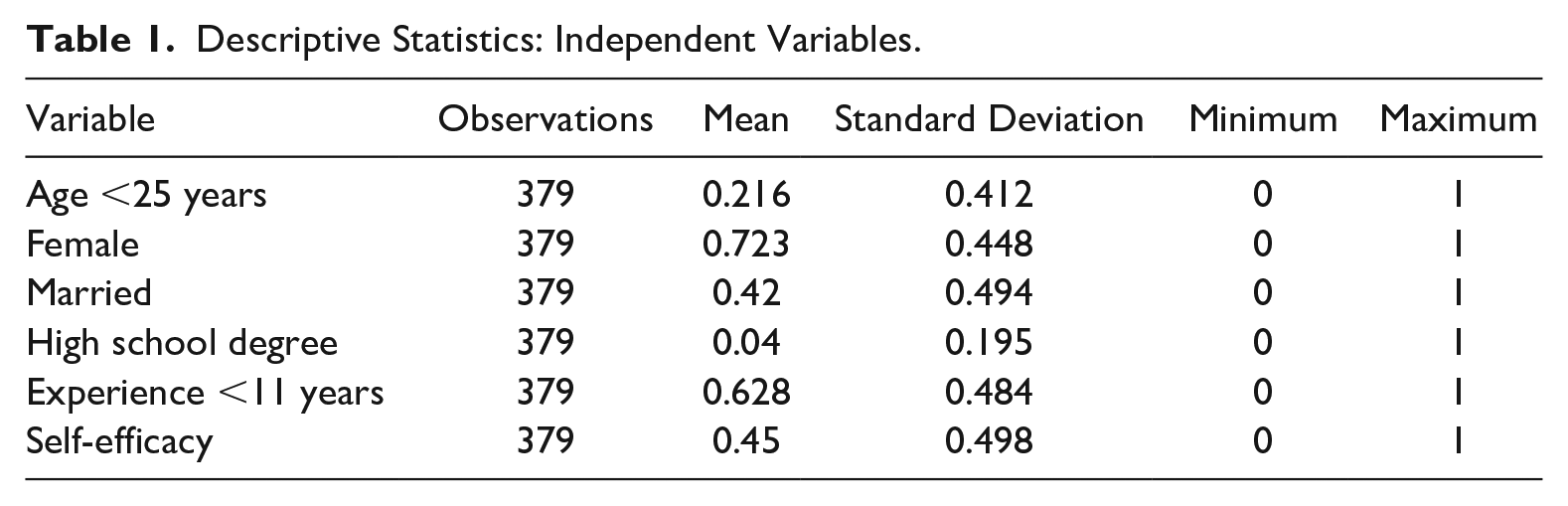
The participants were Lebanese teachers from different schools who had been requested to fill out a structured questionnaire by using an online survey website (Survey Monkey). A link was sent to teachers from 18 elementary and secondary schools based in different Lebanese areas. The inclusion criteria for participation required that teachers be of Lebanese nationality and to have used the school’s ICT for work purposes during nonwork time in the previous 6 months. A total of 432 teachers answered the initial questionnaire, and 379 questionnaires were further used in the analyses, resulting in a response rate of 87.73%. The majority of teachers were female (72.3%). Around 55.4% of the participants are single and 41.9% are married. In terms of age, 47.5% of the respondents were 26-35years old, 30.9% were above 36years old, and 21.6% were 18-25years old. The majority of the respondents held a bachelor’s or a master’s degree, with 55.4% and 40.63%, respectively. Regarding years of experience, 35.09% had been teaching for 1-5years, 27.7% for 6-10years, 19.5% for 11-15years, and 17.7% for more than 15years.
With the respondents being compared between males and females, it is worthwhile to mention that the gender question in the questionnaire incorporated two additional choices, “prefer not to disclose” and “other,” as a means to respect the different types of sexuality and ensure diversity, equity, and inclusion (DEI). Yet, none of the respondents chose those two choices and answered with either “male” or “female.” Such a result could possibly be attributed to the fact that engagement in the LGBTQ community is marginalized in Lebanon (Kalash, 2021). Similarly, Salem and Shaaban (2020) claimed that members of the LGBTQ community frequently encounter daily struggles and pressure from their heteronormative analogue, who seemingly tend to look upon them. Such occurrences show that the LGBTQ community in Lebanon still faces a wide range of issues related to belonging, engagement, and support. As the LGBTQ community still faces such issues in Lebanon, many social activists still stand up with the goal of defending and supporting the community with the hopes of having their voices heard (Moussawi, 2015).
Measures
This study adopts similar instruments developed for constructions of interest in previous studies with a very light fit. The questionnaire has been translated from English to Arabic using the back-translation method suggested by Brislin (1970). The questionnaire incorporates two sections: the demographic profile and the construct. The demographic profile comprised gender, age, civil status, education, and years of experience, and the construct included technostress creators and computer self-efficacy. Technostress creators were measured using 24 valid items from Tarafdar et al. (2007), which were grouped into five dimensions. These dimensions were techno-complexity, techno-invasion, techno-overload, techno-uncertainty, and techno-insecurity. All of the items were quantified on a 7-point Likert scale, ranging from 1 (strongly disagree) to 7 (strongly agree). Computer self-efficacy items were taken from Compeau and Higgins (1995), ranging from 1 (not confident) to 10 (totally confident). A pilot test was administered to 12 teachers selected randomly from different schools in Lebanon to ensure the understandability of the questionnaire items.
Data Analysis
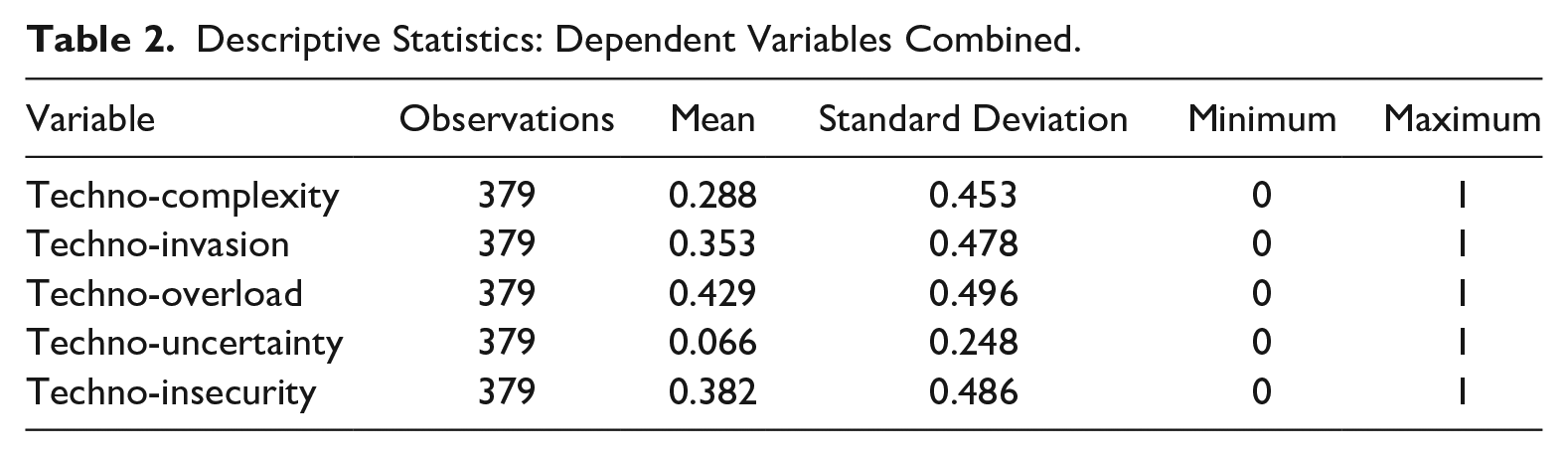
Data wer analyzed using version 14.1 of Stata (Stata Corp, College Station, TX) as a statistical analysis platform. Stata enables us to understand how the variables of interest change as new variables are added to the regression. The data analysis begins with descriptive statistics for the independent variables in Table 1 and the dependent variables combined in Table 2.
Descriptive Statistics: Independent Variables.
Descriptive Statistics: Dependent Variables Combined.
By using Stata, we can investigate the existence or nonexistence of multicollinearity. Moreover, in order to develop an understanding of the development of technostress within individuals as a result of online teaching during the COVID-19 pandemic, the following regression was implemented:

Correspondingly, probit model regressions were employed to study the dummy variables for each of the five technostress variables, which included techno-complexity, techno-invasion, techno-overload, techno-uncertainty, and techno-insecurity. The explanatory variables are factors about individuals’ characteristics (Individuali), such as age, gender, and education, and socioeconomic factors (Socioi) such as marital status and years of experience. Furthermore, computer self-efficacy (Literacyi), which included 10 different categories of computer self-efficacy, was integrated. Finally, we denote Ui for the error term.

For each of the utilized variables, a dummy variable was generated. For the dependent variables, each variable took a value of 1 if the individual agreed to have witnessed the technostress subcategory and 0 otherwise. For marital status, it took a value of 1 if the individual was married and 0 otherwise; for education, it took a value of 1 if the individual possessed a university degree and 0 for a high school degree; for age, it took a value of 1 if the individual was less than 25years old and 0 otherwise; for gender, it took a value of 1 if the individual was female and 0 if male; for years of experience, it took a value of 1 if the individual had less than 11years of experience and 0 otherwise. As for the 10 categories of computer self-efficacy, each category took a value of 1 if the individual recorded a response of 5 or less, showing no signs of confidence, and 0 if the individual recorded a response of more than 5, showing signs of confidence. Different probit regressions were run in order to depict the impact of the explanatory variables on each of the technostress variables.
Results
Hypotheses Results
By being divided into five different groups, the technostress creators were impacted in various manners by the chosen independent variables, which included age, gender, marriage, education, and years of experience and 10 indicators depicting computer self-efficacy. The 1st indicator states if there was no one around to tell one what to do as they go, the 2nd states if a person had never used a system like it before, the 3rd states if they had only the instructions for reference, the 4th states if they had seen someone else using it before trying it themselves, the 5th states if they could call someone for help if they got stuck, the 6th states if someone else had helped them get started, the 7th states if they had a lot of time to complete the job for which the system was provided, the 8th states if they had just the built-in help facility for assistance, the 9th states if someone shows them how to do it first, and the 10th states if they had used a similar system before this one to do the same job. With each of those groups being broken down into different subcategories, the impact of the independent variables was studied on each of those subcategories as a means to depict their impact on the group as a whole.
Techno-complexity
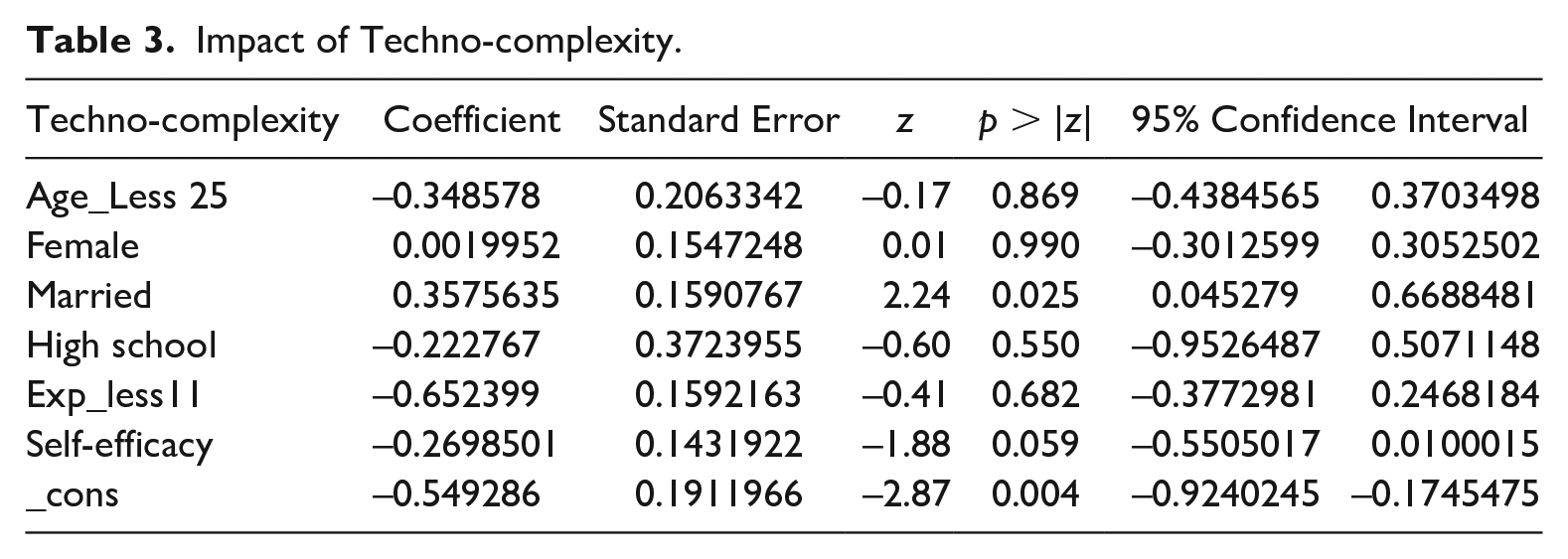
Starting off with the first group of technostress, which is the techno-complexity, being female and being married positively affect the techno-complexity by 0.002% and 0.357%, respectively. Being less than 25years old, having a high school degree, having less than 11years of experience, and the computer self-efficacy indicator negatively influenced techno-complexity by 0.034%, 0.222%, 0.065%, and 0.269%, respectively. Among those factors, being married and the computer self-efficacy indicator significantly affect techno-complexity (Table 3).
Impact of Techno-complexity.
Techno-invasion
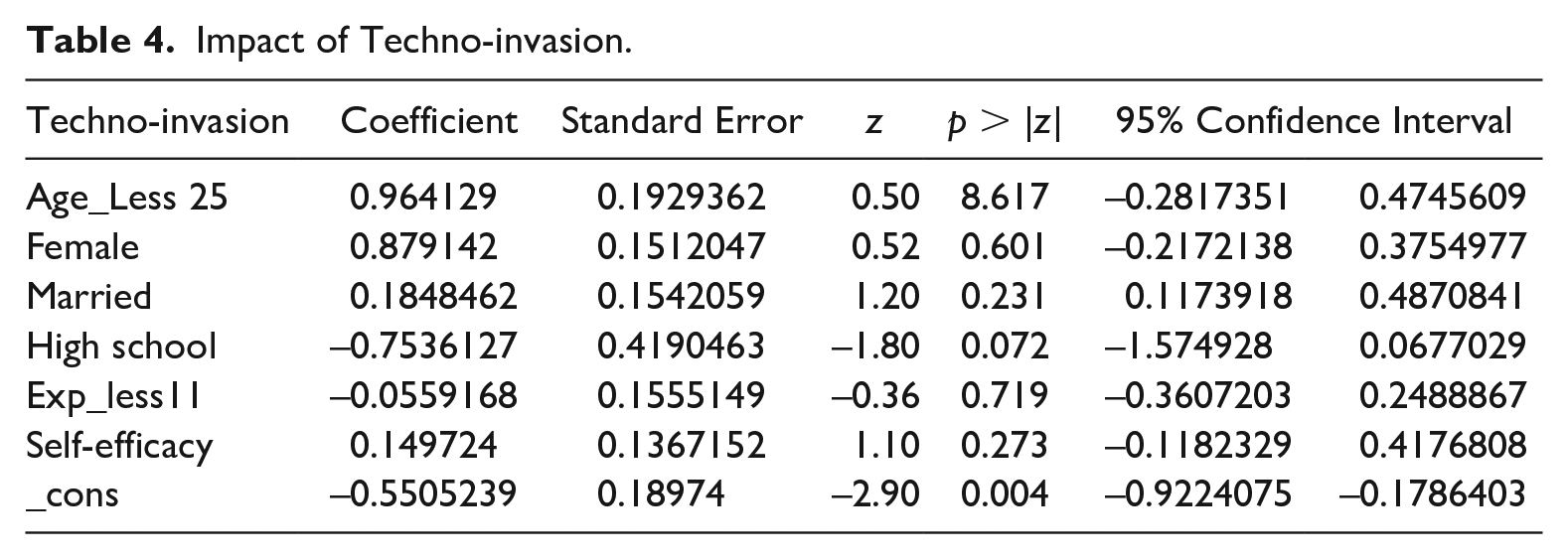
In terms of techno-invasion, being less than 25years old, female, married, and having a high computer self-efficacy indicator positively affects techno-invasion by 0.09%, 0.08%, 0.18%, and 0.15%, respectively. Having a high school degree and having less than 11years of experience negatively affect techno-invasion by 0.75% and 0.06%, respectively. Among those variables, having a high school degree significantly negatively affects techno-invasion (Table 4).
Impact of Techno-invasion.
Techno-overload
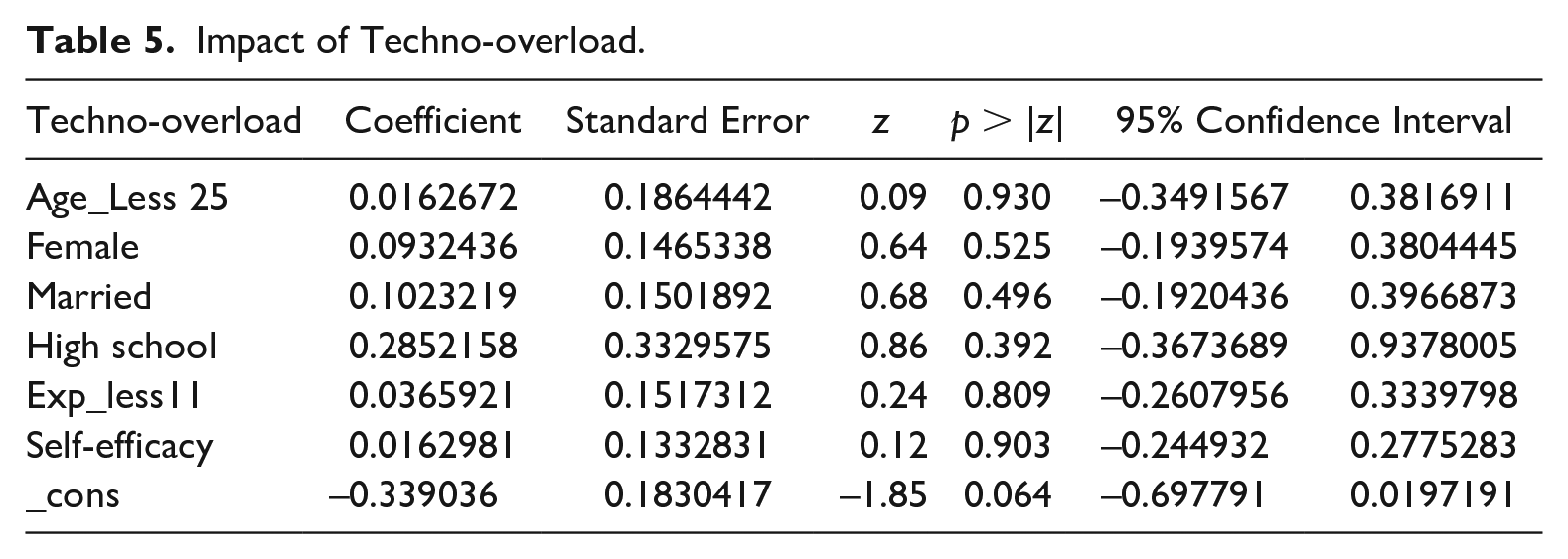
In terms of techno-overload, being less than 25years old, female, married, having a high school degree, having less than 11years of experience, and the computer self-efficacy indicator positively affect techno-overload by 0.016%, 0.093%, 0.102%, 0.285%, 0.036%, and 0.016%, respectively (Table 5).
Impact of Techno-overload.
Techno-insecurity
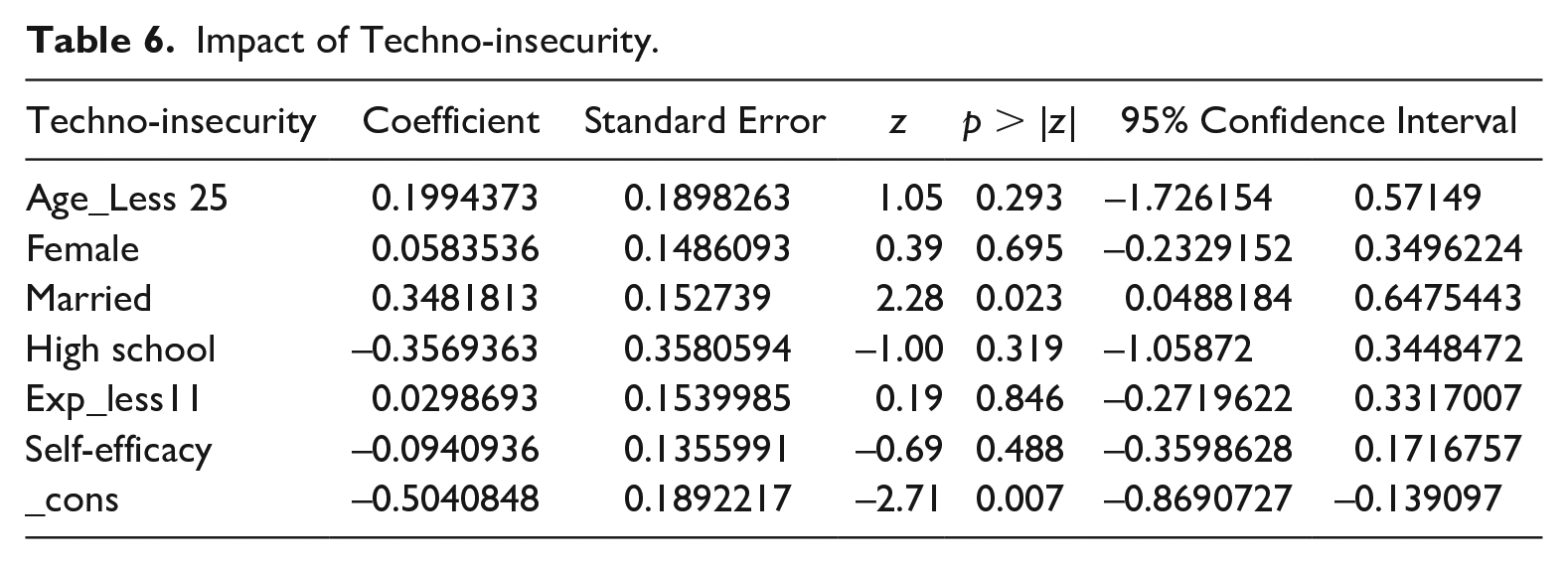
Techno-insecurity is the fourth group of technostress. In terms of techno-insecurity, being less than 25years old, female, married, and having less than 11years of experience positively affect techno-insecurity by 0.2%, 0.06%, 0.35%, and 0.03%, respectively. As for having a high school degree and the computer self-efficacy indicators, they negatively influence techno-insecurity by 0.36% and 0.09%, respectively. Among those factors, being married significantly positively affects techno-complexity, where a 1% increase in being married causes an increase in developing techno-insecurity by 0.35% (Table 6).
Impact of Techno-insecurity.
Techno-uncertainty
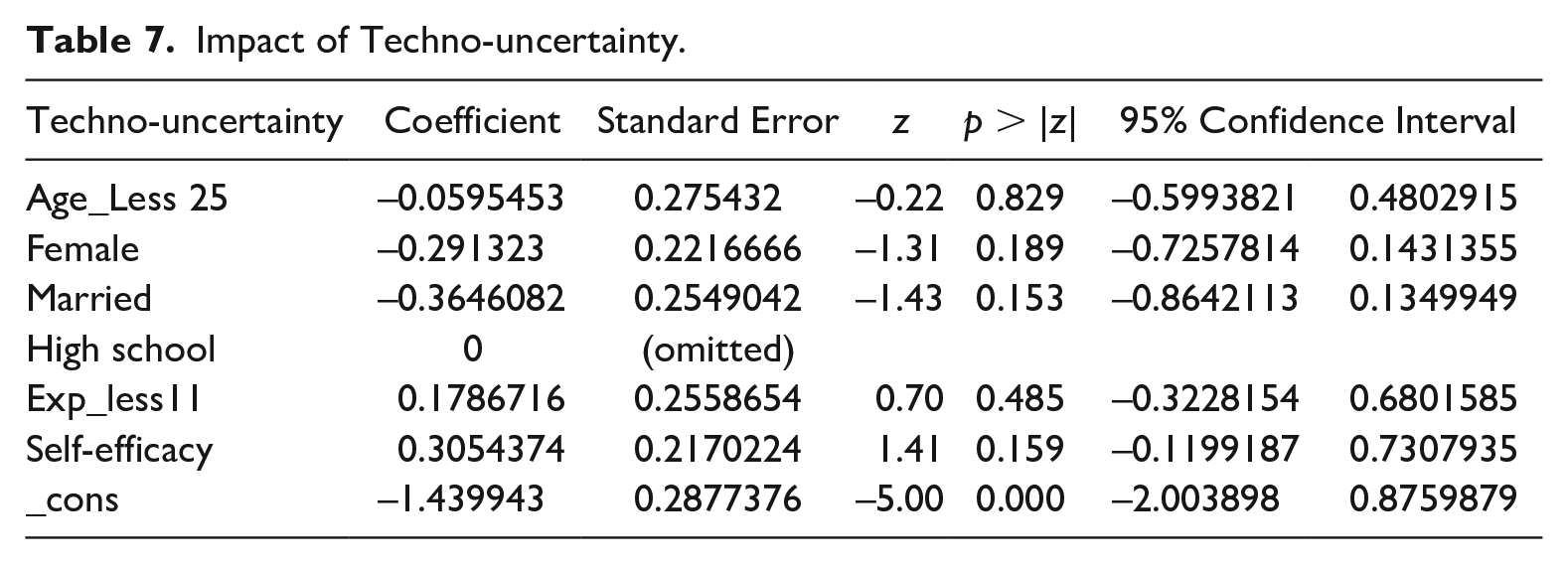
Finally, for techno-uncertainty, having less than 11years of experience and the computer self-efficacy indicator positively influence techno-uncertainty by 0.179% and 0.305%, respectively. As for being less than 25years old, female, and married, they negatively influence techno-uncertainty by 0.06%, 0.291%, and 0.365%, respectively (Table 7).
Impact of Techno-uncertainty.
Conclusion
Mental health is a vital topic that impacts the daily lives and efficiency of many individuals and their occupations. COVID-19 has certainly affected individuals in various manners, leaving behind quite an intense impact. As its impact on households and human well-being grew day after day, individuals started to develop feelings of stress and anxiety. Moreover, as teachers were introduced to new technologies to be exercised during the COVID-19 pandemic with the induction of online teaching, many found it difficult to adapt to such techniques, which further imposed a burden upon them. There are not enough scholars highlighting this topic because of how current it is, but those who did point to age, gender, employment status, education, income, and occupation as indicators of who is at the highest risk of mental health complications. The significance of scrutinizing the mental well-being of individuals during a pandemic is emphasized by how shifting plans and staying at home due to the proliferation of COVID-19 have significantly impacted people’s mental well-being. As asserted by Smith et al. (2020), seclusion from society is a vital risk element for both depression and anxiety.
The impact of online teaching was depicted through the increase in the levels of technostress among teachers. The different factors that were considered to carry out this study had different degrees of impact on witnessing technostress. For instance, disparities in gender showed to be rampant in this topic where females were more likely to develop higher levels of technostress. In addition, age and the number of years of experience also played a role in determining the extent to which individuals were affected. The results showed that individuals who were younger than 25 years and those with less than 11years of experience were more likely to encounter concerns about technostress. Also, the inclusion of various degrees of digital computer self-efficacy showed to have an impact on the development of technostress within individuals. The different factors of digital computer self-efficacy imposed varying impacts on the different subcomponents of technostress. Furthermore, some significant results to ponder for forthcoming studies are how married individuals are less likely to encounter negative emotions and stress during the pandemic and how single, divorced, and widowed individuals are the ones of concern when it comes to mental health.
It is worthwhile to note that the pandemic has consequences that many teachers are still facing. One of the most important consequences of the pandemic, on which a spotlight should be kept, is the mental health of teachers. As their mental health was severely affected, the resilience and coping mechanisms that the teachers possessed should be praised, and teachers should be provided with continuous mental support (Baker et al., 2021). In addition, the pandemic has affected the relations between teachers and their students’ parents as modes of communication have changed through the online environment, where as a result, such an outcome should call for the need to encourage the prosperity of the students (Hargreaves, 2021). Nevertheless, the pandemic has called for the importance to supply teachers with sufficient technology tools and digital schools in order to have them prepared for any unexpected turn of events that might occur in the future (Onyema et al., 2020). Thus, given the case of Lebanon and the role of online education that took place during COVID-19 (El Feghaly et al., 2021), levels of technological stress among teachers should be highlighted.
Technostress is a topic that should be highlighted as it may impose several health and economic implications on a society. Policymakers and psychologists should overall promote alertness to the repercussions of economic and health crises on society, financially and psychologically. As this article tackled the relationship between online teaching and technostress and the psychological impact that the pandemic imposed on teachers, policymakers should take periods of crises into account as they may inflict serious consequences upon individuals from various sectors. In addition, as research has demonstrated how crises augment gender differences, it is entreated to incorporate a gender approach in the field of work in order to minimize any feeling of discrimination. Moreover, health care workers as well as psychologists may be integrated into programs dealing with such issues, as they may be able to provide suitable recommendations and support. Nevertheless, policymakers should set up practices that may aid teachers in dealing with any sort of epidemic that may take place in the future. Looking into the future, the importance of education for an economy should be highlighted. As education aids in the well-being of society through enhancing the quality of living, it also contributes to economic growth through bolstering human capital (Alali, 2022).
Footnotes
Declaration of Conflicting Interests
The author(s) declared no potential conflicts of interest with respect to the research, authorship, and/or publication of this article.
Funding
The author(s) received no financial support for the research, authorship, and/or publication of this article.
