







Abstract
In the globalized labor market, skills gaps between industry expectations and university preparation are becoming more prevalent. English communication skills (ECS) are vital soft skills in all workplaces, particularly in international business, where English is commonly used as a lingua franca. This case study examined the nexus between academia and industry regarding the instruction of ECS and their applicability to meet the requirements of the globalized business landscape by collecting data from 43 personnel in the international ready-made garment (RMG) industry in Bangladesh. The research reveals that English courses in higher education do not adequately address the communication needs of the international RMG business, which requires practical experience in the workplace, trade-specific vocabulary, intelligibility, and clarity rather than a high level of fluency. The study recommends promoting the teaching of English for general business purposes in Bangladesh by integrating theoretical and practical learning in the classroom and workplace as part of the curriculum.
Keywords
Introduction
In the constantly transforming global economy, there is an increasing need for the acquisition of skills that align with the current demands of the labor market. This imperative is particularly heightened in the present era of the fourth industrial revolution (Ahmad et al., 2023). However, a growing number of skill gaps, deficits, or mismatches between industry expectations and university preparation have become common labor market phenomena in this ever-changing globalized world (Cappelli, 2015; Hurrell, 2016; Musa, 2023). Employers have expressed concerns about the skill shortages of graduates and staff (Hurrell, 2016; Jackson, 2014; Kleckner & Butz, 2022; Rhew et al., 2019; Singh Dubey et al., 2022; The Economist, 2014).
In many countries, blame for these skill shortages is often attributed to individuals, families, governments, or education systems. The perceived role of individuals and families in developing skills is especially significant since many of these skills are learned outside of the workplace (Heckman, 2000). Nevertheless, the “blame game” between industry and higher education institutions over this discrepancy is far from over (Hurrell, 2016; The Economist, 2014). One reason for this is a lack of understanding of workplace needs by higher education institutions due to a lack of cooperation between higher education institutions and the industry or higher education institutions’ misjudgment of industry needs (Gilbuena et al., 2015; Hurrell, 2016; König & Maškarin Ribarić, 2019). These issues, however, are not limited to complex or technical skills; deficiencies in “soft” skills are also frequently reported (Hurrell, 2016). English communication skills (ECS) are considered vital soft skills (Çal et al., 2022; Hradilová, 2018; Roshid, 2018) in English-dominating workplaces, including international business, where English is used as a business lingua franca, which is often termed as Business English Lingua Franca (BELF) (Roshid & Chowdhury, 2023; Roshid, Webb & Chowdhury, 2022; Kankaanranta & Planken, 2010; Ehrenreich, 2010;; Louhiala-Salminen, Charles & Kankaanranta, 2005; Kankaanranta & Louhiala-Salminen, 2010; Gerritsen & Nickerson, 2009).
The issue of ECS mismatch in various BELF workplaces has been highlighted by numerous studies (C. S. Chan, 2019; M. Chan, 2014; Ferreira et al., 2023; Hellekjær & Fairway, 2015; König & Maškarin Ribarić, 2019; Tanveer, 2013). Hellekjær and Fairway (2015) discussed the communication skills mismatch among higher-educated government staff in Norway, emphasizing the gap between the demand and supply of English skills in the workplace. This mismatch is attributed to inadequate language training and a lack of opportunities to practice and use English in the workplace, which may lead to negative consequences for individuals and organizations, including reduced job satisfaction and productivity. To address this issue, the authors suggested implementing effective language training programs and providing opportunities for employees to use and practice English.
In the same vein, Kankaanranta et al. (2015) argued that traditional approaches to teaching English in international business schools do not meet the needs of the modern business industry. They propose more context-specific language teaching integrated with intercultural communication training. Likewise, C. S. Chan’s (2019) study of senior business executives in Hong Kong found a gap between the communication skills of business professionals and the English language skills necessary for effective communication in global business environments. In the study conducted by M. Chan (2014), a discernible incongruity was observed between the communication abilities imparted through business English courses and the authentic communication necessities of the workplace in Hong Kong. The author recommended the imperative need for curriculum development to tackle the existing discord in ECS. The study postulated that the pervasive emphasis on rote learning and grammar instruction in Hong Kong’s educational system might not suffice to equip students with the requisite communicative competencies required in the workplace. Thus, the study suggested that a concerted effort must be made toward the development of a curriculum that holistically addresses the communication needs of the workplace in Hong Kong, thereby bridging the gap between the imparted communication abilities and the actual communication demands of the workplace.
The urge for bridging gaps between universities and industry is repeatedly emphasized by other scholars. In this regard, Moore and Morton (2017) suggested that universities should adopt a more comprehensive approach to developing students’ skills and competencies beyond the technical skills that employers seek and emphasize broader competencies, such as written communication, that are essential in various professions. Similarly, Fujita (2019) called for a shift toward a practical approach to English language teaching that takes into account learners’ career goals and job requirements in the tourism and hospitality industries. The author highlighted the need for cross-cultural communication skills and cultural competence tailored to the specific needs and contexts of learners in this field. Al-Tarawneh and Osam (2019) analyzed the state of English language training at Jordan’s tertiary level, particularly in tourism education, and stress the importance of bridging the gap between the expectations of the industry and the reality of language training provided to Jordanian students by providing adequate resources and training for educators. Moreover, several studies underscored the significance of empowering staff in the workplace with English language proficiencies and suggested that English Medium Instruction (EMI) in workplaces may offer a competitive advantage (Li & Wu, 2017; Talaue & Kim, 2020).
The provided evidence is observed in a multitude of business industries across various country contexts. It is important to note that each business sector possesses unique characteristics, which in turn demand specific and general communication needs that higher education institutions ought to take into account. Despite the plethora of research in this area, scant attention has been paid to the ready-made garment (RMG) business context in Bangladesh, a developing country situated in South Asia, where English is taught from primary to higher education levels to develop ECS, which are extensively required in workplaces, including in international business. The objective of this article is to comprehend the perspectives of a cohort of RMG business professionals regarding the compatibility of ECS education taught in higher education institutions (HEIs) in Bangladesh with the communication requirements of RMG global business. In particular, the study has addressed the following research question:
How do RMG business professionals perceive the nexus between academia and industry regarding the instruction of English communication skills and their applicability to meet the requirements of the globalized RMG business landscape?
The present empirical study focuses on the RMG business and the perceptions of its professionals because of the socioeconomic significance of the RMG industry in Bangladesh and the pivotal role of its professionals in business communication. Notably, the RMG sector is the primary export-oriented international business in Bangladesh, providing clothing products to over 50 countries, where communication transpires in English with individuals from diverse linguistic and cultural backgrounds. However, the communication requirements for this industry and the preparation of graduates with the necessary ECS remain relatively underresearched. It is contended that a research-informed approach toward identifying and addressing needs can aid in the development of the module’s linguistic content and a pedagogical model for business communication, as posited by C. S. Chan (2018). In this regard, the voices and views of RMG professionals hold immense significance in enabling HEIs to reconsider and develop English course curricula that cater to learners’ communicative requirements in general and the RMG business in particular.
Literature Review: ECS Requirements and Pedagogical Advocacy in BELF Settings
In recent decades, there has been a growing recognition of the importance of ECS in international business contexts (Chew, 2005; Evans, 2010; So-mui & Mead, 2000 in Hong Kong; Erling & Walton, 2007 in Europe; Gimenez, 2006 in Europe and Argentina; Kassim & Ali, 2010 in Malaysia; Tanaka, 2006 in Japan). As a result, numerous studies have emerged to investigate the specific ECS required in diverse international business settings in order to effectively respond to the needs of various business environments around the world. Embracing BELF emerged based on English as a lingua franca (ELF) (Jenkins, 2009; Seidlhofer, 2005), where English is used as a common language in business to get the job done (Kankaanranta & Planken, 2010), Ehrenreich (2015) examined the increasing use of English as a business lingua franca in German multinational corporations, and the article suggested that effective communication in a lingua franca environment requires adapting to different communication styles and cultural norms and focusing on clear and concise language use. In a related study, Kankaanranta and Planken (2010) argued that BELF competence is a crucial requirement for business professionals working in international settings, given the dominance of English as the language of international business communication. The authors suggested that successful BELF communication involves three vital components: accuracy in presenting facts, clarity in discourse (explicitness and directness), and politeness to ensure that recipients feel positive about the communication.
Informed by the concept of communicative competence (Canale & Swain, 1980), which has been applied to foreign language acquisition, Louhiala-Salminen & Kankaanranta (2011) proposed a model of global communicative competence for business professionals operating in international settings. This model comprises three interrelated layers, namely, business know-how, BELF competence, and multicultural competence. Business know-how entails the knowledge and skills necessary to navigate various aspects of global business operations. BELF competence extends beyond linguistic proficiency in English to include effective communication in this lingua franca context, comprising linguistic competence, intercultural competence, and strategic competence. Multicultural competence involves the ability to communicate and work effectively with individuals from diverse cultural backgrounds, requiring an understanding of different cultures and the ability to adapt communication styles and behaviors to accommodate cultural differences. Likewise, in a recent study conducted by Räisänen (2020), the author investigated the utilization of multimodal resources in facilitating communication within ELF meetings among technical managers and their peers. The study emphasized the importance of cultivating intercultural competence and an understanding of the diverse communication styles and cultural backgrounds of ELF speakers in international business contexts.
The aforementioned investigations provide insight into the distinct proficiencies essential for international business communication in BELF settings. The identification of these distinct competencies for international business communication underscores the importance of cultivating effective communication skills by carefully considering the communicative necessities of the business context. In order to satisfy the exigencies of business communication, it has been posited that tertiary education must equip graduates with competencies that surpass the stipulated requirements of their respective industries (Kassim & Ali, 2010; Thomas et al., 2016). Numerous authors have proposed ways to develop learners’ necessary ECS required in BELF settings. Nickerson (2022) advocated for English for Specific Business Purposes (ESBP) courses tailored to the specific linguistic and cultural needs of UAE professionals, while Moslehifara and Ibrahim (2012) suggested focusing on conversation, oral presentation, and discussion skills in English enhancement programs for HRD trainees in Malaysia. Xie (2016) emphasized the value of introducing business knowledge and company cases, presentations, and role-playing in effective business English curricula. Y. Z. Zhang (2014) stressed the need for practical experience, business knowledge, and acumen to optimize in-class instruction and out-of-class resource provision. Kankaanranta (2019) posited that postgraduation, practical experience plays a pivotal role in improving and enhancing the communication skills of business professionals. C. S. Chan (2021) proposed an eclectic and multidisciplinary approach to creating a work-integrated learning module for English majors in Hong Kong, emphasizing the need for more pedagogical innovation in on-the-job workplace communication learning.
The reviewed literature concentrates mainly on Europe and some specific countries (e.g., Singapore, Malaysia, Hong Kong, Argentina), focusing on various business areas. This article draws on the preceding research to examine the integration of English language education in higher education, and communication requirements in RMG international business in Bangladesh.
The Context of the Study: RMG Industry in Bangladesh and ECS
The RMG industry in Bangladesh has emerged as the largest international business sector and the second-largest garment exporter globally under the brand name “Made in Bangladesh,” with China occupying the first position. This industry has experienced remarkable growth over the past three decades and has acted as a catalyst for the overall development of Bangladesh, contributing to 83% of the country’s total export earnings. In the fiscal year 2017–2018, the RMG industry generated export earnings exceeding $30.61 billion.
The language used in the RMG business communication can be characterized as BELF (Roshid, 2021) since it is used by business professionals worldwide from various linguacultural backgrounds (Roshid, Webb & Chowdhury 2022). However, local contact with Bangla-speaking individuals necessitates the use of Bangla as the preferred mode of communication (Roshid, 2014).
Business professionals working in the RMG industry in Bangladesh typically hold degrees from various public and private universities in the country that have been transformed over the last three decades because of neoliberalism (Kabir, 2012; Kabir & Chowdhury, 2021; Roshid & Phan, 2023). English is a compulsory foundation course in these universities, and the course curricula aim to enhance students’ English communicative skills in all four basic language skills listening, speaking, reading, and writing (Begum, Banu & Roshid, 2005; Roshid & Shaila, 2023). The courses also place a significant emphasis on grammatical competence, along with various types of letters, applications, and essay writing. Along with teaching English, universities offer a business communication course for business students to develop their business communication skills, both spoken and written. In developing written communication skills, the courses include various business letters, applications, memos, and resumes and their styles, structures, characteristics, advantages, and disadvantages. By contrast, the oral skills course includes debate competitions, face-to-face conversations, interviews, meetings, public speaking, and oral presentations. Apart from oral and written communication, business communication courses have taken into account nonverbal communication, intercultural communication, and communication through technology.
Although the significance of global trade and international business has been extensively acknowledged in academic literature (Dudley-Evans & John, 1998; Piekkari et al., 2014), specialized courses such as English for Specific Purposes (ESP) and English for Business Purposes (EBP), which are widely provided in universities around the world to promote effective business communication (Brown, 2016; Hyland, 2007), are not presently available in universities within Bangladesh.
The medium of instruction (MoI) in higher education institutions (HEIs) in Bangladesh is a topic of significant interest and relevance. The current policy is characterized by a degree of flexibility, with universities opting to use either English or Bangla as the language of instruction across disciplines. Notably, public universities as a public good (Roshid & Phan, 2023) have embraced a range of approaches, including the exclusive use of Bangla, bilingual instruction, or a balance of Bangla and English (Hamid et al., 2013; Rafi & Morgan, 2022a; Rahman et al., 2020). In contrast, private HEIs generally prioritize English as their MoI.
Methodology
The present study aimed to explore the alignment between teaching English in higher education and the ECS required in international business communication in Bangladesh. To achieve this objective, a qualitative case-study approach was employed, which involved selecting participants from various RMG firms based on purposive sampling. The selection process aimed to assess the diversity of participants, taking into account their work roles, forms of communication, experience levels, and university qualifications. Data were collected through interviews with 43 participants, and sampling continued until saturation or redundancy was reached (Lincoln & Guba, 1985; Merriam, 1998). The study gained access to 29 globally operating RMG industries located in the capital city of Dhaka, which were categorized based on their size and type of production. These industries manufacture garments in Bangladesh and supply them to different countries around the world. The sample size is presented in Table 1.
Types of Roles and Number of Participants.
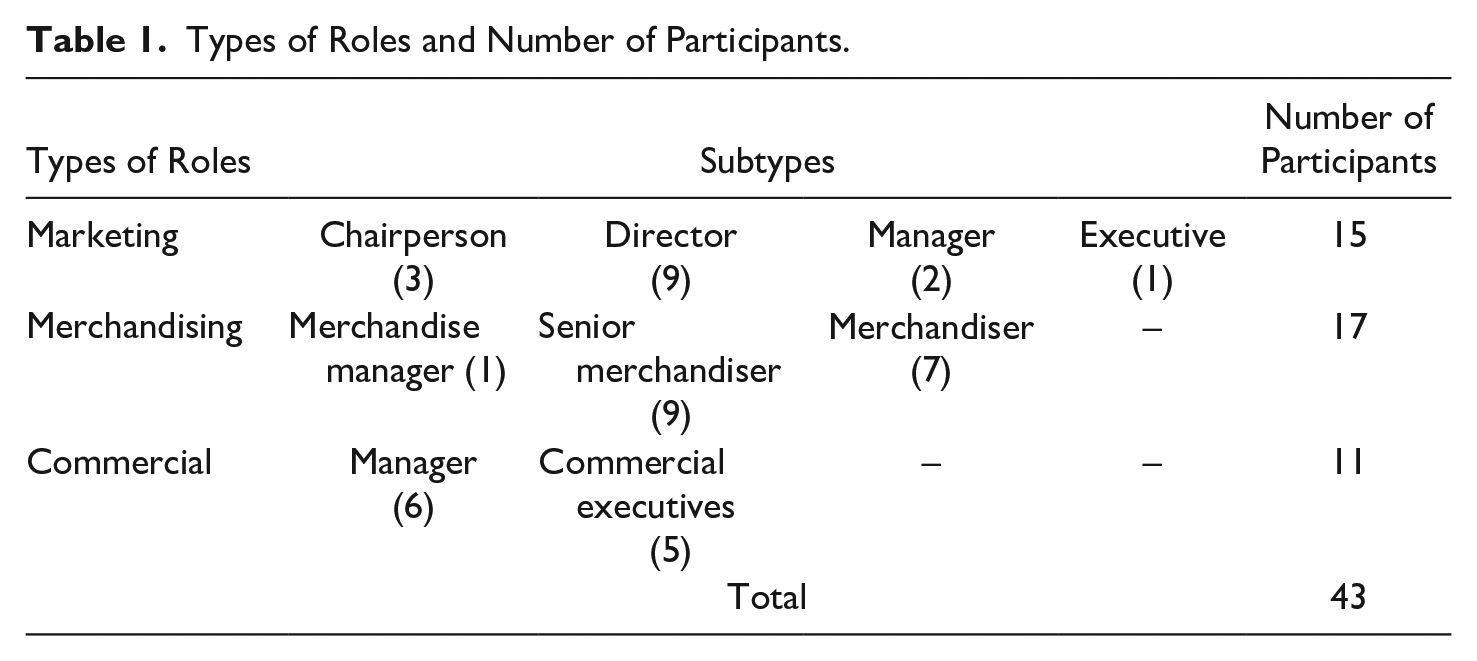
The present study involved collecting data from three distinct groups of personnel with official titles in the RMG sector in Bangladesh, namely, marketing, merchandising, and commercial personnel. These groups are well-established and generic classifications in the RMG industry. The number of participants in each group and their corresponding job titles, indicating their level of authority in the organization, are presented in Table 1. Although all three groups are involved in English communication and interaction with international buyers and suppliers in the RMG business, their nature and degree of involvement vary, which necessitates the relative need for ECS. It is pertinent to briefly introduce and describe the roles of these three types of personnel, as although their roles are interconnected and overlap to some extent, they are engaged in specific activities and work areas. For instance, some are more involved in written communication than verbal communication, while some are engaged in local communication, whereas others are involved in international settings with foreign buyers and suppliers, where English serves as the contact language. The roles of these personnel are summarized in Figure 1.
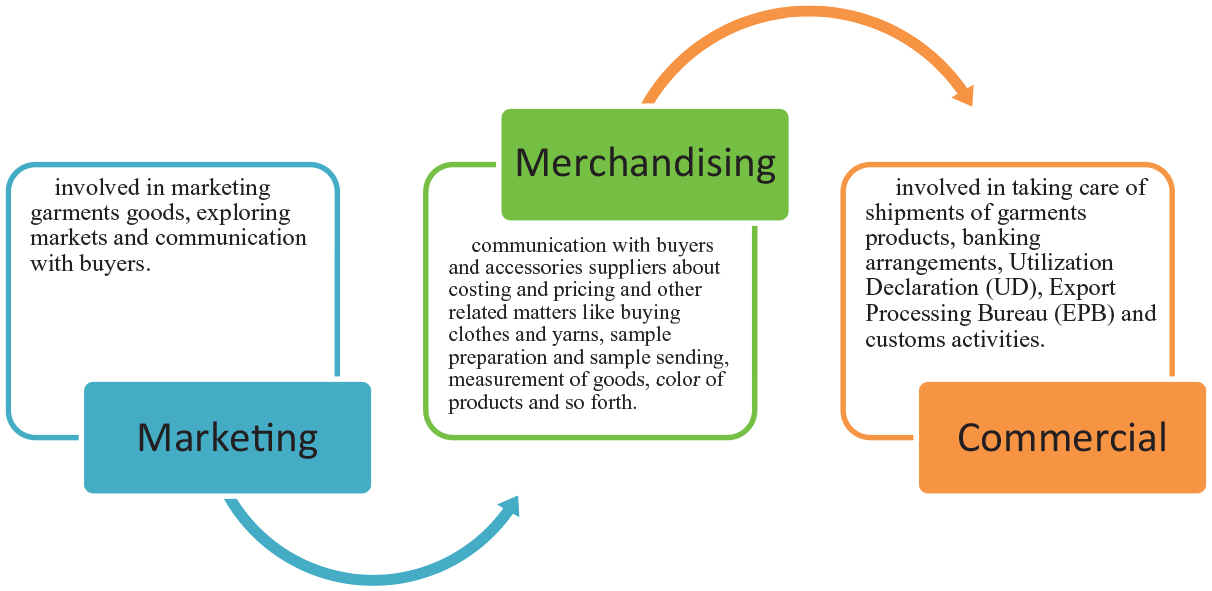
The fundamental roles of different ready-made garment (RMG) personnel in the flow chart.
An analysis of the demographic information of the participants indicates that most participants (22) in the study graduated from the Arts and Social Science disciplines, followed by Business (16) and Science (5), with 36 studying at public universities and 7 at private universities. Participants ranged in age from 25 to over 50 years old, with the majority being between 31 and 35 years old and having work experience ranging from less than five years to thirty years. Despite studying at different times, participants had knowledge of graduates’ ECS due to various interactions. Only one female participant was included in the study, indicating a lack of female executives in the RMG sector, which can be attributed to factors such as a lack of work-life balance, patriarchal and bureaucratic structures, cultural influences, and a lack of self-confidence (Islam et al., 2018).
A total of 43 face-to-face, one-on-one, in-depth interviews were conducted using a semi-structured interview protocol written in English. Participants were requested to express their experience about their own performance in the RMG workplaces to identify how they perceived the congruence between university and industry in developing skills through the English course(s) needed for RMG business communication. Assurance of confidentiality was given to every participant, and they signed a consent form to take part in interviews. The duration of the interviews was between 30 and 50 minutes. Although most participants used their mother tongue, Bangla, during the interview, some gave full interviews in English, while others started in English and switched to Bangla. Interviews were conducted at participants’ convenience at their workplaces or other suitable places, and all responses were digitally recorded.
All interviews were transcribed, and translated into English following a non-verbatim approach. The transcribed interviews were coded and sorted into subthemes and major themes, which were developed in alignment with the research questions. The coding process was data-driven (Braun & Clarke, 2006) and checked for intercoder reliability (O’Connor & Joffe, 2020) to promote research reflexivity (Joffe & Yardley, 2003). The major themes identified were matched, partially matched, and not matched, and subthemes included medium of instruction, family role, and personal role.
To ensure the reliability and credibility of the findings, multiple sources of data were collected from three groups of participants, using a systematic process for data analysis that was precise, consistent, and exhaustive (Nowell et al., 2017; Ryan et al., 2007). A thick, rich description of the setting, participants, and themes was provided in this study, with abundant and interconnected descriptions (Creswell & Miller, 2000; Stake, 2010). Moreover, the meaning was constructed by exclusively relying on the data set as a whole collection, which reflects the validity of the individual themes (Braun & Clarke, 2006).
Findings of the Study
The present study’s findings indicate that the participants’ responses displayed a diverse range of perspectives, which could be grouped into two overarching themes. These themes were reflective of the overarching similarities and disparities between academia and industry concerning the pedagogy of English communication abilities and their relevance in fulfilling the demands of the globalized RMG business landscape.
Incongruence between Academia and Industry
According to the responses of RMG professionals from various sectors such as marketing, merchandising, and commercial staff, a substantial proportion of them (n = 25) believe that there is a disparity between the academic preparation provided by universities and the requisite skillset demanded by the RMG industry. Specifically, they raised objections against the English language courses offered by both public and private universities, arguing that these courses prioritize theoretical knowledge and disregard practical experience. The professionals contended that theoretical knowledge alone, without practical experience, is insufficient to enable effective communication with international counterparts, thereby placing graduates at a disadvantage in the RMG industry. A commercial participant (P32) mentioned, “Students learn many things at universities except experience.” In this regard, practical experience can complement the theoretical knowledge imparted by institutions, and the combination of both aspects could enhance effective communication in business. Therefore, it is essential for students to gain prior experience alongside institutional learning to succeed in their professional lives.
The findings also revealed that the participants (n = 13) were of the view that university graduates lacked the spoken fluency required to communicate with buyers and were not proficient in conveying their message in a comprehensible manner because of a lack of clarity in their writing. A merchandising person (P14) highlighted the particular importance of tenses for clarity. He deemed that people might consider tense as a “silly aspect” but he speculated that if a person was unable to speak or write English using the proper tense, it might cause “confusion” to a business counterpart. Giving an example, he said there was a difference between “goods were delivered” and “goods will be delivered.” The participants provided concrete examples to buttress their arguments, indicating the stark contrast between the ECS taught in academia and the practical communication skills required by the RMG industry. A merchandiser (P16), drawing upon his personal experience as a former public university student and current business employee in the RMG sector, highlighted the inadequacy of teaching English in a university setting.
Though I am unfamiliar with all universities, as a student at [the] N University (pseudonym, NU in short), I believe it is insufficient and does not meet my workplace requirements. We must concentrate on improving our fluency. Also, students from [the] English department learn English but cannot speak or write correctly. What we learn in a university English course does not correspond to real-world requirements. When I was a student at NU, there was a 100-point English course focused on grammar. In any case, it will not be able to meet my needs at work. The course should help students improve their fluency, but this course is unable to do so. As a result, what [the] university teaches is inadequate.
N University (NU), the largest public university in Bangladesh based on student enrollment, has been identified as having lower academic efficiency compared to other universities. A majority of the participants in the study were NU graduates who expressed dissatisfaction with the English language program, including the teaching and learning process and the overall atmosphere. The participants found the course to be overly traditional and focused on memorization of grammatical rules with a strong emphasis on passing examinations. Consequently, the participants did not feel that the English course adequately prepared them to develop their ECS. This lack of preparation resulted in significant communication challenges with international counterparts with a lack of proficiency and clarity, both in verbal and written form when the participants entered the RMG workplace after graduation.
However, the study also revealed that two commercial participants (P34 and P43) argued that a high level of English language skills or fluency was not necessary for the garment sector as long as RMG professionals could satisfactorily explain business matters to buyers and understand international colleagues’ messages. These participants likely emphasized interpretability in negotiating meaning (Mahboob & Dutcher, 2014) rather than linguistic accuracy of communication, as they worked in commercial roles where English is less required than in other roles. In their consideration, as communication is reciprocal and contextual, production and reception are essential regarding intelligibility among interlocutors (Seidlhofer, 2001; Wang & Jenkins, 2016). Fluency in ELF is a socially constructed phenomenon that is achieved through interactions between speakers who share a common goal of communication (Hüttner, 2009). They believed that university graduates were able to negotiate communication well enough and that the ECS provided by universities was adequate for graduates working in this industry. These findings suggest that while the university can prepare graduates with the necessary ECS, it may not be necessary to have a high level of English language skills or fluency in all roles within the RMG business sector.
During interviews conducted with participants, it was found that knowledge of trade-specific English vocabulary, in addition to conventional English words and synonyms, was deemed essential for effective communication within the RMG industry. This specialized vocabulary, also known as “garments’ language,” was identified as a potent tool for communication. Even individuals who lacked fluency in the English language or formal education were able to navigate communication effectively using technical words frequently used in the RMG sector. Participants reported that they acquired this vocabulary through experiential learning within the workplace since it is not typically included in university curricula. According to Kankaanranta and Planken (2010) study, general vocabulary related to business, specific technical jargon, and mastery of relevant genres in BELF are considered “highly specialized and unique to their distinct disciplines and areas of expertise” (p. 394).
The study’s participants, especially marketing professionals, expressed dissatisfaction with the quality of education in ECS taught at universities. A marketing staff member (P10), who had worked as a schoolteacher before becoming a manager at an RMG company, shared his opinion that English language teaching in higher education is inadequate for meeting the needs of any industry. He attributed this issue to Bangladesh’s education system, which prioritizes quantity over quality. P10 noted, “Many students have honors and master’s degrees, but their language quality is not comparable to that of lower secondary students. In education, there is a flaw in the standard.” Research indicates that the quality of English language teaching (ELT) in Bangladesh is deficient (Roshid, 2009) because of a lack of consistent language policy and planning (Hamid, 2010). Consequently, academic credentials or degrees alone cannot guarantee high-level positions or professional outcomes in today’s globally competitive job markets (Tomlinson, 2008).
The inadequacy of current university education in meeting the needs of the RMG industry was further revealed through the experiences of two marketing professionals (P2 and P7). One participant possessed a double degree in English and business, while the other had a business degree and concurrently worked as a professor at a prominent public university and in the RMG sector. Both participants asserted that the higher education curriculum did not address the needs of the RMG industry or train graduates to become successful professionals in this field. Specifically, graduates lack knowledge of the industry and how to manage communication in this context. This finding highlights the importance of know-how which is specific knowledge and skills in business communication strategies such as clarity, brevity, directness, and politeness, which are critical for success in the RMG industry (Kankaanranta & Lu, 2013). Although graduates may possess English language skills, they lack the necessary knowledge of the RMG industry and its communication requirements. This is because higher education in Bangladesh prioritizes the development of human resources in general rather than specifically for the RMG industry at large (Ministry of Education, 2010).
Consequently, to fill up these gaps, RMG workplaces have established conventions to train their employees, in particular newcomers, informally at the workplace as reported by several participants. Under the supervision of a senior colleague, they learn essential skills such as writing to customers, participating in meetings, negotiating with buyers, and, most importantly, communicating with customers both verbally and in writing. These professional “apprentices” receive feedback from their seniors and colleagues if they make any mistakes. Moreover, they learn by reading and analyzing previous business documents. The guidance provided by experienced members of the community of practice (Lave & Wenger, 1991; Wenger, 1998) significantly aids in the development of ECS in these apprentices (see Roshid & Webb, 2013, for further details).
Conditional (In)congruence Between Academia and Industry
A group of participants (n = 11) who have worked in various roles within the RMG industry expressed skepticism about the effectiveness of university education in preparing students and professionals with the required ECS skills for the industry. They noted that there is no clear answer to whether university education meets the needs of the RMG industry in terms of ECS and that factors such as educational quality, medium of instruction, and family background can influence the outcome. The participants observed that graduates with good English language instruction tend to have adequate communication skills and perform well in business communication. However, they acknowledged that the quality of education varies from one university to another, with the standard of education largely determined by whether the institution is public or private.
While some participants expressed satisfaction with private universities for their ability to produce graduates with the required ECS expertise for the RMG industry, others were content with public universities. While some participants praised specific private universities for providing quality education, they did not generalize that all private universities in Bangladesh provide high-quality education. However, some participants who praised private universities for developing a suitable level of ECS also criticized the standard of education at public universities for their failure to prepare students with the required ECS. As one marketing professional (P5) who graduated from a public university noted, I am pleased with the standard of graduates from private universities in several ways. Except for a few highly preferred subjects like English or an MBA from X university [pseudonym], I am very disappointed in public universities regarding their quality or standard.
Despite expressing disappointment with the ECS of graduates from public universities, a participant who served as a director in the industry recruited outstanding graduates with good English abilities from public universities. The participant believed that efforts through informal and nonformal learning language beyond the classroom (Benson, 2011; Reinders & Benson, 2017), such as families and training institutions, are regarded as crucial social education institutions that can contribute to developing English competence. This finding emphasizes that developing ECS is not only the university’s responsibility but also the family’s, which includes education, socioeconomic background, and support. Participants indicated that graduates from educated families or those seeking additional English training have better ECS. A commercial participant (P37) lamented that “If everybody is like me, the situation is bleak. I had an aversion to English, which I overcame with the help of my coaching tutor, who helped me practice speaking the English language.” Another merchandising manager (P25) agreed and recommended that students should seek additional training from organizations such as the British Council, which provides Business English courses, instead of solely relying on university resources. P25 also emphasized the importance of students’ efforts and responsibility for their learning. The merchandise manager believed that although the knowledge gained from university might be insufficient, students could still develop their ECS through various opportunities for self-development. They suggested utilizing resources such as personal English courses, the British Council’s Business English course, and open-access materials like IELTS materials and YouTube videos to further develop ECS. The participant stressed that developing ECS is a lifelong process that requires ongoing efforts to acquire and improve new skills.
While some participants were satisfied with the quality of graduates from private universities, others expressed dissatisfaction and considered private HEIs as the business organizations that sell certificates to graduates as customers rather than provide quality education with necessary ECS. For example, a commercial manager (P43) stated: The situation is worse at private universities, which are very commercial. They are more serious about selling certificates than providing education. One graduate from a private university works at my company. I am doubtful of the education that he received from a private university.
In contradistinction to the commercial participant’s reservations regarding the competencies of graduates emanating from private universities, a marketing participant, identified as P11, whohimself had received his education from a prestigious public university, expressed contentment with the caliber of students graduating from public universities. P11 further asserted that the ECS proffered by public universities was adequately tailored to enable graduates to perform their occupational roles effectively within the context of the RMG industry. It is apparent that the participants’ observations allude to the notion that, within the public university arena, certain courses and students are more felicitous than others.
Participants in the study brought forth the pertinent issue of the English versus Bangla medium of education. As previously alluded to, the MoI, commonly referred to as the medium of teaching and learning, plays a pivotal role in the development of ECS. Several participants in the study cited this issue in response to the question of whether ECS taught at universities is aligned or not with RMG business needs. In their view, students who have received education in the English medium have a robust ECS tailored to the RMG market. Highlighting the importance of prioritizing English as the medium of education in private universities and business courses, a merchandiser (P30) noted, “My MBA at a private university, which was fully in English, helps me to use English in this sector.” Likewise, a commercial participant (P39) observed that English-medium students were significantly more advanced in their skillset compared to their Bangla-medium counterparts. Conversely, some participants expressed their dissatisfaction with Bangla-medium graduates. A marketing professional (P9) conveyed, “I am sorry to say that I am disappointed with the graduates from the Bangla medium because the students of the Bangla medium usually lack English proficiency because of the Bangla medium.” In this regard, a commercial manager (P40) challenged the education system in Bangladesh from the point of developing ECS while explaining the disparity between university and industry practices. In his opinion, nowadays, everything is communicated in English, from banking to shipping lines, whereas the education system, specifically the public education system of Bangladesh, emphasizes learning in Bangla. He proposed that education providers rethink their policies on the MoI and move to English from Bangla in public universities and improve students’ ECS and subject awareness simultaneously.
Furthermore, participants raised concerns about the curriculum, syllabus, and the teaching and learning process, which they perceived to be mostly rote-learning oriented, examination-focused, and detached from real-life practical needs. Consequently, the skills acquired by Bangla-medium students at their universities were deemed unsuitable for the RMG industry. It was reported that, except for English and a few special departments, students in almost all departments are taught in Bangla. Therefore, the ECS developed by Bangla-medium graduates is deemed insufficient for international communication in the RMG industry. However, a merchandise manager (P21), who graduated from a specialized university offering professional courses for the RMG sector, disagreed with other participants who attributed the inadequacy of ECS to the curriculum and syllabus. P21 suggested that the curriculum might not be the problem, as it could be brought up-to-date. Rather, the lack of appropriate teachers and instructional resources could be the real challenge. The participant suggested providing with necessary resources required for developing the ECS of learners.
Nevertheless, a small group of participants (n = 7), mostly in marketing roles, found their higher education’s development of ECS to be congruent with the needs of RMG business communication. They reported applying what they had learned at university to the RMG workplace. In this regard, a marketing person (P3) with much experience in RMG business communication stated, “What they [universities] are teaching is enough . . . university has nothing to do.”
Discussion
This study explored the congruence between the university and RMG industry in teaching ECS to prepare students to be future professionals with ECS and how far these ECS match with the RMG international business communication needs. Based on the findings, this study identified several points to discuss. Underscoring the participants’ voices, a conclusion can be drawn that teaching English to develop graduates’ ECS cannot adequately meet the RMG international business communication needs. The study identified several factors that influence whether or not graduates are prepared with the necessary ECS. Firstly, the findings reveal that English as a medium of education was observed to determine whether a university prepares graduates with the necessary ECS. This finding indicates that institutions that offer courses using EMI play a significant role in developing the ECS of graduates for international business communication. These findings suggest that English should be the medium of instruction in higher education for developing the ECS of learners for professional business communication because better language proficiency of English medium graduates constitutes their identity as better communicators. To make graduates more fluent in English as a part of ECS, higher education could be encouraged to use English as the medium of instruction.
However, what should be the medium of instruction in higher education is a controversial issue addressed in the literature (Kirkpatrick, 2014). Undoubtedly EMI in higher education has multiple benefits, including developing English language proficiency (Doiz et al., 2011; Galloway et al., 2017; Macaro et al., 2018). Accordingly, it is seen that there has been a substantial increase in the number of universities around the world moving to deliver courses and programs in English, as reported and discussed in several recent publications (Doiz et al., 2013; Komori-Glatz & Schmidt-Unterberger, 2018; Tsou & Kao, 2017). However, there are also several demerits of EMI policy in higher education that includes proficiency challenge of staff and students, negative impact on national language(s), slow progress in learning, and controversial impacts on local cultural (e.g., Englishnization, Westernisation, inequalities) (Galloway et al., 2017; Joe & Lee, 2013) among others. Hence, there are numerous reasons to promote using the L1 or a mother tongue in the foreign language classroom (Littlewood & Yu, 2011). One of the key reasons found in research is that people learn the best in their first language (Nation, 2003). The L1 serves as a solid bridge for the L2 (Macaro, 2009). According to Macaro (2009), it can be much more successful in getting meanings across by offering translations of complex grammatical concepts and vocabulary pieces than by attempting to clarify them in English. Against this backdrop, Kirkpatrick (2014) suggested that universities of the Asia Pacific region reconsider their medium of instruction policy and take into account English as a lingua franca (ELF), encouraging bi- and multilingualism within the university. The education policy of higher education in Bangladesh also provided flexible guidelines for choosing the medium of instruction in higher education, either English or Bangla, or both (Ministry of Education, 2010). However, challenging prevailing theories of bilingualism and multilingualism that demonstrate colonial and modernist-era language ideologies, scholars (García & Kleyn, 2016; García & Lin, 2017) are recently advocating translanguaging as a language pedagogy in bilingual and multilingual education contexts for its fluidity. Translanguaging as a pedagogical approach allows students to engage more deeply with complex topics and texts (Vogel & García, 2017) and enhance their language learning and quality content acquisition alongside coconstructing bilingual identities (García, 2011; Rafi & Morgan, 2022b). Considering the strength of translanguaging along with the bilingual identity of Bangladeshi learners, Rafi and Morgan (2022a) advocate the promotion of translanguaging pedagogies as “learning and teaching style, and curriculum planning” (Lewis et al., 2012, p. 650) in higher education classrooms to improve Bangladeshi students’ language and subject learning. However, this current research promotes an English-only policy in higher education in Bangladesh.
Secondly, from a curriculum and students’ perspective, the findings identified contradictory purposes of teaching and learning English in higher education in Bangladesh. This finding suggests that the aim of English language learning from the student’s perspective is to successfully pass the examination, which is quite different from the curriculum perspective, where the aim is to develop communicative competence (Canale & Swain, 1980) to connect locally and globally. It is not unusual that in many ELF contexts, passing the examinations is the central objective of many learners (Ansarey, 2012; Taguchi, 2013; Tsou, 2015). However, English for practical or real-life use varies obviously from English for passing tests (Takino, 2019). Hence, when users interact in an international business setting using ELF, their primary focus is to translate business messages to counterparts, but when they learn English in the classroom, their primary focus is linguistic appropriateness (Takino, 2019). Hence, Kankaanranta (2019) argued that the ELF resource differs from “English,” a language system that is thought to dwell in textbooks and dictionaries ontologically. Moreover, as participants indicated that it is little or no scope or environment for practicing English language skills outside of class, existing literature, therefore, suggests that in the ELF context promoting English language competence, students need to hear and use English as much as possible, especially when there are few opportunities to do so outside of class (Kirkpatrick, 2014).
Thirdly, the findings also indicate whether graduates are ready or not depending on the university’s quality of education. If the university can provide quality education to students, graduates can prepare for the communication needs of the RMG industry. Otherwise, it cannot. However, in their opinions, quality education is associated with several factors, including the type of university (public or private), medium of instruction, etc. Quality in education is a slippery term, and achieving quality education for developing ECS is challenging. The literature suggests that achieving quality education involves several factors, including sound curriculum, pedagogy, materials, teachers, etc. This study’s findings advocated for a sound curriculum related to real-life, efficient teachers, resources, and pedagogy within and beyond the classroom for quality education and achieving the ECS of learners. Existing literature also indicates that the fundamental cause of problems in international business communication is professionals’ lack of business communication skills (see Kankaanranta & Lu, 2013) and suggests redesigning curriculum, courses, textbooks, pedagogies, and assessment in light of BELF. Regarding ELF content, for example, to ensure quality education, Qiufang (2012) suggested teaching at least four strands: linguistic elements, intercultural aspects, discourse components, and pragmatic components.
Likewise, concerning pedagogical aspects, several researchers (Kankaanranta, Louhiala-Salminen & Karhunen, 2015; Pitzl & Ehrenreich, 2015; Pullin, 2015) suggest teaching and developing BELF competence that calls for clarity and accuracy of the content (rather than linguistic correctness) and knowledge of business-specific vocabulary and genre conventions (rather than only “general” English) (Kankaanranta & Planken, 2010) through the formal education system using, for example, cases, role-plays, and authentic business texts. However, Kankaanranta (2008; also Kankaanranta & Lu, 2013) argued that, in the end, the best way to acquire BELF competence is learning on the job or in formal and informal workplace learning (Manuti et al., 2015), while Eraut (2000) advocated for nonformal learning and tacit knowledge in professional work. Moving further, Bouzidi (2009) suggested bridging gaps between (ESP) classrooms and workplace needs (e.g., the Hospitality industry. An earlier publication (Roshid & Webb, 2013) shows that RMG business professionals develop their business communication skills better in the RMG workplace informally under the supervision of a senior employee through learning by doing rather than formally in higher education institutions. Once they are ready to communicate, they are engaged in business communication. This article also suggests bridging gaps between the university and business industry through building a partnership where the contents aspect of ECS will be learned in the classroom. In contrast, practical experience will be gained in the business workplace through an internship or work-integrated learning (C. S. Chan, 2021; Roshid & Webb, 2013) as a part of the English curriculum. This process might develop “work-ready BELF professionals” worthy of business communication in the RMG sector in particular.
Though universities in Bangladesh offer general English courses, no university in the country offers a “Business English” or “ESP” course, which poses challenges to preparing graduates as future business professionals (Roshid, 2014). Scholars argue that teaching Business English aims to cultivate business expertise, offering a tripartite curriculum (e.g., business knowledge, business discourse, and business practice) rather than just teaching language skills. At the same time, ESP is designed to meet the learner’s specific needs centering on the language (grammar, lexis, and register), skills, discourse, and genres appropriate to these activities (Z. Zhang, 2007). However, the polarization in discussing and suggesting different teaching approaches in higher education is between general English, on the one hand, and English for the specific international business industry, on the other. Based on these findings, we suggest a reasonable middle point between these two ends: teaching English for general business purposes (Hsu, 2002). It is more realistic for higher education, which aims at preparing globally minded business graduates in many contexts (e.g., in the European context). Therefore, suggesting tailoring business English courses to a specific industry as recommended could be useful for contexts similar to the RMG industry in Bangladesh. However, in our view, today’s business teachers cannot only focus on one specific local context because the demands of education in a globalized world are quite different.
This study has implications for developing a framework for teaching English in higher education for business communication purposes to develop international business CC in English (see Figure 2). This study suggests bridging gaps between university and industry in terms of the purpose of teaching English. Moreover, the study suggests teaching those competencies required in the international business industry because merely teaching general English may not serve specific needs. In teaching English, the study advocates selecting appropriate content, such as linguistic and intercultural elements and business know-how, rather than merely grammatical items. The pedagogical learning model needs to combine theory and practice where theoretical knowledge, such as how to communicate effectively, both spoken and written, will be learned at universities. In contrast, practical experience, such as how to use ECS in action, will be gained in business workplaces through work-integrated learning (Berndtsson et al., 2020; Cooper et al., 2010) or internship under the supervision of skilled business professionals (Cheong et al., 2014; Roshid & Webb, 2013) as part of the English language curriculum. As the MoI is considered a vital issue in developing fluency and competence, the MoI should be English. Finally, along with using business communication textbooks, and relevant research articles, it is necessary to use workplace business dealing materials (e.g., emails, negotiation videos, and communication videos) as instructional materials at university to make the learning more realistic and practical.
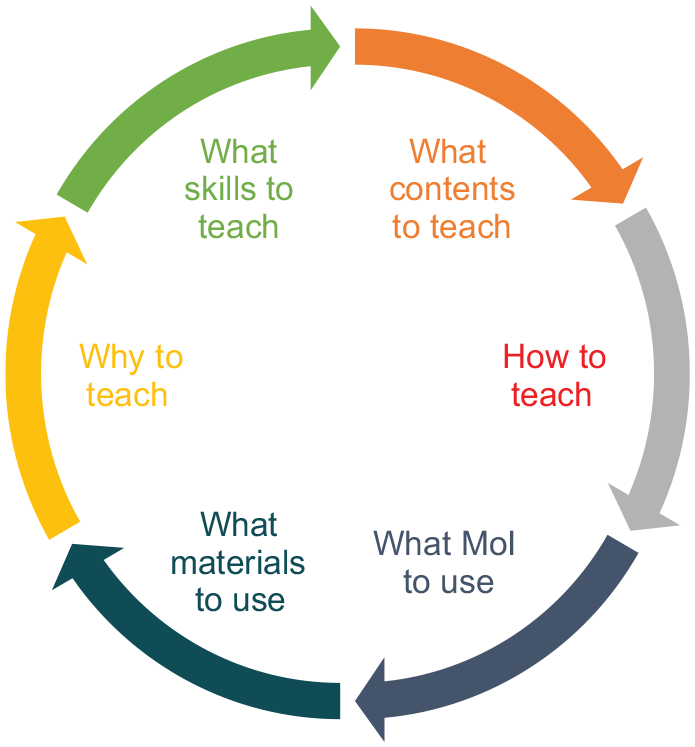
A framework for teaching English in higher education for business communication purposes.
Conclusion
Although RMG is the largest sector of international business in Bangladesh, it is largely ignored in university education to develop the necessary skills including ECS of the learners. This study shows that the ECS that graduates receive in higher education, to a large extent, is unlikely to meet the needs of the RMG industry. However, the students who succeed can often draw on personal efforts, resources, and family support to improve their English skills. Higher education needs to recognize this fact and prepare graduates with adequate specialized ECS relevant to both general and specific business sectors and with a solid competence in English required for their future career and professional tasks in local and global contexts. This research implies that higher education needs to be more pragmatic and bridge gaps between university and industry in teaching ECS at university and their needs in international business communication in the BELF setting.
Footnotes
Declaration of Conflicting Interests
The author(s) declared no potential conflicts of interest with respect to the research, authorship, and/or publication of this article.
Funding
The author(s) disclosed receipt of the following financial support for the research, authorship, and/or publication of this article: This research is funded by Monash University, Australia through its Monash Graduate Scholarship (MGS), and Monash International Postgraduate Research Scholarship (MIPRS).
