







Abstract
Executive Summary
Federal immigration courts and state child welfare courts make decisions regarding certain similarly situated children in need of protection, but how does immigration court compare in its procedures for dealing with them? This article uses a comparative court observation approach to consider that question, by analyzing six months of observational data from the Fort Snelling Immigration Court juvenile docket, along with observations in Minnesota juvenile court child protection proceedings. Findings include the prioritization of federal government interests over children’s best interests, apparent in the US Government ensuring that an attorney represent its own interests before the immigration judge, while children must represent themselves if unable to find or afford an attorney. Furthermore, unrepresented children must navigate complex multi-agency procedures in order to seek the two most common forms of legal protection (Special Immigrant Juvenile Status, and asylum). Finally, the federal government fails to provide appropriate tools for responding to indicators of child welfare matters mentioned in immigration court, despite holding states to account for their handling of child maltreatment.
Keywords
Policy Recommendations
US Congress should improve due process for children by passing the Fair Day in Court for Kids Act (S.3065), the Immigration Court Efficiency and Children’s Court Act (S.3178), and/or the Children’s Safe Welcome Act (S.4393), and relocate immigration courts outside of the US Department of Justice (DOJ).
Until then, the Executive Office for Immigration Review (EOIR) should ensure that child respondents have legal assistance; and should work with other federal agencies to expand the child advocate model of the Young Center for Immigrant Children’s Rights.
Immigration judges should be explicit with juvenile respondents about Special Immigrant Juvenile Status (SIJS), and more clear with child asylum seekers about the US Citizenship and Immigration Services (USCIS) asylum application process. EOIR and USCIS should develop relevant “self-help guides,” and make these application processes more child-friendly.
The federal government should pilot a non-court alternative administrative process for juvenile immigration cases.
Legal service providers should expand creative approaches to serving children and youth, using friend of the court, limited representation, immigration court helpdesks, accredited representatives, and social workers as part of the legal team.
Concerned community members should consider Villanova’s VIISTA immigrant advocate program, and immigration court observation programs, to monitor, advocate, and preserve human rights, due process, and the protection of noncitizen youth.
Introduction
Federal immigration courts and state child welfare courts make decisions regarding certain similarly situated children in need of protection, but how do the juvenile procedures and issues addressed in federal immigration court compare with state child welfare proceedings? This article uses a comparative court observation approach to consider that question, by analyzing six months of observational data from the Fort Snelling Immigration Court juvenile docket, and using Minnesota juvenile court child protection proceedings as a comparative context.
Both immigration courts and child welfare courts face notable criticism. Some scholars fault the location of immigration courts and their parent agency, the Executive Office for Immigration Review (EOIR), within an enforcement-minded US Department of Justice (DOJ), recommending in the alternative greater neutrality through: creation of independent Article 1 immigration courts (Peck 2021; Kerwin and Millet 2023); increased Congressional funding (Kerwin and Kerwin 2024); and more intentional prioritization and management of court cases (Chishti et al. 2023). In the child welfare field, some scholars argue for the abolition of child welfare courts altogether due to racial inequities in their formation and intervention patterns (Roberts 2022; Dettlaff 2023; Spinak 2023), while Minnesota critics — including journalists, legislators, and community groups — argue that Minnesota’s child welfare system has endangered some children in its leniency (Van Berkel and Meitrodt 2023), while also demonstrating persistent over-representation toward Native American, Black and Hispanic families (Van Berkel 2024).
Nonetheless these court systems persist, as public servants interpret the law and make daily decisions that directly or indirectly impact where and with whom children will live, including via removal decisions. Since these court systems exist in parallel — having some overlap in those who appear while applying for Special Immigrant Juvenile Status (SIJS), but no direct interaction between court systems — I decided to observe and compare the treatment of child respondents in each court context. Both court settings hear cases involving children from infants until age 21. Often the ages of respondents were not explicitly mentioned in court, therefore I use a mix of terms here–children, youth, juvenile–referring to those young people who appeared as part of the Fort Snelling Immigration Court juvenile docket, and the Minnesota juvenile court child welfare proceedings, or “child in need of protection or services” (CHIPS). This article presents relevant background literature, my methodology, results and discussion of quantitative and qualitative analysis, and recommendations for policy changes bringing greater internal logic to the treatment and protection of immigrant children. More ideally, this examination might encourage greater incorporation of the best interests of the child standard into immigration systems. Ignoring children’s best interests in immigration court contravenes the federal government’s own interests in efficient and effective case processing, suggesting an overlooked interest alignment amidst the politicization of immigration matters.
The prioritization of government interests over children’s best interests is most apparent when the federal government, in the form of the Department of Homeland Security (DHS), provides itself an attorney before the immigration judge (IJ), while children must represent themselves if unable to find or afford an attorney. This is also apparent in the procedural complexity for seeking the two most common forms of legal relief (SIJS and asylum), for which unrepresented children must navigate multiple government agencies in order to access protective procedures designed to help them. This is further apparent when children or their caregivers mention potential indicators of child maltreatment, and yet the federal government fails to provide appropriate tools to recognize and respond, despite holding states to account for their handling of child maltreatment. Instead of foregrounding children’s best interests, the US immigration court system prioritizes perceived government interests — in winning its case, in not funding or ensuring children’s legal representation, in remaining narrowly focused on immigration status — over the interests of its most vulnerable respondents: children and youth.
Best Interests
The “best interests of the child” provides a near-universal standard for making decisions regarding children, yet the US immigration court and related proceedings largely ignore children’s best interests in its legal underpinnings and decision making (Nagda and Woltjen 2015; Wolozin 2016; Rosenberg et al. 2022), incorporating the concept as a procedural reference rather than a foundational principle. Federal immigration court proceedings have been structured to prioritize government interests over children’s best interests. This differs significantly from states like Minnesota which asserts: “The paramount consideration in all juvenile protection proceedings is the health, safety, and best interests of the child” (Minnesota Statutes 2023 260C.001 § Subd. 2(a)).
The Convention on the Rights of the Child (CRC) enshrines the best interests of the child standard internationally, evident in a General Comment on the CRC describing the “best interests of the child” as: a fundamental value of the CRC; a substantive right; a legal principle; and a rule of procedure (United Nations CRC/C/GC/14 2013). The United States stands alone globally in failing to ratify the CRC; nonetheless, the best interests standard provides the foundational principle when making formal decisions regarding children, including within US juvenile court child welfare proceedings. All US states, districts, and territories incorporate the best interests standard into their statutes concerning child custody and placement, while only two explicitly define the term; factors considered as part of that assessment vary by locale (Child Welfare Information Gateway 2024). Notwithstanding widespread use of the best interests standard both nationally and internationally, this core legal standard is largely absent from US immigration court (Subcommittee on Best Interests 2016), even though immigration courts also make decisions regarding children who may have experienced maltreatment, may need protection or services, or may be outside the care of their parents.
With the passage of the Child Abuse Prevention and Treatment Act in 1974 (CAPTA), the US began requiring that state child welfare programs — as a condition to receive federal funding — appoint a guardian ad litem (GAL) to “every case involving a victim of child abuse or neglect which results in a judicial proceeding. . .(I) to obtain first-hand, a clear understanding of the situation and needs of the child; and (II) to make recommendations to the court concerning the best interests of the child” (42 USC §5106a(b)(2)(B)(xiii)). Guardians ad litem must be trained, and either an attorney or a “court appointed special advocate” (CASA). Prior to CAPTA, attorneys were only occasionally appointed to children (Duquette et al. 2021). States vary in their implementation of this statute, with some states providing an attorney ad litem, some providing non-attorney GALs or CASAs, and some providing a mix. Whichever model, an assessment of a child’s best interests is fundamental to this role.
Immigration courts are federal administrative courts tasked with interpreting and implementing the Immigration and Nationality Act (INA, 8 U.S.C) and related immigration statutes, regulations and case law. The role of the best interests of the child in the immigration context continues to develop, from a complete absence when the INA was introduced in 1952, to an initial 1998 policy memo reference by the former Immigration and Naturalization Service, then-housed with DOJ, describing the best interests of the child principle as a “useful measure for determining appropriate interview procedures for child asylum seekers” (Weiss 1998, 2). While not necessarily binding on EOIR (a DOJ agency), these guidelines mark the earliest consideration of the best interests standard in the US immigration context. A 2007 EOIR memo to all IJs and staff on “Guidelines for Immigration Court Cases Involving Unaccompanied Alien Children” acknowledged the best interests “concept” as a “factor that relates to the IJ’s discretion in taking steps to ensure that a ‘child-appropriate’ hearing environment is established” (Neal 2007, 4).
A 2017 update to this memo (later rescinded in 2023) noted that “no similar provision exists in the INA directing IJs to consider the concept of the ‘best interests of the child’ as a legal standard for determining removability or eligibility for relief or protection from removal” (Keller 2017, 3), despite a 2008 legislative addition in the Trafficking Victims Protection Reauthorization Act (TVPRA) that directed the US Department of Health and Human Services (HHS) to consider a child’s best interests in “certain circumstances” (8 USC Sec 1232(c)(2)). This HHS provision authorized the appointment of “child advocates” to certain children appearing in immigration court, who in turn can submit and speak to “Best Interest Determinations” (BIDs) before an IJ. Further, while judges do not initiate consideration of a child’s best interests, they “have a duty to consider BIDs that are submitted to the court” (Neal 2023b, 3). Thus, best interests now have relevance in creating a child-friendly environment, as well as considering a best interest assessment submitted to the judge by a child advocate. Unfortunately, such child advocate programs are only located in 10 cities across seven states and the District of Columbia (AZ, CA, DC, IL, MI, TX; Young Center n.d.), while 69 immigration courts exist in 28 states and 2 territories (EOIR 2024a, 2024b). The political whipsaw evident in the issuing, updating, rescinding, then revising again, of memos that only marginally address the fundamental value, right, principle, and procedural rule of the best interest of the child — with “Best Interest Determinations” only meriting a “duty to consider” — speaks to the need for statutory guidelines regarding the best interests of the child in immigration proceedings . This would help to bring US practice into line with international guidance, and with the federal government’s own guidance to state child welfare systems.
Legal Representation for Children: Child Welfare Proceedings
Appointing a GAL in state juvenile court ensures that judges consider an assessment of a child’s best interests when making decisions, which may differ from a child’s actual wishes. Some debate exists within the child welfare field regarding the appropriate training and background for GALs and whether legal representatives should prioritize a child’s wishes or best interests (Duquette et al. 2021). The ideal would be provision of both a legal representative and a best interests advocate (HHS/ACF/CB 2017, 4), notwithstanding that young children may be unable to articulate their views or understand the legal proceedings to which they are subjected.
The First Star Institute’s research, “A Child’s Right to Counsel: A National Report Card on Legal Representation for Abused & Neglected Children,” (First Star Institute 2019) demonstrates the wide range of state models for providing attorneys and GALs to children. Evaluating seven separate criteria, the report looks at all US states and the District of Columbia, ranking Minnesota number 36 out of 51, in large part due to Minnesota’s provision of representation only after children reach age 10 years or older (First Star Institute 2019). Since passage of “McKenna’s Law” in 2017 — named for siblings returned to an abusive parent without knowing they could have a lawyer’s help — children in Minnesota must be told of their right to confidential legal help (Minnesota Statutes 2023 260C.163 and 260C.607). Though children have participant rather than party status in Minnesota CHIPS proceedings, they are provided GALs by the state and attorneys by individual counties.
Legal Representation for Children: Immigration Court
Parties in immigration court removal cases include the noncitizen, and the Department of Homeland Security (DHS). A government attorney represents DHS, while immigrants in such proceedings (juvenile or adult) have “the privilege of being represented (at no expense to the Government)” (8 USC§1362). In other words, they are on their own to obtain legal help. Nationally, legal representation for all ages in pending immigration court cases has decreased, from 65 percent of cases represented in FY2019, down to a mere 30 percent of pending cases represented as of December 2023 (Transactional Records Access Clearinghouse [TRAC] 2024a).
Children with legal representation are more likely to continue coming to all of their immigration hearings, with 95 percent of represented children appearing for their final court decision (for FY 2005 through March 2016), while only 33 percent of unrepresented children appeared for a final hearing for that same period (AILA n.d.). More recent data demonstrates the importance of legal representation in receiving asylum, finding that 96 percent of child and adult immigrants granted asylum in immigration court in 2022 had the assistance of counsel in achieving this result (TRAC 2024b). In addition to asylum, represented children fare better with their court outcomes overall. A Congressional Research Service (CRS) report, based on unpublished EOIR data, compared the outcomes of children’s removal cases when represented and unrepresented, finding that 90 percent of unrepresented cases resulted in a removal order, compared to represented cases in which 37 percent of cases received a removal order; furthermore, only 6 percent of unrepresented cases had legal relief granted or their cases terminated in the court, while over 50 percent of youth with legal representation had their relief granted or their cases terminated (meaning they were pursuing other legal relief such as SIJS outside of the court, or their removal case was otherwise ended with the court; CRS 2021). Despite the high level of need — or perhaps because of it — lawyers for children in immigration proceedings experience a high rate of burnout due to vicarious trauma, overwork, large caseloads, and role strain (Snider, Gagne, and Williams 2024).
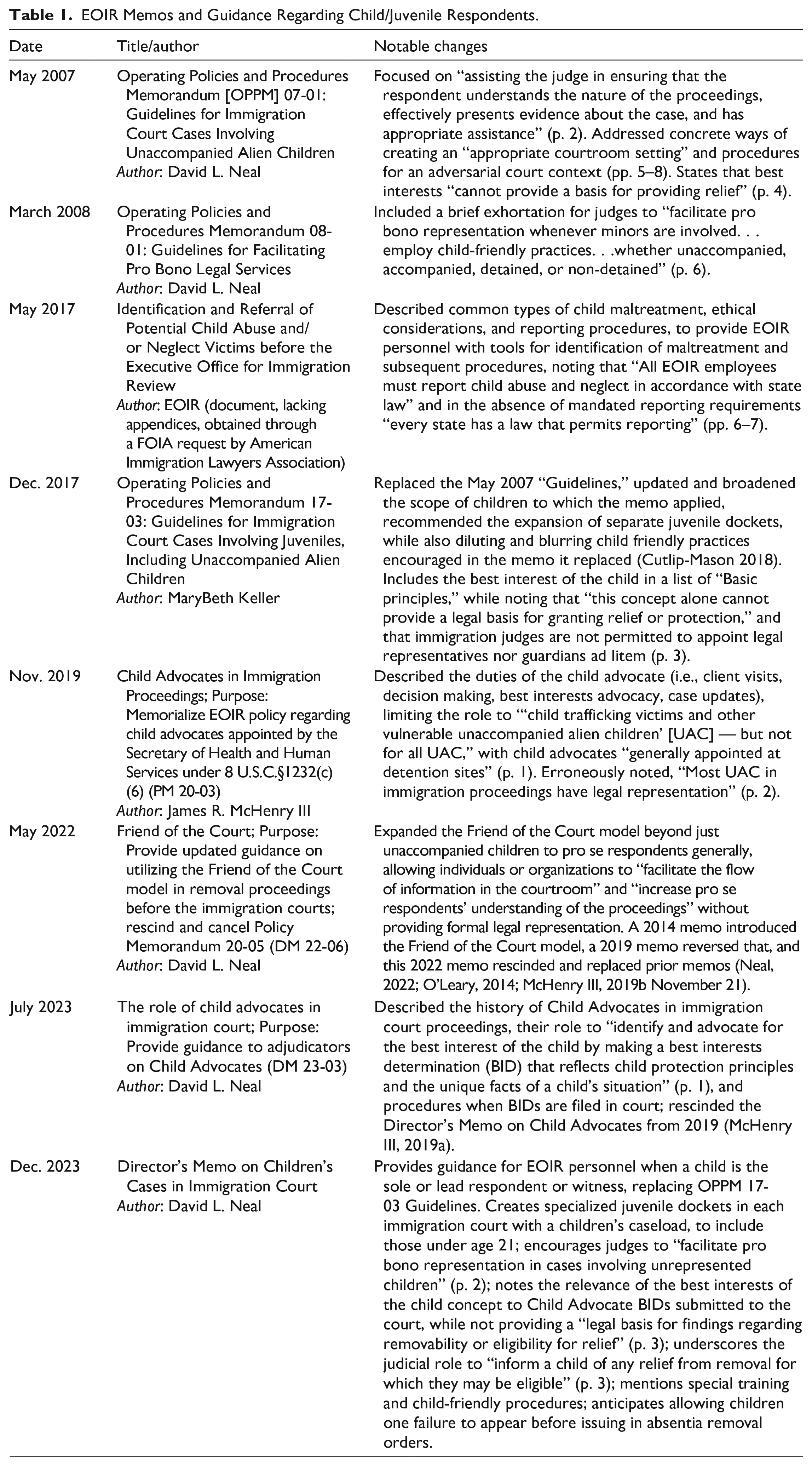
EOIR has issued a range of guidelines related to children and immigration court, addressing topics such as procedures, legal services, child advocates, and friends of the court, summarized in Table 1. This selection of guidelines for handling children’s cases in immigration court represents the evolving priorities of different presidential administrations, with some guidelines issued, rescinded, then re-issued or expanded. These guidelines recognize the unique concerns of juvenile respondents and address some mechanics and forms of representation, but on their own they do not solve the problem of unrepresented children before the immigration court.
EOIR Memos and Guidance Regarding Child/Juvenile Respondents.
Legislators have introduced three recent bills to improve children’s legal representation in immigration proceedings. The Immigration Court Efficiency and Children’s Court Act of 2023 would create specialized children’s courts within EOIR, mandate specialized training, allow the best interests of the child to be considered in decisions regarding children, allow appointment of child advocates (akin to guardians ad litem), and require coordination with local legal service providers to maximize legal assistance (Kids in Need of Defense 2023; Library of Congress 2023–2024b). Taking a more narrow but deep approach, the Fair Day in Court for Kids Act of 2023 (S.3065) charges HHS with ensuring legal representation for unaccompanied children, using pro bono counsel “to the maximum extent practicable” and otherwise at government expense, while the Children’s Safe Welcome Act of 2024 holistically centers the best interests of noncitizen children including the provision of legal orientation and representation (Library of Congress 2023–2024a, 2023–2024c).
Methods
This article uses a mixed methods explanatory design to analyze comparative court observation data, with integration at the interpretation and reporting level. Naturalistic observation was conducted in two different Minnesota courtroom contexts, in order to compare the treatment of children in two court settings that deal with protection issues for children and youth. The first setting was the “juvenile docket” of the Fort Snelling Immigration Court in St. Paul, MN, handling immigration cases for Minnesota, North Dakota, and South Dakota. Observations occurred in-person at immigration court every other Monday between July 2023 through January 2024. The second court setting involved observations in five county-level district juvenile courts handling child protection or “CHIPS” proceedings as part of the Minnesota Judicial Branch (see Figure 2). Juvenile court hearings occurred via online, in-person, and hybrid approaches, depending on the court and the type of proceedings. Observations occurred primarily online, with in-person attendance at some hearings in Ramsey and Hennepin counties.
Both court contexts are open to the public, except in specific or exceptional circumstances (MN Legislature, Office of the Revisor of Statutes n.d.; Keller 2017). Prior to observing, I described my research plans to: the Fort Snelling Immigration Court administrator, assistant chief immigration judge, and regional public information officer for the Midwest; the staff attorney for the Children’s Justice Initiative of the Minnesota Judicial Branch, and court personnel at each county juvenile court. The court personnel and 23 individual judges observed were cordial, cooperative, or indifferent to my presence, with the exception of one IJ who chastised me and asked me to leave a virtual courtroom. The Luther College Human Subjects Review Board (HSRB) approved my initial research plan as part of a sabbatical application, and later determined it to be exempt from review under the HHS revised “Common Rule” (Office for Human Research Protections 2021) due to public access rules, a lack of direct interaction with those in the courtroom, and the exclusion of identifiable information.
Observations at the Fort Snelling Immigration Court included more than 54 hours of master calendar removal hearings during all 12 juvenile docket days across six months, and 257 typed pages of observation notes. This research article analyzes data from 653 juveniles observed in removal proceedings (what I am calling “cases”). The Whipple Federal Building houses the Fort Snelling Immigration Court, along with other federal agencies including Immigration and Customs Enforcement (ICE). Entrance into the building requires passing through an outdoor guard station where potential entrants are asked the nature of their business; then passing through a metal detector and bag screening upon entering the building. Court attendees register with the front desk and wait to be called into court. When attending court, I wore a name tag from my institution, to distinguish myself from other court observers.
Observation of county juvenile court CHIPS proceedings included 98 hours of hearings spread over six months and five counties, resulting in 411 pages of typed observation notes. Hearings of the 372 children occurred primarily online, with 19 hours observed in person. Over 70 percent of the observations (262 out of 372) were in Ramsey County, home of the state capitol, because I previously served there as a guardian ad litem in CHIPS hearings, and because Ramsey County was the most responsive in providing hearing information. Since the pandemic, during which most Minnesota court hearings switched to remote access, Ramsey County has continued holding most CHIPS hearings remotely to facilitate parental participation (M. Adamson, personal communication, August 2, 2023). Participants in CHIPS hearings (adults, children, professionals) appeared remotely for hearings from home and work, vehicles and outdoors, hospitals and treatment facilities, detention, and incarceration. When observing remotely, my video and audio were turned off, with my title listed as “Court Observer.” Hearing types included: emergency protective care, pre-trial, admit deny, intermediate disposition hearings, termination of parental rights, various types of review hearings including permanency and extended foster care reviews, truancy, runaway, at risk juvenile, transfer of custody, adoption finalization, terminating jurisdiction, and unspecified.
During in-person hearings, I typed notes using a keyboard connected to a smartphone; during remote hearings, notes were taken on a laptop. Immigration court used a “cattle call” approach, with respondents given either an 8:30 AM or 1:30 PM hearing time. Respondents with attorneys, whether in person or online, were called first, while unrepresented respondents waited in the lobby until online cases concluded. Subsequently, remaining respondents and their family members entered the courtroom for a group “advisal” by the judge explaining why they are in court, what would happen during the hearing, their procedural rights, then brief individual hearings of juveniles and any accompanying family members. A trial attorney from the Office of the Principal Legal Advisor represented the US government and sat alone at a large table, or participated remotely via a large screen on one wall. A robed judge sat on a raised dais, flanked by a court clerk on one side, and a Spanish language interpreter on the other. Interpretation other than Spanish occurred telephonically through speakers on the ceiling. The observers’ gallery consisted of two rows of benches.
Court notes were converted afterwards to a spreadsheet, with each youth recorded individually as a “case” even if appearing as a sibling group, since hearing procedures, representation, presence in court, outcomes, and parentage could vary by child. Observed data included: legal representation, child’s presence, and method of appearance (in person, video, or audio); child’s gender, and relatives present (based on observation, pronouns, and relationship descriptions used); case type; protection issues mentioned; guardians ad litem (only juvenile court); potential legal relief mentioned in court (only immigration court); school attendance and months until next hearing (only immigration court). Additional analysis of the immigration court notes examined potential child welfare issues mentioned in court, and similarities to Minnesota state child welfare statutes; descriptions of legal relief, and application procedures specific to juveniles.
Quantitative Analysis Results
Docket and Case Information
Immigration court personnel posted a daily docket including respondents’ names, nationalities, and attorneys’ names when represented. Figure 1 shows the most common nationalities of juvenile docket respondents between July 2023 and January 2024, with three-quarters from Guatemala, Honduras, and Ecuador.
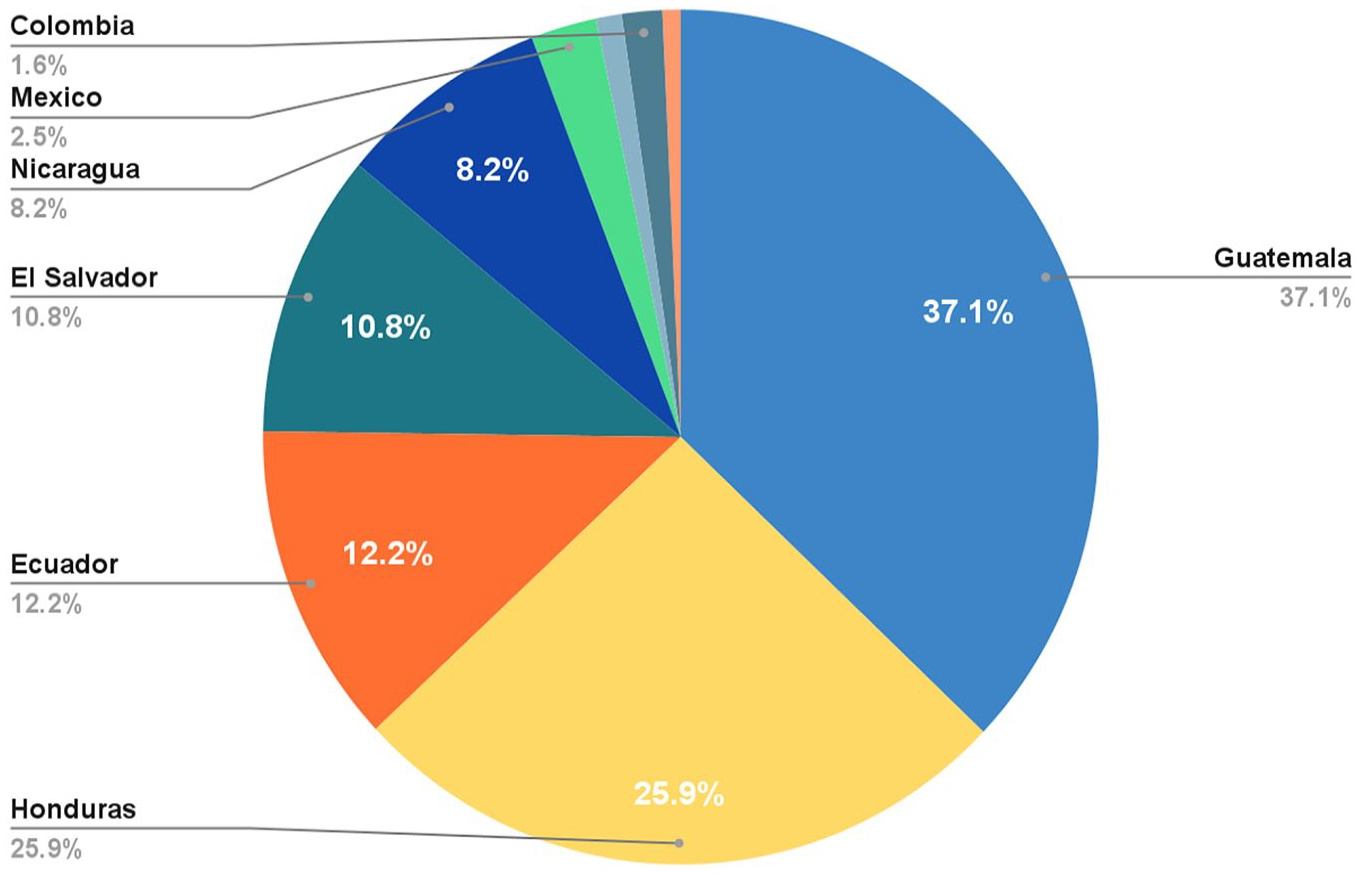
Juvenile Nationalities in Fort Snelling Immigration Court Juvenile Docket Nationalities (August 2023–January 2024).
Attorneys listed on the juvenile docket ranged from a low of nine attorney-represented cases (August 2023) to a high of 33 attorney-represented cases (January 2024), with an average of 20 cases represented per docket (attorneys may represent more than one client per docket). The number of juvenile cases each day averaged 59, with a low of 41 youth (August 2023), and a high of 70 youth (January 2024).
No docket was available for Minnesota CHIPS proceedings. Figure 2 indicates the total number of juvenile court children whose cases I observed by Minnesota county. These five counties represent the top five counties in Minnesota receiving unaccompanied noncitizen children released to sponsors from the custody of the federal Office of Refugee Resettlement (HHS 2024).
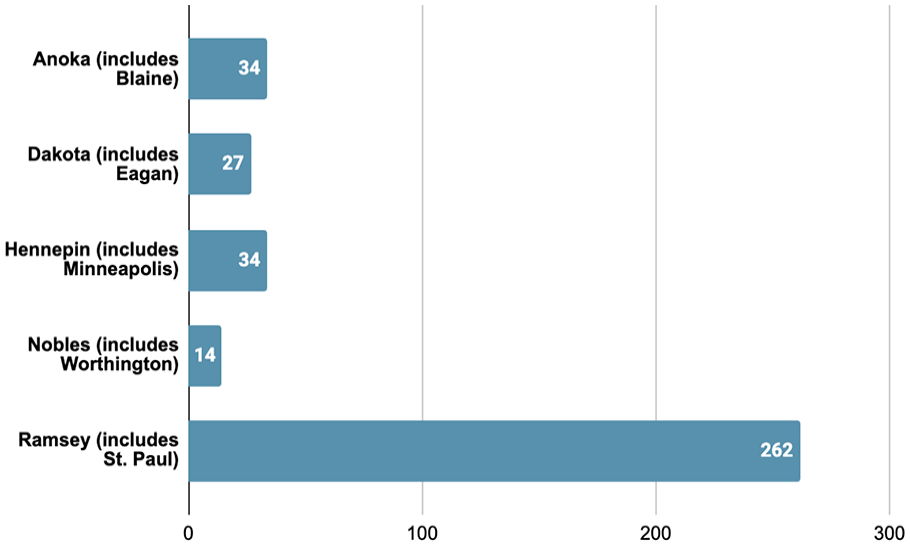
Minnesota Counties of Juvenile Court Child Protection Proceedings Observed.
Legal Representation and GALs for Children
Legal representation and guardians ad litem — or the lack thereof for children in immigration court — emerged as the most significant difference between child welfare proceedings and immigration hearings. Children involved in Minnesota CHIPS proceedings receive a guardian ad litem (GAL) in most cases, to assess and advise the court about actions or decisions in children’s best interests; additionally, children aged 10 years or older are typically appointed attorneys to represent their wishes.
Conversely, like 85 percent of immigration court locations without a specialized “child advocate” program, children in Minnesota’s immigration court had no access to a GAL to assess their best interests (Young Center n.d.; EOIR 2024a, 2024b). In addition, children were responsible themselves for finding and paying for a private attorney or locating a non-profit attorney to take their case. Judges explained this to youth as having “the right to an attorney at no expense to the government.” The immigration court maintains a list of local non-profit immigration legal service providers, of which a paper copy was given to child respondents during their hearings. Children unable to find a free attorney or to pay a private practitioner, represented themselves in court “pro se,” often assisted by a relative or friend. Typically those aged 15 years or older spoke for themselves in court, while family members were more likely to speak on behalf of younger children.
Of the 653 total immigration cases, only 37 percent (241) had legal representation during their hearing. This includes four percent of the total (28 cases) where the attorney was present (primarily online), but the child was absent due to weather, technology issues, transportation, or some other reason, and two online cases with legal representation where the child’s presence was unclear. Of the remaining 412 with no attorney, 31 percent (205) attended court alone or with family or friends, while 32 percent (207) were absent from their hearings. Of the non-appearance or “no show” cases without an attorney, the judge reset and re-noticed 29 percent (59) for a future court date, with two-thirds of these reset and re-noticed cases occurring after the December 2023 publication of an EOIR Director’s Memo instructing judges to grant juveniles one missed appearance before issuing a “removal” (deportation) order in the young person’s absence (Neal 2023b).
A remaining 22 percent of the total (143 cases) were issued in absentia removal orders (ordered deported in their absence), while five additional unrepresented non-appearance cases had some other outcome (e.g. administrative closure, change of venue, etc.).
For comparison in 372 juvenile court child protection hearings observed, 73 percent (272) had a GAL present in court, with an additional five children appointed a GAL during the hearing. Over half of the juvenile court cases I observed (52 percent) had an attorney present in court, with two additional cases referred for an attorney during court, and eight cases unclear about whether the child had an attorney (ex: the hearing was brief without introductions; or a judge stated that an attorney represented children age 10 years and older, without clarifying how many children in a sibling group that included). When attorneys and GALs are looked at together as types of court assistance, 91 percent of juvenile court CHIPS cases observed had either a GAL or an attorney present in juvenile court on the child’s behalf. Only 9 percent of the total juvenile court cases had neither an attorney nor a GAL; a majority of these (22 of 34) were truancy cases in which a GAL and attorney are not statutorily required in Minnesota. If not counting these truancy cases — which Ramsey County handles in court, while Hennepin County does not — only 3 percent of observed CHIPS hearings involved children without an attorney or GAL. Figure 3 compares representation and GALs from each court context.
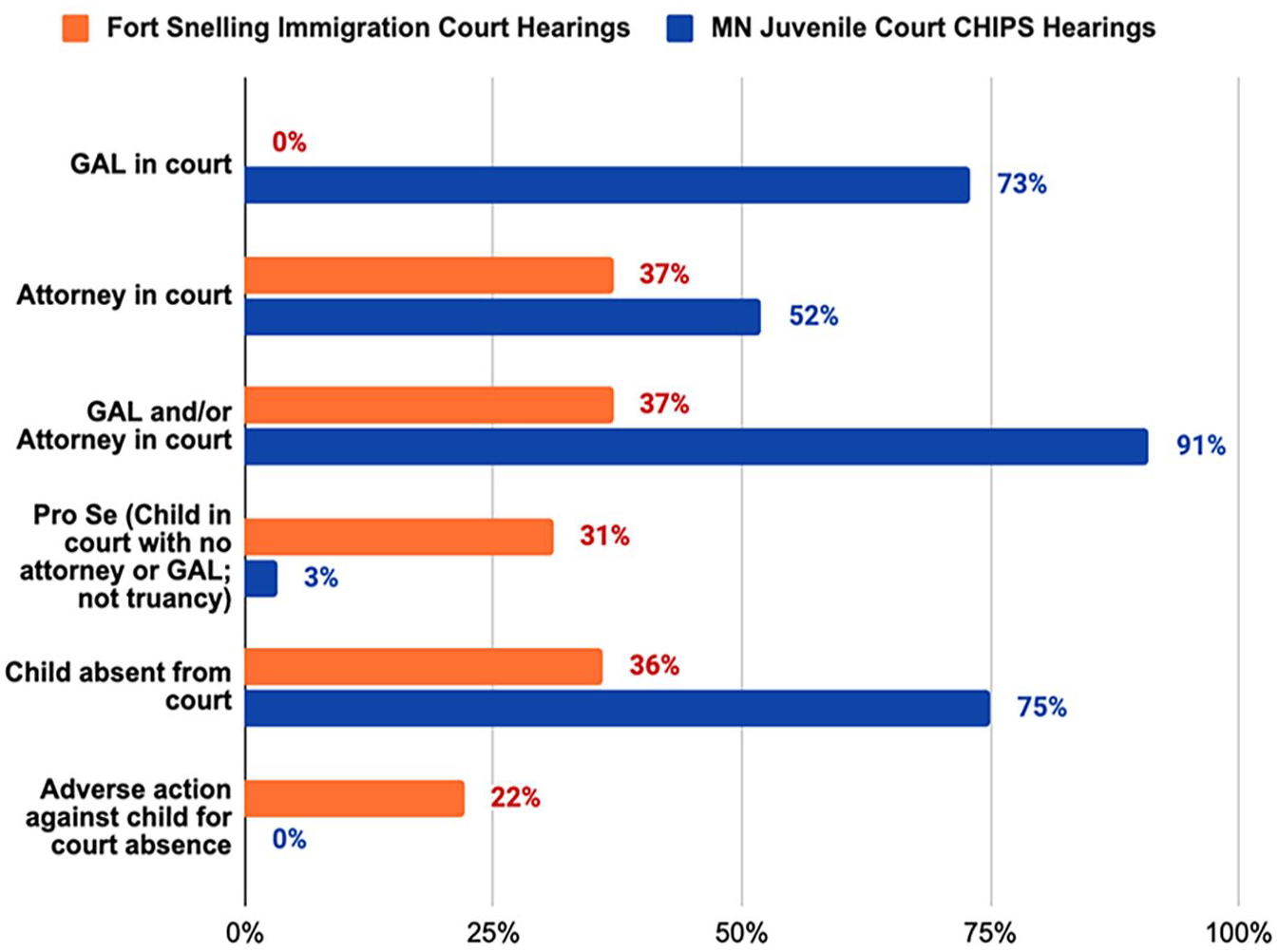
Comparing Immigration Court and Child Protection Courts in Minnesota: Representation, GALs, Absence Rates and Resulting Adverse Actions.
Attendance in Court
Court attendance varied by setting, with 36 percent of immigration court juvenile respondents not in attendance for their hearings, while 75 percent of juvenile CHIPS respondents did not appear for their hearings. Outcomes for non-attendance in court vary significantly by court context: children and youth who do not attend their juvenile court hearings are not penalized, though court decisions might be improved by their participation; immigration court respondents, whether children or adults, can be ordered removed in their absence, with 22 percent of the immigration court cases I observed ending with this result. Figure 3 compares absence rates and resulting adverse actions between court contexts.
Legal Representation and Legal Relief in Immigration Court
Of the 241 youth with an attorney in immigration court, 85 percent of these hearings included mention of some type of legal relief being pursued. Among the 205 cases in which the juvenile was present in court without an attorney, only 20 percent included mention of some type of legal relief being pursued, with a statistically significant association between having an attorney and mentioning pursuit of legal relief (p < 2.2e-16).
SIJS — a visa created specifically for immigrant youth who have experienced abuse, abandonment, or neglect — was mentioned as legal relief that was or could be pursued in 23 percent of total cases observed (including in absentia cases). In the cases where SIJS was mentioned, 88 percent had legal representation and 12 percent were unrepresented in court, with the association between attorney presence and potential SIJS relief found to be statistically significant (p < 2.2e-16). Even in these unrepresented cases where SIJS was mentioned, legal help was referenced or implied in nearly all cases, such as a relative mentioning a conversation with an attorney who had not yet been contracted, or being on a legal service waiting list, or presenting a letter from a non-profit that was helping with the state court process, but not the immigration court process.
In 104 cases, asylum was mentioned as a form of possible legal relief that was or could be pursued. In cases where asylum was mentioned, 72 percent had an attorney, while only 28 percent of those without an attorney had asylum mentioned as a form of possible relief, with a statistically significant association between attorney presence and potential asylum relief (p = 1e-05). Fifty hearings had more than one potential form of potential relief mentioned, such as asylum and SIJS, or SIJS and a T visa, or asylum and an I-130 petition by a relative. 82 percent of these cases had an attorney, while only 18 percent were pro se. Figure 4 compares potential legal relief mentioned in immigration court between those with and without legal representation.
Taken together, these figures demonstrate that juveniles with legal representation are able to pursue legal relief at a much higher rate, most evident with those pursuing SIJS.
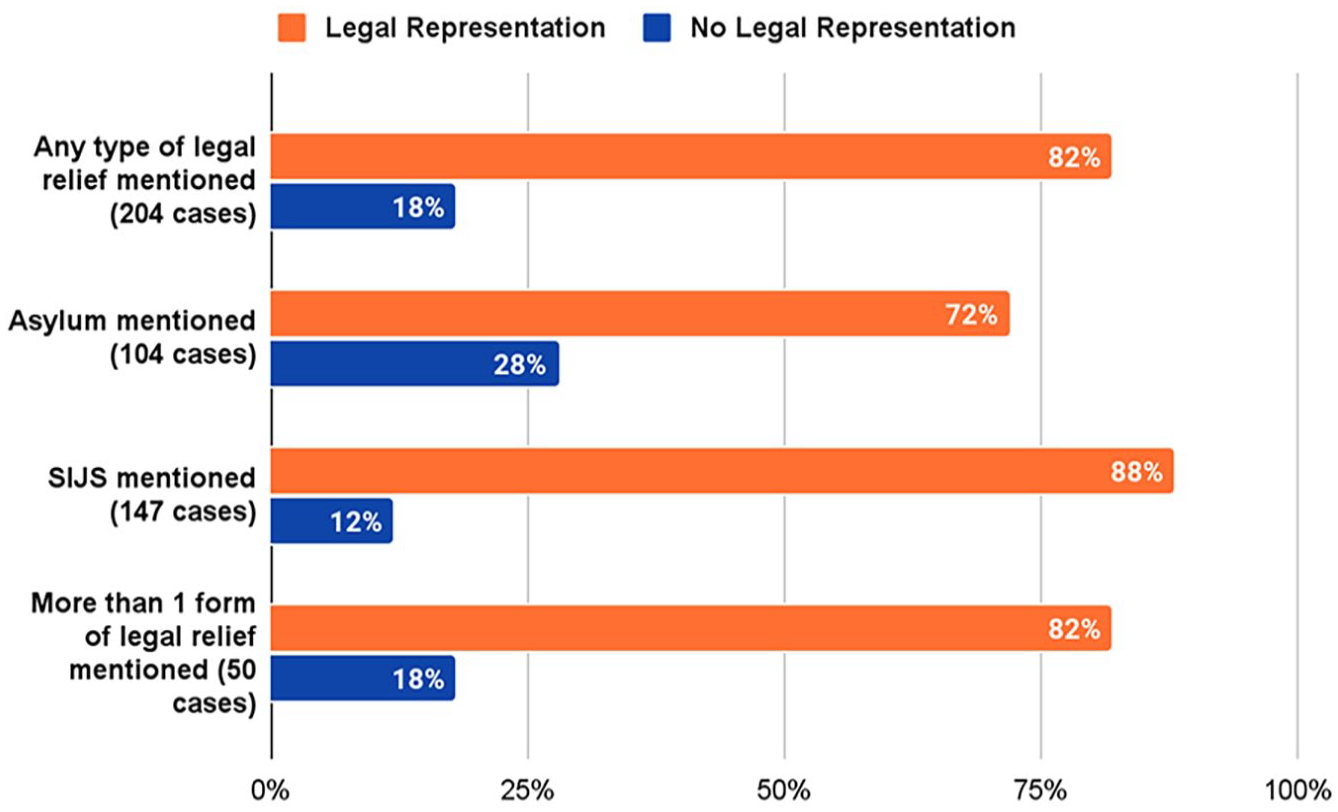
Potential Legal Relief Mentioned in Immigration Court With or Without Legal Representation.
Qualitative Analysis Results
Qualitative analysis was used to examine the child welfare content of immigration court, and how legal relief is described in immigration court. Despite different statutory foundations between federal immigration court and state child welfare court, comparable child welfare matters arose during my six month observations of MN immigration court proceedings. Notably, this occurred even though immigration court hearings primarily focus on confirming identity, address, and the status of legal assistance. This parallel child welfare information arose in immigration court even when not seeking it out, with school enrollment the exception since IJs sometimes inquired about educational attendance which relates to truancy concerns.
Child Welfare Matters Arising in Immigration Court
In Table 2, I have excerpted and highlighted in gray five specific elements of Minnesota’s definition of a “child in need of protection or services” (Minnesota Statutes 2023 260C.007, Subd. 6) and one section of Minnesota’s trafficking statute (Minnesota Statutes 2023 609.282, Subd 1a(1)). Below these sections of statute, I provide case examples from my court observations with possibly similar child welfare issues that arose in immigration court. With the case number from my notes, I include the child’s court representation status and what was said about attempts to obtain legal representation. None of these exchanges prompted evident referrals, service recommendations, or resulting conversations with a professional to address the child welfare-related concerns raised in court.
Minnesota Child Welfare & Trafficking Statutes & Comparable Issues Arising in Fort Snelling Immigration Court.
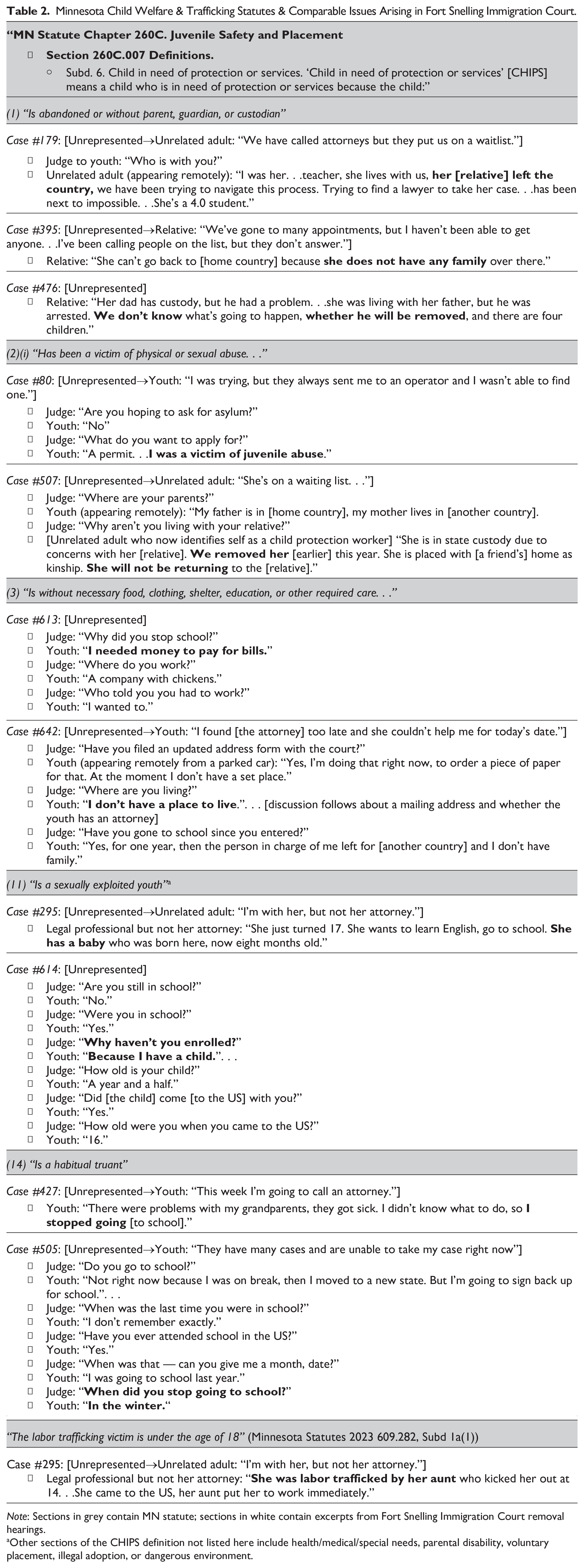
Note: Sections in grey contain MN statute; sections in white contain excerpts from Fort Snelling Immigration Court removal hearings.
Other sections of the CHIPS definition not listed here include health/medical/special needs, parental disability, voluntary placement, illegal adoption, or dangerous environment.
All of the juvenile respondents with case excerpts in Table 2 lacked legal representation during their hearings. Their pro se status matters since: (1) the represented juvenile cases observed were typically shorter court hearings, with less judicial questioning and therefore less opportunity for information like the vignettes above to come out in court; and (2) the youth whose cases are excerpted here could be eligible for legal relief such as SIJS or something else, but lacking legal representation correlates to a lower likelihood of pursuing or receiving protective legal relief allowing them to remain in the US (TRAC 2014; CRS 2021, 16–17; Snider and DiBennardo 2021).
How Legal Relief Is Described in Court
Unrepresented children and youth rely on the IJ to explain the court process and their options for legal relief. Depending on the presiding judge, these descriptions of potential relief vary considerably. My quantitative data analysis demonstrated that SIJS was the most common form of potential legal relief mentioned in immigration court. However, during the hearings I observed, references to SIJS came primarily from attorneys (not the judge) describing the form of relief they and their client intended to pursue.
For reasons that were not apparent, I only counted one explicit reference over six months where the primary juvenile docket IJ initiated discussion about “SIJS” with a respondent and family member: “You may be eligible for SIJS, but to do that you need an attorney. . .” (Case #223). Otherwise, SIJS was — perhaps — referred to obliquely as an “option” to be pursued with another government agency:
Case #179: Judge to unrepresented youth, appearing remotely with an unrelated guardian: “You may have
Case #395:
Judge to unrepresented youth, present in the courtroom with a relative: “No one will make you get an attorney. Sometimes you have more
Case #480:
Judge to unrepresented youth, present in the courtroom with a family friend: “Do you want more time to look for an attorney?” . . . Family friend: “We have been calling attorneys. . . but the attorney says they can’t take her case because her mother and father aren’t here.” . . . Judge: “I don’t know if that’s true or not. . .sometimes based on someone’s age they may have different
Another judge, who covered the juvenile docket one-quarter of the time I observed, spoke in more detailed and forthright terms when describing what a youth or relative should say to a legal service provider. SIJS was implied, though not mentioned explicitly, with an acknowledgement that legal assistance is necessary to pursue this relief:
Case12 #247: Judge to youth, present in the courtroom with a relative: “They’re very busy, you may have to call everyday. Leave a message, call back, tell them how old you are. There is a provision for individuals twenty-one and under to possibly remain in the US. That application is complicated, so you need a lawyer to help with that, and they can determine if you qualify.”
IJs mention asylum in court more regularly, typically asking whether respondents are afraid to return to their home country:
Case #645: Judge to youth, present alone in court: “Are you afraid to return to [home country]?” Youth: “Yes.” Judge: “We’re going to give you an asylum application. You need to do two things: file it with USCIS, or with the court.”
Even in unrepresented cases where the respondent or an adult accompanying them mentioned potential maltreatment, the judge did not mention SIJS as a possible form of legal protection to explore. For the cases excerpted in Table 2, SIJS was mentioned during only two out of the eleven different hearings, and those SIJS references were made by a legal professional who was accompanying but not representing the youth during court proceedings. The judge did not mention SIJS in any of the listed cases, beyond saying there were “options to file with the court or USCIS” (Case #179), “there is asylum or other relief” (Case #395), or “because of your age you may have options to stay legally” (Case #505). This obscurity regarding the primary legal protection designed specifically for youth, combined with low rates of legal representation, make pursuit of SIJS unlikely for unrepresented youth.
How Children Apply for Legal Relief
The quantitative data analysis revealed SIJS and asylum as the two most common forms of legal relief mentioned in court during hearings of the Fort Snelling Immigration Court juvenile docket. Yet, both of these forms of protection require children to navigate complicated multi-agency procedures that can be difficult if not impossible to pursue without legal representation.
Asylum
Asylum provides legal protection to noncitizens fearing home country persecution. Under the William Wilberforce Trafficking Victims Protection Reauthorization Act of 2008 (TVPRA), initial jurisdiction for asylum applications submitted by unaccompanied children in removal proceedings was shifted from EOIR to USCIS (P.L.110-457§235(d)(7)), an important procedural modification responding to critique of the adversarial and adult-centric US asylum system (Bhabha and Schmidt 2006). “With the initial jurisdiction provision of the TVPRA taking effect, UACs in removal proceedings will now file their Form I-589 application with USCIS” (Langlois 2009, 2). Thus, unrepresented child asylum seekers in immigration court removal proceedings must first navigate EOIR, then to pursue asylum they must figure out how and where to submit an asylum application. In my observations of immigration court proceedings, this led to some difficult attempts by the IJ to explain (through translation) the difference between the separate federal agencies EOIR and USCIS, as with this unrepresented 10th grader:
Case #564: Judge: “I want you to see if you can file an application with USCIS yourself. We can’t just keep resetting your case, we have to move your case forward. [Your asylum application] has to be in English, so someone has to help you fill it out, with three copies of why you’re afraid to return to [your home country], and it has to go to USCIS because of your age.” Youth: “I have to mail the asylum application before the next court date, or is that something I bring with me?” Judge: “Yes, because of your age, I think it would go to USCIS. That′s a different agency. If you file it, I want you to keep any receipts. They should give you a receipt, bring that with you.”
In a few cases this resulted in a trial attorney handing the youth a sticky note and telling them to look up USCIS on the internet — incongruously, the government employee working to deport the child providing the most help. In other cases, young people were merely told they could, or should, or had the option, to apply with USCIS, with little description of how to effectuate that. In Minnesota, the immigration court and USCIS are located in different buildings eight miles apart. Regardless, the local USCIS (2024) does not provide walk-in services, and according to their website a juvenile asylum application must be filed by mail with the Chicago Asylum Office.
SIJS
An SIJS applicant first requires a court order from a state level juvenile court, finding that a youth is dependent on the juvenile court (or its state court equivalent), that reunification with one or both parents is not viable due to abuse, abandonment, or neglect, and that it is not in a child’s best interests to be returned to their country of nationality (8 USC§1101(a)(27)(J)). This “predicate” order is then submitted along with an SIJS petition (Form I-360), and a birth certificate with English translation, to the correct federal USCIS “lockbox.” If approved, the juvenile awaits a visa, and then must return to the immigration court to petition an IJ for lawful permanent residency (a “green card”). Due to a current numerical backlog in available SIJS visas (End SIJS Backlog, n.d.), those with an approved I-360 application must monitor the US Department of State (USDOS) “Visa Bulletin” to determine when they are eligible to submit related applications for lawful permanent status, which can take years. Thus, throughout the SIJS process an unrepresented juvenile in removal proceedings must navigate procedures and information from at least four different government agencies having separate missions and independent operations without coordination (i.e., state court, USCIS, USDOS, and EOIR).
Discussion
Quantitative analysis of my research demonstrated significant differences by court context in the representation of children in court by attorneys and GALs, the extent to which children must represent themselves in court, and the amount and impact of children’s absence from court, with children in immigration court having far less representation combined with adverse actions when absent. Furthermore, children aided by legal representation in immigration court were over four times more likely to have any type of legal relief discussed in court as compared to unrepresented juveniles. Represented young people were over seven times more likely to have SIJS discussed in particular, as compared to their unrepresented peers, even though SIJS is a form of legal relief specifically designed for young people under age 21. These data demonstrate the paradox that legal representation for children in removal proceedings is comparatively scarce, yet nearly essential in order to merely pursue legal relief, saying nothing of the ultimate outcomes of those petitions.
Qualitative analysis of child welfare content revealed that comparable child protection issues arose in immigration court hearings, particularly in unrepresented cases, while the immigration court lacked the means or resources to respond meaningfully when such instances occurred. Court personnel failed to discuss specific legal relief which juveniles might consider, even when potential child maltreatment issues were mentioned in court. Furthermore, the specific procedures which unrepresented children must undertake to apply for asylum and SIJS, the most common forms of legal relief mentioned in court, were not explained clearly or explicitly, making it additionally unlikely that unrepresented juveniles would successfully pursue legal relief.
Examining in parallel these two court settings making decisions about children and youth demonstrates several key ways in which immigration courts favor government interests — in winning removal cases, not ensuring legal representation, and narrowly focusing on immigration status — over children’s best interests. Even though the Convention on the Rights of the Child states that “In all actions concerning children, whether undertaken by public or private social welfare institutions, courts of law, administrative authorities or legislative bodies, the best interests of the child shall be a primary consideration” (UNICEF n.d., 3), US immigration courts prioritize the interests of the federal government above children’s interests generally, whether best or otherwise.
Observations in Minnesota juvenile court CHIPS proceedings demonstrated how foregrounding children’s best interests can result in the routine provision of GALs, attorneys, or both. GALs and attorneys perform distinct roles that may overlap, and consequential debates exist regarding the most appropriate background (lawyer vs. non-lawyer) and representation model (best interests vs. child’s wishes) to use in child protection proceedings (Chiamulera 2021, 2). This article does not discuss those concerns, but instead demonstrates differences and an absence of internal logic in these courts’ treatment of vulnerable youth. The federal government should bring its own court systems into alignment with its expectations of state and local judiciaries regarding children, and bring US practice into alignment with international law and guidance, namely by providing representation for children through provision of attorneys and guardians ad litem across immigration court locations, and by applying the best interests of the child standard to federal immigration decisions regarding children.
During my observations, immigration judges regularly asked questions regarding a child’s school attendance, yet this line of questioning typically occurred only with pro se respondents. Otherwise, the child welfare-related matters described in this article arose during court peripherally, without intentionally inquiring about child maltreatment or child well-being, suggesting that the data discussed here represent an incomplete and minimal sampling of the child welfare needs that exist.
As demonstrated in my qualitative analysis, issues that are more typical in child protection hearings — such as abandonment or caregiver absence, abuse, neglect, truancy, possible exploitation or trafficking — nonetheless arose during six months of observing one immigration court juvenile docket. The only apparent tools for responding were increasing judicial questioning and exhortations to find an attorney, or scheduling future hearings within one to three months rather than six to ten months.
By contrast, the child protection field — while decidedly imperfect — utilizes social service providers, resource referrals, case managers, and a national network of child advocacy centers for interviewing children in more child-sensitive and trauma-informed ways. At the very least, developing an approach where an appropriately trained professional could talk with a young person privately outside of the hearing, whether in person or online, would more appropriately respond to children’s needs. Some situations may warrant referrals to local resources — such as school requirements, counseling or parenting resources, health and mental health services, and housing or shelter — while others may prompt consideration of child maltreatment responses. As a mandated reporter by profession, I am reluctant to recommend mandated reporting as the reflexive answer, though EOIR has developed such a protocol (EOIR 2017). Mandated reporting warrants its own critique for high levels of unfounded reports — often for poverty-related neglect — and for reports regarding families of color at rates much higher than their white peers (Roberts 2022; Dettlaff 2023; Spinak 2023; Jones 2024). Responding to critiques raised in this paper by merely increasing mandated reporting might again emphasize government interests by responding with procedure or surveillance, rather than assistance. Instead, assessing and responding to children’s actual needs, such as facilitating a child-sensitive interview with a social service professional outside of the open courtroom, and then making appropriate referrals, will more likely promote children’s interests. In the words of some child welfare critics, moving from a fear-based mandated reporting model to a child-centered “mandated supporting” model, or evolving from reporting to responding, would better protect children (Itzkowitz and Olson 2022; Albright 2023).
Frequently I wondered whether immigration court hearings for children and youth were truly necessary and might be better handled through an alternative administrative process. Individual juvenile “merits” hearings (i.e., a juvenile asylum hearing in court) are reported to be relatively rare in Minnesota (personal communication, R. Scholtz, January 8, 2024). The primary immigration hearing topic I observed focused on whether juvenile respondents had yet secured representation. Were legal services provided routinely to juveniles, and were juvenile applications for legal relief more systematically directed to USCIS, the need for juvenile hearings might be largely eliminated. Indeed, one proposed alternate model suggests preliminary case conferences instead (Young Center 2020). The “exclusive jurisdiction” provision in the TVPRA for children’s asylum applications could be expanded to include unaccompanied children’s matters generally, perhaps implemented initially as a pilot program before a national rollout.
Current immigration court procedures might appear, on the one hand, to promote government interests by winning 90 percent of removal cases against unrepresented children (CRS 2021), by not providing government-financed legal representation, and by remaining narrowly focused on immigration matters. On the other hand, this limited perspective fails to acknowledge how these practices conflict with EOIR’s stated mission to provide “fair, efficient, and consistent” application of the law for respondents to “seek relief from removal” (EOIR n.d., para. 2), how ensuring legal representation enables more timely and efficient case processing for the court (Chishti et al. 2023), and how holistic attention to the service and protection needs of child respondents facilitates EOIR’s vision of “serving justice and guaranteeing due process” (EOIR n.d., para. 3) by better protecting children and safeguarding their development as potentially relief-eligible youth and future US citizens. As is, the current immigration court system may, in the long run, function neither in the government’s interests, nor in the best interests of children and youth.
The federal government sets standards and incentives for treatment of juveniles in state court proceedings, yet it fails to expect the same of itself. Congress holds much but not all of the blame for these shortcomings. The US immigration court system must more clearly ground itself in the best interests of the child, while ensuring reliable access to legal representation, child-centered legal relief such as SIJS, asylum interviews with USCIS, and relevant tools for dealing with child welfare matters that will surely arise. Better still, EOIR should work itself out of the juvenile court business altogether by collaborating with other federal agencies to develop alternative administrative procedures to handle juvenile immigration matters, with appropriate funding by Congress to carry out such changes. Doing so would be in the best interests of children and youth, and likely in the immigration court’s interests as well.
Limitations and Future Research
Court observation provides a brief window into a court case, allowing for observations about policy, procedure, roles, and responsibilities. That being said, I lacked access to any court documents, reports, case data, or history regarding the children and families involved. This protected confidentiality regarding the respondents involved, while also giving me a mere moment in time perspective about a case. Some hearings, in both court contexts, moved very quickly. I typed notes as carefully as possible, but some minor inaccuracies in my observational notes are possible.
Areas for further research include the outcomes of children’s applications for legal relief before EOIR and USCIS, and how effectively children’s cases are transitioned from one system to the other. I was surprised by the multiple modalities of legal representation and child appearance (e.g., who was in person, who was online), along with variability and inconsistencies in which respondents were informed about the option to appear remotely. For comparison, I observed one immigration court juvenile docket in New Orleans, where a newer judge and government attorney dismissed cases of youth under age 14 in order for those children to pursue their cases directly with USCIS. These practice variations by court location warrant further study to seek out promising practices that can be implemented more broadly. In addition, EOIR should pursue opportunities to hear from children directly about their experiences with court, both in-person and virtually. My research focused on lessons from observational data; listening to children and youth themselves, for researchers who can arrange ethical access and consent, would add valuable knowledge.
Conclusion
The federal government operates an immigration court system where children’s interests are overlooked in favor of the government’s interests, despite the universally accepted principle that children’s best interests should be a primary factor in decisions concerning children. This legal system ensures attorneys represent government interests while going up against children representing themselves. The federal government has created complex multi-agency systems for children to seek relief that are nearly impossible to navigate without legal assistance. Finally, despite regular child protection issues arising in removal hearings, even when not specifically seeking such information, the federal government has not provided basic tools and resources for responding appropriately when such issues inevitably arise.
Like many aspects of immigration law and policy, immigration court remains a system ultimately designed for adults while nonetheless serving children, and a system that does not provide basic protections and services for children despite requiring the same of the state and county courts in which immigration courts are located.
Passing legislation ensuring that every juvenile in immigration court has legal representation and a guardian ad litem figure (or “child advocate”) — as is the ideal in juvenile court child protection proceedings — would be an important step forward. Incorporating the “best interests of the child” standard into immigration court decisions while also piloting administrative procedures to ultimately replace court appearances would also be significant, recognizing that the needs of children and youth are different from adults and worthy of age-appropriate legal approaches. Prioritizing children’s best interests may ultimately be best for both immigrant youth and for the federal government, by furthering the court’s own goals of administering the fair, efficient, consistent, and effective application of due process and ultimately justice (EOIR n.d.).
Policy Recommendations
US Congress should: Improve due process for children by ensuring legal representation for children in immigration court with passage of the Fair Day in Court for Kids Act (S.3065) and/or the Children’s Safe Welcome Act (S.4393), along with appropriate funding. Create separate children’s courts to improve adjudication and access to justice, as with the Immigration Court Efficiency and Children’s Court Act (S.3178). Pass legislation to relocate the immigration court system outside of the DOJ as an Article 1 immigration court system, to improve impartiality in weighing the interests of juvenile respondents against DOJ enforcement interests.
In the meantime until such legislation is passed: EOIR should ensure that child respondents have legal assistance before moving forward with a child’s case. EOIR should work with other federal agencies to expand the child advocate model of the Young Center for Immigrant Children’s Rights. Until all courts are covered, EOIR should prioritize certain vulnerable populations and provide access to Young Center staff, or other appropriately trained professionals, to talk with children and youth outside of the courtroom when child protection and other wellbeing issues arise during hearings. EOIR and USCIS should work with legal service providers to develop a children’s SIJS self-help guide, and immigration judges should be explicit in providing information during hearings about SIJS in a child-appropriate manner. EOIR and USCIS should develop a children’s asylum self-help guide and better coordinate the child asylum application process, so that the onus for navigating multiple federal agencies does not fall on the child. Immigration judges should explain to juvenile respondents why certain children apply for asylum with USCIS, rather than the court, and present this as a necessary procedure in their interests, rather than merely an “option.” USCIS should pilot having staff present at immigration court on juvenile docket days, and providing a physical lockbox at immigration courts where asylum or other USCIS applications could be filed on site. In response to the immigration courts’ growing backlogs, and in the interests of a more child-friendly process, the federal government should pilot a non-court alternative administrative process for juvenile cases in which legal screenings and assistance are provided, and where children can check in regularly with child advocates and/or caseworkers, rather than requiring juveniles to go to court.
Legal service providers should continue expanding creative approaches to maximize legal representation for juveniles in immigration court, such as using: Friend of the court Limited representation Immigration court helpdesk Accredited representatives Social workers as part of the legal team, to assist child clients, and to reduce “role strain. . .from taking on new duties outside of the legal realm” (Snider, Gagne, Williams 2024, 3).
Concerned community members should consider Villanova’s VIISTA program to train advocates and accredited representatives (Villanova University 2024), or court observer programs like The Advocates for Human Rights model (AHR n.d.), to monitor, advocate, and preserve human rights, due process, and the protection of noncitizen children, youth, and families.
Supplemental Material
sj-docx-1-mhs-10.1177_23315024241286870 – Supplemental material for In Whose Best Interests? Comparing Children’s Treatment in Immigration Court and in Child Protection Hearings in Minnesota: Similar Issues Without the Relevant Tools or Best Interests Standard
Supplemental material, sj-docx-1-mhs-10.1177_23315024241286870 for In Whose Best Interests? Comparing Children’s Treatment in Immigration Court and in Child Protection Hearings in Minnesota: Similar Issues Without the Relevant Tools or Best Interests Standard by Susan Schmidt in Journal on Migration and Human Security
Footnotes
Acknowledgements
Thank you to my Luther College colleagues for granting my sabbatical during which I conducted this research, and to Dr. Philip Iversen, Luther College Associate Professor of Mathematics, and Linnea Wolle, senior Mathematics/Statistics major, for assistance with statistical analysis and discussions about the results. I am grateful to Jennifer Nagda, Rebecca Scholtz, Virgil Wiebe, Anne Applebaum, Amy Lange and Ginna Portman Amis, for their feedback on this article; and to Amy Lange and volunteers from The Advocates for Human Rights, whose immigration court observer model aided me in developing this research project. I recognize the public service of staff and judges of the Fort Snelling Immigration Court, and the Minnesota Judicial Branch Juvenile Courts, and I am grateful for their openness to court observers, and for persevering through challenging workloads. Finally, to the children, youth, and families whose cases I observed at the Fort Snelling Immigration Court, and in MN District Court CHIPS proceedings, thank you for informing my thinking about how our systems might better protect children and youth.
Data Availability Statement
This article analyzes proprietary data compiled from six months of court observation during hearings that were open to the public. For questions about the data analyzed for this article, please contact the author.
Declaration of Conflicting Interests
The author declared no potential conflicts of interest with respect to the research, authorship, and/or publication of this article.
Funding
The authors disclosed receipt of the following financial supportfor the research, authorship, and/or publication of this article: This work was supported in part by the Luther College Paideia Endowment Supplemental Grants for Sabbatical Leaves.

References
Supplementary Material
Please find the following supplemental material available below.
For Open Access articles published under a Creative Commons License, all supplemental material carries the same license as the article it is associated with.
For non-Open Access articles published, all supplemental material carries a non-exclusive license, and permission requests for re-use of supplemental material or any part of supplemental material shall be sent directly to the copyright owner as specified in the copyright notice associated with the article.
