







Abstract
Black sociology developed as a response to mainstream, white sociology’s failures to address the condition of Black people in the Unites States. Central to the practice of Black sociology is that it necessitates sociological work be used, where possible, for the benefit of Black people. The contemporary practice of public sociology has similar aims of bringing sociological knowledges to various publics to address their particular issues. The public sociology literature, though, fails to conceptualize or articulate praxes of public sociology that are constructed to address the unique needs of various communities. Using the biography of the little-known Black, queer sociologist Augustus Granville Dill (1881–1956) as a case study, the authors conceptualize a practice of Black public sociology as one of many public sociologies. Like Black sociology before, Black public sociology is a rearticulation of established sociological practice that centers on Black people and Black communities. Using the most comprehensive biography of Dill published to date, the authors examine how he transitioned from knowledge producer to knowledge disseminator via the practice of Black public sociology. This article, then, serves to highlight a Black, queer foreparent of the discipline and to use his forgotten story to inform the practice of contemporary public sociology.
Keywords
There are scattered in forgotten nooks and corners throughout the land, Negroes of some considerable training, of high minds, and high motives, who are unknown to their fellows, who exert far too little influence.
The Atlanta Sociological Laboratory has come to be recognized as the first school of American sociology (Wright 2002a, 2002b, 2002c, 2016). Among the disciplinary innovations of the Atlanta Sociological Laboratory from 1895 to 1917 were employing insider researchers, writing a devoted methods section, acknowledging research limitations, and methods triangulation (Wright 2002b, 2002c, 2016). The Atlanta Sociological Laboratory is also recognized as one of the birthplaces of Black sociology (Wright and Calhoun 2006). Black sociology is a field of study that emerged to focus on issues relevant to Black people that were being ignored in the mainstream of the discipline (Ladner 1976). A shared ideology of Black sociology and the Atlanta Sociological Laboratory is the inclusion of Black people and communities in the research process, including establishing topic and methods, data collection, data analysis, and dissemination of findings (Wright and Calhoun 2006). The Atlanta Sociological Laboratory accomplished this last task in several ways. They held an annual conference to which they invited scholars and community members to learn about the research and its implications. Annual publications were mailed to a global audience, and information from them was written about by journalists. Additionally, Atlanta University appointed a northern secretary who traveled in the North and Midwest to speak about the work done at Atlanta University. What was a taken-for-granted part of the sociological process then, and even today elsewhere in the Global South (Ghamari-Tabrizi 2005; Lozano 2018), has now been coopted and institutionalized within the discipline under the moniker of public sociology (Gans 1989; Burawoy 2005).
Much has been written (Brady 2004; Lal 2008; Tamdgidi 2008; Gans 2016; Lozano 2018; Turner 2019) about the role of public sociology in the discipline writ large, but there is a gap in the literature that looks back at the history of the discipline to interrogate what we can learn about how public sociology was practiced in the past to inform its practice today. In this article, we present a case study of a member of the Atlanta Sociological Laboratory, northern secretary and department head of Atlanta University, and mostly forgotten scholar, Augustus Granville Dill (1881–1956). Using archival research, from which we construct the most comprehensive biography of Dill to date, we argue that his work, inspired by his training at Atlanta University, serves as a template for conceptualizing a unique form of public sociology: Black public sociology. Black public sociology centers the sociological labor of knowledge dissemination that works in the construction of new cultural codes (Hall 1997) about who Black people and Black communities are and what they are capable of. Our article not only brings to light the story of a Black and queer forgotten foreparent of the discipline, it also serves as encouragement for future researchers to look to our disciplinary past to inform how we do the work of sociology in the present.
Augustus Granville Dill: A Brief Biography (1881–1927)
Augustus Granville Dill was born in Portsmouth, Ohio, on November 30, 1881. As a youth living in the Midwest during the post-Reconstruction Jim Crow era, Dill defied stereotypes and showed prowess for academics and public engagement as a member of the youth literary club (Portsmouth Daily Times 1896), debate team (Portsmouth Daily Times 1897b), and Emancipation Day committee (Portsmouth Daily Times 1897a). At just 15 years old, Dill earned his teaching certificate. The accomplishment was acknowledged by the Portsmouth Daily Times (1897c), which wrote: “He will be unable to use his certificate on account of his age, but it is a high compliment to his ability and scholarship” (p. 5). The young prodigy nearly had a career in the military, as he was selected as an alternate candidate to West Point (Portsmouth Times 1902). Instead of serving in the military, Dill enrolled in the W.E.B. Du Bois–led Department of Sociology at Atlanta University in 1902 (The Crisis 1913).
As an undergraduate, Dill was one of Du Bois’s most promising pupils (Lewis 1993), serving on the debate team (The Bulletin of Atlanta University 1906), proofreading the 1903 edition of the Atlanta annual publication The Negro Church (Du Bois 1903), and being one of two students in the class of 1906 to graduate with honors (Atlanta University 1907). Inspired by his mentor, Dill enrolled at Harvard, where he earned a second bachelor’s degree in 1908 (Dill 1914). While at Harvard Dill continued his work as an educator as a member of the Cambridge Social Union (Emerson 1909), which offered classes “for a nominal fee to the working classes of Old Cambridge” (The Harvard Crimson 1895). This teaching job is noteworthy because it is one of many examples of Dill’s commitment to making education accessible to communities outside of the academy.
Upon graduating from Harvard, Dill returned to Atlanta University, where he was awarded a master’s degree in 1909 (The Bulletin of Atlanta University 1909). Although he hoped that he could continue as an educator at Atlanta, university president Edward Twichell Ware recruited him to serve as northern secretary (Dill 1920). Although Dill demonstrated educational and leadership prowess from an early age he argued that “his experience at Atlanta University had given him a deeper insight into the needs of the Negro race, and strengthened him in his determination to spend his life for their benefit” (The Bulletin of Atlanta University 1908). In a letter to Ware, Dill expressed his disappointment but affirmed his dedication to the goals of Atlanta University: “I feel that my best work can be done in the classroom and there I hope to be. Still, I see the need for work in the North and am willing to do what is really best” (Dill 1908). As northern secretary, Dill’s job was to spread the word to audiences outside the South about the work being done at Atlanta University. His goal was to build affinity for Atlanta University in an effort to solicit endowments for the financially struggling institution. Although mostly a solitary task, during the two summers while in this position, Dill traveled with a group of male students who served as representatives of Atlanta University and as a performing quartet (Dill 1920).
Dill saw these quartet trips as being of exceptional educational value to these young Black men, especially considering that “one realizes that one of the number had never before seen the ocean and this summer traveled the whole length of the New England coast from New York to Bar Harbor, Maine” (The Bulletin of Atlanta University 1909). Although his work as northern secretary at times put Dill in precarious situations, the potential for danger was heightened further when he traveled with a group of young Black men. In one of his almost daily correspondences with president Ware, Dill questioned where he should travel with the quartet and suggested to Ware that they not travel to Cincinnati because the city is “so full of prejudice being on the border line and containing so many southerners” (Dill 1909a). Although the quartet trips were completed without serious incident, Dill, who had spent two years commiserating with northern whites during his time at Harvard, used the performances as teachable moments for the students. Writing to Ware, Dill (1909b) said of one performance, Some came, I believe, expecting a minstrel or buck and wing performance—and I rather sensed it in the air. So I asked the quartet to bear themselves through the whole with special dignity, and they did it to perfection. A quartet from no school could have done better.
Dill used this opportunity to present to his mostly white audience young Black men who could break through the stereotypes of Black buffoonery.
After just two years as northern secretary, Dill succeeded his mentor as associate professor and head of the Department of Sociology at Atlanta University, after Du Bois resigned and moved to New York City to cofound the National Association for the Advancement of Colored People (NAACP) and serve as editor of The Crisis magazine (Dill 1920). During his tenure as department head, Dill carried on Du Bois’s legacy of engaging in Black sociology by focusing the annual investigations on the problems of the color line, thus spearheading work for the advancement of Black people in the United States and in the grooming and mentorship of Black leadership to service the community (Wright 2002c). Du Bois, despite resigning as department head, continued to be intimately involved with the annual Atlanta University studies. During his four-year tenure as department head and director of the Atlanta University Study of the Negro Problems, Dill coedited four editions of the Atlanta University studies with Du Bois.
In 1913, Dill resigned his post to accept an offer from Du Bois to serve as the business manager for The Crisis (Dill 1914). Dill’s arrival was highlighted in the “Men of the Month” section of the September 1913 edition of the magazine (Figure 1). The short profile announced Dill as being among “the type of progressive young men who are making themselves felt in colored America” (The Crisis 1913:222). Dill’s responsibilities as business manager involved handling myriad aspects of the magazine’s operations. In addition to managing finances, he responded to inquiries from readers, spoke with members of the community to solicit new subscribers, and, on occasions when Du Bois was away from the office for extended periods, was charged with handling the day-to-day operations of the magazine (Du Bois 1923).
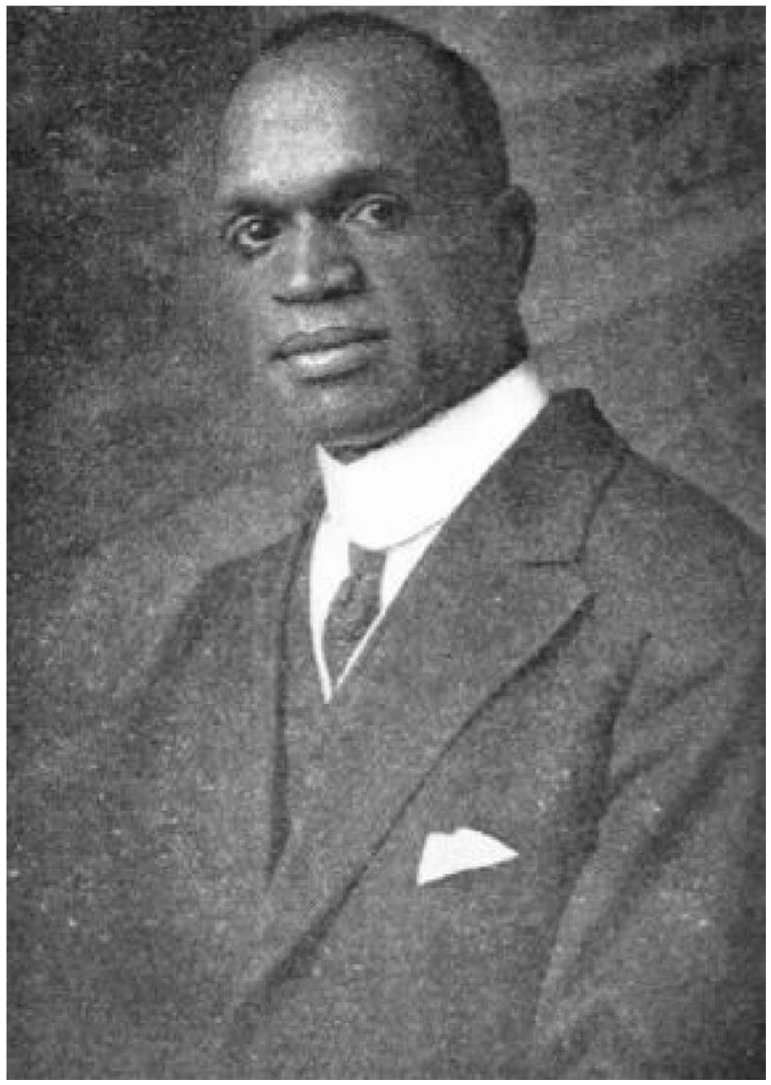
Augustus Granville Dill, 1913.
Dill’s tenure at The Crisis ended after 15 years when, in 1927, Du Bois asked for his resignation (Du Bois 1927a). The accepted record of events indicates that Dill was arrested in a gay sex sting that led to his firing from the NAACP (Kellner 1984; Lewis 2009). Although we do not know the full details of what transpired, personal correspondences indicate that the situation was more complicated than has been reported. In the years preceding the incident, Du Bois questioned Dill’s ability to serve effectively as business manager, as subscriptions had declined. Additionally, there is some evidence to suggest that Dill suffered from mental health issues that may have contributed to his poor work performance (Du Bois 1923, 1927b). In the letter to Dill asking for his resignation, Du Bois cited his mental health and the declining income of the magazine as the reasons for letting him go (Du Bois 1927a). He wrote, “Forget the little incident that has worried you so out of all proportion to its significance. It has nothing at all to do with my action” (Du Bois 1927a). The little incident is more likely than not a reference to Dill’s arrest. Chauncey (1994:437) pointed out that “Du Bois’ personal response is difficult to discern,” but it is clear that Dill had been struggling in the job for some time and his firing was likely not a direct response to his arrest alone.
Regardless of the reasons for Dill’s separation from the NAACP and The Crisis, existing histories read as if Dill simply ceased to exist at all after 1928. One can surmise that unless Dill was associated with a legitimizing institution such as Atlanta University or the NAACP, the idea that he could be engaged in meaningful work that drew on his sociological training was unthinkable. In the following section we introduce the disciplinary lens through which we can understand Dill’s sociological work after 1928.
Theoretical Framing
Black Sociology as the Practice of Cultural Production
Black sociology developed in the early twentieth century as a response to “mainstream or ‘white’ sociology [which has] upheld the status quo and seldom advocated the kinds of progressive changes that would insure the Blacks no longer experience the subjugated status in American society” (Ladner 1976:XX). Although contemporary sociology tends to be viewed as a leftist project in the public imagination, early twentieth century editions of the discipline’s flagship journal, the American Journal of Sociology, published articles that advocated sterilization of so-called degenerates, offered glowing endorsements of the effect of slavery on the well-being of Black people, and endorsed the then fashionable social theory of eugenics (Phelan 1989). The discipline’s rise out of the rational traditions of the nineteenth century provided practitioners the cover to adorn their racially biased views with a veil of value-free scientific objectivity.
Where sociological thought was not explicitly antagonistic, it was dismissive of the merits in centering research on Black people (Wright and Calhoun 2006). With little effort being placed within the discipline on investigating or theorizing on the subjugated status of Black people and the social structures that maintained their low social status, Black academics, particularly Du Bois and the Atlanta Sociological Laboratory (Wright and Calhoun 2006), advanced a sociological epistemology that centered Black people. Of this development Wilbur Watson wrote, “It is, in part, a consequence of this indifference, especially that pertaining to institutional racism, that has led to increasing emphases placed by some Black sociologists on the need for social action by Blacks in the interest of Blacks” (1976:119). In facing institutional forces that that were hostile or apathetic, Black scholars created their own means for studying themselves.
Scholars (Ladner 1976; Staples 1973a; Walters 1973) have offered definitions of Black sociology that loosely call for a social science enacted primarily by Black people, for Black people, and with Black people. Wright and Calhoun (2006) offered five principles that are to be present in the practice of a Black sociology: (1) Black researchers must lead the investigations, (2) research must be focused on Blacks, (3) research must be interdisciplinary, (4) findings must be generalizable, and (5) research findings should, when possible, have social or public policy implications. Watson (1976) characterized an ideal type of Black sociology as that which is, “1) initiated by a Black sociologist, 2) with a primary focus on Black social behavior, and 3) with a commitment to the liberation of Black people from social oppression” (p. 121). Although there is some variation in these definitions, we see that there are two zones of Black sociological labor present in both: knowledge production and knowledge dissemination.
That this division of sociological labor is written into the framework of Black sociology makes sense, because Du Bois was focused on wielding the practices of knowledge production and dissemination toward liberatory purposes (Daniels 2018). Du Bois demonstrated his understanding that white people, and white sociologists by proxy, would work to hold the narrative that their racism was not racism at all but rational beliefs based on empirical science. Du Bois (1926) made explicit that Black people should recognize this and create their own forms of positive propaganda: It is not the positive propaganda of people who believe white blood divine, infallible, and holy to which I object. It is the denial of a similar right of propaganda to those who believe Black blood human, lovable, and inspired with new ideals for the world.
Although the resolutions resulting from Black sociology can be in the form of material work aimed at creating policy agendas for the benefit of Black people, this does not mean that this is the only type of second-stage labor resulting from the process of sociological knowledge production.
As much as Black sociology dictates a rigorous, empirically driven research agenda, it is also a project of cultural production. Forming out of the atmosphere of flimsy empiricism and racism obscured by reason (Daniels and Wright 2018; Phelan 1989), the project of Black sociology was tasked with “systemically uncovering truths and correcting enduring misconceptions” (Wright 2014:50). This assignment is fundamentally different than a policy-centered one that engages data in governmental and business spheres to secure pro-Black agendas. Correcting truths in the public sphere is a political project because culture is the field where actors spend their capital in the struggle to control and elevate discourses that work in establishing cultural codes that influence policy decisions (Bourdieu 1993; Hall 1997). Black academics and intellectual leaders, especially during the period in which Dill worked, recognized the role of cultural propaganda in their project of racial uplift: “The mere participation of African Americans in the field of cultural production had an impact on white America, affecting and challenging the basic assumptions about African Americans’ intellectual inferiority” (Schwarz 2003:29). This perspective on the division of Black sociological labors can provide us insight into how sociological knowledge production and dissemination operate in other spheres.
Public Sociology(ies) for Specific Public(s)
Herbert Gans (1989) coined the term public sociology in his 1988 American Sociological Association presidential address. In his speech he described public sociologists as those who are “able and eager to report their work so that it is salient to both their colleagues and the educated lay public” (Gans 1989:7). Although Gans opened discussion about public sociology more than a decade earlier, most readers will be familiar with the concept as it was discussed by Michael Burawoy during his 2004 American Sociological Association presidential address and in his subsequent writings on the topic. Expanding on Gans’s description of the role of the public sociologist, Burawoy et al. provided us with a definition that positions public sociology as: “a sociology that seeks to bring sociology to publics beyond the academy, promoting dialogue about issues that affect the fate of society, placing the values to which we adhere under a microscope” (2004:104). Although Gans and Burawoy proposed slightly different definitions of public sociology, they are both rooted in the idea that sociologists should expand their presence in the public sphere.
Burawoy (2005) built upon Gans’s (1989) description of public sociology by recognizing the role of dialogue and mutual education in addition to just reporting sociological findings. He defined the later as traditional public sociology wherein the “publics being addressed are generally invisible in that they do not generate much internal interaction” (Burawoy 2005:7) and the former as organic public sociology “in which the sociologist works in close connection with a visible, thick, active, local and often counter-public” (Burawoy 2005:7). The importance of the public, and the discipline’s reciprocal engagement with the public are, according to Burawoy (2005), fundamental to sociology’s role in sustaining a vibrant civil society. These engagements are not just for the benefit of the publics with whom the public sociologist engages but should be beneficial to the discipline as well. It is in the reciprocity between public sociologist and the public, Alberto Lozano argued, that “new concepts, theory and questions emerge as a result of the close connection with our ‘publics’, grounded in empirical findings which must, of course, be put to the test of the academic community” (2018:101). Public sociologists do not just come down from the ivory tower to deliver sociological knowledge to their publics; especially for organic public sociologists, the flow of information should also lead from the community back into the sociological laboratory.
Despite the apparent focus on publics, discussion of particular publics is largely missing from the discourse on public sociology. Nearly two decades after coining the term, Gans lamented how the professional discourse all “dealt with sociology, [while] virtually ignoring the public and the role it plays in the realization of public sociology” (2016:3). Continuing, Gans argues that the public, being “necessary to the creation of public sociology” (2016:4), has the last word in what becomes public sociology. Much of the disconnect between public sociologists and their public(s) results from sociologists’ lack of training and status differences that hinder communication: “Writing and creating content for [nonacademic] publics requires special skills that sociologists often lack” (Gans 2016:6). Despite calling for an increased focus on public sociology’s publics, Gans fell short of defining any publics outside of the educated and less educated. Additionally, some have criticized Burawoy for failing to articulate a critical program for the material practice of public sociology (Brady 2004; Healy 2016; Noy 2009; Tamdgidi 2008). What all these conversations miss, though, are representational examples of the practice of public sociology and how it can be practiced with and for specific publics.
Drawing on the tradition of Du Bois and the Atlanta Sociological Laboratory, we propose a Black public sociology that is empirically grounded, centers cultural production, and is focused on liberatory action. This concept defines the public being addressed and provides a culturally relevant epistemology rooted in the tradition of Black sociology. Much as Black sociology developed out of a discipline that did not take seriously issues facing Black people, this framework begins to address the gap in the public sociology literature that interrogates and proposes modalities for the practice of public sociology that is relevant to the needs of specific publics. We do not intend for our article to represent the whole of the potential of a Black public sociology. Rather, through the representation of Augustus Granville Dill, we offer an historical example of the praxis of Black public sociology. In the communities in which he lived, Dill engaged his empirically grounded sociological knowledges in culturally relevant forms of knowledge production aimed at producing new cultural codes (Hall 1997) by offering empirically and historically accurate representations of Black people to Black and white audiences. In the next section we present three forms of Dill’s Black public sociology—Black placemaking, Black art, and conversing with publics—and demonstrate how these actions represented the carrying out of the resolutions proposed in the four editions of the Atlanta University publications that he coedited.
Dill’s Black Public Sociology (1928–1956)
The opening of The Negro American Artisan reads, “There is only one sure basis of social reform and that is Truth—a careful, detailed knowledge of the essential facts of each social problem” (Du Bois and Dill 1912:5). Some variation of this statement is present in all four Atlanta University publications that Dill coedited. In the spirit of Black sociology, the studies addressed cultural codes that represented Black people as lazy, immoral, unclean, uneducated, rude, and thoughtless and sought to counteract these “limited observation[s] and wild gossip” (Du Bois and Dill 1914:5) with empirical data. Across the four studies, The College Bred Negro American (Du Bois and Dill 1910), The Common School and the Negro American (Du Bois and Dill 1911), The Negro American Artisan (Du Bois and Dill 1912), and Morals and Manners Among Negro Americans (Du Bois and Dill 1914), the editors reported that institutional and individual racial prejudice, the legacy of slavery, and poverty all contribute to Black people’s lower status in society.
The studies contain a section titled “Resolutions” for which the editors summarize their results and propose actionable steps toward addressing these issues. These resolutions often include institutional proposals such as widening access to common schools for Black children (Bois and Dill 1910, 1914), increasing access to higher education for Black people (Du Bois and Dill 1910), making technical training in trades that are in high demand readily available (Du Bois and Dill 1912, 1914), and making systematic efforts to combat personal racial antagonism (Du Bois and Dill 1914). These studies also propose what can be best described as cultural imperatives that are to be carried out within the Black community, such as promoting “respect and protection for Negro women” (Du Bois and Dill 1914:8), building a collective conscious between Blacks and whites of the laboring class (Du Bois and Dill 1912), investing in private and philanthropic schools for Black children (Du Bois and Dill 1911), promoting the role of college-educated Blacks as being in service to their communities (Du Bois and Dill 1910), investing in cultural training (Du Bois and Dill 1910), and creating public spaces for Black parents to bring their children where they can engage in amusement free from fear of antagonism (Du Bois and Dill 1914).
The research that went into these four publications represents the knowledge production stage of sociological labor. Abiding by the tenets of Black sociology, then, these empirically grounded projects produced data that necessarily must be used to inform material projects of Black liberation (Staples 1973b; Watson 1976; Wright and Calhoun 2006). Knowledge dissemination is practiced in Black public sociology, which takes these sociological knowledges and works to change culture by offering scientifically congruous representations of Black people. This representational work is the carrying out of the “positive propaganda” that Du Bois (1926) argued Black people should be engaging in. We use this perspective, melded with the concrete resolutions offered in the Atlanta publications discussed above, to conceptualize Dill’s liberatory work as forms of empirically grounded cultural production informed by his knowledge production and carried out via the knowledge dissemination of Black public sociology.
Black Placemaking
Hunter et al. conceptualized Black placemaking as “the ways that urban Black Americans create sites of endurance, belonging, and resistance” (2016:32). They presented Black placemaking as a way to counter the dominant narratives of Black urban communities as being uniquely blighted and prone to violence by interjecting into those narratives a focus on Black residents’ agency, intent, and spontaneity “in creating places that are sustaining, affirming, and pleasurable” (2016:32). Du Bois and Dill (1914) found that the Black church was losing hold as the only center of Black life in part because of its puritanism. They argued that cultural spaces needed to be made available that abandoned that puritanical training and allowed Black people to embrace their natural joyousness, singing, and dancing (Dill and Du Bois 1914). From his position as a college-educated community member living in the heart of Harlem, Dill took up his responsibility (Du Bois and Dill 1910), and in 1932, at the age of 50, he opened the Harlem Personal Service Shop (Estcourt 1933), which operated as a site of Black placemaking.
Dill opened the shop, located at 236 West 135th Street, as a bookstore, post office, and venue for lectures and artistic performances. Dill offered services such as the use of his telephone and his address, which helped community members navigate poverty (Pittsburgh Courier 1933). More than just allowing people to use his address and phone number to have access to communication technologies, he also received and responded to or forwarded telephone and mail messages on behalf of his clients, took orders for printing, and offered typing services (Estcourt 1933). Many people in the community had unstable housing and telephone access, and by providing these essentials to modern life, Dill ensured that his community could stay engaged in civil society. Because Dill recognized the duty (Du Bois and Dill 1910) of his privileged position within his community, these services were not a source of great wealth for the scholar activist, who lived under constant threat of poverty himself. He charged only a nominal fee and made just enough to “get along” (Harrison 1934:8). As a site of Black placemaking, Dill’s shop offered educational and cultural development in addition to these practical services. At the time, Henry Lee Moon wrote that Dill’s place was, “much more than a shop,” it was a “cultural center for Negro Harlem” (1935:9).
As Dill was a lifelong educator who understood the importance of education for all Black people (Du Bois and Dill 1910, 1911), a standout feature of the shop’s bookstore was a lending library. The books in Dill’s library included many from his personal collection, which he would read himself during his days running the shop. No doubt these “highbrow” (Estcourt 1933:3) books were of educational value and helped Dill stay up on the leading discourses of the day. As a site of Black placemaking where positive representations of Black people could be fostered, Dill “stressed particularly the value of Negro books” (Pittsburgh Courier 1933:8). The work of Harlem Renaissance writers was read by a mostly white audience (Schwarz 2003), and at a time when these writers were expanding the range of representations of Black people, it was surely an act of positive propaganda (Du Bois 1926) for Dill to stress the importance of books written by Black authors to his Black audience. As an educational and representation enterprise, Dill also maintained a collection of “photos and tributes from the greatest Negro figures in arts and letters and education” (Harrison 1934:8), including: John Weldon Johnson, Paul Lawrence Dunbar, Claude McKay, Langston Hughes, Roland Hayes, Jules Bledsoe, Aaron Douglas, and Augusta Savage, to name just a few. One of Dill’s most prized artifacts no doubt was the official U.S. commission of Aaron Stratton (his grandfather), who was an officer during the Civil War and earned the rank of sergeant (The New York Age 1933).
As a project of Black placemaking, Dill’s shop was about more than utility, history, and education. The resolution from Morals and Manners Among Negro Americans (Du Bois and dill 1914) proposed that Black spaces should be places of play, joy, and pleasure. To that end, much of the space in Dill’s small shop was taken up by his concert grand piano, and he would often perform for his patrons (Harrison 1934). Beyond his own musical performances, Dill hosted a diverse series called Mr. Dill’s Five-Twenties—named for their start time of 5:20 p.m.—on the first and fourth Sundays of each month (Lockley 1933). The artists showcased at these exhibitions represented people “of distinct talent and ability in their various fields—sculpture, painting, literature, instrumental music, [and] vocal music” (Lockley 1933:3). Moon (1935) described the Sunday afternoon series as, “becom[ing] an established attraction” (p. 9). Dill’s shop was a space of cultural production through a project of representation that demonstrated Black entrepreneurship, Black contributions to U.S. history, and the scholastic and artistic work of Black people. The empirically grounded impetus for this representational work is found among the resolutions of the Atlanta publications, so this work represents the implementation of those resolutions through Dill’s practice of Black public sociology.
Black Art
As a site of Black placemaking, Dill’s Personal Service Shop was a cultural hub for the community. It was a site that “privileges the creative, celebratory, playful, pleasurable, and poetic experiences of being Black and being around other Black people in the city” (Hunter et al. 2016:32). The creation of Black art and a robust and affirming Black culture has long been recognized as an alternative strategy for Black uplift that is distinct from direct political action (Fleming and Roses 2007). We note this distinction between influencing policy and culture in our conceptualization of Black sociology and recognize that several of the Atlanta University study resolutions proposed focusing on cultural training and representational politics (Du Bois and Dill 1910, 1911, 1914). Patricia A. Banks (2010) argued that, especially for the Black middle class, support for Black art is a political project for racial advancement and unity. This position, largely rooted in the politics of representational propaganda (Du Bois 1926), was promoted during the Harlem Renaissance by prominent figures such as Alain Lock and Du Bois (Banks 2010). Representation politics were also practiced by civil rights organizations such as the NAACP and the National Urban League, which recognized that “cultural production was regarded as a field African Americans had not entered to a sufficient degree,” and they remedied this by “integrating art into the organizations’ goals of racial advancement” (Schwarz 2003:28). We will start this discussion by going back to Mr. Dill’s Five-Twenties.
As previously discussed, Five-Twenties was a performance series in which Dill hosted artists who worked in diverse mediums. We argue that the performances were sites of Black placemaking but were also opportunities for Dill to offer representations of various Black artists and to invest in their material success. He mostly featured local Harlem talent, whom he would often accompany in performance on his grand piano. Ruby Elzy and Annie Wiggins Brown, both of whom went on to perform on Broadway, conducted some of their earliest performances alongside Dill at his showcase (Pittsburgh Courier 1933). More than just a performance series, Dill saw his Five-Twenties as an opportunity to platform Black talent “who have not had expensive publicity but whose talents merit special attention and recognition” (Lockley 1933:3). Costs were covered by a small subscription fee of 50 cents paid by audience members (Harrison 1934). Dill’s work on The Negro American Artisan (Du Bois and Dill 1912) demonstrates awareness of labor issues, and he used these subscriptions to pay each performer: “Dill believed that the artist, like the laborer, ‘is worthy of his hire’” (Lockley 1933:3). His hope was that “this may enable the artist to have another lesson from a very good teacher or it may help encourage and develop talent” (Lockley 1933:3). Dill applied this same labor consciousness to the work exhibited inside his shop. He distributed most of the proceeds from the sale of the exhibited art to the artists, “once in a blue moon collecting a small commission on sale” (Harrison 1934:8). More than just a cultural space, the shop presented Dill with opportunities to provide material support to community members.
Because most of the income Dill earned covered operating expenses or was given to the artists, he supplemented his income by working as an organist for Dr. John Haynes Holmes’s Community Church (Pittsburgh Courier 1933). Dill leveraged this position as an opportunity to help others, as he convinced Holmes to use Black artists for performances in the church. For example, Dill was “instrumental in having Maurice Hunter pantomime Negro spirituals at one of the Lincoln Day services” (Pittsburgh Courier 1933:2). Hunter later become the most recognized Black male model of the 1940s and 1950s (Corbould 2018). Dill’s sacrifices were recognized by Paul Harrison, who wrote, “You’d think a Harvard graduate and former college professor ought to be able to live in some degree of affluence. Yet [Dill] is obliged to combine a lot of enterprises to get along” (1934:8). That Dill traded his own financial stability to be of service to his community is in line with the resolutions offered in The College Bred Negro American (Du Bois and Dill 1910) regarding the duty of college educated Black people to their communities.
Another way Dill platformed Black artists and contributed to affirming cultural productions was through the creation of a publishing company with Du Bois called Du Bois and Dill Publishers. In 1920, the pair, along with their colleague at The Crisis Jessie Fauset, launched The Brownies’ Book, the first magazine targeting the educational and cultural uplift of Black children (Lewis 2009). The introductory page of each issues made clear the magazine’s intended audience: “A Monthly Magazine for the Children of the Sun. Designed for all children. But especially ours” (The Brownies’ Book 1921). The goal of the magazine was to “create socially committed children . . . [and] . . . to inspire racial pride and a sense of cultural nationalism in its audience, treating Black children with an unparalleled regard, and requiring in return their participation in national and international affairs” (Capshaw-Smith 2006:25). The publishers accomplished this by printing educational stories and poetry that taught Black children about their history and personal beauty without glossing over the terrors and realities of being Black in America.
The magazine was short-lived, with the final issue being published in December 1921. Despite its short existence, The Brownies’ Book had a lasting impact, as it marked “the origin of Black children’s literature as a genre separate from adult literature” (Capshaw-Smith 2006:25). As a tool of liberatory knowledge dissemination, The Brownies’ Book was the first of its kind. The empirically grounded findings for the necessity of a product such as The Brownies’ Book to offer representations to counteract negative stereotypes are prevalent in Morals and Manners Among Negro Americans, in which the authors write, “The average Negro child must be educated in poor schools . . . he must grow up in an atmosphere where he can scarcely escape humiliation, contempt and personal insult” (Du Bois and Dill 1914:16). The editors continue, “His general outlook on life is apt to be distorted by such surroundings and his tendency . . . is to become surly in temper, or pessimistic or hypocritical” (1914:6). To have this magazine created for our children no doubt contributed to the symbolic economy of culture (Hall 1992) representations these children were not seeing elsewhere.
Among the many members of the Harlem Renaissance who appeared in The Brownies’ Book was Langston Hughes, who as a young man published his first poems in the magazine (Rampersad 1986). Hughes’s prominence as a Black historical figure and someone who later became widely recognized cultural producer is, at least somewhat, attributable to the mentorship he received from Dill in his early years in New York, when Dill not only allowed him to live with him for a period but also introduced his young protégé to the intellectual and cultural life of Harlem (Rampersad 1986). Dill also collaborated with others to aid in the curation and representation of works done by Black artists. In 1921 Dill, along with head librarian Ernestine Rose, organized the first of what became an annual showcase at the 135th Street Library (Anderson 2003) that featured, at that time, “the largest collection of Negro arts work ever assemble[d]” (The New York Age 1921:2). Stuart Hall reminded us that: “The reality of race in any society is, to coin a phrase, ‘media-mediated’” (1992:14). Part of Dill’s Black public sociology was his use of media representations to educate and enlighten both Black and white publics about what he knew to be true of the potential of Black people to rise above inaccurate and harmful stereotypes that were empirically disproved yet permeated the public consciousness.
Conversing with Publics
Dill’s public speaking was perhaps his most traditional practice of public sociology and represents his capacity to articulate his sociological knowledge and to wield it, in line with the tradition of Black sociology, toward educating both Black and white audiences about the state of Black people and their history. Although Dill dedicated most of his work within the Black community to providing cultural and material opportunities, he also recognized that for broader systemic change, the problem of the color line needed to be addressed. The roots of his understanding can especially be found in The Negro American Artisan (Du Bois and Dill 1912), in which, discussing issues of labor, the editors wrote, The salvation of all laborers, white and Black, lies in the great movement of social uplift known as the labor movement which has increased wages and decreased hours of labor for Black as well as white. When the white laborer is educated to understand economic conditions he will outgrow his pitiable race prejudice and recognize that Black men and white men in the labor world have a common cause. (P.7)
With the idea that racial prejudice can be educated out of white people, Dill spoke and wrote broadly to many different publics.
Although there are few transcripts of what Dill actually said, we do know that he was a prolific public speaker given the many documented events at which he appeared, including church services (Allen 1933; The Bulletin of Atlanta University 1908; Portsmouth Daily Times 1916), radio and newspaper interviews (Estcourt 1933; The Plain Dealer 1953; Portsmouth Daily Times 1919a), and various conferences and meetings (The Harvard Crimson 1921; The New York Age 1927; The New York Times 1927). The Portsmouth Daily Times, supporting this idea, wrote that Dill, “is one of the eminent colored orators in this country” (1919b:10). Despite the dearth of written or recorded material, we highlight a few instances when his words were recorded.
In 1921 Harvard University founded its Intercollegiate Liberal League, dedicated to instilling a sense of social responsibility in young people (Rothschild 1921). Dill spoke at the inaugural conference and used his time to highlight the social condition of Black people in a speech titled “Liberalism and the Negro” (The Harvard Crimson 1921). At a conference at which the university president, a senator, newspaper editors, union presidents, and socialist leaders all took to the stage to speak, Dill’s was the lone voice speaking out to these elite people about the plight of Black people (The Harvard Crimson 1921). The conference centered issues of industry, politics, and democracy, and Dill admonished the speakers for their discussions of global labor issues stating, “It is foolish to talk about industrial or political democracy so long as you ignore the 12,000,000 negroes in the United States” (The New York Times 1921). Speaking on the perception of Black freedom in the United States, “He said that slavery still existed in a different form. Three thousand negroes lynched in thirty-five years, disfranchisement through insult and intimidation, and peonage as practiced on the Georgia farms all show that the slave system still exists” (The Harvard Crimson 1921). As a Harvard graduate himself, Dill was able to leverage his social capital to speak truth to power and simultaneously practice representational politics, as he was likely one of few, if not the sole, Black speaker at the conference.
In 1929 Dill was elected president of another intercollegiate organization, the Intercollegiate Association (The New York Amsterdam News 1929). The Intercollegiate Association held conferences that hosted speakers from both inside and outside the academy who were working together to address social issues. Dill opened the 1930 conference with a speech titled “How Can the Modern Man and Woman Solve Their Growing Social Conflicts?” It is noteworthy that the conferences hosted participants from both predominately white and historically Black colleges such as Columbia University, New York University, Howard University, Atlanta University, Hunter College, and Dartmouth College (The New York Amsterdam News 1930). Although we were unable to locate transcripts or a speaker list, in the context of Dill’s life work it is unlikely that he did not miss this opportunity to use his position as president of the Intercollegiate Association to speak about Black social issues to the elite white audience in attendance.
In addition to speaking with primarily academic audiences, Dill engaged with non-academic publics small and large. As an example of personal correspondence, Dill (1926) penned a letter to a Charles T. Blackman in response to a question concerning the public school system. He wrote, More money is spent in the North than in the South upon public school education. . . . One of the handicaps in the South is the presence of two systems of schools made necessary by the race separation which the South maintains. That makes for poorer school systems for both races. (Dill 1926)
The empirical basis for this response is found in The Common School and the Negro American (Du Bois and Dill 1911), in which the editors wrote, The first fact that the student must notice concerning the public school system of the South is that it is a dual system and so necessitates a double set of schools. Such an arrangement is costly and involves various peculiar difficulties. (P.28)
This correspondence demonstrates how Dill drew on the sociological knowledges that he helped produce when speaking to these issues in the public.
Dill also had larger platforms in the way of newspaper and radio interviews. In an interview published in the Portsmouth Daily Times (1919a) Dill lambasted the U.S. Postal Service for holding up circulation of an issue of The Crisis magazine because it contained an article about the mistreatment of Black American troops who were used as cannon fodder against German artillery in World War I. The article describes Dill as “pav[ing] the way to a better national understanding and for more human treatment for the twelve million negroes in America” (Portsmouth 1919a). Although obviously willing to speak out about injustice, Dill also strove to highlight examples of Black excellence in his public speaking. He was interviewed in 1953 by James Fassett of CBS radio about Amos Fortune, a little-known formerly enslaved African who bought his freedom and founded a successful tannery business (The Plain Dealer 1953). The first examples show Dill’s practice of representation by highlighting particularly the mistreatment of Black Americans serving in the military by their own government during a period of heightened patriotism. And the second demonstrates how the ideals of the American dream, of success through hard work and perseverance, were also held by Black Americans.
As demonstrated with his work on The Brownies’ Book, Dill thought it especially important to educate Black children and to offer them positive representations of Black success. Speaking to the 1919 graduating class of Portsmouth High School, his alma mater, he reminded the class about the history of Africans in the United States. The Portsmouth Daily Times (1919b) wrote that Dill “paid tribute to the negro race which has taken such a great part in the late war as well as in all the previous wars in which the United States was concerned” (1919b:10). He urged the young graduates to carry a social consciousness with them into the world: You have no right to be a citizen of the United States unless you leave this institution with a firm conviction that you will put your best into life, that you will put forth an effort worthy of a Portsmouth High School graduate. (The Portsmouth Daily Times 1919b:10)
In all these cases of public speaking, Dill drew on his sociological and historical knowledges to speak to audiences with the purpose of addressing issues of racial justice.
Discussion
After three decades in the North, Dill moved to Louisville, Kentucky, to care for his sister in the late 1940s. Even in his final years he continued speaking out about issues of racial justice. Although he had a lifelong passion for music, he refused to play in many Louisville churches because they were segregated: He holds that the Lord is interested more in the tint of the soul than the tint of the skin. There are two types of churches in Louisville, white and Negro. Augustus Granville Dill will be found playing organ for that church which draws no color line. (Ladd 1951:11)
Dill died on March 9, 1956 in Louisville.
Our article follows in the tradition of Black sociology and serves as the starting point for the “legitimization of Black institutions and behavior that have evolved to meet the needs of the Black masses” (Staples 1973b:168). Although Dill’s story certainly has value as a genealogy of Black, queer, and sociological history, in this article we use his biography as a case study to conceptualize an empirically grounded and narrative-driven Black public sociology as one of many, yet unexplored, public sociologies. By conceptualizing Dill’s work through the combined lens of Black and public sociologies, we offer a perspective that addresses a gap in the public sociology literature. Black public sociology recognizes the distinction between, and validity of, both processes of sociological labor: production and dissemination.
Knowledge dissemination is typically represented as the process of sharing sociological knowledges with no clear purpose other than just getting information out there, and discussions about the interventionist work of public sociologists is limited to their ability to influence policy agendas. What these conversations miss is the role public sociologists can play in disseminating sociological knowledges, not for the direct purpose of changing policy but for influencing culture. Bourdieu (1993) described this work: The fact remains that the cultural producers are able to use the power conferred on them, especially in periods of crisis, by their capacity to put forward a critical definition of the dominated classes and subvert the order prevailing in the field of power. (P.44)
Although Black public sociology centers the work done by Black public sociologists for and with the Black community, we argue that this focus on the public sociologist as a cultural producer is broadly applicable to whatever field in which a public sociologist works. Key, though, is the recognition that communities have different needs and cultural norms, and public sociologists can develop strategies that combine their sociological knowledges and ingroup status to develop practices that address the unique needs of their communities.
Although public sociologists looking to work with and advocate for communities of which they are not part, particularly white allies of Black people, surely share some of the concerns of community members, they lack the “Black experience of physical and mental abuse based on racial membership” (Watson 1976:116). Although we are not arguing that outgroup public sociologists have nothing to offer their communities of interest, we do support Stuart Hall’s (1997) point: To belong to a culture is to belong to roughly the same conceptual and linguistic universe, to know how concepts and ideas translate into different languages, and how language can be interpreted to refer to or reference the world. To share these things is to see the world from within the same conceptual map and to make sense of it through the same language systems. (P.22)
For Black public sociologists, then, having shared conceptual maps with their publics opens up the potential for forms of sociological labor that exemplify a cultural competence and are relevant to the needs of the community. And using the strategy of conceptualizing various public sociologies, sociologists can consider their own background and community membership in constructing public sociologies that are tailored to the needs of their particular communities.
Footnotes
Acknowledgements
We would like to recognize the historians, librarians, and archivists who preserve historical documents and without whom this research would not have been possible. Special thanks to the staff at Robert R. Woodruff Library at Clark Atlanta University and the curators of the W.E.B. Du Bois Papers at the University of Massachusetts Amherst.