






Abstract
Microaggressions are subtle, discriminatory actions that occur in everyday interactions and play a significant role in the maintenance of racial hierarchies. Previous research has often focused on identifying these experiences among specific racial groups in distinct environments, such as schools or workplaces. Yet, there has been limited comparison of these experiences across various social domains, racial groups, and socioeconomic backgrounds. This study examines microaggression experiences among Black, Latinx, and White adults in the United States, highlighting how education influences these experiences. Building on prior research, we formulate and assess three plausible expectations for the intersectional relationship between education and microaggressions: race as a master status (education has no effect), education as a status protector (education reduces experiences), and differential exposure in White spaces (education increases experiences for people of color). Our results show no initial relationship between education and microaggressions. However, strikingly different findings emerge when examining the effect of education by race. For Black and Latinx people, consistent with predictions about White spaces, higher educational attainment increases their encounters with microaggressions. In contrast, for Whites, education reduces these experiences, acting as a status protector. Thus, education does not alleviate racial inequality in microaggression experiences; rather, it magnifies it.
Keywords
Microaggressions are deceptively small-scale, yet cumulatively have harmful effects on minoritized groups’ ability to fully participate and succeed in social settings. Compared to traditional forms of discrimination, which entail actions that deny access to material resources in organizational and institutional settings, microaggressions refer to how prejudice is enacted in everyday social interactions across formal and informal social spaces (e.g., workplaces, restaurants, and parks). Perpetrator intentions behind microaggressions may be ambiguous or clear, ranging from stares and physical avoidance to slights, slurs, and physical threats (Sue et al. 2007; M. T. Williams, Skinta, and Martin-Willett 2021). These actions magnify racial/ethnic boundaries and serve to undermine belonging (Lewis et al. 2021; Newton 2023; Posey-Maddox 2019), lower self-esteem (Nadal et al. 2014; Wong-Padoongpatt et al. 2017), and diminish health and well-being (Erving et al. 2023; Mouzon et al. 2020). As such, microaggressions, though ostensibly minor, play an instrumental role in upholding White supremacy by “keeping those at the racial margins in their place” (Pérez Huber and Solórzano 2015:298; see also Embrick, Domínguez, and Karsak 2017).
Prior qualitative research has documented microaggression experiences across a wide array of contexts, including universities (Ballinas 2017; McCabe 2009; Newton 2023) and workplaces (Wingfield 2010; Woodson 2023). These studies examine specific racial/ethnic groups within social class locations (e.g., professionals) or life stages (e.g., college students), providing rich contextual detail but offering limited understanding of how experiences may vary across the socioeconomic spectrum. Other research has examined everyday discrimination across a more diverse set of social contexts, including public transportation (Purifoye and Brooms 2025), retail stores (Byron 2023; Gabbidon and Higgins 2020), churches (Bracey and Moore 2017), and museums (Domínguez and Embrick 2020). Yet these studies lack a direct comparative analysis of experiences by socioeconomic status. A related body of research explicitly centers on social class, showing that the Black and Latinx middle class continues to experience everyday discrimination (Feagin and Cobas 2015; Feagin and Sikes 1995), disputing claims that race is declining in significance (Wilson 1980). However, conclusions that “experiences with racism and racial discrimination are not attenuated by class status” (Purifoye and Brooms 2025:320) are generally based on the observation of the persistence of racial discrimination among the middle class rather than on a comparison of experiences between class locations.
Quantitative research has primarily centered attention on the health consequences of microaggressions (e.g., Lee and Turney 2012; D. R. Williams et al. 1997). A few studies estimate racial/ethnic differences in microaggression experiences controlling for education, but have not examined the intersectional effect between race/ethnicity and education. For example, Douds and Hout (2020) find Black respondents reported more microaggression experiences than White and Latinx individuals, with no differences between the latter. They find no effect of education on microaggression experiences. Keith et al. (2017) find no effect of education on the type of discrimination experienced among a sample of Black Americans. Gong, Xu, and Takeuchi (2017) estimate a binary measure of everyday discrimination among a sample of Black, Latinx, and Asian respondents and observe a positive education effect. They note that
individuals with higher SES, regardless of their experiences of discrimination, might develop a more sophisticated and critical view of their society and become more sensitive to racial/ethnic stereotypes, prejudicial attitudes, and discriminatory behaviors. Their heightened sensitivity to racism and discrimination may result in a higher likelihood of perceiving discrimination. (Gong et al. 2017:508)
Building on prior work, we outline three plausible theoretical explanations for the relationship between education and microaggressions. First, the race as a master status hypothesis conceptualizes race/ethnicity as the primary factor shaping life chances (Hughes 1945; Omi and Winant 2014), and therefore, education may provide no protection against microaggressions. Second, the status protector hypothesis suggests that education may provide greater status, respect, and esteem (Kuppens et al. 2018; Van Noord et al. 2023), and therefore reduce microaggression experiences by offering a buffer against daily insults and indignities. Third, the differential exposure hypothesis predicts that education may result in a greater frequency of microaggression experiences as it is associated with increased Black and Latinx people’s exposure to White spaces (Anderson 2015, 2022; Moore 2008, 2020). To this end, we ask the following questions: First, how does education, as a key indicator of socioeconomic status, affect the frequency of microaggression experiences? Second, does the relationship between education and microaggressions vary by race?
We contribute to and extend research in several regards. First, rather than treating education as a control variable, we examine an intersectional effect—whether the relationship between education, a central indicator of social class, and microaggressions differs by race/ethnicity. This approach addresses long-standing debates on the question of whether class can attenuate race/ethnicity in shaping life chances. Second, we complement more individual-focused theoretical explanations of the effects of education with a more structural one. Like prior studies, we cannot observe the theoretical mechanism directly; however, we posit that the education effect captures greater exposure to microaggressions, not merely greater “sensitivity” or a stronger “sense of victimization.” For instance, Posey-Maddox’s (2019, 2023) research showed that poor and working-class Black parents reported experiencing more microaggressions when they moved from a predominantly Black community into a predominantly White suburb. It was not education that provided the knowledge to identify microaggressions; it was the greater exposure to everyday discrimination they experienced in predominantly White settings. Finally, prior quantitative research finds minimal racial/ethnic differences in microaggression experiences. We examine whether the differential effects of education may help explain this pattern.
In this study, we focus on the broad racial/ethnic groups Black, Latinx, and White for several reasons. First, we wish to compare results with prior studies analyzing these groups. Second, the General Social Survey (GSS) sample is not large enough to statistically examine more granular ethnic distinctions within racial categories. Racial categories are socially constructed and, therefore, are all pan-ethnic, encompassing heterogeneous groups of people with different ancestral homelands, cultures, and histories. Although some debate lingers regarding Latinos as a racial or ethnic group, it is clear that the group has become increasingly racialized (see Vargas, Valle, and Dhuman 2025). As such, we use the term Latinx as a racial category in this study.
The GSS data (2018–2021) we examine offer a window into a time when awareness of and attention to microaggressions were likely heightened, as were the contexts in which individuals might experience them. Donald Trump ran for president in 2016 on a platform of inflammatory, racist rhetoric. He frequently demonized immigrants, especially Latinx immigrants, calling them violent criminals (“bad hombres”). He used phrases like “law and order” and expressions of unconditional support for police as political “dog whistles” to stir Whites’ racial resentment (Drakulich et al. 2020). His rhetoric not only attracted voters who already held similar views, but many of his supporters’ views changed to align with his positions (Enns and Jardina 2021). By 2017, a majority of U.S. Americans believed that Trump’s election worsened race relations (Pew Research Center 2017). In addition to a rise in anti-Black and anti-immigrant sentiments, this period is also marked by a rise in high-profile hate crimes directed toward Asian Americans and Jewish communities, which contributed to increased tensions and feelings of vulnerability among underrepresented groups (Beirich and Buchanan 2018). The end of the period is marked by the murders of Ahmaud Arbery, Breonna Taylor, and George Floyd in 2020, fueling an expansion of the Black Lives Matter movement and a racial reckoning, which led to the largest social justice protests in history.
Diversity, equity, and inclusion initiatives also expanded during this period (Pew Research Center 2017), along with increased social awareness of terms such as microaggressions, discrimination, and systemic racism. Therefore, we assess how respondents perceive microaggressions in a social and political environment where these issues are more central both in cultural narratives and firsthand experience. However, this period also coincided with COVID-19, which led to the closure of many social contexts where interaction occurs. As a result, despite the increased salience of race/ethnicity in everyday interactions, opportunities for such experiences were limited.
Background and Theory
The concept of microaggressions was first introduced by psychiatrist Pierce (1970) to describe the experiences of Black Americans that fell outside traditional prejudice and blatant racism. He noted that they were “subtle, stunning, often automatic, and non-verbal “put downs” of Blacks by offenders” (Pierce et al. 1977:67). In more recent years, scholars have expanded the scope of microaggressions, defining them as “the brief and commonplace daily verbal, behavioral, and environmental indignities, whether intentional or unintentional, that communicate hostile, derogatory, or negative racial, gender, sexual orientation, and religious slights and insults to the target person or group” (Sue 2010:229). Relatedly, Essed (1990, 1991) developed the idea of everyday racism, which explicitly connects these daily, experiential interactions to the broader system of racial/ethnic domination. She argued that everyday racialized experiences, such as being followed while shopping, receiving poor service in restaurants, or people acting fearful when passing you on the street, are not idiosyncratic but rather a cause and consequence of the system of racial domination. The use of both terms has expanded in sociological research, and they are often used interchangeably, as we do in this manuscript, to denote persistent and quotidian experiences of discrimination (Domínguez and Embrick 2020).
Researchers have developed three categories of microaggressions: microinvalidations, microinsults, and microassaults (Sue et al. 2007). While the defining features are how actions inflict harm, they also overlap, though imperfectly, with severity and perpetrator intent. Microinvalidations tend to be more ambiguous (e.g., expressed as colorblindness) and are often unconscious to the aggressor. These actions deny one’s experiences, competence, or presence in social spaces—for example, by treating non-White people as “forever foreigners” (e.g., “Where are you from?”) or questioning their competence, or whether they belong in a space (asking a non-White doctor, “When can I see the Doctor?”). Microinsults can range from mild to severe, such as being treated as unintelligent, dishonest, or criminal. This would include experiences of people clutching their bags, locking their car doors, or crossing the street to convey mistrust and avoid interaction. Microassaults are the most direct forms of interpersonal discrimination, such as being directly threatened or harassed. The GSS data lack sufficient detail to categorize microaggression experiences into these three categories. However, our measure primarily captures experiences that would fall into the microinvalidation and microinsult categories.
Race as a Master Status
It is well established that race is a social construction. It is not encoded in biology (Lewis et al. 2021), but rather reflects the historical process of social categorization and differentiation upon which society is founded (Omi and Winant 2014). All racial categories are pan-ethnic groups. They are comprised of people with different cultures and histories. Racial categories homogenize diverse groups of people into a smaller subset of social distinctions. The process of racialization involves using non-racial markers of differences as a basis of racial differentiation. Skin tone has historically been a significant basis, but so too have other aspects of phenotype (e.g., facial features, hair), as well as material and non-material culture (e.g., clothing, language use, and names).
Racial projects refer to the ongoing practices that create and sustain racial categories and serve as a basis for the distribution of power, status, and resources in society (Omi and Winant 2014). While scholars often focus on institutional aspects of racial projects such as state policy and law, microaggressions can be understood as racial projects operating at the interactional level.
Because of the ubiquity of racial categories in shaping every domain of social, political, and economic life, Omi and Winant conceptualize race as a master category. Within the context of social interaction, it is experienced as a master status (Hughes 1945). In all societal contexts, it is the primary distinction shaping social interactions and life chances, irrespective of educational attainment or other social distinctions. Research on Black and Latinx professionals and college students reveals that educational attainment does not protect against experiences of discrimination (Ayala and Chalupa Young 2022; Lewis and Neville 2015; McCabe 2009). Quantitative studies also suggest that education may not impact the type or frequency of microaggression experiences (Douds and Hout 2020; Keith et al. 2017).
This perspective predicts that education will not affect experiences of microaggressions. Race is the primary basis for external attribution and treatment by others, irrespective of educational attainment. For instance, Ray (2015:84) notes that no matter how much education Black men attain, they must “come to terms with the fact that socioeconomic status does not protect them from being perceived as suspicious and threatening.” Vallejo’s (2015) study found that many of the Mexican American professionals she interviewed, despite their educational attainment, reported being mistaken for “the help” at work and at work-related events. Although most uses of the master status concept consider the negative implications for minoritized groups, the concept also suggests that Whites will be treated with presumptions of higher status and preferential treatment in daily interactions. Gray et al.’s (2018) study of college students found that White first-generation poor and working-class students were often assumed to come from higher-class backgrounds, while Black students of any class background were presumed to be from lower-class origins (also see Morales 2014).
Education as Status Protector
Scholars have long argued that educational attainment can reduce or eliminate social inequalities. Mann (1848) famously described education as the “great equalizer,” allowing merit, rather than class background, to shape opportunities. Wilson (1980) argued that educational attainment was becoming more important than race in shaping the life chances of Black Americans. Bourdieu (1986) argued that, beyond any knowledge or skill benefits, educational credentials are cultural signifiers of competence, worth, and status. These perspectives highlight different mechanisms, but all suggest that education may serve as a status shield, protecting against experiences of microaggressions.
People with more education earn higher wages and hold higher-status positions than those with less education (Payne 2023; Torche 2011). Education, particularly college degree attainment, has been shown to reduce, if not eliminate, the intergenerational transmission of advantage (Karlson 2019; Pfeffer and Hertel 2015). Experimental research shows that people with higher levels of education are evaluated more favorably, perceived as more competent, and viewed as more knowledgeable, hardworking, and deserving than those with less education (Kuppens et al. 2018; Van Noord et al. 2019, 2023). As such, greater status, respect, and esteem conferred by education may provide protection against microaggressions.
As a marker of social class, education may attenuate experiences of microaggressions. The strongest version of this argument would suggest that racial differences in microaggression experiences can be explained by differences in socioeconomic position. A softer version is that it may not eliminate experiences entirely, but it could reduce them. For example, Wingfield and Chavez (2020) examined Black doctors, nurses, and technicians and found that discrimination was experienced differently across the occupational hierarchy, with doctors reporting the least amount of interpersonal discrimination and technicians reporting the most. Woodson’s (2023) study of Black professional service workers found that those with degrees from more prestigious universities experienced less interpersonal discrimination. In addition to operating as a status shield, among Latinx people, education tends to also shape personal and external attributions of being in the White racial category (Roth, Solís, and Sue 2022; Vargas 2015), which may reduce exposure to microaggressions.
White Spaces and Differential Effects
White spaces are social contexts in which people of color are “typically absent, not expected, or marginalized when present” (Anderson 2015:10). The concept often highlights the racial demography of organizational, institutional, and public spaces, but it also refers to a context perceived to be predominantly White in terms of relationships of power, history, and culture (Embrick and Moore 2020; Moore 2008). White spaces are constructed to appear normative and race-neutral, masking how power and privilege are embedded within them while simultaneously marginalizing and excluding people of color (Bonilla-Silva 2013; Mayorga 2014). Moore (2020:1956) asserts that “racist microaggressions often take place when power and privilege within [organizational and institutional contexts] are presumed to belong uncritically to Whites, while people of color are viewed as outsiders within these powerful social organizations and institutions.” Moreover, the most prestigious, elite spaces in the United States—Congress, C suites, exclusive schools, and so on—are in fact White spaces (Feagin and Ducey 2017; Jones 2025; Warikoo 2020). Anderson (2015:11) notes that “While White people usually avoid Black space, Black people are required to navigate the White space as a condition of their existence.”
Microaggressive interactions reflect systemic practices that perpetuate racial inequalities, even in seemingly inclusive or professional environments. The progress of racial minorities in White spaces may concern Whites, who might see people of color as a threat to their personal and group standing (Berrey 2015; Warikoo 2020; Woodson 2023). This perceived threat may promote actions that highlight racial distinctions and reconstruct social relationships of power and domination (Sue et al. 2007). Bracey and Leo Moore’s (2017) study of White evangelical churches showed that racial microaggressions are strategically used as “tests” to ensure that people of color entering the church do not disrupt or challenge the White space. These tests serve both as mechanisms of exclusion and as reinforcement of the racial hierarchy.
There are numerous ways to consider White spaces, but the presence of non-White people in White spaces is presumed to increase threat, which in turn encourages microaggressive behavior. Microaggressions are racial projects that establish boundaries, define insiders and outsiders, and maintain privileged access to resources. Hall and Krysan (2017) study geographic data in Chicago neighborhoods and find that Whites’ perceived threat of Latinx people increases as the Latinx population increases in the surrounding area. Alba, Logan, and Stults (2000) find that Whites’ attitudes toward non-Whites and immigration are more negative when they perceive these groups to be growing in their communities.
Research has examined how neighborhood racial composition shapes everyday discrimination. Landale et al. (2017) find that discrimination is more frequent among Latinos in diverse LA neighborhoods compared to those with a greater share of co-ethnics. Hunt et al. (2007) find that Black women report the lowest levels of discrimination in predominantly Black neighborhoods, with experiences of microaggression increasing as the share of Black neighbors declines. Relatedly, Stewart et al. (2009) find that Black youth report more discriminatory police targeting in predominantly White neighborhoods.
Posey-Maddox’s (2019, 2023) research further illustrates this process through movement into White spaces. She examines poor, working, and middle-class Black parents navigating children’s schools in predominantly White communities. The parents report increased microaggression experiences after leaving predominantly Black neighborhoods. While all parents report such experiences, there was some variation by class. For example, hypervisibility was more common among working-class parents, while middle-class parents more often report presumed racial homogeneity. Experiences of presumed criminality were reported irrespective of class.
Although we cannot measure exposure to White spaces directly, more educated Black and Latinx people are more likely to be exposed to White neighbors (Alba et al. 2000; Crowell 2024) and coworkers (Stainback and Irvin 2012; Stainback, Jason, and Walter 2018). Because education tends to increase exposure to White spaces, it may produce different experiences across racial groups. For Whites, higher education likely reinforces existing privileges, while for racial minorities, educational attainment increases their visibility and threat in White spaces and may heighten microaggressive experiences.
Intersectionality
The focal idea of this study is an intersectional one—that racial experiences interact with socioeconomic status. An intersectional approach also highlights how gender is racialized and how race is gendered. As such, the simultaneous influence of race and gender may also produce differences in these everyday experiences (Kilgore, Kraus, and Littleford 2020; Morales 2014; Settles 2006). For example, common gendered racial microaggressions targeting women of color include those linked to sexual objectification, exoticization, invisibility, and assumptions of inferiority (McCabe 2009; Nadal et al. 2014). Black women in particular are subjected to microaggressions rooted in the politicization of their bodies and in controlling images, such as the “strong” or “angry” Black woman (Hill Collins [1990] 2000; Kilgore et al. 2020; Newton 2023). Latinas experience similar, yet also unique, forms of microaggressions, such as being stereotyped as foreign, exotic, hypersexual, or incompetent (Lopez 2024; McCabe 2009; Sue 2010). These stereotypes often intersect with language-based discrimination tied to accent or assumptions of English proficiency (Cobas and Feagin 2008; Nadal et al. 2014). In professional and workplace settings, these stereotypes often undermine Latinas’ authority and invite unwanted sexual attention (Lopez 2024).
Black and Latinx men also experience some common as well as distinct gendered racial microaggressions. Black men in professional occupations are frequently isolated from colleagues, perceive narrower margins for error than their White peers, and engage in extensive impression management to combat the trope of the “angry Black man” (Jackson 2024; Wingfield 2007, 2013). Latinos also face persistent stereotypes that portray them as dangerous and criminal (Canizales and Vallejo 2021; Kulig et al. 2021).
In educational settings, Ong (2005) finds that women of color studying physics attempt to manipulate stereotypes they encounter to their favor, such as by leveraging racial and gendered tropes of Black women as loud and direct in order to assert themselves in predominantly White male-dominated spaces. Newton (2023) also finds that Black women students at a predominantly White university encountered significant visibility in classroom spaces while simultaneously facing exclusion in common areas. Conversely, intersections of race and gender allow Black men to construct what Wilkins (2012) describes as a veneer of “moderate Blackness” in which they restrict certain emotions but leave Black women to cope with racialized stereotypes about Black anger. Yet these intersections also draw Black college men together to share academic, social, and cultural resources in predominantly White spaces where they feel distance from both Black women and White students, even as they enjoy enhanced opportunities for dating and romantic relationships (Jackson 2024; Wilkins 2012).
White students also report that higher education can serve as a vehicle for socioeconomic mobility, but for White women, this may be more pronounced among those who already hail from more economically privileged backgrounds (Armstrong and Hamilton 2013). Intersections of race and gender also leave first-generation White men with more opportunities than their Black men counterparts to develop identities that allow them to navigate both high school and college successfully (Wilkins 2012). These findings suggest that educational spaces may be a site where intersections of race and gender yield varied outcomes for different groups, and that there is reason to suspect that higher education in particular could shape the extent to which groups perceive microaggressions as well as their ability to avoid them.
While our study primarily examines the intersectional effects of race and education, gender may also interact with these factors to yield unique experiences. We analyze microaggressions by race/ethnicity, education, and gender, both additively and intersectionally, to account for this potential.
Methods
Data
This study uses data from the 2018 and 2021 General Social Survey (GSS). The GSS is a nationally representative, cross-sectional survey of the non-institutionalized adult population (age 18 and older) living in households. In response to the COVID-19 pandemic, the GSS adapted its data collection methods, transitioning from in-person interviews to a mail-to-web survey design (see Davern et al. 2021). This shift led to a decline in response rates from 59.5 percent in 2018 to 17.4 percent in 2021. We include a year indicator variable to account for average between survey year differences in our statistical estimates.
Measurement
Microaggression Experiences
The frequency of microaggression experiences variable was constructed using the Everyday Discrimination Scale (EDS). The EDS is designed to capture “the recurrent indignities and irritations in everyday situations” (D. R. Williams et al. 1997:338). The short version of the scale asks five questions:
In your day-to-day life, how often have any of the following things happened to you? You are treated with less courtesy or respect than other people, you receive poorer service than other people at restaurants or stores, people act as if they think you are not smart, people act as if they are afraid of you, and you are threatened or harassed.
The response categories include: almost every day, at least once a week, a few times a month, a few times a year, less than once a year, and never. We reverse-coded each item and combined them into an additive index (Cronbach’s alpha = .78) ranging from 0 to 25.
The GSS randomly assigned the EDS items to questionnaire ballots A and C in 2018 and 2021. The starting sample size based on the split-ballot design was 4,195. Due to missing responses on one or more of the microaggression items (n = 99), the sample size was reduced to 4,096. After performing listwise deletion on the predictor variables, our final analytic sample includes 3,931 respondents. 1
Race and Gender
We used the 2018 GSS race variable, which includes the categories, Black, White, and Other. Additionally, respondents were asked, “Are you Spanish, Hispanic, or Latino/Latina?” If they answered yes, we recoded them as Latinx (Hispanic of any race). The GSS interviewer also coded the respondent’s sex. Because this measure is an external attribution of gender display, we use binary gender terminology (men and women). The 2021 data were collected online rather than in person, with a few respondents opting for a telephone interview. Respondents self-identified their race and sex, and we coded them according to the 2018 coding scheme. Because the “other” race category is such a heterogeneous group, we do not discuss the results for this group in our analysis, but they are reported in the tables.
Education
To measure education level, we used self-reported years of education measure, ranging from 0 to 20.
Control Variables
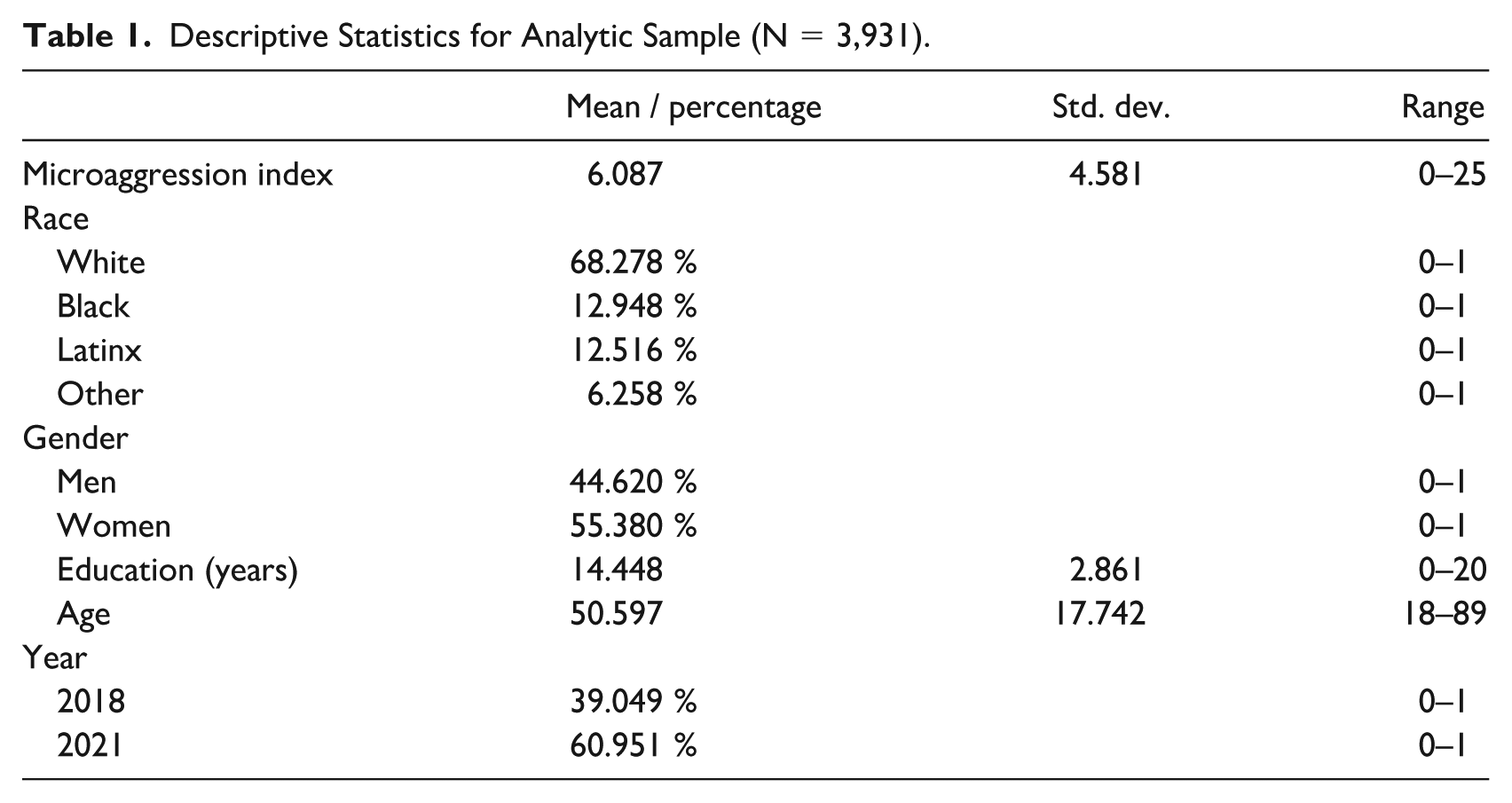
We control for respondents’ age and GSS survey year. Table 1 presents descriptive statistics for the sample.
Descriptive Statistics for Analytic Sample (N = 3,931).
Estimation and Analysis Plan
Statistical models are estimated using ordinary least squares (OLS) regression. We did not apply statistical weighting because our primary focus is on between-group estimates (race, education, gender), which are key components of the GSS weights (see Winship and Radbill 1994). Our reported results are consistent with analyses that account for GSS design effects (including weights), with one exception, which we discuss in our robustness check analysis.
Our analysis is organized into three parts. We begin with a multivariable descriptive analysis of microaggression experiences by race and gender, using both additive and interactive models. Next, we test competing explanations for the education-microaggression relationship. Given the difficulty in interpreting coefficients in complex multi-category interactions, we provide figures of the predictive margins—the model’s predicted values, holding other variables at their means. We also provide postestimation pairwise comparisons of education slopes to convey statistical significance and effect magnitude. This allows for a statistical comparison of the effects of education on microaggressions between all possible race-gender groups. Finally, we provide robustness checks.
Results
Descriptive Analyses
Table 2 presents the descriptive OLS regression results. Model 1 examines the additive effects of race and gender on microaggressions. Black respondents report experiencing microaggressions more frequently than White respondents (1.238, p < .001), while Latinx respondents (−.058, p = .796) do not statistically differ from Whites. Gender differences are not significant (−.113, p = .423). Consistent with prior research (Douds and Hout 2020; Kim, Sellbom, and Ford 2014; Lee and Turney 2012) and the race as a master status expectation (hypothesis 1), education is not associated with microaggression experiences.
Race, Gender, and Microaggressions (N = 3,931).
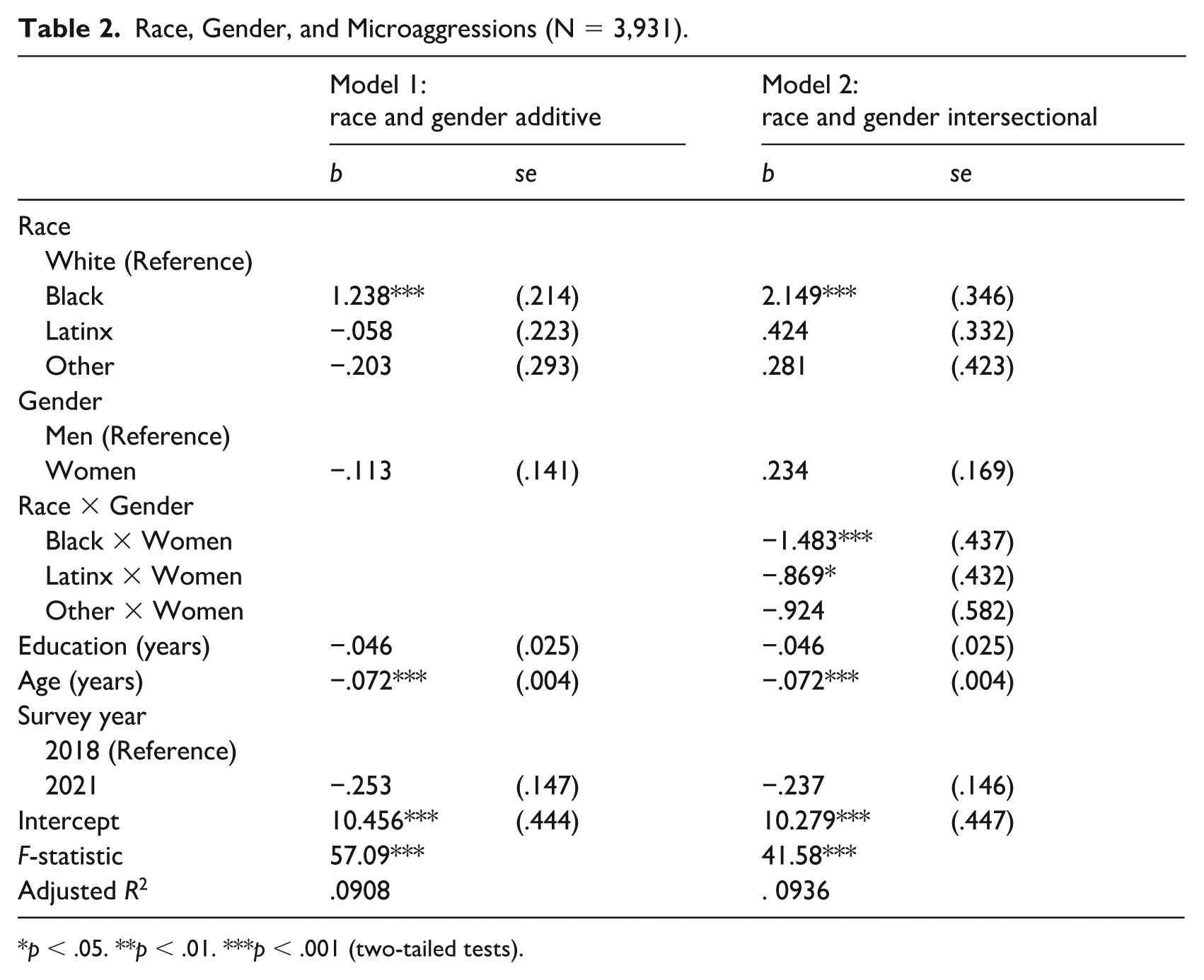
p < .05. **p < .01. ***p < .001 (two-tailed tests).
Model 2 examines the intersection of race and gender. The predictive margins are presented in Figure 1. Black men report significantly more microaggression experiences than all other race-gender comparisons, including Black women (1.249, p < .01). Additionally, Black women experience more microaggressions than White men (.900, p < .001), White women (.666, p < .05), and Latinx women (1.111, p < .01), but are not statistically different than Latinx men (.477, p = .219). Furthermore, no significant gender differences are observed between White men and women (.234, p = .165) or Latinx men and women (−.635, p = .111). Interestingly, apart from Black women and men, we do not observe an intersectional race-gender pattern. By focusing our analysis on education, we seek to elucidate factors that may better explain variation in these experiences, particularly given limited between-race variation in everyday discrimination.
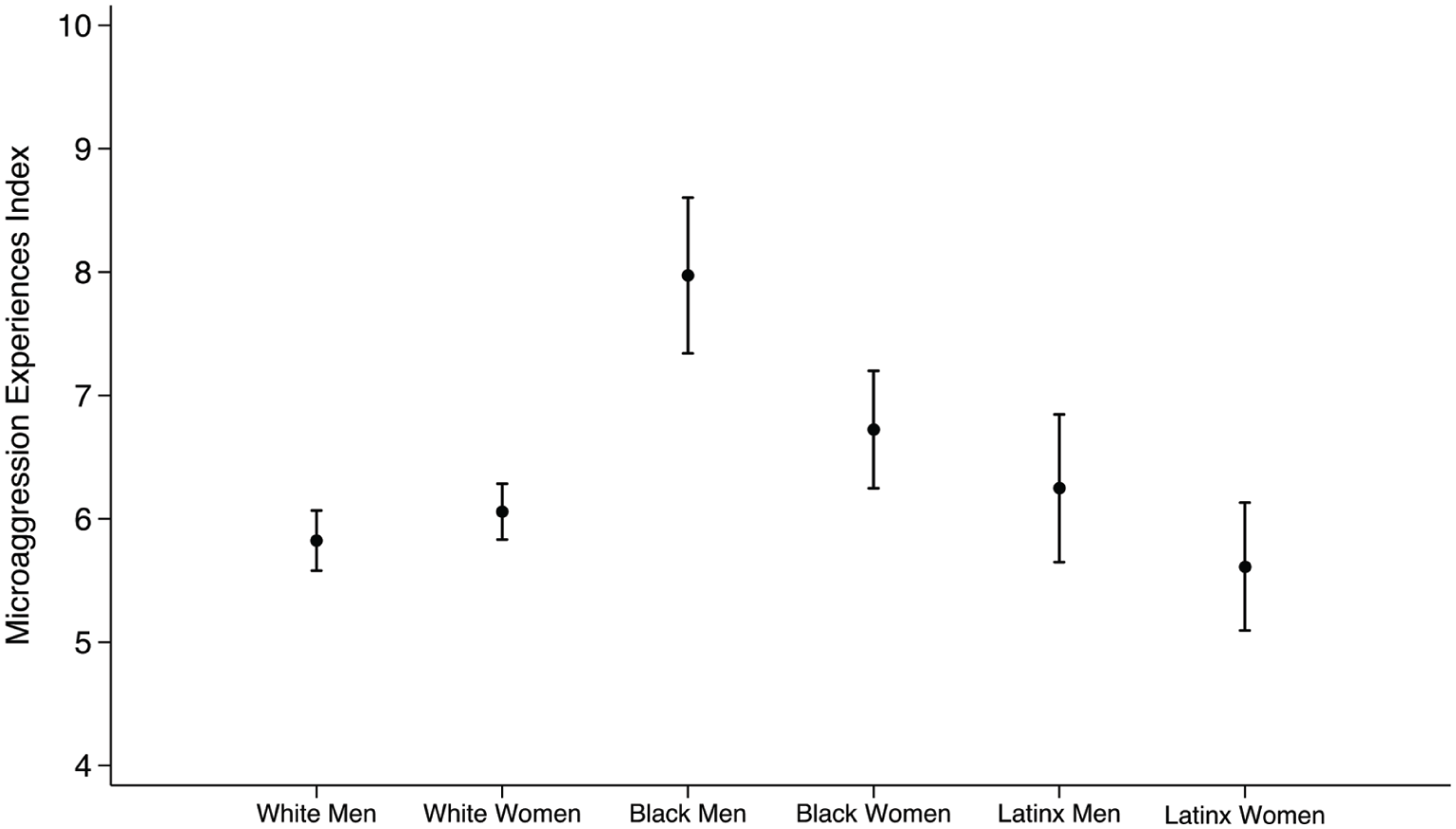
Intersectional predictive margins of microaggression index.
The EDS measure includes questions about microaggression experiences but does not specifically reference “discrimination” or “race.” GSS respondents are not asked about the source of these experiences. Some surveys using the EDS ask a follow-up question about the perceived causes of these experiences. Rodriguez (2008) found that only a small percentage of White respondents cited race as the reason for their everyday discrimination experiences (27 percent of men and 10 percent of women), whereas most Black respondents identified race as the primary reason (88 percent of men and 79 percent of women). Shariff-Marco et al. (2011) find that 74.5 percent of Whites report at least one experience of everyday discrimination, but only 8.5 percent report that this is due to race. Harnois (2023) conducted 38 interviews asking respondents about the EDS items and found that people of color were more likely to report race as the reason for their experiences. Thus, while the GSS survey questions do not explicitly ask respondents whether their experiences are racially motivated, we can surmise from existing studies that respondents of color are more likely to experience race-based microaggressions than Whites.
Does the Effect of Education on Microaggression Experiences Vary by Race?
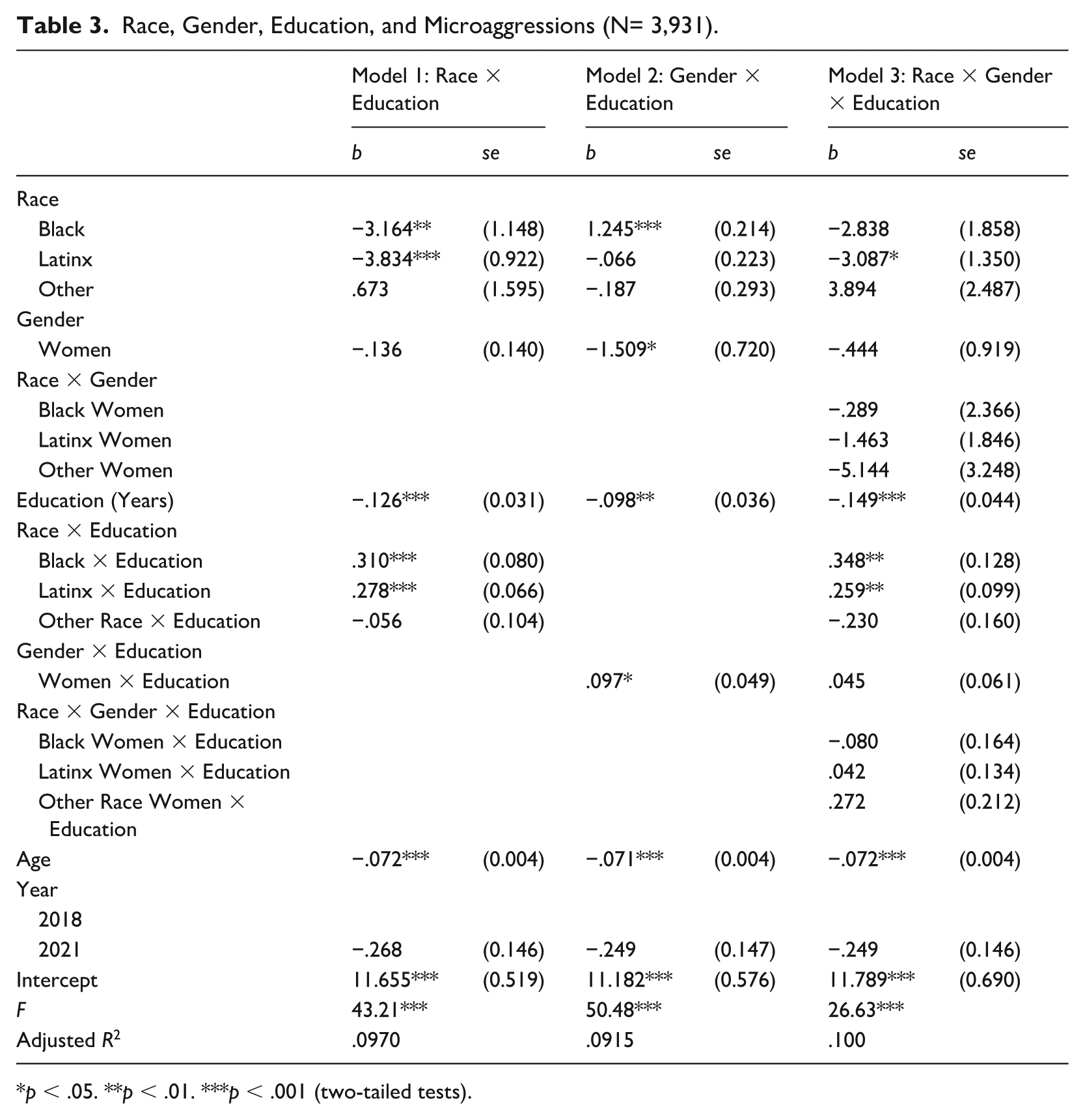
The race and education interaction effect is estimated in Table 3, Model 1. Since White is the reference category, the education coefficient indicates the average effect of education for Whites. It is statistically significant and negative (−.126, p < .001), indicating that White people with more education report fewer microaggression experiences than those with less education. This finding supports the idea that higher education serves as a status protector for Whites, providing partial support for Hypothesis 2. The slopes for Black (−.126 + .310 = .184) and Latinx (−.126 + .278 = .152) respondents are positive and statistically significant. As education increases, Black and Latinx individuals experience more microaggressions, on average, compared to their less educated counterparts. These results align with the White spaces expectation (Hypothesis 3).
Race, Gender, Education, and Microaggressions (N= 3,931).
p < .05. **p < .01. ***p < .001 (two-tailed tests).
In Model 2, we estimate an interaction between education and gender. The education slope is negative for men (−.098, p < .05), but is not significant for women. Figure 2 provides the predictive margins for the effect of education on microaggressions by race and gender.
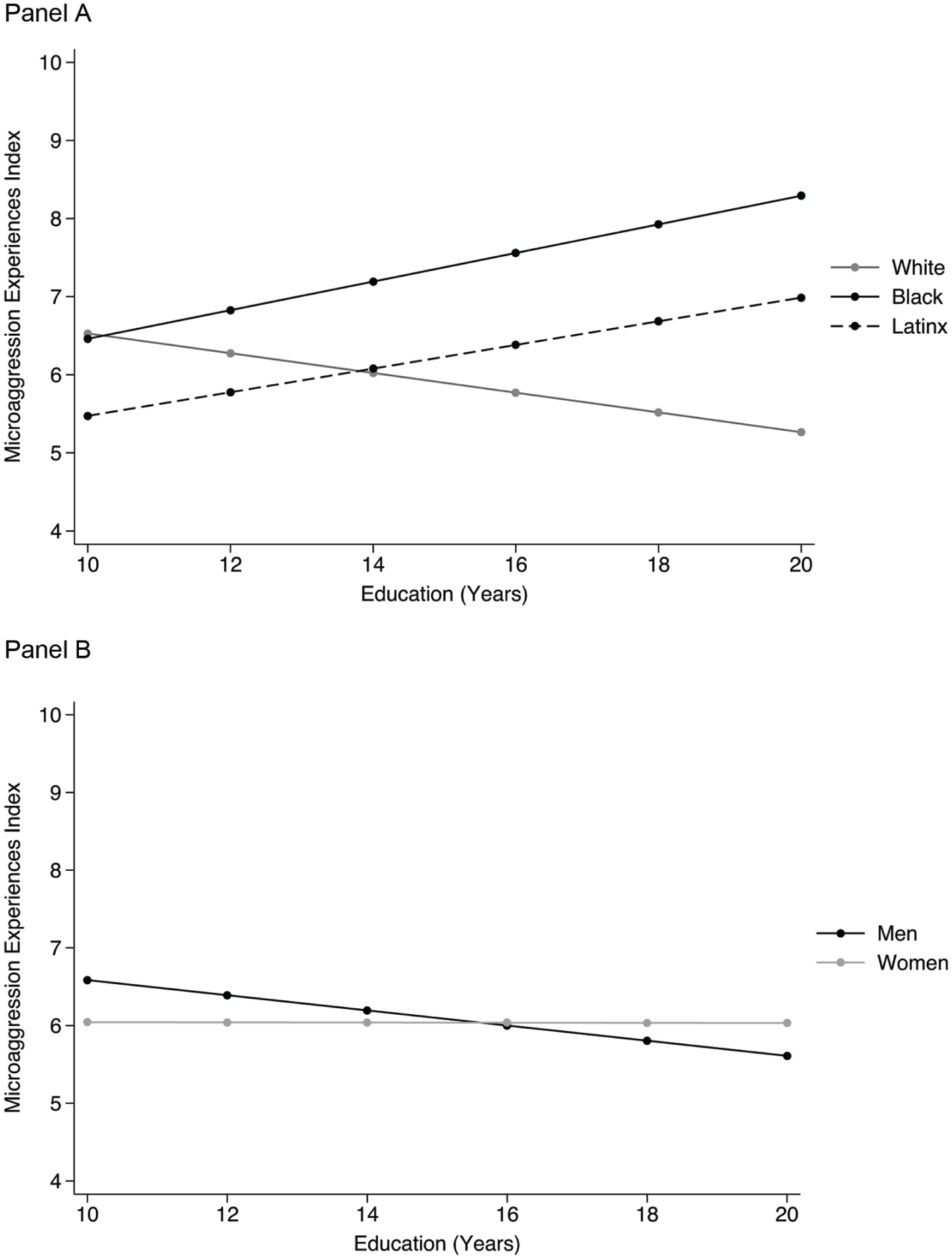
Education-microaggression relationship by race and gender. Panel A. Race × Education (net of gender). Panel B. Gender × Education (net of race).
In Model 3, we estimate three-way interactions between race, gender, and education. Because these interactions are difficult to interpret directly, we provide pairwise comparisons of average marginal effects in Table 4. These postestimation results compare differences in the education slopes across all possible race–gender comparisons generated by the three-way interaction and provide a direct statistical test for whether these slopes differ. To further clarify, we also present the Model 3 results graphically—first by gender within racial categories (Figure 3) and then by race within gender categories (Figure 4).
Pairwise Comparisons of Average Marginal Effects.
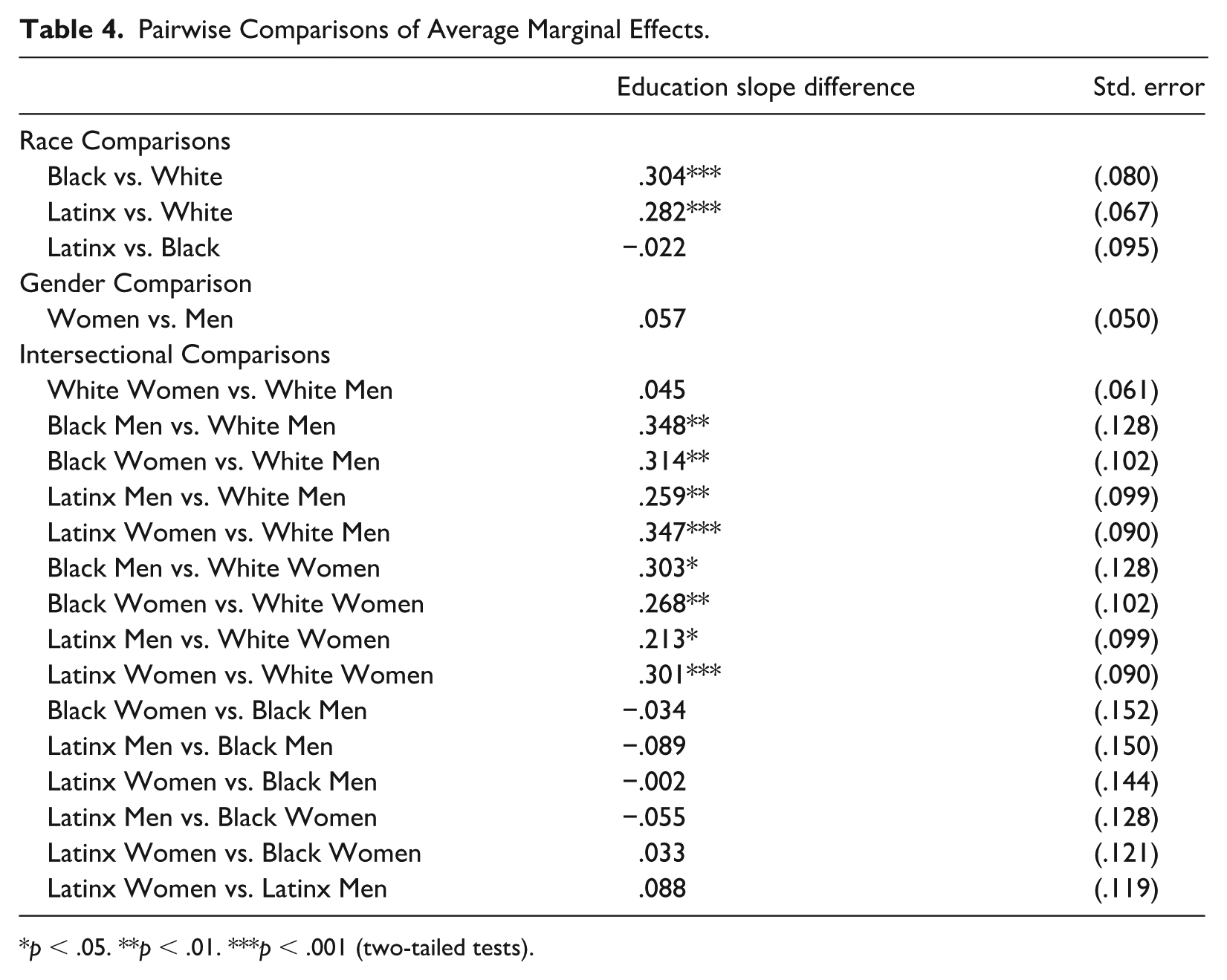
p < .05. **p < .01. ***p < .001 (two-tailed tests).
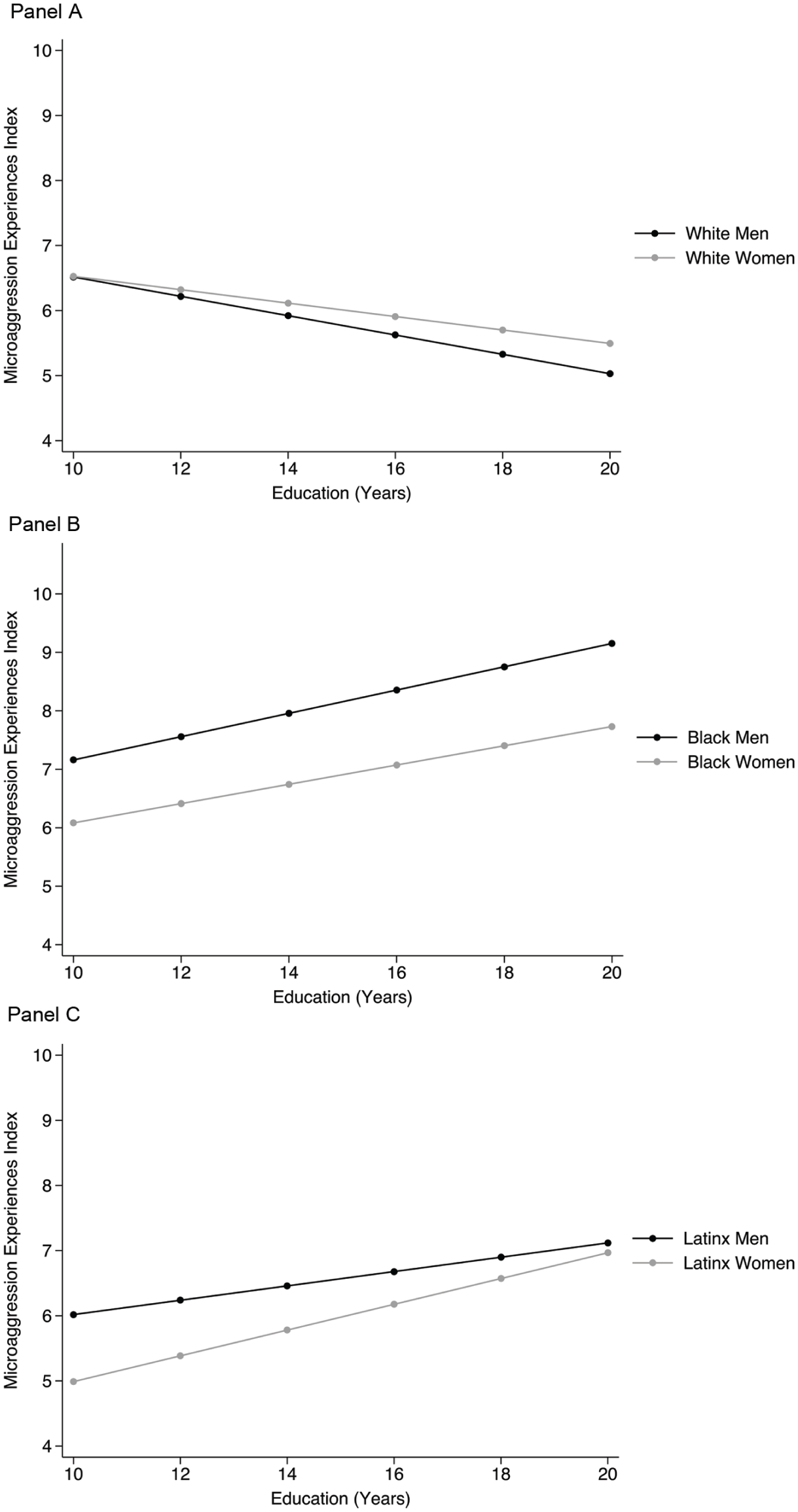
Intersectional effects, gender within race. Panel A. White men and women. Panel B. Black men and women. Panel C. Latinx men and women.
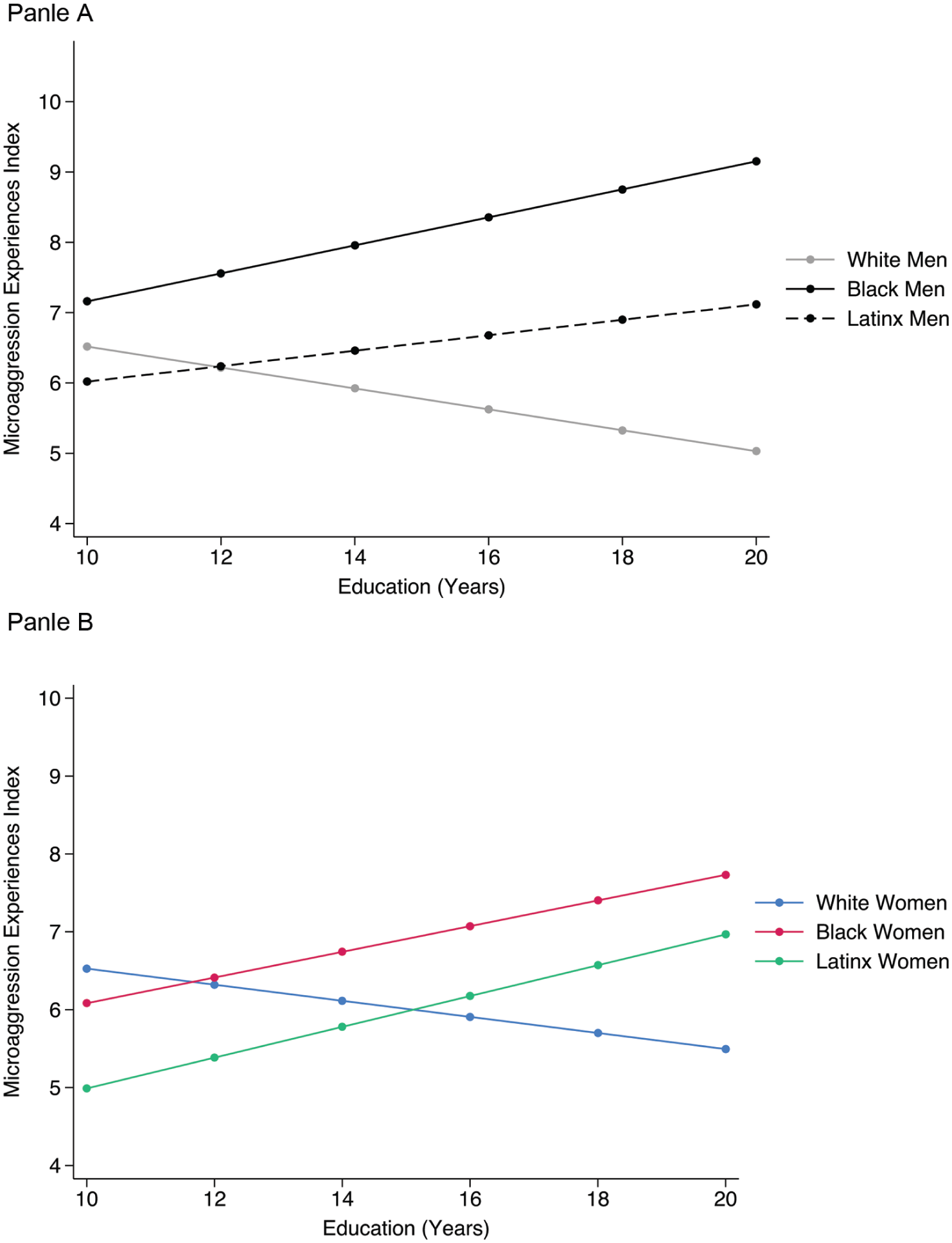
Intersectional effects, race within gender.
Examining the pairwise education slope comparisons (Table 4), the effect of education on microaggression experiences does not statistically differ between men and women among White (.045, p = .459), Black (−.034, p = .821), or Latinx respondents (.088, p = .460). Gender does not impact the previously reported race by education slopes; the effect of education on microaggression experiences remains consistent between men and women within the same racial category. Figure 3 illustrates this result. The most pronounced pattern is related to race rather than gender. White people experience a decline in the frequency of microaggressions as education increases. Statistically, there are no gender differences in intercepts or slopes. In contrast, among Black and Latinx respondents, as education increases, microaggression experiences increase. Although the education slope is consistent for both Black men and women, Black men report more microaggressions at every level of education compared to Black women—intercepts are significantly different, while the education slopes are not. For Latinx men and women, there are no differences in intercepts or slopes. Latinx respondents did not differ from White respondents in average experience of microaggressions in our descriptive analysis, consistent with prior research (Douds and Hout 2020). However, we find pronounced differences in microaggression experiences between Latinx and White respondents once the effect of education on microaggressions is allowed to vary by race.
Figure 4 presents the same results plotted for race within gender categories. Black men report a greater frequency of microaggressions than Latinx men at every level of education (Panel A); however, the education slopes do not statistically differ (−.089, p = .582). A similar trend is observed among women, where Black women experience more daily microaggressions than Latinx women, yet the education slopes are not statistically different (.033, p = .787). These findings contrast sharply with our non-interactive education analysis and prior research (Douds and Hout 2020; Kim et al. 2014), which suggested that Latinx people’s experiences of microaggressions do not differ from those of Whites.
Our results reveal not only the ongoing significance of race in shaping everyday discrimination but also the inclining significance of race with educational advancement. At lower education levels, Black, Latinx, and White respondents report experiencing similar levels of microaggressions. The racial patterns diverge sharply as educational attainment increases. The racial gaps in everyday discrimination grow across the socioeconomic spectrum. In our analyses, gender adds little to our understanding of microaggression experiences in the GSS data.
Robustness Checks
We conducted several robustness checks. First, given the distribution of the microaggression measure (12 percent report no microaggression experiences), we also estimated a zero-inflated negative binomial regression model. We found no significant race, gender, or education differences in the zero-inflated portion of the model and findings from the negative binomial portion are substantively identical to those we report.
Second, we examined potential differences between the two waves of GSS data given historical events occurring between 2018 and 2021, including racial justice protests, COVID-19, and changes in data collection. Examining descriptive data (not reported) reveals that, on average, microaggression index scores declined by about 10 percent between 2018 and 2021. 2 This is not surprising given the COVID-19 lockdown. As a further check, we re-estimated the three-way interactions between race, gender, and education by year.
The education slopes are consistent for nearly all race-gender groups between 2018 and 2021 with the exception of Latinx men. In 2018, the educational effect for Latinx men was positive—similar to Latinx women, Black men, and Black women. However, in 2021, their education slope was negative and statistically significant (see online Supplement Figure S1 and Table S1). This anomalous finding may be the result of COVID-19 on Latinx men’s labor force participation. Latinx workers were most affected by unemployment during COVID-19, yet Latinx men in particular were also overrepresented among less-skilled frontline workers, placing them at considerably higher risk of COVID-19 (Goldman et al. 2021; Gould, Perez, and Wilson 2020).
We examined the GSS descriptively and found that Latinx men with a high school education or less experienced a significant increase in microaggressions between 2018 and 2021 (5.92 to 7.89), while those with a college degree experienced a decline (9.91 to 6.32). It is possible that white-collar jobs requiring higher education shifted to remote work, reducing exposure to discriminatory experiences, while lower-educated workers were more likely to hold frontline in-person jobs, where opportunities for discrimination were greater. More research is needed to better understand this result.
Finally, we also considered whether skin tone could affect our results. The GSS does not include a skin tone measure in 2021, but it does include an interviewer-coded measure in 2018, ranging from 1 to 10 (light to dark). Because limiting the analysis to 2018 greatly reduces the sample size, we re-estimated models with race-education interaction terms and included a control for skin tone. It revealed that skin tone was positively associated with microaggressions. However, our central findings regarding the relationship between race/ethnicity, education, and microaggressions remained consistent. 3
Conclusion
In the last decade, broader cultural discussions about race/ethnicity and inequality have become both more mainstream and more controversial. Hate crimes and racial hostility have both worsened, yet the language of diversity, systemic racism, and microaggressions has become more normalized (even if, as of late, it has been censored). Correspondingly, sociological research on microaggressions and everyday discrimination has expanded significantly. Studies document specific experiences of microaggressions across various settings, such as colleges (Ballinas 2017; Newton 2023), workplaces (Wingfield 2019; Woodson 2023), and public accommodations (Byron 2023). A related set of studies centers on the experiences of the Black and Latinx middle class, indicating that education has not eliminated experiences of everyday discrimination (Feagin and Cobas 2015; Feagin and Sikes 1995). While this research provides valuable insights into these experiences, it lacks comparisons of experiences across the socioeconomic spectrum. Prior research shows that experiences of microaggressions are far too common in universities and among the middle class, yet we lack an understanding of how these experiences compare with those who do not attend college or who occupy a different social class. We contribute to this literature by providing a comparative lens.
Studying the effects of education is important because it is purported to reduce social inequalities. It is often touted as a pathway for upward class mobility and greater social respect. Therefore, educational attainment may reduce experiences of microaggression. However, there are theoretical reasons to expect that it may have no effect or could even exacerbate these experiences. Given these contradictory possibilities, we ask two questions: Does education affect microaggressions? And does this relationship vary by race? We build on previous research and theory to develop and test three potential explanations for this relationship.
The race as a master status perspective (Hughes 1945) argues that race is the dominant factor shaping life chances and experiences, regardless of educational attainment, and predicts no education-microaggression relationship. The status protector prediction suggests that education may confer more power in social interactions. It confers greater status, respect, and esteem (Kuppens et al. 2018), potentially serving as an important buffer against everyday discrimination, regardless of race. Finally, drawing on the literature on White spaces (Anderson 2015; Moore 2008), we surmise a differential effect for non-White people. Education increases Black and Latinx people’s exposure to White spaces; therefore, we expect their microaggression experiences may increase.
We found no effect of education on microaggression experiences in our initial analysis. However, we then estimated statistical interactions between race and education, allowing each racial group to have a unique education slope. For Black and Latinx respondents, consistent with the expectations regarding White spaces, educational attainment does not protect them from everyday discrimination; rather, it exacerbates such experiences. For Whites, education decreases their microaggression experiences, consistent with the status protector hypothesis. Prior research shows that Whites are far more likely to report non-racial than racial reasons for microaggression experiences (Rodriguez 2008). This finding likely indicates that more education provides Whites, but not Black or Latinx individuals, with protection from class or other non-racial microaggressions (Ferguson and Lareau 2021). Because the education slopes move in opposite directions for Whites compared to Black and Latinx people, racial inequality in these experiences is magnified with education. This provides a partial explanation for the small to no racial/ethnic differences in everyday discrimination observed in prior research (e.g., Douds and Hout 2020). Consequently, these results emphasize the limitations of viewing educational achievement as a singular marker of racial progress, as it may obscure the everyday discriminatory experiences faced by minoritized groups.
Our study is not without limitations. While we find support for the White spaces prediction, we do not directly measure exposure to them. Although assessing White spaces is more difficult than simple demographic composition, such measurements would offer stronger theoretical leverage on the relationship. Analyzing the racial composition of workplaces, jobs, neighborhoods, communities, interactional data, and other contexts to examine microaggression experiences would provide a firmer theoretical footing.
We anticipated intersectional findings related to race and gender, but our analysis shows no support for these expectations. The absence of gender-specific microaggression questions in our data likely accounts for this result, which contradicts some qualitative research demonstrating the prevalence and intensity of gendered racial microaggressions directed at women of color (Kilgore et al. 2020; Morales 2014; Settles 2006). Harnois et al. (2019) have extensively documented the limitations of the everyday discrimination measure for capturing the experiences of diverse samples (e.g., Bastos and Harnois 2020). For example, Harnois and Ifatunji (2011) note that the EDS items capture men’s experiences better than women’s. The qualitative literature has identified themes confronted by women (e.g., sexualization), particularly women of color, that are not captured in this measure. Moreover, racial/ethnic microaggressions are often specific, and therefore, the measure may undercount such experiences. For example, Latinx individuals are likely to experience microaggressions such as being asked “where are you from” or language-based discrimination, which may not be picked up in the EDS measure. The inclusion of a more robust measure of microaggressions, specifically one that attends to intersectional microaggressions, is needed in future studies. By focusing on these intersections, we can better understand the relationship between systemic inequalities and everyday discrimination and work toward creating more inclusive environments.
Supplemental Material
sj-docx-1-sre-10.1177_23326492261453540 – Supplemental material for Race, Education, and Microaggression Experiences in Everyday Life
Supplemental material, sj-docx-1-sre-10.1177_23326492261453540 for Race, Education, and Microaggression Experiences in Everyday Life by Fallon Caruth, Kevin Stainback and Adia Harvey Wingfield in Sociology of Race and Ethnicity
Footnotes

Funding
The authors received no financial support for the research, authorship, and/or publication of this article.
Declaration of Conflicting Interests
The authors declared no potential conflicts of interest with respect to the research, authorship, and/or publication of this article.
Supplemental Material
Supplemental material for this article is available online.
Notes
Author Biographies
References
Supplementary Material
Please find the following supplemental material available below.
For Open Access articles published under a Creative Commons License, all supplemental material carries the same license as the article it is associated with.
For non-Open Access articles published, all supplemental material carries a non-exclusive license, and permission requests for re-use of supplemental material or any part of supplemental material shall be sent directly to the copyright owner as specified in the copyright notice associated with the article.
