







Abstract
This study investigates political decisions and epidemiological developments. Employing a quantitative approach, this paper examines proportions of votes advocating Brexit with the proportional rates of Covid-19 vaccinations among individuals aged 18 years and above. A discernible pattern suggests a link between lower vaccination rates and pro-Brexit inclinations. This research finds a correlative relationship between political behaviour in voting for Brexit, and epidemiological outcomes measured by the uptake of vaccinations among various urban centres, towns, and local governmental jurisdictions within the United Kingdom. However, the results also show socioeconomic control variables are statistically more significant in predicting vaccination rates.
Introduction
To describe Britain’s association with Europe as turbulent would be an understatement. Given Britain’s history as a world empire, and a prominent trading entity, competing interests over territories and trade routes made confrontations inevitable. The United Kingdom’s chronicled interactions with long-standing feuds with neighbouring France, rivals such as Germany in global conflicts, and Russia throughout the Cold War, show that geopolitical alignments shift. Amidst these historical entanglements, English exceptionalism endured, encapsulating a sense of national pride derived from the remarkable ability to harness international influence despite limited domestic resources. Remaining palpable is the Commonwealth, concretising a vivid recollection of the British Empire. The United Kingdom and the United States ‘special relationship’ holds foundational significance (Dumbrell, 2017; BBC News, 2013, British Medical Journal, 2021), consistently shaping the UK’s self-perception, diplomatic allegiances, and global role. The UK’s reticence towards embracing supranational treaties perceived as stringent and constraining is partly explained by the absence of a codified constitution, with a common law system resting on case law.
Throughout history, the British Conservative Party, known for unity and a pragmatic approach, has consistently achieved enduring electoral success. However, a critical shift occurred towards the end of Margaret Thatcher’s premiership when the party encountered internal discord regarding the UK’s relationship with the European Community (Dorey, 2017), and later, the European Union. This shift saw a growing number of Tory MPs questioning the necessity of EU membership, leading to new divisions in the party, among moderate and steadfast Eurosceptics. Within these dynamics, Prime Minister David Cameron declared his intention to hold a referendum concerning the United Kingdom's continued participation in the European Union in January 2013 1 . However, this proclamation was strategically positioned subsequent to the general election scheduled for 2015. Cameron, positioning himself as a soft Eurosceptic, expressed a desire to renegotiate the UK’s affiliation terms with the EU. The overarching objective was to procure the repatriation of conditions culminating in the establishment of a more elastic and adaptable rapport with the European continent. Following renegotiation efforts, Cameron intended to advocate for the British electorate's endorsement to remain in the EU 2 . However, this strategic manoeuvre unfolded as an ill-fated venture (Glencross, 2016), emblematic of a monumental miscalculation fraught with repercussions.
The UK’s departure from the EU
Prior to the vote, dominant narratives included immigration patterns, national autonomy, trade inclinations, and anti-establishment rhetoric. This period marked a surging cadence of right-wing populism, with organisations including the United Kingdom Independence Party at the forefront. David Cameron succumbed to mounting pressures and leveraged the referendum as a strategic instrument. On June 23, 2016, the United Kingdom held the referendum, resulting in a 52% majority to leave the European Union. This salient event, commonly termed ‘Brexit’, permeated national and international dimensions, resonating with vast socio-political and economic connotations. Brexit introduced potential political diffusion, wherein the UK’s decision to exit the EU may catalyse heightened anti-EU feelings across remaining member states. This phenomenon could lead to the emergence of further movements within the EU-27 to pursue similar exits (De Vries, 2017; Walter, 2016).
Following 3 years of negotiations to outlining post-Brexit arrangements with the EU, the United Kingdom officially left the bloc on the 31st of January, 2020. Parallel to the rearrangements, the World Health Organisation with Chinese health authorities, identified a novel cluster of pneumonia cases—later recognised as Covid-19. This virus proliferated into a global pandemic, prompting preventive measures worldwide. Miraculously, within a short timeframe, the scientific community introduced efficacious vaccines following rigorous research and trials. Nevertheless, among communities, particularly those opposing the government’s stance in the EU referendum, queries continued regarding their trust in the government as well as scientific, technological, and medical institutions. This apprehension was prompted by enduring historical narratives of marginalisation that wove a fabric of skepticism. Instances of governmental shortcomings and transgressions exacerbated misgivings, incubating an environment conducive to propagating cynicism. Fractured media channels and the compartmentalisation of ideologies on social media, engendered information segregation. The juxtaposition of the referendum and administered Covid-19 vaccinations spotlights the synergy of political resolutions and scientific innovations. Brexit acted as as a surrogate for imbued misinformation built upon the assertion that segments of the electorate advocating for Brexit, may have voted on fallacious or incomplete information. I advance that misinformation ubiquity or deficiencies in apprehending the consequences of voting leave, could have exerted an influence over the electorate's choices. In this framework, the act of casting a ballot in favour of Brexit is construed as emblematic of a broader milieu exemplified by misrepresentation.
Media influence
Media narratives can define political outcomes by influencing public perceptions, attitudes, and behaviours. Selective presentations of information, framing, and agenda-setting, shape how people grasp issues, candidates, and policies. Narratives amplify viewpoints, downplay others, and set the terms of public discourse. Consequently, voter opinions do sway one way or the other. Policy debates are reconfigured. Electoral outcomes ensue, ultimately exercising power in dictating courses of political processes and decisions. Individuals assume communications exert a stronger influence on others than on themselves (Perloff, 1993) and the third-person model in public opinion is manifest under conditions where conveyed messages incorporate directives devoid of personal advantages, concurrent with individuals’ discernment of the issue’s personal significance, and compounded by a perception of inherent negative bias. Integrating research insights from (Entman, 2007) on framing, priming, and agenda-setting, reveal broader implications for political power and democracy, with particular attention to the concept of bias, which is relatively under-explored. Political actors devise strategic political mendacity as a priming instrument, strategically engineering the contours of the news agenda. (Gaber and Fisher, 2022) with “strategic lying" embodying an evolutionary progression of political spin, and propelled by the burgeoning professionalisation of political communications and the ascendance of social media platforms.
Scholarly literature on Brexit highlights media narrative potency (Rone, 2023; Zappettini and Krzyżanowski, 2021) over the UK’s decision to leave the EU. This decision continues to be the subject of fervent national debates, generating societal divisions and regional discussions, such as Scottish independence and Irish reunification. Critiquing pernicious effects of anti-EU narratives (Rawlinson 2020), misleading representations significantly influenced the public, fortifying the leave campaign. Amplifying disinformation exacerbates political dichotomies (Huldin, 2021), cultivating echo chambers where baseless claims reverberated, and continued beyond the referendum. The EU as a “dying heart” metaphor (Musolff, 2017), was integral in influencing voters to adopt pro-Brexit narratives, connoting metaphorical framing held eloquent power leading individuals to neglect factual inaccuracies in pro-Brexit statements, depicting them more plausible than counterarguments presented without such framing. Moreover, (Bonacchi et al., 2018) ‘heritages’ mobilised to bolster, or counteract Brexit sentiments anchored in mythologies surrounding origins, resistance, and societal decline. Myths encapsulate inherent tensions and binary divisions within the discourse. The Leave campaign’s consistent romantic narrative contrasted with diverse narrative genres in the Remain campaign (Spencer and Oppermann, 2021), and this genre consistency discrepancy altered the campaigns’ referendum outcomes in showing structural parallels between the romantic genre and nationalistic narratives, allowing populism to harness a persuasive potency inherent in romantic narratives. During the Brexit era (Copeland and Maccaferri, 2023), British newspapers continually promote UK solidarity and lambasted the EU, aiming to vindicate Brexit and spotlight its prospective triumphs amid the vaccination campaign. Distinct discursive elements of trade and immigration illuminated a pattern showing how ideological articulations (Zappettini 2021), in conjunction with deploying argumentative structures, precipitated an emergence of innovative and legitimising toxic constructs innate to discourse linked to the referendum.
Disinformation in public health
Coinciding with Brexit, there is a need to examine disinformation on public health, especially against the backdrop of Covid-19. Digital platforms function as fertile grounds facilitating the proliferation of communities steeped in denialism, creating filter bubbles. Platforms inflame collective psychological emotion of perceived victimisation at the hands of what is construed as a malevolent ruling elite (McKee and Diethelm, 2010), perpetuating a cycle of mutual reinforcement of ideologically skewed perspectives. The British Medical Journal highlights that tech conglomerates have an inertia in regulating misinformation (Wang et al., 2022), epitomising challenges in reconciling freedom of discourse with informational accuracy. Furthermore, (Kerr et al., 2020) demarcates detrimental consequences of misinformation on public health outcomes, advocating for a strengthened role for scientists as authentic informants. In collective resonance, this discussion emphasises multifaceted forces of disinformation, public opinion, political orientations, and public health reverberations, stressing urgency for sound frameworks of media literacy and information distribution in an era where information’s veracity frequently becomes ensnared in the web of narratives and ideological leanings. Informational ecosystems regarding the pandemic abound with bogus assertions (Naeem et al., 2021), conspiracy theories, and therapeutic approaches submerged in pseudoscience. Political orientations skewed toward the conservative camp among Twitter accounts prolonged anti-vaccination narratives (Muric et al., 2021), arguing that vaccine hesitancy was intensified by misinformation from sources of questionable credibility. Political orientations along the left-right continuum revealed a limited association with vaccine hesitancy (Stoeckel et al., 2022). In public discourse, people frame support for multilateral vaccine cooperation during Covid-19 differently based on their stance. Leavers are more susceptible to the detrimental effect that the vaccine nationalism frame has than remainers (Avdagic and Sedelmeier, 2023). In contrast, vaccine hesitancy was closely aligned with anti-elite ideological frameworks and those culturally insular A significant volume of misinformation regarding Covid-19 was dispersed within the city of Bradford in the United Kingdom (Lockyer et al., 2021) - which voted 54% in favour of leaving the EU (House of Commons Library).
Negative and false information overload expedited feelings of confusion, distress, and an erosion of trust throughout the pandemic. Consequently, decreasing trust was closely linked to a reduced inclination among individuals to receive the Covid vaccine (Viskupič et al., 2022). On conspiracy theories, (Freeman, 2022), subscriptions to conspiratorial notions over coronavirus exhibited a correlation with a diminished self-declared adherence to governmental directives and guidelines. Conspiracy theories possessed the largest effect in vaccine hesitancy alongside distrust of effectiveness (Jennings et al., 2021), believing in misinformation and lockdown scepticism. Pernicious implications of trust on compliance manifests exclusively within the United Kingdom (Jennings et al., 2021). Societal attitudes, communication patterns, and obstacles affecting vaccine uptake (Boucher et al., 2021) social media platforms were inundated with disquietude regarding safety, efficacy, freedom, questioning towards institutions, government, or multinational corporations. Race and ethnicity were also major factors in indecisions (Etti et al., 2021; Halvorsrud et al., 2023; Opel et al., 2021; Woodhead et al., 2022).
Research question
This paper will explore whether there is a correlative relationship between votes for Brexit and epidemiological outcomes measured by the uptake of vaccinations among individuals aged 18 years and above. During the referendum campaign, an insidious torrent of disinformation saturated the digital information sphere, including information about the fiscal byproducts of membership and a hypothetical scenario of imminent Turkish accession to the EU. Inauthentic social media conglomerates, automated algorithmic entities colloquially known as ‘bots', and malicious human operators known in cyber parlance as ‘trolls' circulated disinformation Cynicism towards governmental authorities surfaced, inflamed by imposed fiscal austerity measures and a decline in living standards This climate plausibly led to an ‘anti-establishmentarian' voting pattern In the succeeding period, throughout implementing a nationwide vaccination campaign geared toward curtailing the spread of Covid, trepidation related to vaccine efficacy pervaded particular demographic cohorts including individuals with medical vulnerabilities.
Similar to the aforementioned referendum milieu, a damaging information ecology aggravated vaccine hesitancy, rife with conspiracy theories, and factually bereft narratives, dispersed across online platforms. For this investigation, the independent variable is defined as the proportion of leave votes within constituencies expressed in percentage metrics. The dependent variable is constituted by the vaccination rates among individuals aged 18 years and above - also illustrated in proportional percentages.
Hypothesis
The guiding hypothesis infers an inversely proportional relationship is likely to be observed between elevated percentages of leave votes and vaccination rates, in the circumscribed units of analysis assimilating various UK urban centres, towns, and local governmental jurisdictions. This hypothesis not only seeks to contribute to the scholarship on political behaviour and public health outcomes, but also to elaborate on the coordination between digital disinformation, and substantive real-world outcomes.
Existing literature predominantly fixated on the significance of disinformation on public opinion, but there is a dearth of comprehensive analysis regarding its implications for public health decisions. The literature demonstrates a pervasive nature of disinformation in both domains, but the connection among these two spheres remains under-explored, and this paper seeks to bridge that gap.
Variables
Disinformation campaigns and a pervasive climate of governmental mistrust exhibited a noticeable ubiquity at two critical junctures of recent socio-political history Firstly, during the Brexit vote wherein the sitting governmental apparatus campaigned vigorously for a remain outcome; and secondly, the extensive array of precautionary protocols and rigorous regulatory imperatives imposed with the goal of mitigating the spread of Covid-19 The theoretical construct advances that electoral constituencies in the United Kingdom's urban and municipal locales, which demonstrably show an overwhelming inclination towards voting to leave from the European Union, are highly vulnerable to consuming and internalising disinformation.
The premises undergirding this theoretical framework encloses a multi-dimensional, interdisciplinary interrogation into political cognition and epidemiology. The lens is refined through incorporating contemporary scholarship addressing the burgeoning ‘infodemics’ phenomena, an accelerated proliferation of verified and inaccurate information (Balakrishnan et al., 2022; Hua and Shaw, 2020) in the digital domain. By employing a comparative analysis into these two temporally distinct yet thematically interrelated scenarios—the referendum and the vaccination campaign—this theoretical edifice aspires to contribute a nuanced understanding to extant academic work surrounding reciprocal interactions between disinformation, suspicion in institutional structures, and consequential societal behaviours. This work plans to spotlight how these variables collectively inform, or alternatively distort collective decision-making processes.
Objective
One principal desire reinforcing the analytical framework sets out to explain the degree to which scientific empiricism was marginalised in a post-truth epoch. A plethora of specialised experts— from epidemiologists and virologists, extolling the efficacious benefits of vaccinations and reducing viral transmission, to economists, trade analysts, and juridical scholars—have found their empirically substantiated assertions anomalously delegitimised. Institutional establishments disparaged experts and rendered them complicit in a grandiloquent scheme with purported aims of maintaining a form of servitude upon citizens. While the debate of geographically localised variances in vaccination rates constitutes an integral part of the literature review—where contributory factors in socioeconomic determinants, access to healthcare infrastructure, and cultural attitudes will be rigorously surveyed—it must be stated the scope of public skepticism transcends vaccinations. Numerous facets of pandemic response including facial covering mandates, pharmacological therapeutics, stringent lockdown protocols, and the veracity of mortality statistics, have analogously found themselves ensnared in the web of contentious public deliberation.
One endeavour encapsulated in this investigation is the systematic identification of urban and municipal locales potentially targeted or inundated by disinformation campaigns. By leveraging advanced methodologies in computational social science and network analysis, this study seeks to furnish actionable insights that may facilitate collaborative strategies among public sector stakeholders and governmental agencies. Such collaborations hope to counteract propagated deleterious content and safeguard citizens from adverse side effects— psychologically and physically—that may ensue from exposure to deceitful information. By synthesising interdisciplinary perspectives, this research aspires to enrich the scholarship on misinformation, societal skepticism, and public health imperatives in an increasingly fragmented informational ecosystem.
Data
Information germane to vaccination metrics was procured from the designated coronavirus dashboard on the official governmental portal - UK.gov. This website provides a daily total entailing an abundance of Covid-19 statistics, spanning new cases, fatality rates, vaccination administrations, and diagnostic testing performances. The National Health Service (NHS) orchestrates oversight and dissemination of vaccination metrics, handling the logistical duties associated with the vaccine rollout. The data repository enables granular parsing by geographical sub-divisions, extending from the level of individual countries within the United Kingdom to more localised subdivisions by postcode.
The units of analysis were confined to individual constituencies, and local administrative authorities, congruent with the electoral precincts utilised in the referendum. Initial raw datasets were imported, and transferred to SPSS without any technical obstructions. The temporal snapshot analysed for vaccination metrics was August 2021, selected due to its preceding the subsequent policy shift wherein vaccines were extended to the 16–17 age cohort, a development with the capacity to introduce statistical distortions given the research’s focal emphasis on adult constituents within the units of analysis. Secondary data for electoral predispositions were obtained from briefing documents published from the House of Commons Library's digital archives which offers impartial research reports on analytical dimensions regarding electoral and referenda statistics. Data points corresponding to the top 60 towns and local administrative authorities for leave votes were extracted. To moderate confounding effects, I included the unemployment rate, the percentage of constituents with a level 3 education or above, defined as college (UK) level, and disposable household income per person for the aforementioned temporal juncture—August 2021. Data for the control variables were all extracted from the Office for National Statistics, an institution renowned for its independence in gathering and publishing statistical data. Among its functions, the ONS conducts decennial National Census exercises, and publishes statistics containing various economic, societal, and demographic parameters.
Methodology
I will perform an empirical examination using bivariate regression analytics to ascertain whether there is a statistically substantiated correlation among the independent and dependent variables. This undertaking will make clear whether—and to what quantifiable extent—the proportionate prevalence of leave electoral ballots exerts a consequential influence upon aggregate vaccination uptake rates within constituencies. I will utilise a multivariate regression technique to facilitate a more holistic engagement with the subtleties of multiple variables. This model avails itself as an imperative framework, enabling a predictive extrapolation of how endogenous response variables might conceivably vary in correspondence with perturbations in exogenous predictor variables.
Selecting unemployment rates, disposable household income and the percentage of constituents with at least a level 3 education as control variables originated from an array of prospective candidates. The rationale undergirding these selections is rooted in empirical antecedents of historical electoral behaviour and referenda outcomes, demonstrating a multitude of socioeconomic factors—alongside educational attainments and lifestyle predilections—exerting a non-negligible influence on collective decision-making patterns. These factors are of significance when contemplating broader sociocultural factors informing the receptivity—or lack thereof—of populations to disinformation in the digital and informational spheres.
Results
Level of correlation.
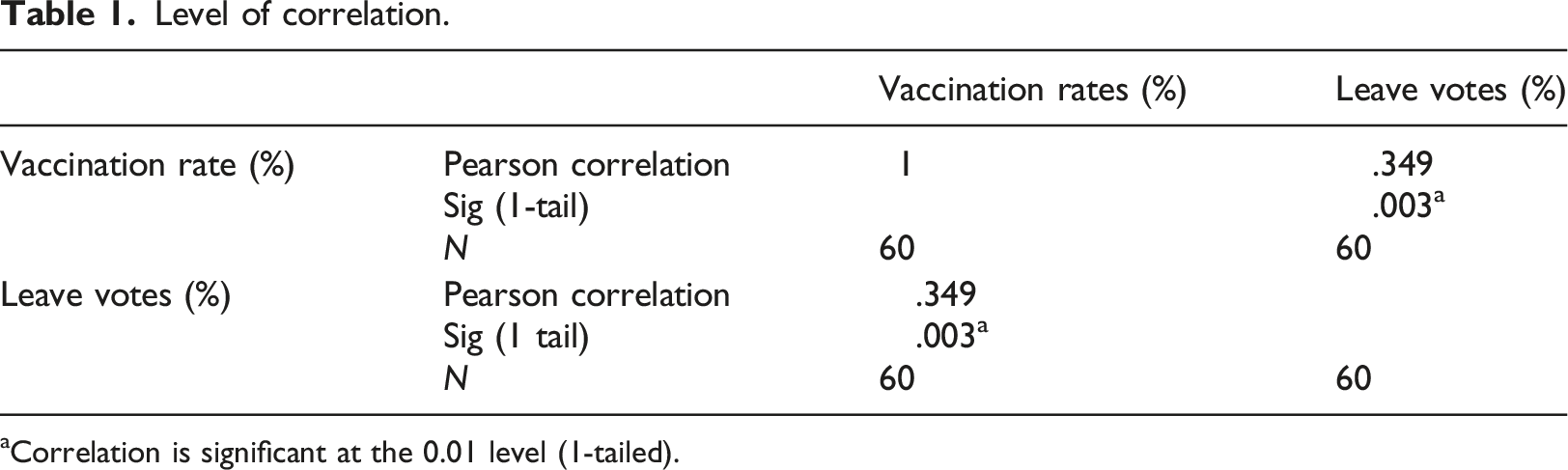
aCorrelation is significant at the 0.01 level (1-tailed).
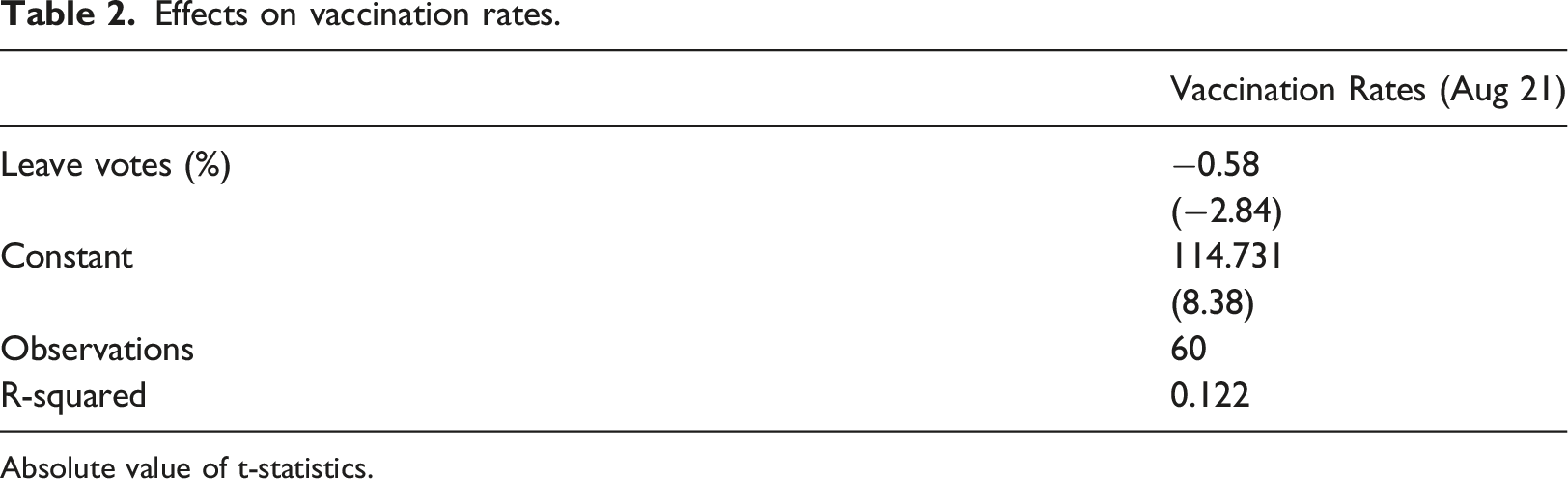
In Figure 1 and Table 2, the data collectively corroborates a relationship of statistical significance between the incidence of leave votes and the rates of vaccination up-take. The null hypothesis is unequivocally rejected, given the t-statistic value of −2.84 indicating an interconnection between the two phenomena. Further bolstering this conclusion is the result obtained from the coefficient of determination test. With a calculated value of 0.122, leave votes account for approximately 12% of variability vaccination rates. Histograms in Figures 2 and 3 outline the frequency distributions associated with each variable in question, providing a visual encapsulation of the statistical disposition and distributional attributes inherent to the variables. Scatter plot representing percent of Covid-19 vaccination rates and percentage of leave votes in UK cities and towns. R2 linear = 0.122. Effects on vaccination rates. Absolute value of t-statistics. Histogram of vaccination rates. Histogram of leave votes.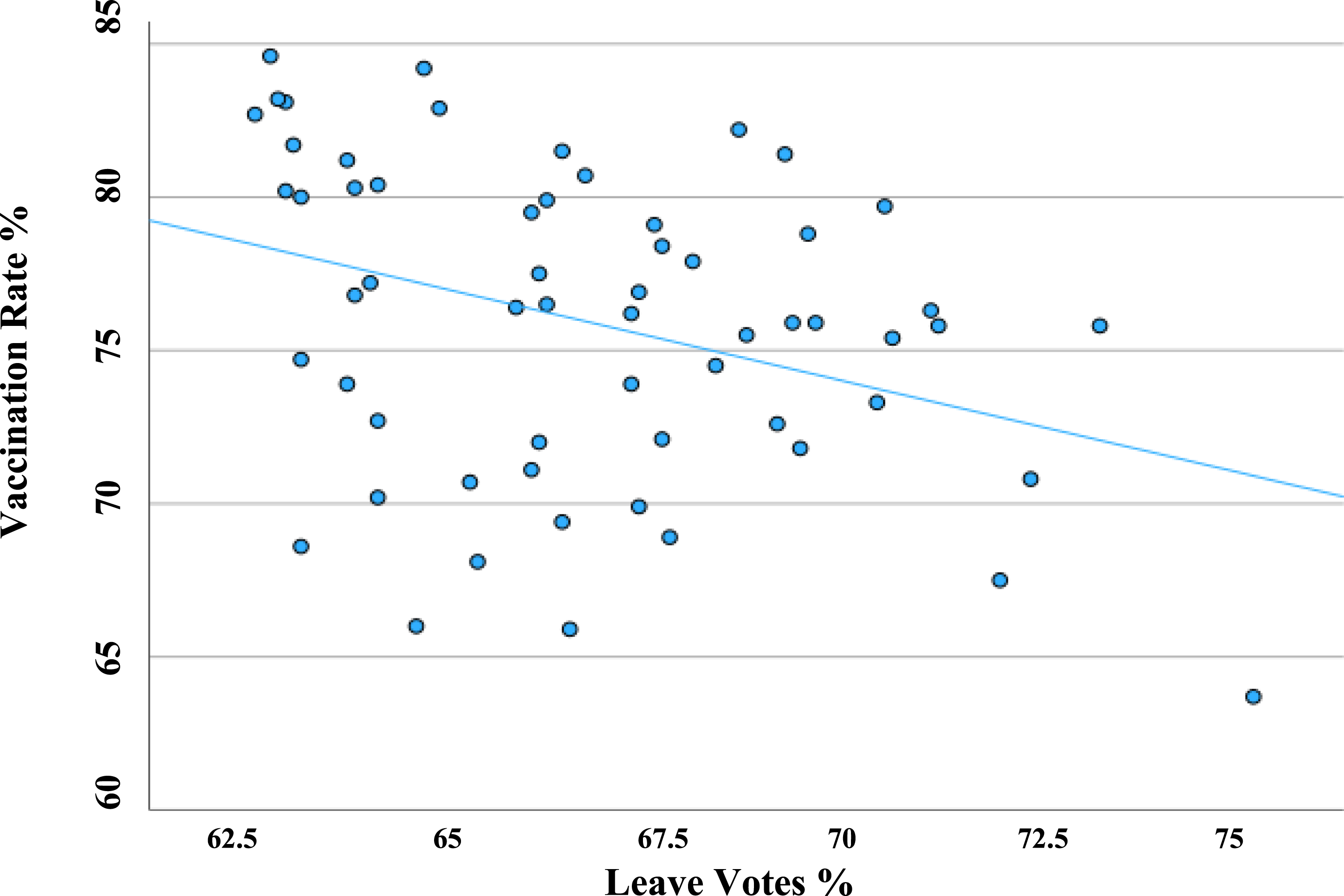
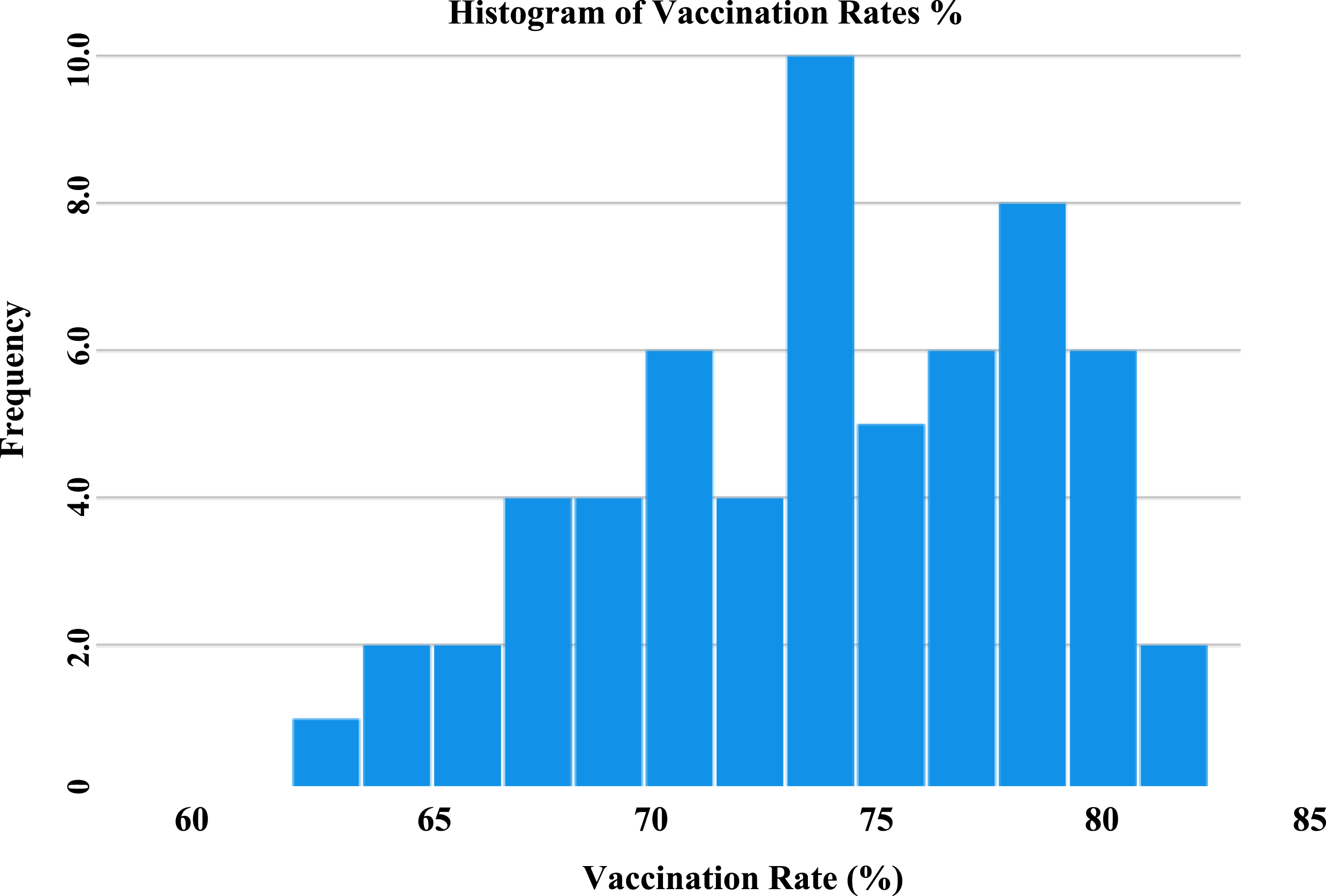
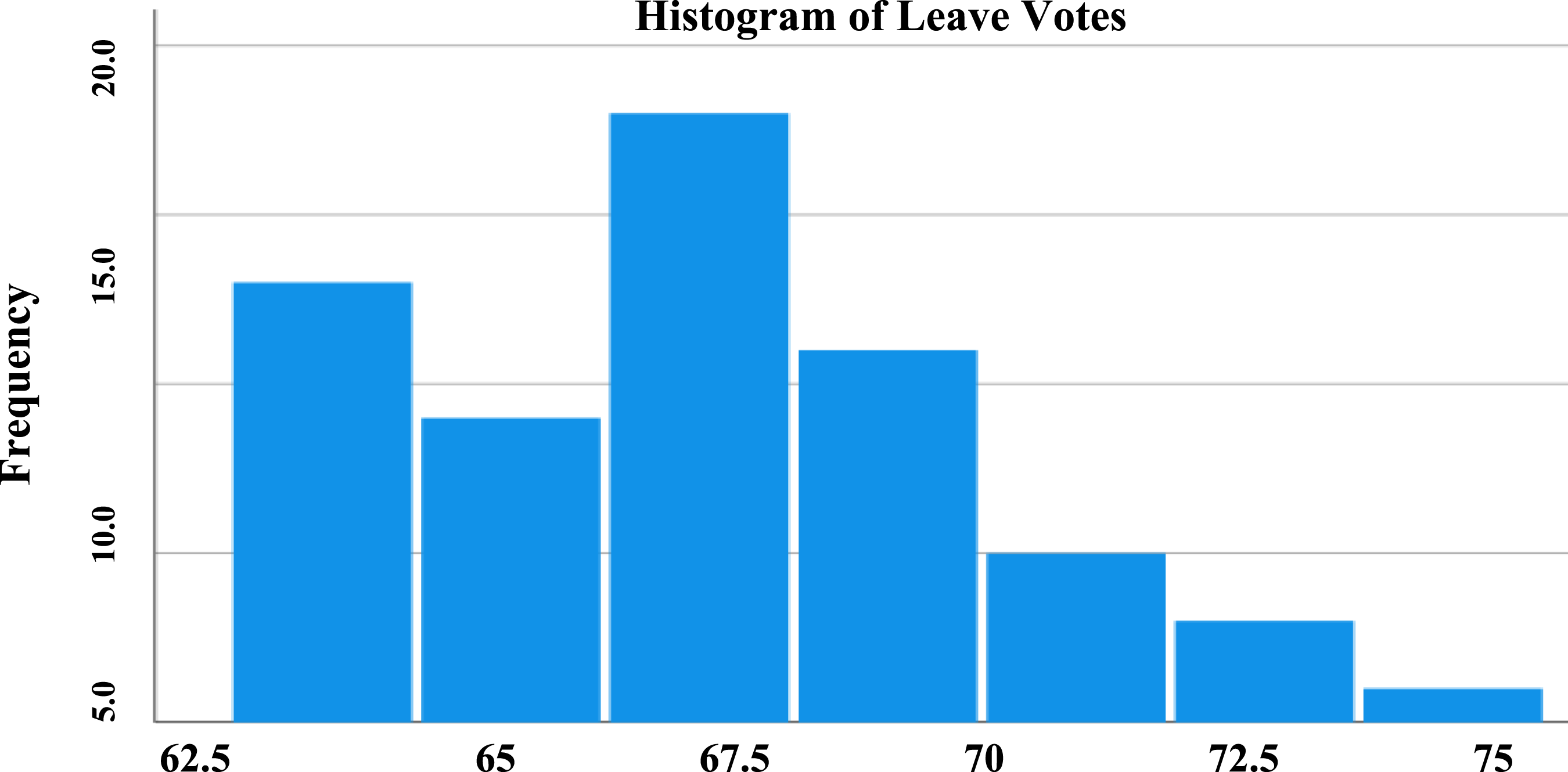
Figures 2 and 3 attests to a heightened frequency in vaccination rates quantitatively situated at, or exceeding, a 75% threshold whilst simultaneously registering a relatively diminished prevalence on the X-axis corresponding to the proportion of leave votes. The arithmetical mean for vaccination uptake was 75.9%, whereas the corresponding mean for the proportionate distribution of leave votes was 66.9%. The most emblematic observation from the localised data was the constituency Tamworth, Staffordshire where vaccination rates registered at 76.2%, whilst the percentage of ballots cast for leave was 67.5%. Interestingly, none of the 10 observations possessing the maximal percentages of leave votes published vaccination rates that were commensurate with or exceeded the 80% benchmark. Conversely, eight from the 10 observations registering the minimal proportion of leave votes produced vaccination rates that crossed the 80% threshold.
Figure 4 presents the distribution of unstandardised residuals serving as a quantitative representation of the magnitude of deviation between empirically noted and expected values. The residual distribution shows a marginal negative skew, albeit without statistically significant outliers that could otherwise compromise the result’s integrity. Upon inspecting the data, one can establish that for each unitary increment in the proportion of votes advocating withdrawal from the EU, vaccination rates simultaneously experience a decrement by an average of 0.58%. Nonetheless, the dataset undoubtedly comprises of sundry variables displaying statistical significance, possessing the capacity to modulate vaccination rates. Unstandardised residuals.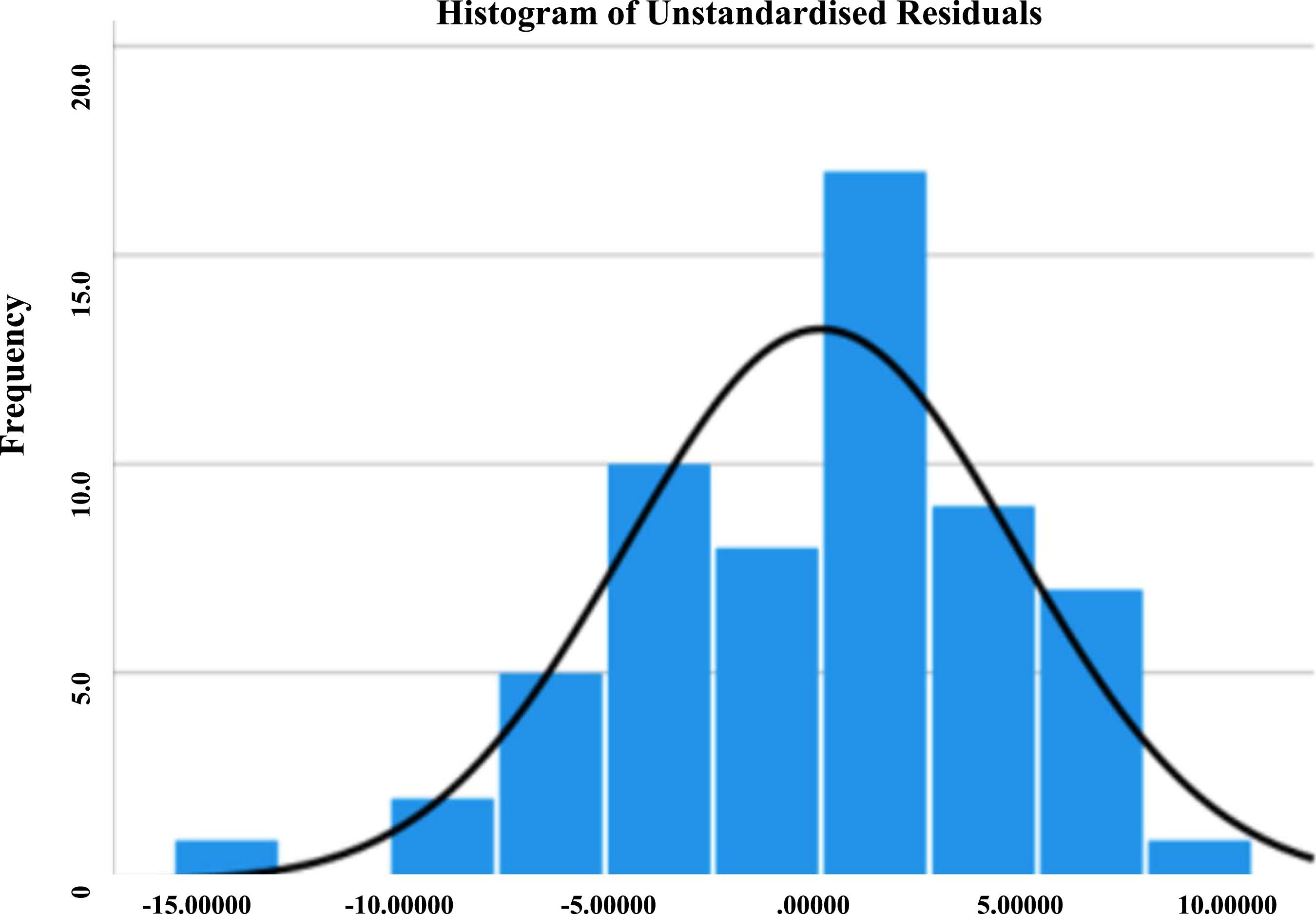
The unemployment rate in each constituency may intensify the susceptibility of the dependent variable to misinformation. This factor is critical for evaluating Brexit leave votes and vaccination uptake, as misinformation can exploit the intersection of unemployment with socio-economic factors affecting individuals’ healthcare access and priorities. Studies have shown that unemployment can influence vaccine uptake by creating financial barriers and shifting individuals' focus from preventive health measures to immediate needs (Guo et al., 2022; Tanjani et al., 2015). Unemployed individuals, grappling with income loss, may struggle to afford transportation to vaccination sites. Prioritising basic needs over health, compounded by psychological stress from unemployment, can reduce engagement in proactive health behaviours. Misinformation can distort perceptions of healthcare needs and access among the unemployed. Disruptions in routine healthcare, social isolation, and stigma can further hinder healthcare utilisation, while misinformation might aggravate these barriers by spreading false narratives about healthcare systems and vaccines. Lower healthcare literacy among the unemployed can lead to misunderstandings about vaccination importance, making them more vulnerable to misinformation. On a constituency level, high unemployment rates can stress healthcare infrastructure, leading to inadequately funded or staffed public health programs, including vaccination initiatives. Limitations in healthcare services can be exploited by misinformation, further impeding community access to accurate health information and vaccination services.
Next, I will incorporate adjustments for the average gross disposable income by constituency, measured in pound sterling, acknowledging its potential in vaccination uptake influenced by socio-economic status, healthcare access, and the pervasive effects of misinformation. Studies (Lazarus et al., 2021; Machida et al., 2021) generally associate higher gross disposable income with better socio-economic conditions, facilitating access to healthcare services and positively impacting vaccination rates. This economic advantage allows for easier transportation to vaccination sites, an important consideration in areas with inadequate public transport. Individuals with higher disposable incomes have more flexibility in scheduling vaccinations around their work commitments, overcoming logistical barriers to vaccine access. The higher disposable income and enhanced health literacy link becomes apparent, enabling individuals to access reliable health education and vaccine-related information. Enhanced health literacy leads to a better understanding of vaccine benefits and risks, reducing vaccine hesitancy and increasing uptake rates. Higher income levels on average within constituencies may foster greater trust in healthcare systems and authorities, enhancing confidence in vaccination programs. However, misinformation can complicate this scenario, distorting perceptions of vaccine efficacy and safety, particularly among those with lower disposable incomes. Financial constraints and competing priorities may force these individuals to de-emphasize preventive healthcare, such as vaccinations. Misinformation exacerbates this issue by feeding doubts and skepticism towards vaccines, healthcare access, and the motivations of healthcare providers, making socio-economic challenges even more significant obstructions to vaccination uptake.
The final control variable introduced for examination is the educational attainment level, defined as the proportion of individuals within each constituency who have acquired at least a qualification corresponding to Level 3 education. In the United Kingdom, such standards cover A-level certifications or credentials granting access to higher education diploma programs, excluding bachelor’s degrees, which are categorised as Level 4 qualifications. This selection is predicated on the premise that educational attainment influences individuals' comprehension, perspectives, and reactions concerning vaccination initiatives. Education enhances individuals' capacity for critically analysing information amidst prevalent misinformation and disinformation regarding vaccines influencing vaccine acceptance rates. Higher education emphasising critical thinking, adherence to evidence-based reasoning, and cultivated scientific literacy is pivotal for efficaciously assimilating health information. Such educational exposure augments the propensity of individuals to discern vaccine-related misinformation, identify prevalent myths or misconceptions, and procure accurate, evidence-based data from sources of repute (King et al., 2021; Montagni et al., 2021).
Individuals possessing advanced educational qualifications are more apt to grasp the scientific tenets underpinning vaccination, including herd immunity, vaccine safety, and efficacy. In contrast, constituencies with inferior educational levels as a percentage of the population, may exhibit a heightened susceptibility to fallacies and conspiracy theories regarding vaccines (Jennings et al., 2021; Simione et al., 2021), culminating in increased vaccine hesitancy and diminished vaccination rates. A paucity in educational and informational resources renders individuals vulnerable to the influence of anti-vaccine rhetoric or fallacious assertions propagated through digital platforms or alternative communication mediums. In the absence of critical faculties and scientific literacy fostered by formal education, individuals might find themselves unsuccessful at distinguishing legitimate information from misinformation. This contributes to erroneous beliefs and decisions regarding vaccination.
From Figure 5 and Table 3, we can distinguish a correlation among vaccination uptake rates and corresponding rates of unemployment From a Pearson correlation coefficient quantified as 0.464, unemployment does influence vaccination rates The t-statistic, registering at a value of 3.53 fortifies the correlative assertion's empirical validity. From the scatterplot, unemployment rates are a more salient determinant in vaccination uptake rates, thereby corroborating the initial hypothesis positing a substantive import in the selected control variable. With each unitary increment in the rate of unemployment, there is a decrement in vaccination rates by an aggregate of 2%. Upon incorporating unemployment as a control variable, the magnitude of the influence exerted by the independent variable displays a modest attenuation. Table 3 verifies the absence of multicollinearity issues in the model, evidenced by the fact no correlation coefficients surpass the threshold of 0.7%. In the top 10 observations characterised by the highest percentage of pro-leave votes, seven exhibited unemployment rates surpassing the 4% mark. Conversely, within the subset of observations featuring the nadir of pro-leave voting percentages, a mere trio reported unemployment rates in excess of 4%. Aggregated across the totality of observations, the mean unemployment rate stood at 4.4%. The statistical verity once again instantiated in the case of Tamworth, wherein vaccination rates, the percentage of leave votes, and unemployment rates were proximate to the average, registering at 4.1%. Scatterplot of vaccination by unemployment rates. Control variables. p < .01** Correlation is significant at the 0.05 level (2-tailed). p < .05* Correlation is significant at the 0.01 level (2-tailed).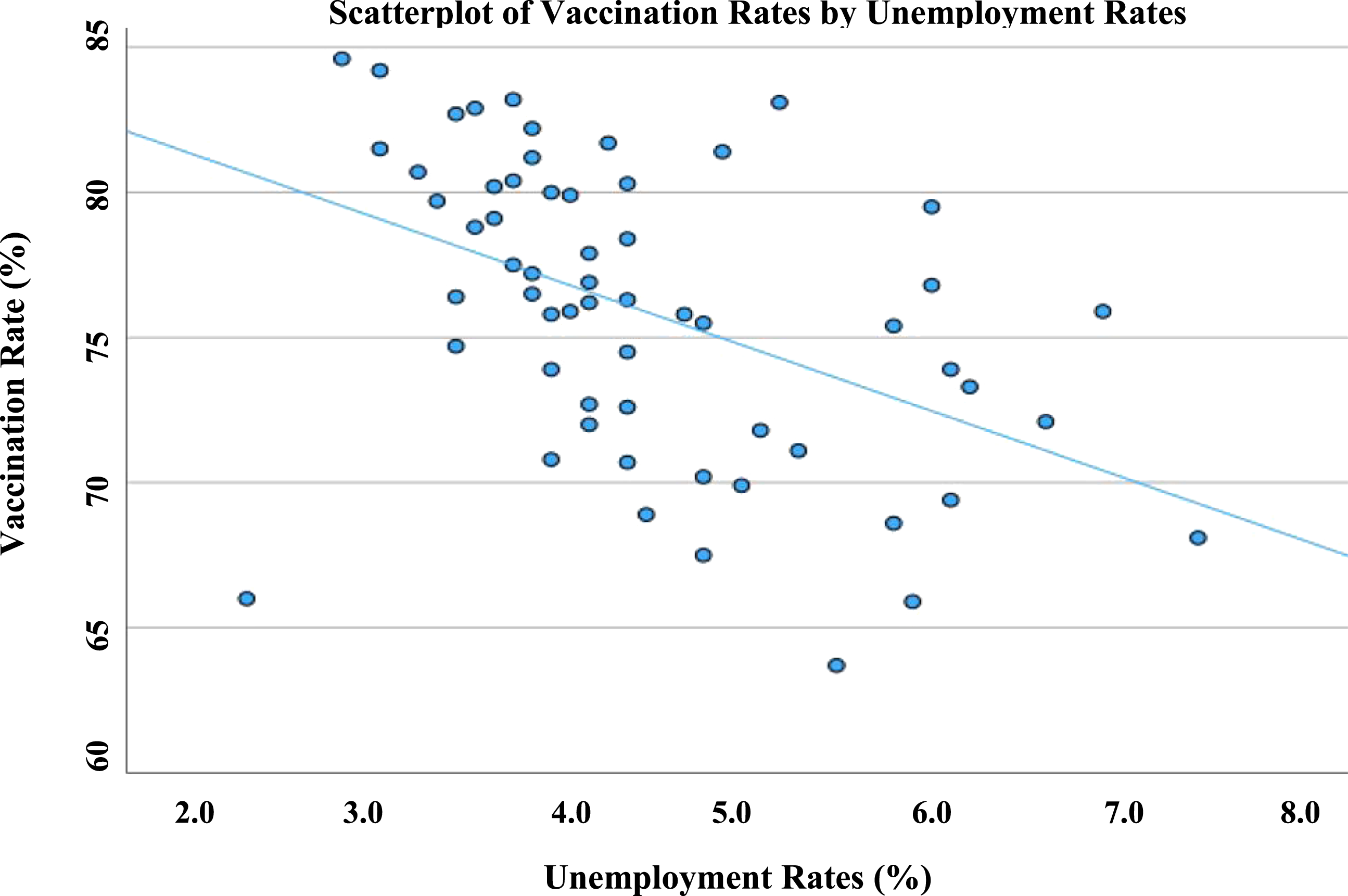
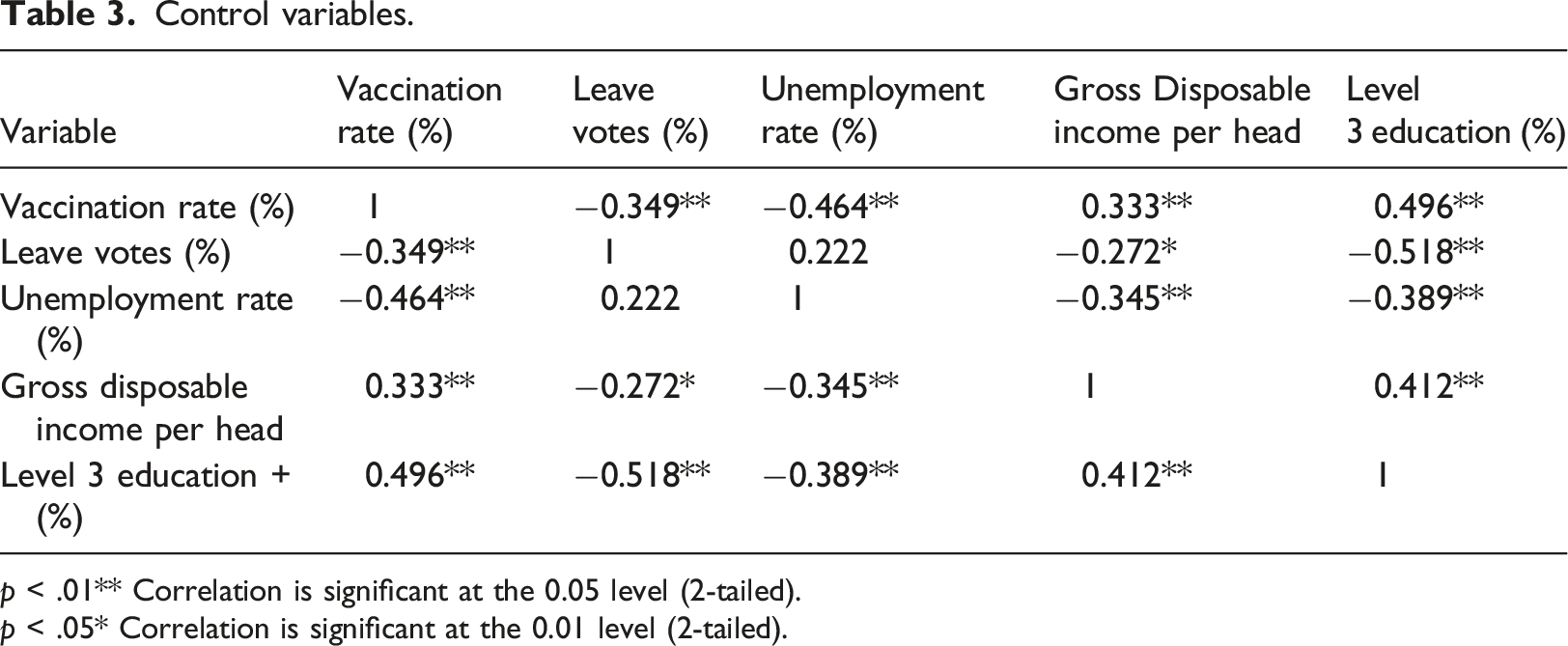
Figure 6 and Table 3 indicate a positive correlation in gross disposable income per head and vaccination rates. As disposable income increases, so does the likelihood of higher vaccination rates. This relationship is linked to access to healthcare and education among higher-income groups in UK constituencies, improving better health literacy and resilience against vaccine-related misinformation. Misinformation tends to proliferate more in areas with lower education levels and economic disparities, but those in higher income brackets are generally better equipped to access reliable information and trust scientific institutions. A flexibility in schedules and better transportation links could be associated with higher income levels which can facilitate vaccination uptake Figure 7. Scatterplot of vaccination rates by GDI per head. Scatterplot of vaccination rates by level 3 education and above.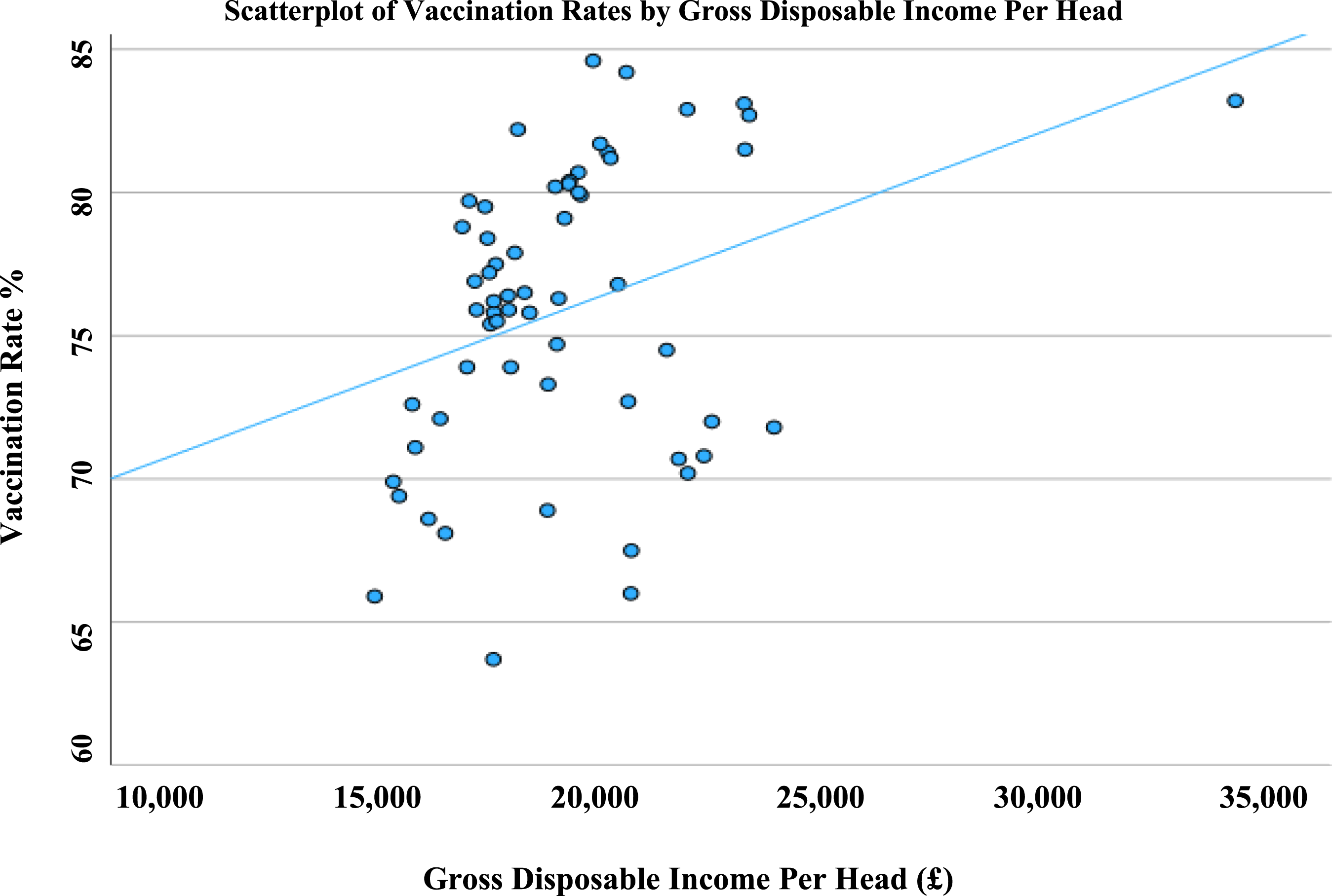
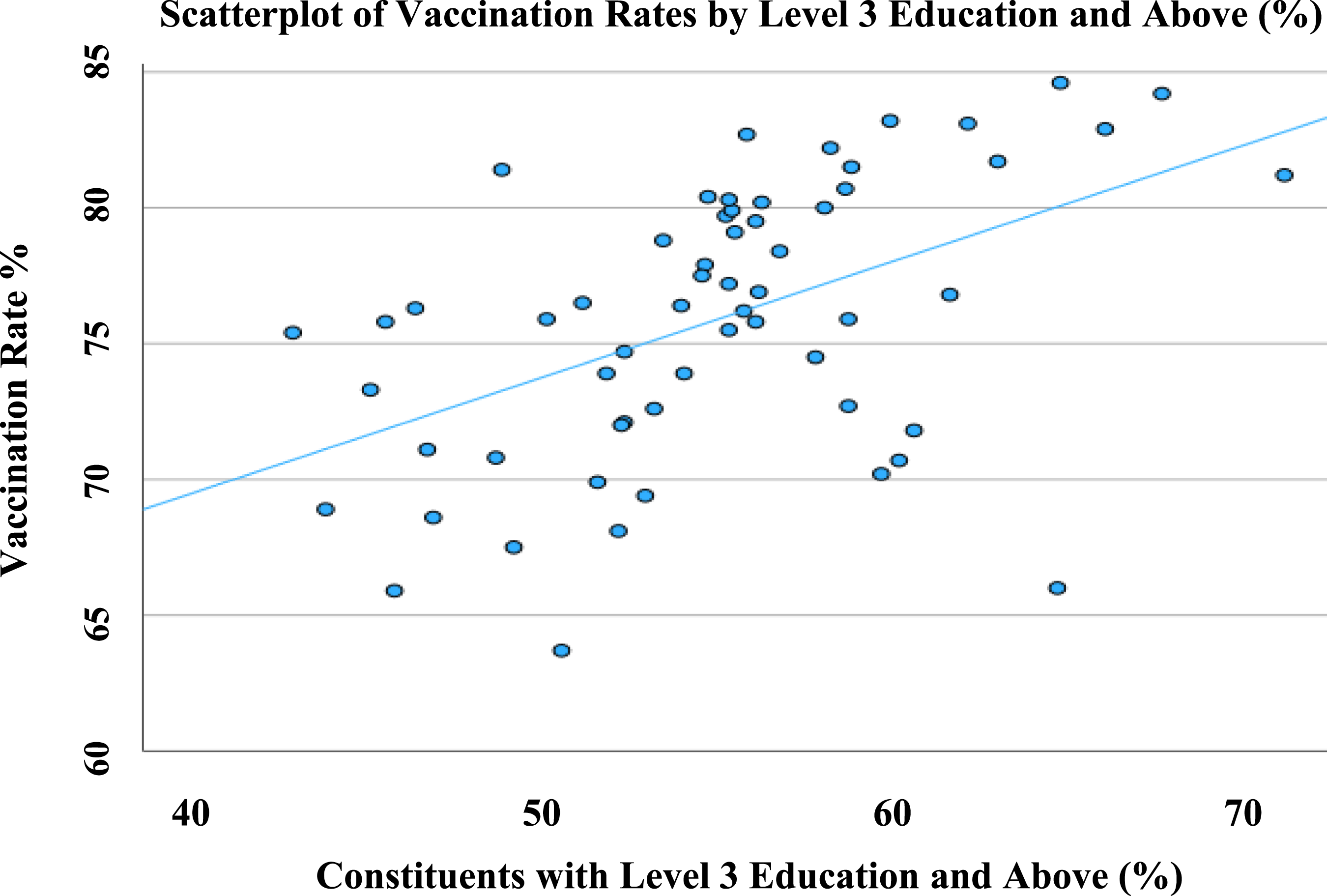
Further empirical analysis reveals a statistically significant positive correlation (0.496**) between Level 3 education attainment and vaccination rates, showing that higher educational levels are closely linked with increased vaccine uptake. This relationship is supported by a multilayered framework. Education is as a catalyst in health literacy, endowing individuals with the capacity to adeptly assimilate and interpret health-related information. Encompassing a profound grasp of the advantages and safety profiles of vaccines are vital for encouraging informed health-related judgements and accepting the value of vaccinations for both individual and collective health welfare Education does combat the spread of misinformation, a key factor in vaccine ambivalence. Individuals with higher education levels are more persuaded to search for credible information sources and probe the validity of health-related claims, mitigating misinformation effects and minimising vaccine skepticism.
The data additionally shows the influence of education on political and economic perspectives, as substantiated by the negative correlation with leave votes (−0.518**), the positive associations with lower unemployment rates (−0.389**), and higher gross disposable income (0.412**). A compelling negative correlation (−0.518**) between higher education levels within a constituency and the percentage of leave votes in the Brexit referendum, infers that constituencies with higher levels of educational attainment generally express a lower propensity for supporting Brexit, and is supported by numerous studies 3 . This trend can be contextualised within the misinformation framework, as higher education equips individuals with enhanced critical thinking skills and a greater propensity to scrutinise information sources - This trend can contextualise the misinformation framework, as higher education equips individuals with enhanced critical thinking skills and a greater propensity to scrutinise information sources. As a result, educated individuals are more likely to discern and reject misinformation, which may have influenced political attitudes and behaviours throughout the referendum.
Regression analysis.
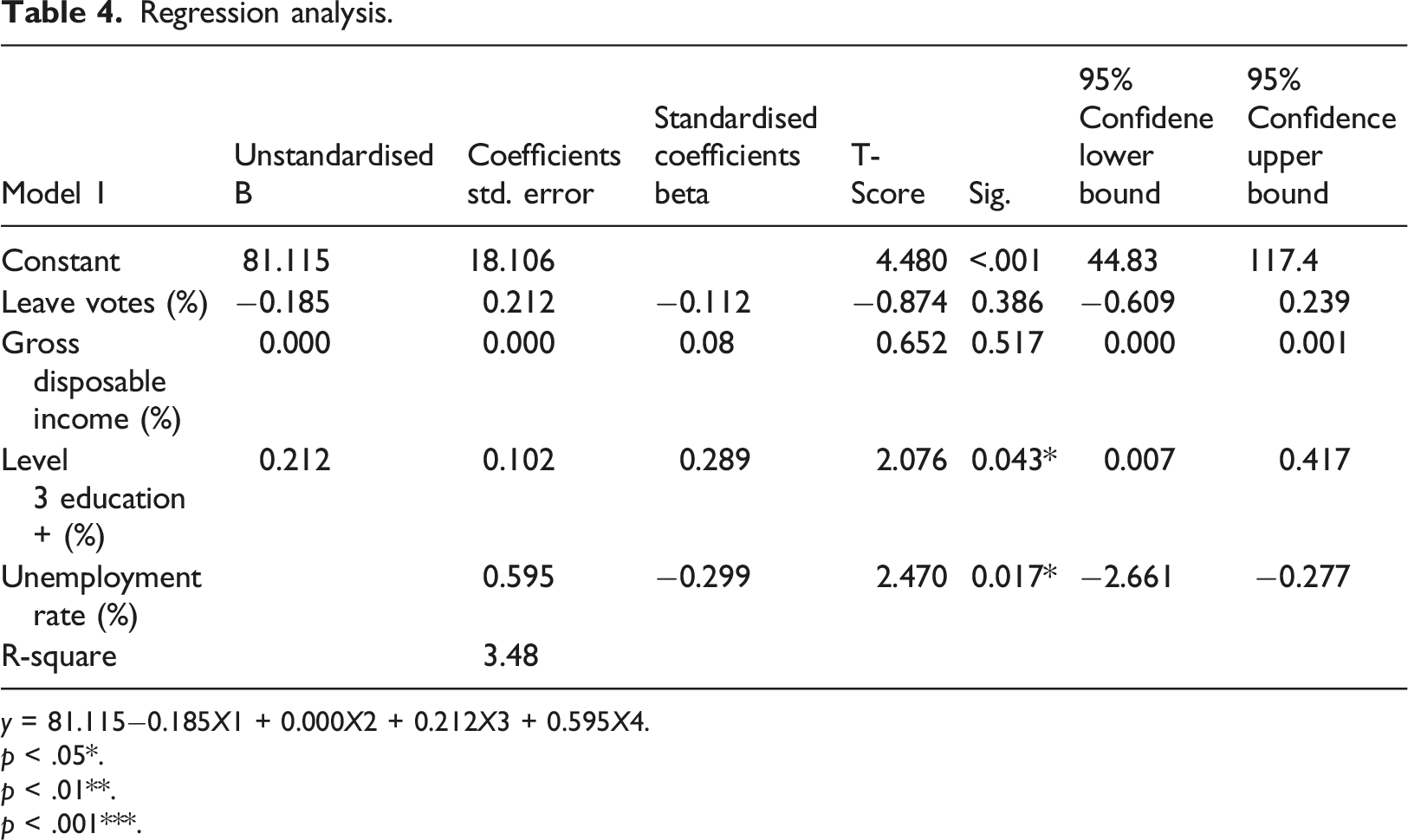
y = 81.115−0.185X1 + 0.000X2 + 0.212X3 + 0.595X4.
p < .05*.
p < .01**.
p < .001***.
The lack of statistical significance for the coefficient of gross disposable income per head shows that income levels in isolation do not strongly determine vaccine uptake once other variables are accounted for. A statistically significant coefficient for the proportion of individuals with at least a level 3 education (%) (β = 0.212, p < .05) shows education’s focal role in nurturing vaccine acceptance Higher educational attainment is associated with higher vaccination rates, indicating that individuals with greater access to education may possess the erudition and critical thinking skills requisite to appreciate the gravity of vaccinations and vanquish vaccine reluctance.
Conclusion
Empirical data points out that vaccination rates seem to correlate with a tendency to vote leave, conforming to the initial hypothesis, yet this correlation no longer remains significant once socioeconomic control variables are included One surmisation to initial significance is reticence emanating from a circumspect approach to adopting novel medical interventions. Segments in the population may engage in a form of social observation, scrutinising repercussions of vaccine administration upon fellow citizens prior to making an informed decision. The resumption of transnational mobility and stringent immunisation prerequisites mandated by diverse geopolitical entities, may have fomented reluctance to proactively seek vaccination. Complicating this landscape is the role of social media platforms that intensified their quests to flag and minimise fabricated or misleading information in circulation. From this paper we learn that improved socioeconomic conditions will create a societal context more resistant to the pervasive effects of misinformation, to facilitate higher vaccination rates by enabling individuals to make informed health decisions based on accurate information and sound judgements.
Local governing bodies and public health councils require assiduous education regarding salutary benefits of vaccinations, complemented by providing resilient support mechanisms for individuals navigating ambivalences associated with healthcare decision-making. In ongoing struggles to counteract virulences of disinformation, the onus falls upon governmental and educational institutions to amplify protective measures, especially for demographic cohorts most susceptible to misinformation's adverse effects, namely the young and the elderly. As digital ecosystems prosper, they engender increased risks associated with propagating malevolent and misleading content. This strategy is echoed in the scholarly literature on Brexit and public health disinformation, where authors including Zappettini and Krzyżanowski (2021) and Huldin (2021) highlight the impact of media narratives and disinformation on societal divisions and public health responses.
This study opens up avenues for future research that hold promise. A deeper exploration into temporal variations could proffer insights into the nature of vaccination rates in evolving geopolitical and health landscape contexts Reticence observed within distinct demographic groups towards adopting novel medical interventions presents an intriguing area for investigation in social observation and informed decision-making processes. An in-depth analysis of how transnational mobility and prerequisites for immunisation impact vaccination hesitancy could enhance our comprehension of assorted factors affecting public health behaviour on a larger scale. Social media expansion as information channels presents a subject requiring scrutiny of their effectiveness in countering disinformation, as well as their potential to brandish influence over public health attitudes. An integrated exploration of educational efforts undertaken by local governance bodies and public health councils could elucidate strategies in alleviating vaccine hesitancy, and promoting accurate health information. As pervasive threats of misinformation continue to cast shadows over informed decision-making processes, probing the roles played by governmental and educational institutions in safeguarding vulnerable demographic cohorts becomes paramount. The rapid growth in digital systems necessitates ongoing investigations into methods for authenticating information while preserving free speech principles.
Footnotes
Acknowledgements
The author would like to express their sincere gratitude to Dr Brady Baybeck, Professor of Wayne State University, for his invaluable guidance, support, and mentorship throughout the process of writing this paper.
Author note
The study followed ethical guidelines. The author (Mitchell Gallagher) worked independently on the research design, analysis, and manuscript preparation.
Declaration of conflicting interests
The author(s) declared no potential conflicts of interest with respect to the research, authorship, and/or publication of this article.
Funding
The author(s) received no financial support for the research, authorship, and/or publication of this article.
Data availability statement
Data supporting the findings of this study are available upon reasonable request.