






Abstract
After the Cold War and the terrorist attacks of September 11, 2001, the term “fragile states” has gained increasing prominence in security debates and the international community turned its attention to how to deal with such countries. These security concerns originate from several factors: emphasis on building peace and security, spread of this idea that development and security are related, and the principle that the stability of state plays an influential role in its development. The term “fragile state” refers to weak states that are vulnerable to internal and external threats and have a poor government that is incapable of managing internal affairs and external policy. In this regard, Iraq was considered as a fragile state after 2003, and its stability has been evaluated poor since ever. The present study employed indices of fragile state and human security in order to investigate the effect of Iraq’s fragile state on development of threats to women security. Violation of human security in Iraq after 2003 was caused by failure in nation state-building process and weakness of Iraqi government in maintaining societal order and unity. Therefore, the main question that the present study aims to address is: “How has women security been threatened by Iraq’s crisis and its fragile state?”
Introduction
With the fall of Saddam Hussein and regime change in Iraq following the USA-led invasion of that country in 2003, forming the new Iraq has been the most important issue. Over a decade of internal and external conflicts, this process has caused the country to be listed as a fragile state. Political instability, failure to meet the claims of different movements and factions, inability of the new government to build democratic institutions, inability to deliver public services, and inability to protect people against internal and external threats are among characteristics of Iraq’s fragile state. The present study argues that Iraq’s fragile state has led to regional and international interferences, formation of extremist religious movements, intensification of ethno-religious disputes, terrorist violence, and environmental crises, all of which have threatened human security in this country in different ways. In this framework, women security, which is the most obvious dimension of security in the field of the citizens’ lives, is somewhat the result of planning at macro level by the government in current affairs of life. Gender-based violence, displacement, rape, slavery, and poverty are among overt symptoms of violation of women security in Iraq and inefficiency of the government to provide them with security. Here, what intensifies women insecurity is the occurrence of crises like the advent of the Islamic State called Islamic State of Iraq and Levant (ISIL or ISIS) and regional and internal disputes. The central government’s inability to enforce its power and authority upon different sections and resolve the disputes peacefully have caused and intensified insecurity. The present study focused on the effect of such fragility and its negative consequences on secure living among Iraqi women.
Theoretical Framework
In order to theoretically justify the causes and effect of Iraq’s fragile state regarding women security, three theories of fragile states, human security, and feminist theory can be utilized. These theories explain the causes and indices of security and fragility in order to explain the cause and effect of fragile state on women security in Iraq. The issue of fragile states was proposed after the cold war and referred to a group of new security threats that were mainly caused by disputes, economic collapses, and failed policies of governments in social strata in Asian, African, and Latin American countries (Nuruzzaman, 2008, p. 2). There is no certain international definition for a fragile state. Development organizations have defined it as the fundamental weakness of a government to carry out necessary measures to meet the citizens’ essential needs and expectations. Fragile states cannot normally supply security, protect the role of the law and justice, or provide essential services and occupational opportunities for their citizens. Therefore, the Organization for Economic Cooperation and Development (OECD, 2015) defined fragile state as “inability to meet the citizens’ expectations, manage the changes in their demands, and conclude political processes” (OECD, 2008). Moreover, Department for International Development (DFID) defined fragile states as, “Those states that cannot or do not want to adopt fundamental measures for most citizens including the poor” (DFID, 2005).
As the experiences of fragile states indicate, while government is the most important mechanism to establish security, it can also be the most important source of threat to human security. In some cases, and in some communities, it is the source of conflicts and the issue of competition and authority and finally insecurity (Yazdanfam, 2011, pp. 56–57). Fragile states not only are insensitive and ignorant toward human security but are also unable to create necessary entities and arrangements to establish security in their territory. They are unable to fulfill their responsibilities and cannot prevent political instability and violent conflicts or create necessary grounds for appropriate development of their countries. Attack on civilians in regions where the state cannot exercise its rule is higher than in other regions (Kreutz, 2005, p. 178). Investigating the status of human security in different fragile states clarifies the effect of such states on human security. There are different indices for human security. Three major criteria that are proposed for human security are freedom from want, freedom from fear, and freedom from threats. Each criterion can be evaluated based on the following indices. The level of economic development, rate of poverty reduction in society, education level, mortality rate or life expectancy, rate of political violence, number of political prisoners, freedom of the press, and natural hazards and disasters (Brauch, 2005, p. 80).
Investigation into women security in such states (Table 1), however, cannot merely be based on human security indices. One of the critical theories in this regard is feminist security theory which postulates that gender-based violence is not paid much attention in the issues of human security. Human security indices have paid less attention to violence against women, gender inequality in allocation of resources, gender inequality in decision-making and power sources, human rights of women, and potential hazards that threat women more than men. Advocates of feminist security theory believe that in general, women security does not have a significant position in security theories although the most portion of negative effects of fragility of a state is on fragile groups of society including women and children. These groups experience the highest level of negative effects regarding increased violence hazard, exploitation, abuse, humiliation, loss of livelihood, threats to personal safety, poverty, and malnutrition.
Threats Directed at Women in Fragile States
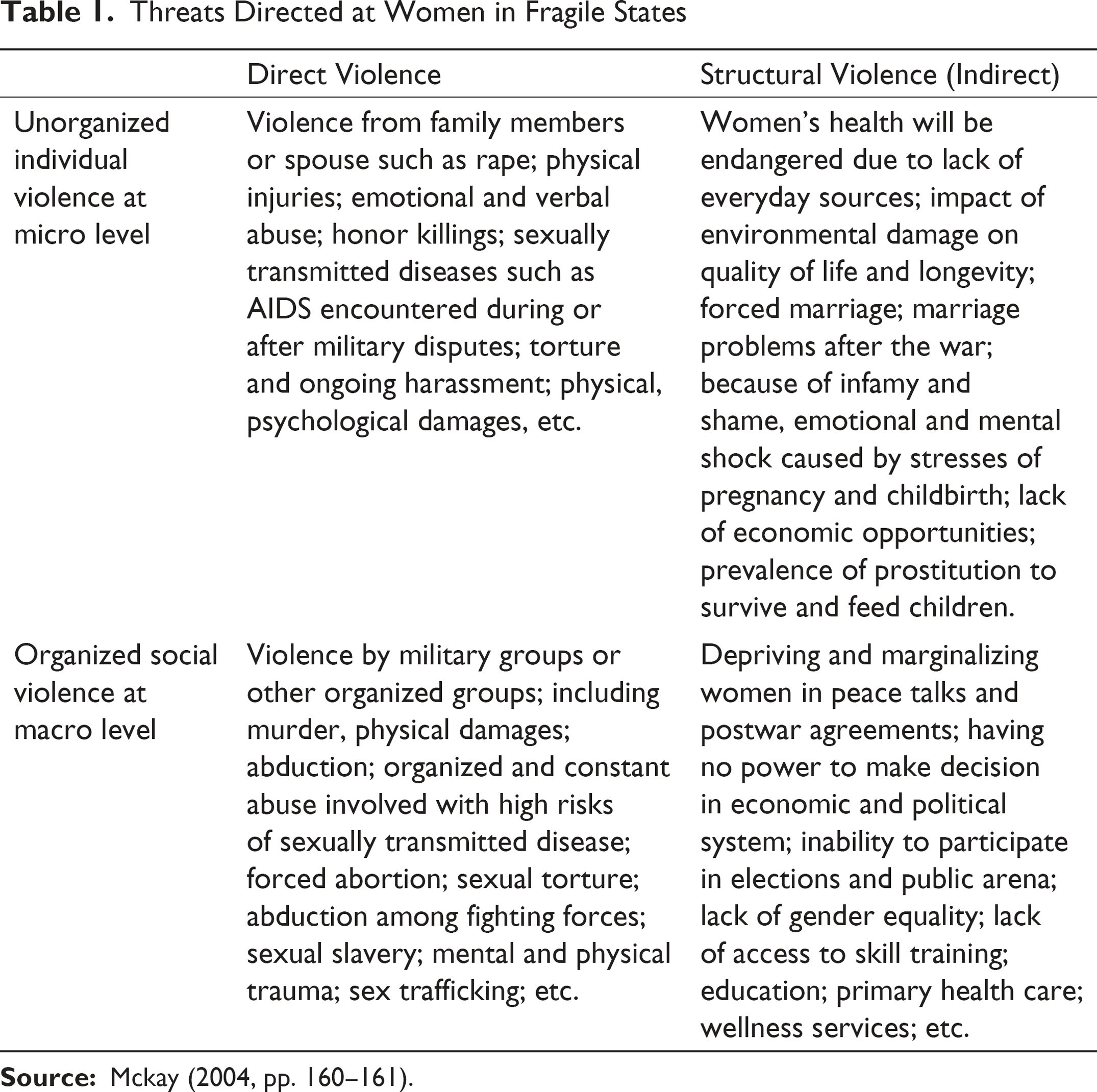
Due to gender hierarchies and extreme inequality in fragile states, women experience human insecurity in a different way compared to men. Because of their lower legal rights, they are less able to provide and act according to their security needs. According to the reports of United Nations Development Programme (UNDP, 2005), in no society are the security of and behavior with women the same as with men. Individual insecurity chases women from birth to death, and due to their gender, they are always abused. In different dimensions of security, such as economic security, food security, health security, political security, and individual security, women can specifically be affected due to their physical, emotional, and body differences and because of political, economic, and social inequalities.
Comparing Gulf States Regarding Annual per Capita Oil Income and per Capita GDP
Political Changes in Iraq after 2003 and the Formation of New Iraq
After September 11 attacks, Bush Administration declared war against terrorism and on March, 12 2003 launched Operation Iraqi Freedom with the help of the UK. Within 3 weeks, Saddam Hussein’s regime collapsed, the Iraqi army surrendered, and Baghdad was captured by the US forces (Hunt, 2005, pp. 105–106). Afterwards, the Coalition Provisional Authority (CPA) was formed to govern the country, and Paul Bremer was selected as the leader of the coalition by the USA. The establishment of CPA was aimed at implementing legislative, judicial, and executive bodies, which was covered by 25 members of the governing council. This council was a combined reflection of ethnic and sectarian populations in Iraq. For the first time in Iraq’s history, Shias accounted for the majority in the governing body of the country, Sunni Kurds and Arabs could obtain 20 percent of the seats, and minorities, such as Turkmen and Christian community, could also have their representative (Fattah & Caso, 2009, p. 250).
Bremer’s political measures in Iraq can be considered as the starting point for state-building in this country. These measured included the dissolution of the security agencies, the Department of Defense, Army, Security Courts, Baath party, and the removal of the officials with different ranks (Ayati, 2011, p. 70; Cordesman & Khazai, 2014). According to the first principle of Iraqi constitution, the country’s system of government is republican, federal, democratic, and pluralist, and power is divided between the federal government and regional (central, north, & south) governments (Jafarinia, 2009, p. 130). In December 2005, election was held to form Iraq’s first permanent parliament; therefore, Iraq’s first democratically elected parliament formed. Headed by Mashhadani one of the Sunni figures, the parliament started running in 2006 for a period of 4 years, and Jalal Talabani and Nouri al-Maliki were chosen as Iraqi president and prime minister, respectively.
Fragility of State in New Iraq and Its Accelerating Crises
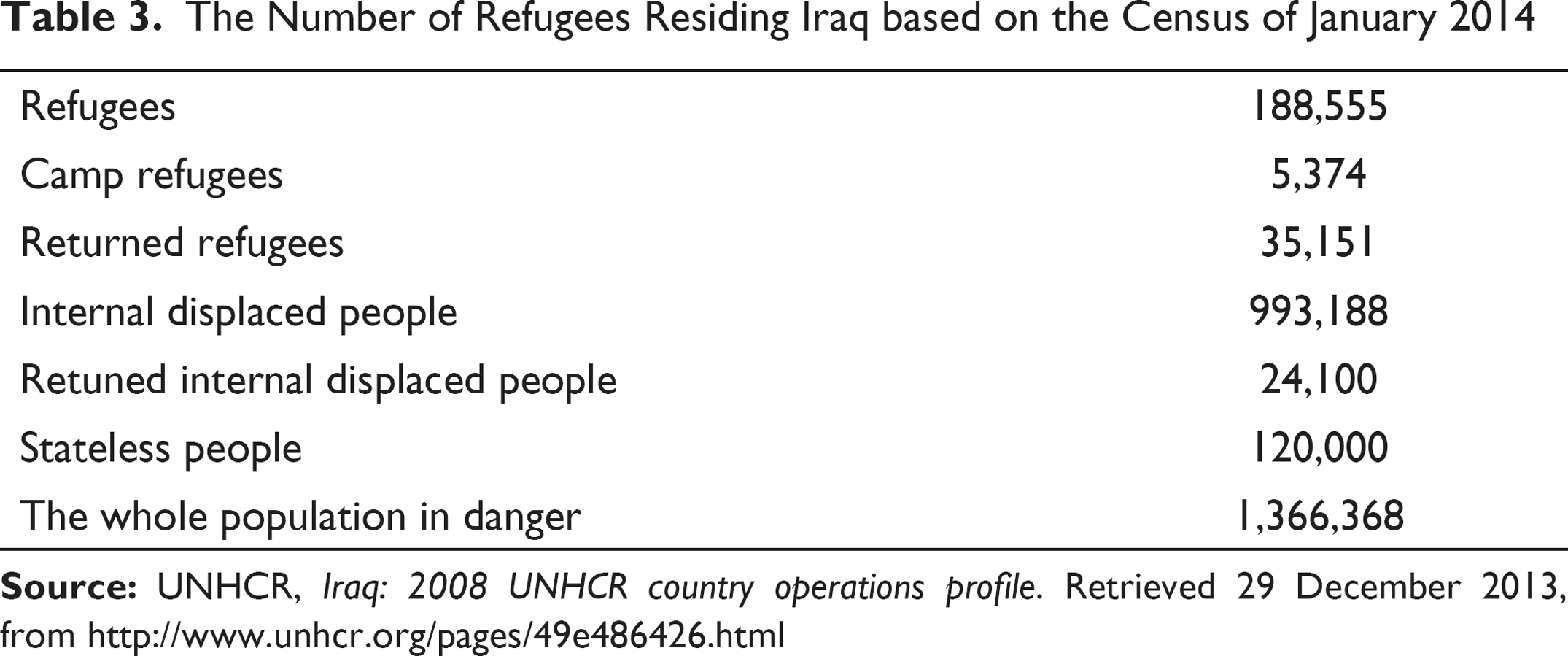
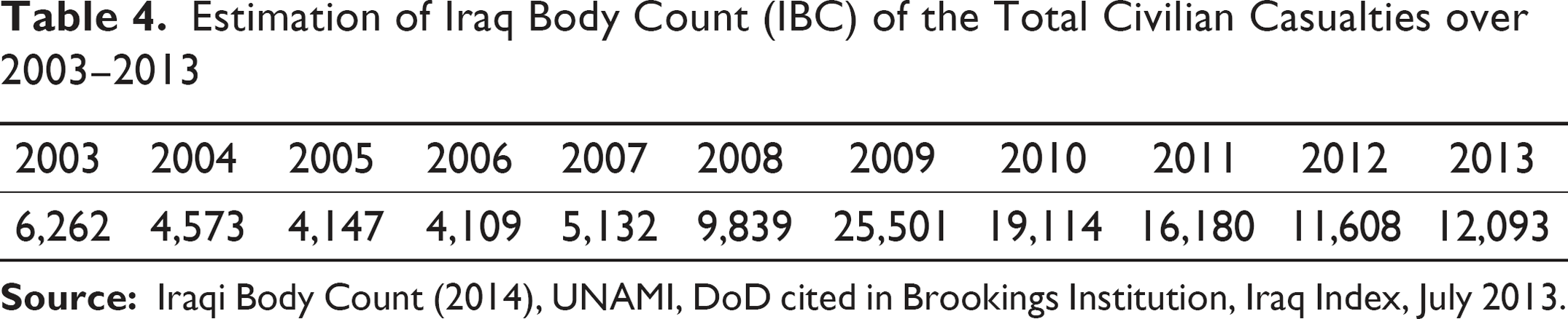
Iraq’s history depicts a “failed state.” Construction of the country has a seemingly geographical justification, but it has ignored ethnic and national considerations (Elis, 2007, p. 202). The occupation of Iraq in 2003 led to an unprecedented political and social collapse in a way that it began to be considered as a fragile state. The US invasion crushed Saddam’s dictatorship and brought about years of civil war and human casualties (Table 3 & 4) (Cordesman & Khazai, 2014, p. 4). Political power vacuum caused by the collapse of Saddam’s regime, chaos and violence resulting from people’s political demands, losses, and damages as a result of more than a decade of sanctions inflicted on the infrastructure of basic services and the country’s economy, the Provisional Government’s faults, and poor preparation coalition forces in governing Iraq and lack of their sensitivity toward some cultural and social issues created grounds for security crises in Iraq (Davisha, 2007, pp. 279–280). As a result of these crises, Iraqi government failed to meet people’s necessary needs, save human security against internal and external threats, consolidate physical infrastructure, and provide essential public services.
The Number of Refugees Residing Iraq based on the Census of January 2014
Estimation of Iraq Body Count (IBC) of the Total Civilian Casualties over 2003–2013
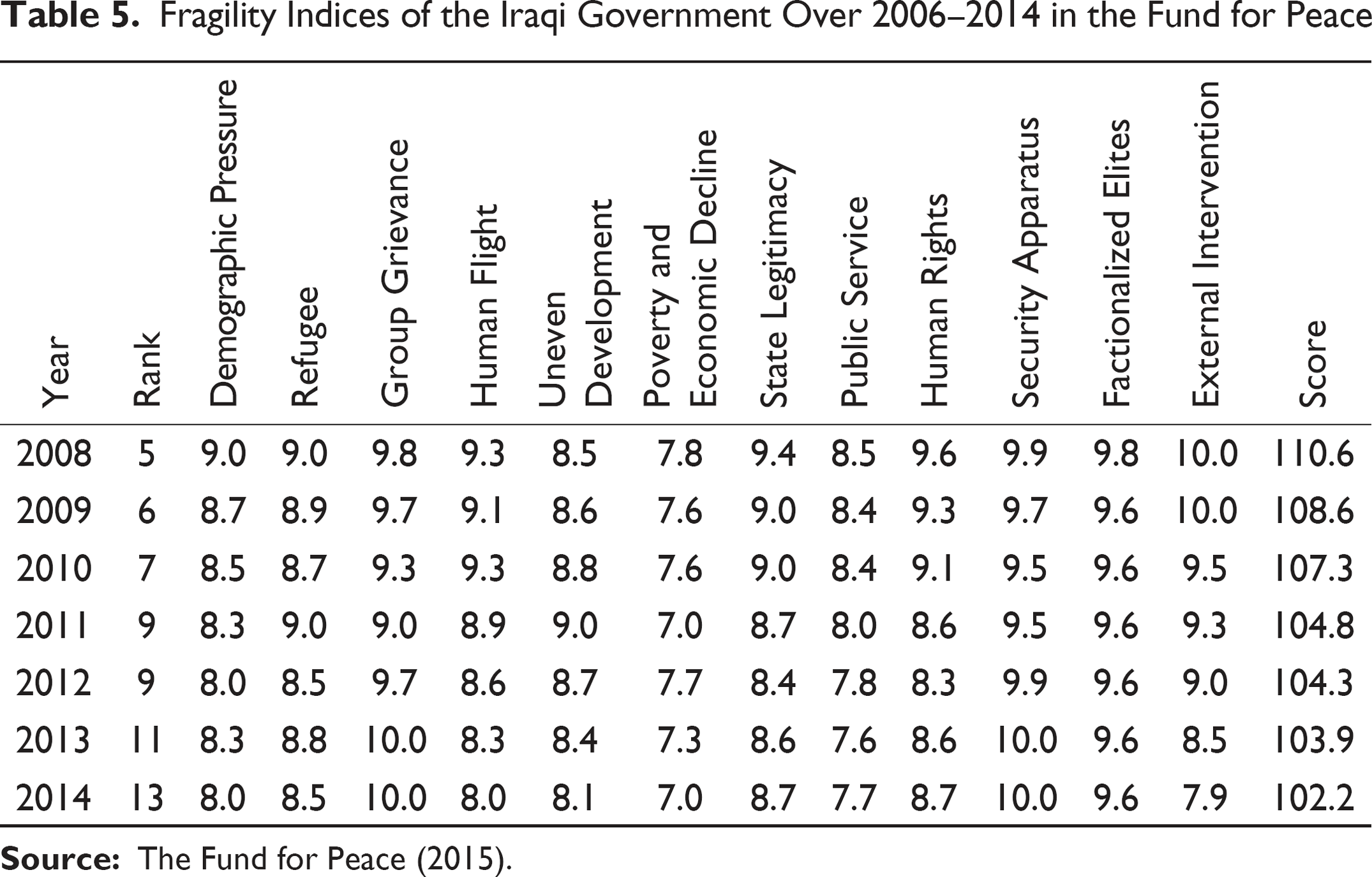
In the present study, the indices proposed by the Fund for Peace were employed to investigate the fragility situation in Iraq. This investigation was based on the three major indices, such as economic, social, and political, and 12 sub-indices, such as demographic pressures, refugees, violence of vengeful groups, migration and brain drain, uneven development, economic decline, the legitimacy of the government, public service, human rights, autonomous military forces, fractions of elites, and external intervention. According to the reports by the Fund for Peace and the World Bank’s annual rankings of countries’ situation, the Iraqi government does not have an appropriate situation. According to Table 5, this government ranked 2 in 2007, 7 in 2010, 9 in 2012, and 11 in 2015 among the fragile states of the world (The Fund for Peace [FFP], 2015) and has been faced with continuous and serious weaknesses and instabilities. In the following sections, the three major indices of fragility in Iraq are presented.
Fragility Indices of the Iraqi Government Over 2006–2014 in the Fund for Peace
Economic Indices
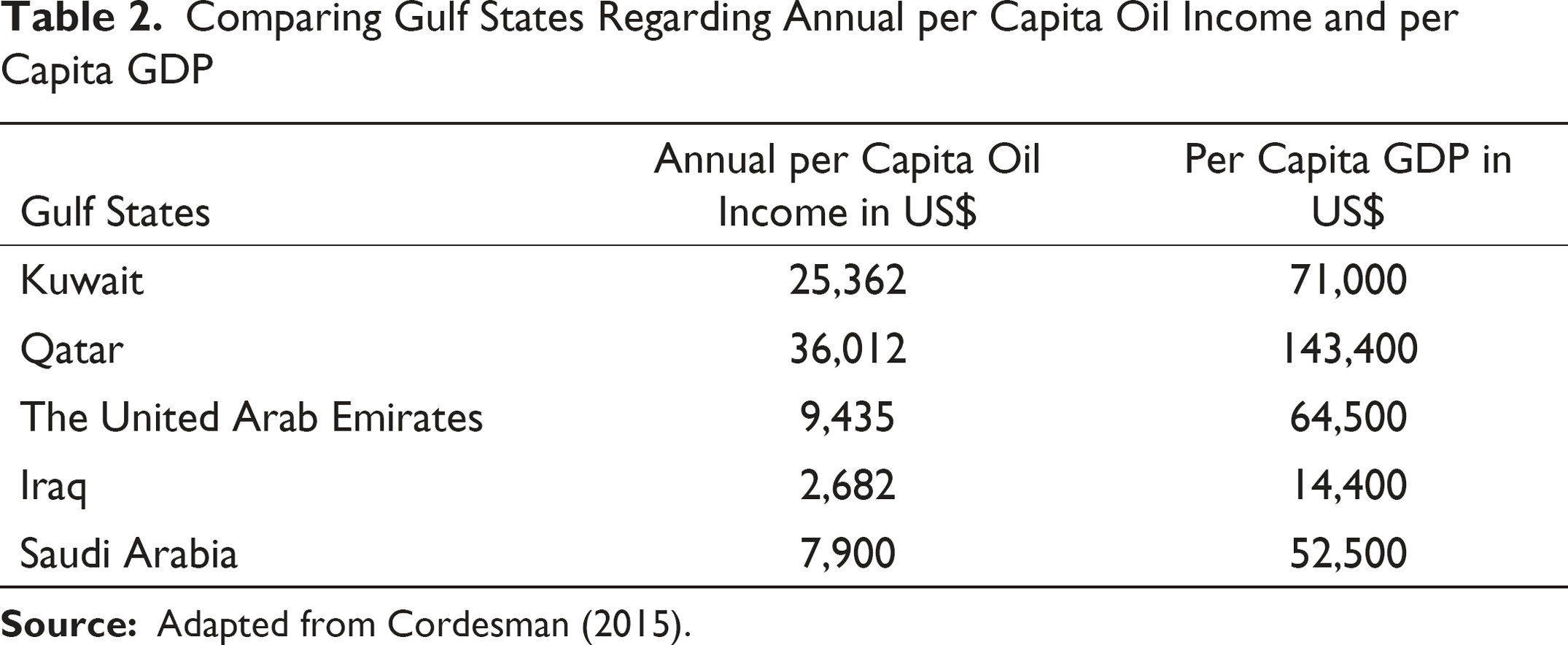
Uneven economic developments and poverty and economic decline are two criteria to measure the economic index of fragile states. Some of their indications include the income proportion of high-to-low classes of the society, dispersal of rural services compared to urban ones, population of the suburbs, economic deficit, government’s debts, unemployment, youth bulge, purchasing power, inflation, per capita gross internal product (GDP), and growth of GDP (FFP, 2015). The main challenge that the Iraqi government is faced with in economic field was the destruction of economic infrastructures as a result of war, insecurity caused by internal conflicts, and continuation of violence after war. Poor commercial regulations and principles and internal insecurity have reduced neighboring countries’ tendency for business development and investment in Iraq (Blanchard, 2008, p. 3). High dependence on oil resources is an economic problem in Iraq. High cost of security development and spending billions of dollars on military field which are only obtained through oil production have caused lots of damages to Iraq’s economic development and growth of industries and brought about an extensive amount of imports to the country in order to provide the society’s needs (Table 2).
Furthermore, this country is ranked as one of the worst countries among the world with regard to corruption. According to Transparency International, Iraq ranked 171 regarding administrative and financial corruption, embezzlement, fraud, money laundering, smuggling of oil, and Bribery (Transparency International, 2013). In fact, despite increased revenues from oil during 2003–2013, there are numerous problems regarding reconstruction of infrastructures due to administrative weaknesses and extensive corruption. The ease of starting business is an important index in investigating the level of stability and security in a country. The World Bank ranked Iraq 146 in 2014 and 156 in 2015 among 185 countries regarding business indices and employment status (The World Bank, 2015). This country has serious problems in starting new businesses, registering property, getting credit, protecting investors, trading across borders, and enforcing contracts credit.
According to Legatum Prosperity Index 1 (2014) regarding prosperity index for 142 countries, Iraq ranked 128 among 30 countries with low level (ranks 113 to 142). Iraq ranked 131 in 2012 and 130 in 2013 in terms of World Prosperity Index. In 2014 report, this country ranked 109 in economic index, 125 in entrepreneurship and opportunity index, 133 in governing society, 110 in education, 116 in health, 134 in security, 140 in freedom, and 91 in social capital index (Legatum Prosperity Index, 2014).
Social Indices
Demographic pressures, refugees, violence of vengeful groups, and migration and brain drain are among social indices that can be focused on in a fragile state (FFP, 2015). Placing among fragile states, Iraq has a complicated situation regarding social indices, and due to being involved in ethnic and sectarian conflicts and tensions after 2003, it has not experienced much progress in regard to improvement of life condition of its citizens. Regarding the UN Human Development Index, Iraq ranked 131 in 2013 (Human Development Report, 2013). US Census Bureau estimated that Iraq’s population has increased from 22.7 million people in 2000 to 31.9 million in 2013. It also estimated that its population would increase to 40.4 million in 2025 and 56.3 in 2050 (US Census Bureau, 2014). According to CIA estimations, 36.7 per cent of Iraq’s population belong to the age group of 0–14 and 19.6 percent to 15–24 years, which means youth bulge in this country.
Due to the government’s inefficiency in providing services appropriate to population growth, this problem had led to frustration among a large number of young men and women in finding job, house, and marriage (Cordesman, 2015, p. 8). In addition, over past years the Iraqi government has performed poorly in terms of exercising its authority, providing public services to citizens, and reducing pressures, natural crises, and social events. Internal conflicts and war in Iraq have had severe negative effects on human security, natural resources, and environment. Using conventional weapons, weapons of mass destruction and particularly chemical weapons in Iraq have resulted in damages and destructions which take years to fade away. Moreover, human security in this country has experienced huge damages as a result of water, air, and soil pollution caused by overflow of oil, chemicals, and dust.
Homeless population, pressure on public services, displacement, refugees’ capitation, and diseases caused by homelessness and displacement are among social indices in Iraq’s fragile state that cause serious security threats in this country. According to the estimations of United Nations High Commissioner for Refugees (UNHCR) (see Table 6), Iraq’s situation in terms of per capita displacement has been horrible over past years.
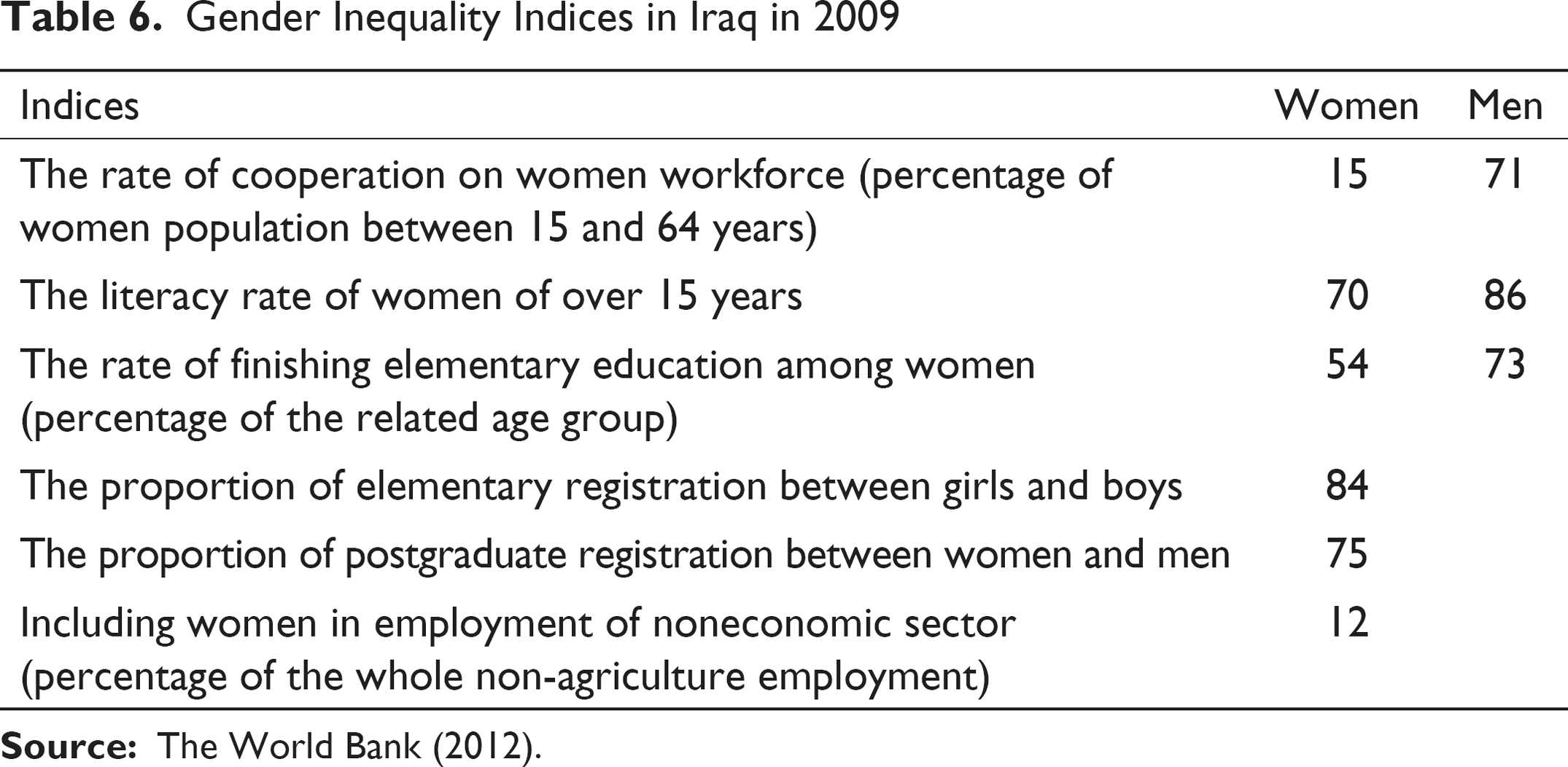
Gender Inequality Indices in Iraq in 2009
Political and Security Indices
Political and military leaders of Iraq are faced with great security challenges and deeply chained factional problems. As a result of religious violence, sectarian tensions, increase local militias, general insecurity, and entrance of the crisis caused by the Syrian civil war into Iraq’s borders, the government’s bases are becoming weaker. The Iraqi government has failed to establish a political national government and unite Shias, Sunnis, Arabs, and Kurds; therefore, the Sunnis have felt more alienated over these years and the Kurds are more willing to pursue a separate path (Cordesman & Khazai, 2014, p. 1). Presence of three different social groups in Iraq with different languages, different ethnicities, and diversity of economic opportunities have resulted in the emergence of a kind of premodern political culture whose loyalty scope is limited to ethnic, local, family, and tribal levels, and interethnic and inter-group trust is at the lowest level. In this framework, the country is like a group of tribes and ethnicities who are competing and fighting in order to achieve power, security, and wealth, and at the same time, they do not recognize the central government as a just and legal authority (Sari’ al-Qalam, 1995, p. 72). This feature causes applying the concept of nation-government to Iraq to be useless, and any ethnic balance in political field of Iraq is transient and vulnerable (Pour Saeed, 2011, p. 214). Therefore, political and security indices of fragile state in Iraq can include legitimacy of the government, public service, human rights and rule of law, existence of a guerrilla army, autonomous armed forces, and external intervention.
The major feature of fragility in the government is its poor legitimacy. Fragile state fails to fulfill people’s basic needs or create balance between social expectations and government’s capacity, and they usually performance poorly in establishing mutual relationships between the government and society and in creating an integrated social contract. The World Bank (2013) ranked Iraq among countries with very low quality of governance. Iraq also ranked 178 in accountability index, 201 in political stability and violence index, 182 in government efficiency index, 205 in the quality of rule of law, 189 in the quality of government regulations and 193 in corruption control (The World Bank, 2013).
The status of human rights is an important indication of success or failure of a government to guarantee the citizens’ security. Until human rights is violated or paid attention in an unequal way, the government fails in its accountability as an ultimate goal (Yazdanfam, 2011, p. 257). Comparing the ranks of fragility and human rights in Iraq indicates that there is a significant relationship between these two. According to the data published by the World Bank and the Fund for Peace in 2010, Iraq ranked 120 among 14 countries with a fragility score of 107.3, based on which Iraq’s rank was 7 in fragility and 12 in human rights. According to the reports of Human Rights Campaign, since 2003 thousands of civilians have been killed in Iraq as a result of the difficult transition of power, the presence of external troops, innumerable suicide attacks by terrorist groups, and ongoing unrest and violence. Over these years, we have witnessed a wide range of human rights violations including forced disappearances, arbitrary arrests, vengeful killings, lack of fair trial and procedure, lack of government accountability, and poor delivery of public services (HRC, 2015). The following table highlights the rate of civilian casualties in Iraq over 2003–2013.
According to the estimations conducted by Iraq Body Count (IBC), about 184,512 people have been killed from 2003 to 2013 in the country as a result of armed attacks and bombings; out of whom, 179,240 were Iraqis (military and civilian), 4804 were international military forces, and 468 were international contractors (www.iraqbodycount.org, 2014). Moreover, regarding universal human rights indices like lack of freedom of expression, ethnic and sectarian conflicts, and lack of support from workers, Iraq ranked 7 among countries with high risk of human rights violation in 2014 (reliefweb.int, 2014).
The presence of guerrilla armies and autonomous armed forces is among important cases that should be taken into account as political and security indices of Iraq. Since 2003, there has been a day-to-day increase in the number of independent militias in the country. Most important political currents in Iraq have militias or have a part of the army under their control. That the army and security forces of Iraq became sectarian led to increased military threats from the neighboring countries and intensified political discrepancies and corruption among political parties, which endangered the Iraqi government’s structural entities (Ahram, 2015, p. 21). Al Qaeda and ISIL or ISIS have been the most important and influential groups in Iraq’s security crises since 2003 which played a significant role in Iraq’s instability and intensifying its fragility.
In fact, instable and violent situation of Iraq, lack of extensive collaborative processes, and lack of protection of political, civil, economic, and social rights in the regional conflicts paved the way for ISIS and other extremist groups to exploit the frustration of regional Sunni tribes and violent repressions (HRC, 2015). As a result of Syria’s internal crisis and preparation of the ground for activities of extremist and fundamentalist Islamic currents, this movement which was a combination of dissatisfied Sunni Arabs, remnants of the former regime especially Ba’athist officers, some Iraqi tribes, extremist groups and Al Qaeda (Pour Saeed, 2011, p. 215) provided a new chance for military and terrorist activities and various conflicts of these currents with Iraqi Army led to the civil war.
Forces led by ISIL captured some areas of Iraq and Syria in 2013. In 2014, it proceeded toward Tikrit and the Euphrates River and captured Mosul, one of the major cities in Iraq. Afterwards, it attempted to kill its hostages and massacre Iraqi opponents who mostly belonged to religious and ethnic minorities (Blanchard et al., 2015, p. 2). In January 2014, the city of Fallujah in Anbar province fell into the hands of Islamic State, which led to the internal displacement of 500,000 civilians. In 2014, ISIS started mass killings in Badoush and Speicher prisons and besieged Amerli town in Diyala province, and in August, it captured parts of Sinjar, Tal Afar, and Nineveh Plains and seriously violated human rights which forced Yazidis, Christians, and other ethnic and religious groups to leave Nineveh Plains. Mosul and Sinjar operations led to displacement of 1.5 million people (Human Development Report, 2015). The abovementioned crises along with the Iraqi government’s failure to fulfill its internal and international promises created the grounds for the intervention from external actors in internal affairs, and Iraq was divided into spheres of influence and completion among regional powers.
Iraq’s Fragile State and Women Security
The effects of civil war and continuous conflicts in Iraq on women’s life cannot be divorced from the crisis that has happened in this country. As a result of Iraq’s fragile state and inefficiency in dealing with the crises and events, we have witnessed an increase in demographic pressures, environmental insecurity, prevalence of mental and physical diseases, displaced and homeless population, ethnic-religious violence, civil war, and rights violation, all of which bear unfavorable consequences for human security especially women security. With the outbreak of war in 2003 in Iraq, women security and situation became remarkably revolutionized (Ahmed, 2010, pp. 157–159; Lattimer, 2010). Following the occupation of the country, Iraqi women were attacked from two aspects. Iraqi judicial system was destroyed which deprived women from legal support, and violation in public extended which led to issues like trafficking, sexual abuse, and murder of adultery (Zangana, 2014, p. 1). In fact, after Saddam’s fall, due to internal conflicts and presence and intervention of foreign forces, the Iraqi community experienced violence, instability, deprivation from basic facilities of life, and insecurity caused by bombings and terrorist attacks. As a result, life conditions became difficult and unfavorable for women and their families. In the following sections, the consequences of fragile state presented based on women security indices.
Sanitation and Health
Sanitation is considered as an essential factor in the general situation of women. Sanitation problems can seriously damage the quality of women’s life and their capacity to protect themselves and families. Women’s sanitation and welfare can be measured through various indices including death due to heart diseases, mortality rate caused by lung cancer, breast cancer, development of diabetes, AIDS, and suicide (Koolaee & Hafazian, 2006, p. 68). These indices in a fragile state like Iraq are not in an appropriate condition. After years of occupation, the Iraqi community witnessed the collapse of health and medical system, lack of healthy drinking water, and an atmosphere of terror, fear, and despair. About 38 per cent of pregnant women in Iraq are suffering from anemia. In 2010, due to lack of funds, the UN cut its financial, food, and health assistance to about 800,000 pregnant women and 960,000 elementary students. Mortality of Iraqi mothers is still the highest rate in the world (Zangana, 2014, p. 1). The consequences of using weapons containing enriched uranium can obviously be seen in prevalence of different types of cancer among Iraq infants and children and birth of children with defects. For example, women in Fallujah prevent pregnancy, and due
to the shocking increase in the number of deformed, retarded, and handicapped infants in Anbar province, no mother wants to undergo such a risk as a result of having children. The main reason of this issue is attributed to the extensive use of phosphoric bombs in November 2004 by American forces during their attack on Fallujah. (Zangana, 2014, p. 26)
Women’s Economic Situation
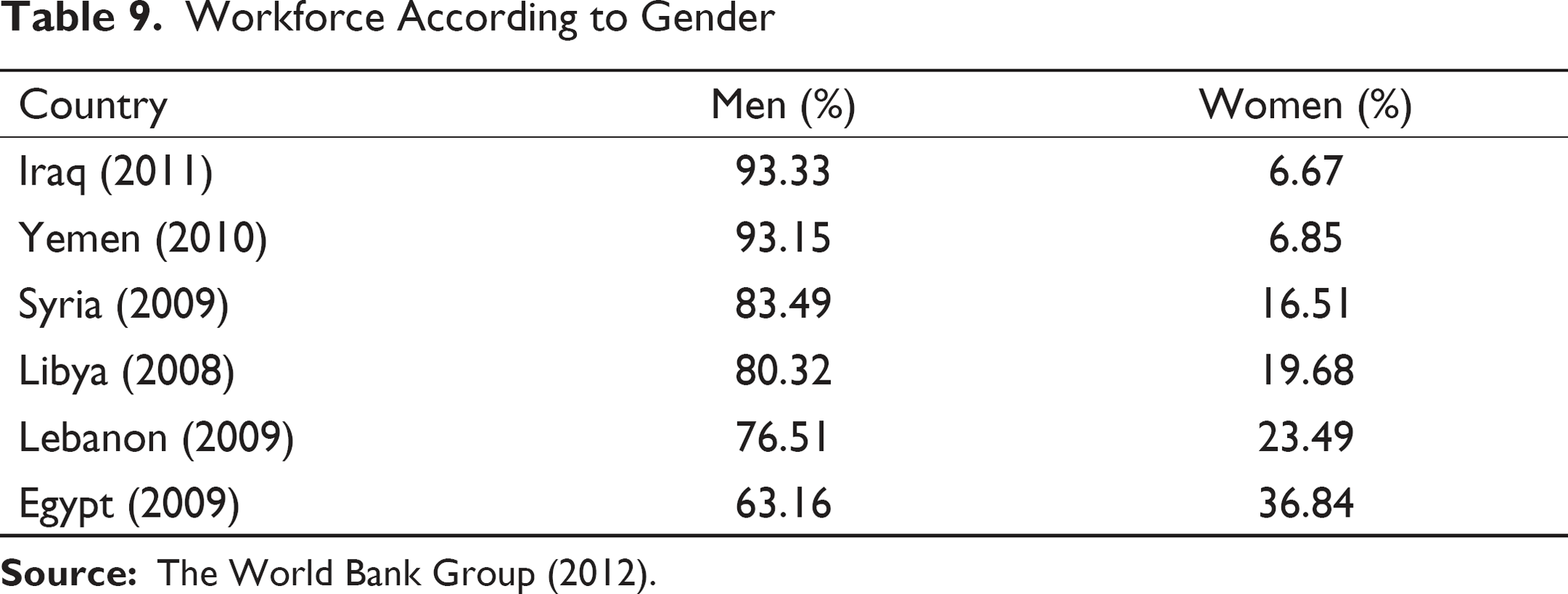
With its increasing population growth, Iraq is faced with a serious challenge and women are the first ones to lose their jobs in these instable economic conditions. Civil war has led to an increase in defense budgets; therefore, the necessary budget for creating new jobs for individuals of community has dropped thus women’s chance to keep their jobs has decreased. At the same time, based on the reports of the World Bank in 2011, conflicts in Iraq have led to an increasing rate of mortality among young men than elder women (The World Bank, 2011, p. 119). This means that a lot of women raise their children alone and most of them have tough financial conditions (Human Rights Watch, 2013, p. 549). According to the statistics of the World Bank in 2014, about 27 percent of Iraqi men are unemployed while this figure is 76 percent for the women who account for only 2 percent of the employed (The World Bank, 2014).
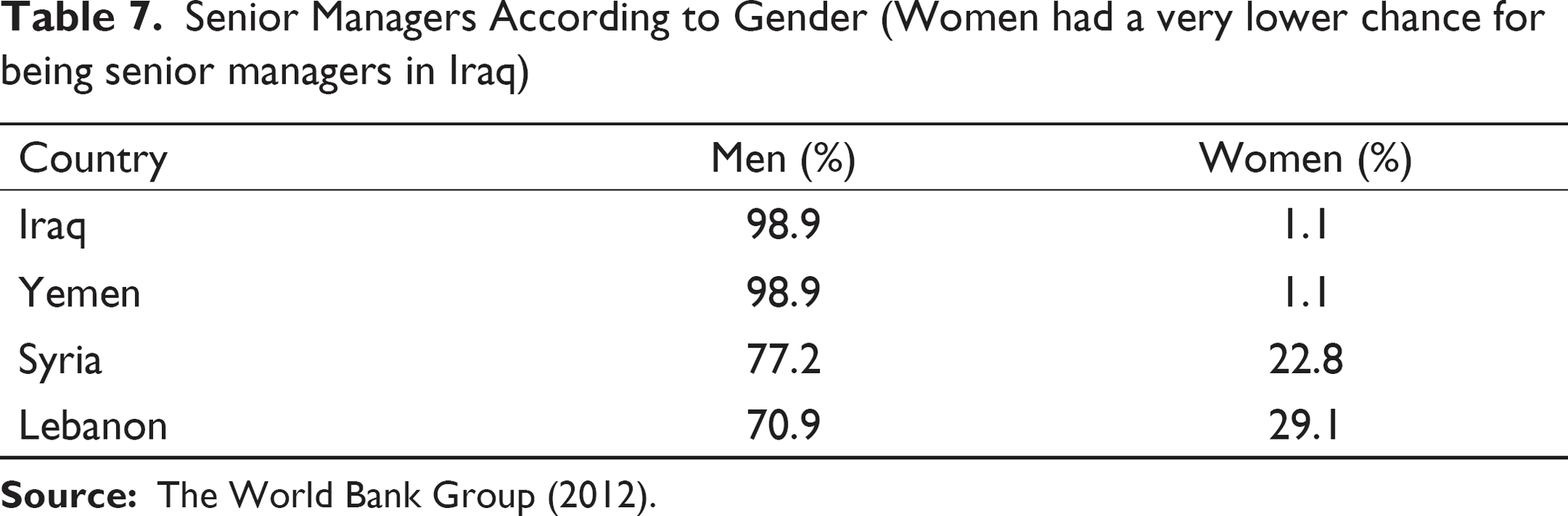
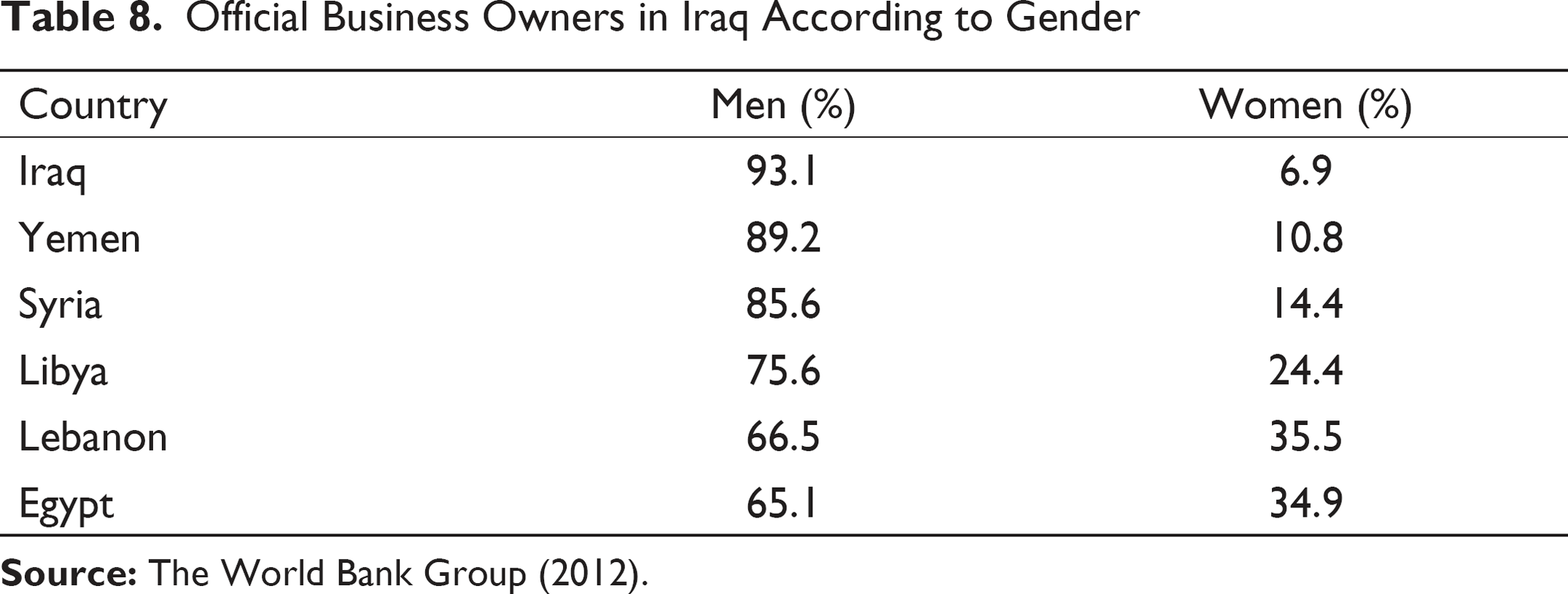
The UNICEF data on education statistics indicate that there are educational gaps in Iraq. During 2008–2012, the rate of elementary education was 92.7 percent for men and 87 percent for women. This gap was not different for postgraduate education, either, with a percentage of 52.5 percent for men and 46.6 percent for women. Moreover, the rate of literacy among men of 15–24 years was more than that of women of the same age (84.1 percent versus 80.5 percent) (UNICEF Country Statistics, 2013). The Tables 7–9 present world development indices in 2009 which obviously show gender gap and inequality between women and men in terms of occupational opportunities.
Senior Managers According to Gender (Women had a very lower chance for being senior managers in Iraq)
Official Business Owners in Iraq According to Gender
Workforce According to Gender
Immigration and Displacement
It can be stated that in Iraq’s fragile state, women have been among the most vulnerable groups in the war. The suffrage of displacement is more painful for them than losing their home; in fact, displacement for them means losing the place of their life, their surrounding environment, and neighbors, lack of education and health services, lack of safe family relationships, and creating a new identity. Lack of any of these conditions or all of them at a high level leads to depression, fear, and post-stress disorders (UNHCR, 2013). Millions of displaced women in Iraq are living in tragic conditions, and many regions, such as Baghdad, Erbil, Karbala, Salahuddin, and Nineveh, witnessed the arrival of thousands of displaced people. Displaced women are living without money for food, without appropriate clothes for rain and winter weather, and in an inappropriate sanitation situation. Displaced women are faced with problems like lack of support against violence and other types of abuse, frustration, hostility and discrimination, inability to find work, lack of access to basic goods needed for everyday life, and lack of access to health care and other services in their own country or host region (Mertus, 2004, p. 181).
Mental and Physical Violence
Physical and mental torture and violence cause numerous physical and mental problems. Physical consequences include sexually transmitted diseases, injuries, inflammatory diseases, unwanted pregnancies, abortion, gynecological issues, partial or permanent disability, suicide, and murder, and mental consequences include stress caused by shock after the accident, depression, anxiety, insecurity, social stigma, deprivation from marriage, divorce, and family and social depilation (The World Bank, 2013, p. 18). The insecure atmosphere of Iraq has affected the life of women as civilians that are faced with violence both directly (physically) and indirectly (killing of their children or husband as their breadwinner) and their right to live and physical security have been threatened.
During and after occupation years, women and girls who have been tortured are faced with problems, such as lack of family acceptance, depilation, reclusion, or killed as a result of honor killing. Some women and girls fear to report sexual violence lest it causes honor killing and social infamy. Such measures along with the state’s inability to establish security in the society have led to restriction to women’s activities in the society, and families prevent girls from going out in public in order to protect them. In most parts of Iraq, women feel so insecure that they go out of home only when a male relative accompanies them. For fear that they might be abused, most of them cannot or do not dare to appear in public places. As a result, their occupation and education can be affected (UNDP, 2012, p. 20). According to the reports of Minority Rights Group International, minority women are mostly scared of wearing their symbolic religious clothes in public because they fear that they might be abused so they hide their religion, and this leads to a decrease in women’s presence in public (Minority Rights Group International [MRG], 2012, pp. 200–201).
A worrying issue during this period is an increase in the number of honor killings. Iraqi Penal Code has considered a light punishment for honor killings or abusing women because of honor issues, such that some men are only fined. In the new system that Iraqi state has implemented to develop the country, family feuds have increasingly been resolved by religious or tribal authorities not by courts. Honor killings are occurring all over Iraq and Iraqi Kurdistan Region, despite the enactment of the law banning honor killings (Human Rights Watch, 2010, p. 4). Self-immolation of women in Iraq is another worrying issue. According to the reports of the UN, “Burning of these women is between 70 to 100 percent which is carried out by the victim herself.” Human rights activists state that these burnings are as a result of self-immolation and women have been forced to do so (Lattimer, 2007). In fact, war conditions and economic and mental pressure on families and the insecure internal atmosphere have intensified honor killings. Not all honor killings happen directly. In some cases, women are placed under such a pressure that they have to kill themselves.
Widows
Losing dears is one of the common experiences of Iraqi women. According to the reports of UNICEF in 2003, about 60 percent of families in Basra were run by women (UNICEF, 2004). Due to the disastrous situation of Iraq, most women have to take the responsibility of their family. They endanger their lives outside home because most men have been shot by American forces, militias, and death squads. On the other hand, there has been a remarkable increase in the number of divorces. Women have stated that their husbands have become more violent over the past decade. Extensive despair, frustration, and shame with their inability to run their families and fulfill their needs have led to anger, and women referred to this point as the reason for the men’s frustration. Here, family planning has been one of the reasons for conflict between couples (al-Ali, 2013, pp. 22–23). War and inefficiency of the government over this period placed women in poverty and crisis. Women who ran households or provided care to others suffered a lot of pain.
Since 2003, a large number of women became widows. More than 1.5 million Iraqi women are now widows among who only 20,000 receive financial aid from the state. Therefore, many of them have had to become street peddlers. On the other hand, American forces announce that the militia are using these women in suicide attacks. (McNutt, 2007)
Losing head of household as a result of men being killed has doubled women’s problems, and thus the number of women who have to become the second or third wives due to economic conditions. Therefore, the rate of temporary marriage has increased among poor Iraqi women. They have to undergo temporary marriage so that they can continue their lives. On the other hand, poverty, unemployment, and dire need of women for social and financial support have led to the prevalence of polygamy. Some religious authorities believe that polygamy and temporary marriage should be developed in order to prevent an increased in the number of widows. Some charity organizations and institutes supporting women give grants to those who want to get married. Such organizations believe that in the present situation remarriage or temporary marriage is a practical solution to improve the widows’ conditions (Zangana, 2014, p. 1). However, it is better to create occupational opportunities and enhance supportive services for Iraqi women instead of facilitating conditions for polygamy.
Political Participation and Equality of Rights
Women’s share of seats in parliament, women’s chance to attend high school, and their share of the market are among indices that are used to determine the level of inequality between women and men in each country. The report of Human Development in 2014 has defined this index by separating genders in order to indicate human development based on gender. In this index, Iraq ranked 137, and the human development proportion of women to men was 0.802. Human development index was 0.556 for women and 0.693 for men, and life expectancy at birth was 73.2 among women and 65.9 among men. The mean education years during 2002–2012 was 4.4 for women and 6.7 for men, and per capita GDP was 4,267 for women and 23,555 for men. During 2010–2015, the birth proportion of boys to girls was 1.07 (UNDP, 2014).
Therefore, Iraq is one of the weak states in which gender gap is so high, and there is inequality between men and women in terms of social, economic, educational, and health issues. Although women have a relative role in Iraqi legislative process, and in Iraqi legislative council there were three women in the transitional government, five in Jafar Ebrahimi government, four woman ministers in Nouri al-Maliki government, and 25 percent of the seats of Iraqi legislative parliament belong to women (Dadandish, 2007, p. 144). One cannot talk about high political participation of women in Iraq because there is a mutual relationship between political participation and socioeconomic situation. Due to the chaotic social and political conditions of Iraq, Iraqi women have been put aside from public arena for a long time, and they are unexperienced in competitive and selection atmospheres or they are not tribally, economically, or politically supported.
Conclusion
Iraq is a fragile state; therefore, after 2003 Iraq has always placed in the end of development ranks. In this country, women are more threatened by different factors such as poverty, weak governmental organizations, lack of essential services, patriarchal social structure, and mental and physical violence, which are the consequences of the state’s fragility. However, considering fragile state as the independent variable and the most important cause of security violation does not mean to reject other variables and possible hypotheses affecting the violation of women security, but what makes fragile state as a more factor than others is its effect on women’s insecurity in this country.
According to the practical examples of fragility indices in Iraq over the last 13 years, it can be stated that is still faced with the crisis of stable security. The findings of the World Bank and World Health Organization indicate ignorance of women’s health and high statistics of mortality caused by pregnancy. Moreover, the results of the studies focusing on food security and education proved the unfavorable situation of women compared to men. Unequal access of women to economic opportunities, political entities, and ownership of land and properties indicates the presence of a fragile state which does not give women enough power to be effective in reform the affairs and protect themselves against violence. Laws related to the minimum age of marriage, occupational equality, job health, security indices, and international women trafficking in Iraq are obviously ignored and not enforced. In addition, women have limited access to rules of procedures in order to identify and solve the cases of their rights violations.
Conflict and civil war in Iraq have intensified Iraqi women’s deprivation at all levels of public and social life. They have been damaged heavily by the constant decline of their socioeconomic rights during the first years of Saddam Hussein’s regime, occupation of Iraq in 2003 and its continuous violent consequences and the late war of the state with ISIS. For women, postwar period does not mean the end of armed conflict, and their security needs were not fulfilled even after war, and they are still suffering from violence even during the reconstruction of Iraq. The security situation in Iraq has deterred women from leaving their homes, and in addition to suicide stacks and bombing, they are exposed sexual violence and threats. The reports of Human Rights Watch include a large number of sexual violence, abduction, and violence against imprisoned, displaced, and homeless women in Iraq. Armed conflicts and insecurity have caused women to face constant fear, displacement risk, physical torture, social and family disintegration, and sexual and mental violence, and deprived them from educational and health services and equal occupational opportunities. It should be noted that access to statistics of such crimes in Iraq is not easily possible because of the victims’ silence, the realities and evidence of such violence will be hidden due to the victims’ fear of reciting them.
Therefore, the challenge of women security and fragile states is one of the least goals of development. As vulnerable individuals, women need to be paid more international attention. As a result, enhancing the equality and security of women is a necessity although it is not the only problem of Iraq. In the end of the present study and following the investigation into the relationship between gender and fragility, it is necessary to present the following points: (i) gender and fragility need to be included in issues related to gender and development and also in international agreements; (ii) indices of gender and budget allocation and frameworks of gender and governance, gender and peace-making, and gender and conflict can lead to approaches in the issues of gender and fragility; (iii) since the experiences of men and women in fragile states or countries are not the same due to the different effect of the conflicts on them, gender needs to be taken into account in postwar reconstructions, state-building, and peace process; (iv) the success of national reforms depends deeply on the determination of fragile states in challenging destructive traditions or discriminatory cultural practices, which requires a constant and organized global approach to be adopted by all national states, multilateral institutions, and other international actors.
Footnotes
1.
Legatum Institute has been ranking 142 world countries since 2009 in order to evaluate and compare the level of prosperity of countries based on various factors including wealth, economic growth, and quality of life. This institute investigates the countries based on eight main indices including economy, entrepreneurship and opportunity, government, education, health, security and comfort, individual freedom, and social capital.