






Abstract
Many of the colleges and universities in the United States have developed some form of study abroad programs to enable their students to receive a learning experience outside the continental United States. The desire to give my preservice teachers a study abroad experience unlike any other led me to explore many of the contacts I have made in Kazakhstan. The destination of the Republic of Kazakhstan has seen limited exploration by American students because of its newly independent status (it became independent from the Soviet Union in 1991), the language barrier (Kazakh is the national language with most of the population still speaking Russian as a daily language) and the remoteness of the country (located in the middle of Central Asia). This narrative describes the experiences of four pre-service interns form Georges.
Many of the colleges and universities in the United States have developed some form of study abroad programs to enable their students to receive a learning experience outside the continental United States. These programs are designed to provide opportunities for students to develop insights into and understandings of the relationships between humans and the physical landscapes in regions that are often quite different from home (Stanitski and Fuellhart 2003). As Stanitski and Fuellhart point out “traveling to experience diverse cultures&seeing it with one’s own eyes&enlighten students in a way not possible in a traditional classroom setting” (Stanitski and Fuellhart 2003, 203).
As study abroad programs continue to grow in the United States, the most visited region continues to be Western Europe with Latin America/Caribbean being a distant second. Asia ranks third as a destination for American students with Japan and China being the most visited of the Asian countries (Zachrisson 2004).
Zachrisson (2004) asserts that there are several reasons for an increase of students going to the Asian countries with one of the most important being that English is being spoken in a wider range of countries. Programs administered by groups like the American Council of Teachers of Russian (ACTR) and the American Council for Collaboration in Education and Language (ACCELS) have opened doors for students to explore regions of Eastern Europe and Eurasia that had seen limited visitation before the break up of the former Soviet Union.
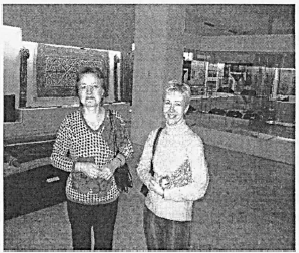
Zachrisson concludes that as student perceptions of these regions change regarding their remoteness and safety, the trend will bring more students into the region to experience the cultural richness these regions have to offer. But, he adds that the curricular offerings in these areas are dependent on the human and financial resources that are made available to support study abroad activities in these countries (Eurasia). The destination of the Republic of Kazakhstan has seen limited exploration by American students because of its newly independent status (it became independent from the Soviet Union in 1991), the language barrier (Kazakh is the national language with most of the population still speaking Russian as a daily language) and the remoteness of the country (located in the middle of Central Asia). The desire to give my preservice teachers a study abroad experience unlike any other led me to explore many of the contacts I have made in Kazakhstan. Through teachers and administrators I have met in Astana, Kazakhstan and work I have done with the English Teachers Organization (ETO) of Astana, I was able to set up a study abroad teaching program within the city of Astana. Working with Svetlana Fomicheva and Elena Logvinenko of the ETO and Tatyana Storchikova a master teacher of English at Lyceum #9 in Astana we were able to get permission from the Astana Department of Education and four of the public schools in the city to place my American students in then-schools and to live with one of the teachers from that school for a four-week intensive practicum experience.
Svetlana Formicheva (If) Elena Logvinenko (rt)
Each American Teacher Intern (ATI) that wanted to take part in this program had to submit an application explaining how they felt such a program would help their teaching experience and what they could provide the schools they would be working with in Astana. Each member of the student team was required to submit three lesson plans they would teach while in Astana. The required lesson plans included one on then-family and cultural background, the second would address some issue about the government of the United States or democracy, and the final lesson was to address geographic content. These lesson plans had to be approved by the lead professor prior to the departure of the team for Kazakhstan. The lessons also had to be approved by the host teacher at each Astana School that was participating in the practicum program. The ability to communicate via the Internet allowed the lead professor and the team members to be in contact with the host teachers at the Astana Schools. We sent pictures and biographies of each of the team members to the ETO where the Astana school administration was responsible for placing the practicum students with schools that wanted to participate. Having a picture helped the local school chose which team member they wanted to host.
The team was made up of three senior level students from Armstrong Atlantic State University and one senior level student from Savannah State University. The team included three female and one male student ranging in age from 24 to 40 years old. Three of the team members had previous overseas travel experience, but not as part of a study abroad program. One of the female students had participated in a semester study abroad program in Europe two years before this trip. The trip was easier because of the age and prior experience of the team members. There was still concern by the team members because of the destination and their lack of knowledge about the region.
Because of previous trips to Kazakhstan, I was able to address the travel fears and to talk about what the team members would encounter upon their arrival in Astana, Kazakhstan. Since we were going to Kazakhstan in winter, several pre-trip meetings addressed what should be taken on the trip regarding clothing and health care items. Pretrip meetings also provided the team members with information regarding Kazakh history, culture, language and what the team members would find in the Astana schools that would be very different from any practicum experiences they had in the Savannah, Georgia, area.
A key to this program was the cultural immersion that each team member was going to receive while living with a teacher of English from the school the team members would be working in during their stay in Kazakhstan. Kazakh public school teachers are highly respected in their communities, but are not on the upper end of the economic scale of their communities. It was a great sacrifice for the host teacher to take in one of the practicum students, as their average home is a three to four room flat (apartment) that is about 600-800 square feet in size. The average family size of the host teachers was four family members plus the ATI. This cultural immersion gave the US student the chance to experience the real culture of the people. The ATI’s helped around the home, met extended family members, went shopping with their hosts for food items and got to experience the Kazakh winter like a native. This placement came with some costs and many benefits; the host family encountered extra costs involved in housing the student, with the positive side of the home stay being that the Kazakhstani teacher had their own English tutor in their home for four weeks. Several of the host teachers had never interacted with a native speaker of English before this program and used this opportunity to work on their English speaking skills.
There was very little time given to transition into the Kazakh school classrooms because the ATI’s would only be in the Kazakh schools for a little under four weeks. The host schoolteachers and administrators made the ATI’s feel at home by introducing them to all the school staff and teachers. The ATI’s were included in staff meetings and participated in the various activities of the school. The ATI’s ate their lunch meal with other teachers in the teacher section of each school cafeteria. The majority of the school’s staff members did not speak English, so interactions between the ATI’s and the majority of the staff required one of the teachers of English to act as a translator or one of the upper level students learning English might also get practice in hearing and speaking English by acting as the translator. It did not take long for strong student-teacher relationships to develop between the Kazakh students and their new ATI’s. They were often seen around the city shopping, going to movies, or just being in each other’s company so that the Kazakh students could practice their English skills outside of the classroom setting.
ATI-Heather Cecil, Lyceum # 9
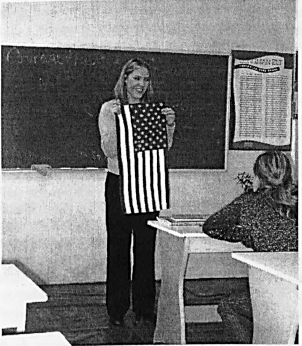
The ATI’s were placed in three different kinds of Kazakh schools. Two were placed in Lyceums, which are like an American magnet school. Here the students must meet certain scores in order to enter the school and there is a tuition that must be paid to attend.
Each school had a specialty, one was economics (a high stress on business) and the other stressed the humanities. Many of the students from this school were hoping to go into the law or Foreign Service universities. One of the ATI’s was placed in a Kazakh school, where the main language of instruction is the national Kazakh language. The last was placed in a traditional school with Russian being the main language of instruction. One of the specialties of this school was foreign language, five different languages were taught in that school. Each of the schools housed students from grades 1-11, the standard school makeup in Kazakhstan. Each ATI worked with a variety of grade levels during their stay. English is taught from the third grade on. We found that there was a large difference in the English speaking abilities between the four schools being visited.
Each of the host schools was very pleased with their ATI and the methods that the ATI used in teaching the Kazakh students. They were very pleased with the interaction that the ATI’s had with the students in the classrooms. Before each ATI taught a lesson, they had to review the lesson with their host teacher.
ATI Susan Croon, School #5
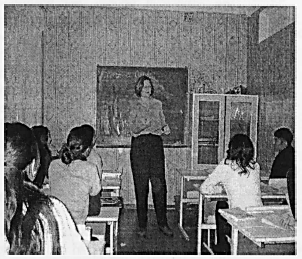
I visited each ATI’s school and classroom at least four times during the course of the practicum. At the end of each lesson executed by the ATI, their host teacher and I would sit over a cup of tea and review the lesson and make suggestions that might be needed for the next lesson. During this ATI- practicum experience each ATI worked over 100 hours in the classroom and in preparation for lessons.
At each school an administrator and the host teacher conducted a final evaluation. Each school’s administration was very pleased with this first attempt at placing American Teacher Interns into their schools. They believed it strengthened the English speaking ability of not only their students, but the English teaching faculty as well. Many of the teachers of English had never spoken with a native speaker before, so their English speaking and listening skills were enhanced. Two of the school principals wanted the ATI to stay and continue to work in their schools. They even offered to provide free housing.
Although the teaching element was a major part of this study abroad practicum each of the ATI’s took away valuable cultural knowledge about the nation of Kazakhstan and its people. Each of the schools involved in the program developed cultural presentations for the ATI’s that involved music, singing, dance, foods and family customs of both the Kazakh and Russian people.
Personal comments about the ATI’s and the program in general: “We appreciate Susan’s great workability, her collegiality, respect for our traditions, her love to the USA and the American people, her willingness and enthusiasm to participate in our school life&Susan has won the respect of the school administration, the teachers, the students and their parents for her excellent knowledge, creative way to prepare her classes, talent, devotion to the profession and her genuine interest in our needs.” Thabarov Nurzhan, Teacher of English School Number Five “Roslynn used several different forms of work in her lessons: pair work, group work, discussion, asking-answering questions. She motivated students with the real-life references and examples. It was an important event for our students and for the teachers of our school to have a foreign American student here& We understand that communication and the use of language are very important in the development of thinking and understanding. That is why the overall impact of this program on our school and students is very good. It’s a great opportunity to communicate with the native speakers and develop the habits and skills of oral speech.” Bakyt Kanapina, Teacher of English/Assistant Principal Kazakh School Number Four “Heather has held lessons on the government of the USA, geography, flags and culture of the USA&I would give Heather high marks for her collegiality working with the teachers and administration. I want to stress her readiness and willingness to discuss the problems, which appear in the process of teaching&Having Heather in my home, I could observe her creative work at every lesson plan and as a result her brilliant presentation at every stage of the lesson. She is especially successful at the wanning up stage, that helps to involve students from the first minutes of the lesson&the impact she had on my students was great. She was able to bring American culture to the students, making it real and tangible for them.” Evgeniva Molkha, Teacher of English/Host Teacher Lyceum Stolichni “This project is very important for students and teachers of Kazakhstan and the USA. It helps the teachers to improve their language skills and methods of teaching. It helps the students to learn many interesting facts about America, which they can’t find in the books. In turn they had a chance to present our country (Kazakhstan), its culture and traditions. I am sure this collaboration is very important and useful for Kazakhstan and the USA.” Yelena Logvinenko, Teacher and President of the English Teachers Organization of Astana, KZ “I was assigned to wonderful teachers, a very supportive staff, and excellent students. The first day I walked into a classroom with the director of education and the principal in the classroom. They listened attentively to my lesson and asked several questions. They were eager to find out what my students were like in America, what do they study, how many different languages do they speak, what kind of cloths they wear, what kind of food they eat, and what kind of music they listen to&the students were so eager to learn American customs and relate them to their own culture/customs to see how similar they actually were. Believe it or not, I felt very comfortable teaching in Kazakhstan classrooms, more so than I do in some of the American classrooms that I’ve been in. The students were very respectful& I definitely recommend a home stay whenever possible in order to really get a feel of the customs, culture and people&My teachers and the students made me feel at home all the time. I had to keep reminding myself that I was the foreigner.” Susan Croon, American Teacher Intern School Number Five “Every day each teacher, administrator and student went to great lengths to insure that I was welcomed and appreciated as a teacher and guest. My most enjoyable moments were very probably in the classroom, where students are respectful and interested in what you have to say& I heartily recommend for any one who has any desire to teach Social Studies to take advantage of this or some similar opportunities to immerse yourself in a foreign culture as a person not a TOURIST.” Quinton Moore, American Teacher Intern Lyceum Number Nine
The ATI’s not only gained an outstanding teaching experience but a cultural experience that they will carry with them throughout the remainder of their teaching careers. They continue to be in communication with not only the teachers they worked with, but many of the students in their classes having continued to use the email to contact them as well. Both the ATI’s and the Kazakh teachers and students the ATI’s worked with developed an awareness of the others culture and educational processes. Agreeing with Stanitski and Fuellhart “short-term (less than 6 weeks) international field courses, led by home institution faculty, are one possible way of directly internationalizing curriculum within departments, colleges, and universities that may serve to provide greater access to foreign cultures and landscapes for students” (Stanitski and Fuellhart 2003, 202). As many of the Central Asian Republics are wanting to increase their contact with western nations (i.e. the United States) and their desire to improve their English language skills, this is an open door for colleges of education to provide their education majors with a preservice teaching experience in Kazakh schools and to gain a valuable cultural experience that these young American teachers can take into their own classrooms.
The American Councils for International Education has been a leader in connecting American teachers and teachers from the many nations of Central Asia. Their programs have placed Central Asian students in American public schools and universities and have placed American public school and university teachers in short term study aboard trips. This organization has an excellent reputation throughout Central Asia and would be a great contact group if you were interested in a Central Asian study abroad program. It is hoped that this will be the first of many more shortterm study abroad teaching trips to the Central Asian Republic of Kazakhstan for my students and myself.