







Abstract
Emerging adults–young people between the ages of 18 and 25–are one of the most poorly served age groups in the criminal justice system. Although emerging adults constitute a substantial portion of the people who are arrested, charged, or incarcerated, they are also at an age of exceptional promise and malleability, “an age of opportunity” when the chance to finish school, get a job, develop healthy relationships, or access healthcare can transform their path to long-term economic self-sufficiency and emotional well-being. Unfortunately, many adult criminal justice systems squander emerging adults’ unique potential, leading to worse outcomes for young people and more potential crime for their communities. This article reviews current knowledge on the key developmental needs of emerging adults, how the adult criminal justice system can undermine healthy emerging adult development, and the social and biological factors that promote psychosocial maturity and desistance from crime. The review also examines what works to support emerging adults in successfully exiting the criminal justice system for good. Evidence-based programs and systemic approaches can ensure young people have the tools they need to not only avoid system involvement but to thrive as healthy and contributing members of society.
Keywords
Social media
Using developmental science to respond better to 18 to 25 year olds in the justice system will reduce crime and help young people thrive. Policymakers can better leverage the age of opportunity by focusing on the core developmental needs of this age group.
Key Points
Emerging adults – aged 18 to 25 – are one of the most poorly served age groups in the criminal justice system. Many adult systems squander this age group's unique potential for development, worsening outcomes for young people and crime rate for communities. Emerging adults constitute a substantial portion of the people who are arrested, charged, or incarcerated. They are also at an age of exceptional promise and malleability, when the chance to finish school, get a job, develop healthy relationships, or access healthcare can transform their path to long-term economic self-sufficiency and emotional well-being. Developmental science identifies the social and biological factors that promote psychosocial maturity and desistance from crime. Young people need to experience healthy relationships and opportunities to develop competencies in communities, not jails. A growing body of evidence shows what works to support emerging adults to leave the criminal justice system for good, including evidence-based programs and systemic approaches that ensure young people have the tools they need to thrive.
Emerging adults –young people between the ages of 18 and 25– are one of the most poorly served age groups in the criminal justice system. While emerging adults constitute a substantial portion of the people who are arrested, charged, or incarcerated each year (Bersani & Doherty, 2018; Perker & Chester, 2021; Steffensmeier et al., 2025), they are also at an age of exceptional promise and malleability (Institute of Medicine & National Research Council (hereinafter “Institute of Medicine”), 2015), an “age of opportunity,” (National Academies of Sciences, Engineering, and Medicine (hereinafter “NASEM”), 2019; Steinberg, 2014) when the chance to finish school, get a job, develop healthy relationships, or access healthcare can transform their path to long-term economic self-sufficiency and emotional well-being (Scales et al., 2016). Unfortunately, many adult criminal justice systems squander this unique potential, producing worse outcomes for young people, and more potential crime for communities.
This article surveys what is known about the key developmental needs of emerging adults, and the particular concerns of emerging adults in the adult criminal justice system, including substance abuse and early childhood adversity. Developmental science identifies the social and biological factors that promote psychosocial maturity (Steinberg & Cauffman, 1996) and desistance from crime (Bersani & Doherty, 2018, Laub & Sampson, 2020). Applied correctly, developmental science can also inform the effective programs and policies emerging adults need to successfully exit the criminal justice system for good. Developmentally informed interventions include evidence-based programs and systemic approaches that ensure young people have the tools they need to not only become law-abiding and contributing members of society, but to thrive. Emerging adults have enormous potential for learning, growth, compassion, and leadership, potential that criminal justice systems can either leverage through developmentally responsive approaches or suppress through outdated and harmful practices.
Losing Out on the Age of Opportunity
Healthy, productive, and skilled young adults are critical for the nation's workforce, global competitiveness, public safety, and national security. Providing more of the educational, economic, social, and health supports needed by all young adults—particularly those whose background and characteristics put them at risk of experiencing the greatest struggles— will ensure equal opportunity, erase disparities, and enable more young adults to successfully embrace adult roles as healthy workers, parents, and citizens. (Institute of Medicine, 2015).
The term “emerging” adulthood was first coined by psychologist Jeffrey Jensen Arnett (2000) to describe the transition from adolescence into adulthood, a time of change and instability when young people are learning how to be adults by attending college, securing their first jobs, starting more serious relationships, and developing and reevaluating their sense of who they are (Arnett, 2000; Tanner & Arnett, 2016). Sociologically, this transition to adulthood happens later today than in prior generations, with young people today less likely to land a first job that renders them economically self-sufficient (Institute of Medicine, 2015), and more likely to live with their parents or financially depend on them (Pew Research Center, 2024).
A key task of emerging adulthood is “recentering,” exploring and testing new ways of being an adult in the world (Tanner & Arnett, 2016). This process helps develop the key competencies needed to be a successful adult, including physical and psychological health, life skills, educational and employment attainment, civic engagement, and healthy relationships (Scales et al., 2016). Relationships, in particular, help young people develop their sense of identity, agency, and their sense of belonging in community – factors critical for promoting their engagement in school and work and providing emotional and material support as they learn to navigate adulthood successfully (Institute of Medicine, 2015; Scales et al., 2016). In the U.S., family relationships are particularly critical for young people, as the U.S. has less robust programs and financial supports for young people who are in the early stages of joining the workforce (Institute of Medicine, 2015; Johnson et al., 2011). Experiences with education and work tend to cascade: a part-time job or post-secondary educational attainment lead to longer term and better compensated employment, which in turn provides a financial foundation that supports living independently and cultivating more mature relationships, including marriage (Institute of Medicine, 2015).
Outside of the adult criminal justice system, most legal systems have gradually expanded to reflect the need for additional support during this developmental period. Young people whose families have private health insurance, for example, can stay enrolled on their parents’ insurance until age 26 (Institute of Medicine, 2015), while best practices in pediatric healthcare support emerging adult patients up to age 24–26 as they transition to adult healthcare systems (American Psychological Association, APA Adolescent and Young Adult Transition Taskforce, 2020; White & Cooley, 2018). Child welfare systems increasingly extend services up to age 21 (Annie E. Casey Foundation (hereinafter “AECF”), 2017), including transitional housing and other supports (Dworsky & Dasgupta, 2017). Higher education provides safe and structured places of learning for young people from 18 to their mid-20s (Arnett, 2000; Hill & Redding, 2021). Similarly, workforce development programming often provides specialized programs and supports for this age group (Abdi, 2025). These policies reflect a recognition by policymakers of emerging adulthood as a unique time of opportunity and learning, when earlier developmental challenges can potentially be remediated (NASEM, 2019).
Despite recognition of the unique status of emerging adults in the justice system over twenty years ago (Piquero et al., 2002), most adult criminal justice systems fail to take advantage of the unique potential of this age group. Adult criminal justice systems often treat 19-year-olds the same way as 50-year-olds (Center for Law, Brain & Behavior (“CLBB”), 2022), disrupting or derailing necessary developmental processes. Incarceration, for example, makes it harder for emerging adults to find work or housing, or to access education (Harding & Harris, 2020; Western et al., 2001). It can undermine the quality of relationships emerging adults have with their partners, parents, or children (Apel et al., 2010; Lopoo & Western, 2005; Massoglia et al., 2011). Incarceration can also impede the process of psychosocial maturation (Cauffman et al., 2023; Dmitrieva et al., 2012), which is in turn associated with desistance from crime during young adulthood (Monahan et al., 2009; Rocque et al., 2019). In contrast to environments that promote competence, confidence, connection, character, and caring– the “5 Cs of youth development” (Lerner et al., 2005) – jails and prisons often focus solely on compliance and obedience, while offering inadequate or non-existent educational, mental health, or vocational programming, and exposing young people to violence that can result in long-term trauma (Perker & Chester, 2023). For this reason, researchers increasingly recognize that the criminal justice system itself can act as a snare that interrupts the natural desistance process that comes with age (Bersani et al., 2022, Motz et al., 2020). Instead, researchers studying emerging adults and youth crime emphasize that exposure to developmentally appropriate environments promotes psychosocial maturity into young adulthood (Cauffman et al., 2023).
While potentially less damaging than incarceration, criminal records also impose long-term harm on emerging adults (Cauffman et al., 2023). Both more serious and minor criminal records are associated with barriers to employment (Apel & Sweeten, 2010; Pager et al., 2009; Uggen et al., 2014) and housing (Ispa-Landa & Loeffler, 2016). Emerging adults with a record are more likely to lose out on higher education opportunities (Stewart & Uggen, 2020), or to face stigma and rejection when they seek jobs, housing, or education (Ispa-Landa & Loeffler, 2016). For youth exiting prison, living with a parent or older relative increases the odds of achieving residential stability or engaging in school (Harding & Harris, 2020). However, a record can potentially prevent emerging adults from living with family if their record excludes them from housing (Carey, 2026).
While research explicitly focused on emerging adults in the criminal justice system is rare (Cauffman et al., 2023: Perker & Chester, 2023; Plummer & Davis, 2024), a recent longitudinal study with a specific focus on the experiences of emerging adults entering the justice system at arraignment provides important insights into the needs of this population (Plummer & Davis, 2024). Consistent with prior work, the study found that emerging adults were overrepresented in the criminal justice population. Over half had not yet completed high school. Most relied on their families for support at some point during the year the study followed them, including for housing; less than 1 in 10 emerging adults lived in their own residence and about 11% were living in shelters or unhoused when they first entered the study. Emerging adults also reported higher lack of health insurance than adults over 25. While two-thirds of emerging adults under 21 were on Medicaid or their family's health plan, once young people turned 21, many appeared to lose access to care, with roughly 40% of emerging adults 21 and over uninsured, a rate many times higher than for the state overall.
Lack of access to healthcare was especially troubling given that three-quarters of emerging adults reported health issues or disabilities, including asthma, depression, and anxiety (Plummer & Davis, 2024). Emerging adults also reported much higher rates of Adverse Childhood Experiences (ACEs) than the national population (Columbia University Justice Lab, 2023), including being removed from the home as a child (44%), witnessing someone killed (25%), living with someone who died (31%), and living with someone who had mental health issues (19%). Nearly half (48%) of emerging adults experienced the incarceration of a parent, and 29% and 13% of young women and men, respectively, reported childhood sexual abuse. Among young women in the sample, 42% reported sexual assault. Fewer than half reported receiving support from anyone (friends, family or professionals) related to these potentially traumatic experiences (Plummer & Davis, 2024).
In addition to, and sometimes because of, prior experiences with trauma (Davis et al., 2023), substance use or abuse is a recurrent theme with young people in the criminal justice system, an age when there are rapid changes in substance use among young people regardless of system involvement (Staff et al., 2010). Drug offenses, most often possession, are the most common crime for which emerging adults are arrested (Perker & Chester, 2021), and individuals with substance use disorders (SUDs) are more likely to recidivate after incarceration (Perker & Chester, 2021). Unfortunately, emerging adults with SUDs do not receive the age-appropriate and non-coercive treatment that is most effective while in the criminal justice system (Perker & Chester, 2021). Adult criminal justice facilities or programs almost never offer age-appropriate healthcare services that are sometimes found in the juvenile justice system (Institute of Medicine, 2015). In addition, the disruptions to maturing relationships and prosocial engagement noted above are particularly detrimental for emerging adults who use substances, as transitions into more mature family relationships, co-residence with parents, and entry into employment are all important contributors to desistance from substance use (Staff et al., 2010).
Emerging adults today are also disproportionately affected by the social, economic, and psychological disruptions associated with the COVID-19 pandemic. Studies during and after the pandemic found that young adults reported some of the highest levels of stress, anxiety, depression, and social disruption of any age group, with higher levels based on their exposure to unemployment, educational disruption, food and housing insecurity, and loss of access to healthcare and social supports (Carey et al., 2024; Hoyt et al., 2021). These disruptions compounded challenges in emerging adults’ normative processes related to identity development, educational attainment, employment, and mental health in ways that are still evolving.
The inadequacy of our current criminal justice response to emerging adults is evident from the dismal outcomes for many emerging adults in the system. Emerging adults often have the highest recidivism rates of any age group (Durose et al., 2014), and are more likely to be victims of crimes, especially violent crimes (Bersani et al., 2019). While today's emerging adults are committing fewer crimes and entering the criminal justice system at far lower rates than emerging adults in the 1980s or 1990s (Steffensmeier et al., 2025; Tuttle, 2026), criminal behavior still tends to peak for many offenses during this age range (Cauffman et al. 2023; Tuttle, 2026), reflecting both increased levels of risk-taking and impulsiveness related to brain development (Chein et al., 2011; Gardner & Steinberg, 2005), as well as an increase in shifting or tenuous social connections during this age period (Sampson & Laub, 2005) and a lack of access to structural or institutional supports (Minton et al., 2026; Waters et al., 2011).
The Critical Link Between Biological and Cognitive Development and Developmentally Promotive Environments
Cognitively, emerging adults are often more similar to younger adolescents than to older adults in terms of their response to emotionally charged settings (Shulman et al., 2016); their susceptibility to peer influence (Chein et al., 2011, Telzer, 2016); and their tendency to engage in risky behavior or focus more on immediate rewards (Casey et al., 2016; CLBB, 2022). While younger emerging adults reason comparably to older adults when they have the time to consider their decisions, their decision making tends to be compromised when those decisions are emotionally charged, they are under threat, or their peers are present (CLBB, 2022). These characteristics are related to both the development of their prefrontal cortex, which is critical for self-control, as well as experiential learning (CLBB, 2022).
While research often highlights the downsides associated with emerging adult impulsivity and risk-taking (Powers & Casey, 2015), these tendencies are in fact critical to their development, as experiencing the world helps develop the more advanced reasoning and experience, or wisdom, emerging adults need to manage the life challenges that come with adulthood (Romer et al., 2017). Emerging adult brains are primed to explore and to draw lessons about future risk taking from their experiences, with current risk-taking helping to promote better decision-making (Cremone-Caira & St. Hilaire, 2025; Romer et al., 2017). Emerging adults’ eagerness to socialize can also be a positive, as engagement in prosocial activities activates prosocial reward systems in the brain, which in turn lessen engagement in more negative risk-taking (Telzer, 2016).
Severing emerging adults from meaningful education or work experiences and family supports, which is common in criminal justice systems, risks undermining precisely the kind of prosocial experiences that reduce risky behavior, and limits the kind of healthy learning that emerging adults should experience. While all emerging adults mature and develop greater self-control and experiential wisdom as they age, the specific environments and societal supports they receive are critical to helping them transition to successful adulthood (Massoglia & Uggen, 2010). Importantly, no emerging adult is doomed by their prior experiences, or by negative experiences during their childhood or transition out of adolescence (NASEM, 2019). In fact, emerging adulthood can serve as a critical time for addressing early life adversity or earlier trauma (Institute of Medicine, 2015), especially when young people have the right resources to access support and treatment.
Unequal Experiences and Opportunities for Emerging Adults
While emerging adulthood is a period of exploration, experimentation, and transition into adult roles for everyone, access to the kinds of environments that best support these processes is fundamentally unequal (NASEM, 2019). Institutions such as colleges and universities function as protected developmental spaces where young people are given time and support to mature, explore their identities, and develop social and professional competencies (Hill & Redding, 2021). Yet many emerging adults, particularly young people from low-income communities and communities disproportionately impacted by criminal justice systems, are denied access to these same opportunities. Instead of supported experimentation, many experience heightened surveillance, economic precarity, housing instability, under-resourced schools, exposure to violence, and early contact with punitive systems. Indeed, the transition to adulthood increasingly functions as a key site through which inequality is reproduced and entrenched over time (Waters et al., 2011).
As noted above, modern emerging adults increasingly require extended support from families to successfully transition into adulthood, but the kinds of support young people receive often depends on the resources available to their families and communities. Emerging adults from more privileged backgrounds are regularly afforded extended periods of support through higher education, family financial support, healthcare access, and extensive professional networks that impart forms of social capital, while justice-involved emerging adults are instead subjected to punitive systems during the same developmental window (Hill & Redding, 2021). Criminal justice involvement compounds these disadvantages by destabilizing family relationships, interrupting educational programs, weakening labor market attachment, depressing earnings, and creating barriers to housing (Harding & Harris, 2020; Pager et al., 2009; Stewart & Uggen, 2020). Developmentally responsive approaches to emerging adult justice therefore require not just individualized interventions or specialized programming, but attention to the broader structural inequalities that shape who is afforded the opportunity to experience emerging adulthood as a period of growth and support, instead of surveillance and punishment.
Policy Implications and Recent Innovations
To effectively serve emerging adults in the justice system, system responses must ensure they do not disrupt or undermine healthy development, or the natural desistance process by which most emerging adults age out of crime, while also addressing the inequalities in opportunity and support noted above. But, in contrast to juvenile justice systems that shifted to be more developmentally appropriate over the past two decades, with positive results for crime and reoffending rates (Park et al., 2022), only a handful of courts and states have begun to truly leverage recent discoveries and learning about the emerging adult age group to better respond to their developmental needs (Cauffman et al., 2023; Toraif & Chester, 2023).
Guided by developmental science, a recent convening of experts in the fields of criminal justice, adolescence, and youth development, supported by the Annie E. Casey Foundation, articulated fundamental principles that should guide criminal justice systems’ approach to emerging adults (Emerging Adult Justice Project (“EAJP”), 2022). 1 The Emerging Adult Justice Framework (“Framework”) stresses that systems should draw on emerging adults’ strengths, and promote experiences of safety, belonging, identity and values, competency, and contribution (Figure 1), while also ensuring that program practices or systemic policies that undermine these experiences be eliminated.
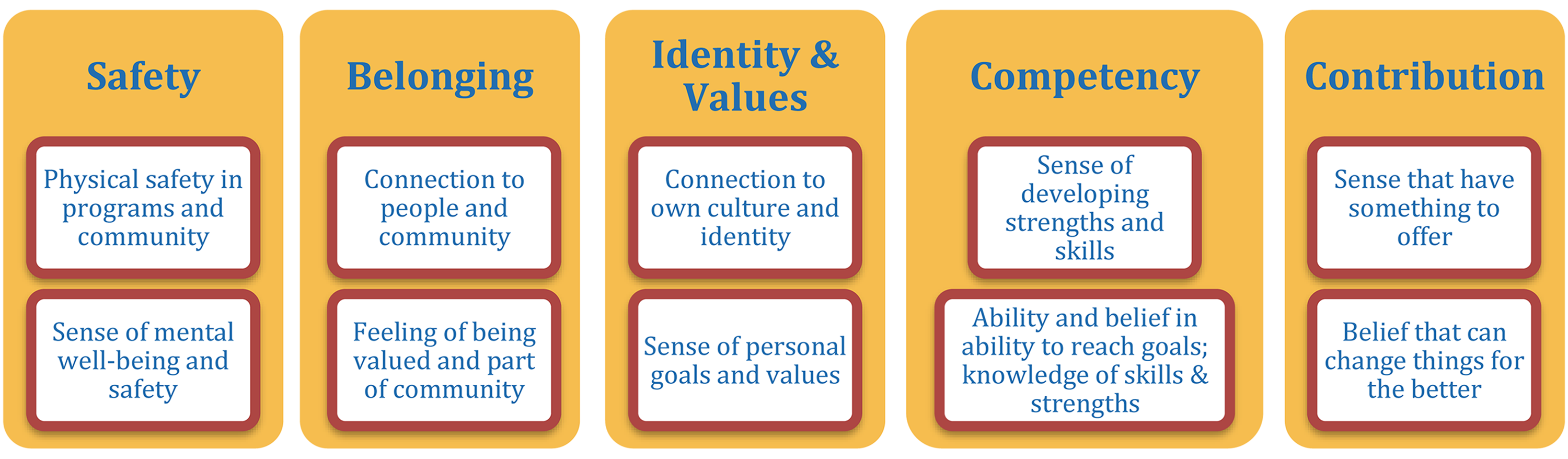
Aspects of individual well-being emerging adults need to thrive.
The Framework also calls on systems to ensure that emerging adults have access to safe and stable housing, healthcare, employment, education, and supportive relationships (Figure 2). Ensuring that emerging adults have access to these experiences requires building bridges between educational, workforce, healthcare and criminal justice systems, and ensuring there is funding to allow emerging adults in the criminal justice system to be served in their communities whenever possible, to better promote the kind of normative life experiences that healthy development requires.
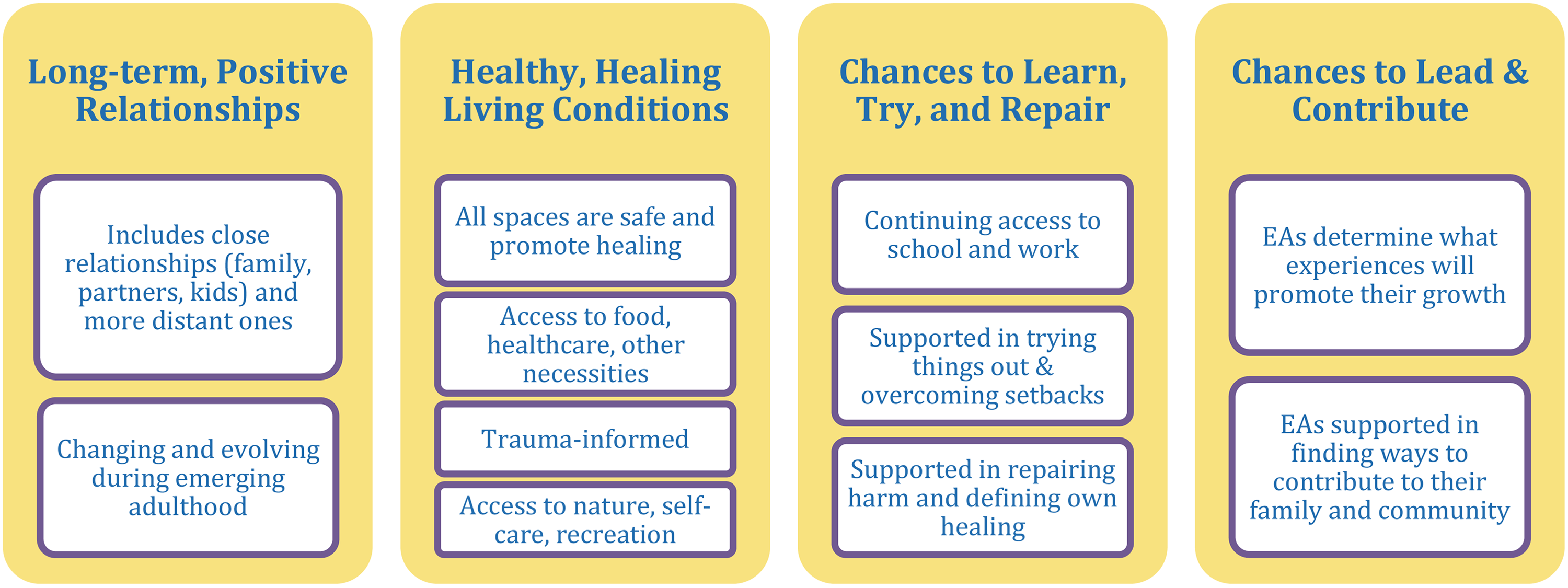
Core experiences emerging adults in the justice system need to thrive.
Specialized Pilot Programs and Research Initiatives
Over the last decade, pilot initiatives focused on emerging adults have rolled out in various parts of the justice system and in different places across the country. These innovations include: the creation or expansion of diversion (Toraif & Chester, 2023) and alternatives to incarceration (Sussman & Chester, 2022) programs; as well as specialized indigent defense practices (Annie E. Casey Foundation, 2023); prosecution units (Philadelphia District Attorney's Office, 2022); courts (Emerging Adult Justice Learning Community “EAJLC”, 2021a); and probation department (EAJLC, 2021b) and correctional units (EAJLC, 2021c).
While there is not yet a robust body of outcome evaluations for these types of initiatives, research is progressing. A recent independent evaluation of a program in Williamson County, Texas, for example, found positive results for a program serving 17–24-year-olds arrested for a felony charge (Public Policy Research Institute, 2025). With the support of the Lone Star Justice Alliance, emerging adult participants were diverted from formal system processing and instead provided with an individualized care plan focused on their developmental needs and links to services in the community, such as substance abuse treatment and job-training. A randomized control trial (RCT) found that youth in the program were 35% less likely to be arrested after intake and graduates of the program were 48% less likely to be arrested and spent about 36 fewer days in jail (Public Policy Research Institute, 2025). Participants also reported increased sobriety, GED completion, stable employment, family connections and improved self-esteem (Public Policy Research Institute, 2025). A separate, ongoing RCT of a specialized court program in Orange County, California (Cauffman et al., 2023) also has promising preliminary results, with emerging adults served in the program reporting less offending, less-marijuana drug use, and a greater chance of being employed six months after enrollment (Cauffman, 2024).
While pilots offer a chance for research and testing of concepts, pilot programs often lack sustainability, replicability, equity, and broader impact. Many pilots are limited to specific cities or counties, creating “justice by geography” problems, with some youth gaining access to developmentally appropriate services while others, only a mile away, are denied the same services. Pilots often serve only a small fraction of the emerging adults who come into systems overall and are generally limited to only one stage of the justice system (e.g., diversion or incarceration). They can be difficult to replicate in other jurisdictions or sustain if they are built around unique contexts or system actors (e.g., a particularly enthusiastic judge), and, despite the best of intentions, they often result in “net-widening,” with young people who would be more appropriately served in less intrusive programs dragged into programming unnecessarily. Finally, pilots generally fail to address the systemic issues faced by this age group and rarely implement larger policy or funding changes that shift how systems respond to emerging adults overall.
Beyond Pilot Projects: Reorienting Systems and Policy Reform
Another set of innovations seek to more expansively reorient existing justice system practice to be more developmentally appropriate through formal, statewide practice or policy changes (Emerging Adult Justice Project (“EAJP”), 2022). For example, leveraging the Framework (EAJP, 2022), Nebraska is developing specialized probation approaches for emerging adults that prioritize incentives, supportive relationships, and meeting emerging adults’ developmental needs as they navigate probation requirements (AECF, 2023). Similarly, the Massachusetts Committee for Public Counsel Services (CPCS) is incorporating developmental science into legal advocacy for emerging adults, expanding representation to include issues such as housing instability, behavioral health needs, education, and family support alongside legal defense strategies (AECF, 2023). Both programs are currently being evaluated. The Center for Law Brain & Behavior has published an extensive guide for judges, attorneys, and policymakers outlining the science of emerging adulthood development as well as guidelines for judges on how the science can be considered at case initiation, trial, and sentencing, as well as in legal representation and programs for young people in the system (CLBB, 2022).
These efforts seek to better inform system stakeholders about emerging adult development, while also building partnerships between criminal justice systems and other sectors, such as workforce development, that can reconnect emerging adults to prosocial institutions and opportunity during a developmental period when these experiences can most shape long-term trajectories. Complementary reforms can also help young people move on from the disruptions of the system with more success. Expungement and record-sealing laws, for example, can mitigate barriers to employment, housing, and higher education that disproportionately shape the life trajectories of emerging adults (Apel & Sweeten, 2010; Stewart & Uggen, 2020). Alternatively, more systemic transformations, including hybrid systems, which allow emerging adults to stay in juvenile court in some cases, or jurisdictional shifts expanding juvenile court jurisdiction to older ages, can allow emerging adults to benefit from greater levels of confidentiality, more limited availability of criminal records, and more developmentally appropriate programming and services (Perker & Chester, 2023).
Investments to Build Structural and Institutional Supports for Emerging Adults
Developmentally responsive justice approaches to emerging adults cannot be limited to changes within criminal justice systems alone. Because successful transitions into adulthood depend heavily on access to stable housing, healthcare, education, employment, and supportive relationships, broader social policy investments are also central to both preventing justice involvement and supporting desistance from crime (Institute of Medicine, 2015; Scales et al., 2016). A growing body of research suggests that workforce development programs, mentorship opportunities, and career pathway initiatives can provide not only economic opportunity, but also the supportive relationships, identity exploration, and future orientation associated with healthy development (Fein & Hamadyk, 2018; Ross et al., 2018). Housing and healthcare access are similarly essential. Expanding Medicaid access, increasing affordable housing supports, and investing in community-based behavioral healthcare may therefore function not only as public health interventions, but also as crime prevention and desistance-supporting strategies during emerging adulthood (Massoglia & Uggen, 2010; Silverstein et al., 2021). These approaches shift the focus away from viewing emerging adults primarily through the lens of risk and toward understanding them as a population with substantial developmental potential whose outcomes are deeply shaped by access to opportunity and support.
Footnotes

Funding
The authors disclosed receipt of the following financial support for the research, authorship, and/or publication of this article: This work was supported by the Annie E. Casey Foundation.
Declaration of Conflicting Interests
The authors declared the following potential conflicts of interest with respect to the research, authorship, and/or publication of this article: The authors were involved in the development and site testing of the Emerging Adult Justice Framework discussed in the article and have engaged in advocacy promoting developmentally informed justice system responses to emerging adults.