







Abstract
Introduction
Integrating research into nursing education is critical for evidence-based practice and professional development. However, nursing students often encounter significant challenges when engaging in research, which may hinder their academic and clinical growth. Understanding these experiences is essential for optimizing research training in nursing curricula.
Objective
This study explored the lived experiences of nursing students participating in graduation research projects, focusing on their perceived benefits, challenges, and support needs.
Methods
A descriptive phenomenological approach was employed, and this study adhered to the Consolidated Criteria for Reporting Qualitative Research (COREQ). Thirty-eight nursing students (15 male, 23 female) from a Saudi Arabian university participated in focus group discussions between February and May 2024. Data were collected using semi-structured interviews, supported by demographic surveys and audio recordings. Colaizzi’s descriptive phenomenological method was used for the final analysis.
Results
Four central themes emerged: (1) Skill Development and Academic Growth, (2) Mentorship and Peer Support, (3) Barriers to Success, and (4) Curricular Recommendations. Students valued the acquisition of research competencies and their practical applications in clinical practice. Mentorship, peer support, faculty guidance, and collaborative learning were pivotal in navigating research challenges. Prominent hurdles included time constraints, methodological difficulties, and stress. To alleviate pressure, participants recommended curricular adjustments, including extended project timelines (6–12 months) and earlier exposure to research.
Conclusion
Graduation research projects are transformative yet demanding experiences for nursing students. While they enhance critical thinking and readiness for advanced studies, structural challenges persist. Institutions should implement targeted interventions, such as phased research training and strengthened mentorship, to foster student success. This study provides actionable insights for nursing educators and policymakers to refine research curricula, ensuring students are better prepared for evidence-based practice and future scholarly pursuits.
Introduction
Active research involvement is widely recognized as a fundamental component of professional development in healthcare disciplines, beginning at the undergraduate level and continuing throughout professional careers. Engagement in research strengthens critical thinking, enhances clinical reasoning, and supports the integration of scientific evidence into practice, ultimately improving patient outcomes and healthcare system performance (Gonzalez & Ramos, 2025). In nursing education, participation in research activities promotes analytical competence, fosters lifelong learning, and prepares students to apply evidence-based practices within complex clinical environments (Boswell & Cannon, 2022; Menzies et al., 2021). Consequently, research engagement has become an essential competency for preparing nursing graduates capable of responding to rapidly evolving healthcare demands.
Despite the recognized value of research engagement, nursing students frequently encounter barriers that limit their meaningful participation in research-related activities. Previous studies have identified limited opportunities for hands-on research experience, insufficient mentorship, and restricted access to research resources as major obstacles influencing students’ research readiness and confidence (Delgado et al., 2022; Meherali et al., 2017). Moreover, professional regulatory standards emphasize that nursing graduates must be capable of critically evaluating research evidence and implementing validated findings into clinical practice, highlighting the importance of structured research education during undergraduate training (NMC, 2023).
Globally, graduation or capstone research projects serve as a central educational strategy for developing students’ research competencies and facilitating the application of theoretical knowledge to real-world healthcare challenges (Seo & Ko, 2024). Participation in such projects has been associated with enhanced research literacy, improved problem-solving abilities, and increased interest in pursuing research-oriented careers (El-Sayed Aly et al., 2022; Stevens et al., 2023). These findings demonstrate that undergraduate research engagement plays a significant role in shaping professional identity and preparing students for evidence-based practice.
However, although the importance of undergraduate research participation is well documented, conceptual uncertainties remain regarding how students experience graduation research projects and how contextual and facilitation factors shape these experiences. Much of the existing literature focuses primarily on measurable outcomes such as research competency, academic achievement, and productivity, while limited attention has been given to understanding students’ lived experiences and the processes that influence their engagement and learning outcomes (Kumah et al., 2022; Zenk, 2023). In particular, the influence of institutional support, mentorship quality, and research learning environments on students’ motivation, confidence, and perceived competence remains insufficiently explored. Understanding these experiential processes is essential for designing effective educational strategies that enhance research learning outcomes and foster sustained engagement in scholarly activities.
To address these conceptual considerations, the present study is guided by the Joanna Briggs Institute Evidence-Based Practice (JBI EBP) Model, developed by the Joanna Briggs Institute. This model emphasizes the interaction between evidence generation, contextual elements, and facilitation strategies in shaping learning outcomes and professional practice. Within undergraduate nursing education, graduation research projects represent a critical mechanism for generating and applying evidence, while contextual factors such as institutional culture, faculty mentorship, and resource availability influence students’ engagement and learning experiences (Jordan et al., 2019). The integration of this framework provides a structured basis for examining how educational environments and facilitation processes shape students’ lived experiences during graduation research projects.
In Saudi Arabia, nursing education has undergone significant expansion in recent years, with undergraduate programs increasingly incorporating graduation research projects as a mandatory academic requirement (Aboshaiqah et al., 2023). This shift aligns with national healthcare transformation initiatives that emphasize strengthening research capacity and advancing evidence-based practice across healthcare settings (AlYami & Watson, 2025). Despite this progress, nursing research within the region remains in a developmental phase, with greater emphasis historically placed on clinical research rather than educational or experiential research domains (Aboshaiqah et al., 2023). Consequently, there is a need to explore how students experience research engagement within structured educational contexts.
Therefore, this study addresses both conceptual and contextual gaps in the literature. Conceptually, it advances knowledge by exploring undergraduate nursing students’ lived experiences of graduation research projects and examining the contextual and facilitation factors influencing these experiences. Contextually, it contributes region-specific insights within Saudi nursing education settings. By applying an established theoretical framework, this study aims to generate evidence that informs curriculum development, strengthens research mentorship practices, and enhances the effectiveness of undergraduate research training programs.
Literature Review
Importance of Research Engagement in Nursing Education
Nurses play a central role in delivering patient-centered care across diverse healthcare environments, and their professional development is closely linked to the advancement of healthcare systems and patient outcomes (Jesus & Balsanelli, 2023; Ni et al., 2022; Prinsloo, 2024). Nursing research contributes to the generation and application of knowledge that supports improved clinical decision-making and strengthens evidence-based practice. Consequently, the development of research competencies among nursing students is considered essential for ensuring the continuous growth of nursing knowledge and professional practice (Seo & Ko, 2024).
Research education in nursing begins at the undergraduate level and continues through postgraduate training, forming the foundation for developing competent healthcare professionals capable of integrating research evidence into clinical practice. Educational strategies such as structured research courses, collaborative projects, and supervised research activities support the development of methodological skills and analytical thinking abilities. These experiences also enhance students’ understanding of scientific inquiry and strengthen their readiness to participate in research-driven healthcare initiatives.
Role of Graduation Research Projects in Skill Development
Graduation research projects represent a critical component of undergraduate nursing education, providing students with opportunities to apply theoretical knowledge in practical contexts while developing essential research skills. These projects facilitate the development of competencies such as literature appraisal, research design, data analysis, and dissemination of findings (Stevens et al., 2023). Furthermore, participation in research projects has been associated with increased confidence, improved problem-solving abilities, and greater motivation to engage in future scholarly activities (El-Sayed Aly et al., 2022).
Students exposed to structured research experiences during undergraduate education are more likely to develop transferable competencies, including understanding ethical research practices and applying evidence-based methodologies in clinical settings. Such competencies contribute to improved readiness for professional practice and increased likelihood of pursuing research-oriented careers (Zenk, 2023).
Contextual and Facilitation Factors Influencing Research Experiences
Educational institutions play a significant role in shaping students’ research experiences through the provision of mentorship, resources, and supportive learning environments. Faculty mentorship is particularly influential in guiding students through complex research processes and fostering confidence in research-related tasks (El-Sayed et al., 2024a). Additionally, structured supervision and collaborative learning opportunities enhance students’ engagement and support the successful completion of research projects (Kumah et al., 2022).
Despite these recognized benefits, several contextual barriers continue to influence students’ research experiences. Limited access to resources, insufficient training opportunities, and variability in mentorship quality have been identified as key factors affecting students’ research engagement and perceived competence (Delgado et al., 2022). These findings underscore the importance of examining contextual and facilitation processes that shape students’ lived experiences during graduation research projects.
Research Gap and Study Contribution
Although previous studies have demonstrated the educational value of undergraduate research engagement, limited research has explored the lived experiences of nursing students participating in graduation research projects and the contextual mechanisms that influence these experiences. Existing literature has primarily focused on quantitative outcomes such as research performance and competency levels, while qualitative insights into students’ perceptions, challenges, and learning processes remain insufficiently addressed (Kumah et al., 2022).
Furthermore, while some studies have examined research education within Western educational contexts, fewer investigations have explored experiential aspects of research engagement within developing nursing education systems. However, the primary gap addressed in this study is conceptual rather than purely geographical, as it focuses on understanding the processes and contextual influences shaping students’ research experiences.
Accordingly, this study advances existing knowledge by applying a structured theoretical framework to explore undergraduate nursing students’ lived experiences of graduation research projects. The findings are expected to provide deeper insights into the mechanisms influencing research engagement and to inform the development of supportive educational strategies that enhance research learning outcomes in nursing education.
Objective of the Study
General Objective
To gain an in-depth understanding of the lived experiences of nursing students during their graduation research project.
Specific Objectives
1. To describe the challenges and facilitators perceived by nursing students during the execution of their graduation research. 2. To explore the students’ emotional and psychological journey throughout the research process. 3. To identify the perceived learning outcomes and professional growth resulting from completing the research project. 4. To understand the students’ interactions with faculty mentors, peers, and the clinical environment during this period.
Methods
Study Design
A descriptive phenomenological approach was employed; this study adhered to the Consolidated Criteria for Reporting Qualitative Research (COREQ) (Buus & Perron, 2020). This approach, rooted in Husserl’s philosophy, seeks to objectively capture and describe the essence of individuals lived experiences by setting aside researchers’ preconceptions through a process called bracketing (Abraham, 2024). This method is particularly suitable for exploring nursing students’ experiences in graduation research projects because it allows for a rich, unbiased understanding of their perspectives, challenges, and the meanings they attach to these experiences, by focusing on the “what” and “how” of participants’ experiences, descriptive phenomenology provides deep insights that can inform educational practices and support systems in nursing education (Shorey, 2022).
Focus groups were used within the descriptive phenomenological approach to enable participants to share and reflect on their lived experiences collectively. This method was appropriate for capturing rich, in-depth descriptions of shared experiences related to graduation research projects, allowing participants to build on each other’s perspectives and enhance the depth and meaning of the data.
Setting
The study was conducted at the College of Nursing (male and female sections) of a university in Saudi Arabia. Approximately 185 undergraduate nursing students are educated at this college annually. The nursing program is a full-time course comprising 123 credit hours over four years (eight semesters), which includes theoretical and clinical studies. Upon completion, students earn a Bachelor of Nursing degree, qualifying them for registration as nurses in Saudi Arabia. All students must complete a research project worth two credit hours for their final exam. They can either conduct a literature review for their bachelor’s thesis, participate in ongoing clinical research projects, or write an academic paper. Details about the pedagogical approach for both options are provided in the introductory lecture and on the students’ digital learning platform. Students express their preferences for research projects, and by the end of the eight semesters, they are assigned to a project that aligns with their interests.
Participants
The sample size was determined based on data sufficiency, defined as the point at which no new themes or information emerged from subsequent interviews (Sandelowski, 1995). Initially, 44 students were approached; six declined or withdrew, resulting in a final sample of 38 participants (response rate: 86.4%; dropout rate: 13.6%). The sample comprised 23 female and 15 male undergraduate nursing students. Purposive sampling was used to recruit participants with direct and relevant experience of the phenomenon under study.
Procedure
Data Collection
The study followed a rigorous, multi-phase procedure to ensure comprehensive data collection while maintaining methodological integrity. The research team comprised seven members: PhD nursing faculty members with expertise in qualitative research (three males, four females). All received standardized training in phenomenological methods and focus group facilitation, including techniques to mitigate power dynamics (e.g., emphasizing participant autonomy, avoiding leading questions). None had prior relationships with participants. Reflexivity was maintained through team debriefing sessions, where preconceptions (e.g., assumptions about stress as a dominant theme) were documented and addressed.
Data saturation was initially reached at approximately 27 participants, as no new themes or conceptual insights emerged from the data at that stage. However, data collection continued until 38 participants to ensure sufficient depth, variation, and richness of experiences across participants. This continuation was intended to strengthen the comprehensiveness and confirmability of the findings rather than to identify new themes. Thus, data saturation referred specifically to the point at which thematic redundancy was achieved, while the final sample size was determined to enhance the robustness and completeness of the dataset.
The researchers began by compiling a complete list of undergraduate nursing students who had submitted graduation research projects during the previous two semesters. Potential participants received detailed email invitations containing the study’s purpose. Focus group interviews were conducted in a controlled environment within university research offices, with 4–5 participants per session. This approach was chosen to align with the descriptive phenomenological methodology, which seeks to capture participants lived experiences in a rich and interactive context. Each 30–45-minute session began with collection of basic demographic information, followed by a series of open-ended, semi-structured questions designed to explore multiple dimensions of the research experience, including emotional responses, process challenges, skill development, supervisory support, and suggestions for improvement. The focus group format facilitated natural discussion, encouraged reflection on shared experiences, and allowed the research team to gather rich, experience-near data while ensuring comprehensive coverage of all key topics. Practical considerations, such as scheduling feasibility and participant availability within the academic calendar, further supported the use of focus groups rather than individual interviews.
Prior to data collection, trained researchers provided brief individual explanations of the study purpose and procedures, emphasizing voluntary participation and assuring students that participation would not affect academic standing. Written and verbal informed consent was obtained from all participants.
Focus group interviews were conducted in university research offices, with 4–5 participants per session and a duration of 30–45 minutes. Sessions began with confidential collection of basic demographic information, followed by semi-structured, open-ended questions exploring emotional responses, research process challenges, skill development, supervisory support, and suggestions for improvement. This format facilitated natural discussion while ensuring coverage of all key research topics.
The data collection phase spanned three months (February to May 2024), during which researchers conducted 2-3 focus groups per week to accommodate the students’ schedules. All sessions were digitally recorded with explicit participant permission, and verbatim transcriptions were completed within 48 hours to ensure accuracy. The research team implemented multiple quality control measures, including member checking, where participants reviewed transcripts for accuracy, and inter-coder reliability checks to validate thematic analysis. data sufficiency was confirmed after 27 interviews, though the study continued to its predetermined sample size of 38 participants to ensure comprehensive demographic representation and thematic completeness.
Measurements of Interest
A predesigned interview guide with open-ended main questions and probing sub-questions was developed to collect the data.
Nursing Students’ Demographic Characteristics
At the beginning of each focus group session, participants completed a brief questionnaire to provide demographic information, including age, gender, marital status, and academic semester. These variables were selected to contextualize participants’ experiences and provide a clear description of the study population. Demographic information was collected individually and confidentially, rather than being shared aloud in the group, to protect participants’ privacy and ensure ethical transparency.
Focus Group Interview Guide
The semi-structured interview guide was developed through a systematic process to ensure methodological rigor. First, key topics were identified from the literature on nursing education, student research engagement, and phenomenological research methods. Open-ended questions were then formulated to explore participants’ experiences, including emotional responses, process challenges, skill development, supervisory support, and suggestions for improvement. The guide was reviewed by experienced qualitative researchers for clarity and relevance and pilot-tested with a small group of students to ensure that the questions elicited rich, meaningful discussion. To establish face and content validity, the interview guide was reviewed by a panel of experts from diverse disciplines, including medical-surgical nursing, nursing education, and nursing research. These experts evaluated the guide for clarity, simplicity, relevance, and necessity. Their feedback and recommendations were incorporated, resulting in revisions that enhanced the guide’s content validity and accuracy. This process ensured that the guide was both comprehensive and aligned with the descriptive phenomenological approach. (Supplementary File).
Audio Tape Recording
Audio recording is a vital instrument for data collection in qualitative research and was used for all focus group sessions.
Data Analysis and Trustworthiness
The Steps of Data Analysis Using the Colaizzi Descriptive Method

Trustworthiness
Trustworthiness was ensured through multiple validation strategies, adhering to Lincoln’s (1986) criteria for trustworthiness. Credibility was established via systematic analysis of verbatim transcripts, iterative coding, and theme identification, while member checking confirmed the accuracy of interpretations. Dependability was achieved through detailed methodological documentation, and confirmability was reinforced through external audits conducted by two nursing research consultants, who validated the findings. Transferability was supported by rich contextual descriptions, which allowed for potential applicability in similar settings. Data sufficiency was confirmed after analyzing 27 transcripts, with no new codes emerging, as verified through NVivo’s query function. Researcher reflexivity was maintained through documentation of preconceptions (e.g., anticipated stress narratives) and peer debriefing to mitigate bias. The final synthesis integrated themes into a cohesive narrative, supported by participant quotations and contextualized through comparisons with existing literature, such as parallels to Allari’s (2016) findings on mentorship.
All participant quotes presented in the Results are attributed with a unique code and relevant demographic information to ensure clarity and maintain confidentiality.
Results
Percentage Distribution of the Participants Regarding Their Demographic Characteristics (N=38)

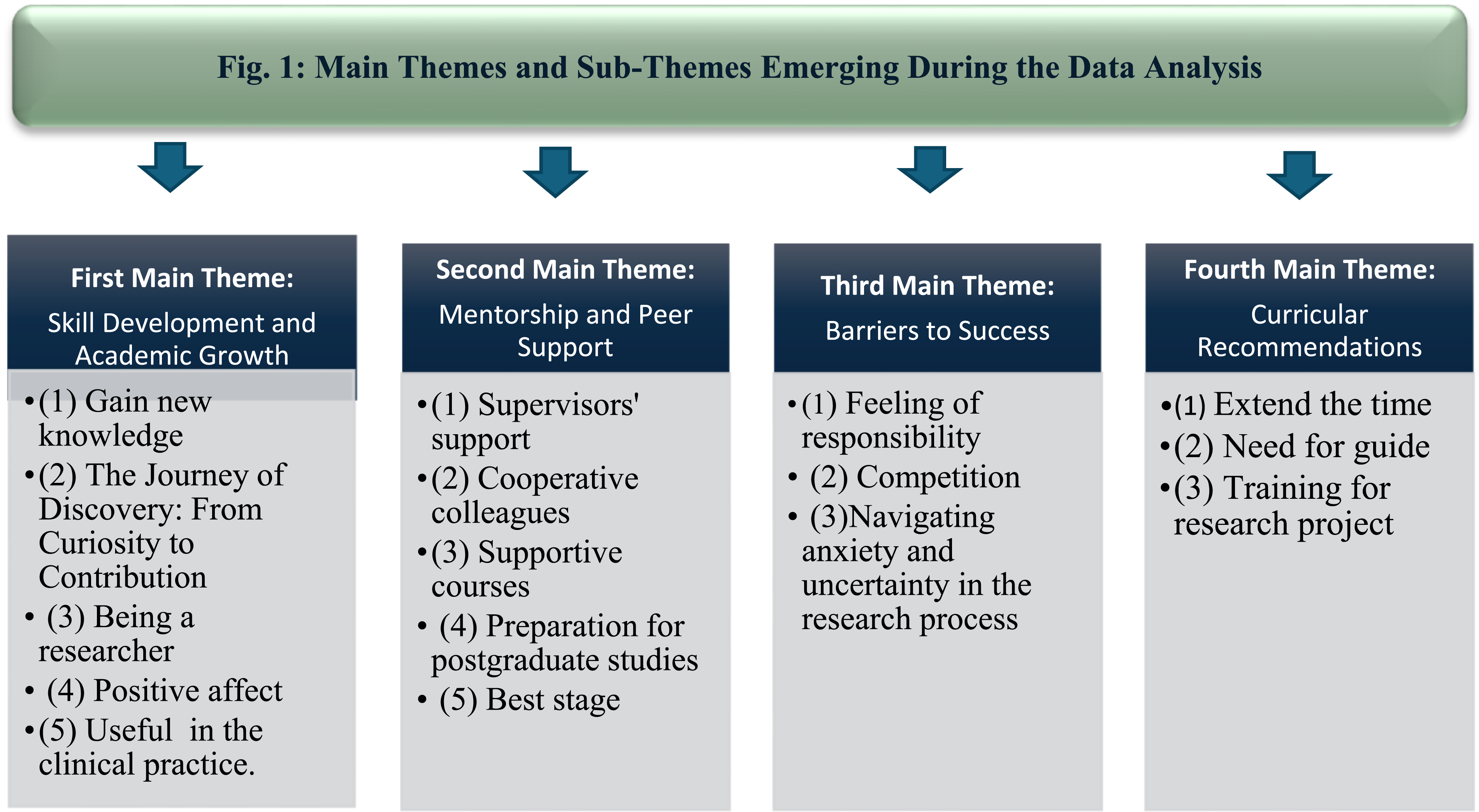
Main themes and sub-themes emerging during the data analysis
Main Theme I: Skill Development and Academic Growth
Graduation research projects in nursing education are a means to help student nurses integrate new knowledge from their professional education into practice and make evidence-based clinical decisions. The first main theme reflected nursing students’ experiences of participating in graduation research projects and included the following five sub-themes: 1) Gaining new knowledge, 2) The journey of discovery: from curiosity to contribution, 3) Being a researcher, 4) Positive affect, and 5) Usefulness in clinical practice.
Gaining New Knowledge
The findings indicate that participants reported gaining new knowledge through their participation in a research project as part of their graduation requirements. The following statements support this: “I feel happy when participating in the research for the graduation project because I managed to find a topic.(pause). I feel that I am providing something to the community. That is a unique feeling (smile) I feel like I have learned new knowledge about research methods. It is a new experience for us (pause) it has provided us with new information” (P6, female, intern, FGD2)”.
The Journey of Discovery: From Curiosity to Contribution
The nursing students thoroughly enjoyed their research projects. They consistently described their participation as an exciting and fulfilling experience, driven by the freedom to choose topics. Exploring new information and gaining substantial knowledge brought immense satisfaction, transforming initial challenges into rewarding outcomes. The happiness derived from gathering survey responses underscored a powerful sense of meaningful engagement with their work, as supported by the following statements: “An enjoyable feeling. I need to search and add information to the research topic”. “The enjoyable aspect of graduation research projects is exploring many references and benefiting from a substantial amount of new knowledge”. “At the beginning of the project, we had the freedom to choose the topic, which was a good thing (pause) It is better than being assigned a specific research topic”. “A different feeling, a tiring beginning, but an interesting ending.” “I was happy during survey collection I felt joy knowing there was a response” (P1, female, level 8, FGD1).
Being a Researcher
Another pertinent subtheme was that students felt proud of their participation and were pleased to have had the opportunity to conduct research during their undergraduate studies. The following statements confirm this: “A feeling of greatness and strength. a unique experience for us”. “We are proud to have participated in the graduation research project while we were still undergraduate students (pause) we benefited from it”. “I feel proud to be a researcher while I am a bachelor’s degree student” (P9, Male, level 8, FGD3).
Positive Affect
Participants expressed their appreciation for research and their conviction that creativity in nursing results from having a research-minded mindset. Students expressed a desire to participate in a research project again, as they found it to be a positive experience. The following statements were supported: “I desire to repeat participation in the graduation project.(pause). because I benefited from this experience”. “I feel a sense of pleasure (smile) upon completing the graduation project at the end of the semester after hard work and effort” (P15, male, intern, FGD3).
Usefulness in Clinical Practice
Furthermore, the results indicated that students valued research projects, citing one of their advantages as the application of research to clinical practice, thereby strengthening and encouraging the participants’ capacity to apply research findings. This was confirmed in the subsequent statements. “The project benefited me in that I could apply it in practical life .(pause) My topic was infection control in intensive care units and operative rooms” (P23, male, level 8, FGD5). “It was an enjoyable experience from the academic aspect. (pause). I learned how to conduct complete research” (P10, female, level 8, FGD2). “Give me experience, how can I search, then get information .(pause). apply it in practical life” (P30, female, level 8, FGD7).
Main Theme II: Mentorship and Peer Support
The second main theme concerned the support and encouragement students received during their participation in a research project and was divided into five sub-themes: 1) Supervisors’ support, 2) Cooperative colleagues, 3) Preparation for postgraduate studies, 4) Supportive courses, and 5) Best stage.
Supervisors’ Support
Project supervisors play a crucial role in fostering a positive research attitude in students and creating scenarios where students can apply research findings to their practice. The nursing students emphasized that they received guidance, direction, and clarification from their supervisors. The following statements confirm this: “I thank my supervisors for the graduation project because they constantly guided me with information, explained to me, and directed me to the needed references” (P18, male, intern, FGD4). “The supervising doctor who was with us was cooperative and nice” (P11, female, intern, FGD3).
Most nursing students added that the projects’ supervisors facilitated information and corrected mistakes kindly. The following statements highlight this: “The support from the supervisor greatly helped us;.(pause). she facilitated things for us and provided us with much additional information” (P34, female, level 8, FGD8). “She was a wonderful doctor, correcting our mistakes and training us well before the final presentation.(smile). We appreciate that it was our first experience” (P27, female, intern, FGD6).
Cooperative Colleagues
The findings revealed that nursing students mentioned their colleagues were cooperative and that they worked together on the graduation project; the following statements supported that: “Our colleagues were cooperative.(pause). each one fulfilling their role” (P6, female, level 8, FGD2). “We worked together on our graduation project. Each of us helped the other” (P14, male, intern, FGD3).
Preparation for Postgraduate Studies
One of the prerequisites for moving from a nursing student to a professional nursing role is having research-based knowledge and abilities. The nursing students stated that one of the benefits of participating in the research project was that it prepared them for future master’s and doctoral degrees. This could enhance students’ preparation for graduate education and better equip them to employ research in their nursing professions; the following statements confirmed that: “It was an excellent experience that I recommend to everyone, even those in distant places; it would be beneficial.(pause). It qualified me for the master’s and doctoral stages” (P20, female, intern, FGD4). “It was a very nice, different experience. I appreciate that this research project prepares us for our future careers” (P25, female, intern, FGD5). “I benefited from the graduation project .(pause). I aspire to prepare for a master’s degree and further studies later” (P29, male, level 8, FGD6).
Supportive Courses
Furthermore, the findings indicate that participants verbalized that supportive course, such as biostatistics and research methods, helped them during their graduation research projects. The following statements confirmed this: “I enjoyed this course .(pause). I handled that I was learning something different but significant that kept me updated” (P18, male, intern, FGD4). “I benefited from supportive courses for the graduation project, such as biostatistics and research methods, which are fundamental to this project” (P3, male, level 8, FGD1). “Research courses help me identify dependent and independent variables, sample types, and ratios” (P28, male, intern, FGD6).
However, some students reported that the research methods course helped them only in the theoretical part; in fact, they needed more application of the research process. “Indeed, the research methods course did not greatly benefit us; only the theoretical part was helpful, lacking practical training” (P30, female, intern, FGD7).
Best Stage
Participants highlighted that mentorship and peer support were most valuable at specific stages of the research process, particularly during initial planning and data collection. This support enhanced confidence, facilitated skill development, and improved overall engagement in graduation research projects.
Participants noted that the best stages of their graduation research project were the presentation, data collection, and writing the introduction. “The most useful thing was presenting a graduation research project at the end of the term, (pause). I liked that” (P2, female, intern, FGD1). “The best stage is collecting data from the project participants” (P21, female, intern, FGD5). “The easiest stage is writing the introduction” (P5, male, level 8, FGD1). “The hardest part is the literature review, while the easiest is the introduction” (P30, female, intern, FGD7).
Main Theme III: Barriers to Success
The third main theme describes the challenges faced by the nursing students during their experiences of participating in the graduation projects; this theme contains three sub-themes: (1) Feeling of responsibility, (2) Competition, and (3) Navigating anxiety and uncertainty in the research process.
The Feeling of Responsibility
The findings highlighted that participants felt responsible for submitting the research project and completing all its steps effectively. The following statements support this: “We had a sense of new responsibility.(pause). we choose a topic, develop tools for data collection,(pause) then see the results, which are different from previous stages” (P19, male, level 8, FGD4). “A feeling of responsibility .(pause). need for me not to skimp on any information.” (P38, female, intern, FGD8).
Competition
Nursing students in this subtheme reported that they had a feeling of competition during their participation in a research project; some participants expressed the following statements: “There is a feeling of competition .(pause).all students compete for the most attractive topic” (P12, female, level 8, FGD3). “We were more focused on competition than on getting grades” (P24, male, intern, FGD5).
Navigating Anxiety and Uncertainty in the Research Process
This subtheme reflects the emotional and cognitive challenges that nursing students face throughout their journey of completing their graduation project. Participants described persistent fear, stress, and doubt, particularly during high-stakes moments such as selecting a topic, managing revisions, and presenting their work publicly. These emotions were intensified by their inexperience and the pressure of evaluation. Despite these challenges, students demonstrated resilience and commitment, striving to perform to the best of their abilities, which underscores the transformative nature of the research experience in shaping professional growth. The following statements confirmed this: “I felt fear and worry on the day of the presentation.(pause). but I presented the project to the best of my ability” (P36, male, intern, FGD8). “There was anxiety because revisions were required more than once.(pause). during both the initial and final presentations, in front of students and professors. There was a feeling of fear during the presentation, fearing mistakes” (P19, male, level 8, FGD4). “We were overwhelmed because we completed the project quickly and felt pressured” (P28, male, intern, FGD6). “I am worried about the survey.(deep breath). whether participants will complete it and whether the research results will be good” (P28, male, intern, FGD6).
Main Theme IV: Curricular Recommendations
The final main theme captures students’
Extend Time
Participants pointed out that, to have enough time for the entire project without stress, they would need an extension of six months or a year for their graduation research projects. This finding was illustrated as follows: “We suggest that the available time should be longer than three months, at least six months or a year. so that it comes after the internship year and the graduation certificate is awarded with a graduation project certificate and bachelor’s degree” (P4, male, intern, FGD1). “We want to add more time for the graduation project.” (P13, male, level 8, FGD3).”Project time needs to be longer .(pause). we were under pressure” (P7, female, intern, FGD2).
Need for a Guide
Students mentioned that they need to review previously submitted projects, and it could be helpful to inform them about the graduation project process. The following statement confirms this. They emphasized the importance of having a hard copy of a research project as a guide, which provides a clear understanding of the process and serves as a valuable reference. “Reviewing other research projects opens our minds and helps us understand the process” (P35, female, intern, FGD8).
Training for Research Project
Many students highlighted the need for training in research projects during their early academic years, particularly before submitting their final graduation project. The following statements confirmed this: “We need training on the graduation project. (pause). even if it is multiple mini-research projects, so we can learn how to apply scientific research and create surveys” (P8, male, intern, FGD2). “Training students on research in the early stages of their academic studies to acquire knowledge before submitting the final graduation project” (P16, female, level 8, FGD4).
Discussion
Accrediting bodies in health professions education emphasize the importance of student engagement in research as a means of strengthening scientific reasoning, critical thinking, and evidence-based clinical practice (El-Sayed et al., 2024b; McInnes et al., 2019). In nursing education specifically, students are expected to develop a foundational understanding of how research informs evidence-based practice (NMC, 2023). Within this context, the findings of the present study indicate that participation in graduation research projects represents a meaningful component of undergraduate learning, characterized by both positive engagement and emotional challenges.
Study Findings
The findings of this study revealed that Saudi nursing students generally perceived graduation research projects as an enjoyable and enriching experience, although some participants reported stress and anxiety during the process. Students also described developing a stronger sense of responsibility, improved knowledge acquisition, and enhanced understanding of clinical relevance through research participation. Additionally, participants emphasized the importance of supervisory support in facilitating successful completion of their projects.
Interpretation Through the JBI EBP Framework
Interpreted through the Joanna Briggs Institute Evidence-Based Practice (JBI EBP) Model, these findings suggest that students’ experiences are shaped by the interaction between contextual factors (e.g., academic environment and institutional expectations) and facilitation processes (e.g., supervision and mentorship). Within this framework, graduation research projects function as a mechanism for evidence generation and application, where learning is mediated through structured academic guidance and exposure to research processes (Jordan et al., 2019).
The positive experiences reported by students can be explained by effective facilitation mechanisms, particularly supportive supervision, which enabled students to translate theoretical knowledge into practical research skills. Conversely, the reported stress and anxiety reflect contextual constraints such as limited experience with research methodologies and time pressures, which may hinder smooth engagement with the evidence-generation process. Thus, rather than being purely descriptive, the findings demonstrate how educational structures and facilitation processes directly influence students’ cognitive and emotional engagement with research (Porritt et al., 2023; Awad et al., 2025).
Comparison With Existing Literature
These findings are consistent with Du et al. (2023), who reported that nursing students’ engagement in research and evidence-based practice is associated with mixed emotional responses, including motivation, anxiety, and optimism. Similarly, El-Sayed et al. (2025) highlighted that such emotional variability reflects the transitional nature of early research exposure, where students simultaneously develop confidence and experience uncertainty.
In agreement, Delgado et al. (2022) found that nursing students involved in biomedical research valued the development of scientific understanding and reported increased confidence following dissemination activities. This supports the current study’s finding that research participation enhances both cognitive development and professional identity formation.
Development of Responsibility and Professional Growth
A key finding in the present study was that students developed a stronger sense of responsibility and improved clinical knowledge through research engagement. This finding aligns with Rojaye and Netangaheni (2023), who emphasized that research competence is essential for professional nursing development and future clinical practice. Similarly, Grønning et al. (2022) reported that undergraduate research projects enhance students’ understanding of clinical practice and promote preparedness for future professional roles.
From a JBI EBP perspective, this reflects the mechanism through which evidence generation activities (research projects) translate into professional capability development, particularly when supported by structured facilitation and clinical relevance.
Role of Educational Environment and Mentorship
The present study also highlighted the central role of supervisory support in shaping students’ research experiences. This finding is consistent with Tuppal et al. (2022), who emphasized that research supervision fosters collaborative learning, idea exchange, and critical thinking development. Similarly, Kumah et al. (2022) and Menzies et al. (2021) highlighted that research placements promote a research-oriented culture and strengthen evidence-based practice competencies.
These findings suggest that mentorship acts as a key facilitation mechanism within the JBI EBP model, enabling students to overcome contextual barriers and engage more effectively with evidence-based learning processes.
Time Constraints and Learning Challenges
The current study also identified time constraints and workload pressure as significant challenges. Students suggested extending the duration of graduation research projects to 6–12 months to reduce stress. This finding is supported by Burrell et al. (2020), who reported that time limitations represent a major barrier to student engagement in research despite generally positive attitudes toward it.
Professional Identity Formation and Developmental Transition
The findings further align with Jensen et al. (2024), who reported that participation in research-related mentorship enhances self-confidence and professional identity development. Similarly, Henttonen et al. (2021) found that nursing students expect research projects to contribute to professional knowledge development and organizational skills.
Longitudinal evidence from Yi Q-F et al. (2022) further supports the interpretation that graduation research experiences facilitate a transition from novice learners to more reflective practitioners. This developmental shift reflects a key outcome mechanism of the JBI EBP model, where engagement with evidence processes fosters professional maturity.
Clinical Reality and Theory–Practice Tension
Finally, the study findings are consistent with Haririan et al. (2024), who reported that students experience tension between academic expectations and clinical realities. This duality reflects a mechanism of contextual dissonance, where students must reconcile idealized research knowledge with real-world clinical constraints. From a theoretical perspective, this highlights that evidence-based practice learning is not linear but shaped by ongoing interaction between educational systems, clinical environments, and learner adaptation processes (El-Sayed et al., 2026).
Overall, the findings demonstrate that graduation research projects serve not only as an academic requirement but as a structured mechanism for developing research competence, professional identity, and evidence-based practice readiness. When interpreted through the JBI EBP framework, students’ experiences are understood as the result of interactions between context, facilitation, and evidence-generation processes, rather than isolated personal experiences.
Strengths and Limitations
This study demonstrates several strengths, notably its rigorous qualitative design and the use of focus group interviews, which fostered rich, in-depth discussion and enabled participants to build upon each other’s shared experiences. The natural rapport among participants, many of whom had previously collaborated, contributed to a comfortable environment that encouraged openness. Methodological rigor was further enhanced through investigator triangulation, member checking, and achieving data sufficiency, all of which strengthened the credibility and trustworthiness of the findings.
A key strength is the cultural context of the study, which provides unique insights into undergraduate nursing students’ experiences in Saudi Arabia, highlighting perspectives that are underrepresented in the international literature. At the same time, this specific cultural and institutional context may limit the transferability of findings to other settings or countries.
Other limitations include the single-institution scope and relatively small, convenience-based sample, which may reflect program-specific dynamics rather than broader trends. The use of focus group interviews as the sole data collection method. Although this approach facilitated interaction and collective reflection aligned with the descriptive phenomenological methodology, it may have influenced disclosure or the depth of individual experiences. Some participants may have been less willing to share sensitive or personal insights in a group setting, which could limit the richness of certain individual perspectives. The gender imbalance and limited diversity in participant backgrounds could also constrain the range of perspectives captured.
While researcher reflexivity was addressed through team debriefing, more explicit documentation of preconceptions and their mitigation would enhance transparency. Additionally, relying solely on student narratives without triangulation from faculty perspectives or documentary sources may have restricted the contextual depth of the analysis. Finally, although the themes effectively describe students’ experiences, a more interpretive approach could further illuminate the interplay between empowerment and institutional constraints. Future research could address these limitations by incorporating multiple institutions, expanding demographic diversity, employing mixed-methods or longitudinal designs, and integrating additional data sources to enrich understanding of nursing students’ research experiences.
Implications for Practice
The study emphasizes the importance of a structured approach to undergraduate nursing research. To optimize outcomes and reduce stress, nursing programs should allow 6 to 12 months for graduation projects. This timeline facilitates deeper engagement in research, promoting critical thinking, evidence-based appraisal, and problem-solving skills essential for clinical practice. Access to exemplary past projects and revision opportunities can clarify expectations and enhance the quality of scholarly work. Early exposure to research through mini-projects and scaffolded experiences would build foundational skills and confidence, better preparing students for final projects and postgraduate studies. Participation in research also enhances critical analysis, evidence-based decision-making, and interprofessional communication, key competencies for quality improvement and positive patient outcomes. To maximize impact, nursing curricula should align research outcomes with Saudi NCAAA standards and licensure competencies. Integrating undergraduate research into national accreditation frameworks and aligning it with Saudi Vision 2030 can ensure that research training is both pedagogically sound and relevant to the country’s needs. Educational leaders should incentivize faculty mentorship, support research infrastructure, and foster partnerships with clinical institutions to embed student research in quality improvement and patient safety projects.
Conclusion
This study concluded that nursing students evaluated their involvement in graduation research projects positively, despite facing some challenges. They reported receiving support from project supervisors and highlighted numerous benefits of participation, including the practical application of research in clinical practice, acquisition of new knowledge, and preparation for future postgraduate studies. By providing insights into undergraduate nursing students’ research engagement in a non-Western context, this study contributes to global nursing education by informing curriculum development, promoting research literacy, and guiding strategies to better support students in similar educational settings worldwide.
Supplemental Material
Supplemental material - Undergraduate Nursing Students’ Experiences in Graduation Research Projects: A Descriptive Phenomenological Study
Supplemental material for Undergraduate Nursing Students’ Experiences in Graduation Research Projects: A Descriptive Phenomenological Study by Fatma Abdelaziz Mohammed, Jebril AL-hrinat3, Mona Metwally El-Sayed, DaifAllah Al-Thubaity, Abeer Yahia Mahdy Shalby, Mugahed Al Khader, Fatma Shoeib Ali, Boshra Karem Mohamed El-Sayed, and Hamda Ahmed Mohamed Eldesoky in Sage Open Nursing.
Footnotes
Acknowledgments
The authors would like to extend their sincere appreciation and gratitude to all the students who willingly participated in this study.

Ethical Considerations
The Declaration of Helsinki’s rules and procedures were followed during the research (DoH, Oct 2008). The research ethics committee of Najran University reviewed and approved the proposal for this study (Approval No. 202402-076-018083-040785). An informed consent form outlining the research’s purpose and evaluating the participants’ comprehension was needed. Participants were told participation was optional and that pulling out would have no negative consequences. Strict measures were implemented to guarantee the privacy and confidentiality of the gathered data.
Author Contributions
FM, JA, and ME created the study idea and design and wrote the manuscript. DA and AS collaborated in data collection, transcription, and data analysis. FA, BE and HM interpreted the data and approved the final version of the manuscript.
Funding
The authors received no financial support for the research, authorship, and/or publication of this article.
Declaration of Conflicting Interests
The authors declared no potential conflicts of interest with respect to the research, authorship, and/or publication of this article.
Data Availability Statement
The dataset generated and analyzed during the current study is available from the corresponding author upon reasonable request.
Agreement to Pay APC
The author agrees to pay the APC within ten days if our article is accepted for publication.
Supplemental Material
Supplemental material for this article is available online.
References
Supplementary Material
Please find the following supplemental material available below.
For Open Access articles published under a Creative Commons License, all supplemental material carries the same license as the article it is associated with.
For non-Open Access articles published, all supplemental material carries a non-exclusive license, and permission requests for re-use of supplemental material or any part of supplemental material shall be sent directly to the copyright owner as specified in the copyright notice associated with the article.
