






Abstract
Background
Health professionals are the backbone of the healthcare sectors. Balancing work and non-work affairs is the most challenging thing for health professionals because of their multiple duties and responsibilities related to their work and personal life. The purpose of this study was to examine the relationship between work-life balance, job satisfaction, and job performance among health professionals in public and private hospitals in Eastern Ethiopia.
Methods
A descriptive cross-sectional survey was conducted on a sample of 476 health professionals from ten public and private hospitals selected through stratified proportional sampling technique. To analyze the data, Pearson correlation coefficient and multiple regression analysis were employed.
Results
The results of the present study indicated that there were positive relationships between work-life balance, job satisfaction, and job performance. The findings of this study indicated that work-life balance (β = .47, p < .001) and job satisfaction (β = .23, p < .001) predicted significantly and positively the job performance of health professionals respectively.
Conclusion
The result of this study revealed that work-life balance and job satisfaction positively predicted the job performance of health professionals.
Keywords
Background
Work-life balance (WLB) is a key factor that influences the job performance of health professionals. For instance, Bocean et al. (2023) revealed that a state of balance between professional and personal life generates satisfaction, increased performance, and reduced employee turnover. Health professionals are always striving hard to save lives, as they are front-liners in dealing with patient care services. The study conducted by Rony et al. (2023) yielded that maintaining nurses’ WLB is critical to improving healthcare productivity and the delivery of quality patient care.
According to Zhang et al. (2024), health professionals who manage to maintain a balance between their work and personal lives are less likely to experience burnout and more likely to report higher job satisfaction and better mental health. Moreover, Alotaibi and Aldossry (2024) argued that individuals who lack WLB have more work and home commitments, work longer hours, and lack personal time. Health professionals always strive to balance their work, family, and personal lives with their professional career.
In Ethiopia, a country striving to achieve universal health coverage amidst resource constraints, the job performance of health professionals is paramount. Deriba et al. (2017) concluded that the overall quality of clinical care in Ethiopia was low, with health workers often failing to adhere to standard treatment guidelines. The Ethiopian healthcare system, characterized by limited resources and a critical shortage of human resources for health, places immense pressure on its frontline workers: physicians, nurses, and midwives.
Guest (2002) defined the concept of WLB as referring to work as paid employment, life as the activities outside work, and balance as the equal weight given to both work and non-work activities. For different scholars, the term WLB means different things. For instance, Lewis and Beauregard (2018) described that there is no single understanding or use of the term WLB; rather, there are multiple and overlapping WLB discourses within organizations and among academic researchers that need further conceptualization.
Some researchers defined the term WLB as the compatibility, harmony, and equilibrium between professional work and non-work affairs. For instance, Kalliath and Brough (2008) defined WLB as the individual perception that work and non-work activities are compatible and promote growth in accordance with an individual’s current life priorities. Matsuo et al. (2021) also defined WLB as the level of compatibility between work and non-work activities. Similarly, WLB is also defined as an individual’s ability to meet their work and non-work responsibilities and activities (Parkes & Langford, (2008)). The above definitions clearly state that WLB represents how individuals manage their work and non-work affairs.
Most researchers described WLB as constituting aspects of work and personal life interference and enhancement (Boakye et al. (2023); Fisher-McAuley et al. (2003); Hayman, (2005); Smeltzer et al. (2016); Smith et al. (2017)). Similarly, Fisher et al. (2009) argued that WLB consists of four factors: work interference with personal life (WIPL), personal life interference with work (PLIW), work enhancement of personal life (WEPL), and personal life enhancement of work (PLEW). Therefore, based on the above evidence, WLB is thoroughly conceptualized and operationalized in literature as the extent to which work interferes with personal life and personal life interferes with work, and the extent to which work enhances personal life and personal life enhances work.
According to Sinval and Maroco (2020) job satisfaction (JS) is an important construct that is associated with workers’ performance and wellbeing. Kumar and Khan (2014) defined JS as an affective reaction to one’s job and an attitude toward it. Moreover, Attar et al. (2020) defined JS as a desirable feeling people have about their jobs emanating from their assessment of the features of the jobs. Inthalasari et al. (2021) considered JS as an important nursing outcome that is influenced by the quality of the work environment and general behavior towards fair rewards and achievements. Others described JS as a positive attitude and a reflection of the feelings that exist in an individual towards various aspects of his or her work (Sofiyah & Yulinda, 2022). From the above definitions, JS is the positive attitude and evaluation held by an employee regarding their motives and feelings about their professional job.
Job performance (JP) is defined by researcher as it has two different domains: task performance and contextual performance, which reveal technical competence, an organization’s social environment, and voluntary behaviors (Seren et al. (2018)). Most researchers explained JP as two dimensional, which measures task performance and contextual performance. Most notably, Greenslade and Jimmieson (2007) revealed task performance as incorporating behaviors that are core components of being a nurse and contextual performance as comprising behaviors that contribute to the social and psychological environment of the hospital.
However, other researchers indicated that JP is an aspect of the individual work performance that consists of three broad dimensions: task performance, contextual performance, and counterproductive work behavior (Koopmans et al. (2016); Ramos-Villagrasa et al. (2019)). Ramos-Villagrasa et al. (2019) explain the three dimensions of JP as task performance (TP), which measures the technical knowledge and productivity of employees; contextual performance (CP), referred to as organizational citizenship behavior (OCB); and counterproductive work behavior (CWB), which comprises off-task behavior, complaining, and doing tasks incorrectly on purpose.
Review of Literature
Relationship Between Work-Life Balance, Job Satisfaction and Job Performance
Most studies focused on the issues of WLB, JS, and JP of employees in the industrial settings. A systematic review study conducted by Waworuntu et al. (2022) shows that WLB and JS positively affect employee performance among millennial and generation Z employees. On the other hand, Stefanovska-Petkovska et al. (2019) found that WLB is a significant and positive predictor of JS among employees in the wood product manufacturing industry. JS has a positive effect on employee performance among office employees (Usman et al. (2021)). Nevertheless, very few studies have reported the relationship between WLB, JS, and JP among health professionals in health care settings.
Various studies have been conducted concerning the issues of WLB, JS, and JP among employees in educational settings, bank and insurance sectors, and manufacturing industries (Boakye et al. (2023); Susanto et al. (2022); Zainal et al. (2020)). The above studies primarily relied on the service sector, which is different from the health care industry, where health professionals directly deal with saving lives. They work for longer durations of day, night, weekend, and holyday schedules in a shift rotation.
As far as the researchers are concerned, no detailed study has investigated the relationships between WLB, JS, and JP among health professionals. Still, there is a lack of appropriate recent social-psychological research that investigates the roles of WLB and JS on JP among health professionals. Generally, there are gaps and limitations in previous studies on identifying the relationships between WLB, JS, and JP among health professionals in public and private hospitals. However, there are only a few studies done in the areas of WLB, JS, and JP among health professionals in Ethiopian contexts. Ethiopia is considered to have one of the lowest ratios of doctors to the population in the world. For instance, Brhane and Kassahun (2021) indicated that the ratio of hospital to population in Dire Dawa was one hospital for 22 thousand people, and in the Harari region, one hospital for 48 thousand people. In particular, with the expansion of health facilities across the country, there was lower job satisfaction reported among health professionals. Bekru et al. (2017) described determinant factors such as dissatisfaction with extrinsic rewards, absence of praise and recognition, professional opportunity, and salary among midwives working at health facilities in Addis Ababa city. However, this study will try to investigate the relationship between WLB, JS, and JP of health professionals working in public and private hospitals.
Physicians, Nurses, and Midwives are the largest group of clinical professionals, their WLB, JS, and JP are critical. Studies consistently flag issues like burnout, dissatisfaction, and high turnover, which directly impair their clinical performance and patient interaction quality. For instance, Kelbiso et al. (2017) reported that 67.2% of the nurses were dissatisfied with the quality of their work lives. Most importantly, Lrago et al. (2018) found that about 91% of physicians scored a low level of personal accomplishment. Moreover, Baye et al. (2020) found that two-thirds of nurses who were working at government hospitals had work-related stress. Furthermore, Negussie and Oliksa (2020) found that nurses who had been working in referral hospitals were 83.8% less likely to be motivated than those who had been working in primary hospitals. In the Ethiopian context, the overall levels of JS among health professionals were reported to be low (Deriba et al. (2017)). Therefore, the balance among work, family, and personal lives might lead health professionals to have better JS and JP, whereas the work-life imbalance might lead to poor JP among health professionals.
Abate and Mekonnen (2021) reported that the prevalence of JS among healthcare professionals in Ethiopia is 41.17%. Negussie and Oliksa (2020) reported that 115 (45.5%) nurses at governmental health institutions in Jimma are less motivated. Similarly, Geleto et al. (2015) indicated that more than half of health professionals working in public health institutions in the Harari region are dissatisfied. In fact, the problems related to the WLB, JS, and JP situations in public and private hospitals in Ethiopia pose a greater challenge to health professionals who work longer hours to save lives and care for their families as well.
Nevertheless, Dechasa et al. (2021) in their findings indicated that 74.5% of the nurses score low on personal achievements. Most importantly, Ousman and Worku (2022) in their study indicated that health workers in public hospitals have a poor level of JP. A national study conducted on midwives and nurses in Ethiopia have shown incomplete patient assessments, poor documentation, and inconsistent adherence to infection prevention protocols (Ayalew et al., 2019). A systematic review and meta-analysis report revealed that burnout is directly correlated with lower quality of care and medical errors (Teka et al., 2020).
To sum up, as far as the researcher is concerned, there is no adequate research done in this area in Ethiopia, and this issue is a new and emerging field of research in applied social psychology today. Therefore, it is worthy to conduct this study to investigate the relationship between WLB, JS, and JP among health professionals in public and private hospitals in Eastern Ethiopia. Despite growing international interest in WLB, JS, and JP, empirical research within Ethiopian healthcare settings remains scarce. Therefore, this study aims to fill this gap by investigating the influence of WLB and JS on JP among health professionals in public and private hospitals in Eastern Ethiopia.
Theoretical Framework
A growing body of previous studies has been done and developed their theories regarding the issues of WLB, JS, and JP. The relationship between person, behavior, environment, work, and personal life has been explained by several theoretical models that rely on various assumptions and premises. In this study, we categorized the main theories in to three as follows: Boundary management theory, Conservation of Resources (COR) theory, and Social cognitive theory. We summarized our theoretical framework to guide this study as follows:
Boundary theory (Bulger et al., 2007) proposes that individuals manage the boundaries between work and personal life through processes of segmenting and/or integrating the domains. Bulger et al. (2007) in their boundary theory, described that higher personal life interference with work is associated with a lower willingness to flex the work boundary, a lower ability to flex the personal life boundary, and higher work permeability. Conservation of Resources (COR) theory begins with the tenet that individuals strive to obtain, retain, foster, and protect those things that have central value (Hobfoll et al., 2018). This theory revealed that humans must acquire and conserve both personal strengths and social bonds.
According to Bandura (1989), the reciprocal causation in the triadic system represents the three-way influence between the person, the behavior, and the environment (P-B-E). Based on the above perspectives, this study builds a theoretical framework based on social cognitive theory that indicated that personal factors related to health professionals (Physician, Nurse, & Midwife), behavioral factors related to health professionals’ levels of WLB and JS, and environmental factors related to region and type of hospital will influence each other and, in turn, affect the JP of health professionals’. Among the aforementioned theories and models, Bandura’s (1989) social cognitive theory is most applicable because it captures the reciprocal influence between the person (e.g., health professionals), the behavior (e.g., WLB, JS, JP), and the environment (e.g., regional and hospital setting), aligning well with the healthcare context. Therefore, the above theoretical framework guided this study to investigate the relationship between WLB, JS, and JP among health professionals in public and private hospitals in Eastern Ethiopia.
By applying the Social Cognitive Model, this study seeks to provide a deeper understanding of how work-life balance and job satisfaction interact to influence the job performance of health professionals in public and private hospitals in Eastern Ethiopia. The theoretical framework supports the study’s model, suggesting that work-life balance and job satisfaction could significantly positively affect influence the job performance of health professionals (Figure 1). Based on previous research evidence, the following conceptual framework designed by the researchers to depicted WLB and JS as predictors of JP. In this study, WLB and JS were considered as independent/predictor variables, and JP was considered as dependent/criterion variable. Conceptual framework of the study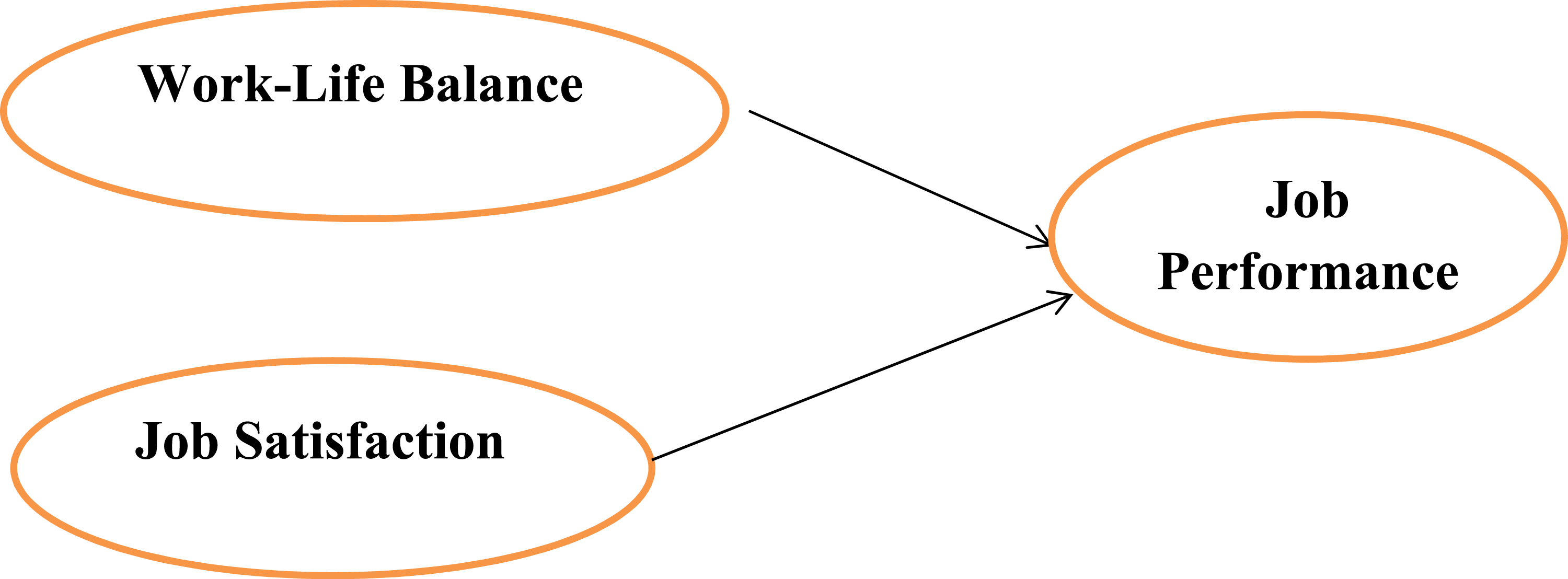
Materials and Methods
Study Design
The present study employed the quantitative research approach with cross-sectional design to examine the relationship between WLB, JS, and JP among health professionals. The data collection activities conducted during March 10 to May 25, 2024.
Study Setting and Population
This study was conducted in Eastern Ethiopia, which consists of the three regional state administrations, namely Dire Dawa Administration (DDA), Harari Regional State (HRS), and Oromia Regional State (ORS). Among the many health facilities found in Eastern Ethiopia, the researchers only include public and private hospitals found these regions. These areas were selected because of the large-scale hospitals (primary, general, referral, and specialized) found in these area. The total numbers of health professionals in five public and five private hospitals in DDA, HRS, and ORS were 3,272.
Eligibility Criteria
The inclusion criteria for the study were all physicians, nurses, and midwives currently working in the selected hospitals during the data collection period. Health professionals on annual leave, study leave, sick leave, or training at the time of data collection, and those not in clinical roles (e.g., administrative staff, or supportive staff) at their current hospital were excluded from the study.
Sampling Size and Sampling Technique
The participants of the study were health professionals currently working in five public and five private hospitals found in Eastern Ethiopia particularly in DDA, HRS, and ORS. From the total of 506 questionnaires distributed, 480 were fully completed and resulting in a 95% of response rate and 5% of nonresponse rate. Nevertheless, out of 480 questionnaires collected from health professionals, 30 of the study participants inaptly/wrongly responded to the items or did not return the questionnaire. More specifically, 2 health professionals left some pages of the questionnaire incomplete. On the other hand, 2 participants rated several items more than once which made the responses useless. To determine the appropriate sample size for the study, Kothari (2004) sample size determination formulas were used. Jackson (2003) recommended a minimum sample size of 20 cases per indicator or observed variable for quantitative studies. Given that there were 23 observed variables or indicators in this study, the minimum sample size required was 460. However, to account for a 10% response error, the sample size was increased to 506 (460 + 46 = 506). Kothari (2004) provided a proportional stratified sample size formula for distributing the sample size to different strata or groups. The formula used was: ni = sample size for each region n = total sample size Ni = total population of the region ∑Ni = sum of the populations of three regions
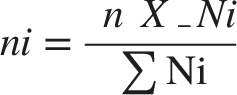
By using the above formula, the sample size was proportionally distributed to the DDCA, HRS, and SRS. The values of the variables and the resulting sample sizes were as follows: ∑Ni = 3,272 (DDA + HRS + ORS); n = 506 (total sample size), ni for Dire Dawa Administration = 177 out of a total population of 1, 140, ni for Harari Regional State =139 out of a total population of 902, and ni for Oromia Regional State = 190 out of a total population of 1, 230.
Instruments
Work-Life Balance Scale
Fisher et al. (2009) developed a theoretically grounded and empirically validated five-point Likert scale with 17 items that measure WLB as four dimensions of (Work Interference with Personal Life (WIPL), Personal Life Interference with Work (PLIW), Work Enhancement of Personal Life (WEPL), Personal Life Enhancement of Work (PLEW). The Cronbach alpha coefficients for the four dimensions reported are for the WIPL subscale (0.91), the PLIW subscale (0.85), the WEPL subscale (0.75), and the PLEW subscale (0.90). The measurement tool for WLB consists of 23 items, and the response to each item is on a five-point Likert scale (1 = Not at all to 5 = Almost all of the time).
Job Satisfaction Scale
Sinval and Marôco (2020) developed a one-dimensional scale of JS with five items that measure job satisfaction, and they confirmed the scale has good reliability and validity evidence in the Portugal and Brazil contexts. According to Sinval and Marôco (2020), the reliability of the 5-item scale of JS has a Cronbach alpha coefficient of .88. Therefore, the researcher adapted the JS scale developed and validated by Sinval and Marôco (2020) which has five-item self-report scales with a 5-point Likert scale. Two of those items are reversed. Sample items include: “I feel fairly satisfied with my present job”, “Most days I am enthusiastic about my work”, “Each day at work seems like it will never end (R)”, “I find real enjoyment in my work”, and “I consider my job to be rather unpleasant (R).”
Job Performance Scale
The JP scale developed by Koopmans et al. (2016) as the individual work performance questionnaire has three dimensions that measure task performance (TP), contextual performance (CP), and counterproductive work behavior (CWB). The Cronbach’s alpha reliability of the JP scale for TP, CP, and CWB subscales was reported as 0.79, 0.83, and 0.89, respectively (Koopmans et al., 2016). The measurement tool consists of 18 items, and the response to each item is on a five-point Likert scale (1 = Seldom to 5 = Always).
Reliability and Validity of WLB, JS, and JP Scales
The reliability estimate for work interference with personal life, personal life interference with work, work enhancement of personal life, and personal life enhancement of work subscales were .920, .900, .920, and .893 respectively. The internal consistency Cronbach’s Alpha among the 19-items of WLB scale was 0.792. The convergent and discriminant validity analysis conducted in this study through the composite reliability (CR), the average variance extracted (AVE), and the maximum shred variance value (MSV). The work-life balance construct had a good convergent validity since its average variance extracted (AVE =.64, .65, .67, and .70), which indicated that all the four dimensions have more than the threshold value of .50 (Collier, 2020). This construct had also a good discriminant validity since its AVE value (.64) was greater than the maximum shred variance value (MSV =.004), showing higher discriminant validity (Collier, 2020). Likewise, the construct of work-life balance had excellent discriminant validity descriptions since its AVE value (.64) was greater than the MSV value (.004).
The 4-items of the JS scale have the overall total Cronbach Alpha coefficients of .885. Once the reliabilities of the scales have been determined and found to be appropriate, the scales were also further checked for their convergent and discriminant validity. The JS scale also had the values of CR and AVE of all the JS scale was ≥.89 and ≥ .69 respectively. As indicated in this study, the value of CR of JS scale was greater than the value of AVE. The JS construct had a good convergent validity since its (AVE =0.694), which indicated that all the four items have more than the threshold value of .50 (Collier, 2020). This construct had also a good discriminant validity since its AVE value (.69) was greater than the value (MSV =.001), showing higher discriminant validity. The result revealed that the JS scale has excellent discriminant validity descriptions since its AVE value (.69) was greater than the MSV value (.001).
The Cronbach alpha reliability coefficients of the three JP dimensions were computed based on the reliability estimate for the TP, CP, and CWB subscales were .91, .86, and .89, respectively. The over all Cronbach’s Alpha for 13-items of JP scale was .820. The JP scale has a good convergent validity since its (AVE =.56, .69, and .76), which indicated that all the three dimensions have more than the threshold value of .50 (Collier, 2020). This construct has also a good discriminant validity since its AVE value (.56) was greater than the (MSV =.005), showing higher discriminant validity (Collier, 2020).
Data Collection Procedures
The procedures of data collection started with training of 15 data collectors. Official letters of cooperation were given to all public and private hospitals via prospective researchers to gain permission for data collection. Finally, the researcher asked the willingness of the selected health professionals’ to participate in the study and started to collect the data via the questionnaires prepared for this study.
Ethical Consideration
The study protocol was reviewed and approved by the Research Ethics Committee of Addis Ababa University, School of Psychology (Ref.No.SoP.CEBS.01/24). All procedures are in accordance with the ethical standards of the Research Ethics Committee of Addis Ababa University, School of Psychology. The participants completed the informed consent form to participate in the study.
Data Analysis
Data were analyzed using the Statistical Package for Social Science (SPSS) software-version-23.0 and Analysis of Moment Structures (AMOS) software-version-23.0. This study employed both descriptive and inferential statistics. At the first stage, statistical analyses, assumptions checking, and data screening was conducted on the study variables. The assumption of normality was assessed using skewness and kurtosis values, linearity through scatterplots, multicollinearity via variance inflation factor (VIF), and homoscedasticity using residual plots. The analysis process conducted via the following consecutive steps. First, the descriptive statistics such as frequency, mean, and standard deviation of the study variables were computed. To identify the relationships between WLB, JS, and JP, Pearson correlation coefficients was employed. Finally, to examine the influence of WLB and JS on JP, multiple regression analysis was employed.
Results
Socio-Demographic Characteristics
The sample consisted of 476 participants selected from five public hospitals and five private hospitals in Eastern Ethiopia. The sample was selected from Dire Dawa Administration (DDA), Harari Regional State (HRS), and East Hararghe Zone of Oromia Regional State (ORS). The participants’ age range from 20 to 56 years (M = 31.17, SD = 8.732). Out of the participants, 239 (50.2%) were female and 237 (49.8%) were male. Regarding their marital status, 294 (61.8%) were married and 182 (38.2%) were single. The job title of the sample indicated that 270 (56.8%) were nurses, 104 (21.8%) were physicians, and 102 (21.4%) were midwives. The majority of the participants 368 (77.3%) were from public hospitals and 108 (22.7%) were from private hospitals. Most of the participants 170 (53.4%) were from Dire Dawa Administration (DDA), 173 (24.4%) were from East Hararghe Zone of Oromia Regional State (ORS), and 133 (22.2%) were from Harari Regional State (HRS).
Explatory Factor Analysis of WLB, JS, and JP Scales
In total, our study had 476 participants. We divided this sample into two groups, each containing 238 participants, for exploratory factor analysis (EFA) and confirmatory factor analysis (CFA). To examine and test the stability of factor structure and consistence from population to population, from sample to sample, the researchers plan to check the factors are meaningfully correlated and represented by all newly adapted and translated items. To know the pattern of the items without imposing a priori constraints, conducting both EFA and CFA would be enable us to first explore the pattern and structure of both the newly added items and adapted items freely EFA and then test the proposed model structure CFA to provide robust test of the factor structure and invariance despite items are adapted, translated, and added to measure the constructs in a different setting and sample.
The results from EFA revealed that WEPL, PLEW, PLIW, and WIPL explained 23.20%, 19.75, 16.29%, and 15.32% of variance on work-life balance of health professionals, respectively, which altogether accounted for 74.58% total variance explained by these four work-life balance constructs. The eigenvalues ranged between 2.91 for WIPL and 4.40 for WEPL. The overall factor loadings in EFA ranged from .495 to .992. During the process of EFA, among the total 23 items four items (WIPL1), (WIPL6), (WIPL7), and (PLIW5) which had less than .199 communalities were deleted and 19-items which had above .40 factor loadings were retained for final factor analysis with four dimension of work-life balance constructs. The results of EFA revealed that TP, CP, and CWB explained 25.16%, 24.13%, and 23.43% of variance on job performance of health professionals, respectively, which altogether accounted for 72.83% total variance explained by these three job performance dimensions. The eigenvalues ranged between 2.42 for CWB and 4.22 for TP. The overall factor loadings in EFA ranged from .672 to .990.
Descriptive Statistics of the Study Variables
In this data analysis process, the skewness, kurtosis, and reliability of the study variables were computed and summarized in the following table.
Descriptive Statistics and Reliability of WLB, JS, and JP (n = 238)

Note. WLB = Work-Life Balance; JS=Job Satisfaction; JP=Job Performance; α = Cronbach’s alpha value.
As depicted in Table 1, the skewness and kurtosis values indicated that the data were normally distributed.
Relationships Between Work-Life Balance, Job Satisfaction and Job Performance
Means, Standard Deviations, and Pearson Correlations Among Study Variables (n=238)
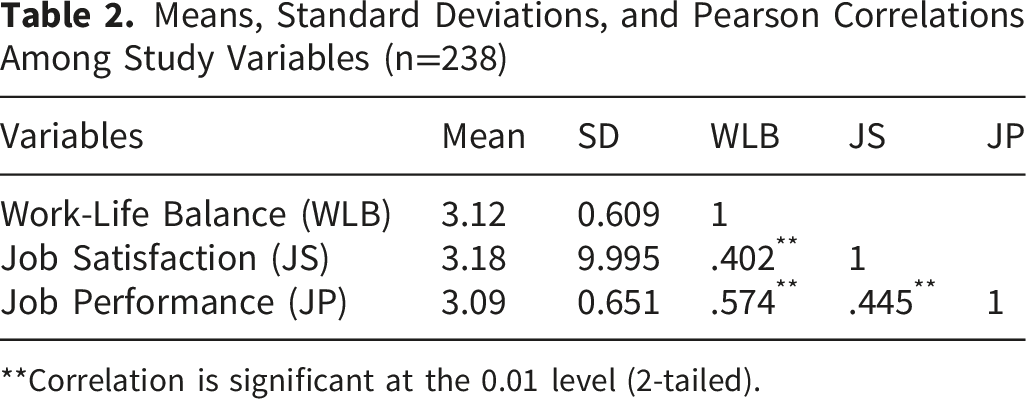
**Correlation is significant at the 0.01 level (2-tailed).
As shown in Table 2, there was a significant and positive correlation between work-life balance and job performance (r = 0.574, p < 0.01). Similarly, health professionals’ job satisfaction was positively correlated with their job performance (r = 0.445, p < 0.01), indicating that health professionals with greater job satisfaction had a better job performance. Furthermore, health professionals’ work-life balance was also positively correlated with their job satisfaction (r = 0.402, p < 0.01), meaning that health professionals who have good work-life balance were also more satisfied in their job.
Influence of Work-Life Balance and Job Satisfaction on Job Performance
The Results of Multiple Regressions Predicting JP From WLB and JS (n=238)
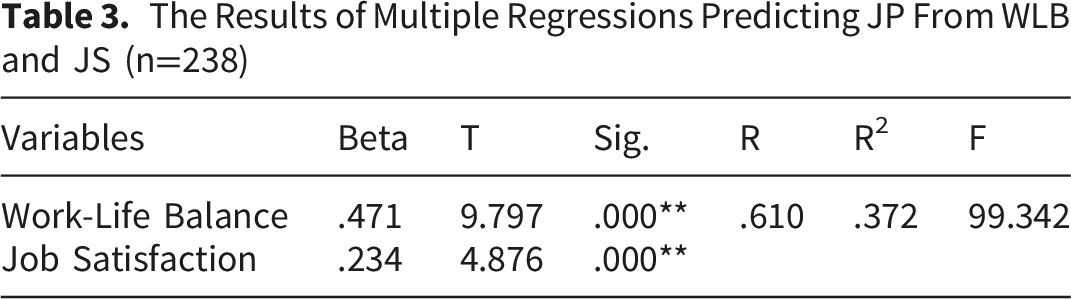
As shown in Table 3, work-life balance (β = .47, p < .001) and job satisfaction (β = .23, p < .001) predicted significantly and positively job performance of health professionals. The results of the multiple regression indicated that the model explained 37.2% of the variance on job performance. As the results of the study indicated that a multiple regression revealed that WLB and JS were significantly predict health professionals’ job performance. Work-life balance and job satisfaction together explained 37.2 % of the total variance in job performance, which was statistically significant (F (2, 235) = 99.342, p <.001).
In this study the largest beta coefficient is .47, which is for work-life balance variable. This means that this variable makes the strongest unique contribution to explaining the job performance of health professionals, when the variance explained by both variables in the model. The Beta value for the influence of work-life balance was (β = .47, p < .001) which indicating that it made the powerful unique contribution to health professionals’ job performance. On the other hand, regarding the job satisfaction, the Beta value for the influence of job satisfaction was (β = .23, p < .001) which indicating that it made the second unique contribution to health professionals’ job performance. As such, we can conclude that work-life balance and job satisfaction had significant contributions to the prediction of the health professionals’ job performance by 37.2 % of variance.
Discussion
The study examined the relationship between work-life balance, job satisfaction, and job performance of health professionals in public and private hospitals in Eastern Ethiopian context. The researchers used the adapted scales of WLB, JS, and JP that were validated and translated in to Amharic language to fit the Ethiopian socio-cultural contexts. The following discussion presented in line with the objectives of this study.
Relationship Between Work-Life Balance, Job Satisfaction, and Job Performance
The first objective of this study was about the relationships among WLB, JS, and JP. The findings of this study indicated that a significant positive correlation among health professionals’ WLB, JS, and JP. This study attempted to examine the relationship between WLB, JS, and JP of health professionals in Eastern Ethiopia. Based on the results of the study, there were positive and significant relationships exist between WLB, JS, and JP among health professionals. The following discussion presented in line with the objectives of this study.
The findings of the study corroborate with previous research evidence (Isa & Indrayati, 2023; Soomro et al., 2018) which reported that there were significant positive correlation among work-life balance, job satisfaction, and job performance. This means that if the work-life balance is increased, there is a tendency for the job satisfaction to increase, and vice versa. Therefore, it is possible to say that when health professionals are experiencing high levels of work-life balance, it may positively affect their job satisfaction. Thus, work-life balance is significantly related to job satisfaction, and health professionals who have a higher work-life balance also have higher job satisfaction. The finding of this study also shows that work-life balance and job performance had a positive relationship in the current study.
According to Haar et al. (2014) high levels of WLB are more positively associated with job and life satisfaction for individuals in individualistic cultures compared with individuals in collectivistic cultures. The current finding regarding the relationship between WLB, JS, and JP is consistent with the findings of previous studies (Haerani et al., 2023; Malau, 2023), which indicated that WLB was positively and significantly associated with JS and JP. The finding of this study shows that WLB had a positive relationship with JS and JP.
However, still some previous studies were inconsistent with the findings of the current study regarding the relationship between work-life balance, job satisfaction, and job performance. Few previous studies reported that there is a significant negative correlation between work-life balance, job satisfaction, and job performance (Boamah et al., 2022; Zadeh et al., 2020). This is imply that there were variations in empirical studies regarding the relationship between work-life balance, job satisfaction, and job performance from country to country or from context to contexts.
Influence of Work-Life Balance and Job Satisfaction on Job Performance
Work-life balance and job satisfaction are expected to produce both positive and negative spillover effects on health professionals’ job performance. For instance, Rony et al. (2023) concluded that maintaining nurses’ work-life balance is critical in improving healthcare organizations’ productivity, delivery of quality patient care and ensuring positive clinical outcomes. According to Malau (2023) WLB has a positive effect on employee performance and job satisfaction. The findings of the current study indicated that WLB and JS predicted significantly and positively job performance of health professionals. This means that this variable makes the strongest unique contribution to explaining the job performance of health professionals. The influence of WLB indicated that it made the powerful unique contribution to health professionals’ job performance. On the other hand, the influence of job satisfaction indicated that it made the second unique contribution to health professionals’ job performance. As such, we can conclude that work-life balance and job satisfaction had significant contributions to the prediction of the health professionals’ job performance.
This finding is in line with previous evidence that has indicated significant and positive influences of work-life balance on job performance; and there were positive relationships between work-life balance and job performance. In arguing the roles of work-life balance on job performance, researchers reported that work-life balance predicts the job performance of employees (Choi & Kim, 2012; Haider et al., (2018); Wijaya and Suwandana (2022). However, in contrary to the current study researchers also reported that job satisfaction has a positive effect on employee job performance (Susanto et al., 2022; Usman et al., 2021). The current study indicated that there is a significant predictive effect of work-life balance and job satisfaction on health professionals’ job performance.
Consistent with the findings of the current study, the previous studies were reported that job satisfaction has a positive effect on employee performance (Susanto et al., 2022; Usman et al., 2021). Moreover, Wijaya and Suwandana (2022) reported that JS has a positive and significant effect on nurse performance. From the above evidence, it is logical to say that the higher the WLB of health professionals, the better JS and JP. Therefore, the researchers concluded that WLB and JS have a positive and significant influence on the JP of health professionals working in public and private hospitals in Eastern Ethiopia.
Previously, there are variations in empirical studies undertaken regarding the influences of WLB and JS on JP of employees. However, Haerani et al. (2023) found that WLB significantly influences JS and employee performance. Consistent with current findings, Waworuntu et al. (2022) reported that WLB and JS positively affect employee performance. The current study also indicated that work-life balance and job satisfaction had positive and significant influences on health professionals’ job performance. Therefore, the current study confirmed that WLB and JS together produce positive effects and influences on JP of health professionals.
Implications for Research and Practice
This study will play crucial roles for healthcare managers working with public and private hospitals to design and implement WLB programs for health professionals. The findings will serve for further large-scale studies to closely examine the relationships between WLB, JS, and JP which have a great impact on health professionals’ practice today. The study’s conclusion highlights the significance of public and private hospital management in addressing health professionals’ work-life balance, job satisfaction, and job performance. Health care providers, such as physicians, nurses, and midwives, are essential to providing patients with high-quality medical care. The results of the current study also reported that work-life balance and job satisfaction have a favorable and significant influence on health professionals’ job performance.
Implications for Nursing
The result of this study indicated that work-life balance and job satisfaction played important roles in influencing and predicting the job performance of nurses, physicians, and midwives. Therefore, the need for work-life balance, job satisfaction, and job performance policies and strategies can change the lives of nurse professionals in Ethiopian contexts. Most importantly, this study concluded the relative influence of WLB and JS on JP of nurses, physicians, and midwives. This study reported that WLB and JS have a positive and significant effect on nurse’s job performance. Therefore, policymakers, healthcare leaders, managers, hospital directors and managers should advocate for the integration of social psychological adjustment mechanisms for nurse professionals regarding their work and personal life balance and enhancement strategies into the public and private hospitals affairs. This includes designing child care, elderly care, and family care systems for nurses who save lives and flexible work environment to better prepare them for psychosocial wellbeing and safety environment. The result of this study indicated that there is a need for social psychological training and consultancy service program for health professionals including nurses. One of the core missions of public and private hospitals in Ethiopia is to save life and promote effective human wellbeing. However, several research studies reveals that most nurses in Ethiopian context face severe stress, burnout, trauma, depression, and other forms of psychosocial problems. This highlights the need for public and private hospitals to establish centers for psychosocial training and consultancy programs for health professionals such as physicians, nurses, and midwives to keep their psychosocial wellbeing and safety.
Strengths and Limitations
Although this study provides relevant and previously undocumented findings, it has some limitations that would be considered for future studies. First, this study employed cross-sectional design which adequately did not address the cause-and-effect correlations. To evaluate the correlation over time, longitudinal research design would be required. Second, because the current study used self-reported surveys, health professionals’ may have overestimated or underestimated their levels of WLB and JP which could lead to response bias. Third, the newly adapted, translated, and validated instrument designed to measure WLB, JS, and JP among workers in large company of Western context. However, the job status, role, and titles of health professionals may differ from the large industrial workers. Therefore, future researchers who are interested in studying the relationship between WLB, JS, and JP among health professionals working in public and private hospitals, they may use this instrument separately. Since, this tool only standardized for small size samples of physician, nurse, and midwife, the result might not work for the larger groups of health professionals across the country. To increase the validity of the results, future research should take into account bigger, more varied and diverse sample sizes to generalize to the wider population.
Conclusion
The result of this study indicated that there is positive and significant relationship between work-life balance, job satisfaction, and job performance of health professionals. The result of this study indicated that work-life balance and job satisfaction played important roles in influencing and predicting the job performance of health professionals. The multiple regression results indicated that work-life balance and job satisfaction had stronger influence on health professionals’ job performance. Moreover, we introduced a new framework tailored to the Ethiopian context, illustrating how WLB and JS predict JP among health professionals. This framework can serve as a guide for future research and interventions regarding the effects of WLB and JS on JP. Our findings suggest that enhancing health professionals’ WLB and JS may improve their JP and effective patient care services. In summary, this study sheds light on the influence of WLB and JS on JP of health professionals in Eastern Ethiopian. While confirming the importance of these variables, it underscores the multifaceted nature of JP. We hope this research inspires further exploration and practical interventions to enhance the work-life balance and job satisfaction of health professionals working in public and private hospitals in Ethiopian contexts.
Footnotes
Acknowledgments
We would primarily like to acknowledge public and private hospitals in Eastern Ethiopia, and enumerators from each hospital for their welcome and assistance during data collection activities.

Ethical Considerations
The study protocol was reviewed and approved by the Research Ethics Committee of Addis Ababa University, School of Psychology (Ref.No.SoP.CEBS.01/24). All procedures are in accordance with the ethical standards of the Research Ethics Committee of Addis Ababa University, School of Psychology. The participants completed the informed consent form to participate in the study.
Consent to Participate
Informed consent was obtained from all subjects involved in this study. The participants completed the informed consent form to participate in the study.
Author Contributions
All authors read and approved the final manuscript. WTB contributed to the conceptualization, tool preparation, and writing the original and the final draft of the manuscript. DTA contributed to supervision of data analysis, review and editing of the manuscript.
Funding
The authors received no financial support for the research, authorship, and/or publication of this article.
Declaration of Conflicting Interests
The authors declared no potential conflicts of interest with respect to the research, authorship, and/or publication of this article.
Data Availability Statement
The data that support the findings of this study are available upon request from the corresponding author.