






Abstract
Introduction
To promote active learning, critical thinking, and professionalism among nursing students, pedagogical practices are increasingly shifting to student-centered approaches. This systematic review and meta-synthesis of qualitative studies and mixed-methods studies was undertaken to examine the perspectives of both nursing students and educators of their experiences of student-centered pedagogies.
Methods
This review was reported in accordance with the Enhancing Transparency in Reporting the Synthesis of Qualitative Research (ENTREQ) statement, with the Preferred Reporting Items for Systematic Reviews and Meta-analyses (PRISMA) statement’s flow diagram followed to ensure transparency of the review study selection process. A systematic search was undertaken in five major electronic databases of peer-reviewed, qualitative studies and mixed-methods studies with a qualitative component published between 2015 and 2025. SPIDER tool was used for inclusion criteria. A data extraction form was developed for this synthesis, and thematic synthesis was carried out according to Thomas and Harden (2008) using NVivo 12. The risk of bias was assessed using the Critical Appraisal Skills Programme (CASP) Checklist.
Results
The database search yielded 366 citations from which 31 studies were ultimately included in this review. Synthesis identified four main themes: 1) facilitating students’ active cognitive engagement; 2) fostering of clinical competence and metacognitive competence; 3) fostering positive, supportive learning environments; 4) addressing facilitators and barriers, namely, cognitive overload and resistance to change and lack of resources and institutional support.
Conclusion
Student-centered pedagogies may improve students’ learning, engagement, and clinical and metacognitive competence within nursing education. However, for student-centered pedagogies to be implemented effectively, identified barriers to student engagement need to be addressed. Further, it is necessary to facilitate the implementation of this pedagogical shift by providing faculty development and curricula, and support infrastructure.
Keywords
Introduction
Over the last several decades, nursing education has moved away from teacher-centric models towards student-centered ones, placing greater emphasis on active learning, critical thinking and learning that empowers learners to seek out information and knowledge on their own (O'Shea, 2003). While efficient in transmitting information, teacher-centered methods have been criticized for not developing the skills that students require to function independently, including critical thinking (Bhardwaj et al., 2025), and problem-solving abilities (Şahbaz et al., 2025), in light of the rapidly changing healthcare landscape and new digital educational technologies (Martín-Alguacil et al., 2024). These theories share common pedagogical underpinnings, like constructivism (constructing knowledge through experience), andragogy (self-direction and the importance of relevance to the adult learner), and experiential learning, which aligns well with the educational reforms in health professions (Bhardwaj et al., 2025).
Research increasingly suggests that there are advantages to using student-centered learning in nursing education. Studies have shown that this method of learning is beneficial in improving clinical judgment (clinical decision making) (Marques et al., 2022), self-efficacy (how confident and capable they feel), communication abilities and motivation of nursing learners (Rashwan, 2023) when compared to the conventional teaching (didactic) method (Berg et al., 2023; Martin-Alguacil et al., 2024). Furthermore, it can also lead to greater student satisfaction, deeper learning, and better clinical readiness (Aryuwat et al., 2024). However, some papers have reported significant advantages in students’ achievement and competency in clinical skills when compared with the teacher-centered approach (H. Sulaiman et al., 2024; W. Yanget al., 2024), while other papers have found no significant difference between student-centered and teacher-centered approaches, or findings have been inconclusive and left a number of issues to be discussed (Ghodsbin et al., 2004; Guejdad et al., 2025).
For example, Guejdad et al. (2025) suggested that the clinical learning environment satisfaction among the nursing students was associated more with the organizational and interactional factors than the instructional approaches adopted by the teaching staff (Guejdad et al., 2025). Meanwhile, the study by Berg et al. (2023) concluded that even using the student-centered approaches did not eliminate the problems nursing students faced with clinical teaching staff (Berg et al., 2023). These contradictory findings highlighted the need for further studies to explore the qualitative data in order to fill in the gap in this area as it has been largely neglected in quantitative studies in relation to how and when student-centered approaches can be applied for achieving desired educational outcomes.
Systematic reviews have been undertaken on the effect of different approaches to active and collaborative learning, such as the flipped classroom (Tan et al., 2017) and simulation-based learning (R. P. Cant et al., 2017). However, these reviews have typically focused on only one specific pedagogical approach, and the focus has been almost entirely on the use of quantitative outcomes. So far, no other published meta-synthesis combines multiple strategies for student-centered learning (including the flipped classroom, simulation-based learning, blended learning, case-based learning, team-based learning, and newer pedagogies such as virtual reality and escape rooms) into one comprehensive qualitative synthesis. This is problematic, as a qualitative synthesis would provide information on the mechanisms, processes and contextual factors that facilitate or hinder the outcomes, which is information that could not otherwise be derived from only quantitative data. Consequently, the field does not have any understanding of common success factors to support student-centered learning approaches and their implementation.
Therefore, the aim of this systematic review and meta-synthesis was to explore nursing students’ and educators’ experiences with student-centered pedagogical strategies in nursing education. Specifically, the study sought to identify how these strategies influence cognitive engagement, clinical and metacognitive competencies, supportive learning ecosystems, and implementation barriers. By synthesizing qualitative evidence across multiple pedagogical approaches, this review provides insights to guide pedagogical design and faculty development. Ultimately, better-prepared graduates may indirectly contribute to improved patient care, although this outcome was not directly measured in the included studies. This article is derived from a part of the Ph.D. dissertation conducted at Guilan University of Medical Sciences, Rasht, Iran. The study was approved by the Ethics Committee of Guilan University of Medical Sciences under the ethical approval code [IR.GUMS.REC.1403.321]. The authors gratefully acknowledge the support of Guilan University of Medical Sciences and all participants who contributed to this study.
Methods
Reporting Standards
This review has been conducted and reported in accordance with the Preferred Reporting Items for Systematic Reviews and Meta-Analyses (PRISMA) guidelines (Page et al., 2021) and the Enhancing Transparency in Reporting the Synthesis of Qualitative Research (ENTREQ) statement (Tong et al., 2012). The protocol was registered in PROSPERO. The PRISMA Checklist is available as Supplementary file 1.
Information Sources and Search Strategy
To ensure that this review captured all relevant articles on the topic, a systematic and comprehensive search was conducted of five prominent bibliographic databases including PubMed, CINAHL, Scopus, Web of Science, and PsycINFO. The complete search string used in PubMed can be found in Supplementary file 2. Our search was limited to English language articles published in the period of January 1, 2015 to September 30, 2025.
The search strategy combined controlled vocabulary (e.g., MeSH terms) and free-text keywords. Keywords included “student-centered learning,” “learner-centered education,” “active learning,” “self-directed learning,” “collaborative learning,” “nursing education,” and “pedagogical strategies.” Boolean operators (AND, OR) were applied to refine the search, and synonyms such as “participatory teaching,” “experiential learning,” and “constructivist pedagogy” were incorporated to ensure a broad scope.
Eligibility Criteria
The inclusion and exclusion criteria were defined using the SPIDER framework (Cooke et al., 2012):
Data Extraction
Two reviewers independently extracted data using a piloted data extraction form developed for the purpose of the study based on SPIDER and review questions. The form was piloted on three randomly selected studies (>85% agreement among two reviewers) and modified where appropriate before use. Extraction included study characteristics (author, year, country, aim), participants (sample size, demographic characteristics) setting, methodology (research approach/design, data collection methods), analytic approach, and salient features of studies (themes, subthemes, examples of quotes). Extracting data for mixed-method studies: only qualitative data (themes and subthemes, participant quotes) from mixed methods articles were included in the data synthesis.
Approach to Data Synthesis
In this study, the thematic synthesis approach outlined by Thomas and Harden (2008) (Thomas et al., 2008) to integrate the data. During the initial stage, a reviewer performed detailed coding of the study results, working line by line with the assistance of NVivo 12 (QSR International, 2018). All codes were generated in an inductive fashion, derived directly from participant quotes and authors’ interpretations of the data, and the coding process paid particular attention to contextual nuances. Similar codes were then collated together to be classified as categories, and if a code did not fit with those already established, a new code was created. In addition, data relevant to more than one category were coded into both categories.
In the next phase, these codes were clustered into descriptive themes to describe similar patterns across studies, and these descriptive themes were refined iteratively and checked by a second researcher to maintain reliability. Finally, researchers synthesized these descriptive themes into analytical themes, which represent a higher level of interpretive concepts related to student-centered pedagogical strategies in nursing education. If the two reviewers created different themes, researchers discussed and resolved these differences by consensus.
Quality Appraisal
The methodological quality of included studies was appraised independently by two reviewers. For purely qualitative studies, the Critical Appraisal Skills Programme (CASP) checklist was used (Long et al., 2020). For mixed-methods studies, the CASP checklist was applied to the qualitative component and the Mixed Methods Appraisal Tool. Disagreements were resolved by consulting a third reviewer. All eligible studies were retained in the synthesis regardless of quality score to avoid excluding potentially valuable insights (Walsh et al., 2005). All eligible studies were retained regardless of quality score. Quality appraisal results informed interpretation of the findings (greater emphasis placed on higher-quality studies where findings varied), but did not result in exclusion of any studies to preserve the richness of qualitative insights(Walsh et al., 2005). A detailed summary of quality appraisal results is available in Supplementary file 3.
Results
Characteristics of Included Studies
The final review included 31 articles; they were published between 2016 to 2025. The 31 articles included a combined total of 2145 participants (nursing students [n = 1892]; and educators/preceptors [n = 253]. The included articles were published from the following countries/regions (15 total): Asia n = 18 (58%); primarily China (n = 7) and Iran (n = 4), Europe n = 7 (23%), North America n = 4 (13%), Oceania n = 2 (6%); Turkey, Hong Kong, Saudi Arabia, Netherlands, Norway, Vietnam, Bosnia and Herzegovina, Ireland, Spain (Figure 1: Study selection). Flowchart of the database search, selection, and review process of articles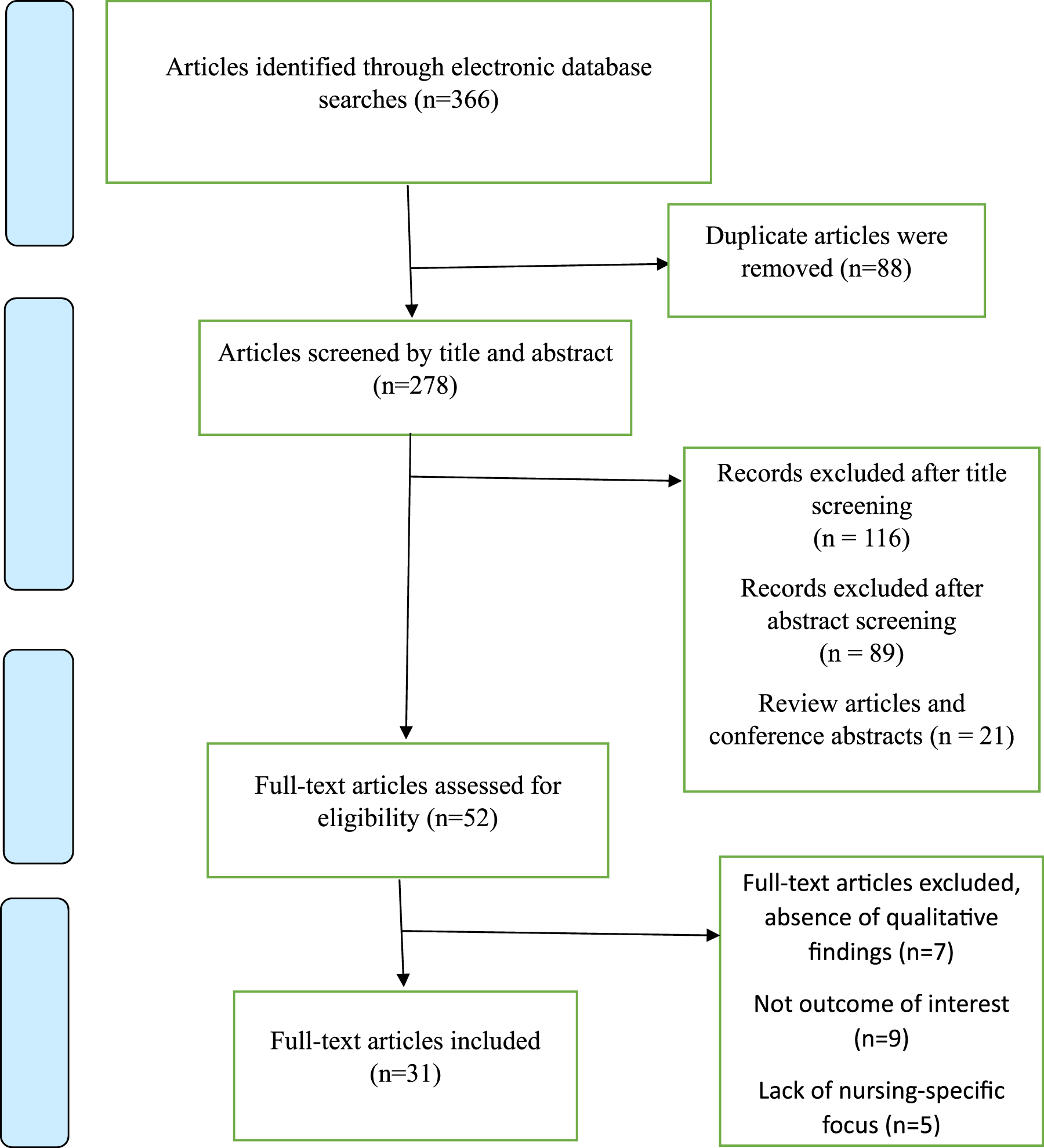
Types of Student-Centered Pedagogical Strategies Identified
The 31 studies covered a range of student-centred approaches, such as the flipped classroom (n=9), simulation-based learning (n=8), blended learning (n=6), case-based learning (n=5), team-based learning (n=3) and others, including virtual reality, escape rooms and enquiry-based learning (n=4). Fourteen studies (45%) were mainly focused on the classroom/theory setting, 12 (39%) were primarily clinical and/or skills lab setting (e.g. simulation based in a placement area or lab), and five (16%) were conducted across both settings. This distribution is reflective of the versatility of student-centred approaches within educational contexts in nursing. Overall characteristics of included studies are presented as the Supplementary file 4.
Meta-Synthesis Findings
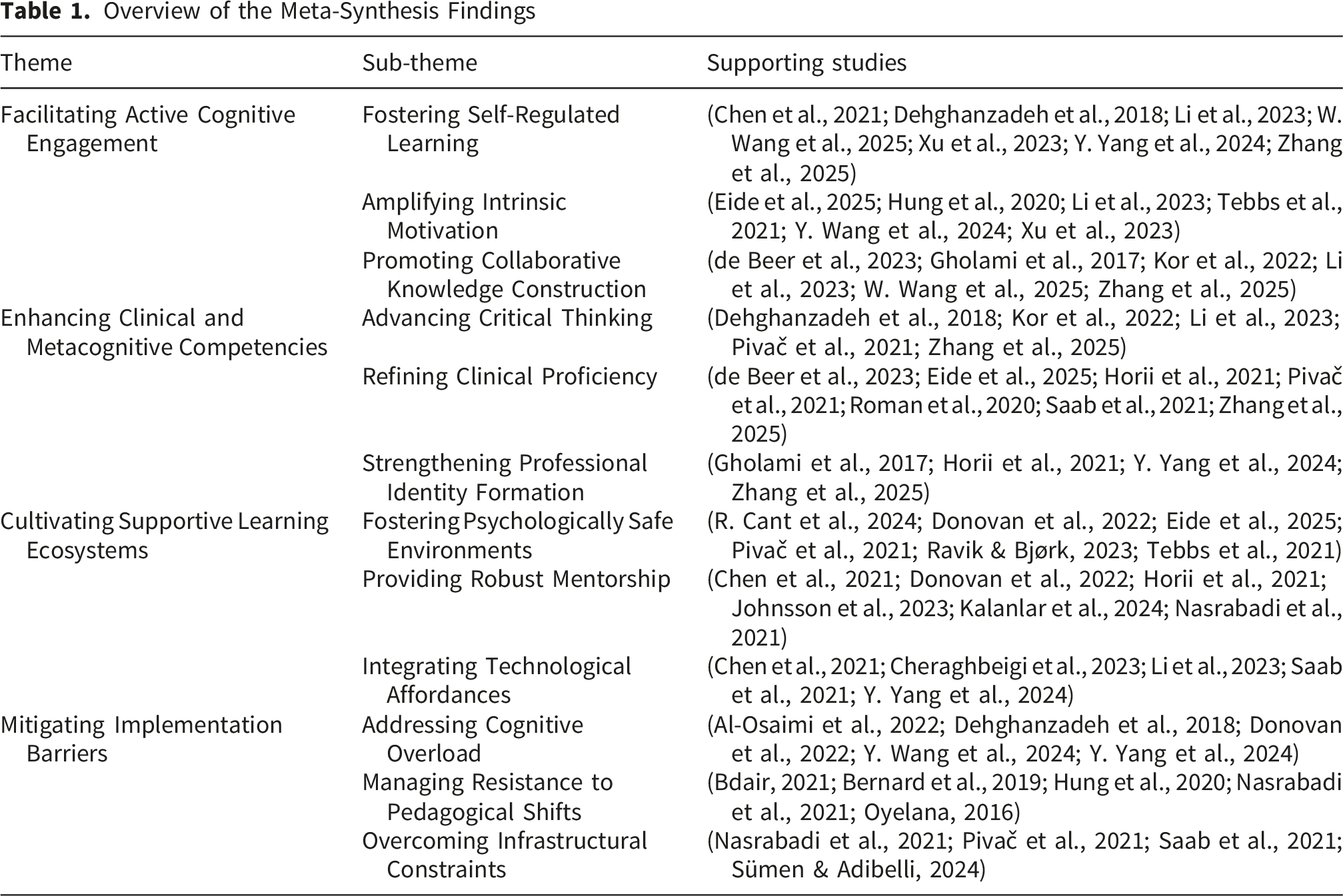
Themes were developed inductively through line-by-line coding (Thomas & Harden, 2008), directly aligning with the review objectives: determinants/facilitators of engagement and supportive conditions (Themes 1 and 3), impacts on competencies (Theme 2), and barriers (Theme 4). Four overarching themes emerged.
Theme 1: Facilitating Active Cognitive Engagement
Student-centred strategies represent a transition from conventional didactic teacher-centered learning to student-centered teaching and learning strategies that focus on cognitive engagement. This theme consisted of the following sub-themes: developing learner autonomy, motivation, and collaborative knowledge construction.
Sub-Theme 1.1: Fostering Self-Regulated Learning
Self-regulated learning is an aspect of student-centred learning strategies that encourages learners to take ownership of the learning process. One study reported that students took part in preparation for class with self-regulated learning in a flipped classroom. “When I reviewed the contents before the class, I had a higher self-confidence and was eager to ask different questions about the topic,” a student remarked (Dehghanzadeh et al., 2018). This trend was common in Asia and Europe, but students with high clinical workloads reported that self-regulated learning could be challenging.
Sub-Theme 1.2: Amplifying Intrinsic Motivation
Gamification, virtual reality, and clinical cases that felt important always resulted in a boost in students’ intrinsic motivation because the learning was more appealing and personally significant. Students often noted in interviews that their positive emotions and interest in the topic were heightened. A student explained, “The hands-on approach made me eager to explore clinical scenarios”. (Saab et al., 2021). While simulation and VR studies reported the strongest motivational gains, blended-learning studies highlighted motivation sustained through flexible pacing rather than novelty alone. (Y. Wang et al., 2024).
Sub-Theme 1.3: Promoting Collaborative Knowledge Construction
Collaborative learning environments, facilitated by TBL, CBL, and group discussions, foster peer-to-peer knowledge construction. A participant found that district teams leveraged collaboration, with a student noting, “We’ve learnt that you can’t do it all by yourself and don’t have to either” (de Beer et al., 2023). This collaborative effect was universally reported, with stronger emphasis on shared problem-solving in clinical simulation studies compared with purely classroom-based ones (Gholami et al., 2017).
Theme 2: Enhancing Clinical and Metacognitive Competencies
Student-centered strategies cultivate competencies critical for clinical practice and metacognitive development. This theme includes sub-themes of advancing critical thinking, refining clinical proficiency, and strengthening professional identity formation.
Sub-Theme 2.1: Advancing Critical Thinking
It was highlighted CBL’s role in critical analysis, with a student stating, “Analyzing real-world cases forced us to think beyond textbook knowledge” (Y. Yang et al., 2024). This improvement was evident across all strategy types, though simulation studies more frequently linked critical thinking gains to immediate clinical decision-making (Li et al., 2023).
Sub-Theme 2.2: Refining Clinical Proficiency
Simulation, CBL, and hands-on practice bridge theoretical knowledge and clinical application. Meanwhile, it was emphasized simulation’s role, with a student noting, “Practicing in a controlled environment helped me master complex procedures” (Nasrabadi et al., 2021). Simulation studies showed the most pronounced proficiency gains, while classroom-focused strategies contributed more to preparatory confidence (Eide et al., 2025).
Sub-Theme 2.3: Strengthening Professional Identity Formation
Student-centered strategies foster a robust sense of professional identity, preparing students for nursing roles. A participant noted that simulation experiences reinforced identity, with a student stating, “The sense of accomplishment we felt upon ‘saving’ the ‘child’… prompted contemplation on the potential impact of saving real lives” (Zhang et al., 2025). This identity formation was particularly salient in simulation and case-based studies, where emotional investment in patient outcomes was highest (Ravik et al., 2023).
Theme 3: Cultivating Supportive Learning Ecosystems
Supportive learning ecosystems are essential for the efficacy of student-centered strategies. This theme includes sub-themes of fostering psychologically safe environments, providing robust mentorship, and integrating technological affordances.
Sub-Theme 3.1: Fostering Psychologically Safe Environments
Psychologically safe environments enhance student confidence and engagement. A study found that supportive settings facilitated learning, with a student stating, “Staff at [name] were both supportive and willing to help me learn the skills I needed” (R. Cant et al., 2024). However, Psychological safety was reported as equally important in both classroom and clinical settings (Donovan et al., 2022).
Sub-Theme 3.2: Providing Robust Mentorship
Effective mentorship from faculty and preceptors is critical for guiding students. A participant noted preceptor growth, with one stating, “After joining preceptor training, I understood the difficulties of new graduate nurses, and I tried to support and encourage them” (Horii et al., 2021). In this line, mentorship was especially critical in clinical placements, where it mediated the transition from theory to practice (Johnsson et al., 2023).
Sub-Theme 3.3: Integrating Technological Affordances
Technological tools enhance engagement and accessibility. Meanwhile, VR’s interactivity was also highlighted, noting, “VR increases attention due to interactivity — no zoning out” (Saab et al., 2021). Also, participants emphasized digital platforms, with a student stating, “Online simulations allowed me to practice at my own pace” (Cheraghbeigi et al., 2023).
Theme 4: Mitigating Implementation Barriers
Student-centered strategies face implementation challenges that require strategic mitigation. This theme includes sub-themes of addressing cognitive overload, managing resistance to pedagogical shifts, and overcoming infrastructural constraints.
Sub-Theme 4.1: Addressing Cognitive Overload
The increased preparatory demands of student-centered approaches can lead to cognitive overload. A participant noted, “The volume of some contents was significantly high, and we had limited time” (Dehghanzadeh et al., 2018). Overload was more pronounced in programs with already heavy clinical schedules (Y. Wang et al., 2024).
Sub-Theme 4.2: Managing Resistance to Pedagogical Shifts
Resistance from students and faculty can impede adoption. Another participant noted student resistance, with stating, “Some get really stressed… they want me to tell them what they need to know” (Bernard et al., 2019). In addition, resistance was higher among faculty with long-standing teacher-centered habits (Nasrabadi et al., 2021).
Sub-Theme 4.3: Overcoming Infrastructural Constraints
Resource limitations, including facilities and faculty training, pose challenges. Pivac (2021) noted educators’ lack of pedagogical skills (Pivač et al., 2021). These constraints were most evident in resource-limited settings but were not insurmountable with institutional commitment (Sümen et al., 2024).
Overview of the Meta-Synthesis Findings
Conceptual Model
Figure 2 consolidates the meta-synthesis results to produce a dynamic conceptual model for understanding student-centered pedagogies in nursing education. Four key themes, Facilitating Active Cognitive Engagement, Strengthening Clinical and Metacognitive Skills, Fostering Enabling Learning Environment, and Addressing Implementation Barriers, are depicted as interrelated elements to convey their reciprocal and cyclical nature. The directions of arrows between the themes indicate the relationships are multi-directional and iterative, as opposed to being linear and sequential. Conceptual model of student-centered pedagogical strategies in nursing education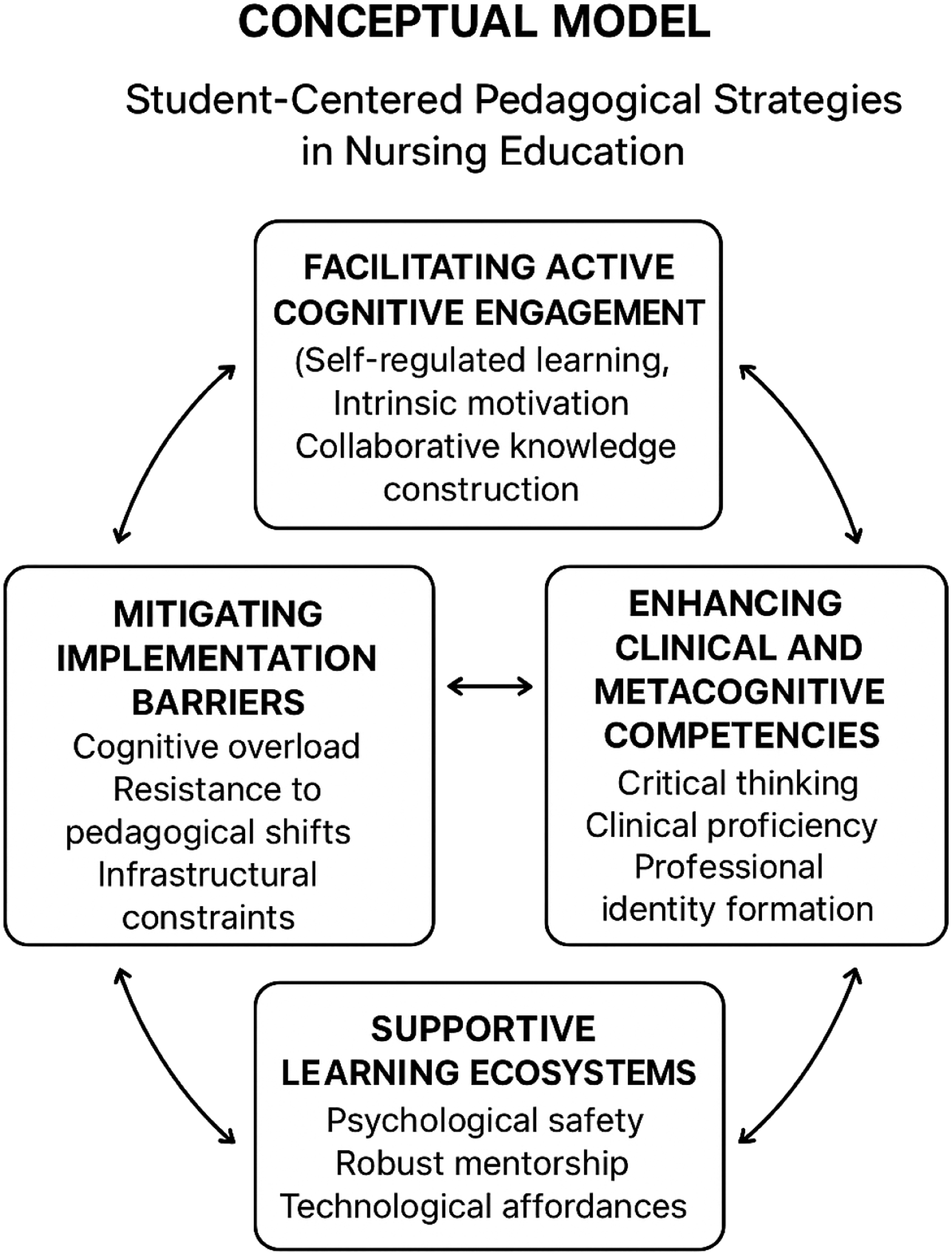
The student-centered pedagogies lead to student’s engagement in a cognitive level (Theme 1), which in turn lead to higher order cognitive, clinical, and professional skills (Theme 2). The development of such skills enable student to learn and be engaged in an enabling environment (Theme 3) which further strengthens students’ engagement in learning and strengthens their skills, leading them back to the first theme. At the same time, the model posits that barriers can impact any of the key processes. Barriers such as student and instructor cognitive overload, resistance to new teaching strategies, and institutional constraints can impede student engagement, limit the development of skills, or reduce the effectiveness of the enabling environment. Thus, this theme is shown as being embedded within the model to reflect their potential to undermine the effectiveness of student-centered pedagogies in nursing education. Overall, the proposed conceptual model portrays student-centered pedagogies in nursing education as a dynamic and complex system, whereby pedagogical approaches, students’ cognitive and psychosocial learning processes, the learning environment, and implementation barriers operate to mutually influence each other over time. This theoretical framework provides a comprehensive overview of how student-centered pedagogies work in nursing education, and provides a basis for interventions aimed to promote their effective use.
Figure 2 shows the conceptual model of the study as following:
Discussion
A systematic review and meta-synthesis was conducted to identify and synthesize the facilitators and barriers to implementing student-centered teaching in nursing education. Four key themes emerged from the findings of this study: promoting students cognitive involvement, increasing clinical skills and metacognitive awareness, developing a supportive learning environment and reducing barriers for teachers. Our meta-synthesis was conducted using the approach to thematic synthesis suggested by (Thomas and Harden (2008)). The review included 31 studies with a total of 2145 participants. The key contribution of this review is in the integration of the findings in an overall framework that brings together the mechanisms for stimulating active learning through engaging students, the expected outcome (skills and competencies), the conditions for a supportive ecosystem, and the factors that facilitate or impede implementation of student-centered teaching. To the best of our knowledge, no other review has systematically investigated this wide range of student-centered strategies across classroom (n=14), clinical/skill-lab (n=12) and integrated (n=5) contexts.
All findings of our systematic review and meta-synthesis are supported by educational theories. In order to keep a close connection to our methodology and results, the themes were explicitly linked, and if possible sub-themes, to each theory considered. Constructivist theory was linked to the process of students actively constructing their knowledge and competencies in collaboration with other students (sub-theme 1.3) (Chand, 1995). Andragogy provided the theoretical perspective to understand how nurses prepared for the active engagement in student-centered learning activities (sub-theme 1.1) (Knowles, 1984). Finally, experiential learning theory was applied in order to explain how students gained knowledge and understanding after completing activities in simulation (sub-theme 2.2) (Kolb et al., 2012).
A critical finding of this review was that active cognitive engagement, supported by self-regulated learning, intrinsic motivation, and collaborative knowledge construction, is at the heart of how these methods facilitate learning. In classroom/theory learning environments, flipped and blended methods supported self-regulated learning in alignment with Zimmerman’s model (Zimmerman., 2002), while simulation and VR in the clinical context increased intrinsic motivation via personally meaningful scenarios. These observations suggest a reciprocal relationship among them that could be more robust in integrated methods.
The second theme, improving clinical and metacognitive skills, suggests student-centered methods that transcend just knowledge transmission towards critical thinking skills, clinical skills, and professional identity. Patterns specific to contexts were observed: critical thinking was advanced best in theoretical and case-based classroom settings, while improvements in skills proficiency and professional identity were best observed with clinical and skill-lab simulations. (Elendu et al., 2024).
Another contribution of this review relates to identifying supportive learning environments (i.e., psychological safety, mentorship and technology integration) as a vital component for the methods to succeed. These components were reported in theory/classroom and clinical settings consistently throughout the articles and could act as necessary conditions that allow other identified themes to succeed (Sibiya et al., 2018).
However, the final theme, overcoming obstacles to implementation, highlights significant barriers, such as cognitive overload and opposition that appear to have been more prevalent within high workload clinical programs and limited resource situations (Negm et al., 2024). Despite these concerns, our study indicates that there are strategies for dealing with these barriers including sequencing, communication, and investment (Modena et al., 2025).
Some of the key theoretical and practical implications for nursing education include: Theory-oriented courses, where learners should be encouraged to self-regulate by being given appropriate preparatory materials, as well as having their workload reduced to minimize any cognitive overload issues that may result. In clinical practice or simulation skills laboratories, debriefing sessions should be utilized to help learners gain professional identity and psychological safety through feedback. When learners are placed in blended or integrated programs, where theory and practice are combined, learners must have access to theory and practice mentors as well as access to low-cost educational platforms to bridge any theory and practice discrepancies. To facilitate implementation, nursing faculty should take part in faculty workshops designed to help them change their teaching styles and roles as they prepare learners in a changing health care environment that requires simulation to prepare learners to be safe, competent practitioners; and nursing faculty should be supported and encouraged to seek funding for simulation resources, with priority being given to low-resource nursing programs in order to allow for equity of simulation-based learning opportunities.
This integrated discussion—linking our thematic synthesis findings, theoretical lenses, contextual variations, and concrete implications—clarifies the study’s contribution to evidence-based pedagogical design in nursing.
Strengths and Limitations
There are a number of important strengths of the present meta-synthesis. First, the meta-synthesis provides the first comprehensive qualitative synthesis of student-centered pedagogical strategies in nursing and midwife education, drawing from a diverse selection of student-centered pedagogical strategies such as the flipped classroom, simulation-based learning, blended learning, case-based learning, team-based learning, virtual reality, and escape rooms. This review draws on the findings of 31 studies, with a combined participant group of 2145, in fifteen different countries. This gives the review a breadth of evidence across a range of student-centered strategies that provides a level of insight not possible in a review that focuses on a single student-centered pedagogical strategy. Second, an important strength of this meta-synthesis is that it has generated a new conceptual model (Figure 2), a new framework to describe student-centered pedagogical strategies in nursing and midwifery education. The conceptual model (Figure 2) provides a useful way to map the interconnected relationships within and between student-centered strategies that may be useful in designing and implementing research and student-centered pedagogies in the future. Third, both students and educators provided their perspectives on the facilitators and barriers to student-centered pedagogies in this review. By including both students and educators, it is possible to have a balanced view and understand the multiple viewpoints that can impact the student experience. Finally, the thematic synthesis was conducted using an evidence-led synthesis and analysis framework that adhered to the guidelines laid down by Thomas and Harden (2008) and was reported using ENTREQ and PRISMA guidelines. Adhering to these standards in the meta-synthesis helps strengthen the rigour, transparency and credibility of the meta-synthesis findings.
This review is not without limitations. The included studies were heterogeneous in design, educational context, and methodological rigor, which may affect the generalizability of findings. Furthermore, consistent with established qualitative synthesis guidance (Walsh et al., 2005), all 31 studies were retained irrespective of CASP quality scores to preserve the full spectrum of lived experiences; however, this approach may introduce variability in robustness, and greater interpretive weight was therefore placed on higher-quality studies during theme development. The reliance on self-reported data in many qualitative studies introduces the possibility of social desirability bias, where students and educators may report more favorable experiences than actually occurred. Additionally, the marked predominance of Asian studies (58 %) may limit transferability to other cultural and healthcare contexts; inclusion was restricted to English-language publications only, which may have introduced language bias; and, as an interpretive meta-synthesis, the findings inevitably reflect the reviewers’ subjective synthesis process. Moreover, most studies were conducted in specific cultural and institutional settings, limiting cross-context applicability. Nonetheless, the synthesis of multiple pedagogical models across diverse environments provides a comprehensive picture of how student-centered strategies function and what conditions facilitate or hinder their success.
Implications for Practice
Tailored implementation of student-centered pedagogies in classroom/theory courses through the provision of adequate support is recommended to assist in cognitive load management and preparation such as clear, directed instruction and guidance on how to best use resources and scaffolding in theory-based courses; tailored implementation of student-centered pedagogies in clinical learning and simulation through the utilization of structured debriefing to promote a positive learning atmosphere that is conducive to open discussion in clinical and simulation-based courses; and a strong emphasis on faculty development and investment in adequate infrastructure particularly in settings with limited resources. Further studies examining long-term effects of student-centered pedagogical implementation on student outcomes such as licensure exam performance or workplace patient-care outcomes should be conducted, and studies on the cultural adaptation of student-centered pedagogies should be considered. Overall, there is evidence to suggest that student-centered pedagogies implemented with support can lead to positive changes in nursing students’ competencies as preparation for their clinical nursing roles in increasingly complex healthcare environments.
Conclusion
The results from this meta-synthesis suggest that student-centered pedagogical practices in nursing have the potential to foster active cognitive involvement, leading to positive changes in clinical and metacognitive competencies in the presence of favorable educational environments and the implementation of strategies that minimize barriers such as cognitive overload, lack of readiness for change, and infrastructure challenges. The synthesis is based on evidence from the experiences of 2,145 students and educators from 31 qualitative and mixed methods studies. The analysis indicates that student-centered pedagogies can contribute to positive changes in self-regulated learning, critical thinking, clinical competency, and the formation of a nursing student’s professional identity, and that these outcomes can vary based on the learning context (i.e. stronger changes in SRL and critical thinking in classroom/theory learning; stronger changes in clinical proficiency and professional identity in clinical/skill-lab learning). Our novel contribution is the development of a comprehensive cross-strategy framework encompassing engagement factors, competency outcomes, educational environment factors, and implementation factors that can be used as a starting point to guide the practice and support needed to implement student-centered pedagogies in nursing education for individual educators and institutions rather than the single pedagogies included in previous reviews.
Supplemental Material
Supplemental material -Student-Centered Pedagogical Strategies in Nursing Education: A Systematic Review and Meta-Synthesis of Experiences, Perceived Impacts, Facilitators, and Barriers
Supplemental material for Student-Centered Pedagogical Strategies in Nursing Education: A Systematic Review and Meta-Synthesis of Experiences, Perceived Impacts, Facilitators, and Barriers by Solmaz Saeidi, Moluk Pouralizadeh, Zahra Taheri, Hamid Sharif-Nia, and Ehsan Kazemnejad leili in Sage Open Nursing.
Supplemental Material
Supplemental material -Student-Centered Pedagogical Strategies in Nursing Education: A Systematic Review and Meta-Synthesis of Experiences, Perceived Impacts, Facilitators, and Barriers
Supplemental material for Student-Centered Pedagogical Strategies in Nursing Education: A Systematic Review and Meta-Synthesis of Experiences, Perceived Impacts, Facilitators, and Barriers by Solmaz Saeidi, Moluk Pouralizadeh, Zahra Taheri, Hamid Sharif-Nia, and Ehsan Kazemnejad leili in Sage Open Nursing.
Supplemental Material
Supplemental material -Student-Centered Pedagogical Strategies in Nursing Education: A Systematic Review and Meta-Synthesis of Experiences, Perceived Impacts, Facilitators, and Barriers
Supplemental material for Student-Centered Pedagogical Strategies in Nursing Education: A Systematic Review and Meta-Synthesis of Experiences, Perceived Impacts, Facilitators, and Barriers by Solmaz Saeidi, Moluk Pouralizadeh, Zahra Taheri, Hamid Sharif-Nia, and Ehsan Kazemnejad leili in Sage Open Nursing.
Supplemental Material
Supplemental material -Student-Centered Pedagogical Strategies in Nursing Education: A Systematic Review and Meta-Synthesis of Experiences, Perceived Impacts, Facilitators, and Barriers
Supplemental material for Student-Centered Pedagogical Strategies in Nursing Education: A Systematic Review and Meta-Synthesis of Experiences, Perceived Impacts, Facilitators, and Barriers by Solmaz Saeidi, Moluk Pouralizadeh, Zahra Taheri, Hamid Sharif-Nia, and Ehsan Kazemnejad leili in Sage Open Nursing.
Footnotes
Acknowledgements
This article was derived from a part of a Ph.D. dissertation conducted at Guilan University of Medical Sciences, Rasht, Iran. The study was approved by the Ethics Committee of Guilan University of Medical Sciences (Ethics Code: [IR.GUMS.REC.1403.321). The authors sincerely thank Guilan University of Medical Sciences for its support and all participants who generously contributed to this study.

Ethical Considerations
This study was approved by the ethical committee of Giulan University of Medical Sciences (Ethical code: IR.GUMS.REC.1403.321). Also, the ethical guidelines followed the principles established in the Declaration of Helsinki.
Author Contributions
S.S and Z.T, M.P participated in idea conceptualization, investigation, study methodology design, conducting the meta-analyses, data visualization, writing the original draft of the paper, and project administration. H.S-N, and E.K.L participated in writing the original draft of the paper. M.P participated in writing the original draft of the paper. H.S-N, and E.K.L participated in writing the original draft of the paper. M.P participated in the critical reviewing and editing of the manuscript and project administration. S.S, M.P, Z.T, and H.S-N, participated in idea conceptualization, critical reviewing and editing of the manuscript, project administration, and supervising the project. All authors read and approved the final manuscript.
Funding
This research received no specific grant from any funding agency in the public, commercial, or not-for-profit sectors.
Declaration of Conflicting Interests
The authors declared no potential conflicts of interest with respect to the research, authorship, and/or publication of this article.
Data Availability Statement
All data analyzed in this study were extracted from previously published studies, which are cited in the manuscript. No new datasets were generated. Therefore, data sharing is not applicable.
Supplemental Material
Supplemental material for this article is available online.
References
Supplementary Material
Please find the following supplemental material available below.
For Open Access articles published under a Creative Commons License, all supplemental material carries the same license as the article it is associated with.
For non-Open Access articles published, all supplemental material carries a non-exclusive license, and permission requests for re-use of supplemental material or any part of supplemental material shall be sent directly to the copyright owner as specified in the copyright notice associated with the article.
