






Abstract
Introduction
Work-Life Balance (WLB) and happiness are critical in nursing management, given the complexity of the work environment. Hence, achieving WLB and happiness would produce desirable outcomes for nurses and patients.
Objectives
Based on the Conservation of Resources (COR) theory and the Job Demands-Resources (JD-R) model, this study 1) described the levels of WLB and Happiness among nurses. 2) examined the positive correlation between WLB and Happiness. 3) investigated the variation of WLB and happiness in response to nurses’ Socio-demographic and professional characteristics.
Methods
This research used a descriptive, correlational, cross-sectional design with a convenience sample of 238 nurses in Saudi Arabia. The questionnaire included self-administered versions of the Hayman Work-Life Balance Scale and the Oxford Happiness Scale. SPSS version 26 was used to analyze the study data collected between May and July 2024.
Results
The nurses achieved an average level of WLB and reported a moderate level of happiness. A Pearson’s test showed a significant positive correlation between nurses’ WLB and happiness (r =0.500, p<0.001). Factors such as age, nationality, living with family, educational background, and years of experience led to significant differences in both WLB and happiness.
Conclusion
WLB remains a major challenge for many healthcare systems, as work-related interests increasingly dominate nurses’ lives. Human resources regulations are needed to encourage family-friendly policy and implement a well-being program to address the issues nurses face regarding their WLB and happiness. Additional research is recommended to deepen our understanding of the mechanism linking WLB to other work outcomes in the healthcare professions. Such insights are vital for informing policy, enhancing job satisfaction, and ultimately improving patient care outcomes.
Keywords
Introduction
The nursing profession is emotionally demanding, with high workloads and complex interpersonal interactions, often leading to challenges in maintaining an appropriate work-life balance. Against this backdrop, maintaining a proper work-life balance (WLB), which is “the amount of time you spend doing your job compared with the amount of time you spend with your family and doing things you enjoy,” is essential (Cambridge Dictionary, n.d). Organizations can help by making deliberate efforts to reduce conflict between employees’ professional and personal responsibilities, enabling them to function more effectively in both domains (Malik, 2023).
WLB and happiness have become central concerns in healthcare management and research across healthcare systems worldwide. Nurses are essential to healthcare systems, and their well-being and happiness directly influence the excellence of patient care (Dall’Ora et al., 2020). The dynamic and unpredictable nature of healthcare environments requires nurses to balance professional responsibilities with personal and family obligations, a balance that can influence their overall well-being. However, the nursing profession faces significant WLB challenges, primarily due to the job’s demanding nature, characterized by extended shifts, unpredictable hours, and high-stress conditions (Happell et al., 2013; Jarrar, Al-Bsheish, et al., 2023).
Nursing roles require frequent night shifts, high patient acuity, and emotional labor, all of which disrupt WLB (Happell et al., 2013; Jarrar, Al-Bsheish, et al., 2023). Nurses separated from their families or working continuously long shifts experience worse WLB and higher burnout (Kocatepe et al., 2023). Studies have revealed that nurses frequently report moderate-to-poor WLB, with long working hours and shift rotation as key drivers of imbalance (Helmle et al., 2014; Neumann et al., 2018). When nurses lack rest and personal time, chronic stress and psychological strain accumulate, leading to absenteeism, reduced engagement, and turnover intentions (Kelly et al., 2019). Nurses often struggle to manage professional and personal demands, resulting in burnout, reduced well-being, and compromised patient safety (Dall’Ora et al., 2020). Nurses with balanced life roles demonstrate greater motivation and provide more patient-centered care. Conversely, excessive work demands and inflexible schedules reduce satisfaction and performance (Ali et al., 2020). In Saudi healthcare settings, cultural context increases domestic responsibilities, especially among women, intensifying WLB pressures and strongly influencing job satisfaction and nurse retention (Alluhidan et al., 2020). Nurses in tertiary centers face high patient loads and strict standards, further challenging balance. Hence, positive WLB improves engagement, job satisfaction, and performance (Wulandari & Dirbawanto, 2022). Despite recognizing these issues, many healthcare organizations struggle to implement effective strategies to foster WLB among nursing staff (The Joint Commission, 2018).
The happiness of nurses transcends individual well-being; it encompasses professional satisfaction, mental strength, and a willingness to deliver compassionate care et al., 2021). Happiness has been described as a positive psychological state and life satisfaction, and plays a vital role in building resilience, improving clinical performance, and enhancing patient outcomes (Flaubert et al., 2021; Hills & Argyle, 2002). Nonetheless, according to Fisher (2010), “Happiness at work includes, but is far more than, job satisfaction” (p. 384). Employee engagement and career satisfaction are the two primary components of workplace happiness (Joo & Lee, 2017; Salas-Vallina et al., 2017). Thus, happiness is understood as a multidimensional psychological state encompassing positive affect, life satisfaction, and overall subjective well-being. Importantly, this conceptualization extends beyond occupational attitudes such as job satisfaction and reflects individuals’ broader evaluation of their life circumstances. Nurses with higher happiness levels demonstrate better cognitive function, compassion, and clinical judgment (Flaubert et al., 2021).
Happiness enhances emotional stability, empathy, productivity, and organizational loyalty (Misra & Srivastava, 2022). Global evidence shows that happiness among nurses ranges from moderate to low, driven by burnout, emotional burden, lack of autonomy, economic status, and satisfaction with closure (Javanmardarejad et al., 2021; Mousavi et al., 2019). In Middle Eastern settings, family structure, culture, and religion play an essential role in happiness, offering coping and emotional support (Pirdelkhosh et al., 2022). A recent study of nurses in Saudi Arabia reported moderate happiness (Alharthi et al., 2023; Alotheimin & Salem, 2023). A study in Iran showed a moderate level of happiness among nurses.
Khosrojerdi et al. (2018) suggested prioritizing happiness and its factors when formulating workplace policies and plans, as the evidence consistently shows that higher WLB predicts nurses’ broader psychological well-being. Nurses with satisfactory life balance experience greater motivation, mental peace, and a sense of purpose (Gurdogan & Uslusoy, 2019), and balanced nurses show higher happiness and lower psychological trauma (Ayar et al., 2021).
Despite global recognition of nurse well-being and the critical role nurses play in the Saudi healthcare system (Almalki et al., 2012), empirical evidence on the relationship between WLB and happiness in the Kingdom of Saudi Arabia remains limited, particularly in tertiary care settings. Addressing this knowledge gap is important for developing an appropriate intervention to improve nurses’ well-being and job satisfaction and ultimately elevate the standard of healthcare services. The following section reviews the available literature based on the Conservation of Resources (COR) theory and the job demands-resources (JD-R) to build the study hypotheses.
Literature Review
The relationship between WLB and happiness has received increasing attention from scholars because the responsibilities of working during weekends, nights, and holidays have increased. Moreover, long working hours keep nurses away from home for extended periods. Thus, time available for nurses to care for their families is limited (Das et al., 2024). Optimal WLB is associated with reduced burnout and enhanced job satisfaction and work engagement among nurses (Fukuzaki et al., 2021). Conversely, poor WLB can lead to stress, fatigue, and decreased motivation, negatively affecting patient outcomes and organizational efficiency (Frögéli et al., 2019). A study conducted by Sahay and Wei in (2021) revealed that during the COVID-19 pandemic, the lines between work and personal life became increasingly blurred. Nurses reported the need to establish additional physical and emotional boundaries at home to separate their professional responsibilities from their family and personal lives. Mohamed (2023) and Marecki (2023) found that work-life balance has significant benefits for both institutions and employees, as it substantially affects employee performance and productivity, thereby positively affecting the organization. An additional study reported that inadequate WLB is the strongest predictor of burnout among nurses (Kelly et al., 2019). Various factors have been identified as catalysts for this interest, including differences in the demographic structure of the labor market, such as heightened job requirements, alterations in the quantity and intensity of work, and ultimately, extensions in working hours (Helmle et al., 2014).
Theoretical Framework
The study links WLB and happiness through COR theory and the JD-R model. These frameworks explain how WLB techniques influence employee happiness by moderating stress and enhancing well-being through resource management (Ahiabu et al., 2024).
Proposed by Hobfoll (1989), the COR theory asserts that individuals strive to obtain, preserve, and protect valued resources, including time, energy, and emotional support. He also observes that psychological stress is evident in three scenarios: when there is a threat of resource depletion, an actual net loss of resources, and a lack of acquired resources following the expenditure of resources or significant effort. COR theory explains that stress can arise from problems within a person’s roles or between different roles, especially when work and personal life clash.
Based on Hobfoll’s 1989 COR theory, Fisher (2001) described WLB as the degree to which individuals can maintain equal engagement and contentment in both work and personal roles. Achieving this balance occurs when individuals can manage the demands of both areas without experiencing one role interfering with the other, ultimately contributing to greater well-being, life satisfaction, and happiness (Duxbury & Higgins, 2001; Fisher, 2001). Fisher (2001) conceptualized WLB as a multidimensional construct comprising Work Interfering with Personal Life, Personal Life Interfering with Work, and Work-Personal Life Enhancement.
The JD-R model is another lens through which the connection between WLB and happiness can be understood (Demerouti et al., 2001). Moreover, job demands, such as workload, time pressure, and emotional labor, can lead to stress and burnout if not counterbalanced by adequate job resources, such as support, autonomy, opportunities for personal development, and schedule flexibility. The JD-R theory posits that balancing job demands and resources can impact employee outcomes; the presence of sufficient resources enables employees to meet job demands more effectively, thus reducing stress and improving well-being and happiness (Bakker & Demerouti, 2007).
Accordingly, this study 1) described the levels of WLB and Happiness among nurses in Saudi Arabia, 2) examined the positive correlation between WLB and Happiness, and 3) investigated the variation of WLB and happiness in response to nurses’ Socio-demographic and professional characteristics. Based on the theoretical rationales outlined above, the following hypotheses were posited:
H1: There is a positive and significant correlation between nurses’ WLB and happiness.
H2: Difference in Demographic characteristics (i.e.,age, gender, nationality, marital status, living with family) is related to nurses’ WLB and happiness.
H3: Difference in professional characteristics (i.e.,educational level, years of experience, unit of assignment) is related to nurses’ WLB and happiness.
Methods
Research Design and Setting
A quantitative, descriptive, correlational cross-sectional study design was used to address the research aim. This study was conducted at Specialist Hospital in Madinah (KFSH&RC-M). The hospital is characterized by its international culture, workplace diversity, and commitment to high-quality care. With 300 beds and 556 registered nurses from national and international backgrounds, the hospital is recognized as a regional leader in managing high-risk and complex oncological cases. As the latest extension of this globally renowned institution, it serves the population of Madinah and its surrounding areas, offering advanced tertiary services with a focus on oncology, ophthalmology, and obstetrics. Equipped with state-of-the-art medical technology, the hospital aims to become a global referral center for adult and pediatric cancer care by delivering the highest standards of clinical services, education, and evidence-based practice (IHR Canada, 2022).
Population, Sampling, and Sample Size
The target population was 556 currently employed nurses at King Faisal Specialist Hospital and Research Centre in Madinah (KFSH&RC-M). A non-probability, convenience sampling method was utilized. The required sample size was calculated using Epi Info, a statistical software program developed by the Centers for Disease Control and Prevention, with a 95% confidence level and a 5% margin of error (Villarta Jr & Asaad, 2000). Hence, the minimum required sample size in this study was 228. To accommodate potential non-responses, a final sample of 238 nurses was achieved.
Inclusion Criteria
The inclusion criteria of this study were: 1. Registered nurses currently working nurses currently employed at the hospital. 2. Registered nurses from both genders (Male and Female). 3. Registered nurses from all nationalities. 4. Completed at least one year of experience.
Exclusion Criteria
1. Interns. 2. Ward clerks. 3. Registered nurses with less than one year of experience.
Measures
In addition to the socio-demographic and professional characteristics questionnaire, which included age, gender, nationality, level of education, marital status, number of children, and living with family, the study used two validated questionnaires to measure WLB and happiness. The WLB was a modified version of the scale developed by Hayman (2005) based on Fisher (2001). The scale comprised 15 items that assessed three key dimensions of WLB: Work Interference with Personal Life (WIPL), with 7 items; Personal Life Interference with Work (PLIW), with 4 items; and Work/Personal Life Enhancement (WPLE), with 4 items. Responses were rated on a 5-point Likert scale ranging from 1 (Strongly Disagree) to 5 (Strongly Agree). Reverse scoring was applied to negative items (Figueroa, 2022). The overall score ranged from 1 to 5. A score from 4.5 to 5 was categorized as very good WLB, a score of 3.5 – 4.49 was good WLB, an average WLB was from 2.5 – 3.49, a score of 1.5 – 2.49 was poor WLB, and a score of 1.0 – 1.49 was very poor WLB.
The Oxford Happiness Questionnaire (OHQ), developed by psychologists Michael Argyle and Peter Hills at Oxford University (Hills & Argyle, 2002), is a self-report instrument designed to measure nurses’ happiness levels. It comprises 29 items, each rated on a six-point Likert scale ranging from 1 (strongly disagree) to 6 (strongly agree). Negatively worded items are reverse-scored. The overall score ranged from 1 to 6; higher scores indicate greater happiness. A score of 1–1.99 indicated not happy, 2–2.99 somewhat unhappy, 3–3.99 neutral, 4-4.49 somewhat happy or moderately happy, 4.50-4.99 rather happy or pretty happy, 5-5.99 very happy, and a score of 6 is too happy. The OHQ has demonstrated strong reliability with Cronbach’s alpha values of 0.838 in test-retest stages (Alharthi et al., 2023) and up to 0.92 in other studies (Liaghatdar et al., 2008). Factor analyses in the literature further support the scale’s validity, with reliability coefficients for individual factors ranging from 0.94 to 0.917. Both scales show a high level of reliability. The WLB Cronbach’s alpha was 0.904, indicating a high level of reliability for the scale. The Cronbach’s alpha for the Happiness sub-scale was 0.749.
Ethical Considerations
Ethical approval was granted by the Institutional Review Board (IRB) at King Abdulaziz University and the KFSH&RC-M (C1745M/115/45) IRB committee. Participation was voluntary, confidential, and anonymous. Written informed consent was obtained from all participants.
Data Collection Procedure
After obtaining the required permission from KFSH&RC-M and the research committee to conduct the study, an official email titled “Invitations for Nurses’ Participation” was sent by the nursing affairs office to all the nurses in the targeted group. Correspondingly, one investigator personally presented the questionnaire link as a barcode to participants at different times (i.e.,day and night shifts) to scan or send via email. As English is the official language used in hospitals, an electronic, self-administered English-language survey was used to collect data. To prevent duplicate submissions, the online survey platform was configured to: • Allow only one response per device, and • Track repeated IP submissions while ensuring anonymity.
The initial part of the survey included a brief section to obtain participants’ informed consent for participation in the study, along with their right to withdraw at any time. In addition, there was a brief overview of the study aims, objectives, and the importance of the research. The data collection period commenced on May 14, 2024, and concluded on July 28, 2024. Four hundred and four nurses responded to the survey, and 238 provided usable replies, yielding an effective response rate of 72.66%.
Statistical Analysis
All data analyses were carried out using the Statistical Package for the Social Sciences, Version 26 (SPSS, Armonk, NY: IBM Corp, USA). The sociodemographic characteristics data for the nurses were calculated as frequencies and percentages, while descriptive statistics, i.e., mean and standard deviation, were used to assess the level of nurses’ WLB and happiness. Further, inferential statistics, i.e., the independent t-test and one-way ANOVA, determined the associations of the socio-demographic characteristics of the nurses. Prior to conducting inferential tests, the normality assumption was evaluated using the Shapiro–Wilk test, skewness and kurtosis, and visual inspection of histograms. Pearson correlation was performed to assess the correlation between WLB and happiness scores, with statistical significance set at p<0.05.
Results
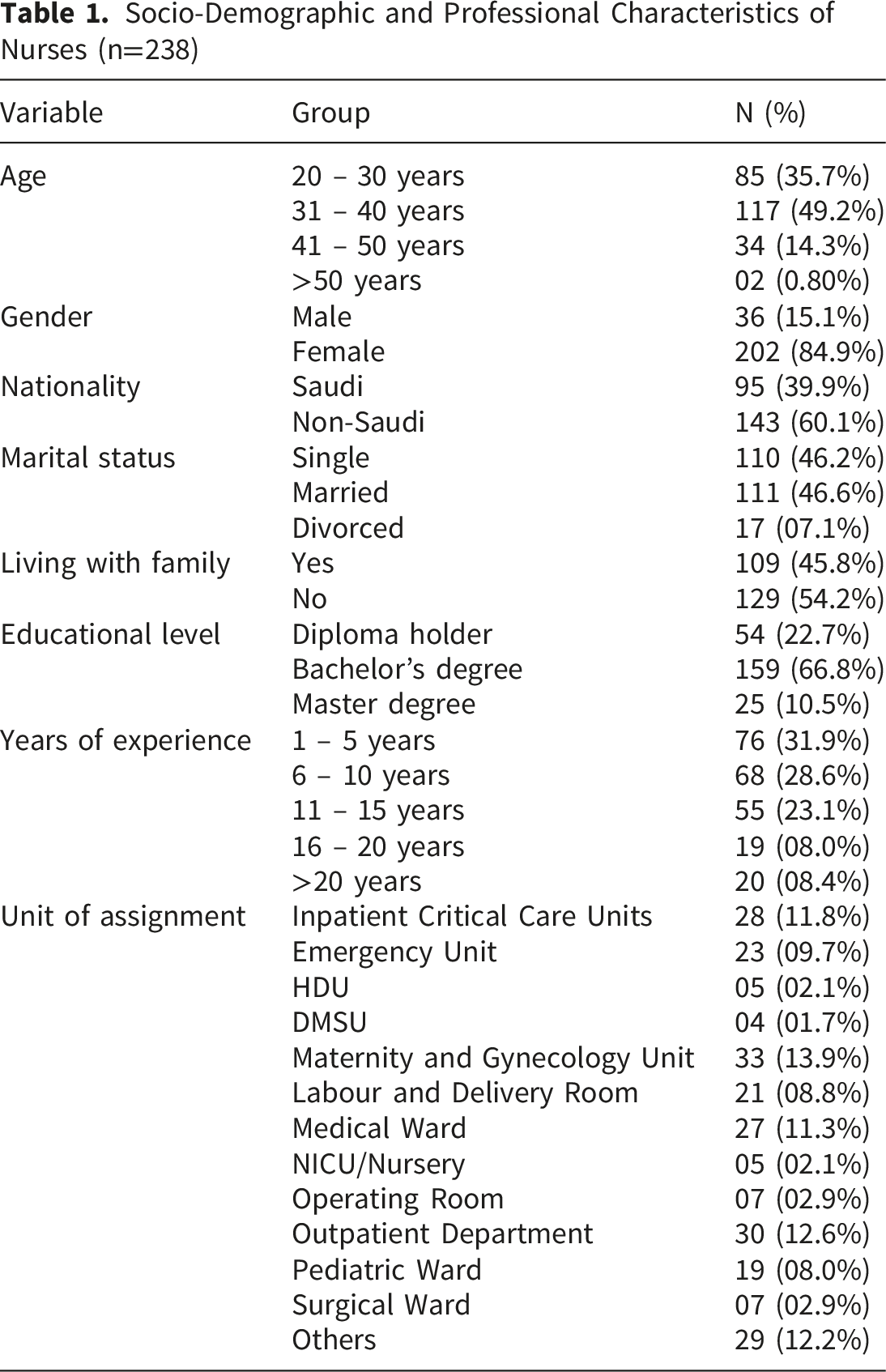
Socio-Demographic Characteristics
Socio-Demographic and Professional Characteristics of Nurses (n=238)
Mean Scores of the WLB
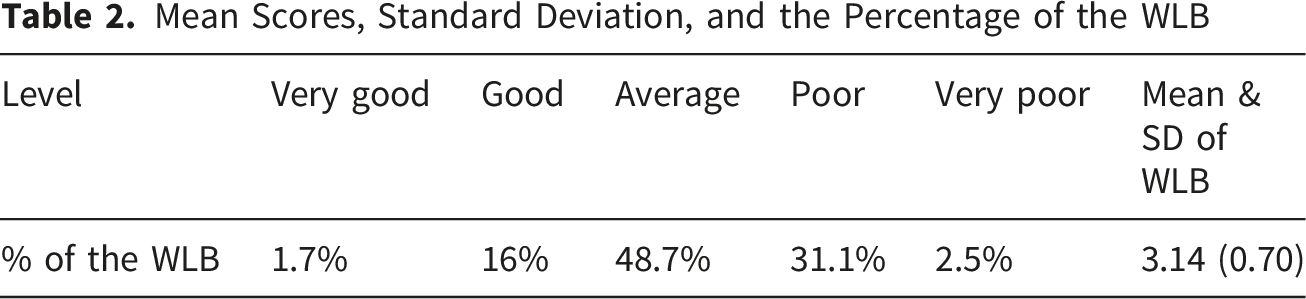
Mean Scores, Standard Deviation, and the Percentage of the WLB
Mean Scores of Happiness
Mean Scores, Standard Deviation, and the Percentage of Happiness

Relationship Between WLB and Happiness
The results showed a positive and significant correlation between WLB and happiness scores (r=0.500; p<0.001), supporting H1 and suggesting that an increase in happiness score is correlated with an increase in WLB score. This means that as WLB increases, happiness increases as well.
WLB and Happiness With Socio-Demographic and Professional Characteristics
WLB and Happiness With Nurses’ Demographic and Professional Characteristics
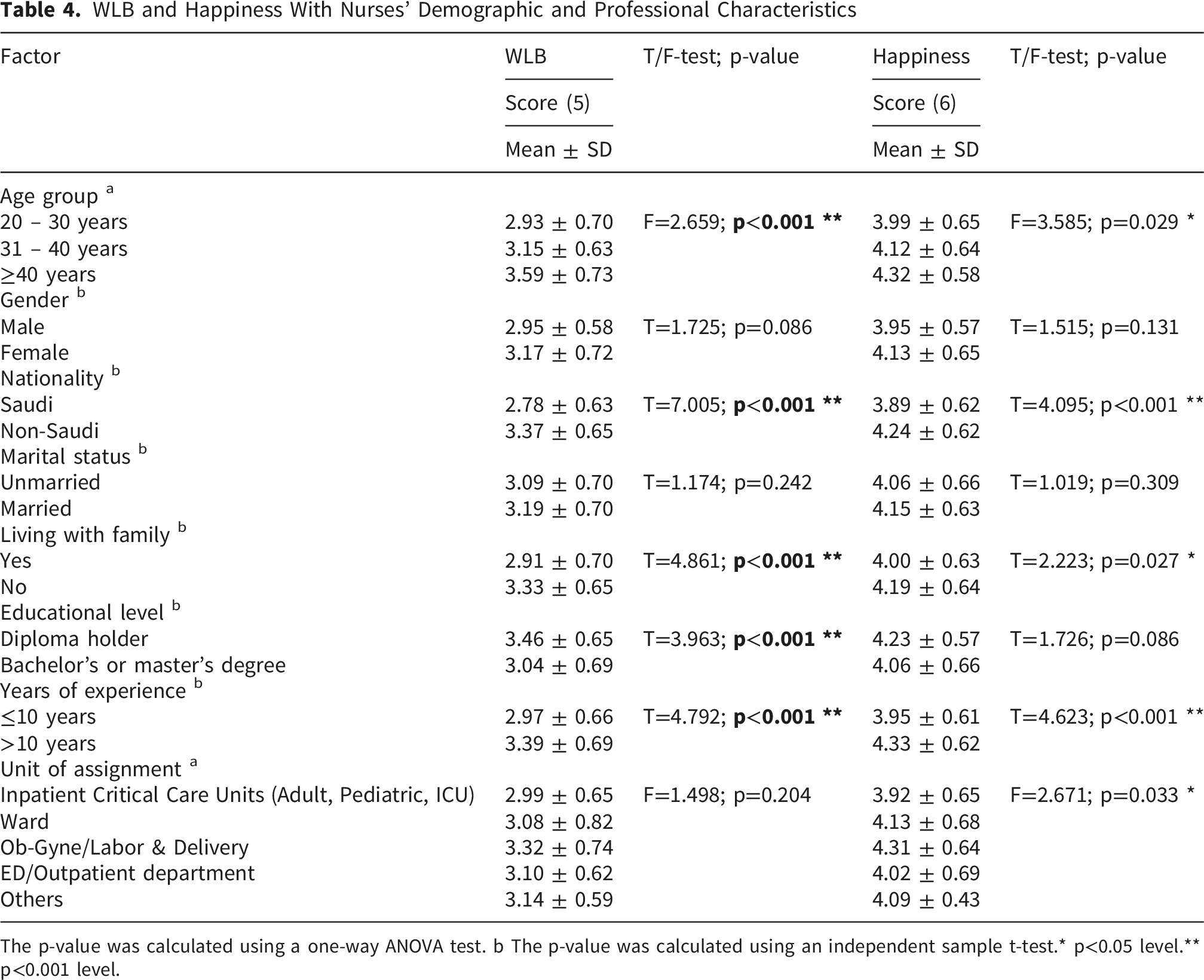
The p-value was calculated using a one-way ANOVA test. b The p-value was calculated using an independent sample t-test.* p<0.05 level.** p<0.001 level.
In summary, the results indicated that nurses reported moderate levels of WLB and happiness, with a significant and positive association between WLB and happiness, as shown in Figure 1. Additionally, nurses with more favorable demographic and professional characteristics (such as older age, greater experience, and more stable work schedules) had higher scores on both outcomes. Group comparisons revealed significant differences in WLB and happiness across selected demographic variables, while correlation analysis showed that higher WLB was strongly associated with higher happiness. Together, these findings highlight the interconnected nature of personal and professional factors shaping nurses’ well-being and provide a clear empirical foundation for the interpretations presented in the discussion. Relationship of demographic and professional characteristics with WLB and happiness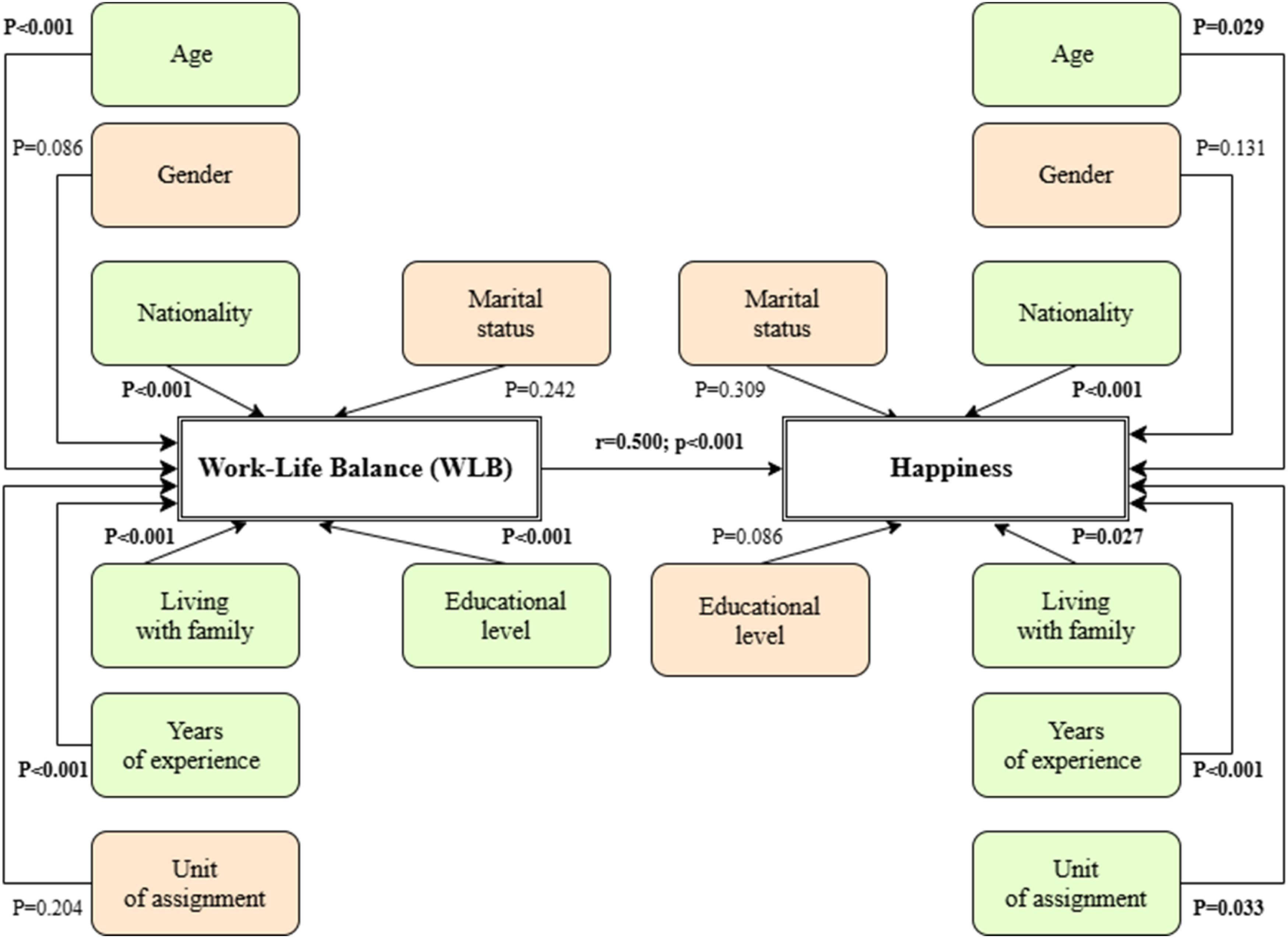
Discussion
This study examined the relationship between WLB and happiness in the nursing context in Saudi Arabia and the variation of WLB and happiness in response to professional characteristics. This investigation contributes to the growing literature on occupational well-being in healthcare by integrating the COR and JD-R perspectives to explain how nurses’ ability to manage and balance the personal and professional demands influences their happiness.
WLB and Happiness Level Among Nurses
The findings of this study provide valuable insights into the level of both WLB and happiness among nurses. Nearly half of the nurses scored in the “average WLB” category, consistent with prior studies that have demonstrated moderate work-life balance among nursing populations across diverse settings (Kim et al., 2024; Shinde-Pawar et al., 2023; Vyas & Lutimath, 2022). Similarly, happiness levels were distributed with equal proportions reporting “pretty happy” and “not particularly happy or unhappy” categories of emotional states. This duality suggests that while many nurses were adequately happy, a substantial proportion may require targeted support to enhance well-being (Sapkota & Neupane, 2021). Instead, they fall within moderate levels of happiness; this balance illustrates a duality in emotional well-being among participants. This could be because when nearly half of the nurses felt satisfied and positive about their life, the same proportion reported a neutral state of not particularly happy or unhappy, indicating potential areas for improvement.
According to the Oxford Happiness Questionnaire score interpretation, people who fall in the category “Not particularly happy or unhappy” can improve their happiness level with mental exercises, while people who fall in the categories “Rather happy” and “Pretty happy” indicate that the person is happy (Sapkota & Neupane, 2021). The moderate level of happiness among nurses in this study is consistent with findings from research conducted in Saudi Arabia and Iran by Alotheimin and Salem (2023). Conversely, Yanık and Ediz (2024) reported the opposite finding: low levels of happiness and hope among Turkish nurses, which they attributed to various factors, including economic constraints and challenging work environments. Meanwhile, the “Pretty happy” group reflects a moderate level of contentment and satisfaction. In other words, there is a nearly equal split between these two moderate categories, indicating that nurses generally experience a balance between positive and neutral emotions. The “Not particularly happy or unhappy” group may face stressors or lack fulfilling experiences, while the “Pretty happy” group has found aspects of their work or personal life that provide moderate satisfaction.
The present results align with studies showing positive relationships between WLB and happiness, as well as moderate scores among nurses regionally and internationally (Azeem & Akhtar, 2014; Dubey, 2021). Conversely, contradictory findings in Turkey reporting low happiness levels (Yanık & Ediz, 2024) may reflect economic conditions and workplace stressors. Overall, results reinforce that supportive policies, effective leadership, career development, and cultural sensitivity are central to nursing well-being. Factors such as staffing shortages, increased patient acuity, and administrative burdens exacerbate the challenges nurses face in balancing professional and personal responsibilities (Happell et al., 2013). Addressing these challenges is imperative to enhance nurses’ happiness and sustain a competent and compassionate nursing workforce.
WLB and Happiness Among Nurses
This study provides strong evidence that WLB is associated with greater happiness among nurses, underscoring the importance of resource availability and supportive work conditions in enhancing psychological well-being. These results indicate that nurses who experience greater balance between work and personal life also report higher happiness, consistent with the global literature emphasizing WLB as a critical driver of psychological well-being, engagement, and organizational commitment, and happiness (Javanmardnejad et al., 2021; Otken & Erben, 2013; Senbursa & Dunder, 2024). This finding aligns with the COR theory, which posits that individuals strive to acquire and protect valuable resources such as time, energy, and emotional support (Hobfoll, 1989). When professional and personal demands are balanced, nurses are better able to conserve resources, leading to enhanced happiness and engagement. This accumulation of resources not only protects individuals from stress but also promotes positive psychological states such as happiness.
The Job Demands–Resources (JD-R) model complements this interpretation by emphasizing how sufficient job resources—such as supportive leadership, manageable workloads, and a positive work environment—motivate nurses and buffer the effects of job demands, thereby fostering positive outcomes (Al-Bsheish et al., 2022, 2023; Demerouti et al., 2025; Jarrar, Al-Bsheish et al., 2023; Jarrar, Al-Bsheish, et al., 2023). Participants who perceived greater workplace support likely experienced better emotional regulation and job satisfaction, positively influencing happiness. Together, these frameworks provide a coherent explanation of why nurses with stronger WLB report higher levels of happiness: balanced resource management amplifies their motivation, resilience, and capacity to thrive in demanding healthcare settings.
The study strengthens the role of supportive work environments in shaping psychological and behavioral outcomes. Al-Bsheish et al. (2023) and Jarrar et al. (2025) demonstrated that improvements in the physical and psychosocial work environment enhance nurses’ safety compliance through psychological and behavioral mediators, suggesting that environmental support functions as a critical job resource. Such evidence reinforces our conclusion that workplace conditions exert a considerable influence on nurses’ ability to maintain WLB and, consequently, their happiness. Furthermore, nurses feel valued, respected, and emotionally secure; they are better able to manage competing demands and achieve well-being (Al-Bsheish et al., 2022). These studies collectively support the argument that WLB and happiness are shaped not only by personal factors but also by organizational climates that either facilitate or constrain the development of resources.
Sociodemographic Differences With WLB and Happiness
This study investigated sociodemographic variables in relation to both WLB and happiness. The results demonstrated that increasing age was associated with higher happiness scores. One reason may be that older, more experienced nurses have developed coping mechanisms, greater resource stability, and clearer personal priorities. This aligns with the World Happiness Report (Helliwell et al., 2024) and prior research linking maturity with emotional resilience (Rony et al., 2023). Non-Saudi nurses reported higher WLB and happiness, which may be linked to differing cultural expectations or workplace adaptation. Expatriates’ resilience is usually higher than that of citizens, consistent with Saudi studies emphasizing differences in cultural perceptions (Alghamdi et al., 2021; Alsadaan et al., 2021). Diploma nurses demonstrated higher WLB, which may relate to lower managerial or administrative responsibilities. Nurses living away from their families reported higher WLB and happiness. This contrasts with some literature that shows family proximity as a protective factor (Mutair et al., 2022) but may reflect reduced domestic demands and increased autonomy. This finding may also reflect contextual characteristics of the nursing workforce in Saudi Arabia, where a substantial proportion of nurses are expatriates working away from their families. In such contexts, living apart from family members may reduce competing family responsibilities during working hours or allow nurses to focus more exclusively on their professional roles. Additionally, expatriate nurses may experience different social support arrangements or financial motivations that shape their perceptions of work–life balance and well-being.
Regarding the workplace setting, the study found that nurses in women’s and maternity units were happier, perhaps due to psychologically fulfilling experiences and supportive team environments (Loureiro et al., 2023; Sam et al., 2025). This may result from being frequently associated with positive, life-affirming events, such as those areas having a lot of deliveries and happy moments, compared to the critical units, such as witnessing births and supporting families during these moments, which can foster a strong sense of purpose, leading to higher job satisfaction and happiness. Perhaps the characteristics of services that incorporate the domains of women, children, and adolescents, which may account for the results obtained, as they can create more favorable working environments, enabling nurses to engage in positive experiences and dynamic routines. (Loureiro et al., 2023). Quality of work life can vary across units, hospitals, regions, or countries (Gurdogan & Cetinkaya, 2019). Lastly, gender and marital status showed no association with WLB or happiness, consistent with some prior findings (Diener et al., 2002).
Implications for Practice
The findings offer valuable insights for healthcare administrators and policymakers aiming to develop strategies that support nurses’ psychological health and promote sustainable workforce outcomes. Understanding the current results requires recognition of the broader healthcare context. Saudi Arabia faces a chronic nursing shortage, reliance on expatriate nurses, cultural barriers affecting recruitment—particularly for women—and high turnover rates (Alsadaan et al., 2021; Saudi Health Council, 2019). These systemic challenges place additional burden on the nursing workforce and heighten the relevance of WLB and happiness as workforce retention priorities (Tamata & Mohammadnezhad, 2022).
Furthermore, global events have intensified nurses’ stress and climate-related health challenges, and the COVID-19 pandemic has increased nurses’ workload and emotional burdens. Sleep quality, workplace violence, and reinforcing the importance of strong public health capacity and nurse resilience remain important issues (Gravante et al., 2020, 2025; Leffers & Butterfield, 2018). The current findings reflect this real-world context, where nurses operate amid evolving health crises and shifting workplace expectations.
Study Strengths and Limitations
This study employed a cross-sectional design, limiting the ability to infer causality between WLB and happiness. Convenience sampling from a single tertiary hospital may restrict generalizability to other institutions or regions. Self-reported questionnaires may introduce response bias, particularly regarding personal emotions and workplace perceptions. Additionally, the study did not include qualitative inquiry, which could have provided deeper insights into contextual and cultural influences. Future research using mixed-methods, random sampling, multi-center designs, and longitudinal studies would strengthen the evidence base and its applicability.
Conclusion
This study targeted nurses in Saudi Arabia to measure WLB and happiness levels and provided important insights into their relationship. WLB and workplace happiness in the nursing context occur within a dynamic environment; thus, their psychological states, life satisfaction, and overall subjective well-being should be carefully monitored, as healthier and more satisfied nurses are better positioned to deliver safe, high-quality patient care. Achieving workplace happiness through a balance between work and personal life is a critical responsibility of workplace management to avoid undesirable outcomes such as a nursing shortage, reliance on expatriate nurses, cultural barriers affecting recruitment—particularly for women—and high turnover.
Supplemental Material
Supplemental Material -Work-Life Balance and Happiness Among Nurses in Saudi Arabia: A Cross-Sectional Study Based on COR and JD-R Frameworks
Supplemental Material for Work-Life Balance and Happiness Among Nurses in Saudi Arabia: A Cross-Sectional Study Based on COR and JD-R Frameworks by Israa Nashashiqi, Mai Yaseen, Fathia Khamis Kassem, Lujain Samarkandi, Mohammad Al-Bsheish and Mu’taman Jarrar in Sage Open Nursing.
Footnotes
Acknowledgement
We would like to express our sincere gratitude to the participants nurses who contributed to the successful completion of this study.

Ethical Considerations
The study was by the Institutional Ethics Committee of Ethical Committee King Abdulaziz University and the KFSH&RC-M (C1745M/115/45) IRB committee.
Consent to Participate
Informed consent was obtained from all subjects involved in the study.
Author Contributions
All authors have read and approved the final version of the manuscript.
Funding
The authors received no financial support for the research, authorship, and/or publication of this article.
Declaration of Conflicting Interests
The authors declared that there are no any potential conflicts of interest with respect to the research, authorship, and/or publication of this article: All ethical standards concerning the protection of study participants were upheld, in line with the World Medical Association’s Declaration of Helsinki.
Data Availability Statement
The datasets used and/or analyzed during the current study are available from the corresponding author on reasonable request.
Supplemental Material
Supplemental material for this article is available online.
References
Supplementary Material
Please find the following supplemental material available below.
For Open Access articles published under a Creative Commons License, all supplemental material carries the same license as the article it is associated with.
For non-Open Access articles published, all supplemental material carries a non-exclusive license, and permission requests for re-use of supplemental material or any part of supplemental material shall be sent directly to the copyright owner as specified in the copyright notice associated with the article.
