






Abstract

William Teale has led his professional life to enrich the knowledge, understanding, and development of literacy in our multicultural and multilingual world. He has been a colleague within our international community and emphasized the pluralism that is fundamental to our world today. Taffy Raphael, 2008 Oscar S. Causey Winner
William H. (Bill) Teale, a longstanding and important contributor to the to the LRA community, passed away on February 3, 2018. Born in Bentleyville, Pennsylvania, Teale received his BA in English at Pennsylvania State University, and his Ed.D. in Reading and English Education at the University of Virginia. In 2019, he was posthumously recognized as the Oscar S. Causey winner.
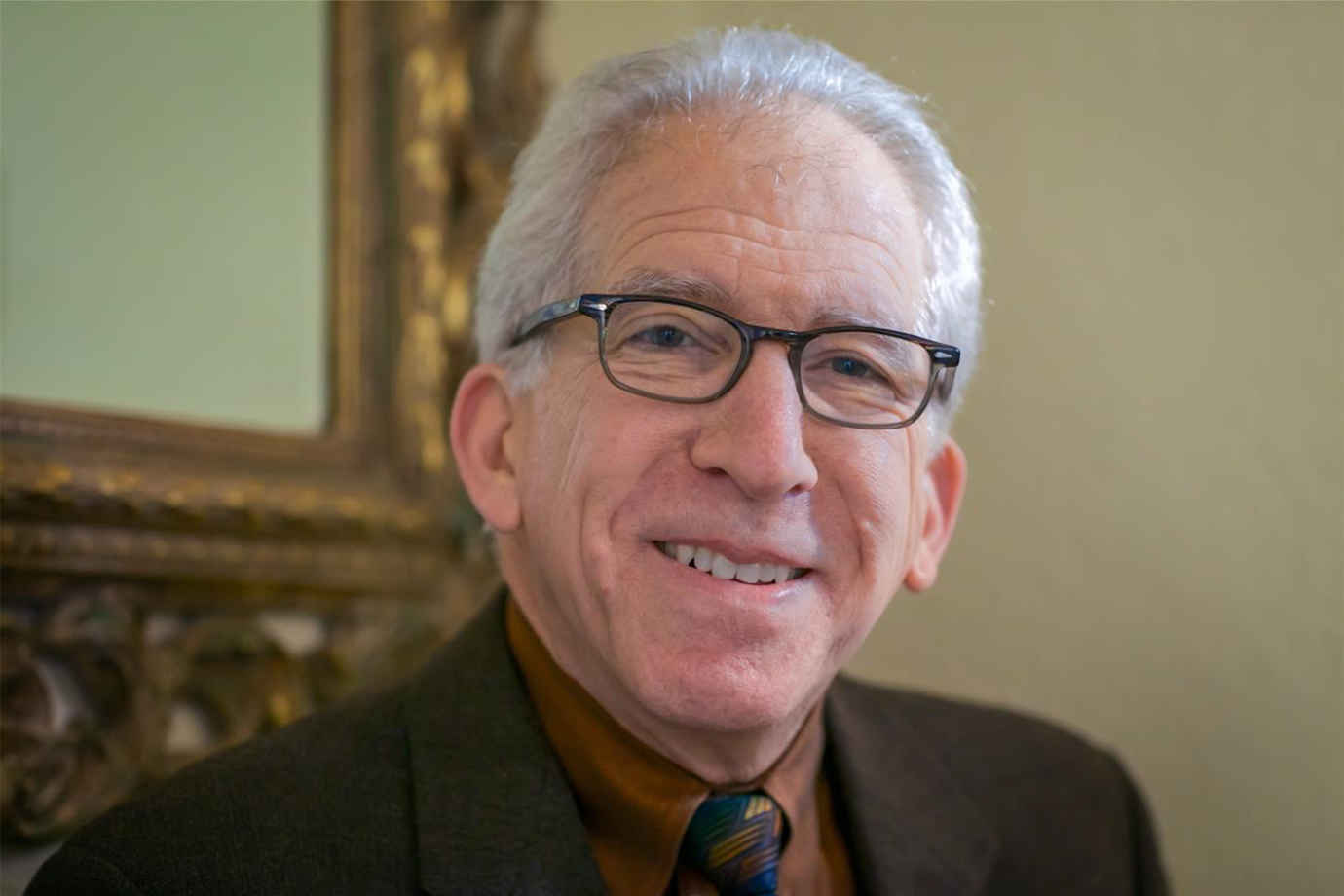
For the last 3 years, as Chair of the Oscar S. Causey Award Committee, I have had the privilege of engaging deeply with some of the greatest literacy researchers of all time, including the 2019 winner, William H. Teale. What makes writing this biography different and difficult is Bill was also my colleague and friend at the University of Illinois at Chicago and one of the reasons I moved to Chicago. When I first interviewed in 2005, I knew little about the institution, but I knew about Bill Teale’s and Elizabeth Sulzby’s pioneering work in emergent literacy. Three years earlier my advisor and I were invited to write a chapter on sociocultural theory and early literacy for the Handbook of Early Literacy Research (Razfar & Gutiérrez, 2003). Quickly, it became apparent that “Teale and Sulzby” and “Sulzby and Teale” were essentially ground zero for this topic within American literacy research circles. From our very first meeting to our last, Bill Teale played a pivotal role in my professional growth, and I was a witness to his impact on colleagues, students, and beyond. It is truly a privilege to be writing about him as last year’s Oscar S. Causey winner.
Bill Teale has accumulated an extensive and dynamic record of publication for over forty years as an active member and leader of the literacy research and teacher education communities. Through publications and presentations, he has consistently made the findings of his work available to literacy researchers, practitioners, and students in the U.S. and internationally. Dr. Teale published 2 books and over 60 articles in prestigious refereed journals such as The Educational Researcher, Research in the Teaching of English, The Reading Teacher, Young Children, Instructional Science, and Language Arts. His two books include the now classic Emergent Literacy volume coedited with Elizabeth Sulzby and a co-authored book applying research to practice in early literacy instruction. After speaking with colleagues, educators, and students spanning decades, it is clear that Professor Teale has played a pivotal role in generating theory and informing practice, impacting policy, and mentoring generations of literacy scholars.
Generating Theory & Informing Practice
Bill Teale was among the leading scholars of his generation and a pioneer in early literacy. A member of the Reading Hall of Fame since 2003, he modeled socially responsible research that was generative of theory and informed practice. His volume (with Sulzby) introduced the construct of emergent literacy in the United States, based on the work of Marie Clay in emergent reading. Teale’s introduction of this construct was cited in over 1700 publications between 1986 and 2001. The concepts underlying this research have fundamentally changed the way we, as a field, as well as parents and policymakers, view young children in terms of their use of early sign systems for communicating and interpreting text (Teale, Hoffman, & Paciga, 2014). In the final five years of his career as the head of UIC’s Center for Literacy, he oversaw and participated in sponsored projects totaling over $18 million. The majority focused on improving early literacy teaching and learning in Chicago, from parent and family focused activity to teacher preparation. Over his career, his research has been funded by the National Science Foundation, the U.S. Department of Education, and the Spencer Foundation, among other sources. His groundbreaking work in emergent literacy shifted the field from its belief in ‘reading readiness’ to the widely accepted and almost taken-for-granted belief in emergent literacy.
Impacting Policy
One of the great accomplishments that many admire about Bill Teale is his ability to impact policy in direct and indirect ways. He served as a consultant to school districts and libraries across the United States, as well as to Children’s Television Workshop, Head Start, public television, Reach Out and Read, and NGOs in developing programs focused on literacy learning and teaching. He was also an advisor to the National Academy of Education, the U.S. Department of Education, and the National Endowment for the Humanities. He was Director of the UIC Center for Literacy, on the Board of Directors of the Literacy Research Association (2007–2009), on the Board of Directors of the International Reading Association (2011–2014), and President of the International Literacy Association (2016–2017). His selection as advisor to Sesame Street is yet another indicator of the significance of his scholarship and his reputation as a researcher committed to having an impact on policy and practice, also serving as Director of their Preschool Education Program (PEP) Initiative. The ongoing significance of his emergent literacy research is also seen in his role as principal investigator for three Early Reading First projects between 2006-2013 that have implemented forward-looking preschool literacy programs in some of Chicago’s poorest neighborhood schools.
Mentorship
I had the opportunity to speak with multiple former graduate students spanning decades of mentorship. Dr. Roxanne Farwick Owens, Editor of Illinois Reading Council Journal and Chair of Teacher Education at DePaul University, eloquently sums up the impact of Bill Teale, “In the musical Wicked, Elphaba sings, ‘So much of me is made of what I learned from you, you’ll be with me, like a handprint on my heart.” This captures the essences of all those who were mentored and inspired by him. Dr. Emily Hoffman, a more recent graduate and an Assistant Professor at Ball State University noted, “We know to pursue research agendas that aren’t only methodologically and theoretically sound, but that matter to the lives of children, teachers, and communities.” Dr. Katie Paciga, an Associate Professor at Columbia College, stated, “Bill was the kind of mentor I needed whenever I needed him. The decade of collaboration and mentorship I had with this literacy giant was not enough, but when I reflect on my career, I find his influence in nearly every nook and cranny of my professional work.” And finally, a quote from another former doctoral student, Dr. Colleen Whittingham, an Assistant Professor at the University of North Carolina at Charlotte, shared, “Thank you Bill, for being the giant on whose shoulders our work will always rest.” Indeed, the legacy of Professor William H. Teale is etched in the hearts and minds of literacy lovers everywhere—rest well my friend.