Abstract

Any country that emerges from decades of armed conflict and violence would necessarily be littered with what may be called landscapes of memory. These are places where memories of people who have died would be embedded in different ways: places where loved ones perished, which have no markers of violence now; places where kindred are buried; formal and informal monuments erected in memory of those who have died in battle as combatants. While individuals will always remember those in their families who have died violently, in the privacy of their homes or in rituals in places of worship conducted without much fanfare, nowhere in the world would it be possible for structures of remembrance to become sentinels of memory in public space without power. And that power would always be unequal. In the aftermath of any war, victors would ensure that those who were considered enemies do not have any space in landscapes of formal public memory. Irrespective of such an outcome, individuals will continue to remember where their loves ones might have died, even though there is no monument to remember them by. This photo essay is a journey across such landscapes of memory in the context of Sri Lanka’s civil war with the Liberation Tigers of Tamil Tigers (LTTE) that lasted for 30 years and ended only in 2009.
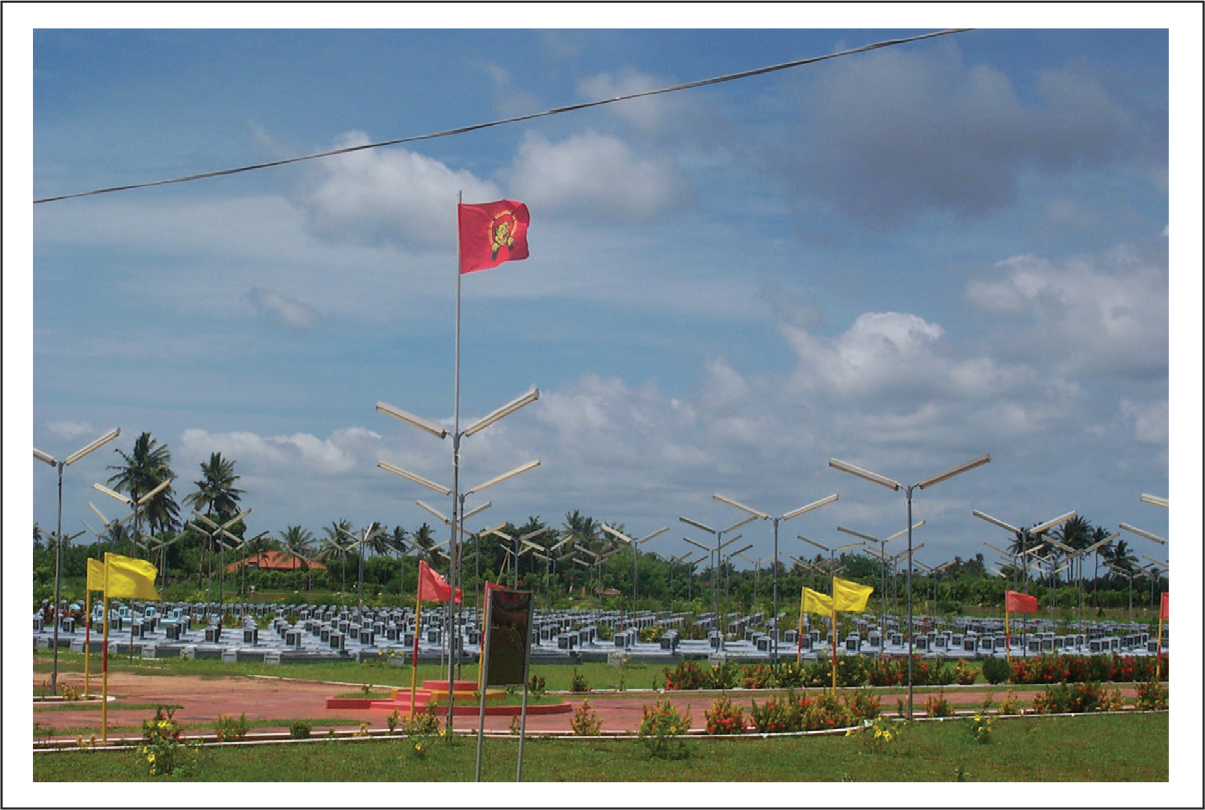
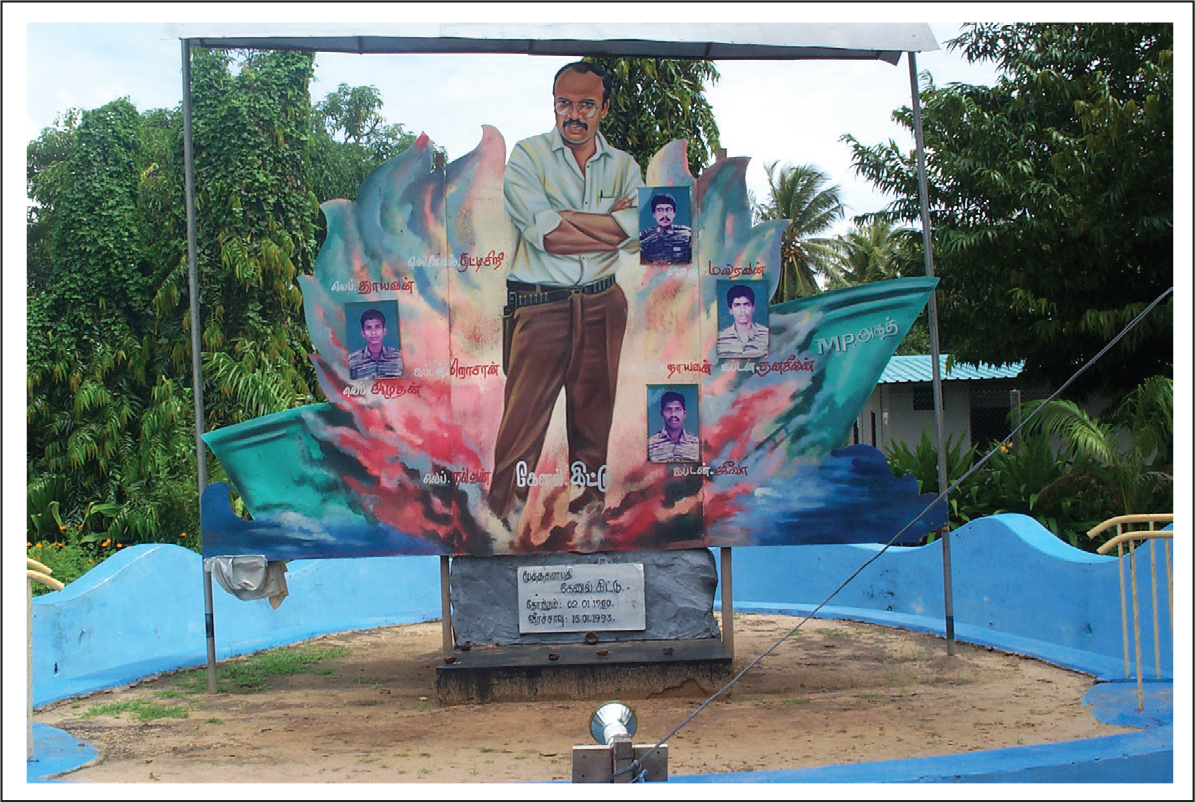
At the height of its military and political power in northern Sri Lanka, the LTTE paid particular attention to sustain the memory of its combatants to generate a sense of support for the organisation as well as a source of inspiration to future guerrillas. This was mainly done by building and maintaining war cemeteries (see Figure 1) and erecting specific monuments (see Figures 2 and 3) in areas under its control.
LTTE war cemetery, Northern Province
Kittu memorial, Northern Province
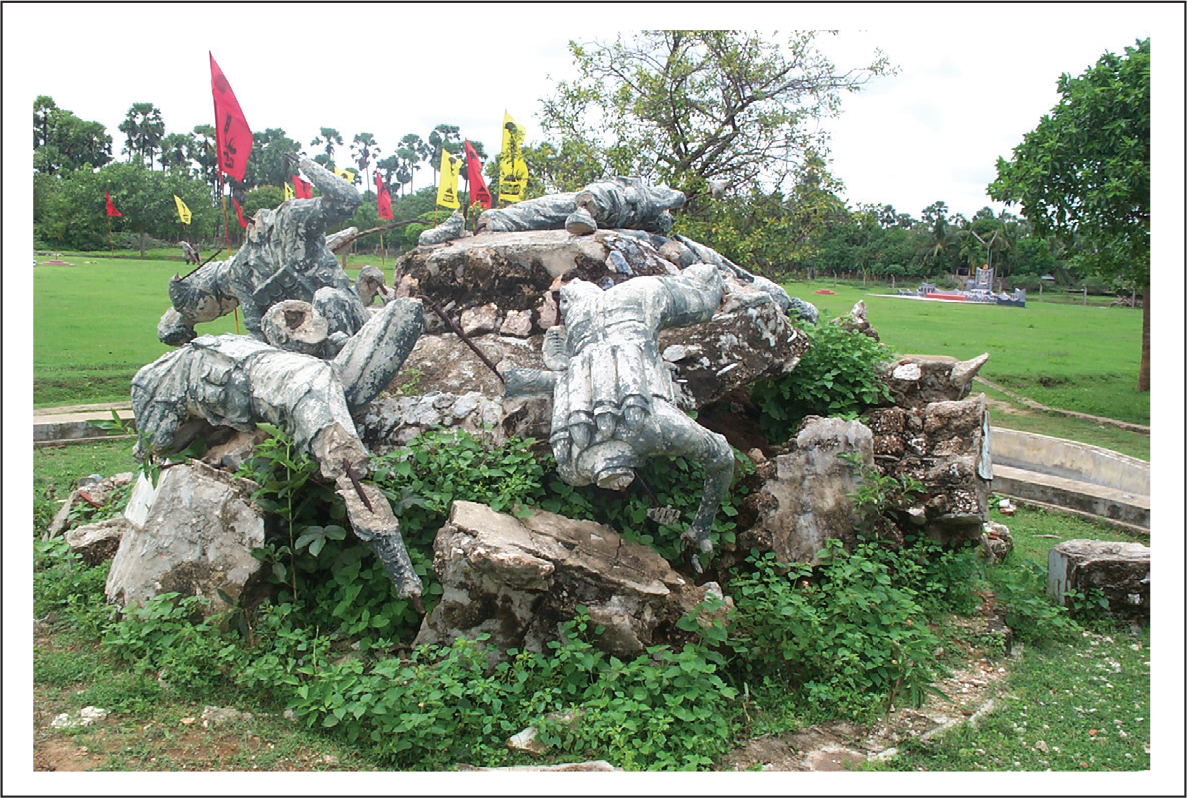
Monuments in public spaces tend to become very fragile when the power that enabled their construction diminishes. In this context, all LTTE monuments and war cemeteries that collectively constituted an important manifestation of the landscapes of memory in northern and eastern Sri Lanka prior to 2009 have now been destroyed as a matter of state policy (see Figure 4).
That came with the decisive military victory of Sri Lankan armed forces over the LTTE in 2009. The memories of people who were intended to be memorialised by these monuments must now reside in the consciousness of their kin and friends in private spaces, away from the gaze of the public.
LTTE sea tiger Monument, Tiruvil, Northern Province
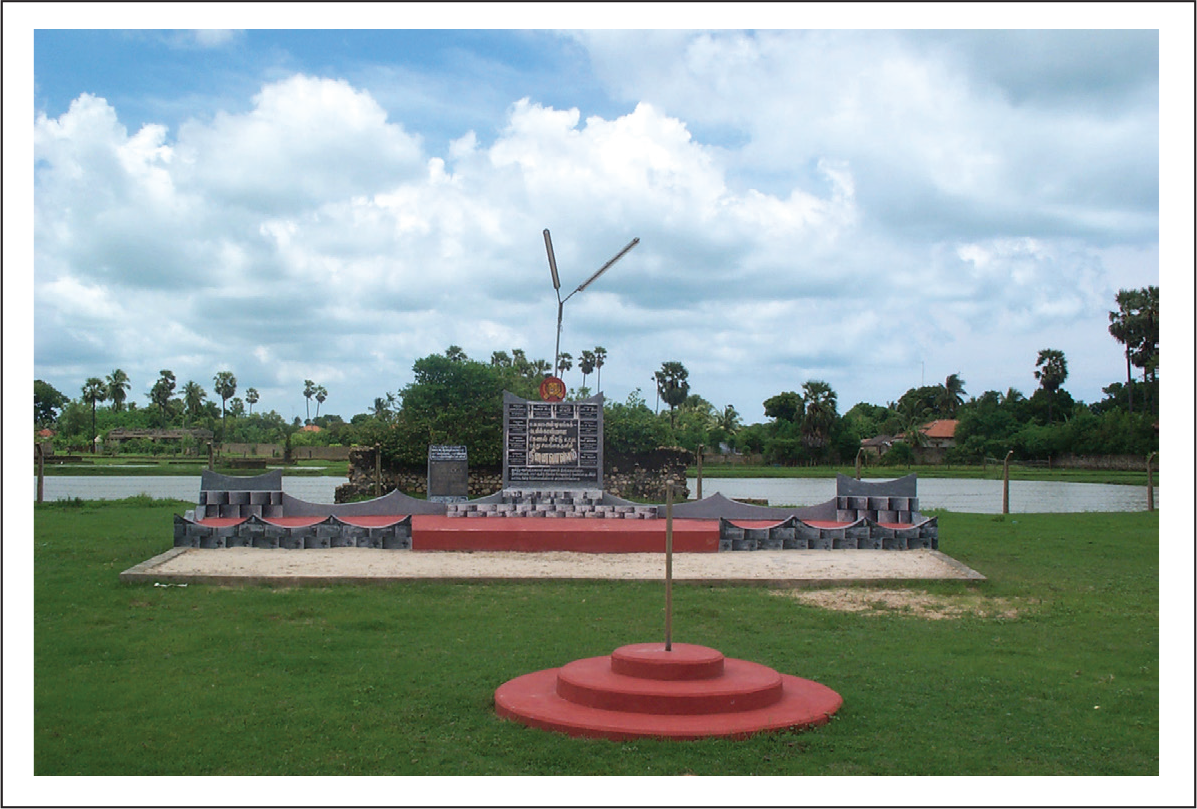
Remnants of an earlier LTTE sea tiger Monument dismantled by Sri Lanka army, Northern Province
Sri Lanka army victory monument, Northern Province. The monument commemorates the final victory in the civil war and the military personnel who died in this final battle.
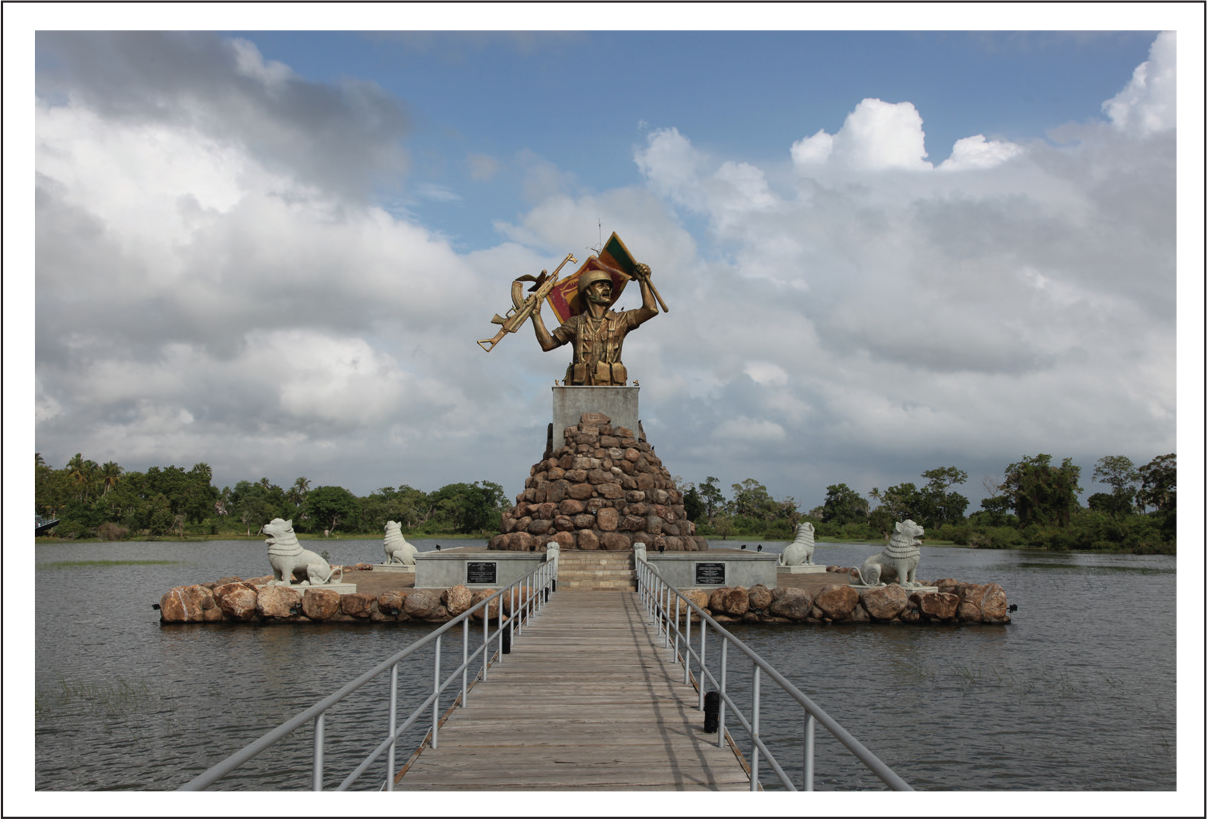
After Sri Lanka’s civil war ended and the LTTE monuments and memorial structures disappeared, formal military monuments emerged in many parts of the country with state sponsorship, memorialising not only the military personnel who died and disappeared in battle but also specific and decisive battles (see Figures 5–9).
Formal military monuments are not the only monuments that have complicated Sri Lanka’s landscapes of memory. For instance, there is a new genre of bus stands that have emerged in different parts of the country, set up by loved ones in memory of service personnel who had died in battle, combining both the utilitarian need for shelter for people who wait for public transport and the need to memorialise the war’s dead. These somewhat subaltern monuments often carried a photograph of the individual who was being memorialised while camouflaged designs covered the entire structure or parts of it. In addition, visually very visible tombstones also appeared in public centenaries that took as their sources of inspiration the insignia of the specific military units the perished soldiers once served (see Figure 10). Given the usually sombre nature of tombstones, these new tombstones are quite recognisable due to the multiple colours many of them used as well as their iconography. In addition to the state and military units as well as individual efforts in memory of loved ones, as outlined above, some monuments were set up by individuals or collectives essentially as private efforts to memorialise a cross-section of individuals who had died in war (see Figure 11).
War heroes memorial, Northern Province. This monument is meant to commemorate the capturing of Kilinochchi Town by Sri Lankan armed forces and military personnel who died in this battle.
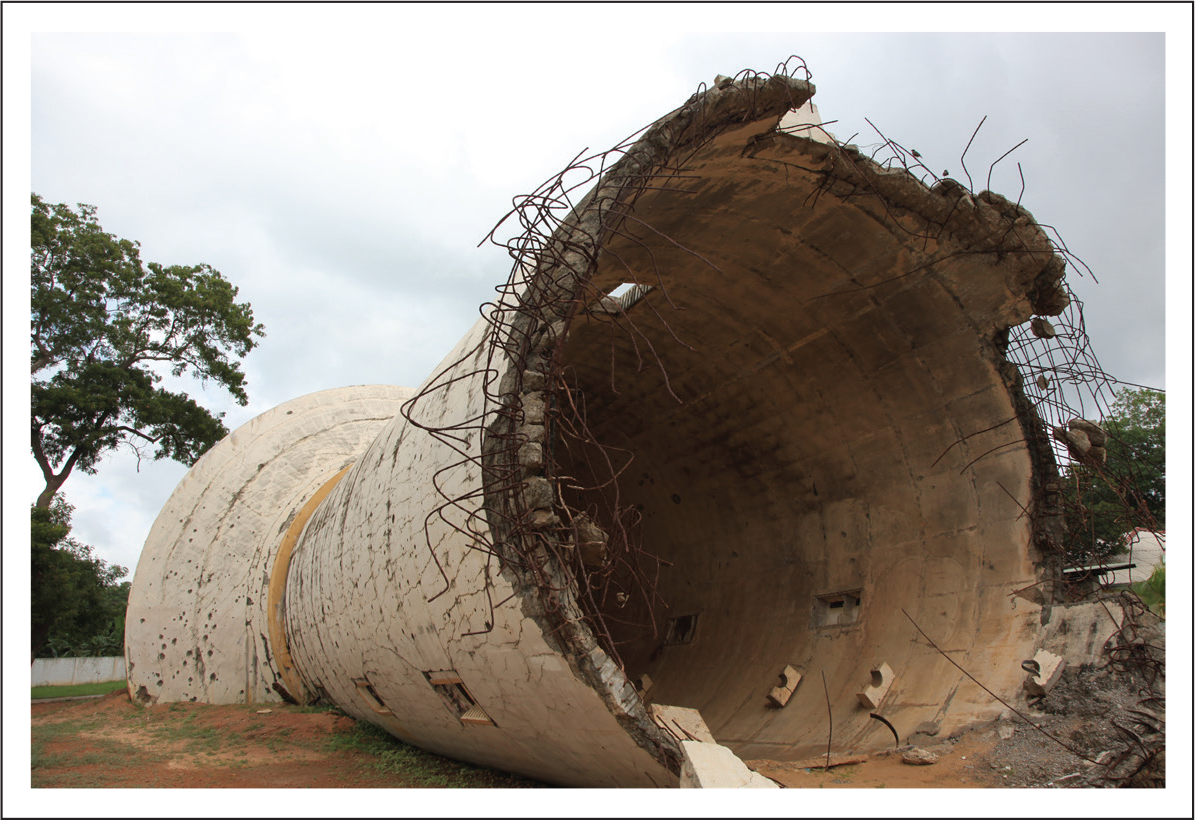
Water tank monument complex, Killinochchi, Northern Province. In this unusual monument, a water tank meant to supply water to Kilinochchi town and destroyed by the LTTE during its retreat from the town, has been turned into a monument by the Sri Lanka Army meant to depict the atrocities committed by the LTTE.
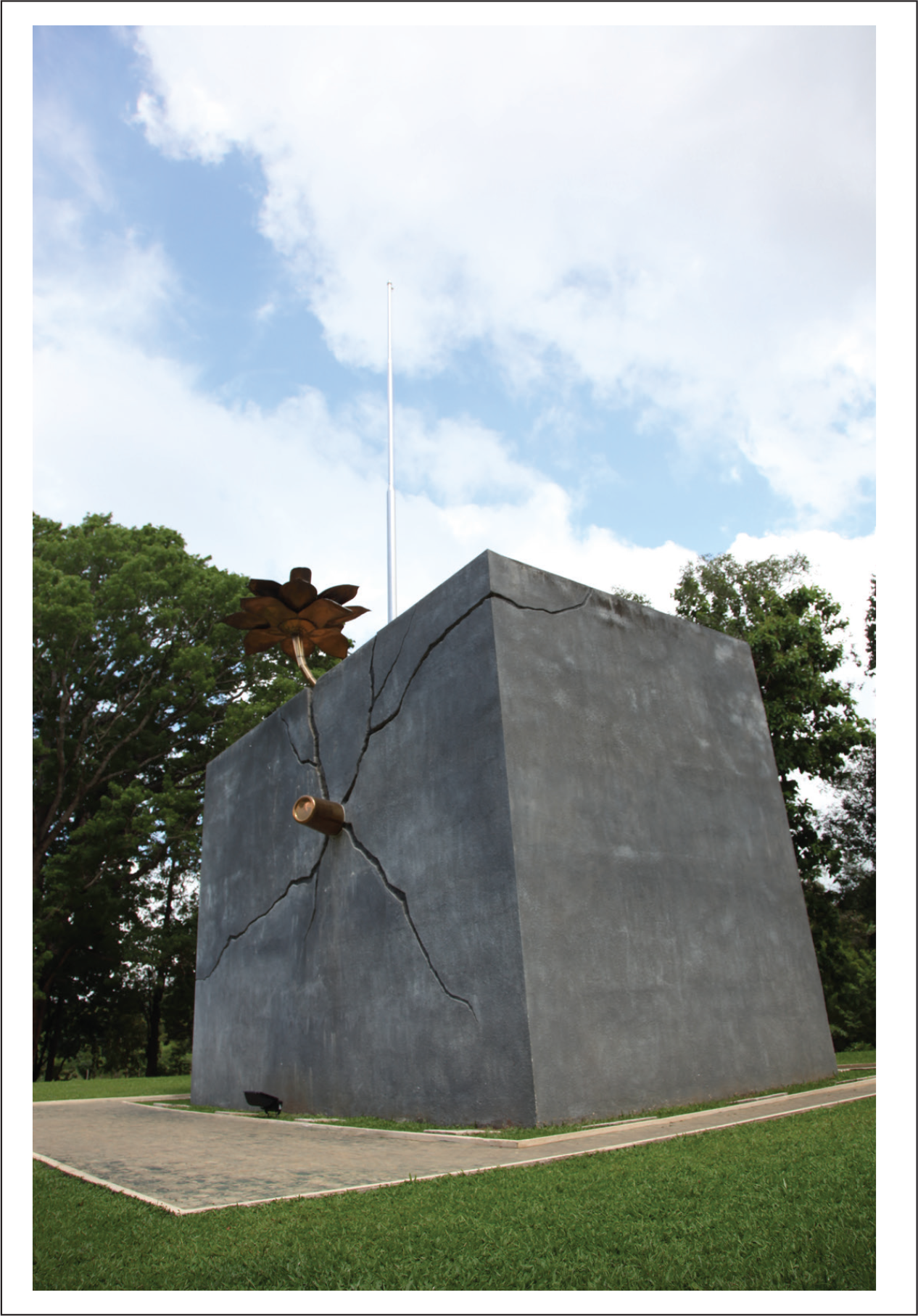
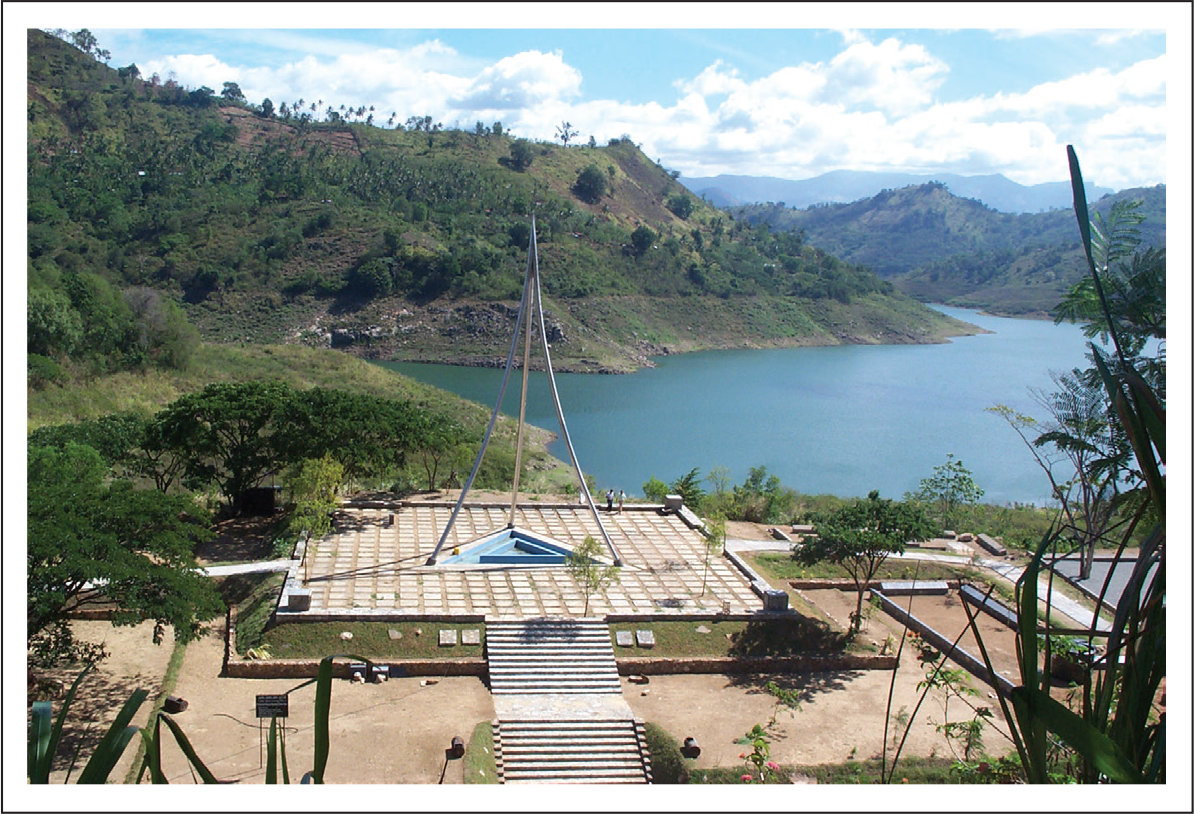
Main monument, Remembrance park, Mailapitiya, Central Province. The Remembrance park is designed to be a memorial space for all Sri Lankan military and police personnel who have been killed in action.
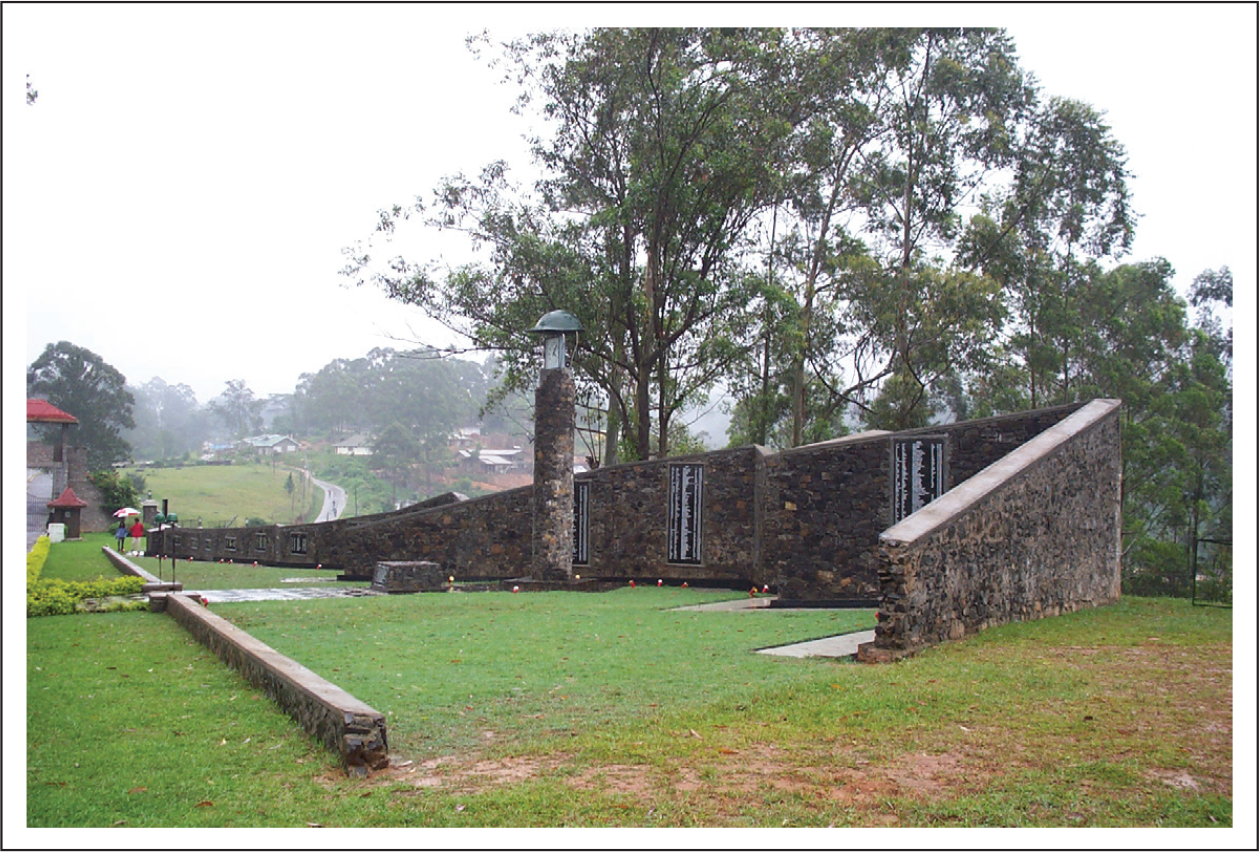
The officers monument, Sri Lanka army military academy, Diyathalawa, Uva Province. This monument is meant to commemorate officers of the Sri Lanka Army trained at the academy who had died in battle.
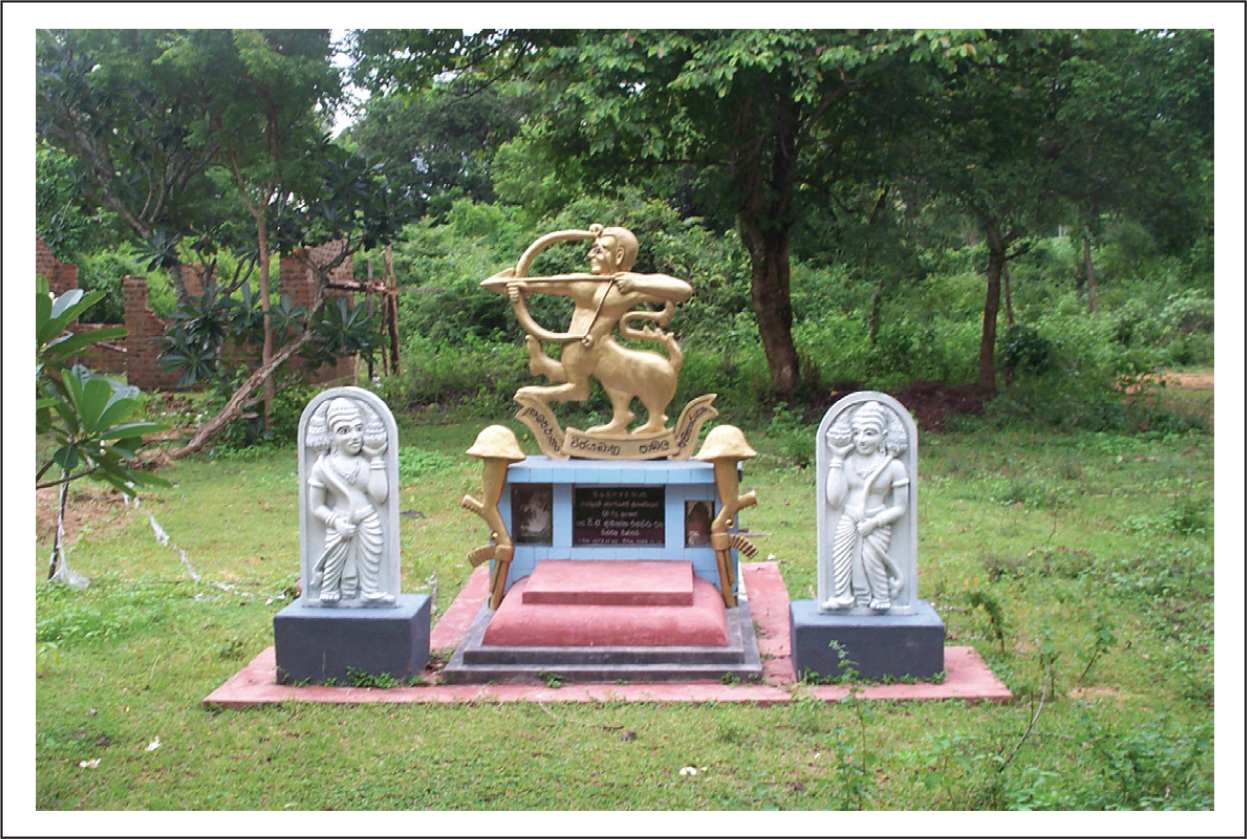
A soldier’s tombstone in a public cemetery in Ambanpola, North Central Province.
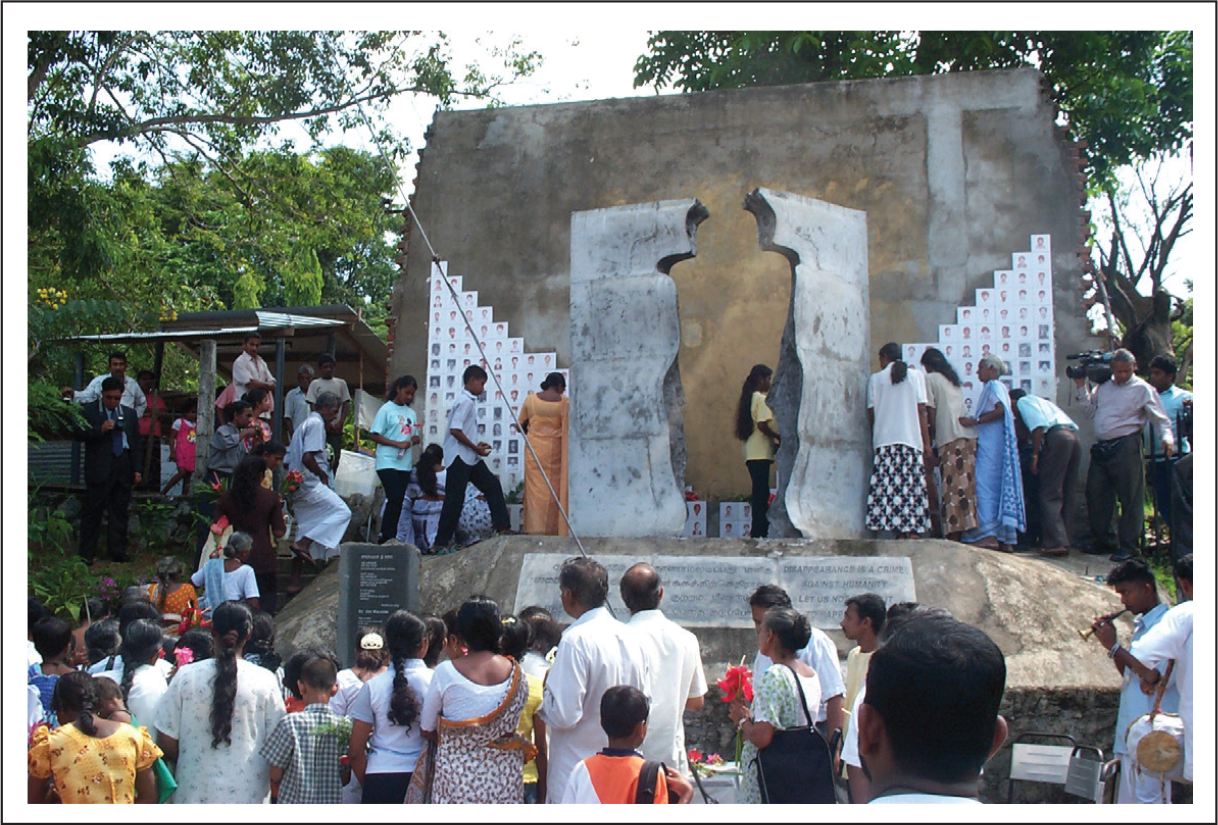
What is generally missing in Sri Lanka’s landscapes of memory are monuments to commemorate ordinary people killed in battle or targeted by either the military or guerrilla groups. In this sense, the Monument for the Disappeared is unusual because it commemorates civilians killed by the military as well as by the Janatha Vimukthi Peramuna during the latter’s campaign of violence in the late 1980s, or those who simply disappeared during this time (see Figure 12). This monument came about due to the efforts of an individual personally touched by Sri Lanka’s political violence of the 1980s in the country’s southern parts.
A section of the war heroes monument complex, War heroes memorial, Attanagalla, Western Province. This complex is located within the premises of a Buddhist temple and is the initiation of the chief monk of this temple.
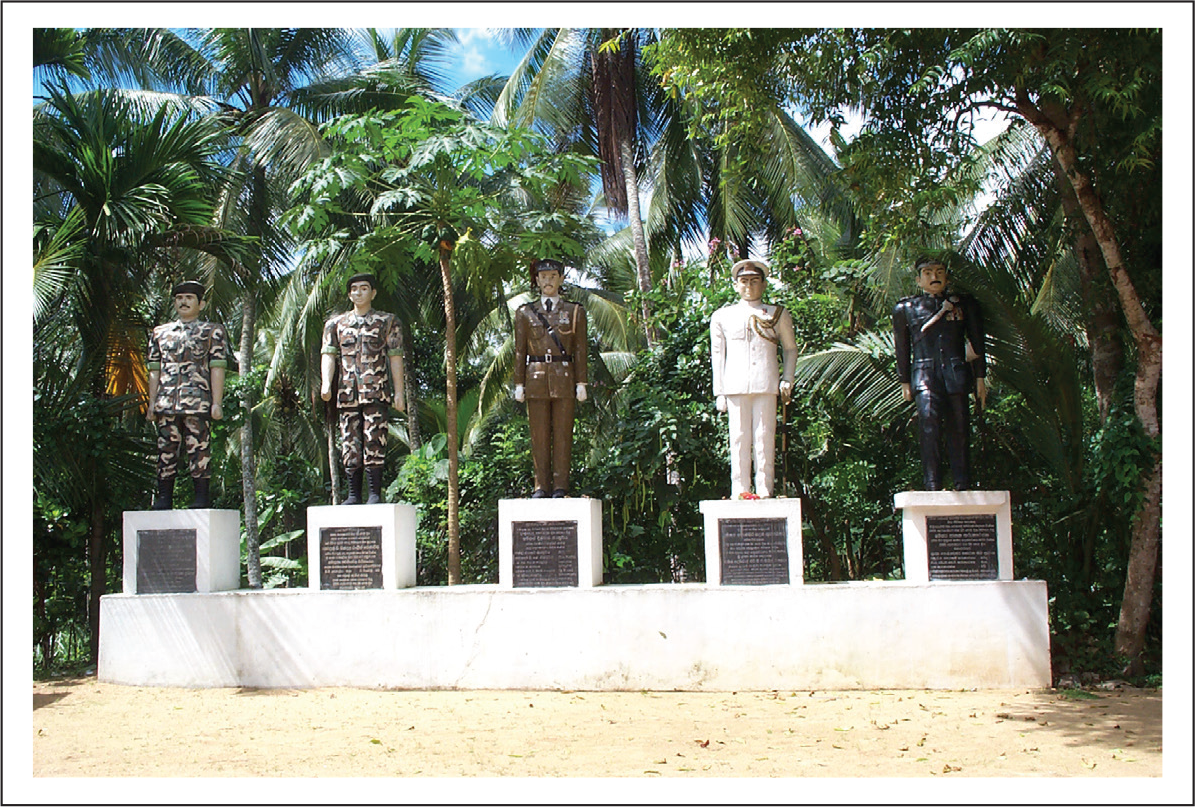
The monument for the disappeared, Raddoluwa, Western Province