







Abstract
Abstract
A major challenge which has hindered our understanding of entrepreneurial ecosystem is its lack of specification and conceptual limitations. The entrepreneurial ecosystem consists of complex components and actors. In addition, the concept has theoretical limitations because it is a multi-actor phenomenon with dynamic interactions. These complexities have limited our comprehension of the diverse nature of entrepreneurial ecosystems and their dynamics. Though the entrepreneurial concept recognises the role of the local entrepreneurial context, one critical aspect in broadening our knowledge is the role of nonlocal or transnational actors and resources in entrepreneurial ecosystems. Particularly, in entrepreneurial ecosystems where there are no close bonds with transnational actors and resources. This article identifies the Nigerian entrepreneurial ecosystem to discuss the role of diasporans as nonlocal or transnational actors in the entrepreneurial ecosystem. It then outlines the theoretical explanations of the dynamics of diaspora transnational actors and resources and their interactions in entrepreneurial ecosystems, from the network and institutional theoretical standpoint. The exploration of empirical data helps to make the network and institutional theoretical underpinnings clearer. The conclusion suggests areas of future research that can inform policy interventions.
Introduction
An entrepreneurial ecosystem consists of ‘dynamic local, social, institutional and cultural processes and actors that encourage and enhance new firm formation and growth’ (Malecki, 2017, p. 2). Entrepreneurial ecosystems and other established concepts such as clusters, industrial districts, innovation systems and learning regions are similar in that the focus is on the external business environment. However, an entrepreneurial ecosystem differs from these concepts because it often begins with the entrepreneurial individual (entrepreneur) instead of the company. The difference also includes the emphasis on the role of the entrepreneurship context (Stam, 2015). Context is an important dimension of entrepreneurship because the specific internal organisational and external operating contexts provide the framework within which entrepreneurship activities can take place (Smallbone & Welter, 2006). It also has an impact on the nature and the pace of development, as well as the extent of entrepreneurship and the way entrepreneurs behave (Welter & Smallbone, 2011).
The context where entrepreneurship takes place can concurrently provide individuals with entrepreneurial opportunities as well as set boundaries for their actions. This is because the nature and structure of entrepreneurial activities differ across countries—in other words, individuals may experience it as an asset and/or liability (Welter, 2011).
An entrepreneurial ecosystem is based on the understanding that, even though entrepreneurial activities happen within the business sector, society also influences entrepreneurship (Welter, 2011). The major challenge of the concept is its theoretical limitations, especially considering that it is a heterogeneous phenomenon requiring bespoke policy interventions (Brown & Mason, 2017). In addition, it involves multiple actors and entities that support new and growing firms such as large firms, universities and public organisations (Malecki, 2017). Consequently, it recognises that entrepreneurship fundamentally takes place within a local context (Brown & Mason, 2017; Spigel, 2017) where circumstances, conditions, situations or environments that are external to the respective phenomenon could enable or constrain it (Welter, 2011, p. 167). However, equally important is the role of nonlocal interactions between entrepreneurs and nonlocal actors (e.g. transnational entrepreneurship) in developing entrepreneurial ecosystems (Brown & Mason, 2017).
The Nigerian Entrepreneurial Ecosystem
This article utilises a national entrepreneurial ecosystem to discuss the conceptual underpinnings of the role of transnational actors in entrepreneurial ecosystem. The Nigerian entrepreneurial ecosystem was chosen because it links the Nigerian diaspora to the access to market component of the ecosystem (Figure 1). The Nigerian context offers an opportunity to explore the role of transnational actors, considering sociocultural and other institutional influences on entrepreneurial ecosystems.
Nigeria has a population of more than 170 million people, and this makes up 18 per cent of Africa’s population. There are 36 states in Nigeria, along with the federal capital territory in Abuja. Lagos is the economic and financial hub of the country. The Nigerian entrepreneurial ecosystem consists of seven components and various key players (Figure 1) with various programmes and initiatives. These are policy and regulation, access to finance, capacity building, access to markets, access to resources, business support and research and development. These are the key components of the entrepreneurial ecosystem (Fate Foundation, 2016). The Nigerian diaspora is included in the entrepreneurial ecosystem through the Nigerian Diaspora Export Programme (NDEX), which seeks to tap into the vast network of Nigerians around the world to support international market access (Iwuchukwu, 2014).
Through the revised micro- and small- and medium-sized enterprises policy (Federal Republic of Nigeria, 2014), the potential of the diaspora in providing support by meeting the resource needs of entrepreneurs is recognised. A harmonised support from the Nigerian diaspora would assist entrepreneurs through access to financial resources, technology transfer, networking and market development and help bring these objectives to reality. The support from the diaspora would help to strengthen access to resources for entrepreneurial activity in Nigeria. Therefore, as entrepreneurs thrive, it is anticipated that the country will be closer to achieving its economic development strategy to reduce the high unemployment rate and alleviate poverty in Nigeria.
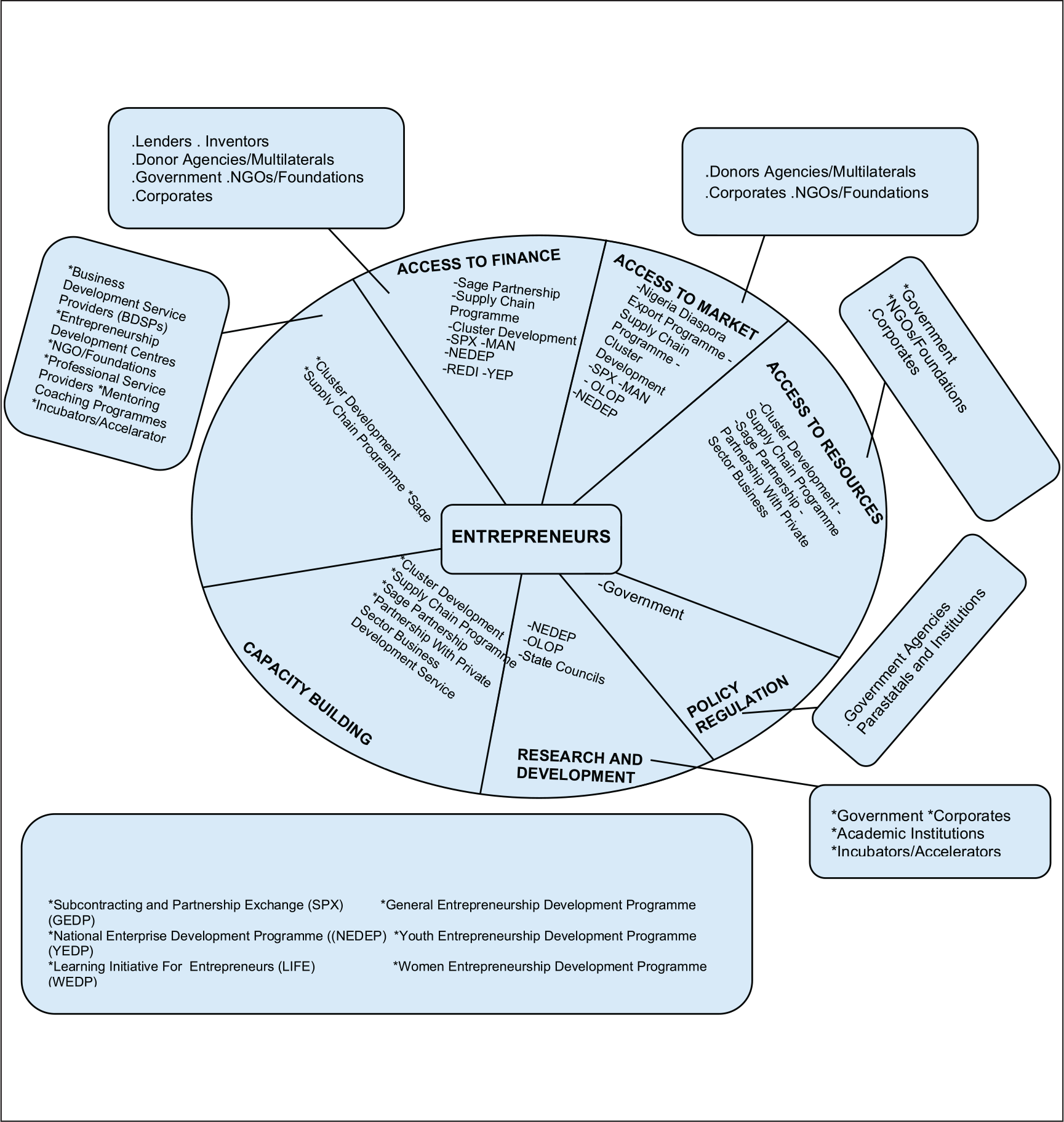
Generally, the Nigerian diasporans’ relationship with ‘home’ tends to be tentative and is usually conducted with caution because of mistrust. This gives an indication of the way in which mistrust often constrains and may even completely undermine collective transnational cooperation (Lampert, 2010). In the entrepreneurial ecosystem (Figure 1), even though there is a NDEX, diasporans do not appear to be prominent players in the access to market component. In addition, there are significant gaps in the entrepreneurial ecosystem around research and development, and the entrepreneurial ecosystem programmes also fall short of meeting the objectives for which they were set out (Fate Foundation, 2016). Although there is an intention to improve market access through the diaspora export programme, the link between the ecosystem and transnational diasporan actors isn’t strong. In embryonic entrepreneurial ecosystems, the fluidity and diversity of ecosystem actors are predominantly locally domiciled entrepreneurs with low levels of transnational entrepreneurs (Brown & Mason, 2017). The Nigerian entrepreneurial ecosystem is embryonic—there are no close bonds with international entrepreneurial growth nodes, for example, transnational entrepreneurs, resources (especially finance) and connections.
Although local institutions are important for entrepreneurial activity, so are interactions with international elements (Brown & Mason, 2017). On the one hand, entrepreneurial ecosystems consist of multiple actors on different spatial levels. On the other hand, the transnational relationships of diasporans tend to be fluid and dynamic (Schiller, Basch, & Blanc-Szanton, 1992). These transnational actors are highly heterogeneous due to the diversity of the people involved. The heterogeneous nature of entrepreneurial ecosystems as well as the fluidity and diversity of transnational actors therefore influence the extent to which set ecosystem objectives are met. This increases the complexities of entrepreneurial ecosystems and may make the local and international interactions uncoordinated, increasing the possibilities of unmet objectives.
Drawing and reasoning from the Nigerian entrepreneurial ecosystem, this article, therefore, explores the role of transnational diaspora as nonlocal actors in the entrepreneurial ecosystem.
The Characteristics of the Nigerian Diasporans
The Nigerian diaspora is largely a labour diaspora, with a high percentage of diasporans in high-skilled and medium-skilled occupations. They work as physicians, college professors, nurses, venture capitalists, CEOs, managing partners, engineers, accountants, insurance company executives and software developers (Reynolds, 2004). Nigeria has a large diaspora in the health sector. In 2014, it was estimated that about 26 per cent of all registered medical doctors and 20 per cent of all registered pharmacists in Nigeria were working abroad (Amagoh & Rahman, 2014). Ten years earlier, about 10,000 Nigerian medical doctors were resident of the United States, and there were more than 25,000 Nigerian professional health workers residing in the United Kingdom (Reynolds, 2004).
Like Nigeria, India also has a large labour diaspora but in the technology sector. The contributions of the Indian diaspora in generating businesses and gaining access to capital for entrepreneurs in India can be traced to the professional success of the Indians in the software industry, particularly in the United States (Prashantham, Dhanaraj, & Kumar, 2015). Although the Nigerian diaspora does not appear to be as highly entrepreneurial as the Indian diaspora, they are a relatively highly educated group (Fadahunsi, Smallbone, & Supri, 2000). In the United Kingdom, the Nigerian diaspora entrepreneurs are concentrated in vulnerable, easy-to-enter and quick-to-exit sectors with limited support mechanisms in place for such businesses (Nwankwo, Akunuri, & Madichie, 2010; Ojo, 2015).
Kinship values and norms tend to be strong among the older Nigerian diasporans despite years of being abroad and exposed to foreign values and modernisation. These norms encourage the transnational practice of sending money back home. However, individualistic patterns were found among a cohort of Nigerian young people in diaspora (Reynolds, 2002). These tend to be professionals from middle-class Nigerian families, and they are able to survive without relying on ethnic network support in the diaspora. Among these diasporans, those who have been away for a while or who do not have strong ties back home may suffer from liability of foreignness. This refers to the steep learning curves in understanding how to successfully do business in the country of origin (Harima, Elo, & Freiling, 2016). Western individualism expressed through individualistic disposition may erode the desire of Nigerian diasporans to come together for the benefit of ‘home’. For example, the Taiwanese diasporans that succeeded in establishing links between Taiwan and Silicon Valley forged ties on the basis of education rather than kinship or shared native place (Alan & Hsu, 2004). The Ghanaian diasporans who assisted in the development of their hometown did it because they had parents and other relative residents there who needed such facilities to survive and the importance of belonging and a ‘sense of place’ was less tangible (Mohan, 2006).
The strength of the Nigerian diaspora seems to be its financial investment capacity. In 2017, the country was ranked 5th ($22 billion) by the World Bank, among the top remittance recipients. The contributions of remittances to economic development and poverty-reduction programmes in Nigeria is not new. What is new is the interest of the Nigerian government in the diaspora’s potential contribution to national development (de Haas, 2006). Similar initiatives by the Irish government, and that of South Africa, to institutionalise relations with their diaspora had not been very successful. In the case of the former, there were challenges which resulted in agendas that were caught up in contradictions in relation to diverse constituencies of the diaspora and the interests of resident citizen members (Gray, 2012). In the latter, attempts at establishing a knowledge network was not very successful, partly due to the diasporans’ distrust of the government institution managing the network (Marks, 2006).
However, a different approach contributed to the successful engagement of the Chinese and Indian diaspora in the Silicon Valley Region with the country-of-origin economic development. Rather than the government, it was the diasporans who took the initiative and risks required to do business in their countries of origin while their respective governments provided support (Wang, 2000). In the same Silicon Valley region, even though Iranian and Vietnamese diasporans were some of the largest technically skilled diasporan groups, they could not build professional connections with their home countries as the Chinese and Indian diaspora did. They lacked strong diaspora networks. Also, being political refugees, they were not inclined to return to their countries of origin because their home countries lacked the economic stability needed for technology investment or entrepreneurship (Saxenian, 2005).
The strength of transnational abilities and desires of diasporans varies across contexts. In some contexts, they may simply not be as strong as is often assumed in celebratory discourses of diaspora and development (Lampert, 2010). The central question that this article focusses on is the role of the diaspora in developing the entrepreneurial ecosystem in the Nigerian context.
The Role of Diasporans as Transnational Actors in Entrepreneurial Ecosystems
The maintenance of close links by migrants with the country of origin has given rise to transnational entrepreneurs. Transnational entrepreneurs are defined as ‘self-employed immigrants whose business activities require frequent travel abroad and who depend for the success of theirs on their contacts and associates in another country, primarily their country of origin’ (Portes et al., 2002 p.287). Diaspora entrepreneurs are individual migrants who concurrently maintain business-related linkages with their country of origin and current country of residence. The phenomenon therefore draws attention to the growing appreciation of migration as a positive force for both home and host countries (Terjesen & Elam, 2009). The conceptualisation of the diaspora as ‘transnational’ explores the processes by which diasporans link together their country of origin and their host country (Drori, Honig, & Wright, 2009). These actors ‘are individuals with unique perspectives and resources who are especially well equipped to navigate multiple institutional environments in the interests of transacting international business’ (Terjesen & Elam, 2009, p. 1096). Consequently, they make use of networks, ideas, information and practices for the purpose of seeking business opportunities or maintaining businesses. Transnational activities are those distinctive actions carried out by the entrepreneur such as opportunity recognition, access to resource and mobilisation and the creation of an organisation (Hoang & Antoncic, 2003). Terjesen and Elam (2009) argued that even though diasporans may possess some of these resources, they also require access to complementary resources such as information, exchange and influence needed to establish and run their own businesses locally.
Transnational entrepreneurship stems from the individual-level approach to entrepreneurship which is concerned primarily about how prospective entrepreneurs go about acting. It focusses on how people are ‘simultaneously engaged in their home country and the country in which they live, resulting in back and forth movement of people, goods, money and ideas’ (Mazzucato, 2008, p. 200). It is necessary to understand the processes underlying the experiences of the actors that span both the host country and the country of origin. McMullen and Shepherd (2006) explained that some nonlocal actors are more likely than others to pursue possible transnational opportunities.
Diasporans engage in cross-border activities because they have unique resources, for example, networks which can have a positive impact on their business success (Kuznetsov, 2006). This implies that the diaspora consists of multiple actors who adopt various modes in making use of the opportunities offered by globalisation in ways similar to transnational corporations (Mohan, 2002; Mohan & Zack-Williams, 2002). Their activities are, therefore, highly heterogeneous due to the diversity of the people founding such businesses. The transnational diaspora entrepreneurs vary in characteristics and modes (Elo, 2016). Table 1 shows a taxonomy of the modes of diaspora transnational activities identified from the literature. Diasporans’ financial investments are transferred to the country of origin through money transfers or remittances (Ratha et al., 2011). Remittances represent money sent by diasporans to the ‘home country through official channels from the country where they work or live’ (Fonta, Ayuk, Chukwu, Onyukwu, & Agu, 2015, p. 348). By 2010, worldwide remittance flows were estimated to have exceeded $440 billion and amount received by developing countries is estimated at $325 billion (Boly, Coniglio, Prota, & Seric, 2014). Financial investments by diasporans are also in the form of diaspora portfolio investment, for example, diaspora bonds (Elo & Riddle, 2016).
Taxonomy of Diaspora Transnational Actors and Activities
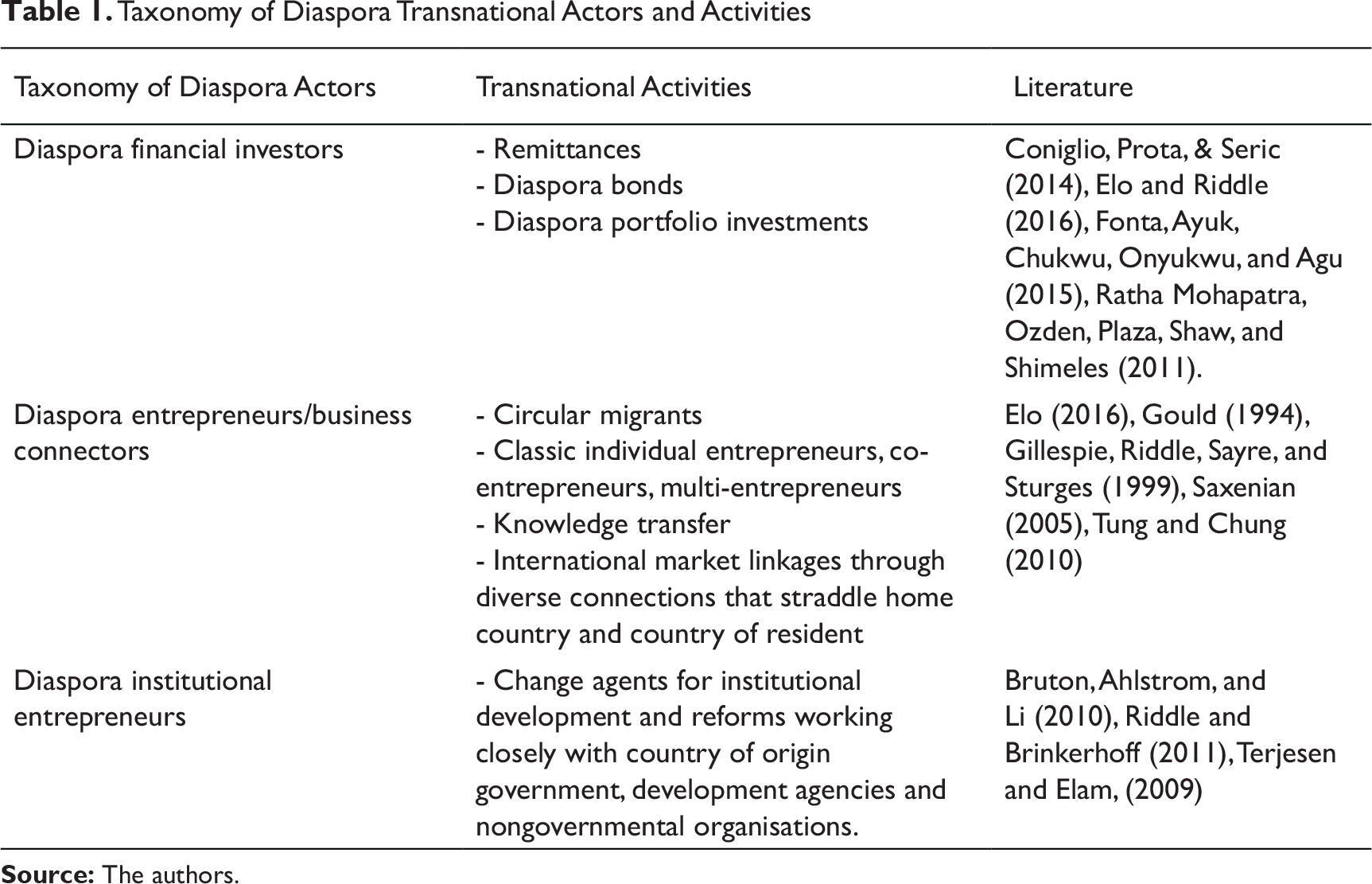
Institutional entrepreneurship is an entrepreneurial ecosystem nuance of policymakers. This mode of transnational entrepreneurship is pursued by ‘targeting highly skilled individuals who have lived in other countries to start new firms’ (Terjesen & Elam, 2009). This role also links the financial investments and other business activities of diasporans to wider issues such as export trade and economic development (Boly et al., 2014). As such, diasporans are perceived as change agents for institutional development and reforms in their countries of origin (Drori et al., 2009; Riddle & Brinkerhoff, 2011). They are perceived as market-relevant assets in their country of residence (Harima et al., 2016) and who can also contribute to the host countries economy (Peroni, Riillo, & Sarracino, 2016). Institutional entrepreneurship therefore represents the ‘activities of actors who have an interest in encouraging particular institutional arrangements and who leverage resources to create new institutions or to transform existing ones’ (Bruton, Ahlstrom, & Li, 2010, p. 428). Even though not all institutions are conducive to socioeconomic development or supportive of enabling investment climates (Riddle & Brinkerhoff, 2011), it is believed that because of institutional acculturation diasporans can be motivated to transform institutional arrangements in the country of origin. Governments of countries of origin, countries of residence and development agencies such as the World Bank and non-government organisations see diasporans as stakeholders in development (Weinar, 2010). Developing countries of origin also have the expectation that the financial remittances of diasporans could be harnessed for poverty reduction and investment (Faist, 2008). Many countries are therefore seeking creative ways of promoting diaspora homeland entrepreneurship and investment (Riddle & Brinkerhoff, 2011, p. 671); some are doing so through entrepreneurial ecosystems. Some governments of countries of origin have started programmes to attract investments by diasporans (Faist, 2008).
However, there is a tendency among policymakers to import entrepreneurial ecosystem structures that appear to be thriving, without paying attention to the differences in the socio-cultural and individual attributes of actors that underlie their success (Spigel, 2017). Nevertheless, entrepreneurial ecosystems tend to differ according to how the actors operating within them respond to the business environment they face (Mars, Bronstein, & Lusch, 2012). Since the diaspora is fundamentally a transnational one, straddling both the country of origin and their country of residence, the way the actors respond to the business environment is expected to be different to those who operate simply within a national context.
Conceptualising Entrepreneurial Ecosystems
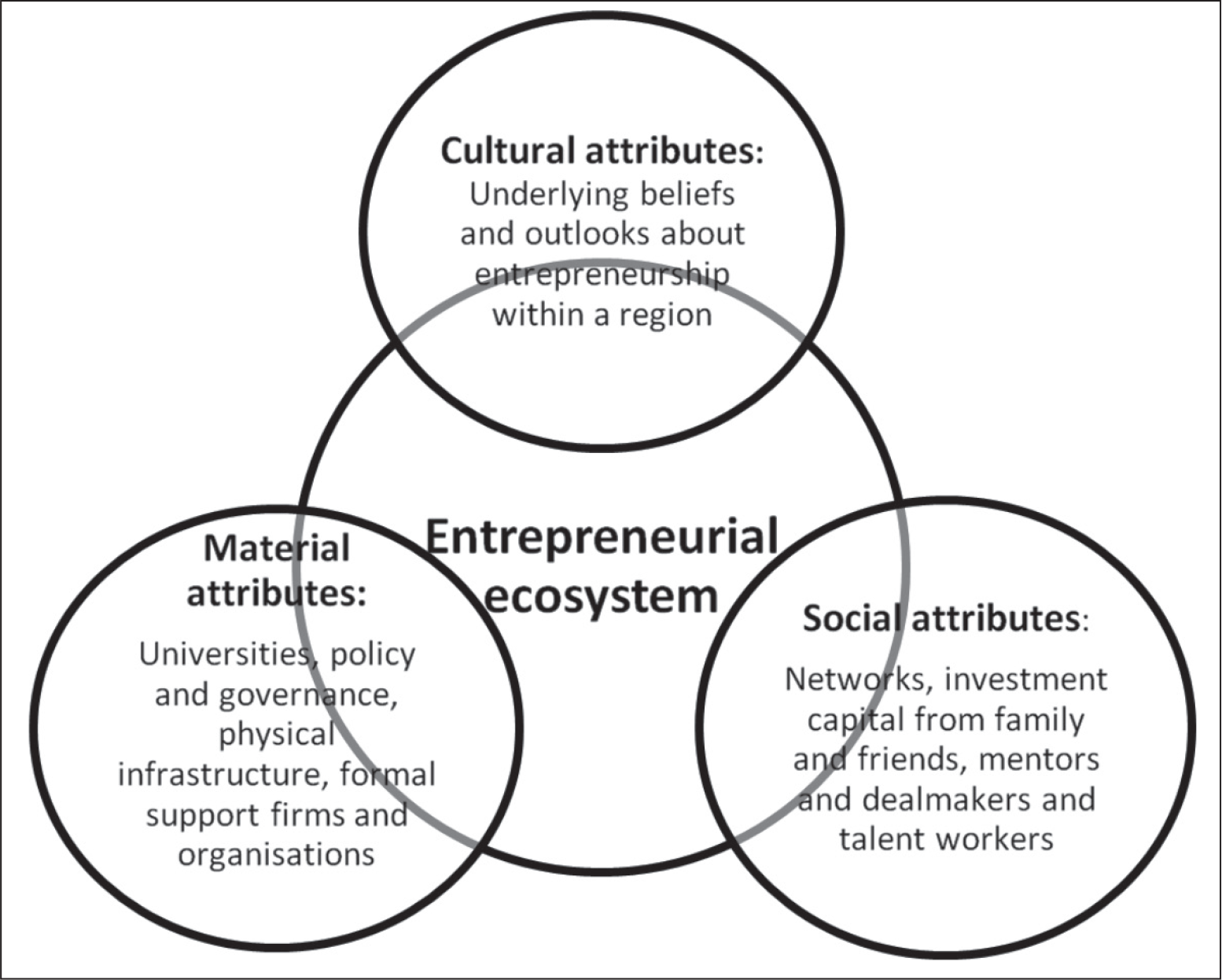
An entrepreneurial ecosystem is concerned with resource mobilisation by entrepreneurs for entrepreneurial action. The entrepreneurial ecosystem in a country therefore describes both the resource allocation systems within an economy and the individual-level opportunity pursuit, through the creation of new ventures and exploring the interdependencies between individual and institutional variables. At a spatial level, ecosystems attributes can be broadly classified into three attributes that can help to create supportive environments for an entrepreneurial activity. They are the cultural, social and material attributes (Spigel, 2017). These are shown in Figure 2. The interactions and coordination between these attributes predominantly contribute to the success of an ecosystem (Isenberg, 2010).
Cultural attributes describe the informal institutional forces as the values and norms that shape the mindset of actors. They provide a supportive culture and attitude towards entrepreneurship. Culture refers to ‘patterns of human activity and the capacity to classify experiences and to communicate them symbolically’ (Hechavarria & Reynolds, 2009, p. 424).
Social attributes are the sources of social capital for the entrepreneurship process and refer to the resources owned or acquired through the formal and informal social networks within a region. These attributes provide complementary resources and consist of networks of entrepreneurs, investment capital from family and friends, mentors, a skilled workforce and role models (Spigel, 2017). The presence of the social elements and the interaction between them creates the network of advice, mentoring and moral support which contributes to the success of the ecosystem (Cohen, 2006; Mars et al., 2012).
Material attributes refer to the tangible presence within the region. They describe the combination of formal institutional forces such as formalised rules, for example, entrepreneurial policies and governance; well-regulated markets and formal support organisations such as universities and higher education institutions that train entrepreneurs and generate knowledge spill-overs (Spigel, 2017). Federal, regional and local governments can support entrepreneurial ecosystems through supportive policies that could encourage innovation. Tax rates incentives, subsidies and grants and the elimination of bureaucratic ‘red tape’ also support entrepreneurial ecosystem (Cohen, 2006).
A government policy has the power to influence entrepreneurial activities. Policy discussions are centred on ‘the idea that governments seeking to stimulate their economies should reduce constraints on entrepreneurship’ (Minniti, 2008, p. 780). These efforts help in creating an entrepreneurial country, that is, one where the regulations and broader institutional conditions are supportive of entrepreneurial actions, irrespective of the nature of activities (Acs, Audretsch, Lehmann, & Licht, 2016). However, Minniti (2008) points out that policies need to take account of local differences, nature of existing resources, networks and market capabilities. The institutional environment determines entrepreneurial behaviour because the formal and informal rules of the game place constraints on human interaction, and, possibly, reduce uncertainty. Institutions (such as the policy environment) allocate entrepreneurial efforts towards entrepreneurial activities by influencing the motivations and opportunities offered by the economy to such activities (Minniti, 2008).
Hitherto, the National Systems of Innovation (NIS), a country-level perspective of entrepreneurship, rejected the relevance of agency and treated entrepreneurship as solely a process which portrayed infrastructures, policies and institutions that determine a country’s ability to benefit from entrepreneurial activities (Ács, Autiob, & Szerb, 2014). Even though this perspective can provide an understanding of a nation’s entrepreneurial position, it does not explain how to improve its position (Acs et al., 2016). A system refers to a set of institutions or components whose interactions work together to determine the performance of firms. Since human interaction is fundamental to entrepreneurship, the individual perspective of entrepreneurship was a missing link in the NIS (Acs et al., 2016). This individual perspective describes institutional entrepreneurship which is defined as an individual agency that aims at transforming existing institutions and creating new ones (Ács et al., 2014). Individual actors or institutional entrepreneurs may trigger transformations and ‘transform indigenous institutions so long as participating actors’ capital investment generates expected returns e.g., social status [or profits]’ (Lin, 2001, p. 194). Unlike the NIS, the National System of Entrepreneurship or Entrepreneurial Ecosystems are ‘fundamentally resource allocation systems driven by individual entrepreneurship choice variables and institutional settings, reflecting costs and benefits of actions on the individual level’ (Acs et al., 2016, p. 534).
They reflect the notion that institutions and linkages influence the kinds of incentives that individual agents must pursue, as well as the economic and social opportunities accessible through entrepreneurial activity (Ács et al., 2014). Therefore, entrepreneurship is now explored based on the premise that it is fundamentally undertaken and driven by individuals. Consequently, individual-level action involves the mobilisation of resources to pursue opportunities through the creation of new firms. Entrepreneurial action, therefore, occurs within a complex economic, social and institutional context, facilitated by complex interactions of attitudes, abilities and activities, operating at the level of the society or culture. It is these interactions that drive economic productivity through the allocation of resources to efficient uses (Ács et al., 2014). Hence, the role of the entrepreneur’s context is seen ‘not only as regulators of opportunities and personal feasibility and desirability considerations for entrepreneurial action, but also, as the regulator of the outcomes of entrepreneurial action’ (Ács et al., 2014, p. 479).
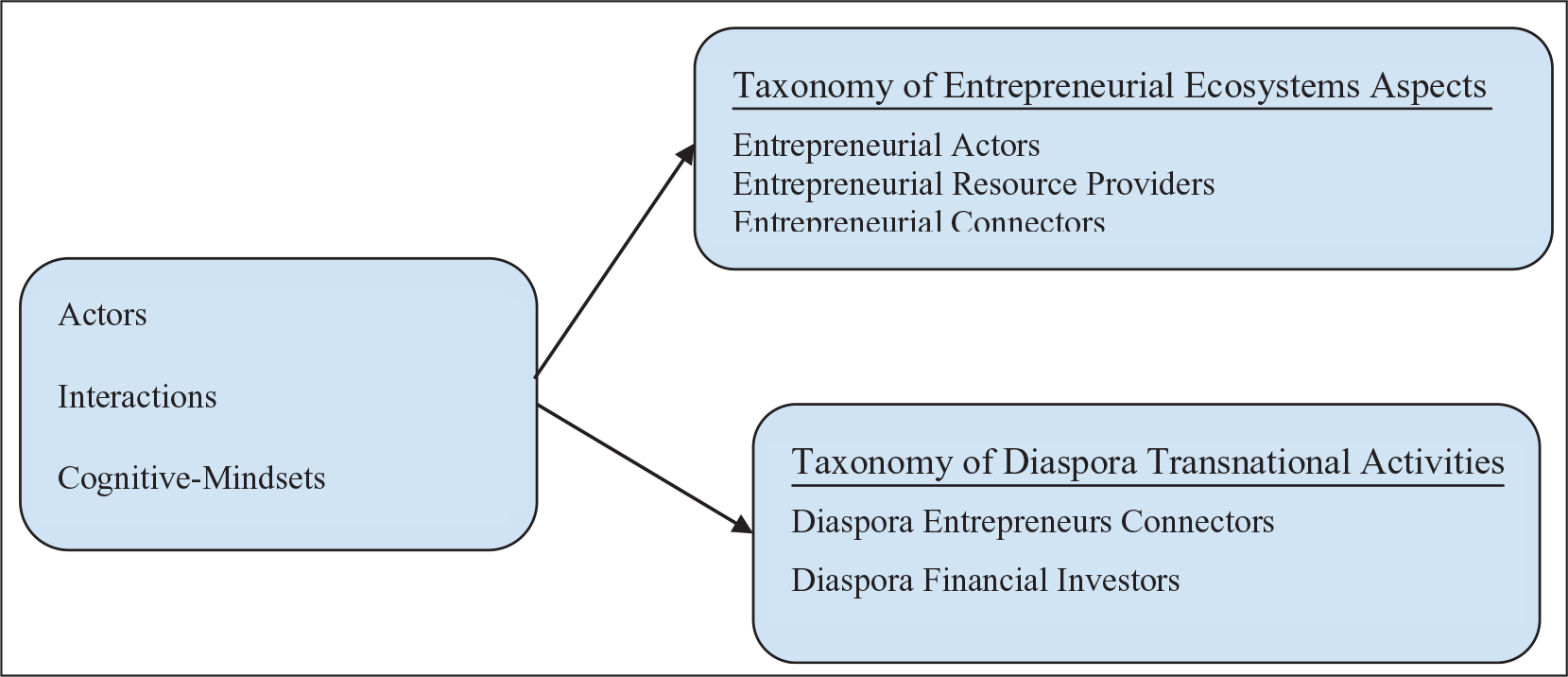
At the heart of an entrepreneurial ecosystem are informal and formal institutions as well as other conditions which enable or constrain human interaction such as accessible markets, human capital, funding, support systems, networks and cultural support. Without the interactions between these conditions, there cannot be successful entrepreneurship because entrepreneurs depend on them (Ács et al., 2014; Henrekson & Stenkula, 2010). Ács et al. (2014) also point out that motivations, perceptions, desires, cognition and judgement are critical regulators of entrepreneurial action. Likewise, as transnational actors, there is a ‘relationship between diasporans’ cognition, entrepreneurial action and institutional effects’ (Riddle & Brinkerhoff, 2011, p. 679). In addition to the taxonomy of diaspora actors discussed earlier, Brown and Mason (2017) also proposed a taxonomy to delineate the entrepreneurial ecosystems according to the main actors, interactions and cognitive mindsets within these complex systems. They propose a taxonomy featuring four main coordinative aspects, namely entrepreneurial actors, entrepreneurial resource providers, entrepreneurial connectors and entrepreneurial culture. Both taxonomies (Figure 3) identify the influence of interactions and cognitive mindset of actors in entrepreneurial ecosystems.
The Role of Networks in Facilitating or Constraining Transnational Entrepreneurial Activities
The fundamental role played by social and cultural factors in shaping entrepreneurship is one aspect of entrepreneurial ecosystems often overlooked by the emerging literature (Venkataraman, 2004). Network and institutional theories show the linkages between social and cultural factors and how these conceptual standpoints help in understanding the fluidity and diversity of transnational entrepreneurs in an entrepreneurial ecosystem (Brown & Mason, 2017). First, resources for transnational entrepreneurial activities are accessed and mobilised through network relationships. Therefore, networks are ‘fundamental characteristic of transnationalism and the primary means of mobilizing resources for transnational practices’ (Chen & Tan, 2009, p. 1080). Second, institutional factors determine the likelihood of diasporans’ engagement in transnational linkages between the host country and the country of origin (Baltar & Icart, 2013; Bruton et al., 2010).
Diaspora transnational actors’ business activities require frequent travelling abroad, and their business success also depend on their contacts and associates (Mustafa & Chen, 2010). They, therefore, concurrently maintain networks, for example, business-related linkages, with their country of origin and current country of residence (Drori et al., 2009). This means they are predisposed to doing business with people they know well, because of greater levels of interpersonal attraction, trust and understanding that already exist between them (Grossman, Yli-Renko, & Janakiraman, 2007). ‘Entrepreneurial activity is an action in response to a judgemental decision under uncertainty about possible opportunity for profit’ (McMullen & Shepherd, 2006, p. 134). It is undertaken in uncertainty because the future is not known, and the action takes place over time. Uncertainty increases in risky environments and affects entrepreneurial activities in two ways: (1) the amount of uncertainty perceived and (2) willingness to bear uncertainty. Entrepreneurs differ from non-entrepreneurs in their willingness to bear uncertainty inherent in a possibly profitable activity. Their willingness to bear uncertainty are distinguishable owing to differences in motivation, attitude or risk propensity (McMullen & Shepherd, 2006). The actions that entrepreneurs take are, therefore, a manifestation of the assumptions they make about the nature of the context within which they are operating (Alvarez & Barney, 2007).
Network Theory Links Institutional Theory at the Level of Embeddedness
The content of a network can be characterised by three components: actors, activities and resources (Björkman & Kock, 1995). These components shape the extent of resources which can be accessed from a network (Lin, 2001). Homophily is a network principle useful for understanding transnational entrepreneurial roles of diasporans; homophily predisposes people to others like themselves which can generate a greater level of trust. Homophily is the tendency for individuals to interact with others who share personal characteristics, such as age, gender and ethnicity with them. As a result of homophily, there is a tendency for groups to form from similar-minded actors and then they become more similar with time (McPherson, Smith-Lovin, & Cook, 2001). The homophily principle is useful, irrespective of whether a set of relationships contains poor or rich resources by looking at three key elements, namely (1) sentiment of the actors which reflects their motivations, (2) the nature of their resources and the resources they can access from others and 3) the activities they are willing or capable of engaging in the entrepreneurial ecosystem and the type of interactions through which resources can be accessed.
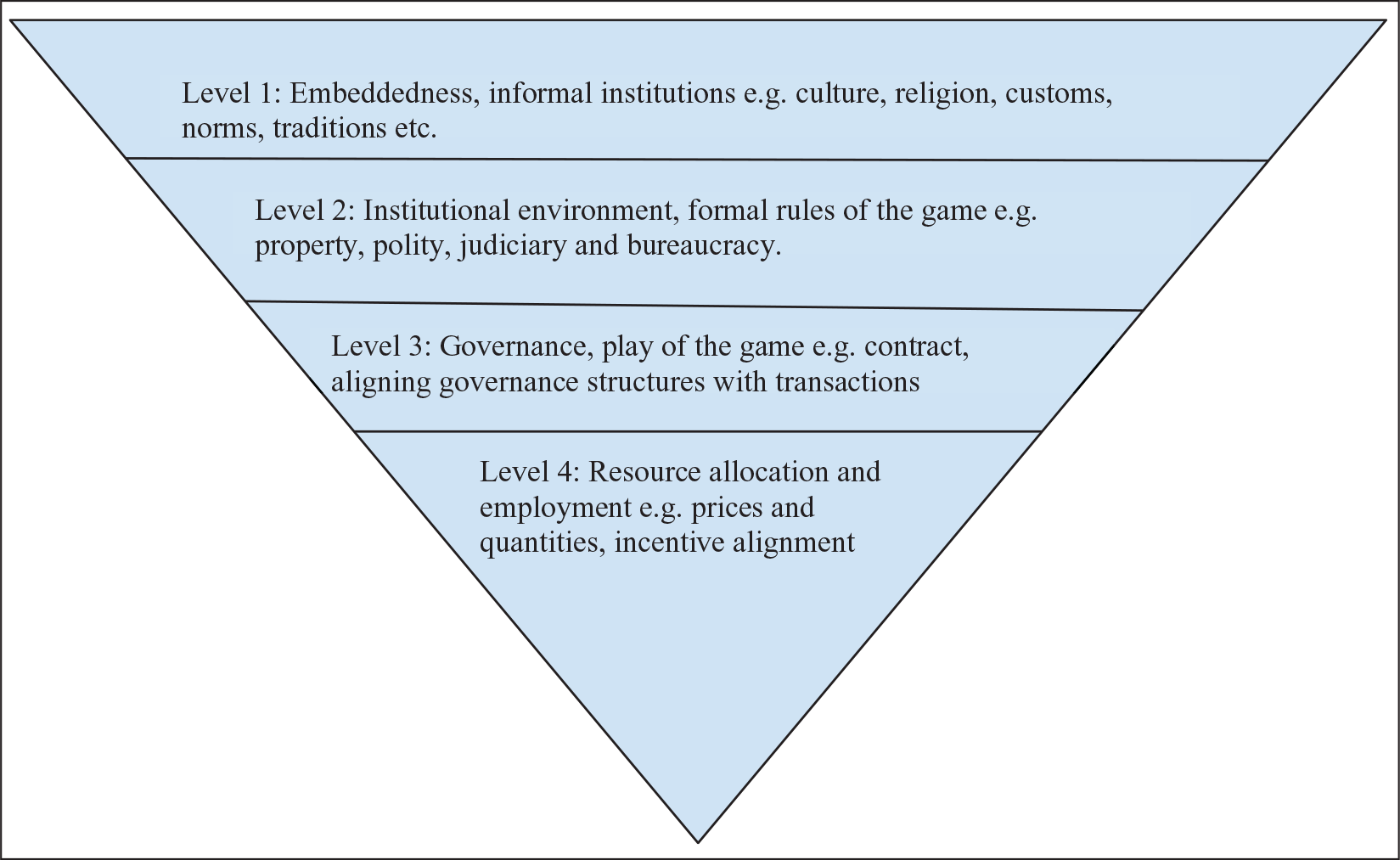
Network patterns reflect the ongoing interactions that establish expectations and obligations for exchanges (Arregle et al., 2013). Therefore, network theory links institutional theory at the level of embeddedness (Figure 4) where informal relationships are reinforced by the environment in the form of informal institutions such as sanctions, taboos, culture, norms and traditions as shown in Level 1 in Figure 4. Such institutions have an evolutionary origin and a lasting grip on the way the society conducts itself (Williamson, 2000).
Embeddedness describes the nature, depth and extent of individuals’ ties with their environments (Arregle et al., 2013). It explains how resources take on values and how valued resources are distributed in society (Lin, 2001). Entrepreneurial activities embedded in these relationships determine the extent of resource flows to entrepreneurs (Hoang & Antoncic, 2003). Lack of adequate resources (personal or accessed through others) and uncertainty ‘prevents entrepreneurial action by complicating the need or possibility for action, the knowledge of what to do and whether the potential reward of action is worth the potential cost’ (Minniti, 2008, p. 139). Relational embeddedness is therefore an ongoing system of social relationships and a network characteristic which refers to the closeness or intensity and the frequency of social interaction between network members, including reciprocity and trust (Granovetter, 1973).
Practical actions across multiple contexts such as transnational entrepreneurial activities of diasporans demand the navigating of complex relationships. Making use of strong ties are less costly and are characterised by trust and reciprocal relationships developed over time from repeated interactions. Weak ties can be costly to maintain but enable acquisition of diverse knowledge (Granovetter, 1973). Embeddedness can both facilitate and constrain entrepreneurial action. Under-embeddedness refers to when an actor does not have enough strong ties. Over-embeddedness occurs when there is excessive reliance on strong ties such that the obligations and expectations which are built into these relationships constrain them from forming new relationships or taking advantage of potential opportunities (Arregle et al., 2013). Relationships that make economic exchange possible are the joint outcome of both networks and institutions because networks and institutions are mutually reinforcing contextual features of social systems (Owen-Smith & Powell, 2008). On the one hand, the weakest ties may not be useful because ties with no strength offer no incentive for exchanges. On the other hand, the resources from strong ties may restrict the range of resources. However, strong ties, ‘by definition, represent commitment, trust, and obligation and therefore the motivation to help. Willingness and effort to search for other ties using these strong ties may be critical under institutional uncertainties or constraints’ (Lin, 2001, p.78). Therefore, a moderate level of embeddedness, which balances strong and weak ties, helps entrepreneurs to reduce uncertainty and increase opportunity for taking advantage of profit possibilities (Arregle et al., 2013).
Attempts to understand the diasporans’ transnational role in the entrepreneurial ecosystem through the network and institutional theoretical lens is therefore justified. First, because networks are important contexts for understanding the institutional process. Second, institutional practices and forms emerge from networks through resources embedded in relationships.
Diasporans, Sentiments, Resources and Interactions
Networks, both formal and informal, can help to reduce uncertainties. They shape institutions, and the process through which the shaping takes place can be understood through organisations and individuals who strive to navigate multiple institutional contexts (Owen-Smith & Powell, 2008). Diaspora transnational actors fit this notion because diasporans navigate between locales, usually the countries of residence and origin (Drori et al., 2009). This suggests that even though diasporans have the ability to affect change across geographic borders, the extent to which this change might occur and/or what duration and ties in different context are necessary to effect the change are unknown (Riddle & Brinkerhoff, 2011).
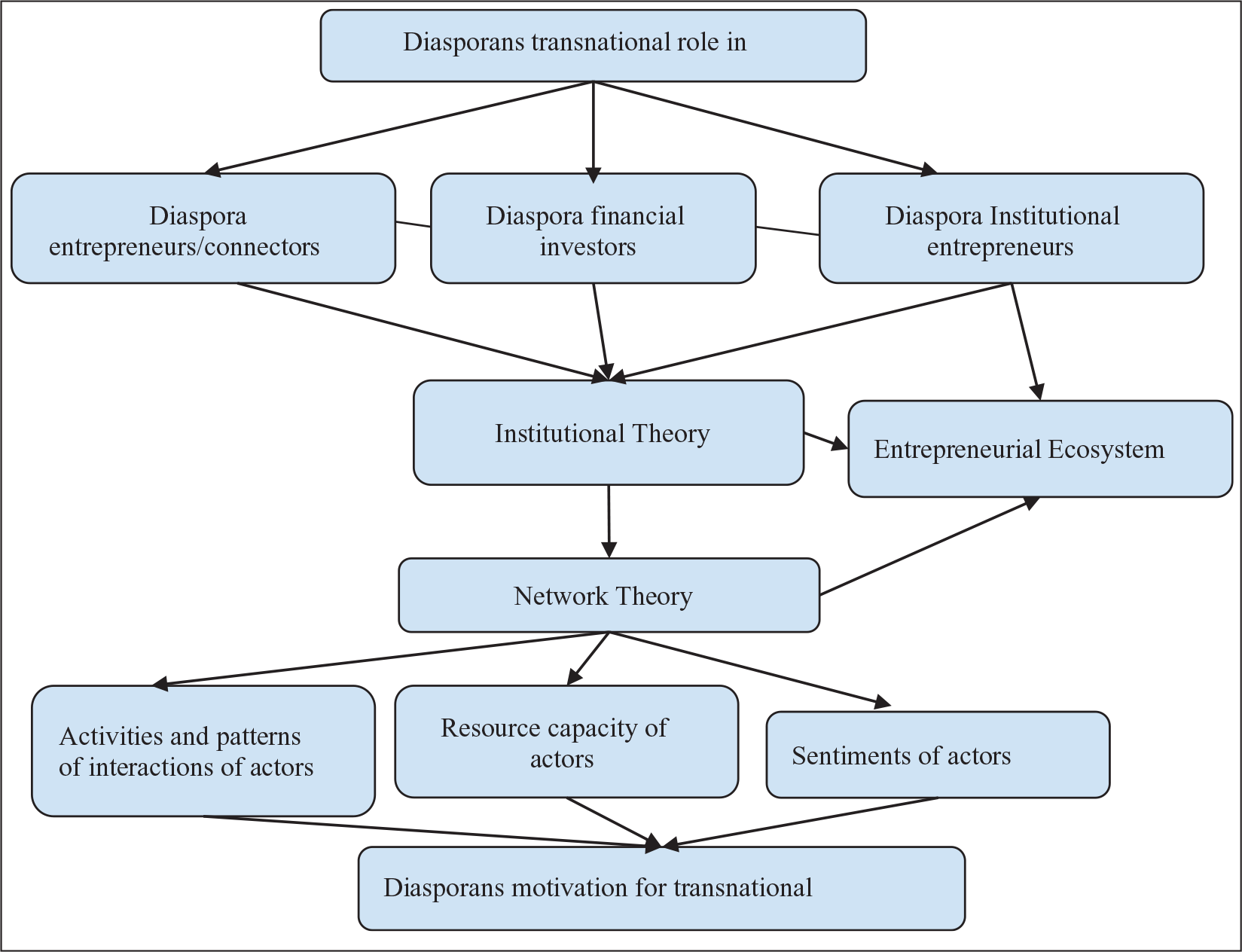
The role of diasporans as transnational actors in entrepreneurial ecosystems can be understood through the relationship between diasporans’ perception, entrepreneurial action and institutional effects (Riddle & Brinkerhoff, 2011). As shown in Figure 5, by exploring the sentiments of diasporans—their resource capacity and interactions, motivations which propel actors to make choices can be understood (Lin, 2001). These factors are the regulators of entrepreneurial actions (Ács et al., 2014), and these factors help to understand the relationship between entrepreneurial action and institutional effects and how entrepreneurial change might occur in the country of origin (Riddle & Brinkerhoff, 2011). Riddle and Brinkerhoff (2011) noted that the circular effects of transnational entrepreneurship can affect institutional change and bring benefits to both the country of origin and the country of settlement. This suggests that the exploration of the individual transnational actor’s mindset and resources is crucial for identifying whether some individuals are more adept than others in using their skills and resources for commercial advantages and how these could be transferred across institutional environments (Terjesen & Elam, 2009).
Exploring Data to Understand the Role of Diasporans as Transnational Actors in Entrepreneurial Ecosystems in the Nigerian Context
In this section, empirical data is explored to make the network and institutional theoretical underpinnings discussed earlier in order to gain more understanding of the role of the Nigerian diaspora in entrepreneurial ecosystems. The following sentiments, the resources and the nature of interactions are explored through diasporans:
Predisposition towards making financial investments and providing business linkages. Ownership of resources and access to resources held by others. Motivation and demotivation for transnational entrepreneurial activities.
Prior studies on the diaspora (e.g. Elo, 2016; Ferguson, Salominaite, & Boersma, 2016; Tabor & Milfont, 2013) tended to make use of purposive sampling because of the need to identify the diaspora population from a wider migrant population. Drawing from Safran’s (1991) definition, a true picture of the phenomenon is that, diasporans are migrants who maintain ethnic or national identity or link with the country of origin. This identity can be expressed through their offline and online activities. The internet ‘is a finely meshed tool, constituting an appropriate research site for advancing the study and comprehension of migrant networks and influence abroad, and adding to more fertile conceptions of diaspora and transnationalism’ (Kissau & Hunger, 2010, p. 246). It is also a cost-effective way to reach a large audience breaking the barriers of distance (Wright, 2005).
For this analysis, a combined online and offline survey was carried out over a period of 6 months, to obtain the perspectives of a range of individual diasporans of diverse sociodemographic characteristics and across locations. The internet survey targeted members of diaspora groups on Facebook and professionals on LinkedIn, while the offline pen and paper survey was carried out at a diaspora conference.
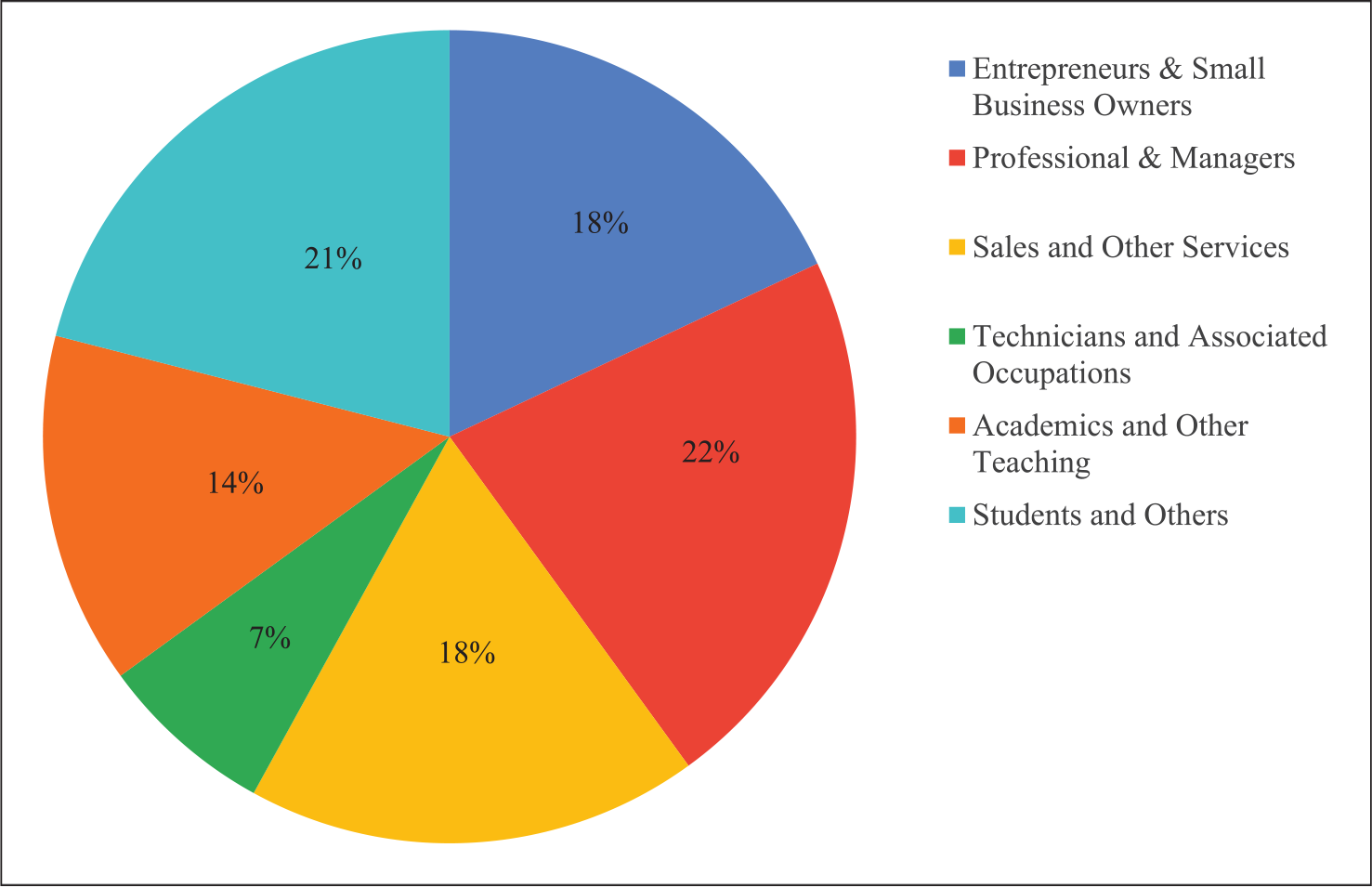
A total of 208 diasporans participated in the survey and a breakdown of respondents according to occupation is shown in Figure 6. There were more professionals and managers (22%) and students (21%) among the respondents.
The Data Analysis and Discussion of Findings
Predisposition Towards Making Financial Investments and Providing Business Linkages
Five variables inquiring about preferences for transnational entrepreneurial activities explored diasporans’ predisposition towards entrepreneurial support in five areas, namely personal loan, equity investment, gift giving, provision of information about international trading opportunities and introduction to a business partner. The preference variables were constructed as a series of items reflecting the strength of relational ties (Granovetter, 1973) ranging from close ties to distant ties, for example, family, intra-ethnic friendship (friends from same ethnic group), inter-ethnic friendship (friends from different ethnic group) and acquaintances (friend of a friend). Intra-ethnic and inter-ethnic friendships depict close ties and weaker ties, respectively, and both have been found to have a positive impact on migrants’ support in different contexts (Lancee, 2012; Lancee & Hartung, 2012). Four attitudinal variables were constructed using a Likert-type attitude scale of 1–5 (from strongly agree to strongly disagree), and two categorical questions were asked about the conditions under which they are willing to provide support (yes, no and maybe). These items were analysed using a non-linear principal component analysis or categorical principal component analysis.
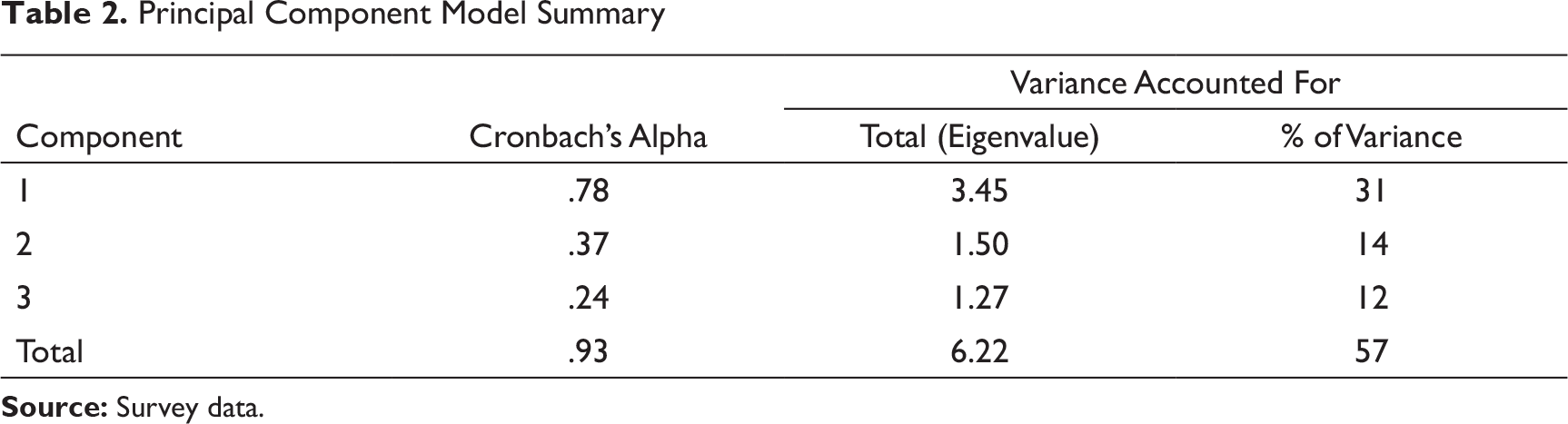
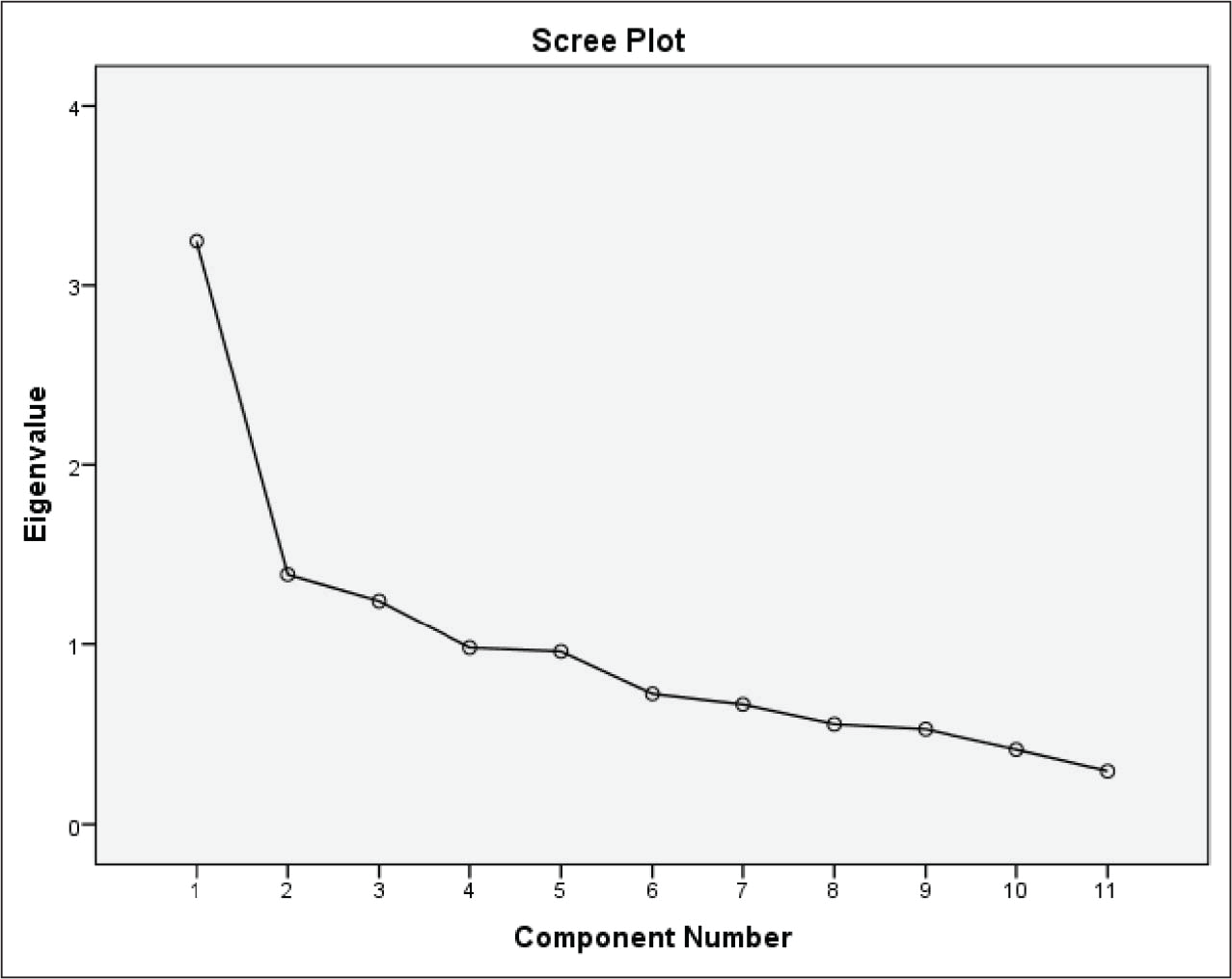
The model summary (Table 2) shows that three components accounts for 57 per cent variance of the 11 variables and with a reliability coefficient of 0.93. Component 1 accounts for 31 per cent of the total variance and with a reliability coefficient of 0.78.
Principal Component Model Summary
Model Selection
Ownership of Resources and Access to Resources Held by Others
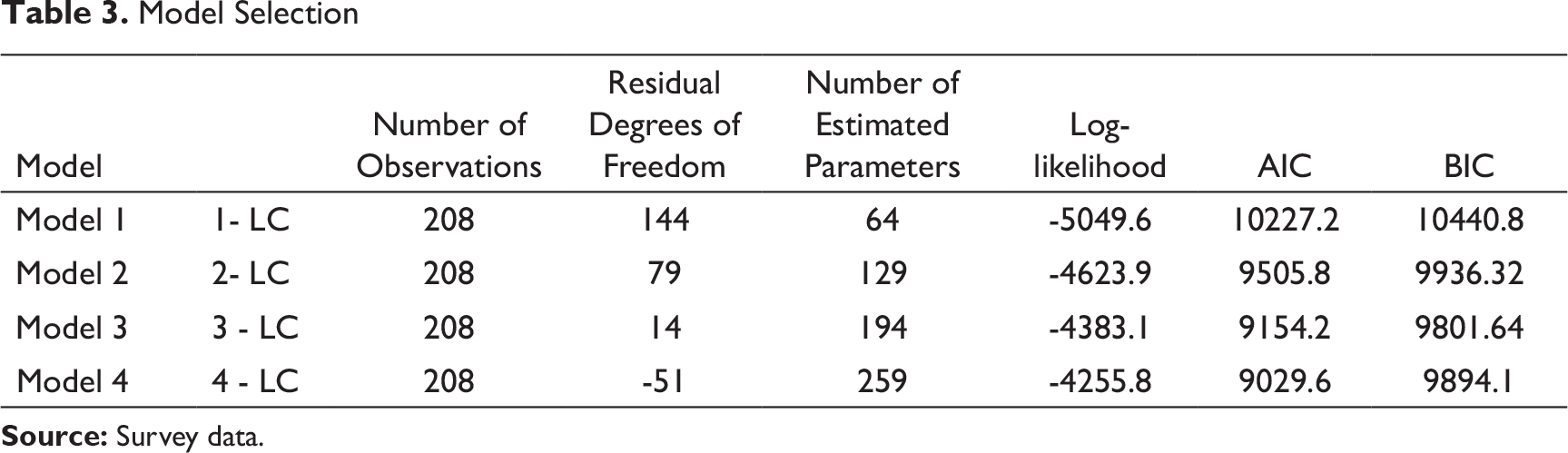
Here, the data explored the resources the diasporans own and which they are willing to provide or able to access from others to support an entrepreneur not well known by them. Sixteen items representing entrepreneurial activities were adapted to a resource generator questionnaire. The questionnaire items resulted from systematic and theoretical considerations and the list of resources represents a vivid, concrete set of activities. A latent class modelling of the items was carried out using the ‘poLCA’ function in the R package.
The lowest Bayesian information criteria (BIC) was used to fit the best model. Table 3 shows that Model 3 is best fitting with the lowest BIC.
Motivation and Demotivation for Transnational Entrepreneurial Activities
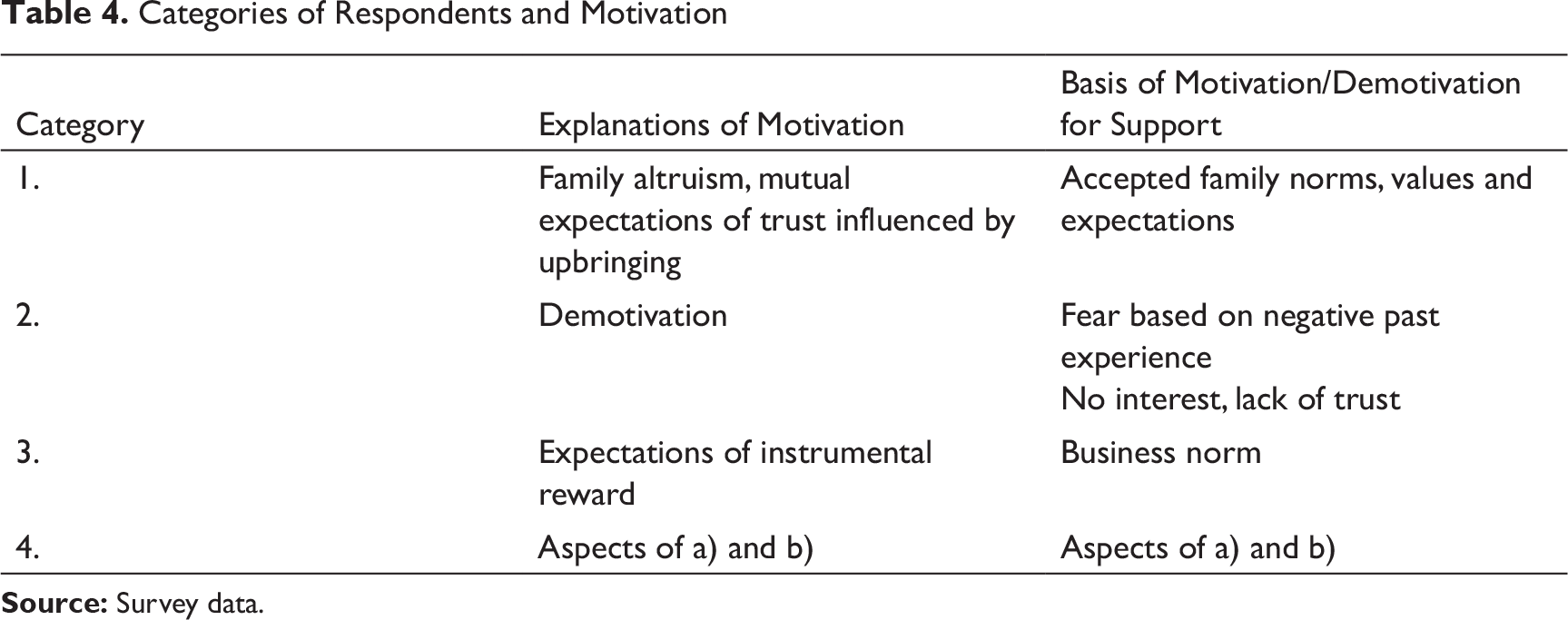
The means to collect open-ended questions were also nested within the same instrument to allow respondents clarify the motivation for their choices. These responses were analysed and categorised according to themes in Table 4.
Discussion of Findings
Strong Sentiments Show Homophily
Categories of Respondents and Motivation
However, the attitude that due care is needed when dealing with fellow Nigerians is strong. Interestingly, despite the strong preference for family member-owned businesses, more diasporans disagree or are neutral about the idea that it is better to do business with family members or friends because they can be trusted. The variance shows that suitability of doing more business with family members also depends on the length of relationship with such family members. Despite this, more of the diasporans who preferred to support a family member-owned business would prefer to give a gift or personal loan rather than make an equity investment in such a business.
The condition of length of relationship is significant for the preference for making financial investments and for providing business linkages but is not significant for providing information. Providing information is a least effort activity compared to acting as a business link because the latter entails an element of risk which restricts choice to entrepreneurs well known by the diasporans. The findings also show that reciprocity is significantly linked to least-effort activities. However, returning a past favour by providing information about business opportunity is a less risky option preferred compared to making financial investments and providing business linkages.
Expressive Entrepreneurial Activities Rather than Instrumental Activities
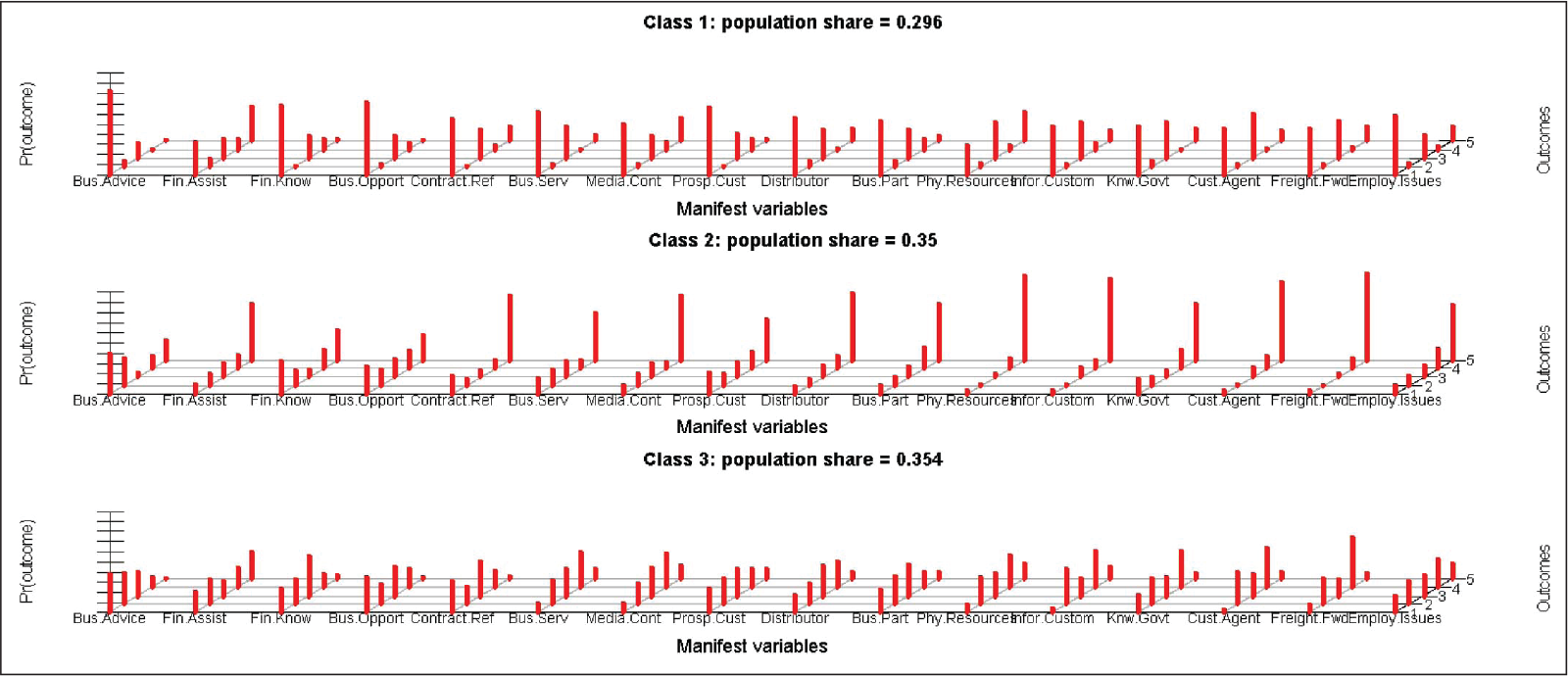
For resources the diasporans own and whether they are willing to provide or able to access from others to support an entrepreneur not well known by them, the three latent classes of diasporans identified are shown in Figure 8. Those who own resources themselves (class 1), those who can access resources held by others through diverse networks (class 3) and those who can do neither (class 2).
Latent class model regression analysis was carried out using occupation, gender, age, immigration status and educational level as the independent variables. The results show that expressive entrepreneurial activities rather than instrumental activities are significantly available through the diasporans and their close networks. This likelihood is significant among respondents who are aged between 35 and 49 years and who are permanent migrants. These activities are general information activities, knowledge about financial matters, information about business opportunities and providing business advice.
For financial activities, the results show that among the class of diasporans who can provide financial assistance themselves, the probability of such diasporans providing financial assistance to an entrepreneur that is not well known by them is not significant. Also, diasporans who could access resources through weaker ties for instrumental activities were not significant. The results also show that the probability of a diasporan reaching out to unfamiliar people to do business on behalf of an entrepreneur that is not well known to them is low.
Motivated But Constrained
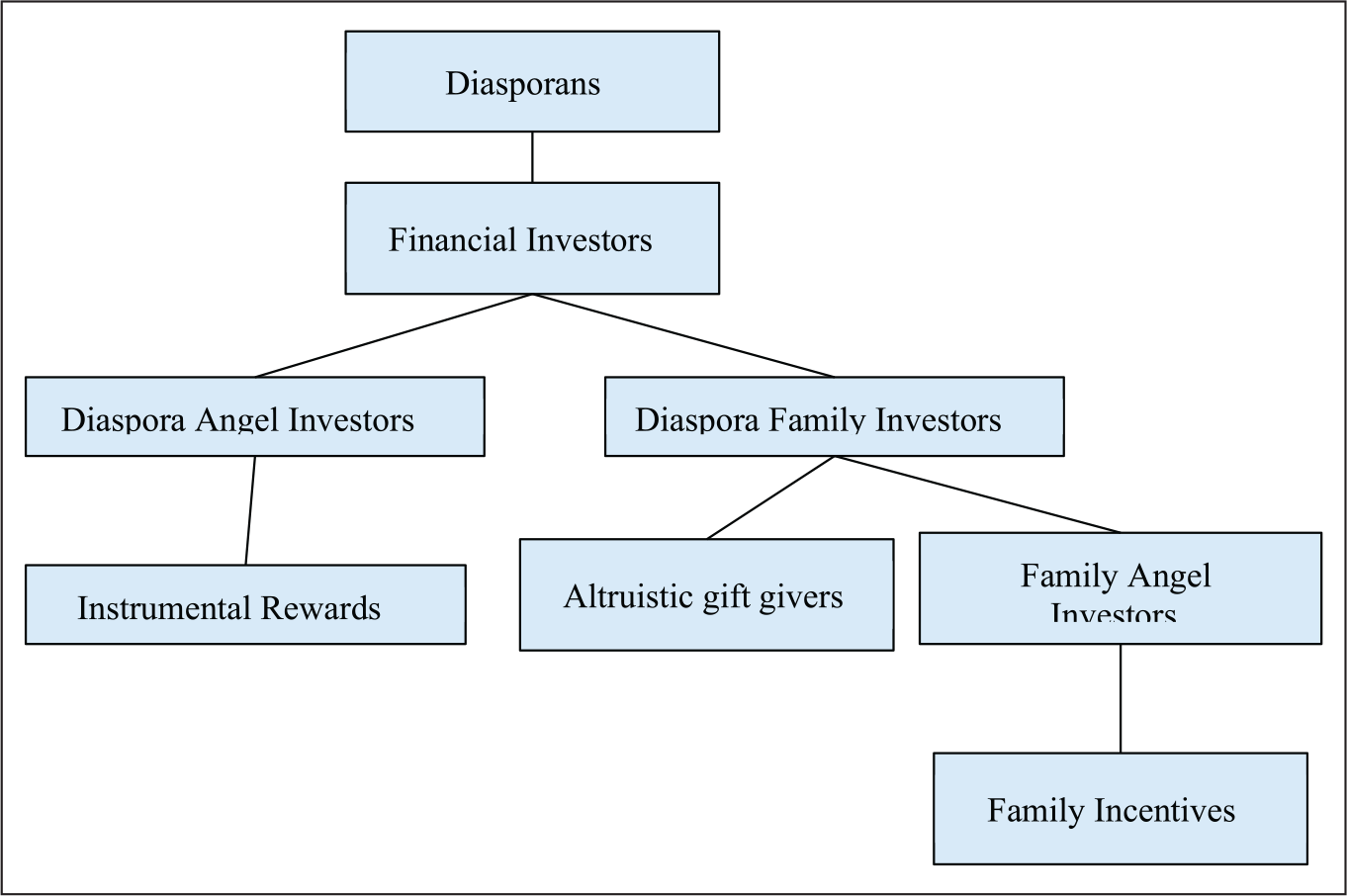
The analysis of the clarifying statements made by the diasporans shows the reasoning for their preferences and explains their motivations. The two broad categories (Figure 9) of diasporans identified on the basis of their financial preferences are the diaspora family investors and the diaspora angel investor. Diaspora family investors are either altruistic gift-givers or family angel investors.
The Role of Diasporans as Transnational Actors in Entrepreneurial Ecosystems in the Nigerian Context
The altruistic gift-givers are the class of diasporans who highlight the strong homophily or sentimental link between diasporans and the country of origin. The sole interest with home is to give back and to support family members because that is the acceptable norm and collectively held tradition. They would give financial support and not expect a payback because the act of supporting and being there for family members is the right thing to do. This category of diasporans exhibit sentiments similar to the Ghanaian diasporans who would give to a project because it directly affects their family members back home (Mohan, 2006).
Unlike the altruistic givers, family angel investors do not have purely altruistic motivations. They are interested in investing at home and receiving instrumental rewards or returns on their investments. These benefits them and also serve as a means of reducing the burden of obligation towards caring for family members. The most appropriate risk-minimising strategy for them is to invest in businesses owned by a family member or only those well known by them. They are interested in the ease of monitoring their investments by applying the least effort principle—trust—established based on the length of relationship.
The family angel investors prefer to safeguard their investments using their family as an alternative mechanism against the loss of confidence in the formal institutions that ought to provide the mechanisms to guard against opportunism in business. This category of diasporans exhibits a potential which could be useful for establishing family-owned businesses in the country of origin.
Despite the challenging environment, diaspora angel investors would invest if they are convinced about the business potential and there is easily accessible information about such investments. They would do their research and all due assessments of any business they are interested in.
Diaspora angel investors expect instrumental reward or return on their investment without sentiments. They do not have homophily bias compared to the altruistic givers or the family angel investors. They are interested in viable business ideas and in the value proposition of a business. Rationale for investments are based on business principles, and the qualities that help build their confidence in entrepreneurs are personal characteristics such as honesty, trustworthiness and hard work. In this category of diasporans, there were more entrepreneurs/small business owners. Like the Chinese and India diasporans (Wang, 2000), this category of diasporans has the potential to initiate entrepreneurial ideas and take the risk of doing business in Nigeria.
The Three Sentiments of Diasporans
At the level of embeddedness, informal relationships are reinforced by the environment in the form of informal institutions. Institutional practices and forms emerge from exploring diasporans sentiments, the resources and the nature of interactions. Three sentiments of diasporans, namely family loyalty, family trust and business opportunity, emerge from the data analysis.
Sentiments for the altruistic gift givers are culturally governed and based on family loyalty and expectations. Culturally supported norms (e.g. the practice of sending money home to loved ones) contribute to the sentiments or emotions towards close ties especially family members.
Family angel investors show sentiments based on family trust which are normative rather than emotive. The sentiments are reinforced by binding expectations of trust which are strengthened by the honest values held within the family. Financial investment would be made because it is the most appropriate thing to do in order to prevent loss and to keep the wealth within the family.
The sentiments of diaspora angels are regulative and governed by business norms and on the basis of rules that guide entrepreneurial activities. They take advantage of opportunity due to their resilience and higher risk propensity.
Policy Implications
The findings of this article have implications on the Nigerian government’s desire for its own foreign-based skilled managerial and entrepreneurial talents to invest in entrepreneurial activities in the country. The government, therefore, needs to support entrepreneurship by addressing concerns about infrastructure, security and institutionalised corruption. It also critical that the government work hand-in-hand with the private sector to engage the Nigerian diaspora effectively.
Profiling and targeting of diasporans with similar sentiments is crucial because of the heterogeneous nature of diasporans. This is critical because diasporans with similar sentiments would be able to work together because of their similarities. This has worked in other contexts, for example, ties forged among diasporans that succeeded in establishing links between Taiwan and Silicon Valley were based on education rather than kinship or shared native place (Alan & Hsu, 2004).
Here are suggestions for ways to improve diaspora engagement and the current position of the ecosystem.
Crowdfunding start-ups could leverage the strong altruistic-giving tendencies among diasporans to support access to finance by SMEs. A large pool of small donations from altruistic investors linked through personal networks, which are based on trust, and established relationships can be a source of funding for some entrepreneurial businesses in Nigeria. In the same vein, alternative payment systems start-ups could be established to facilitate easier and cheaper mobilisation of funds for any entrepreneurial activity, particularly to SMEs in rural areas of Nigeria. This can also benefit the One local government one product (OLOP) programme of the entrepreneurial ecosystem that is aimed at poverty alleviation in the rural areas.
The family angel investors seek to invest in a climate of trust achieved through the protection family governance offers. These groups of investors can also extend their entrepreneurial investments if the conditions are right, for example, if they are convinced of the integrity and honesty of a business. That is, in addition to establishing family-owned businesses, financial investments through private sector arrangements are also a possibility since their motives are normative rather than emotive. This could benefit start-ups or small and growing businesses in Nigeria through the access to markets initiative.
Diaspora angels investors are governed by regulations, and the expectations of business norms drive their entrepreneurial investments. This group of individuals could form the critical mass for mobilising the diaspora for entrepreneurial activities from the entrepreneurial ecosystems perspective. These diasporans are entrepreneurs and professionals with entrepreneurial mindset. Their risk-taking nature and experience may mean some of them are already involved in doing business in the country of origin. Those who are yet to invest would take the step if encouraged. They could also leverage on their education and international experience to act as local partners for multinational corporations seeking partners in emerging economies. This category of diaspora entrepreneurs can create a bandwagon effect for government–diaspora investment initiative before other types of investors such as the family angel investors, while the altruistic gift-givers may later become interested.
Conclusion
The article reviewed extant literature to conceptualise transnational interactions of diasporans in an embryonic entrepreneurial ecosystem by linking the network and institutional theories. The former explains how the personal networks of diasporans and the cultural components influence transnational entrepreneurial activities of diasporans. The latter explains how institutions enable or constrain entrepreneurial activities. In risky environments where uncertainty is increased, transnational actors may be unwilling to bear uncertainty or limit transnational entrepreneurial activities to interactions that minimises risks. In such instances, homophilous interactions help to minimise risks in entrepreneurial action. Diasporans navigate these complex relationships at the level of embeddedness where entrepreneurial action can be facilitated or constrained. Empirical data was also explored to have a clearer understanding of the role of diasporans in entrepreneurial ecosystems in the Nigerian context.
The role of diasporans in the entrepreneurial ecosystems is therefore diverse; in some contexts, diasporans may be more suited as support for local entrepreneurs, while in others, they may be active transnational entrepreneurs in entrepreneurial ecosystems. This means some individuals may be more suited as financial investors rather than connectors or as institutional entrepreneurs rather than financial investors or in other combinations borne through homophilous sentiments of the actors. The bespoke positioning of the diaspora as a transnational element of an entrepreneurial ecosystem can therefore be better understood by empirically exploring the sentiments, the activities and patterns of interactions and the resource capacity of individual diaspora transnational actors These factors will help to better understand diasporans motivations for assuming transnational entrepreneurial roles. The knowledge would also help embryonic entrepreneurial ecosystems to improve interactions with transnational entrepreneurial growth nodes.
Footnotes
Declaration of Conflicting Interests
The authors declared no potential conflicts of interest with respect to the research, authorship, and/or publication of this article.
Funding
The authors received no financial support for the research, authorship, and/or publication of this article.
