







Abstract
Agnes C. L. Donohugh (1876–1966) taught at Hartford Theological Seminary’s Kennedy School of Missions between 1918 and 1944, the leading graduate program in mission studies in North America prior to World War II. The first missionary student of Franz Boas at Columbia University, Donohugh influenced the shape of graduate anthropological education for missionaries in America more than anyone else in the interwar period. Donohugh’s story provides a window into understanding how anthropology was first used in mission education in America.
Just over one hundred years ago, in the spring of 1915, the Kennedy School of Missions at Hartford Theological Seminary, Hartford, Connecticut, offered the first graduate-level course on ethnology (now more commonly “anthropology”) ever to be taught in America to prospective and current missionaries. The Kennedy School was the premier graduate school for missionary training in the United States during and between the world wars. The seminary’s leadership identified the need for teaching ethnology to missionaries-in-training as early as 1913, when the school of missions was just two years old. 1 The 1910 Edinburgh Missionary Conference played a role in this curricular innovation. Hartford Seminary president W. Douglas Mackenzie, in preparation for the conference, chaired its Commission V, “The Training of Teachers,” which sounded a sobering call for improved anthropological training for missionaries. 2 Unsurprisingly, Mackenzie wanted his own institution to take the lead in reforming missionary training in this way. And so it did.
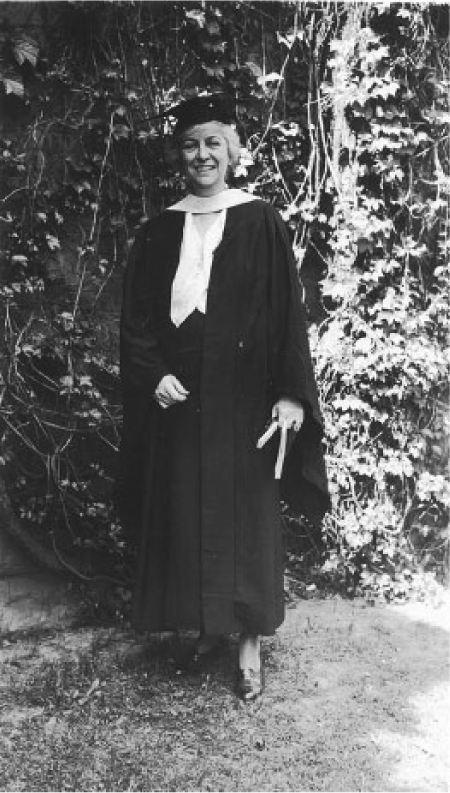
Agnes C. L. Donohugh (1876–1966) kept the flame of anthropological education alive and burning at the Kennedy School for twenty-five years. She influenced graduate anthropological training for missionaries in America more than anyone else before World War II. A former Methodist Episcopal missionary to India and a recent MA graduate in anthropology from Columbia University, Agnes Donohugh became known as the Apostle of Ethnology by Kennedy School colleagues and students. 3 She taught at the Kennedy School from 1918 to 1944, far longer than her better-known British missionary-anthropologist colleagues William C. Willoughby, who served there from 1919 to 1931, and Edwin W. Smith, who was there from 1939 to 1943. 4
When Donohugh began teaching at the Kennedy School, anthropology was a young discipline in America; there were only nine anthropology or sociology-anthropology departments in the nation. In missionary training, the Kennedy School was even more at the anthropological forefront. No other seminary in America taught courses in ethnology until some years after the Kennedy School began to do so. 5 As late as 1955 the Kennedy School of Missions was the only missionary training institution in the world to have granted terminal degrees in anthropology in the preceding half century. 6
In spite of Donohugh’s pioneering efforts in anthropology and missionary training, the Apostle of Ethnology has been almost completely forgotten. 7 There are several reasons for this oversight. She published few articles and no books; she was a woman in a male-dominated field; and she lacked a PhD degree at a time when the discipline of anthropology admitted only PhD anthropologists into its ranks. 8 This biographical portrait of Agnes Donohugh assesses her contribution as a pioneering woman in the fields of anthropology, missionary training, and, toward the end of her career, public diplomacy to promote a postcolonial Africa.
Early years and missionary service
A lifelong Methodist, Agnes Crawford Leaycraft was born in New York City to affluent parents who were active in the Methodist Episcopal Church. Her father ran a real estate firm in Manhattan. 9 She attended Barnard College in New York City beginning in 1894 and graduated in 1901 after a course of study that included mostly English classes. 10 She also took at least one introductory anthropology course, which was probably taught by either Franz Boas (known as the father of American anthropology) or Livingston Farrand. In the late 1890s women were not permitted to take advanced anthropology courses at Barnard or Columbia. 11 In 1899 she also became active in the Woman’s Foreign Missionary Society of the Methodist Episcopal Church, a foreshadowing of her life’s work. 12 As a New York City resident with interest in foreign missions, it is likely that she also attended the famous Ecumenical Conference on Foreign Missions, which took place in Carnegie Hall in 1900 and featured a missionary exhibit of cultures from around the world. 13 This missionary exhibit may have inspired Donohugh’s interest in anthropology.
One searches in vain for details about Agnes’s life in the few years immediately after graduating from Barnard in 1901. We know she met a Philadelphia Methodist attorney, Thomas S. Donohugh, who was discerning a call to missionary service. 14 It is possible that Agnes met Thomas at a 1903 conference held at Silver Bay, New York, sponsored by the YMCA (with significant Methodist participation) for young adults interested in missionary service. Shortly after the conference Thomas applied for missionary service with the Methodist Episcopal Church, and by 1905 he was serving near Delhi, India. He returned to America and married Agnes in June of 1906. 15 They had their first child, Agnes Carol, in New York late in 1907 before returning together to India around 1908 or early 1909. 16
Agnes and Thomas Donohugh served in India for four years, where Thomas focused primarily on education and administrative oversight of Methodist work in the region. Agnes’s father raised over $2,000 shortly after they arrived in India for the construction of a boys’ school they were running. One of the missionaries Thomas Donohugh had oversight of was the not-yet-famous E. Stanley Jones, who had arrived in India in November of 1907. Three decades later Time magazine would describe Jones as “the world’s greatest Christian missionary.”
17
The activity of Agnes Donohugh as a missionary is not well-documented. Doubtless much of her energy was spent raising daughter Carol and then son Crawford, born in India in December 1910.
18
But caring for her children was far from all she did. Years later, after graduating from Columbia University, Agnes Donohugh reported to Boas that she and her husband recognized during their service in India how valuable anthropological training was for their ministry.
19
We were among the village people of Northern India, at Meerut, in the United Provinces, and we needed to know something of village organization of family and caste regulations, the great antiquity of certain customs, and the religious practices of the lower castes. It was slow work acquiring the knowledge first-hand when we did not know how much there was to find out. Since studying in the Anthropology Dept. I have made a beginning in such study.
20
The cultural phenomena that most interested Agnes and Thomas were the “mass movements,” or “caste movements,” of Indians to the Christian faith. In 1913 Thomas Donohugh published one of the first articles on Christian mass movements, which twenty years later were more thoroughly studied by Methodist missionary colleague J. Waskom Pickett in his Christian Mass Movements in India. 21 Agnes’s experience as an undergraduate student in her single anthropology course at Barnard College meant she had more training in anthropology to draw from in understanding these caste movements than any American missionary in the world. But as she told Professor Boas years later, she wanted to know more.
Graduate school and scholarly contributions
Agnes and Thomas Donohugh returned to New York City in 1912. Thomas began working with the Methodist Board of Missions in charge of missionary recruitment, and Agnes began graduate work at Columbia University. 22 At the time that she began work toward her MA in anthropology, she may have been one of just two women in the program. Donohugh and Laura Watson Benedict (1861–1932) were also two of just a handful of students in their program with extensive overseas experience. 23 Agnes Donohugh reported that she took “all the courses in anthropology which were offered.” 24 Some of these courses were with Boas, but Alexander A. Goldenweiser was her primary adviser.
Doubtless because of both Goldenweiser’s and Boas’s influence, as well as the challenges of travel during World War I, Donohugh chose to focus on the Salish Indians of British Columbia for her 1916 master’s thesis, entitled “Knowledge and Interpretation in Salish Culture.” Donohugh’s thesis made at least two contributions to the discipline of anthropology. First, she called into question the general tendency of evolutionary anthropology to look down upon persons of other cultures, whom “we are pleased to call primitive. . . . It is clear that early writers on Anthropology, in so far as they dealt with the mental qualities of primitive man, were hampered by the scarcity of accurate information then available concerning the primitive cultures which they characterized.” 25 She was a clear Boasian in her thinking and followed Boas in his strong critique of evolutionary anthropology. 26
Donohugh’s second contribution to her field was of an epistemological nature. She critiqued, for example, the tendency of scholars to focus excessively on the “peculiarities of magical interpretation of primitive man,” instead of seeing such interpretations from “a common sense view.” 27 She critiqued previous portrayals of magic as exotic by pointing out Westerners’ own unstated but nonetheless real magical inclinations.
Changes in weather caused by unusual happenings such as births, deaths, calamities; portents of death in dreams, in the cry of an owl at night, of a coyote at night near a dwelling, of a dog howling, of a cock crowing in the night, all these show the magical intrusion with which we in our own civilization are familiar. We are hardly in a position to use such evidence as proof of a lack of matter-of-fact knowledge and pervasive magic so long as our own nerves tingle almost involuntarily to similar fears or dreads.
28
Throughout her career Donohugh supervised a number of PhD dissertations on issues related to magic and religious belief in other cultures. During Donohugh’s tenure at the Kennedy School of Missions, the institution produced half the anthropology dissertations in America that focused on some dimension of magic or religion. 29
The four letters that have been preserved between Donohugh and Professor Boas after she graduated from Columbia suggest that her relationship with Boas was cordial. Boas tended to have better relationships with female students than with male students. 30 Her longest letter—seven handwritten pages—is especially important for three ways Donohugh sought to influence Boas. The main purpose of her letter was to convince Boas to allow her to teach anthropology courses at Columbia University in the Department of Extension Teaching during the 1918–19 academic year. Boas granted her request. The letter also shows how Donohugh tried to change how Boas thought about missionaries’ contributions and her own ability to make a contribution as a woman in the field.
In arguing for the significance of missionaries’ contributions, she explained to Boas that there were twenty-six returned missionaries from China studying at Columbia University and urged that they be taken seriously for the contribution they could make to anthropology.
Of course, the question of the preparation of missionaries is one which does not interest you, perhaps, especially in relation to Anthropology. There is this to consider in the matter: that the missionaries are being sent out steadily, year after year; the effort is being made by all the larger agencies to send out better prepared people in each year, and to that end time is being allowed them to get as much specific preparation as is available. . . . If to this were added, the anthropology of the country, so given that the newcomer would have an introduction to the manners and customs, the background of thinking, the traditions, which would indicate some of the things not to do, and also some of the lines for very profitable study while with the people, this would add to the equipment a valuable item. This may not appeal to you, but since missions seem to be so an established feature, and modern civilization is making such inroads anyhow among primitive populations, I feel very keenly that science could use much which is easily accessible to the missionary on the field in the recording of rapidly disappearing beliefs and customs. But this will not always be done unless those going out know what to look for. We cannot hope these anthropologists as missionaries! But we can train some missionaries in Anthropology.
31
Donohugh was most likely the first missionary Boas ever taught. This letter suggests that she had earned his respect.
Donohugh’s long letter also challenged Boas in his attitude toward women in anthropology. In making her case that she should be permitted to teach the ethnology course on Africa and China, Donohugh displayed a bold, fighting spirit: My ambition to help in extending interest in Anthropology (not to “popularize” it however!) is perhaps over-reaching the bounds of propriety, but having greatly profited by my own study I am eager to introduce others to it who in their choice of life work can gain very much by including such study, and can also be equipped to make genuine contributions to science. And I hope you do not class me as one of the restless, discontented women, who has enough to do already and ought not to “dabble” in Anthropology. I am not in need of a “job” nor a “hobby,” but am genuinely interested in the study of the problems concerning primitive people. I have no “ulterior motives,” nothing to conceal, only a desire to become properly qualified to add something to the sum of human knowledge. My ability to do this is yet to be proved, great as is my hope some day to win such recognition. My aim is to complete the requirements for the Ph.D. within the next three years, as early in that time as I can do so.
32
This excerpt notes Donohugh’s intention to obtain a PhD in anthropology—something she never did, even though she helped over a dozen of her students write their dissertations.
Agnes Donohugh was no pusillanimous wallflower; she may have rightly discerned that Boas needed to be pushed. Nearly half of the sixty PhD students Boas had supervised by the end of his life, however, were women, which does not mean that in 1918 he was already positively disposed toward women in anthropology. 33 He was moving in that direction, however, even before Donohugh’s letter. 34 By 1920 he remarked to an anthropologist colleague that he “had a rather curious experience in graduate work during the last few years. All my best students are women.” 35 Since Boas had encountered only a few women graduate students by 1920, Agnes Donohugh was probably one of the persons he had in mind. She may very well have helped to prepare the way for the dozens of women anthropologists who later studied with Boas.
Agnes Donohugh did not continue to teach at Columbia University after the 1918–19 academic year, but she continued to make contributions to the field of anthropology through her publications and participation in professional societies. By her own admission, her publication record was not extensive. She was nevertheless a fellow of the Royal Anthropological Institute, the Royal Geographical Society, the Royal African Society, the American Geographical Society, and the American Ethnological Society. She was even a member of the council for the American Anthropological Association. 36 She occasionally presented anthropology papers at professional societies, including the 1931 gathering of the British Association for the Advancement of Science, where she presented the research she did in the Belgian Congo in 1929 assisted by Methodist missionary Priscilla Berry. 37
Upon her return from the Congo, Donohugh evidently also made a modest contribution as an anthropologist in the related field of what is today called African American studies. Donohugh participated in a lecture series at Columbia University’s Teacher College entitled “Lectures on Negro Education and Race Relations.” She gave the first of ten lectures of the series, held during the winter and spring of 1930. The title of her lecture was “The African Background of American Negro Life.” W. E. B. Du Bois was one of the lecturers in this series as well. Four years after the lecture series, Du Bois became the editor-in-chief of an encyclopedia project funded by the Phelps-Stokes Fund, and Agnes Donohugh assisted in preparing for publication the final manuscript, which became Encyclopedia of the Negro, Preparatory Volume. 38
Agnes Donohugh’s interest in teaching about African cultures and education in Africa brought her into extensive contact with the Phelps-Stokes Commission, which sought to develop educational institutions on the continent of Africa and in the United States. 39 During the interwar years, the International African Institute—which received financial backing from the Phelps-Stokes Commission—became the single greatest supporter of anthropological research, involving missionaries, anthropologists, and colonial agents. 40 The Rockefeller Foundation provided a substantial part of its funding as well. It is not surprising that both of Agnes Donohugh’s journal articles in the field of anthropology were also published by the institute’s journal Africa.
Teaching and missionary training
At the Kennedy School for Missions, Donohugh taught a wide array of graduate courses beginning in 1918. In 1926 she was named associate professor of ethnology; in 1936, full professor. Donohugh taught courses such as “General Ethnology,” “Ethnology of Africa,” and “Ethnology of India and Southern Asia.” In later years she taught a two-semester course “North American Indians” and semester-long courses “Psychology of Primitive Peoples,” “Primitive Religion in Africa,” “African Social and Political Institutions,” and “Studies of Tribal Life.” 41 Her course outlines reflect a Boasian influence on her teaching in that she tended to focus a great deal of attention on historical anthropology.
Perhaps Agnes Donohugh’s most creative course, one that was likely not taught at Columbia University or perhaps at any other institution in her day, was entitled simply “The Life of Women.” It was first taught in 1925, and she described it as an “analysis of problems of women at home and abroad. The art of living, in primitive and advanced society.” 42 In proposing the course to the seminary administration, she mentioned that she had been “gathering material for years.” 43 She was an avid supporter of missionary women and advocated for special attention to girls’ education in Africa. In 1942, two years before her retirement, Donohugh also tried unsuccessfully to persuade Kennedy School dean Malcolm Pitt to permanently hire another woman, Esther Strong, to teach courses related to social psychology and “inter-cultural relations.” 44
Her course outlines at the Kennedy School do not give much indication about how she integrated Christian theological perspectives in her teaching, but an outline for an Africa seminar in 1930 mentions “Points of Attachment for Truth.” 45 This wording suggests that she was interested in contextualizing the Christian Gospel for the African context, thus infusing theological content into her teaching of anthropology. Donohugh could be quite adventuresome in her reflections about contextualizing the Gospel in Africa.
It is even possible that in the African religious beliefs we might find that the divine attributes split up among a number of spirits or spiritual beings could be assembled under one expanded concept of a Supreme Being. So large a number of the elements already are present in African thought in many regions that transmutation or sublimation of much that is already there could effectively, easily, naturally evolve into a minimum Christian faith. The first thing to do is to recognize the claims, and their values, and then to devise means for using the native social machinery.
46
Her bold pronouncement concerning African traditional religions is especially noteworthy, for Agnes Donohugh spent very little time in Africa during her life—surely far less than a year. She may have benefited, however, from her husband’s knowledge of the African context when his mission board role changed to include oversight of African mission. 47
The priority Donohugh placed on teaching, on the crafting of a curriculum, and even on the nurturing of students outside the classroom was an important expression of her vocation. “Dependence upon the giving of courses and the teaching of subjects is inadequate in sound missionary preparation. The individual person is the subject of education, and the objective is an integrated personality, with a well-rounded preparation.” 48 Donohugh stayed at the Kennedy School during the week and returned by train to New York only on the weekends, giving her rich opportunities to contribute to her students’ “well-rounded preparation.”
Her presence on Hartford Seminary’s campus during the week may also explain why she exerted so much influence on her students’ PhD dissertations. Donohugh’s most significant academic contribution to the field of anthropology was through her students. Between 1933 and 1946 Donohugh is gratefully acknowledged in eight of the fifteen Kennedy School of Missions dissertations that had an anthropological focus. No other faculty member in these dissertations is mentioned even half as frequently or with greater appreciation than she was. 49 While most students went on to impact primarily their field of missionary service, a few made a significant impact on the field of anthropology. 50
Donohugh’s concern at the Kennedy School for the curriculum, for students’ personal lives, and for rigorous anthropological research had ramifications for the wider world of Christian mission education. Many sought her advice on this topic. In her own denomination she was an outspoken advocate for anthropological education for missionaries. Thomas Donohugh’s work with the Board of Missions of the Methodist Episcopal Church helped her to develop relationships with mission boards, and he also helped to recruit Methodist missionary candidates to the Kennedy School. 51 During her career she served as chairperson of candidate and personnel committees for missionaries serving overseas, which gave her insight into the missionaries’ challenges of cultural adjustment. 52
She had an expansive vision for how anthropological training of missionaries might occur outside of formal educational institutions. After meeting fellow Methodist mission leader John R. Mott at the January 1936 Foreign Missions Conference, she wrote to him about funding what today might be called a distance education project in the study of anthropology for missionaries already on the field. Donohugh proposed that, for her sabbatical the following year, she travel to a number of sites in Africa in order to give such training and that, if successful, this training be expanded for the Indian context. She made this request of Mott a few years after the well-funded Laymen’s Foreign Missions Inquiry and, in her letter to Mott, expressed some annoyance at its great expense when compared with her proposal. 53
One of Agnes Donohugh’s last publications was a study guide for Americans to reflect upon the continent of Africa in light of American and British foreign policy in the midst of World War II. Neither a work of anthropological scholarship nor a project exclusively aimed at missionary training, this work represents Donohugh’s effort to influence American public policy through what has been called public diplomacy. 54 Her 16-page study guide was intended to be read alongside a 164-page study by the Committee on Africa, the War, and Peace Aims entitled The Atlantic Charter and Africa from an American Standpoint. 55 The Atlantic Charter was a set of eight points agreed upon by President Roosevelt and Prime Minister Churchill during their secret shipboard meeting on August 14, 1941, in the North Atlantic. The agreement provided direction for the postwar “extension of the sovereignty, self-government and national life of the states and nations of Europe.” 56 While the Atlantic Charter was not originally intended to address the African context, the Committee on Africa, the War, and Peace Aims believed that Roosevelt and Churchill’s eight points represented a prime opportunity to make its case for a postcolonial Africa. 57
The forty members of the Committee on Africa, the War, and Peace Aims came from a wide array of backgrounds, including missionary representatives Edwin W. Smith, Thomas S. Donohugh, and J. H. Oldham, as well as African American intellectuals W. E. B. Du Bois, Ralph Johnson Bunche, and Charles S. Johnson. Prominent Africans currently residing in the United States were also asked to contribute to the committee’s work. One of these persons was Kwame Francis Nkrumah, the future first president of independent Ghana. While it is difficult to know the impact of Agnes Donohugh’s study guide, it nonetheless demonstrates the reach of her interests in foreign policy and her commitment to promoting a postcolonial future for African countries.
Conclusion
Agnes Donohugh’s contributions to anthropology, Native American studies, African and African American studies, missionary training, mission thought, the inclusion of women in a new academic discipline, and public diplomacy with regard to Africa are as extraordinary as the extent to which she has been forgotten. She was not only one of the first female students of Franz Boas but also his first graduate student with missionary experience. Her faithful diligence in promoting excellence in her students’ PhD dissertations is especially noteworthy, given that she promoted her students’ work at the expense of completing a PhD of her own. Her work to encourage the anthropological education of missionaries at the Kennedy School, in international conferences, and in Methodist denominational committees is something to reflect upon in an age where missionary anthropological preparation is still too slight. Donohugh’s life as a scholar-practitioner in anthropology is instructive for missionaries and mission educators today for the way she chose to influence both her academic field of study and missionary practice. Doing so requires professional risks—including the risk of being forgotten.
Footnotes
Funding
This research received no specific grant from any funding agency in the public, commercial, or not-for-profit sectors.