







Abstract
This article traces Steve Bevans’s journey as a “global theologian,” from his first encounters with “contextual theology” through his development as a theologian and missiologist at Catholic Theological Union, Chicago, and his membership in the World Council of Churches’ Commission on World Mission and Evangelism.
Two things probably prepared me for my missionary life. The first was the fact that my family moved around a lot. I was born (in 1944) in Baltimore, Maryland, but my family soon moved to Washington, DC, then back to Baltimore, and then—at age thirteen—to California. The longest I ever lived in one place before my thirty-some years in Chicago was my eight years on the faculty of the Immaculate Conception Major Seminary in the Philippines.
The second thing that prepared me for missionary life was my eight years of Catholic elementary school education. Those years provided me not only with a great educational foundation but with a deep knowledge of my faith and a love of the vocation of the Catholic priesthood. As was not unusual in 1958 for serious-minded Catholic young men, I entered a high school seminary. It was run by the Society of the Divine Word (SVD) in Riverside, CA. My parents, understandably, were a bit skeptical that a fourteen-year-old would have already chosen his life’s vocation—and one that included celibacy!—but if they raised objections, they also (and always!) supported my decision to study for the priesthood in a Catholic missionary congregation. My pilgrimage in mission has included travel over some rough roads, but I have basically never regretted that early decision and have always seen it as the workings of grace.
My pilgrimage in mission probably begins in earnest, however, with the story I tell in the introduction to my book Models of Contextual Theology. 1 In 1969 I was a twenty-five-year-old student in Rome, and on one of the last Sundays of Advent I gave a reflection at a Mass at which a confrere from India presided. My reflection focused on the great Beatles song “Here Comes the Sun,” about how after “a long, cold, lonely winter” the sun was coming with all its light and warmth. That “sun,” I said, was Jesus, who comes into our own dark and cold winter as incarnate Lord.
My Indian confrere, however, challenged me on using the sun as an image of Advent brightness and warmth. In India, he said, the sun is something to be avoided; its warmth is dangerous and even destructive. I was shocked and perplexed. I had never thought of the sun that way before. I had never realized that the sun I loved on the beaches of the Southern California of my youth could be an enemy, and could be a misleading image of God’s presence and warmth. And so it was from that moment, I believe, that my education as a contextual and global theologian began, an education that would mark my pilgrimage in mission. I had already begun my pilgrimage, of course. I had by then been studying for the priesthood in the missionary congregation of the SVD for more than a decade. That moment of challenge, however, although I hardly realized it at the time, set me on my course.
I took my lifetime vows in 1970, was ordained in 1971, and finished my theological studies in 1972. I had volunteered for and had been assigned to the Philippines, eager to teach theology at the archdiocesan seminary in Vigan, Ilocos Sur, on the northwest coast of Luzon. Two or three days after I arrived in the Philippines, I ran into fellow SVD Leonardo Mercado, who was working on his PhD in philosophy from the University of Santo Tomás in Manila, writing a dissertation on Filipino philosophy. I had met Lenny a year or so before in Rome, and when he saw me, he welcomed me to the Philippines and asked me a question that I think changed my life: what kind of theology was I going to teach at the diocesan seminary to which I had been assigned—Roman theology or Filipino theology?
Lenny’s question both confused and intrigued me. It confused me because I didn’t think that I had learned “Roman theology” in Rome. I thought I had learned simply “theology”—the only theology that there was. I had been taught by some great professors, most of whom had been members of commissions who had produced the documents of Vatican II. I had memorized tons of material and had a pretty good handle on the history of theology and tradition. I was pretty sure that I knew the best theology of the day. Yet, Lenny’s question intrigued me because I had heard rumors of efforts to develop theologies of liberation and revolution, of theologies rooted in the culture and customs of various peoples. I had vaguely heard of the Latin American Bishops’ meeting in Medellín, Colombia; and the Federation of Asian Bishops’ Conferences had been formed barely a year before, when Paul VI had visited the Philippines. I had no idea that several years before, in 1969, that same pope had told the bishops of Uganda, “You may, you must have an African theology!” But the possibility of doing what would later be called contextual theology or inculturation was in the air. Lenny was to be one of its pioneers in the Philippines, and he was opening up a new horizon for me. Thanks to him and my Indian confrere who had challenged me a few years previously, I was well on my pilgrim way.
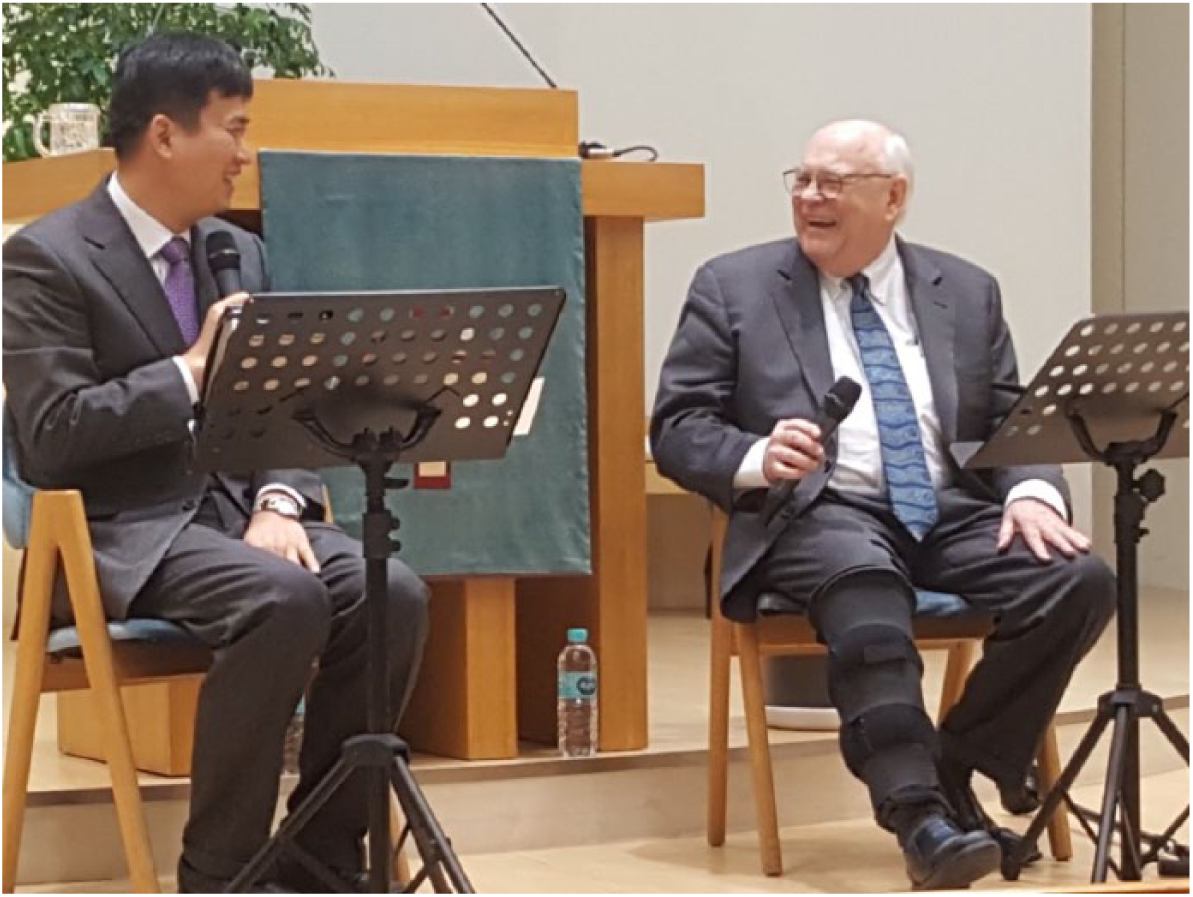
When Stephen Bevans visited South Korea in January 2018, Kwang Sun Choi (left) interviewed him about mission as prophetic dialogue.
During the next several months I immersed myself in learning Ilokano, the local language of the region in northern Luzon where I would work, and I read a good bit of Philippine history and culture, as well as any Filipino theology I could find. In June 1973, my first semester teaching at the seminary, I offered (a bit foolishly, I realize in retrospect) a noncredit course “Filipino Theology,” and about ten of the students signed up. We were searching together, reading the small amount of literature that was appearing in the area of “indigenous theology,” as it was called then, and Filipino theology in particular. As a result of that seminar I wrote my first published article, very much rooted in Bernard Lonergan’s transcendental method, entitled “Becoming a Filipino Theologian.” 2 This was a first articulation of what I would later call the “transcendental model” of contextual theology. It was a call to do theology as honestly as possible—as a person of faith and as a person aware of one’s cultural identity.
Models of contextual theology
Two years later, in 1975, I team-taught a course on fundamental ethics in a summer session at Divine Word University in Tacloban, Leyte. My teaching partner (my classmate Jim Heiar) and I used Bernard Lonergan’s Insight and tried to integrate Lonergan’s approach with Filipino values. Being an ethical person, we were convinced, was to be as authentic as possible, both personally and culturally. Jim had just published a short book entitled Christian Filipino, and the title was important: not Filipino Christian, but Christian Filipino. Culture, as Pope Paul VI had said in Evangelii nuntiandi, was not a simple veneer but the very embodiment of Christian faith. 3
The president of the university where we were teaching was none other than Lenny Mercado, who was also teaching a course in the university entitled “Towards a Filipino Theology.” Lenny had finished and published his PhD thesis on Filipino philosophy and also had just finished a manuscript on Filipino theology and was testing it out in his course. After teaching my own course, I attended Lenny’s classes, read the manuscript, and learned a lot.
Lenny’s approach was different from that which I had been developing. He saw Filipino theology as emerging from a close study of the culture and language of Filipinos, trusting that the Spirit was at work in the midst of Filipino life. His approach was different also from one of the most eminent theologians in the Philippines at the time, Catalino G. Arévalo, who had developed a “theology of the signs of the times,” very much along the lines of the liberation theology that was beginning to emerge out of Latin America. I began to wonder which approach was right—Lenny’s, Arévalo’s, or my own more transcendental approach. To add to the confusion, at a conference that was held at our seminary earlier in 1975, a bishop who was present suggested that a Filipino theology was simply a matter of translating concepts like homoousios, person, and substance into the various Filipino languages. Who had discovered the right approach?
Then one day it hit me: they were all right! These were just different approaches to the same question. This was the genesis of my Models of Contextual Theology. 4 It would take me fifteen more years to conceive of, write, and publish the book. My insight would become more sophisticated. I would borrow my use of “models” from Avery Dulles’s classic book Models of the Church, 5 and I would later realize the profound meaning of “context,” the discernment of which validates the use of a particular model. But the basic insight was here, in 1975. I was already well on my pilgrim way to a global integration of theology.
The missionary nature of the church
I tried as much as possible to integrate Filipino culture and values into my teaching of theology back at the seminary in Vigan, with some success but also a good bit of failure. Another discovery, however, helped me to further develop some kind of global perspective in my teaching approach and gave fresh motivation to my pilgrimage. This was the discovery of the radical missionary nature of the church expressed in what was a rather neglected line in the rather neglected Vatican II document on mission, Ad gentes (AG): “The pilgrim church is missionary by its very nature” because it participates in the very mission of the triune God. I began to realize the importance of mission, and it radically changed my thinking about the church. I began to develop my course on ecclesiology from the perspective of its missionary nature. Vatican II had made the breakthrough from understanding the church as essentially an institution to understanding it as a communion, a community—the people of God. But at the same time it had understood the church as a community-in-mission, coming into existence for the sake of the reign of God, called to incarnate itself in every nation, every culture in the world.
It would take me a long time to fully understand the breadth and depth of this kind of ecclesiology. A commentary on AG that I wrote in 2009 would deepen my appreciation of the document’s depth, despite its flaws and datedness, and an article for Theological Studies in 2013 helped me see even more clearly that Vatican II, from start to finish, was a missionary council. 6 I still have hopes of finishing a systematic ecclesiology that would fully work out this understanding. But the discovery of the “missionary imagination” that needed to be at the heart of theology was a major step in my development, one that would guide the global integration of my approach to theological education.
Catholic Theological Union
I really didn’t yet understand this connection between theology and education. In 1981 I left the Philippines to do a PhD in systematic theology at the University of Notre Dame. I wrote my dissertation under the direction of the distinguished Dominican Thomas F. O’Meara on the understanding of God’s personal nature in the theology of the relatively obscure Presbyterian Scots theologian John Wood Oman. (Little did I know, by the way, that Oman was one of Lesslie Newbigin’s teachers, a connection I found out only later). I interviewed and was hired at Catholic Theological Union (CTU) in Chicago, where I would teach systematic theology, and I thought that I had left contextual theology and missiology behind, and that my pilgrimage in mission was over.
I was wrong! I had gotten my job at CTU precisely because of my missionary experience and my few publications on contextual theology in the Philippines and in the journal Missiology in 1984. CTU was a theological school that understood itself as having world mission at its very heart. My religious community, the Society of the Divine Word, had come to CTU in 1973 precisely because they saw the opportunity of creating a curriculum there that would honor mission and global consciousness, and CTU’s young dean, Robert Schreiter, had committed the school to developing such a curriculum.
When I joined the CTU faculty in 1986, Schreiter assigned me to teach courses in the “mission track” of the curriculum with titles like “Origins and Ends in Mythic Consciousness” (the course on creation and eschatology) and “Missionary Dynamics of the Church” (the course in ecclesiology). As I worked on these courses, some of my other courses, like the course on the Trinity and the one on introduction to theology, began to reflect the same global and missionary consciousness, and the same cultural and contextual sensitivity. During these years I began to attend, at the urging of my friend and mentor Larry Nemer, the yearly meetings of the American Society of Missiology (ASM), as well as those of the Catholic Theological Society of America (CTSA). I became one of the associate editors of the ASM’s journal, Missiology: An International Review (thanks to an invitation by its new editor, Darrell Whiteman), and for twelve years I refereed over fifty articles in mission a year. I was asked by my friend Bill Burrows at Orbis Books to co-edit (with the eminent missiologist James A. Scherer) a series “New Directions in Mission and Evangelization,” and I wrote my book Models of Contextual Theology. All of this was in the context of teaching students at CTU who came from many different cultures and nations, and trying to gear my teaching to their needs and questions.
The years of the 1990s were exciting ones at CTU. The Association of Theological Schools (ATS) was emphasizing the importance of a more global understanding of theological education, and members of our faculty were participating in a number of immersion programs that the ATS offered. In the early 1990s CTU partnered with our neighbors the Lutheran School of Theology at Chicago and McCormick Theological Seminary to form the Chicago Center for Global Ministries (CCGM), and I was asked to be its director, succeeding Robert Schreiter, the founding director, and Robert Marshall, an eminent Lutheran churchman and former bishop in the Lutheran Church of America. I served as director of CCGM for six years, trying to bring a global consciousness to our three faculties through faculty continuing education, annual world mission conferences on such topics as reconciliation, urbanization, and ecology, and offering immersion trips for students in Ghana, West Africa. At the same time I was serving as editor of Mission Studies, the journal of the International Association for Mission Studies, and in that capacity I was in touch almost daily with scholars from every part of the world.
I began to be convinced of several things. First, there was no such thing as (generic) theology; there was only contextual theology. Second, theology could be adequately done only with a “missiological imagination,” as I tried to articulate in a plenary talk at the CTSA in 2001. 7 Third, theology could be adequately done only from a “global perspective,” something that I worked out more clearly in my book An Introduction to Theology in Global Perspective, published in 2009. 8
Constants in Context
But I am getting ahead of myself. In 1997 Jerry Anderson at the Overseas Ministries Study Center in New Haven, Connecticut, offered me the chance to be one of their scholars in residence. I accepted and took the opportunity to invite my friend and colleague Roger Schroeder to come with me to begin work on a book that we had decided to write together. The book began as a simple introduction to the history and theology of mission but soon grew far beyond that. Roger had been involved as a consultant on a project authored by Scott Sunquist and Dale Irvin that would employ what came to be called the “new church history” 9 —the conceiving and writing of church history from a truly global perspective. This new perspective saw church history as really the history of the world Christian movement, and it began to incorporate the movement of Christianity eastward toward Asia in its first years, the movement southward to Africa, the role of women, and other subaltern perspectives, like the recognition that the evangelization of Latin America in the sixteenth century was, in the long run, much more significant than the European Reformation that took place at the same time. Roger and I were convinced that this was the perspective from which mission history needed to be written. Roger took the lead in writing the history chapters in the book; I would later write a short history of theology from the same perspective in my introduction to theology several years later.
At the same time, at the urging of Bill Burrows at Orbis Books, we began to see that a mission theology had to be developed in dialogue not just with Roman Catholic thinking, but with Protestant, Evangelical, and Pentecostal thinking as well. The result of these insights was our book Constants in Context, nine long years in the making, which was published in 2004. 10 In our book we tried to develop an insight from our SVD General Chapter in 2000—namely, that the best way to think about and engage in mission was in a practice and spirit of “prophetic dialogue.” This was an idea that Roger and I developed more fully in the following years. One fruit of these developments was the book Prophetic Dialogue: Reflections on Christian Mission Today, published in 2011. 11
Ecumenism and the World Council of Churches
The ecumenical approach to Constants in Context connects to another important aspect of my pilgrimage in mission—my involvement with the Commission on World Mission and Evangelism (CWME) of the World Council of Churches (WCC). I began to develop this connection in about 2010 when I attended the 2010 Edinburgh Conference, commemorating the great 1910 World Mission Conference at Edinburgh. In 2012 I was invited to the preassembly of the CWME in Manila, for which I served on the listening committee. The purpose of the preassembly was to test out a draft document on mission—the first one of the CWME in thirty years—which was eventually published as Together towards Life: Mission and Evangelism in Changing Landscapes (TTL). 12 An invitation from David Esterline, now president of Pittsburgh Theological Seminary, to join in the preparation for the Global Ecumenical Theological Institute (GETI) led to a formal invitation from the WCC to join the international faculty of GETI at the Tenth Assembly of the World Council of Churches, in Busan, Korea, in November 2013. I was also asked to offer a plenary address to introduce TTL to the assembly (the only Catholic to do so), and soon afterward I received a further invitation to be a commissioner on the CWME, one of three representatives of the Catholic Church on the commission. The experience has been challenging, but it is certainly one where I have learned to practice global theologizing in an ecumenical key. My life has been greatly enriched by this opportunity, and by my teaching as well. Being a member of the CWME is one of the great honors of my life, especially when I think of its legacy shaped by giants like Max Warren, John V. Taylor, Lesslie Newbigin, and Jacques Matthey. I deeply appreciated the gentle but firm leadership of Jooseop Keum, who finished his term in March 2018. Keum has been succeeded by Risto Jukko of Finland, whom I look forward to working with in the coming years.
This ecumenical engagement has also led me to be among the founders of the Global Forum of Theological Educators (GFTE), a group composed of six ecclesial traditions, and from many countries around the world. The idea of the forum is to provide a space for exchange on an ecumenical and global level about theological education. Our first meeting, outside Frankfurt, Germany, numbered about eighty scholars and was basically a “get to know you” meeting. Our next meeting will be in May 2019 at the Orthodox Theological Academy in Crete. We expect to have about the same number of scholars, forty of whom will be new. The theme of the conference will be contextualization in theological education.
As I mentioned above, I published an introduction to theology in global perspective in 2009. The book was based on many years of teaching the course “Introduction to Theology” in the Philippines and at CTU, but it became a more global book with an invitation by Peter Phan to locate it as a volume in his series on theology in global perspective. My work had been strongly influenced by contextual theologies and mission perspectives before, but writing this book helped me to think even more broadly than I had up until this point. As I wrote this book, especially the history of theology in the last hundred pages or so, I realized that doing contextual theology in local contexts was not enough. Theology needed to be done as well as a dialogue of contextual theologies one with the other. In a chapter written for the Festschrift in honor of Peter Phan that was published in 2016, my thinking in this regard coalesced in an article “Models of Doing Theology in World Christianity.” 13 Here I speak about the “contextual theology model,” the “neglected themes model” (e.g., involving migration, Pentecostalism), the “global perspective model” (exemplified in Peter Phan’s series), and “the comparative theology model,” pioneered by experts in non-Christian religions like Francis X. Clooney and James Fredericks, and a model that I suggested could be used analogically in a mutual critical dialogue among contextual theologies.
In the last several years I have been fascinated by another aspect of theology that actually goes beyond the global to the cosmic. This is the theology being developed by such diverse thinkers as John Haught, Elizabeth Johnson, Denis Edwards, Ilia Delio, and my doctoral adviser, Thomas O’Meara. To think theologically in terms of the “new creation story,” as Thomas Berry calls it, to think in terms of the vast amount of time, the 13.8 billion years since the Big Bang, to think of the vastness of space in this universe of billions of light-years in diameter, to think in terms of the complexity of cosmic and biological evolution—such a perspective changes completely our understandings of doctrines like creation, redemption, Christology, ecclesiology, and mission itself. Contextual theology has been inspired by the “turn to the subjective,” which marked both modernity and postmodernity. Now theology needs to be marked by the “turn to the cosmic.” Theology needs not only to be contextual in the context of the local, or done in global dialogue. It needs as well to be done in cosmic context and in cosmic perspective.
In conclusion, I can say only that my pilgrimage in mission as a contextual and global theologian has been an amazing one, giving me a vision of theology that is so much bigger than the one that I brought to the Philippines in 1972, certainly bigger than the one I had that Advent evening in Rome in 1969. As I have written these reflections, I have become very conscious of the debt that I owe to important mentors and colleagues in my life: Lenny Mercado, Bob Schreiter, Larry Nemer, Claude Marie Barbour, James Scherer, Jack Boberg, Roger Schroeder, Peter Phan, my doctoral mentor, Thomas O’Meara, and my best friend, Bill Burrows. Perhaps even more I owe a debt of gratitude to my students, in the Philippines, at CTU, and in Australia. I dedicated my book of introduction to theology to them with a line that a veteran Philippine missionary shared with me just after Lenny Mercado’s life-changing challenge. “Father Bevans,” he told me, “docendo discimus—we learn by teaching.” If I have contributed anything to global integration in theological education, it is because I have learned by teaching. And I have learned a lot!
Footnotes
Notes
Author biography