






Abstract
The present study examined heterogeneity in gesture production and its semantic integration among autistic children. Although previous studies have examined gesture–speech combinations in autism, less is known about whether there are individual variations in how autistic children gestured in relation to speech. Cantonese-speaking autistic children (N = 97; 79 boys, 18 girls, Mage = 5 years, 2 months) were invited to participate in a 15-min parent–child interaction task. Autism characteristics were measured using the ADOS-2 comparison score, intellectual ability was indexed by overall IQ, and receptive language ability was measured using age-equivalent scores from the Mullen Scales of Early Learning. Hierarchical cluster analyses were conducted separately for reinforcing gestures, disambiguating gestures, supplementary gestures, and gestures without speech, together with selected child-based variables. Distinct clusters were identified for each type of gesture. Specifically, profiles with higher disambiguating gesture production tended to include children with fewer autism characteristics and stronger receptive language ability. Profiles with higher supplementary gesture production tended to include children with fewer autism characteristics. Other types of gestures did not show consistent profile patterns with child-based variables. These findings highlight the heterogeneous nature of multimodal communication in autism. In particular, examining the individual variations in how gestures reinforce, clarify, or add semantic information to speech may document a more fine-grained gesture–speech profile among autistic children.
Keywords
Introduction
Autism spectrum disorder is a complex and heterogeneous neurodevelopmental condition (American Psychiatric Association, 2013). Autistic individuals have difficulties with social interactions, and they display restricted and repetitive behaviors (American Psychiatric Association, 2013). Gesture delay is identified as an early behavioral indicator of autism spectrum disorder and signifies the social communication impairments that define the condition (Charman et al., 2003; Mitchell et al., 2006; Tager-Flusberg, 2016). That said, the number of gestures that autistic children produce is heterogeneous (Braddock et al., 2016; Zhang et al., 2023). This study investigated the variability of gesture production in autistic children, specifically concerning the relationship between gestures and accompanying speech. Analyzing the gestural behaviors of various autistic children in conjunction with their speech may facilitate the documentation of co-speech gesture patterns within this population.
Gesture and Its Development in Non-Autistic and Autistic Populations
Gestures are spontaneous hand and body movements that are produced with the intention of communication (Goldin-Meadow, 1999; McNeill, 1992). When we speak, we gesture, and gestures and speech together form an integrated system during the process of language production (Kelly et al., 2010). Non-autistic infants gesture as young as 10 months old, before they produce their first word. For example, they point to an object when making a request for that object or when sharing interest with others. Previous research has shown that gestures produced before the age of 1 year scaffold the child's subsequent language development (Iverson & Goldin-Meadow, 2005; Rowe et al., 2008).
Autistic children are found to have delays in gesture production (McKern et al., 2023). Autistic infants and toddlers tend to produce first gestures later and to use gestures less frequently than non-autistic groups do (Manwaring et al., 2018; McKern et al., 2023). In a scoping review by Manwaring et al. (2018), autistic children under 36 months were found to be less likely to produce gestures than non-autistic children were (Manwaring et al., 2018). Other research has even found that some autistic children gesture after they produce their first words (Talbott et al., 2020). Notably, some autistic children are able to achieve a similar quantity of gestures to that of their non-autistic peers (de Marchena & Eigsti, 2010; Wong & So, 2018), while others experience continued delays in gesture production throughout childhood and adolescence (Huang et al., 2020; Medeiros & Winsler, 2014; So et al., 2015). Therefore, it is likely that there is heterogeneity in the ability of autistic children to gesture.
Heterogeneity of Gesture Production in Autistic Children
Previous studies have focused on gesture frequency and have found heterogeneity in gesture production among autistic children. Braddock et al. (2016) divided autistic adolescents into two subgroups on the basis of whether they produced any gestures during a narrative task, and of 35 participants, 12 did not produce any gestures, whereas 23 produced at least one. Another study, using a hierarchical cluster analysis, divided 22 preschool-age autistic children into three distinct subgroups based on the phenotypes of their speech and gesture ability. For most of those participants, language ability was positively related to gesture performance, but three of the participants with weaker expressive ability performed a higher number of gestures and had relatively strong receptive language ability (Broome et al., 2021).
Quite recently, a study by Zhang et al. (2023) used naturalistic language samples to examine the heterogeneity of gesture production in autistic children (Mage = 5 years, 3 months) and identified four meaningful subgroups on the basis of their gesture production frequency in relation to language ability, cognitive ability, and autism characteristics. Clusters 1 and 2 both had low gesture production and relatively strong autism characteristics, whereas Clusters 3 and 4 had high gesture production and more subtle autism characteristics. The findings revealed that children who displayed more pronounced autism characteristics tended to exhibit fewer gestures compared with those who showed less pronounced autism characteristics. In addition, intellectual ability varied between the groups and displayed a nonlinear relationship to gesture production. In Zhang et al.'s study (2023), a large proportion of the autistic children’s gestures occurred alongside speech. The question of interest, then, is how they gestured in relation to their speech.
Co-Speech Gestures in Non-Autistic and Autistic Children
Co-speech gestures refer to gesture–speech combinations produced with the child's own speech within the same communicative act. They do not need to be strictly simultaneous with speech; rather, their meaning is interpreted in relation to the accompanying speech (Özçalişkan & Goldin-Meadow, 2005). Co-speech gestures can be classified into several subtypes based on the semantic relationship between gestures and speech (Özçalişkan & Goldin-Meadow, 2005). In one of the subtypes, gestures reinforce the semantic information conveyed by speech and are known as reinforcing gestures or complementary gestures (e.g., a child says, “Train,” when pointing at a toy train). In addition to reinforcing speech, gestures can also disambiguate information conveyed in speech, and those gestures are called disambiguating gestures (e.g., a child says, “This one,” while pointing at a toy train). Besides reinforcing gestures and disambiguating gestures, gestures can add semantic information conveyed in speech, and those are named supplementary gestures (e.g., a child says, “I want,” while pointing at a toy train). The semantic coordination of gesture and speech typically emerges between 14 and 22 months of age (Butcher & Goldin-Meadow, 2000). Although there are individual variations, reinforcing gestures tend to appear earlier than disambiguating gestures and supplementary gestures (Özçalişkan & Goldin-Meadow, 2005). Children gesture less frequently after they get older and develop stronger language abilities. However, gestures still play important roles in communicating and learning as well as cognitive processes (Alibali et al., 2000; Goldin-Meadow & Alibali, 2013; Pine et al., 2004; Stefanini et al., 2009).
Whereas abundant research has been conducted on the different types of gesture–speech combinations in non-autistic children, relatively fewer studies have examined how autistic children gesture in relation to speech (Özçalışkan et al., 2018; So et al., 2015; Sowden et al., 2008, 2013; Talbott et al., 2020). In a study by Sowden et al. (2008), two autistic children aged 2 to 3 years interacted with a therapist once every 2 weeks for approximately 4 months. Their study found that both children produced word–gesture combinations at a later age than the average age at which non-autistic children do. One child produced both reinforcing and supplementary gestures, while the other merely produced reinforcing gestures (Sowden et al., 2008). A follow-up study with a larger sample size (N = 23) found that only about half of autistic children (Mage = 2 years, 6 months) produced gesture–word combinations during parent–child interactions, while almost all non-autistic language-matched children (Mage = 1 year, 6 months) demonstrated the use of gesture–word combinations (Özçalışkan et al., 2018). As is found with non-autistic children, the onset of gesture–word combinations in autistic children can predict their onset of two-word combinations (Talbott et al., 2020). These studies revealed that a subset of autistic children exhibited delays in gesture–word combinations during infancy and toddlerhood, potentially leading to delays in language acquisition.
The extant studies investigating gesture–speech combinations in older autistic children have reported inconclusive results. Some studies have found that school-age autistic children and adolescents produced fewer supplementary gesture–speech combinations than their non-autistic counterparts did (Morett et al., 2016; So et al., 2015). However, another study found that school-age autistic children produced more reinforcing gestures than non-autistic children but a comparable amount of disambiguating and supplementary gestures (Wong & So, 2018). The variability within autism may contribute to contradictory findings among research due to variances in sample composition. Case–control studies that fail to consider heterogeneity may disproportionately represent specific subgroups and yield contradictory results (Lombardo et al., 2019). This underscores the necessity to investigate the variability in co-speech gesture production among autistic children.
Collectively, prior research indicates that certain autistic children exhibit delays or diminished production of co-speech gestures. Nevertheless, results from older autistic children exhibit greater inconsistency. These investigations offered significant information about between-group variations and developmental delays; nevertheless, they have not comprehensively elucidated the heterogeneity observed in autistic children. Specifically, there is limited understanding of whether autistic individuals exhibit unique profiles regarding specific semantic relationships between gesture and speech, and how these profiles co-occur with broader child-based characteristics.
Child-Based Factors and Heterogeneity in Co-Speech Gesture Profiles
Given the heterogeneity of gesture production in autistic children, it is important to consider child-based factors that may help account for the variations in co-speech gesture profiles. Several profile-based studies have investigated autism characteristics, intellectual ability, and language ability when identifying heterogeneous profiles (Song et al., 2021; Zhang et al., 2023; Zheng et al., 2020).
Autism characteristics are relevant because gesture production is part of nonverbal social communication. Prior gesture heterogeneity research has suggested that lower overall gesture production may co-occur with more pronounced autism characteristics (Zhang et al., 2023). The question of interest is whether autism characteristics also co-occur with profiles of specific gesture–speech combinations.
Cognitive and language abilities have also been used to characterize heterogeneity in autistic children's communication profiles. For example, Song et al. (2021) identified four verbal profiles among Chinese-speaking autistic children using autism characteristics, IQ, and language ability. Their findings showed that subgroups differed not only in language ability but also in IQ and autism characteristics. This profile-based evidence supports the inclusion of autism characteristics, intellectual ability, and receptive language ability as child-based dimensions for describing heterogeneity in co-speech gesture profiles.
Present Study
The objective of the present study was to investigate the heterogeneity of co-speech gesture profiles using a hierarchical cluster analysis. Previous research had shown that cluster analysis identified distinct subgroups in gesture frequency among autistic children (Broome et al., 2021; Broome et al., 2022; Zhang et al., 2023). Our study aims to address the following research questions: (1) Are there distinct subgroups with different patterns for each type of co-speech gesture production among these children? (2) How are different gesture profiles characterized by autism characteristics, IQ, and receptive language ability?
Based on previous research, we hypothesized that the present study would identify subgroups with different profiles of co-speech gesture production. Because hierarchical cluster analysis is a data-driven method, we did not predict the number of subgroups for the present study. Child-based factors (autism characteristics, IQ, and receptive language ability) were investigated to help document the heterogeneous profiles of children's production of gestures in relation to speech.
Method
Participants
Ninety-seven autistic children (18 females) participated in the present study. Table 1 shows their demographic information. They were enrolled in a larger intervention project called the Robot for Autism Behavioral Intervention (RABI®; So, 2020). RABI® is a non-profit organization project aimed at teaching social communication skills to autistic children. Such intervention did not involve gesture communication skills. A subset of those participants was invited to participate in this study before their study's intervention. The inclusion criteria were that the children were (a) diagnosed by pediatricians at the Child Assessment Centre for the Department of Health in Hong Kong as being on the autism spectrum; (b) speaking Chinese (Cantonese) as their native language; and (c) aged from 3 to 8.9 years old.
Descriptive Statistics of the Participants’ Characteristics and Assessments (N = 97).
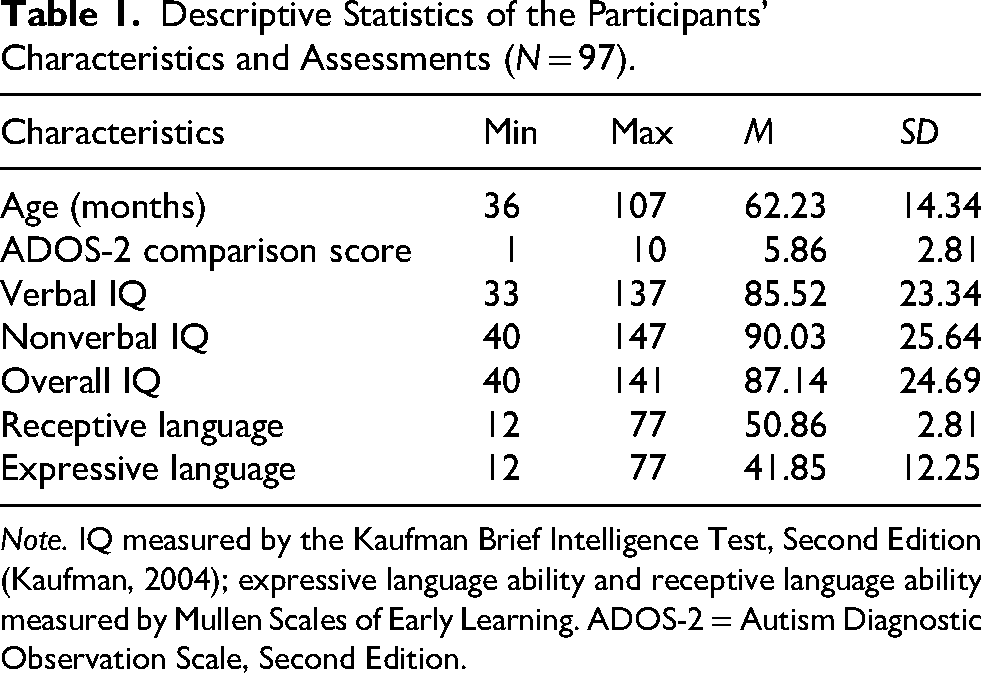
Note. IQ measured by the Kaufman Brief Intelligence Test, Second Edition (Kaufman, 2004); expressive language ability and receptive language ability measured by Mullen Scales of Early Learning. ADOS-2 = Autism Diagnostic Observation Scale, Second Edition.
The research team measured participants’ autism symptoms using the Autism Diagnostic Observation Schedule, Second Edition (ADOS-2; Lord et al., 2012). Table 1 shows the descriptive statistics of the children's assessments for IQ and ADOS-2, as well as their language and gesture measures. Prior to the start of the study, participants’ parents signed a written informed consent form. All procedures were approved by the institutional review board of the first author's university.
Assessments
Autism Diagnostic Observation Schedule, Second Edition
The ADOS-2 (Lord et al., 2012) is a semi-structured assessment that measures autism symptoms in three domains: (1) language and communication, (2) social interactions, and (3) restricted, repetitive behaviors. The reliability and validity of this translated version have been demonstrated, and it has been widely employed for screening and diagnosis of autistic children in China (Chen et al., 2023; Li & Xu, 2019). A clinically trained professional conducted the ADOS-2 assessment in the present study. ADOS Module 2 and Module 3 were used in the present study. In the present sample, Module 2 was administered to 39 participants, and Module 3 was administered to 58 participants. The total scores were converted to ADOS-2 comparison scores that were based on participants’ chronological age.
Kaufman Brief Intelligence Test, Second Edition (KBIT-2)
The KBIT-2 is an intelligence test that assesses both verbal and nonverbal abilities in people from four to 90 years old. It includes three domains: (1) verbal knowledge, (2) matrices, and (3) riddles (Kaufman, 2004). The verbal knowledge and riddles assess participants’ crystallized intelligence, and the matrices assess participants’ fluid intelligence. The test items are designed to be free of cultural and gender bias. Individuals with weak language communication skills can still be assessed, because participants can respond to each question by either pointing to the answers or providing single words. KBIT-2 has been validated in autistic children and has previously been administered to Cantonese-speaking children (Song & So, 2021; Syn et al., 2021). With this test, we calculated and reported the children's standardized composite IQs. One of our participating children was under 4 years old when he was first assessed, so his IQ from the KBIT-2 results should be interpreted with caution. However, our findings remained the same after excluding his data, so we included this child in our analyses.
Mullen Scales of Early Learning (MSEL)
The MSEL (Mullen, 1995) is a standardized assessment that is commonly used to measure young children's visual reception, motor skills, and receptive and expressive language abilities. In this study, we used an adapted Chinese version of the MSEL, the reliability and validity of which had been previously demonstrated in Chinese-speaking children (Cheong et al., 2022). The MSEL demonstrates strong reliability with strong test–retest coefficients ranging from 0.82 to 0.85, internal consistency coefficients ranging from 0.83 to 0.93, and interrater reliability coefficients ranging from 0.91 to 0.99 (Mullen, 1995). We reported the receptive language subscale as an index of children's language ability. Age-equivalent scores from this subscale were used in the analysis. Subscale of motor skills was not included in the present study, as the present study focused on communicative gesture use rather than isolated motor performance.
Parent–Child Interactions
Parents were invited to interact with their children in a quiet, private room at the third author's institution. A standard collection of age-appropriate toys, comprising a food-themed set (containing a booklet, food-shaped models, and puzzles), wooden trains with colorful blocks, and a police-themed set (with a soft toy, a booklet, and pretend police gear), was organized within easy reach on a table. Comparable toy sets have been utilized in prior research and are efficacious in eliciting naturalistic communicative activities in children (Mastrogiuseppe et al., 2015; Song et al., 2021).
All participants were presented with the same set of toys. Each time, one parent and his/her child sat next to each other, and the parents were instructed to play with their children as they would at home. If the child exhibited limited engagement, the parent could motivate the child through their usual play style, but no additional instruction was offered.
The whole interaction lasted 15 min. Previous research has indicated that a duration of 15 min is suitable for eliciting gestures and speech. This protocol has been applied in studies involving Italian-speaking autistic children (Mastrogiuseppe et al., 2015), English-speaking autistic children, and Cantonese-speaking autistic children (So et al., 2015; Song et al., 2021). Two cameras with high-definition zoom functions were used to capture the parents’ and children's head and hand movements. The experimenter was not physically present during the parent–child interactions.
Procedures
The participating children first received the ADOS-2, MSEL, and KBIT-2 assessments, after which they engaged in parent–child interactions. MSEL and KBIT-2 were administered by a trained research assistant. All assessments as well as instruction were conducted in Cantonese. The experiment was conducted with the researcher in a quiet and private room at the first author's affiliated institution.
Transcription and Coding
We transcribed the children's speech and coded the gestures they produced during their interactions with their parents. Then we identified and coded their gesture and speech combinations.
Speech
The children's speech was transcribed verbatim from the videos by a trained coder who was a native Cantonese speaker and was unfamiliar with the research objectives.
Speech transcription adhered to the Computerized Language Analysis format and was carried out using the Computerized Language Analysis (CLAN) program (Macwhinney, 2000). All words and pauses were recorded and subsequently divided into separate utterances. Utterances were characterized as communication units (C-units), comprising an independent sentence along with its modifiers, which include subordinate clauses.
Each video was transcribed multiple times until the entire sample was completed. If any utterances could not be fully transcribed after three attempts, they were deemed unintelligible. Two transcribers discussed all errors and discrepancies until they reached an agreement.
Gestures
In this study, we coded the gestures produced by the children during the parent–child interactions using the EUDICO Linguistic Annotator (ELAN (Version 6.8), 2024) software. We defined gestures as communicative hand or head movements directed to the interlocutor (Valle et al., 2021). Gestures were coded if they (1) were produced by the child; (2) were directed to the interlocutor; and (3) conveyed communicative meaning. Children produced these gestures when they initiated conversation or responded to the parents. The following movements were excluded: (a) direct manipulation of an object (Goldin-Meadow et al., 1984) and (b) motor stereotypes and self-grooming movements (Silverman et al., 2017).
We then followed McNeill's (1992) coding categories and focused on three types of gestures—deictic, iconic, and conventional gestures—because they convey semantic meaning in conversations. A deictic gesture is a movement that directs the listener's attention to the specified entity by pointing to it with an index finger, holding it up, or tapping it. An iconic gesture is a movement that resembles the entity's shape, a feature of it, or its movement (e.g., one hand turning upside down represents “to turn over”). A conventional gesture conveys culture-specific meanings (e.g., head nodding for “yes,” arms crossing for “wrong,” and hands clapping for “awesome”).
Gesture–Speech Combination
We further classified each gesture into two categories: gestures without speech and co-speech gestures. A gesture was classified as a co-speech gesture when it was accompanying with the child's verbal expression, constituting a single communication act. Gestures and words need not occur simultaneously. Nonetheless, they were regarded as components of a singular communicative act solely when not accompanied by a pause, a shift in conversational turn, or a variation in intonational pattern (Cartmill et al., 2012). Each gesture–speech combination was analyzed to evaluate the meaning of the gesture in relation to the accompanying words. Gestures made without the child's co-occurring speech were classified as gesture-only productions.
Following previous research conducted by Özçalişkan and Goldin-Meadow (2005), we subdivided co-speech gestures into three types, which were based on their semantic relation to the co-occurring speech: (1) reinforcing gestures, which involve the gesture conveying the same meaning as the speech (e.g., the speaker says “Apple” and simultaneously points at an apple with their index finger or says “Yes” while nodding their head); (2) disambiguating gestures, which clarify a pronominal referent in the speech (e.g., the speaker says the word “This one” and points at an apple); and (3) supplementary gestures, which add semantic information that is not explicitly presented in the accompanying speech (e.g., the speaker says “Eat” or “Give me” while pointing at an apple). Ambiguous cases were reviewed and discussed among the coders. Gestures that could not be reliably classified were excluded from further analyses.
Reliability
Two trained coders who were naïve to the research hypotheses coded a subset of the videos. The interrater agreement percentage reached at least 85% for the identification of gesture types (N = 148; Cohen's kappa = 0.86, 95% CI [0.76, 0.94], p < .001) and gesture–speech combinations (N = 148; Cohen's kappa = 0.89, 95% CI [0.79, 0.97], p < .001). After that, the two coders independently coded different videos. The first author checked 20% of their coding work, specifically examining their identification of the gestures and the types of co-speech gestures. The inter-rater agreement between the coder and the first author was 0.90 or above for determining the types of gestures (N = 127; Cohen's kappa = 0.90, 95% CI [0.80, 0.98], p < .001) and the gesture–speech combinations (N = 127; Cohen's kappa = 0.91, 95% CI [0.79, 0.98], p < .001).
Data Analysis
All statistical analyses were conducted using the statistical software R-4.2.1 (R Core Team, 2022), and the numbers of each type of gesture and of co-speech gestures were calculated. We documented the participants’ profiles regarding their production of gestures without speech and their gestures co-occurring with speech. As shown in Table 2, the maximum value of children's gesture frequency substantially surpassed the mean value. Before doing the cluster analysis, high values were mitigated using winsorization by capping. Instead of dropping the outliers, observation values of children's gesture frequency outside three standard deviations from the mean were set to the mean plus three times the standard deviation. There were two winsorized values for reinforcing gestures, one for disambiguating gestures, three for supplementary gestures, and one for gestures without speech. This approach mitigates the impact of outliers while preserving all participants, enabling clusters to represent overarching gesture patterns. Table 1A and Figure 1A in the Appendix present the correlation coefficients and corresponding scatterplots between child-based variables and gesture production. All correlations were computed using Spearman's correlation. In order to standardize the variables and ensure comparability, all data were transformed into Z-scores prior to conducting further analysis.
Mean Numbers and Distribution of Different Types of Gestures Produced by the Participants (N = 97).
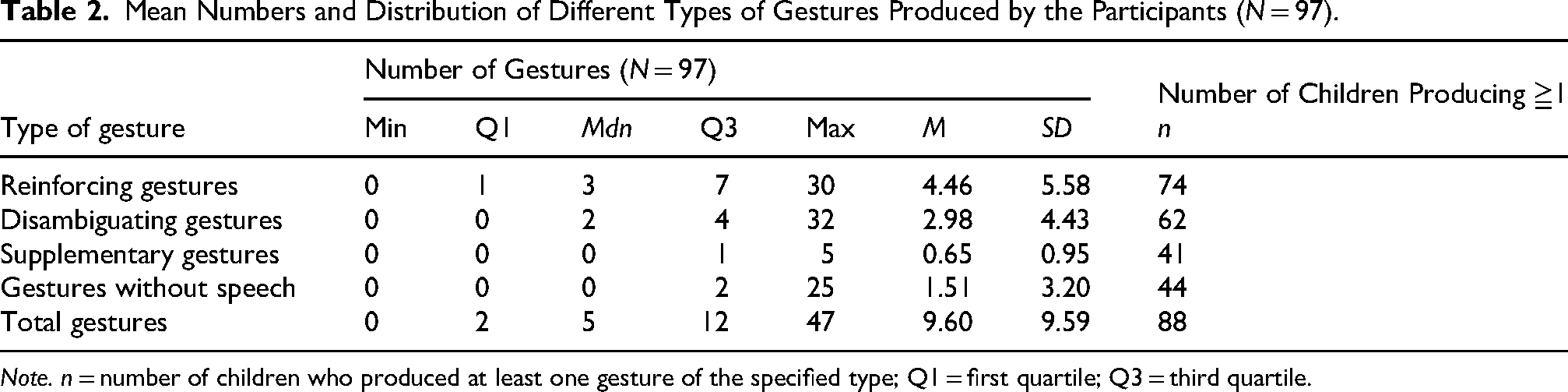
Note. n = number of children who produced at least one gesture of the specified type; Q1 = first quartile; Q3 = third quartile.
To identify homogeneous subgroups with different profiles of specific types of gesture, we conducted four rounds of cluster analysis. At each round, autism characteristics, receptive language ability, IQ, and the frequency of one type of gesture (e.g., reinforcing gesture) were entered into the cluster analysis. We used the hierarchical clustering algorithm and the “complete” method built into R's hclust function. Table 3A in the Appendix summarizes the variables entered into each cluster analysis.
The optimal number of each analysis was chosen using the elbow method. Specifically, we examined the point at which adding additional clusters produced diminishing reductions in within-cluster variance. The resulting solution was then evaluated based on profile interpretability. This involved examining whether the identified clusters showed distinguishable patterns in gesture production and child-based characteristics.
Radar plots were displayed to present the different profiles of each subgroup. After the clusters were identified, ANOVAs were conducted to describe between-cluster differences in the variables of interest. We conducted a Tukey's honest significant difference (HSD) test, which is a post-hoc test, to compare variables between any two of the clusters. Due to the absence of a formal resampling-based stability analysis and the inclusion of child-based variables in the clustering approach, the cluster solutions and inter-cluster comparisons were regarded as exploratory and descriptive.
Results
Gesture Production
Ninety-seven participants produced 931 gestures in total (M = 9.60; SD = 9.59, ranging from 0 to 47), thus suggesting heterogeneity in gesture production across the autistic children in our study. Eighty-eight participants produced at least one gesture, whereas nine did not. Descriptive statistics for this subgroup are provided in Table 2A in the Appendix. Compared with children who produced at least one gesture, children in the no-gesture subgroup descriptively showed higher ADOS-2 comparison scores, lower overall IQ, and receptive language scores. Of all gestures produced, 88.86% were deictic gestures. Among the children who produced at least one gesture, reinforcing gestures were most frequently (46.51%) produced, followed by disambiguating gestures (31.04%), gestures without speech (15.68%), and supplementary gestures (6.77%). Detailed descriptions of the participants’ gesture production are presented in Table 2.
Cluster Analysis I: Reinforcing Gestures
First, the number of children's reinforcing gestures, IQ scores, receptive language ability scores, and ADOS scores were put into the cluster analysis. Figure 1 shows the elbow method. The within-cluster variance first went down rapidly with K increasing from 1 to 4, reached an elbow at K = 5, and then went down slowly after that. Therefore, five clusters were identified that had the best fit for the 97 participants. Figure 2 shows the dendrogram results of our hierarchical cluster analysis. Figure 3 is a radar plot that visually displays the ADOS scores, IQ, receptive language ability scores, and number of reinforcing gestures on standardized scores and across five clusters.
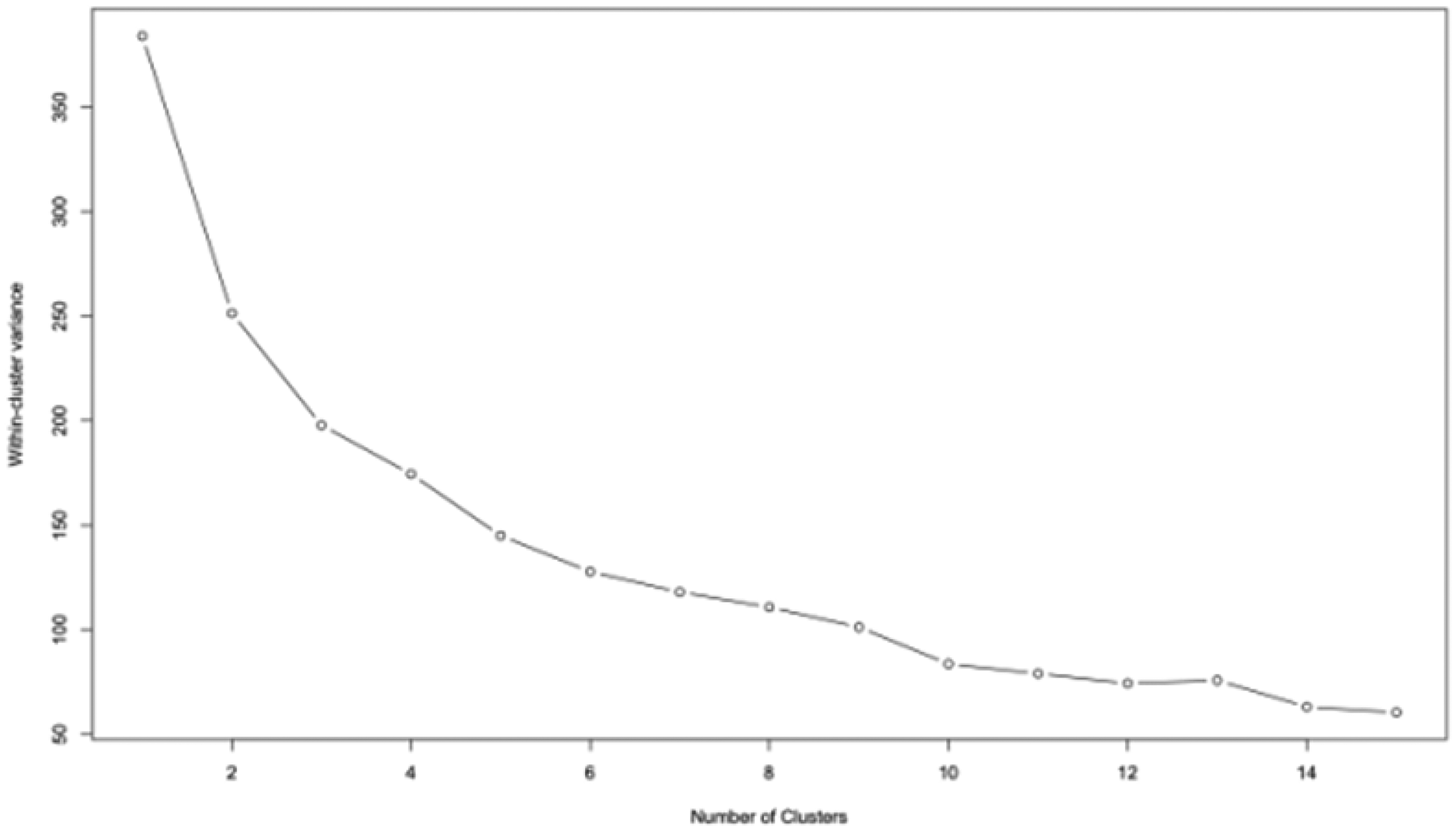
Elbow method graph for cluster analysis I: reinforcing gestures.
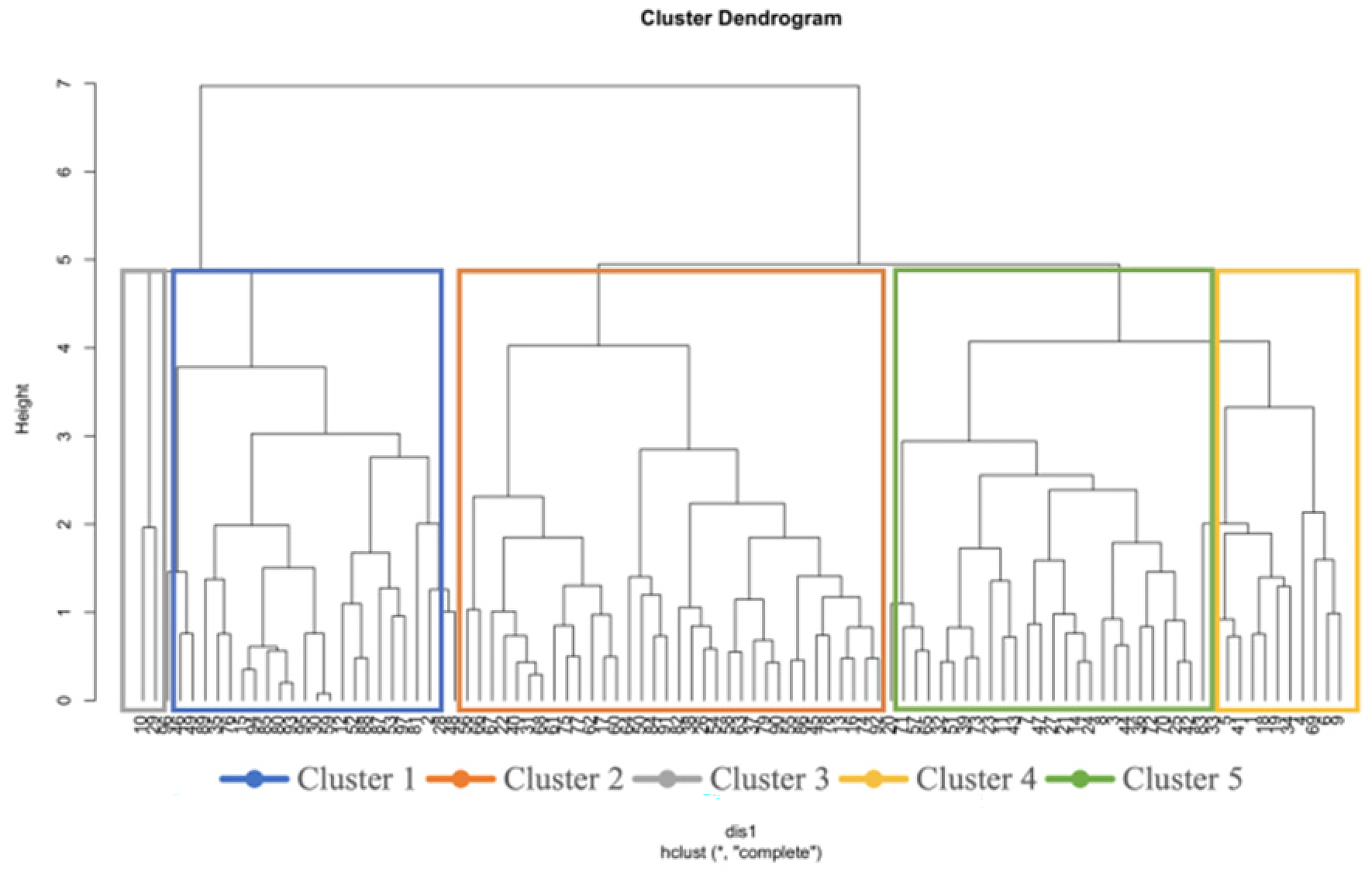
Dendrogram of hierarchical clustering for cluster analysis I: reinforcing gestures.
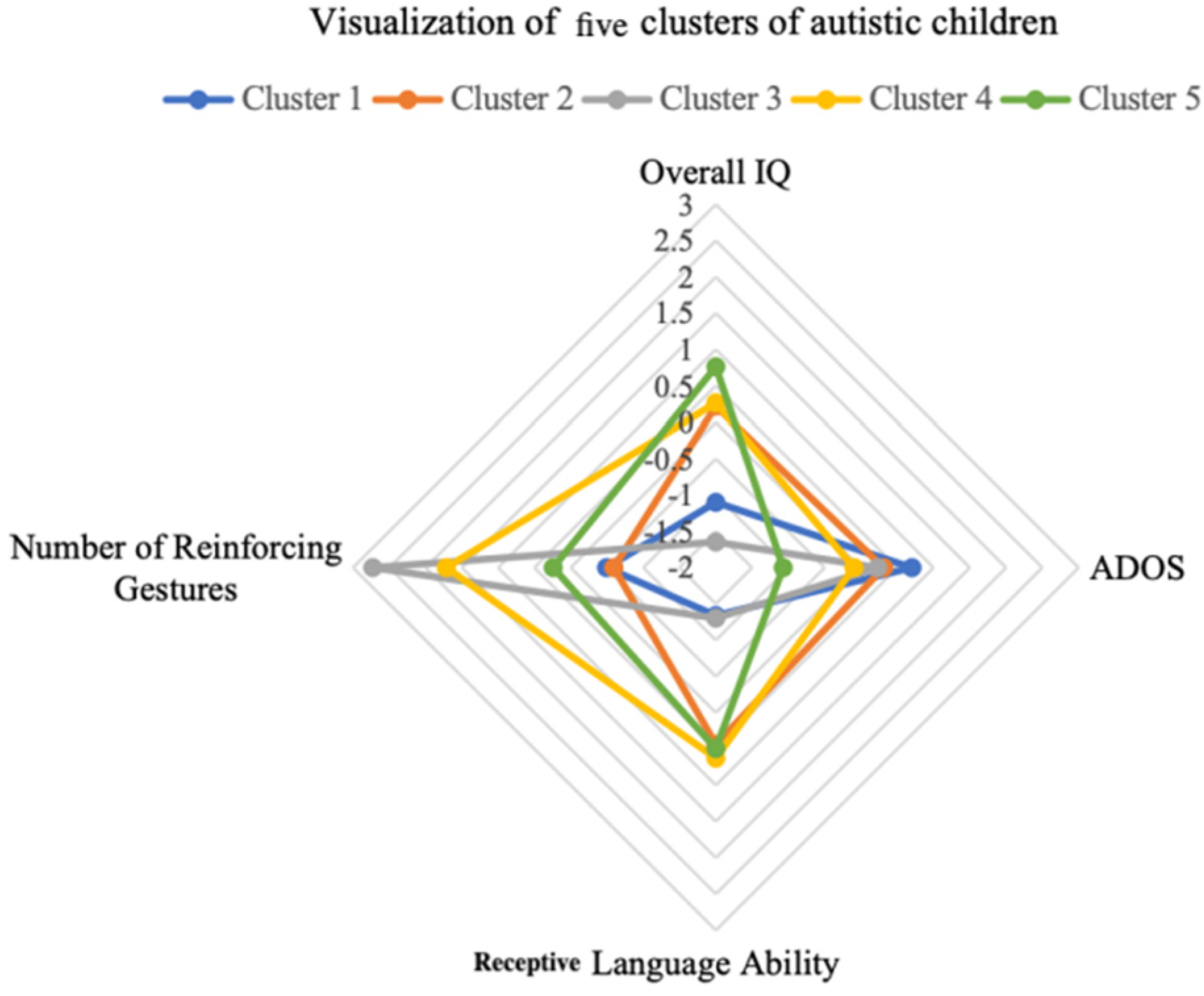
Radar plot for cluster analysis I: reinforcing gestures.
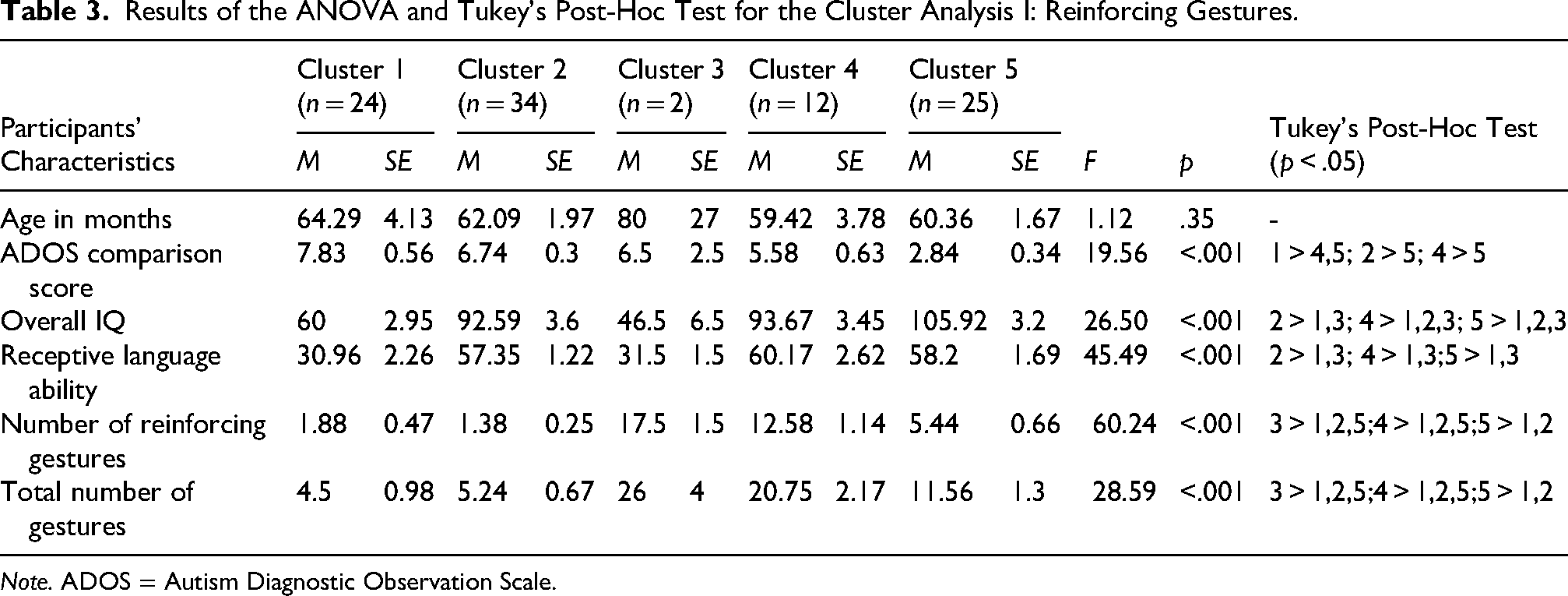
The ANOVA results show that the clusters had significant main effects on autism characteristics, F(4, 93) = 19.56, p < .001; IQ, F(4, 93) = 26.50, p < .001; receptive language ability, F(4, 93) = 45.49, p < .001; and number of reinforcing gestures, F(4, 94) = 60.24, p < .001. Table 3 provides the detailed ANOVA results for the children's psychometric measures and gesture production, including the outcomes of Tukey's HSD post-hoc tests.
Results of the ANOVA and Tukey’s Post-Hoc Test for the Cluster Analysis I: Reinforcing Gestures.
Note. ADOS = Autism Diagnostic Observation Scale.
Children in Cluster 1 (n = 24), Cluster 2 (n = 34), and Cluster 4 (n = 12) exhibited significantly more autism characteristics compared to Cluster 5 (n = 25). Children in Cluster 1 had more autism characteristics than those in Cluster 4. In addition, children in Cluster 2, Cluster 4, and Cluster 5 demonstrated better receptive language ability and higher IQ scores than those in Cluster 1 and Cluster 3 (n = 2). And children in Cluster 4 also had higher IQ than those in Cluster 2. Children in both Clusters 1 and 2 produced fewer reinforcing gestures compared to those in Clusters 3, 4, and 5. Moreover, children in Cluster 5 produced fewer reinforcing gestures than Clusters 3 and 4.
Cluster Analysis II: Disambiguating Gestures
A second round of cluster analysis was conducted using the number of disambiguating gestures, IQ scores, receptive language ability scores, and ADOS scores. Figures 4–6 show the identification and distribution of clusters. Five clusters were identified in the second round of cluster analysis.
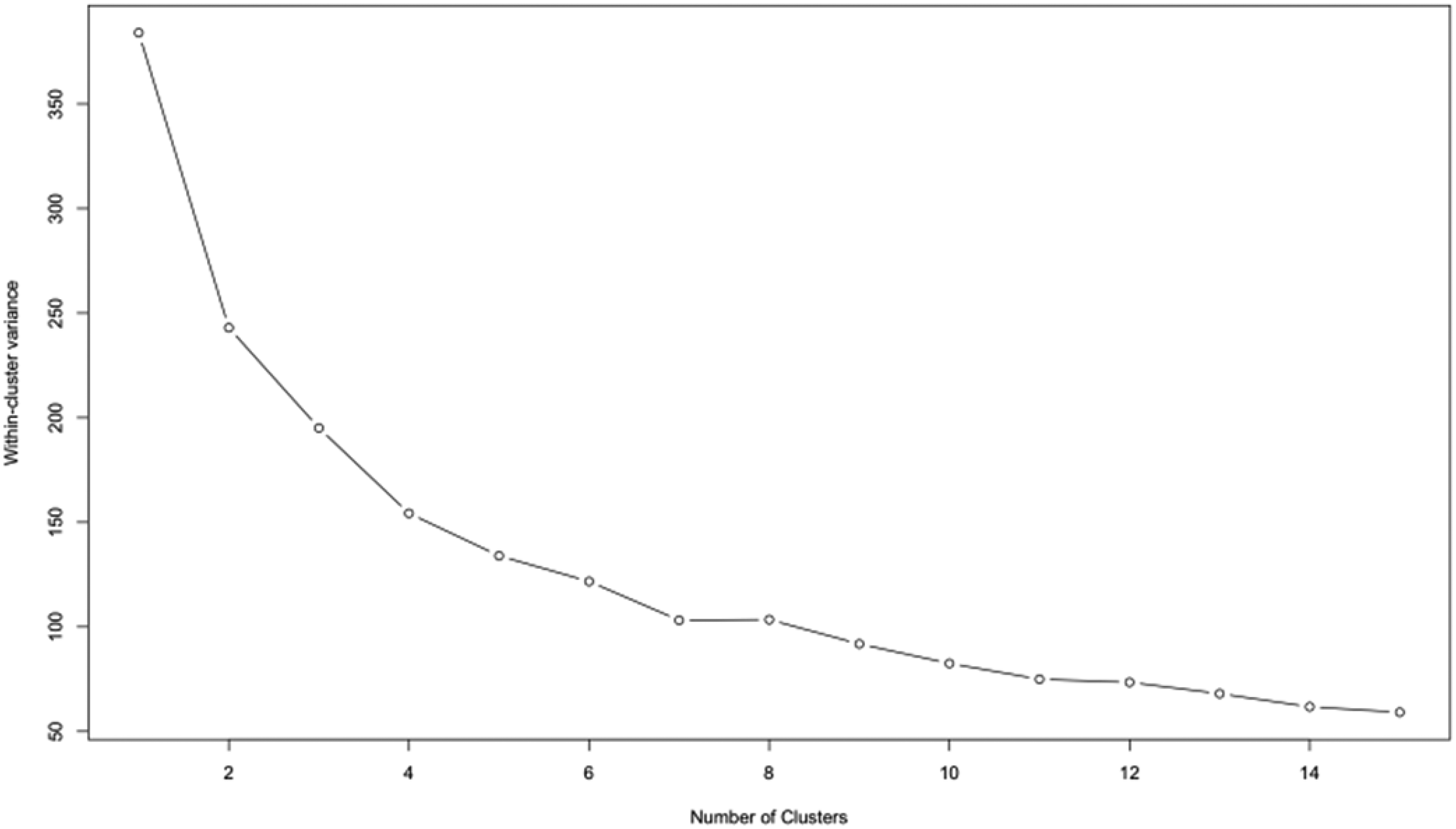
Elbow method graph for cluster analysis II: disambiguating gestures.
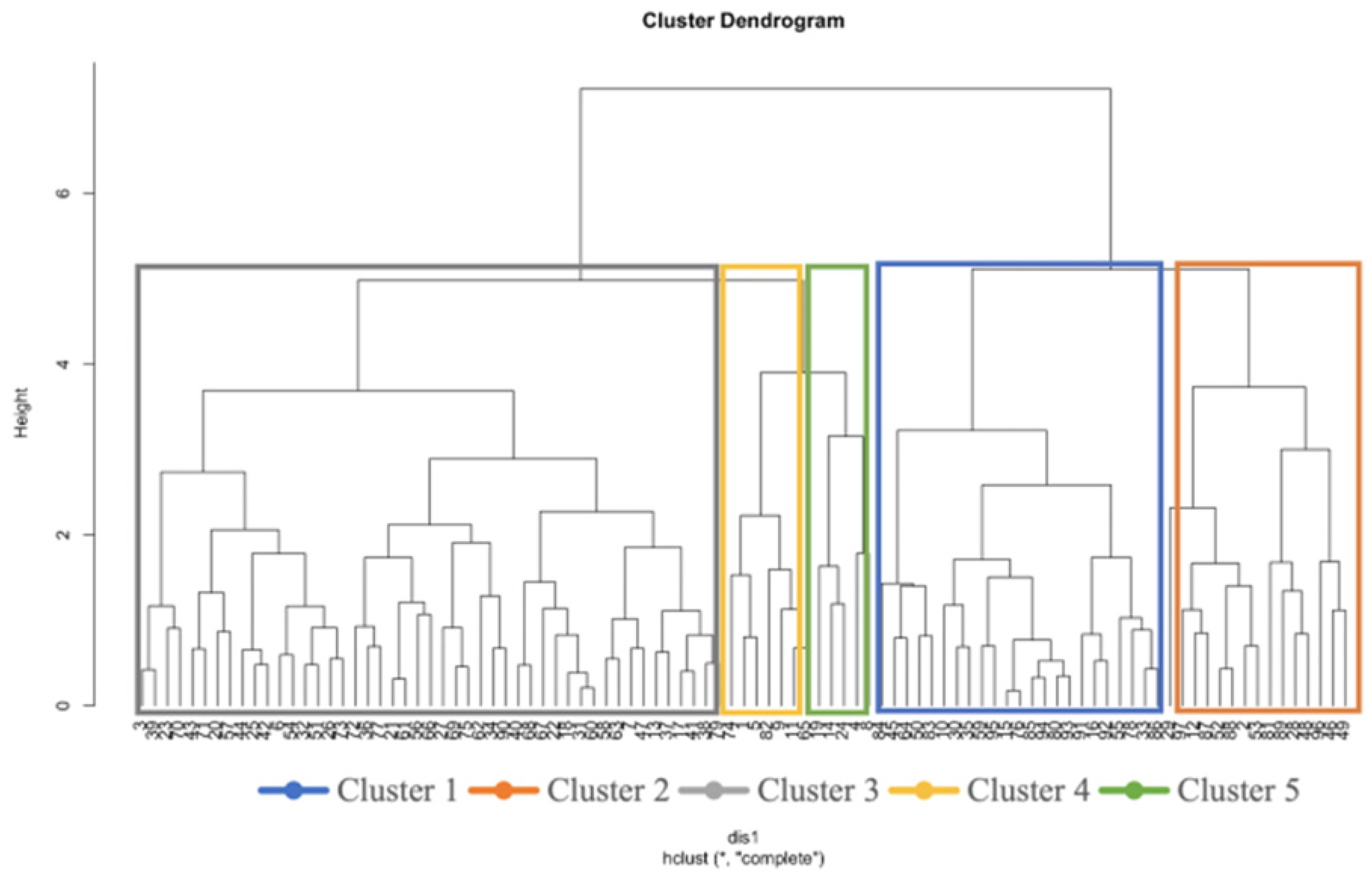
Dendrogram of hierarchical clustering for cluster analysis II: disambiguating gestures.
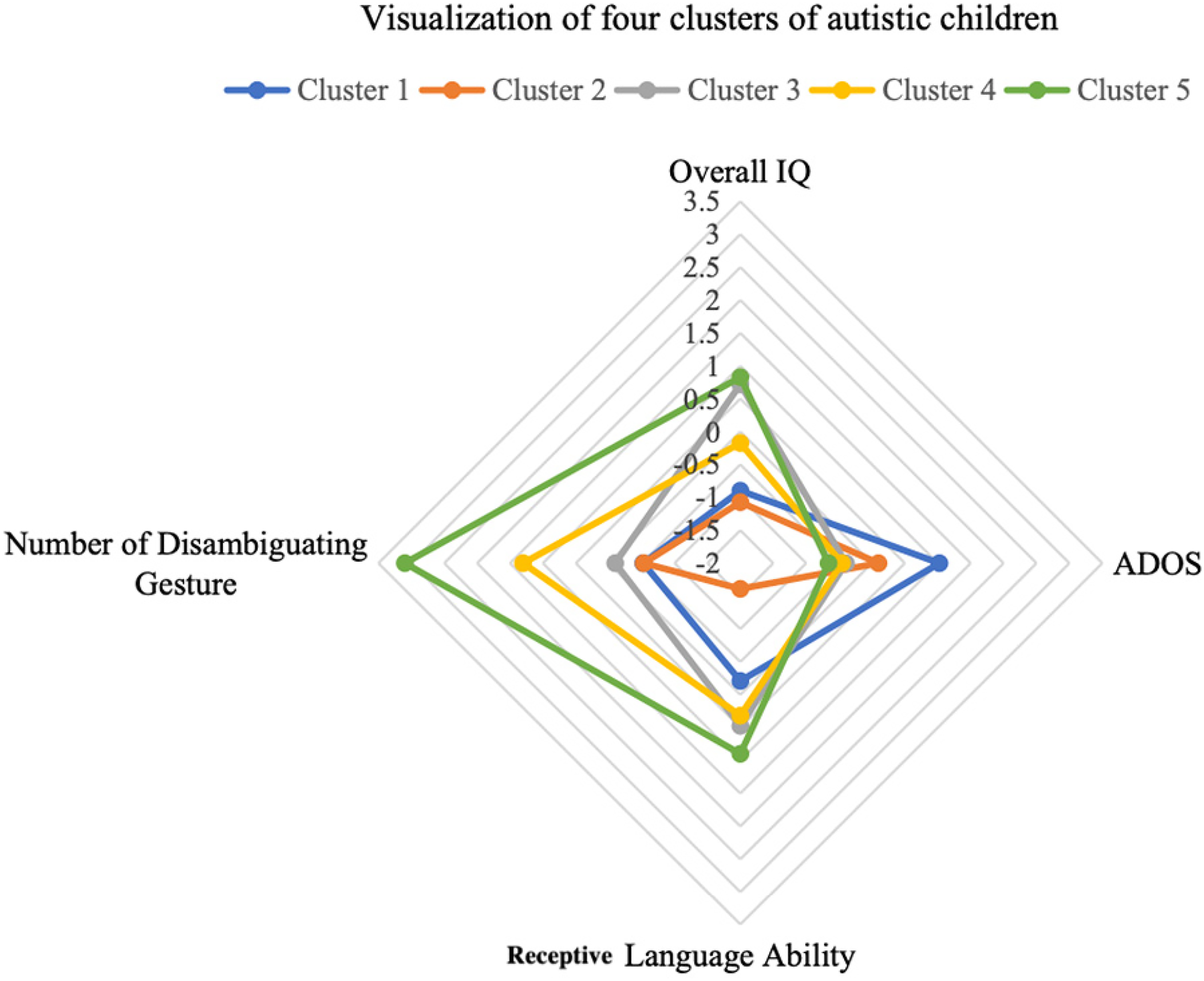
Radar plot for cluster analysis II: disambiguating gestures.
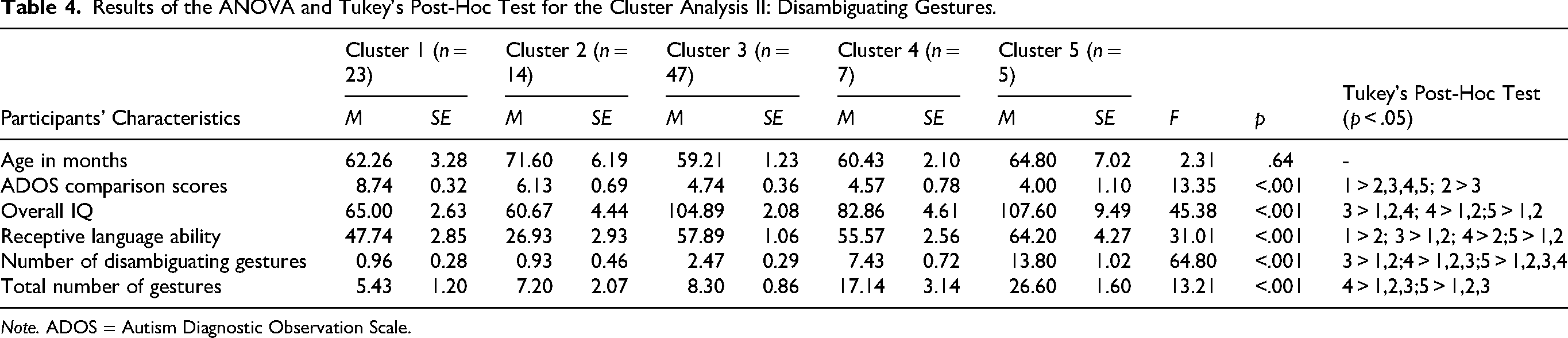
ANOVA results showed significant main effects on autism characteristics, F(4, 93) = 13.35, p < .001; IQ, F(4, 93) = 45.38, p < .001; receptive language ability, F(4, 93) = 31.01, p < .001; and number of disambiguating gestures, F(4, 94) = 64.80, p < .001. Further details can be found in Table 4.
Results of the ANOVA and Tukey's Post-Hoc Test for the Cluster Analysis II: Disambiguating Gestures.
Note. ADOS = Autism Diagnostic Observation Scale.
Children in Cluster 1 (n = 23) exhibited more autism characteristics than children in Cluster 2 (n = 14), Cluster 3 (n = 47), Cluster 4 (n = 7), and Cluster 5 (n = 5). Children in Cluster 2 had more autism characteristics compared to those in Cluster 3 (n = 47). In addition, children in Cluster 3 and Cluster 5 demonstrated better language ability and higher IQ scores than those in Cluster 1 and Cluster 2. Children in Cluster 4 had higher IQ than those in Cluster 1 and higher language ability than those in Cluster 2. Children in Cluster 3, Cluster 4, and Cluster 5 exhibited more disambiguating gestures compared to those in Cluster 1 and Cluster 2. Furthermore, children in Cluster 5 produced more disambiguating gestures than those in Cluster 3 and Cluster 4, while children in Cluster 4 produced more of this type of gesture than those in Cluster 3.
Cluster Analysis III: Supplementary Gestures
A third round of cluster analysis was conducted using the number of supplementary gestures, IQ scores, receptive language ability scores, and ADOS scores. The identification and distribution of clusters were visualized in Figures 7–9. Four clusters were identified.
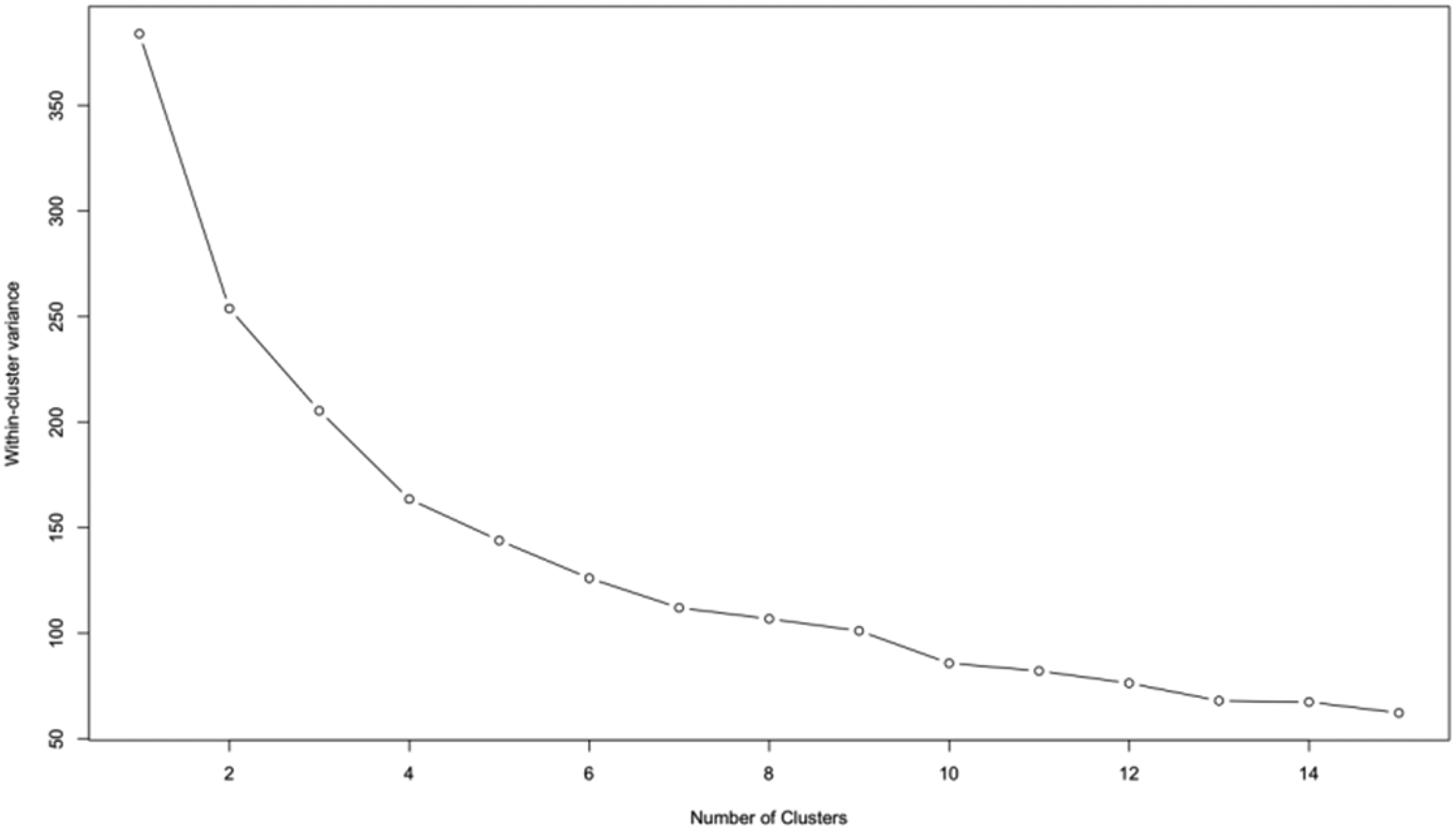
Elbow method graph for cluster analysis III: supplementary gestures.
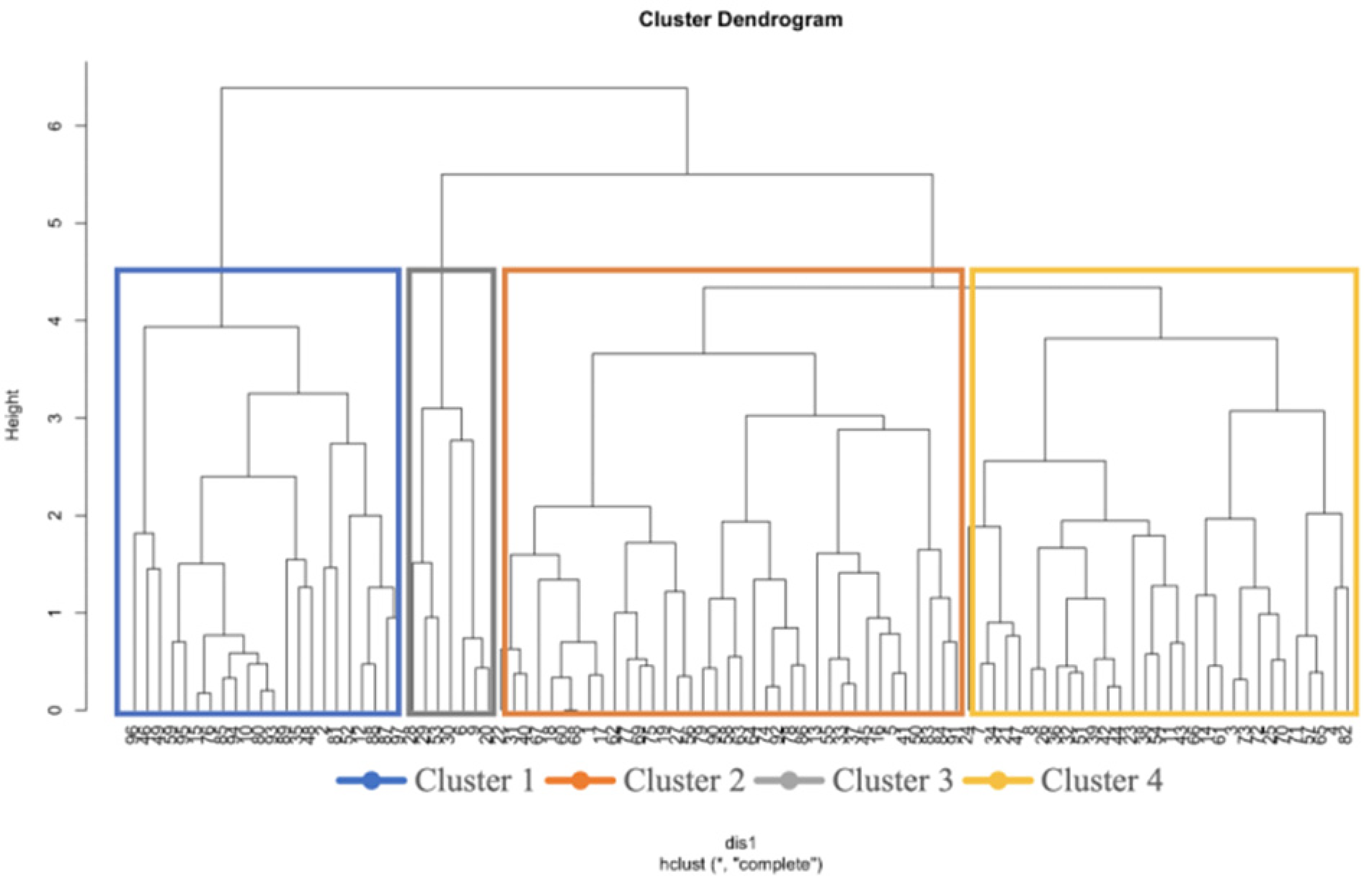
Dendrogram of hierarchical clustering for cluster analysis III: supplementary gestures.
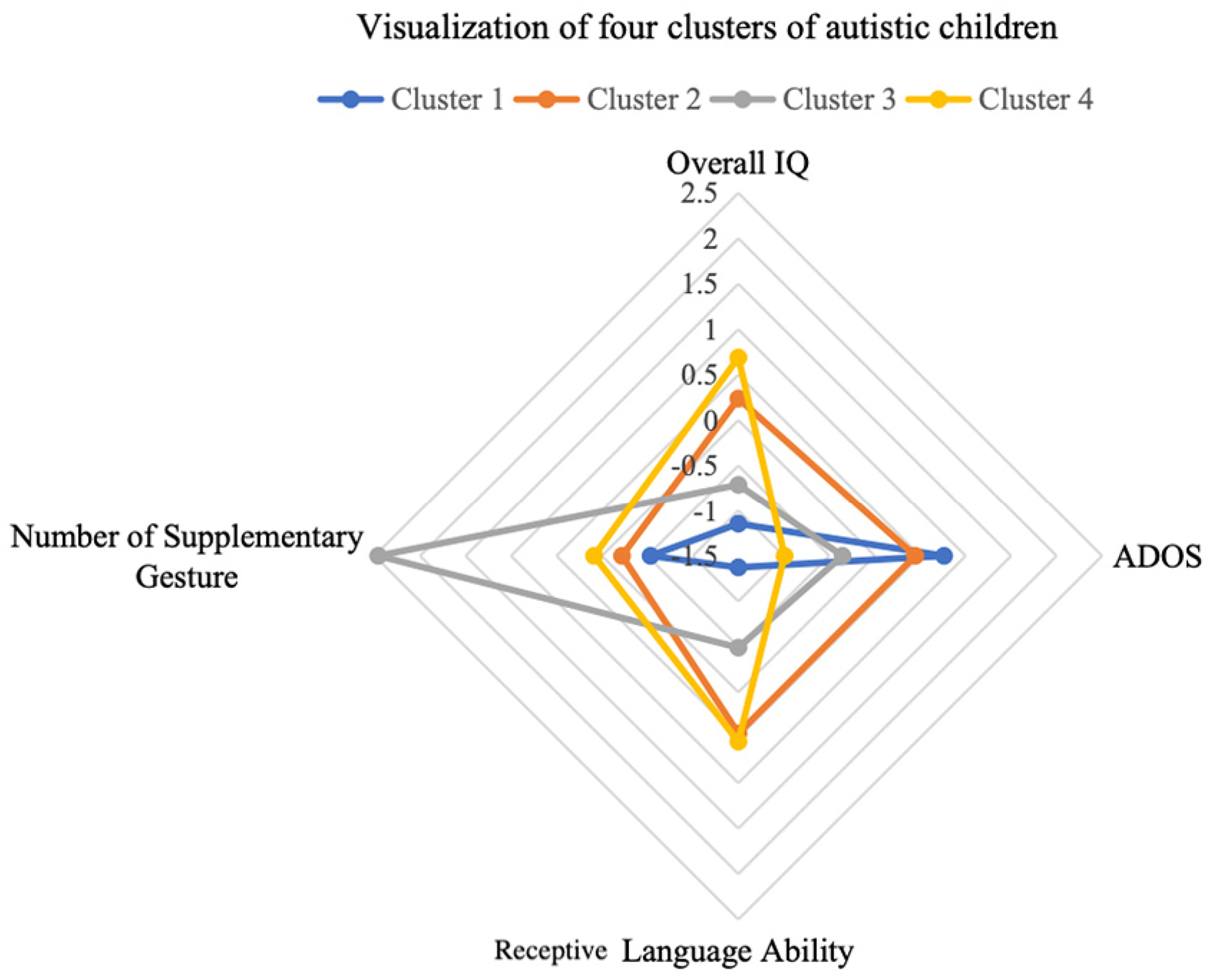
Radar plot for cluster analysis III: supplementary gestures.
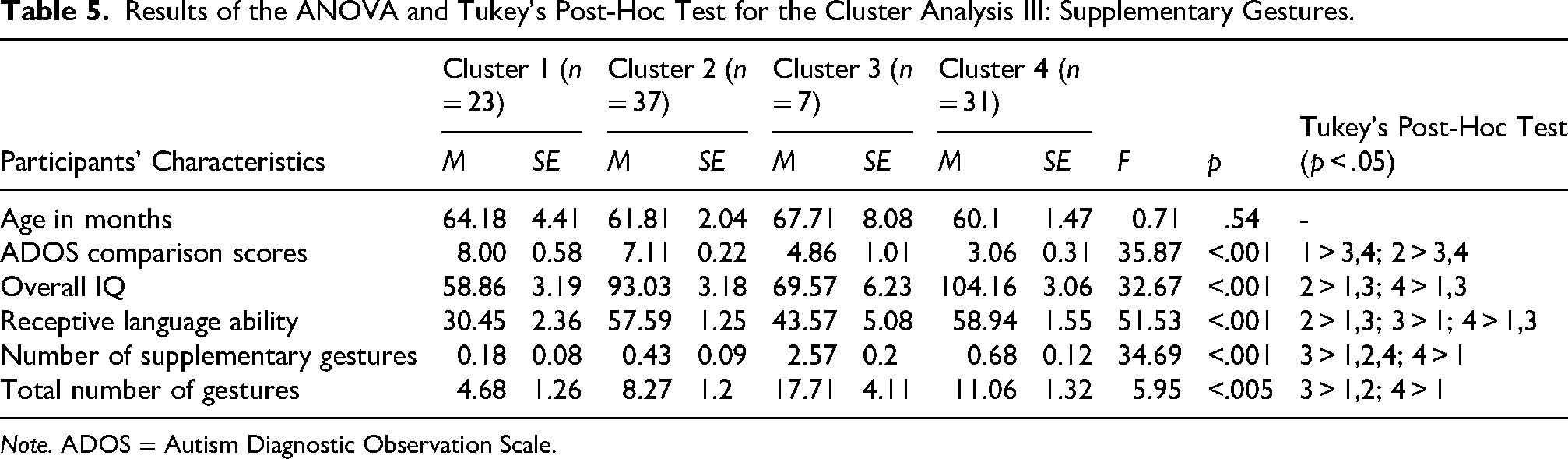
In the third round of analysis, significant main effects of the clusters were observed on autism characteristics, F(3, 93) = 35.87, p < .001, IQ, F(3, 93) = 32.67, p < .001, receptive language ability, F(3, 93) = 51.53, p < .001, and the number of supplementary gestures, F(3, 94) = 34.69, p < .001. ANOVA results and Tukey's HSD post-hoc tests can be found in Table 5.
Results of the ANOVA and Tukey's Post-Hoc Test for the Cluster Analysis III: Supplementary Gestures.
Note. ADOS = Autism Diagnostic Observation Scale.
Children in Cluster 1 (n = 23) and Cluster 2 (n = 37) exhibited more autism characteristics than those in Cluster 3 (n = 7) and Cluster 4 (n = 31). Additionally, children in Cluster 2 and Cluster 4 demonstrated higher receptive language ability and IQ than those in Cluster 1 and Cluster 3. Children in Cluster 3 had better language ability than those in Cluster 1. Children in Cluster 3 produced more supplementary gestures compared to those in Clusters 1, 2, and 4. Furthermore, children in Cluster 4 gestured more than those in Cluster 1.
Cluster Analysis IV: Gestures Without Speech
The fourth round of cluster analysis was conducted with the number of gestures without speech as well as other child-based variables. Five clusters were identified. The identification and distribution of clusters were visualized in Figures 10–12.
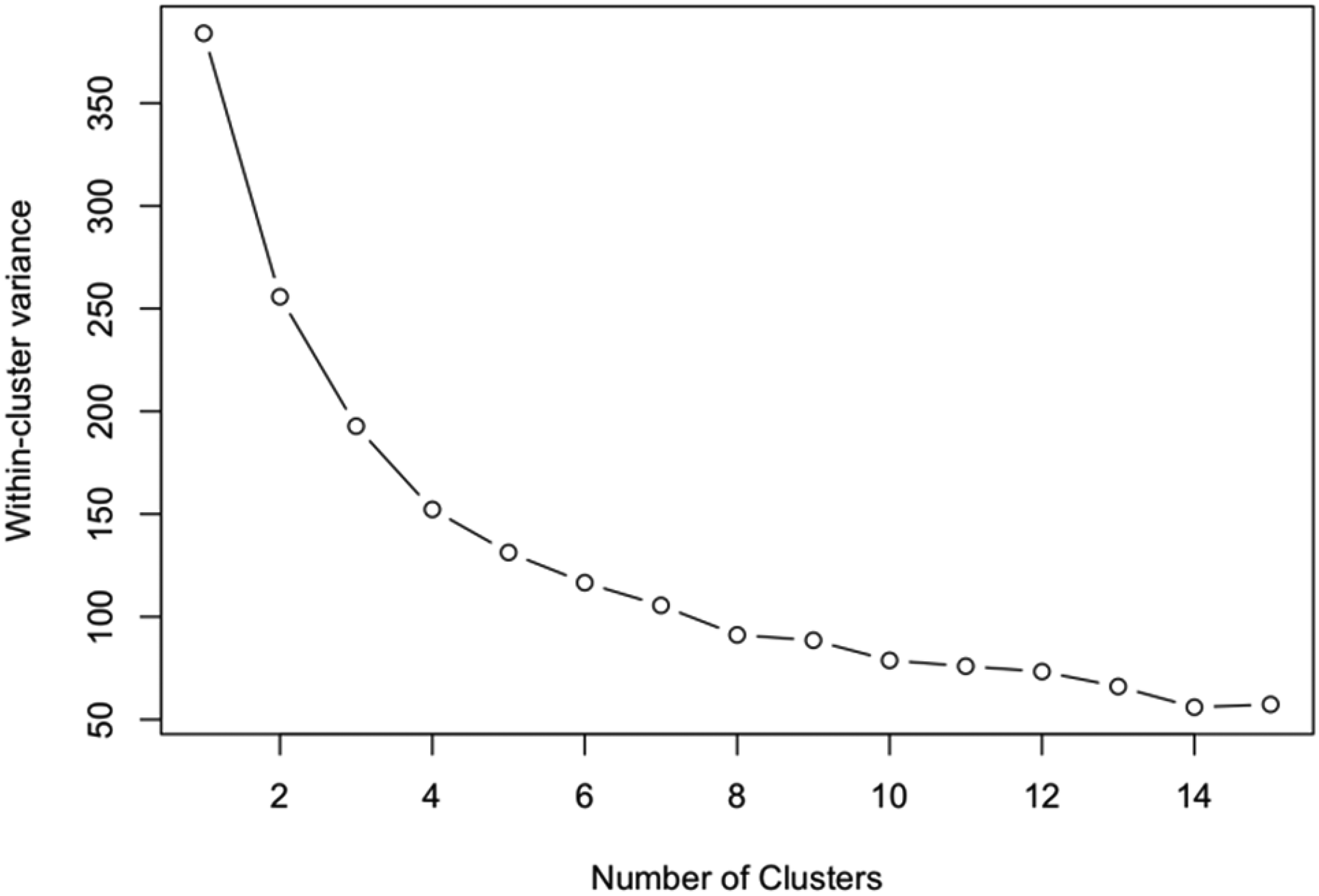
Elbow method graph for cluster analysis IV: gestures without speech.
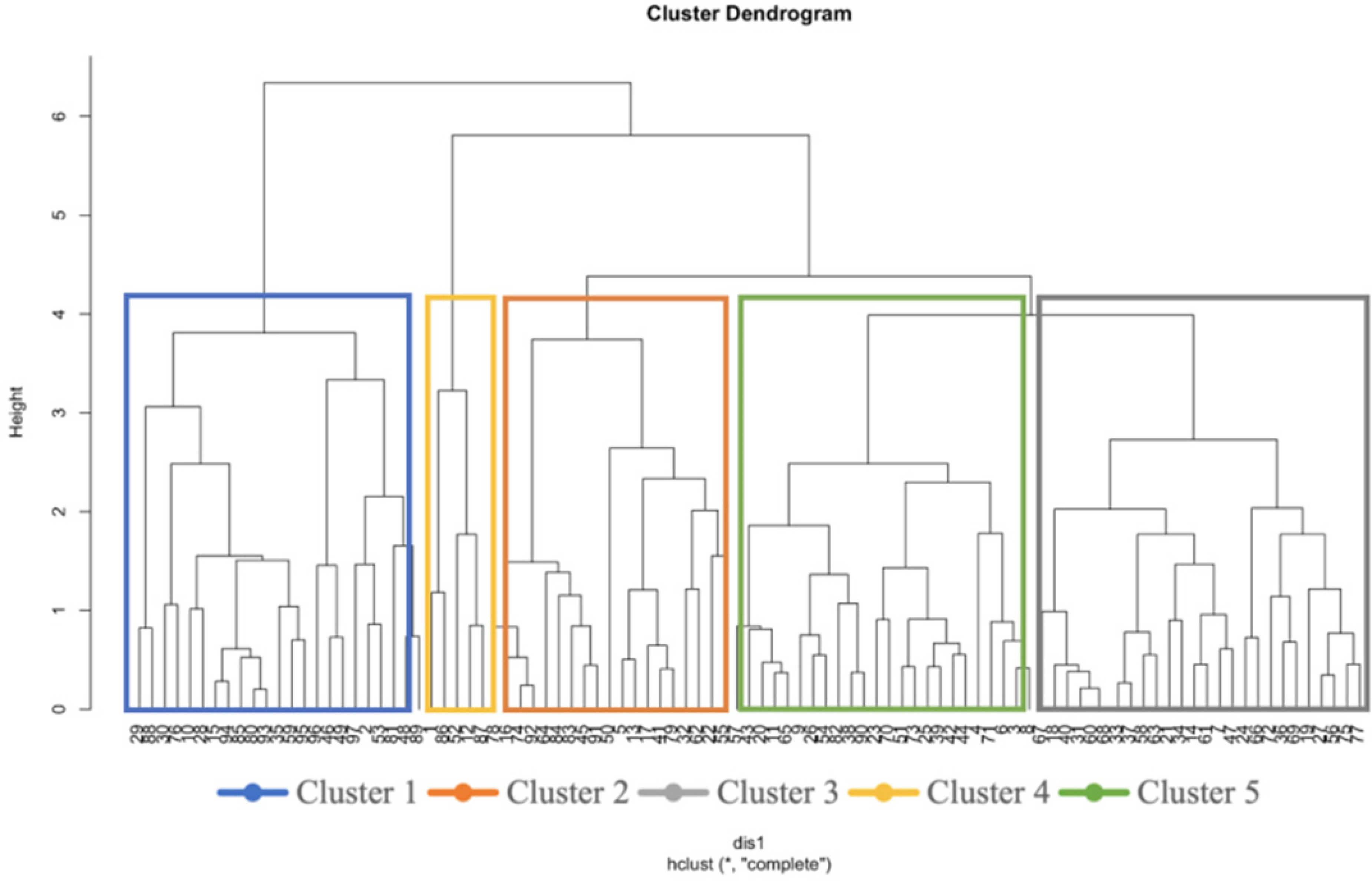
Dendrogram of hierarchical clustering for cluster analysis IV: gestures without speech.
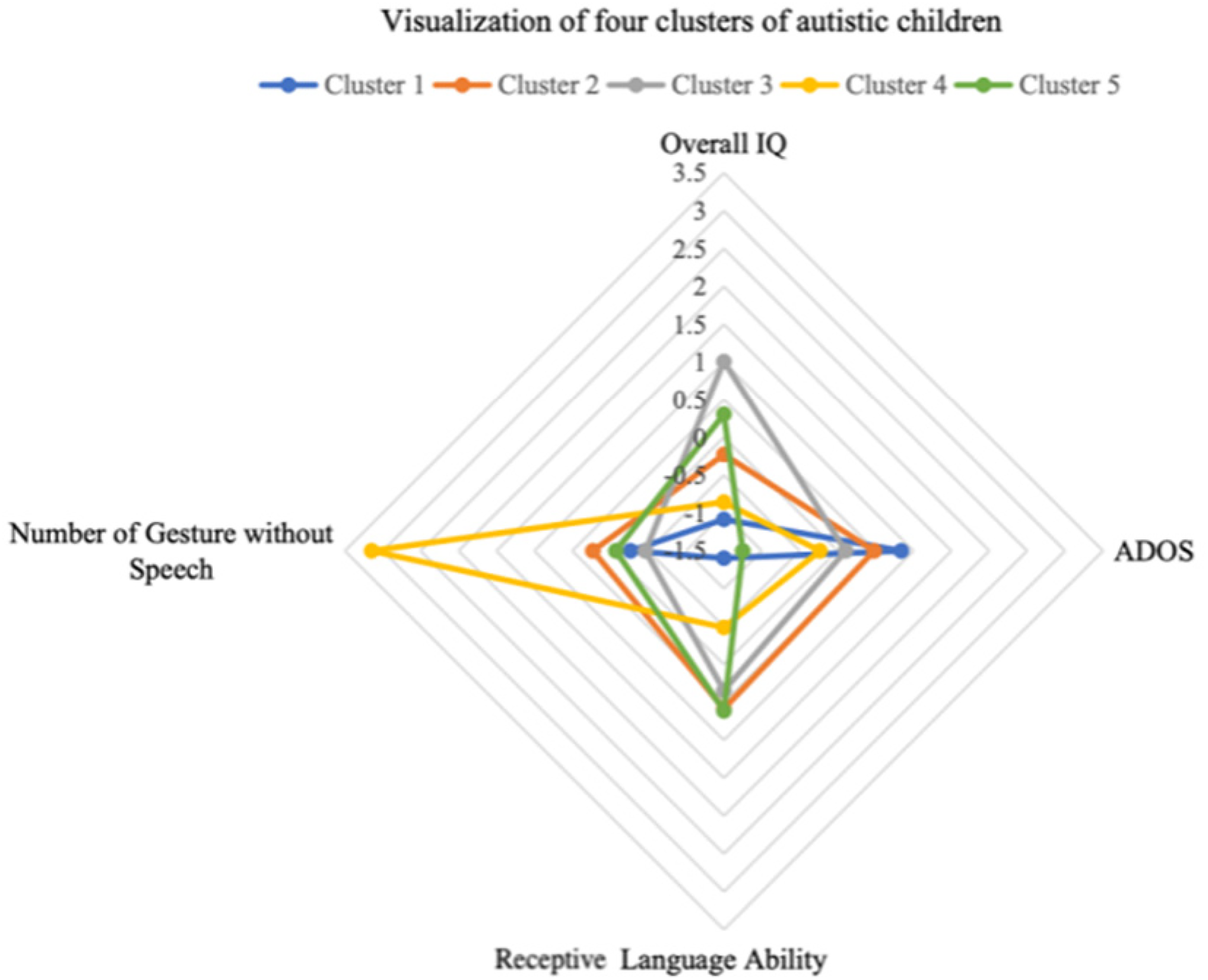
Radar plot for cluster analysis IV: gestures without speech.
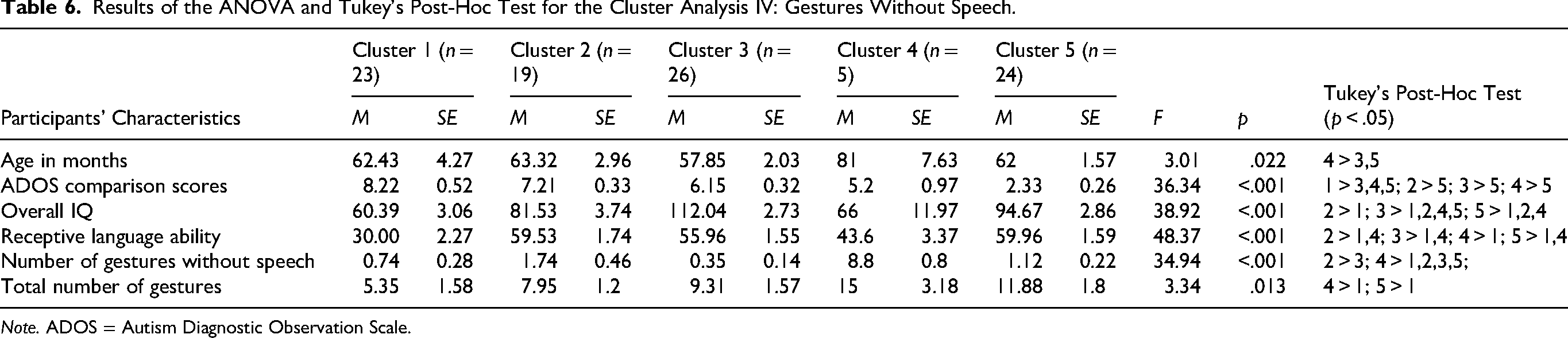
In the fourth round of analysis, significant main effects of the clusters were observed on children's age, F(4, 93) = 3.01, p < .05, autism characteristics, F(4, 93) = 36.34, p < .001, IQ, F(4, 93) = 38.92, p < .001, language ability, F(4, 93) = 48.37, p < .001, and the number of gestures without speech, F(4, 94) = 34.94, p < .001. ANOVA results and Tukey's HSD post-hoc tests can be found in Table 6.
Results of the ANOVA and Tukey's Post-Hoc Test for the Cluster Analysis IV: Gestures Without Speech.
Note. ADOS = Autism Diagnostic Observation Scale.
Children in Cluster 4 (n = 5) were older than those in Cluster 3 (n = 26) and Cluster 5 (n = 24). In addition, children in Cluster 1 (n = 24) exhibited more autism characteristics than children in Cluster 3, Cluster 4, and Cluster 5. Children in Cluster 5 exhibited fewer autism characteristics than those in Cluster 2 (n = 19), Cluster 3, and Cluster 4. Furthermore, children in Cluster 1 and Cluster 4 demonstrated weaker language ability and lower IQ scores than those in Cluster 3 and Cluster 5. Children in Cluster 2 had higher IQ scores than those in Cluster 1 and better language ability than those in Cluster 1 and Cluster 4. Children in Cluster 2 produced gestures without speech more often compared to those in Cluster 3. Additionally, children in Cluster 4 showed a higher number of gestures without speech compared to those in Cluster 1, Cluster 2, Cluster 3, and Cluster 5.
Due to numerous cluster analyses, ANOVAs, and post-hoc comparisons, there exists a potential risk of Type I error. No explicit adjustments were implemented; therefore, results must be regarded with caution.
Discussion
This study investigated the variability in gesture production among autistic children during spontaneous interactions with their caregivers, specifically analyzing the relationship between gestures and speech. Through separate cluster analyses, we identified distinct profiles for reinforcing gestures, disambiguating gestures, supplementary gestures, and gestures without speech. The main findings were that profiles with higher disambiguating gesture production tended to include children with fewer autism characteristics and stronger receptive language ability, whereas profiles with higher supplementary gesture production tended to include children with fewer autism characteristics. In contrast, reinforcing gestures and gestures without speech did not show consistent patterns with autism characteristics, IQ, or receptive language ability.
Heterogeneity of Co-Speech Gesture Production
Previous studies have identified individual variations of gesture frequency among autistic children (Braddock et al., 2016; Broome et al., 2021; Zhang et al., 2023). The division of autistic children into those who use gestures more often versus those who use them less often may not accurately indicate the complexity and diversity of gesture use. Indeed, the current study took our understanding a step further by looking at how these children gestured in relation to speech and classifying them into distinct clusters according to their gesture production as well as child-based factors. In general, children produced more reinforcing gestures and disambiguating gestures than supplementary gestures. Nine children did not produce any gestures. This dominance of reinforcing and disambiguating gestures might be attributable to our task. During parent–child interaction tasks, children were more likely to produce disambiguating gestures when signaling out the references or identifying the spatial location of scattered toys on a table (e.g., So et al., 2015). Unlike disambiguating gestures, supplementary gestures appear to be more commonly produced during narrative tasks (e.g., Huang et al., 2020; Wong & So, 2018).
In addition, the children in our study displayed heterogeneity in their production of different types of co-speech gestures (0–30 for reinforcing gestures, 0–32 for disambiguating gestures, and 0–5 for supplementary gestures). Such a large variability may help explain why previous studies have yielded inconsistent results when comparing gesture production of autistic to non-autistic groups (Morett et al., 2016; So et al., 2015; Wong & So, 2018).
Gesture Profiles and Child-Based Characteristics
The present study found that autistic children who spontaneously produced more disambiguating gestures tended to show stronger receptive language ability and fewer autism characteristics, while children who displayed a greater use of supplementary gestures tended to show fewer autism characteristics. However, the production of reinforcing gestures and gestures without speech did not show consistent profile patterns across children's autism characteristics, IQ, or receptive language ability.
Disambiguating Gestures and Supplementary Gestures
The cluster findings suggested that profiles with higher disambiguating or supplementary gesture production tended to feature children with fewer autism characteristics. Previous studies have shown that autistic children exhibit a lower frequency of these two types of gestures than their non-autistic peers (Dimitrova & Özçalışkan, 2022). Other studies have shown that some autistic children do not produce supplementary or disambiguating gestures at all (Sowden et al., 2008; Sowden et al., 2013). In our sample, children with more autism characteristics tended to produce fewer disambiguating and supplementary gestures than children with fewer autism characteristics. Production of both supplementary and disambiguating co-speech gestures requires integration of cross-modal information (e.g., using a pointing gesture to convey the spatial location of the referent while using speech to refer to the identity of the referent or producing a TURN gesture to depict the motion of opening a jar while saying, “Jar”). Previous research suggested that autistic children have difficulties with coordinating semantic information from different modal systems, given their atypical neural processing (Hubbard et al., 2012). These data underscore descriptive patterns in the variability of gesture production relative to autistic characteristics, without suggesting that these characteristics actually predict gesture production.
Another observation is that disambiguating gesture production tended to vary with children's receptive language ability. Sensitivity to discourse-pragmatic principles may influence how well a child can produce disambiguating gestures. In a study by So et al. (2010), they found that English- and Chinese-speaking children gestured more often to indicate the referents that have to be specified, i.e., third person and new referents, than the referents that do not have to be specified, i.e., first/second person and given referents, when interacting spontaneously with adults. One possible interpretation is that children with stronger language skills may also be better able to manage discourse-pragmatic demands and may therefore be more likely to produce disambiguating gestures. However, the present results reflect observed trends rather than causal relationships, and further research should specifically examine the pragmatic skills of autistic children in a naturalistic context and investigate how those skills would facilitate the production of disambiguating gestures.
Reinforcing Gestures
Despite a negative correlation between reinforcing gestures and ADOS-2 comparison scores in the bivariate correlation analysis, the cluster analysis did not reveal a consistent profile pattern connecting the production of reinforcing gestures with child-based factors. The production of reinforcing gestures may be well-established among autistic children, resulting in inconsistent characterization of the reinforcing–gesture cluster profiles across variations in autism characteristics, IQ, or receptive language ability.
Abundant research has shown that autistic children can produce reinforcing gestures. For instance, in an 8-month longitudinal study on autistic children aged 2 years, 4 months to 3 years, 5 months, Sowden et al. (2013) reported that these young children were able to use gestures to reinforce speech, despite the individual variations in the growth trajectories. Moreover, studies have found that school-age autistic children (So et al., 2015) as well as autistic adolescents (Morett et al., 2016) demonstrate comparable production of reinforcing gestures to their non-autistic peers.
Furthermore, in a study involving minimally verbal autistic children, it was observed that they produced many reinforcing gestures to respond to their conversational partners during interactions. Interestingly, individuals with less verbal language skills exhibited a higher frequency of gestures in their interactions (Valle et al., 2021). These findings indicate that, among children who produced at least one co-speech gesture, reinforcing gestures could be integrated with speech to convey the same semantic meaning across a range of receptive language abilities.
Gestures Without Speech
Similar to reinforcing gestures, we did not observe a clear pattern linking the production of gestures without speech to child-based variables. This result is consistent with previous research, which found no differences in the use of gestures without speech between high and low language ability groups of autistic children (Liu et al., 2024). In a longitudinal study, it was found that infants later diagnosed with autism produced significantly fewer gestures without speech than high-risk infants without autism at 12 months. However, this group difference disappeared at 18 and 24 months (Choi et al., 2020). Overall, gestures without speech appeared with varying frequency across individuals and ages, and no consistent trends were observed in relation to receptive language ability or other child-based variables.
Clinical Implications
Our findings shed light on the understanding of heterogeneity in autism and have several clinical implications. The findings underscore the need to acknowledge individual variations in the communicative patterns of autistic children. Children varied not just in the frequency of gesture production but also in the sorts of gestures they exhibited and the child-specific characteristics seen within distinct cluster profiles. Identifying these distinctions may assist therapists in refraining from supposing a uniform pattern of gesture use among autistic children.
Furthermore, the results indicate that focusing on gestures along with speech may be a valuable method for characterizing children's communication characteristics. Clinicians and researchers may examine whether children utilize gestures to augment verbal information, elucidate referents, or indicate spatial locations. Disambiguating and supplementary gestures warrant further examination, particularly for children with social-communicative difficulties.
However, the implications must be implemented with caution, as the identified cluster patterns illustrate co-occurrence of gesture profiles and general child-based factors, rather than delineating specific mechanisms. Additionally, the results are based on a parent–child interaction context in a laboratory setting, which may not be generalized to everyday communication.
Limitations of the Study
Several limitations should be considered when interpreting the present findings. First, our current study only investigated communicative gestures and the semantic relationship between gestures and speech. Although this focus allowed us to examine how gestures contributed to speech in interaction, other important aspects of gesture were not fully captured. For example, gesture diversity, gesture quality, and the ways gestures are used in specific interactional contexts may also provide important information about children's communicative profiles. Future studies could adopt more multidimensional coding systems to examine gesture form, quality, and use in context.
Moreover, the present study included autism characteristics, IQ, and receptive language ability as child-based variables, but other child factors may also be relevant to gesture production. Although the present study focused on communicative gesture use rather than isolated motor performance, gesture production may involve motor abilities—particularly gross motor skills for overall gesture rate and fine motor skills for the complexity of individual gestures (De Froy & Rollins, 2025). Future research should therefore examine how motor ability may contribute to children's gesture profiles. Age may also be important to control for in future work. We did not include age as a clustering variable because receptive language ability was already included and may serve as a more reliable developmental marker in this heterogeneous sample. Longitudinal studies are needed to examine how gesture production changes over time.
Third, gesture production should be understood within broader interactional and social contexts. Parent input may influence children's gesture production, and transactional models suggest that parent behavior and child behavior may mutually shape one another during interaction (Edmunds et al., 2019; Sameroff, 2009). In addition, cultural norms, family communication style, and children's opportunities for interaction may also shape how gestures are produced and used. As with prior work in this area, future studies should examine gesture production across different partners, settings, and cultural or environmental contexts.
Supplemental Material
sj-docx-1-dli-10.1177_23969415261464456 - Supplemental material for Gesture Production and Its Semantic Integration with Speech in a Heterogeneous Group of Cantonese-Speaking Children with Autism
Supplemental material, sj-docx-1-dli-10.1177_23969415261464456 for Gesture Production and Its Semantic Integration with Speech in a Heterogeneous Group of Cantonese-Speaking Children with Autism by Xin Zhang, Xue-Ke Song and Wing-Chee So in Autism & Developmental Language Impairments
Footnotes

Funding
The authors disclosed receipt of the following financial support for the research, authorship, and/or publication of this article: This research has been supported by a grant from the National Natural Science Foundation of China (Project No. 62507016) and the Direct Grant at the Chinese University of Hong Kong (Project No. 4058085).
Declaration of Conflicting Interests
The authors declared no potential conflicts of interest with respect to the research, authorship, and/or publication of this article.
Data Availability Statement
Raw data that support the findings of this study are available upon reasonable request from the corresponding author.
Supplemental Material
Supplemental material for this article is available online.
References
Supplementary Material
Please find the following supplemental material available below.
For Open Access articles published under a Creative Commons License, all supplemental material carries the same license as the article it is associated with.
For non-Open Access articles published, all supplemental material carries a non-exclusive license, and permission requests for re-use of supplemental material or any part of supplemental material shall be sent directly to the copyright owner as specified in the copyright notice associated with the article.
