







Abstract
Pay disclosure aims at closing the gender pay gap by providing employees especially women with better salary knowledge, yet the effectiveness of employers’ practices is little understood. We use a lab-in-the-field experiment where participants estimate the salaries for several common pay statements for job offers which employers use in the context of the legislation in Austria. Our study with management students (n = 385) shows that employer practices offer no solution to the problem of gender differences, except for the practice of salary range. The replication of the experiment with the real job seekers (n = 242) demonstrates that gender differences disappear also for some practices, but not for the practice of mentioning excess payment (or overpay) options, which is common in Austria. This means that legislation addresses the gender gap most effectively when it encourages employers to display the salary range.
Keywords
Introduction
There is a clear trend that employers are increasingly disclosing pay information to job seekers. For instance, the Austrian government’s “transparency act” or German law on the right to request salary information. This trend is driven by global transparency movements, the enhanced bargaining position of job seekers in certain labor markets, and governmental aspirations to achieve pay equality by mandating employers to display salary details for various positions (Baker et al., 2019; Lobel, 2020; Trotter et al., 2017). The issue became even more prominent recently due to the approval of the new pay transparency directive (2023/970) of the European Union in May 2023, which will have to be implemented by the member countries by 2026. The pay transparency reform of the Austrian Equal Treatment Act from 2011 requires employers to announce an internal pay report and also disclose the salary level in their job advertisement. Usually, companies use, but not necessarily, the minimum salary from the collective agreement and additionally declare if they are willing to pay higher salaries (excess payment) (Wentner et al., 2015). Importantly, since the market salary in some industries is significantly higher than the collectively agreed salary (Bergmann and Sorger, 2015), the negotiable salary for the same job category considerably varies between industries. The amount of excess payment cannot be deduced from the minimum salary, but requires industry specific expertise.
While pay disclosure practices in job offers that detail the salary components are improving nowadays, there is considerable variety in the information provided in employers’ pay statements especially. It is important to understand how effective employers’ varied practices are for addressing the gender gap in salary estimations because estimations are a key factor for pay negotiations, and consequently for gender pay gap (see for a review, Recalde and Vesterlund, 2022, 2023). The objective of this paper is to examine in a lab in the field experiment how gender differences vary across six typical pay statements that emerged from the Austrian transparency legislation and to explore which pay disclosure practices can effectively address the gender gap in pay estimations.
Pay disclosure statements in job offers feature two important dimensions: a numerical statement of the salary (e.g. 1.965 Euro/month, or between 1.900 and 2.000 Euro), and a text statement that contextualizes the numerical information (e.g. negotiable depending on . . ., the government requires the pay statement). The information conveyed has implications for the estimations that job seekers make. Numerical reports provide anchors for an individual’s estimations, while text statements are more influencing the ambiguity of the reported number.
Past research suggests that women’s lower pay estimations are related to the negotiation opportunities stated in the pay statement and result from women’s lack of willingness to negotiate for higher salary (Baker et al., 2019; Bear et al., 2023; Bennedsen et al., 2019; Cullen et al., 2018; Gulyas et al., 2020; Niederle and Vesterlund, 2007; Recalde and Vesterlund, 2023). We argue that gender differences vary independent from statement of negotiation opportunities, because in settings where the actual pay is negotiable, estimations are affected by the ways how numerical information is provided. Specifically, we suggest that a minimum pay exacerbates gender differences (compared to no pay information) whereas a pay-range removes gender differences.
Our context-dependent understanding of gender differences in pay estimations compares salary estimations with varying pay statements using a within-subject research design. The data are based on collective bargaining agreement salary data ranges between €1849 and €2452 for several jobs in the pharmaceutical industry in Austria 1 and were collected using university student sample, and replicated with a workforce sample. We chose to focus on the pharmaceutical industry because we aimed to understand how job seekers can anticipate actual target salaries in an industry where the minimum pay in the job offer is considerably lower than the market salary. The pharmaceutical industry exhibits a more equal gender distribution in its workforce (approximately 50% in Austria, 46% in Europe) than many other key industries, such as the metal industry, which is mostly male-dominated. Therefore, we believe it is appropriate to use it as our focal point. For higher generalizability, the jobs that we included in the experiments exhibit variability in hierarchy levels and gender composition in the labor market. The findings of this study contribute to literature that seeks to identify how pay disclosure influences gender pay differences (see for overview Bear et al., 2023; Recalde and Vesterlund, 2023). Specifically, the study elaborates on and extends research that conceptualizes lower pay estimations of women as an outcome of general attributes of individuals.
The remainder of the paper is organized as follows. Section 2 gives an overview of the literature. Section 3 shows the experimental design, subjects and procedure. Section 4 reports the results; section 5 offers a concluding discussion.
Gender differences in pay estimations
Past research has demonstrated that, in the absence of pay information, women consistently estimate a lower expected salary compared to men (see for an overview Williams et al., 2010). When pay is explicitly stated, it has been suggested that gender differences disappear when the possibility for negotiation is made explicit in the job offer (Blau and Kahn, 2017; Leibbrandt and List, 2015). However, we contend that explicating negotiation possibilities is not sufficient for eliminating gender differences because women’s estimations are more influenced by anchoring effects associated with numerical salary reports than men and do not choose to negotiate (Exley et al., 2020). More specifically, we demonstrate that text contextualizing an anchor leads to lower estimations for women than men, and that salary ranges (tandem anchors) make it more likely for gender differences to disappear.
The gender gap in salary estimations has recently led to pay transparency reforms around the world as a potential means for narrowing the gender pay gap (Baker et al., 2019; Lobel, 2020; see for a review Recalde and Vesterlund, 2022, 2023). Trotter et al. (2017) even refer to this as “the new age of pay transparency.” The central idea of these reforms is to address information asymmetries on salaries by reversing information flows on salaries and mandating employers to make salary information accessible (Gulyas et al., 2020). This resonates with literature on anchoring effects (Tversky and Kahneman, 1974) (for overviews see Furnham and Boo, 2011) that are defined as adjustment of estimates to the provision of numerical values (Bahník et al., 2017). In negotiation and price-building settings, experiments find that estimates of negotiable outcomes are tied to first offers, alter negotiation behavior and influence final outcomes (Ariely et al., 2003; Bear et al., 2023; Beblo et al., 2017; Galinsky and Mussweiler, 2001; see for an overview Recalde and Vesterlund, 2023). Majer et al. (2020) show that the framing of first offers influences the magnitude of the adjustment of estimations. A number of studies have documented how specifications of numeric reference values (e.g. ranges, irrelevancy, precision) affect the likelihood of assimilating estimates (Ames and Mason, 2015; Englich et al., 2006; Janiszewski and Uy, 2008). Studying the specifications of salary offers should therefore yield insights how effectively salary transparency reforms work for reducing gender disparities in salary estimates.
Experimental design, subjects, and procedure
Experimental design
To examine the gender gap in salary estimates for varying job offers, we conducted a lab-in-the-field experiment (Gneezy and Imas, 2017) following a within-subject design (Charness et al., 2012) consisting of two parts. In the first part, participants were tasked with selecting one job out of 17 options (see Table 1) for which they would estimate the actual salary. We offered 17 jobs to cover a wide variety of positions that matched diverse qualification levels (low, middle, high) and gender-specific job types (female, male, mixed). This allowed participants to choose the most suitable job for making a salary estimation, ensuring that they would provide their best estimates. Additionally, this diverse set of job options allowed us to explore how gender differences in job preferences, as noted by Heckert et al. (2002), might influence the results. Thus, with this design, we could control for this factor.
Summary of jobs, job-classifications and salary information.
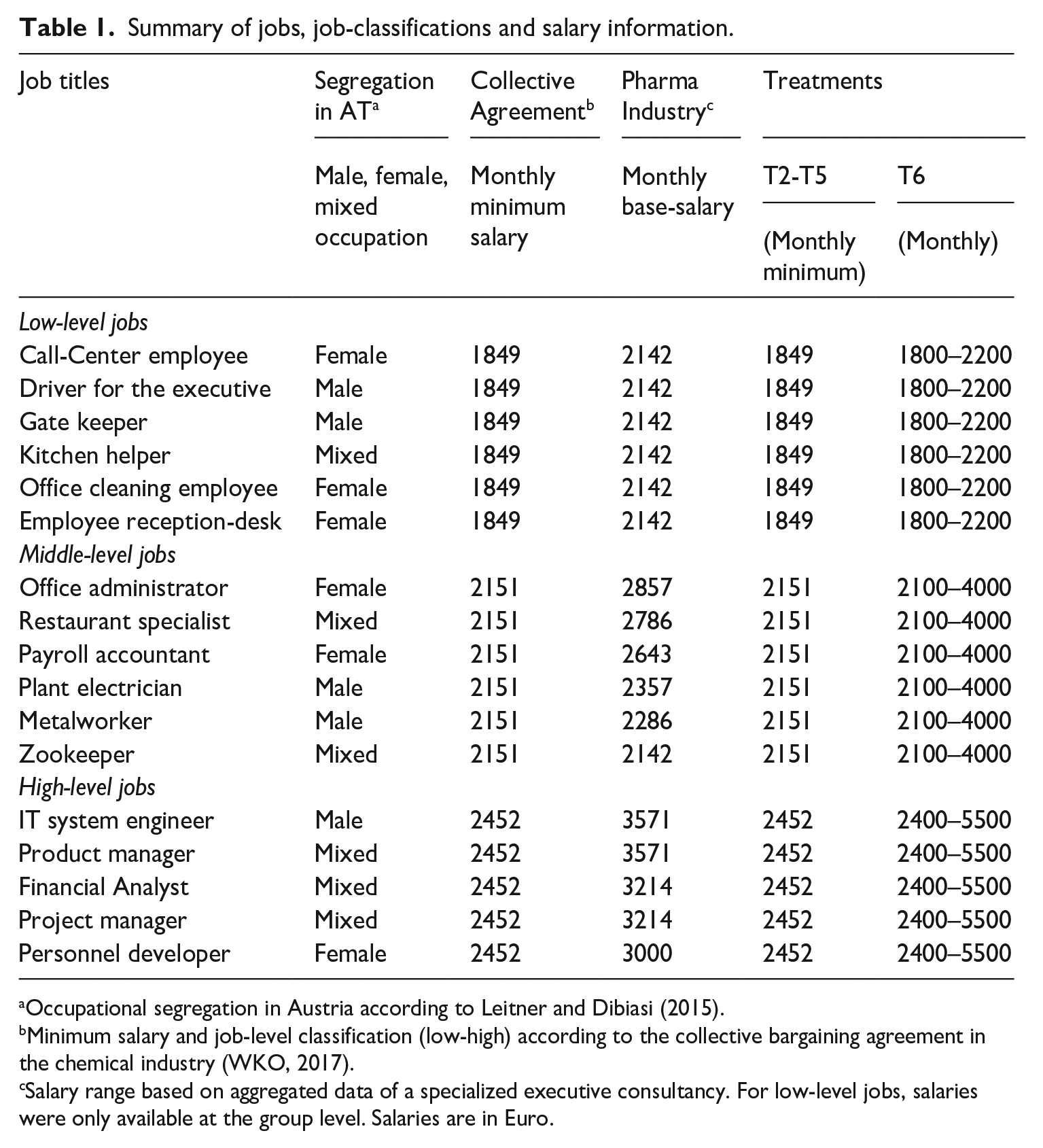
Occupational segregation in Austria according to Leitner and Dibiasi (2015).
Minimum salary and job-level classification (low-high) according to the collective bargaining agreement in the chemical industry (WKO, 2017).
Salary range based on aggregated data of a specialized executive consultancy. For low-level jobs, salaries were only available at the group level. Salaries are in Euro.
In the second part, participants estimated the salaries for their chosen job based on six different salary offers (see Table 2). This included one offer without a numerical salary, representing the situation prior to salary transparency reforms and helping us identify participants’ self-generated anchors—this serve as a control treatment. The subsequent four salary offers presented the legally required minimum salary (as discussed by Bahník et al., 2017), with variations in how they were framed, following the insights from Majer et al. (2020). The final offer provided participants with a market-representative salary range, often referred to as a “tandem anchor” (Ames and Mason, 2015). Our objective here was to systematically assess how participants adjusted their estimates in response to externally provided reference values that is, salary information.
Overview treatments and order.
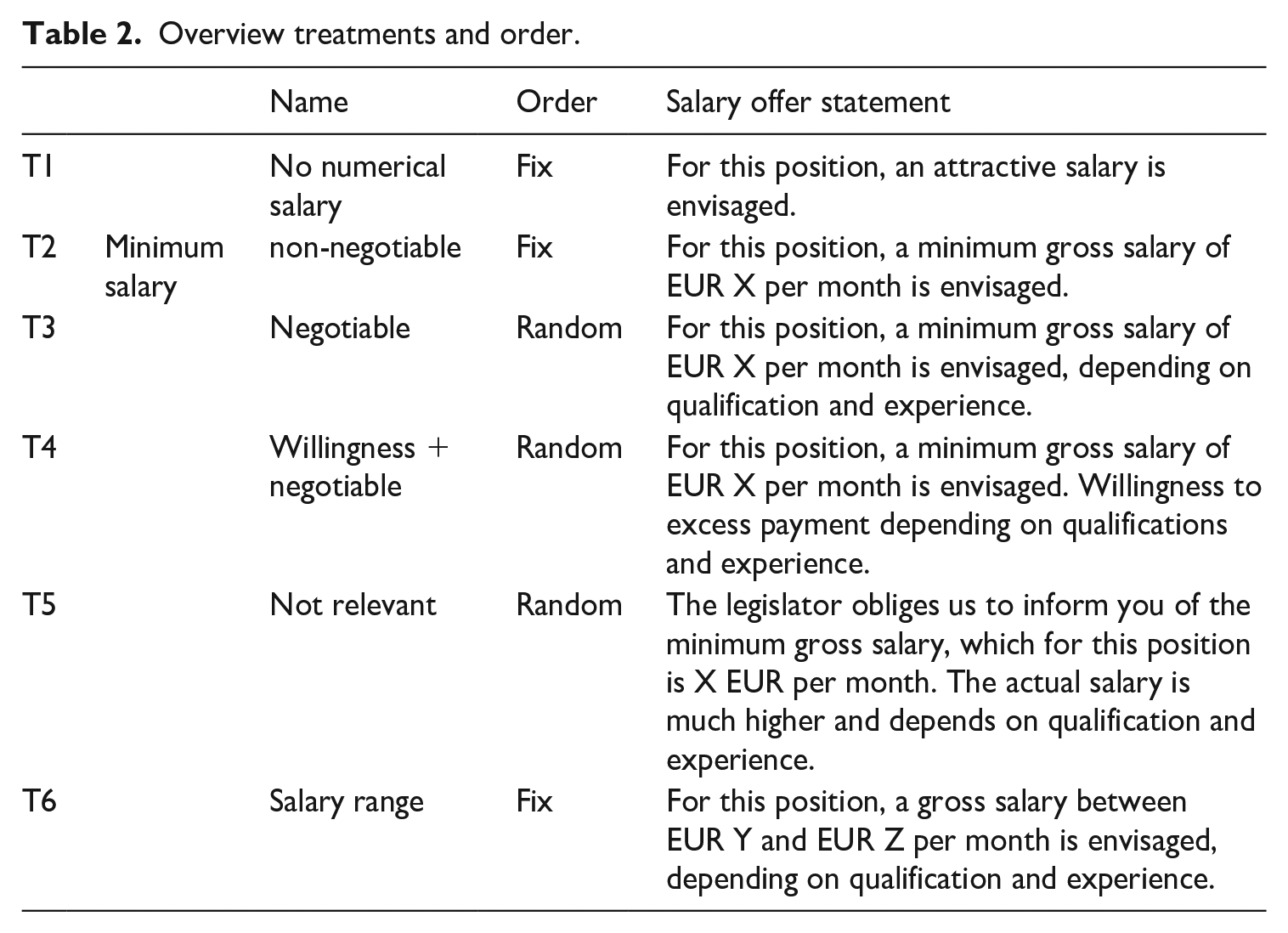
Table 1 presents a summary of the jobs used in this study, along with their classifications and the numerical salaries utilized. The job choice list includes positions from three distinct job levels: low, middle, and high, with corresponding salaries determined by the classification in the collective bargaining agreement. This selection also accounts for occupational gender segregation in Austria, as outlined by Leitner and Dibiasi (2015). To display the legally required salary information after the enforcement of relevant laws (minimum salary, Table, T2–T5), we sourced data from the collective agreement for employees in the chemical industry (WKO, 2017). 2 For presenting market-adequate salary ranges (base salary, Table 2, T6), we utilized salary data specific to early-career individuals (0–3 years of experience) in the pharmaceutical industry, obtained from a specialized executive consultancy. 3
Table 2 shows the six treatments presented to the participants. 4 The order reflects our aim to investigate how estimates adjust to different framings (Majer et al., 2020) and their diverse specifications. Initially, all participants estimated the salary for Treatment 1, labeled as “no numeric salary,” followed by Treatment 2, labeled “minimum non-negotiable.” For the subsequent treatments, from 3 to 5 (“minimum + negotiable,” “minimum, willingness + negotiable,” “minimum salary not relevant”), the order was randomized. This randomization was implemented because salary offer practices did not show clear differences in terms of information levels, and we aimed to mitigate potential order effects, following the approach suggested by Charness et al. (2012). Finally, all participants were asked to estimate the salary for Treatment 6, designed as “salary range.”
Subject pool
We conducted two studies using online questionnaire. The first study focuses on student subject who are in their early career level and the second study focuses on subjects who are already in the labor market
Study 1
In the first study, we recruited 385 university students (79% Bachelor and 21% Master students) from several universities. 5 All participants were university students majoring in management and economics. The participants had an average age of 23.8 years, with 48.83% being female. On average, they had lived in Austria for approximately 10.8 years and possessed 3.8 years of work experience, including 0.3 years in the pharmaceutical industry. The participants completed the task in approximately 9 minutes. In terms of job choices, only 18.44% of the participants selected low-level jobs, while 15.84% opted for middle-level jobs. Notably, the majority, at 65.71%, chose high-level jobs, which is unsurprising given their status as university students expected to pursue upper-tier positions after graduation. Regarding gender segregation in job choice, the majority, accounting for 58.44%, chose mixed-gender jobs. Additionally, 26.23% selected female-dominated jobs, and 15.32% opted for male-dominated jobs.
Study 2
For the second study, we visited the employment office (AMS) and the Chamber of Labor (AK). We recruited visitors to these institutions while they were waiting for their appointments or training events. Participants could join the study by using our tablets or their own electronic devices. In total, we had 242 observations. The average age was 33.5 years, with 58% being female. They had lived in Austria for about 29 years and had 11.5 years of work experience, with only half a year in the pharmaceutical industry.
The participants completed the task in approximately 8 minutes. In terms of job choices, only 28.51% of the participants selected low-level jobs, while 37.60% opted for middle-level jobs and 33.88%, chose high-level jobs. Regarding gender segregation in job choice, the majority, accounting for 54.13%, chose female-dominated jobs. Additionally, 23.55% selected male-dominated jobs, and 22.31% opted for mixed-gender jobs. 6
Procedure
The experiment was conducted on-site between December 12, 2017 and March 31, 2018. During this period, we visited lectures to organize the experiment. Similarly, we visited employment offices and the chamber of labor to run the experiment with subjects in the labor market. Participants were instructed to participate using their digital devices, including laptops, tablets or smartphones. Participation was voluntary, and each participant completed the task individually. To encourage participation and ensure truthful responses, we provided a monetary incentive in the form of a random draw. Additionally, we offered a considerably higher extra payment to increase the stakes. Participants received their payment after the experimental phase was completed. 7
Results
Differences in the salary expectations of women and men
The first results of our study confirm a well-established trend in the literature: male participants consistently estimate salaries higher than female participants. However, these differences in salary estimations vary depending on the salary specifications. Table 3 illustrates how estimated salary differences between the sexes change across all treatments and subject groups.
Gender differences in salary estimations – mean values and standard errors.
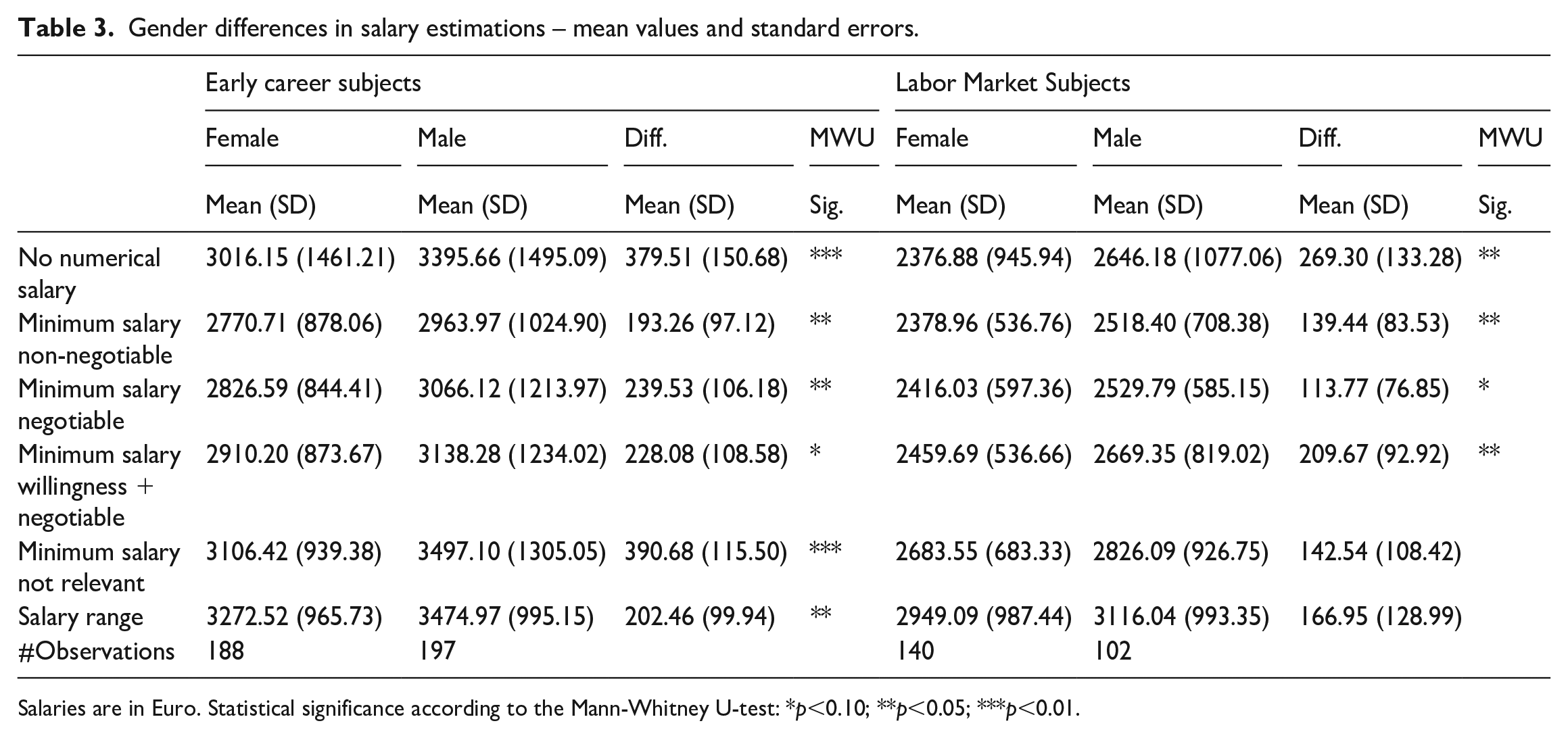
Salaries are in Euro. Statistical significance according to the Mann-Whitney U-test: *p<0.10; **p<0.05; ***p<0.01.
The gender difference is most pronounced when comparing the first treatment, “no numerical salary” (representing the situation before law enforcement), with all other treatments (representing the situation after law enforcement). In this comparison, men estimate a salary that is 12.58% higher, approximately EUR 379.51 more than women (MWU-test exact p-value = 0.0022). The second treatment, which specifies a non-negotiable minimum salary, exhibits considerably smaller differences, with men estimating 6.98% higher, approximately EUR 193.26 more than women (MWU-test exact p-value = 0.0247).
In the third treatment, where a minimum salary is specified but negotiable based on qualification and experience, the gender difference is 8.47%, around EUR 239.53 more estimated by men (MWU-test exact p-value = 0.0321). Treatment four, with a minimum salary and employers` willingness for excess pay, shows a 7.84% gender gap, approximately EUR 228.08 higher for men (MWU-test exact p-value = 0.0595). In the treatments with numeric values, the largest estimation gap of 12.58%, about EUR 390.68 more estimated by men, is observed in treatment five, labeled as “minimum not relevant.” In this treatment, companies indicate the legal obligation to declare the collectively agreed minimum salary and the deviation from actual market salaries (MWU-test exact p-value = 0.0036). Finally, the smallest gender difference of 6.19%, approximately EUR 202.46 more estimated by men, is found when a range of a minimum and maximum salary is provided (MWU-test p-value = 0.0417).
Similar differences exist among labor market subjects, but the mean differences disappear in treatment five and treatment six, where we observe overall smaller estimation of salaries and smaller differences among labor market subjects.
Factors influencing salary expectations
We employed regression analysis to identify the influential factors in the six tested treatments that impact salary estimations and to what extent gender plays a role. The primary findings are confirmed by various Ordinary Least Squares (OLS) regressions presented in Table 4, with the dependent variable being the natural logarithm of the estimated salary level.
Gender differences in different salary formulation.
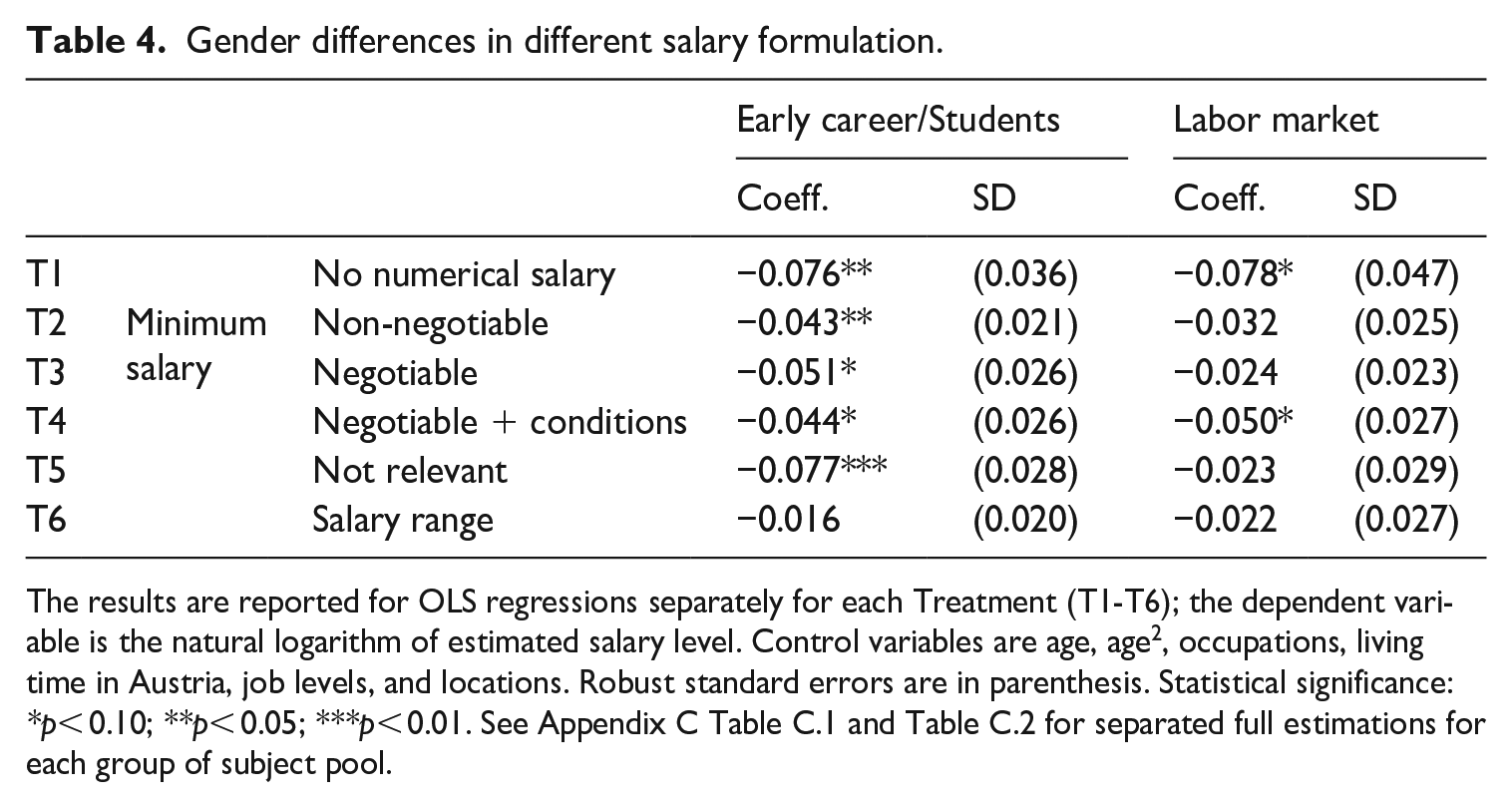
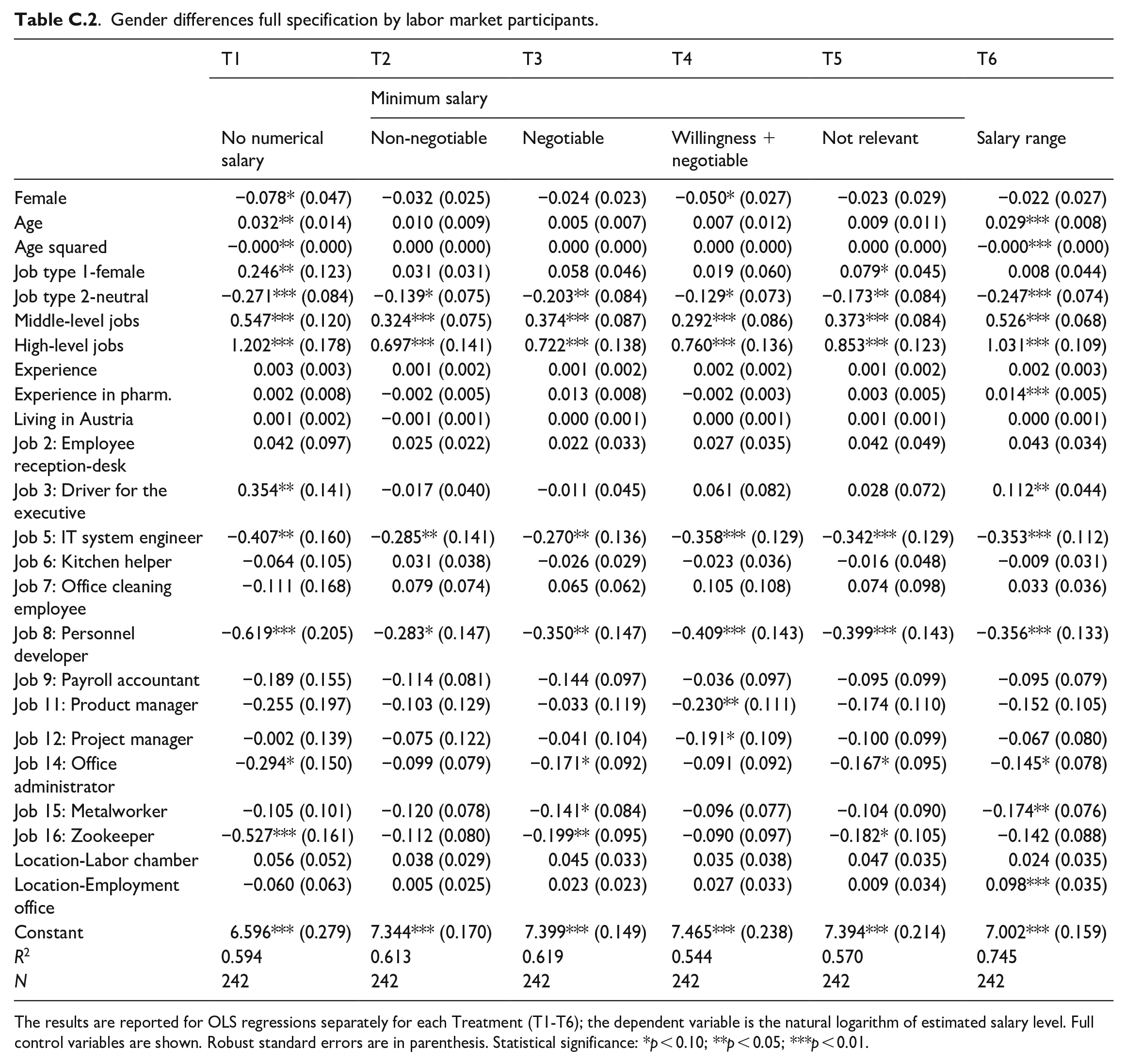
The results are reported for OLS regressions separately for each Treatment (T1-T6); the dependent variable is the natural logarithm of estimated salary level. Control variables are age, age2, occupations, living time in Austria, job levels, and locations. Robust standard errors are in parenthesis. Statistical significance: *p< 0.10; **p< 0.05; ***p< 0.01. See Appendix C Table C.1 and Table C.2 for separated full estimations for each group of subject pool.
In the first specification (“no numerical salary”), we regressed the dependent variable on the female dummy variable, with males as the omitted category. After controlling for general personal information such as age, job experience, occupation, etc., we observed that female subjects estimated salaries 7.6% lower than their male counterparts in the “no numerical salary” treatment among students and labor market subjects show similar difference (female estimate 8.2% lower). This finding aligns with previous research by Böheim et al. (2013) and Geisberger and Glaser (2017).
In the second specification (“minimum non-negotiable”), both male and female subjects estimated lower salaries compared to the first specification, indicating the presence of an anchoring effect (Wilcoxon signed-rank test for male: p-value = 0.000, Wilcoxon signed-rank test for female: p-value = 0.036). However, the difference in salary level of approximately 4.3% persisted and 3.2% among labor market participants, but the significant difference disappears for labor market participants. The “minimum negotiable” treatment resulted in a gender difference of 5.1% and 2.5%. The “minimum willingness plus negotiable” treatment show a significant difference of about 4.4% and 5%. In the “minimum not relevant” treatment, the gender difference was approximately 7.7% and 2.6%. Finally, the specification of a “salary range” does not yield any significant gender differences for both groups.
Among the student group, most of the treatments still show significant results. However, the labor market group shows significance only in the first and fourth treatments. The “minimum salary willingness plus negotiable” treatment is the one that is mostly used in models for the Austrian labor market, indicating that employers are willing to pay more, but it depends on negotiation. Negotiation option may be a reason for the gender differences as indicated in the literature (Bear et al., 2023; Recalde and Vesterlund, 2023).
The regression models reveal that participants who opt for middle and high-level jobs consistently estimate higher salaries compared to those who choose low-level positions. Interestingly, even participants with prior experience in the pharmaceutical industry tend to estimate higher salaries, irrespective of their industry background. Conceptually, we include a robustness analysis by examining the reasons for the observed effects while controlling for possible explanatory variables. However, we find that the results remain robust and hardly change when additional control variables and concepts are included. For further analysis, please refer to the Appendix B Table B.1 and Table B.2.
Discussion and conclusions
Recent pay transparency reforms mandate companies to make salary information accessible for improving equal opportunities in the bargaining power, thereby reducing women’s disadvantages in the labor market. This study investigates the reactions of individuals in their early career stage (students) and workforce sample to real market salary information in job offers within an asymmetric information situation. The findings suggest that in the student sample, gender differences persist in estimating negotiable salaries when minimum salaries (in various presentation forms) are made accessible similar to studies run in Austria (Bamieh and Ziegler, 2022; Frimmel et al., 2022). However, these differences in estimations disappear when salary ranges based on market salaries are signaled. In the workforce sample, gender differences persist in two of the important treatments: firstly, in the control treatment, and secondly, in the treatment which represents the most commonly used salary information sharing style of Austrian companies. Yet, the most effective system appears to be the salary ranges, which show no gender differences in both samples.
A potential explanation for the persistence of the gender gap in minimum salary offer conditions in our experiment is that men are more likely to perceive these reference salaries as inadequate compared to female subjects. Consequently, they may adjust their estimates to a lower magnitude than women. This observation aligns with the mechanism in anchoring literature, which suggests that adjustments are lower when initial offers significantly deviate from a subject’s pre-existing reference values (Bahník et al., 2017). In negotiations, it’s worth noting that providing lower prices than what sellers desire is not only common, but buyers may also employ framing techniques that reduce the assimilation of estimates to initial offers (Majer et al., 2020). Therefore, the presentation of salaries in a job offer, especially when the referenced salaries deviate from market norms, can play a crucial role in determining the extent of assimilation of estimations. This aspect is vital for actions aimed at addressing gender differences through information sharing. Women may be more vulnerable to biased salary offers, as indicated by the “no numerical salary” treatment, as they seem to possess less knowledge about market salaries. Consequently, they may tend to lower their salary requests under such conditions (e.g. Hernandez-Arenaz and Iriberri, 2018; Jetter and Walker, 2020; Wilson et al., 1996).
The third, fourth, and fifth treatments introduce the possibility of negotiation options. Companies propose a minimum wage but signal their willingness to negotiate for a higher salary level. Naturally, such offers lead us to the literature where gender differences in competitiveness and negotiations are observed (Bear et al., 2023; Niederle and Vesterlund, 2007; Recalde and Vesterlund, 2023). The “minimum negotiable” treatment and “minimum willingness plus negotiable” treatment clearly indicate the negotiation option, which may prompt overconfidence in male subjects, leading them to increase their salary expectations compared to female candidates.
The “minimum not relevant” treatment also contributes to a sense of guilt toward policymakers, as otherwise, the company would not offer such a low minimum salary. This presents a strong argument from the company’s perspective and suggests a more robust negotiation option for applicants. Consequently, it may contribute to generating a gender-specific pay gap. Overall, these treatments introduce more structural ambiguity in salary offers, which may contribute to the persistence of the gender pay gap (Bowles et al., 2005; Mazei et al., 2015).
The observed disappearance of gender differences in the “salary range” treatment could suggest two possible explanations. First, when participants are presented with a salary range along with the rules for salary determination, they may have enough information to position themselves within a range of potential values. An interesting finding is that in the “salary range” treatment, differences in salary estimates are attributed to qualification and experience rather than gender. While these factors are mentioned as conditions for higher pay in several treatments, they do not impact salary estimates in those treatments. Such effects are known to occur when individuals adjust their estimates because they perceive the offers as highly informative (Bahník et al., 2017). Supporting this argument, Ames and Mason (2015) have shown that subjects are influenced by both endpoints when responding to price ranges in negotiations. Second, the adjustment could also imply that the upper value of the salary range reflects the desirable salary. The rationale is based on the notion that estimates in negotiations are driven by the bargaining interests of the participants (Majer et al., 2020). In our experiment, the “salary range” treatment yields different effects on the behavior of women and men. While the upper salary range appears to lead men to reduce their estimates of the negotiable salary, it influences women by elevating their salary estimates. In such a scenario, men may initiate negotiations with lower goals, whereas women may start with higher requests.
Since the study reveals that gender differences in common career-related information sources do not explain the observed gender differences in salary requests, an interesting question for future research is which dissimilar knowledge exactly men and women use for “interpreting” salary information in job offers. For example, women and men might differ in their assumptions whether initial salary offers represent objective facts (i.e. the company’s present compensation scheme) or whether such salary offers are part of a negotiation and thus, need to be approached based on the job seekers’ interests. Supporting this argument, psychological literature on the effect of wording in job offers on the attraction of men and women (Born and Taris, 2010; Gaucher et al., 2011) suggests that women review job offers more carefully or consciously than men do, especially when these job offers are related to male-dominated settings. Additionally, as reports suggest (e.g. Mohr, 2014) women can be more likely to be deterred from submitting applications to jobs than men when they do not meet the full list of job requirements. Thus, it seems plausible that the higher magnitude of anchoring effects on women than on men for salary estimations is consistent with patterns of behavior of men and women in response to job offers more broadly.
The study carries significant implications for the ongoing debate on salary transparency, suggesting that how salary information is presented in job offers plays a pivotal role in achieving equal opportunities for women and men in salary requests. In situations where information is made readily available, communicating salary ranges may prove to be an effective instrument of eliminating gender disparities in salary estimations. Policy makers need to recognize that regulations focusing solely on the availability of minimum salaries and negotiation opportunities with criteria for higher pay, especially in high-paying industries, may not suffice. Nevertheless, we maintain a degree of skepticism about whether (more elaborate) legislation alone can compel firms to disclose accurate (i.e. firm-specific) salary ranges in their job offers. Instead, aligning with argument from framing literature (Hodgkinson et al., 1999), we suggest complementary initiatives that increase awareness about the potentially biased nature of initial offers in job advertisements. Such initiatives could serve to mitigate the impact of anchoring effects resulting from minimum salaries and also encourage women to seek reference values from a broader range of career-related information sources, including market-based salary data. Our experimental results indicate that such activities can be advantageous across various job types.
While we conducted the study in Austria using job advertisement information related to the pharmaceutical industry, we believe that the findings have broader applicability. For instance, excess payment is also common in firms within the metalworking industry (Bergmann and Sorger, 2015). Similar situations, where salaries in collective agreements are smaller than negotiated salaries, can be found in Sweden (see Säve-Söderbergh, 2019). Thus, it is important to explore the effects of salary disclosure in settings where significant disparities exist between salaries agreed upon by social partners and market-based salaries. Admittedly, our study has some limitations. Our subject pool is derived from a student sample and a specific group of individuals from the employment office and the workers’ chamber. The student subject pool comprises individuals from different countries; hence, we controlled for location fixed effects in the regression. This adjustment is made considering that cultural differences may influence their expectations, as indicated by Shan et al. (2019). Finally, to fully appreciate the practical relevance of these findings, further research is required not only among labor market entrants but also with employees in later stages of their careers and individuals with substantial industry specific experience. Additionally, we focus on early careers, which may entail distinct gender and compensation perspectives compared to the average Austrian worker. Nevertheless, we controlled for potential confounding factors in the regressions and established parallels by examining correlations with the Austrian job market. Keeping this information in mind could assist future research and policy recommendations.
The variability of pay statements in job offers raises questions on how pay statements affects the salary estimation of the labor forces and if there is an effect which statement is the most effective one to close the gender pay gap. We have demonstrated that providing a salary range information will influence subject’s salary estimation independent of whether they are participating the labor force freshly or they are already in the labor force. In sum, effectively reducing gender differences requires full range of information.
Footnotes
Appendix A: Further results
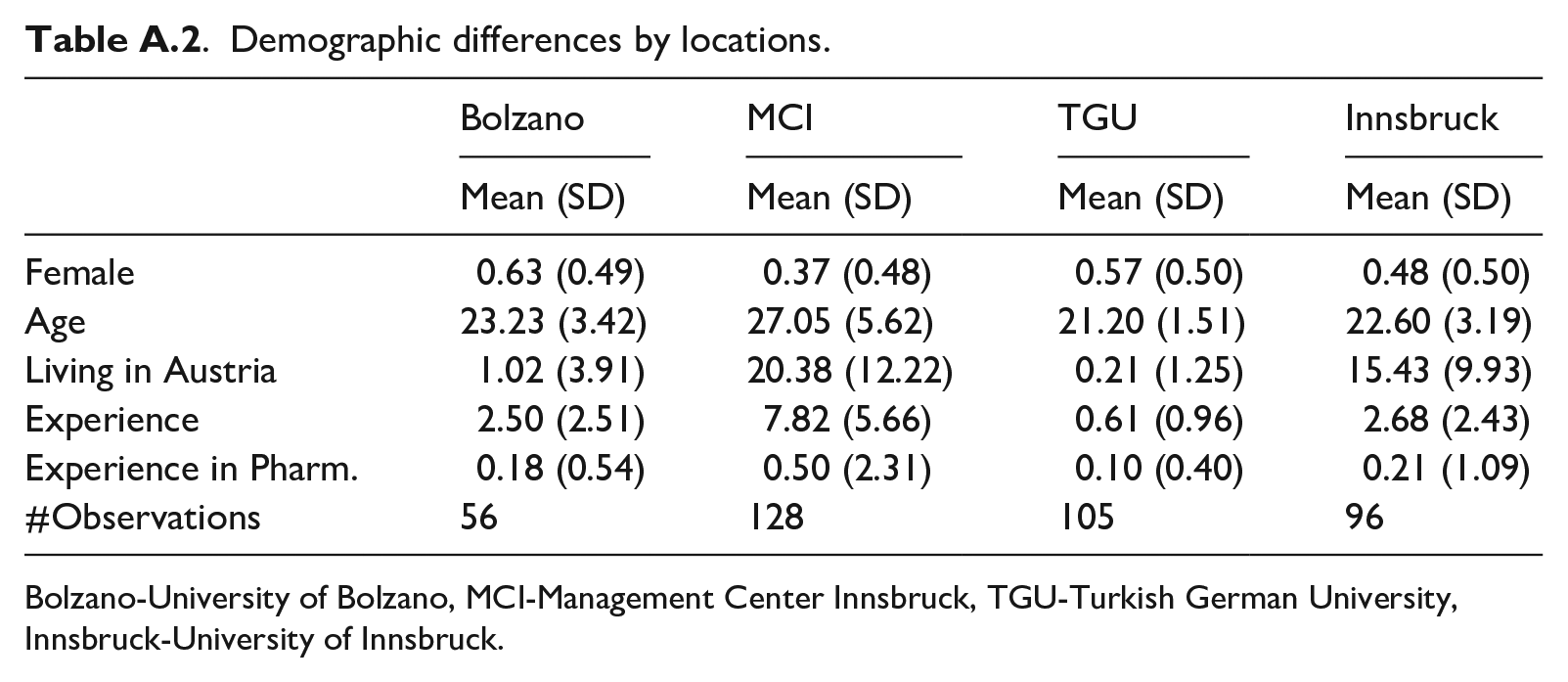
Demographic differences by locations.
| Bolzano | MCI | TGU | Innsbruck | |
|---|---|---|---|---|
| Mean (SD) | Mean (SD) | Mean (SD) | Mean (SD) | |
| Female | 0.63 (0.49) | 0.37 (0.48) | 0.57 (0.50) | 0.48 (0.50) |
| Age | 23.23 (3.42) | 27.05 (5.62) | 21.20 (1.51) | 22.60 (3.19) |
| Living in Austria | 1.02 (3.91) | 20.38 (12.22) | 0.21 (1.25) | 15.43 (9.93) |
| Experience | 2.50 (2.51) | 7.82 (5.66) | 0.61 (0.96) | 2.68 (2.43) |
| Experience in Pharm. | 0.18 (0.54) | 0.50 (2.31) | 0.10 (0.40) | 0.21 (1.09) |
| #Observations | 56 | 128 | 105 | 96 |
Bolzano-University of Bolzano, MCI-Management Center Innsbruck, TGU-Turkish German University, Innsbruck-University of Innsbruck.
Appendix B: Differences in job choices between female and male participants
Table B.1 shows the various career choices made by male and female participants for female, male or mixed jobs, along with the statistical significance of these differences. 8 The categorization into female, male and mixed occupations highlights that the choices align with traditional gender-specific career preferences observed in Austria (Leitner and Dibiasi, 2015).
The mean values reflect the labor market segregation between males and females, further demonstrated by the ratios in the last column. In our study, female subjects chose a typical female occupation, while men opted for typical male occupations in both early career students sample and labor market sample (chi2 test p-value < 0.01 for both). The choice of a mixed occupation is same in all samples indicating no gender segregation (chi2 test p-value > 0.1). Overall, our observations in the experiment indicate that women tend to choose female-dominated professions, whereas men favor male-dominated professions, thus mirroring the structural differences of the actual labor market.
Examining individual jobs, we found that the project manager role was chosen as the most favored job among all participants (21.11% of all participants, 45% of male and 55% of female), followed by IT system engineer roles (10.79% of all participants, 71% of male and 29% of female) and financial analyst positions (7.55% of all participants, 55% of male and 45% of female). In contrast, jobs such as gatekeeper was selected by less than 1% of the participants. Overall, the job choices in our study appear reasonable for our subject pool.
Appendix C: Robustness checks
Gender differences full specification by labor market participants.
| T1 | T2 | T3 | T4 | T5 | T6 | |
|---|---|---|---|---|---|---|
| Minimum salary | ||||||
| No numerical salary | Non-negotiable | Negotiable | Willingness + negotiable | Not relevant | Salary range | |
| Female | −0.078* (0.047) | −0.032 (0.025) | −0.024 (0.023) | −0.050* (0.027) | −0.023 (0.029) | −0.022 (0.027) |
| Age | 0.032** (0.014) | 0.010 (0.009) | 0.005 (0.007) | 0.007 (0.012) | 0.009 (0.011) | 0.029*** (0.008) |
| Age squared | −0.000** (0.000) | 0.000 (0.000) | 0.000 (0.000) | 0.000 (0.000) | 0.000 (0.000) | −0.000*** (0.000) |
| Job type 1-female | 0.246** (0.123) | 0.031 (0.031) | 0.058 (0.046) | 0.019 (0.060) | 0.079* (0.045) | 0.008 (0.044) |
| Job type 2-neutral | −0.271*** (0.084) | −0.139* (0.075) | −0.203** (0.084) | −0.129* (0.073) | −0.173** (0.084) | −0.247*** (0.074) |
| Middle-level jobs | 0.547*** (0.120) | 0.324*** (0.075) | 0.374*** (0.087) | 0.292*** (0.086) | 0.373*** (0.084) | 0.526*** (0.068) |
| High-level jobs | 1.202*** (0.178) | 0.697*** (0.141) | 0.722*** (0.138) | 0.760*** (0.136) | 0.853*** (0.123) | 1.031*** (0.109) |
| Experience | 0.003 (0.003) | 0.001 (0.002) | 0.001 (0.002) | 0.002 (0.002) | 0.001 (0.002) | 0.002 (0.003) |
| Experience in pharm. | 0.002 (0.008) | −0.002 (0.005) | 0.013 (0.008) | −0.002 (0.003) | 0.003 (0.005) | 0.014*** (0.005) |
| Living in Austria | 0.001 (0.002) | −0.001 (0.001) | 0.000 (0.001) | 0.000 (0.001) | 0.001 (0.001) | 0.000 (0.001) |
| Job 2: Employee reception-desk | 0.042 (0.097) | 0.025 (0.022) | 0.022 (0.033) | 0.027 (0.035) | 0.042 (0.049) | 0.043 (0.034) |
| Job 3: Driver for the executive | 0.354** (0.141) | −0.017 (0.040) | −0.011 (0.045) | 0.061 (0.082) | 0.028 (0.072) | 0.112** (0.044) |
| Job 5: IT system engineer | −0.407** (0.160) | −0.285** (0.141) | −0.270** (0.136) | −0.358*** (0.129) | −0.342*** (0.129) | −0.353*** (0.112) |
| Job 6: Kitchen helper | −0.064 (0.105) | 0.031 (0.038) | −0.026 (0.029) | −0.023 (0.036) | −0.016 (0.048) | −0.009 (0.031) |
| Job 7: Office cleaning employee | −0.111 (0.168) | 0.079 (0.074) | 0.065 (0.062) | 0.105 (0.108) | 0.074 (0.098) | 0.033 (0.036) |
| Job 8: Personnel developer | −0.619*** (0.205) | −0.283* (0.147) | −0.350** (0.147) | −0.409*** (0.143) | −0.399*** (0.143) | −0.356*** (0.133) |
| Job 9: Payroll accountant | −0.189 (0.155) | −0.114 (0.081) | −0.144 (0.097) | −0.036 (0.097) | −0.095 (0.099) | −0.095 (0.079) |
| Job 11: Product manager | −0.255 (0.197) | −0.103 (0.129) | −0.033 (0.119) | −0.230** (0.111) | −0.174 (0.110) | −0.152 (0.105) |
| Job 12: Project manager | −0.002 (0.139) | −0.075 (0.122) | −0.041 (0.104) | −0.191* (0.109) | −0.100 (0.099) | −0.067 (0.080) |
| Job 14: Office administrator | −0.294* (0.150) | −0.099 (0.079) | −0.171* (0.092) | −0.091 (0.092) | −0.167* (0.095) | −0.145* (0.078) |
| Job 15: Metalworker | −0.105 (0.101) | −0.120 (0.078) | −0.141* (0.084) | −0.096 (0.077) | −0.104 (0.090) | −0.174** (0.076) |
| Job 16: Zookeeper | −0.527*** (0.161) | −0.112 (0.080) | −0.199** (0.095) | −0.090 (0.097) | −0.182* (0.105) | −0.142 (0.088) |
| Location-Labor chamber | 0.056 (0.052) | 0.038 (0.029) | 0.045 (0.033) | 0.035 (0.038) | 0.047 (0.035) | 0.024 (0.035) |
| Location-Employment office | −0.060 (0.063) | 0.005 (0.025) | 0.023 (0.023) | 0.027 (0.033) | 0.009 (0.034) | 0.098*** (0.035) |
| Constant | 6.596*** (0.279) | 7.344*** (0.170) | 7.399*** (0.149) | 7.465*** (0.238) | 7.394*** (0.214) | 7.002*** (0.159) |
| R 2 | 0.594 | 0.613 | 0.619 | 0.544 | 0.570 | 0.745 |
| N | 242 | 242 | 242 | 242 | 242 | 242 |
The results are reported for OLS regressions separately for each Treatment (T1-T6); the dependent variable is the natural logarithm of estimated salary level. Full control variables are shown. Robust standard errors are in parenthesis. Statistical significance: *p < 0.10; **p < 0.05; ***p < 0.01.
Appendix D. Experimental Instructions
Acknowledgements
We sincerely thank Anna Diensthuber, Marjaana Gunkel, Jaqueline Leitner, Gabriela Leiß, Kurt Matzler, Michael Nippa and Isabella Pomarolli for their support in the data collection. We also extend specially thanks to Bianca Schönherr for her great research assistance.
Funding
The author(s) disclosed receipt of the following financial support for the research, authorship, and/or publication of this article: The authors thank for generous financial support from the Vienna Chamber of Labor.
