






Abstract
Fully remote work has increasingly become a standard operating model for many organizations. However, our understanding of employee experiences in entirely voluntary remote work environments remains limited, particularly regarding the specific work characteristics that define fully remote work, or how they interact with perceived work quality. To address this gap, this study investigates the multidimensional nature of employee experience in fully remote work by examining the relationship between work characteristics and work quality. We draw on 1659 Glassdoor employee reviews from 13 companies that operate exclusively remotely. Our analysis shows that social support, along with job autonomy, are the most salient and positively perceived work characteristics in fully remote settings. In contrast, workload and monitoring practices were consistently viewed as negative. Furthermore, the findings extend existing work characteristics models by identifying two novel dimensions – virtual team characteristics and task characteristics – that appear to be important in fully remote work contexts, responding to recent calls for more integrative perspectives on global virtual work that incorporate the dynamics of people, technology, context, and time. Taken together, these insights refine our understanding of employee experience in digitally mediated environments and offer practical guidance for designing fully remote roles that enhance it. In addition, they offer actionable implications for organizations by highlighting the importance of designing autonomy with clear coordination structures, fostering social support and belonging, and enhancing transparency around career development and recognition in fully remote settings. They also highlight several promising avenues for future research on remote work, job design, work quality, and employee experience.
Introduction
Work is undergoing a profound transformation. Technological advancements and globalization are reshaping not only how tasks are performed but also where, when, and by whom (World Economic Forum, 2025). These changes are closely linked to the rise of digitally mediated forms of work, including global virtual collaboration, which enable coordination across geographical and organizational boundaries and increasingly require integrative and interdisciplinary perspectives (Blay et al., 2026). Among the most visible and debated changes is the widespread diffusion of remote work (Froese et al., 2025). Adopted on a broader scale as a temporary response to the COVID-19 pandemic, remote work has become a sustained and strategic organizational practice (Barrero et al., 2023). According to the World Economic Forum’s Future of Jobs Report 2025, more than a quarter of employers now enable remote work, underscoring its permanence in the future of work.
Remote work reconfigures traditional work characteristics such as autonomy, feedback, and task significance (Grant et al., 2007), while introducing new dimensions of flexibility related to scheduling, location, and workload (Chen and Fulmer, 2018). Moreover, bundles of work characteristics can shape broader dimensions of work quality (Wang et al., 2020) – such as development opportunities, career prospects, and earnings – available to employees in these arrangements. Thus, examining remote work solely through the lens of work characteristics provides only a partial understanding of how this form of work is organized and perceived. However, this approach is the primary one applied by most of the existing research on remote work (Wang et al., 2021), despite work quality remaining central to broader debates about decent work–featuring prominently in the International Labor Organization’s Decent Work Agenda and in the European Union’s policies on the quality of work. Finally, each work arrangement carries its own distinct configuration of work features (Lamovšek et al., 2025) and corresponding employee perceptions. Consequently, findings from studies of enforced remote work during the pandemic (e.g. Wang et al., 2021), while valuable, may not fully capture the dynamics of voluntary, fully remote work arrangements. As remote work transitions from an emergency response to a long-term employment model, it has become a strategic differentiator for organizations competing for talent (Choudhury, 2025), who, through their daily interactions and perceptions, form their employee experience (EX). EX refers to the cumulative interactions and perceptions employees develop throughout their tenure in an organization, reflecting how they interpret their daily encounters with work, organizational systems, leadership, and organizational culture (Batat, 2022). Understanding how fully remote work is organized – and, crucially, how employees experience it – thus represents a timely and important research inquiry that can illuminate emerging challenges and opportunities, guide organizational and HRM strategy, and inform more human-centered models of work.
The present study is set to investigate this as a guiding research objective by asking: How do employees experience fully remote work in terms of work characteristics and work quality? To answer this question, we integrate insights from four complementary streams of literature: EX (Joshi et al., 2024), work characteristics (Wang et al., 2021), work quality (Eurofound and ILO, 2019) in (fully) remote work (Wang et al., 2021). Empirically, we analyze employee-generated reviews from Glassdoor, a leading online employment platform, to access authentic, large-scale accounts of employees’ lived experiences within organizations (Joshi et al., 2024) that operate exclusively remotely. We apply a thematic analysis (Lester et al., 2020) to these reviews to explore how employees conceptualize and evaluate their work as an interplay between work characteristics and work quality in this emerging work arrangement.
This study makes the following contributions. First, it advances the literature on EX by disentangling the interplay between work characteristics and work quality. Secondly, it contributes to the growing body of research on remote work by focusing explicitly on voluntary, fully remote organizations rather than pandemic-induced forced arrangements, thereby shedding light on what may constitute the “new normal” of work. Finally, we offer a balanced account that captures both the positive and negative dimensions of EX, thereby directly responding to prior research’s calls for a more nuanced and comprehensive analysis (Sonnentag et al., 2025). Together, these contributions offer both theoretical insights and practical implications for managers seeking to design sustainable, fully remote work models that foster positive EX and, as a result, well-being (Hackman and Oldham, 1976) and organizational performance (Zacher and Rudolph, 2022).
In doing so, the study responds to broader calls in the future of work literature for more empirically grounded insights into how emerging work arrangements shape employee experiences in practice (Dries et al., 2025).
The remainder of the paper is structured as follows. We begin with a review of the relevant literature on EX, work characteristics, and work quality in the context of fully remote work, culminating in a conceptual model that guides our analysis. Next, we describe our methodology and data sources, followed by a presentation of our findings. Finally, we discuss the implications of our study for theory, practice, and policy, and outline avenues for future research on remote work and EX.
Theoretical framework
Employee experience of fully remote work
Fully remote work – defined as a work arrangement in which employees perform their professional duties entirely outside the traditional office environment (McPhail et al., 2024) – has become a defining feature of contemporary employment. Unlike hybrid models, which blend remote and on-site work, fully remote work eliminates physical co-location entirely, relying instead on digital infrastructure for communication, coordination, and performance management. The rapid expansion of this model, catalyzed by the COVID-19 pandemic, forced both organizations and individuals to reconfigure fundamental assumptions about when, where, and how work is accomplished (McPhail et al., 2024). From an organizational perspective, this shift requires redesigning workflows, investing in digital tools, and rethinking monitoring and performance systems (George et al., 2025). From an employee perspective, these design choices shape everyday EX – altering communication patterns, autonomy, feedback mechanisms, and social connectedness (Wang et al., 2021).
EX encompasses the totality of interactions and perceptions employees accumulate throughout their tenure in an organization. It reflects how individuals interpret their daily encounters with work, organizational systems, leadership, and culture (Batat, 2022). Originating in early studies linking positive work experiences to favorable employee attitudes (Meyer et al., 1998), the EX construct has since evolved into capturing both the functional and emotional dimensions of working life. Unlike narrower constructs such as job satisfaction or employee engagement, which focus primarily on affective commitment and role-level outcomes, EX is a multidimensional and evolving construct, encompassing domains such as work design (Lee et al., 2025), as well as work-life balance, organizational values, enabling environment, development opportunities, tangible rewards, and overall work quality (Joshi et al., 2024). These structural and perceptual elements correspond to work characteristics, the specific features of a job that can influence motivation and well-being (Hackman and Oldham, 1976), as well as work quality – objective and subjective dimensions of work such as earnings, development opportunities, social relations, and working-time quality (Eurofound and ILO, 2019). This complementary nature of concepts highlights the need for integrative models that connect both work characteristics and work quality with contemporary understandings of EX in digital and fully remote contexts.
Much of the existing research examined employees’ experiences of work characteristics (e.g. Wang et al., 2021) or work quality (e.g. Straus et al., 2023) during enforced remote work during Covid-19, rather than in voluntary full-remote arrangements. In contrast, in post-pandemic contexts where remote work has become “business as usual,” employees exercise greater agency in choosing their work mode. Consequently, EX becomes a decisive factor influencing retention, well-being, and organizational performance (Zacher and Rudolph, 2022). Organizations that fail to design positive remote experiences risk losing talent and productivity (Carnevale and Hatak, 2020). All this is while the war for talent is fierce (Schinnenburg and Böhmer, 2025).
Overall, a substantial body of literature has examined work characteristics and work quality as distinct domains. In this study, we follow the perspective advanced by Wood et al. (2025), which emphasizes analyzing the features of emerging work arrangements, such as fully remote work, through the perceptions and accounts of job incumbents, thereby representing their experiences. This approach distinguishes the intrinsic characteristics of work from broader contextual factors (Wood et al., 2025), such as labor market conditions (e.g. employment protection legislation, unemployment rates), and institutional and platform-level frameworks (e.g. the Fairwork principles (Graham et al., 2020)). Thus, our analysis focuses on work characteristics and work quality dimensions themselves (see Figure 1), rather than on the personal, organizational, or institutional antecedents that shape them (Knight et al., 2025). Below, we outline key insights from the literature on work characteristics and work quality – particularly in the context of remote work – and introduce and describe the specific frameworks and their dimensions that guide our analysis, as illustrated also in Figure 1.
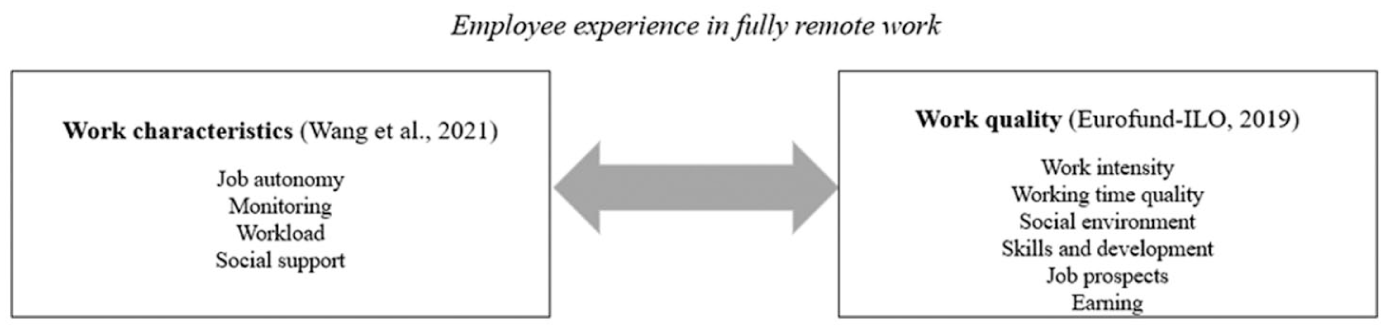
Conceptual model.
Work characteristics in (fully) remote work
During the 1970s and 1980s, work characteristics became the norm for describing and evaluating jobs. Hackman and Oldham (1976) proposed the Job Characteristics Model, suggesting that five core job characteristics influence personal and work outcomes through critical psychological states. Skill variety, task identity, and task significance promote the experience of the meaningfulness of work; autonomy makes the worker feel responsible for the outcomes of their work; feedback conveys knowledge about the actual outcomes of work activities; and all these together increase the worker’s internal work motivation, task performance, job satisfaction, and decrease absenteeism and turnover. Scholars have focused on applying the work characteristics model across different contexts, including the platform (Wood et al., 2025) and remote work, illustrating that these are context-specific. One recent attempt to investigate the latter, based on interviews with 39 full-time employees across industries, found that, in a remote work context (during the pandemic), job autonomy, monitoring, workload, and social support are the main work characteristics (Wang et al., 2021). In this study, we follow their classification to grasp the multi-dimensional nature of the work characteristics of fully remote work.
Job autonomy is traditionally defined as the freedom and discretion employees have to schedule their work, choose how to complete their tasks, and decide methods of execution (Burcharth et al., 2017). Some authors also conceive of autonomy as employees’ responsibility to determine how best to approach their tasks (Kim et al., 2009). In remote work, employees often manage their work location, timing, digital tools, and interaction rhythms independently, which has been shown to yield multiple positive outcomes. For example, a 2025 study found that remote employees who perceived high autonomy (and whose remote work hours matched their preferences) experienced stronger engagement and performance, whereas autonomy deficits hindered outcomes (George et al., 2025). Nevertheless, autonomy in remote work is not automatically beneficial. Research shows that autonomy interacts with other job features: a 2024 study found that working from home reduced negative work–life spillover only when employees had high autonomy; low autonomy attenuated the benefits of remote work (Baum and Rau, 2024).
Monitoring in remote work has only recently begun to receive systematic attention (Wang et al., 2020), and the emerging evidence is mixed. While Wang et al. (2021) found that monitoring can help employees reduce procrastination, more recent research suggests that active monitoring in fully remote arrangements may undermine engagement and diminish the perceived attractiveness of the job (Holt and Lang, 2025).
Workload is typically characterized as the requirement to work faster, respond more quickly, and complete various tasks and multiple projects at once (Ingusci et al., 2021). Recent research shows that workload in fully remote work often intensifies as employees face heightened expectations (Ingusci et al., 2021). Although findings remain mixed (Gifford, 2022), several studies confirm that digital connectivity and blurred boundaries contribute to greater perceived workload, especially when organizational support is weak. For instance, Baurai et al. (2025) found that remote workers reported significantly higher work intensity and role overload compared to pre-pandemic norms.
Social support is becoming increasingly important (Nurmi, 2016), especially as technology is changing the social and relational aspects of work (Wang et al., 2021). This characteristic satisfies basic needs for belonging, facilitates achievement of work goals, promotes motivational outcomes (such as engagement), reduces stress (Demerouti and Bakker, 2011), and improves overall employee health when colleagues and managers show social support (Parker, 2014). It has also been defined as helpful for relations between an individual and supervisors/coworkers (Mayo et al., 2012; McIlroy et al., 2025). Employees who report high virtual social support exhibit greater psychological safety and engagement (Stenling et al., 2026).
Work quality in (fully) remote work
Work quality is strongly linked to employee satisfaction and motivation, yet its definition remains contested. There is also growing recognition that it cannot be measured against a single characteristic, such as work security or wage levels, with each job comprising a complex culmination of negative and positive factors, which together determine work quality (Burgess and Connell, 2008; Myhill et al., 2021).
A joint Eurofound-ILO report (2019) called “Working conditions in a global perspective,” covering about 1.2 billion of the world’s workers, proposed seven dimensions of work quality, including physical environment, work intensity, working time quality, the social environment, skills and development, prospects, and earnings. For our study, we decided to adopt these empirically tested and validated categories to grasp EX in terms of work quality (see Figure 1). The adopted dimensions are briefly discussed below, except for the physical environment (which comprises posture-related risks, chemical and biological risks, and ambient risks), which are not relevant to our study.
Work intensity broadly refers to the amount of work a person does in a given period of time and can reveal employees’ perceptions of the level of work demands in the job (Eurofound and ILO, 2019). Recent research shows that digital connectivity and boundary blurring heighten perceived work demands and “always-on” pressures (Stenling et al., 2026). Remote employees were specifically reported to experience an accelerated work pace, more interruptions, and greater emotional strain compared to on-site counterparts, particularly when leadership fails to regulate workload expectations (Fostervold et al., 2024).
Working time quality has been studied and measured in the literature as both the duration of working hours and the predictability of the work schedule (Scholarios et al., 2017). This concept comprises the duration of working time, atypical working time (e.g. working at night or on the weekends), flexible working time arrangements (e.g. set by the company vs flextime), and flexibility (e.g. allowing to take an hour or two off during working hours to take care of personal or family matters; Eurofound and ILO, 2019). While flexibility is a hallmark benefit, empirical evidence indicates that many remote workers experience increased after-hours communication, unpredictable work schedules, and difficulty detaching from work (Tatar and Erdil, 2025).
Social environment – or including having a good social relationship with colleagues – is an important element of perceived work quality (Eurofound and ILO, 2019). It can affect motivation, absenteeism, and even resignations (Eurofound and ILO, 2019). Physical distance and reliance on technology-mediated communication reduce informal interactions, which can heighten isolation and lower work quality. Yet, evidence suggests that strong managerial communication and peer support can mitigate these effects (Stenling et al., 2026).
Skills and development concept is the extent to which a job enables workers to use their skills and to develop them further (Findlay et al., 2013). The concept includes cognitive dimension (i.e. learning new things and applying own ideas in work), decision latitude (i.e. the ability to choose, change order, speed, or method of the tasks), organizational participation (i.e. employees being consulted before objectives set, involved in improving work organization/processes, and having influence on important work decisions), and employee training (e.g. on-the-job training and provided by the employer; Eurofound and ILO, 2019). Remote employees benefit from asynchronous learning and global access to training resources, yet studies highlight disparities in participation and career progression for fully remote workers (Beier et al., 2025).
The work prospects concept refers to the opportunity to participate in personnel development programs, including skill training that facilitates career advancement (Mitlacher, 2008). It includes employment status, career prospects, job security (i.e. workers’ concern about losing their jobs), and downsizing. A 2025 longitudinal study found that employees perceiving low visibility in remote contexts reported weaker career prospects and higher turnover intentions (Stenling et al., 2026).
The last dimension is earnings. This element includes the employees’ perception of being paid appropriately, based, for example, on their efforts and/or achievements (Eurofound and ILO, 2019). While remote work can reduce commuting costs and expand employment access, recent evidence shows persistent pay disparities between remote and on-site workers, driven partly by differential performance evaluations and visibility biases (Pabilonia and Vernon, 2025).
Methods
Traditional EX studies have used survey-based methods to collect data, typically employing the Likert scale. However, exploring EX using employee-generated information, such as online employee reviews, has recently emerged as a method capable of mitigating self-selection bias and other biases associated with data collection from sample surveys (Joshi et al., 2024). Thus, such reviews were labeled as among the best possible qualitative instruments for understanding EX (Joshi et al., 2024).
Building on the evidence from these recent studies that use online employee reviews as a data source to explore EX, our qualitative study analyzes Glassdoor reviews from current and former employees of 13 companies. These companies were identified by Glassdoor as pioneers in offering fully remote work opportunities. We deliberately relied on this predefined list because it ensured that our sample aligned closely with our research focus on fully remote work. Thus, by focusing on companies publicly recognized for their remote-first practices, we were able to capture EX in organizations where remote work was not an ad hoc response to the pandemic but rather a core form of work organization.
Glassdoor was founded in 2007 and, in 2008, launched its company ratings website, which collects company reviews, career opportunities, and real salaries from employees of many companies (Schonfeld, 2008). The reviews are displayed anonymously for all members. As of today, the website has collected more than 180 million reviews, salaries, and insights (Glassdoor, 2024). The usefulness and quality of Glassdoor reviews have already been recognized by its users, who report using Glassdoor to learn more about companies (Widdicombe, 2018). Glassdoor has started being widely used also by scholars as an easily accessible and effective data source (Bergstrom, 2022; Di Lauro et al., 2023; Di Miceli da Silveira, 2022; Joshi et al., 2024). In particular, by evaluating the “pros” and “cons” of a company, current and former employees can offer unique perspectives on working there, as well as insights into broader trends, discourses, and themes (Bergstrom, 2022). For example, Chittiprolu et al. (2021) used Glassdoor reviews to extract meaningful insights into employee motivation and dissatisfaction. Bergstrom (2022) adopted a thematic analysis for analyzing Glassdoor reviews to understand longitudinally “behind the curtain” of a specific game industry.
Building on the previous studies using Glassdoor reviews, we also adopted a thematic analysis (Naeem et al., 2023) that offers significant flexibility regarding the type of research questions it can address, the type and volume of examined data, and theoretical framework(s) (Lester et al., 2020). Specifically, in this study we follow Lester et al. (2020) recommended phases for conducting a thematic analysis comprising: (1) Preparing and organizing the data for analysis; (2) Transcribing the data; (3) Becoming familiar with the data; (4) Memoing the data; (5) Coding the data; (6) Moving from codes to categories and from categories to themes; (7) Making the analytic process transparent. Specific actions taken at each phase are detailed below.
Preparing and organizing the data for analysis
Anonymized Glassdoor employees’ reviews were extracted on October 25, 2022, for 13 companies that offer only remote work opportunities. According to Glassdoor’s classification system, most of the analyzed companies (n = 7) belong to the “Internet and web services” industry. All other companies belong to a wide variety of sectors, including Photography (n = 1); Advertising and public relations (n = 1); Civic and social services (n = 1); Enterprise Software and Network Solutions (n = 1); Health Care Services and Hospitals (n = 1); and Banking and Lending (n = 1). Only one company (i.e. Company 3) could be considered a large company (between 1001 and 5000 employees); three companies have a size between 501 and 1000 employees; two companies between 201 and 500; four companies between 51 and 200 employees; and three companies between 1 and 50 employees (see Table 1).
Overview of the analyzed companies.
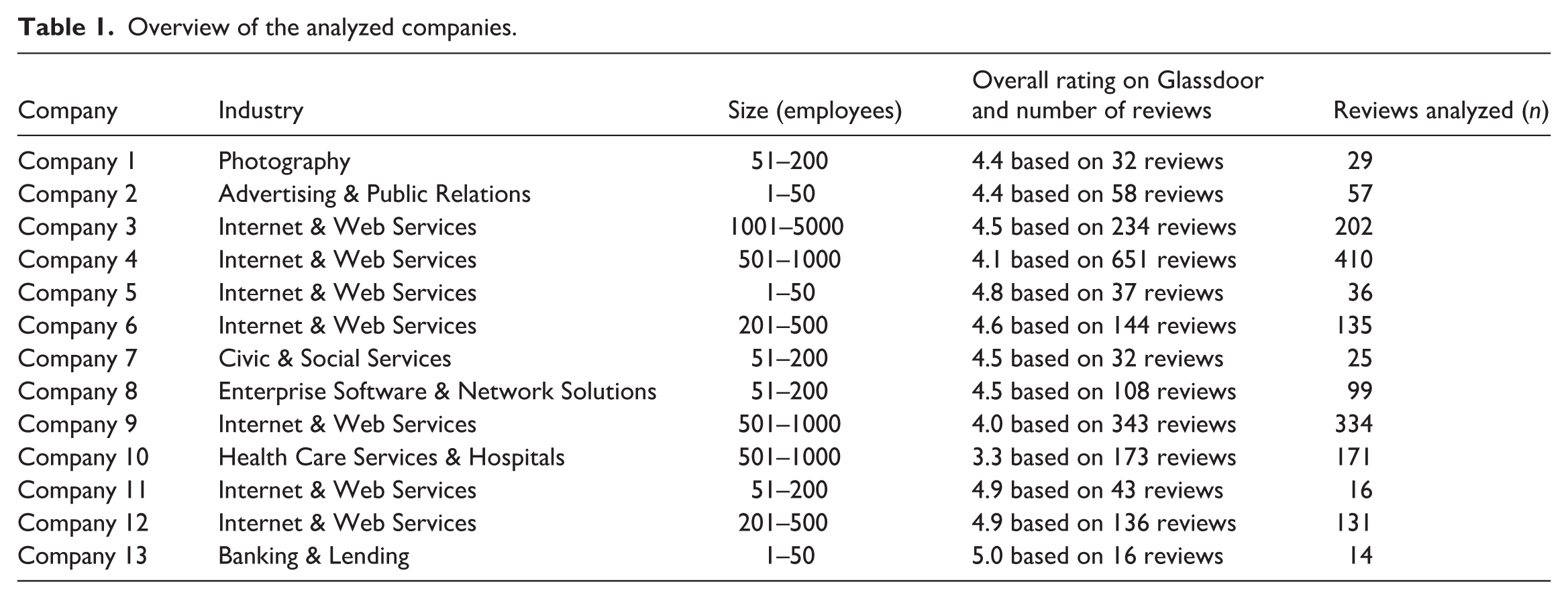
The number of analyzed reviews (n = 1659) slightly differs from the number of reviews presented on the relevant company websites, as some of the reviews were not available. The latter could belong to contractors, freelancers, or interns, who are filtered out by default if the company has 15 or more reviews from full-time or part-time employees (Glassdoor Help Center, 2022). Other reasons could be that the review authors do not have activated Glassdoor accounts or that another review for the same company was submitted in the same year. Glassdoor publishes only the most recent submissions and allows only one review per company per year (Glassdoor Help Center, 2022).
The following data were collected for each review: (1) Review title; (2) Review date; (3) Job position; (4) Employee status (i.e. former/current employee); (5) Job tenure; (6) Content posted in both pros and cons fields.
Transcribing the data
The extracted data have been first organized in an Excel file and then imported into the qualitative data analysis software package Atlas.ti (Lester et al., 2020).
Becoming familiar with the data and memoing the data
Here, two authors independently reviewed all the reviews to become familiar with the collected data and to get a sense of its potential connections with the adopted theoretical framework. This also helped capture new insights and identify potential biases that can affect data interpretation (Lester et al., 2020).
Coding the data and moving from codes to categories and from categories to themes
Data were coded in three distinct stages (Lester et al., 2020). First, one author assigned an (essentially descriptive) first-layer code to the entire dataset. Second, two authors returned to the assigned codes and added additional codes, reflecting more on concepts and/or ideas directly related to the focus of this research and connecting statements and reflections. Thirdly, the two authors completed the third stage of coding, explicitly linking data deductively to the dimensions/aspects of the adopted theoretical framework. During coding, it was noted that in some cases, work characteristics or work quality dimensions reported as pros by users may have actually been cons, and vice versa. Given that such swaps could be accidentally written by Glassdoor users, we recoded these reviews manually, assigning them to the correct category (i.e. pros or cons).
Although the original coding framework (see Figure 1) provided an initial structure for the data, the final inductive coding ensured that no important emerging themes were overlooked. For instance, two additional work characteristics – virtual team and task characteristics – surfaced through open coding. These inductively identified themes were then grouped into relevant categories, complementing and extending the original framework.
Making the analytic process transparent
To present information about the analytic process in a transparent and verifiable manner, we followed the recommendations of Lester et al. (2020). Thus, we first developed a conceptual map that informed our deductive coding (see Figure 1). Second, all the data sources and codes are stored in ATLAS.ti software, so easily retrievable if/when needed. Finally, for some codes we also reported coding frequencies (see Figures 2 and 3), which is helpful to understand how representative a specific theme is in relation to the full dataset.
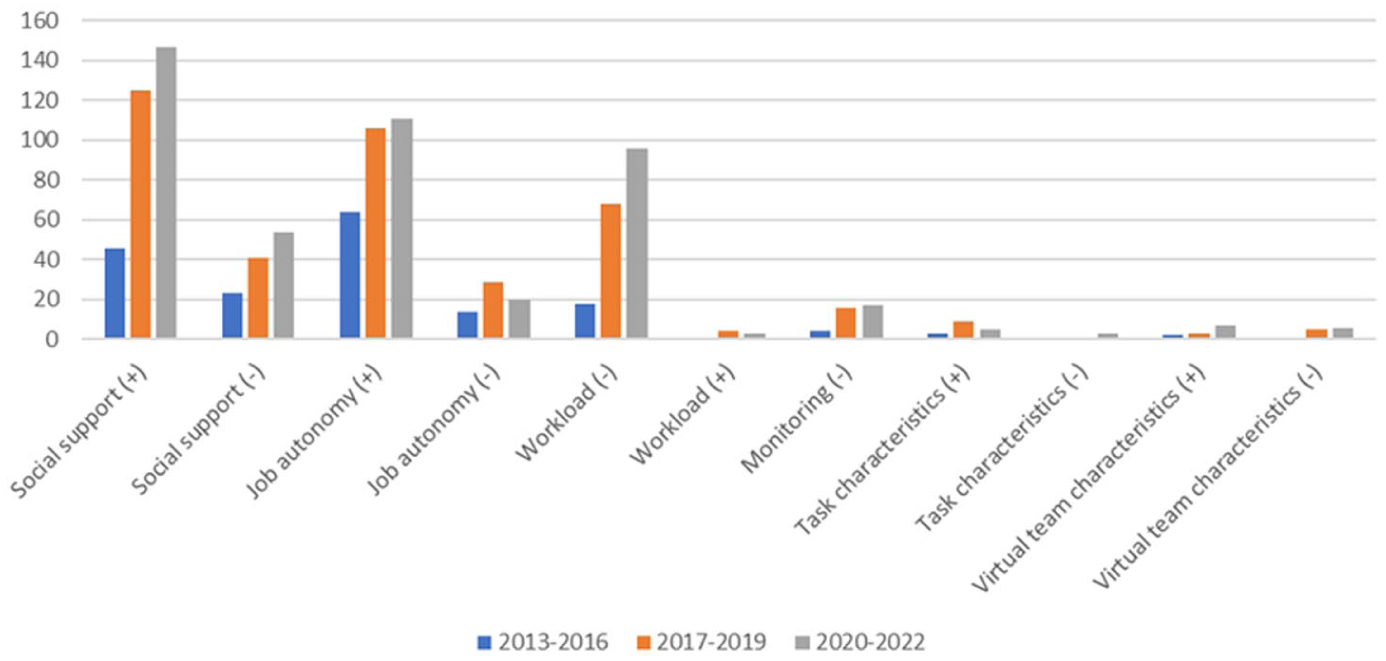
Perceptions of work characteristics.
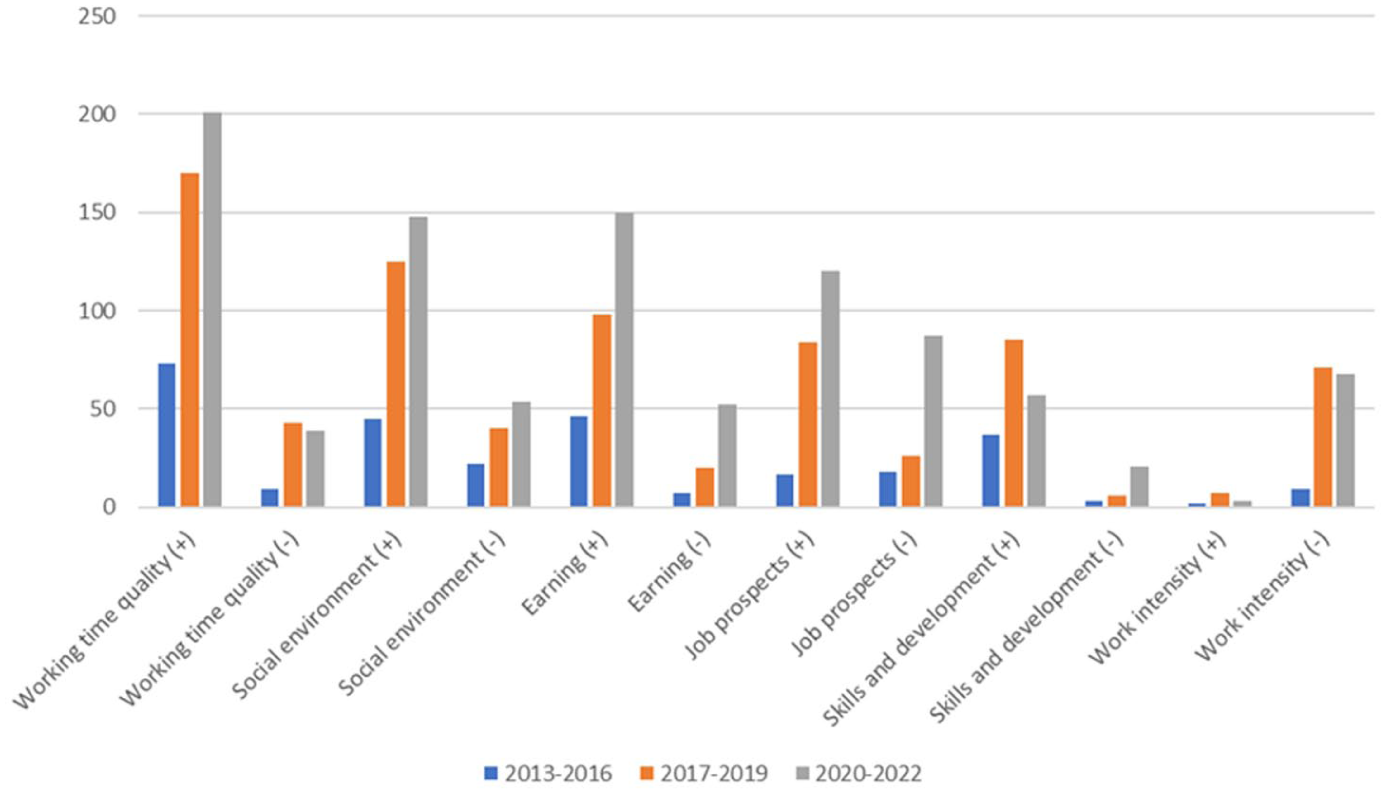
Perceptions of work quality.
Results
A total of 1659 Glassdoor reviews were posted between February 2013 and October 2022 (see Appendix 1). Most reviews were written by current employees (n = 1293). More than half of the reviews (n = 854) were written by employees with less than 3 years of tenure.
Employee experience of work characteristics and work quality over time
Our analysis revealed that all work characteristics (see Figure 2) and work quality (see Figure 3) categories were represented across the reviews. For the former, social support and job autonomy were most frequently described in positive terms, whereas workload and monitoring were most often framed negatively (see Figure 2). These patterns persisted over time, though their intensity varied across periods.
For the latter, the discussions across nearly all dimensions of work quality intensified over time, signaling the increasing complexity of employees’ perceptions of fully remote work.
Working time quality, the social environment, and earnings were predominantly described in positive terms, whereas job prospects and opportunities for skills development were more frequently portrayed negatively. Notably, perceptions of work intensity rose sharply between 2017 and 2019 and have remained consistently high since then.
In what follows, we discuss in detail the work characteristics and work quality dimensions most prominent in the data, along with their interactions.
Employee experience in fully remote work: Interplay between work characteristics and work quality
Social support and social environment
The analysis revealed social support as a central determinant of perceived work quality. Strong social support contributed to a positive social environment, whereas poor or absent support was closely associated with negative perceptions of it. Overall, the fully remote work environment was described as supportive and fun, with strong collaboration between colleagues and departments, resulting in strong friendships, even though they had never met in person.
Everyone is incredibly friendly, helpful, and ready to pitch in. True story: when one employee’s house burned down, the team raised tens of thousands of dollars in a matter of hours to help the employee’s family (Anonymous employee, 2017).
The data also highlighted the importance of team building, cross-functional collaboration, and open, flat, and continuous communication, and how these can be facilitated by structured onboarding and digital tools such as Zoom. Occasional in-person retreats and community events were also described as essential for maintaining cohesion, reinforcing shared identity, and mitigating the effects of physical distance.
The role of leadership and management support was identified as necessary in perceiving social support as positive (Our management is never too busy to support us - Marketing coordinator, 2017) in terms of inclusion, trust, and personal development, and negative when absent (No manager to assist you or train - (Customer Service Representative, 2021).
Together, these factors were found to reproduce, or even surpass, the sense of collegiality typically associated with in-person workplaces. However, not all experiences were uniformly positive. A second group of narratives underscored how challenges to social relations can erode the social environment dimension of work quality. Lack of in-person team meetings and time-zone differences were identified as major obstacles to sustained interaction and trust. Some participants reported a gradual decline in social skills, sense of belonging, and professional etiquette (“loss of dress sense”) in prolonged remote contexts. Feelings of isolation were common, particularly among those lacking proactive engagement or established networks outside of work. Some noted that such work arrangements require deliberate social adjustment and are not universally suitable.
Adjusting to remote work can be a challenge; it will require you to question and readjust your previously established work and social habits (Marketing Designer, 2018).
Job autonomy, and working time quality and skills development
Job autonomy also emerged as a central work characteristic, contributing mainly positively to how employees experience and evaluate the quality of their working time. For instance, job autonomy enabled employees to integrate professional and personal responsibilities and was linked to employees’ positive perceptions of work–life balance.
[. . .] I have never been happier in a job! I have lots of autonomy regarding how I execute my tasks (Engineering Recruiter, 2017).
The reported availability of unlimited vacation and sick leave policies further reinforced these perceptions by signaling organizational trust and a commitment to employee autonomy. Together, these practices fostered a climate of freedom with responsibility, where employees were empowered to self-manage their time while remaining accountable for outcomes. Indeed, fully remote work was frequently portrayed as results-driven, built on trust, accountability, and individual ownership, rather than on rigid 9-to-5 schedules, micromanagement, or close supervisory control.
[. . .] we really trust in everyone to be self-sufficient. You will learn how to rely on yourself, your abilities, and your own convictions, rather than trying to do what everyone else is doing. Don’t expect a rigid set of rules for you to “win” the game–you are here to write the rules of the game! (Account Executive, 2017).
The ability to learn new things and apply one’s own ideas at work was mentioned as possible, given employees’ control over their work environment and schedule. Thus, the major job autonomy provided them with the time and space needed to focus on learning and development activities, such as participating in professional development programs or collaborating.
There are plenty of opportunities to pursue learning through conferences, online courses, and/or books (Happiness Engineer Team Lead, 2018)
Workload, and work intensity and working time quality
Job workload emerged as an important work characteristic negatively shaping perceptions of fully remote work quality, primarily through its impact on the work intensity and working time quality. The data revealed that employees frequently described their environments as characterized by unrealistic workloads and expectations, where constant availability and a “24/7” work mentality were implicitly encouraged or required. The lack of clear temporal boundaries led some employees to work after hours or on the weekends. This intensified pace was often accompanied by signs of burnout, and self-discipline was cited as a strategy for maintaining personal well-being.
However, some also noted that although being constantly reachable online can feel “overwhelming,” it can also happen in the office when someone passes by your desk every 5 minutes. The pressures of rapid organizational growth, frequent change, early- and late-night meetings, and the need to serve clients across multiple time zones further exacerbated perceptions of workload intensity.
We are a busy agency, so there is a lot of work and not always a lot of time. Things change quickly, and we adapt accordingly, which can be stressful when there are last-minute adjustments/ we are up against deadlines (Senior Marketing Manager, 2017).
However, many experienced a “fast-paced” or “constantly growing” workload as an opportunity for learning and personal development, which can increase their job prospects.
Monitoring and work intensity
Monitoring was frequently discussed in the context of micromanagement by managers and perceived as increasing work intensity. Some mentioned that management used “tests” to monitor them, while one employee specifically mentioned a system that can track all their activities.
Prepare to be on Slack 7 days a week at all hours. No kidding. If you don’t respond on a Sunday at 5pm you will be reprimanded. A lot of “testing” to see if people are working. No trust in the team they built (Anonymous employee, 2018).
Virtual team characteristics, and earning and working time quality
Many people reported that their work involved working virtually in high-caliber teams with members from all over the world and from diverse cultural backgrounds.
Working with team members located all over the world is an awesome learning experience and promotes a global perspective in everyday life (Anonymous employee, 2016).
Although most considered this an advantage, offering a global perspective and contributing to their development through safe-to-learn environments, some said organizations were doing it not to increase diversity but to reduce costs by hiring people from developing countries, for which the companies’ salaries were considered high (Good pay for developing countries - Software developer, 2021). However, it was mentioned that companies were not taking into account the international values of virtual teams, and that the central office’s organizational values were enforced on all teams.
They will force American cultural values and disregard the diversity of the company from all over the world (Anonymous employee, 2018).
It was also mentioned that formal documents, such as legal documents, were not adopted for the needs of all team members. Thus, some had difficulty justifying their incomes from abroad under the employment contracts they had. Finally, although virtual teams and their diversity were mainly seen as an advantage, some said that this diversity made them perceive the work quality negatively, due to slowed down coordination across people working in different time zones.
100% remote across 4 time zones can sometimes make collaboration slower than if there were a single time zone or shared office (Client Success, 2021).
Some reported that, although stimulating, working in a global and competent team can negatively affect work quality because the expectation to maintain the same high level created continuous pressure.
Constant pressure to learn more because everyone is so smart, hard to set work-life boundaries cause there is always something going on online (Anonymous Employee, 2020)
Task characteristics, skills and development, and work intensity
Fully remote workers reported having the opportunity to work on a variety of projects for different clients and with various technologies, as well as the ability to choose between jobs or change them. Some associated this positively with the learning of new skills.
You will work on a ton of different projects, which keep things interesting and always learning (Anonymous employee, 2018).
Employees were also positive when the company updated them about their contributions and the impact of their individual roles/tasks.
They also all share all of the company performance in calls every week, which is nice, and you don’t feel like you are just a cog, and not knowing how things are actually going (Anonymous Employee, 2019).
However, some employees have also experienced role ambiguity, including uncertainty or lack of clarity about their roles and responsibilities within an organization, as well as situations in which they were placed with conflicting expectations or demands from supervisors, colleagues, or clients.
Roles are not defined, so your responsibilities change almost daily, many times not finding out it was “your responsibility” until there’s a problem” (Core Team Member, 2021).
Earning
Earning emerged as a crucial work quality dimension. However, positive perceptions of this were mainly shaped by the specifics of the full remote working environments. For example, the lack of commuting costs was highly valued, as was the availability of reimbursement for expenses related to working remotely (e.g. home office budget, phone, internet). The employees of one company expressed appreciation for a free coffee card or gym membership, which was perceived not only as a benefit but also as a way to encourage them to take breaks and leave their homes.
Sometimes it is hard (especially in the winter) to feel like you can get outside your house and see some sunlight. The Cafe Card (coffee card) and gym membership helps though (Anonymous employee, 2018).
An exception to these generally positive perceptions arose when workload increased without corresponding compensation; in such cases, the lack of overtime pay contributed to negative evaluations of this work quality dimension.
Discussion
This study explored the EX in fully remote work by examining how work characteristics and work quality are perceived and expressed in 1659 Glassdoor reviews from 13 fully remote organizations across nearly a decade. By combining work characteristics and work quality frameworks and incorporating inductively identified categories, the study extends EX research by demonstrating how EX in fully remote work emerges from the dynamic interaction between work characteristics and employees’ evaluations of work quality (George et al., 2025). The results reveal a multidimensional picture that includes both benefits and challenges, highlighting the importance of considering (fully) remote work as a complex and dynamic work arrangement rather than a homogeneous or universally favorable one (see Figure 4).
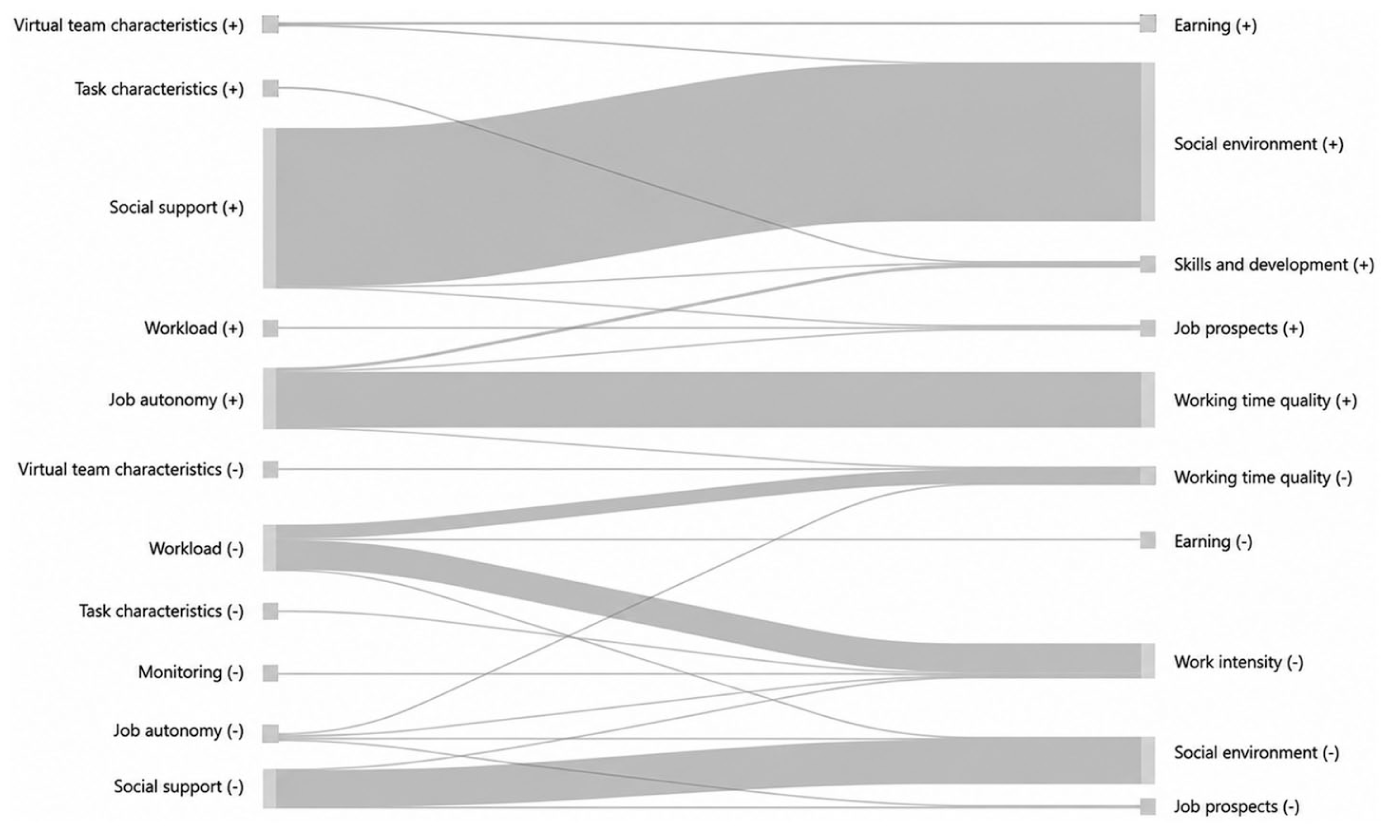
The interplay between work characteristics and work quality in fully remote work.
Our primary finding is that established work characteristics remain central to shaping EX even in a fully remote context (Bullini Orlandi et al., 2024). However, there is variation in how fully remote employees perceived their relevance, prioritized their importance, and evaluated their implications for work quality (over time). In addition, two further work characteristics emerged inductively from the data – virtual team characteristics and task characteristics–highlighting dimensions that are relevant in fully remote settings. These are only partially captured by existing work design frameworks (Froese et al., 2025). Fully remote work makes employees more dependent on virtual team functioning (e.g. clarity of communication and responsiveness) and on task identity and structure (e.g. clarity and interdependencies). By identifying these remote-specific characteristics, the study extends traditional work design frameworks and responds to recent calls for more integrative perspectives on global virtual work that that capture the complex interplay between people, technology, context, and time (Blay et al., 2026; Froese et al., 2025). Furthermore, it contributes to addressing the fragmentation of existing research by offering empirically grounded insights into how these dimensions jointly shape EX in remote work settings (Blay et al., 2026). Our results also show that employees’ perceptions of work characteristics shaped their evaluations of work quality. Fully remote work seems to intensify this interplay because digital work settings blur work–life boundaries and amplify both flexibility and strain. For example, autonomy may be experienced positively as flexibility but negatively when it is accompanied by expectations of constant responsiveness or increased self-management demands. Similarly, collaboration with highly capable virtual colleagues may foster learning and stimulation while also increasing pressure and coordination demands. Thus, remote work introduces new mechanisms that can act as both job demands and resources (Peiró et al., 2024), shaping how employees experience work characteristics and work quality.
Our findings also indicate that “positive” work characteristics are not uniformly beneficial. Prior studies of remote work often assume largely linear relationships, for example, that greater autonomy consistently improves work outcomes (George et al., 2025). Our findings instead suggest that positive characteristics can undermine certain dimensions of work quality when they intensify expectations, pressure, or workload. For example, stimulating work environments may enhance engagement while simultaneously reducing the quality of working time by increasing expectations of availability or performance. These tensions illustrate how remote work can generate paradoxical experiences in which work characteristics typically associated with positive employee outcomes also create new strains.
This phenomenon has already been noted in a growing body of research highlighting the paradoxical dynamics of remote work (Peiró et al., 2024). Thus, rather than assuming linear effects, fully remote work should be understood as a demand–resource configuration characterized by tensions between autonomy and clarity, flexibility and workload, and stimulation and pressure. This perspective also aligns with recent work on the autonomy–control paradox, which shows that digital technologies simultaneously expand discretion over work organization while enabling new forms of monitoring and coordination (Fritsch et al., 2025).
These highlight the importance of heterogeneity in how work characteristics are experienced. The impact of positive work characteristics may depend not only on their presence but, aligned with the contingency view (Burton et al., 2021), also on how they interact with individual differences, task requirements, and organizational context. Employees vary in their preferences for autonomy and guidance, their family demands, social needs, and capacity for self-regulation (Parker et al., 2017). Likewise, task characteristics such as complexity, role clarity, and interdependence can shape whether autonomy or collaboration can be experienced as empowering or demanding (Reiche, 2023). Organizational context, such as trust, supportive leadership, and transparent communication, may further influence whether remote work characteristics function primarily as resources or as demands (Keeler et al., 2024). Thus, our findings reinforce the importance of considering the interaction between individual, task, and organizational factors also in (fully remote) work design.
Finally, our results align with recent literature emphasizing the multidimensional nature of EX and the importance of relational dynamics in distributed work. Prior research highlights how virtual collaboration, communication practices, and digital coordination mechanisms shape employee outcomes in global virtual teams (Froese et al., 2025). Our findings extend this perspective by demonstrating how these relational dynamics interact with traditional work characteristics to shape employees’ evaluations of work quality in fully remote organizations.
Limitations
However, like any study, our research also has some limitations. We analyzed EX by relying on work characteristics (Wang et al., 2021) and work quality using specific frameworks (Eurofound and ILO, 2019). Future studies may draw on other EX frameworks (e.g. Humphrey et al., 2007) to enrich and triangulate our findings. Our study could be subject to self-selection bias, as Glassdoor reviews reflect only the perceptions of employees who voluntarily share their views online and may not capture the perspectives of the broader workforce. To address this limitation, we analyzed a large sample of reviews across multiple organizations and over time. Future research could build on our study by triangulating these insights with evidence from a broader range of fully remote organizations and by incorporating complementary data sources – such as employee surveys, interviews, or organizational records–to capture a wider and more nuanced spectrum of remote work practices and EX. This study also uses secondary online employee review data. Since such data are self-generated, these reviews are discretionary in nature. At times, employees may be inclined to offer overly positive or overly negative feedback. However, the impact of the discretionary nature of reviews has been noted as less in qualitative studies (Joshi et al., 2024). Finally, an additional limitation may relate to the composition of the review sample. Most reviews were posted by current employees, and over half were written by employees with less than 3 years of tenure. This may skew the data toward early-stage EX of work characteristics and work quality, while longer-term dynamics may be underrepresented. In addition, current employees may be more cautious about what they disclose than former employees, potentially leading to differences in how workplace issues are reported. Future research could address this limitation by comparing EX across tenure stages and employment status to better understand how perceptions of fully remote work evolve over time. Future research is encouraged to also explore the spectrum of sentiments and emotions linked with various EX factors and to examine how their relative significance and sentiments evolve.
Theoretical contributions
Despite these limitations, we believe that our results have meaningful implications for both theoretical development and practical application. In line with Klein and Potosky’s (2019) typology of HRM research contributions, our study makes three notable contributions. First, we expand the current understanding of EX of fully remote work by generating unique insights into its characteristics and their associated outcomes (i.e. framework). This includes extending the generic work characteristics model by integrating dimensions specific to fully remote contexts and illustrating how these attributes map onto and interact with work quality elements. This leads to our second contribution: the development of a Sankey diagram that visualizes the positive and negative relationships between the EX constructs we relied on (i.e. model). Third, we extend the reach of an established work-design framework by applying it to a novel HRM phenomenon – voluntary fully remote work arrangements – thereby advancing theoretical understanding and offering a structured lens through which to explain EX in this emerging work configuration (i.e. new theory). Although some previous research has examined work characteristics of remote work during the Covid-19 pandemic, the overall EX in non-crisis situations, which has been the focus of this study, has not been explored (Joshi et al., 2024). In addition, from a methodological perspective, this study enriches existing EX research – typically based on quantitative surveys or interviews – by drawing on a large sample of employee-generated reviews. In doing so, it responds directly to calls for more comprehensive research methodologies to deepen insights into EX (Batat, 2022), and that overall can allow for grasping less obvious, indirect effects of digitalization (Orlikowski and Scott, 2023), which in this case study is fully remote work enabled by digital technologies. Finally, we propose an alternative approach for organizations to understand EX by conceptualizing it as an interplay between work characteristics and work quality dimensions.
Practical contributions
This study offers several practical implications for HR practitioners and organizational leaders designing and managing fully remote work arrangements. Our findings suggest that EX in fully remote organizations is shaped by the interaction between work characteristics and different dimensions of work quality. Understanding this relationship can help organizations design context-specific (Laiho et al., 2022) fully remote work systems that enhance, rather than undermine, employee productivity, satisfaction, and well-being.
First, organizations should design employee autonomy with clear coordination structures (Lamovšek et al., 2025). While autonomy and flexibility are central to fully remote work and often valued by employees, our findings indicate that these characteristics can also heighten expectations of constant responsiveness and increase demands for self-management. To ensure that autonomy remains a resource rather than a source of strain, organizations should complement fully remote work arrangements with clearly defined roles, communication norms, defined response expectations, and transparent coordination mechanisms. Such structures can help employees manage boundaries and workload more effectively while maintaining the benefits of autonomy.
Second, organizations should institutionalize social support and a sense of belonging in remote environments. The findings highlight the importance of interpersonal relationships and team dynamics for shaping EX in fully remote settings. Because physical proximity is absent, organizations cannot rely on informal office interactions to build connections. Instead, they should implement structured practices such as (remote) onboarding and training programs, mentorship systems, regular team check-ins, and opportunities for informal digital interaction. Investing in cross-cultural awareness and digital collaboration capabilities fairly (e.g. across time zones) can also help globally distributed teams navigate cultural differences and improve communication and collaboration (Froese et al., 2025).
Third, organizations should improve transparency around career development, visibility, and recognition in fully remote settings. In traditional office environments, employees often gain visibility through informal interactions and direct observation of their work, whereas such mechanisms are largely absent in fully remote organizations. To address this challenge, organizations should formalize career development processes by clearly defining promotion criteria, establishing competency frameworks, and implementing transparent performance evaluation systems. In addition, managers should deliberately create opportunities to recognize employee contributions through structured feedback, regular development discussions, and digital recognition practices that make achievements visible across distributed teams.
Fourth, organizations could consider EX from digital feedback channels. The analysis demonstrates the value of online employee reviews as a real-time source of insight into employees’ perceptions of work characteristics and work quality. HR leaders can use these platforms as an additional feedback mechanism to identify emerging concerns, monitor employee sentiment during organizational changes, and evaluate the impact of new policies. For instance, organizations may pilot new remote work practices, track employee reactions through publicly available review platforms, and iteratively adjust their policies based on these insights.
Finally, the findings offer insights into how individual employees can navigate fully remote work arrangements. Employees may benefit from proactively shaping their work environment through job crafting behaviors, such as structuring their schedules to manage boundaries, seeking social connections within distributed teams, and leveraging the autonomy associated with remote work to develop new skills and expand career opportunities (Birman et al., 2024). By actively engaging with the opportunities and challenges of fully remote work, employees can better align their work conditions with their personal preferences and professional goals.
Footnotes
Appendix

Ethical considerations
As the identities of both the reviewers and the companies are not disclosed, and the reviews are analyzed in an anonymous form, ethical approval was not required.
Funding
The authors received no financial support for the research, authorship, and/or publication of this article.
Declaration of conflicting interests
The authors declared no potential conflicts of interest with respect to the research, authorship, and/or publication of this article.
Data availability statement
The data supporting this study’s findings are available from the corresponding author upon reasonable request.*