







Abstract
Human capital investment is important for reduction in poverty. This paper – based on human capital theory, taking rural households in the Wuling Mountain Region as the samples, and adopting binary logistic regression – investigates the influences that education has on poverty alleviation in rural China. The results show that educational attainment plays a crucial role in poverty alleviation. For instance, 65.65% of illiterate or just literate people make less than 2300 yuan a year, while 48.76% of those with a primary education earn money at the same level. With a greater educational level, only 34.17% are at the poverty level. The results of logistic regression further support the argument. Our research suggests that policy-makers in China’s anti-poverty action should allocate more educational resources to the poor rural areas in order to further alleviate poverty in rural China.
Introduction
Since the beginning of the market economy, poverty has always been an important social issue that threatens human survival and development (Xie & Ding, 2015), and fighting poverty has become an important issue all over the world. In China, large-scale and systematic anti-poverty work began in 1978 (Xiang, 2011). Thus far it has experienced four stages: institutional-led poverty reduction, development-oriented poverty reduction, regional-targeting poverty reduction and people-targeting poverty reduction (Shen, 2017). During nearly four decades, anti-poverty actions in China have achieved huge success. These actions include peasant household project (整村推进), rain plans (雨露计划), industrialization model, contiguous region development pattern (连片地区开发), and immigrant moving pattern (Li, 2012). Achievement of China’s poverty alleviation has received worldwide praise and earned prizes from global organizations including the United Nations Development Program (UNDP) (Wang, 2013).
Reviewing the course of Chinese poverty-reduction history, the Communist Party of China and national leaders always attach great importance to education. President Xi once specified that “pro-poor action should firstly enhance poor people’s intelligence”; “relieving poverty and getting rich should focus more on education”; “by receiving education, the next generations could grasp more knowledge and skills, which is the essential poverty alleviation tactics” (Xi, 2015). Therefore, based on human capital theory, discussing the roles that education plays in poverty alleviation and analyzing the possible anti-poverty strategies are appropriate and significant. It could accelerate the process to bring the “last group of people” out of poverty, narrow the income gap between rural and urban areas, relieve class conflicts, and promote the achievement of a prosperous society in 2020.
Literature review
Human capital theory stems from Europe. Its origins can be traced back to the period of the First Industrial Revolution. In 1776, classical political economist Adam Smith put forward the idea of human capital in a book entitled The Wealth of Nations. Contemporary human capital theory started from the Second World War. To explain the “puzzles of economic growth” (Shan & Shen, 2007), Schultz made the famous speech “Human Capital Investment” at the American Economic Association, which marked the establishment of contemporary human capital theory. Then, with the contributions of Becker and Mincer, human capital theory expanded from the macroscopic scale to the micro-scopic and gradually evolved into a systematic theory (Becker, 1987; Mincer, 2001).
Human capital theory holds that the prevalence of poverty in developing countries lies in their scarce chance to invest in human capital. Therefore, the key to improving poor people’s benefits is to improve their quality of life rather than space, fuel, or land. By investing in and storing human capital, the labor productivity could improve greatly, and people could get better occupations or higher positions (Schultz, 1990). Therefore, education plays a crucial role in poverty reduction.
Behrman (1990) also held that investments in human resources in the form of education were considered critical elements of efforts to alleviate poverty. And inadequacies in human resources were often thought to be manifestations of poverty. Kurosaki and Khan (2001) used household survey data in 1999/2000 in the North-West Frontier Province, Pakistan, to examine the dynamics of poverty. The result showed that education played an important role in overcoming the symptoms of poverty through expanded opportunities of non-farm employment. The provision of primary education could reduce the cost of income risk. Lopez and Valdes (2000) synthesized six new case studies of rural poverty in Latin America and found that the net impact of education on total rural household income was significant (one additional year of education on total annual per capita income ranged from $3.70 to $62.00) and it could be used as an instrument to break the cycle of rural poverty. Tilak (2006) used the secondary data in India and found that post-elementary education made a significant contribution to reduction in absolute as well as relative poverty. He suggested that more attention should be paid to the development of sound and comprehensive education policies. The research from the World Bank also indicated that education was an instrument of poverty alleviation. For example, the Millennium Development Goals of the United Nations that aimed at poverty alleviation, recommended by the World Bank, referred only to education (World Bank, 1999, 2004).
The impact of education on income is also justified by some empirical studies in China. Liu and Zhang (2007) utilized rural household survey data investigated from 2000 to 2004 in Shanghai to analyze the relationship between education and rural poverty. The result showed that education was statistically significant in poverty alleviation, and the investment in education could lower the odds ratio to fall into the poverty trap. Yang et al. (2010) studied the effect of education on poverty based on data gathered in 2005 and 2008 in Xiji-Haiyuan-Guyuan region. It indicated that low educational level was a major obstacle for rural poor families’ poverty reduction. Guo and Rong (2011) utilized the time series data from 1995 to 2007, and Jiang and Han (2009) utilized the panel data from 2000 to 2007 to explore how education affected poverty. Their research showed that education had a significant effect on poverty eradication. Especially the investment in compulsory education could dramatically reduce the incidence of poverty. Que and Tang (2009) used questionnaires gathered in Zigui, Hubei province, in 2008 to examine how education affected rural people’s income. The results also showed that the improvement of educational level can effectively reduce the probability of households falling into poverty.
In summary, the research about the role of education in poverty alleviation is rich. However, the data that most relevant empirical studies in China used were gathered in the last decade, while poverty in the current situation is different from the previous period. With the reduction of the number of people in poverty, those still remaining in poverty are in an extreme situation. Therefore, it is meaningful to further explore how poverty is influenced by education. Furthermore, currently those people who are extremely poor are gathered in contiguous poor regions (Xing & Ge, 2013). Wuling Mountain Region, as one of the 14 contiguous poor regions in China, has certain unique features. It is a combination of an old revolutionary area, an ethnic region and a poor region, and regarded as a poverty alleviation pilot region by the State Council. Therefore, taking this region as an example and doing research about the role of education in combating poverty has some reference significance to other regions. Lastly, during our investigation, we found that lower income was experienced mainly by poor people who were less educated and who relied heavily on welfare. For example, some village cadres told us that “most poor people believe ‘even if we struggle to work, we can’t shake off poverty’, ‘anything that our country gives is what I want, anything that our country gives is what I struggle to get’; they have no other life plans, as long as life can continue; they are not ashamed of poverty, but proud of that”. And these officials held that the improvement of their educational level would enable people to possess a more open mind and positive attitude. If they can learn some employment skills, they can break the cycle of poverty. Given the considerations above, it is of great significance to do research about this aspect of poverty alleviation.
Data, variables, and model
Data source
The sampling data comes from the questionnaires of the National Social Science Key Project “A Study on Poverty Alleviation and Development Mode of Growth Inclusive in Contiguous Poor Regions of China”. This project chose one of the Chinese contiguous impoverished regions – Wuling Mountain Region – to gather data from July to August in 2012 by multi-stage sampling method (city-county-village). The investigators conducted the survey on a one-to-one basis, and respondents answered the questions accompanied by the supervisor. The survey sent out 689 questionnaires and collected 610 valid questionnaires. The effective rate was 88.53%, which meets the basic requirement.
Description of Wuling Mountain Region
The Wulingshan Mountain Region, located in central and west China, includes 71 counties (cities, districts) and covers the border areas of the provinces of Hunan, Hubei, Guizhou, and Chongqing City with a total area of 171,800 square kilometers. It is one of 14 contiguous impoverished regions, as well as the regional anti-poverty pilot region. For a long time restricted by geographic location and natural environment, economic growth in this region was slow. By the end of 2014, the number of permanent residents in this area was 30.8 million, and the rural population was about 19.72 million, accounting for 64% of the entire population. The urbanization rate was about 36%, 18.77% less than the average national urbanization rate in the same period. Rural per capita net income was 6120 yuan, compared to a national average of 9892 yuan (You, Leng, & Ding, 2015). In terms of education, in 2010, the average years of schooling among people above six years old in this region was 7.962, less than the national level (8.750) (He & Cheng, 2016).
Variables
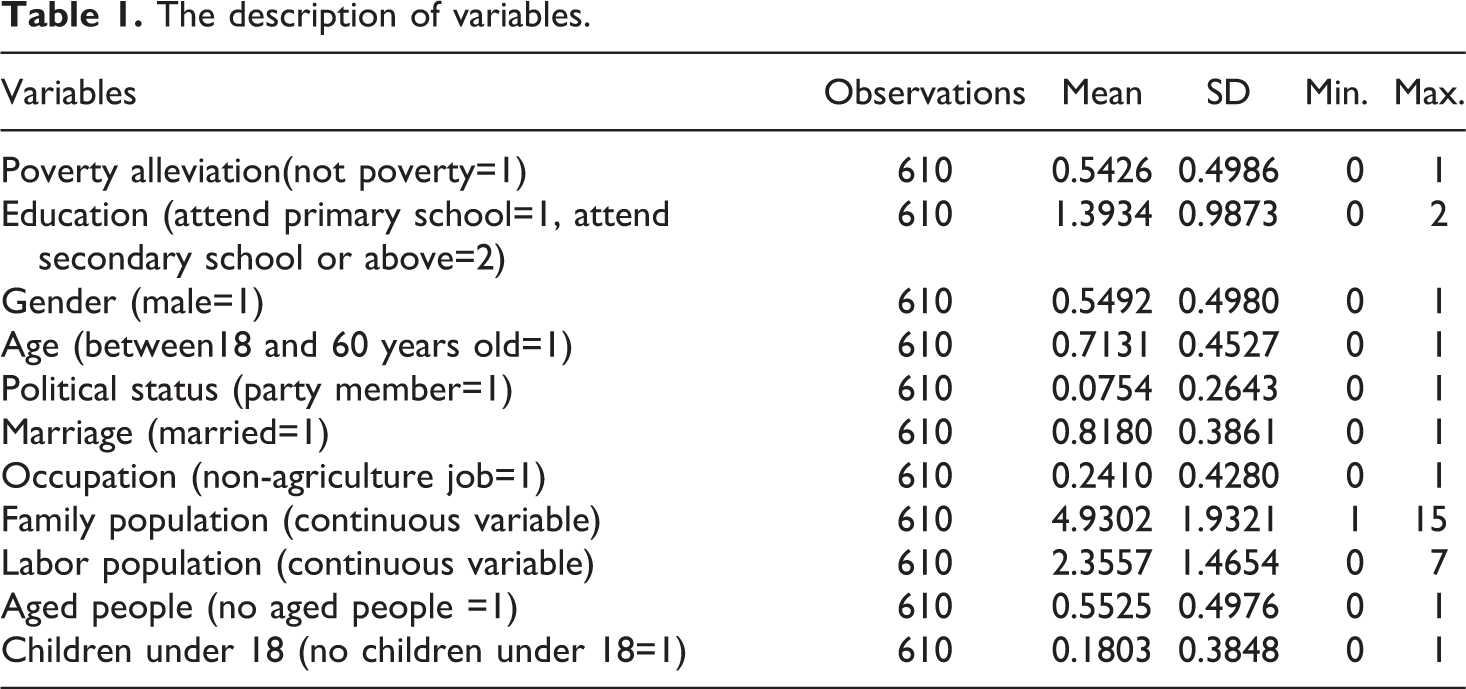
Human capital theory holds that education is the core element affecting poverty. Based on that, this paper uses educational attainment as the key independent variable to discuss its influence on poverty alleviation (see Table 1).
The description of variables.
Dependent variable
The research takes poverty as the dependent variable. In 2011, the Party decided to use 2300 yuan per capita as the poverty line at the central government poverty alleviation meeting. The survey investigated the per-capita income, and the research recoded it into a binary variable: those who earned more than 2300 a year were recoded as 1, those who did not were recoded as 0.
Independent variables
The core independent variable in this research is the educational level. The questionnaire surveyeds the educational attainment of the rural population. The research recoded it into a multiple dummy variable. The uneducated or undereducated population were encoded as 0; those who attended primary school were encoded as 1; those who attended junior middle school or more were encoded as 2.
Control variables
The effect of education on poverty is also influenced by both individual factors and family factors. This research takes those factors into account as control variables. From the individual aspect, it includes gender (male=1, female=0), age (between 18 and 60=1, others=0), political status (party member=1, others=0), marriage status (married=1, others=0), and occupation (non-agriculture employment=1, others=0). From the family aspect, it includes family population (continuous variable), labor population (continuous variable), and the existence of aged people (no aged people=1, others=0) and children (no children under 18=1, others=0).
Description of statistical analysis
Through a preliminary analysis of the sampling data we know that, among all samples, people in poverty account for 45.74% and people who earn more than 2300 a year constitute 54.26%. What about the poverty rate of the rural population at a different educational level? After analysis, we found that among those in the rural population who were uneducated or undereducated, 65.65% earn less than 2300 yuan year, while this figure declines to 48.76% for those receiving primary school education. For those rural individuals attending secondary school or above, the probability of falling into poverty decreases to 34.17%. After having an understanding of the basic situation, we further analyze the effect of education on poverty reduction by logistic regression model.
Model
As the independent variable is a dummy variable, this research chooses the binary logistic regression model to analyze (Pampel, 2014). The basic principle of this model is to build the linear relationship between independent and logit dependent. It can be represented as follows:
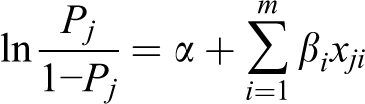
denotes the event occurrence probability;
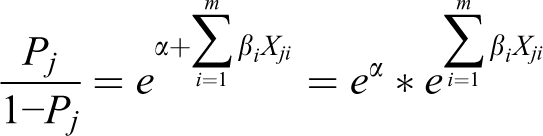
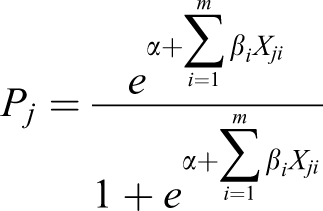
The above formula can be transformed to a linear representation between probability function and dependent variables.
Analysis of the binary logistics regression model
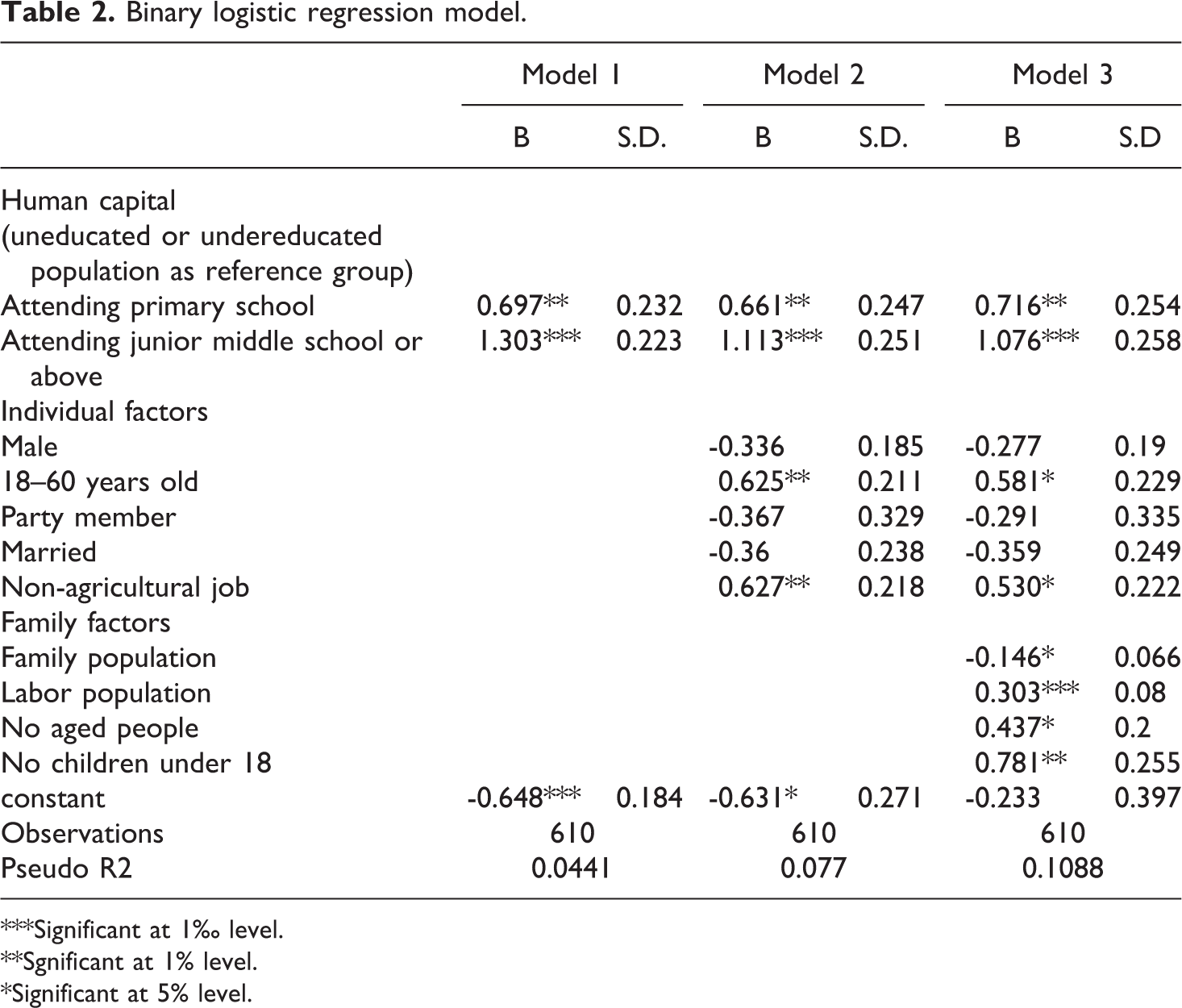
To explore the influence of educational attainment on poverty alleviation, this research builds three binary logistic regression models by software Stata 12.0. Model 1 only contains the core independent variable to explore its impact on the dependent variable. Model 2 adds individual factors on the basis of Model 1, and Model 3 adds family factors on the basis of Model 2. The result is shown in Table 2.
Binary logistic regression model.
***Significant at 1‰ level.
**Sgnificant at 1% level.
*Significant at 5% level.
As shown in Table 2, in Model 1, pseudo R square, which represents explanatory power, is 4.41%. After adding individual factors, pseudo R square of Model 2 increases greatly. After adding all the variables, the value in Model 3 is highest, so Model 3 fits best.
The impact of educational attainment on poverty
From the models, we can see that educational attainment has a positive effect on poverty alleviation. Model 3 shows that the influence of primary education is statistically significant at the 1% level. And the coefficient between primary education and poverty alleviation is positive in value at 0.716. It means that, when controlling other variables, compared with illiterate or just literate people, the odds ratio that rural people receiving primary education earn more than 2300 yuan is 204.68% (e0.716=2.0468, p<0.01). There is a significant increase in the coefficient between secondary or higher education and poverty reduction. The coefficient value is 1.076, which is significant at 1‰ level. It means the odds ratio of those receiving secondary school education or higher being out of poverty is 293.25% (e1.076=2.9325, p<0.001), compared with the reference group. So it is clear that education certainly has a positive impact on poverty reduction. Receiving more education can reduce the probability of falling into poverty (Liao & Yang, 2002; Zhang, Wan, Liu, & Xu, 2009).
The influence of individual factors on poverty
From Model 2 and Model 3, the influence of gender, marriage status and political status on poverty relief is not statistically significant. Actually, most of the researchers held that there were distinct gender differences in poverty reduction. Generally speaking, women are more likely to be trapped in poverty while men have more opportunities to combat poverty (Wan & Xiang, 2016; Cheng, Yan, Gai, & Shi, 2014). In this research, we speculate that the reason why this effect is not statistically significant lies in our respondents. In our survey, we found that most rural men had migrated to work. Those who stayed at home were disabled or sick, or gamblers or slackers. Hence, they lost any advantages in combating poverty. As far as the effect of political status on poverty alleviation, some research indicated that becoming a party member was conductive to poverty reduction (Ge, 2014; Li, 2015), but Liu (2013) and Yue and Wei (2017) showed that this effect was not significant. The same is true with marriage. Wang (2014) and Yao (2012) demonstrated that marriage could help play the role of sexual advantage in family division of labor, that it could produce greater efficiency to avoid being trapping in poverty, but Gao (2015) and Yue (2017) indicated that it was not significant statistically. In addition, in all of the models, age is positively correlated with combating poverty. That is because, generally speaking, between 18 and 60 years old people are in good health, so they can spend more time earning a living and thus reducing their likelihood of falling into poverty. Furthermore, non-agricultural employment could reduce poverty. The influence of non-agricultural employment is statistically significant at the 5% level and the coefficient between non-agricultural employment and poverty reduction is 0.530. It means that by controlling other variables, the probability to earn above the poverty line for those in non-agricultural employment is 169.89% (e0.530=1.6989, p<0.05) compared with those working in agriculture. The reason behind this phenomenon lies with non-agricultural employment generally ensuring a reasonable level of wages and economic health, thus reducing the risk of poverty.
The influence of family factors on poverty
Among family factors, the number of laborers certainly has a positive effect on poverty reduction. When controlling other variables, each single increase in labor force can reduce the odds ratio of falling into poverty by 135.38% (e0.303=1.3538, p<0.001). Contrary to labor force, the number of family members is negatively correlated with poverty alleviation. The influence of family size is statistically significant at the 5% level and the coefficient between family population and poverty alleviation is -0.146. It means that, when controlling other variables, each single increase of family members can lower the probability of rising out of poverty by 86.43% (e-0.146=0.8643, p<0.05). The result fits with the findings of some scholars (Chen, 2008; Song, 2010). In addition, the existence in the family of children under 18 and people over 65 can pose a positive effect on poverty reduction, which is consistent with the research of Xu, Liu and Zhang (2007). This is because, from a rational economic perspective, aged family members are likely to be in poor physical health. They have limited or no working capability and cannot be regarded as an effective labor supply. They need other family members to care for them. Therefore, it would have a negative effect on income and increase the incidence of poverty. Similarly, children under 18 consume family resources, thus increasing family consumption with the possibility of eventually leading to poverty.
Results and discussions
This paper, based on the questionnaires of the National Social Science Key Project “A Study on Poverty Alleviation and Development Mode of Growth Inclusive in Contiguous Poor Regions of China”, selects the samples in Wuling Mountain Region to analyze the influence of education on poverty reduction. The result shows that for people in the rural population who are uneducated or undereducated, 65.65% of them earn less than 2300 yuan a year, while this figure declines to 48.76% for those receiving primary school education. For those rural individuals attending secondary school or above, the probability of falling into poverty decreases to 34.17%. Logistic regression model further supports that finding. Compared with illiterate or just literate people, the odds ratio that rural people receiving primary education earn more than 2300 yuan is 204.68%, and this figure increases to 293.25% for those receiving secondary education or above. The implications of the empirical results are clear and straight-forward: education is the core of alleviating Chinese poverty.
Although China has paid adequate attention to education in rural regions, more effort should be made. For example, it should improve the quality of elementary education by attracting and retaining excellent teachers, so as to afford a better teaching environment to safeguard children’s access to better education. In addition, it should intensively implement the policy of tuition and fees exemption in high school and secondary vocational education. Furthermore, continuing emphasis should be placed on implementing the plan to “give more quotas in college entrance enrollment towards central and western China”. Colleges and universities, especially high-level universities in developed regions, should expand enrollment proportions towards poor regions, and recruit a certain number of students in poor families by targeting a recruitment plan so that more children in poor families could pursue higher education and rise out of poverty. Fourth, local universities and colleges in Wuling Mountain Region, such as Jishou University, Hubei University for Nationalities, Tongren University, and Chongqing Vocational Institute of Tourism, should give more university entrance places to students in this region, to improve their chances to get into universities and colleges. Lastly, it should increase the publicity around “attending to school returns”, making poor families realize the importance of education in fighting poverty and transforming traditional viewpoints that “attending school is useless” and re-constructing the mainstream culture of “knowledge changes destiny”. For those rural adults, the government should carry out more multilevel, diversified vocational education, and make those rural people equipped with more employment skills to enable them to lift themselves above the poverty line.
Footnotes
Acknowledgement
Special thanks go to Prof. Lin Zeng, who gave me many helpful suggestions when I wrote this article.
Declaration of conflicting interests
The author(s) declared no potential conflicts of interest with respect to the research, authorship, and/or publication of this article.
Funding
The author(s) received no financial support for the research, authorship, and/or publication of this article.